


 18 days China, End to End Beijing → Xi'an → Chuanzhusi → Jiuzhaigou → Chengdu → Zhangjiajie → Guilin → Yangshuo → Shenzhen From $6,360 View route
  3 days 4-Day Tour of Siguniang Mountain, Biepa Gou, and Dagu Glacier Chengdu → Lixian → Heishui County From $1,599 View route
  5 days Above the Pillars, Then Below Zhangjiajie From $1,430 View route
  3 days After the Last Booth Guangzhou From $840 View route
  13 days All the Way West Xi'an → Dunhuang → Turpan → Kashgar → Shanghai From $3,500 View route
What Is Chinamaxxing — and Is Chinese Daily Life Actually Like That?
Chinamaxxing is US Gen Z adopting Chinese everyday habits wholesale — hot water instead of iced coffee, indoor slippers, congee for breakfast, tai chi in the park, herbal tea — with "-maxxing" borrowed from internet slang meaning "going all in." As an internet moment it is real and measurable. As a description of China it is partly right, partly a generation off, and partly a region off.
This page checks the trend against daily life in China, point by point, and tells you where you could go and see each one. LyrikTrip plans private, family-friendly China trips from inside the country, so the nine claims below get judged against what our guides actually walk past in the morning rather than against a montage. One thesis up front, unpacked later: the trend's real mistake is not exaggeration — it is translating convenience into philosophy.
Two promises about how this is written. First, this page describes cultural practice and makes no health claims — not for hot water, not for herbal tea, not for anything else on the list. Where a government said something in a stated year, that is reported as historical material, in quotes, with its date. Second, no field trip has been made for this page yet, so every time of day, price, distance and crowd estimate here is indicative and hedged. And we affirm as often as we debunk: of the nine claims, five land on a straight "yes."
Key Takeaways
- The `-maxxing` suffix is internet slang for going all in. The catchphrase is "You met me at a very Chinese time in my life."
- The trend is real but decaying. Zero searches before November 2025, a 33,100 peak in February 2026, 18,100 by April — still roughly 9.5x January.
- Only two of nine practices are both nationwide and all-ages: hot water and indoor slippers. The rest are a generation off, a region off, or both.
- The biggest misread is square dancing. It runs twice a day, and the morning groups take plazas near markets, not the parks — the parks are held by tai chi at that hour.
- Tai chi is a minority pursuit, not a retirees' pursuit. China's General Administration of Sport reported in 2025 that 2.49% practise regularly, and that 19–25-year-olds are the largest single cohort.
- Herbal tea shops are a Guangdong story, not a China story. Bottled versions sell nationwide; the walk-up shopfront culture is Cantonese.
- Two things are worth an alarm: the morning park plus the plaza outside it, and a breakfast street.
What Does Chinamaxxing Mean, and Where Did the Word Come From?
Chinamaxxing means going all-in on Chinese everyday lifestyle habits: drinking hot water rather than iced drinks, wearing house slippers indoors, eating congee or savoury street food for breakfast, doing tai chi in a park, drinking herbal teas, and following "keep the body warm" advice. The `-maxxing` half is internet slang for maximising something — pursuing it to the limit.
The word is new. It has no meaningful history before late 2025, which is unusual for a term now attached to a civilisation's daily habits. The short origin timeline:
- ~2025 — the coinage. `-maxxing` arrives from existing internet slang, attaches to "China," and starts circulating in US Gen Z corners of TikTok and group chats.
- Late 2025 to early 2026 — amplification. Diaspora creators, including Sherry Zhu, put faces and footage to it. The catchphrase "You met me at a very Chinese time in my life" becomes the format's shorthand.
- Early 2026 — mass circulation. NPR, CNN, Forbes and The Spinoff all cover it inside a seven-week window, mostly framing it as a reaction against Western hustle culture and burnout.
That framing is the first clue worth holding on to. When commentators explain chinamaxxing, they explain it as a response to American burnout. The trend is being used to describe an American mood, with Chinese daily habits supplying the vocabulary. That does not make the habits fake. It does mean the version circulating online was curated by tired people rather than lived by ordinary ones — which is why it looks calmer, prettier and more coherent than the thing it depicts.
Is Chinamaxxing a Real Thing? What the Search Curve Shows
Yes, as an internet phenomenon it is real and measurable — and it is already past its peak. Here is the actual monthly search shape for the term `chinamaxxing`, from Google Ads Keyword Planner, global and English, for the window May 2025 to April 2026:
| Month | Monthly searches for `chinamaxxing` |
|---|---|
| 2025-05 to 2025-10 | 0 (every month) |
| 2025-11 | 1,300 |
| 2025-12 | 880 |
| 2026-01 | 1,900 |
| 2026-02 | 33,100 (peak) |
| 2026-03 | 22,200 |
| 2026-04 | 18,100 |
Three things that curve says plainly. The term did not exist a year ago — the six months to October 2025 are zeros, not gaps. It peaked in February 2026 and has fallen every month since. And it is still running at roughly 9.5 times its January level, so the window is open but not indefinite. Year-on-year comparison is empty for this keyword because there was no prior-year baseline to compare against, not because data is missing. We would rather print the falling line than pretend it is still climbing.
News coverage is cited here for one purpose only: as evidence that the trend exists and what it means. NPR, CNN, Forbes and The Week are good sources for a US internet phenomenon and are not sources for a fact about China. The verdict, then, in one sentence: as an internet moment chinamaxxing is real; as a description of China it is partly right, partly a generation off, and partly a region off.
How Did We Check This?
By separating two layers and never mixing them: news outlets evidence the trend, and the China layer is ours. We work from inside the country, so the nine entries below come from what our guides see daily in the cities we operate in, checked against named public sources where public sources exist.
- Named sources used for the historical and statistical material. China's General Administration of Sport (the 2025 national sampling survey of tai chi practitioners, released November 2025, and the 2020 National Fitness Activity Survey Bulletin); Sixth Tone's history of China's hot-water habit; Cheng & Tsui on hot water in Chinese culture; chineseposters.net for the 1952 Patriotic Health Campaign poster set; the Chinese-language reference material on 广场舞 (guǎngchǎngwǔ), corroborated by Macao News and The Science Survey; the Guangzhou municipal government website for the city's herbal-tea shop count. All accessed August 2026.
- How historical material is handled. Any pre-1980 health slogan or period explanation appears in quotation marks, with its year and its source, framed as the explanation circulating at the time. It is never restated in our own voice and never softened into a hedge. This is a page about culture, not a page about health.
- What is still unverified. No field trip has been made for this page. Opening and closing times, walking distances, shop counts, queue times, crowd composition and prices are all indicative and are listed for collection. Where a number would have to be invented to complete a sentence, the sentence is written without it.
- We affirm as often as we debunk. Five of the nine claims below get a straight "yes." A fact-check that only debunks is exactly as untrustworthy as one that only flatters.
Chinamaxxing, Point by Point: What's True and What's Not
Each of the nine practices gets the same three beats — what the meme shows, what actually happens, and where you'd actually see it — and each is one row of The LyrikTrip Reality Check, the six-axis scorecard summarised in the master table further down.
1. Hot Water and the Thermos Flask
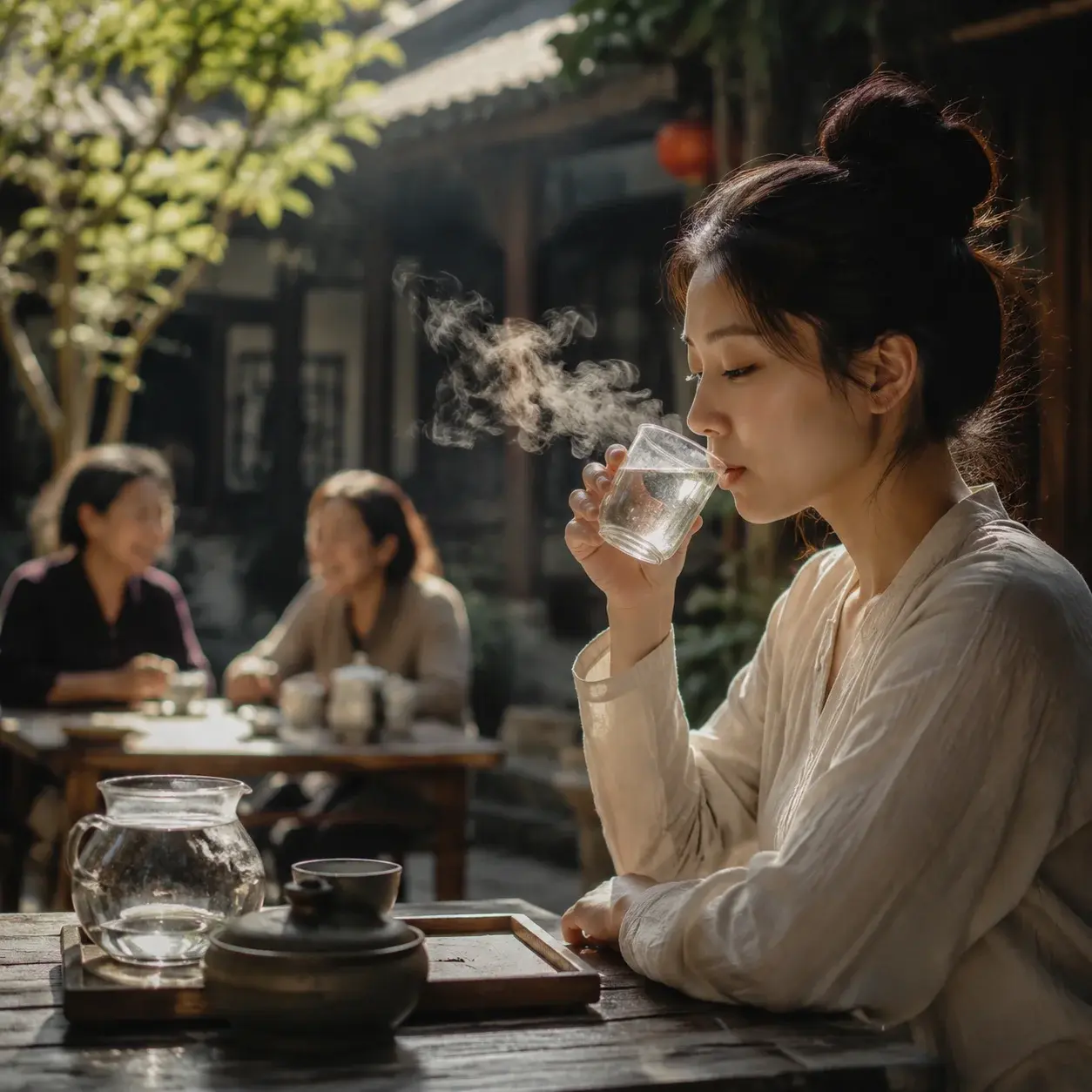
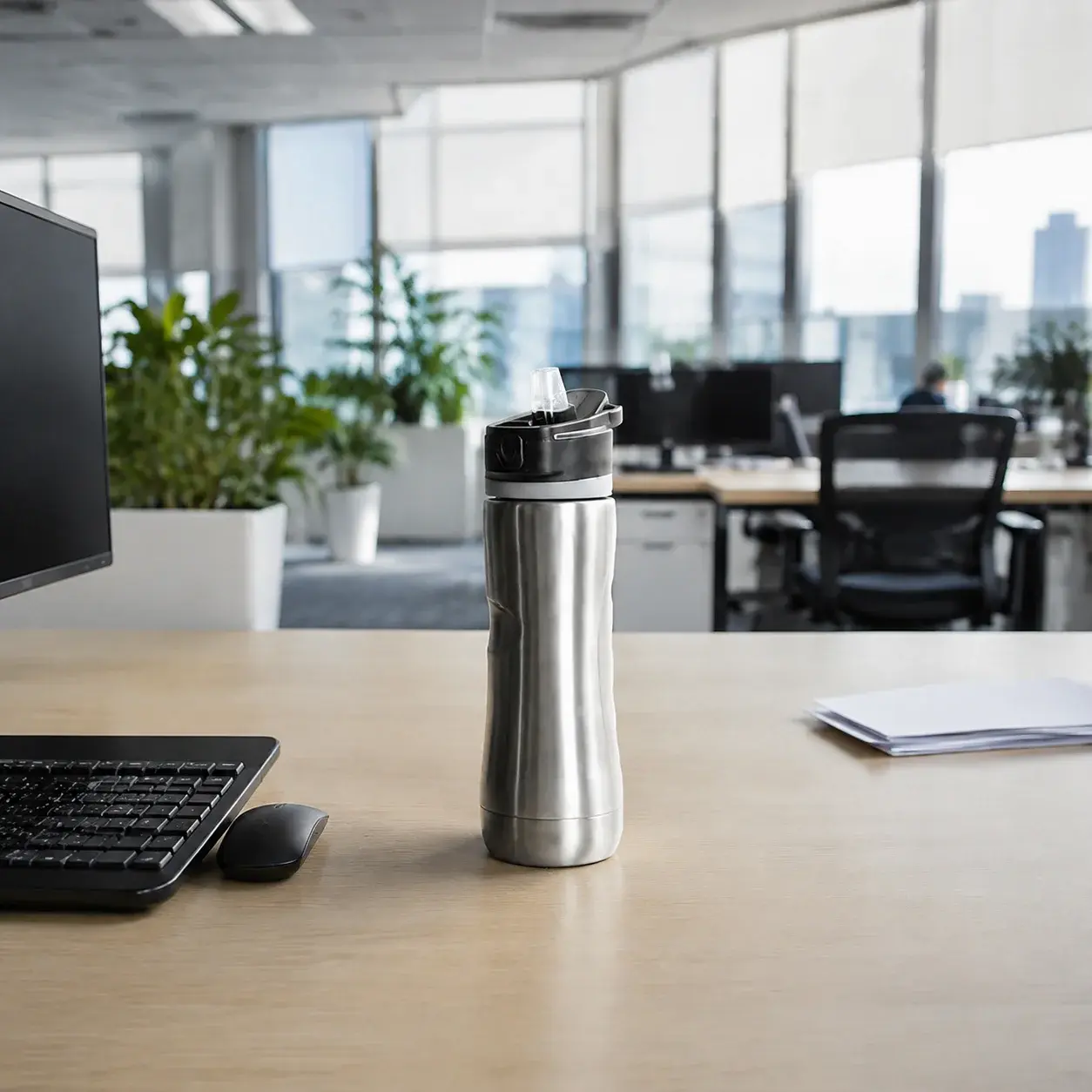
The TikTok version: The iced latte is out; the vacuum flask is in. The flask itself becomes an aesthetic object — a battered steel thermos on a desk, refilled all day, with the implication that Chinese people simply never drink anything cold.
What actually happens: Mostly true, and one of only two practices on this list that is genuinely both nationwide and cross-generational. The flask is real; the "never anything cold" part is not — cold and iced drinks are sold everywhere and young people drink plenty of them. The flask sits on office desks, on high-speed train tray tables, in classrooms and in taxis. Stations, offices and hotel corridors typically have hot-water dispensers, and restaurants usually bring warm water rather than ice water unless you ask. Two separate histories get blended into one story here. The flask on the desk comes from a twentieth-century public-health and infrastructure history — Nationalist-era guidance, then the 1952 Patriotic Health Campaign, then dispensers everywhere. As Sixth Tone's account records, that 1952 campaign advocated boiled water and school walls carried slogans reading "Children should cultivate the habit of drinking boiled water three times a day!"; pre-1949, Kuomintang New Life Movement guidance had claimed boiled water prevented dysentery. Cheng & Tsui notes the idea itself goes back at least to 200 BCE, but fuel was expensive and hot water a luxury — the belief is ancient, the mass habit is modern. The "don't drink cold things" your host's mother says comes from a much older everyday hot/cold vocabulary; they are not the same thing and did not arrive by the same route. This is a register error with a scale error on top.
Where you'd actually see it: Walk to the end of any high-speed rail platform and there is usually a boiler. Then look at the convenience store next to it — the fridge full of chilled drinks is the visual proof that "never anything cold" is false. Full history in why Chinese people drink hot water, even in summer.
2. Congee for Breakfast and the Street Breakfast Stall
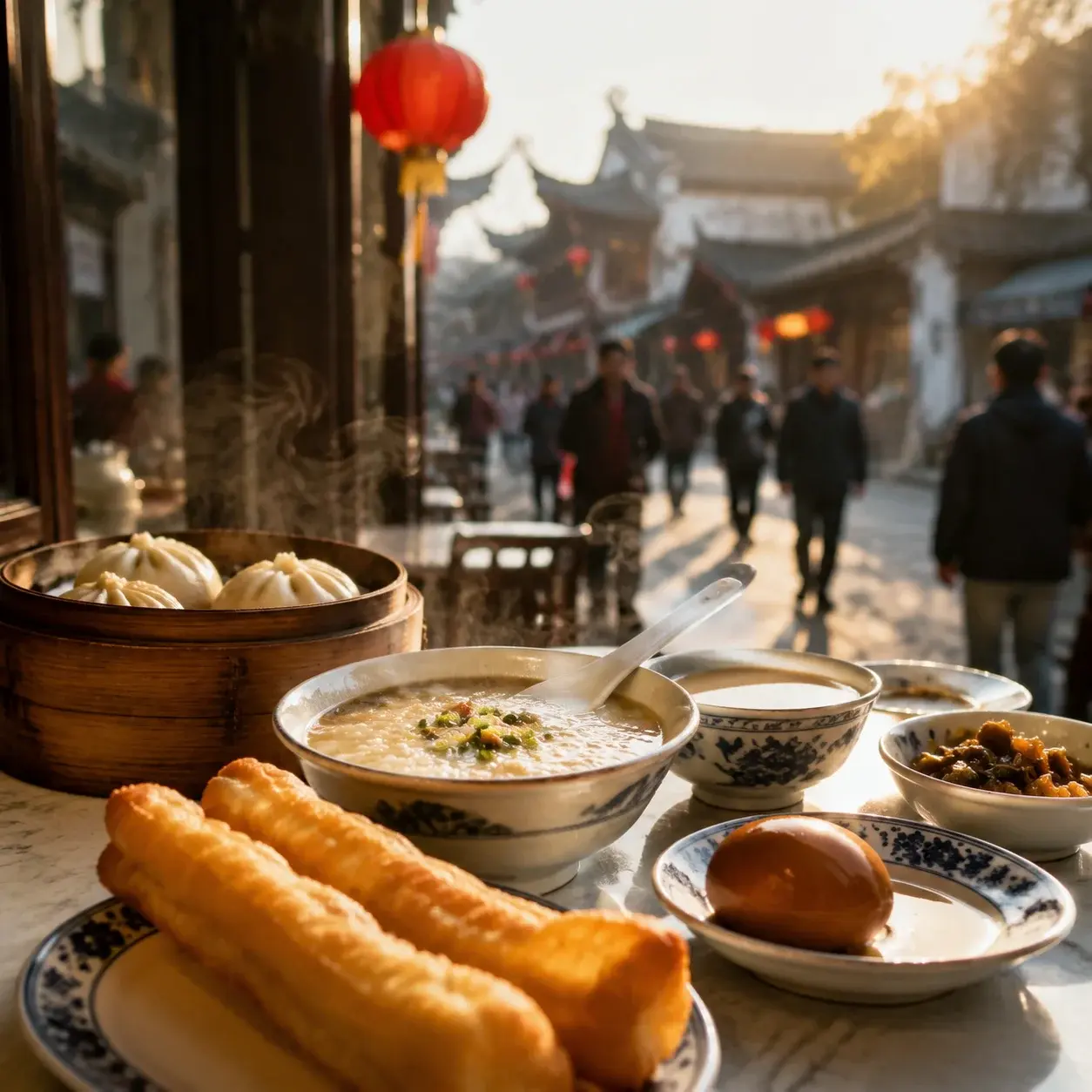
The TikTok version: A ceramic bowl of congee, styled on a wooden table at home, with small side dishes arranged around it. Breakfast as a slow, photogenic morning ritual performed in one's own kitchen.
What actually happens: True in substance, wrong in picture. Breakfast in China is overwhelmingly savoury and bought on the way to work, not styled at home — and what is in the bowl changes sharply between the wheat-eating north and the rice-eating south. Most people buy breakfast from a stall, a window or a small shop on the walk to the subway, and eat it standing, walking, or at a plastic stool. The morning window is short: in our experience stalls set up early and are packing away not long after the commute thins out, though the exact hours vary by city and street and are among the things we are going back to time properly. The north/south split is the part the meme deletes entirely — wheat in the north, rice in the south, which changes what is in the bowl and what is next to it. Congee exists in both, but it is one option on a crowded street rather than the national breakfast. This is a venue error first, a region error second.
Where you'd actually see it: A residential-street morning market, early — go before the commute is over, not after. What to point at is covered in what to order at a Chinese breakfast stall, and the wider stall culture in eating from a street stall in China.
3. Tai Chi in the Park at Six in the Morning
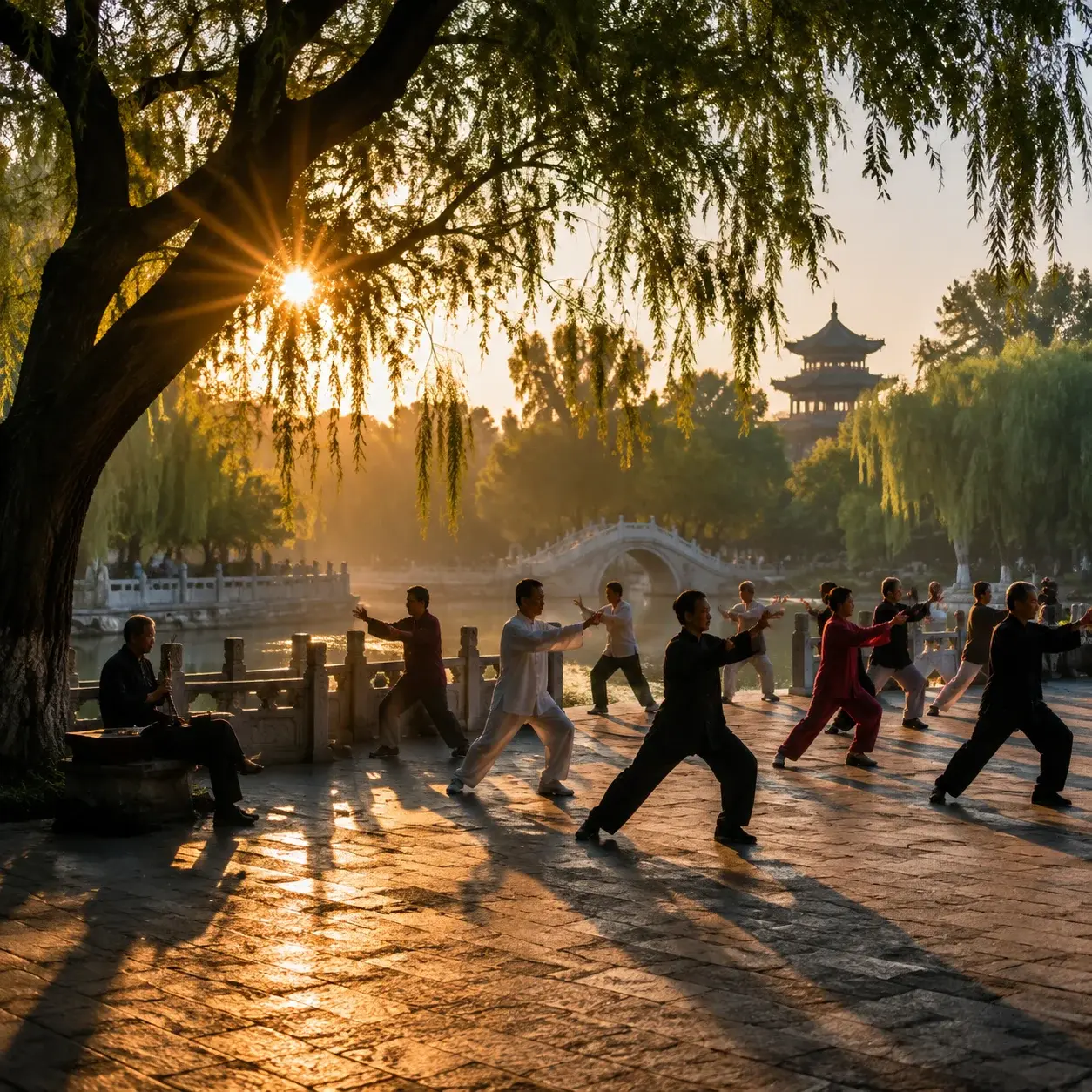
The TikTok version: Slow-motion mist, a park at dawn, a row of people moving in unison. Usually one young person in the foreground, and the strong implication that this is simply what mornings in China look like.
What actually happens: Real, but a minority pursuit: 5.58% of the population practise it and only 2.49% do so regularly, and among older people it is not even a top-five activity — walking is. What the trend gets right is the young practitioner: under-26s are the largest single cohort at 27.5%, while the 26–45 working years are the thinnest at 10.1%. Those figures come from China's General Administration of Sport, whose national sampling survey of tai chi practitioners, released in November 2025, put practitioners at 78.58 million and regular practitioners at 35.07 million, with 63.2% of them urban and a near-even gender split of 51.4% male to 48.6% female. The age curve is concentrated at both ends and hollow in the middle: 19–25 at 27.5%, 46–60 at 24.6%, 26–45 at just 10.1%. Separately, the same ministry's 2020 National Fitness Activity Survey Bulletin found that among older adults the leading activity was brisk walking at 41.6%, then running at 14.7%, square dancing at 8.0%, cycling at 3.8% and badminton at 3.1% — tai chi does not appear in that top five. So the honest picture inverts the intuition twice: the trend's young practitioner is not a fiction, and the fiction is the scale. This is a scale error, not a cohort error.
Where you'd actually see it: A large city park on a weekday, early — Beijing, Chengdu or Shanghai all work. What we cannot yet tell you is what share of that particular crowd is doing tai chi versus walking, badminton, jianzi, fan dance or chorus singing at 06:30 against 08:00; the national survey describes the country, not that park, and counting it is on our list. Watching is entirely normal and joining is sometimes welcomed: a morning in a Chinese park.
4. Square Dancing — The Meme's Biggest Misread
The TikTok version: Speakers, a loose formation, synchronised arms — folded into the same dreamy "morning in China" montage as the tai chi footage, as though both were happening in the same place at the same time.
What actually happens: Wrong about the place, not simply the clock. Square dancing runs twice a day, but the morning groups take plazas near markets rather than the parks, which are held by tai chi at that hour — so a visitor standing in a park at dawn never sees them. 广场舞 (guǎngchǎngwǔ) gathers year-round in two shifts. Morning groups start as early as 05:30 and deliberately avoid the parks, because the parks are the preferred ground for tai chi; they take plazas and hard paving instead, and favour sites near markets and supermarkets so they can buy fresh vegetables when the market opens. The evening shift starts after dinner and stays close to home, partly because participants are minding grandchildren. Participants are overwhelmingly middle-aged and older women, often referred to as 大妈 (dà mā), literally "aunties." It is also genuinely contested: noise disputes with neighbours are a recurring and openly discussed civic issue in Chinese cities, which is the opposite of the serene image the montage sells. The true dawn picture is two different activities running simultaneously a short walk apart — tai chi inside the park, dancing on the plaza outside it. This is a venue error, not a timing error.
Where you'd actually see it: The plaza or hard paving just outside a city park at around six in the morning, and any large residential plaza after dark. The distance between the two dawn scenes is typically short — a few minutes' walk in our experience, though we have not measured it at a named park yet. Park context: a morning in a Chinese park.
5. Indoor Slippers
The TikTok version: A neat row of slippers by the door, shoes off, the threshold treated as a boundary between the outside world and a calmer inside one. Presented as a small daily ritual of care.
What actually happens: True and close to universal in homes, but the meme reads it as a wellness ritual when it is ordinary housekeeping. The traveller-relevant part: you will be offered guest slippers when you visit a home, and declining is awkward. Shoes come off at the door in the overwhelming majority of homes, guest slippers are kept by the door for visitors, and the practice extends into some clinics, viewing rooms and offices. This is where the page's thesis gets unpacked, because this entry is the clearest case of it. The trend's biggest error is not exaggeration — it is translating convenience into philosophy. The flask is on the desk because the dispenser only gives hot water; the shoes come off because the floor has to be mopped and the outside of a city street is on the soles. Register error — mistaking logistics for ritual — is the most frequent distortion among these nine and the one nobody else names. This is a register error, in its purest form.
Where you'd actually see it: Any homestay, any guesthouse, any invitation into a family home. Take the slippers when they are offered. For the fuller picture of guest behaviour — which this page deliberately does not re-cover — see the etiquette gaps travellers actually trip on.
6. Herbal Tea (Liangcha) Shops — a Guangdong Story, Not a China Story
The TikTok version: "Chinese people drink herbal tea," delivered as a single national fact, usually over footage of a dark bowl being handed across a counter.
What actually happens: Regionally true, nationally false. Walk-up herbal-tea shopfronts are a Cantonese institution, dense in Guangdong and Hong Kong and comparatively rare in the north; bottled versions sold nationwide are not the same thing as the shop culture. 凉茶 (liángchá) shopfronts are woven into Guangzhou, Foshan and the wider Cantonese-speaking south, including Hong Kong. The Guangzhou municipal government website noted in 2023 that a navigation-app search returns 1,356 herbal-tea shops in the city, and a local saying holds that there is one on every wide old street. Nothing comparable exists in most northern cities, where the national-level substitute is a bottled brand in a convenience store fridge — a different product, a different price point and a different act. Walk-up consumption skews older; the bottled version is drunk by everyone. What the shop is actually like: a narrow counter, bowls lined up, you drink standing, it is bracingly bitter, and it costs less than a coffee at home. We are going back to walk a named Guangzhou old-town street and a comparable northern street with a counter, because one honest shopfront count settles this argument permanently. This is a region error, with a venue error inside it.
Where you'd actually see it: An old-town street in Guangzhou or Hong Kong, standing at the counter, five minutes start to finish. In the north, the fridge in any convenience store is the substitute — and the contrast is the point.
7. Eye Exercises in Schools
The TikTok version: A classroom of children doing synchronised eye massage to a broadcast soundtrack, often reposted with the suggestion that adults should adopt it at their desks.
What actually happens: Real, institutional, and almost entirely a school-age experience — a scheduled routine set to broadcast audio, which is why nearly every mainland adult can perform it from memory and why it is not something adults do at their desks. It is on the school timetable, it runs to a recording, and it is done because the bell says so. That institutional framing is exactly why it lives so vividly in memory: an entire generation performed the same sequence to the same audio at the same time of day for years. Adults do not carry it into offices. What they carry is the muscle memory and the shared reference — which is a cultural fact, not a wellness practice, and this page makes no claim of any kind about what the routine does. The meme has adults performing a children's timetable. This is a cohort error.
Where you'd actually see it: Nowhere, honestly. There is no visitable venue for this one, and we would rather say so than invent a school visit. The payoff is conversational instead: mention it to anyone under 40 and you will get an instant reaction, usually the hand movements before the sentence.
8. Cantonese Morning Tea (Yum Cha)
The TikTok version: "Dim sum brunch" — stacked bamboo steamers, late morning, framed as a leisurely weekend meal in the Western brunch tradition.
What actually happens: The trend has the meal right and the shape wrong. Yum cha is morning, it is Cantonese, and it is long — a multi-hour sit with tea as the organising element. Calling it "dim sum brunch" removes the tea, the timing, and the region. 饮茶 (yum cha) literally means "drink tea," and that is the correct emphasis: the tea organises the table and the food accompanies it, not the other way round. It is heavily social and strongly multi-generational — grandparents, parents and children at one table, for hours, with newspapers. It is also a Cantonese institution rather than a Chinese one, which is why Hong Kong is such a useful test case. Hong Kong hands a visitor half of this list and withholds the other half: you get yum cha and liangcha, and you get almost none of the northern breakfast or the mainland morning-park form. That asymmetry is the cleanest live demonstration of region error on the page. Peak hours, the arrival time needed to avoid a queue and typical per-person spend all vary by teahouse and are still on our verification list. This is a region error plus a venue error — three facts deleted by one word.
Where you'd actually see it: An old teahouse in Guangzhou on a weekend morning. Arrive early or expect to queue, and budget the whole morning rather than an hour. Regional context: what to eat across Chinese regional cuisines.
9. "Keep Warm" — the Elder Advice Layer
The TikTok version: A soft-focus stream of "protect your body temperature" advice — long johns, ginger tea, no cold drinks, cover your ankles — presented as a coherent traditional system with rules you can learn.
What actually happens: Real as a social script, and mostly delivered by older relatives. The long-johns argument and the ginger-tea offer circulate as family advice; younger people comply, negotiate, or ignore them by household. It is how care gets expressed, not a system. The 秋裤 (qiūkù, long johns) argument arrives every autumn on cue. So does the objection to bare ankles, the warning off the iced drink, and the ginger tea that appears when someone in the family is unwell — it is what gets offered, and what gets offered is the whole point. Younger people respond across the full range from cheerful compliance to eye-rolling to negotiated compromise, and which one you see depends entirely on the household. This layer is the surviving trace of the older everyday hot/cold vocabulary described in entry 1, a different lineage from the twentieth-century dispenser history. Gua sha and moxibustion exist in the same conversational space and get mentioned in it; that is as much as this page has to say about either. This is a register error with a cohort error attached.
Where you'd actually see it: Any multi-generational family meal, and reliably in the first cold week of autumn. Realistically, most visitors meet it as an aside from a guide or a host rather than at a family table. Broader context — which this page links to rather than repeats — in Chinese traditions and what sits behind them.
What Does the Trend Get Right — and What Does It Get Wrong?
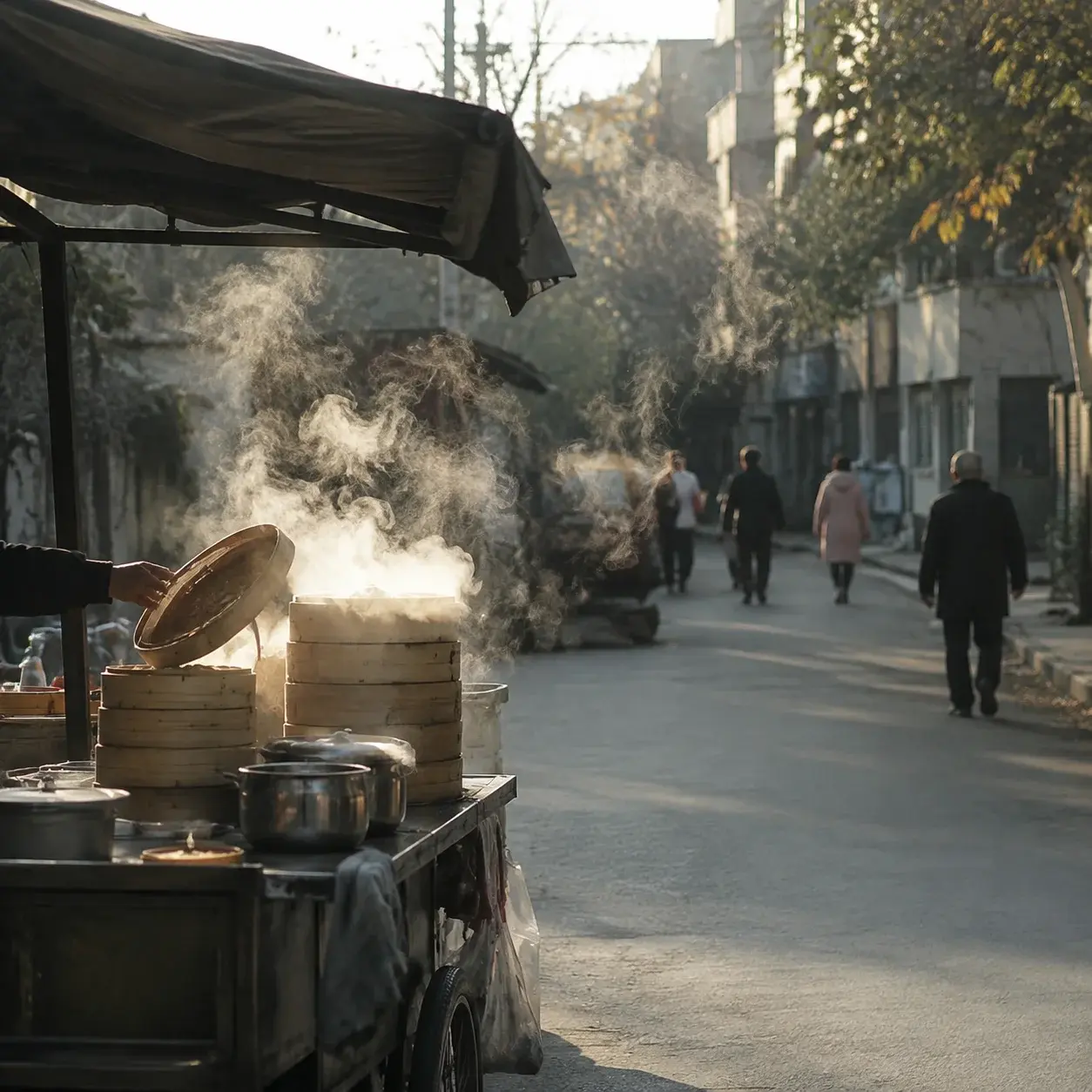
Every competitor says "this one is exaggerated" ad hoc. Nobody has classified the errors, which is what turns nine anecdotes into one reusable instrument.
The Five Distortion Types
| Type | What it is | The one-line diagnostic question |
|---|---|---|
| Cohort error | A single age group's behaviour recorded against "Chinese people" | How old are the people you actually see doing it? |
| Region error | One region's or dialect area's institution treated as national | Does it still hold 1,500 km away? |
| Venue error | The practice is real, but the place or the hour is wrong | Where and at what hour does it actually happen? |
| Register error | Everyday logistics, housekeeping or family care upgraded into a wellness philosophy | Do the people doing it treat it as a ritual, or as convenient? |
| Scale error | A real preference inflated into an absolute rule | Does the sentence contain never, always, or all Chinese people? |
Run all nine through the grid and only two — hot water and indoor slippers — are simultaneously nationwide and all-ages. Of the nine everyday "Chinese" behaviours the trend lists, only two are genuinely both.
The LyrikTrip Reality Check — Master Table
| # | Practice | Real? | How widespread | Which generation | Which region | What the meme distorts | Where a visitor can see it |
|---|---|---|---|---|---|---|---|
| 1 | Hot water & the thermos flask | Yes | Near-universal | All ages | Nationwide | Register (+Scale) | Rail-platform and hotel-corridor dispensers — and the chilled-drinks fridge beside them |
| 2 | Congee / street breakfast | Yes, but reframed | Common | All ages | North ≠ South | Venue (+Region) | A residential-street morning market, early |
| 3 | Tai chi in the park at 6am | Yes | Niche — 5.58% practise, 2.49% regularly (2025 national survey) | All ages, but 19–25 largest at 27.5% and 26–45 thinnest at 10.1% | Nationwide, 63.2% urban | Scale | A large city park, weekday early morning — one activity among many |
| 4 | Square dancing (广场舞) | Yes | Common | Skews older | Nationwide | Venue (+Cohort, Register) | The plaza outside the park, near markets, from ~05:30; residential plazas after dinner |
| 5 | Indoor slippers | Yes | Near-universal (in homes) | All ages | Nationwide | Register | Any homestay, guesthouse, or invitation into a family home |
| 6 | Herbal tea (liangcha) shopfronts | Yes, but reframed | Regional | Shop skews older; bottled all ages | Cantonese-speaking | Region (+Venue) | An old-town street counter in Guangzhou or Hong Kong |
| 7 | Eye exercises in schools | Yes | Institutional | School-age only | Nationwide | Cohort | No visitable venue — a conversation, not a place |
| 8 | Cantonese morning tea (yum cha) | Yes, but reframed | Regional | All ages | Cantonese-speaking | Region (+Venue) | An old teahouse, weekend morning, allow hours |
| 9 | "Keep warm" elder advice | Yes, but reframed | Common | Skews older (as the speakers) | Nationwide | Register (+Cohort) | Any multi-generational family meal; the autumn changeover |
Cells describing where a visitor sees each practice, and the timing inside them, are indicative pending field verification. The three statistical cells in row 3 are the exception — those are official 2025 survey figures and are named as such.
The Generation × Region Map
| Nationwide | North / South split | Cantonese-speaking only | |
|---|---|---|---|
| All ages | ① Hot water & flask<br>⑤ Indoor slippers<br>(the only cell where the trend's premise holds) | ② Street breakfast — everyone eats it, but the bowl diverges | ⑧ Yum cha — strongly multi-generational, geographically narrow |
| Skews older | ④ Square dancing<br>⑨ "Keep warm" advice | — | ⑥ Liangcha shopfronts (the bottled version spills nationwide and all-ages) |
| School-age only | ⑦ Eye exercises | — | — |
| Neither — a minority pursuit | ③ Tai chi: nationwide, all ages present, but only 2.49% practise regularly, with under-26s the largest cohort | — | — |
The trend treats every one of these as a single national behaviour set. Run through the grid, only two of the nine sit in the "nationwide and all ages" cell. The rest are a generation off, a region off, or both — which is the trend's real structure.
The practices are real; the framing is imported. What chinamaxxing documents is an American reaction to American burnout, using Chinese daily habits as its vocabulary. That is why the online version looks calmer, more aesthetic and more coherent than the thing itself: it was curated by tired people, not lived by ordinary ones.
How Do You Fact-Check the Next Chinamaxxing Claim Yourself?
Run it through five questions. The trend will keep producing new items — nine today, maybe fifteen in three months — so the useful thing is not a longer list but an instrument. The 5-Question Field Test maps any new claim onto The Five Distortion Types above.
| # | Ask yourself | If the answer looks like this → the distortion type |
|---|---|---|
| 1 | How old are the people actually doing it in the clip? | Young people doing something you have only seen older people do, or the reverse → Cohort error |
| 2 | Which province was it filmed in — does it still hold 1,500 km away? | It is a southern or Cantonese institution presented as national → Region error |
| 3 | Do the place and the hour match — home vs street, dawn vs dusk, inside the park vs outside it? | The activity is real but relocated → Venue error |
| 4 | Do the people doing it treat it as a ritual, or as convenient? | They would describe it as housekeeping and the clip describes it as wellness → Register error |
| 5 | Does the sentence contain never, always, or all Chinese people? | An absolute → Scale error, almost every time |
Question 4 is the one readers skip and the one that separates a real answer from a plausible one. Most of what looks like wellness in Chinese daily life is not being done for wellness reasons by the person doing it.
How Can You See Any of This for Yourself?
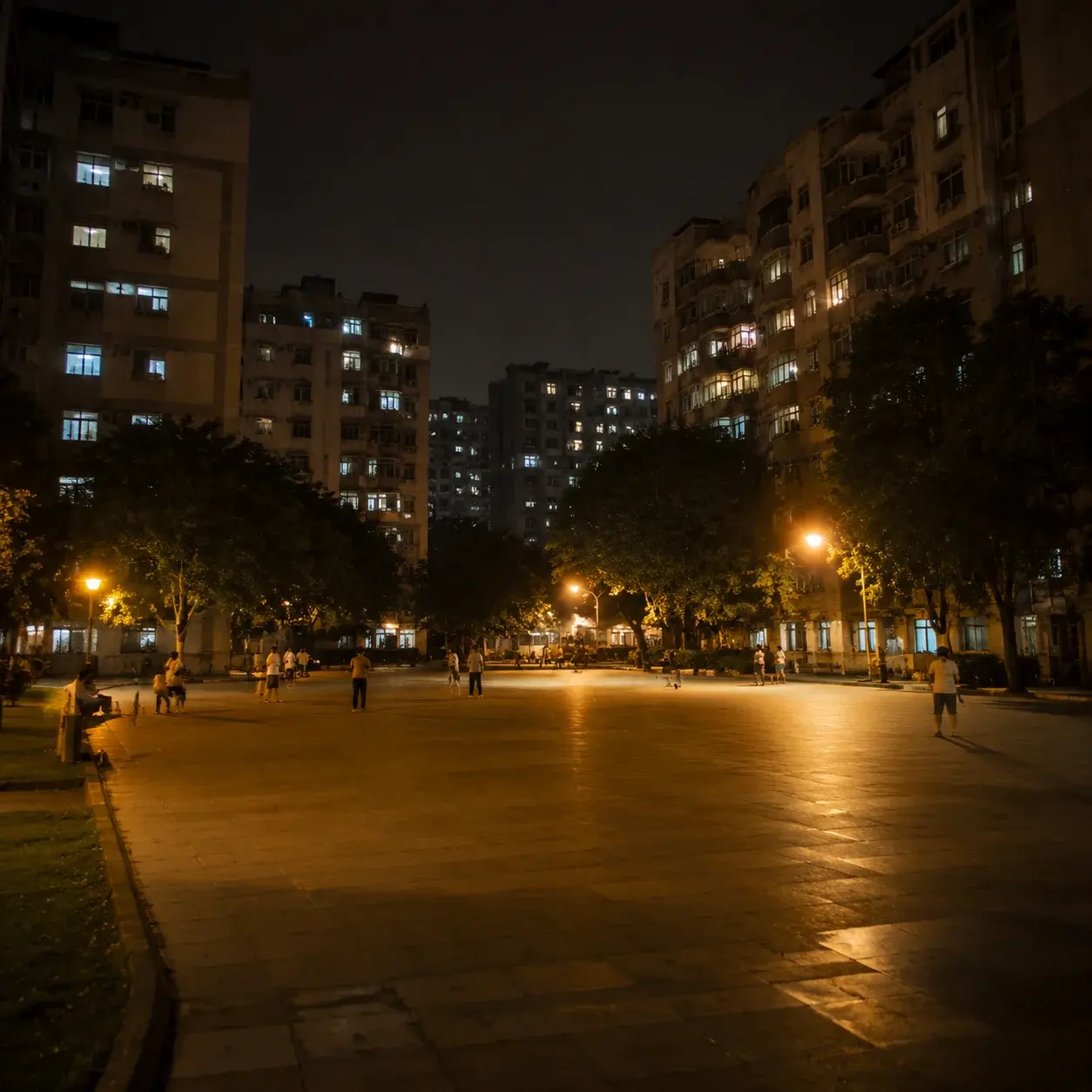
Two of the nine are worth building an hour around; most of the rest you either walk past anyway or cannot see at all. Start with when and where.
| Practice | Best time of day | Where to look | Guide |
|---|---|---|---|
| Morning park (tai chi and everything else) | Early morning, weekday | A large city park in Beijing, Chengdu or Shanghai | a morning in a Chinese park |
| Street breakfast | Early, before the commute thins | A residential-street morning market | what to order at a Chinese breakfast stall |
| Square dancing — morning shift | From around 05:30 | The plaza outside the park, near a market — not the park itself | a morning in a Chinese park |
| Square dancing — evening shift | After dinner | Any large residential plaza | — |
| Yum cha | Weekend morning | An old teahouse in Guangzhou or Hong Kong | what to eat across Chinese regional cuisines |
| Liangcha shopfront | Any time the shop is open | An old-town street in Guangdong or Hong Kong | — |
| Hot-water dispensers | Any time | The end of a high-speed rail platform; hotel corridors | why Chinese people drink hot water, even in summer |
All times above are indicative and vary by city; they are on our list to verify on the ground.
The LyrikTrip Worth-an-Hour Selector
| Tier | What it means | Which practices |
|---|---|---|
| Build an hour around it | Worth an alarm, a detour, or a slot in the day | ③+④ the morning park plus the plaza outside it, treated as one outing · ② a breakfast street · ⑧ yum cha, only if Guangdong or Hong Kong is on the itinerary |
| Catch it in passing | You will walk past it anyway; zero cost | ① flask and dispensers · ⑤ indoor slippers, at a homestay or a home visit · ④ evening square dancing, after dinner near the hotel · ⑥ a liangcha shopfront in Guangdong, five minutes standing |
| Read about it, don't chase it | No venue exists, or not worth rearranging a day | ⑦ school eye exercises — there is no visitable venue · ⑨ "wear more" family advice — needs a family table, and realistically arrives as a guide's aside |
| Your trip | Build an hour around | Catch in passing | Skip | Why |
|---|---|---|---|---|
| 3–5 days, one city | ③+④ one morning park with its outside plaza · ② one breakfast street | ①⑤, plus the evening plaza | ⑥⑧ | You have two slots — use them on the two that exist in every city |
| 7–10 days including Guangzhou or Hong Kong | Add ⑧ weekend yum cha (allow a whole morning) and ⑥ an old-town liangcha counter | As above | — | The park morning only needs doing once, not once per city; spend the saved morning on yum cha |
| 14+ days crossing north–south | All of the above, plus a deliberate north-vs-south breakfast A/B | — | — | The single most valuable line here: only a long trip lets you observe the region axis instead of reading about it. One breakfast in the north and one in Guangzhou and you have recomputed the region error yourself |
| Travelling with kids / already an early riser | ③+④ the park morning | ①⑤ | ⑦⑨ | Pure profit: busy, cheerful, watching is normal, and you are sometimes invited in |
| Hong Kong only | ⑧ yum cha · ⑥ liangcha | ①⑤④ | ②③⑦⑨ | Hong Kong gives you every Cantonese item and none of the northern ones — a live demonstration of region error |
If you are honestly not a morning person, don't pretend. Take the evening plaza and the after-dinner street instead. You lose tai chi, and that is a real loss — but evening square dancing and the post-dinner street are the same public-life phenomenon happening at a civilised hour. Dragging yourself to a park at six and writing off the rest of the day is a bad trade.
Two editorial calls to close the section. The most overrated item on this list is tai chi: it occupies half the meme's footage and a small corner of the actual park, and the visitor hunting that specific shot usually leaves disappointed. The most underrated is the breakfast street — nobody films it, every city has one, it takes thirty minutes, and it is the highest return per minute on the whole list. And the easiest of all is the flask: you walk to the end of the platform and there is the boiler. Decide which you want, the image or the real morning, and then decide what time to get up.
Frequently Asked Questions
What is chinamaxxing?
Chinamaxxing is US Gen Z adopting Chinese everyday lifestyle habits wholesale — hot water instead of iced drinks, indoor slippers, savoury breakfast, park tai chi, herbal teas and "keep warm" advice. Commentators frame it as a reaction against Western hustle culture and burnout.
What does chinamaxxing mean?
The `-maxxing` suffix comes from internet slang and means going all in on something. Attached to "China," it describes maximising Chinese daily habits as a lifestyle. Its catchphrase is "You met me at a very Chinese time in my life," popularised through TikTok and diaspora creators.
Is chinamaxxing real?
Yes as an internet trend, and measurably so: searches went from zero before November 2025 to a peak of 33,100 in February 2026, settling at 18,100 by April. As a description of China it is partly right, partly a generation off, and partly a region off.
Why are Americans chinamaxxing?
Commentators consistently frame it as a reaction against hustle culture and burnout — Chinese daily habits supplying a calmer vocabulary for an American mood. That framing is about the United States, which is the first clue the trend describes its adopters as much as its subject.
What do Chinese people actually do every day?
Mostly the same things everyone does: work, commute, and eat out cheaply and often. The habits the trend lists are real, but they show up unevenly — some are nationwide, some are Cantonese, some are school-age, and only two are both nationwide and all-ages.
Is Chinese daily life really like TikTok?
Partly. Run all nine of the trend's practices through The LyrikTrip Reality Check and only two — hot water and indoor slippers — are simultaneously nationwide and all-ages. The other seven are a generation off, a region off, or both, which is the trend's real structure.
Do Chinese people really drink herbal tea?
Regionally true, nationally false. Walk-up herbal-tea shopfronts are a Cantonese institution, dense in Guangdong and Hong Kong and comparatively rare in the north; bottled versions sold nationwide are not the same thing as the shop culture.
Do Chinese people really do tai chi in the park every morning?
It is real but a minority pursuit: China's General Administration of Sport reported in 2025 that 5.58% of the population practise and 2.49% do so regularly. Among older adults, walking dominates. Among practitioners, under-26s are the largest cohort at 27.5%.
Is square dancing an evening thing?
No. It runs twice a day. The morning groups take plazas near markets rather than the parks, which are held by tai chi at that hour — so a visitor standing in a park at dawn never sees them, and wrongly concludes it only happens after dark.
The Bottom Line
Chinamaxxing is a real internet moment built on real Chinese habits — and it is still, at bottom, an American story. The practices are real; the framing is imported. Nine claims, one instrument, and only two of them come through as both nationwide and all-ages. The useful move for a traveller is not to memorise the list but to keep the five questions: whose age, which region, what venue, ritual or convenience, and does the sentence contain an absolute.
If you want to see the two that survive contact with reality, they both happen before breakfast: a city park at first light with the plaza just outside it, and a breakfast street half an hour later. That is the shape of the morning we build into trips — and it is a better souvenir than the footage.