





 18 days China, End to End Beijing → Xi'an → Chuanzhusi → Jiuzhaigou → Chengdu → Zhangjiajie → Guilin → Yangshuo → Shenzhen From $6,360 View route
  3 days 4-Day Tour of Siguniang Mountain, Biepa Gou, and Dagu Glacier Chengdu → Lixian → Heishui County From $1,599 View route
  5 days Above the Pillars, Then Below Zhangjiajie From $1,430 View route
  3 days After the Last Booth Guangzhou From $840 View route
  13 days All the Way West Xi'an → Dunhuang → Turpan → Kashgar → Shanghai From $3,500 View route
 Chinese Food Guide 2026: 40 Must-Try Dishes & Where to Eat in China
Introduction: Why Chinese Food Deserves a Place at the Center of Your Trip
In China, food rarely feels like a simple break between sightseeing stops. More often, it becomes one of the most memorable parts of the journey: the steaming bamboo basket that arrives at breakfast, the late-night noodles eaten on a busy side street, the hot pot meal that turns dinner into a two-hour event. For many travelers, the meal is not a side activity. It is the experience.
That is because Chinese food and cuisine are far more diverse than many first-time visitors expect. There is no single national flavor profile. Instead, food in China has been shaped by geography, climate, migration, religion, trade routes, imperial history, local harvests, and deeply rooted regional habits. A meal in Chengdu tastes nothing like a meal in Guangzhou. Shanghai’s lighter, sweeter cooking is very different from the bold chile heat of Hunan or the noodle-and-bread culture of the northwest.
This guide is designed to help overseas travelers make sense of that delicious complexity. Inside, you will find the Eight Great Cuisines of China, 40 must-try dishes, practical advice for eating in Shanghai, Sichuan hot pot basics, regional food suggestions, etiquette tips, and useful notes on dietary needs. If you are planning your first trip to China or hoping to eat more confidently on your next one, this is where to start.
The 8 Great Cuisines of China: A Simple Way to Understand Chinese Cuisine
A useful introduction to the cuisine of China is the classic framework known as the Eight Great Cuisines. It is not the whole story, because China’s real food landscape is even more local and varied than this system suggests, but it gives travelers an excellent foundation. Once you understand these eight traditions, menus across the country start to make much more sense.
1. Sichuan Cuisine
Sichuan cuisine, from southwest China, is famous for bold flavors, layered spice, and the distinctive málà sensation created by chile and Sichuan peppercorn. It is not just "hot" food. Good Sichuan cooking balances heat with fragrance, garlic, fermented bean pastes, vinegar, and roasted aromatics. Representative dishes include mapo tofu, kung pao chicken, dan dan noodles, and Sichuan hot pot. Chengdu is the best place to explore it slowly and properly.
2. Cantonese Cuisine
Cantonese food from Guangdong is one of the most internationally recognized styles of Chinese food, but in China it feels fresher, broader, and more refined than many overseas versions. The focus is often on natural flavor, precise cooking, delicate seasoning, and high-quality ingredients. Steaming, roasting, and quick stir-frying are common. Think dim sum, char siu, roast meats, wonton noodle soup, and seafood. Guangzhou is the classic destination for this style.
3. Shandong Cuisine
Shandong cuisine comes from northern coastal China and has a long culinary history connected to imperial kitchens. It is known for soups, seafood, wheat-based staples, and savory, robust flavors. Knife skills and broth-making are especially important. If you enjoy scallions, vinegar, rich stocks, and northern-style comfort food, this tradition is worth paying attention to.
4. Jiangsu Cuisine
Jiangsu cuisine is elegant, refined, and often slightly sweet. It emphasizes knife work, braising, soups, and careful presentation. Dishes from cities such as Suzhou and Nanjing are often polished and balanced rather than aggressive. This is a good cuisine for travelers who like subtle flavors and textures.
5. Zhejiang Cuisine
Zhejiang cuisine, associated with places like Hangzhou, highlights freshness, tenderness, and seasonal ingredients. Flavors are usually light and clean, with an emphasis on river fish, bamboo shoots, tea-infused dishes, and delicate cooking methods. West Lake fish in vinegar gravy is one well-known example.
6. Fujian Cuisine
Fujian cuisine is famous for soups, seafood, and a complex savory depth often described as umami-rich. Coastal ingredients, mountain products, and long-simmered broths all play important roles. The food can be aromatic and surprisingly nuanced, especially for travelers who love clear but deeply flavored soups.
7. Hunan Cuisine
Hunan food is often compared with Sichuan, but the styles are different. Hunan cuisine tends to deliver a cleaner, direct chile heat, often combined with smoke, pickling, or sourness. It is bold, vivid, and satisfying. Steamed fish with chopped chiles and stir-fried cured meats are classic examples.
8. Anhui Cuisine
Anhui cuisine is less famous internationally but highly interesting. It draws on mountain ingredients, wild herbs, mushrooms, bamboo shoots, and slow braising or stewing. The flavors are earthy and comforting, and the cooking often reflects rural traditions and seasonal produce.
For trip planning, this framework is genuinely useful. If you are heading to Chengdu, prioritize Sichuan dishes. In Guangzhou, focus on dim sum and roast meats. In Hangzhou, look for lighter Zhejiang specialties. In Suzhou and the Jiangnan region, expect delicate, slightly sweet dishes and beautifully presented local cooking. That said, menus in major cities often mix dishes from multiple regions. Even on one trip, especially in cities like Shanghai or Beijing, you can sample many styles of Chinese cuisine without leaving town.
40 Must-Try Chinese Dishes: What to Eat in China First
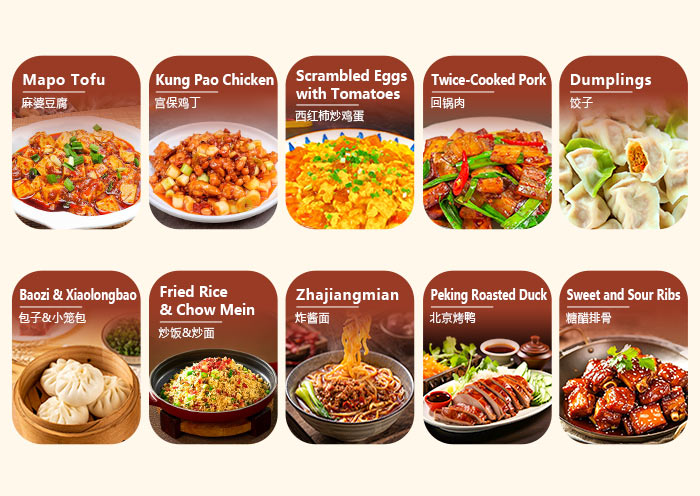
Chinese food in China is wonderfully broad, but for first-time visitors, a clear shortlist helps. Below are 40 dishes worth trying, grouped in a practical way. For each one, think about three things before ordering: flavor, texture, and context. Some dishes are best at breakfast, some are ideal for sharing at dinner, and some are street snacks meant to be eaten standing up while the city moves around you.
Iconic National Dishes
1. Peking Duck
Crisp-skinned, lacquered roast duck served with pancakes, scallions, cucumber, and sweet bean sauce. It comes from Beijing and is best eaten in a dedicated roast duck restaurant. This is a celebratory dish, often shared.
2. Kung Pao Chicken
A Sichuan classic of diced chicken, dried chiles, peanuts, and a glossy sweet-savory sauce. It is usually less fiery than travelers expect, though spice levels vary. Great as an introduction to Sichuan flavors.
3. Mapo Tofu
Silken tofu in a spicy, oily, deeply savory sauce with minced meat and Sichuan peppercorn. Expect heat, numbness, and a very soft texture. Best with rice.
4. Sweet and Sour Pork
Crisp pieces of pork coated in a bright tangy sauce. Versions vary across China, and the best ones avoid excessive sweetness. A friendly option for cautious eaters.
5. Dumplings (Jiaozi)
Boiled, steamed, or pan-fried wheat wrappers filled with pork, chives, cabbage, lamb, or other ingredients. Common in northern China, especially around family meals and festivals. Check whether they contain soup, meat, or strong aromatics.
6. Spring Rolls
Thin crisp rolls filled with vegetables, meat, or bean paste. They are especially common in dim sum settings and holiday meals. Best when fresh and hot.
7. Fried Rice
Simple when done badly, satisfying when done well. In China, fried rice is often lighter and less overloaded than some overseas versions. It is a useful comfort dish if you need a break from unfamiliar textures.
8. Chow Mein
Stir-fried noodles with vegetables, meat, or seafood. The texture can range from soft to lightly crisped, depending on the region and restaurant.
Sichuan Specialties
9. Sichuan Hot Pot
One of the most exciting shared meals in China. A bubbling pot of spicy broth sits at the center of the table, and you cook thin slices of meat, mushrooms, tofu, greens, and noodles yourself. The famous málà flavor is intense, fragrant, and addictive. If you are new to it, order a split pot with one spicy side and one mild side.
10. Dan Dan Noodles
Thin noodles with a savory sauce made from sesame, chile oil, preserved vegetables, and minced meat. Small in portion but big in flavor. Excellent for a quick lunch.
11. Twice-Cooked Pork
Slices of pork first simmered, then stir-fried with fermented bean paste, leeks, and peppers. Rich, salty, and deeply satisfying.
12. Mouthwatering Chicken
Despite the playful name, this is a serious cold dish. Tender chicken is served under a slick of chile oil, sesame, garlic, and aromatics. Usually served at room temperature.
Cantonese and Dim Sum Favorites
13. Char Siu
Cantonese barbecued pork with a glossy sweet-savory glaze. Tender, slightly sticky, and often served over rice or inside pastries.
14. Har Gow
Translucent shrimp dumplings with delicate wrappers. A dim sum essential. Best eaten fresh before the skin firms up.
15. Siu Mai
Open-topped pork and shrimp dumplings, springy and savory. Easy for beginners and widely loved.
16. Cheung Fun
Silky rice noodle rolls, often filled with shrimp or beef, dressed with soy-based sauce. Soft texture is the main appeal.
17. Wonton Noodle Soup
Fine egg noodles, light broth, and plump wontons. A comfort food classic in Guangzhou and Hong Kong-style eateries.
Shanghai and Eastern China Favorites
18. Xiaolongbao
Shanghai’s famous soup dumplings, filled with pork and hot broth. Bite carefully or sip the soup first to avoid burning your mouth. Best in a dedicated dumpling house.
19. Shengjianbao
Pan-fried pork buns with juicy filling, crisp bottoms, and sesame-scallion tops. Heavier and more rustic than xiaolongbao, and especially good for breakfast or a snack.
20. Scallion Oil Noodles
Simple noodles tossed in fragrant scallion-infused oil and soy sauce. Deeply aromatic and surprisingly memorable.
21. Hong Shao Rou
Red-braised pork belly, glossy and tender, with soy sauce, sugar, and rice wine. Rich but beautifully balanced when done well.
22. Drunken Chicken
Cold chicken marinated with Shaoxing wine. Delicate, slightly sweet, and aromatic.
23. Hairy Crab
A seasonal luxury in autumn around Shanghai and Jiangnan. The appeal is in the rich roe and sweet flesh. It takes effort to eat, but many locals consider it worth it.
Xi’an and Northwest Staples
24. Roujiamo
Often called a Chinese-style burger, though that description is too simple. Chopped, seasoned meat stuffed into a crisp, flat wheat bun. Xi’an is the place to try it.
25. Biangbiang Noodles
Wide, hand-pulled noodles with chile, garlic, vinegar, and often vegetables or meat. Chewy, bold, and unforgettable.
26. Yangrou Paomo
Crumbled flatbread soaked in rich lamb soup. Hearty and deeply local. Best in cooler weather.
27. Liangpi
Cold wheat or rice noodles with vinegar, chile, and cucumber. Refreshing and ideal in warm weather.
Beijing Classics
28. Zhajiangmian
Wheat noodles topped with a savory fermented soybean sauce, usually with minced pork and crisp vegetables. Comforting and filling.
29. Jianbing
One of China’s greatest breakfasts: a thin griddled crepe with egg, sauce, herbs, and a crisp cracker folded inside. Fast, cheap, and genuinely delicious.
30. Luzhu Huoshao
A more adventurous Beijing specialty made with bread, broth, and pork offal. Rich and strongly flavored. Best for curious eaters.
Street Food and Everyday Snacks
31. Tanghulu
Candied fruit skewers, traditionally hawthorn, with a hard sugar shell that cracks as you bite. A classic winter street snack.
32. Chuan’r
Cumin-spiced grilled skewers, especially associated with northern cities and Muslim food streets. Lamb is common, but many other options exist.
33. Cong You Bing
Savory scallion pancake with flaky layers and a crisp surface. Popular as breakfast or a snack.
34. Tea Eggs
Hard-boiled eggs simmered in tea and soy sauce until marbled and fragrant. Common in convenience stores and stations.
35. Stinky Tofu
Fermented tofu fried until crisp outside and soft inside. The smell is strong, but the flavor can be milder than expected.
Desserts and Sweet Bites
36. Tangyuan
Glutinous rice balls, often filled with black sesame or peanut paste. Soft, sticky, and warming.
37. Egg Tarts
Popular in Cantonese bakeries, with flaky pastry and silky custard. A good sweet break between savory meals.
38. Mango Pomelo Sago
A chilled dessert of mango, pomelo, and tapioca-like pearls in creamy base. Common in southern China and very refreshing.
Adventurous but Rewarding Bites
39. Duck Blood Vermicelli Soup
Popular in Nanjing, this soup includes duck blood cubes, vermicelli, and duck offal. The texture may be unfamiliar, but the broth is often excellent.
40. Braised Intestines
Found in many regional cuisines, especially in rich, savory braises. This dish is for travelers open to stronger flavors and softer textures.
A Few Helpful Notes for First-Time Visitors
If you are new to eating in China, a little context makes everything easier. Spice can mean numbing, smoky, vinegary, or sharply hot, not just "chile-heavy." Meat may come with small bones. Tofu may be silky rather than firm. Offal is common in traditional cooking and often valued rather than treated as unusual. Some dishes arrive lukewarm or cold by design. If a texture seems unfamiliar at first, it may still become one of your favorite discoveries.
Eating in Shanghai: What Makes the City One of China’s Best Food Destinations
For overseas travelers, eating in Shanghai is one of the easiest and most rewarding ways to explore Chinese food in depth. The city is polished but not sterile, deeply local but internationally accessible, and packed with options ranging from tiny breakfast counters to elegant dining rooms. If you want a smooth introduction to food in Shanghai China, this is one of the best places to begin.
Shanghai’s food culture reflects both the city itself and the wider Jiangnan region. Compared with the heavier spice of inland provinces, Shanghainese food tends to feel softer, sweeter, and more restrained. Soy sauce, sugar, rice wine, river seafood, freshwater ingredients, and delicate dumpling craftsmanship all play major roles. The results can be subtle, but never boring.
The best-known Shanghai famous food is xiaolongbao, the city’s iconic soup dumpling. A good one arrives steaming, with a thin wrapper, fragrant pork filling, and a spoonful of rich broth trapped inside. Then there is shengjianbao, pan-fried buns with crisp bottoms and juicy centers, often eaten in the morning. Scallion oil noodles are another local favorite: simple noodles transformed by deeply aromatic oil and soy. Hong shao rou, or red-braised pork, shows the sweeter side of eastern Chinese cooking, while drunken chicken offers something cooler and more delicate.
If you visit in autumn, hairy crab becomes one of the most sought-after seasonal foods in Shanghai. It is not the easiest thing to eat neatly, but locals treasure the roe and sweet flesh. This is one of those dishes where timing matters. Come in the right season, and you will understand why people wait all year for it.
Where to Try Shanghai Food
For xiaolongbao, traditional dumpling houses are usually your best first stop. For shengjianbao and scallion pancakes, neighborhood breakfast shops often outperform trendier places. Old-brand restaurants are worth trying for classic Shanghainese banquet dishes like red-braised pork and river shrimp, while modern food halls make it easy to sample several specialties in one visit. Upscale dining rooms can also be excellent if you want a more comfortable setting, especially for seasonal dishes or a polished tasting experience.
Good Restaurants in Shanghai: How to Choose Well
Travelers often search for good restaurants in Shanghai before arrival, and there are certainly famous names worth knowing. Well-known dumpling chains and historic local brands can be a good starting point, especially if you want a recognizable benchmark. But the smartest approach is usually a mix: one or two famous restaurants, a couple of neighborhood spots, and at least one recommendation from a local guide or trusted travel expert.
That balance often produces the best experience. Some of my own most memorable meals in Shanghai have not come from the most famous dining room, but from a small breakfast shop where buns were being folded by hand at dawn, or a narrow noodle place where the scallion oil perfume hit the table before the bowl did. Famous places can be excellent, but local rhythm matters too.
If you are short on time, Shanghai is also a practical city for a structured food day. A travel agency or local guide can help map out a route that includes breakfast snacks, a lunch stop for noodles or dumplings, an afternoon market visit, and a proper Shanghainese dinner without wasting time on long queues or tourist-heavy restaurants.
Regional Food Guide: What to Eat Where Across China
One of the easiest ways to plan a food-focused trip is to match destinations with their strongest dishes. China is too big to "do everything" in one visit, so it helps to know which places best suit your appetite.
Beijing
Come for Peking duck, zhajiangmian, jianbing, and classic northern wheat dishes. Beijing is ideal for travelers interested in imperial food history, traditional snacks, and hearty noodle-based meals.
Shanghai
Come for xiaolongbao, shengjianbao, scallion oil noodles, red-braised pork, and seasonal hairy crab. Shanghai is one of the easiest cities for first-time visitors who want a broad but accessible introduction.
Chengdu and Chongqing
These cities are for spice lovers. Prioritize Sichuan hot pot, dan dan noodles, mapo tofu, rabbit dishes, skewers, and a huge range of snacks. Chengdu is especially good for leisurely eating and tea-house culture, while Chongqing often turns the heat up further.
Xi’an
Head here for roujiamo, biangbiang noodles, liangpi, and Muslim Quarter snacks. Wheat-based staples dominate, and the city is excellent for travelers who love bold, rustic comfort food.
Guangzhou
This is a must for dim sum, roast meats, wonton noodle soup, and fresh Cantonese seafood. If you enjoy delicate cooking and morning tea culture, Guangzhou should be high on your list.
Yunnan
Yunnan offers a very different side of Chinese cuisine, with fresh herbs, mushrooms, rice noodles, and cross-border influences. If you like lighter broths, floral aromas, and regional variety, it is a rewarding stop.
How Geography Shapes Flavor
Climate and landscape are at the heart of Chinese food and cuisine. In Sichuan, humid weather and strong preservation traditions helped shape bold, spicy flavors. In coastal provinces, seafood and lighter seasoning often dominate. In the north, wheat grows more easily than rice, so noodles, buns, and breads are common. In the south, rice is central, whether in steamed form, noodle form, or rice-based wrappers and cakes.
How to Prioritize if You Have Limited Time
If you love spicy food, focus on Chengdu, Chongqing, or Changsha. If seafood is your priority, look at Guangzhou, Fujian cities, Qingdao, or coastal Zhejiang. For street food, Xi’an and Chengdu are strong choices. For vegetarian-friendly meals, many Buddhist-influenced restaurants in major cities are helpful, and Shanghai and Beijing generally offer the easiest range. If breakfast culture excites you, Beijing, Shanghai, Guangzhou, and many smaller cities all reward early starts.
A reliable local guide can make a major difference here, especially for dishes that are hard to identify from an English menu or for restaurant neighborhoods that visitors would not find on their own. A good travel agency can also help travelers avoid tourist traps, arrange transport between food stops, and recommend trusted restaurants that match spice tolerance, dietary needs, and comfort level.
Chinese Food Tour Ideas: How to Build Meals Into Your Itinerary
A successful Chinese food tour does not need to mean a formal, all-day culinary program, though that can be wonderful if you want expert interpretation. Often, the best china food tour is simply a well-planned travel day built around when and where dishes are at their best.
Here is a practical structure:
Breakfast
Start with something local and fast: jianbing in Beijing, shengjianbao in Shanghai, rice noodle rolls in Guangzhou, or noodles in Yunnan. Breakfast in China is often savory, lively, and deeply regional.
Mid-Morning Snack
Pick up tea eggs, bakery items, fresh fruit, or a sweet snack from a market or street vendor.
Lunch
This is a good time for noodles, dumplings, or rice dishes. Lunch tends to be efficient and less formal, making it ideal for trying local specialties without overcommitting.
Afternoon Food Walk
Explore a food street, market lane, or older neighborhood. This is the best window for snack sampling and low-pressure experimenting.
Dinner
Save dinner for shared dishes: roast duck, hot pot, seafood, banquet-style local cuisine, or classic regional specialties. In China, dinner is often where food becomes social and expansive.
Late-Night Bite
If your city is known for night eating, do not skip this. Grilled skewers, noodles, and dumplings often shine after dark.
If you prefer more structure, a local agency can tailor a food route around your schedule, language comfort, and dietary preferences. That is especially useful in large cities where the best places may be scattered across neighborhoods and difficult to judge from maps alone.
Practical Tips for Ordering, Dining, and Avoiding Common Mistakes
Learn a Few Useful Food Patterns
Even if you do not read Chinese, recognizing patterns helps. Noodle shops often specialize in one or two dishes. Dim sum restaurants are best in the morning or at lunch. Hot pot is a group meal. Roast duck and seafood are often better as sit-down dinners than rushed lunches.
Expect Sharing
Many meals in China are designed for the table, not the individual. If you are dining with others, order several dishes and share. This is often the best way to explore variety.
Ask About Spice Honestly
Medium in one region may feel very hot in another. It is worth checking before ordering, especially in Sichuan, Hunan, and Chongqing.
Check for Bones and Shells
Fish, duck, and many meat dishes may include bones. Shell-on shrimp and whole fish are common. Slow down and eat carefully.
Carry Cashless Payment Options, but Have a Backup Plan
Large cities are highly digital, but some smaller shops still require local-friendly payment methods. It helps to prepare in advance.
Go Early for Famous Dishes
Breakfast buns, roast meats, and popular dumpling houses often sell out or develop long lines. The earlier you go, the better your odds.
Dietary Advice for Overseas Travelers
Traveling with dietary restrictions in China is possible, but it requires planning and realistic expectations.
Vegetarians and Vegans
Vegetarian food exists in all major cities, especially in Buddhist restaurants, but do not assume a vegetable dish is meat-free. Broth, oyster sauce, lard, or minced pork may be used for flavor. It is best to ask clearly.
Halal Travelers
In many cities, especially in the northwest, you can find halal restaurants identified by clear signage. Xi’an, Lanzhou, and many Muslim neighborhoods are especially helpful.
Gluten-Free Travelers
This can be challenging because soy sauce, wheat noodles, dumpling wrappers, and many sauces contain gluten. Rice-based dishes may help, but cross-contact is common.
Travelers Sensitive to Spice or Oil
Start in Shanghai, Guangzhou, Hangzhou, or Suzhou before diving into Sichuan or Hunan food. You can still explore deeply without beginning at the hottest end of the spectrum.
Allergy Awareness
Severe allergy communication can be difficult if language is limited, so carrying a professionally translated allergy card is strongly recommended.
Food Souvenirs: What Food to Buy in China
If you want to bring home edible souvenirs, China offers plenty beyond the obvious tea tins.
Good Options to Buy
- Regional teas such as Longjing, Tieguanyin, or jasmine tea
- Packaged spice blends and hot pot soup bases
- Vacuum-packed roast duck products or cured meats where permitted
- Traditional pastries from local bakeries
- Dried mushrooms, dried fruits, and preserved snacks
- Chili crisp, fermented sauces, and noodle condiments
What to Keep in Mind
Always check customs rules for your home country before buying food to take back. Meat products, fresh fruit, and certain agricultural goods may be restricted. Tea, packaged snacks, sauces, and sealed dry goods are often easier choices.
Final Thoughts: Let Food Lead the Way
China is one of the world’s great food destinations, and the deeper you travel, the more rewarding it becomes. You may arrive thinking about famous Chinese foods like Peking duck, dumplings, or fried rice, but the real pleasure often comes from what you did not plan: the breakfast queue you joined because it smelled irresistible, the noodle shop hidden down an alley, the cold dish you almost did not order, or the hot pot dinner that turned strangers into dinner companions.
If you are planning a trip, let food shape part of the route rather than trying to squeeze meals around landmarks. In many places, the meal is the landmark. Save this guide, compare notes with other travelers, and keep some room in your itinerary for curiosity. The most memorable bite in China is often the one you did not see coming.