




 18 days China, End to End Beijing → Xi'an → Chuanzhusi → Jiuzhaigou → Chengdu → Zhangjiajie → Guilin → Yangshuo → Shenzhen From $6,360 View route
  3 days 4-Day Tour of Siguniang Mountain, Biepa Gou, and Dagu Glacier Chengdu → Lixian → Heishui County From $1,599 View route
  5 days Above the Pillars, Then Below Zhangjiajie From $1,430 View route
  3 days After the Last Booth Guangzhou From $840 View route
  13 days All the Way West Xi'an → Dunhuang → Turpan → Kashgar → Shanghai From $3,500 View route
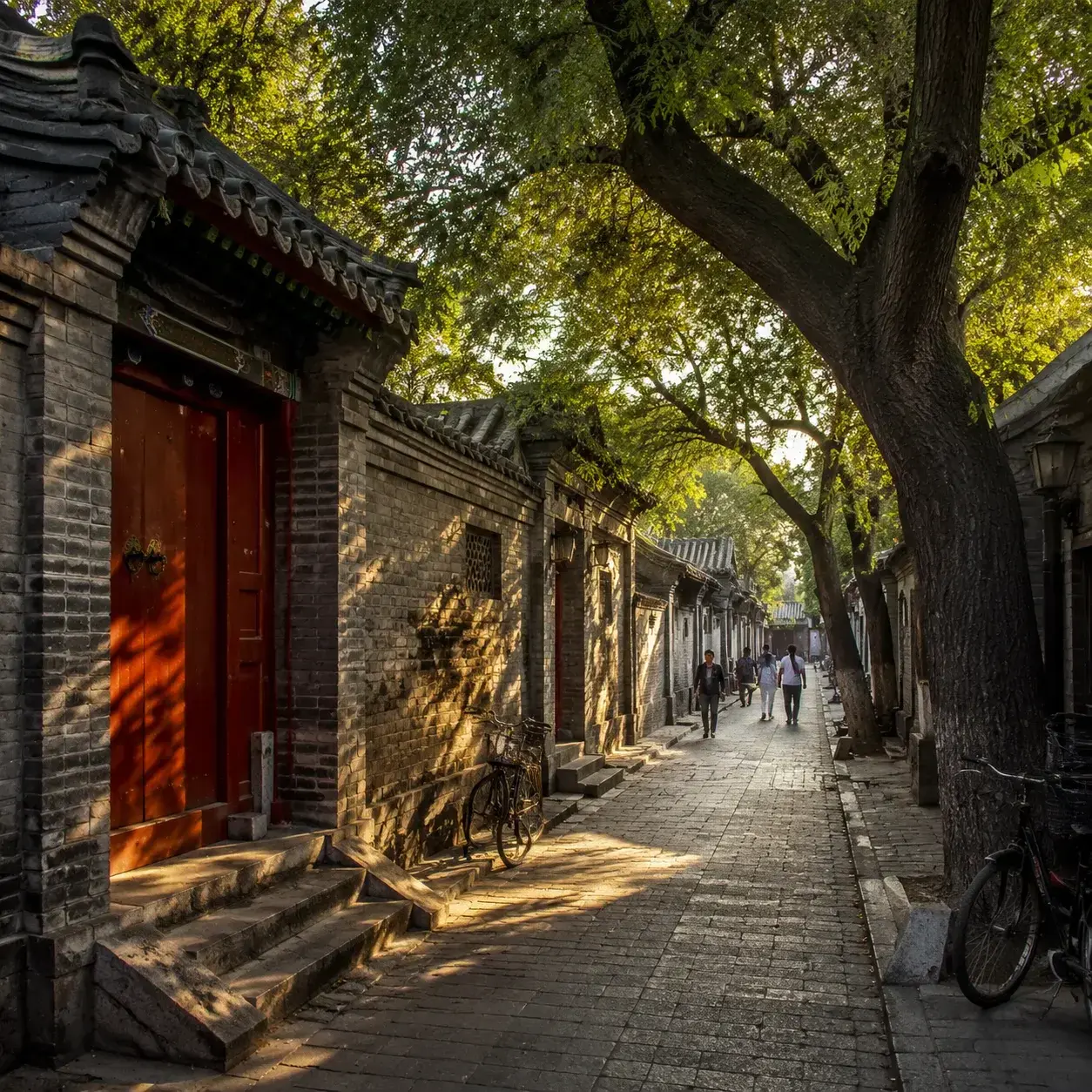
 Beijing hutongs are not one single experience. A crowded walk through Nanluoguxiang, a quiet lane near the old waterways, a spring flower route around Wudaoying, and a food crawl in Niujie can feel like four different cities. The best hutong route is not always the most famous one; it is the one that fits your day, energy, season, appetite, and tolerance for crowds.
This guide breaks down the best Beijing hutong walking routes by interest, helping you choose the right path rather than just following the most obvious tourist signs.
| Interest | Best route / area | Time needed | Best season | Crowd level | Best for | Avoid if |
|---|---|---|---|---|---|---|
| First-time overview | Drum Tower → Zhuzhong Hutong → Beiluoguxiang → Shoubi Hutong → Nanluoguxiang → Shichahai | 2–3 hours | Year-round, better in spring/autumn | Medium to high near Nanluoguxiang | First or second-time visitors | You want completely quiet lanes |
| Spring flowers and photos | Xiaojingchang Hutong → Fangjia Hutong → Guozijian → Wudaoying Hutong | 2–3 hours | Late spring to early summer | Medium | Photography, flowers, slow walking | You are visiting outside flower season |
| After Forbidden City / Qianmen | Xixinglong Street → Sanlihe Park → Qianmen Street → Yangmeizhu Xiejie | 2–3 hours, or split across two days | Spring/autumn; summer afternoons can be hot | Medium around Qianmen, calmer in side areas | A lighter afternoon after major sights | You want a major attraction-heavy afternoon |
| Cafés, bookstores, design shops | Yangmeizhu Xiejie, Wudaoying Hutong, Xixinglong Street | 1.5–3 hours | Year-round, better in mild weather | Medium | Design-minded travelers and slow afternoons | You expect a long continuous walk |
| Food-first route | Niujie and Huguosi Street | 1.5–3 hours | Year-round | Medium to high at meal times | Beijing Muslim food, snacks, practical eating | You dislike queues, lamb/beef-heavy food, or functional food streets |
| Quiet history | Dongjiaominxiang, Dongbuyaqiao Hutong, Beihe Hutong, Doufuchi Hutong, Dazhiqiao Hutong | 1–2.5 hours | Year-round; avoid hot midday in summer | Low to medium | Repeat visitors, architecture/history lovers | You need many cafés and shops |
| Nanluoguxiang | Short connector, not the whole hutong experience | 20–45 minutes | Year-round, go early if possible | High | First-time orientation | You expect quiet residential atmosphere |
Best Beijing Hutong Routes at a Glance

How to Choose the Right Hutong Route
Choosing a route depends heavily on what you have planned for the rest of the day. If you want to combine hutongs with the Forbidden City, Qianmen, Drum Tower, food, and hotel transfers, a private Beijing itinerary can save time and reduce walking fatigue. Otherwise, pick a route based on your immediate priority: do you want to eat, take photos, sit in a café, or just escape the crowds?
The lanes wrap around the palace — our  Forbidden City map and walking route shows where the walk starts and which gate you exit from.
Route 1: Drum Tower to Shichahai for First-Time Visitors
| Detail | Recommendation |
|---|---|
| Best for | A readable introduction to Beijing's alleyways |
| Time needed | 2–3 hours |
| Start | Drum Tower |
| End | Shichahai |
| Best time | Year-round, but late spring offers the best weather |
| Transport note | Check the best subway or car drop-off point before you go. |
| Avoid if | You want completely quiet lanes or are visiting during a peak national holiday |
| Good add-on | A climb up the Drum Tower before starting the walk |
This is the best first-time or second-time hutong route. It gives a readable introduction without forcing you to spend the whole time on Nanluoguxiang. The route order is simple: Drum Tower → Zhuzhong Hutong → Beiluoguxiang → Shoubi Hutong → Nanluoguxiang → Shichahai.
In late spring, Zhuzhong Hutong often has roses, and Beiluoguxiang and Shoubi Hutong feature climbing roses over the grey brick walls. These flower details are seasonal and not guaranteed year-round, but the architecture remains striking.
Use Nanluoguxiang as a connector, not the entire experience. Depending on your crowd tolerance, spend around 20–45 minutes walking through it before escaping into the quieter side lanes.
Local planning note: If this is your only hutong walk in Beijing, do not spend it entirely on Nanluoguxiang. Walk through it, then continue into nearby lanes and toward the lakes of Shichahai.
Route 2: Xiaojingchang to Guozijian for Spring Flowers
| Detail | Recommendation |
|---|---|
| Best for | Photography, slow walking, and seasonal blooms |
| Time needed | 2–3 hours |
| Start | Xiaojingchang Hutong |
| End | Wudaoying Hutong |
| Best time | Late spring to early summer |
| Transport note | For a private trip, a car drop-off at the start and pick-up near the end may be easier than backtracking. |
| Avoid if | You are visiting outside the flower season and expect the same visual payoff |
| Good add-on | Confucius Temple and Guozijian Museum |
Best in late spring to early summer, the path goes from Xiaojingchang Hutong → Fangjia Hutong → Guozijian → Wudaoying Hutong.
Xiaojingchang and Wudaoying have beautiful banksia rose walls in season. Fangjia Hutong is known for the "heart tree," and Guozijian features wisteria in spring. When the timing is right, it is excellent for travelers who enjoy photography, slow walking, old facades, and browsing small creative shops.
Wudaoying is suitable for cafés and small shops, but it is a commercial and creative street, not an untouched residential lane.
Local planning note: Don’t plan this as a fast A-to-B walk. It is better if you are willing to pause for doorways, vines, small shops, and short coffee breaks.
Route 3: Xixinglong Street to Yangmeizhu Xiejie After the Forbidden City
| Detail | Recommendation |
|---|---|
| Best for | A relaxed afternoon decompression |
| Time needed | 2–3 hours, or split across two days |
| Start | Xixinglong Street |
| End | Yangmeizhu Xiejie |
| Best time | Spring/autumn; summer afternoons can be hot |
| Transport note | Check the best subway or car drop-off point before you go. |
| Avoid if | You want another big, formal attraction |
| Good add-on | A coffee stop at Fusan |
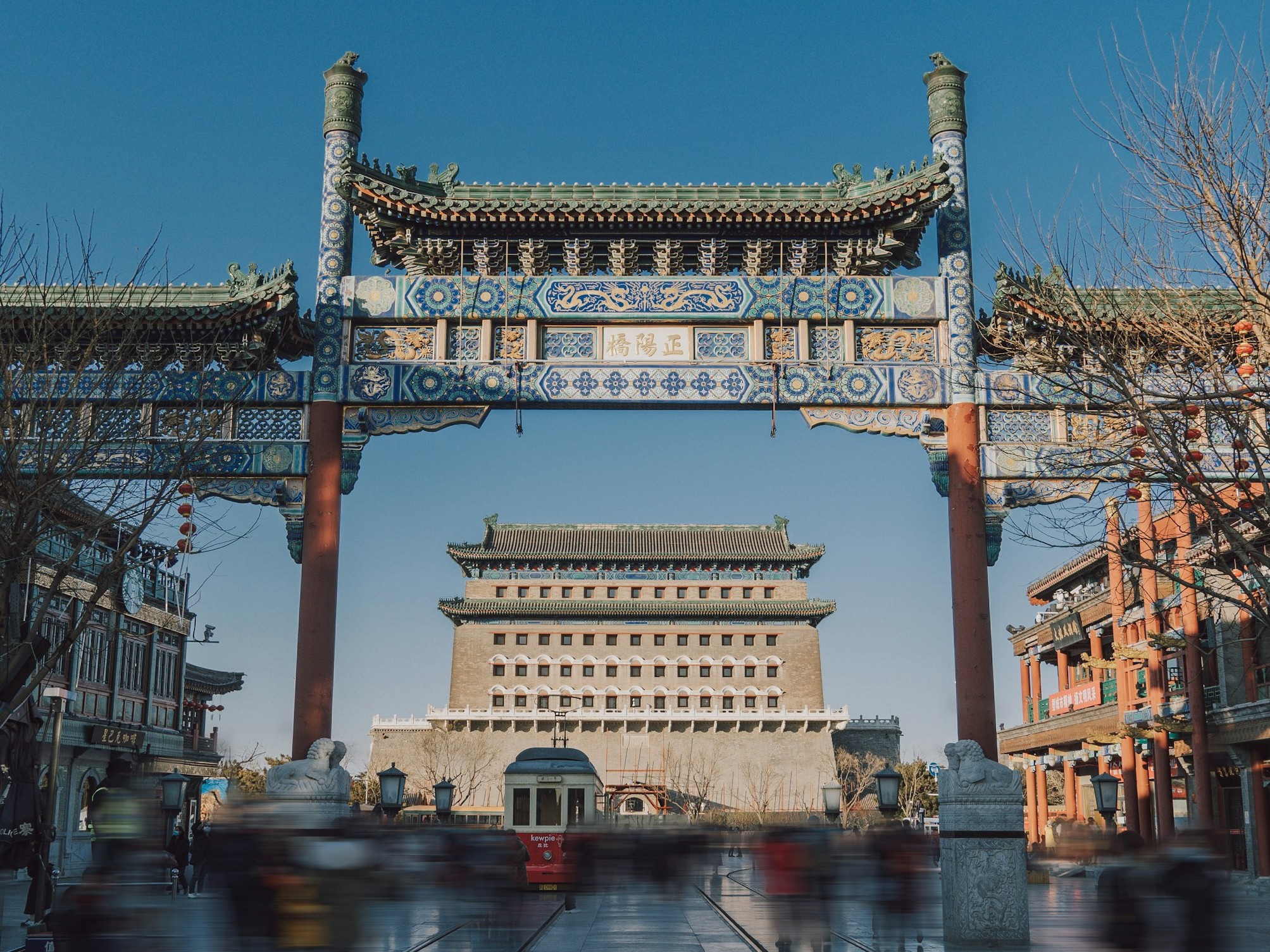
This route works well after the Forbidden City, Tiananmen, or Qianmen because it is lighter than adding another major attraction. The path follows Xixinglong Street → Sanlihe Park → Qianmen Street → Yangmeizhu Xiejie.
Xixinglong Street is close to Qianmen and Yangmeizhu Xiejie but remains relatively quiet. Fusan Coffee is a key stop here; it has a downstairs blue-toned space and an upstairs siheyuan rooftop. Be aware that summer afternoons here can be hot and quiet.
Sanlihe Park is small, with a gentle water-and-bridge atmosphere. It is useful as a resting place rather than a major park. Yangmeizhu Xiejie is under 500 meters long but rewards lingering.
Planning note: After a Forbidden City morning, the issue is not finding one more "important" place; it is avoiding a tired afternoon. This route should feel like decompression.
Route 4: Yangmeizhu, Wudaoying, and Xixinglong for Cafés and Small Shops
If your priority is coffee, design, and browsing, these three areas are the main contenders. They are not identical, and choosing the right one depends on your mood.
| Area | Best for | Atmosphere | Caution / avoid if |
|---|---|---|---|
| Yangmeizhu Xiejie | Lingering, independent design, bookstores | Compact, under 500m, historic but updated | You want a long, continuous shopping street |
| Wudaoying Hutong | Cafés, browsing, small shops | Commercial, creative, near Yonghe Temple | You expect an untouched, purely residential old lane |
| Xixinglong Street | A quiet reset, rooftop coffee | Quieter, more sparse than the others | You need constant retail stimulation |
Yangmeizhu Xiejie is better for lingering than rushing. Notable stops include Yijie Yesheng Coffee, Soloist, Qiankun Space, the Zi’an Ex Libris Museum, and the Tu’er Ye shop. PageOne bookstore is nearby and has a good view of Zhengyangmen, though it does not allow camera photography.
Wudaoying Hutong is highly convenient if you are already visiting the Yonghe Temple, Guozijian, and Confucius Temple area.
Xixinglong Street is quieter and more sparse. Fusan Coffee is a key reason to go, making it better as a reset after Qianmen or the Forbidden City than as a long shopping street.
Note: Shop policies and layouts in Beijing’s hutongs can change; it’s always worth a quick check before you head out.
Route 5: Niujie and Huguosi Street for Food
If food is the priority, Niujie and Huguosi Street are usually better than Nanluoguxiang.
Think of Niujie not as a scenic stroll, but as a culinary errand. It’s rooted, functional, and deeply satisfying if you come with an appetite.
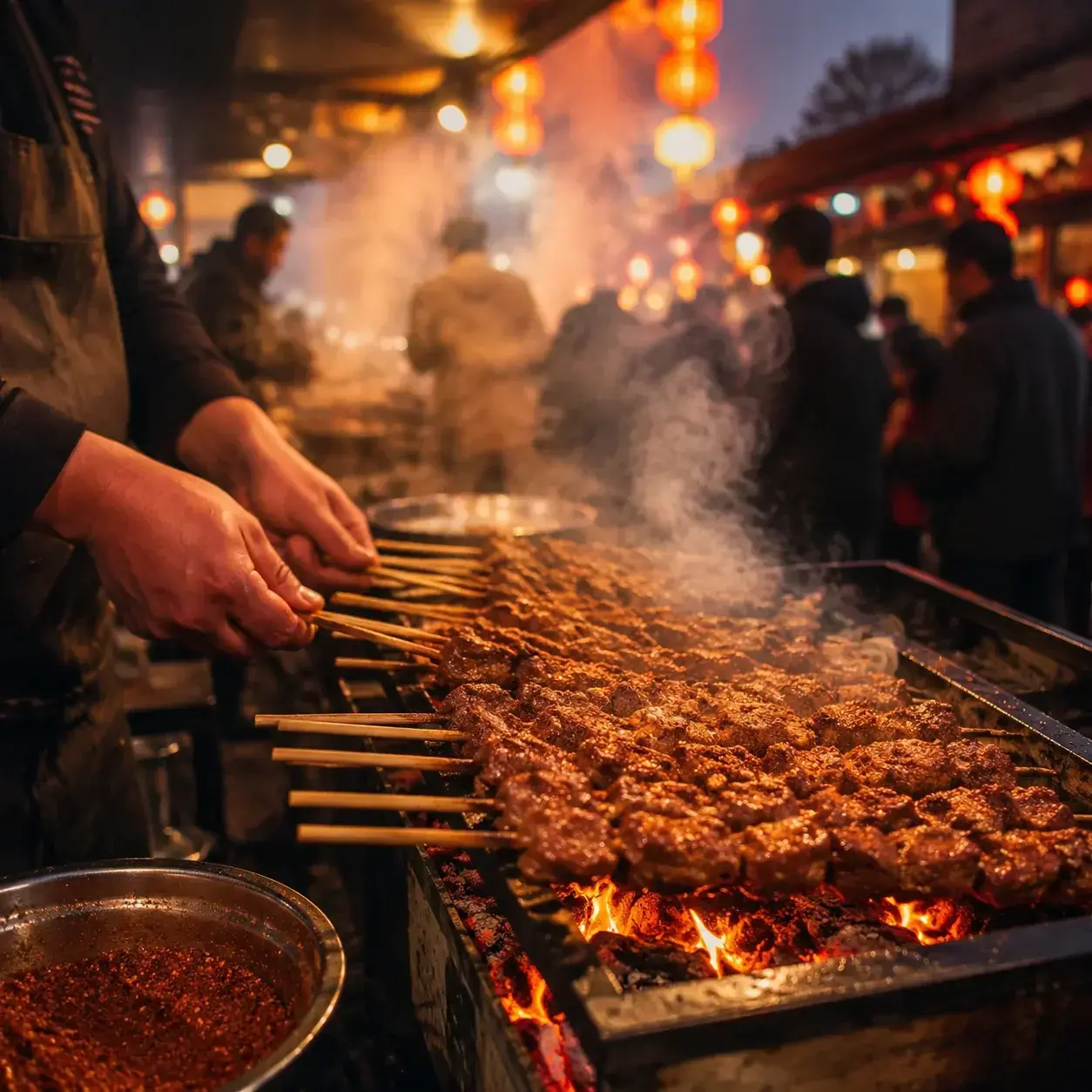
About 1 km long, Niujie is a Beijing Muslim food area with halal food, beef and lamb dishes, buns, hotpot, cakes, snacks, and practical food shops. It is better for serious eaters than for polished café-style wandering.
If you want to eat at Ju Baoyuan, it is best before 11 am if you are trying to avoid queues.
Hongji Baozi may require around 30 minutes of waiting.
First-time visitors can start with hotpot, beef buns, rice cakes, sesame-sauce noodles, or halal snacks instead of jumping directly into more challenging Beijing snacks.
Avoid if: You are vegetarian, dislike lamb/beef, or hate queues.
Huguosi Street has fewer tourists than Nanluoguxiang and better practical food options. It is an easier entry point than Niujie for many first-time visitors. You can find the Mei Lanfang Memorial Hall, Mei Coffee, Jinyunzhai rose almond drink, Baoguang smoked-meat shaobing, and the Xinchuan Noodle House. The Huguosi snack experience is classic, but keep in mind that some traditional Beijing snacks may not suit every foreign traveler.
A local guide can help with ordering, queue timing, and choosing dishes that fit your comfort level, especially in these busy, practical food streets.
Route 6: Dongjiaominxiang and Quiet Lanes for History
These quiet routes offer atmosphere and space rather than a dense lineup of shops and cafés.
Dongjiaominxiang features Legation-era architecture, which is completely different from the classic courtyard hutong mood. It is good for history and architecture lovers, but it is not a café or shopping district. It is best for repeat visitors or those wanting a quieter urban-history walk.
Dongbuyaqiao Hutong and Beihe Hutong run along the Yuhe waterway. A practical walk from Wanning Bridge to Beihe Hutong is roughly 1.1 km. It has water, old-city texture, and a calmer feel than busier tourist lanes. There can be mosquitoes near the water in summer.
Doufuchi Hutong sits near the Bell and Drum Tower area. You can pass by the Hong'en Guan area, a restored cultural space. Nearby is the Zhaofu Street grocery store, which retains a nostalgic state-run style, selling sesame oil, sesame paste, erba sauce, and soybean paste.
Dazhiqiao Hutong is a historical and cultural route. It is better for repeat visitors or people interested in old guild halls, legal history, or architectural fragments. Note that not all historic buildings are open to the public.
Avoid these routes if: You need constant cafés, shops, or obvious attractions.
Is Nanluoguxiang Worth Visiting?
Nanluoguxiang is worth seeing once for many first-time visitors because it is central, easy to reach, and useful as a connector. However, it is not the whole hutong experience. The main street is commercial and crowded, and it can disappoint travelers expecting quiet old residential lanes.
Best strategy: Pass through, then spend more time in side lanes, Beiluoguxiang, Shoubi Hutong, Drum Tower, and Shichahai. Suggested time is 20–45 minutes unless you have a specific reason to stay longer.
Avoid if: You want quiet residential lanes or hate crowds.
Can You Visit Beijing Hutongs Without a Guide?
Yes, most hutong areas can be visited independently. A guide is not necessary for simply walking Nanluoguxiang, Wudaoying, Yangmeizhu, or Shichahai.
A guide or private planner becomes more useful when:
Combining hutongs with the Forbidden City, Qianmen, Drum Tower, or hotel transfers
Traveling with older parents or children
Managing walking distance
Timing spring flower routes
Ordering food in Niujie or Huguosi
Understanding historical context in Dongjiaominxiang or older lanes
Avoiding backtracking across Beijing traffic
If you’re trying to weave these walks into a broader itinerary involving hotel logistics and major sights, we can help ensure the pacing doesn't turn your holiday into a marathon.
Planning a Hutong Walk as Part of a Private Beijing Trip
If you want hutongs to fit into a wider Beijing or China itinerary, a custom China trip can connect small-lane walks with major sights at a comfortable pace. The common mistake is treating a hutong walk as just another item to cross off a list, rather than matching the specific neighborhood to the time of day and your energy level.
FAQ
Which hutong walk is best for first-time visitors to Beijing?
The route from the Drum Tower through Beiluoguxiang, briefly down Nanluoguxiang, and ending at Shichahai gives the best overview of architecture, daily life, and the lakes without being overwhelming.
Is Nanluoguxiang too touristy?
Yes, the main spine is heavily commercialized and crowded. It is useful for orientation, but you should limit your time there to around 20–45 minutes and spend the rest of your walk exploring the intersecting side lanes.
What is the best hutong route near the Forbidden City?
Xixinglong Street to Yangmeizhu Xiejie is an excellent choice. It is close to Tiananmen and Qianmen, but offers a much quieter, slower pace that works perfectly for decompressing after a busy morning at the palace.
Can I visit Beijing hutongs without a guide?
Absolutely. If you just want to walk, take photos, and drink coffee in places like Wudaoying or Yangmeizhu, you can easily do it alone. A guide is mostly helpful for historical context, ordering specific local foods, or managing complex daily logistics.
How long should I spend in Beijing hutongs?
Plan for 2 to 3 hours for a standard walk. Anything longer usually requires a sit-down meal or a long coffee break to avoid fatigue.
Which Beijing hutong area is best for food?
Niujie is the top choice for serious eaters looking for halal food, beef buns, and hotpot. Huguosi Street is a slightly easier, less crowded alternative for traditional Beijing snacks.
Are Beijing hutongs free to visit?
Most hutong lanes are free to walk through. You only pay if you enter specific museums, temples, such as Guozijian, or sit down at cafés and restaurants.
Are hutong walks suitable for older travelers or children?
Yes, but you need to manage the distance. Choose shorter routes like Yangmeizhu Xiejie, or ensure you have a vehicle ready at the end of a one-way walk so you don't have to backtrack to a subway station.
What is the best season for Beijing hutong walks?
Spring, from April to May, and autumn, from September to October, offer the best weather. Late spring is specifically the best time for flower routes around Xiaojingchang and Wudaoying.
Which hutong area is best for cafés and small shops?
Wudaoying Hutong and Yangmeizhu Xiejie have the best concentration of independent cafés, design shops, and bookstores. Xixinglong Street is a quieter alternative with a few excellent coffee spots.