



 18 days China, End to End Beijing → Xi'an → Chuanzhusi → Jiuzhaigou → Chengdu → Zhangjiajie → Guilin → Yangshuo → Shenzhen From $6,360 View route
  3 days 4-Day Tour of Siguniang Mountain, Biepa Gou, and Dagu Glacier Chengdu → Lixian → Heishui County From $1,599 View route
  5 days Above the Pillars, Then Below Zhangjiajie From $1,430 View route
  3 days After the Last Booth Guangzhou From $840 View route
  13 days All the Way West Xi'an → Dunhuang → Turpan → Kashgar → Shanghai From $3,500 View route
 For many international travelers, the first real culture shock in China doesn’t happen at a temple or a museum. It happens at 2 AM on a Tuesday.
You are walking down a brightly lit street. A few feet away, a group of friends is sitting on plastic stools, laughing over a massive plate of barbecue. A nearby convenience store hums with customers buying late-night snacks. People are moving between bars, waiting for a ride, or simply taking their time walking home. And suddenly, you realize what you are feeling: an unusual sense of ease.
This level of everyday safety—where you feel less need to constantly scan the street than in many big cities elsewhere—is one of the most liberating aspects of China’s nightlife. You don’t have to map out the "safe" streets to walk down. You just get to exist in the city, exactly as the locals do, long after the sun goes down.
But the night itself is not a monolith. Different Chinese cities become entirely different people after dark. Here is what it actually feels like to go out in four of the country’s best cities for nightlife.
Chengdu: The City That Drinks Slowly and Stays Relaxed
Chengdu operates on its own frequency. Even when the music is loud, the city somehow remains entirely loose. This is a place where nightlife isn't about standing behind a velvet rope trying to look important; it’s about reaching that pleasant, floating state of tipsiness the locals call er ma.
If you want the high-voltage, paper-confetti-falling-from-the-ceiling electronic club experience, you head to the area around 339 (Chengdu TV Tower). But for most people, a good night here is about movement. Wander around Jiuyan Bridge or Lan Kwai Fong, and you’ll find friends fluidly bar-hopping, walking from a polished cocktail lounge to a noisy beer bar without committing to one venue for the whole evening.
The real soul of Chengdu drinking, though, is found in Chinese-style cocktail taverns. Here, you aren't ordering a martini. Some drinks arrive looking exactly like tea in lidded ceramic bowls, while others taste like innocent fruit juice or milk tea right up until the alcohol quietly catches up with you later. If you prefer sound over bottle service, the streets near the Sichuan Conservatory of Music hold intimate live houses where crowds raise their phone lights to sing along with local indie bands. And if you wander over to Kehua North Road or the Poly Center area, you'll stumble into underground alternative bars that look intimidatingly cool from the outside but are surprisingly welcoming once you sit down.
Go if you want playful, casual bar-hopping, live music, and a night that feels like a long hangout. Skip if you are looking for ultra-polished, quiet, romantic riverfront glamour.
Changsha: Where Dinner is Just the Warm-Up
If Chengdu is relaxed, Changsha is pure, sleepless adrenaline powered by chili peppers and sugar. This city seems to have quietly deleted the sleep function altogether.
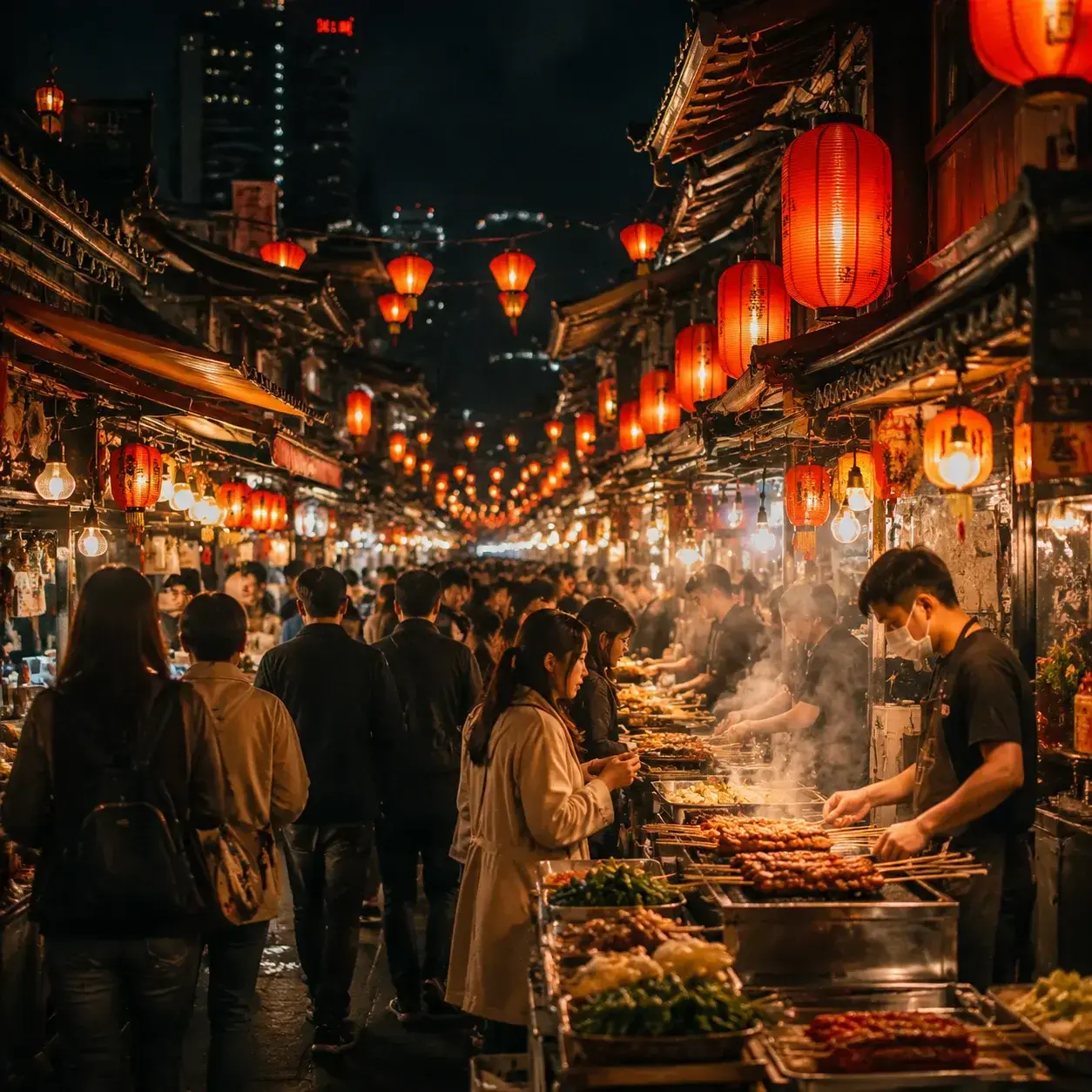
At 10 PM, the streets are still packed with people holding massive cups of local milk tea. At 11 PM, the night markets are bustling with shouting vendors, and locals are sitting by the roadside with cold beer. In another city, rain might thin the crowd. In Changsha, it mostly adds umbrellas to the queue. Here, dinner is not the end of the day; it is just the warm-up.
The energy centers around food. Walk into Dongguashan Night Market, and the air is thick with the smoke of barbecue stands. You'll find people eating spicy fried skewers, hot braised snacks, and intensely refreshing zisu (perilla) peach fruit snacks to cool their mouths down. When you are finally full, Jiefang West Road is waiting. This is the epicenter of Changsha’s bar and club scene—loud, crowded, and unapologetically fun.
For a brief visual break from the neon, you can watch the traditional Du Fu Jiangge pavilion light up against the dark water of the Xiangjiang River, a quiet anchor in a city that refuses to stop moving.
Go if you want to eat street food at midnight and don't mind massive, bustling crowds. Skip if you want a quiet, early night or if you hate spicy food.
Shanghai: Glamour, Jazz, and Sidewalk Wine
Shanghai’s nightlife is beautifully layered. It can be all gold lights and river wind one moment, and a tiny, dimly lit wine bar under canopying plane trees the next.
The classic Shanghai night often starts near the water. Walking The Bund after dinner gives you that sweeping, cinematic view of the illuminated skyline. But the real, lived-in heartbeat of the city’s nightlife happens tucked away on leafy streets like Changle Road and Julu Road. Here, the street outside is often half the experience. People stand by the curb with a glass of natural wine or a craft beer in hand, talking to strangers as if the sidewalk has temporarily become a shared living room.
Shanghai also holds onto its history through music. Step into one of the city’s jazz bars, with their red curtains and low lamps, and the whole room seems to slow down, echoing the romance of the 1920s. For a quieter evening, you can find some bookstores and cultural spaces that stay open late enough to give the city a slower, literary second act.
Go if you are looking for stylish cocktail bars, intimate neighborhood wine spots, jazz, and diverse, walkable nightlife. Skip if you are a budget backpacker looking for cheap, chaotic street-party vibes.
Beijing: Smoky Skewers and Old-City Order
Beijing’s nightlife is less flashy than Shanghai’s or Chengdu’s, but it is rich in community, comfort food, and old-city atmosphere. The charm here comes from the food and the people. The best Beijing nights usually begin with someone saying, "Let’s just grab something small," and end three hours later surrounded by empty skewer sticks.
The night markets here are smoky, practical, and full of people who came not to pose, but to eat. Niujie (Ox Street) is the heart of Beijing’s Muslim community. You need to come here earlier in the evening, as shops close sooner than typical night markets, but the freshly pan-fried beef buns and halal pastries are worth adjusting your schedule for. For a more classic, bustling market experience, Lishuiqiao and Shenghuatun Night Markets offer grilled skewers, regional Chinese street food, and massive cups of fruit tea.
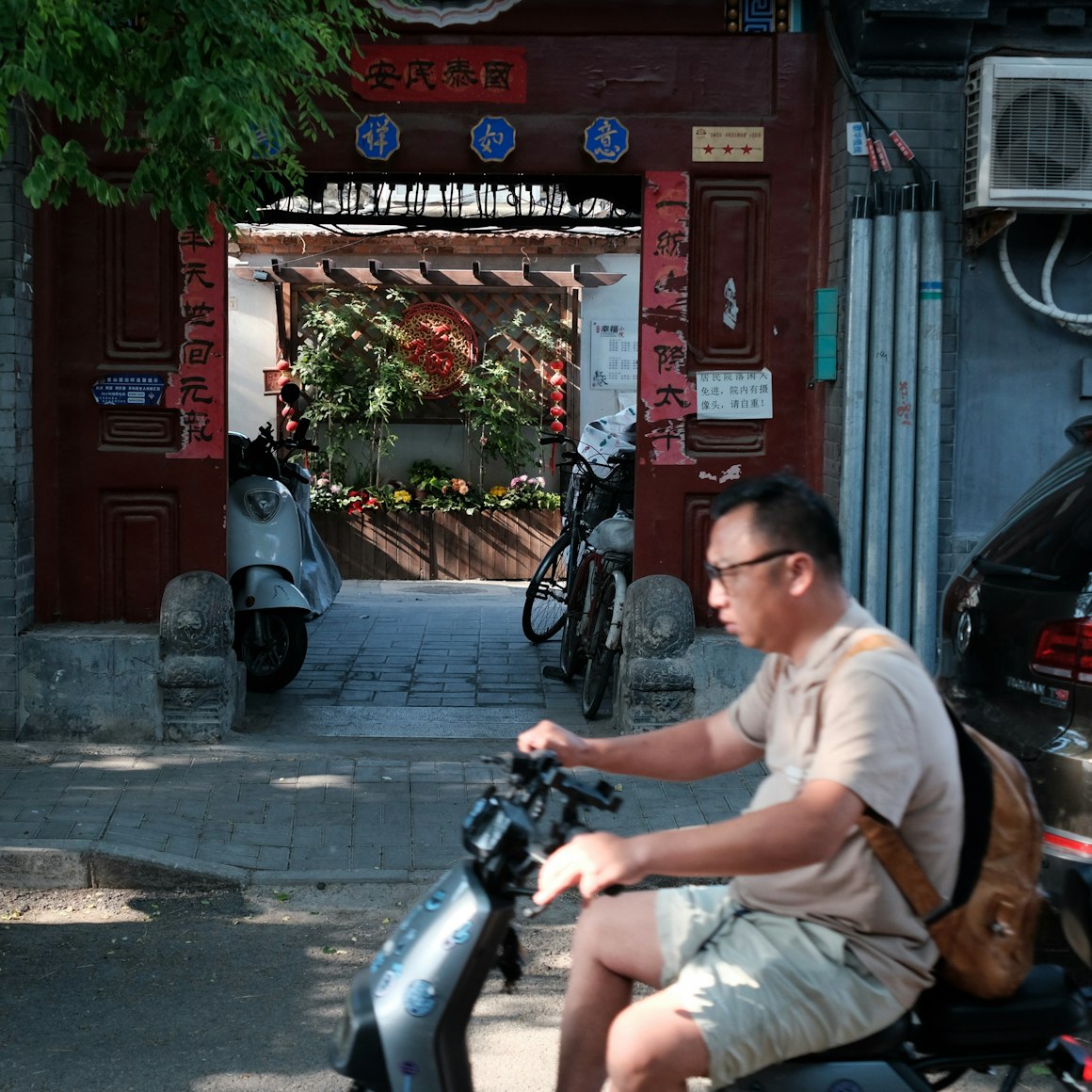
If you want a quieter night, a walk through the hutongs (historic alleyways) under the dim streetlights, combined with a stop at a hidden dessert shop or a tiny craft beer pub, feels incredibly grounded. And if you do want an international, polished bar scene, Sanlitun is the standard, reliable option—though it’s not where you go for the real, grounded Beijing food atmosphere.
Go if you are a food lover or culture seeker who prefers a grounded, local evening atmosphere. Skip if you are looking for massive, multi-story electronic clubs as the main event.
Practical Tips for the Night Owl
Navigating a new city at night is easier when you know the rhythm. Night markets usually wake up around 5–6 PM and peak after 8 PM. Bars start filling up around 9 PM, while the bigger clubs often don't hit their stride until midnight.
For getting around, the metro is your best friend early in the evening. After midnight, switch to ride-hailing apps like Didi (which has an English interface) or grab a taxi.
China is largely cashless, which makes buying a \$2 skewer at 1 AM infinitely easier. Set up Alipay or WeChat Pay before you go. Also, always carry your passport (or at least a clear photo of the information page), as many bars and clubs will check it at the door.
Finally, when you are at a night market, the shouting, the crowds, and the language barrier can feel overwhelming. Don't let it stop you. Pointing at what looks good on someone else's table is a universally understood language.
The Best Way to Understand China Might Be After Dinner
Daytime China gives you the history: the museums, the temples, the Great Wall. But nighttime China gives you the humanity. It shows you how people actually live—how they eat, drink, walk, sing, flirt, complain, laugh, and refuse to call it a night.
If you want to experience this safe, vibrant night culture but feel overwhelmed by the thought of navigating midnight transport or translating local menus, we can help you fold the right kind of evening into your China trip—whether that means jazz, skewers, river views, or simply knowing where to go after dinner.