





 18 giorni Cina, da capo a fondo Pechino → Xi'an → Chuanzhusi → Jiuzhaigou → Chengdu → Zhangjiajie → Guilin → Yangshuo → Shenzhen Da $6,360 Vedi itinerario
  14 giorni A cosa serve ogni città Pechino → Xi'an → Chengdu → Shanghai → Shenzhen → Canton Da $5,030 Vedi itinerario
  19 giorni A valle del futuro Shenzhen → Guilin → Yangshuo → Chengdu → Chongqing → Yichang → Shanghai Da $5,360 Vedi itinerario
  5 giorni A valle, poi in salita Guilin → Yangshuo Da $1,600 Vedi itinerario
  8 giorni Acqua tranquilla, città veloce Shanghai → Yangshuo → Shenzhen Da $2,350 Vedi itinerario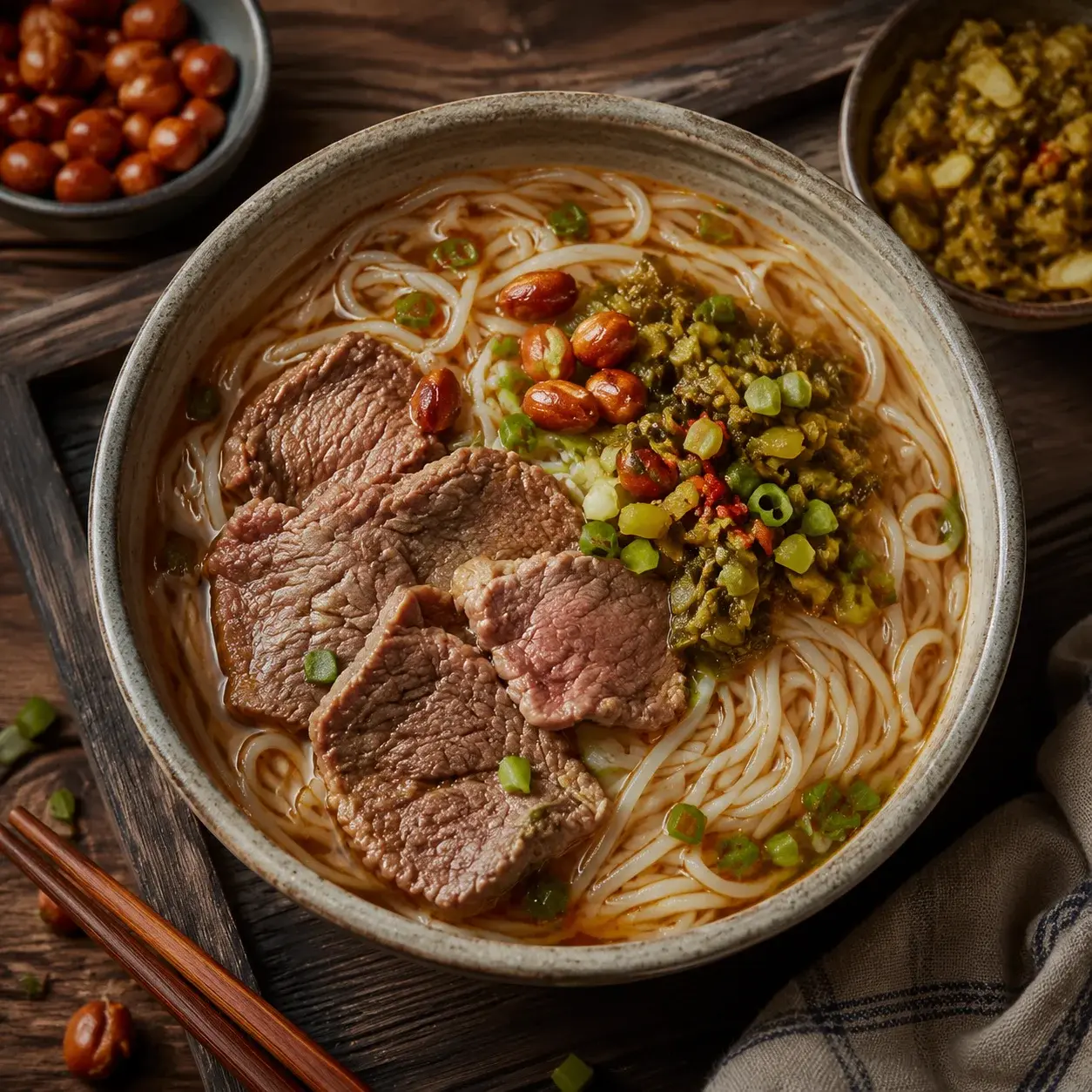
Che cos'è i mifen di Guilin — e come ordinarli come un locale?
**I mifen di Guilin (桂林米粉 mifen) sono la colazione emblematica della città: riso bianco morbido servito con un brodo speziato segreto del ristorante chiamato 卤水 lǔshuǐ, accompagnato da carne affettata, arachini tostati e verdure sottaceti. Si ordinano in base al peso, si aggiungono i condimenti preferiti e — regola locale — il brogo va versato per ultimo. Questa guida spiega prima il rituale dei mifen, poi tutto ciò che vale la pena mangiare a Guilin e Yangshuo.
A LyrikTrip inviiamo i viaggiatori a Guilin per gli scenery cars告诉他们 non perdere la colazione — il rituale dei mifen è quel dettaglio locale che i primi visitatori spesso trascurano.**
La maggior parte dei visitatori viene a Guilin per i picchi carsici e la crociera sul fiume Li e considera il cibo come un'idea secondaria. È un errore, perché la regione ha una delle scene gastronomici più distintive della Cina meridionale — una colazione di noodle a cui i locali sono fieramente fedeli e, un fiume giù a Yangshuo, un pesce alla birra che è una portata di destinazione a sé stante.
La nostra posizione è semplice: osare mangiare, mangiare bene. Non siamo un sito di ricette e non ti vendiamo un menu fisso. Siamo qui per aiutarti a prendere buone decisioni — cosa ordinare, dove è autentico e dove è una trappola per turisti, come ordinare senza parlare la lingua e approssimativamente quanto budgetizzare. Avventura con una rete di sicurezza.
Punti salienti
- I noodles al riso di Guilin (mifen) sono un pasto tradizionale del Guangxi — si mangiano in piedi, presto e in fretta. L'anima del piatto è il brodo speziato lǔshuǐ (卤水) prodotto dal locale.
- Ordina per peso, non per tazza. Chiedi una porzione standard di due liang (èr liǎng, circa 100g), aggiungi poi i condimenti a piacere e versa il brocado alla fine.
- Guilìn è una città per la colazione, Yangshuo è una città per la cena. Gusta i mifen a Guilìn al mattino; riserva il pesce alla birra di Yangshuo (啤酒鱼) per una serata lungo il fiume.
- Sulla West Street (西街) di Yangshuo, salta i caffè occidentali per backpacker — opta invece per il pesce alla birra e i noodle al riso, che sono le specialità vere della strada.
- I prezzi sono contenuti. Un piatto di mifen costa da pochi RMB fino a circa 15; il pesce alla birra, piatto condiviso, costa all'incirca 55–110 RMB a persona. Le cifre sono approssimative, riferite al 2026 e possono variare da locale a locale.
- Questa zona non è piccante come il Sichuan o l'Hunan: il peperoncino è opzionale e va aggiunto da te, a differenza delle regioni vicine.
Cosa sono esattamente i noodle al riso di Guilin?
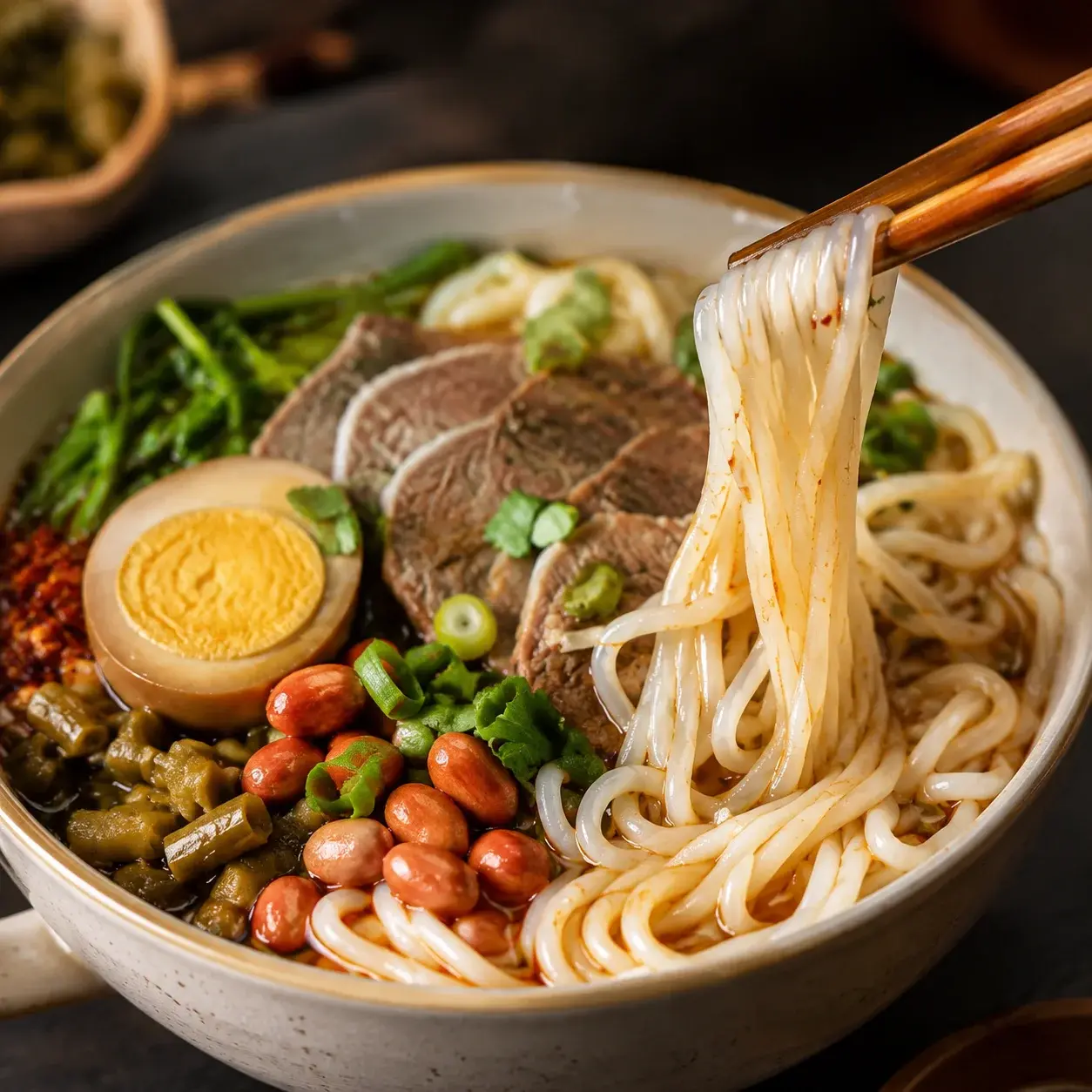
Sono bianchi, rotondi o piatti, fatti di riso, cotti al momento e conditi con un profumato brodo brasato (lǔshuǐ,卤水), non una zuppa come nei piatti occidentali. I noodle al riso di Guilin sono un pasto tradizionale del Guangxi, venduti fin dalle prime ore del mattino in negozi specializzati che spesso non offrono altro (Fonte: Wikipedia, "Guilin rice noodles." Ultimo controllo: 2026-07).
Quello che bisogna capire è che il mifen è fondamentalmente un noodles asciutto condito, non un noodle in brodo — almeno nella sua forma classica di lǔcài fěn (卤菜粉, "noodles con condimento brasato"). Il brodo non è una ciotola di liquido da sorseggiare; è un piccolo, intenso e profumato liquido di brasatura che riveste i noodles. È per questo che la procedura di ordinazione qui sotto è così importante e perché il brogo va aggiunto per ultimo.
Ogni bottega custodisce la propria ricetta di lǔshuǐ (卤水) — una miscela cotta a fuoco lento di soia, spezie e aromi — e i locali scelgono regolarmente proprio quella bottega per quel brodo. I condimenti standard sono carne di manzo o maiale brasata a fette, arachini tostati croccanti e soia fritta, fagioli lunghi o senape sottaceti (酸豆角/酸笋), scallioni, e spesso un lǔdàn (卤dàn), un uovo brasato speziato). La versione asciutta è predefinita; puoi chiedere che venga servita con brodo (加汤, "con brodo aggiunto") se preferisci.
Come ordinare i noodles al riso di Guilin come un locale?
Ordina per peso, prendi gli noodles asciutti, carica i tuoi condimenti dal banco comune, aggiungi il brodo o il chili alla fine — mai all'inizio. Ecco la sequenza esatta che un locale compie senza pensare, spiegata per un primo tempo.
| Passo | Cosa fare | Frase / dettaglio | Perché è importante |
|---|---|---|---|
| 1. Ordina per peso | Chiedi una porzione in liǎng (~50g). Due liǎng (~100g) è lo standard; chi ha fame può chiedere tre liǎng (~150g). | Mifen a due liǎng (èr liǎng mǐfěn) | Il mifen è venduto e dosato per peso, non per "c" — è la scelta più locale |
| 2. Scegli il condimento base | La versione classica è il lǔcài fěn, noodles con carne brasata. Puoi aggiungere un lǔdàn, l'uovo speziato. | Lǔcài fěn · con lǔdàn | Definisce la base del piatto prima di personalizzarlo |
| 3. Inizia asciutto | Arriva condito con il liquido di brasatura, non in brodo. | Gānbàn (asciutto mescolato) è l'opzione predefinita | Il brodo è un condimento, non una zuppa — sorprinde i primi timidi |
| 4. Aggiungi tu i condimenti | Al banco, prenditi noci arrosto, soia fritta, fagioli lunghi sottaceti / senape acida, cipollotti. | Gratis, self-service nella maggior parte dei negozi | Qui costruisci sapore e croccantezza — mettile tutte |
| 5. Aggiungi chili al gusto | Olio di chili o chili sottaceti sono sul banco. Il piatto NON è già speziato. | Làjiāo, opzionale | Controlli il calore — il cibo di Guilin non è piccante di default |
| 6. Aggiungi brodo alla fine | Solo dopo aver mescolato e assaggiato versi il brodo leggero dall'urna comune. | Jiā tāng (aggiungi brodo) | Aggiungere il brodo prima soffoca il condimento di brasatura — gli abitanti lo mangiano asciutto, poi aggiungono brodo alla fine
La regola da ricordare per prima: il brodo si aggiunge per ultimo. I principianti hanno istintivamente voglia di una zuppa, versano immediatamente il brodo e rovinano l'essenza del piatto — il condimento concentrato a cottura lenta. Mangialo asciutto mescolato per primo, aggiungi cetriolini e arachidi, poi completa con il brodo leggero in condivisione solo alla fine. Famosi ristoranti locali come Laodong Jiang Mifen seguono esattamente questo rituale al banco — si ordina per peso, si aggiunge autonomamente, il brodo per ultimo, tavoli condivisi — e menzionarlo ottiene un cenno di approvazione. Questo schema di ordinazione è sempre valido; servono solo le orari di apertura e i prezzi specifici del negozio da controllare quel giorno.
Cosa mangiare a Guilin e Yangshuo?

Inizia la colazione con mifen, prenota il pesce alla birra per cena a Yangshuo, e riempi i vuoti con lumache ripiene, maiale al taro e, se hai occasione, con l'olio-tea etnico della regione. Qui è decodificato il canone regionale per un primo visitatore: cosa sia ogni piatto, dove appartenga e un prezzo approssimativo. Trattiamo ogni piatto come un'esperienza sul posto, non come una ricetta.
| Dishes (EN / Chinese) | What it is | Where / when | Approx. RMB (2026) |
|---|---|---|---|
| Guilin rice noodles 桂林米粉 (mifen) | Rice noodles with braised broth, meat, peanuts, pickles, spiced egg | Guilin, breakfast (all day at some shops) | A few to ~15 / bowl (extra braised eggs a few RMB) |
| Beer fish 啤酒鱼 (píjiǔ yú) | Whole Li River fish braised with beer, tomato, chili, garlic — skin-on | Yangshuo, dinner; shared | ~55–110 / person as a shared centerpiece |
| Stuffed river snails 田螺酿 (tiánluó niàng) | River snails stuffed with a pork-and-mint mince, braised in a spiced sauce | Yangshuo / night markets, evening | ~30–60 / plate (shared) |
| Taro pork 荔浦芋扣肉 (lìpǔ yù kòuròu) | Steamed pork belly layered with Lipu taro — rich, melting, banquet-style | Home-style restaurants, dinner | ~40–70 / plate (shared) |
| Oil tea 油茶 (yóuchá) | Zhuang/Yao minority savory tea, pan-toasted and pounded, served with crispy bits | Countryside / minority-run spots | ~10–30 / serving |
| Night-market grazing | Grilled skewers, snacks, more snails | Guilin night market / Yangshuo streets, evening | ~5–20 / item |
Se devi mangiare solo una cosa, è il mifen — economico, veloce, ovunque e il vero sapore quotidiano della Guangxi. Il piatto da non perdere, quello che vale la pena pianificare una serata per esso, è il pesce alla birra di Yangshuo. E il colpo maestro è l'olio tè (油茶): un brodo salato, tostato e leggermente amaro in stile minoritario che la maggior parte dei visitatori non prova e che ti dice che sei nel territorio Zhuang. Le identità dei piatti e la loro origine sono senza tempo; i valori in RMB sono approssimativi, riferiti al 2026, e variano a seconda del negozio e dell'area turistica o locale.
Cos'è il pesce alla birra e perché è il simbolo di Yangshuo?
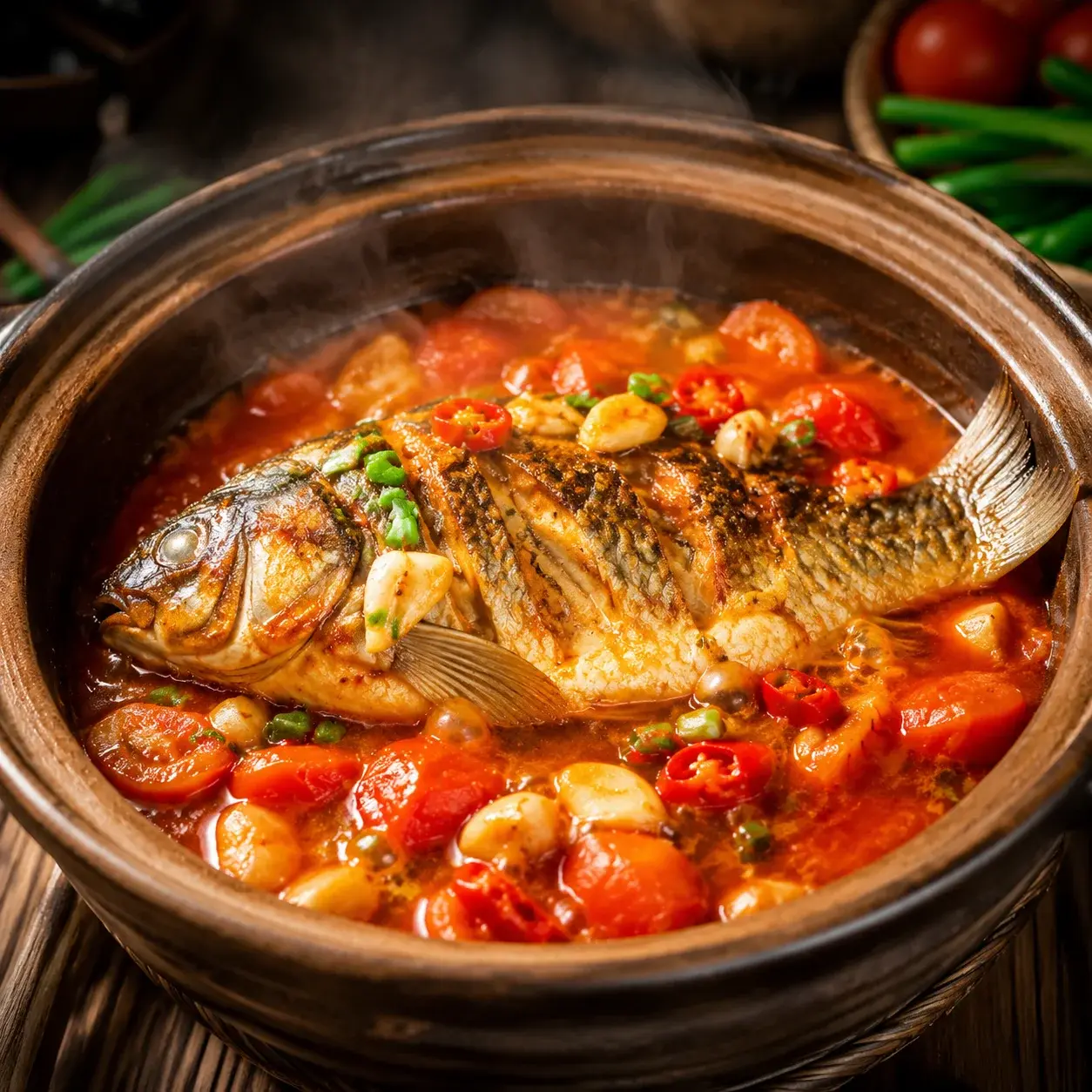
Il pesce alla birra (啤酒鱼) è un intero pesce d'acqua dolce — solitamente una carpa o un gatto del fiume Li — brasato con la buccia, birra, pomodori, aglio e peperoncino fino a ottenere una salsa ricca e acidula. È il piatto distintivo di Yangshuo, costruito intorno al pesce di cui il fiume Li è famoso. Questo è un piatto condiviso, non individuale: si ordina un pesce per il tavolo e si mangia con riso e verdura.
Alcuni consigli onesti per i principianti. Innanzitutto, il pesce viene tradizionalmente cotto con le squame rimaste — una caratteristica locale, non un errore — anche se molti ristoranti rivolti ai turisti lo squamano; chiedete se vi interessa. Secondly, it is bony, as river fish are, so eat slowly. Third, the "beer" is a braising liquid whose alcohol largely cooks off, leaving a malty depth rather than a boozy taste. The heat is moderate and adjustable — this is not Hunan-level fire — so you can ask for less chili (少辣 shǎo là).
Dove mangiarlo conta più della ricetta. Il pesce alla birra è migliore nei ristoranti sul fiume di e intorno a Yangshuo, idealmente la sera dopo una giornata in acqua. Questo ci porta alla geografia onesta del mangiare in questa regione.
Guilin o Yangshuo — dove si cosa si mangia?
Tratta Guilin come la tua colazione e Yangshuo come la tua destinazione per cena: mifen al mattino a Guilin, pesce alla birra sul fiume di Yangshuo di notte. E sulla West Street di Yangshuo, passa oltre i caffè occidentali per backpackers e mangia il cibo locale che la strada fa davvero bene. Ecco la suddivisione chiara.
| Guilin 桂林 | Yangshuo 阳朔 | |
|---|---|---|
| La sua identità culinaria | Città della colazione — capitale dei mifen | Città della cena — paese del pesce alla birra |
| Il piatto protagonista | Una ciotola di mifen al mattino, ordinata in base al peso | Pesce alla birra alla sera, lungo il fiume, da condividere |
| Miglior momento per mangiare | Mattina presto per i mifen (i locali li mangiano a colazione) | Sera, dopo il fiume Li o la campagna |
| Dove andare | Negozi locali di mifen; il mercato notturno di Guilin per una cenetta serale | Ristoranti di pesce alla birra sul fiume; West Street (西街) per piatti locali |
| Onesta avvertenza | I mifen delle zone turistiche possono essere più costosi e meno saporiti rispetto a un negozio di quartiere — segui la gente locale | I caffè occidentali/upmarket di West Street sono da evitare — sei venuto per il pesce alla birra e i mifen, non per un hamburger mediocre |
L'unica consiglio onesto che la maggior parte delle guide nasconde: a West Street (西街) a Yangshuo, i ristoranti rivolti ai backpacker occidentali non sono il motivo per cui sei qui. La strada ha sviluppato una scena di caffè per viaggiatori decenni fa, e i posti con pizza e pancake rivolti ai backpacker stranieri sono generalmente sovrapprezzati e deludenti. Quello che West Street è davvero bravo a fare è offrire locale pesce alla birra e noodles di riso — usalo per questo e evita i menu occidentali. Questo è un giudizio di posizionamento, non una questione di sicurezza alimentare; la qualità dei singoli ristoranti cambia anno su anno, quindi considerala una regola pratica e segui dove si siedono i locali.
Il cibo di Guilin è piccante e posso mangiare qui con restrizioni dietetiche?
No — il cibo del Guangxi non è per default piccante, questo rende Guilin una regione facile per i viaggiatori attenti al piccante, le famiglie e i principianti cauti. A differenza delle vicine Hunan o Sichuan, qui il calore è aggiunto da voi: l'olio di chili e il chili marinated sono a disposizione sul tavolo del mifen per essere aggiunti a piacere, e il calore del pesce alla birra è regolabile su richiesta. Questo è un'esperienza significativamente diversa da una cucina che arriva già piccante.
Per chi è attento al piccante, il mifen è naturalmente delicato prima di aggiungere il chili, e si può chiedere 少辣 (shǎo là, meno chili) o 不要辣 (bù yào là, niente chili) per il pesce alla birra. Viaggiate con dei bambini? Il mifen ordinario (chiedetelo 不要辣, senza chili marinated) è un noodle morbido e poco intimidatorio che la maggior parte dei bambini accetta facilmente, e il maiale alla taro dolce è un'altra scelta sicura.
Due avvertenze oneste. I vegetari devono sapere che il brodo 卤水 e i condimenti sono a base di carne, e le lumache d'acqua dolce e il pesce alla birra ovviamente non sono opzioni — i vostri ancoraggi più sicuri sono i noodi di riso semplici (confermate il condimento) con condimenti vegetali, oltre a tofu e piatti vegetali; imparate a chiedere 有素的吗? (yǒu sù de ma?, "avete opzioni vegetariane?"). E su lumache d'acqua dolce e pesce d'acqua dolce, come per qualsiasi cibo di fiume d'acqua dolce, scegliete luoghi frequentati ad alto turnover dove la cottura è accurata — un approccio conservatore e di buon senso ai piatti d'acqua dolce ovunque.
Quanto costa e come si paga?
Guilin e Yangshuo sono luoghi economici dove mangiare: una ciotola di mifen costa da pochi RMB fino a circa 15, e anche una cena di pesce alla birra in condivisione si attesta intorno a 55–110 RMB a persona. La logica dei prezzi è semplice — il mifen è una colazione economica quotidiana, mentre il pesce alla birra è un piatto centrale da condividere, il cui costo pro capite dipende dalle dimensioni del pesce e dal numero di persone che lo condividono.
| Pasto | Come appare | RMB approssimativi (2026) |
|---|---|---|
| Colazione di mifen | Una ciotola, ordinata per peso, plus un uovo speziato | ~Da pochi a ~15 / persona |
| Giorno leggero | Colazione di mifen + merenda al mercato notturno | ~30–60 / persona |
| Cena di pesce alla birra a Yangshuo | Pesce alla birra in condivisione + riso + un verdura, a testa | ~55–110 / persona |
| Giorno intero, entrambe le città | Mifen + snack + cena completa di pesce alla birra in condivisione | ~90–150 / persona |
Pagamenti: il pagamento mobile (WeChat Pay e Alipay) è accettato quasi ovunque, incluso nei piccoli negozi di mifen, e dal 2026 i visitatori stranieri possono collegare direttamente una Visa o Mastercard, quindi l'attivazione è molto più facile di una volta. Tuttavia, porta un po' di contanti per i venditori più piccoli e i banchi del mercato notturno. Tutte le figure sopra sono approssimative 2026 e variano da negozio a zona turistica/locale — le meccaniche (mifen economico e a peso, pesce alla birra condiviso e per pesce) rimangono valide.
Domande frequenti
Cosa sono i noodles di riso di Guilin? Sono noodles bianchi rotondi o piatti di riso, sbollentati su ordinazione e conditi con un brodo brasato specifico del negozio chiamato lǔshuǐ (卤水), poi guarniti con carne affettata, arachidi tostati, verdure sottaceto e spesso un uovo speziato. Sono la colazione classica della Guangxi, consumati asciutti mescolati piuttosto che in forma di zuppa.
Come si mangiano i noodles di riso di Guilin? Ordina per peso — chiedi 二两 (~100g) — e prendili asciutti prima. Aggiungi da solo arachidi, soia fritte e verdure sottacese dal banco, versa il chili al gusto, mescola bene e mangia. Aggiungi il brodo leggero condiviso solo alla fine, mai all'inizio.
Che cos'è il pesce alla birra? Il pesce alla birra (啤酒鱼) è il piatto simbolo di Yangshuo: un intero pesce del fiume Li brasato con la pelle con birra, pomodoro, aglio e chili fino a ridurre la salsa. È un piatto centrale condiviso da mangiare con il riso, tradizionalmente cucito con le squame. Il calore è moderato e può essere ridotto su richiesta.
Cosa dovresti mangiare a Yangshuo? Fai del pesce alla birra il piatto centrale della sera, aggiungi lumache ripiene (田螺酿) e maiale al taro (荔浦芋扣肉) da condividere. I noodles di riso di Guilin sono anche venduti lì. Sulla West Street (西街), attieni ai piatti locali e salta i caffè per backpacker occidentali, che sono generalmente sovrapprezzati e deludenti.
Il cibo di Guilin è piccante? Non di default. A differenza dell'Hunan o dello Sichuan, la cucina del Guangxi non è piccante al primo assaggio — il chili si aggiunge da soli al banco nei ristoranti di mifen, e il calore del pesce alla birra è regolabile. Questo rende Guilin una regione facile per i viaggiatori attenti al piccante e per le famiglie. Dire "少辣" (meno chili) o "不要辣" (senza chili) se necessario.
Quanto costano i noodles al riso di Guilin? Una ciotola costa da pochi RMB fino a circa 15, con un uovo speziato che aggiunge qualche moneta — uno dei migliori breakfast in termini di rapporto qualità-prezzo in Cina. Il prezzo è in base al peso, quindi una porzione più grande costa un po' di più. Queste sono approssimative gamme del 2026 e variano da ristorante a ristorante; i pagamenti mobili funzionano quasi ovunque, ma tieni un po' di contante.
Conclusione
Guilin ricompensa i turisti che mangiano come i locali: una ciotola di mifen al mattino ordinata in base al peso e condita a mano, un pesce alla birra condiviso sul fiume a Yangshuo di sera e le piccole gioie intermedie — lumache ripiene, maiale al tarfo che scioglie in bocca, una ciotola di tè all'olio salato. I trucchi sono tutti qui: ordina il mifen in base al peso, aggiungi il brodo alla fine, mantieni il chili opzionale e sulla Strada Ovest mangia il cibo locale piuttosto che i menu per backpacker. Osala, mangia bene.
Se preferisci che il層 locale sia gestito per te — il ristorante di mifen del quartiere, il giusto pesce alla birra sul fiume, senza indovinelli linguistici e logistici — un'esperienza culinaria personalizzata privata di Guilin e Yangshuo fa esattamente questo.
Continua a esplorare: il nostro articolo sulla  cena di strada cinese e se vale la pena fare un tour guidato del cibo.