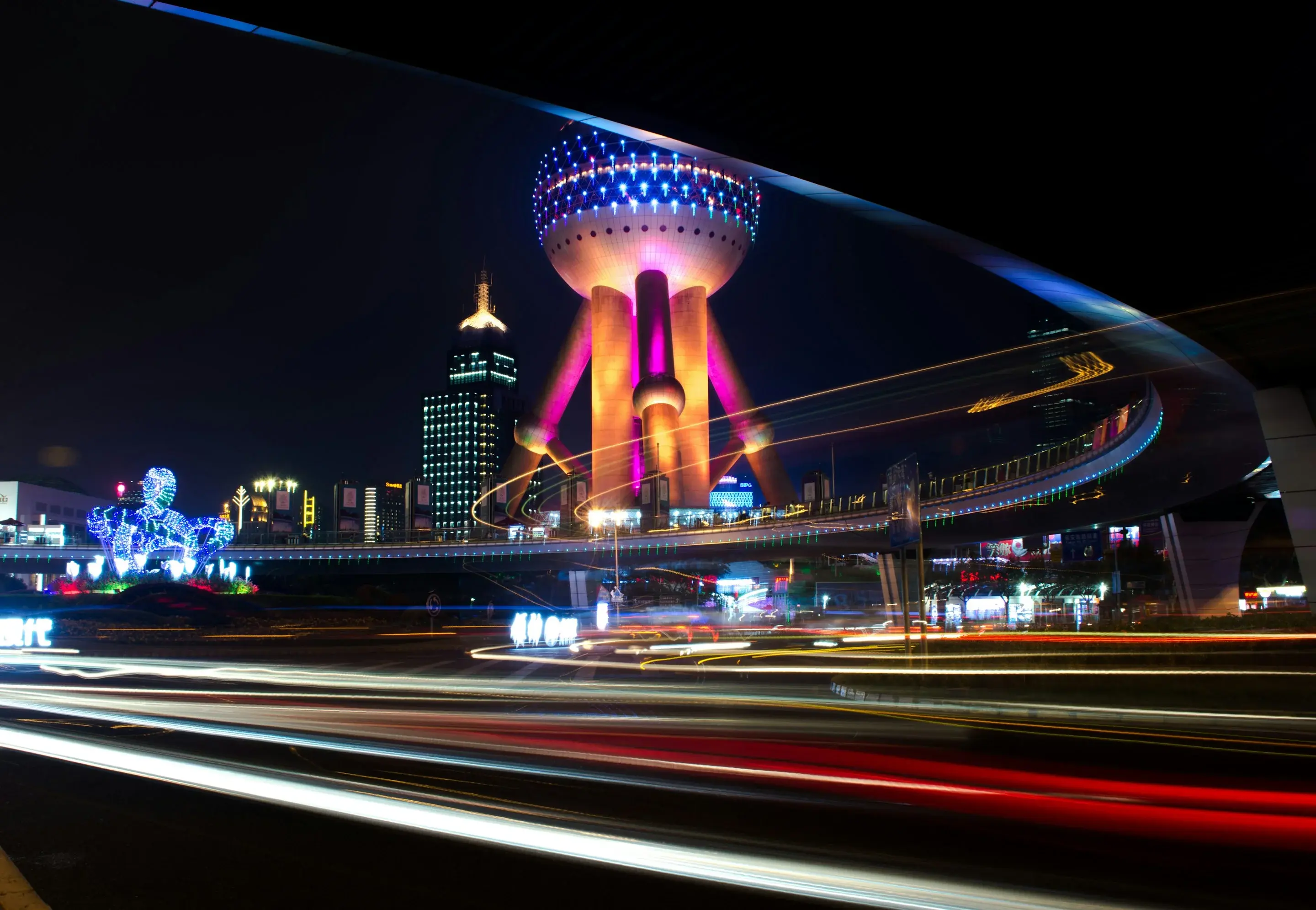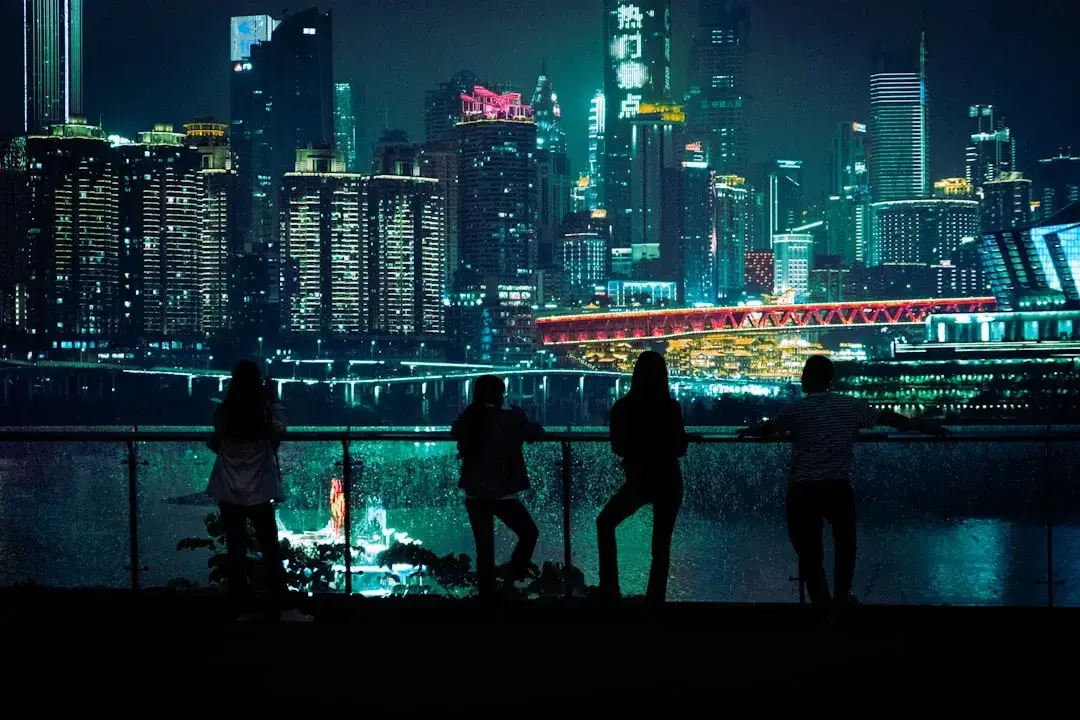




 18 days China, End to End Beijing → Xi'an → Chuanzhusi → Jiuzhaigou → Chengdu → Zhangjiajie → Guilin → Yangshuo → Shenzhen From $6,360 View route
  3 days 4-Day Tour of Siguniang Mountain, Biepa Gou, and Dagu Glacier Chengdu → Lixian → Heishui County From $1,599 View route
  5 days Above the Pillars, Then Below Zhangjiajie From $1,430 View route
  3 days After the Last Booth Guangzhou From $840 View route
  13 days All the Way West Xi'an → Dunhuang → Turpan → Kashgar → Shanghai From $3,500 View route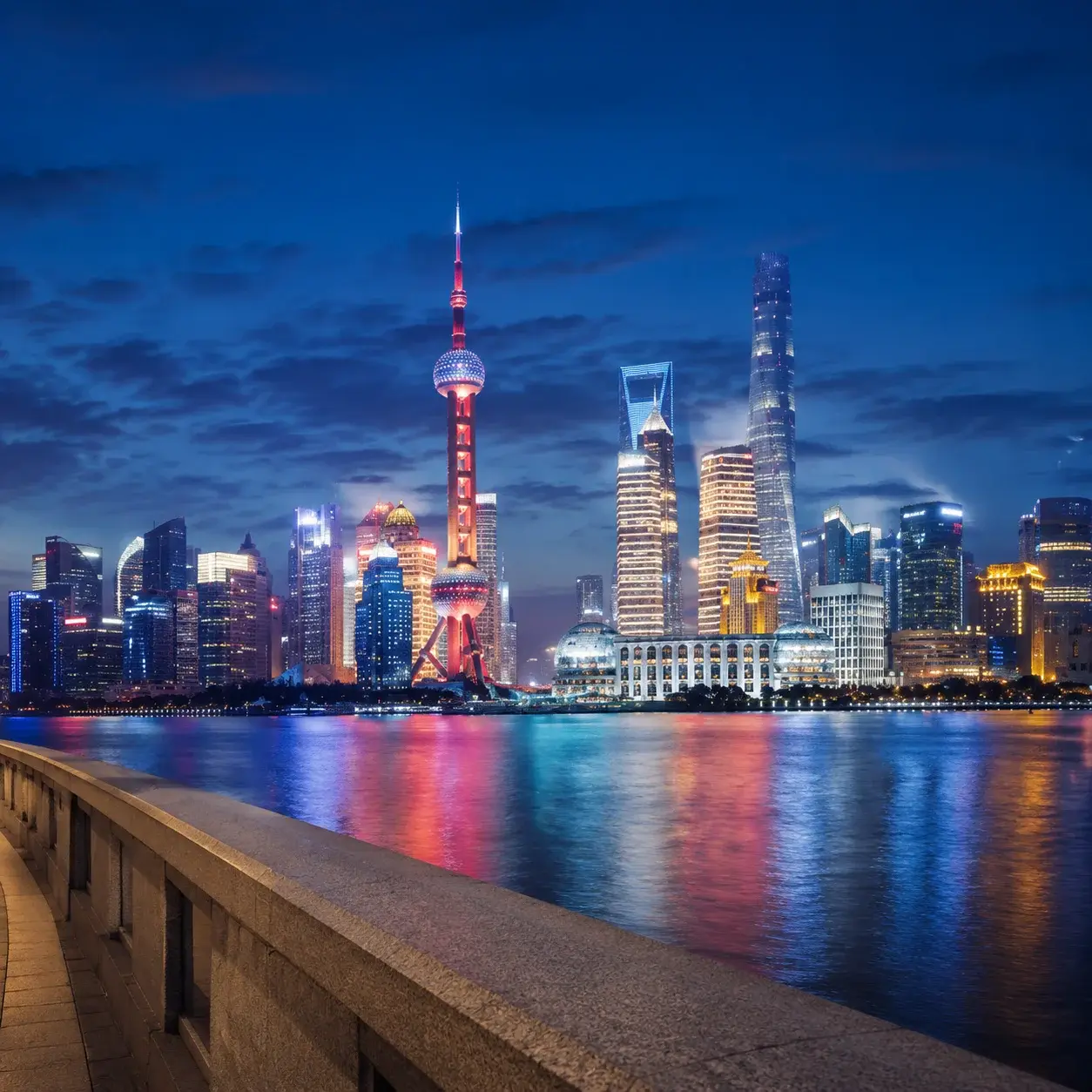
The Bund Shanghai: Where Should You Stand, and When Should You Go?
The Bund Shanghai is free. There is no ticket, no reservation, no queue and no entrance — it is a 1.5 km public promenade on the west bank of the Huangpu River. So the only three decisions that matter are where along it you stand, what time you arrive, and which side of the river you are on.
That first point is worth dwelling on, because most people arrive braced for something else. If you have already planned the Forbidden City or the Great Wall, you have met China's real-name booking machinery: passport-matched tickets, seven-day release windows, app-only reservations. None of it applies here. You walk on.
At LyrikTrip we plan a lot of Shanghai evenings, and the Bund is the one place where the planning is entirely about light and position rather than logistics.
What follows is the thing no single page in this search result currently has: every named viewpoint in one table, a timing framework, and a straight answer on which bank of the river to stand on.
Key Takeaways
- The Bund is free and ticketless. No booking, no time slot, no real-name registration — unusual for a major Chinese attraction.
- It is a viewing platform, not an attraction. You do not enter it. You stand on it. Position and timing are the entire game.
- If you can only go once, go at night. Day gives you 1920s architecture; night gives you the skyline the city is famous for.
- Stand on the Puxi (Bund) side for the skyline. Cross to Lujiazui only for the reverse shot of the Bund itself.
- Arrive an hour before sunset. Blue hour — roughly twenty minutes after sunset — produces the best photographs.
- Plan for the skyline lights going off around 22:00. Two travellers, in different seasons, report exactly that; the only official figure, 23:00, is a holiday extension. Traveller-reported, not verified — confirm locally on the night.
Why Is the Bund a Viewing Platform Rather Than an Attraction?
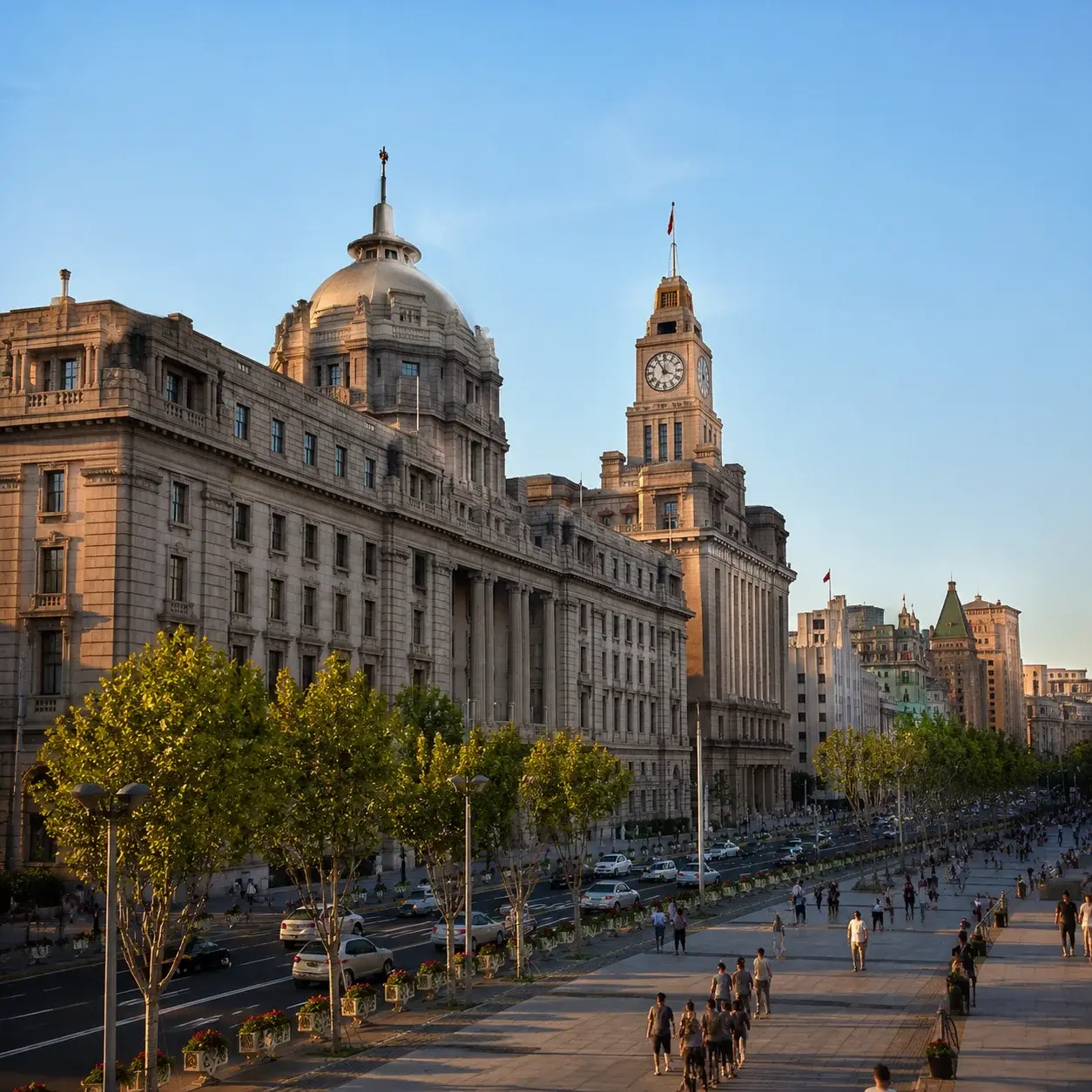
The Bund is a free, ticketless 1.5 km riverside promenade on the west (Puxi) bank of the Huangpu River — you do not enter it, you stand on it, so the only decisions that matter are where along it you stand, what time you arrive, and which side of the river you are on. Asia Odyssey Travel (2026-08) puts it best of anyone writing about it: rather than a typical tourist attraction, the Bund is the best viewing platform for Shanghai's skyline.
That reframing changes what a guide to it should contain. There are no opening hours to work around, no ticket tiers to decode, no shuttle-bus-versus-cable-car combination to price out. There is a strip of raised waterfront, a row of 1920s bank buildings at your back, and the Lujiazui towers across the water in front of you.
The promenade runs from Waibaidu Bridge at the north end down to Yan'an East Road at the south, about 1.5 km (Asia Odyssey Travel, 2026-08 — unverified). Getting there is Metro Line 2 or Line 10 to Nanjing East Road, then roughly a ten-minute walk east to the water (China Go Trip, 2026-08 — unverified).
Three things follow:
- There is nothing to book, so there is nothing to get wrong in advance. - It is free unless you actively choose to pay for a rooftop. - Everything that separates a good visit from a mediocre one is position and timing.
Walk south from the Bund and the character changes completely: South Bund Fabric Market is where Shanghai's tailors work.
Where Should You Stand? Every Bund Viewpoint, Compared
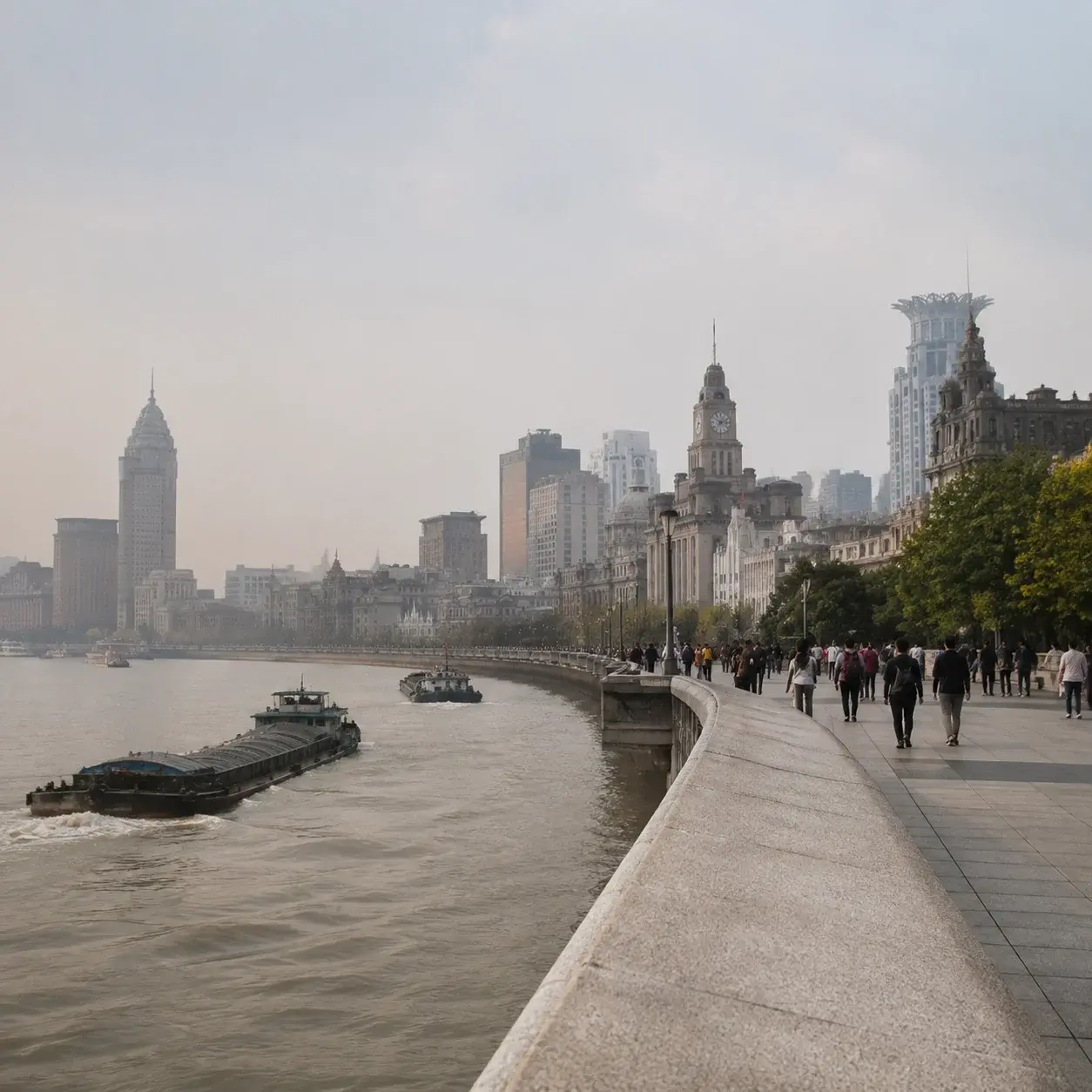
For the classic wide-angle skyline shot, the raised Bund Viewing Platform opposite China Everbright Bank is the best free position on the promenade. For the postcard "three-piece set" framing of the three Lujiazui towers, use the Yan'an East Road pedestrian overpass. And for a photograph of the Bund itself, you have to leave it and cross the river.
| Viewpoint | What you see from it | Best time of day | Free or paid | Crowd level | Source (all unverified) |
|---|---|---|---|---|---|
| Bund Viewing Platform — opposite China Everbright Bank, 2nd-floor terrace | Wide-angle Pudong panorama, raised above the crowd | Blue hour → night | Free | High | Wild Great Wall, China Go Trip, 2026-08 |
| Huangpu Park — north end | Skyline plus the promenade curving south; open space | Day and night | Free | Medium | China Xian Tour, 2026-08 |
| Chen Yi Square — centre, foot of East Nanjing Road | The default central Bund view; busiest spot on the waterfront | Day; night if you accept crowds | Free | Very high | China Xian Tour, 2026-08 |
| Waibaidu Bridge — north end | Retro steel-truss framing with the skyline behind | Sunrise | Free | Low at dawn | China Go Trip, 2026-08 |
| Zhapu Road Bridge | Elevated night view down Suzhou Creek toward the towers | Night | Free | Medium | China Go Trip, 2026-08 |
| Yan'an East Road pedestrian overpass | The "Lujiazui three-piece set" shot — the three towers aligned | Blue hour → night | Free | High | China Xian Tour, 2026-08 |
| End of East Nanjing Road | Where the shopping street meets the water; the arrival view | Any | Free | Very high | China Xian Tour, 2026-08 |
| Lujiazui Waterfront — Pudong side | The reverse view: the Bund's own 1920s facade, lit at night | Night | Free | Medium | China Go Trip, 2026-08 |
| POP Roof Bar — rooftop | Elevated skyline with a drink, above the promenade crush | Sunset → night | Paid | Low | Wild Great Wall, 2026-08 |
| Shama House, inside ZHotel — Living Room 2F and Upper Room rooftop | Two levels: a sheltered second floor and an open rooftop | Sunset → night | Paid | Low | Wild Great Wall, 2026-08 |
On the two rooftops, read this before you plan an evening around either. POP Roof Bar and Shama House inside ZHotel are named here on the strength of a single source, Wild Great Wall, as of 2026-08. Rooftop bars in Shanghai change name, change access policy and close. We are not stating minimum spends, opening hours or dress codes for either, because no source we hold gives them and inventing them would be worse than useless. Confirm the venue is still operating — and what it actually costs to get in — before you build a plan around it.
Three read-outs from the table:
- The free positions beat the paid ones for the skyline itself. What a rooftop buys you is elbow room and a drink, not a better angle.
- The two bridges are the crowd-avoidance play. Waibaidu at sunrise and Zhapu Road at night are the only entries here that are not shoulder-to-shoulder in season.
- If you want the Bund in your photograph, you must leave the Bund.
Day or Night at the Bund — If You Can Only Go Once, Which?
Go at night. The daytime Bund is a row of 1920s bank buildings you can appreciate in twenty minutes; the night Bund is the skyline the city is famous for, and it is the reason the promenade exists.
Asia Odyssey Travel (2026-08) recommends visiting twice — day for the architecture, night for the skyline — and if you have two slots in Shanghai, that is genuinely the best answer. But "visit twice" is not a decision for someone with one free evening, and most visitors have exactly one.
Here is the honest case for each, so you can overrule us:
Day wins if the Puxi facade is what you came for. The bank buildings are the historic Bund, and they read properly only in daylight. Day also wins if you want photographs without a crowd in every frame, and it wins decisively if you are travelling with small children or anyone who tires in dense evening crowds — the promenade after dark is genuinely packed.
Night wins on the thing people actually picture when they think of Shanghai. The towers are lit, the water carries the reflection, and the crowd is part of the experience rather than an obstacle to it. If you go once, go then.
On season: Asia Odyssey Travel (2026-08) names April–May and September–November as the best months, which lines up with Shanghai's mildest weather either side of a humid summer and a raw winter. Treat that as guidance rather than a verified fact.
Puxi Side or Pudong Side — Which Bank Should You Stand On?
You cannot photograph a skyline from inside it. Stand on the Puxi (Bund) side for the skyline — that is the classic view and the reason the promenade is there. Cross to the Pudong side, the Lujiazui waterfront, only when you want the reverse shot: the Bund's own lit 1920s facade with the water in front of it. Most visitors only ever need the Puxi side.
That one sentence resolves a question that gets asked constantly and answered vaguely. Standing at the foot of the towers, you are too close and too low; the towers become walls. The Bund exists at the right distance, which is precisely why it became the viewing platform.
If you do want the reverse view, here is how to cross, each with a verdict rather than a listing:
Metro — the reliable default. Line 2 links Nanjing East Road on the Puxi side with Lujiazui on the Pudong side, one stop under the river (unverified). Fastest, cheapest, and you see absolutely nothing. This is the right choice nine times out of ten.
Huangpu River ferry — the local's crossing, and the one worth taking. You are on the water at street level with both banks in view, which makes the crossing itself part of the evening rather than a gap in it. If the view is the point, this is the best-value way to move between banks. Fares and operating hours are not stated in any source we hold, so check them locally rather than trusting a number from a guide.
Bund Sightseeing Tunnel — skip it. It is a paid novelty ride under the river with a light show. It is not a sensible way to cross, and it is not a sight in its own right; it is an attraction that exists because it is next to an attraction. If you are travelling with children who would enjoy a tunnel of coloured lights, that is a perfectly good reason to do it anyway — but do it knowing what it is. We are not quoting a price, hours or journey time, because no source we hold states them.
When Should You Arrive — Golden Hour, Blue Hour or Full Night?
Arrive about an hour before sunset and stay an hour after it. Golden hour lights the Puxi facade behind you; blue hour is the twenty-odd minutes when the sky and the lit towers balance, and the best photographs of the Bund are taken then; full night is maximum skyline contrast and maximum crowd.
| Window | What it is good for | Trade-off |
|---|---|---|
| Sunrise | Waibaidu Bridge retro framing; an almost empty promenade | You lose the skyline lighting entirely |
| Daytime | The 1920s Puxi facade, architectural detail, easy walking | The skyline is flat and unlit |
| Golden hour | Warm light on the Bund's own buildings; portraits | The towers are not lit yet |
| Blue hour | The best skyline photographs — sky and tower lights in balance | Very short window; the promenade is already filling |
| Full night | Maximum skyline contrast; the view the city is known for | Peak crowds — and the lights go off, on traveller reports, around 22:00 |
Timing guidance above follows China Go Trip and Asia Odyssey Travel (2026-08); treat the windows as a framework and check the day's actual sunset time when you arrive in Shanghai.
When Do the Skyline Lights Switch Off?
Plan for around 22:00. The Bund's building floodlights and the Pudong tower displays are switched off at a set hour each night rather than running until dawn, and the best answer we can give you for that hour is 22:00 — at traveller-report grade, not as an official schedule. How we got there matters as much as the number, because it is the difference between an answer and a guess.
For a long time this section refused to name an hour at all. That refusal was right. This is the single fact on this page a reader is most likely to act on within the hour of reading it, and a confidently wrong switch-off time sends someone hurrying to a dark river. No source we held stated an hour reliably, so we did not invent one.
What changed is that travellers began reporting the same hour from opposite ends of the year. A visitor posting on Xiaohongshu on 29 October 2025, who went specifically to watch the lights, reports them going off exactly at 22:00. A second visitor, posting on 6 January 2026, describes staying on the Bund until the lights went off — again at 22:00. Different seasons, same hour, independently reported by people with no reason to agree.
And the one published schedule we hold now reads as corroboration rather than contradiction. A Huangpu District government notice dated 29 September 2025 puts core-area lighting at 18:00–23:00 — but that is a special National Day and Mid-Autumn arrangement, described in the notice itself as an extended holiday schedule. An extended 23:00 is exactly what you would expect if the ordinary hour were 22:00. The official figure and the traveller reports stop competing the moment you notice that one of them is explicitly the exception.
One thing you will read online is wrong. A seasonal rule circulates widely — 22:00 from November, 23:00 in October. The traveller who went out on 29 October 2025 had read that rule and went to test it. The lights went off at 22:00 anyway. One night is one night, but it is one night more than the seasonal rule has behind it.
So the practical advice, in order:
- Be in position well before 22:00, not after it. That is the hour to plan the evening around.
- Treat 23:00 as a holiday extension rather than the norm. Over National Day or Mid-Autumn you may well get the later hour; that is the only context in which an official source puts the lights on that late.
- Do not trust the seasonal rule. The "23:00 in October" version has been checked once, on the ground, and failed.
- Confirm on the night. None of the above is an official timetable. If you are arriving late, ask your hotel front desk that afternoon — it is the kind of thing local staff know and no guide records accurately.
What About Nanjing Road?
East Nanjing Road runs west from the Bund and is how most visitors arrive, since the metro drops you at its far end — worth knowing it is there, and that is all this page says about it; for the shopping street itself see East Nanjing Road and the rest of Shanghai.
Is There a Free Outdoor Alternative to the Paid Tower Decks?
Possibly, and it is the most interesting thing to happen in this conversation recently. SmartShanghai, a local expat outlet, reports (2026-08) a new outdoor observation deck on the North Bund called The Stage, and makes an argument no Bund guide and no observation-deck listing makes: an outdoor vantage point beats the glassed-in tower decks.
The reasoning is hard to fault. Glass means reflections, smeared handprints and a layer between you and the city; outdoors you get real air, real sound and a clean camera line. The exception the outlet concedes is the obvious one — in wind or rain, the enclosed decks win outright, and Shanghai supplies plenty of both.
Status: unverified. The Stage is new, and new venues change hours, access rules and pricing fastest of all. We are not stating an opening status, an admission price or whether it is free, because we do not know. Confirm before you go.
It does, though, frame the decision a Shanghai visitor actually faces: stand on the Bund for free, or pay for altitude? If you are weighing the paid option, we compare them separately in which Shanghai observation deck is worth paying for.
Frequently Asked Questions
Day or night at the Bund — is it worth going twice? If you have two slots, yes: the daytime Bund is about the 1920s facade behind you, the night Bund is about the skyline in front of you. Asia Odyssey Travel recommends both. If you only have one evening, take the night.
When do the skyline lights switch on and off? The towers light up around dusk, and the floodlights and tower displays are switched off at a set hour later at night rather than running until dawn. Plan for around 22:00: travellers posting on Xiaohongshu on 29 October 2025 and on 6 January 2026 — different seasons, independently — both report the lights going off at 22:00. The only published figure we located is a Huangpu District government notice of 29 September 2025 giving core-area lighting as 18:00–23:00, an explicitly extended National Day and Mid-Autumn holiday arrangement, so treat 23:00 as a holiday extension rather than the everyday schedule. Ignore the seasonal rule you will see repeated online (22:00 from November, 23:00 in October) — the October traveller went out specifically to test it and the lights went off at 22:00 regardless. None of this is official, so confirm on the night.
Puxi side or Pudong side for photos? Puxi, the Bund side, for the skyline — you cannot photograph a skyline from inside it. Cross to the Lujiazui waterfront in Pudong only when you want the reverse shot: the Bund's own lit 1920s facade with the river in front of it.
How do I cross — ferry, tunnel or metro? Metro Line 2 is the reliable default between Nanjing East Road and Lujiazui — fast, cheap, and you see nothing. The Huangpu River ferry is the crossing worth taking if the view is the point. The Bund Sightseeing Tunnel is a novelty ride, not transport.
Is the Bund Sightseeing Tunnel worth it? For most visitors, no. It is a paid novelty ride under the river with a light show — not a sight in its own right and not a sensible way to cross. If you are travelling with children who would enjoy it, that is a fair reason; otherwise take the ferry.
What is actually free versus paid here? The promenade and every viewpoint on it are free, including the raised Bund Viewing Platform, Huangpu Park, Chen Yi Square, the bridges and the Yan'an East Road overpass. Only the rooftop bars, the ferry and the Sightseeing Tunnel cost anything at all.
How do you visit the Bund — do you need a ticket or a booking? No ticket, no reservation, no real-name registration and no time slot. You simply walk on. That is unusual for a major Chinese attraction — the Forbidden City and the Great Wall both need advance booking against your passport — and it is worth saying plainly.
What is the best time to visit the Bund? Blue hour — the twenty-odd minutes after sunset when the sky and the tower lights balance. Arrive an hour before sunset and stay an hour after. Asia Odyssey Travel (2026-08) names April–May and September–November as the best months, which matches the city's mildest weather.
The Three Decisions, in One Line Each
Night over day, if you only go once. Puxi side, unless you specifically want the reverse shot of the Bund itself. Arrive an hour before sunset and let blue hour do the work. Everything else on the Bund Shanghai waterfront is free and needs no booking of any kind — the rare Chinese attraction where turning up is the entire plan.
The two things worth confirming before you go are the rooftop venues, if you intend to pay for one, and the hour the skyline lights go off — plan for 22:00, but that is what travellers report rather than what anyone officially publishes. Both change, and neither is reliably published.
If you would rather not assemble the evening yourself, we can arrange a private Shanghai itinerary built around the light rather than around opening hours — pairing the Bund at blue hour with the paid-deck decision, and with a day trip to the water towns near Shanghai the following morning.