



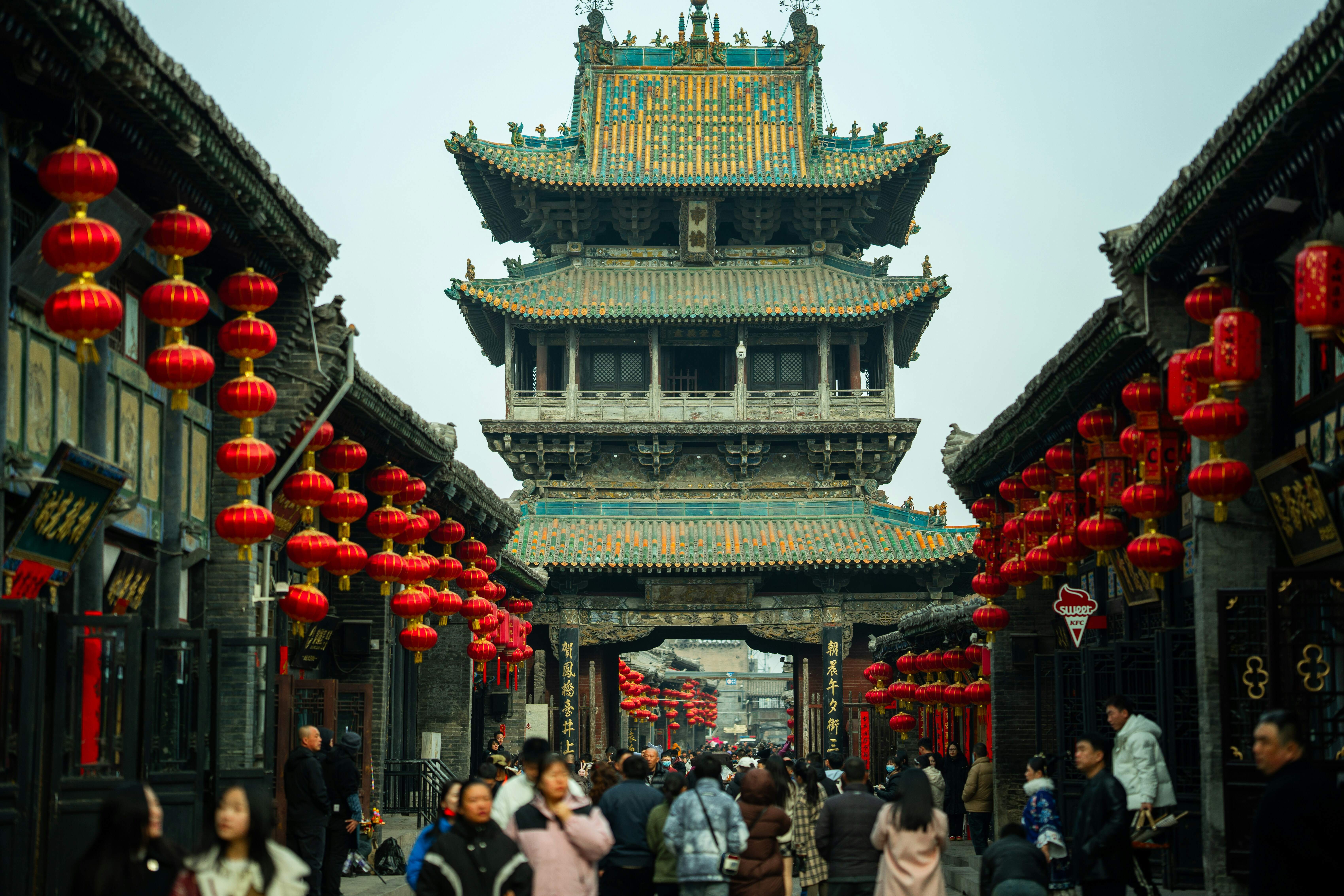
 12 days China, by Hand Beijing → Taiyuan → Pingyao → Xi'an → Shanghai From $3,990 View route
  7 days The Empire, Read Backward Beijing → Xi'an From $2,220 View route
 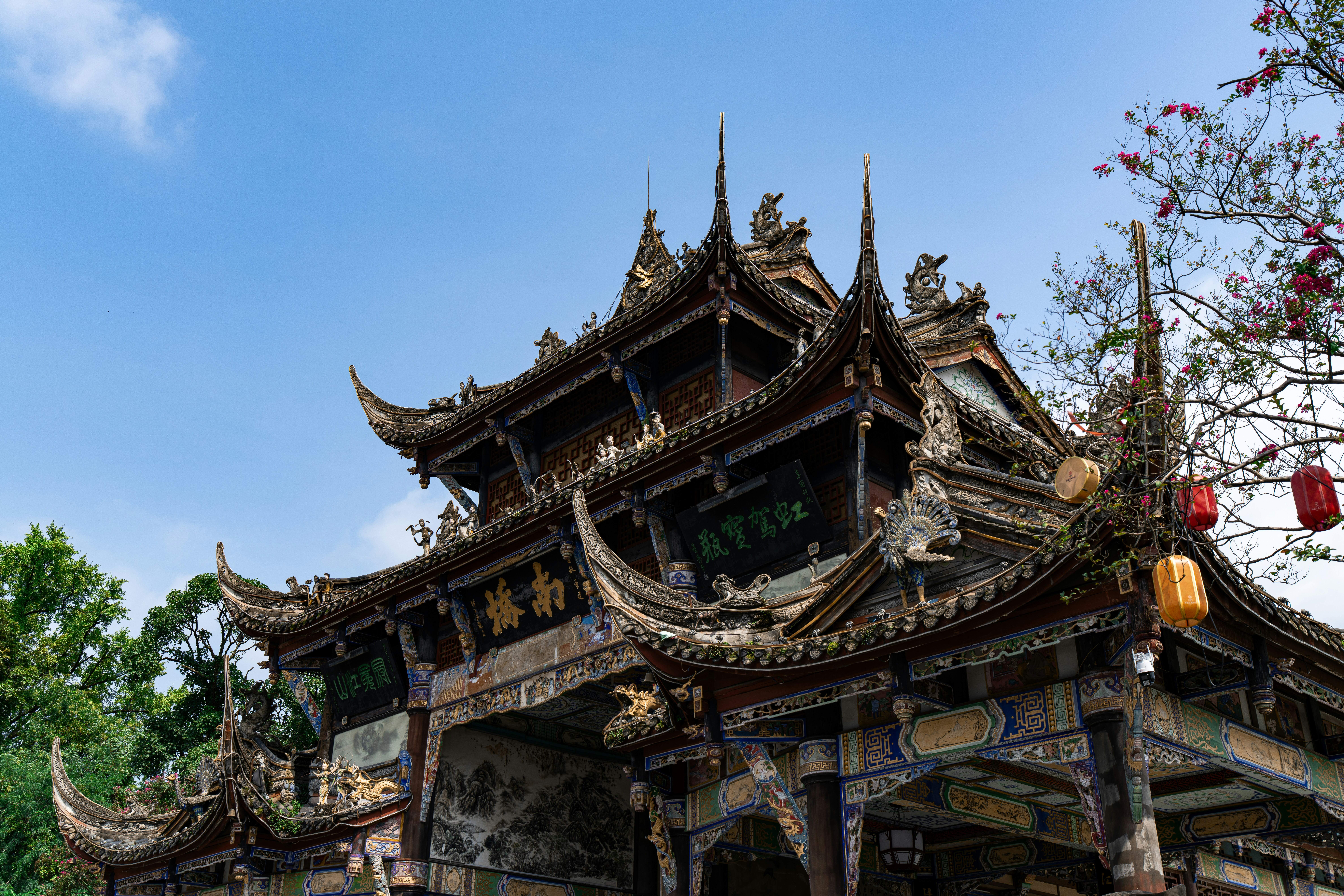 6 days Sichuan, Face to Face Chengdu → Dujiangyan → Leshan From $2,160 View route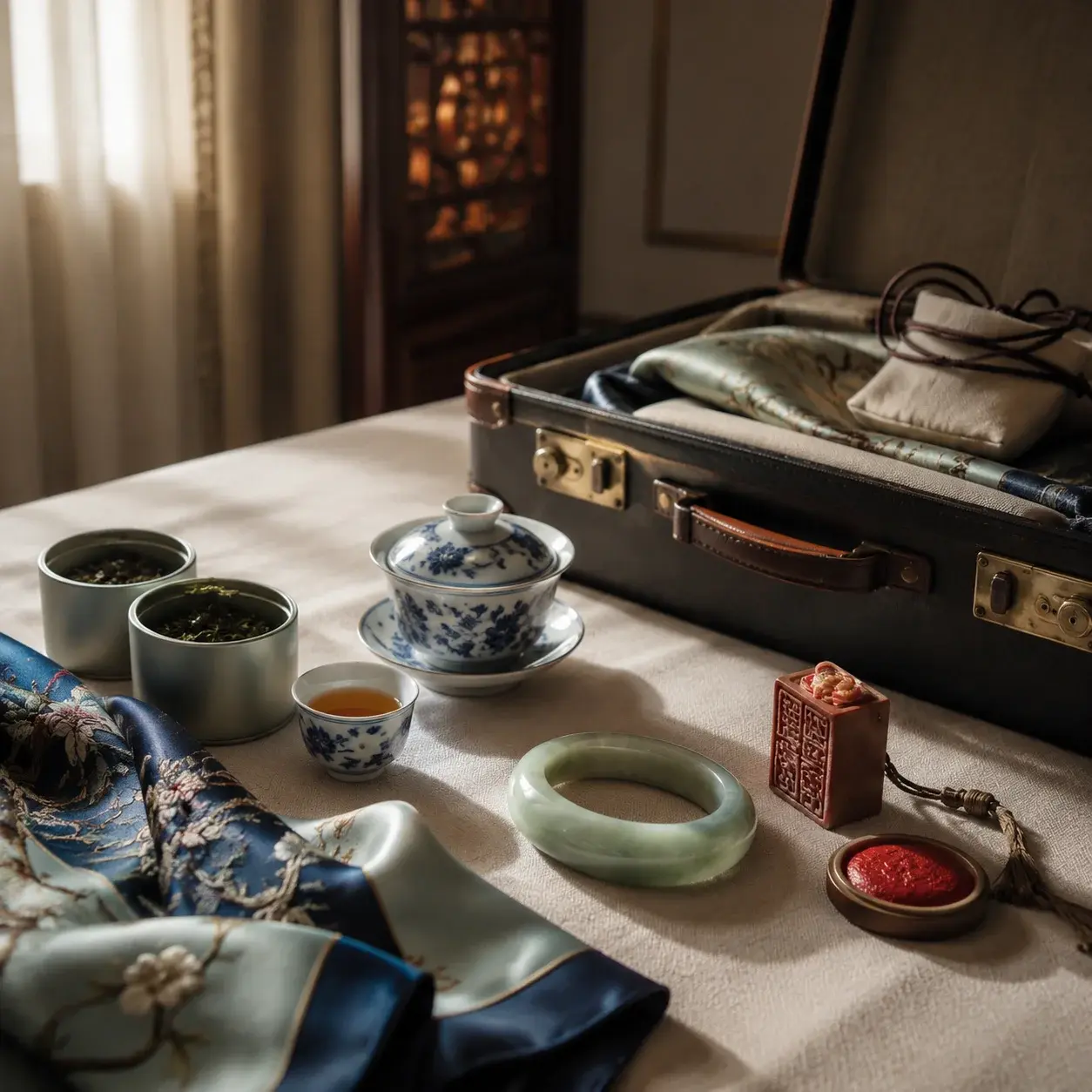
The 15 Best Souvenirs from China: What to Buy, What to Pay, and Where to Find It
The best souvenirs from China are loose-leaf tea (¥50–300 per 100g), a real jade pendant (from ¥500), a mulberry-silk scarf (¥150–400), hand-painted Jingdezhen porcelain, and a custom name chop (¥30–120) — bought where the craft actually lives rather than at the airport. Below are 15 specific items, each with an indicative price, the district or city to buy it in, and one test that separates the real thing from the tourist version.
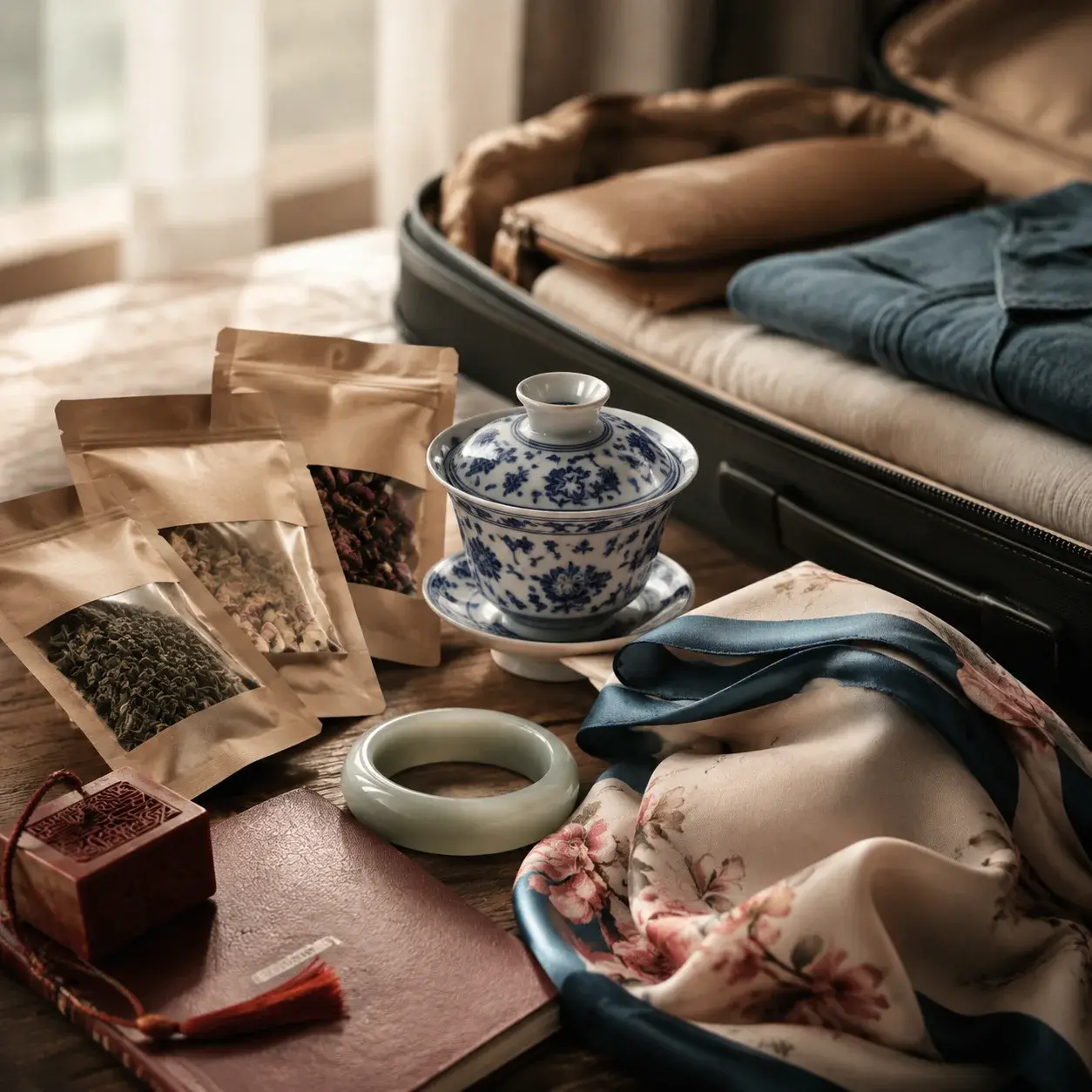
We're a private-custom inbound-travel operator, not a shop — we have nothing on a shelf to sell you. Every price below is an indicative range drawn from our own category guides; markets move, and jade in particular is priced per individual piece, so treat these as the bracket to negotiate inside, not a fixed tag. Verify locally before you commit to anything expensive.
Key Takeaways
- Fifteen items cover almost every traveler. Tea, teapots, tea sets, jade, silk, qipao, fans, porcelain, name chops, calligraphy, paper-cuts, knots, panda goods, game/guochao merchandise, and museum keepsakes.
- Price by the value driver, not the item. Tea prices by type and growing region; jade by 种水 grade and colour; silk by weight and weave; porcelain by whether it's decal-printed or hand-painted. Each section names the driver.
- The cheapest version is usually a different material entirely. A ¥50 "silk" scarf is polyester; ¥50–300 "jade" is typically dyed serpentine; a ¥50–150 "fully handmade master" Yixing pot is a contradiction in terms.
- Buy where the makers are. Tea markets for tea, fabric markets with in-house tailors for silk and qipao, Dingshu for zisha pots, Jingdezhen for porcelain, official museum shops for site keepsakes. The airport is the worst place to buy almost anything.
- Weight and fragility decide your final list. Tea, silk, fans, paper-cuts and knots pack flat; porcelain, jade and teapots need padding and sometimes a customs declaration.
The 15 Best Souvenirs from China at a Glance
| # | Souvenir | Indicative RMB | Best for | Deep-dive |
|---|---|---|---|---|
| 1 | Loose-leaf tea | ¥50–300 / 100g | Parents, colleagues |  tea guide tea guide |
| 2 | Yixing purple-clay teapot | ¥300–800 entry | Serious tea drinkers | teapot guide |
| 3 | Gongfu or travel tea set | ¥100–600 | Tea lovers, hosts | tea set guide |
| 4 | Jade pendant or bangle | ¥500–2,000 entry | Partner, mother | jade guide |
| 5 | Mulberry-silk scarf | ¥150–400 | Parents, fashion buyers | silk guide |
| 6 | Made-to-measure qipao | ¥800–3,000 | Partner, fashion buyers | qipao guide |
| 7 | Hand-painted silk fan | ¥200–600 | Light, elegant gifting | fan guide |
| 8 | Jingdezhen porcelain | ¥500–3,000 | Home decor, parents | porcelain guide |
| 9 | Custom name chop | ¥30–120 | Personalised gifting | keepsakes guide |
| 10 | Calligraphy or ink scroll | ¥300–2,000 | Collectors | calligraphy guide |
| 11 | Paper cutting (剪纸) | ¥20–80 handmade | Kids, budget gifting | paper-cut guide |
| 12 | Chinese knot | ¥10–40 | Colleagues, decor | knot guide |
| 13 | Panda merchandise | ¥45–180 plush | Kids, crowd-pleaser | pop-culture guide |
| 14 | Black Myth: Wukong & guochao | varies | Gamers, Gen-Z | pop-culture guide |
| 15 | Terracotta warriors & museum goods | from ¥30 | History fans | keepsakes guide |
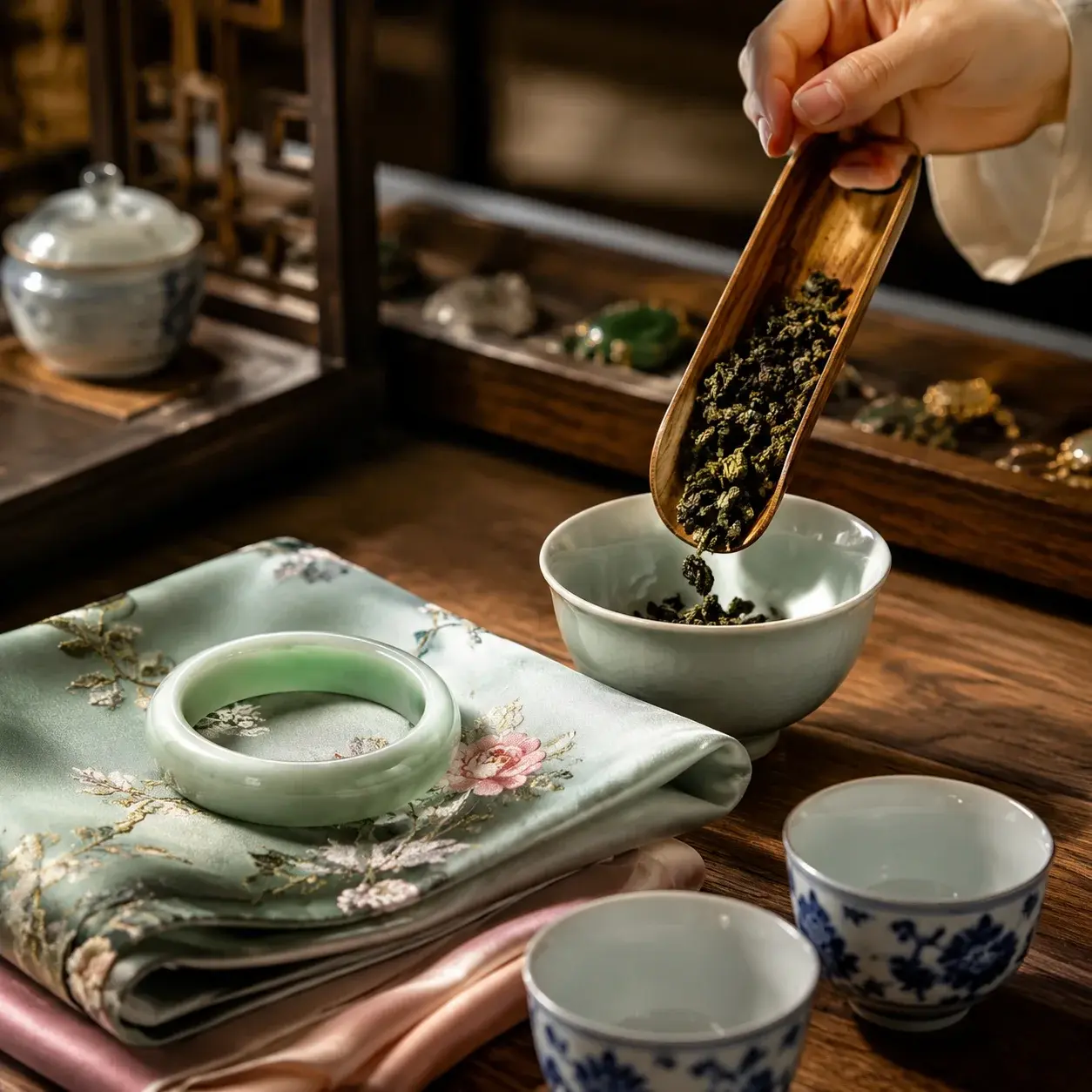
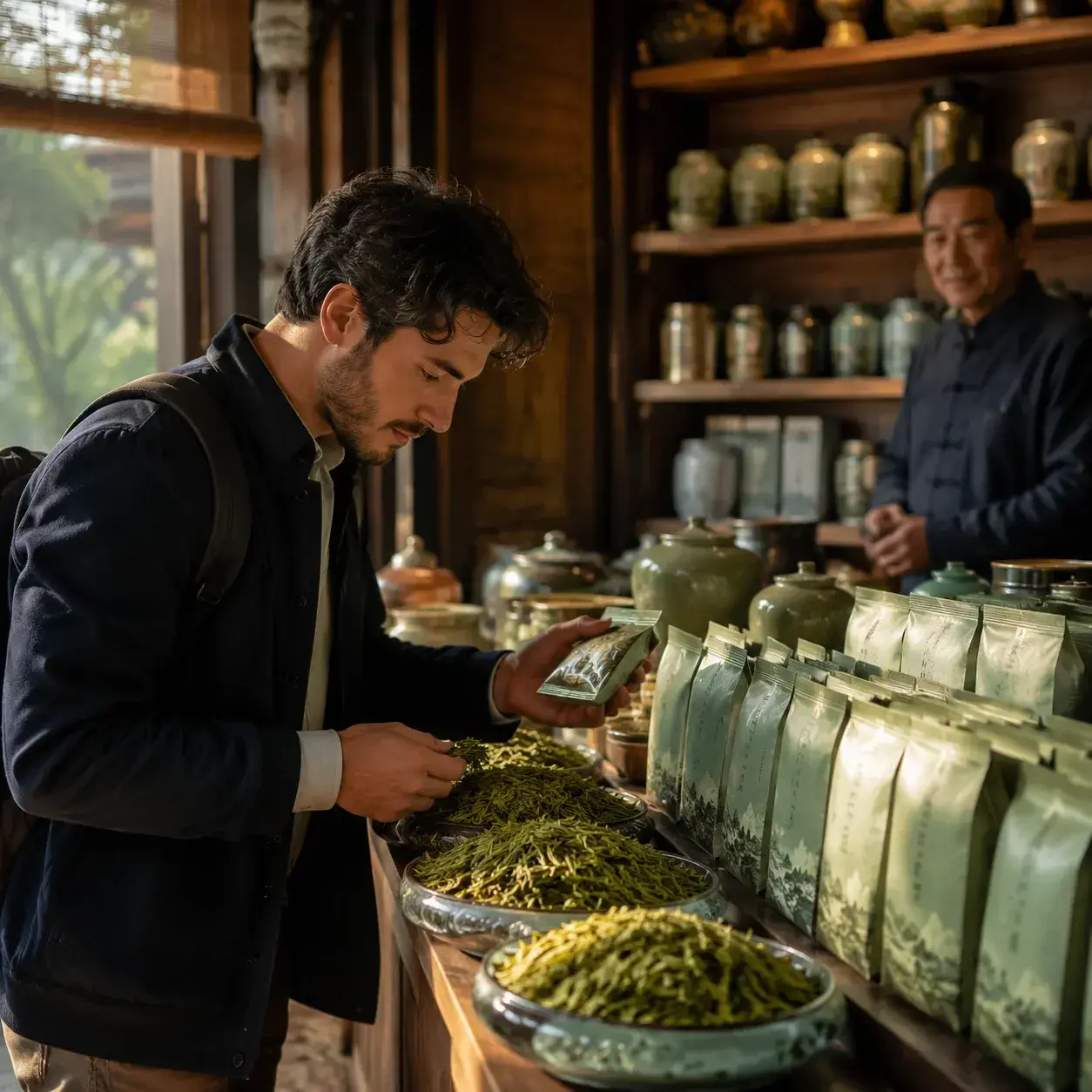
1. Loose-Leaf Tea
The single most reliable gift from China: light, flat-packing, and carrying genuine prestige. Price is driven by type × growing region × harvest, which is why a competent everyday oolong or Tieguanyin sits around ¥50–300 per 100g while core-zone Wuyi rock tea from a named plot climbs into the thousands.
Buy loose leaf at a specialist tea market rather than pre-boxed gift tins of unknown age — the tin is usually the expensive part. The quick test: ask to smell the dry leaf and see it brewed. Whole, intact leaves that unfurl are what you want; dust and broken fragments at a "premium" price are the tell.
Ignore the theatrical stuff. Tea sold by the gram from "18 imperial trees" is a gimmick aimed at exactly the buyer reading this page.
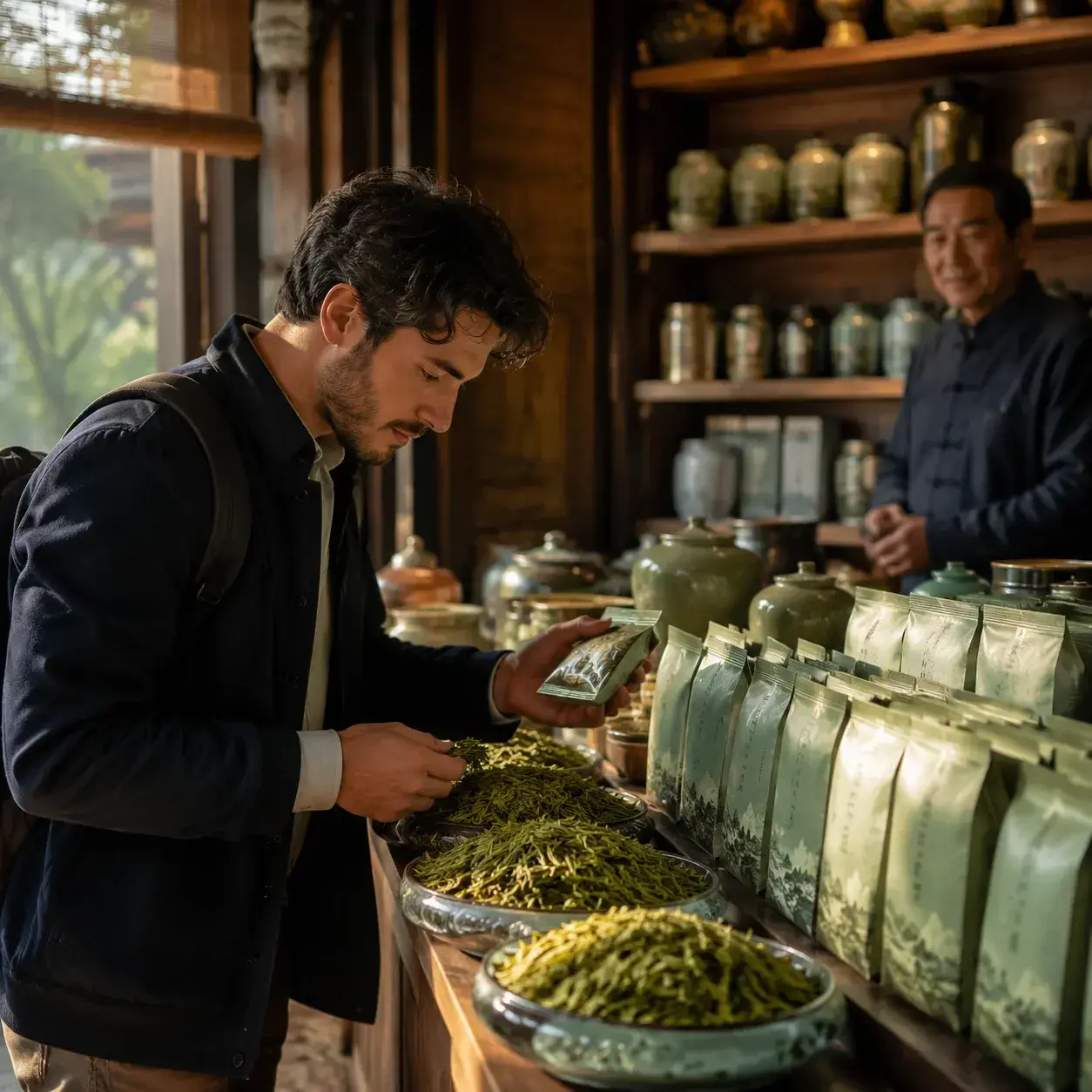 What Chinese Tea Should You Buy in China, and Where? A Traveler's Guide Learn which Chinese tea to buy in China, where to find authentic regional teas, and how to compare prices, avoid scams, and bring tea home.
 2. Yixing Purple-Clay Teapot
A zisha pot seasons over years and is the gift a serious tea drinker will actually use daily. Entry half-handmade pots in genuine raw ore run ¥300–800, and a real, usable pot generally lands ¥300–1,500.
The most useful thing to know is a price floor: genuine raw ore is mining-restricted and fully handmade work is slow, so a ¥50–150 pot advertised as "raw-ore, fully handmade, master-made" is a contradiction — it's moulded, chemically dyed, or both. Buy in Dingshu or at a proper tea market, not from a bus-stop showroom.
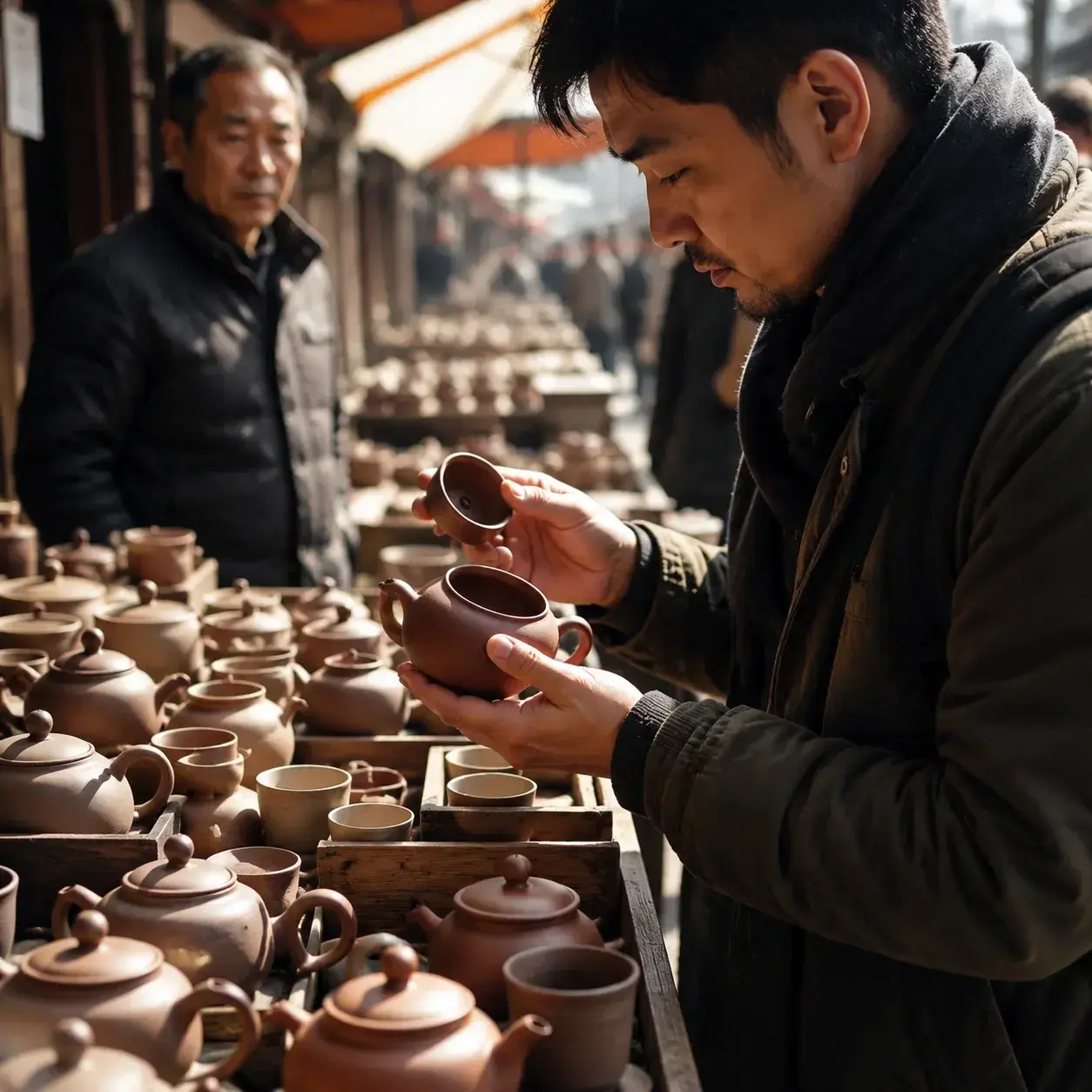 Yixing Teapot: How Do You Buy an Authentic Zisha Pot in China? Learn how to buy an authentic Yixing zisha teapot in China with simple field checks, fair price ranges, and the best places to shop.
 3. Gongfu or Travel Tea Set
The vessel that makes the tea a ritual rather than a bag in a cupboard. An entry porcelain set runs ¥150–500, quality hand-painted or celadon ¥500–2,000, and packable travel sets ¥100–600.
Watch for tourist-stall sets in the ¥80–300 band sold at a heavy markup — the same pieces are cheaper and better chosen at a tea market or in a production town. Buy the travel set if the recipient has limited shelf space; it survives luggage far better than a full gongfu tray.
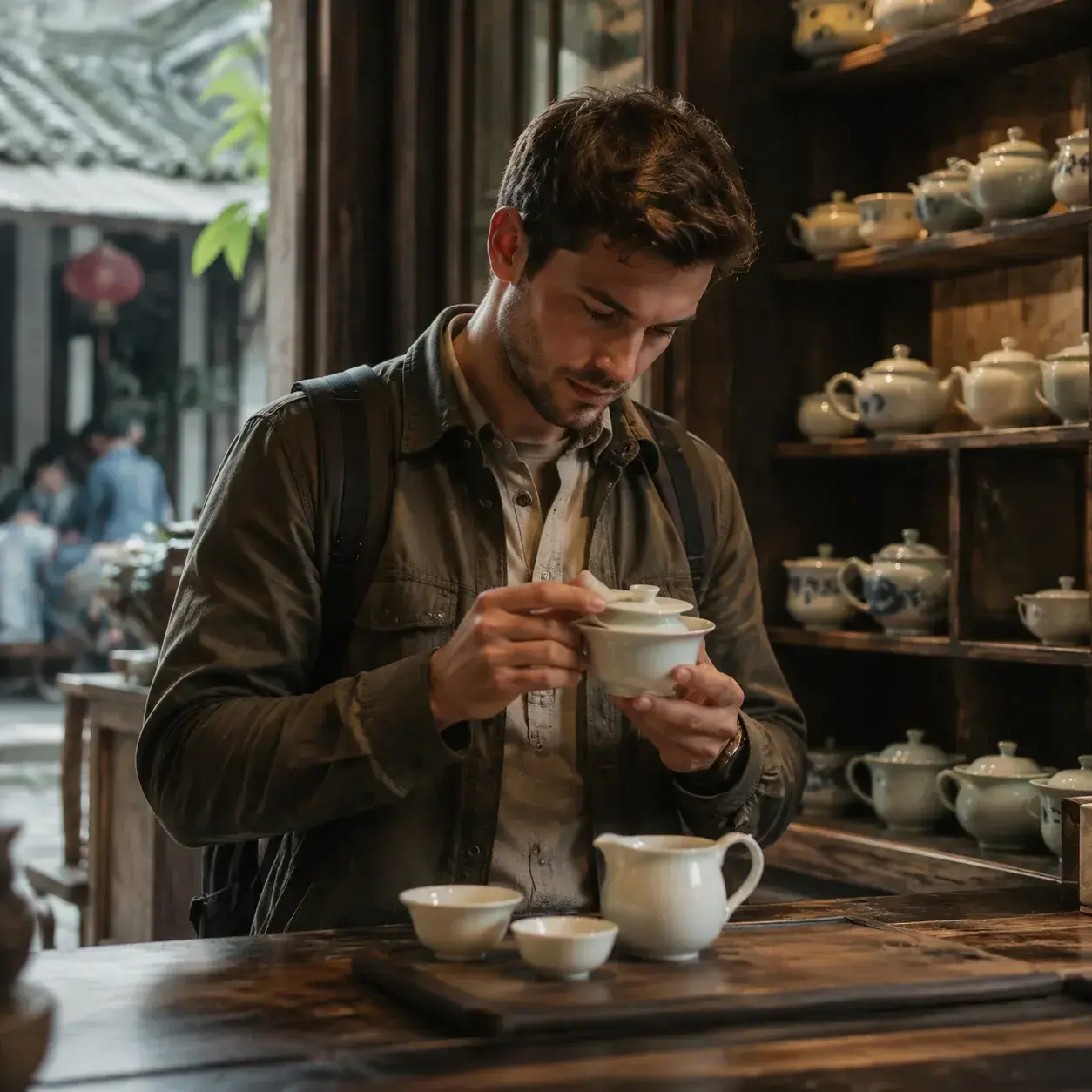 Chinese Tea Set: Which Pieces Do You Actually Need, and Where Do You Buy One in China? Learn which Chinese tea set pieces you really need and where to buy authentic teaware in China without tourist markups.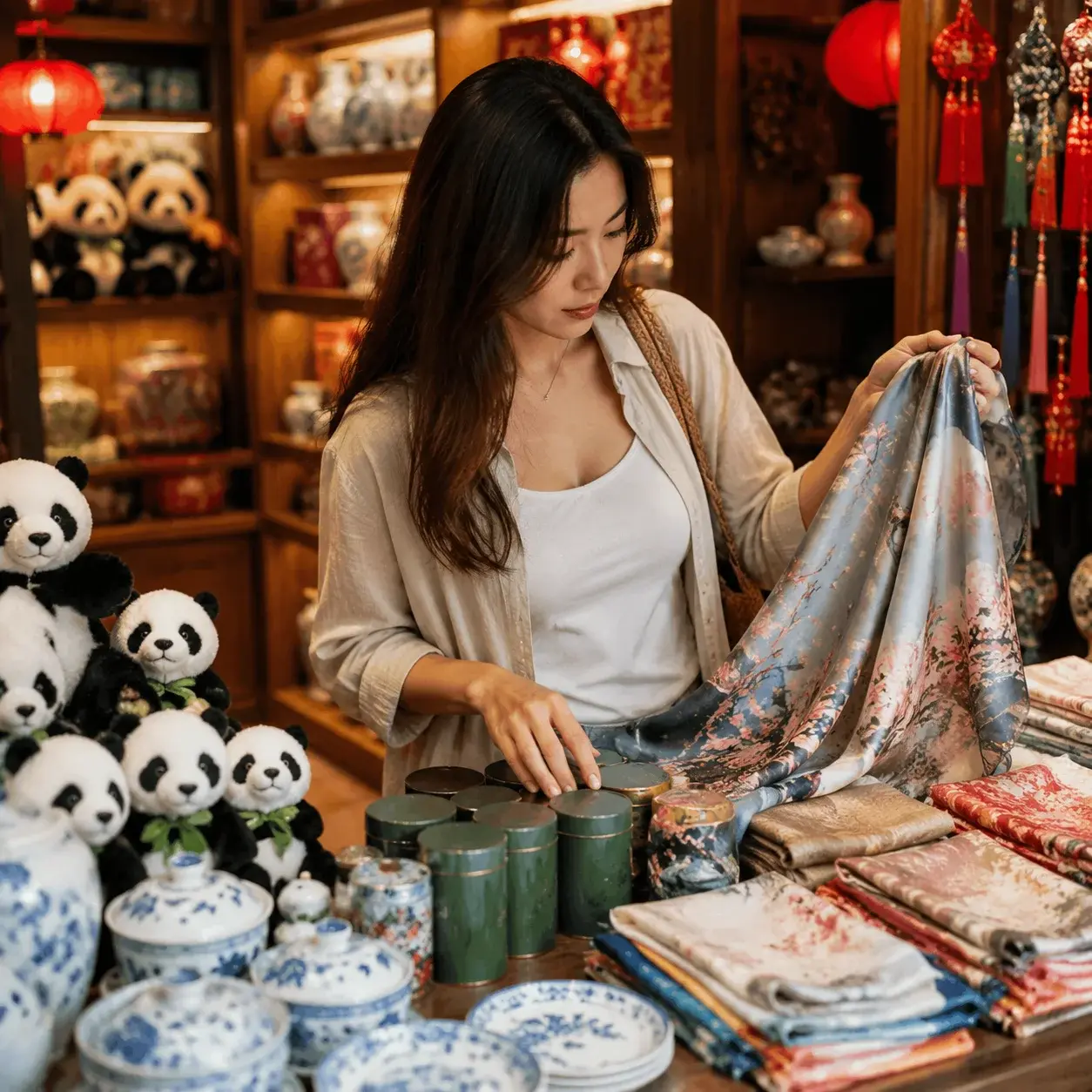
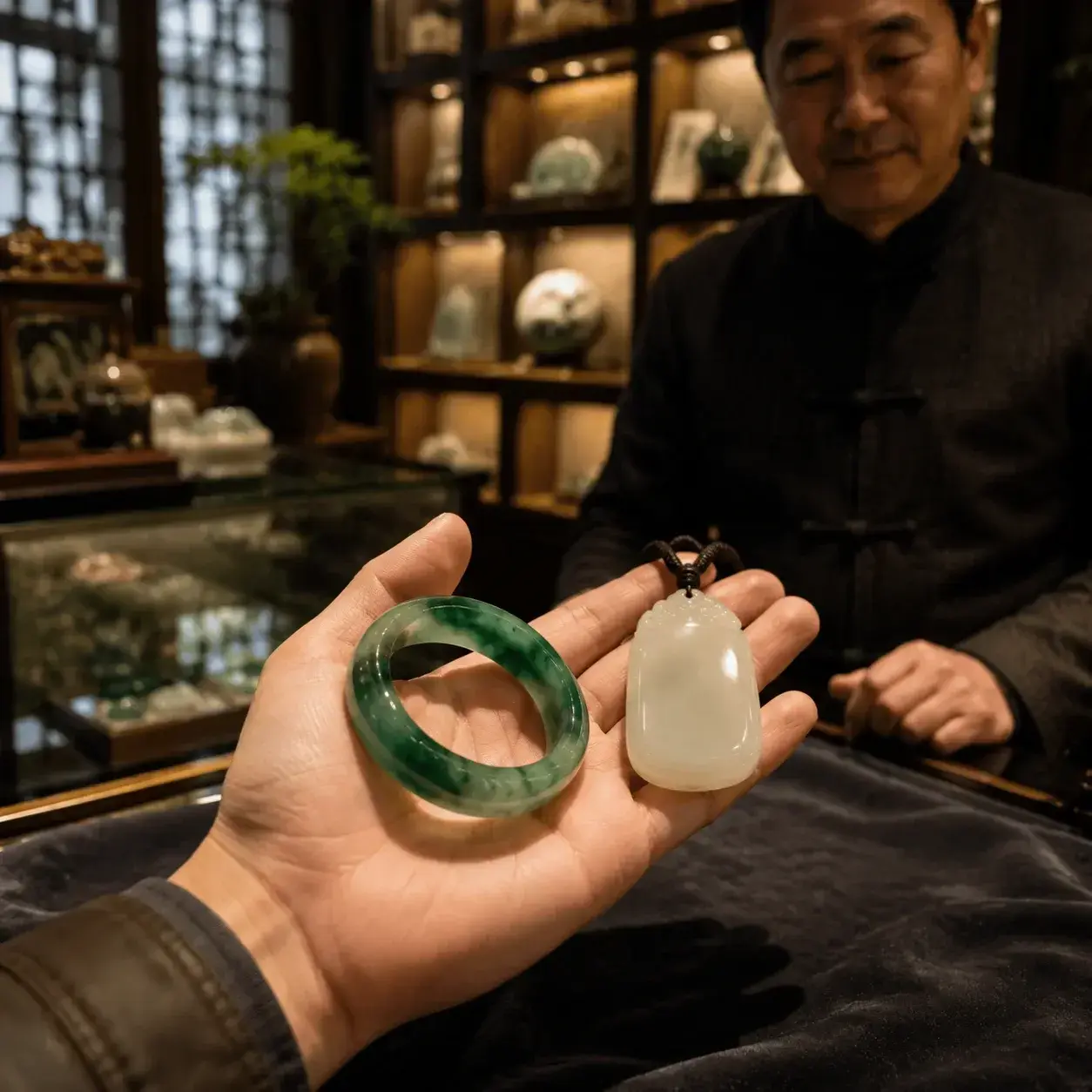
4. Jade Pendant or Bangle
The highest-stakes purchase on this list, and the one most worth slowing down for. Jade has no fixed price — every piece is valued individually on 种水 (texture and transparency) × colour × size × workmanship, which is why the trade proverb runs "色差一分,价差十倍" (one grade of colour, ten times the price).
As an orientation: an entry natural grey-green nephrite pendant sits around ¥500–2,000 (indicative — verify on the ground), rising steeply from there for fine jadeite. The ¥50–300 "cheap jade" sold at scenic-spot stalls is the one to skip — typically serpentine or B/C-treated material with close to zero keepsake or resale value. Buy from a reputable dealer who will show certification, and treat "genuine antique jade" claims without paperwork as decoration.
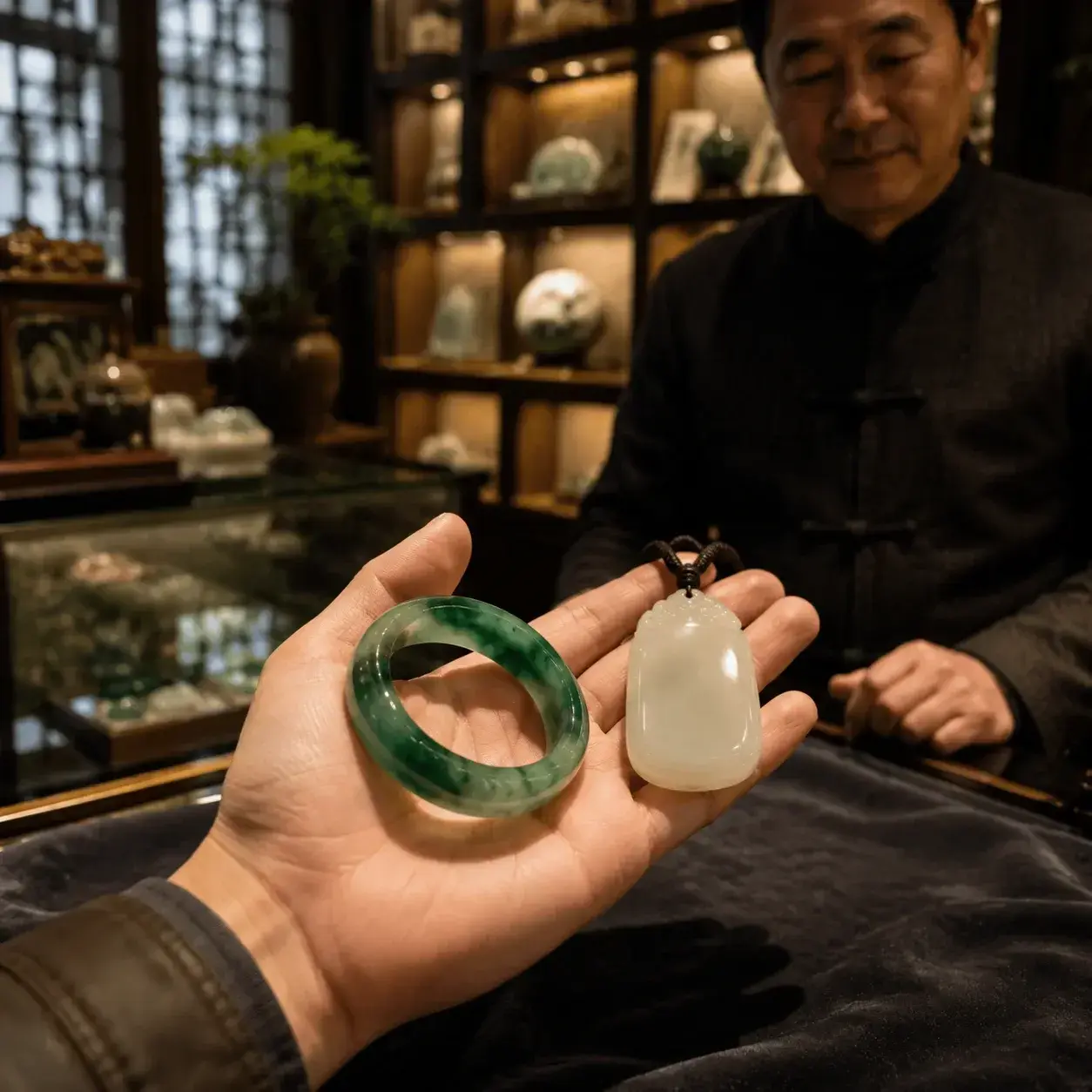 What Is Chinese Jade, and How Do You Buy It Well in China? Learn the difference between jadeite and nephrite, how jade is priced, and how to buy authentic Chinese jade safely in China.
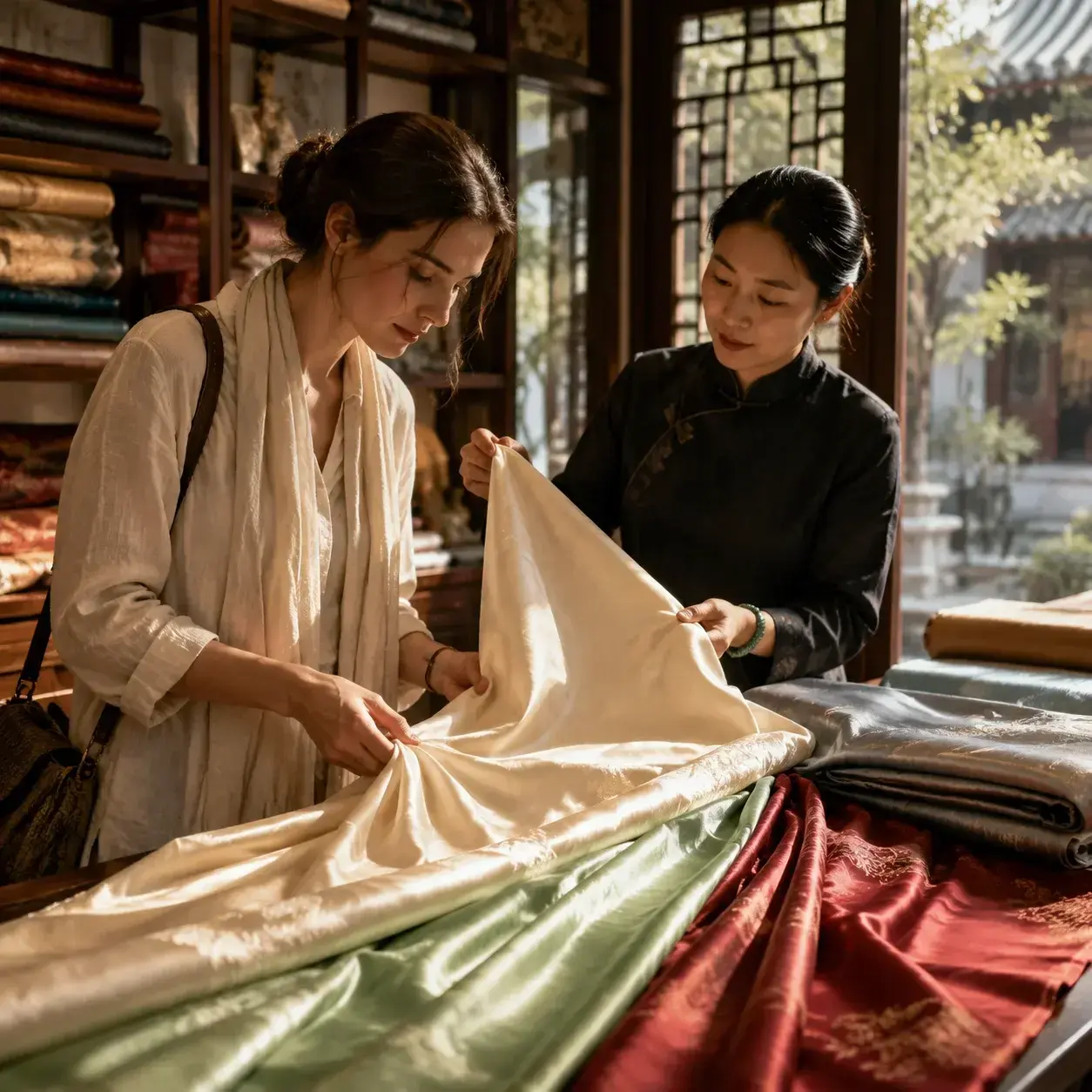
 5. Mulberry-Silk Scarf (or Silk by the Meter)
Light, universally liked, and easy to get home. A real silk scarf is roughly ¥150–400 — and the cleanest red flag on this entire page is that anything under about ¥50 is almost certainly polyester.
Price tracks weight × weave × authenticity, so a heavier scarf legitimately costs more. Buy at a fabric market where you can handle the cloth: real mulberry silk feels warm rather than slippery-cool, and it doesn't have the plasticky sheen synthetic satin does. If you're buying by the metre, the same market usually has a tailor who can make it up.
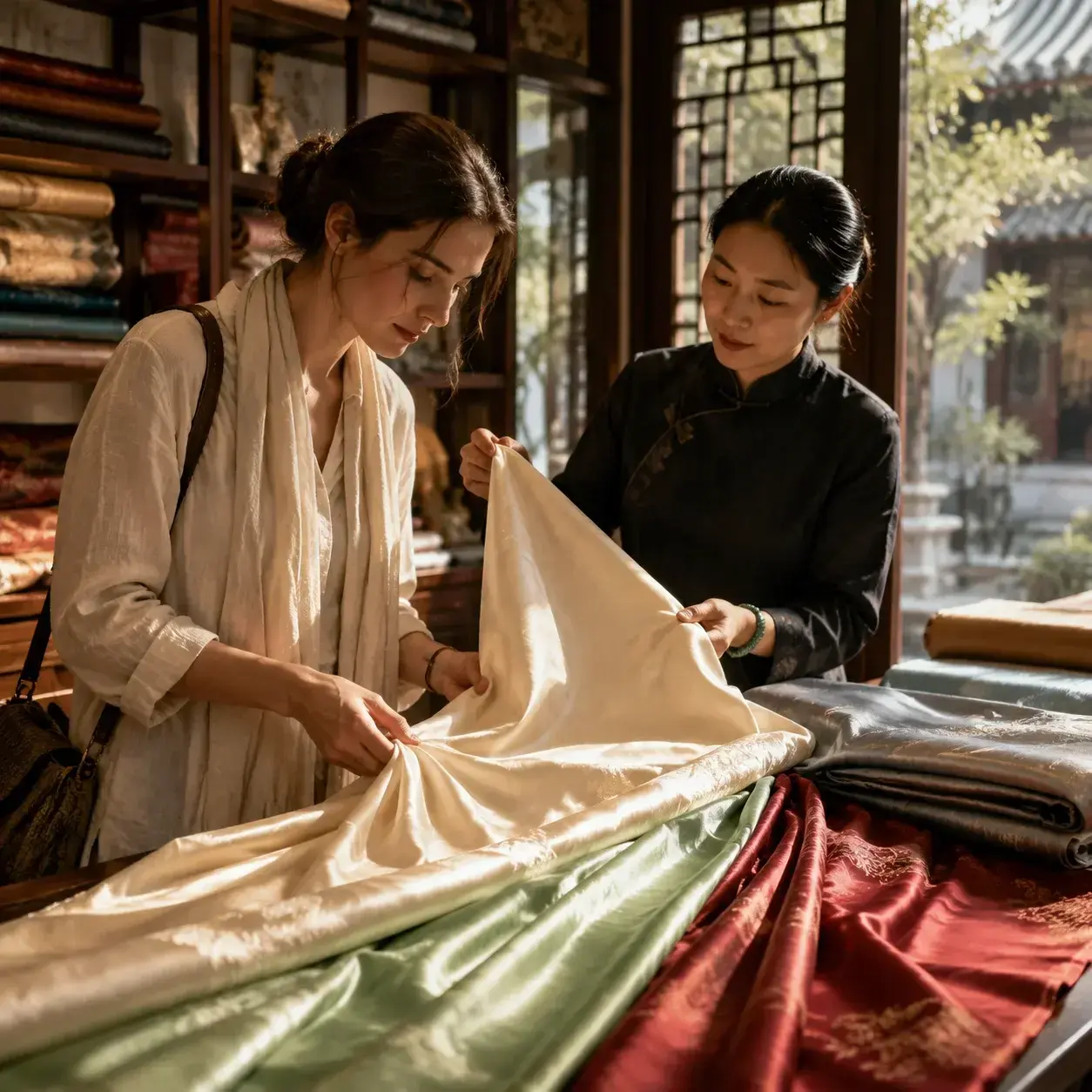 Chinese Silk: How Do You Buy Real Silk in China Without Getting Faked? Learn how to buy real silk in China, spot fakes, compare prices, and find trusted shops in Suzhou and Hangzhou.
 6. Made-to-Measure Qipao
The souvenir that beats anything you could order at home, because most qipao are cut to measure. Expect roughly ¥800–3,000 for fabric-market custom, finished in about 3–7 days in Shanghai.
This is the best route for plus and full-bust figures, whom ready-made racks rarely fit — a tailor cuts to your actual measurements. Build the fitting into your itinerary early in the trip so there's time for the return visit.
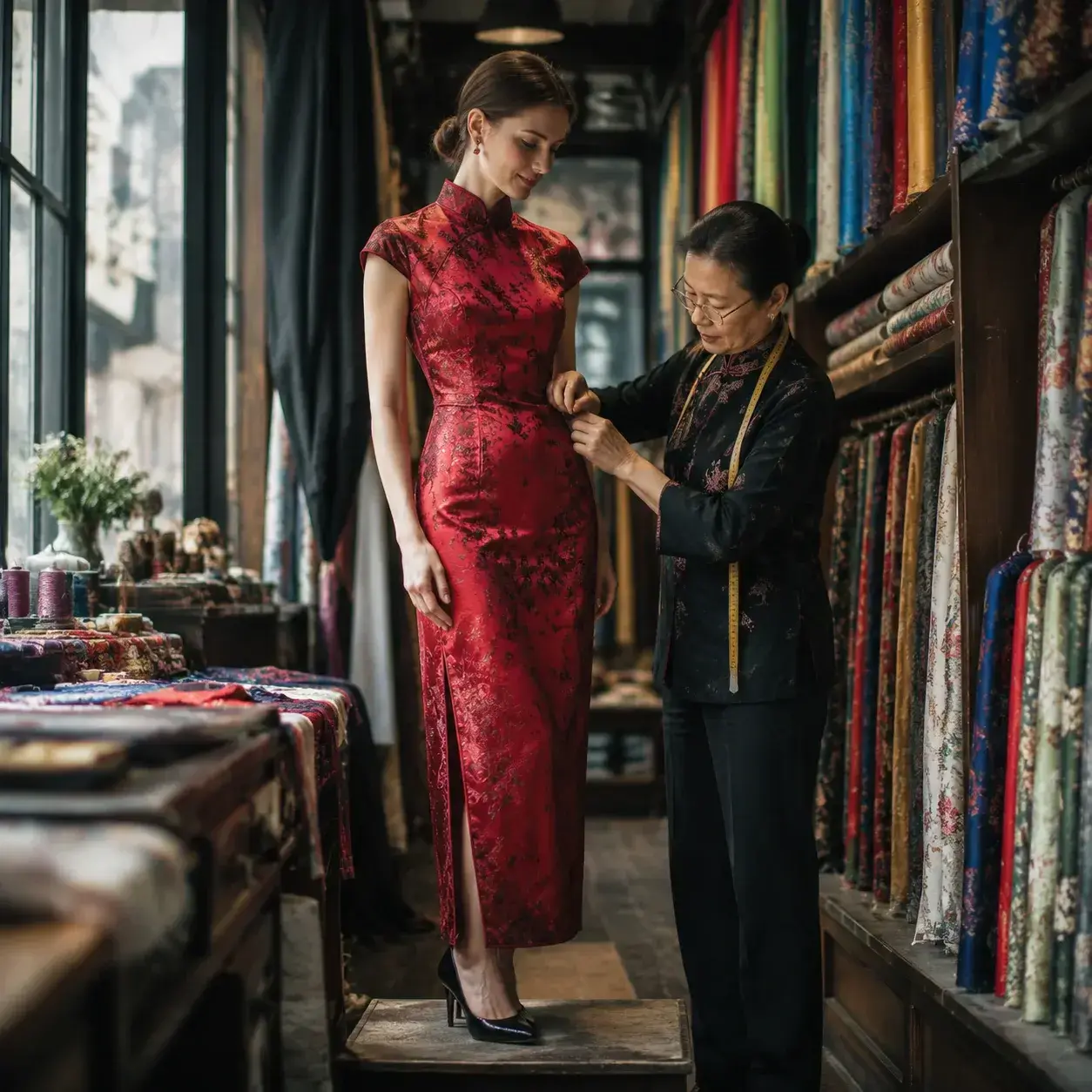 Where Can You Buy an Authentic Qipao in China? A Traveler's Buying Guide Learn where to buy an authentic qipao in China, what it should cost, and how travelers can choose custom tailoring over tourist versions.
 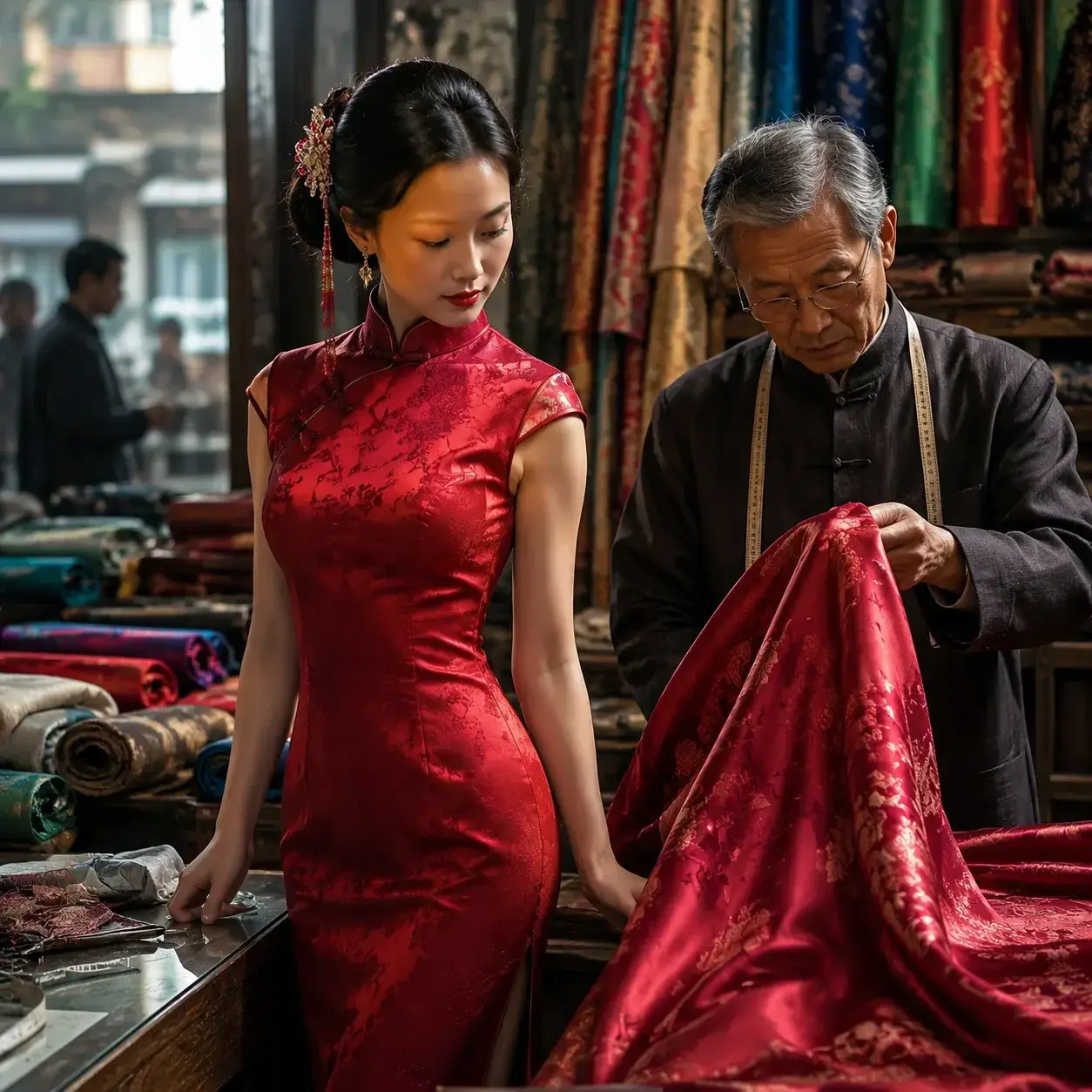 Cheongsam: Where Do You Buy an Authentic One in China, and How Do You Avoid Fakes? Learn where to buy an authentic cheongsam in China, how much to pay, and how to spot fake silk before you buy.
 7. Hand-Painted Silk Fan
Elegant, flat, nearly weightless — the best value-per-gram gift here. Price is driven by material × craft × maker: printed tourist fans at ¥20–80 have no gift or collector value, while hand-painted silk on good ribs at ¥200–600+ is the gifting sweet spot. Sandalwood and named-artist fans climb well beyond that.
Open one fully before buying and look at where the ribs meet the leaf — hand-mounted fans are clean at that join; glued tourist fans are not.
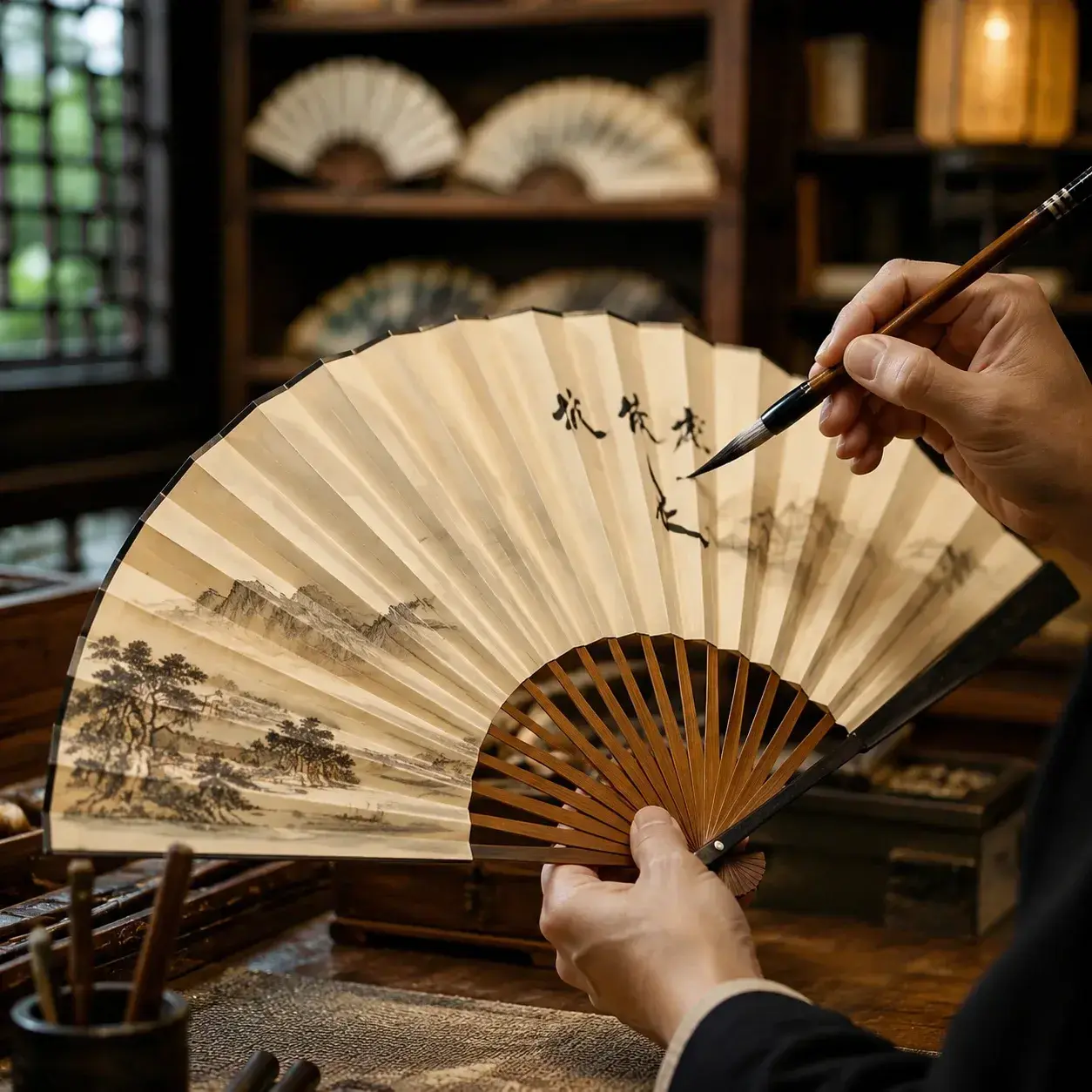 Chinese Folding Fan: How to Choose an Authentic Silk Fan and Where to Buy One in China Learn how to choose an authentic Chinese folding fan, spot hand-painted silk, and find the best places to buy one in China.
 8. Jingdezhen Porcelain
The dividing line is decal-printed versus hand-painted, and it is visible once you know it. A tourist decal bowl or cup runs ¥20–80 — a keepsake, not quality — while an artist or brand mid-range vase or tea set runs ¥500–3,000, judged on maker and craft. Named-artist signed work goes higher and is negotiable only if you know the maker.
The tell: look closely at the pattern. Dot-matrix printing means a decal; brushwork shows varying line weight and small asymmetries. Jingdezhen is the source, but good pieces reach the major city markets too.
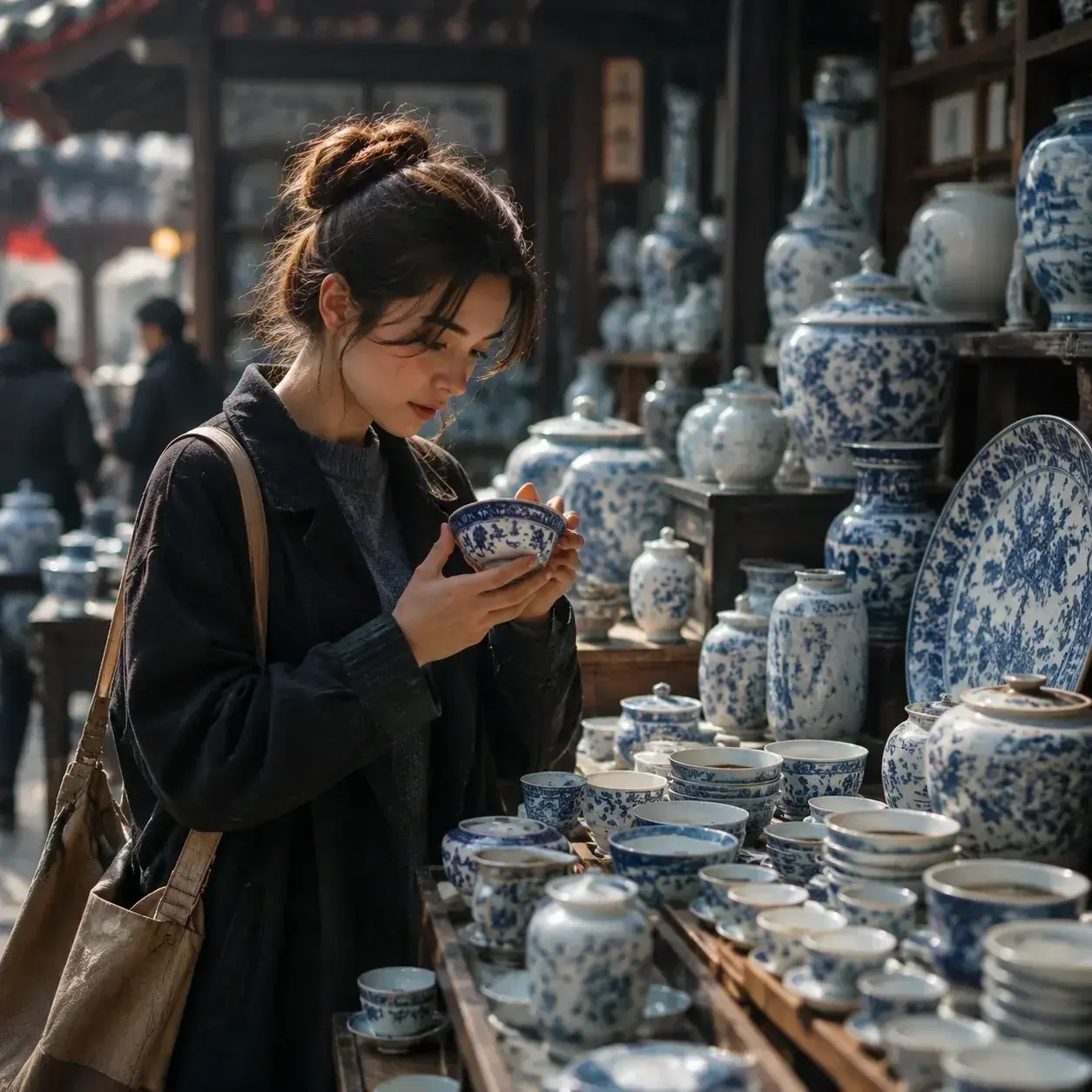 Chinese Porcelain: How Do You Buy Authentic Pieces in China Without Getting Scammed? Learn how to buy authentic Chinese porcelain in China, avoid fakes, understand export rules, and shop safely as a traveler.
 9. Custom Name Chop (印章)
Pound for pound the most personal gift on this list and among the cheapest: ¥30–120 to have a recipient's name carved into a stone seal in Chinese characters. It's small, unbreakable in transit, and unmistakably from China.
Have it carved while you wait at a market stall or museum shop, and check the characters before you pay — ask the carver to stamp it once on paper so you can see the impression rather than the mirror-image on the stone.
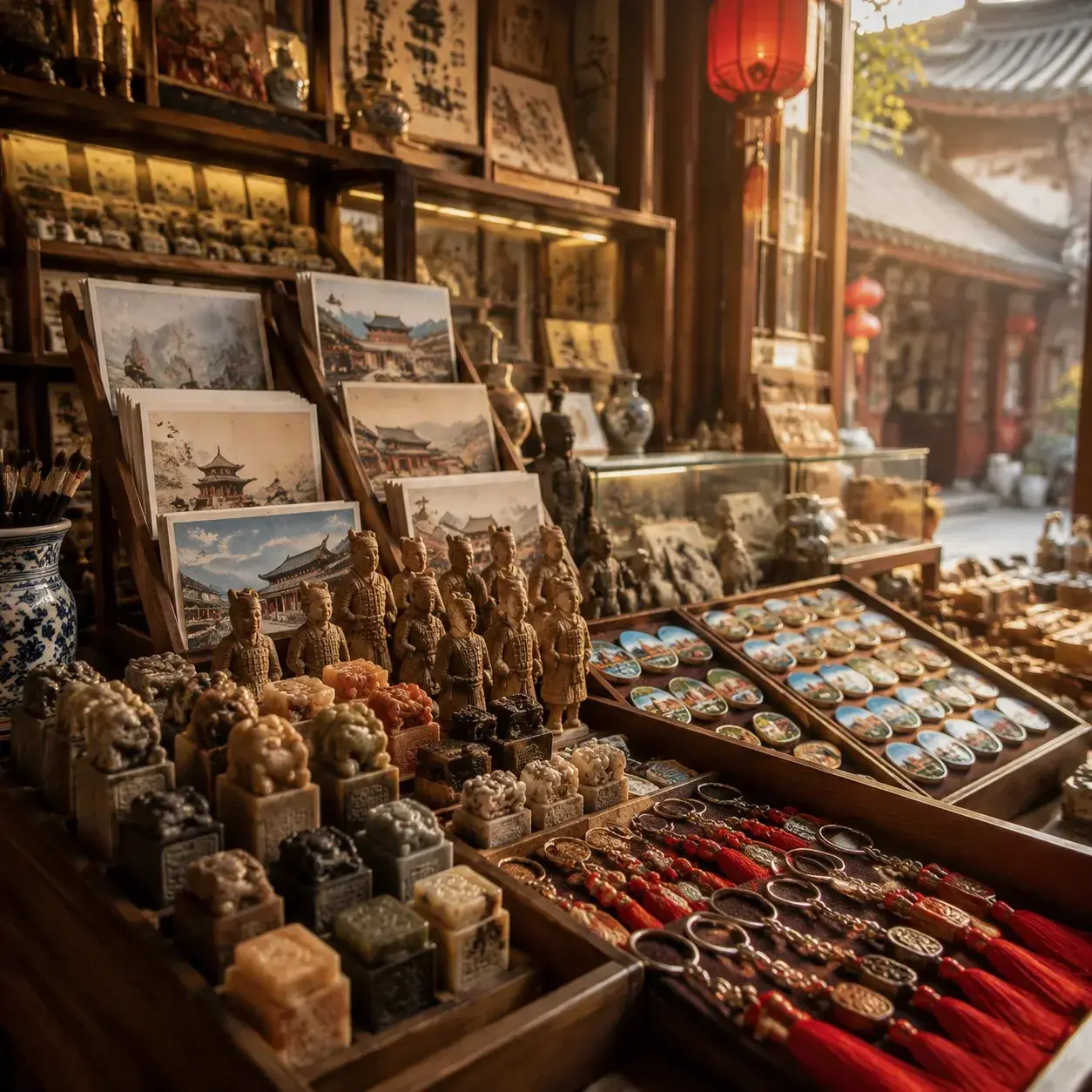 What Are the Best Affordable Chinese Souvenirs and Where Do You Buy Them? Discover the best affordable Chinese souvenirs, what they should cost, and where to buy them for fair prices in China.
 10. Calligraphy or Ink-Painting Scroll
For collectors and anyone who values a story over a shelf object. Artist tier drives price far more than size: a beginner brush set runs ¥50–200, a decent hanging scroll ¥300–2,000, and studio or named-artist work climbs into the thousands. Ink landscape scrolls sit in a similar band at ¥200–1,500 for gallery-level pieces.
The thing to avoid is a mass-printed scroll sold as hand-brushed. Tilt it to the light: real ink on paper has texture and slight bleed at the stroke edges; a print is flat and uniformly dense.
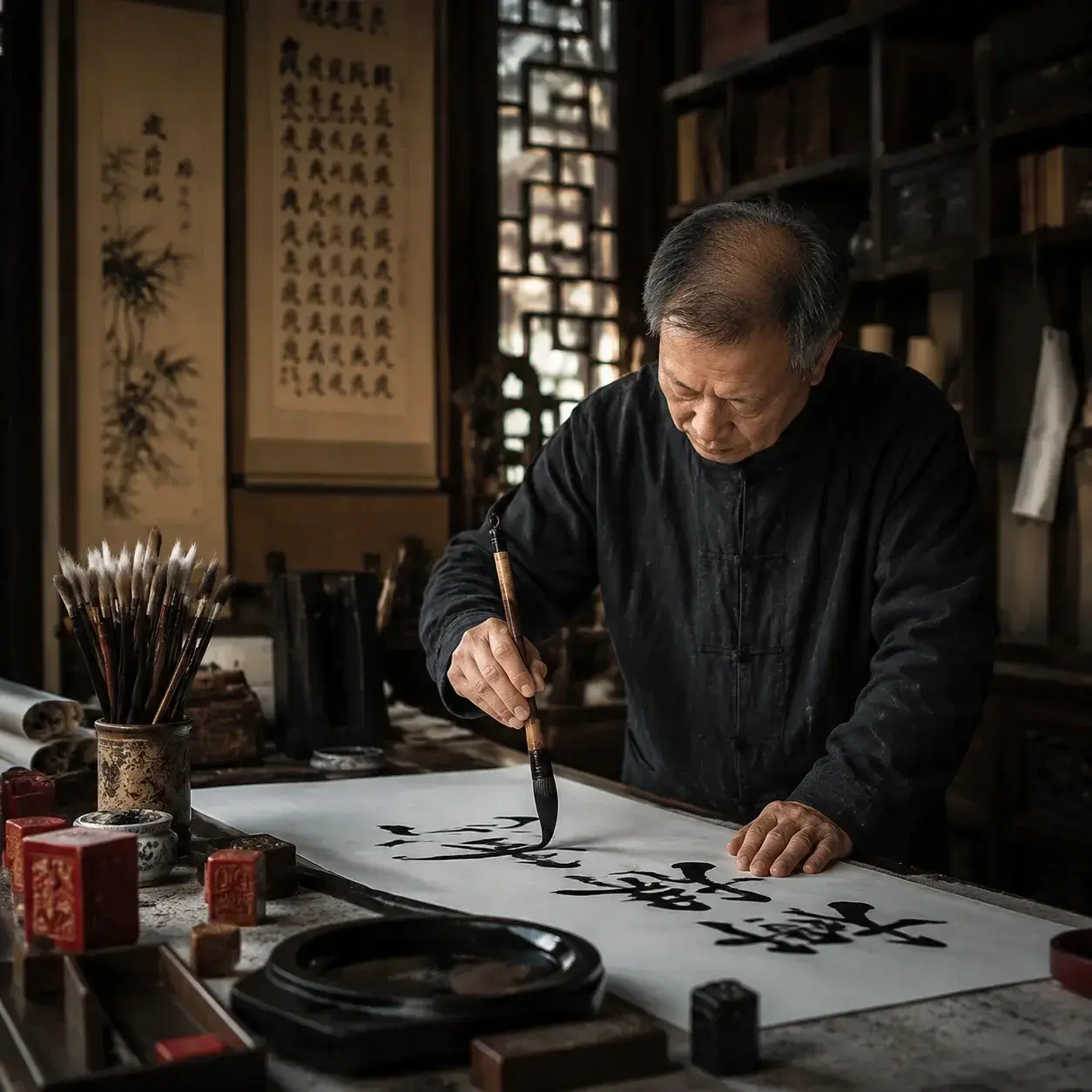 Chinese Calligraphy: How Do You Buy an Authentic Piece in China? Learn how to buy authentic Chinese calligraphy in China, choose meaningful phrases, compare prices, and avoid printed tourist-market fakes.
 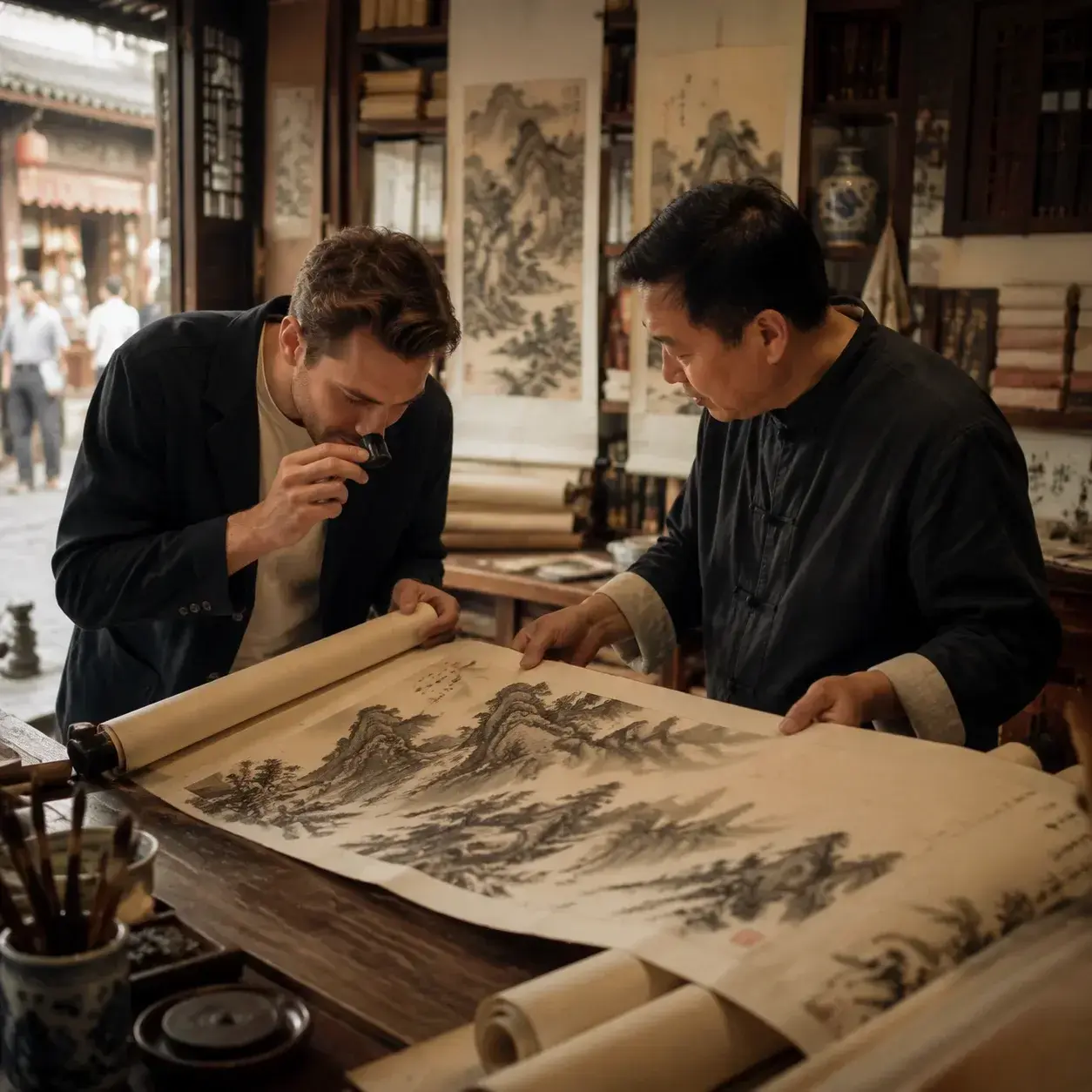 What Is Chinese Ink Painting, and How Do You Buy an Authentic Scroll in China? Learn what Chinese ink painting is and how to buy an authentic scroll in China without overpaying for prints sold as originals.
 11. Paper Cutting (剪纸)
Cheap, flat, colourful, and genuinely traditional — ideal for kids and for bringing a dozen home. Machine window-cut sets run ¥5–20, small handmade pieces ¥20–80, intricate or signed work ¥80–300, and framed pieces ¥200–800+.
Buy from artisans in Pingyao's old town, Shaanxi folk villages, or Beijing's Panjiayuan rather than airport kiosks. Pick motifs with meaning: the double-happiness character for a wedding, the zodiac animal for someone's birth year.
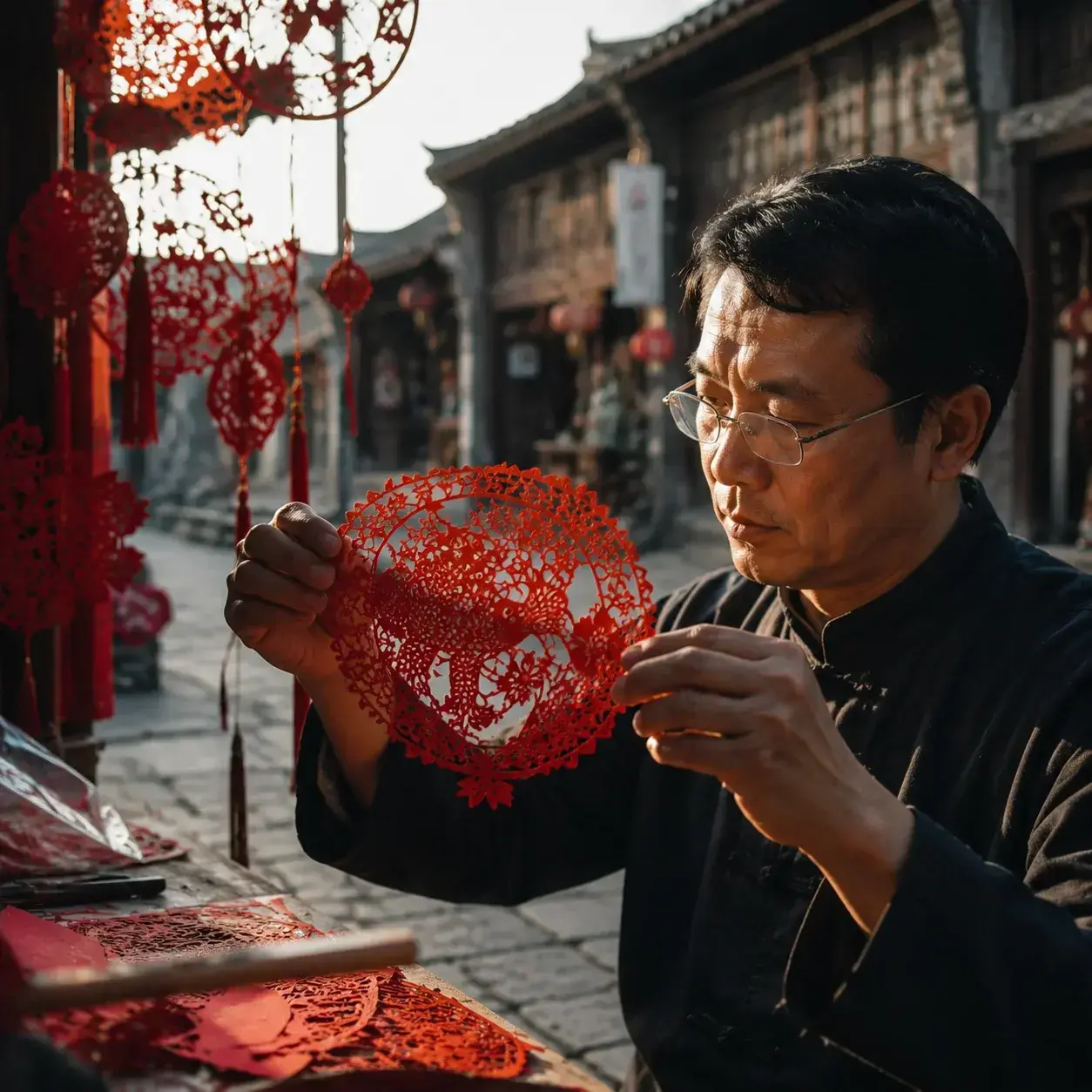 What Is Chinese Paper Cutting, and How Do You Buy an Authentic Piece in China? Learn what Chinese paper cutting is, how to spot authentic handmade jianzhi, and where to buy it in China.
 12. Chinese Knot
The classic red hanging decoration, and a good bulk gift. Keychain-size runs ¥5–20, small decorative knots ¥10–40, medium ¥20–60, and large statement pieces ¥80–300.
Hand-tied knots have a dense, even core and cord that doesn't fray at the tassel; the cheap machine versions loosen within a year. At these prices it's worth buying the mid tier.
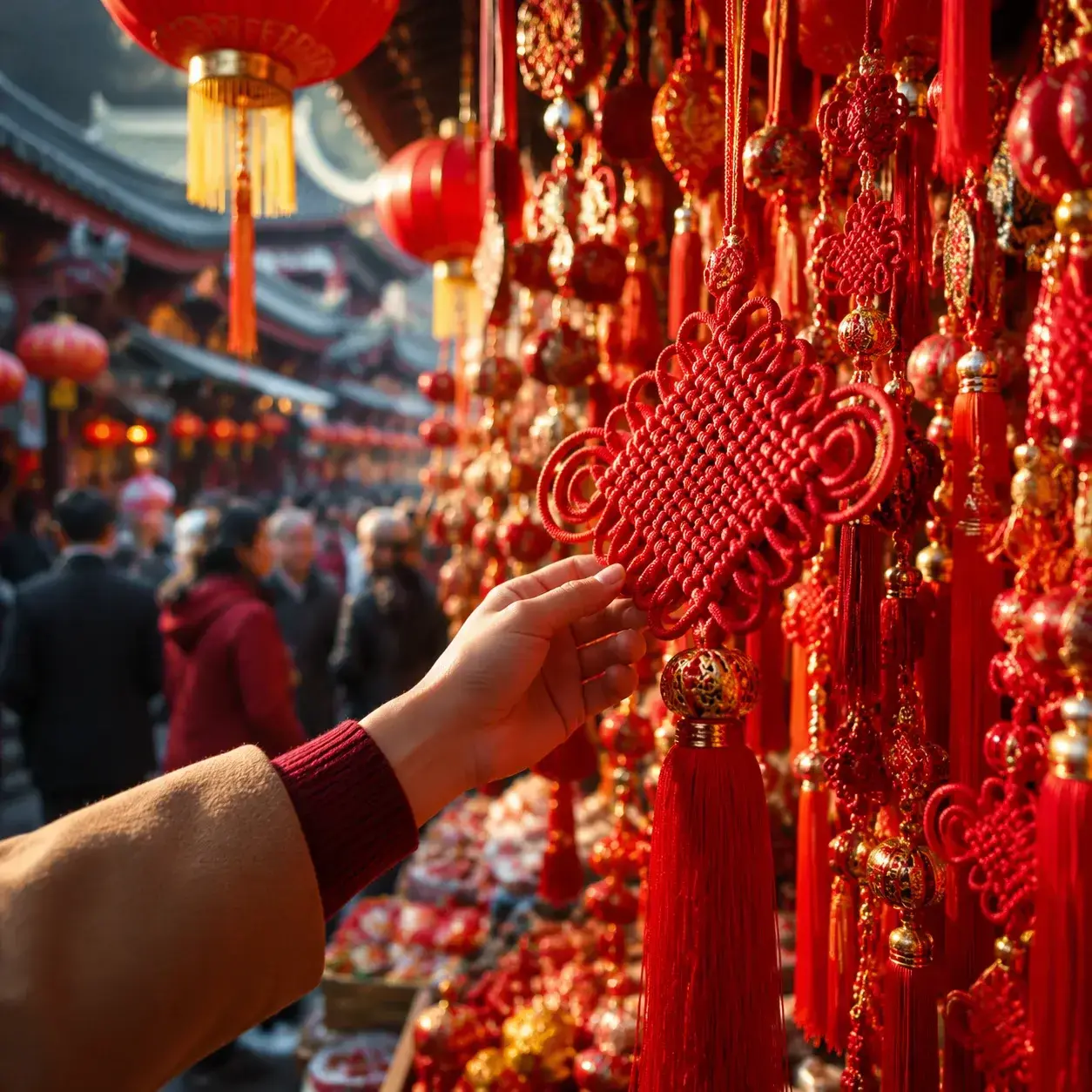 What Is a Chinese Knot, and Which One Should You Buy as a Gift? Learn what a Chinese knot means, how much it costs, and which type makes the best gift for friends, colleagues, or partners in China.
 13. Panda Merchandise
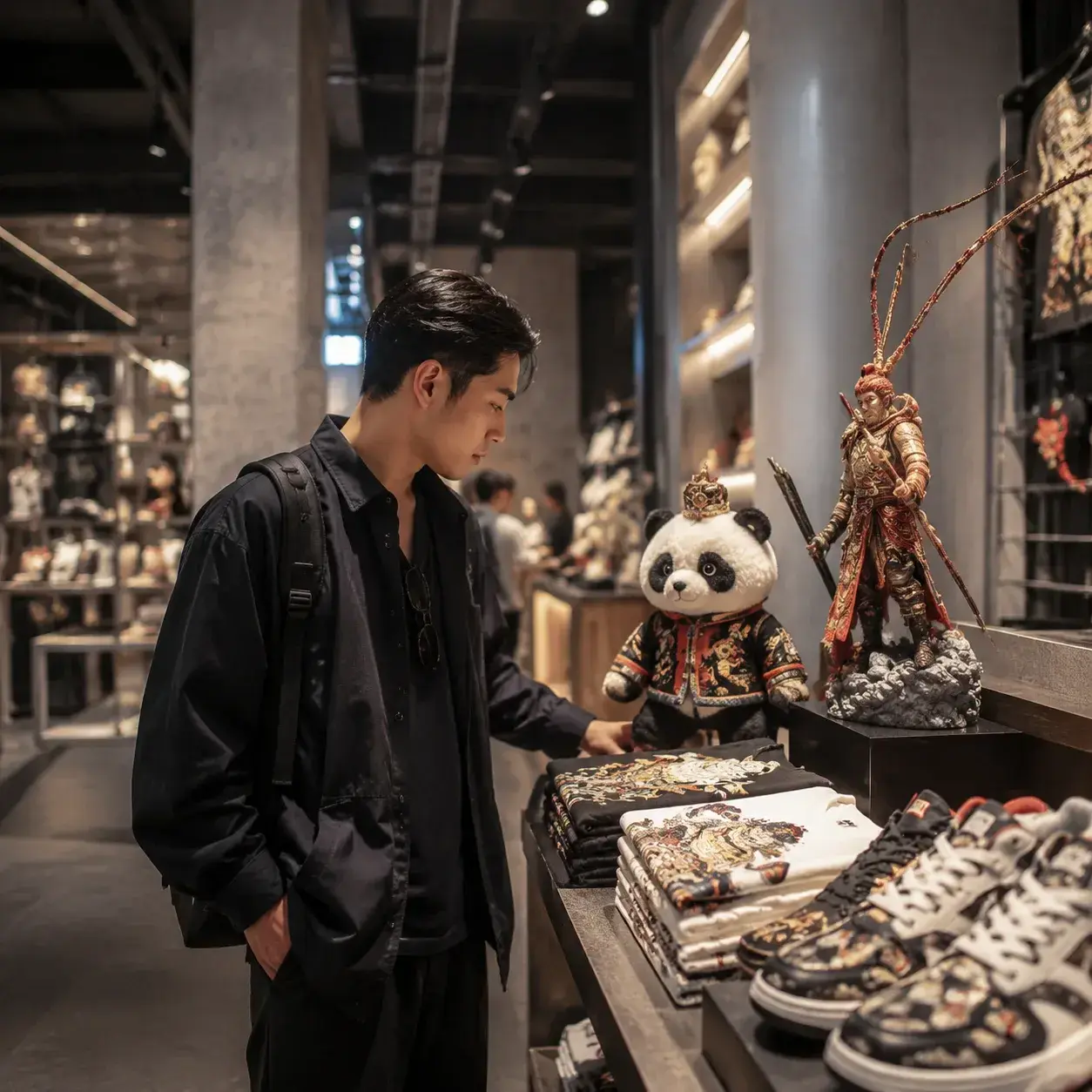
The safest crowd-pleaser on the list, and best bought at the source. Small plush cost around ¥45–180, with the widest and best-priced selection in Chengdu — the panda base nursery houses and the Panda Station hub, plus designer pieces at Kuanzhai Alley's Panda House and the Taikoo Li / Chunxi Road stores downtown.
Museum and official-outlet plush hold up in the wash; street-stall versions generally don't.
 What Are the Best Chinese Pop Culture Souvenirs to Buy in China (and Where)? Discover the best Chinese pop culture souvenirs to buy in China, from panda merch to Black Myth: Wukong figures and guochao fashion.
 14. Black Myth: Wukong Figures and Guochao Design
The modern, non-touristy option. Official and licensed Black Myth: Wukong merchandise is often genuinely cheaper in China than abroad, and it reads as a knowing gift for anyone who follows games. Alongside it, guochao ("national trend") streetwear, homeware and accessories reinterpret Chinese motifs in a contemporary style — this is what young Chinese shoppers actually buy.
One honest caveat: global blind-box toy brands are fun impulse buys but aren't distinctly Chinese. Treat them as a bonus rather than the gift.
What Are the Best Chinese Pop Culture Souvenirs to Buy in China (and Where)? Discover the best Chinese pop culture souvenirs to buy in China, from panda merch to Black Myth: Wukong figures and guochao fashion. 15. Terracotta Warriors and Museum Keepsakes
The "I was actually there" category. Terracotta warrior figurines start from around ¥30, and the good ones come from the museum shops in Xi'an rather than the stalls outside. The same logic applies to Sanxingdui mask replicas, Forbidden City cultural-creative goods, and Great Wall pieces: official museum shops beat street stalls on quality, and the money supports the site.
These are also the souvenirs that age best, because they're tied to a specific place you stood in.
What Are the Best Affordable Chinese Souvenirs and Where Do You Buy Them? Discover the best affordable Chinese souvenirs, what they should cost, and where to buy them for fair prices in China. Also Worth a Look
Three more that didn't make the fifteen but earn their suitcase space:
- Engraved chopstick sets — ¥10–30 for basic pairs, ¥40–120 for good gift sets, ¥80–300 for fine work. Excellent office gifting. → chopsticks guide
- Silk or paper lanterns — ¥60–250 for standard sizes, ¥300–1,200 for large or finely painted pieces. → lantern guide
- Postcards, magnets and keychains — ¥3–15, ¥5–60 and ¥5–50 respectively. The honest answer for a long colleague list. → affordable souvenirs guide
Who Are You Shopping For?
If you'd rather start from the person than the product, use this map and jump to the numbered item above.
| Shopping for… | What they'll actually love | Jump to |
|---|---|---|
| Parents / grandparents | Loose-leaf tea, a porcelain piece, a silk scarf — health, "face," and heritage | #1, #8, #5 |
| Partner (wife / girlfriend) | A jade bangle or pendant, a silk scarf, a made-to-measure qipao | #4, #5, #6 |
| Partner (husband / boyfriend) | A Yixing teapot, a good tea, a calligraphy scroll | #2, #1, #10 |
| Kids | Panda plush, an IP figure, a Chinese-knot keychain, a paper-cut sheet | #13, #14, #12, #11 |
| Colleagues / bulk gifts | Magnets, keychains, engraved chopstick sets, small-pack tea | Also Worth a Look, #1 |
| Collectors / culture lovers | Calligraphy, ink scrolls, artist porcelain, a custom seal | #10, #8, #9 |
| Tea lovers | Loose-leaf tea, a gongfu set, a purple-clay teapot | #1, #3, #2 |
| Fashion buyers | A qipao, a silk scarf, a hand-painted fan | #6, #5, #7 |
| Home-decor lovers | A lantern, a porcelain vase, a decorative knot | Also Worth a Look, #8, #12 |
A note on gifting etiquette that saves embarrassment: in Chinese custom, avoid giving clocks (钟, a homophone for "the end") and cut flowers for happy occasions, and don't wrap gifts in plain white. Nothing on this list carries that problem — but it's worth knowing when you improvise. Shopping for someone who'd rather have a label than a keepsake? China's own design brands have flagship stores worth the trip.
How Much Do Souvenirs from China Cost?
Budget by tier rather than by single item. These brackets are indicative and vary by city, material and channel.
| Price tier | Roughly (USD) | Typical items |
|---|---|---|
| Pocket / bulk gifts | ~$1–10 | Magnets, keychains, postcards, paper-cuts, small tea packs, a basic name chop |
| Mid-range keepsakes | ~$15–60 | Silk scarf, hand-painted fan, chopstick gift set, decorative knot, panda plush |
| Statement pieces | ~$70–300 | Gongfu tea set, quality loose-leaf tea, porcelain vase, entry jade, entry Yixing pot |
| Collector / heirloom | $300+ | Custom qipao, fine jade bangle, collector teapot, hand-painted scroll, artist porcelain |
Two money rules travelers forget: the airport is the worst place to buy almost anything except last-minute snacks, and polite bargaining is expected at markets but not in fixed-price malls or reputable tea houses.
Bringing It Home: Customs and Shipping
Most Chinese souvenirs travel home without trouble, but rules vary by country — verify your destination's customs before you fly. Tea, silk, fans, paper-cuts and most crafts are low-risk; porcelain, jade and teapots need careful padding; and anything genuinely antique can trigger both Chinese export limits and import scrutiny at home.
- Fragile items (porcelain, jade, teapots): carry them in hand luggage where you can, wrapped in clothing, or have the shop pack and ship larger pieces.
- Tea and food items: loose-leaf tea is fine for most countries, but some (e.g. Australia and New Zealand) require you to declare plant products on arrival. Keep it sealed and declare if in doubt.
- Antiques: China restricts the export of items above a certain age, and they must carry an official seal; your home country may also ask for provenance. If a seller claims "genuine antique," ask for paperwork — otherwise treat it as a reproduction.
- Value declarations: high-value jade or silk purchases may need declaring at home if they exceed your duty-free allowance. Keep receipts.
The vast majority of travelers carry tea, silk and crafts home with zero friction. Just check the two or three rules that apply to your passport before you pack.
Frequently Asked Questions
What are the best souvenirs to buy in China? Loose-leaf tea (¥50–300 per 100g), a real jade pendant (from about ¥500), a mulberry-silk scarf (¥150–400), hand-painted porcelain, and a custom name chop (¥30–120) are the five that travelers keep longest. Match the item to the recipient rather than buying whatever the nearest stall sells.
What are the best cheap souvenirs from China? A carved name chop at ¥30–120 is the best value on this list because it feels personal. Below that, postcards run ¥3–15, keychains ¥5–50, magnets ¥5–60, machine paper-cut sets ¥5–20, and Chinese-knot keychains ¥5–20. Buy them at markets and museum shops, not the airport.
How can I tell authentic souvenirs from fakes? Learn one tell per material. Real mulberry silk feels warm rather than slippery, and anything under ~¥50 for a scarf is polyester. Hand-painted porcelain shows varying brush-line weight; decals show dot-matrix printing. A "fully handmade raw-ore" Yixing pot at ¥50–150 is not real. Scenic-stall "jade" at ¥50–300 is usually treated serpentine.
Where is the best place to buy souvenirs in China? Buy where the makers and specialists are: tea markets for tea, Dingshu for zisha teapots, fabric markets with in-house tailors for silk and qipao, Jingdezhen for porcelain, Chengdu for panda goods, Xi'an museum shops for terracotta figurines, and Pingyao or Panjiayuan for paper-cuts.
How much should I budget for souvenirs in China? Roughly $1–10 for bulk and pocket gifts, $15–60 for mid-range keepsakes like a silk scarf or hand-painted fan, $70–300 for statement pieces such as a gongfu tea set or entry jade, and $300+ for collector items like a custom qipao or fine jade bangle.
What's a good Chinese gift for parents versus for kids? For parents, lean into health and heritage: loose-leaf tea, a porcelain piece, or a silk scarf. For kids, choose fun and light: a panda plush (¥45–180), an IP figure, a Chinese-knot keychain, or a colourful paper-cut.
Start Here, Then Go Deep
The best souvenirs from China aren't the ones shouting from an airport shelf — they're the tea, jade, silk, porcelain and personalised keepsakes chosen for a specific person and bought where the craft actually lives. Pick your items from the fifteen above, note the indicative price so you know the bracket you're negotiating inside, and follow the deep-dive link for the district-level detail and the full authenticity checklist. Souvenirs are one half of the question. If what you actually want is the practical stuff that's cheaper here than at home — electronics, sportswear, everyday goods — that's a different list: what to buy in China.
Planning the trip that all this shopping hangs on? That's what we do — private, custom China itineraries that build in the tea market, the fabric-market tailor and the museum shop so the souvenirs come home right. When you're ready to turn a shopping list into a route, let LyrikTrip map it.