



 18 days China, End to End Beijing → Xi'an → Chuanzhusi → Jiuzhaigou → Chengdu → Zhangjiajie → Guilin → Yangshuo → Shenzhen From $6,360 View route
  3 days 4-Day Tour of Siguniang Mountain, Biepa Gou, and Dagu Glacier Chengdu → Lixian → Heishui County From $1,599 View route
  5 days Above the Pillars, Then Below Zhangjiajie From $1,430 View route
  3 days After the Last Booth Guangzhou From $840 View route
  13 days All the Way West Xi'an → Dunhuang → Turpan → Kashgar → Shanghai From $3,500 View route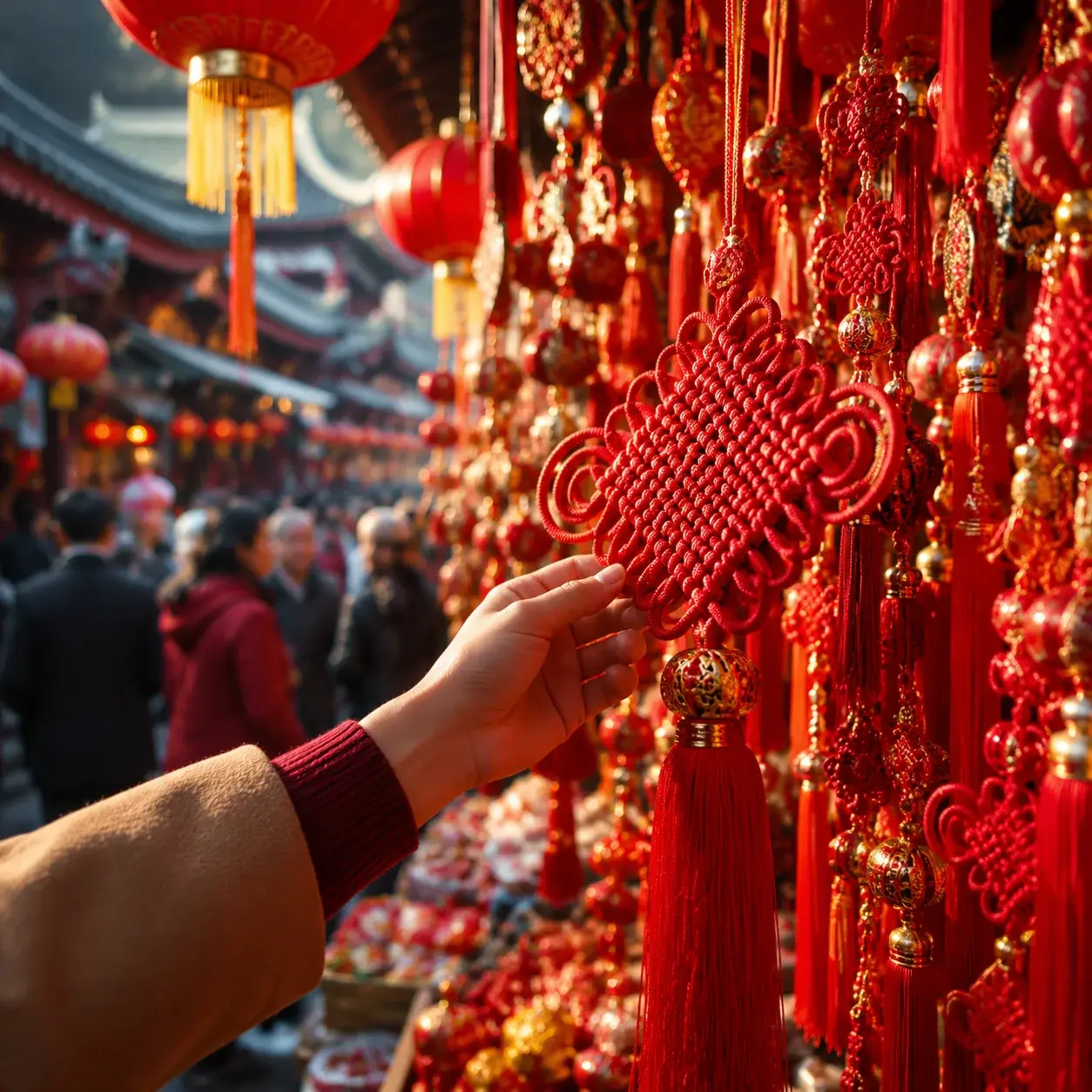
What Is a Chinese Knot, and Which One Should You Buy as a Gift?
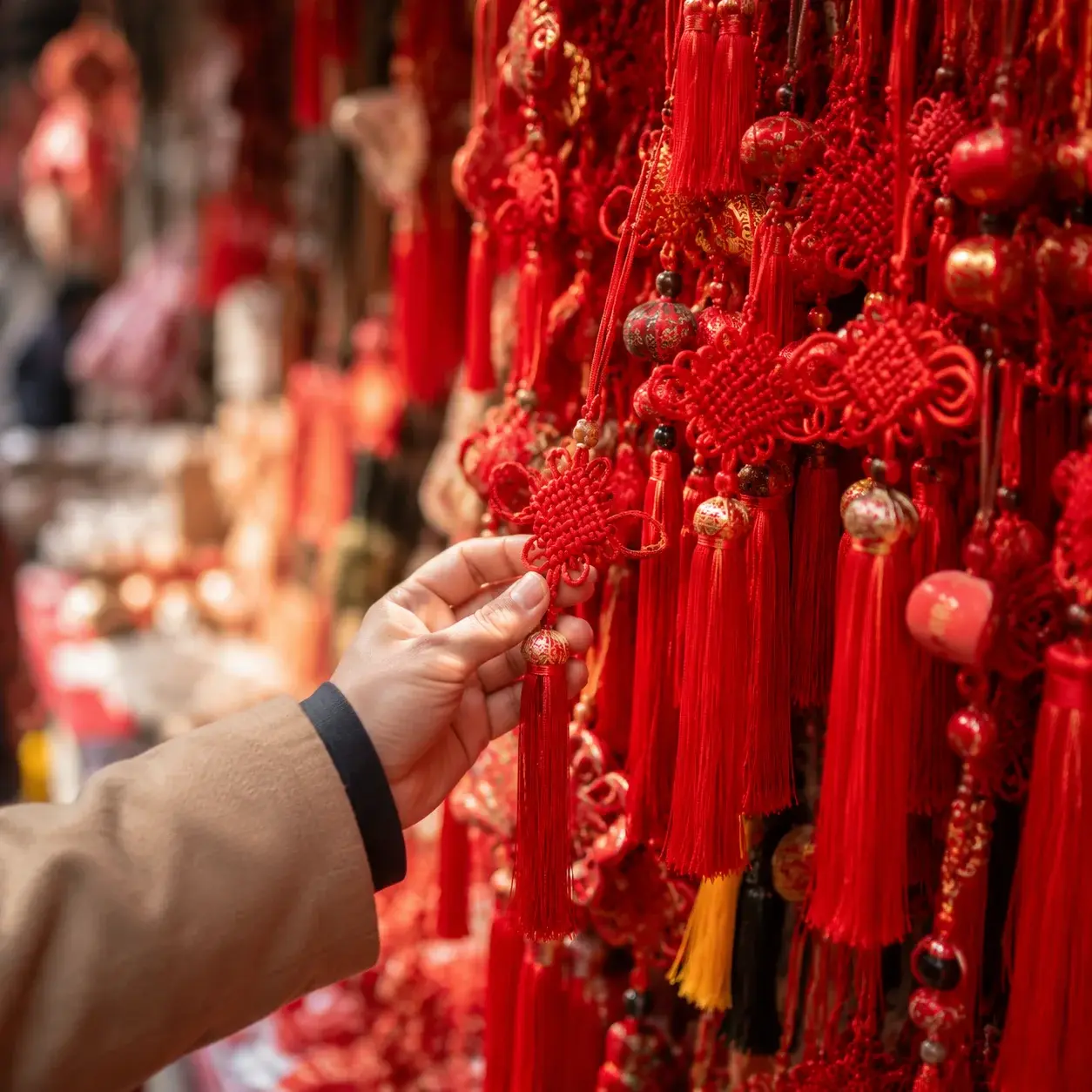
A Chinese knot (中国结) is a decorative knot woven from a single continuous cord, traditionally red, symbolising luck, reunion, and protection. As a souvenir it's the best-value gift in China: a keychain costs roughly ¥5–20 (indicative), weighs a few grams, and carries real meaning — so you can buy ten for a whole team and barely notice the luggage.
We wrote this as a China travel company, not a shop. Every "Chinese knot meaning" guide we could find is a culture-history listicle that tells you what the knots symbolise but never what they cost, which one to give your boss versus your partner, or where to find a genuinely handmade one instead of a glued machine copy. This is the traveler's buying guide instead: what a Chinese knot means, which of the eight stall-real knots fits which recipient, honest RMB price ranges, and the named markets where you can buy authentic ones.
A quick note on honesty before we start. The evergreen knowledge here — the symbolism, the color rules, the handmade-versus-machine tests — is solid and sourced. The RMB figures and named markets are indicative ranges to orient you, not fixed quotes; Chinese knots have no standard pricing and stall haggling is wide. Treat prices as "expect roughly," confirm on the ground, and haggle on volume.
Key Takeaways
- A Chinese knot is the cheapest meaningful souvenir in China — keychains run roughly ¥5–20 each (indicative), weigh a few grams, and flat-pack.
- The meaning comes from a pun: 结 (jié, "knot") sounds like 吉 (jí, "good fortune"), so knots signal luck, reunion, love, and protection.
- When unsure which knot to give, choose the Pan Chang (盘长) or Auspicious (吉祥) knot — both are all-purpose and culturally low-risk.
- Never group-gift the True Lover's knot (同心结) — it's a romantic token and lands awkwardly with colleagues.
- Default to red. White and black carry funeral/somber connotations and should never be a gift or festive primary color.
- For bulk gifts, machine-made keychains are fine. Only hunt true handmade for one important person or a large keepsake.
- Roughly ¥100 covers a whole small team's souvenirs with near-zero added luggage — no other China souvenir matches this price-to-meaning ratio.
What Is a Chinese Knot?
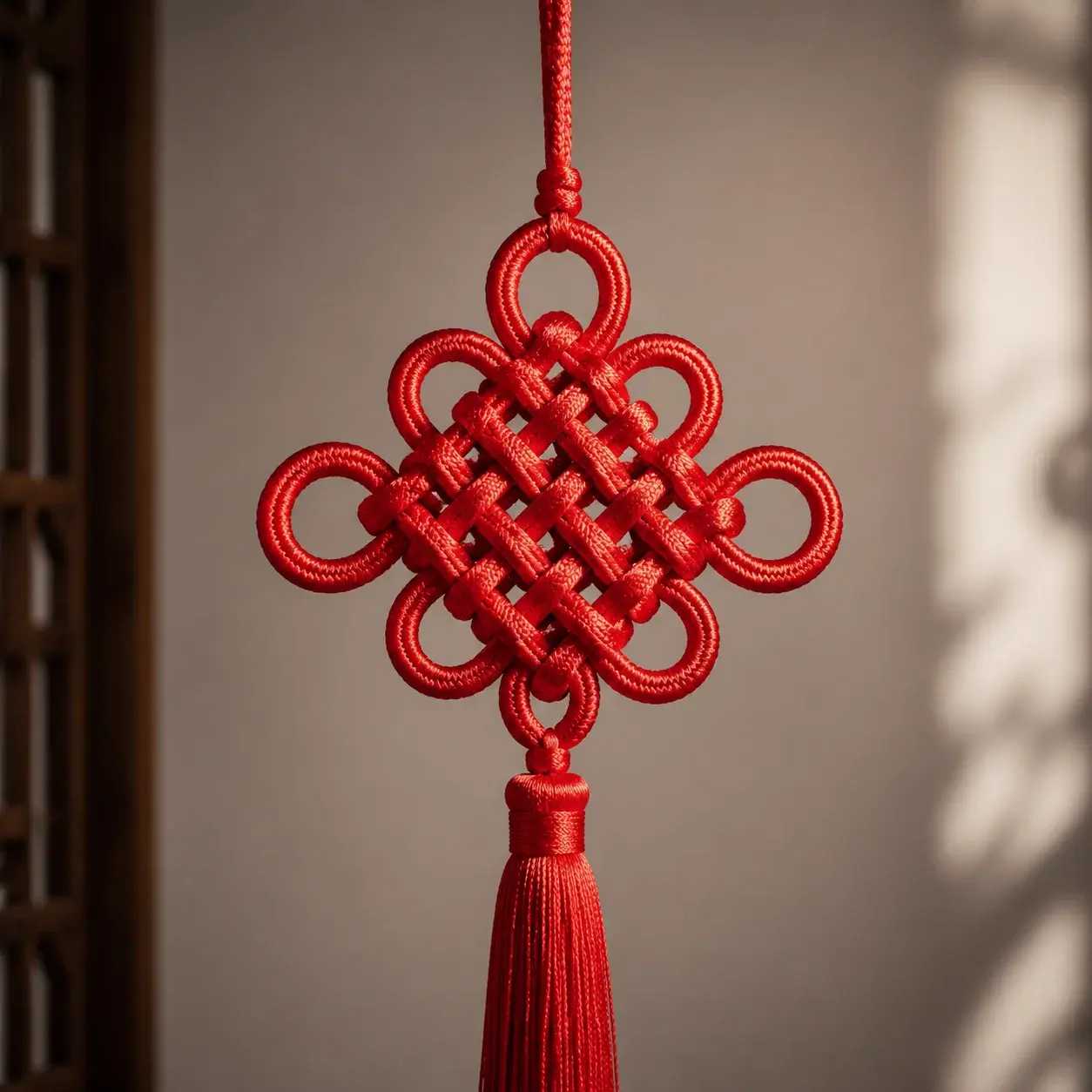
A Chinese knot is a symmetrical decorative knot hand-woven from a single continuous cord, with each shape corresponding to a specific auspicious meaning. Known in Chinese as 中国结 (zhōngguó jié), the craft uses one unbroken thread looped back on itself, usually finished with a tassel, and traditionally serves as a good-luck charm that wards off misfortune.
The craft is old. Knotted cords survive from the Warring States period (475–221 BCE), the technique matured as a decorative art during the Tang dynasty (618–907), and the knot forms you see on stalls today were largely standardised by the Ming and Qing dynasties (Sources: Chinese Knotting, Wikipedia; Chinese Knotting, EBSCO Research Starters). Researchers are currently working toward intangible-heritage recognition for the craft — it is being nominated, not yet formally listed, so treat any "UNESCO-listed" claim with caution.
What Does a Chinese Knot Mean?
A Chinese knot means good fortune, because of a pun: 结 (jié, "knot") sounds almost identical to 吉 (jí, "good fortune, auspiciousness"). That single homophone is the linguistic root of every meaning attached to the craft — from there, knots came to signal reunion, love, marriage, protection, and prosperity (Source: multiple, incl. China Fact Tours; consistent with the 结/吉 homophone widely documented).
Because the knot is woven from one unbroken cord that has no beginning and no end, it also carries a built-in message of continuity and connection — which is why so many of the individual forms below mean "long-lasting," "reunited," or "tied together." The specific meaning shifts with the shape (see the decoder next) and with the color (see the color table after that).
Which Chinese Knot Means What, and Who Should You Give It To?
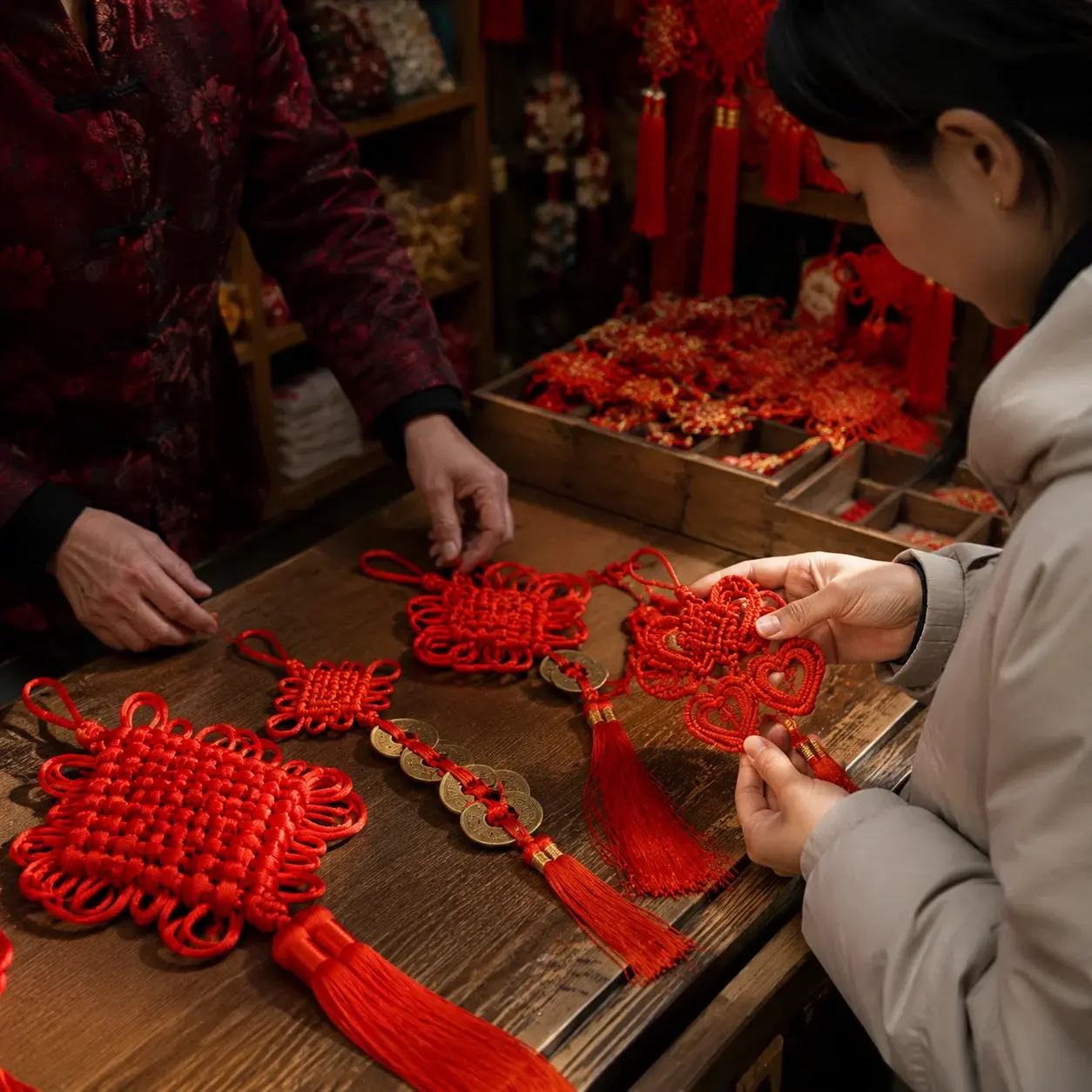
Below are the eight knots you'll actually see on stalls, each mapped to its meaning and its ideal recipient. Competitors list 19 knot types and scatter the symbolism across paragraphs; this is a decision tool instead — read down the last column to find "which knot do I give my boss, my partner, or a business contact."
| Knot (中文 / pinyin) | English name | Core meaning | Best recipient / occasion |
|---|---|---|---|
| 盘长结 / Pán Cháng | Mystic / Eternal Knot | No beginning, no end — longevity and endless continuity (one of the Eight Buddhist Treasures) | The all-purpose pick. Elders (longevity), partners (lasting love). The most iconic "instantly Chinese" shape — choose it when unsure |
| 吉祥结 / Jíxiáng | Auspicious / Good Luck Knot | Luck, peace, and things going your way (its seven loops echo the lucky "seven") | The safe bet for friends and colleagues; New Year, housewarming, a new business. The most literal "good luck" — lowest cultural risk |
| 双钱结 / Shuāng Qián | Double Coin / Money Knot | Two overlapping antique coins — wealth and "good things in pairs" | Business contacts, elders wishing prosperity; also "in pairs," so fine for newlyweds. Best on a wallet or in a car |
| 同心结 / Tóngxīn | True Lover's / Concentric Knot | Two hearts tied as one — a classical love token | Partners only. A romantic gift, wedding, or anniversary — never give it to colleagues; the meaning is too intimate |
| 团锦结 / Tuán Jǐn | Round Brocade Knot | Reunion and blossoming abundance | Family and reunion occasions (Mid-Autumn, Spring Festival); its floral shape suits older female relatives |
| 纽扣结 / Niǔkòu | Button Knot | Originally a robe-fastening button — connection and unity | The smallest knot; the default for bracelets and pendants. Natural for younger people and as an accessory |
| 如意结 / Rúyì | Ruyi / Wish Knot | May all your wishes come true | The universal well-wish — for someone facing an exam, a job hunt, or a move |
| 蝴蝶结 / Húdié | Butterfly Knot | "Butterfly" (蝶) puns on 耋 (great old age); also happiness and love | Elders (for longevity) or younger women as decoration; lively shape, bolder colors welcome |
On the stalls, roughly 90% of what you'll see is the Pan Chang (large hangings) and the Auspicious or Button knots (keychains and bracelets). Our one firm rule: don't casually give the True Lover's knot — it's a declaration of romance, and handing one to a coworker is genuinely awkward. When you can't read the recipient, the Pan Chang or Auspicious knot never misses.
What Do Chinese Knot Colors Mean?
A Chinese knot's color is information, not decoration — the wrong color sends the wrong message. Run this table as your last check before you gift.
| Color | Meaning | Best occasion / recipient | Reminder |
|---|---|---|---|
| Red | Joy, luck, warding off evil — the classic, safest choice | Almost anything: New Year, weddings, elders, your zodiac year | About 90% of knots are red; red is the safe default |
| Gold / Yellow | Wealth, prosperity, prestige | Paired with red for a "wealth" piece; business people | Pure gold can read as gaudy — best as a tassel accent on a red knot |
| Green | Health, vitality, longevity | Elders (for health); wellness themes | Deep or jade green looks refined; yellow-green can look cheap |
| Blue | Harmony, calm, reunion | Thoughtful friends, men, everyday décor | Rarer, so it reads as less "tourist-default" and more considered |
| Purple | Wisdom, success, nobility | Students and exam-takers; career wishes | Niche but charming; pairs well with a gold tassel |
| Black / White | — | — | Red-line warning: white edges toward funeral use and black toward mourning — never use either as a gift or festive primary color |
If you want to escape the "everything is red" tourist look, a deep-blue or forest-green knot is genuinely underrated — same meaning, more of a connoisseur's pick. That said, for a Chinese elder or anything festive, red is still the surest choice.
Which Form Should You Buy — Keychain, Bracelet, Hanging, or Car Charm?
Match the form to who you're giving it to: keychains for crowds, bracelets for one close person, large hangings for a keepsake, car charms for drivers. This selector turns the usual product list into a "which one do I buy" tool.
| Form | Typical size / weight | Price band (RMB, indicative) | Best for / use | One-line verdict |
|---|---|---|---|---|
| Keychain | Palm-sized, a few grams | ¥5–20 | Bulk gifts — colleagues, classmates, a handful at once | The breakout pick; weightless in a bag, often paired with zodiac or coin charms |
| Bracelet | Red cord + small knot | ¥10–40 | Younger friends, partners (red-cord / True Lover's); wearable daily | Carries the Yue Lao "red thread" legend; the pick when you want something they can wear |
| Hanging / Wall | Medium–large + long tassel | ¥20–60 (small) / ¥80–300+ (large handmade) | Home décor, someone who decorates; Spring Festival | Bigger = heavier = more luggage; buy small to gift, large to keep |
| Car Charm | Medium + loop | ¥20–80 | Drivers, elders (for safe travels) | Red Pan Chang or "peace" knot suits best; avoid anything long enough to block the view |
To give a crowd, choose keychains with your eyes closed — cheapest, lightest, easiest to split. For one important person, a bracelet (intimate) or a large hanging (grand). For your own keepsake, buy one large handmade Pan Chang for the wall — it's the most photogenic and the best value per yuan.
Chinese Knot Keychains
Chinese knot keychains are the bulk-gift default: a few grams each, roughly ¥5–20, and easy to buy by the handful. This is the fastest-rising form in the whole category, and for good reason — a keychain is small enough to slip into a backpack pocket, cheap enough to hand out freely, and often combined with a zodiac animal or a small brass-coin charm so you can match the meaning to each recipient. If you're bringing back souvenirs for a team or a class, this is the form to buy in quantity.
Chinese Knot Bracelets
A Chinese knot bracelet is a red-cord lucky bracelet, usually ¥10–40, worn on the left wrist and tied to the Yue Lao "red thread" love legend. In Chinese folklore the matchmaker god Yue Lao binds destined couples with an invisible red thread, which gives the red-cord bracelet its romantic charge — making it a warmer, more personal gift than a keychain. It's the natural pick when you want to give someone one thing they can actually wear, and the Button or True Lover's knot is the most common form.
Wall Hangings and Car Charms
Large Pan Chang wall hangings (¥20–60 small, ¥80–300+ for big handmade pieces) are for décor and keepsakes; peace-knot car charms (¥20–80) are for drivers. The big tasselled hangings are festival décor and the most "grand" gift in the category, but they're also the heaviest and bulkiest thing to fly home — buy small to give and large only if you're keeping it. Car charms in red, usually a Pan Chang or dedicated "peace" (平安) knot, are a thoughtful gift for anyone with a car; just avoid ones long enough to dangle into the driver's sightline.
How Much Does a Chinese Knot Cost in China (RMB)?
Chinese knots are cheap: expect roughly ¥5–20 for a keychain, ¥10–40 for a small bracelet, ¥20–60 for a small wall knot, and ¥80–300+ for a large handmade Pan Chang (all indicative). Premium silk or named-artisan pieces run higher. There is no standard price and stall haggling is wide, so we publish ranges, not fixed quotes.
| Form | Typical RMB (indicative) | Notes |
|---|---|---|
| Keychain | ¥5–20 | Cheapest; buy in bulk, haggle on volume |
| Small bracelet | ¥10–40 | Red-cord lucky bracelets |
| Small wall knot | ¥20–60 | Light enough to fly home flat |
| Large handmade Pan Chang | ¥80–300+ | Real handwork; the keepsake tier |
| Premium silk / artisan | ¥300+ | Named makers, fine silk cord |
Two honest warnings. First, tourist-street stalls (Yu Garden, busy scenic gates) quote inflated opening prices — expect to negotiate down, especially on volume. Second, the cheapest keychains are machine-made and glued; that's completely fine for casual gifts (see the authenticity card below), but don't pay handmade prices for them. Prices collected as indicative ranges; verify on the ground.
How Much Does It Cost to Buy Chinese Knots for a Whole Team?
Roughly ¥100 buys souvenirs for an entire small team, with effectively zero added luggage weight. This is the knot's killer property, and no other China souvenir matches its price-to-meaning ratio. Here's the math worked out (unit prices and the ≈7.1 USD rate are indicative).
| Scenario | Quantity | Est. unit price | Total (RMB / ≈USD) | Luggage burden |
|---|---|---|---|---|
| Small team | 10 keychains | ¥10 | ¥100 / ≈$14 | Near zero — fits a backpack pocket |
| Whole office | 20 keychains | ¥8 (bulk-discounted) | ¥160 / ≈$22 | One palm-sized bag |
| Mixed gift set | 5 keychains + 3 bracelets + 1 large hanging | see table above | ≈¥200–350 / ≈$28–49 | Still hand-carriable |
The takeaway is simple: for a little over ¥100 you can cover a whole group of colleagues, and the entire haul adds essentially nothing to your bag. Buy keychains ten or twenty at a time, mix the meanings so recipients can "find themselves," and you have the single best-value bulk gift in China. For the full breakdown, see  Chinese lantern souvenir.
Where Can You Buy Authentic Handmade Chinese Knots?
Buy handmade knots at craft markets and heritage stalls rather than scenic-gate souvenir stands, which mostly sell glued machine copies. Named starting points (directional, verify locally) include Beijing's Panjiayuan and Liulichang, Shanghai's Yu Garden bazaar, Xi'an's Muslim Quarter, and Chengdu's Jinli and Kuanzhai alleys.
| City | Where | Type | Notes |
|---|---|---|---|
| Beijing | Panjiayuan Antique Market, Liulichang | Craft market | More handmade stock; negotiable. Liulichang leans literary/antique |
| Shanghai | Yu Garden bazaar & surrounding old streets | Tourist market | Convenient but high tourist markup — haggle hard |
| Xi'an | Muslim Quarter | Tourist street | Dense stalls; buying in bulk lets you press the price down |
| Chengdu | Jinli, Kuanzhai Alley | Tourist street | Lots of red-knot and panda-themed mixes |
| Anywhere | Scenic-gate stalls vs. craft co-ops / museum shops | — | Stalls are cheaper but mostly machine-made; for real handwork go to craft cooperatives or heritage stalls |
The trade-off is convenience and price versus authenticity. Scenic-street stalls are everywhere and cheapest, but the goods are largely machine-tied and glued. For a genuinely hand-tied knot — the kind worth giving to someone important — seek out craft cooperatives, heritage (非遗) stalls, or museum gift shops, and use the 30-second check below.
Handmade vs Machine: The 30-Second Authenticity Card
Check four things — cord continuity, tension, the back, and the tassel — and you can tell a hand-tied knot from a glued machine copy in about half a minute.
| Test | Handmade (genuine) | Machine / glued |
|---|---|---|
| Continuity | One cord woven end to end; no break | Multiple spliced segments with glue hidden at joints |
| Tension | Every loop even and symmetrical | Loops locally loose or over-tight |
| Back side | Clean routing you can trace back to the weave | A blob of hot glue over the join |
| Tassel | Separately tied and fastened | Simply stuck on — pulls off with a tug |
For bulk keychains, machine-made is totally fine — a ¥5–10 keychain is about quantity and goodwill, not artisanship. Only bother hunting true handmade when you're buying for one important person or a large keepsake for yourself. Related reading: Chinese Porcelain. If that's your situation, start with Chinese ink scroll.
Why Is the Chinese Knot the Ideal Lightweight Bulk Gift?
Because nothing else in China is this cheap, this light, and this meaningful all at once. A red knot keychain costs a few yuan, weighs a few grams, packs flat, carries a genuine blessing, and — because you can pick the knot type per person — still feels personal even when you're buying twenty. It's also one of the most customs-friendly souvenirs to carry home: it's a fabric-and-cord craft with essentially no antique-export or agricultural-declaration risk (though if a tassel uses wood or animal fiber, check your home country's rules).
If you're gifting a crowd, here's the playbook: buy keychains ten to twenty at a time, mix the meanings so each recipient can "find themselves," default to red, and haggle on volume. Then match the knot to the person:
- Elders / leaders → Pan Chang (longevity) or Auspicious (luck)
- Business contacts → Double Coin (wealth)
- Friends / younger colleagues → Button-knot bracelet or Ruyi (wearable, casual)
- Your partner → True Lover's bracelet (intimate relationships only — never group-gift it)
- Drivers → red peace or Pan Chang car charm
Frequently Asked Questions
What does a Chinese knot symbolize?
A Chinese knot symbolizes good fortune, because 结 (jié, "knot") puns on 吉 (jí, "luck"). Woven from one unbroken cord, it also means continuity and connection — extending to reunion, love, protection, and prosperity, with the exact meaning shifting by knot shape and color.
Where can I buy authentic Chinese knots in China?
Buy authentic handmade knots at craft markets and heritage stalls — Beijing's Panjiayuan and Liulichang, Shanghai's Yu Garden, Xi'an's Muslim Quarter, Chengdu's Jinli. Scenic-gate stalls are cheaper but mostly sell glued machine copies, so use the four-point authenticity check before paying handmade prices.
How much does a Chinese knot cost?
Chinese knots are cheap: roughly ¥5–20 for a keychain, ¥10–40 for a bracelet, ¥20–60 for a small wall knot, and ¥80–300+ for a large handmade Pan Chang (all indicative). Prices vary by market and stall haggling is wide, so treat these as "expect roughly."
Can I get a custom or personalized Chinese knot?
You can, to a degree. Craft cooperatives and heritage-stall artisans will often tie a knot in a chosen color, add a specific charm (zodiac, coin, jade bead), or combine forms. Fully bespoke work costs more and takes time, so ask ahead rather than expecting it on a busy tourist street.
Is a Chinese knot a good souvenir to bring home?
Yes — arguably the best-value one. It's cheap, weighs a few grams, packs flat, carries a real blessing, and is customs-friendly as a cord-and-fabric craft. You can buy ten for a whole team for around ¥100 and barely notice the added luggage weight.
Are there antique Chinese knots worth collecting?
Genuine antique knots are rare — cord degrades, so most "old" pieces are recent handmade reproductions. Collect for craftsmanship and cord quality rather than claimed age. A finely hand-tied silk Pan Chang by a named artisan is the realistic "collector" tier, priced well above tourist stalls.
Conclusion
The Chinese knot is the smartest small souvenir in China: a few yuan, a few grams, and a genuine blessing you can tailor to each person by choosing the knot and color. Default to red, choose the Pan Chang or Auspicious knot when in doubt, keep the True Lover's knot for your partner alone, and buy keychains in bulk for everyone else.
For more ideas in this category, see our pillar guide to the [best souvenirs from China](#), and pair this with our guides to [lightweight souvenirs to bring home](#) and [shopping in Beijing](#). For the full decision frameworks behind this article, see the [Chinese knot deep-dive](./chinese-knot-deep-dive.md).
Ready to shop these markets yourself? [Plan your China trip](#) with LyrikTrip and we'll build the craft-market stops into your itinerary.
Planning what else to bring home? See our complete guide to the