



 12 jours La Chine, artisanale Pékin → Taiyuan → Pingyao → Xi'an → Shanghaï À partir de $3,990 Voir le circuit
  7 jours L'Empire, lu à l'envers Pékin → Xi'an À partir de $2,220 Voir le circuit
  6 jours Sichuan, Face à Face Chengdu → Dujiangyan → Leshan À partir de $2,160 Voir le circuit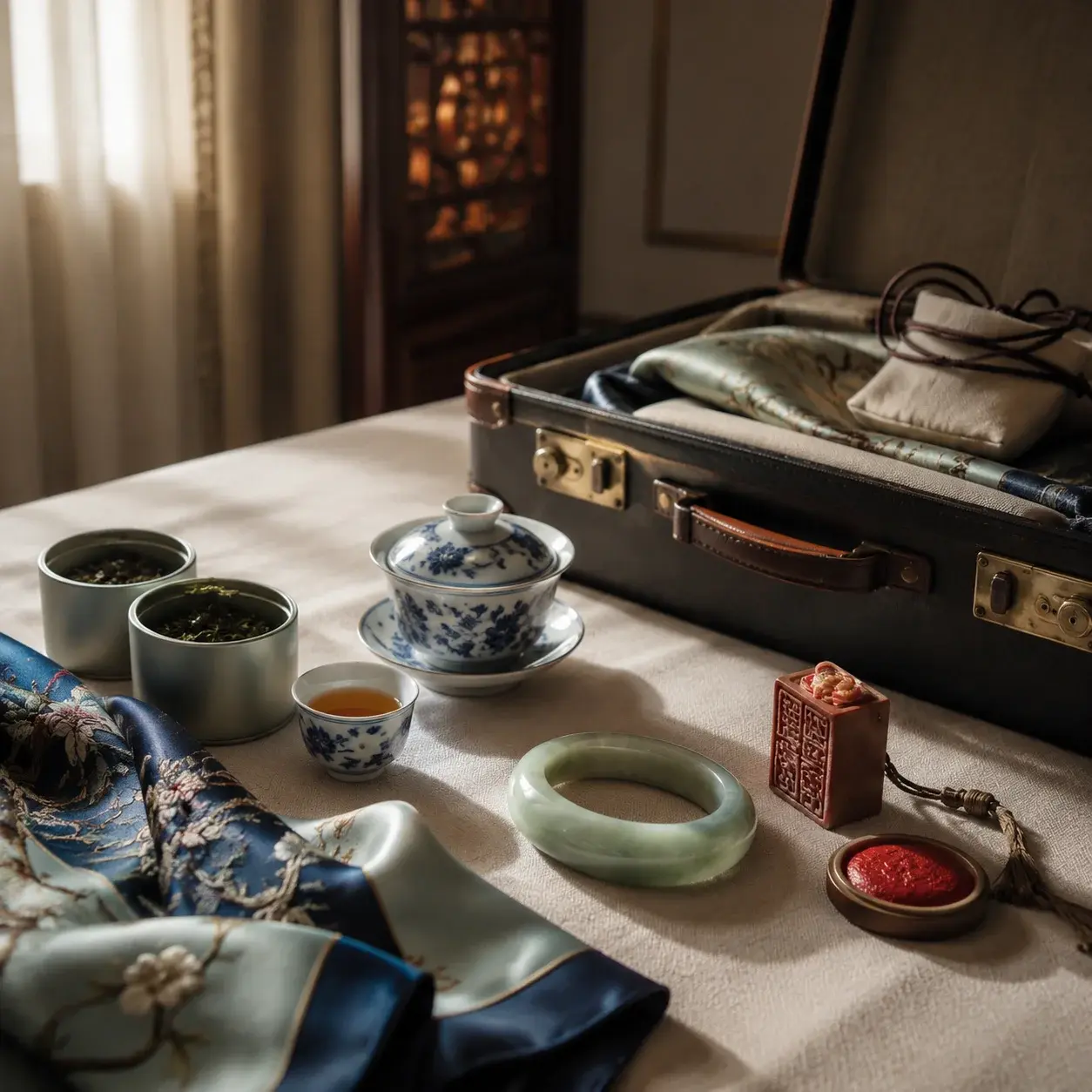
Les 15 meilleurs souvenirs de Chine : quoi acheter, à quel prix et où les trouver
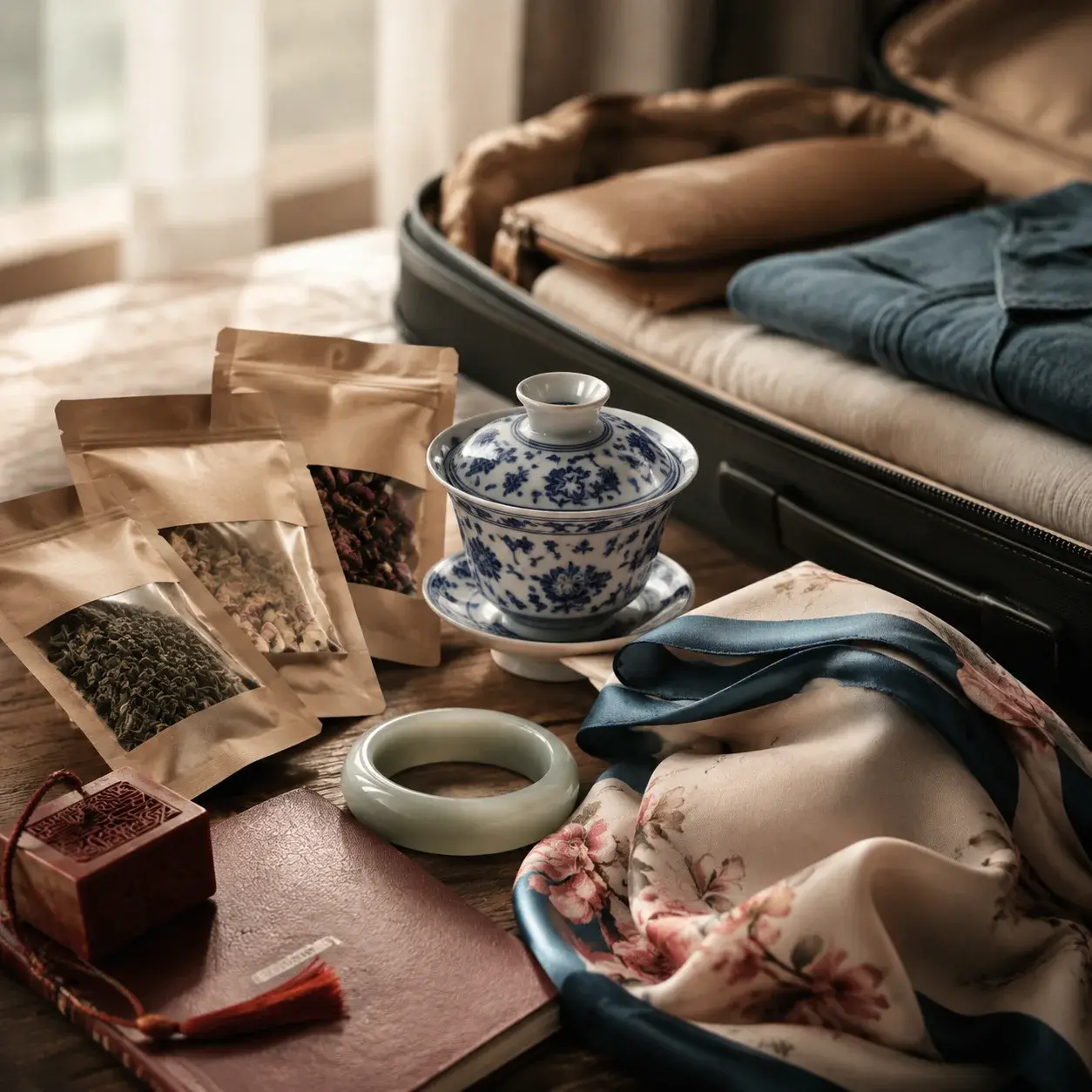
Les meilleurs souvenirs de Chine sont le thé en vrac (¥50–300 par 100g), un vrai pendentif en jade (à partir de ¥500), une écharpe en soie de mûrier (¥150–400), une porcelaine de Jingdezhen peinte à la main et un sceau nominatif personnalisé (¥30–120) — achetés là où l'artisanat vit réellement plutôt qu'à l'aéroport. Voici 15 articles précis, chacun avec un prix indicatif, le quartier ou la ville où l'acheter, et un test qui distingue la vraie pièce de la version touristique.
Nous sommes un opérateur de voyages privés sur mesure vers la Chine, pas une boutique — nous n'avons rien en rayon à vous vendre. Chaque prix ci-dessous est une fourchette indicative tirée de nos propres guides par catégorie ; les marchés bougent, et le jade en particulier se cote pièce par pièce : considérez ces chiffres comme la fourchette à l'intérieur de laquelle négocier, pas comme une étiquette fixe. Vérifiez sur place avant de vous engager sur un achat coûteux.
À retenir
- Quinze articles couvrent presque tous les voyageurs. Thé, théières, services à thé, jade, soie, qipao (cheongsam), éventails, porcelaine, sceaux nominatifs, calligraphie, papier découpé, nœuds chinois, produits pandas, produits dérivés de jeux vidéo et guochao (la « tendance nationale »), et souvenirs de musée.
- Le prix dépend du facteur de valeur, pas de l'objet. Le thé se cote par type et par région de production ; le jade par grade de 种水 et par couleur ; la soie par poids et par armure ; la porcelaine selon qu'elle est imprimée par décalcomanie ou peinte à la main. Chaque section nomme le facteur en jeu.
- La version la moins chère est en général faite d'une tout autre matière. Une écharpe « en soie » à ¥50 est en polyester ; le « jade » à ¥50–300 est le plus souvent de la serpentine teintée ; une théière de Yixing en argile zisha « entièrement faite à la main par un maître » à ¥50–150 est une contradiction dans les termes.
- Achetez là où sont les artisans. Les marchés de thé pour le thé, les marchés de tissus dotés d'ateliers de couture pour la soie et le qipao, Dingshu pour les théières en zisha, Jingdezhen pour la porcelaine, les boutiques officielles des musées pour les souvenirs de site. L'aéroport est le pire endroit pour acheter à peu près n'importe quoi.
- Le poids et la fragilité déterminent votre liste finale. Le thé, la soie, les éventails, le papier découpé et les nœuds se rangent à plat ; la porcelaine, le jade et les théières exigent du rembourrage et parfois une déclaration en douane.
Les 15 meilleurs souvenirs de Chine en un coup d'œil
| # | Souvenir | RMB indicatif | Idéal pour | Approfondir |
|---|---|---|---|---|
| 1 | Thé en vrac | ¥50–300 / 100g | Parents, collègues |  guide du thé guide du thé |
| 2 | Théière de Yixing en argile zisha | ¥300–800 en entrée de gamme | Vrais amateurs de thé | guide des théières |
| 3 | Service à thé gongfu ou de voyage | ¥100–600 | Amateurs de thé, hôtes | guide des services à thé |
| 4 | Pendentif ou bracelet en jade | ¥500–2,000 en entrée de gamme | Conjoint(e), mère | guide du jade |
| 5 | Écharpe en soie de mûrier | ¥150–400 | Parents, amateurs de mode | guide de la soie |
| 6 | Qipao sur mesure | ¥800–3,000 | Conjoint(e), amateurs de mode | guide du qipao |
| 7 | Éventail en soie peint à la main | ¥200–600 | Cadeau léger et élégant | guide des éventails |
| 8 | Porcelaine de Jingdezhen | ¥500–3,000 | Décoration, parents | guide de la porcelaine |
| 9 | Sceau nominatif sur mesure | ¥30–120 | Cadeau personnalisé | guide des souvenirs |
| 10 | Calligraphie ou rouleau à l'encre | ¥300–2,000 | Collectionneurs | guide de la calligraphie |
| 11 | Papier découpé (剪纸) | ¥20–80 fait main | Enfants, petits budgets | guide du papier découpé |
| 12 | Nœud chinois | ¥10–40 | Collègues, décoration | guide des nœuds |
| 13 | Produits dérivés pandas | ¥45–180 la peluche | Enfants, valeur sûre | guide pop-culture |
| 14 | « Black Myth: Wukong » et guochao | variable | Gamers, génération Z | guide pop-culture |
| 15 | Armée de terre cuite et boutiques de musée | à partir de ¥30 | Passionnés d'histoire | guide des souvenirs |
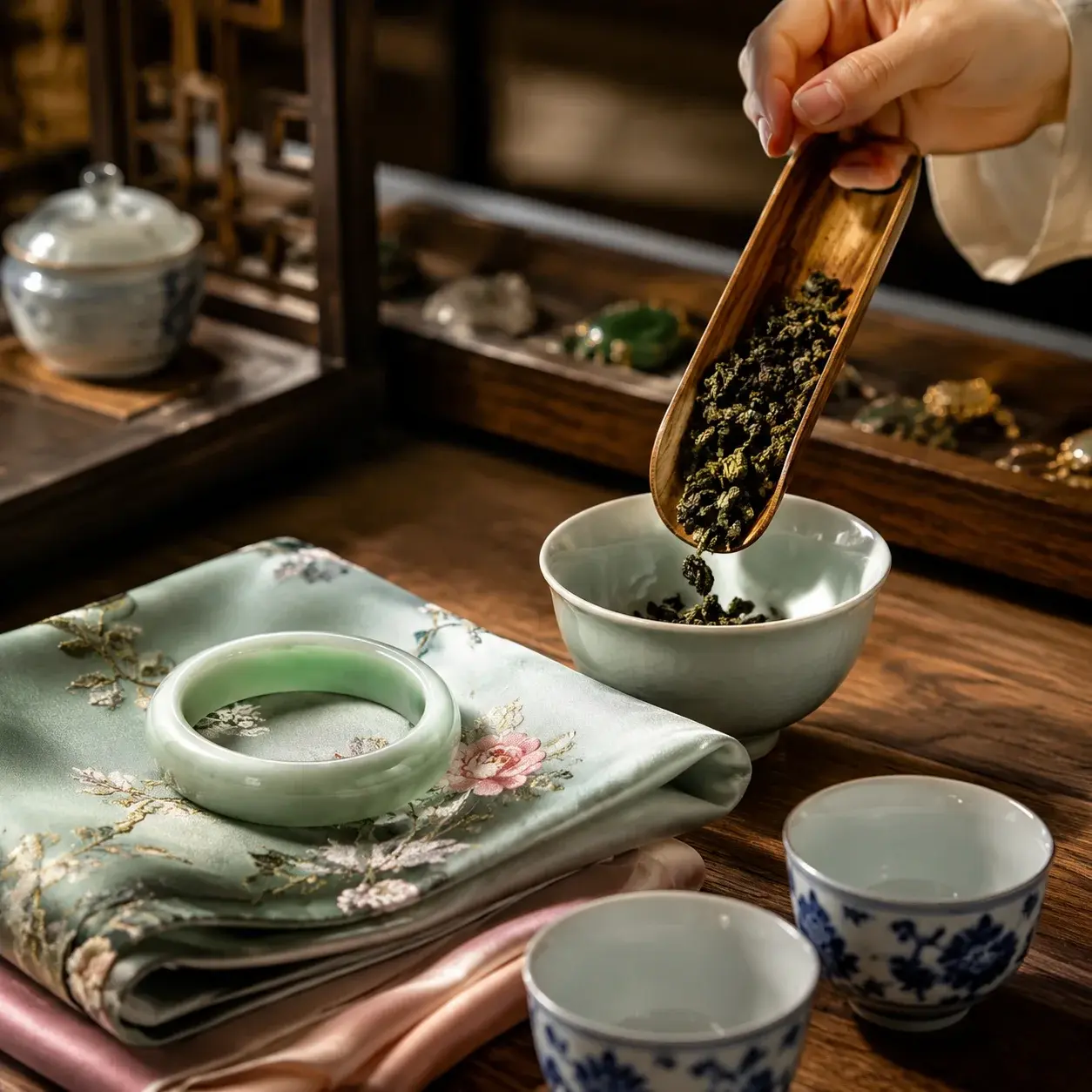
1. Thé en vrac
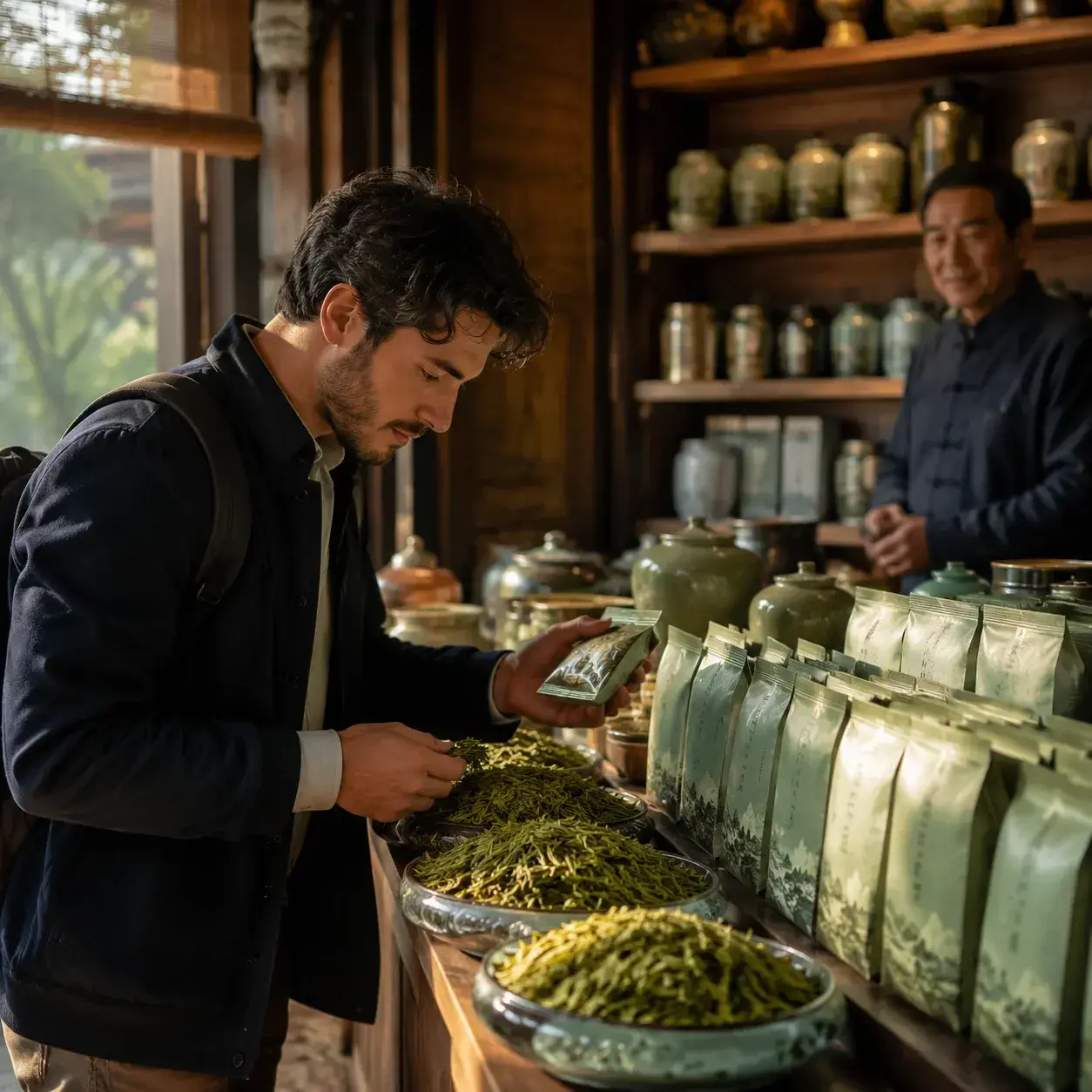
Le cadeau le plus fiable qui soit au départ de Chine : léger, se range à plat et jouit d'un vrai prestige. Le prix dépend du type × la région de production × la récolte, ce qui explique qu'un bon oolong de tous les jours ou un Tieguanyin se situe autour de ¥50–300 par 100g tandis qu'un thé de roche du Wuyi issu d'une parcelle nommée en zone centrale grimpe à plusieurs milliers.
Achetez le thé en vrac dans un marché spécialisé plutôt qu'en boîtes-cadeaux pré-emballées d'âge inconnu — la boîte est en général la partie chère. Le test rapide : demandez à sentir la feuille sèche et à la voir infusée. Ce que vous voulez, ce sont des feuilles entières et intactes qui se déploient ; de la poussière et des fragments brisés vendus au prix « premium » sont le signe qui trahit.
Ignorez tout ce qui relève de la mise en scène. Le thé vendu au gramme provenant des « 18 arbres impériaux » est un attrape-touristes qui vise exactement le lecteur de cette page.
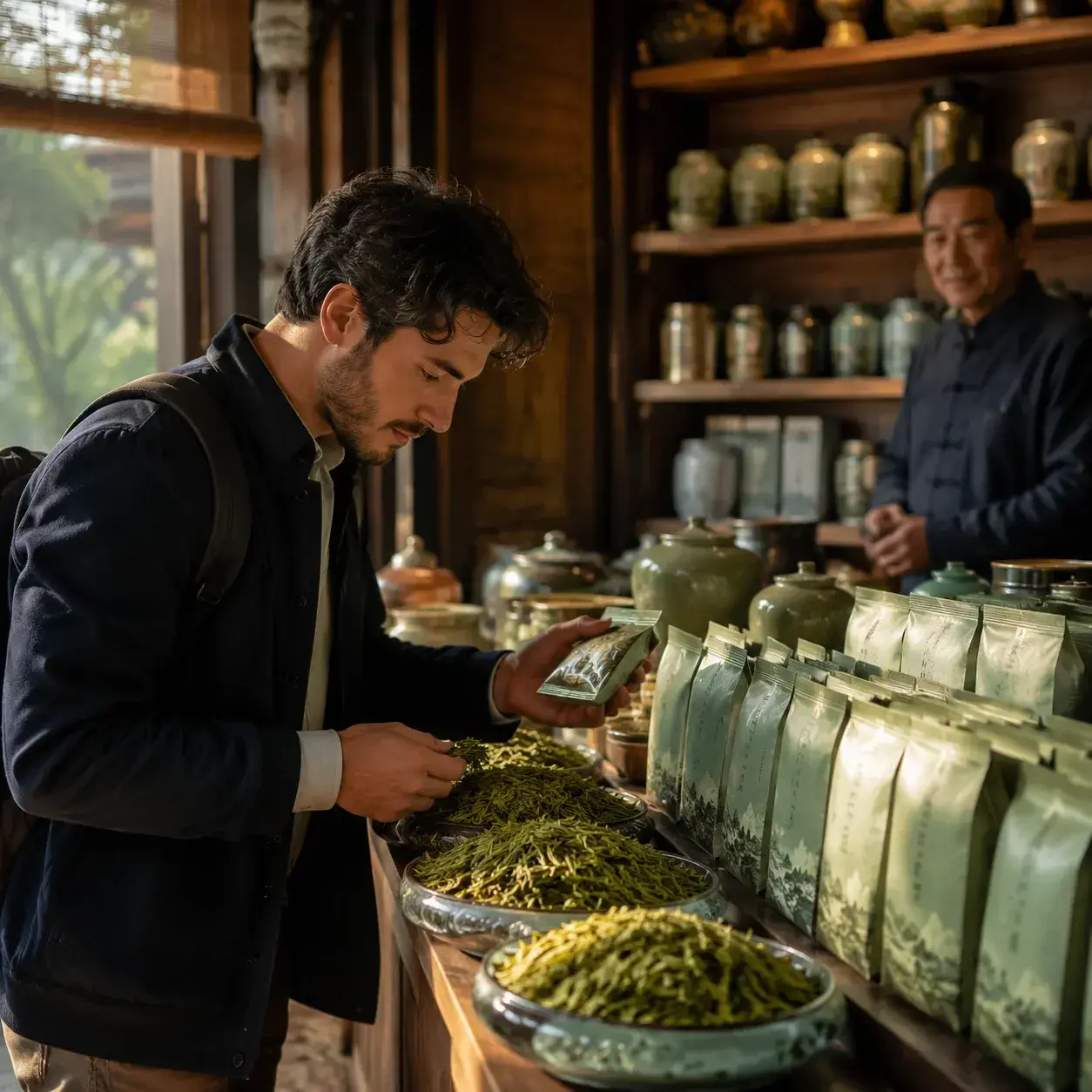 Quel thé chinois acheter en Chine, et où ? Guide du voyageur Découvrez quel thé chinois acheter en Chine, où trouver des thés régionaux authentiques, et comment comparer les prix, éviter les arnaques et rapporter du thé chez vous.
 2. Théière de Yixing en argile zisha
Une théière en zisha se culotte au fil des années : c'est le cadeau qu'un vrai amateur de thé utilisera vraiment tous les jours. Les théières d'entrée de gamme semi-faites à la main en véritable minerai brut coûtent ¥300–800, et une théière authentique et utilisable se situe généralement entre ¥300–1,500.
Le plus utile à savoir est un prix plancher : l'extraction du véritable minerai brut est restreinte et le travail entièrement manuel est lent, donc une théière à ¥50–150 présentée comme « minerai brut, entièrement faite à la main, œuvre de maître » est une contradiction — elle est moulée, teintée chimiquement, ou les deux. Achetez à Dingshu ou dans un vrai marché de thé, pas dans une salle d'exposition où s'arrête l'autocar.
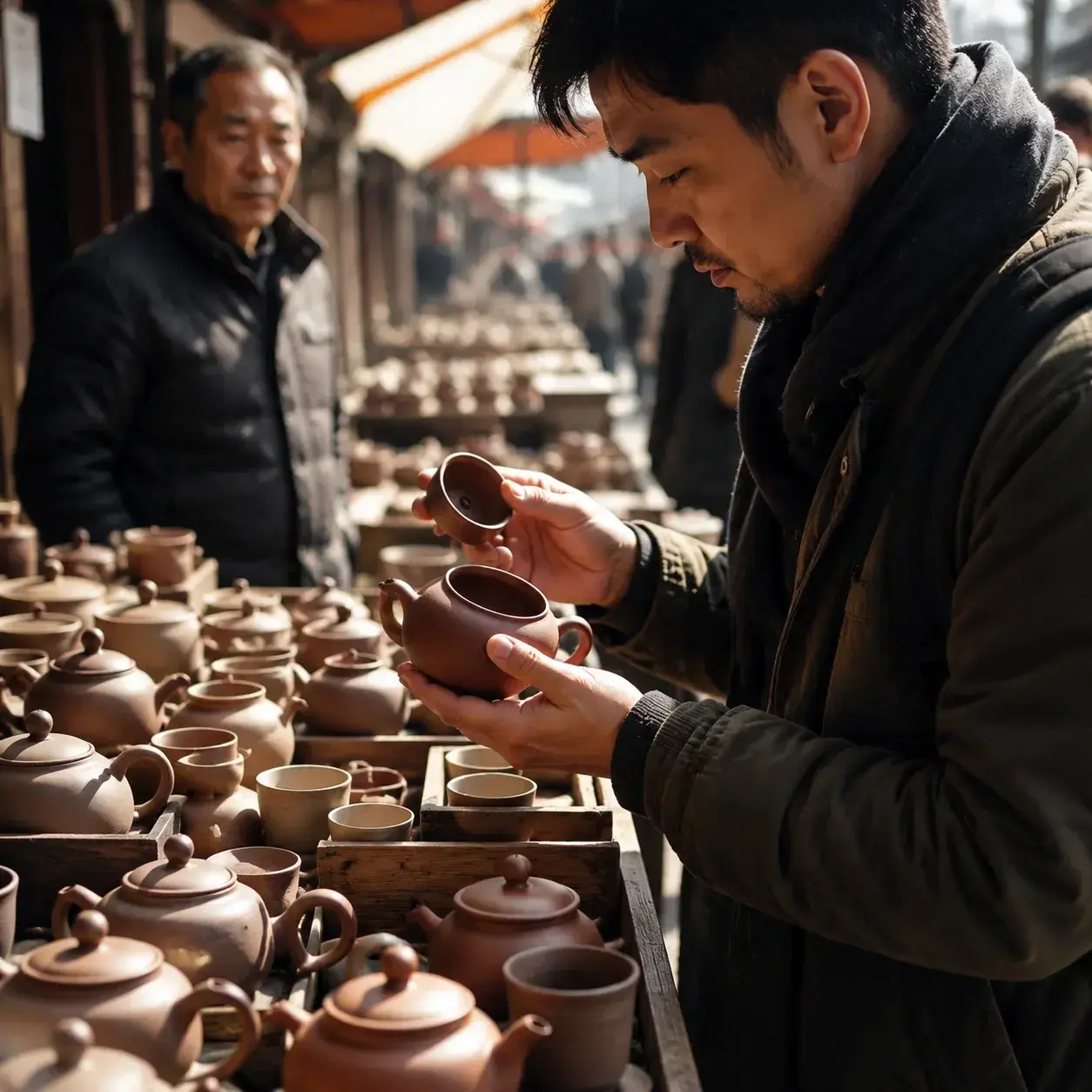 Théière chinoise de Yixing : comment acheter une authentique poterie Zisha en Chine ? Apprenez comment acheter une authentique théière en argile zisha de Yixing en Chine grâce à des vérifications simples sur place, des fourchettes de prix équitables et les meilleurs endroits où magasiner.
 3. Service à thé gongfu ou de voyage
Le récipient qui transforme le thé en rituel plutôt qu'en sachet oublié dans un placard. Un service en porcelaine d'entrée de gamme coûte ¥150–500, une pièce de qualité peinte à la main ou en céladon ¥500–2,000, et les services de voyage transportables ¥100–600.
Méfiez-vous des services d'échoppes touristiques dans la tranche ¥80–300 vendus avec une forte marge — les mêmes pièces sont moins chères et mieux choisies dans un marché de thé ou dans une ville de production. Choisissez le service de voyage si le destinataire manque de place ; il supporte bien mieux la valise qu'un plateau gongfu complet.
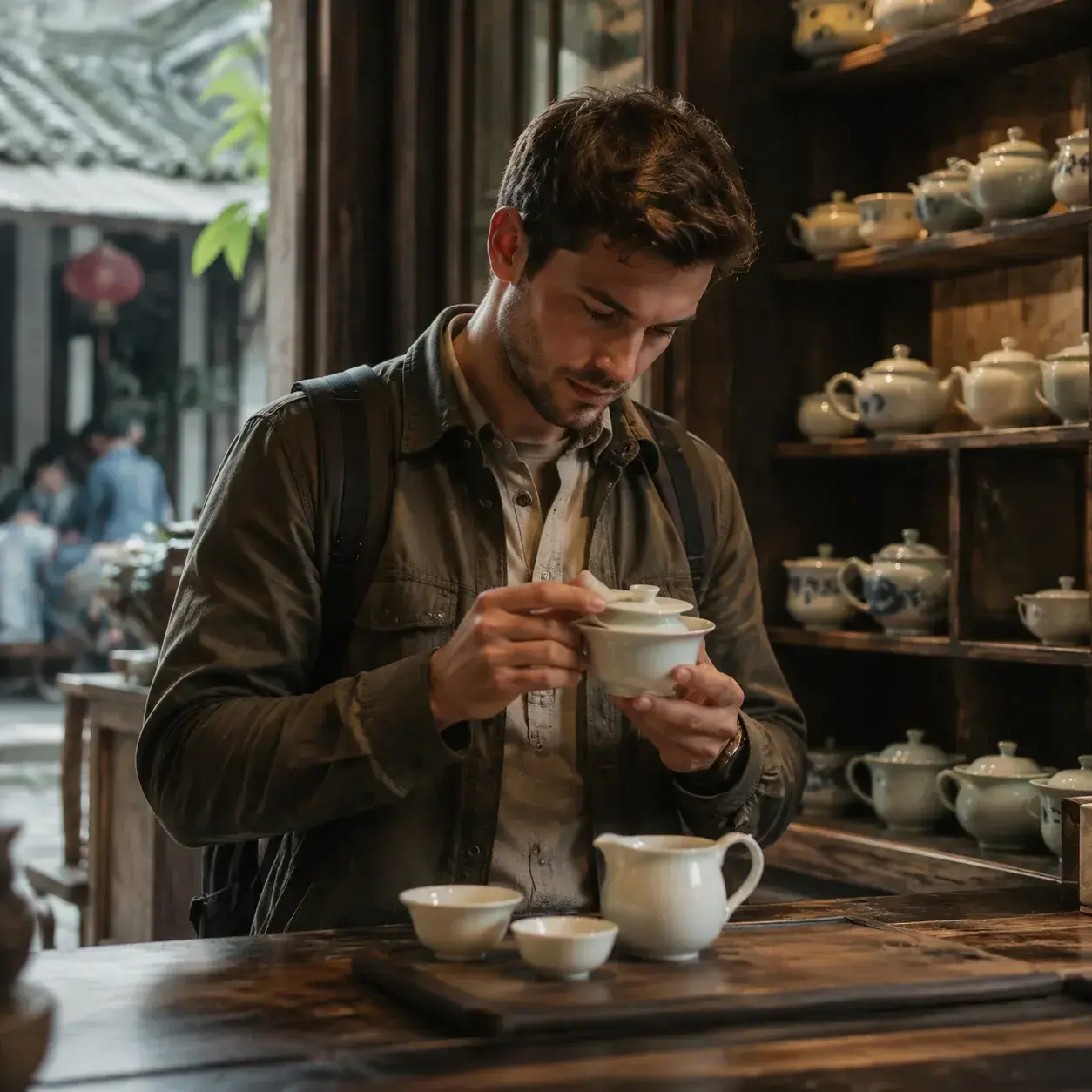 Service à thé chinois : de quelles pièces avez-vous réellement besoin, et où en acheter un en Chine ? Découvrez les pièces de service à thé chinois dont vous avez vraiment besoin et où acheter un thé authentique en Chine sans les majorations touristiques.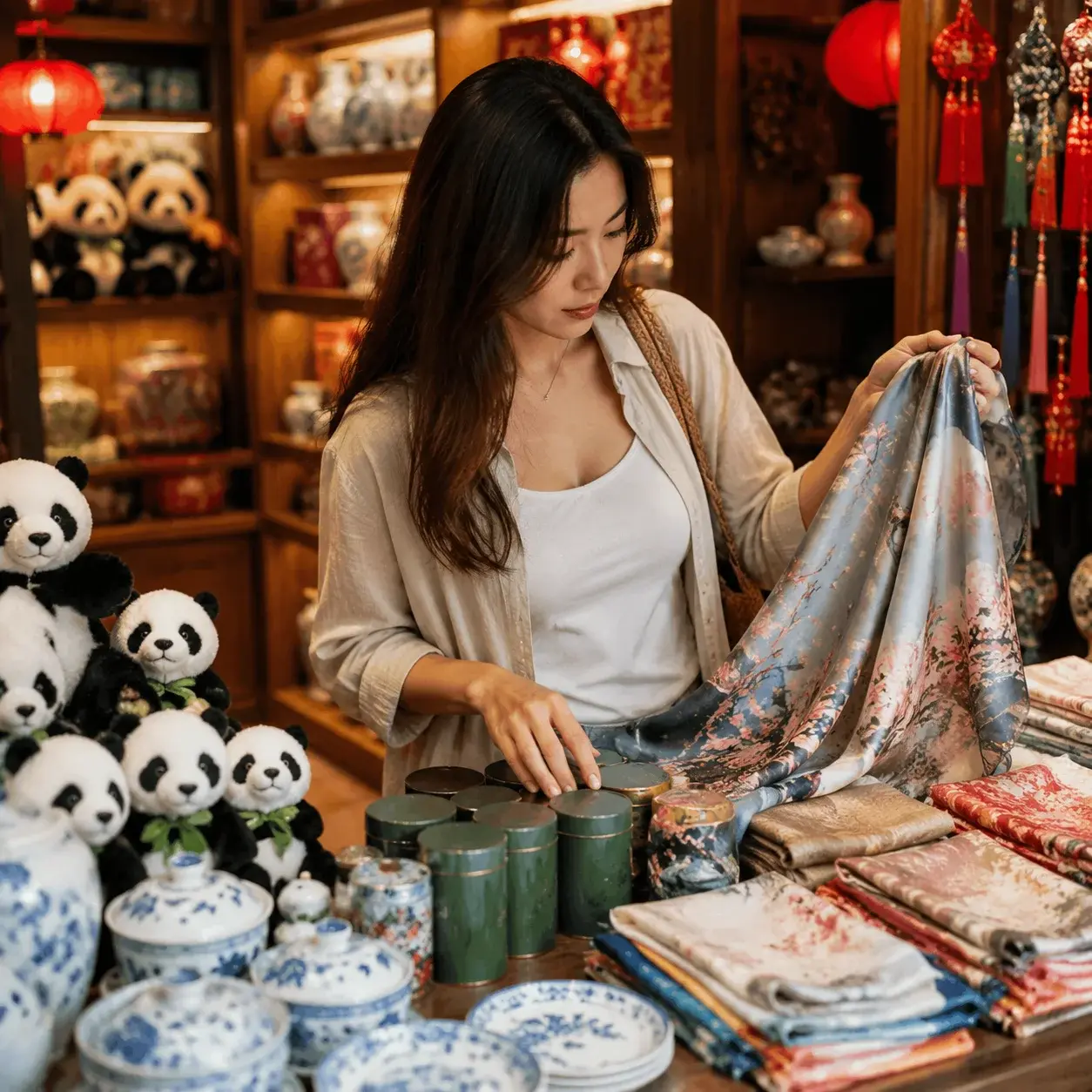
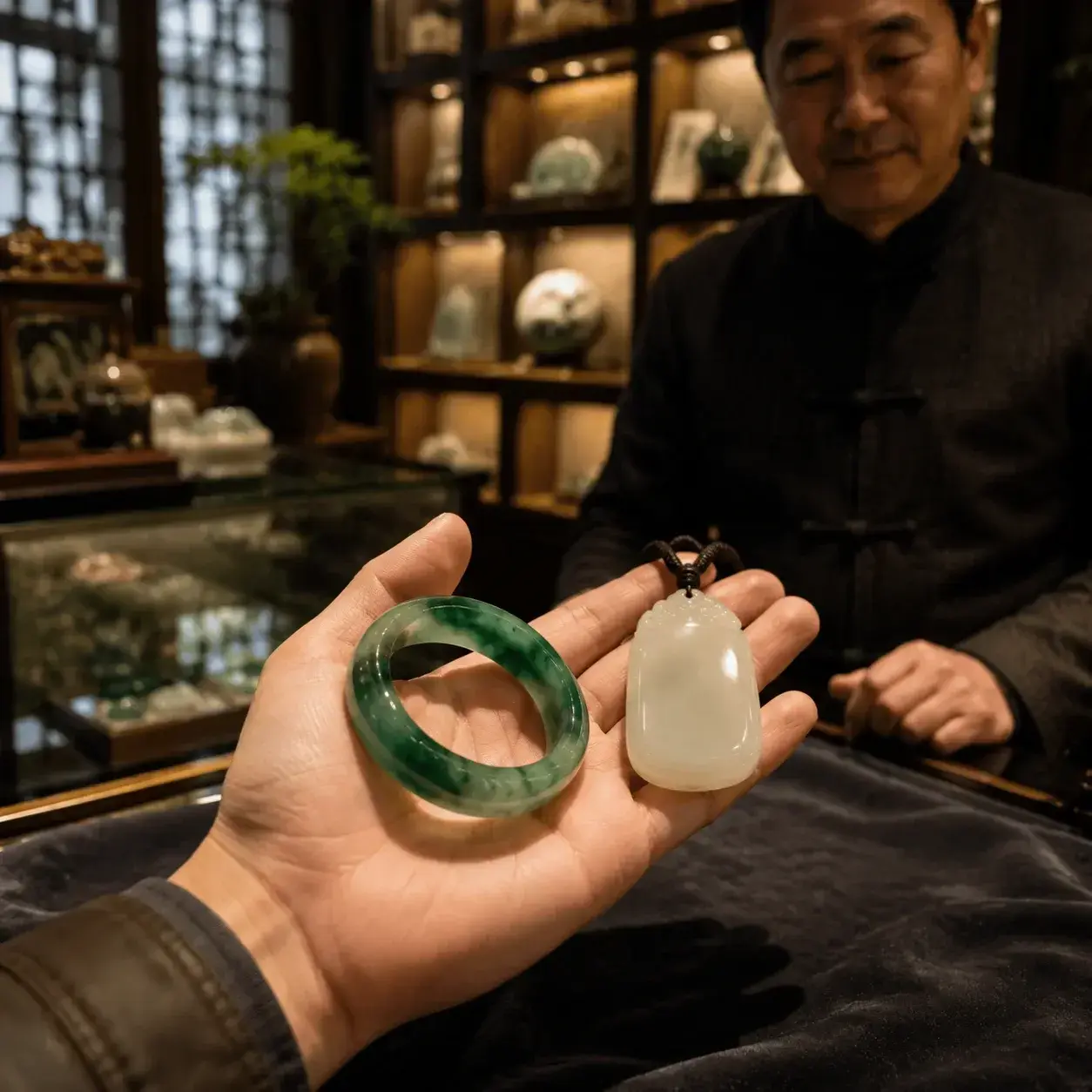
4. Pendentif ou bracelet en jade
L'achat le plus risqué de cette liste, et celui qui mérite le plus qu'on prenne son temps. Le jade n'a pas de prix fixe — chaque pièce est évaluée individuellement selon le 种水 (texture et transparence) × la couleur × la taille × le travail, d'où le proverbe du métier « 色差一分,价差十倍 » (un degré de couleur d'écart, dix fois le prix).
Pour se repérer : un pendentif d'entrée de gamme en néphrite naturelle gris-vert se situe autour de ¥500–2,000 (indicatif — à vérifier sur place), et les prix grimpent fortement pour la jadéite fine. Le « jade bon marché » à ¥50–300 vendu sur les étals des sites touristiques est celui qu'il faut laisser — c'est généralement de la serpentine ou un matériau traité B/C, dont la valeur sentimentale comme la valeur de revente sont quasi nulles. Achetez chez un marchand réputé qui vous montrera une certification, et considérez toute affirmation de « jade ancien authentique » sans document comme purement décorative.
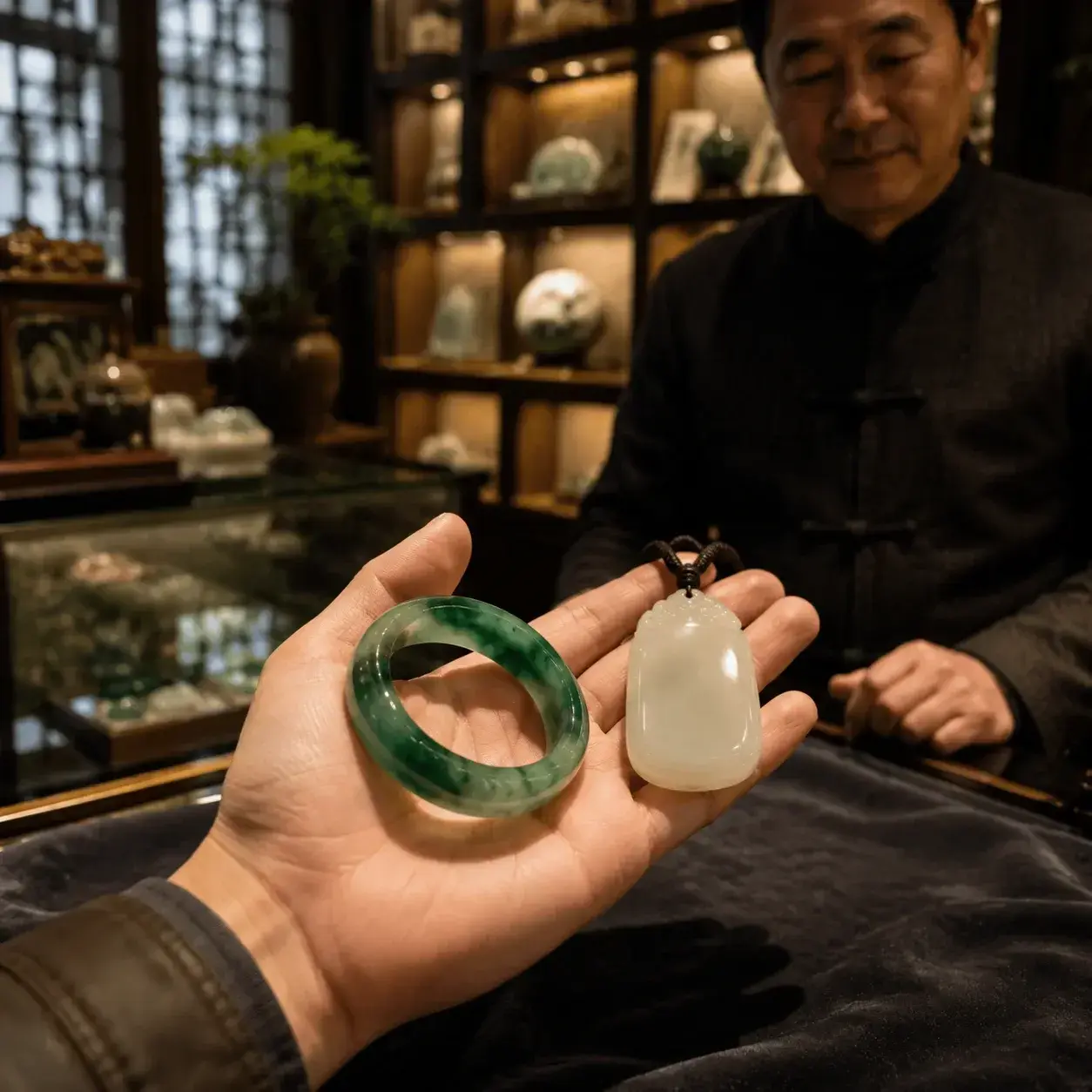 Qu'est-ce que le jade chinois et comment bien l'acheter en Chine ? Apprenez la différence entre la jadéite et le néphrite, comment la jade est évaluée et comment acheter du jade chinois authentique en toute sécurité en Chine.
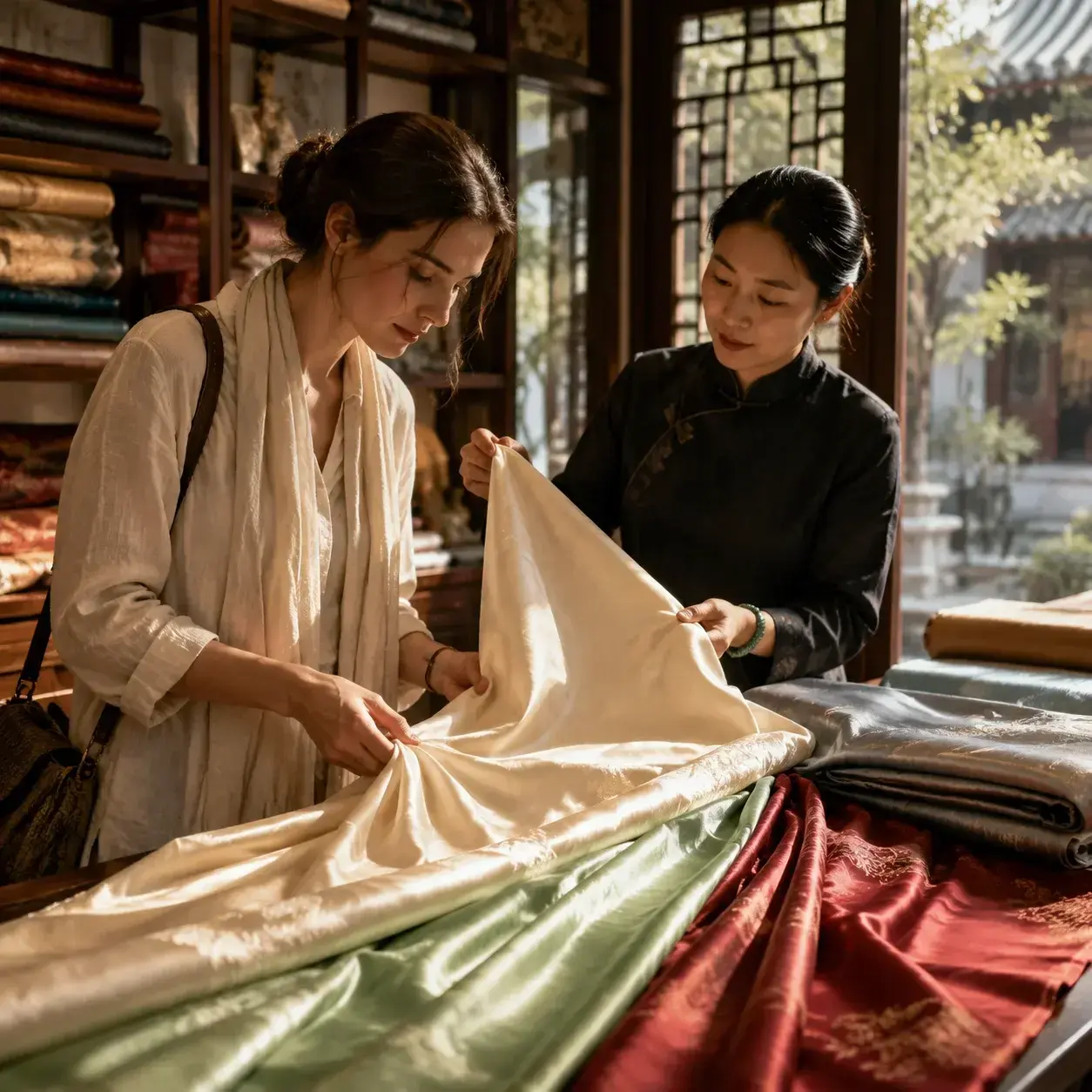
 5. Écharpe en soie de mûrier (ou soie au mètre)
Légère, appréciée de tous et facile à rapporter. Une véritable écharpe en soie coûte environ ¥150–400 — et le signal d'alerte le plus net de toute cette page est que tout ce qui se vend sous les ¥50 environ est presque certainement du polyester.
Le prix suit le poids × l'armure × l'authenticité : une écharpe plus lourde coûte légitimement plus cher. Achetez dans un marché de tissus où vous pouvez manipuler l'étoffe : la vraie soie de mûrier donne une sensation tiède plutôt que glissante et froide, et elle n'a pas le brillant plastifié du satin synthétique. Si vous achetez au mètre, le même marché abrite généralement un tailleur capable de la confectionner.
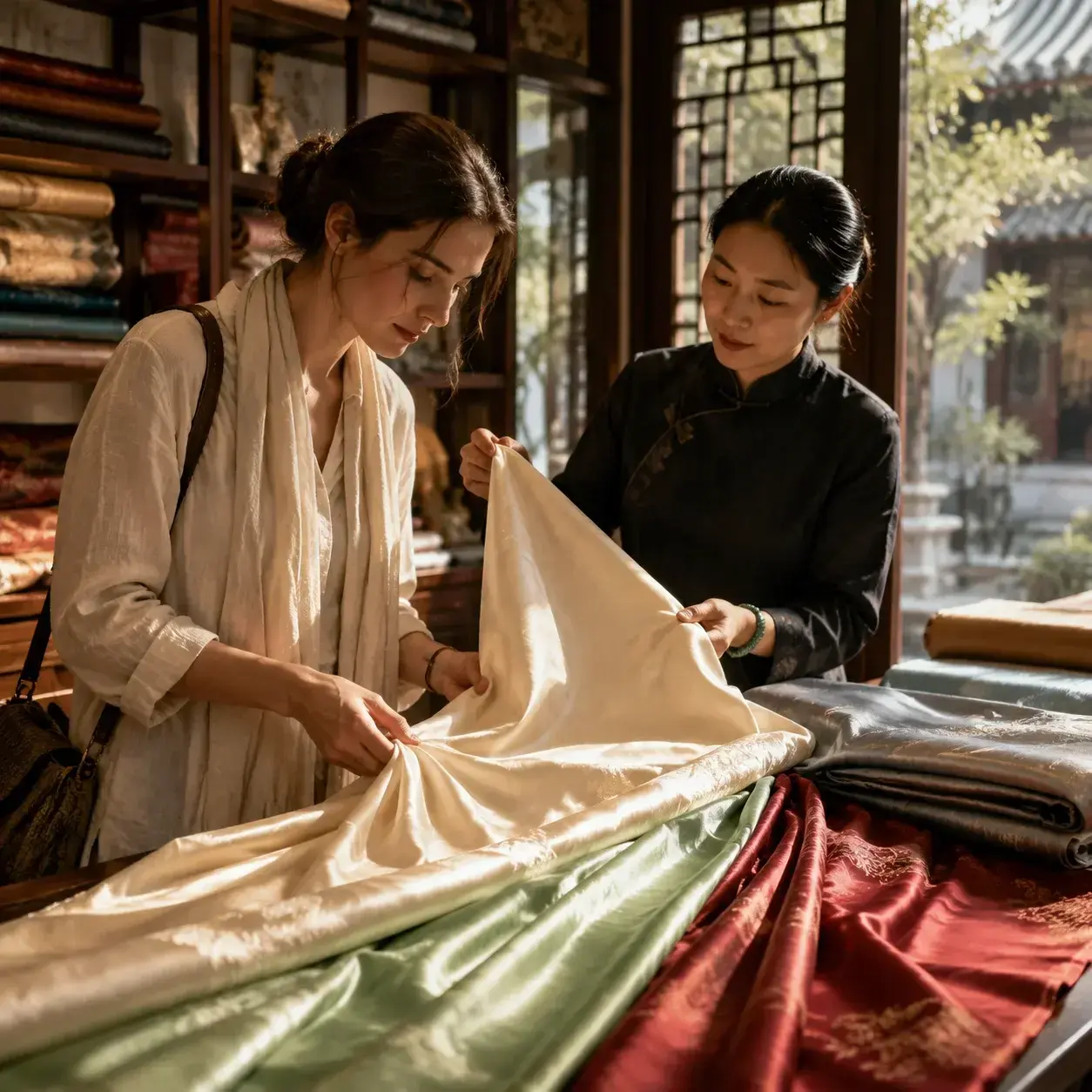 Soie chinoise : comment acheter de la vraie soie en Chine sans se faire avoir ? Apprenez à acheter de la vraie soie en Chine, repérer les contrefaçons, comparer les prix et trouver des magasins de confiance à Suzhou et Hangzhou.
 6. Qipao sur mesure
Le souvenir qui surpasse tout ce que vous pourriez commander chez vous, parce que la plupart des qipao sont coupés sur mesure. Comptez environ ¥800–3,000 pour du sur-mesure en marché de tissus, réalisé en 3 à 7 jours environ à Shanghai.
C'est la meilleure voie pour les morphologies fortes ou à forte poitrine, que les tailles standard habillent rarement — un tailleur coupe à vos mesures réelles. Prévoyez l'essayage tôt dans votre itinéraire pour avoir le temps de revenir.
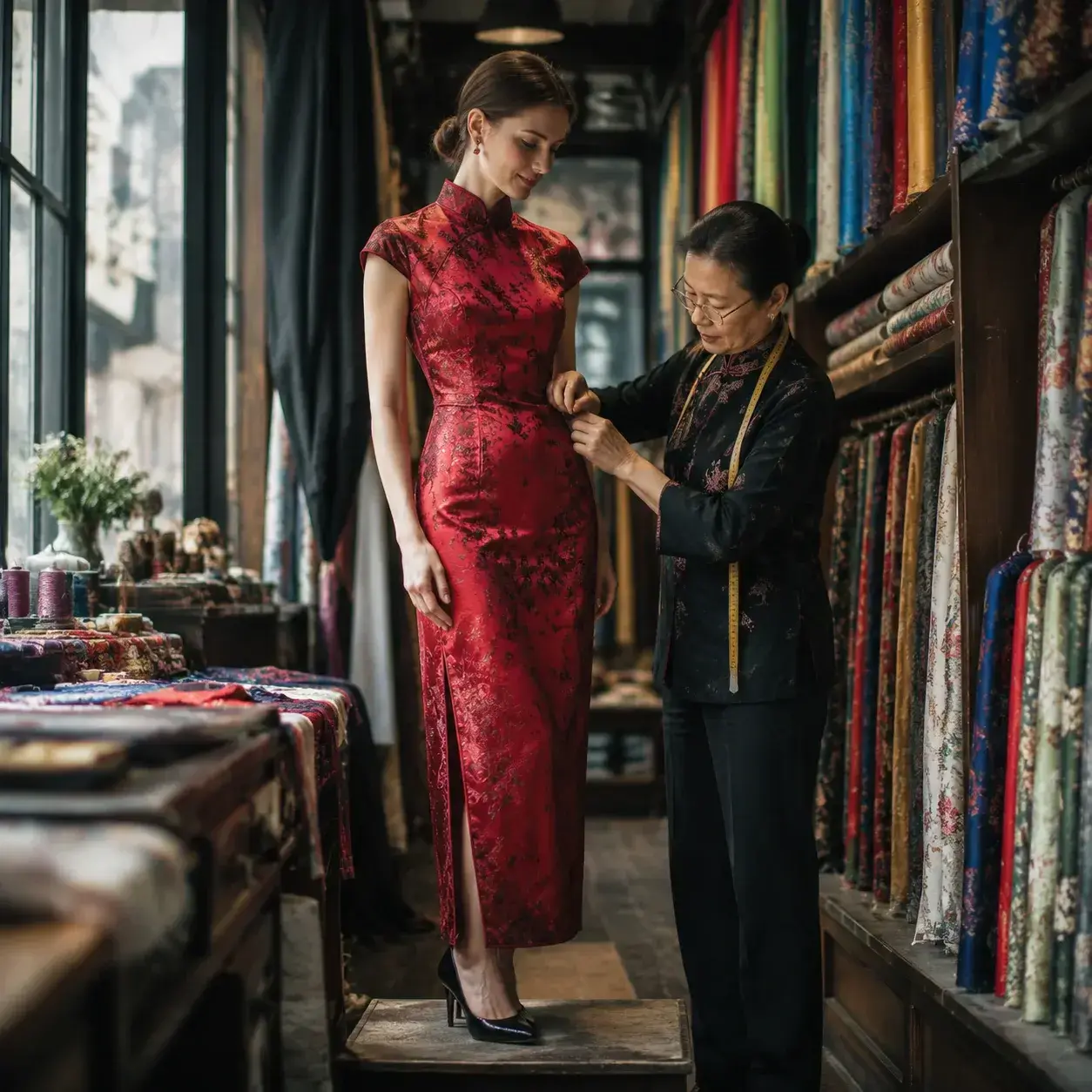 Où acheter un qipao authentique en Chine ? Guide d'achat pour les voyageurs Découvrez où acheter un qipao authentique en Chine, combien il devrait coûter et comment les voyageurs peuvent choisir une confection sur mesure plutôt que des versions touristiques.
 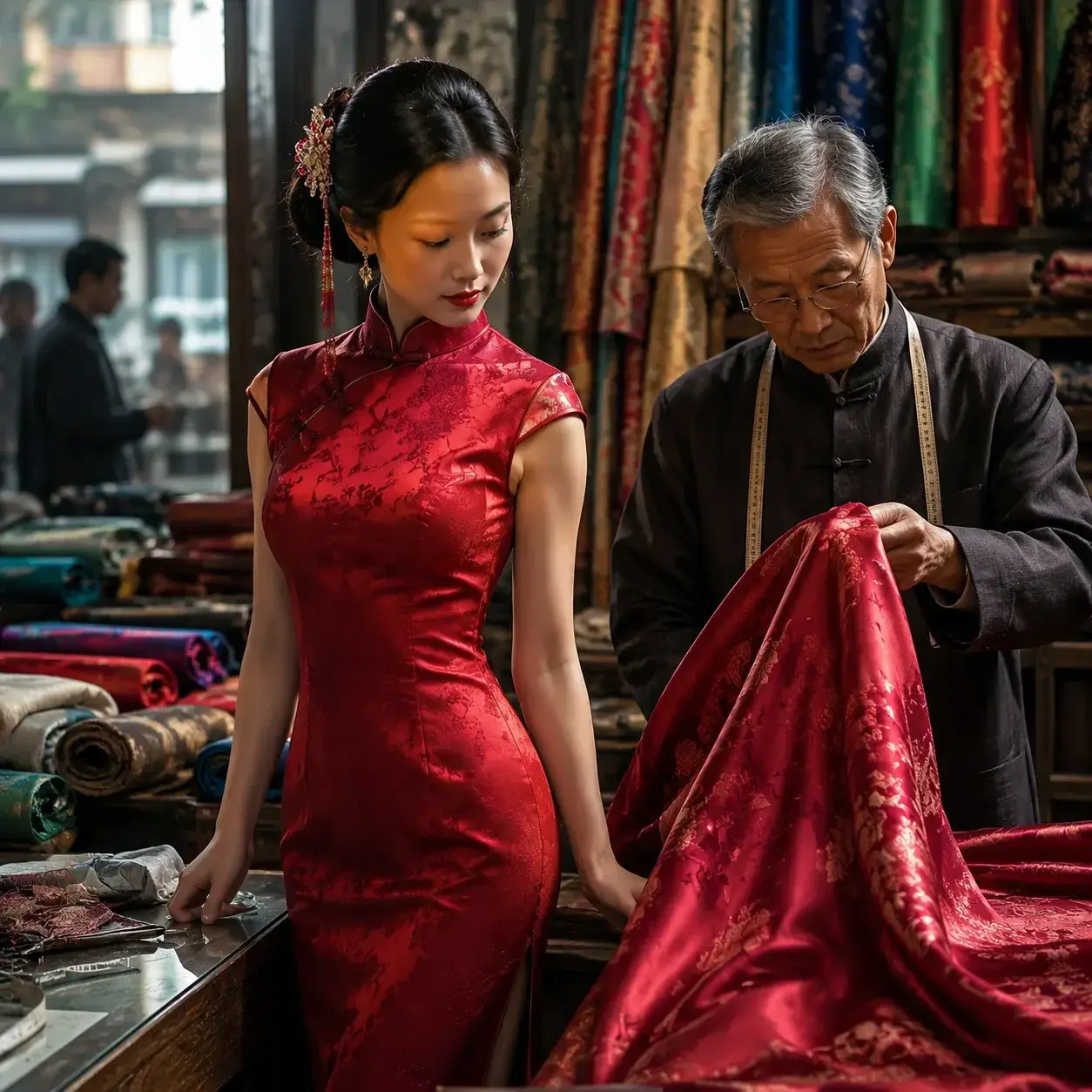 Le qipao : où acheter un authentique en Chine et comment éviter les contrefaçons ? Découvrez où acheter un cheongsam authentique en Chine, combien cela coûte et comment repérer la fausse soie avant d'acheter.
 7. Éventail en soie peint à la main
Élégant, plat, presque sans poids — le meilleur rapport valeur/gramme de cette page. Le prix dépend du matériau × savoir-faire × artisan : les éventails touristiques imprimés à ¥20–80 n'ont aucune valeur ni comme cadeau ni pour un collectionneur, tandis que la soie peinte à la main sur de bonnes lamelles à ¥200–600+ constitue le point d'équilibre pour offrir. Les éventails en bois de santal et ceux signés par un artiste connu montent bien au-delà.
Ouvrez-en un complètement avant d'acheter et regardez la jonction entre les lamelles et la feuille : les éventails montés à la main sont nets à cet endroit, les éventails touristiques collés ne le sont pas.
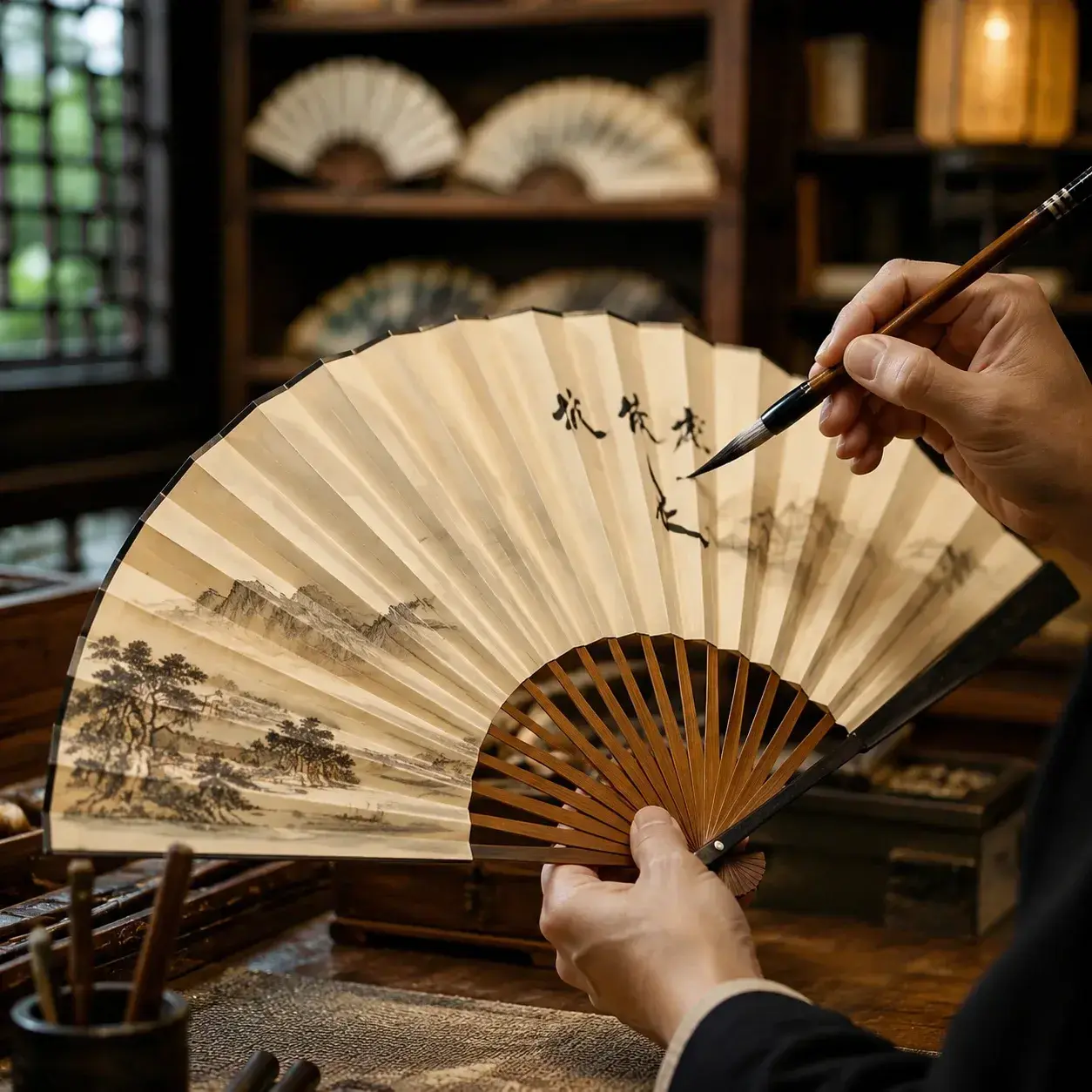 Éventail pliant chinois : comment choisir un éventail en soie authentique et où en acheter en Chine Apprenez à choisir un éventail pliant chinois authentique, repérez la soie peinte à la main et trouvez les meilleurs endroits pour en acheter un en Chine.
 8. Porcelaine de Jingdezhen
La ligne de partage passe entre décalcomanie imprimée et peinture à la main, et elle se voit une fois qu'on la connaît. Un bol ou une tasse touristique à décalcomanie coûte ¥20–80 — un souvenir, pas de la qualité — tandis qu'un vase ou un service à thé de milieu de gamme d'artiste ou de marque coûte ¥500–3,000, jugé sur l'artisan et le travail. Les pièces signées par un artiste connu montent plus haut et ne se négocient que si vous connaissez l'auteur.
Le signe qui trahit : regardez le motif de près. Une impression en matrice de points signale une décalcomanie ; le travail au pinceau montre une épaisseur de trait variable et de petites asymétries. Jingdezhen est la source, mais les bonnes pièces arrivent aussi sur les marchés des grandes villes.
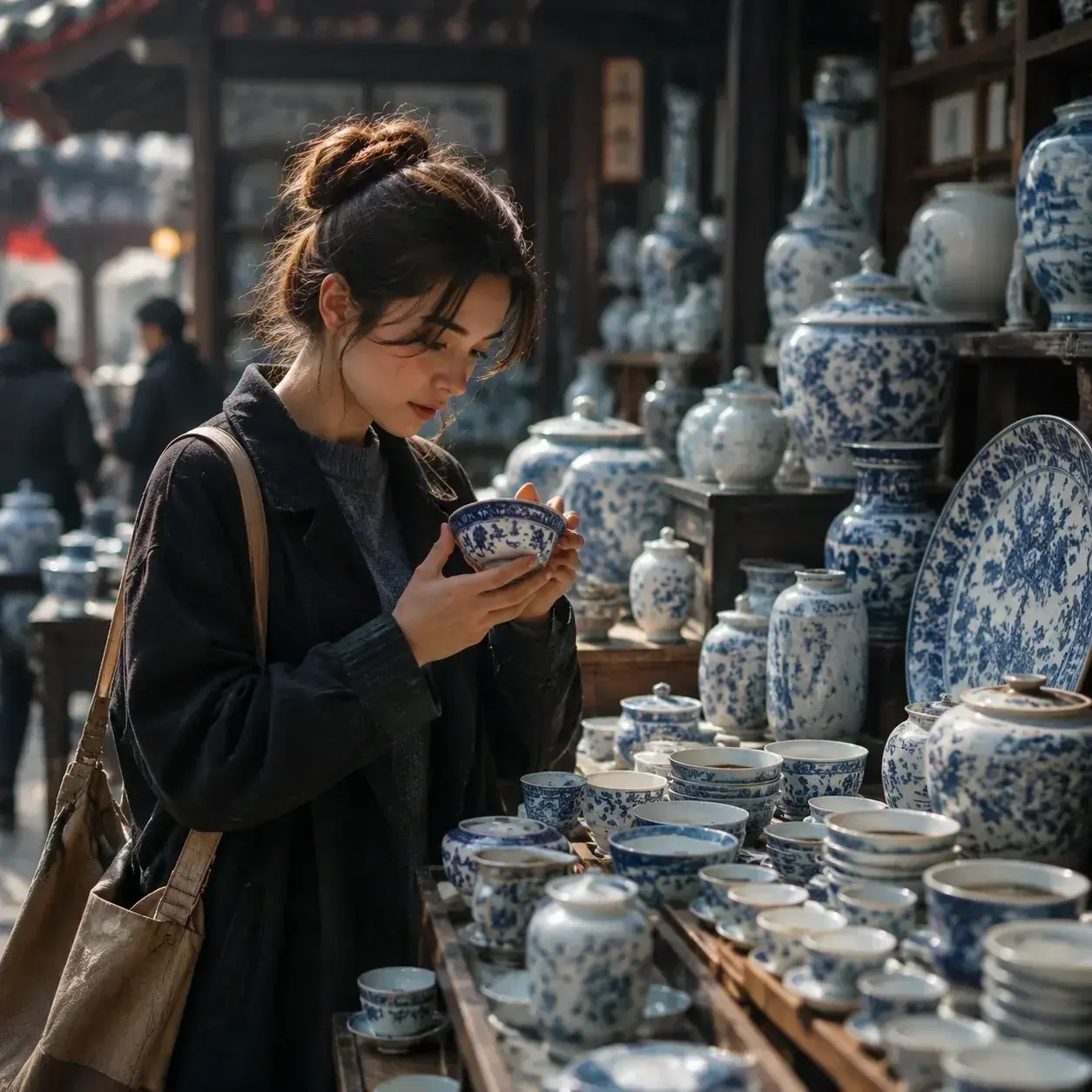 Porcelaine chinoise : comment acheter des pièces authentiques en Chine sans se faire arnaquer ? Apprenez à acheter de la porcelaine chinoise authentique en Chine, évitez les contrefaçons, comprenez les règles d'exportation et faites vos achats en toute sécurité en tant que voyageur.
 9. Sceau nominatif sur mesure (印章)
À poids égal, le cadeau le plus personnel de cette liste et l'un des moins chers : ¥30–120 pour faire graver le nom du destinataire en caractères chinois dans un sceau de pierre. C'est petit, incassable en transport et indubitablement chinois.
Faites-le graver pendant que vous attendez, sur un étal de marché ou dans une boutique de musée, et vérifiez les caractères avant de payer — demandez au graveur de l'apposer une fois sur papier pour voir l'empreinte plutôt que l'image inversée sur la pierre.
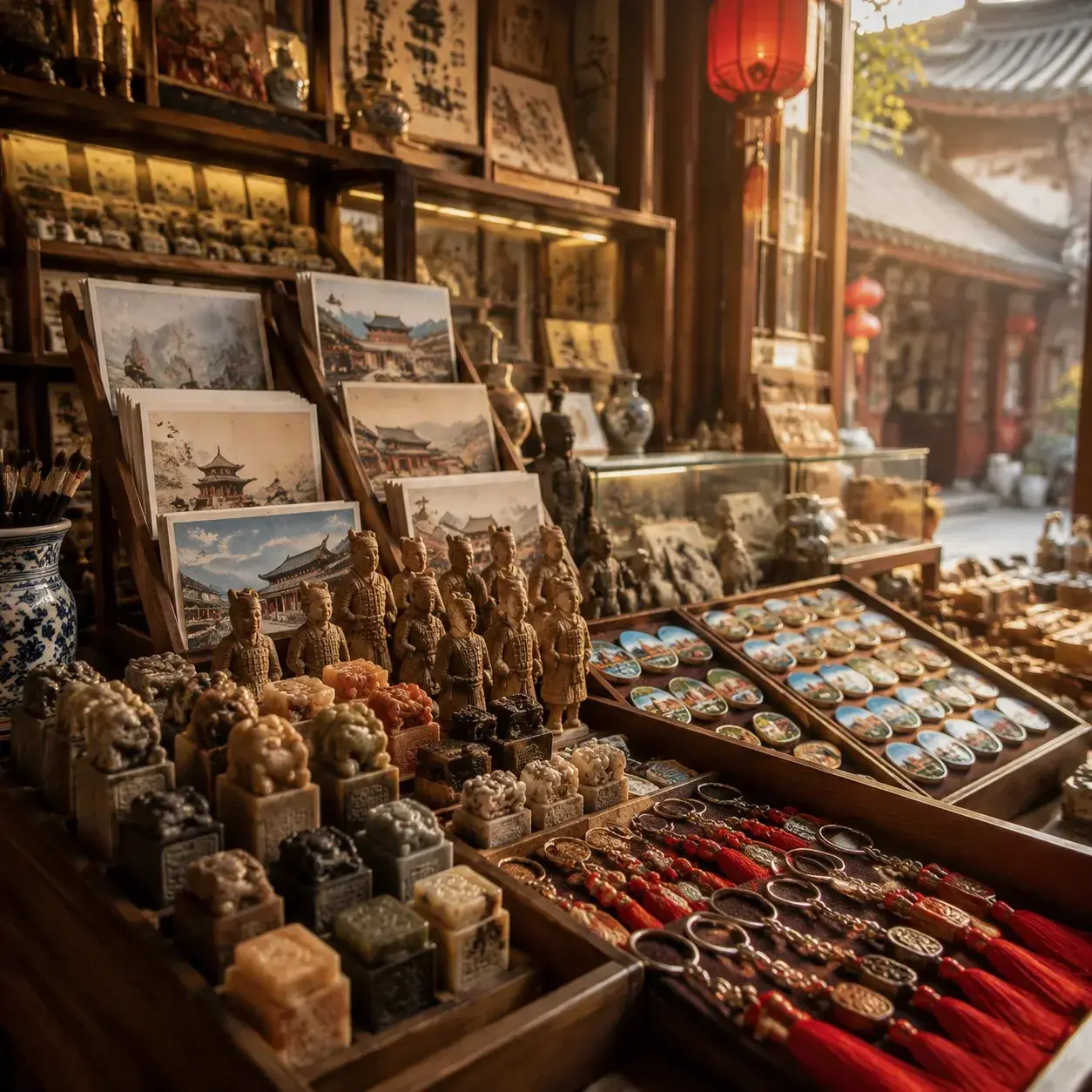 Quels sont les meilleurs souvenirs chinois abordables et où les acheter ? Découvrez les meilleurs souvenirs chinois abordables, leur prix indicatif et où les acheter à des prix équitables en Chine.
 10. Rouleau de calligraphie ou de peinture à l'encre
Pour les collectionneurs et pour tous ceux qui préfèrent une histoire à un objet de vitrine. Le niveau de l'artiste pèse bien plus sur le prix que la taille : un jeu de pinceaux pour débutant coûte ¥50–200, un rouleau suspendu correct ¥300–2,000, et le travail d'atelier ou d'artiste reconnu grimpe à plusieurs milliers. Les rouleaux de paysage à l'encre se situent dans une tranche comparable, à ¥200–1,500 pour des pièces de niveau galerie.
Ce qu'il faut éviter, c'est un rouleau imprimé en série vendu comme peint au pinceau. Inclinez-le vers la lumière : la vraie encre sur papier a du grain et une légère diffusion au bord des traits ; une impression est plate et d'une densité uniforme.
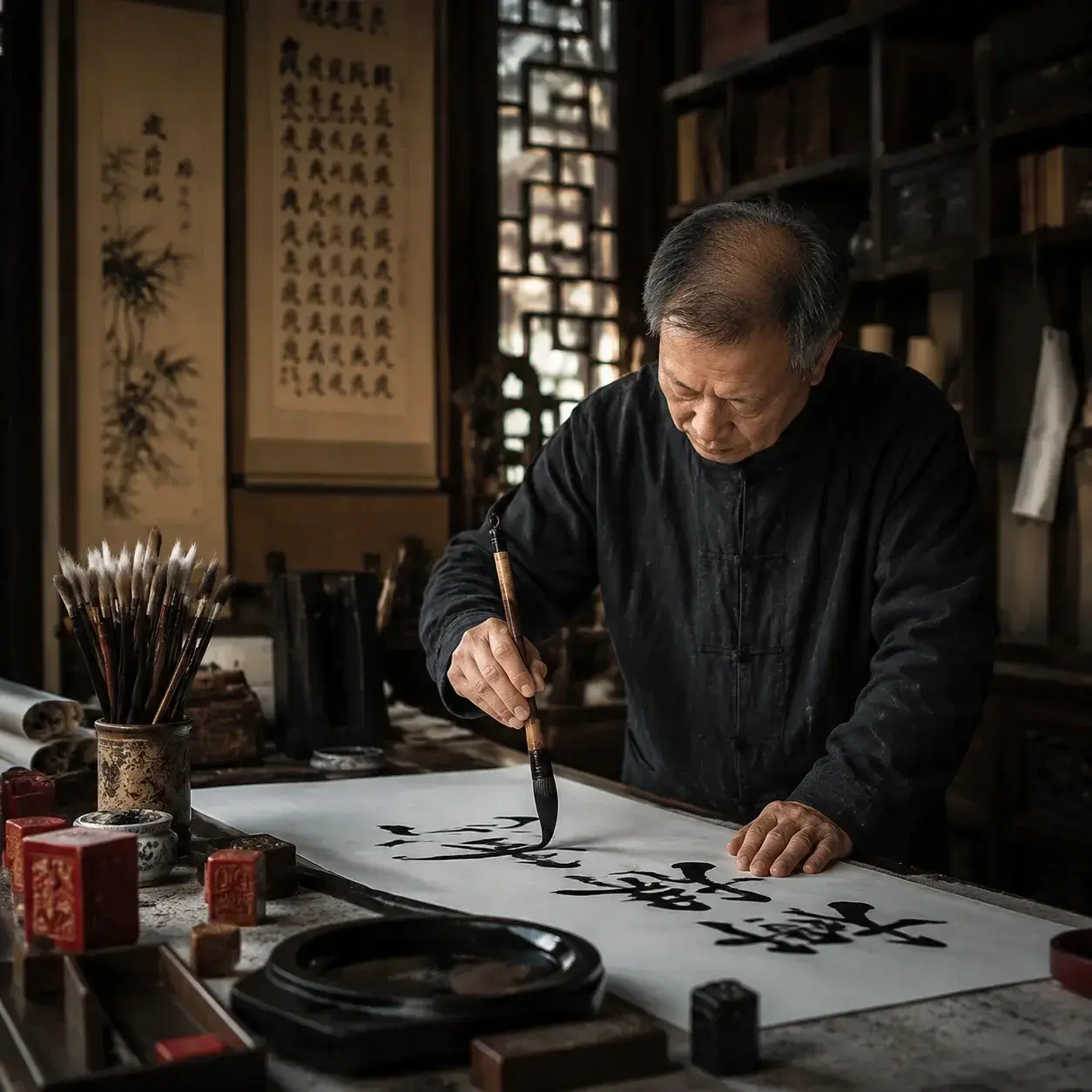 Calligraphie chinoise : comment acheter une pièce authentique en Chine ? Apprenez à acheter de la calligraphie chinoise authentique en Chine, choisissez des phrases significatives, comparez les prix et évitez les contrefaçons touristiques imprimées.
 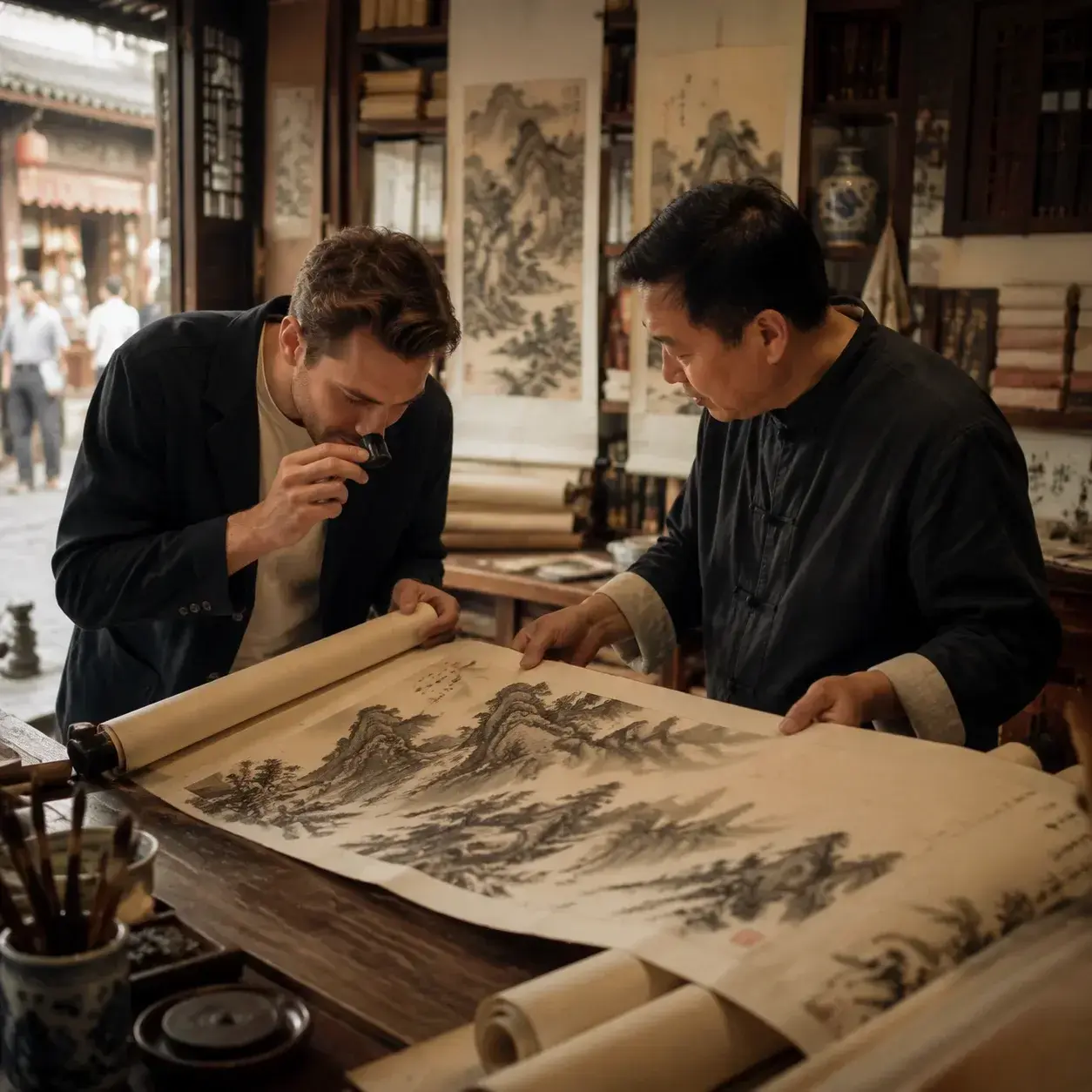 Qu'est-ce que la peinture à l'encre chinoise et comment acheter un rouleau authentique en Chine ? Découvrez ce qu'est la peinture à l'encre chinoise et comment acheter un rouleau authentique en Chine sans payer trop cher pour des tirages vendus comme des originaux.
 11. Papier découpé (剪纸)
Bon marché, plat, coloré et vraiment traditionnel — idéal pour les enfants et pour en rapporter une douzaine. Les jeux de découpes de fenêtre faits à la machine coûtent ¥5–20, les petites pièces faites main ¥20–80, les travaux complexes ou signés ¥80–300, et les pièces encadrées ¥200–800+.
Achetez auprès des artisans de la vieille ville de Pingyao, des villages folkloriques du Shaanxi ou du marché de Panjiayuan à Pékin plutôt que dans les kiosques d'aéroport. Choisissez des motifs porteurs de sens : le caractère du double bonheur pour un mariage, l'animal du zodiaque correspondant à l'année de naissance de quelqu'un.
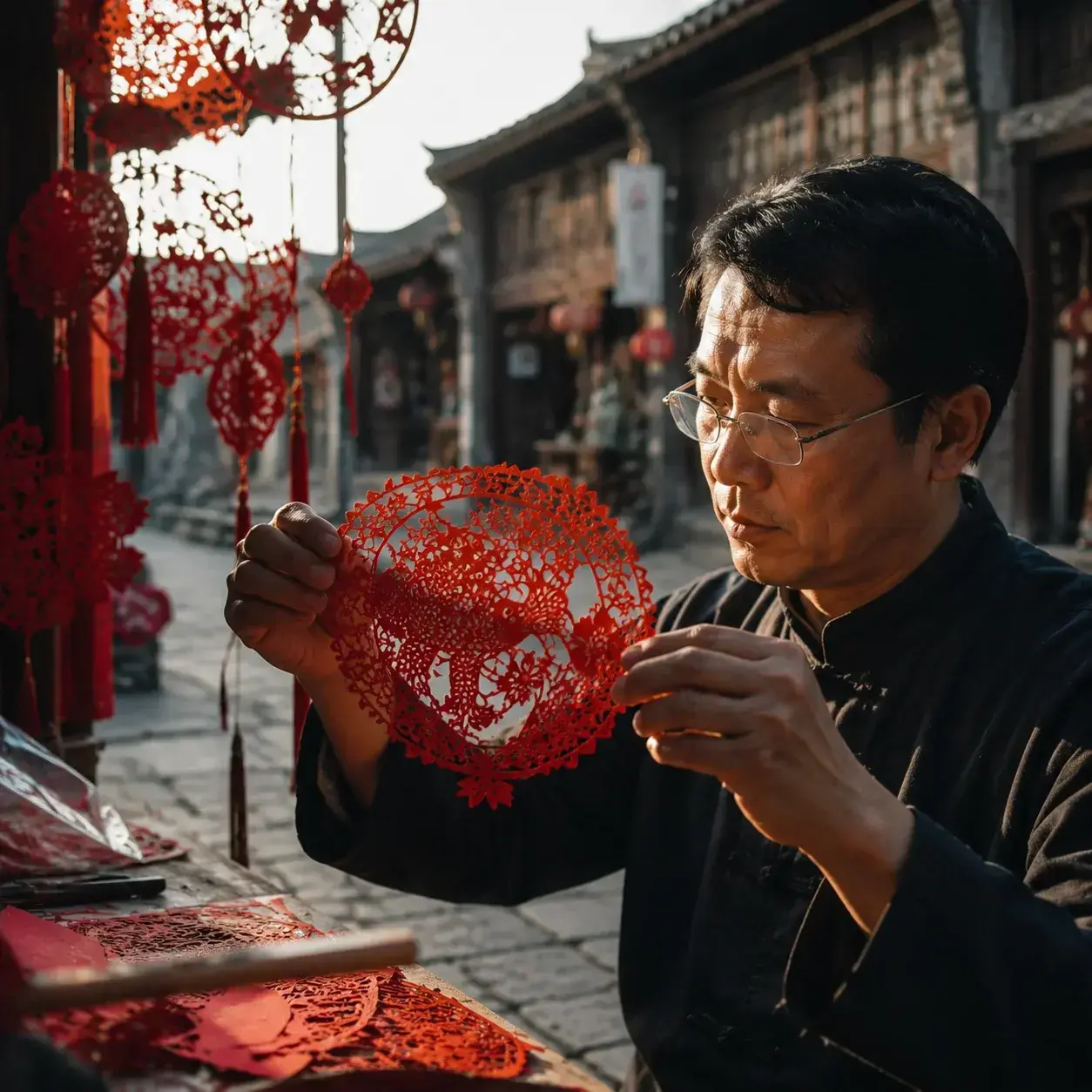 Qu'est-ce que la découpe de papier chinoise et comment acheter une pièce authentique en Chine ? Découvrez ce qu'est la découpe de papier chinoise, comment reconnaître un jianzhi artisanal authentique et où l'acheter en Chine.
 12. Nœud chinois
La décoration rouge à suspendre par excellence, et un bon cadeau à acheter en nombre. Le format porte-clés coûte ¥5–20, les petits nœuds décoratifs ¥10–40, les moyens ¥20–60, et les grandes pièces spectaculaires ¥80–300.
Les nœuds noués à la main ont un cœur dense et régulier et un cordon qui ne s'effiloche pas au niveau du gland ; les versions bon marché faites à la machine se relâchent en moins d'un an. À ces prix-là, il vaut la peine de prendre la gamme intermédiaire.
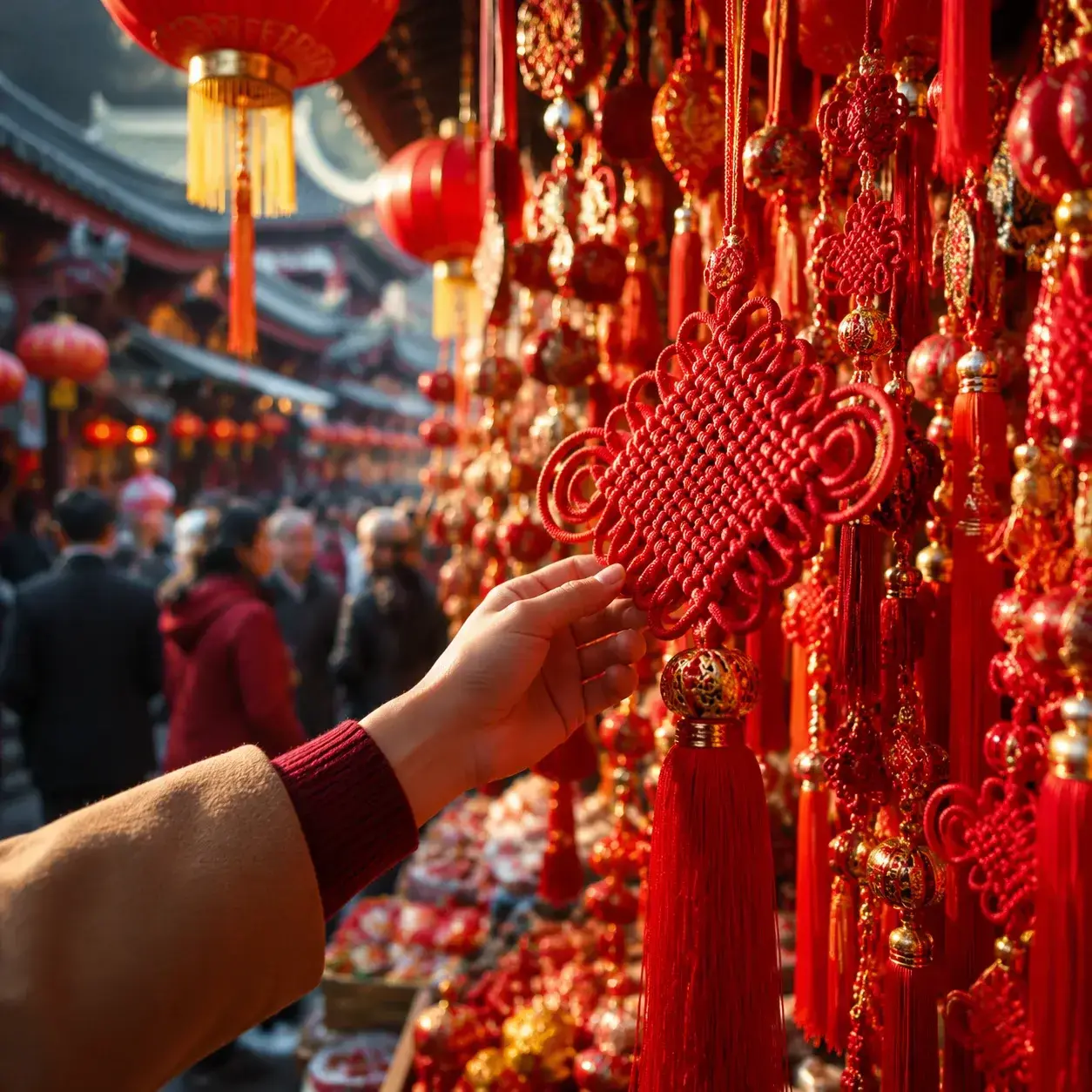 Qu'est-ce qu'un nœud chinois et lequel offrir en cadeau ? Découvrez la signification d'un nœud chinois, son prix et quel type constitue le meilleur cadeau pour vos amis, collègues ou partenaires en Chine.
 13. Produits dérivés pandas
La valeur la plus sûre de la liste, et à acheter de préférence à la source. Les petites peluches coûtent environ ¥45–180, avec le choix le plus large et les meilleurs prix à Chengdu — les nurseries de la base des pandas et le pôle Panda Station, plus des pièces de créateurs à la Panda House de la ruelle Kuanzhai et dans les boutiques de Taikoo Li / Chunxi Road en centre-ville.
Les peluches des musées et des points de vente officiels supportent le lavage ; celles des étals de rue, généralement pas.
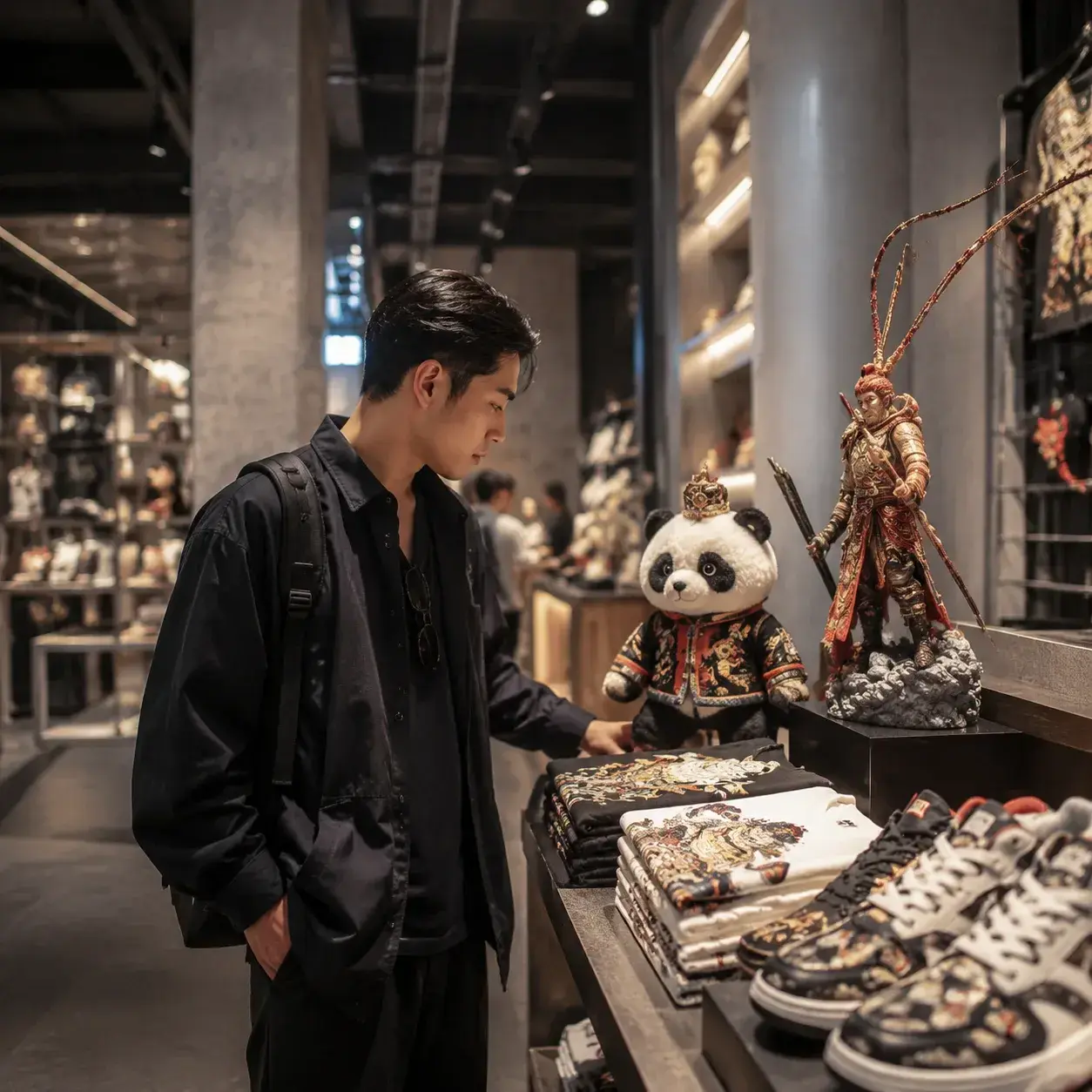 Quels sont les meilleurs souvenirs de la culture pop chinoise à acheter en Chine (et où) ? Découvrez les meilleurs souvenirs de la culture pop chinoise à acheter en Chine, des produits dérivés de pandas aux figurines de Black Myth: Wukong et à la mode guochao.
 14. Figurines « Black Myth: Wukong » et design guochao
L'option moderne et non touristique. Les produits dérivés officiels et sous licence de « Black Myth: Wukong » sont souvent réellement moins chers en Chine qu'à l'étranger, et ils font figure de cadeau averti pour quiconque suit le jeu vidéo. À côté, le guochao (« tendance nationale ») — vêtements de rue, articles pour la maison et accessoires — réinterprète les motifs chinois dans un style contemporain : c'est ce qu'achètent réellement les jeunes consommateurs chinois.
Une réserve honnête : les marques mondiales de figurines en boîtes-surprises sont d'amusants achats d'impulsion, mais elles n'ont rien de spécifiquement chinois. Traitez-les comme un bonus plutôt que comme le cadeau.
Quels sont les meilleurs souvenirs de la culture pop chinoise à acheter en Chine (et où) ? Découvrez les meilleurs souvenirs de la culture pop chinoise à acheter en Chine, des produits dérivés de pandas aux figurines de Black Myth: Wukong et à la mode guochao. 15. Armée de terre cuite et souvenirs de musée
La catégorie « j'y étais vraiment ». Les figurines de guerriers en terre cuite commencent autour de ¥30, et les bonnes viennent des boutiques du musée de Xi'an plutôt que des étals à l'extérieur. La même logique vaut pour les répliques de masques de Sanxingdui, les produits culturels et créatifs de la Cité interdite et les objets liés à la Grande Muraille : les boutiques officielles des musées battent les étals de rue sur la qualité, et l'argent soutient le site.
Ce sont aussi les souvenirs qui vieillissent le mieux, parce qu'ils sont liés à un lieu précis où vous vous êtes tenu.
Quels sont les meilleurs souvenirs chinois abordables et où les acheter ? Découvrez les meilleurs souvenirs chinois abordables, leur prix indicatif et où les acheter à des prix équitables en Chine. À regarder aussi
Trois autres articles qui n'entrent pas dans les quinze mais méritent leur place dans la valise :
- Jeux de baguettes gravées — ¥10–30 pour une paire basique, ¥40–120 pour un bon coffret cadeau, ¥80–300 pour un travail fin. Excellent cadeau de bureau. → guide des baguettes
- Lanternes en soie ou en papier — ¥60–250 pour les tailles standard, ¥300–1,200 pour les grandes pièces ou celles finement peintes. → guide des lanternes
- Cartes postales, aimants et porte-clés — respectivement ¥3–15, ¥5–60 et ¥5–50. La réponse honnête pour une longue liste de collègues. → guide des souvenirs abordables
Pour qui faites-vous vos achats ?
Si vous préférez partir de la personne plutôt que du produit, servez-vous de ce tableau et allez directement à l'article numéroté ci-dessus.
| Vous achetez pour… | Ce qui leur plaira vraiment | Aller à |
|---|---|---|
| Parents / grands-parents | Thé en vrac, une pièce de porcelaine, une écharpe en soie — la santé, la « face » et le patrimoine | #1, #8, #5 |
| Conjointe (épouse / petite amie) | Un bracelet ou un pendentif en jade, une écharpe en soie, un qipao sur mesure | #4, #5, #6 |
| Conjoint (mari / petit ami) | Une théière de Yixing, un bon thé, un rouleau de calligraphie | #2, #1, #10 |
| Enfants | Peluche panda, une figurine sous licence, un porte-clés nœud chinois, une planche de papier découpé | #13, #14, #12, #11 |
| Collègues / cadeaux en nombre | Aimants, porte-clés, jeux de baguettes gravées, petits sachets de thé | À regarder aussi, #1 |
| Collectionneurs / amateurs de culture | Calligraphie, rouleaux à l'encre, porcelaine d'artiste, un sceau personnalisé | #10, #8, #9 |
| Amateurs de thé | Thé en vrac, un service gongfu, une théière en argile zisha | #1, #3, #2 |
| Amateurs de mode | Un qipao, une écharpe en soie, un éventail peint à la main | #6, #5, #7 |
| Amateurs de décoration | Une lanterne, un vase en porcelaine, un nœud décoratif | À regarder aussi, #8, #12 |
Une note d'étiquette qui évite bien des embarras : dans la coutume chinoise, évitez d'offrir des horloges (钟, homophone de « la fin ») et des fleurs coupées pour les occasions joyeuses, et n'emballez pas les cadeaux dans du blanc uni. Rien sur cette liste ne pose ce problème — mais c'est bon à savoir quand vous improvisez.
Combien coûtent les souvenirs de Chine ?
Budgétez par tranche plutôt que par article. Ces fourchettes sont indicatives et varient selon la ville, la matière et le canal de vente.
| Tranche de prix | Environ (USD) | Articles typiques |
|---|---|---|
| Petits cadeaux / achats en nombre | ~$1–10 | Aimants, porte-clés, cartes postales, papier découpé, petits sachets de thé, un sceau nominatif basique |
| Souvenirs de milieu de gamme | ~$15–60 | Écharpe en soie, éventail peint à la main, coffret de baguettes, nœud décoratif, peluche panda |
| Pièces marquantes | ~$70–300 | Service à thé gongfu, thé en vrac de qualité, vase en porcelaine, jade d'entrée de gamme, théière de Yixing d'entrée de gamme |
| Collection / objet transmissible | $300+ | Qipao sur mesure, bracelet de jade fin, théière de collection, rouleau peint à la main, porcelaine d'artiste |
Deux règles d'argent que les voyageurs oublient : l'aéroport est le pire endroit où acheter à peu près n'importe quoi, sauf des grignotages de dernière minute, et une négociation courtoise est attendue sur les marchés mais pas dans les centres commerciaux à prix fixes ni dans les maisons de thé réputées.
Rapporter le tout : douane et expédition
La plupart des souvenirs chinois voyagent sans encombre, mais les règles varient selon les pays — vérifiez la douane de votre destination avant de partir. Le thé, la soie, les éventails, le papier découpé et la plupart des objets artisanaux présentent peu de risque ; la porcelaine, le jade et les théières exigent un rembourrage soigné ; et tout ce qui est réellement ancien peut déclencher à la fois des restrictions chinoises à l'exportation et un contrôle à l'importation chez vous.
- Objets fragiles (porcelaine, jade, théières) : transportez-les en bagage à main quand c'est possible, enveloppés dans des vêtements, ou faites emballer et expédier les grandes pièces par la boutique.
- Thé et produits alimentaires : le thé en vrac ne pose pas de problème dans la plupart des pays, mais certains (l'Australie et la Nouvelle-Zélande, par exemple) exigent de déclarer les produits végétaux à l'arrivée. Gardez-le scellé et déclarez-le en cas de doute.
- Antiquités : la Chine restreint l'exportation des objets au-delà d'un certain âge, qui doivent porter un sceau officiel ; votre pays d'origine peut aussi demander une provenance. Si un vendeur affirme « antiquité authentique », demandez les documents — sinon, considérez l'objet comme une reproduction.
- Déclarations de valeur : les achats de jade ou de soie de grande valeur peuvent devoir être déclarés à votre retour s'ils dépassent votre franchise douanière. Conservez les reçus.
La très grande majorité des voyageurs rapportent thé, soie et objets artisanaux sans la moindre difficulté. Vérifiez simplement les deux ou trois règles qui s'appliquent à votre passeport avant de faire vos valises.
Questions fréquentes
Quels sont les meilleurs souvenirs à acheter en Chine ? Le thé en vrac (¥50–300 par 100g), un vrai pendentif en jade (à partir d'environ ¥500), une écharpe en soie de mûrier (¥150–400), une porcelaine peinte à la main et un sceau nominatif personnalisé (¥30–120) sont les cinq objets que les voyageurs gardent le plus longtemps. Adaptez l'objet au destinataire plutôt que d'acheter ce que vend l'étal le plus proche.
Quels sont les meilleurs souvenirs de Chine à petit prix ? Un sceau nominatif gravé à ¥30–120 offre le meilleur rapport qualité-prix de cette liste, parce qu'il a une dimension personnelle. En dessous, les cartes postales coûtent ¥3–15, les porte-clés ¥5–50, les aimants ¥5–60, les jeux de papier découpé à la machine ¥5–20 et les porte-clés nœud chinois ¥5–20. Achetez-les sur les marchés et dans les boutiques de musée, pas à l'aéroport.
Comment distinguer un souvenir authentique d'une contrefaçon ? Retenez un indice par matière. La vraie soie de mûrier donne une sensation tiède plutôt que glissante, et toute écharpe sous les ¥50 environ est en polyester. La porcelaine peinte à la main montre une épaisseur de trait variable ; les décalcomanies montrent une impression en matrice de points. Une théière de Yixing « entièrement faite à la main en minerai brut » à ¥50–150 n'est pas authentique. Le « jade » des étals touristiques à ¥50–300 est en général de la serpentine traitée.
Où acheter les souvenirs en Chine ? Achetez là où sont les artisans et les spécialistes : les marchés de thé pour le thé, Dingshu pour les théières en zisha, les marchés de tissus dotés d'ateliers de couture pour la soie et le qipao, Jingdezhen pour la porcelaine, Chengdu pour les produits pandas, les boutiques des musées de Xi'an pour les figurines en terre cuite, et Pingyao ou Panjiayuan pour le papier découpé.
Quel budget prévoir pour les souvenirs en Chine ? Environ $1–10 pour les cadeaux en nombre et les petits achats, $15–60 pour les souvenirs de milieu de gamme comme une écharpe en soie ou un éventail peint à la main, $70–300 pour des pièces marquantes telles qu'un service à thé gongfu ou un jade d'entrée de gamme, et $300+ pour des objets de collection comme un qipao sur mesure ou un bracelet de jade fin.
Quel cadeau chinois choisir pour des parents plutôt que pour des enfants ? Pour des parents, misez sur la santé et le patrimoine : du thé en vrac, une pièce de porcelaine ou une écharpe en soie. Pour des enfants, choisissez léger et amusant : une peluche panda (¥45–180), une figurine sous licence, un porte-clés nœud chinois ou un papier découpé coloré.
Commencez ici, puis approfondissez
Les meilleurs souvenirs de Chine ne sont pas ceux qui vous interpellent depuis une étagère d'aéroport : ce sont le thé, le jade, la soie, la porcelaine et les objets personnalisés choisis pour une personne précise et achetés là où l'artisanat vit réellement. Choisissez vos articles parmi les quinze ci-dessus, notez le prix indicatif pour connaître la fourchette dans laquelle vous négociez, et suivez le lien d'approfondissement pour le détail quartier par quartier et la liste complète des contrôles d'authenticité.
Vous préparez le voyage sur lequel repose tout ce shopping ? C'est notre métier : des itinéraires privés et sur mesure en Chine qui intègrent le marché de thé, le tailleur du marché de tissus et la boutique du musée pour que les souvenirs rentrent à la maison comme il faut. Quand vous serez prêt à transformer une liste d'achats en itinéraire, laissez LyrikTrip la tracer.