



Who he is
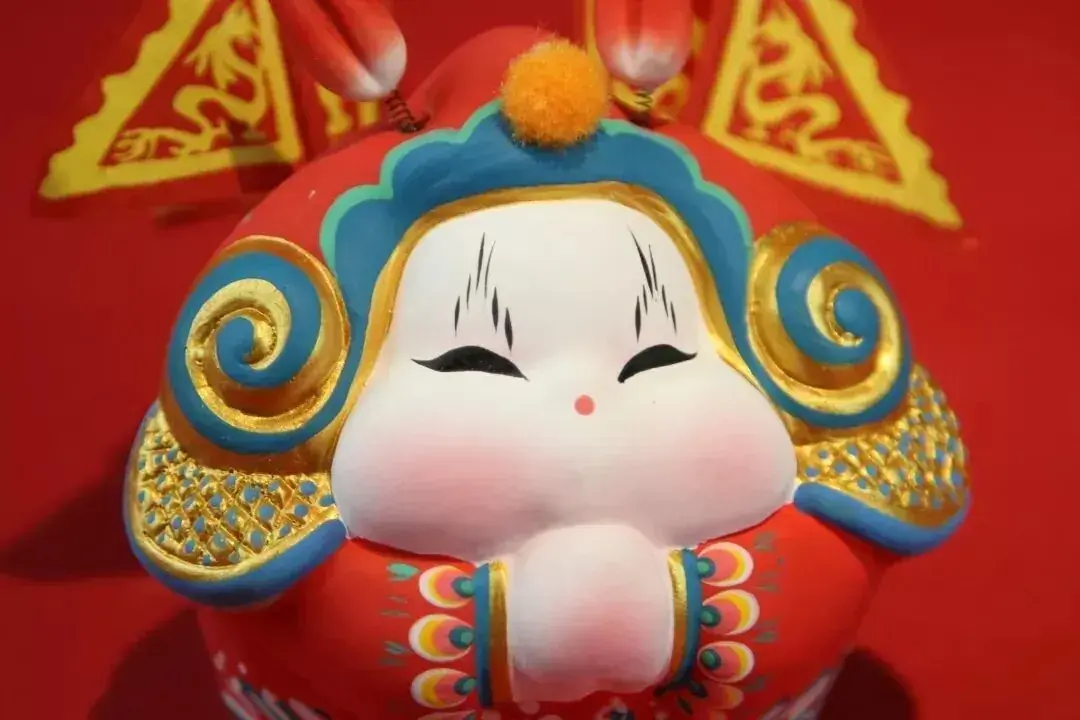
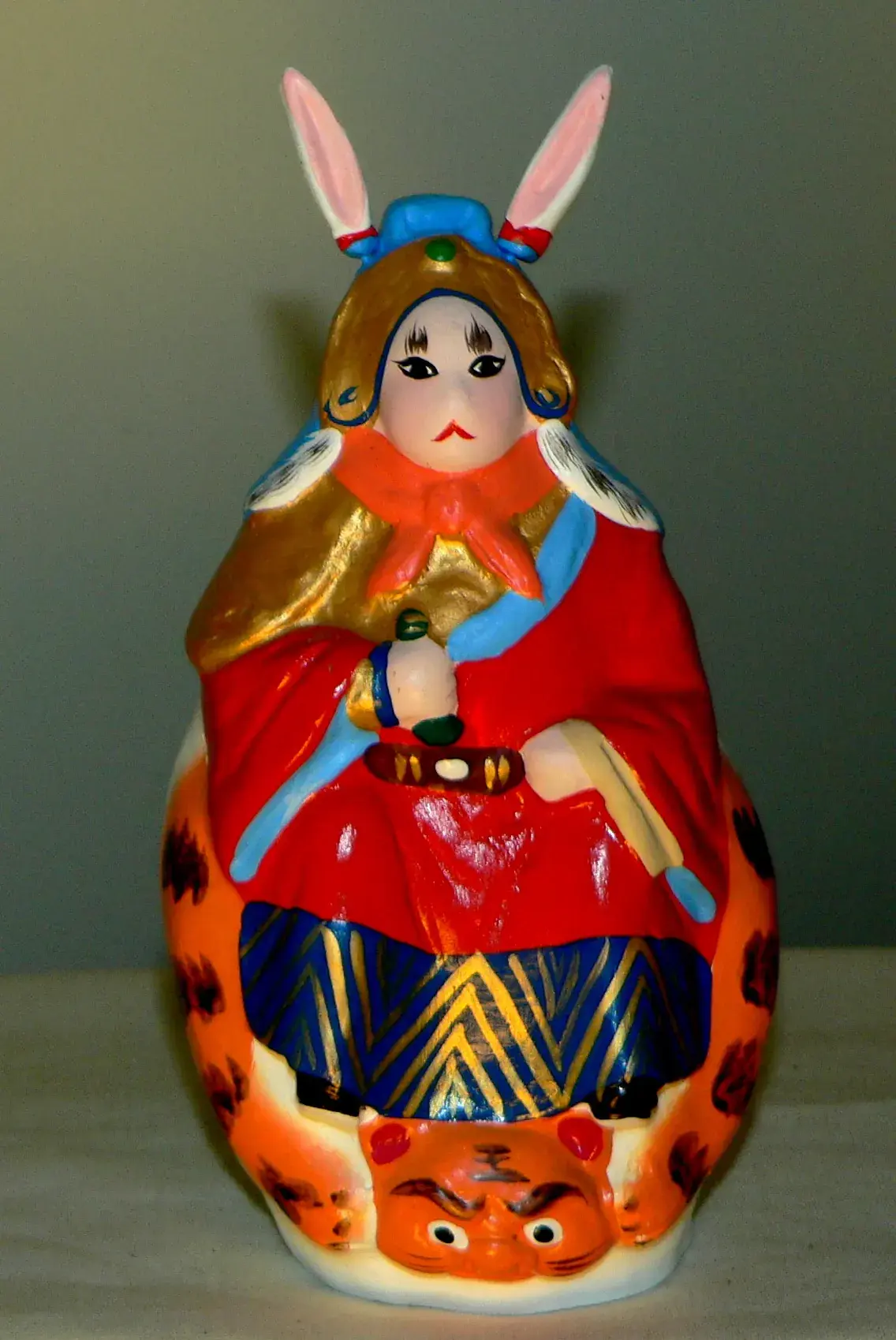
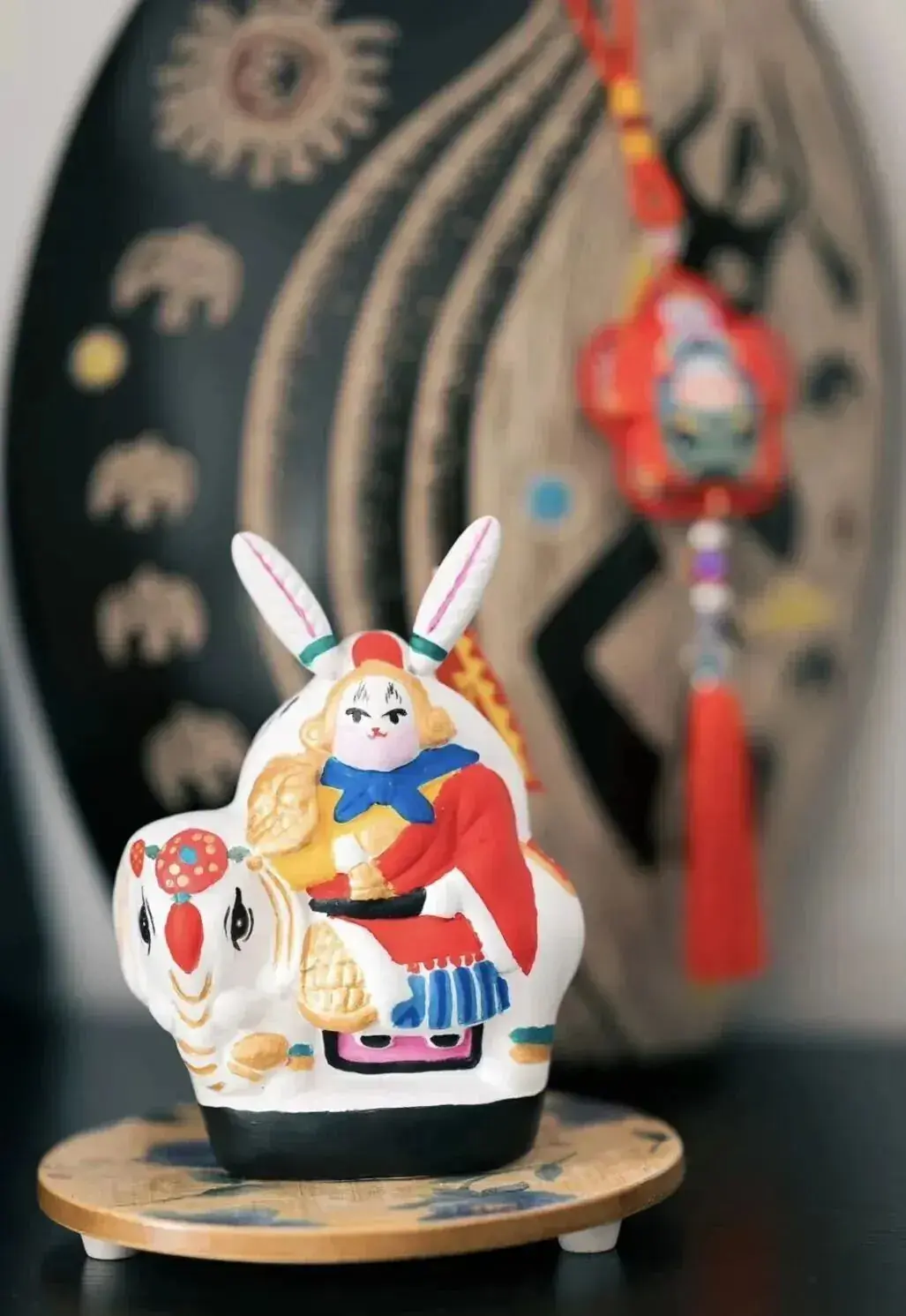
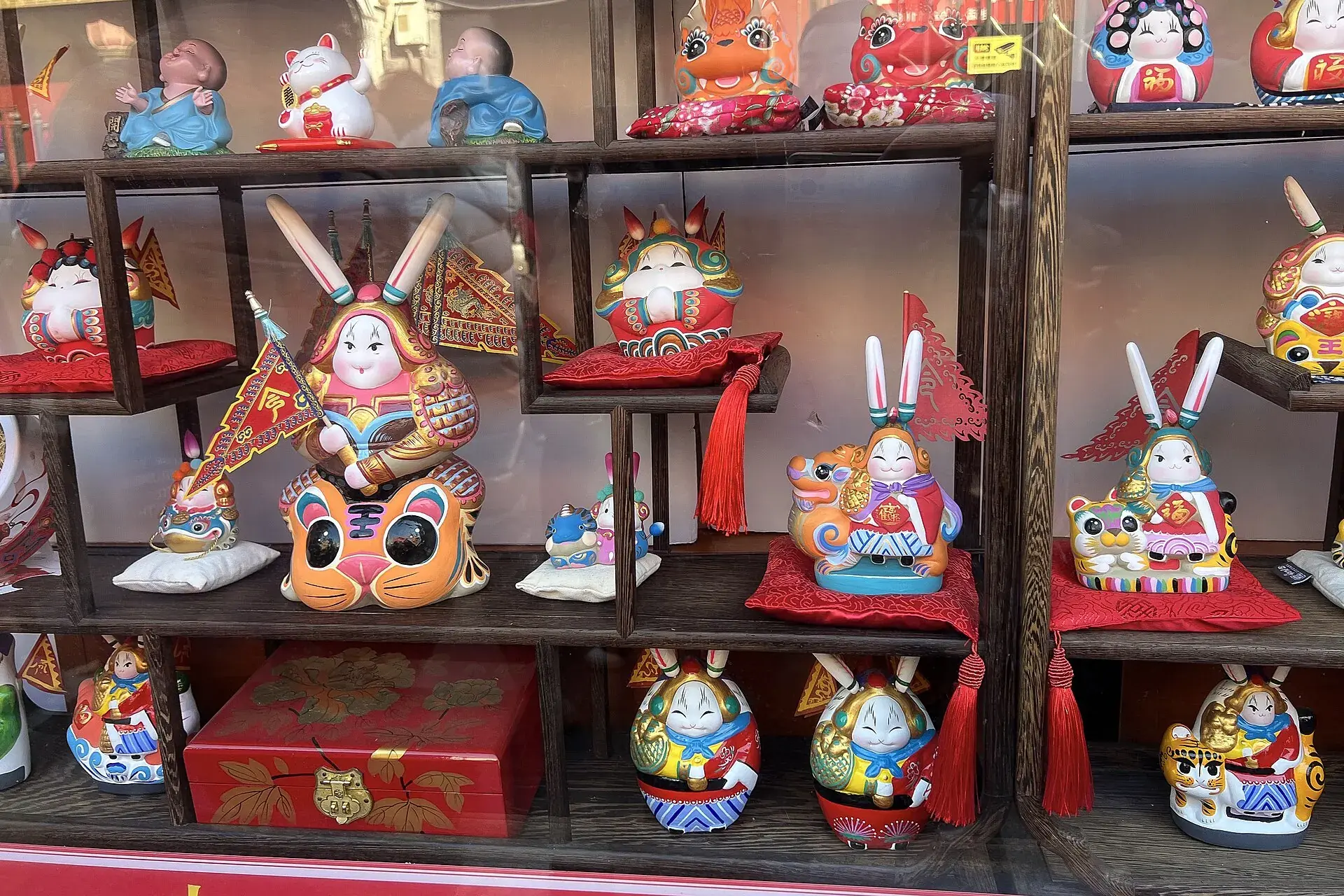
Tu'er Ye — Lord Rabbit. Gold helmet, gold armour, a pestle for grinding medicine, and a command banner at his back. Every mid-autumn, Beijing households used to set one out and make offerings to it. The ritual has all but gone; the figure stayed. In 2014 the craft entered the national intangible heritage list. Four hundred years, and still made by hand.
Two hours, and this is what you walk out with
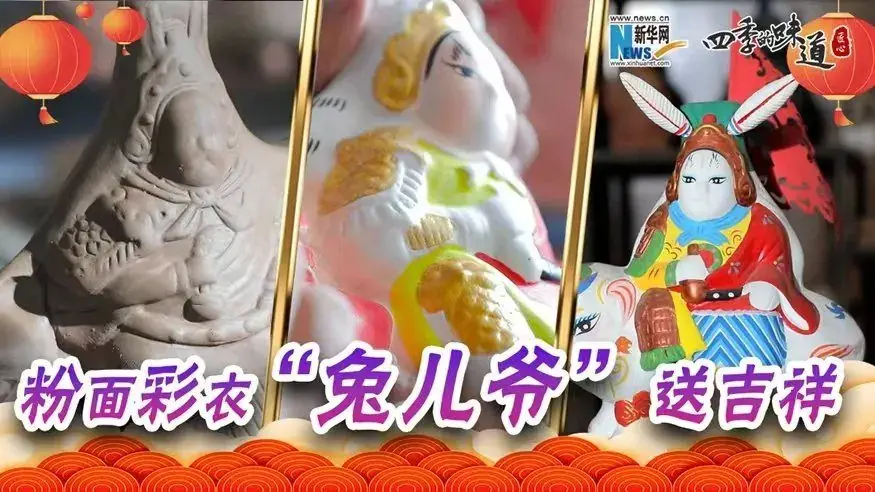
You are handed a bare clay Rabbit God — Beijing's four-hundred-year-old moon-festival figure — and a maker shows you how to bring him up in colour. The one you paint is the one you leave with.
- A working Beijing clay-painting studio, not a classroom
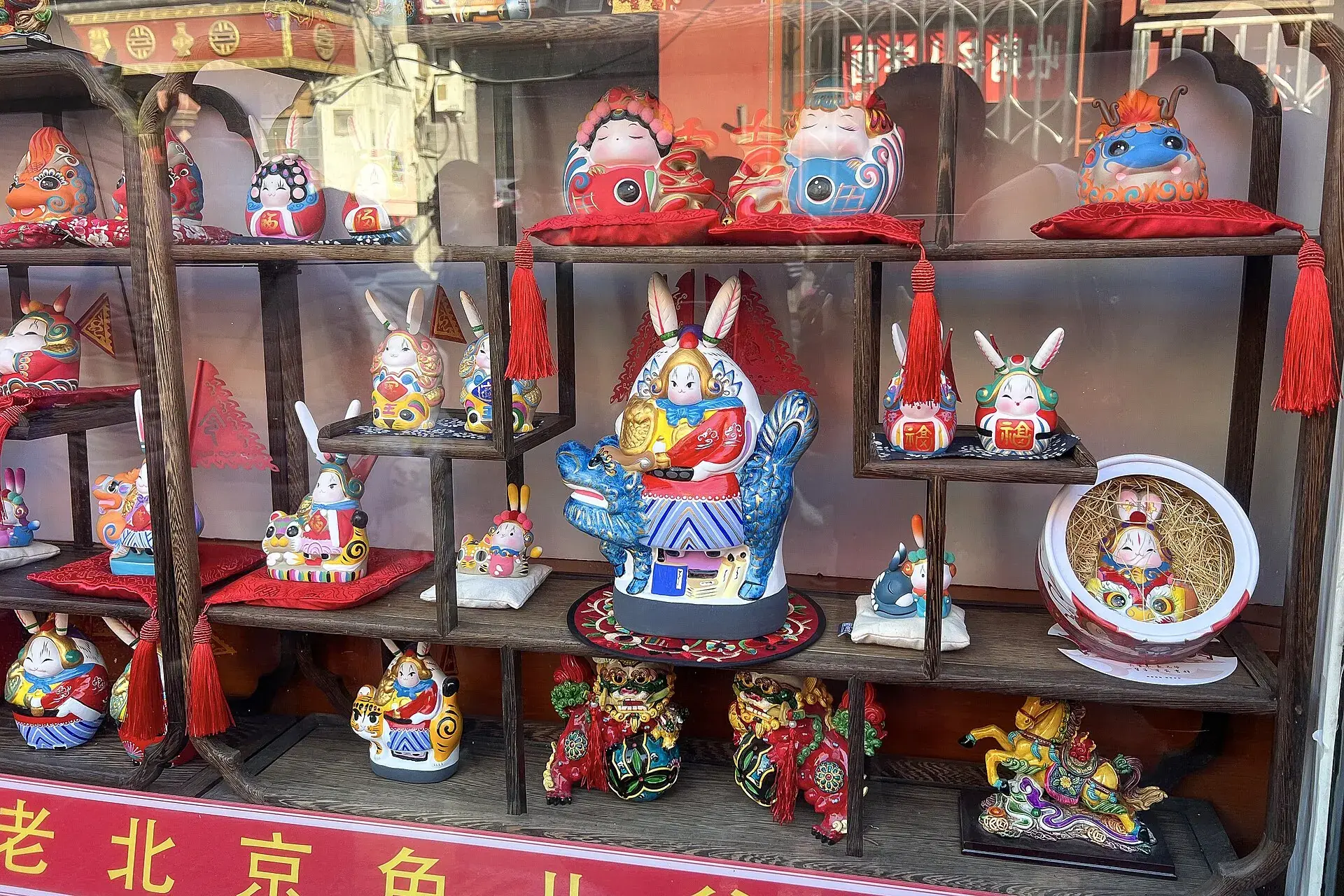
- The full range on the shelves — zodiac series, old-architecture series, herbal-medicine series
- A maker doing in ninety seconds the line that will take you ten minutes
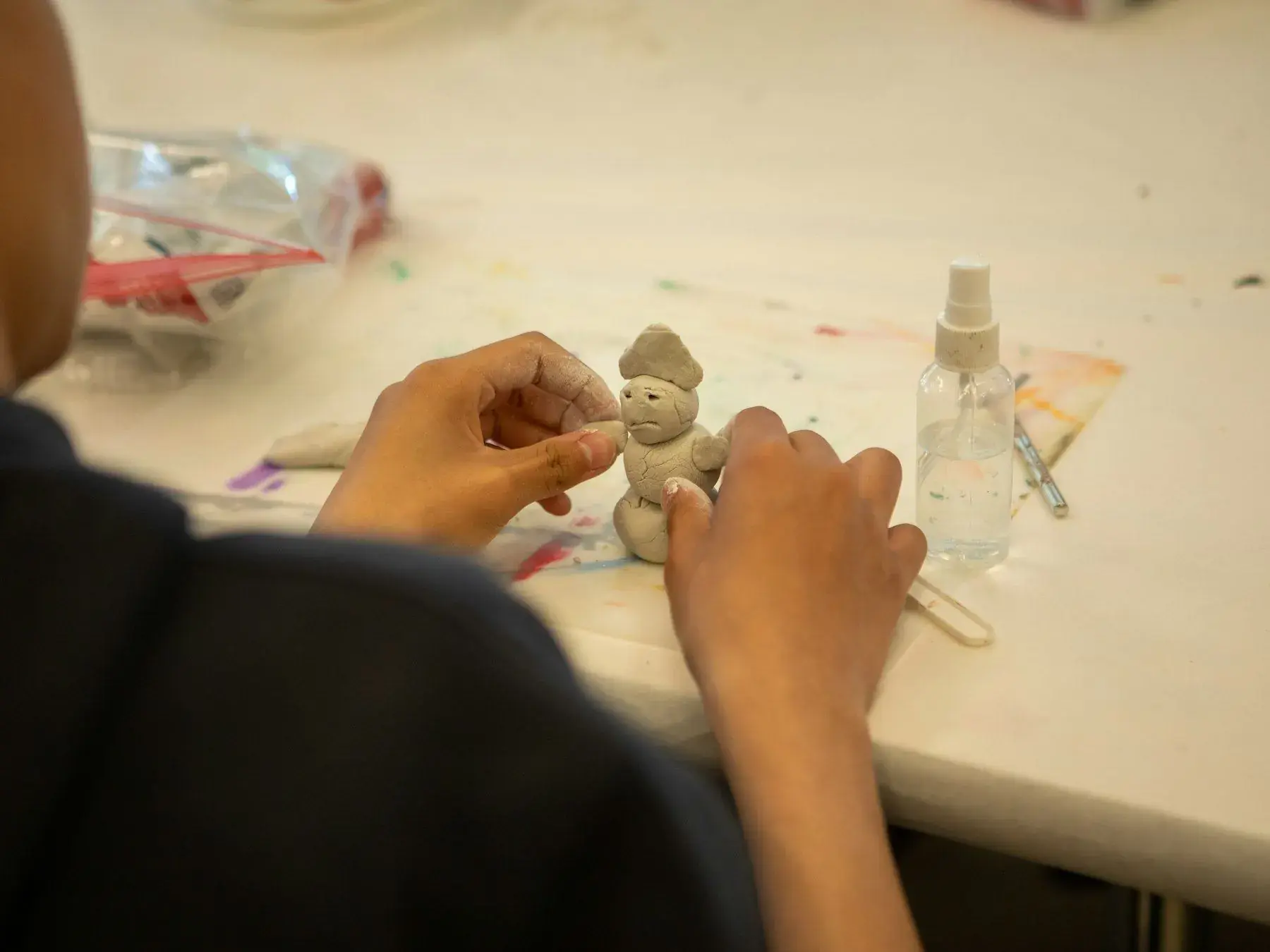
- Raw clay bodies straight from the mould, still chalk-grey
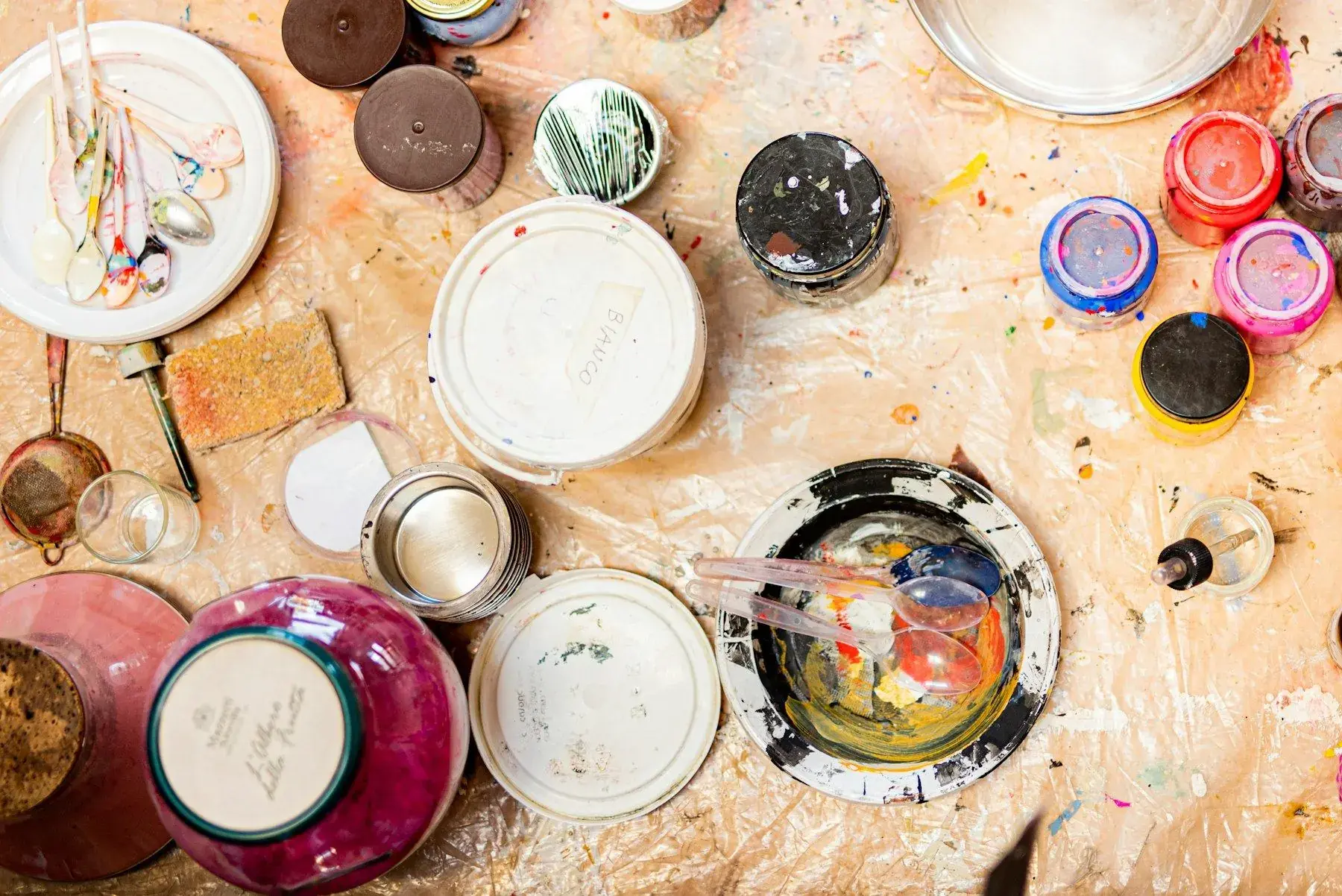
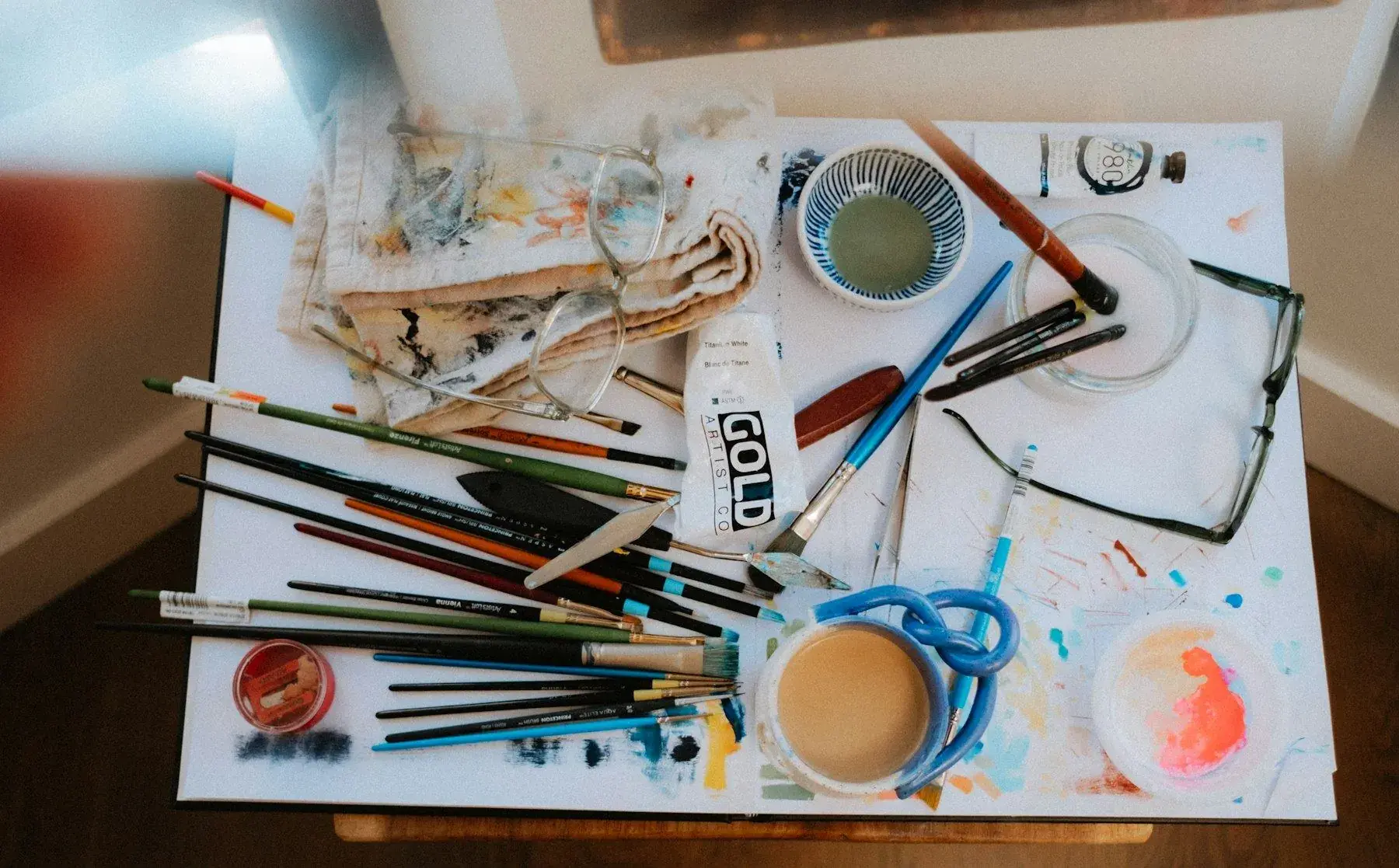
- Mineral pigment, mixed on the spot
- A brush fine enough that you will hold your breath using it
- Why he carries a pestle for grinding medicine — the jade rabbit was sent down to stop a plague
- What the Palace Museum's own late-Qing Rabbit God looks like, and why he's riding a deer
- A fifth-generation maker on why the craft is easy to start and very hard to stay in
- The figure you painted, dry enough to travel
- The order of operations — ground colour, pattern, face last
- A souvenir nobody else has, because nobody paints two the same
What is on the table
Clay · ground · brush · banner
How it unfolds
-
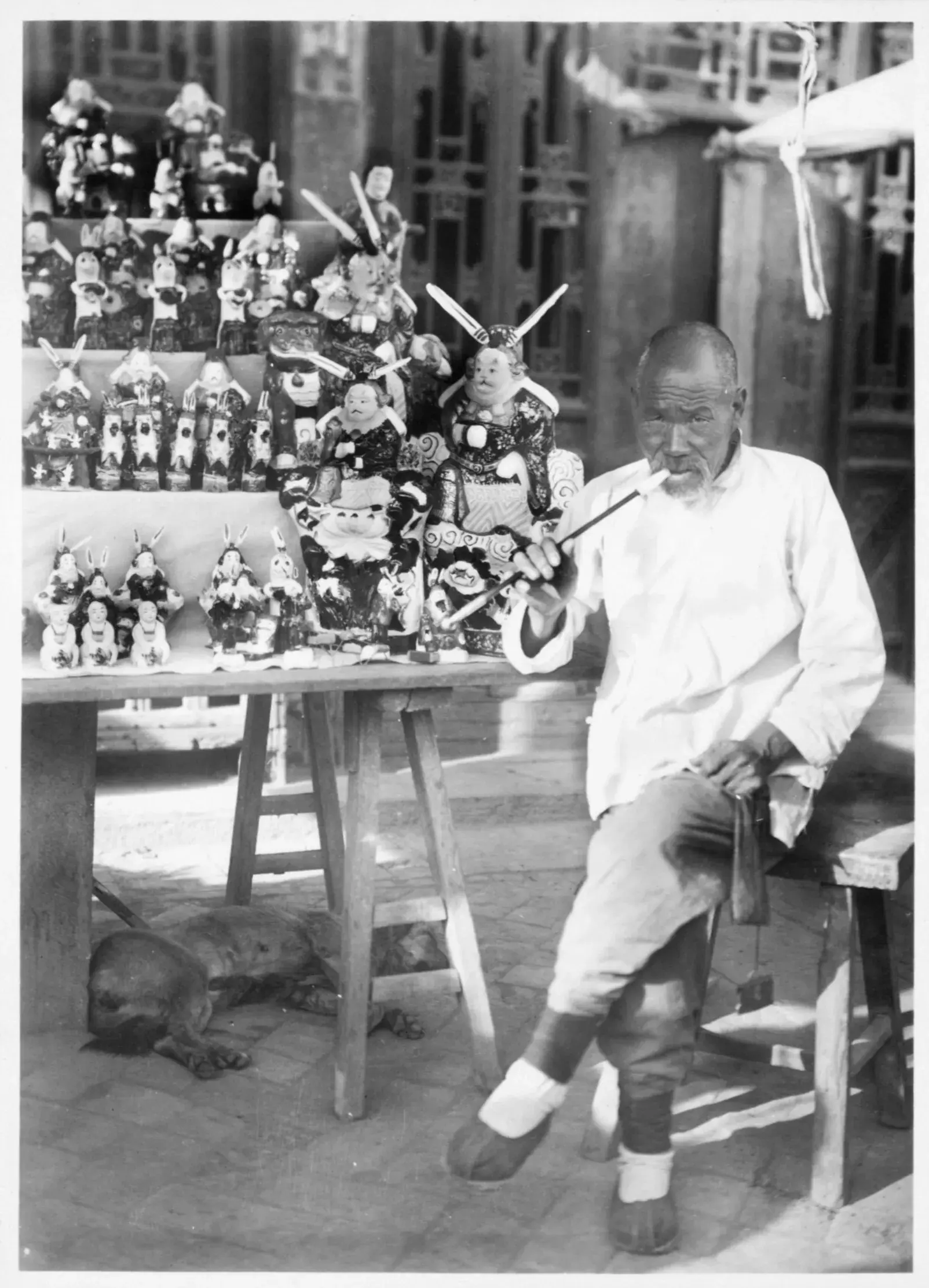
The mould has done the anatomy: the long pointed ears, the hill-shaped brows, the split rabbit lip, the armour plates and the socket for the banner. The Palace Museum holds a late-Qing one 31 centimetres tall, dressed as a civil official and riding side-saddle on a sika deer. Late-Qing makers built them over a metre high; the smallest were three inches. Yours is somewhere in between, and entirely grey.
-
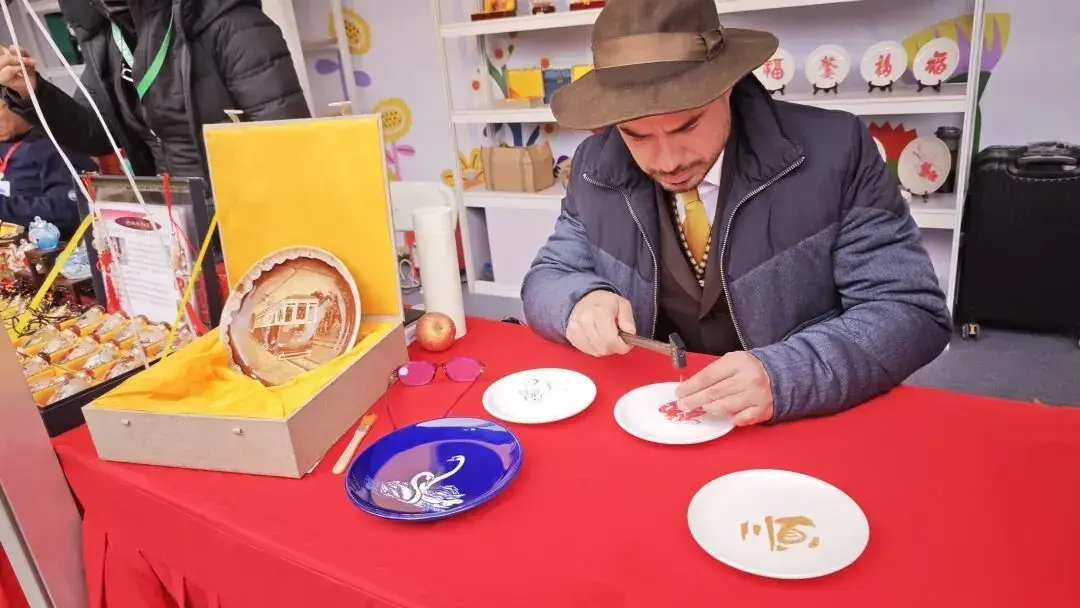
The full sequence runs: choose the clay, soak it, beat it, press the mould, lay the ground, then paint. You join at the fifth step. Flat ground colour goes down over the whole figure and has to dry before any pattern touches it — the maker demonstrates on their own piece so you can see exactly where a wrong order becomes unfixable.
-
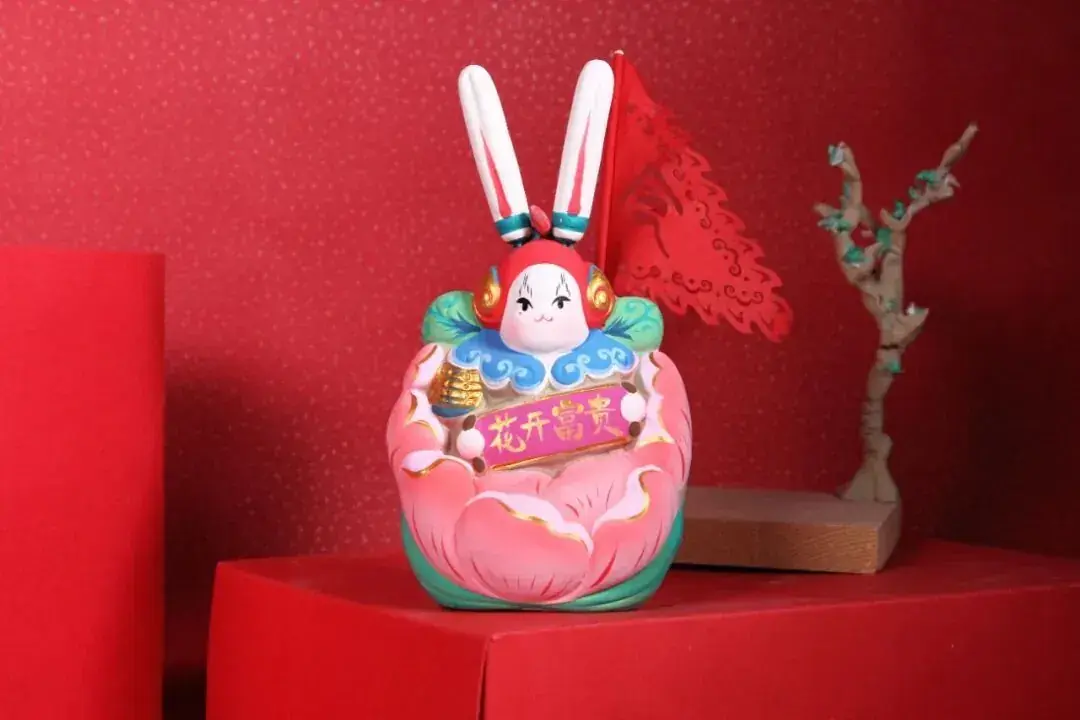
The face is left to the end, and it is the part everyone gets tense about. A powder-white ground, then the two hill-shaped brows, then the split lip. Up to that point you were decorating an object. The moment the brows land, it acquires an expression — and you will find you have opinions about it.
“Easy to start. The further in you go, the harder it gets.”
Four hundred years is not automatic
That is Zhang Zhongqiang, a fifth-generation Beijing clay-painting maker, on his own craft — and on why so few people stay with it. He keeps a small shop on Yangmeizhu Xiejie in Xicheng, and makes a case that the material and the method must stay traditional while the imagery has to belong to now.
So today's Tu'er Ye come in series: Beijing's central axis, old architecture, Chinese medicinal herbs, the twelve zodiac animals, even space programmes and World Cups.
He has also travelled — Tu'er Ye figures have been shown in France, Italy, Pakistan, Russia, Kyrgyzstan, Estonia and Finland. Which is a long way for a rabbit that was originally sent to one city to stop an epidemic.
Good to know
Book a rabbit
Two hours, any afternoon, on its own. Tell us a date and how many of you there are.
Start planning- About 2 hours
- A maker demonstrates
- National heritage, 2014
- You keep what you paint