



Three movements
Almost everyone who comes to Leshan sees the Buddha and drives home. That is about two hours of a nine-hour day. Forty minutes inland there is a town five hundred years old that modernisation simply did not get to. And above the town, the tea. Not a demonstration plot — the field the family actually harvests.
What nine hours actually buys you
Nine hours: the seventy-one metre Buddha from the water, a five-hundred-year-old town where the blacksmith is still trading, and a tea family who put your hands over their own hot wok.
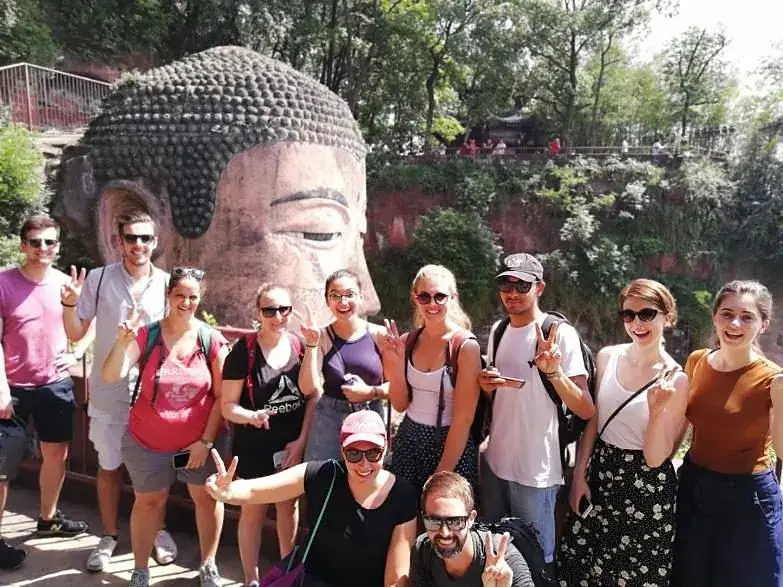
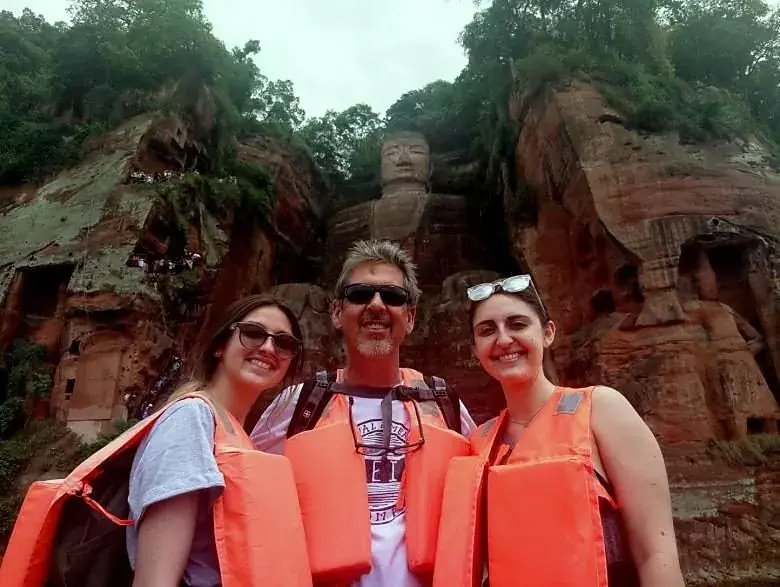
- The 71-metre Buddha from a boat — the only angle the whole figure fits into
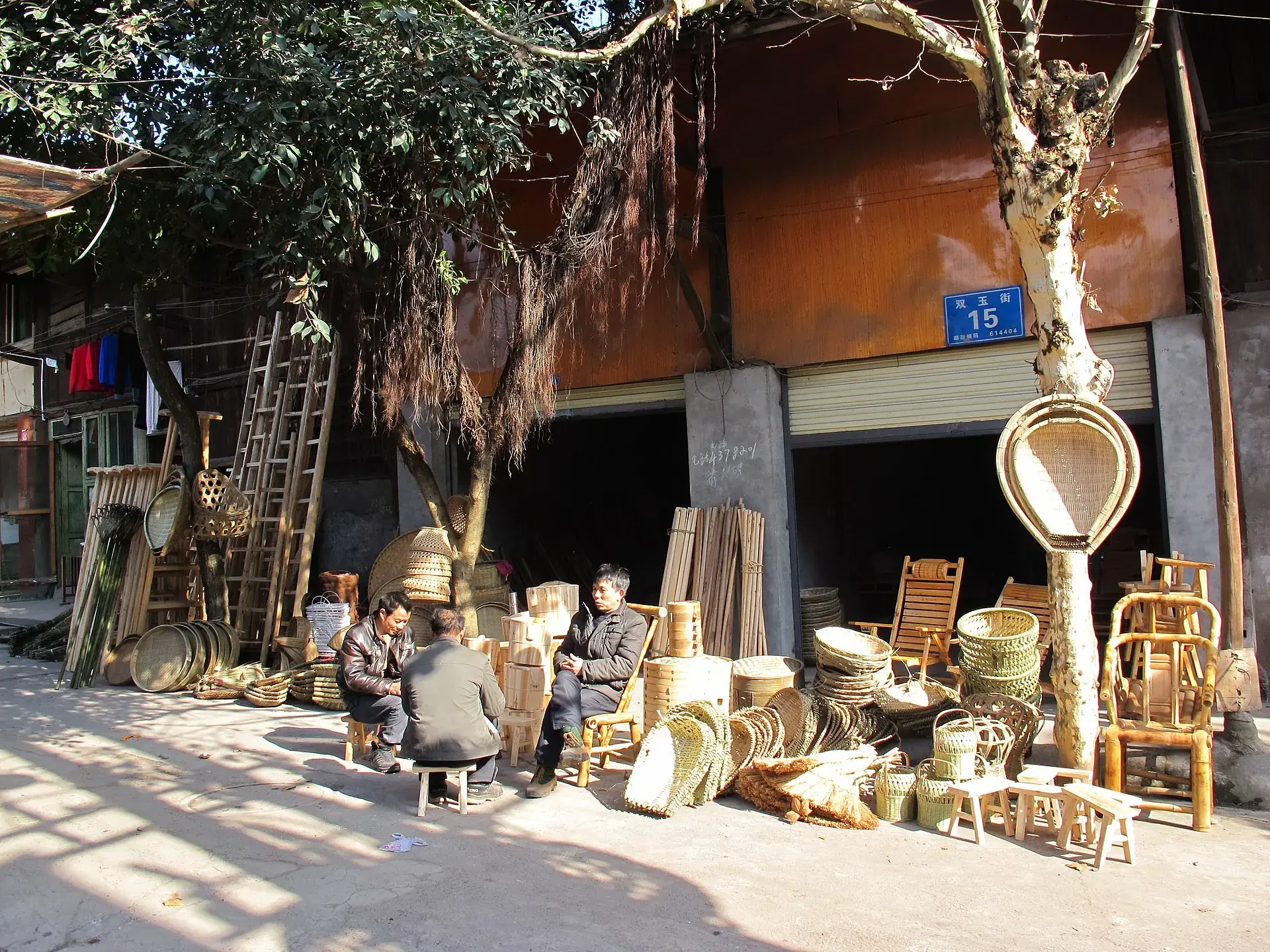
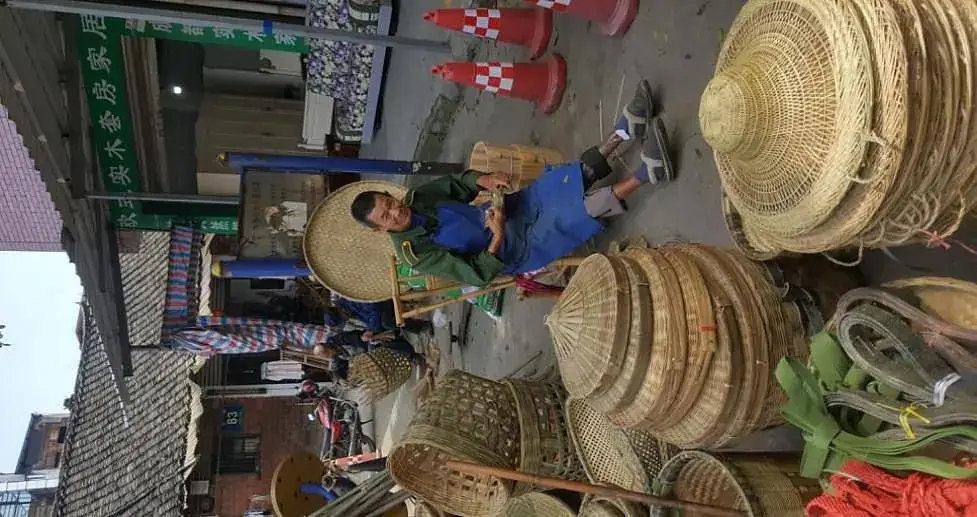
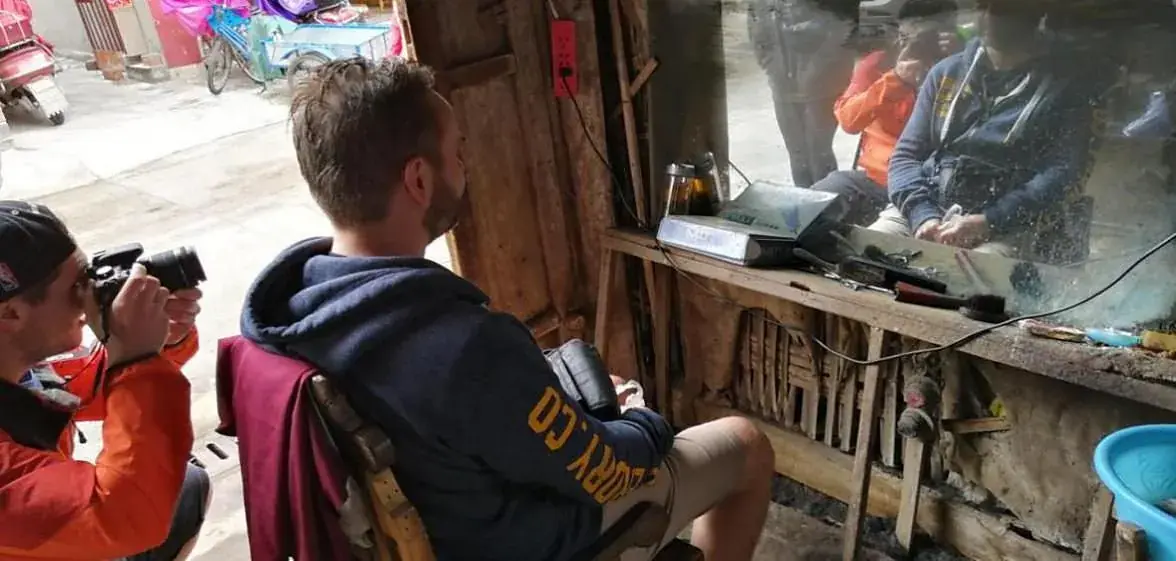
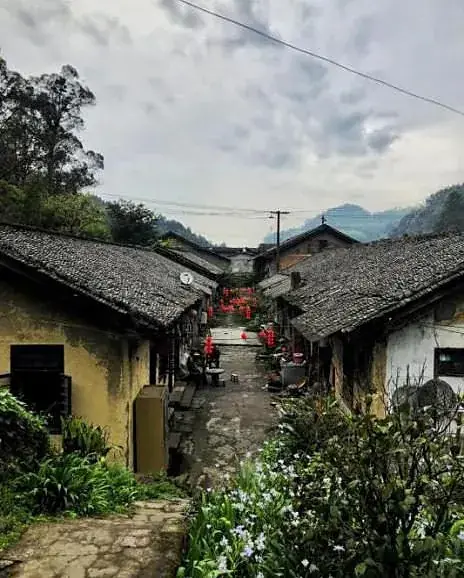
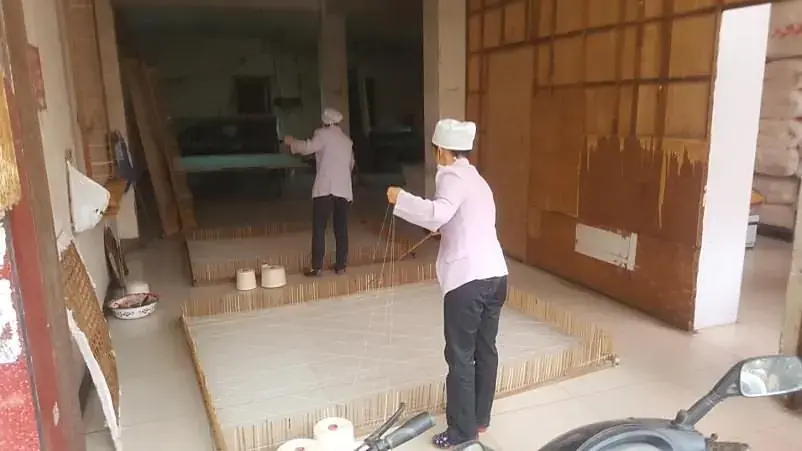
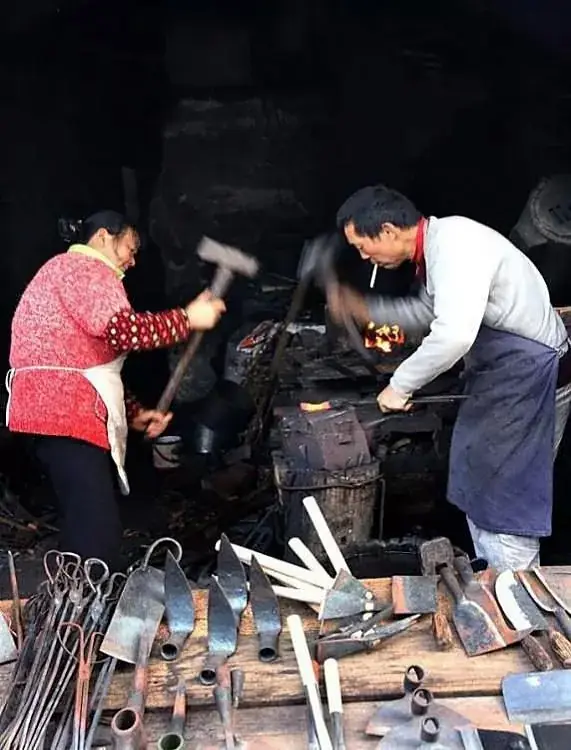
- A town five hundred years old where the blacksmith, bamboo weaver and barber are all still open
- The inside of a hundred-year-old courtyard house, because its owner invites you in
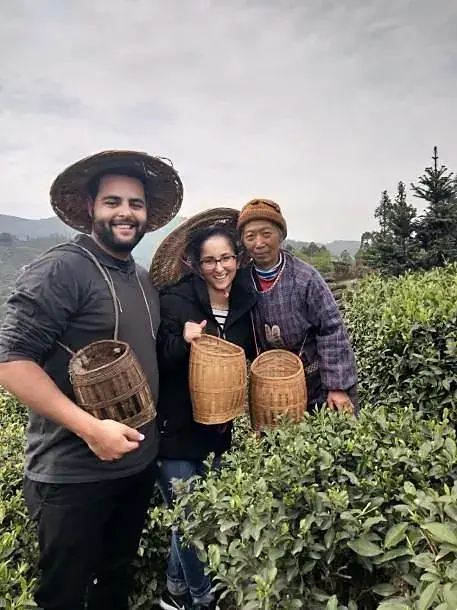
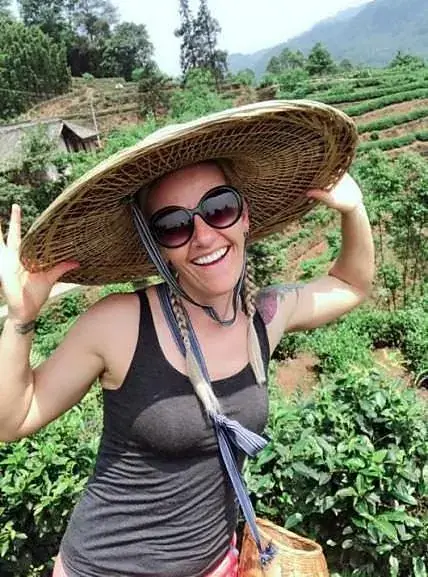
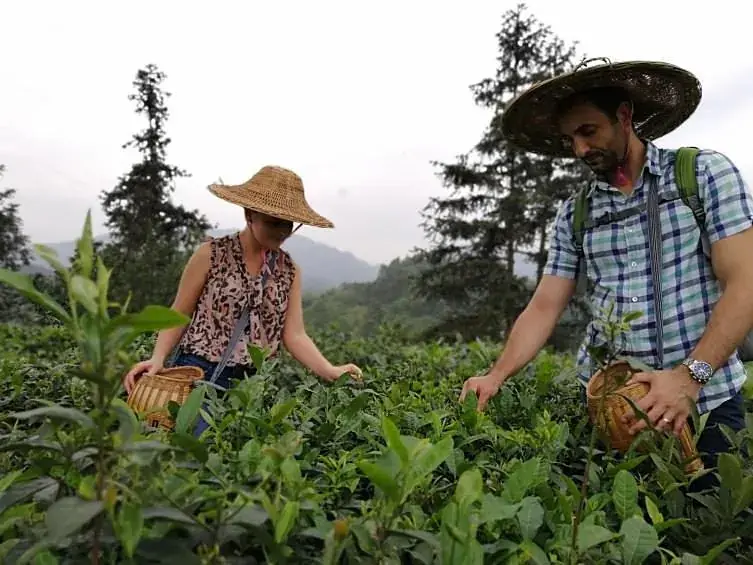
- Tea terraces the family actually harvests, not a demonstration plot
- Local lunch in the town, included, ordered by your guide
- Tea in the town's old teahouse, poured by whoever is running it that day
- Three or four teas side by side at the farmhouse — the family compares them to wine
- The one you fired yourself, brewed within the hour
- The courtyard owner's account of his own house — he'd rather tell you than have anyone else
- The farmer explaining which bud, and why this week and not next
- Why bagged tea is not, in this family's view, tea
- A bag of the tea you picked and fired
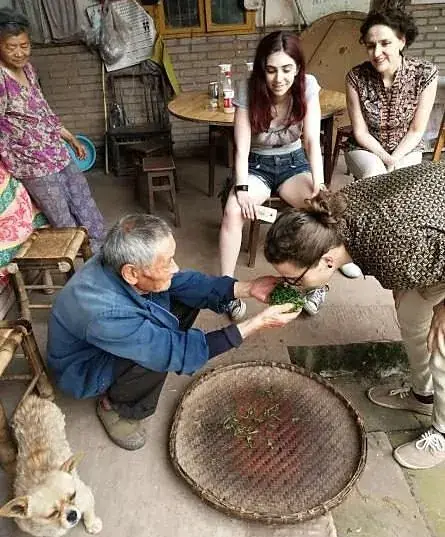
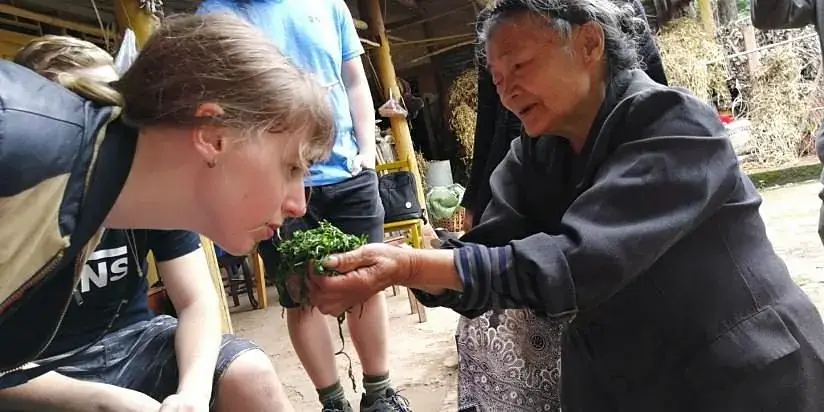
- The trick of judging a leaf by smell
- Pictures of a working town that has no ticket gate
What the nine hours are made of
Stone · workshop · leaf · wok
How it unfolds
-
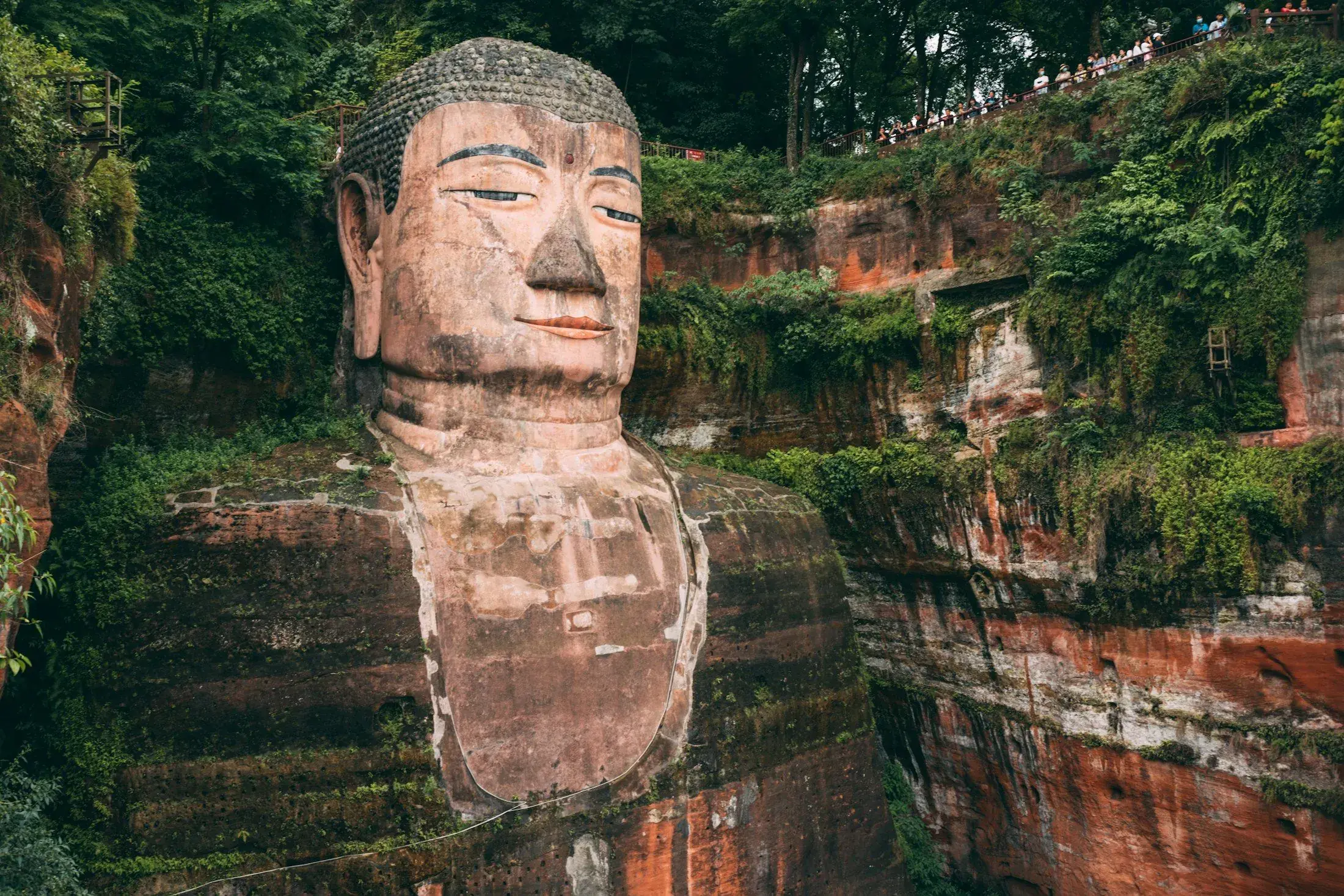
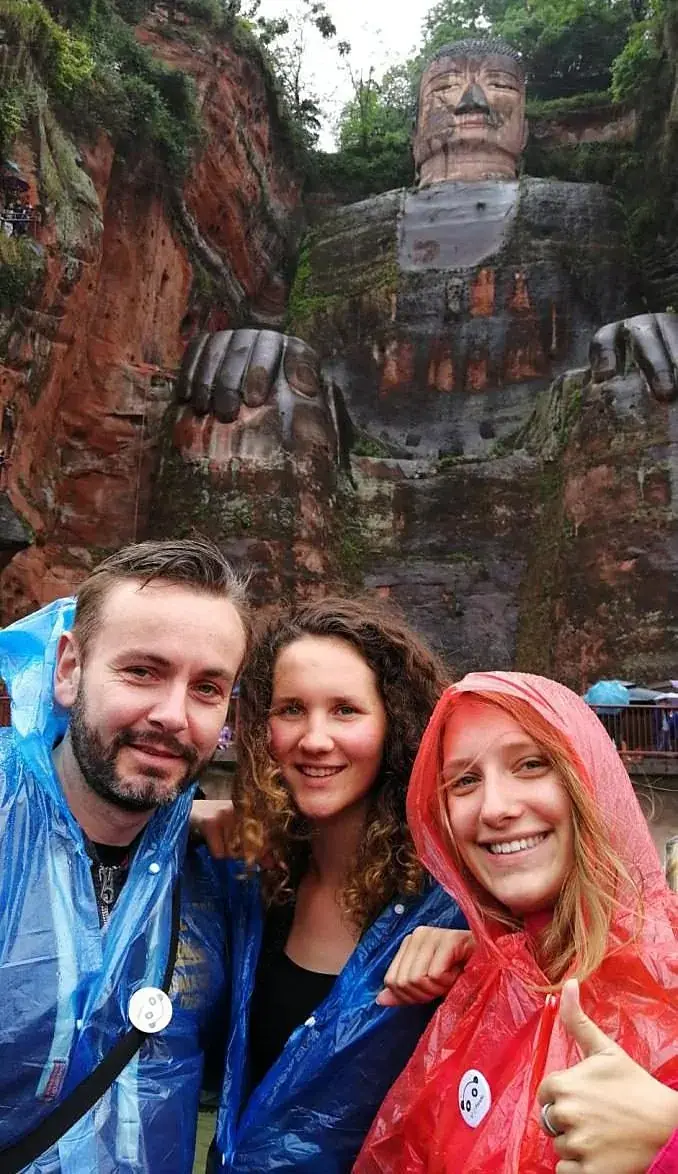
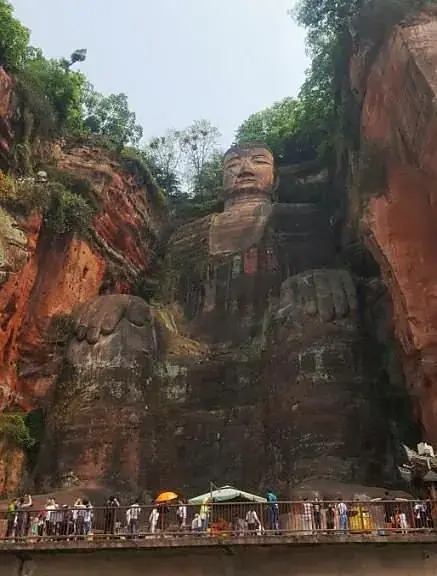
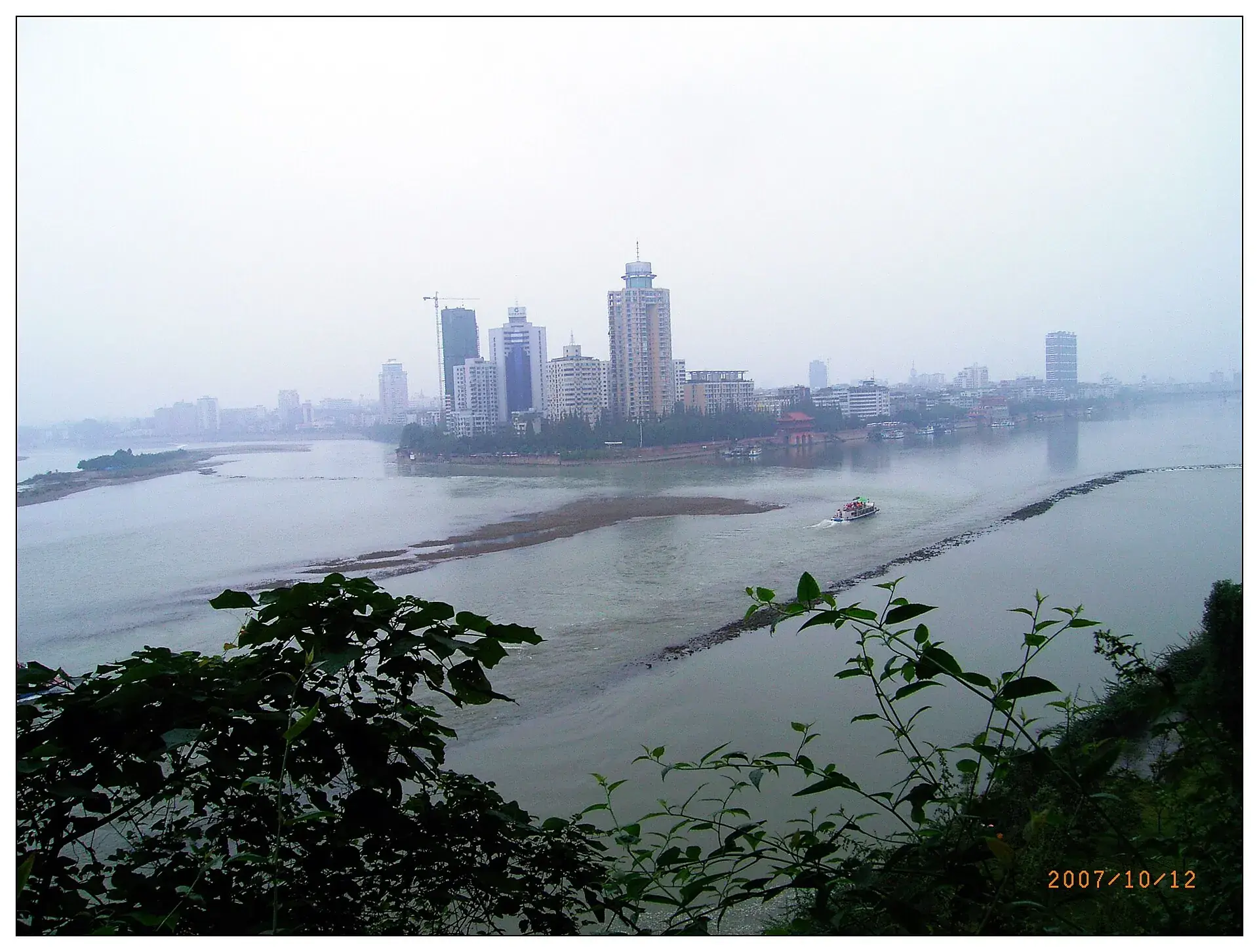
The cliff stair gives you his face and a two-hour queue. The boat gives you the whole figure at once — the proportions, the scale of the ears, the way he is set into the cliff at the meeting of three rivers. We take the boat. Climbing the Buddha is deliberately not in this day.
-
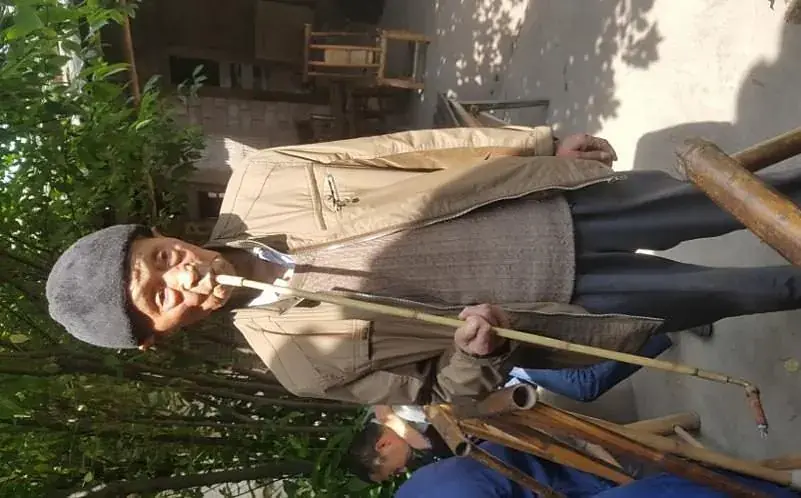
Three workshops on one street, and all three are working businesses rather than displays. The forge with its wall of tools. The bamboo shop where the baskets are stacked to the ceiling. And a barber's with a straight razor and a queue of regulars, which is the one that surprises people most.
-
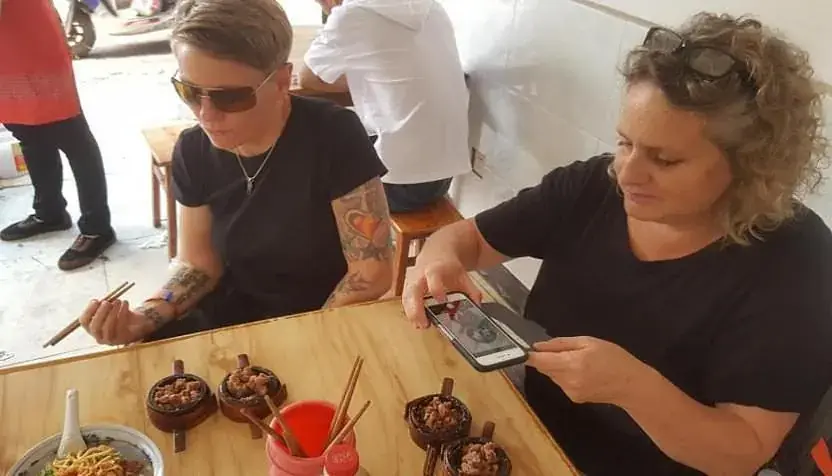
You take tea in the town's old teahouse first, which is where the conversations start. Then you go into one of the hundred-year-old courtyard houses — not a museum, a home, whose owner is proud of it and would rather explain it to you than have someone else do it. Lunch is local and in the town.
-
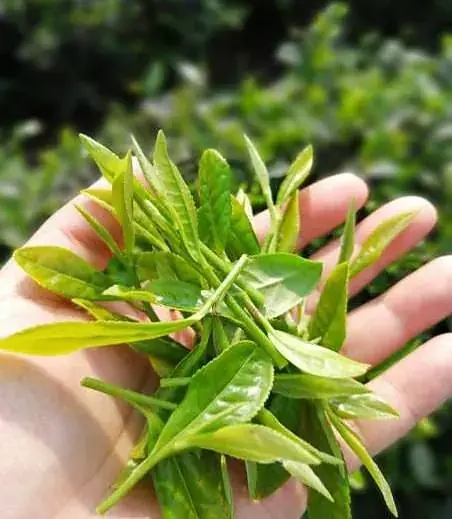
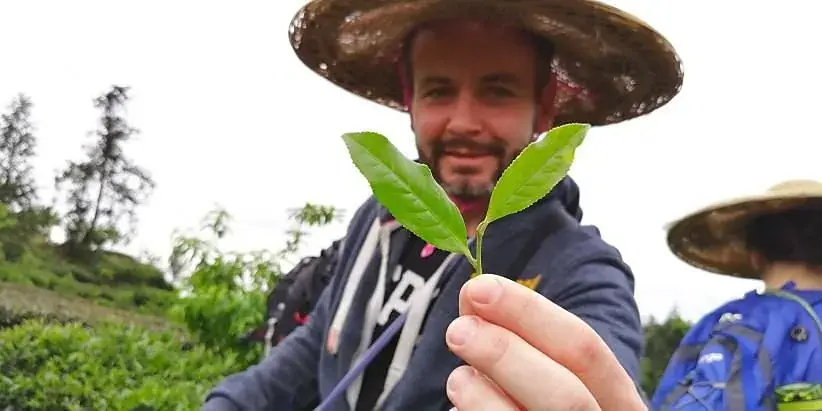
The farmer walks you into the rows and explains what he is actually looking for — which sprout, which bud, why this week and not next, how weather and region change what the same plant produces. Then you pick, badly at first, into a basket. It is harder to do well than it looks and that is the point of doing it.
-
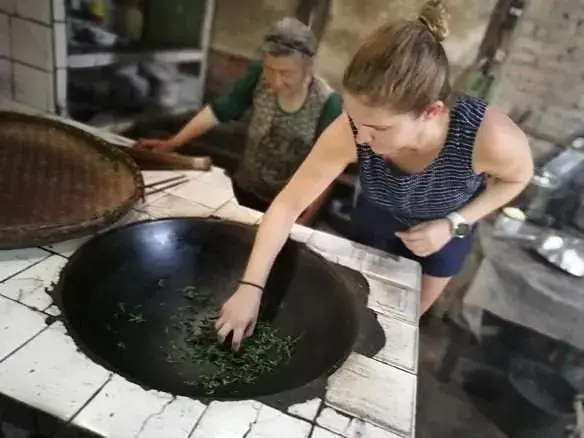
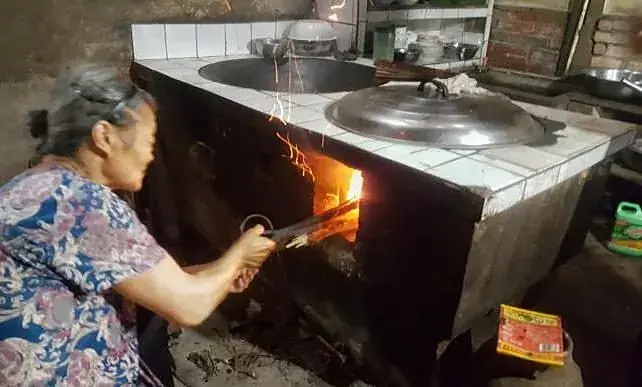
The family that runs this as a business shows you how the different teas are actually made — the same leaf becoming different things depending on what is done to it and when. Then you get your hands over the wok. There is no thermometer anywhere in the building.
-
You sit down outside the farmhouse and drink through what has been made. The family's own comparison is to wine: there are cabernets and pinots in tea too, and once someone puts three cups in front of you the argument makes itself. This is the part of the day that runs long, and nobody minds.
The Buddha is the reason you came. It is not the reason you'll remember it.
Nine hours, and only two of them are famous
Leshan is a two-hour stop for almost everybody: boat, photograph, drive back. The county behind it keeps more pre-modern buildings and more working trades than Chengdu does, and virtually nobody routes through it.
So this day gives the Buddha its hour on the water and then spends the remaining seven somewhere with no ticket gate — a barber, a bamboo weaver, someone's courtyard, and a hillside where a family makes their living from the same plant their grandparents did.
Guests who book it for the Buddha come back talking about the courtyard.
Good to know
Included
- Transport all day
- The Buddha boat
- Old town walk
- Family and courtyard visit
- Local lunch
- Tea plantation
Not included
- Climbing the Buddha
- Gratuities
Book the day
One day, hotel to hotel, on its own. Tell us a date and we'll confirm the boat and the tea family.
Start planning- 9 hours
- Hotel to hotel
- UNESCO listed
- Tea you picked and fired