



 18 days China, End to End Beijing → Xi'an → Chuanzhusi → Jiuzhaigou → Chengdu → Zhangjiajie → Guilin → Yangshuo → Shenzhen From $6,360 View route
  3 days 3-Day Tour: Mount Siguniang, Bipenggou & Dagu Glacier Chengdu → Lixian → Heishui County From $1,599 View route
  5 days Above the Pillars, Then Below Zhangjiajie From $1,430 View route
  3 days After the Last Booth Guangzhou From $840 View route
  13 days All the Way West Xi'an → Dunhuang → Turpan → Kashgar → Shanghai From $3,500 View route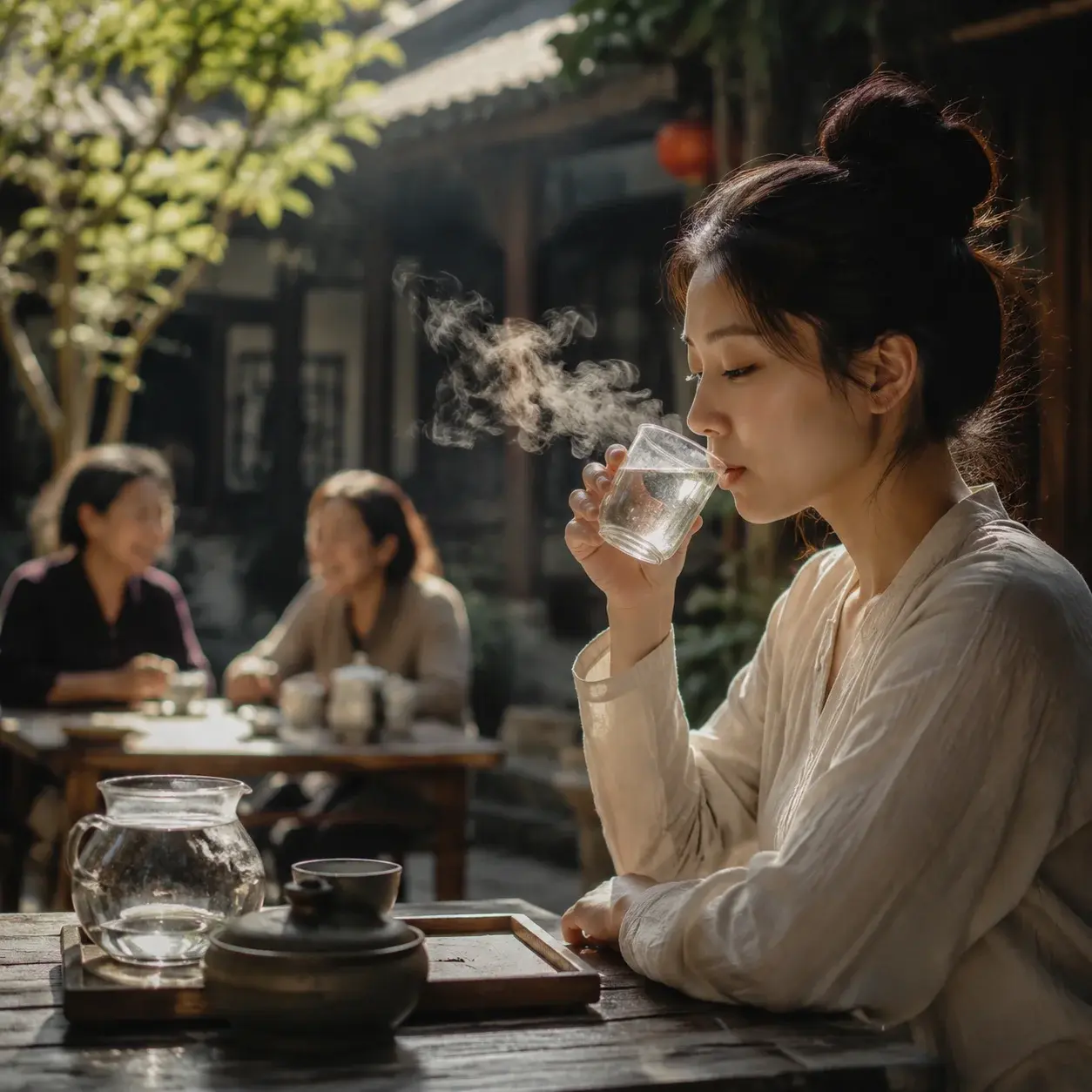
Why Chinese People Drink Hot Water (Even in Summer)
Why do Chinese people drink hot water? Two separate things got told as one story. A 20th-century public-health push to boil drinking water turned a minority practice into a national default within living memory — and an older everyday vocabulary already sorted food and drink into "hot" and "cold" categories, which is the language the habit gets explained in today. The first explains how a whole country changed what it poured; the second explains how people talk about it. Almost every article you will find blends them into a single vague answer about ancient medicine.
This page separates the two — we call the framework The Two Lineages — and then tells you exactly what happens when you sit down in China and ask for water. LyrikTrip plans private, family-friendly China trips from inside the country, so the practical half here is written from the side of the table where the water actually lands. For the wider context, see  the wider chinamaxxing trend, fact-checked point by point.
Two notes on how this is written, before anything else. First, this page describes a cultural habit and a set of everyday words. It makes no health claims and offers no health advice — not for hot water, not for tea, not for anything else named below. Where a government said something in a stated year, that appears as historical material, in quotation marks, attributed and dated, and it is never restated in the present tense as advice. Second, no field trip has been made for this page yet. Every statement about what a restaurant serves, where a boiler sits in a carriage, how many shops are on a street, or what a drink costs is indicative and flagged as such. Where a number would have to be invented to finish a sentence, the sentence is written without the number. The historical material was retrieved in August 2026; the field verification date is a separate thing, and it is currently blank.
Key Takeaways
- There are two lineages, not one explanation. A 20th-century public-health and infrastructure story, and a much older everyday 寒/热 (cold/hot) vocabulary. Different eras, different mechanisms, different evidence.
- The idea is old; the habit is new. Cheng & Tsui records the notion going back at least to 200 BCE — but it was not mass practice, because living standards were low and fuel was expensive.
- What changed was fuel and infrastructure, not conviction. Campaigns in the 1930s and 1950s, then boiler rooms, then cheap electric kettles.
- Hot water is a default, not a rule. It is what arrives unless you say otherwise. Cold and iced drinks are sold everywhere and drunk by everyone.
- The most useful Chinese word on this page is 常温 (cháng wēn), room temperature — because it asks for a physical state, not a temperature band, and it needs no equipment behind the counter.
- "加冰" (add ice) is a question about stock, not attitude. When no ice comes, there is usually no ice machine.
- Liangcha shopfronts are a Guangdong institution, not a national one. The Guangzhou municipal government website noted in 2023 that a navigation-app search returns 1,356 herbal-tea shops in the city.
The Short Answer
Chinese people drink hot water because, for most of the last seventy years, hot water is what has been within arm's reach — in a work-unit boiler room, a school water room, a station dispenser, a hotel kettle, a flask on a desk. It is the drink that arrives when you say nothing. That is a very different claim from "Chinese people won't drink anything cold," which is what the internet version of this habit has hardened into, and which is not true.
Three things carry the whole answer:
- It is a default, not a prohibition. Hot or warm water is what turns up unasked in an enormous number of situations. Nothing about that stops anyone ordering a cold beer, an iced tea or a bubble tea, and enormous numbers of people do exactly that every day. The short version of the framework below: the idea is old, the habit is new.
- The reasons people give differ by generation. Ask a 70-year-old and ask a 25-year-old why they are drinking hot water and you will very often get two unrelated answers — one framed in the older hot/cold vocabulary, one closer to "this is just what's in the dispenser." Both are describing the same cup.
- Cold and iced drinks are widely sold and widely drunk. The convenience-store chiller is on every second corner, and it is full. The habit is real; the absolutism attached to it online is not.
The Two Lineages: Two Different Explanations, Not One Story
Here is the structural problem with almost everything written on this question. There are two independent explanations in circulation, they come from different centuries, they are supported by different kinds of evidence, and they answer different questions — and they are routinely served up as a single paragraph about tradition. The Two Lineages separates them and then names the point at which they were stitched together.
| Lineage A · 20th-century public health and infrastructure | Lineage B · the everyday 寒/热 food vocabulary | |
|---|---|---|
| What it explains | Why the habit became universal — why one country changed how it drank within a span living people still remember | How people talk about it now — which words sort food and drink, what gets offered to whom, how a dish gets declined |
| Era | Prehistory in 1862; New Life Movement guidance in the 1930s; cadre diffusion after 1949; the Patriotic Health Campaign in 1952; then domestic equipment (indicative) | Far older; as an idea, traceable to at least 200 BCE |
| How it spread | Government directives, campaigns, painted slogans, schools, workplaces, boiler rooms, and later household appliances | Ordinary speech, families, generations, and the social scripts around hosting and ordering |
| What the evidence looks like | Documents you can go and look at: surviving 1952 posters, campaigns with names and dates | Usage you can hear: sentences people actually say |
| How you see it today | Flasks, station dispensers, hotel kettles, workplace water rooms | Sentences like "that's too cooling for this weather" — everyday speech, used loosely |
| How this page writes it | As reportage: a named body advocated or claimed something in a stated year. Always with a subject, always with a date | As linguistics: how the category is used. Never what belonging to it does |
| Its red line | Historical disease language stays in the past tense, attributed and dated, and is never carried into present-tense advice | Zero efficacy language, hedged or otherwise |
The Timeline Strip
| When | What happened | Lineage |
|---|---|---|
| c. 200 BCE | The idea that hot water is good already exists — but it is not mass practice. Living standards are low and fuel is expensive, so boiling water is a luxury | A (prehistory) |
| 1862 | Cholera strikes northern China. A popular explanation of the day holds that the south was spared because (historically wealthier) southerners drank boiled water | A |
| 1930s | The Kuomintang's New Life Movement instructs the public to drink boiled water, claiming it prevented germs and diseases such as dysentery | A |
| 1949 | Party cadres spread across the country carrying their enamel mugs — and the habit travels with them | A |
| 1952 | The Patriotic Health Campaign: the government advocates drinking boiled water. School walls carry the slogan | A |
| Today | Electric kettles, station dispensers, hotel water points (indicative) | A |
Underneath every one of those dates, Lineage B runs as one continuous band, from long before 1862 to this afternoon, never merging with the campaign timeline and never producing it: the 寒/热 vocabulary carried on being used the whole time, in kitchens and at tables, entirely independent of what any government was printing on a wall.
The Public-Health Explanation
Every claim in this section is attributed and dated, because this is the one part of the page where historical disease language appears at all, and it appears strictly as a report of what someone said in a stated year.
Cheng & Tsui's account of hot water in Chinese culture records that the idea hot water is good goes back at least to 200 BCE — and that it did not become common practice, because living standards in premodern China were low and the cost of fuel was high. Boiling a kettle was expensive. That single fact is the hinge of this entire page, and it is the one almost everybody omits.
The same source records that when cholera struck northern China in 1862, a popular explanation circulating at the time held that the south had been spared because southerners — historically wealthier — were in the habit of drinking boiled water. Report that as what it is: an explanation people offered each other in 1862. It is not an account of what actually caused what, and nothing on this page treats it as one.
From there the story becomes governmental, and Sixth Tone's history of the habit supplies the dates. In the 1930s, guidance from the Kuomintang's New Life Movement instructed the public to drink boiled water and claimed that doing so prevented germs and the spread of diseases such as dysentery. After 1949, Party cadres fanned out across the country carrying their own enamel mugs and the boiled-water habit with them — which is the diffusion mechanism worth noticing, because it means the habit travelled with people and organisations rather than seeping outward on its own. Then in 1952, during the Patriotic Health Campaign, the government advocated drinking boiled water, and school walls carried slogans reading "Children should cultivate the habit of drinking boiled water three times a day!"
You can still look at this material yourself, which is rarer than it sounds. Posters from the 1952 campaign survive and are held in public poster collections — one of them reads "Drink boiled water, eat hot rice and hot dishes, install gauze in kitchen doors and windows, cover food carefully." A slogan you can go and see beats any amount of self-description.
Only after all of that comes the ordinary-equipment stage: boiler rooms in work units, water rooms in offices and on campuses, and eventually cheap electric kettles in every home. That stage is described here in general terms because it is not tied to a dated document the way the campaigns are — treat it as indicative.
Which produces the punchline of the whole framework:
The idea is old; the habit is new — and what changed between them was not belief but fuel and infrastructure. Boiling water was a luxury when fuel was expensive. What put a hot cup in every hand was the 20th century: campaigns, slogans, work-unit boiler rooms, cheap electric kettles.
This is why "because traditional medicine" collapses as an explanation rather than as a description. It cannot account for the timing. It cannot tell you why almost nobody did this for two thousand years and then an entire country did it after the 1950s. A belief does not explain a date. Coal stoves, boiler rooms and cheap kettles do.
The Hot-and-Cold Vocabulary Explanation
The second lineage is the 寒/热 (cold/hot) framing — an old, everyday category system that sorts foods and drinks into groups and is used constantly in ordinary speech. Handled honestly, it belongs to language and social practice, not to anything else. It is how people classify, offer, order and decline.
You hear it as a way of talking. Someone waves off a dish in winter because it is "too cooling for this weather," the way an English speaker says a dish is "too heavy for lunch." A host offering something in August offers a different thing from what they would offer in January, and the words used to explain the switch come from this category system. It is what shows up when someone is unwell and a relative arrives with a particular thing in a particular cup — the offering is the script, and the script is what is being described here.
Usage is loose. It varies by person, by family and by region, and two people at the same table will happily disagree about which category something falls into. That looseness is a feature of a living vocabulary, not a defect in a system — because it is a vocabulary, not a system.
This is the explanation the internet trend reaches for, and it is far older and far less specific than the public-health one. Real usage examples for this section — actual sentences overheard in actual situations — are on the field-collection list and are deliberately not drafted in advance here, because invented examples would be the one thing on this page most likely to be wrong.
Where the Two Lineages Merged
The historical explanation tells you how the habit spread; the hot/cold vocabulary tells you how people describe it now. A modern habit ended up explained by a much older vocabulary — so a substantially 1950s public-health outcome gets filed under ancient medicine.
Nobody is lying. The second explanation is simply easier to say. It fits in one sentence and it sounds exotic. The first one asks you to remember two governments, three dates and a slogan painted on a wall.
The temptation here is to debunk, and it should be resisted. Lineage B is not a superstition to be corrected — it is a real, living, daily-used linguistic category, and it is doing exactly the job a vocabulary does. It simply is not responsible for Lineage A's timeline. The position of this page is not "actually it isn't traditional medicine." It is that these are two questions that got merged into one answer, and separating them is the only thing that makes the timing make sense.
The Flask on Every Desk
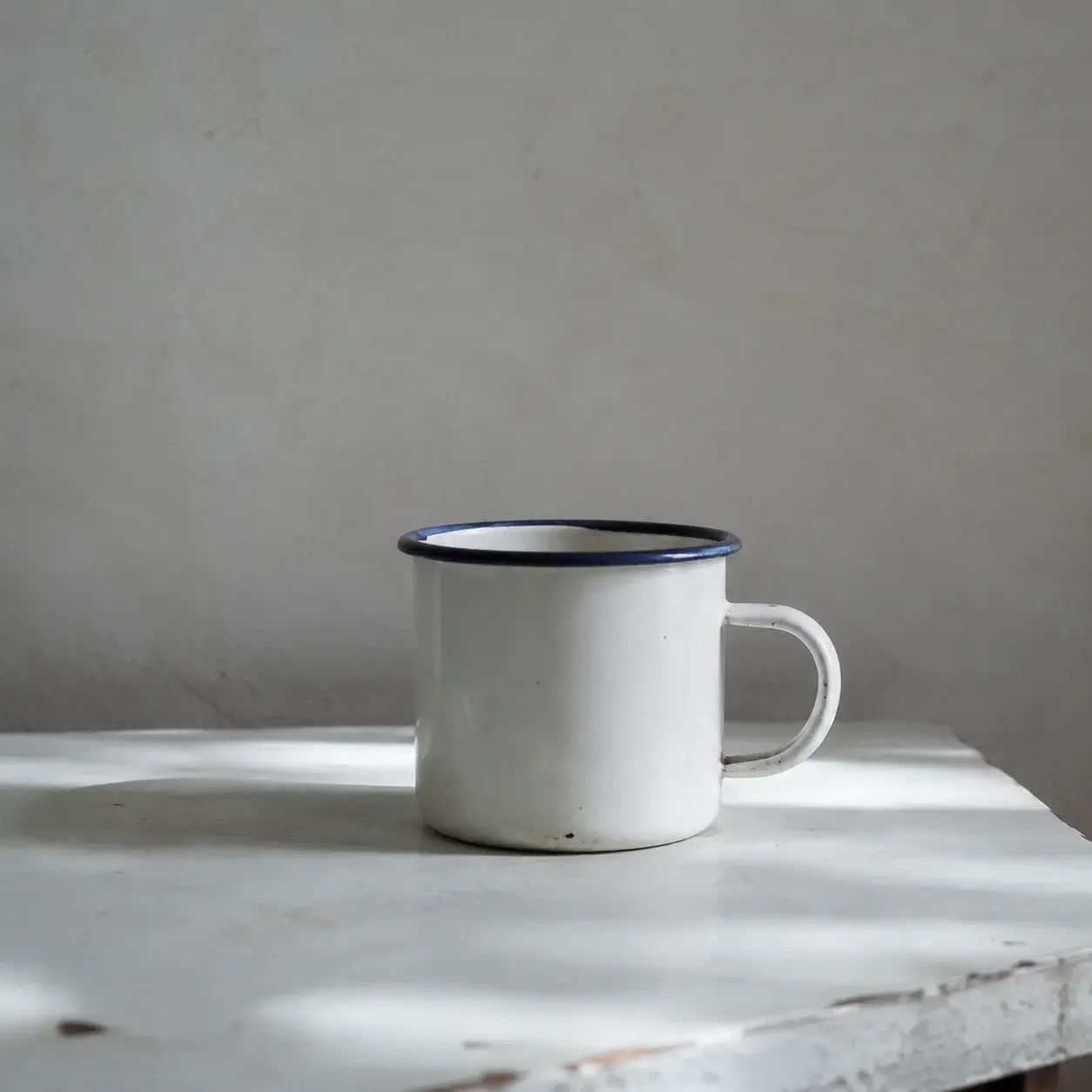
The vacuum flask is the most photographed and least explained object of this entire trend. It is worth a section because you will see it constantly, and because its meaning is not what the footage implies.
Where you will see one:
| Setting | What it looks like | The behaviour around it |
|---|---|---|
| Office desk | One per person, permanently within reach | Refilled several times a day; the water room is down the corridor |
| High-speed rail tray table | Set by the window as soon as people sit down | Refilled at the end of the carriage during the journey |
| Student backpack | Side pocket, every size | Filled between classes |
| Meeting room | Carried in by hand | Filled before the meeting starts, not during it |
| Park bench and morning exercise | Hung off a bag or parked on the bench | Overlaps entirely with a morning in a Chinese park |
| Long-distance bus and taxi | In the cup holder | — |
The shapes you will actually see — described, not recommended, and with no brands named anywhere on this page:
| Type | What marks it out | Register note |
|---|---|---|
| Enamel mug (搪瓷缸) | Heavy, chipped, usually printed with characters | This is the 1949 cadre fact still physically visible today — the one object where both lineages touch |
| Glass tea tumbler | Transparent, leaves floating, water line visible | The clearest evidence that "hot water" and "tea" are one behaviour rather than two |
| Stainless steel vacuum flask (保温杯 bǎowēnbēi) | The common case, cheap to expensive | The default object; description only |
| Trend and collaboration flasks | The aesthetic prop of this news cycle | Real, but not the most common flask on the street |
How many people per carriage actually have one is a countable, reproducible observation — walk two carriages and count tray tables — and it is on the verification list rather than in this paragraph, because a number nobody has walked is not a number.
The flask's meaning is worth stating plainly, because it is usually got wrong. It is not a symbol of how much Chinese people love hot water. It is evidence of infrastructure. A person only walks out of the house carrying an empty cup because they are certain of refilling it along the way. The flask measures water-source density, not strength of belief.
The LyrikTrip Water Ladder: Two Questions, One Answer
Every competitor answers why. None of them answers the question you will actually have within an hour of landing: what happens when I open my mouth and ask for water?
The LyrikTrip Water Ladder is the framework for that. The mechanic in one line: name what you want × name where you are → get what you will realistically receive, the phrase to say, and the next rung down if it doesn't work.
Axis 1 — what you want:
| Code | What you want | Chinese | Difficulty |
|---|---|---|---|
| `W-hot` | Hot / boiled water | 热水 · 开水 | Lowest — this is the one that arrives unasked |
| `W-warm` | Warm water | 温水 | Low |
| `W-room` | Room temperature | 常温 | Medium — and the most underused request on this list |
| `W-cold` | Cold | 凉水 · 冰水 | Medium-high — see the semantic trap below |
| `W-ice` | With ice | 加冰 · 冰块 | Highest — depends on equipment, not willingness |
| `W-bottle` | Bottled | 瓶装水 · 矿泉水 | Low — the reliable fallback |
Axis 2 — where you are:
| Code | Venue | Easiest want to satisfy here |
|---|---|---|
| `P1` | Neighbourhood restaurant | `W-hot`, `W-bottle` |
| `P2` | Chain restaurant | `W-bottle`, `W-cold` |
| `P3` | Café / tea-drink shop | `W-ice` — the highest-success venue for ice |
| `P4` | Hotel (room and restaurant) | `W-hot`, `W-bottle`, `W-ice` |
| `P5` | High-speed rail and stations | `W-hot` |
| `P6` | Convenience store / supermarket | `W-cold` — the most dependable cold drink anywhere |
The design requirement that matters most: the ladder has to degrade gracefully. A reader who speaks no Chinese, and who does not want to speak at all, must be able to stop at some rung and still end up holding the drink they wanted. That is what the W0–W4 ladder further down is for.
And the framework's conclusion, which is also the single most useful thing on this page: if you remember one Chinese word from all of this, remember 常温 (cháng wēn), room temperature. It is unambiguous, and it asks for a physical state rather than a temperature band — so it does not depend on the venue owning any equipment at all.
What Actually Arrives When You Ask for Water
Sit down in an ordinary restaurant in China, say nothing, and something specific happens. Very often it is a pot of tea, or a jug of hot or warm water, arriving before you have ordered anything. Sometimes it is nothing at all until you ask. Which of those you get varies by venue type, by city and by price point.
Here is the Want × Place matrix. Read the whole table as indicative. These cells are expectations, not field records: no one has yet run the test that would fill them properly, which is one request at each of the six venue types in a single city on a single day, repeated in one northern and one southern city, recording what physically landed on the table. Until that is done and dated, this is a map drawn from the outline of the coastline, not from walking it.
Legend: ✅ usually fine · ◻︎ depends, you will have to ask · ⚠︎ expect to drop a rung · — don't try it here
| `P1` Neighbourhood | `P2` Chain | `P3` Café | `P4` Hotel | `P5` Rail | `P6` Convenience | |
|---|---|---|---|---|---|---|
| `W-hot` | ✅ | ✅ | ✅ | ✅ | ✅ | ◻︎ |
| `W-warm` | ◻︎ | ◻︎ | ◻︎ | ◻︎ | ◻︎ | — |
| `W-room` | ◻︎ | ◻︎ | ◻︎ | ◻︎ | ⚠︎ | ✅ |
| `W-cold` | ⚠︎ | ◻︎ | ✅ | ◻︎ | ⚠︎ | ✅ |
| `W-ice` | ⚠︎ | ◻︎ | ✅ | ◻︎ | — | ◻︎ (buy it) |
| `W-bottle` | ◻︎ | ✅ | ✅ | ✅ | ✅ | ✅ |
The pattern the table shows is more useful than any single cell. Water that arrives unasked is generally hot or warm, and tea may arrive instead of water entirely. Bottled water is the reliable fallback more or less everywhere. Ice concentrates in cafés, chains, bars and hotels, and thins out sharply in ordinary neighbourhood restaurants. Whether a given hotel tier provides a kettle, free bottled water or ice on request is exactly the kind of thing that varies by property and by price band, and it is on the verification list rather than asserted here.
Write all of that down as what to expect, not as a complaint. The register is logistics. Nothing here is a problem with China; it is a difference in what the default is.
How to Ask for Cold or Iced Water
Three blocks, in this order, because the order is the point: resolve the ambiguity first, then give the sentences, then give the escape route.
Block 1 — The Semantic Trap
This is the single most useful language observation on the page, and it is the reason a lot of visitors think their Chinese failed when it actually worked exactly as spoken.
| Word | Literal | What it is actually asking for | Why it matters |
|---|---|---|---|
| 凉水 liáng shuǐ | "not-hot water" | May be room-temperature boiled water left to cool — not chilled water at all | English speakers think they ordered cold water. They ordered water that isn't hot |
| 冰水 bīng shuǐ | "ice water" | Closer to iced water — but still depends on the venue having ice | If you want it genuinely cold, this is the word |
| 加冰 jiā bīng | "add ice" | A material, not a temperature | The question is whether there is an ice machine, not whether they are willing |
| 常温 cháng wēn | "room temperature" | A physical state — no equipment required | The easiest request to satisfy, and the one almost no visitor knows |
"加冰" is a question about stock, not about attitude. When no ice comes, it is almost never a refusal — there is genuinely no ice machine behind the counter. Read it as a supply constraint and it stops being a cultural slight, which is what it very often gets mistaken for.
Block 2 — The Six Phrases That Change the Outcome
No pronunciation tutorial. Six lines, and what each one is actually asking for.
| English | Chinese | Pinyin | What the words are actually asking for |
|---|---|---|---|
| Room-temperature water, please | 常温水,谢谢 | cháng wēn shuǐ, xiè xie | A state, not a temperature band — the lowest-friction request here |
| Cold water | 凉水 / 冰水 | liáng shuǐ / bīng shuǐ | Two different things — see Block 1 before choosing |
| No ice | 不要冰 | bú yào bīng | Removal, always satisfiable |
| With ice, please | 加冰 | jiā bīng | Ice as a material — depends entirely on the venue having it |
| Bottled water | 瓶装水 / 矿泉水 | píng zhuāng shuǐ / kuàng quán shuǐ | The most reliable request on the list |
| Hot water | 热水 | rè shuǐ | Usually unnecessary — it is often already coming |
There is a fourth column this table does not yet have: what actually arrived after each request was made in each venue type. That is field data, it has not been collected, and it is not being guessed at here. When it is collected it will carry a collection date, because the honest answer is sometimes going to be "warm water arrived anyway" — and saying so is precisely what separates this from a page that pretends a Chinese phrase is a switch.
Block 3 — The Degradation Ladder (W0–W4)
Each rung down trades a little of "solve it at this table" for a little more certainty. Any reader can stop at some rung and still end up drinking what they wanted.
| Rung | Precondition | What you do | What it costs you |
|---|---|---|---|
| W0 | You can say the phrase, and you are in `P2`/`P3`/`P4` | Say it. Expect the matrix outcome | Nothing |
| W1 | You do not want to speak, but you have a phone | Show the Chinese column on screen and point | Nothing. This rung almost never fails, and almost everyone skips it |
| W2 | You are in `P1` and did not get the temperature you wanted | Switch to bottled water and control it yourself | A small amount of money |
| W3 | The venue simply has no ice, or communication failed | Walk out to a convenience-store chiller | A few minutes away from the table |
| W4 | You do not want to deal with this at all — kids, a train to catch, zero appetite for language | Buy enough at a shop once and carry it. Treat whatever arrives at the table as whatever arrives | You give up solving it in-venue, and you get a frictionless day |
Whether ordinary neighbourhood restaurants generally sell bottled water (which is what W2 depends on), and how dense convenience stores are and what hours they keep (which is what W3 and W4 depend on), are both indicative and on the verification list.
Where the Hot Water Comes From: Trains, Hotels, Stations
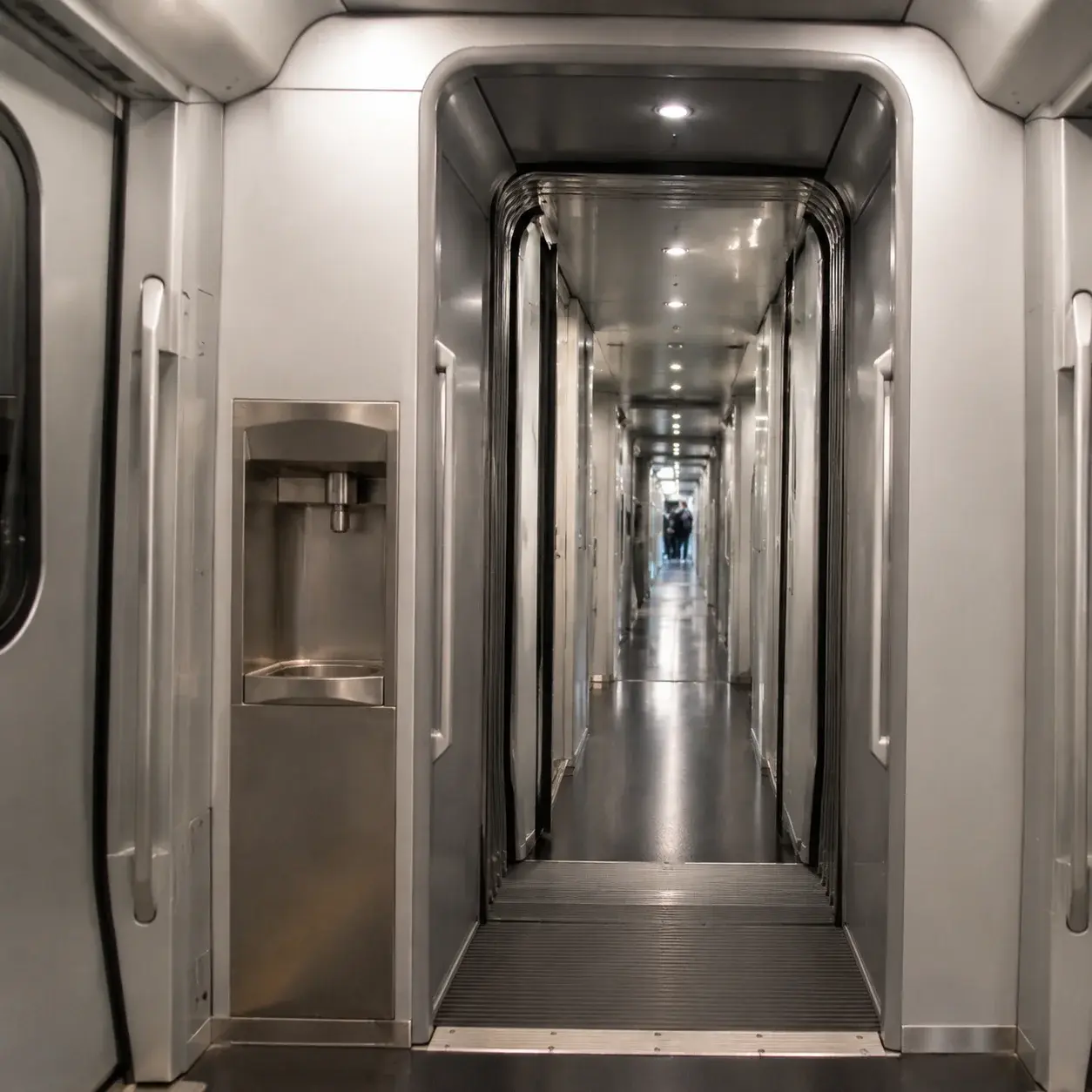
The habit is frictionless in China and awkward almost everywhere else for one reason: the infrastructure exists. This is the layer nobody writes about, and it is the one you will use on day one.
High-speed rail. On Fuxing trainsets (the CR400AF and CR400BF), drinking-water points sit at the ends of carriages or in the vestibules between them, and onboard displays let staff monitor the water boilers. That is the level of detail supported by documentation — note that no water temperature is stated here, because no source supports one, and a confident number would be an invention. Whether a specific service you are on has it where you expect, whether it is signed in English, and whether the position differs between G, D and conventional services are all things you verify by walking the train, and they are on the list to be recorded with a named service and a date rather than asserted now.
One precision note, because it is routinely blurred. Do not read "Chinese high-speed rail" as covering the whole region: Taiwan High Speed Rail explicitly has no drinking-water machines. If your itinerary crosses that boundary, so does the assumption.
Hotels. Kettles in rooms, bottled water on the desk, sometimes a water point on the floor or in the corridor. What is present at each price tier — economy, mid-range, upper — is exactly the sort of thing that varies property by property, and it is indicative here rather than promised.
Stations, airports, offices and campuses. Water points in waiting halls, boiled-water taps in offices, water rooms on campuses. These are the everyday plumbing that makes carrying an empty flask a rational thing to do.
The reason no one else covers this is structural rather than lazy: the pages competing on this question belong to language schools, a university project and a textbook publisher. None of them has any reason to ride a high-speed train and note which end of the carriage the boiler is at. The lane is empty by design.
Different Travelers, Different Answers
Same situation, five people, five different correct moves. Every row below is a logistics problem — where a thing is and how to get hold of it. Nothing in this section is about anyone's body, and this page gives no medical advice of any kind.
| Reader | How to use the Water Ladder | What to actually do | Related |
|---|---|---|---|
| You genuinely want cold drinks in summer | Lock `W-cold`/`W-bottle`; prefer `P6`/`P3` | Don't hand this problem to the dinner table. The convenience-store chiller is the most dependable cold drink in the country — buy one on the way in. That is not a compromise; it is what people around you are doing | — |
| You need ice reliably, for reasons of your own | Force `P3`/`P4`/`P6`; `W-ice` | Treat ice as a supply problem to solve in advance: whether your accommodation has an ice machine or can provide ice, where the nearest convenience store is, and carrying your own insulated container. Do not stake the outcome on one restaurant at one meal. This page maps where ice is and does nothing else | — |
| You drink coffee | `P3` | Cafés are the highest-success venue for ice and the one place you never have to explain yourself. If you want an iced americano, go where iced americanos are sold — obvious, and it replaces a great many futile negotiations in restaurants | — |
| You're travelling with kids | Go straight to W4 | Buy once, carry it, and treat table water as whatever arrives. Temperature control beats authenticity here; this is not the meal to run a language experiment on | what to order at a Chinese breakfast stall |
| You don't want to speak at all | Stop at W1 | Show the Chinese column on your screen and point. It almost never fails, and almost everyone skips it — they either force the pronunciation or give up entirely | — |
It would be easy to write that section as "how to work around China's hot-water culture." It isn't that. Not one of those routes is a workaround — chillers, cafés and bottled water are what people in China use every day. Not being able to get a cold drink is mostly an information problem, not a supply problem.
"Hot" and "Cold" Foods: The Vocabulary You Will Hear
This page describes a cultural habit and a set of everyday words; it makes no health claims and offers no health advice.
With that stated plainly, here is what the 寒/热 categories actually are: a descriptive system in ordinary language for sorting food and drink, used constantly, used loosely, and used differently by different people. This section describes how the words get used. It makes no claim about what anything does.
| Term | How it shows up in a sentence |
|---|---|
| 凉 / 寒 (liáng / hán) — the "cooling" side | "That one's too cooling for this weather" — said while waving off a dish in November |
| 热 / 温 (rè / wēn) — the "warming" side | "Have the soup instead, it's warmer" — said as a substitution, the way you would swap a heavy dish for a light one |
| 上火 (shàng huǒ) — a state people describe after certain foods | Turns up as a reason for choosing something else at the next meal. It is a thing people say, and that is the whole of what is claimed here |
| 忌口 (jì kǒu) — foods someone is currently avoiding | The polite formula for declining without giving a reason. "I'm avoiding that at the moment" closes the conversation |
The usage is worth noticing more than the taxonomy is. The words appear when someone orders for a table and adjusts what they pick in August versus January. They appear when a guest declines a dish and needs a socially frictionless way to do it. They appear when a host offers something specific to someone who is unwell — the offering is the script, and describing the script is what this page does.
It is worth saying explicitly that the system is not consistent. People disagree about which category a given food falls into, regions differ, families differ, and the same person will apply it enthusiastically at one meal and ignore it at the next. That is normal for a vocabulary. It is not normal for a doctrine, which is a reasonable indication of which of the two this is.
Genuinely overheard sentences, with their situations, are on the collection list for this section. They are not drafted in advance, because a reconstructed example is a fabricated one. Quoting how people talk is not a health claim — which makes overheard usage both the safest way to cover this ground and the only hard evidence that this is a language rather than a doctrine. For the wider frame around customs and family scripts, see Chinese traditions and what sits behind them.
Summer Drinks: Mung Bean Soup and the Liangcha Shopfront
Mung Bean Soup (绿豆汤)
A summer drink people like. That is the entire claim.
You meet it in a few places: in convenience-store cold cases, arriving at the end of a meal in some restaurants, and made at home in a large pot and drunk over several days. It is taken chilled or at room temperature depending on the household. Whether it comes free with a meal, in what kind of restaurant, at what price, and whether it is visible outside summer at all are all indicative and on the collection list — and the collection record needs the season noted alongside the date, because for a seasonal item "we didn't see any" means nothing unless you know when you looked.
One honesty note that is easier to leave out than to keep: the grounding pass for this page produced no citable source for mung bean soup. That citation slot stays empty rather than being filled with the first wellness page that would take it, because filling it that way would import exactly the framing this page refuses. Until a compliant source exists, this subsection rests on observation alone, and says so.
No recipe, no ingredients, no method. That is a different page in a different SERP.
The Liangcha (凉茶) Shopfront
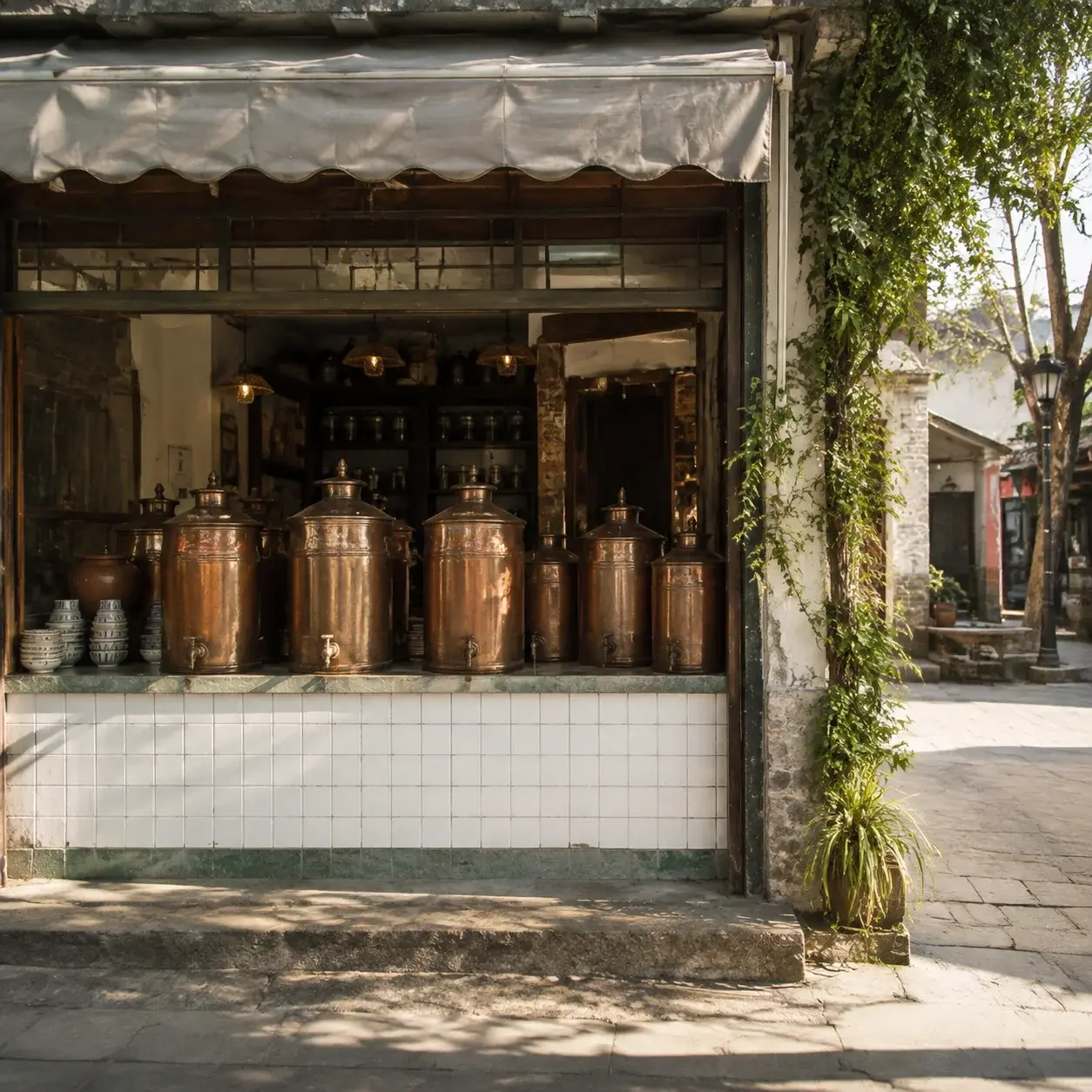
Walk-up herbal-tea counters are a Guangdong and Cantonese streetscape feature — dense in the south, comparatively rare in northern cities. The Guangzhou municipal government website noted in 2023 that a navigation-app search returns 1,356 herbal-tea shops in the city, and a local saying holds that there is one on every wide old street. That is a regional argument with a number behind it, and it is the right way to make the point that this is a Guangdong institution rather than a national one.
What the shop is: a narrow counter, bowls lined up along it, you drink standing, and it is bluntly bitter. In summer there is a queue on some streets. The price is small; the figure is not printed here because it has not been checked, and an invented price band is worse than no price band.
The bottle of liangcha in the convenience-store chiller and the bowl of liangcha on the counter are two different things. One is a drink sold nationwide; the other is a business on one street. Conflating them is the most common outsider mistake — including for Chinese people from elsewhere in the country. A reproducible shop count along named 500-metre street segments, north and south, with non-tourist control streets so the comparison measures region rather than footfall, is the way to settle it. That count is planned, not done.
Neither of these drinks does anything to anyone on this page. They are things people have in summer.
Hot Water and Tea, Every Day
Once boiled water is permanently within reach, tea becomes the obvious thing to do with it. That is the whole connection, and it explains the everyday register of tea in China far better than any ceremony does.
What that looks like day to day:
- Leaves loose in a glass, topped up through the morning rather than brewed and finished. The glass tea tumbler from the flask section is the physical evidence — you can see the leaves and the water line at the same time.
- Refills rather than fresh pots. The same leaves get several rounds of water. That is normal, not thrift.
- Tea arriving before you order in a great many restaurants, in the same slot where the jug of hot water would otherwise land.
- Tea offered to a guest before conversation starts — the cup goes down first and the talking starts after. It is the opening move of hosting, not a beverage decision.
Everyday tea in China is closer to how coffee works in an office than to how a tea ceremony looks in a video: it is the ambient default, most of it is unremarkable, and nobody is performing anything.
This page is explanatory only, so it stops there deliberately. Which varieties are worth buying, where to buy them and what they cost is a different question with a different page: see which Chinese teas are worth buying, and where. The same goes for brewing equipment — vessels appear here only as objects present in daily life, and choosing a Chinese tea set covers them as things you might actually acquire.
Frequently Asked Questions
Why do Chinese drink hot water in summer?
Because it is the default that arrives, not a summer strategy. Hot or warm water is what turns up unasked year-round, and the older hot/cold vocabulary is used seasonally in ordinary speech when people explain choices. Cold and iced drinks are sold and drunk everywhere in summer too.
Do all Chinese people drink hot water?
No. It is a near-universal default and a strong generational skew, not a rule. Iced drinks, bubble tea and cold beer are everywhere and widely drunk, especially by younger people. The internet version of this habit is considerably stricter than the real one.
Can you get cold water in China?
Yes. Convenience-store chillers are the most dependable source, cafés and chain restaurants are next, and bottled water works nearly everywhere. In ordinary neighbourhood restaurants expect to ask, and expect that "凉水" may mean room-temperature water rather than chilled — see the phrase table above.
What is a Chinese thermos?
An everyday vacuum flask — usually stainless steel, sometimes an enamel mug or a glass tea tumbler — carried personally and refilled several times a day from water points at work, on trains and in public buildings. It is a common personal object rather than a specialist item, and it is described here, not recommended.
Why is there no ice in Chinese restaurants?
Ice is uncommon in ordinary neighbourhood restaurants and common in cafés, chains, bars and hotels. Asking for "加冰" is a question about stock, not attitude: when no ice comes, there is usually no ice machine behind the counter. It is a supply pattern, not a prohibition.
The Bottom Line
Two questions got merged into one answer. A 20th-century public-health push and an old everyday vocabulary are different things with different timelines, and only the first one explains why a whole country changed what it poured inside living memory. The habit is younger than it looks. The flask measures infrastructure rather than conviction. And not getting a cold drink in China is mostly an information problem rather than a supply one — the chiller is on the corner, the café has ice, and 常温 is the word that costs nothing to say.
You meet all of this within an hour of arriving: the flask on the tray table, the boiler at the end of the carriage, the pot of tea that lands before you have ordered. That first hour is the part of a trip we plan hardest.