



 18 days China, End to End Beijing → Xi'an → Chuanzhusi → Jiuzhaigou → Chengdu → Zhangjiajie → Guilin → Yangshuo → Shenzhen From $6,360 View route
  3 days 3-Day Tour: Mount Siguniang, Bipenggou & Dagu Glacier Chengdu → Lixian → Heishui County From $1,599 View route
  5 days Above the Pillars, Then Below Zhangjiajie From $1,430 View route
  3 days After the Last Booth Guangzhou From $840 View route
  13 days All the Way West Xi'an → Dunhuang → Turpan → Kashgar → Shanghai From $3,500 View route
 Hanfu vs Cheongsam: What’s the Difference?
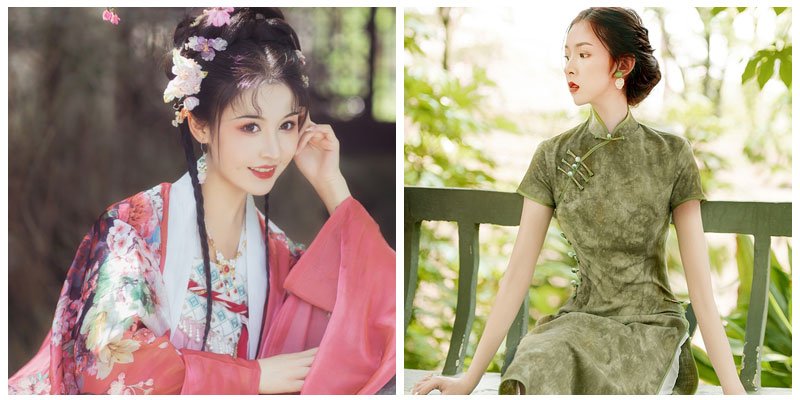
If you’ve searched for the difference between Hanfu and the cheongsam, the answer is straightforward: they are not the same thing. They originate from distinct historical eras, different clothing systems, and varying ethnic traditions in China’s history. The clearest way to phrase it is: Hanfu is the traditional dress system of the Han people, whereas the cheongsam is a clothing tradition rooted in the Qing Dynasty and Manchu culture. They are two independent traditions, not evolutionary versions of one another.
This distinction matters whether you’re shopping, planning a wedding look, preparing for a role-play, or simply trying to identify the outfit in a photograph. Below, you’ll find a quick comparison table, followed by a deeper dive into how Hanfu and the cheongsam differ in origin, structure, and use.
Hanfu vs Cheongsam at a Glance
The key answer up front: Hanfu and qipao do not belong to the same garment category, as they originate from different historical periods and distinct clothing traditions. If you want to distinguish between the two at a glance, start with the table below.
Hanfu is the traditional attire system of the Han people, while the qipao is a garment style that emerged in the Qing dynasty, influenced by Manchu fashion.
Additionally, a quick note on terminology: in modern English usage, “qipao” and “cheongsam” typically refer to the same garment.
| Feature | Hanfu | Qipao |
|---|---|---|
| Origin Era | Derived from early Han dynasty attire, evolving through multiple dynasties since the Han period | Linked to Qing dynasty Manchu dress, transforming into modern styles in the 1920s and 1930s |
| Ethnic Tradition | Han Chinese dress system | Manchu-origin dress tradition |
| Silhouette | Loose, draping, layered with a fluid feel | Streamlined, tailored close to the body |
| Collar | Often featuring crossed collars or wrap-around fronts | High mandarin collars as a signature element |
| Structure | Typically composed of multiple pieces: robes, jackets, skirts, trousers, and sashes | Usually a single-piece dress |
| Fastening | Ties, waist sashes, and wrap closures | Frog buttons with structured closures |
| Typical Occasions | Festivals, cultural events, historical-themed photography, ceremonies, and some wedding styles | Banquets, formal occasions, modern bridal attire, and evening events |
| Common Visual Traits | Wide sleeves, layered fabrics, elegant posture, cinched-waist designs | Body-hugging cuts, side slits, clean collars, sophisticated urban appeal |
If you are weighing your options, this article offers a detailed guide to  wedding Hanfu. For a more comprehensive guide on Hanfu robes, explore the resources linked here.
What Is Hanfu?
Hanfu (汉服) refers to the traditional dress system associated with the Han Chinese, China’s largest ethnic group. It is not a single garment with a fixed style, but a broad historical category that spans multiple dynasties, different regions and social backgrounds, evolving continuously over centuries.
For beginners, Hanfu is often recognised by its overall silhouette and movement. Many styles feature a lapel crossing to the right, with fabrics that wrap around the body, creating flowing lines, layered robes, and wide sleeves, secured by ties or cinched waists rather than close-fitting cuts. The effect is typically elegant and flowing, rather than sharply tailored.
Another important point is that Hanfu encompasses a variety of different forms. There are men’s and women’s attire, formal ceremonial dress, simpler everyday styles, as well as variations such as ruqun (upper garment and skirt), changpao (long robes), and ritual versions. In short, Hanfu is best understood as a dress system, not a single silhouette.
For this reason, two outfits within the same vast tradition of Hanfu may look completely different. One might be light and ethereal, reminiscent of figures from a celestial realm, suitable for studio photography; another might be more restrained and historically resonant, with clean lines and subdued tones.
If you come across Hanfu online today, it is worth knowing that the modern Hanfu revival is a vibrant fashion movement, not merely a museum-style display.
Much of the inspiration behind contemporary styling is drawn from historical garments, rather than direct copies of surviving artefacts.
As a result, while some makers are dedicated to reconstruction based on academic research, others create designs that are more wearable, stylised, and even fantasy-inspired.
This does not necessarily mean they are “disguised”, but it does mean that not every modern hanfu set should be regarded as a precise historical reconstruction.
If this applies to you, start with the Hanfu sewing pattern guide.
What is a Qipao?
The qipao is commonly known in English as the cheongsam. It is a garment originating from the Manchu clothing tradition, which began in the Qing dynasty and later evolved into sleek, modern silhouettes that became particularly popular in Shanghai during the 1920s and 1930s. This is the version most international readers tend to picture: elegant, tailored, and refined, often worn for formal occasions.
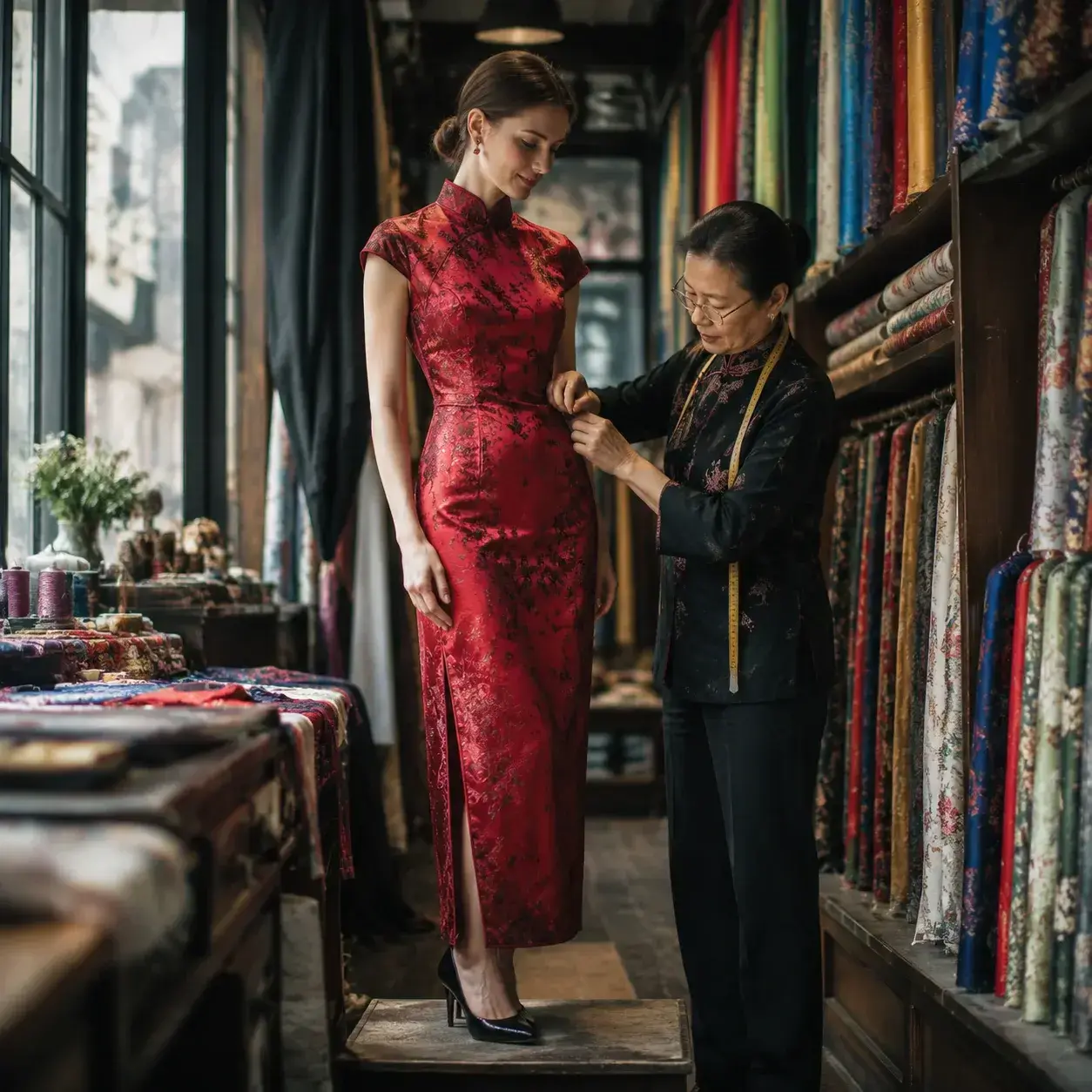
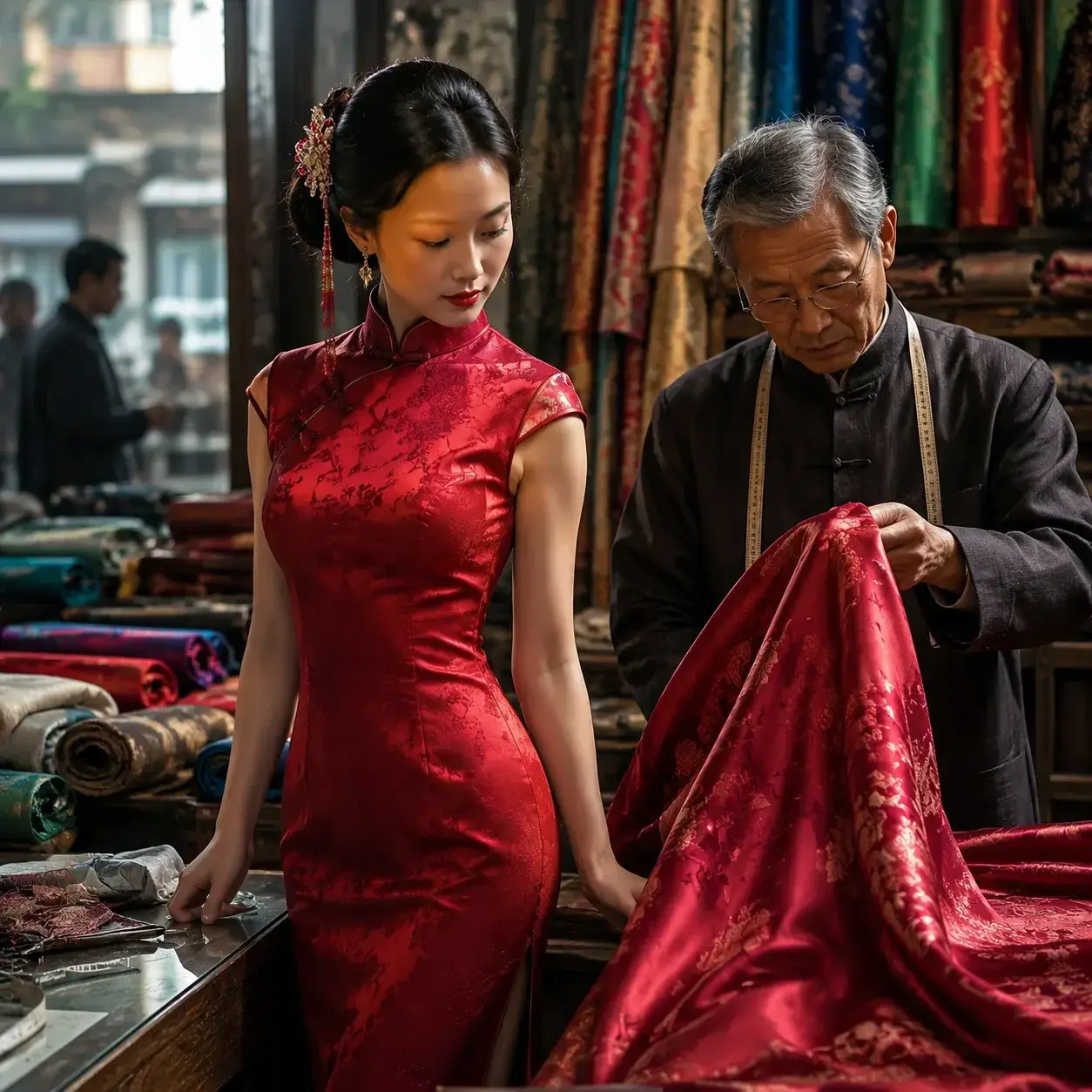
Its most identifiable features are quite specific. A classic qipao typically has a mandarin collar, a fitted silhouette, one-piece construction, a side slit, and decorative pankou knot buttons (also referred to as the pankou closing method). These elements make it visually distinguishable from hanfu at a glance.
It is worth noting that the form-fitting qipao often seen in films, fashion publications, weddings, and upscale restaurants is a modernised evolution, not a faithful replica of the original Qing-dynasty Manchu dress.
Earlier related garments were typically looser in fit and structurally distinct.
The iconic, form-fitting qipao is closely linked to modern urban fashion. This was especially true in the Shanghai of the Republican era, where cutting techniques and a modern, cosmopolitan style redefined it into the elegant gown that is now renowned worldwide.
Terminologically, "qipao" is the Mandarin term, while "cheongsam" entered broader English usage via Cantonese. In most contemporary travel, shopping, and fashion contexts, these two words refer to the same garment.
Why the qipao is not hanfu
This is a point many beginners genuinely need to have clarified: the qipao is not a type of hanfu.
The key lies in classification, not in value or authenticity. Hanfu belongs to the Han ethnic garment system, whereas the qipao originates from the Manchu dress tradition associated with the Qing dynasty. Both are part of the broader narrative of Chinese costume, but they do not belong to the same sub-category.
The chronological dimension is equally important. Traditional hanfu has roots that stretch back far further than the qipao. When people conflate the two, they actually obscure significant differences in historical origins and cultural background.
That said, we can still make this distinction respectfully. Pointing out that the qipao is not hanfu does not diminish the qipao. Both forms of dress are culturally significant, visually distinct, and hold importance in different ways. The crux of the matter is to avoid sweeping two independent cultural traditions into the same label.
This distinction matters on a practical level for travellers, shoppers, and event planners alike. If you ask for a 'hanfu' when what you actually need is a tailored qipao-style dress, you may end up with something quite different from what you had in mind. Similarly, if you are attending a traditional-themed photoshoot or selecting attire for a traditional event in China, understanding the difference will help you choose more accurately and appropriately.
Key Differences Explained
Era and Origins
Hanfu traces its roots back to earlier Han Chinese clothing traditions and evolved over multiple dynasties. In contrast, the qipao is closely tied to Qing dynasty Manchu dress and its later 20th-century urban transformation into the modern qipao form. If you remember only one historical distinction, remember this: hanfu predates the qipao by many centuries.
Silhouette and Fit
Hanfu is typically loose, flowing, and layered. It emphasises movement: sleeves drape softly, skirts ripple in the breeze, and the overall shape is created through wrapping and tying rather than tailored fitting.
The qipao, on the other hand, is streamlined, tailored, and figure-hugging, especially in modern adaptations. It does not rely on layered volume but instead highlights a long, sleek vertical line. It feels more architectural and urban than the flowing robe aesthetic.
Collar and Construction
This is one of the features that beginners find easiest to identify. Hanfu typically features crossed collars, wrap-front lapels, separate long robes, tops, skirts and trousers, often secured with waist ribbons. Its structure may involve multiple components working together.
A cheongsam is usually a one-piece dress with a mandarin collar, side slits, and decorative frog buttons at the neckline or chest. If you see a sharp, tailored one-piece dress with a structured collar, it is very likely a cheongsam rather than a hanfu.
Occasions & Styling
Hanfu is commonly seen at festivals, temple fairs, cultural experiences, classical portrait photography, ceremonies, and some weddings. It is also popular with enthusiasts who love traditional dress and vintage-inspired looks.
The cheongsam, by contrast, is especially suited for banquets, formal dinners, stage performances, bridal styling, evening-wear photography, and fashion-forward urban outfits. Unlike hanfu, the cheongsam carries a distinctly classic, opulent, and refined elegance.
If you are travelling in China and would like a dress-up experience, many photography studios offer this service. Based on our experience planning photography experiences and traditional cultural activities for overseas visitors, this is where confusion most often arises: some guests request a “traditional Chinese costume” shoot without realising that choosing between a hanfu and a cheongsam makes an enormous difference to the final visual effect.
A skilled stylist or travel advisor can usually help you narrow down your choice based on your preferences—whether you lean towards flowing, historically inspired silhouettes, or something more tailored that blends vintage charm with modern style.
How to Distinguish Hanfu from Qipao in Photos
If you have only a few seconds to identify an outfit, start by looking at the silhouette.
If the garment appears loose, layered, and tied with a sash, it is more likely to be Hanfu. If it looks like a fitted, one-piece dress with a side slit, it is probably a Qipao.
Next, examine the neckline. An oblique front-opening or a mandarin-style collar usually points clearly to Hanfu. A stand-up collar, however, more strongly suggests Qipao.
Then observe the garment structure. A separate top-and-skirt ensemble, a ruqun style, or visible multi-layered dressing typically implies Hanfu. A tailored, body-hugging dress implies Qipao.
Sleeves are also a useful reference point. Hanfu sleeves are often wider, softer, or more flowing. Qipao sleeves (if present) are usually simpler and more fitted, unless designed without sleeves.
Finally, keep in mind a caveat for beginners: modern fashion fusion often blurs the boundaries. Studio attire, fantasy-style styling, cosplay adaptations, and trend-driven designs sometimes mix elements of both traditions. You may see a dress with a Qipao collar but a more flowing skirt, or photography outfits broadly labelled for marketing purposes. In such cases, the look may be inspired by Chinese aesthetics without strictly belonging to a single historical category.
Which One Should You Choose?
If you are not just curious about the differences between the two, but are torn over which set to wear, the best choice depends on the experience you seek.
If you are captivated by layered robes, historical atmosphere, poetic silhouettes, and dynamic beauty in photographs, choose Hanfu. It is particularly suitable for photoshoots in gardens and palace-style settings, or for wearing during spring festivals and immersive cultural experiences.
If you prefer the Qipao (Cheongsam), it brings a refined, elegant, and formal vibe. The Qipao is perfect for dinner events, weddings, cocktail-style photoshoots, and urban backdrops that evoke the nostalgic charm of old Shanghai.
For visitors to China for the first time, it is recommended to try on both styles before deciding whether to book a full experience or make a purchase. Many photography studios and traditional costume experience shops can provide guidance on fabrics, hairstyles, and accessories, ensuring your final look is perfectly curated rather than just put together. If you are booking from abroad, requesting reference photos in advance is the simplest and most effective way to ensure you get exactly the type of garment you want.
Frequently Asked Questions
Are Hanfu and Qipao the same thing?
No. Hanfu and Qipao are two distinct clothing traditions. Hanfu belongs to the traditional dress system of the Han ethnic group, whereas the Qipao is a women's garment that originated from Manchu traditional dress during the Qing Dynasty.
Is the Qipao a type of Hanfu?
No. Although both are traditional Chinese garments, the Qipao is not classified as Hanfu, as they come from different historical and ethnic clothing traditions.
What is the most obvious visual difference between Hanfu and Qipao?
The most immediate distinction lies in the overall silhouette. Hanfu is typically loose, multi-layered, and fastened with sashes, whereas a qipao is a fitted, one-piece dress featuring a stand-up collar and side slits.
Is there a difference between a qipao and a qipao (Manchu dress)?
In modern English usage, there is usually no difference. “Cheongsam” and “qipao” generally refer to the same garment, with “cheongsam” deriving from Cantonese and “qipao” from Mandarin.
Can modern outfits mix elements of Hanfu and qipao?
Yes. Some contemporary fashion, styling, and studio shoot aesthetics blend details from different traditions. This is also why online tags can sometimes be confusing.
Which is more traditional: Hanfu or the qipao?
This depends on how you define “traditional.” Hanfu has a longer history within the Han Chinese sartorial system, while the qipao is a Chinese garment of significant historical importance, strongly associated with the Qing Dynasty and the early Republic era. Both are culturally significant, but they became “traditional” in different ways and from different origins.
Conclusion
When people ask about the difference between Hanfu and the qipao, they are usually asking a core question: are these two garments simply two different names for traditional Chinese clothing? The answer is no. Hanfu and the qipao were born in different eras, have different silhouettes, and stem from distinct sartorial traditions.
Once you know what to look for—the cross-collared lapels and layered sashes of the hanfu, or the mandarin collar and tailored, one-piece cut of the qipao—telling them apart becomes much easier. If you’ve worn either one on a trip, during a photoshoot, at a wedding, or over a festive season, you’ll likely notice the difference in how they move, how they photograph, and how they feel to wear.
If this guide has been useful, save it for future reference, share it with anyone planning a Chinese-style photoshoot or wedding look, and let us know which style resonates with you the most.