



 18 days China, End to End Beijing → Xi'an → Chuanzhusi → Jiuzhaigou → Chengdu → Zhangjiajie → Guilin → Yangshuo → Shenzhen From $6,360 View route
  3 days 4-Day Tour of Siguniang Mountain, Biepa Gou, and Dagu Glacier Chengdu → Lixian → Heishui County From $1,599 View route
  5 days Above the Pillars, Then Below Zhangjiajie From $1,430 View route
  3 days After the Last Booth Guangzhou From $840 View route
  13 days All the Way West Xi'an → Dunhuang → Turpan → Kashgar → Shanghai From $3,500 View route
 Hanfu Sewing Patterns: A Beginner-Friendly DIY Guide to Finding, Choosing, and Sewing Your First Set
Introduction: Start with the Right Hanfu Sewing Pattern
If you can already sew a simple skirt, robe, or pajama top, you are closer to making hanfu than you might think. The hard part is usually not the sewing itself. It is figuring out where to start. A beginner looking for a hanfu sewing pattern quickly runs into scattered blog posts, cosplay-style templates, Etsy listings with limited instructions, and historical references that assume you already understand traditional garment construction.
This guide is designed to make that first step much easier. I will walk you through where to find free and paid hanfu sewing patterns, which garments are most beginner-friendly, how to take measurements, what fabric to choose, and the basic sewing order for a first project. This article is written for beginner-to-intermediate home sewists, especially overseas readers who want practical results rather than museum-level historical reconstruction. If your goal is to choose a hanfu sewing pattern you can realistically finish, this is the place to begin.
Where to Find Hanfu Sewing Patterns (Free and Paid)
Before you cut fabric, it helps to understand the main types of pattern sources available. Some are inexpensive but vague. Others cost more but save time and frustration.
| Source Type | Free or Paid | Best For | File/Format | What to Watch Out For |
|---|---|---|---|---|
| Free PDF pattern websites and hobbyist archives | Free | Budget-conscious beginners willing to experiment | Downloadable PDF, image files, blog diagrams | Missing seam allowances, unclear sizing, limited assembly instructions |
| Paid printable PDF hanfu patterns from independent sellers | Paid | Sewists who want clearer steps and better visuals | PDF download, A4/Letter, projector files sometimes included | Check whether the seller explains closure direction, sleeve proportions, and printing layout |
| Commercial big-brand costume or Asian-inspired patterns | Paid | Beginners familiar with mainstream sewing brands | Printed envelope patterns or PDF | Often simplified or theatrical rather than historically accurate hanfu pattern design |
| Pattern books: Chinese historical references | Paid | Intermediate sewists interested in authentic silhouettes | Book with drafting diagrams and construction references | May require self-drafting knowledge and Chinese reading support |
| Pattern books: English-friendly modern guides | Paid | Readers who want context plus approachable instructions | Book or ebook | Can be easier to follow, but not every book includes full-size patterns |
| Self-drafting from personal measurements | Free to low cost | Intermediate sewists who want custom fit | Drafting notes, rulers, muslin test | Requires comfort with measurement, proportion, and fit testing |
Free sources are appealing because they let you experiment without spending much money. They are especially useful for testing shapes like straight sleeves, wrap fronts, or panel skirts. The tradeoff is that many free resources assume you already know how to interpret garment diagrams, add seam allowances, and adjust fit.
Paid patterns can save a lot of time, especially if they include layered PDF files, a measurement chart, and step-by-step images. But price is not always a guarantee of quality. Some paid listings are beautifully photographed but light on technical detail.
Before downloading or buying any hanfu pattern, use this quick vetting checklist:
- Finished garment photos from multiple angles - A body measurement chart - Clear note on whether seam allowance is included - Printing and page assembly instructions - Cutting layout or fabric placement diagram - Sleeve and body piece dimensions - Explanation of collar or front overlap orientation - Fabric recommendations and required yardage - Difficulty level or skill expectations
A usable pattern should tell you more than what the final outfit looks like. It should show you how to get there.
Best Hanfu Patterns by Skill Level
Not every hanfu garment is a good first project. The easiest way to succeed is to build your skills one layer at a time.
| Skill Level | Recommended Garment | Why It Works for This Level | Key Sewing Technique to Expect |
|---|---|---|---|
| Absolute beginner | Banbi | Short sleeves, relatively simple body shape, manageable seams | Straight seams, bias or facing finish, ties |
| Confident beginner | One-piece ruqun skirt or simple lower garment | Lets you practice volume, waistband finishing, and gathering or pleating | Panels, waistband attachment, even hem |
| Intermediate | Full ruqun set | Combines top and skirt coordination, proportion, and layering | Closures, matching lengths, balanced drape |
| Advanced | Layered ensemble or shenyi-style garment | More pieces, more fitting, and more precision in finishing | Long continuous seams, shaped collar, polished edge finishing |
Absolute Beginner: Start with a Banbi
A banbi is one of the most approachable entry points for hanfu sewing. It is a short-sleeved upper garment that usually relies on clean lines instead of close body shaping. That makes it ideal if you are still getting used to traditional Chinese garment proportions.
Why it works:
- Straightforward construction - Less fabric than a full robe - Easier to test fit over an inner layer - Helps you understand overlap and tie placement
Your main challenge will be neat edge finishing and maintaining symmetry between the left and right front sections.
Confident Beginner: Try a Ruqun Skirt
If you are comfortable sewing rectangles, waistbands, and long hems, a simple ruqun skirt is a natural next step. It teaches you how hanfu volume works and how fabric behaves when wrapped or tied around the body.
This project is less intimidating than a full top because fit is more forgiving. You can focus on:
- Even panel cutting - Gathered or pleated fullness - Waist tie construction - Smooth, balanced hem finishing
Intermediate: Sew a Full Ruqun Set
A full ruqun set adds coordination between upper and lower garments. This is where hanfu starts to feel like an outfit rather than a single experiment. You need to consider sleeve length, top length, skirt rise, and how the layers interact visually.
This stage teaches you:
- Matching garment proportions n- Choosing fabrics that layer well - Balancing drape and structure - Finishing visible edges more cleanly
Advanced: Layered Sets and Shenyi-Style Garments
Once you understand the basic building blocks, layered outfits and shenyi-style garments become much more achievable. These projects often involve more fabric, longer pattern pieces, and a greater need for accurate fitting.
They are rewarding, but they are rarely the fastest route for a first-time maker. If you search for “how to make hanfu,” the answer is usually not to begin with the grandest possible ensemble. It is to build skills in layers: first shape, then overlap, then ties, then sleeve proportion, then coordination. More on that in shenyi hanfu.
Taking Your Measurements Before You Cut Fabric
Traditional garments can look loose and forgiving, but that does not mean measurements are optional. Hanfu often depends on wrap, drape, and ease rather than modern body-hugging shaping, so proportion matters a great deal.
Take these essential measurements before choosing or adjusting a pattern:
- Bust: Around the fullest part of the chest
- Waist: At your natural waist or intended skirt tie position
- Hip: Around the fullest part of the hips
- Shoulder width: Shoulder point to shoulder point across the back
- Neck base: Around the base of the neck if the garment has a fitted collar area
- Arm length: Shoulder point to wrist
- Bicep circumference: Around the fullest part of the upper arm
- Garment length: Shoulder to desired hem for tops or robes
- Skirt length: Waist or underbust tie point to desired hem
- Preferred sleeve length: Shoulder point to sleeve end based on style preference
A few practical tips make this easier:
- Wear lightweight clothing while measuring - Keep the tape level and snug, not tight - Write everything down in both centimeters and inches if you use mixed sources - Measure twice before cutting expensive fabric
Understanding Chinese Size Labels
If you buy a pattern or reference chart from a Chinese source, you may see labels like 160/84A. For overseas readers, this can look confusing at first. In many cases:
- The first number refers roughly to height in centimeters - The second number often refers to bust measurement - The letter may indicate body type category
This is different from familiar US or EU ready-to-wear sizing. Always rely on the actual measurement chart, not the size code alone.
Seam Allowance and Muslin Default
One of the biggest beginner mistakes is assuming every pattern handles seam allowance the same way. Some include it. Some do not. Some include it only on selected edges.
If the pattern does not clearly say otherwise:
- Check every instruction page for seam allowance notes - For self-drafting, a practical beginner default is 1.5 cm (5/8 inch) seam allowance - Make a muslin or test version first, especially for tops and collars
A quick muslin can reveal issues with front overlap, sleeve width, and garment length before you cut into your final fabric.
Choosing Fabric and Estimating Yardage
Fabric choice has a huge effect on how beginner-friendly your first project feels. The right cloth will press well, behave predictably, and forgive small mistakes. The wrong one will slip, fray, distort, or cling in ways that make sewing much harder.
Best Fabrics for a First Hanfu Project
For practice garments or a first wearable version, start with fabrics that are easy to handle:
- Lightweight cotton: Stable, breathable, easy to cut and press
- Cotton-linen blends: Good body, pleasant texture, beginner-friendly
- Soft linen: Natural look and comfortable wear, though it wrinkles more
- Rayon blends: Better drape for fluid silhouettes, but slightly trickier to sew
For more advanced or decorative layers:
- Silk or silk blends: Beautiful drape and sheen, but expensive and less forgiving
- Chiffon or gauze: Ideal for airy outer layers, but slippery and delicate
- Brocade or jacquard: Visually rich, better for structured or formal accents than a first project
If this is your first hanfu, avoid extremely slippery satin, very sheer fabric without a lining plan, or heavily embroidered fabric that is difficult to cut accurately.
Approximate Yardage Table
Exact yardage depends on width, size, sleeve length, and how full you want the garment to look. The table below gives practical beginner estimates for standard fabric widths.
| Garment | Suggested Fabric | Approximate Yardage | Notes |
|---|---|---|---|
| Banbi | Lightweight cotton, cotton-linen | 2 to 2.5 yards | More needed for larger sizes or wider sleeves |
| Simple ruqun skirt | Cotton, linen, rayon blend | 3 to 4.5 yards | Depends on panel fullness and skirt length |
| Ru top | Lightweight cotton or linen | 2.5 to 3.5 yards | Add extra for long sleeves or matching print placement |
| Full ruqun set | Cotton, linen, rayon blend | 5.5 to 8 yards total | Includes both top and skirt |
| Layered outer robe | Rayon, silk blend, lightweight brocade | 4.5 to 7 yards | Yardage rises quickly with length and sleeve volume |
When estimating fabric, also remember to account for:
- Directional prints - Fabric shrinkage after prewashing - Matching borders or motifs - Separate lining or facings - Extra strips for ties, bands, and bindings
If you are unsure, buying a little more fabric is usually cheaper than discovering you are short when cutting sleeves or front panels. Related reading: silk hanfu.
Basic Sewing Order for Your First Hanfu Project
A hanfu project becomes much less intimidating when broken into a logical sequence. While each garment type differs, this order works well for many beginner patterns.
1. Read the Pattern All the Way Through
Before cutting anything, study the instructions from beginning to end. Identify:
- Which pieces are cut on fold - Whether left and right fronts are mirrored - Where ties, bands, or collar pieces attach - Whether the garment uses facings, binding, or turned hems
If the pattern feels vague, sketch your own order of operations before you begin.
2. Prewash, Press, and Prepare Fabric
Natural fibers often shrink. Wash your fabric the way you plan to care for the finished garment, then press it flat before cutting. This step alone can improve accuracy dramatically.
3. Cut Carefully and Label Pieces
Because many hanfu pieces are geometric or similar-looking, labeling is essential. Use masking tape, fabric clips, or tailor's chalk to mark:
- Front versus back - Left versus right - Sleeve edges - Top edge and hem edge - Tie placement points
This is especially helpful when sewing late in the project, when several long rectangular pieces start to look identical.
4. Sew the Main Body Seams
Join the major garment sections first. For a top, this usually means shoulder and side seams. For a skirt, it may mean joining panels.
Press every seam after stitching. Hanfu construction often looks simple on paper, but pressing is what gives it that clean, intentional finish.
5. Attach Sleeves or Sleeve Extensions
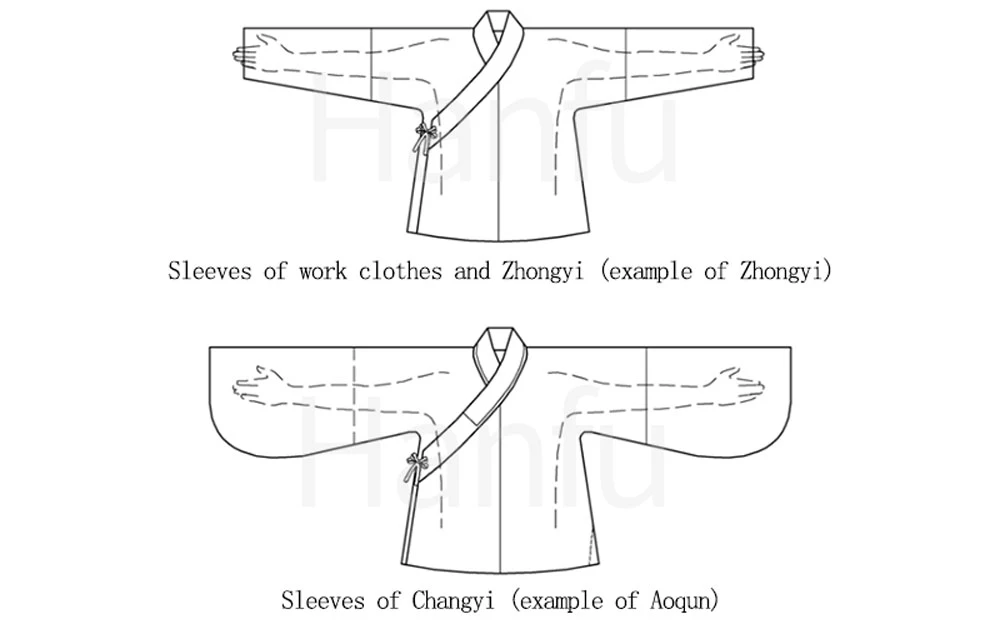
Sleeves are often where beginners first notice hanfu's distinctive proportions. Check that both sleeves match in width and length before attaching them. If the design is roomy, accuracy still matters because imbalance becomes visible when the garment hangs.
6. Finish Front Edges, Collar, or Overlap
This is one of the most important visual stages. Whether your project uses a collar band, facing, or simple turned edge, take your time. The front opening and overlap are central to the garment's look.
Common pitfalls here include:
- Uneven overlap width - Twisted collar band - Stretching the edge while pressing - Left and right fronts not matching in length
7. Add Ties, Waistbands, or Closures
Many beginner hanfu projects rely on fabric ties rather than buttons or zippers. Test placement before final stitching. Even a small shift can affect how the garment wraps and hangs on the body.
8. Hem Last
Do not hem too early. Try the garment on first, preferably over the layers you plan to wear with it. Then adjust length before stitching the final hem.
Common Beginner Mistakes and How to Avoid Them
Most first hanfu projects do not fail because the sewist lacks skill. They fail because of a few avoidable planning mistakes.
Choosing a Beautiful but Overcomplicated First Pattern
A dramatic layered robe in slippery fabric may look inspiring, but it can be discouraging if you have never sewn a wrap front before. Start with one successful simple garment. Confidence is part of the skill-building process.
Ignoring Seam Allowance Notes
If the pattern does not state whether seam allowance is included, stop and verify before cutting. This single detail can completely change fit.
Using Fabric That Is Too Slippery
Rayon can be manageable. Silk charmeuse and slippery satin are much harder. For a first project, choose a fabric that behaves well under the presser foot and presses cleanly.
Skipping the Test Fit
A muslin may feel like extra work, but it can save an entire project. Test versions are especially helpful for:
- Front overlap depth - Sleeve proportion - Bicep ease - Garment length - Tie placement
Forgetting That Hanfu Is About Proportion
Even when a garment is loose, proportions matter. A slightly too-short sleeve or an unbalanced front panel can change the overall look. Step back often and view the garment from a distance or in a mirror.
A Practical Beginner Path: What to Sew First
If you are still unsure where to begin, this sequence works well for most home sewists:
1. Banbi in lightweight cotton 2. Simple ruqun skirt in cotton or linen blend 3. Matching ru top once you understand overlap and sleeve shape 4. Full coordinated set with improved finishing 5. Layered outer robe or more historical silhouette after test-fitting your base layers
This path lets you build technique in a sensible order. You learn straight seams before complex finishing, fabric handling before slippery drape, and proportion before full layering.
Final Thoughts
Sewing hanfu for the first time can feel overwhelming only because the information is so scattered. Once you break the process down, it becomes much more approachable: choose a clear pattern source, start with a beginner-friendly garment, measure carefully, pick stable fabric, and sew one layer at a time.
If you are interested in Chinese clothing and travel culture more broadly, learning to make hanfu can also deepen the way you experience it. Many overseas travelers tell us they understand traditional dress much better after seeing how the pieces are constructed, worn, and layered. If you are planning a trip to China and want help connecting clothing, cultural experiences, and local context in a practical way, working with a knowledgeable travel team can make that learning process much smoother.
If this guide helped you narrow down your first hanfu sewing pattern, save it for your next fabric-shopping session, share it with another sewist, or compare notes on which garment you plan to try first.