




 18 days China, End to End Beijing → Xi'an → Chuanzhusi → Jiuzhaigou → Chengdu → Zhangjiajie → Guilin → Yangshuo → Shenzhen From $6,360 View route
  3 days 4-Day Tour of Siguniang Mountain, Biepa Gou, and Dagu Glacier Chengdu → Lixian → Heishui County From $1,599 View route
  5 days Above the Pillars, Then Below Zhangjiajie From $1,430 View route
  3 days After the Last Booth Guangzhou From $840 View route
  13 days All the Way West Xi'an → Dunhuang → Turpan → Kashgar → Shanghai From $3,500 View route
 Hanfu vs Qipao: What's the Difference?
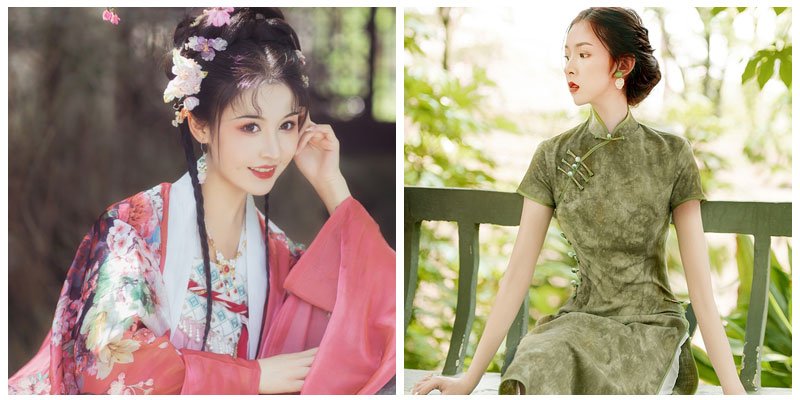
If you have ever searched hanfu vs qipao, the short answer is simple: they are not the same thing. They come from different eras, different clothing systems, and different ethnic traditions within Chinese history. The clearest way to say it is this: Hanfu is the traditional clothing system of the Han Chinese; the qipao is a Qing-dynasty, Manchu-derived dress tradition — they are two separate traditions, not versions of each other.
That distinction matters whether you are shopping, planning a wedding look, preparing a cosplay, or simply trying to identify what you are seeing in photos. Below, you will find a fast comparison table first, then a deeper explanation of how hanfu and qipao differ in origin, structure, and use.
Hanfu vs Qipao at a Glance
The core answer comes first: hanfu and qipao are not the same garment category because they come from different historical periods and different clothing traditions. If you want the fastest way to tell them apart, start with the table below.
Hanfu is the traditional clothing system of the Han Chinese; qipao is a Qing-dynasty, Manchu-derived dress tradition.
Also, a quick terminology note: in modern English usage, “qipao” and “cheongsam” usually refer to the same garment.
| Feature | Hanfu | Qipao (Cheongsam) |
|---|---|---|
| Era of origin | Roots in early Han Chinese dress, evolving across many dynasties from at least the Han dynasty onward | Associated with Qing-era Manchu clothing, later transformed into the modern style in the 1920s–30s |
| Ethnic tradition | Han Chinese clothing system | Manchu-derived dress tradition |
| Silhouette | Loose, draped, layered, often flowing | Streamlined, tailored, often close-fitting |
| Collar | Commonly cross-collar or wrapped front | High standing collar is a key signature |
| Construction | Often multiple pieces: robe, jacket, skirt, trousers, sash | Usually a one-piece dress |
| Fastening | Ties, sashes, wrapped closures | Frog buttons (pankou), structured fastenings |
| Typical occasions | Festivals, cultural events, historical photography, ceremonies, some wedding styles | Banquets, formal occasions, modern bridal wear, evening events |
| Common visual cues | Wide sleeves, layered fabric, graceful movement, tied waist | Fitted torso, side slits, neat collar, elegant urban look |
If you're weighing the options, wedding hanfu goes through them in detail. There's a fuller guide to this in hanfu robe.
What Is Hanfu?
Hanfu refers to the traditional clothing system associated with the Han Chinese, the largest ethnic group in China. It is not one single dress with one fixed pattern. Instead, it is a broad historical category that developed over many centuries and changed across different dynasties, regions, and social settings.
For beginners, hanfu is often easiest to recognize by its overall shape and movement. Many hanfu styles feature a cross-collar front, fabric that wraps across the body, flowing lines, layered garments, wide sleeves, and sashes or tied waist elements instead of a body-hugging fit. The effect is often elegant and fluid rather than sharply tailored.
Another important point is that hanfu includes many different forms. There are styles for men and women, formal robes and simpler everyday-inspired looks, skirt-and-top combinations, long robes, jackets, and ceremonial versions. In other words, hanfu is best understood as a clothing system, not a single silhouette.
That is why two hanfu outfits can look quite different from each other while still belonging to the same broader tradition. One may be airy and fairy-like for studio photography; another may be restrained and historically influenced, with clean lines and muted colors.
If you are seeing hanfu online today, it also helps to know that the modern hanfu revival is a living fashion movement, not just a museum display. Many contemporary outfits are inspired by historical garments rather than copied exactly from surviving examples. So while some makers aim for research-based reconstruction, others create wearable, stylized, or fantasy-leaning designs. That does not automatically make them “fake,” but it does mean that not every modern hanfu set should be treated as a precise historical reproduction. If that's your situation, start with hanfu sewing pattern.
What Is Qipao (Cheongsam)?
Qipao, often called cheongsam in English, is a Manchu-derived dress tradition associated with the Qing period, later reshaped into the sleek modern form that became especially famous in 1920s and 1930s Shanghai. This is the version most international readers picture immediately: elegant, fitted, polished, and often worn for formal occasions.
Its most recognizable details are quite specific. A classic qipao usually has a high standing collar, a fitted silhouette, one-piece construction, side slits, and decorative frog buttons, also called pankou closures. These features make it visually distinct from hanfu at a glance.
It is worth noting that the figure-following qipao seen in films, fashion editorials, weddings, and upscale restaurants is a modernized evolution, not a direct one-to-one copy of earlier Qing robes. Earlier garments connected to its historical background were generally looser and structured differently. The iconic body-skimming qipao is closely tied to modern urban fashion, especially Republican-era Shanghai, where tailoring and cosmopolitan style reshaped it into the elegant dress now recognized worldwide.
As for terminology, “qipao” is the Mandarin term, while “cheongsam” entered wider English use through Cantonese. In most travel, shopping, and style contexts today, people use them to mean the same garment.
Why Qipao Is Not Hanfu
This is the point many beginners are really trying to confirm: qipao is not a type of hanfu.
The reason is not about value or authenticity. It is about classification. Hanfu belongs to the Han Chinese clothing system, while qipao descends from Manchu dress traditions associated with the Qing dynasty. They both belong to the broader story of Chinese clothing, but they do not belong to the same subcategory.
The timeline also matters. Classical hanfu traditions reach back many centuries earlier than the qipao. When people blur the two, they flatten major differences in historical origin and cultural context.
That said, it is possible to make this distinction respectfully. Saying that qipao is not hanfu does not diminish qipao. Both garments are culturally meaningful, visually beautiful, and important in different ways. The key is simply to avoid merging separate traditions into one label.
For travelers, shoppers, and event planners, this matters in practical ways too. If you ask for hanfu when you really want a fitted cheongsam-style dress, you may end up with something completely different from what you imagined. Likewise, if you are joining a heritage photoshoot or choosing attire for a traditional-themed event in China, understanding the difference helps you choose clothing more accurately and respectfully.
Key Differences Explained
Era and origin
Hanfu traces back to much earlier Han Chinese dress traditions and evolved over multiple dynasties. Qipao, by contrast, is tied to Qing-era Manchu clothing and its later 20th-century urban transformation into the modern cheongsam shape. If you remember only one historical distinction, remember this one: hanfu is older by many centuries.
Silhouette and fit
Hanfu is usually loose, draped, and layered. It tends to create motion: sleeves fall softly, skirts ripple, and the shape is often defined by wrapping and tying rather than tailoring closely to the body.
Qipao is typically streamlined, tailored, and close-fitting, especially in its modern form. Instead of emphasizing layered volume, it highlights a long, neat vertical line. It feels more architectural and urban than flowing and robe-like.
Collar and construction
This is one of the easiest beginner clues. Hanfu often uses cross-collars, wrapped fronts, separate robes, tops, skirts, trousers, and tied sashes. The construction may involve multiple pieces working together.
Qipao is usually a one-piece dress with a standing collar, side slits, and decorative frog-button details near the neck or chest opening. If you see a single tailored dress with a crisp collar, you are much more likely looking at qipao than hanfu.
Occasion and styling
Hanfu often appears at festivals, temple fairs, cultural experiences, historical photography sessions, ceremonies, and some wedding contexts. It is also popular among enthusiasts who enjoy heritage fashion and period-inspired styling.
Qipao is especially common for banquets, formal dinners, stage performances, bridal looks, evening portraits, and elegant city styling. It can feel classic, glamorous, and refined in a very different way from hanfu.
If you are traveling in China and want a dress-up experience, many studios offer both. In our experience helping overseas visitors plan photo sessions and cultural activities, this is where confusion happens most often: some guests ask for “traditional Chinese dress” without realizing that the results can look dramatically different depending on whether they choose hanfu or qipao. A good stylist or travel advisor can usually help narrow the choice based on the mood you want — ethereal and historical, or polished and vintage-modern.
How to Tell Hanfu and Qipao Apart in a Photo
If you only have a few seconds to identify an outfit, start with shape.
If the outfit looks loose, layered, and tied with sashes, it is more likely hanfu. If it looks like a fitted one-piece dress with side slits, it is likely qipao.
Next, check the neckline. A cross-collar or wrapped front points strongly toward hanfu. A high standing collar points much more strongly toward qipao.
Then look at the garment structure. Separate top-and-skirt combinations, robe-and-skirt styling, or multiple visible layers suggest hanfu. A single tailored dress suggests qipao.
Sleeves can also help. Hanfu often has sleeves that are wider, softer, or more visibly flowing. Qipao sleeves, if present, are usually simpler and more fitted, unless the dress is sleeveless.
Finally, keep one beginner-friendly caveat in mind: modern fashion fusion can blur the boundaries. Studio costumes, fantasy styling, cosplay adaptations, and trend-driven designs sometimes mix elements from both traditions. You may see a dress with a qipao-style collar but a more flowing skirt, or a photo shoot outfit labeled loosely for marketing purposes. In those cases, the look may be inspired by Chinese aesthetics without fitting neatly into a single historical category.
Which One Should You Choose?
If you are deciding what to wear rather than just learning the difference, the best choice depends on the experience you want.
Choose hanfu if you are drawn to layered robes, historical atmosphere, poetic silhouettes, and movement in photos. It works especially well for garden shoots, palace-style settings, spring festivals, and immersive cultural experiences.
Choose qipao if you want something sleek, elegant, and formal. It is a natural fit for dinner events, weddings, cocktail-style portraits, and city backdrops with a vintage Shanghai mood.
For first-time visitors to China, it can help to try on both before committing to a full session or purchase. Many photo studios and cultural dress experiences can guide you through fabrics, hairstyles, and accessories so the final look feels intentional rather than costume-rack random. If you are booking from overseas, asking for reference photos in advance is one of the easiest ways to make sure you are getting the garment type you actually want.
FAQ
Are hanfu and qipao the same thing?
No. Hanfu and qipao are separate clothing traditions. Hanfu belongs to the traditional clothing system of the Han Chinese, while qipao is a Qing-dynasty, Manchu-derived dress tradition.
Is qipao a type of hanfu?
No. Even though both are Chinese garments, qipao is not classified as hanfu because they come from different historical and ethnic clothing traditions.
What is the easiest visual difference between hanfu and qipao?
The easiest difference is the overall shape. Hanfu is usually loose, layered, and tied, while qipao is usually a fitted one-piece dress with a standing collar and side slits.
Is cheongsam different from qipao?
In most modern English usage, no. “Cheongsam” and “qipao” generally refer to the same garment, with “cheongsam” coming through Cantonese and “qipao” from Mandarin.
Can modern outfits mix hanfu and qipao elements?
Yes. Some contemporary fashion, costume styling, and studio photography looks blend details from different traditions. That is one reason labels online can be confusing.
Which is more traditional: hanfu or qipao?
That depends on what you mean by “traditional.” Hanfu has much older roots within the Han Chinese clothing system, while qipao is a historically important Chinese dress with strong Qing and modern Republican-era associations. Both are culturally significant, but they are not traditional in the same way or from the same origin.
Final Thoughts
When people ask about hanfu vs qipao, they are usually asking one core question: are these just two names for the same kind of Chinese dress? The answer is no. Hanfu and qipao come from different eras, different silhouettes, and different clothing traditions.
Once you know what to look for — cross-collars and layered sashes for hanfu, standing collars and fitted one-piece tailoring for qipao — the distinction becomes much easier to see. If you have worn either one during a trip, photo shoot, wedding, or festival, your experience may also show how differently they move, photograph, and feel.
If this guide helped you, save it for later comparison, share it with someone planning a China-themed shoot or wedding look, and compare notes on which style speaks to you more.