



 18 days China, End to End Beijing → Xi'an → Chuanzhusi → Jiuzhaigou → Chengdu → Zhangjiajie → Guilin → Yangshuo → Shenzhen From $6,360 View route
  3 days 3-Day Tour: Mount Siguniang, Bipenggou & Dagu Glacier Chengdu → Lixian → Heishui County From $1,599 View route
  5 days Above the Pillars, Then Below Zhangjiajie From $1,430 View route
  3 days After the Last Booth Guangzhou From $840 View route
  13 days All the Way West Xi'an → Dunhuang → Turpan → Kashgar → Shanghai From $3,500 View route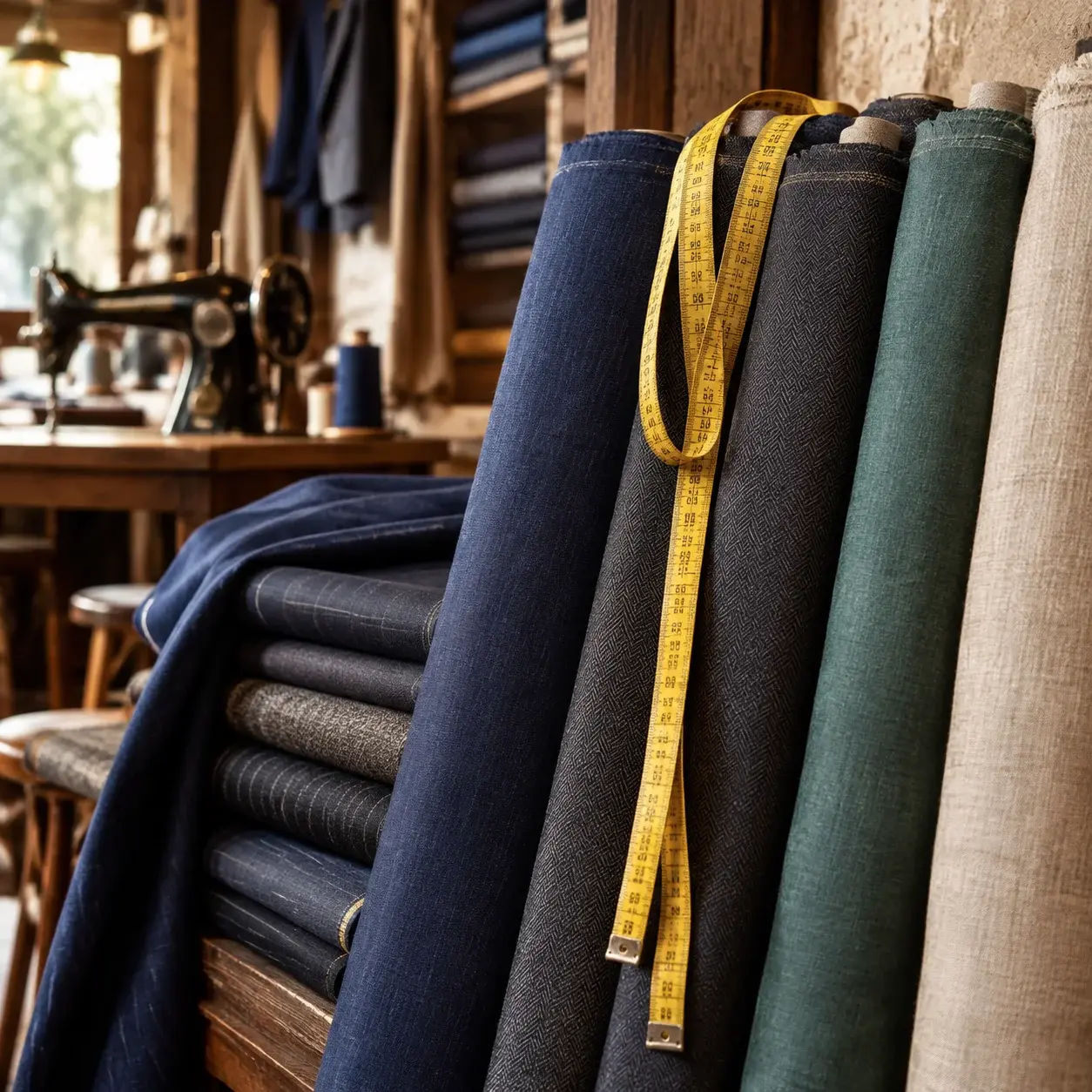
South Bund Fabric Market: Is It Worth Getting a Suit or Qipao Made in Shanghai?
Yes, the South Bund Fabric Market is worth it if you give it time. Shanghai tailors here typically make a two-piece suit in 3–10 days with two fittings, and shirts in 1–3 days (verify on the day). Allow seven days, or split your Shanghai time around another city; with under five days, order shirts only.
The market, 南外滩轻纺面料市场 in Chinese (worth showing your taxi driver), sits at 399 Lujiabang Road in Huangpu District, just south of the Old City. Most stalls sell made-to-measure: a standard pattern adjusted to your body, not one cut from scratch.
At LyrikTrip we plan private China itineraries, so we've built this guide around the question that decides whether an order succeeds: can it be fitted and finished before you leave Shanghai? We're a travel company, not a tailor, and we don't recommend individual stalls.
Key Takeaways
- Where and when: 399 Lujiabang Road, listed as open daily 9:00–18:00. Go on a weekday morning.
- Time decides everything: a suit typically needs 3–10 days and two fittings (verify on the day). With under five days in Shanghai, order shirts only.
- Split stays work best: get measured early in the trip, travel on, and return to Shanghai for the fitting and pickup.
- Pay for fabric, not the stall: a two-piece suit typically runs ¥500–4,000 depending on cloth (verify on the day); first quotes often run two to three times a fair price.
- Vet the process: ask six questions before the deposit, and pay the balance only after trying it on in the market.
- The value is choice and speed at these prices, not a guaranteed saving on an identical suit at home.
Who's shopping?
| If this is you | What you'll want | Start with |
|---|---|---|
| A family or three-generation trip | Matching outfits, a child's qipao, and a visit that suits children's and grandparents' energy | How do you do it with kids in tow? |
| Couples and empty-nesters with an unhurried week | One suit or a qipao in good cloth, properly fitted | The price ladder; the qipao section |
| A solo business traveller short on time | Shirts fast; a suit only if the dates allow | How many days do you need? |
| A multi-city traveller leaving Shanghai before pickup | A plan to return and collect, or to send it ahead | What if you leave Shanghai before it's ready? |
Is the South Bund Fabric Market worth it?
For most visitors, yes, as long as you have the days and treat it as made-to-measure rather than bespoke. You get hundreds of fabric stalls under one roof, fittings measured in days, and prices that typically run from a few hundred to a few thousand yuan (verify on the day).
The Shanghai Municipal Government's English portal (June 2025) reports foreign visitors returning in numbers as China widened visa-free entry; one stall owner told it clients leave with finished pieces in under ten days.
Know what a Shanghai fabric market actually sells. Shanghai Tourism's July 2026 guide separates made-to-measure, a standard block pattern adjusted to you, from Savile Row–style bespoke, where a unique pattern is cut and basted. Most South Bund stalls do the first: a well-fitted garment in a cloth you chose, not an heirloom commission.
Is it cheaper than having it made at home? We haven't priced made-to-measure in the US, UK or Australia, so we won't give a percentage. The honest case: you pick the exact cloth off the roll, you're fitted within days, and you pay within the ranges below. Get a quote from a tailor at home in the same fabric tier before you fly, then compare.
One caution from SmartShanghai's editors (June 2026): above about ¥1,500, unless you can judge fabric, an altered off-the-rack suit from a trusted brand may serve you better.
Where is the South Bund Fabric Market, and when is it open?
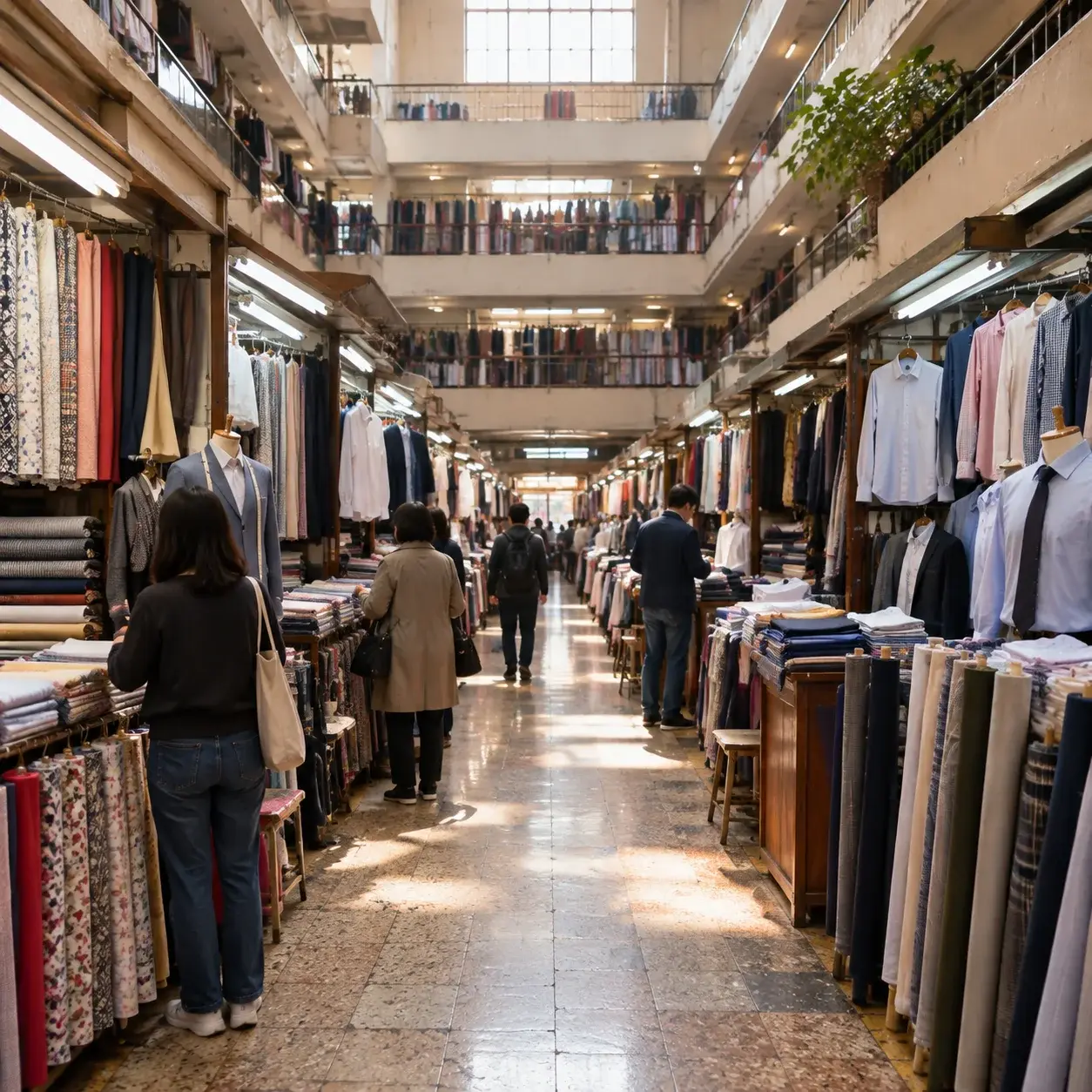
It's at 399 Lujiabang Road, Huangpu District, listed by SmartShanghai (June 2026) and Shanghai Tourism (July 2026) as open daily, 9:00–18:00. Sources cite two different nearest metro stations.
| Details (verify on the day) | |
|---|---|
| Address | 399 Lujiabang Road, Huangpu District · 陆家浜路399号 |
| Chinese name | 南外滩轻纺面料市场 |
| Hours | Daily, 9:00–18:00 |
| Metro, Line 4 | Nanpu Bridge Station, Exit 3, about 7 minutes' walk (Shanghai government portal, June 2025) |
| Metro, Line 9 | Xiaonanmen Station, about 8 minutes' walk (Shanghai Tourism, July 2026) |
| Taxi | Typically ¥30–50 from central Shanghai |
| Nearby | Yu Garden, about 10 minutes' walk |
When to go: weekday mornings until about 11:30 are calm and tailors measure carefully; weekend afternoons bring tour groups and rushed service.
The Chinese New Year trap: Shanghai Tourism reports the market shuts or runs skeleton staff for roughly a week around the holiday (mid-January to mid-February, depending on the year), and many tailors go home for longer. An order placed in the fortnight before may not get made.
Paying: sources disagree. SmartShanghai says most vendors take cash, WeChat Pay or Alipay, many don't take cards, and there are ATMs on site; Shanghai Tourism says both apps now accept foreign cards. Set them up before you fly with our guide to paying in China, and carry cash for deposits. Our Bund guide covers the afternoon.
What's on each floor?
Expect suiting wool and menswear low down and silks and qipao above, but sources disagree on the number of floors, so treat any floor map as provisional.
| Version A | Version B | |
|---|---|---|
| Floors | Three (Shanghai government portal; Shanghai Tourism) | Five connected levels (Wuyue Bespoke, a tailor inside the market) |
| Stalls | 200+ (Shanghai Tourism) | About 400 (Wuyue Bespoke) |
| Floor 1 | Wools, suiting, menswear | Tailor shops, accessories |
| Floor 2 | Silks, womenswear, qipao | Densest tailor floor |
| Upper floors | Workshops, finishing (3F) | Fabric specialists (3F); studios, alterations (4F–5F) |
Walk two full circuits of the first two floors before talking to anyone (Shanghai Tourism's core advice). SmartShanghai notes prices can dip on higher floors. A calm "bú yòng le" (不用了, "no thanks") handles stall-holders calling out.
How many days do you need? The LyrikTrip Tailor Countdown
Count the days from your first usable day in Shanghai to your last, then match the garment. A suit typically needs 3–10 days and two fittings (verify on the day); every fitting must fall on a day you're in Shanghai.
Most turnaround tables assume you stay put. Most travellers don't: Shanghai is often the first stop, or the first and last. The Countdown works from how your Shanghai days are distributed.
1. Day A: your first usable day. Shanghai Tourism advises against measuring on arrival day, when jet lag clouds judgement. 2. Day B: the last day you can try it on and collect. 3. Available days = Day B minus Day A, including days in other cities; the tailor keeps working. 4. Match the garment below, placing each fitting on a Shanghai day.
| Garment | Typical turnaround (verify on the day) | Fittings | Order no later than |
|---|---|---|---|
| Dress shirt | 1–3 days | 0–1 | 3 days before leaving |
| Trousers | 2–4 days | 1 | 4 days before |
| Simple silk dress | 3–5 days | 1 | 5 days before |
| Qipao | 5–7 days | 2 | 7 days before |
| Two-piece suit | 3–10 days | 2–3 | 8 days before |
| Three-piece suit | 7–12 days | 3 | 10 days before |
| Cashmere overcoat | 7–10 days | 2 | 9 days before |
Base figures: Shanghai Tourism's July 2026 table, cross-checked for suits against SmartShanghai (about a week), Wuyue Bespoke (three to seven days) and a stall owner quoted by the government portal (under ten days). Shorter means closer to a stock pattern; Wuyue warns rush orders limit fit corrections.
| Trip shape | Example | How to schedule | What's realistic |
|---|---|---|---|
| Shanghai in one block | 5–9 nights in Shanghai | Measure day 2, fittings around days 4–5 and 7, collect the day before you fly | 7+ days: a suit. 5–6 days: shirts and trousers. Under 5: shirts only |
| Split first-and-last | 2 nights Shanghai → 5 nights Beijing or Xi'an → 2 nights Shanghai | Measure, pay the deposit and swap WeChat on first-leg day 2; fit on return day 1; collect on return day 2 | About 9 available days: a suit or qipao is comfortable if the return leg is 2+ days |
| Shanghai first, no return | 3 nights Shanghai, then onward | Measure early; the piece is sent to a later hotel in China | No fitting: shirts and simple pieces only |
The split first-and-last shape is the easiest to plan around: the tailor sews while you're walking the Great Wall.
How much does a Shanghai tailor charge? Price by fabric, not by stall
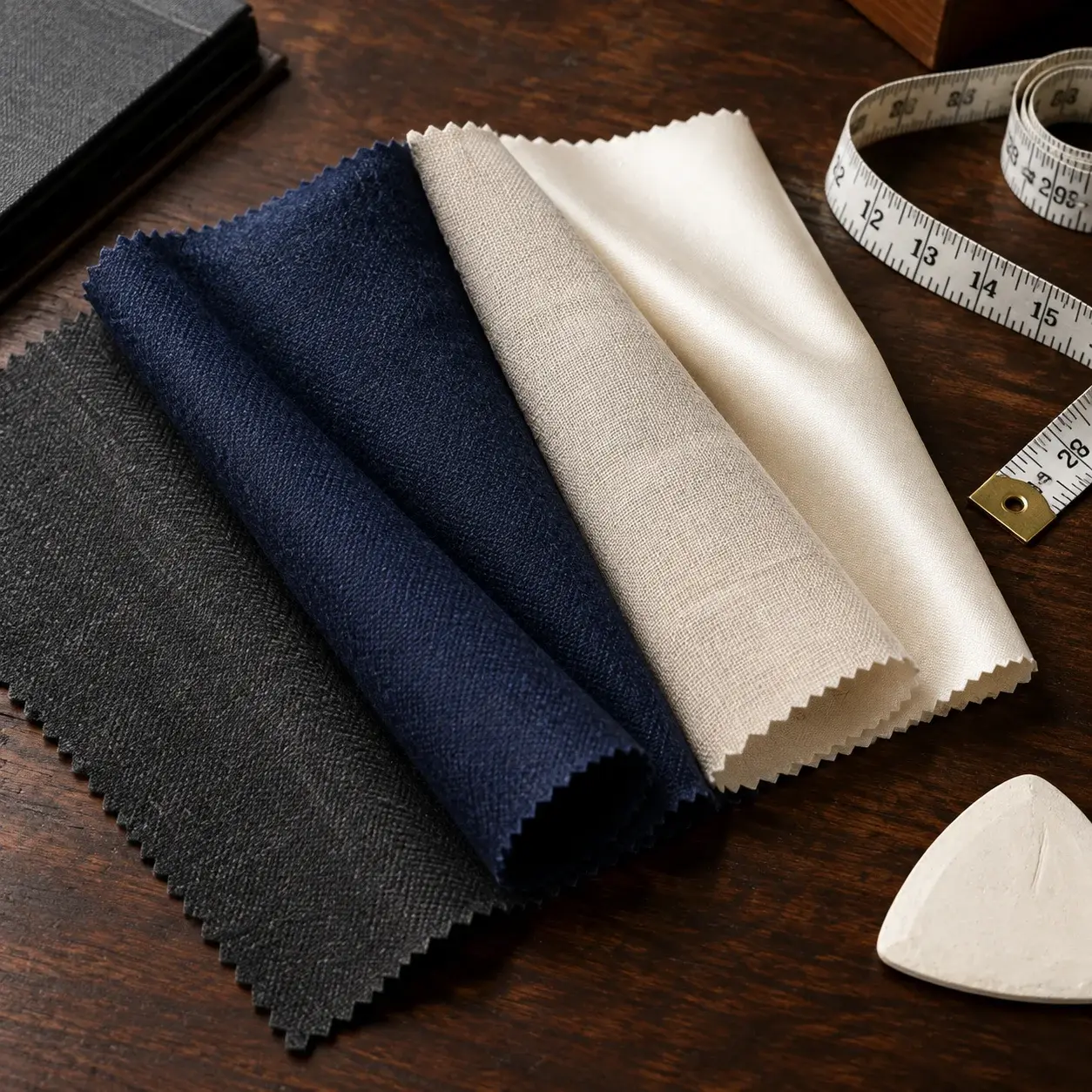
A two-piece suit typically costs ¥500–1,500 in a wool blend, ¥1,000–2,000 in 100% wool and ¥1,800–4,000 in imported branded cloth (verify on the day). Quotes differ mainly by fabric and construction, not by stall.
The Fabric-to-Price Ladder explains why published suit prices range from ¥500 to ¥4,000:
| Tier | Fabric | Construction | Two-piece, typical (verify on the day) | What you're buying |
|---|---|---|---|---|
| 1. Entry | Polyester-wool blend | Adjusted stock pattern | ¥500–1,500 | Wearable; compromises in cloth and fit |
| 2. Mainstream | 100% wool, super 100s–120s, about 280–320g | Adjusted pattern, corrected over fittings | ¥1,000–2,000 | The sweet spot for a suit you'll wear often |
| 3. Imported | Branded Italian or British wool | As tier 2, sometimes an individual pattern | ¥1,800–4,000 | Mostly the cloth; check the brand woven into the selvedge |
| 4. True bespoke | Any | Individual paper pattern, basted fittings | Rare here; Maoming Road shop tailors listed from about ¥3,000 | Bespoke in the traditional sense |
Sources: SmartShanghai (June 2026) puts a cheap two-piece at ¥500–800 and a better one at ¥1,000–1,500; Shanghai Tourism (July 2026) quotes ¥800–1,500 for a blend and ¥1,800–3,500 for Italian or British super 100s, after bargaining; the government portal (June 2025) cites a mid-tier suit at ¥2,000 ($278) and up; Wuyue Bespoke puts established shops at roughly USD 200–500.
Other items typically cost, per Shanghai Tourism after bargaining (verify on the day): dress shirts ¥120–250, trousers ¥300–800, a silk qipao ¥800–2,500, a cashmere overcoat ¥1,800–4,500. All vary stall to stall.
Two rules keep you on the right rung. Shanghai Tourism says first-time asking prices typically run two to three times fair, so compare and bargain. And higher super numbers aren't better for daily wear: super 150s and above crease and shine at the elbows, so choose super 100s–120s for a working suit.
How do you choose a Shanghai tailor?
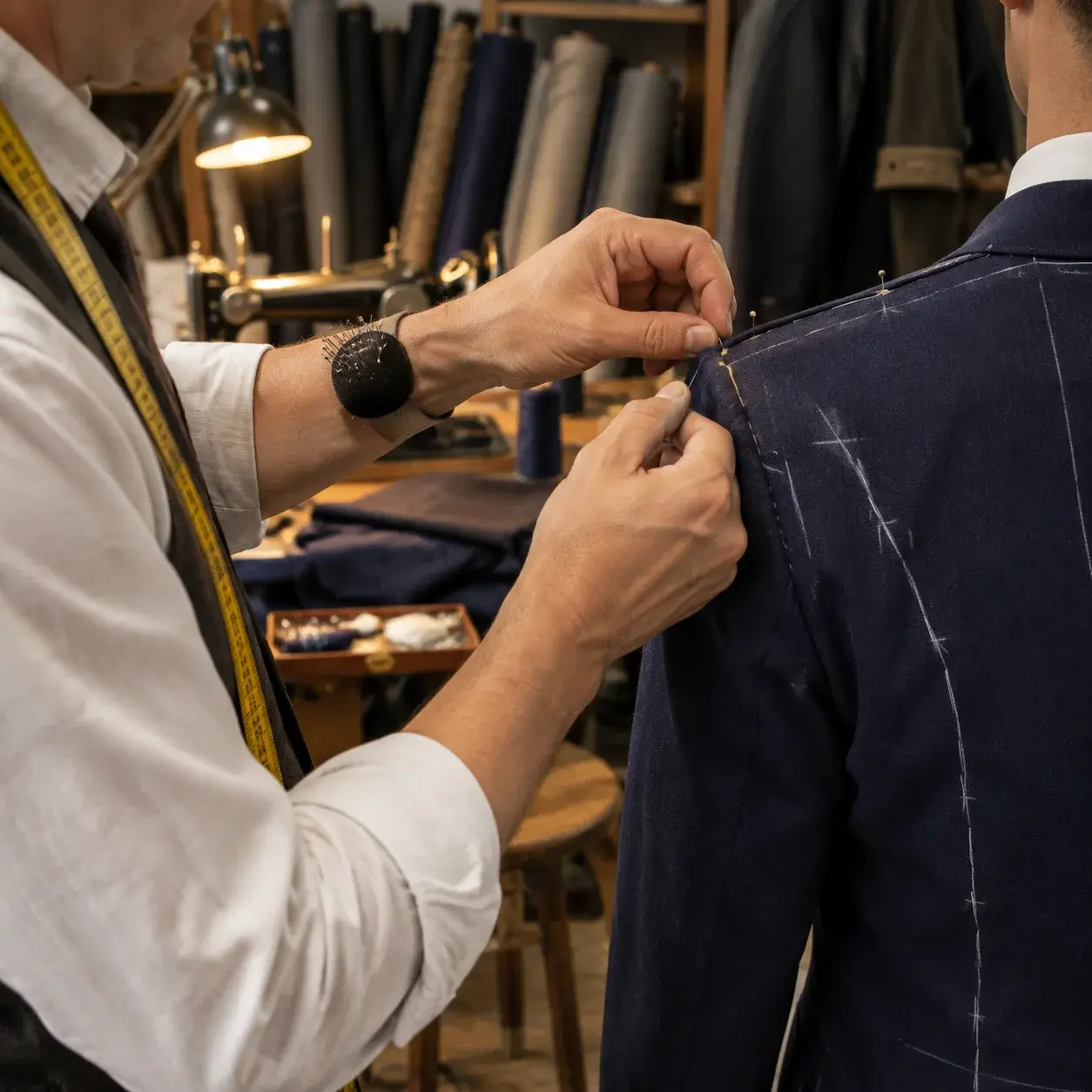
Choose on process, not signage. Ask six questions before paying a deposit: a stall that answers all six specifically is worth an order; two or more vague answers mean move on.
| # | Ask | Good answer | Red flag |
|---|---|---|---|
| 1 | How many fittings, and what's checked at each? | Names checkpoints: shoulders, sleeves, waist, trouser break | "It will fit, no fitting needed" |
| 2 | Is the turnaround realistic for my exact dates? | A dated schedule built from your dates | "No problem" before asking your dates |
| 3 | Can I see finished work like my order? | Real garments close to your style | Only catalogue images |
| 4 | Can you itemise the quote? | Fabric, construction, lining, deposit, balance, rush and shipping costs, in writing or on WeChat | One total number |
| 5 | What if I leave Shanghai before it's ready? | Hotel handoff, domestic delivery or international shipping, costs stated | Vague reassurance |
| 6 | Will you keep my measurements? | Yes, so you can reorder remotely | No |
The scorecard adapts a 2026 checklist from Wuyue Bespoke, a shop inside the market, so weigh its self-interest. Wuyue notes the market guarantees no single standard; SmartShanghai says quality varies even within one shop.
Bring reference photos, get the quote on WeChat before paying, and keep the contact for fittings. Shanghai Tourism's worked example has a 50% deposit at measuring, balance at collection.
Can you get a qipao made at South Bund, or is Maoming Road better?
Yes: South Bund's qipao specialists typically need 5–7 days and two fittings, at about ¥800–2,500 depending on silk and detailing (verify on the day). If the qipao is the whole point of the trip, Shanghai Tourism points to the shop-format tailors on Maoming Road.
A qipao's value is partly cultural: a keepsake of Shanghai dress, made in the city. The government portal's 2025 profile quotes a student from Belarus drawn by embroidered qipao in the "new Chinese style". The rest is practical: silk you chose, cut to you.
Shanghai Tourism calls mulberry silk (桑蚕丝) the benchmark, with heavier 16–22 momme weights holding a qipao's structure; ask for weight and composition in the quote. Choose South Bund to compare stalls and combine orders, Maoming Road for one traditional piece.
How do you do it with kids in tow?
For families and three-generation trips: book a weekday morning, keep measuring short, pair it with Yu Garden, and treat children's pieces as loose-fitting keepsakes. None of the sources we reviewed cover children's sizing, so ask at the stall.
- Timing: until about 11:30 on weekdays, a tailor can measure a fidgeting child without a queue behind you.
- Summer: Shanghai Tourism warns the third floor has no real air conditioning in August.
- Half-day plan: measure in the morning, walk about ten minutes to Yu Garden for lunch, reach the Bund by late afternoon.
- Divide and conquer: one adult gets measured while another takes children or grandparents ahead to Yu Garden.
- Matching outfits: order from one stall in one visit, for one quote and one fitting schedule.
- Children's pieces: minimum ages, prices and turnaround aren't published anywhere we looked. Our lean: a child's qipao or shirt cut with ease and extra seam allowance, not a fitted suit they'll outgrow by spring.
Demand exists: a review on one market tailor's website describes a parent ordering suits for themselves and their son.
What if you leave Shanghai before it's ready?
Three options: return to Shanghai for the fitting and pickup, send it to a later hotel in China, or ship it home. Only the first includes a fitting, so it's the only one we'd use for a suit.
1. Come back: measure on the first leg, fit and collect on the return. Best for suits and qipao. 2. Next hotel in China: Wuyue Bespoke lists hotel handoff and domestic delivery; get cost and timing in the quote. You'll try it on with no tailor present, so keep this for shirts. 3. Ship home: Shanghai Tourism puts EMS at roughly ¥150–400 (verify on the day). Import duty depends on your own country's rules.
On a short visa-free stopover, which the government portal ties to the market's under-ten-day pickups, see our Shanghai layover guide and stick to shirts.
What should you not do at the fabric market?
Don't order on your last day, don't pay the balance before trying it on, and don't pay for a super number you don't need.
- A suit with fewer than five days left: two fittings need time. - Paying the balance before trying it on in the market, as Shanghai Tourism warns; afterwards you have no leverage. - A 24- or 48-hour rush on a suit. - Super 150s or finer for an everyday suit. - Ordering in the fortnight before Chinese New Year. - Taking the first quote without walking two circuits.
Frequently Asked Questions
How long does it take to get a suit made at the South Bund Fabric Market?
Typically 3–10 days with two or three fittings, depending on the stall and how busy it is (verify on the day). Shanghai Tourism suggests ordering at least eight days before you leave; SmartShanghai cites about a week. Faster rush orders exist but leave little room to correct the fit.
How much does a custom suit cost in Shanghai?
At South Bund, a two-piece typically costs ¥500–1,500 in a wool blend, ¥1,000–2,000 in pure wool and ¥1,800–4,000 in imported branded cloth (verify on the day). First quotes to visitors often run two to three times a fair price, so compare stalls and bargain.
Can South Bund tailors ship clothes home?
Shipping home is possible: Shanghai Tourism puts EMS at roughly ¥150–400 (verify on the day). Import duty depends on your own country's rules. Shipping skips the final fitting, so it suits shirts better than suits; returning to Shanghai to collect is safer.
Is the South Bund Fabric Market open on Sundays?
Yes. SmartShanghai and Shanghai Tourism both list it as open daily, 9:00–18:00 (verify on the day). Weekend afternoons are the busiest time, with tour groups and rushed measuring, so a weekday morning is better. Expect closures or skeleton staffing for about a week around Chinese New Year.
Can I get a qipao made in Shanghai as a tourist?
Yes. Qipao specialists at South Bund typically need 5–7 days and two fittings, at about ¥800–2,500 depending on silk grade and detailing (verify on the day). Order at least a week before you leave Shanghai, or use a split stay so the fittings fall on your return.
How do I pay at the South Bund Fabric Market?
Bring a mix. SmartShanghai reports most vendors take cash, WeChat Pay or Alipay and many don't accept cards, though there are ATMs on site. Shanghai Tourism notes both apps now accept foreign cards. Set them up before you travel and carry cash for deposits.
Conclusion: is a Shanghai tailor worth building into your trip?
Yes, if you plan the days before the fabric. The South Bund Fabric Market offers wide cloth choice, fittings within days and suits typically from about ¥500 to ¥4,000 (verify on the day). With seven or more days, or a split first-and-last stay, a suit or qipao is realistic; with fewer than five, order shirts.
Choose the tailor by process, get the quote itemised, and pay only after the final try-on. On a multi-city route, build the measuring morning and the return fitting into the plan from the start.
For the bigger picture, see our guide to what to buy in China; to buy ready-made instead, try Chinese brands in Shanghai.