




 18 days China, End to End Beijing → Xi'an → Chuanzhusi → Jiuzhaigou → Chengdu → Zhangjiajie → Guilin → Yangshuo → Shenzhen From $6,360 View route
  3 days 3-Day Tour: Mount Siguniang, Bipenggou & Dagu Glacier Chengdu → Lixian → Heishui County From $1,599 View route
  5 days Above the Pillars, Then Below Zhangjiajie From $1,430 View route
  3 days After the Last Booth Guangzhou From $840 View route
  13 days All the Way West Xi'an → Dunhuang → Turpan → Kashgar → Shanghai From $3,500 View route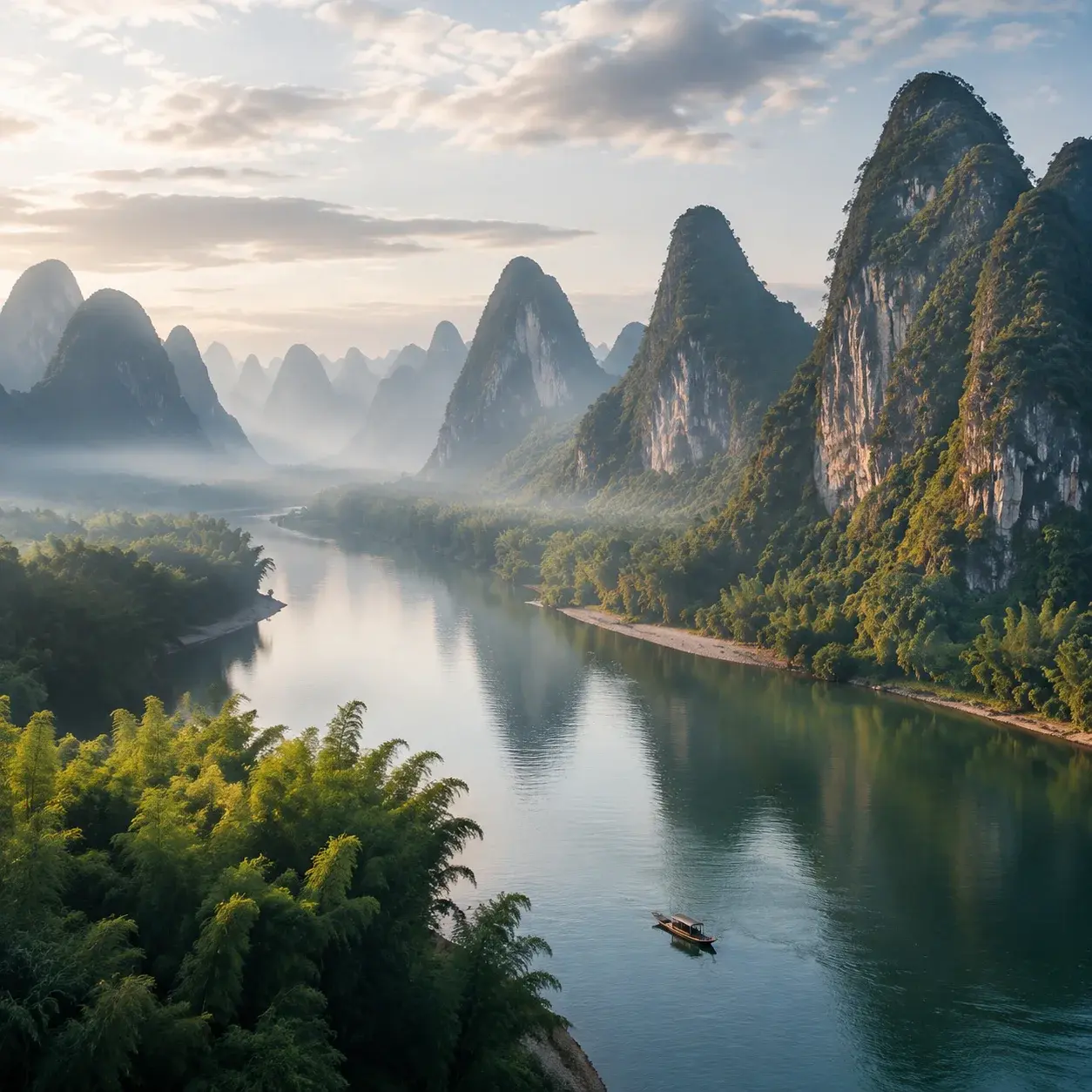
Guilin Travel Guide: Where to Stay, How Long to Go, and What's Actually Worth It
Guilin is worth two to three nights, the scenery that draws people here is outside the city rather than in it, and most travellers staying three nights or more should base themselves in Yangshuo instead of central Guilin. Come in September or October if you can choose, and expect at least one wet day in any three.
Guilin is a karst landscape: limestone towers eroded over millions of years into the peaks that appear on every poster of southern China. The city sits among them, but the density is downstream, in the river valleys and on the terraced hillsides to the north. At LyrikTrip we plan this region year-round, and the single change that improves most Guilin itineraries is simply moving the traveller out of the city sooner.
Key Takeaways
- Base by the number of nights, not by preference. One to two nights: stay in Guilin. Three or more: Yangshuo, with a night in Guilin to connect.
- September and October are the only weeks when the river and the terraces both cooperate. Rainfall is at its lowest and water levels are at their most stable.
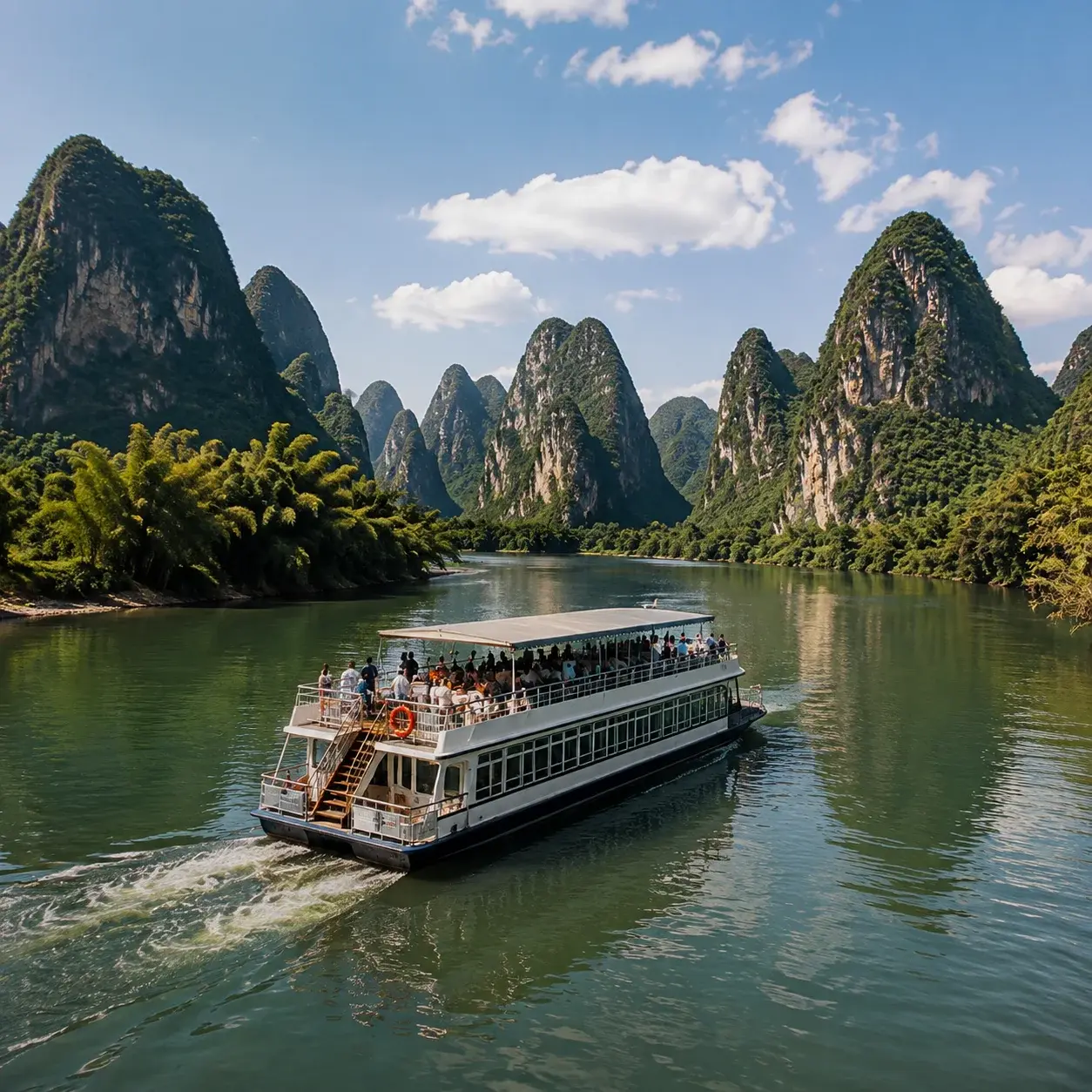
- The Li River cruise ends in Yangshuo and does not return — which is why your luggage should already be there.
- Two transport traps cost travellers half a day each: Yangshuo's railway station is not in Yangshuo, and Guilin has three separate stations.
- Not everything with a ticket is worth a ticket. Elephant Trunk Hill is the clearest example — see below.
- Bamboo rafts have hard age and height limits. Passengers over 70 are not permitted on either river, and small children are excluded by height.
Prices and operating details below are indicative, cross-checked against multiple operators in August 2026, and worth re-confirming on site.
Is Guilin actually worth the trip?
Yes — but the value is concentrated outside the city, so a trip that never leaves central Guilin will disappoint. Plan around the Li River valley, Yangshuo and the Longji terraces, and treat the city as an arrival point.
What makes the landscape distinctive is that it is a mature karst plain: isolated limestone towers rising abruptly from flat farmland and river, rather than a mountain range with foothills. That is why the peaks look implausible in photographs and why the valley floors are farmed right up to the base of the rock. China has other karst regions, and we compare them in our  China mountains guide, but Guilin has the most accessible concentration of it.
The honest caveat: the most photographed views here are busy, and the city itself is an ordinary mid-sized Chinese city with a beautiful backdrop. Come for the landscape, not for the urban experience.
Guilin or Yangshuo — where should you base yourself?
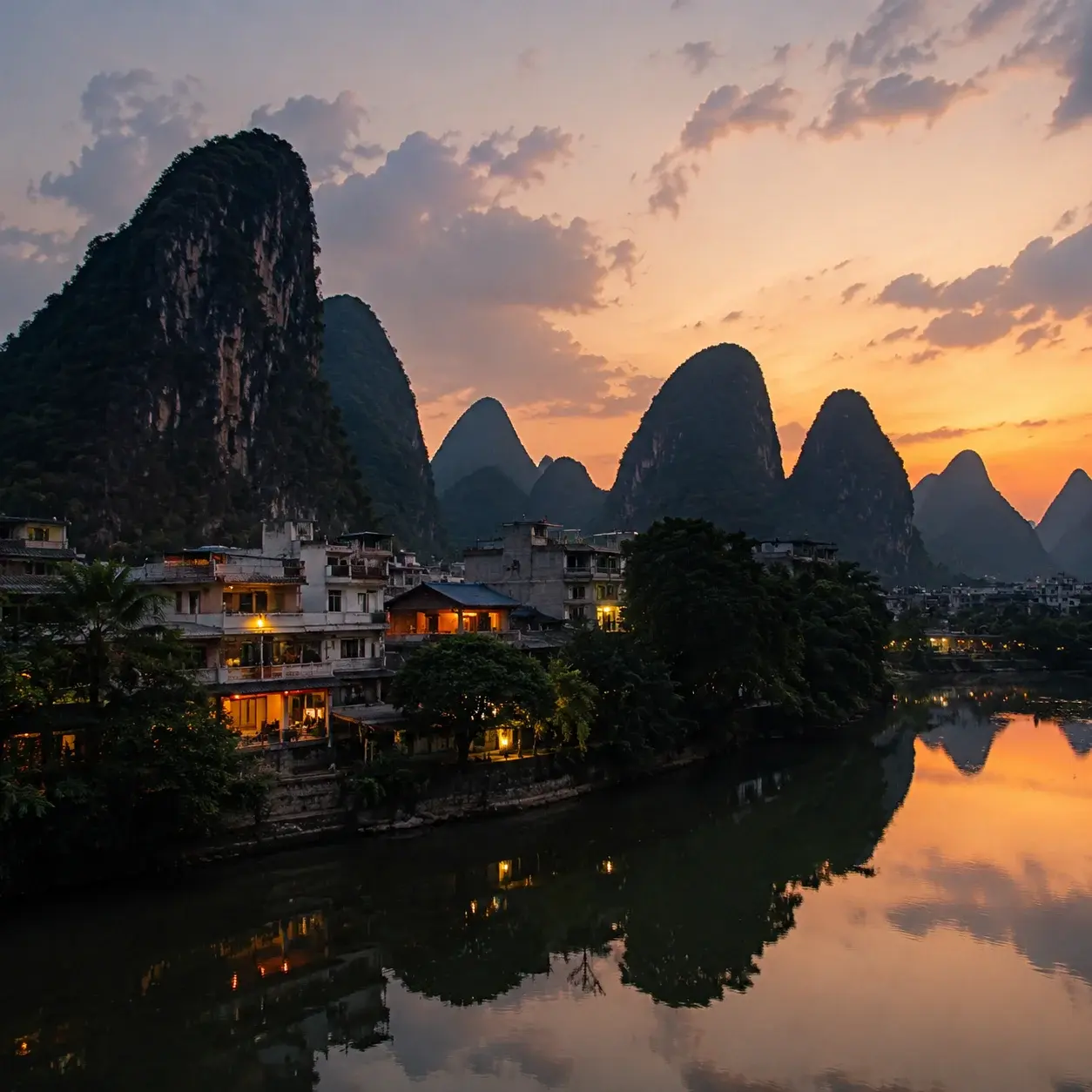
Decide by how many nights you have, not by whether you prefer cities or countryside. The mechanics of the region make this a logistics question with a clear answer.
| Nights | Where to stay | Why |
|---|---|---|
| 1 | Guilin | Only time for the city and an onward departure |
| 2 | Guilin | The terraces do not fit; do the short Xingping river run and return |
| 3 | Yangshuo 2 + Guilin 1 | The full cruise ends in Yangshuo, so stay where it drops you |
| 4-5 | Yangshuo 2-3 + Longji 1 + Guilin 1 | An overnight on the mountain is what buys sunrise and empty terraces |
| 6+ | As above, plus a night in Xingping | Xingping sits on the best stretch of river and the banknote viewpoint |
The mechanism behind the table is easy to miss: the scheduled Li River cruise is one way, morning only, and it terminates in Yangshuo. Anyone doing the full cruise ends their day 65 km from a Guilin hotel. Basing in Yangshuo turns that into a walk to your room; basing in Guilin turns it into an evening transfer back.
The trade-offs, briefly. Guilin has the airport, the major hospitals and the widest choice of restaurants, and its Two Rivers and Four Lakes area is genuinely attractive after dark. Yangshuo puts karst peaks outside your window, is better for cycling and for slow family days, and is closer to the rafting rivers — but West Street, its main strip, is loud and heavily commercial. Guilin is also meaningfully closer to the Longji terraces, so a terrace day is easier from the city.
How many days do you need?
Two full days covers the essentials; three is comfortable; five lets you add the terraces and an overnight without rushing. Fewer than two days is not worth the flight.
| Length | Realistic plan | What you give up |
|---|---|---|
| 2 days | Xingping short river run and the banknote viewpoint; one Guilin evening | The full cruise and the terraces |
| 3 days | Full Li River cruise to Yangshuo; a Yangshuo cycling or rafting day; return | The terraces |
| 5 days | The above plus a full terrace day with an overnight at Dazhai | Little — this is the comfortable shape |
| 7 days | Add Xingping, sunrise at Xianggong Hill, and slower village days | Nothing, if the weather holds |
Build in one spare day for rain in any plan of three days or more. Guilin averages around 172 days of rain a year according to 1991-2020 climate normals published by Climates to Travel — close to one day in two — and a washed-out day is a scheduling problem, not bad luck.
If Guilin is one stop in a longer route, our two-week China itinerary shows where it fits alongside Beijing, Xi'an and Hong Kong.
When is the best time to visit Guilin?
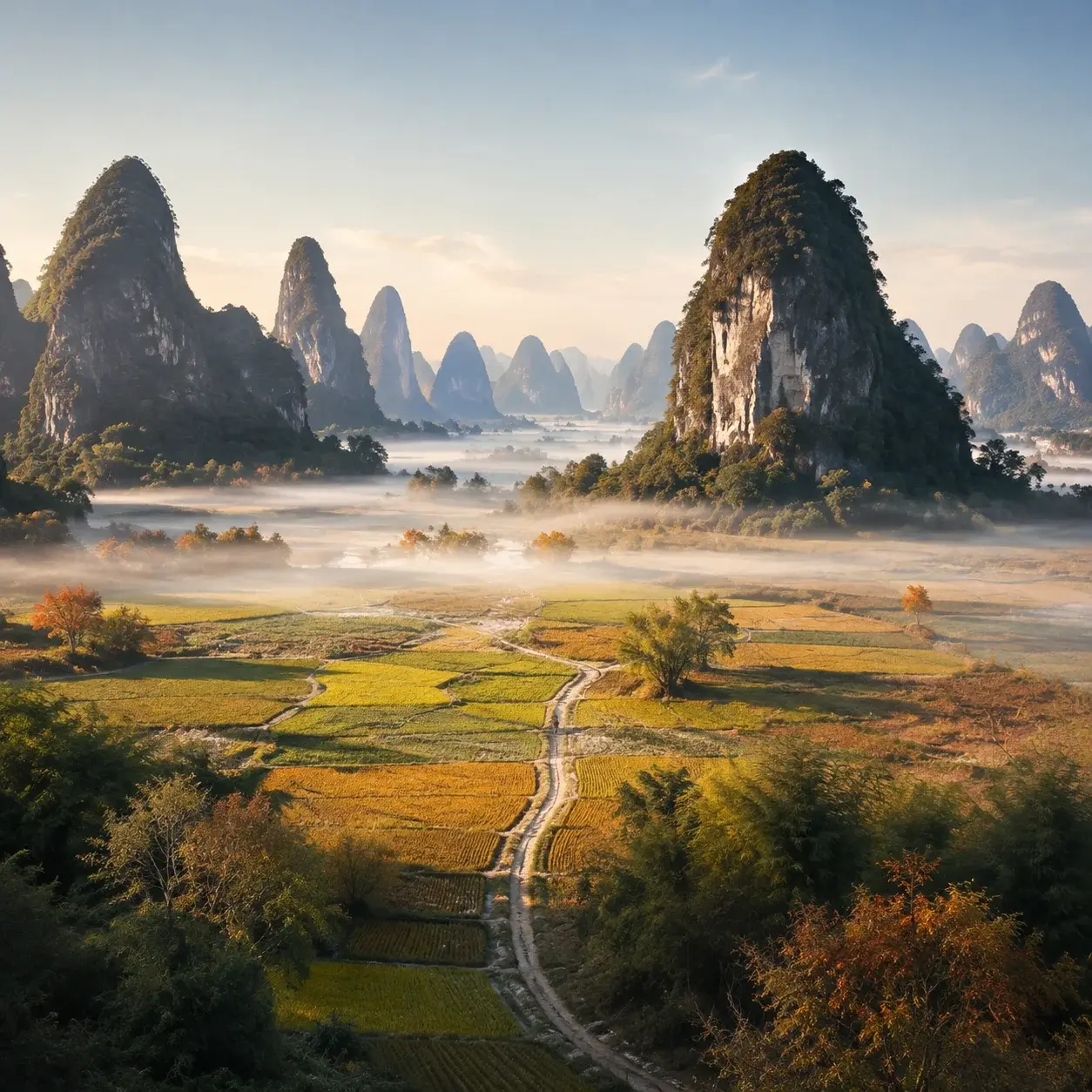
September and October. They combine the year's lowest rainfall, its best sunshine, the most stable river levels and the golden terraces — the only weeks when every variable lines up.
Rainfall here drives everything else. Water level determines whether the Li River cruise runs at full length, gets shortened, or is suspended, and the farming calendar determines what the terraces look like. Most guides answer these as three separate questions. They are one.
| Month | Rain (mm) | Sun (h/day) | Li River | Longji terraces | |—|–:|–:|—|—| | January | 65 | 2.0 | Low water; sailing can shorten to about 2 hours | Bare, possible snow | | February | 100 | 2.0 | Low water | Bare, possible snow | | March | 135 | 1.5 | Low water ending | Bare | | April | 220 | 2.5 | Rising | Bare, ending | | May | 325 | 3.5 | High water; sailings can be suspended | Mirror-flooded from mid-month | | June | 395 | 4.5 | High water; sailings can be suspended | Mirror window ends early in the month | | July | 230 | 6.5 | High water easing | Green | | August | 145 | 6.5 | Settling | Green | | September | 80 | 6.5 | Most stable | Turning gold late in the month | | October | 65 | 5.0 | Most stable | Gold; harvest around 10-25 October | | November | 75 | 4.5 | Stable, falling | Bare | | December | 45 | 4.0 | Low water | Bare, possible snow |
Rainfall and sunshine are 1991-2020 normals published by Climates to Travel. One note on the data: a second climate source, Weather and Climate, gives a higher annual total for Guilin — around 2,277 mm against roughly 1,890 mm — so treat the annual figure as approximate. The month-to-month pattern, which is what actually affects your trip, is consistent across both.
Three conclusions follow.
September and October are the window. The cost is that the first week of October is a national holiday, when domestic crowds peak.
Mid-May to early June is a photographer's trade, not a general recommendation. The flooded terraces mirror the sky, but those are the two wettest months of the year and the weeks when river sailings are most at risk. You are buying one spectacular thing with two real costs.
December to February is not a bargain low season; it is a reduced product. The cruise can shorten to roughly two hours and may board from a different pier, and the terraces are bare. You save money and receive less trip.
Which Guilin should you do? Five traveller types
The standard "top ten sights" list assumes one traveller. In practice five different trips run through this region, and they barely overlap.
| Traveller | Come in | Base | River | Terraces | Skip |
|---|---|---|---|---|---|
| First China trip, 2 nights | Sep-Oct | Guilin | Short Xingping run | Not this trip | The full 4-hour cruise |
| Family with children 6-12 | Sep-Oct or April | Yangshuo | Yulong River raft — check the height rule | Ping'an | The full cruise; children cannot leave mid-route |
| Travelling with parents over 70 | Sep-Oct | Yangshuo | 4-star cruise for the seating | Ping'an with the cable car | Both bamboo rafts — over-70s are not permitted |
| Photography-led | Mid-May to early June, or late Sep to mid-Oct | A night at Dazhai | Sunrise at Xingping over the full cruise | Jinkeng at Dazhai | In May-June, accept the cruise may not sail |
| Here for the banknote view | Sep-Nov | Xingping or Yangshuo | No ticket needed — walk to the riverbank | Not this trip | The cruise entirely |
That last row is worth stating plainly, because it costs us bookings to say it: a great many people buy a four-hour cruise ticket to see the view printed on the back of the 20-yuan note, and that view is reachable on foot from the riverbank at Xingping.
What's actually worth doing — and what you can skip?
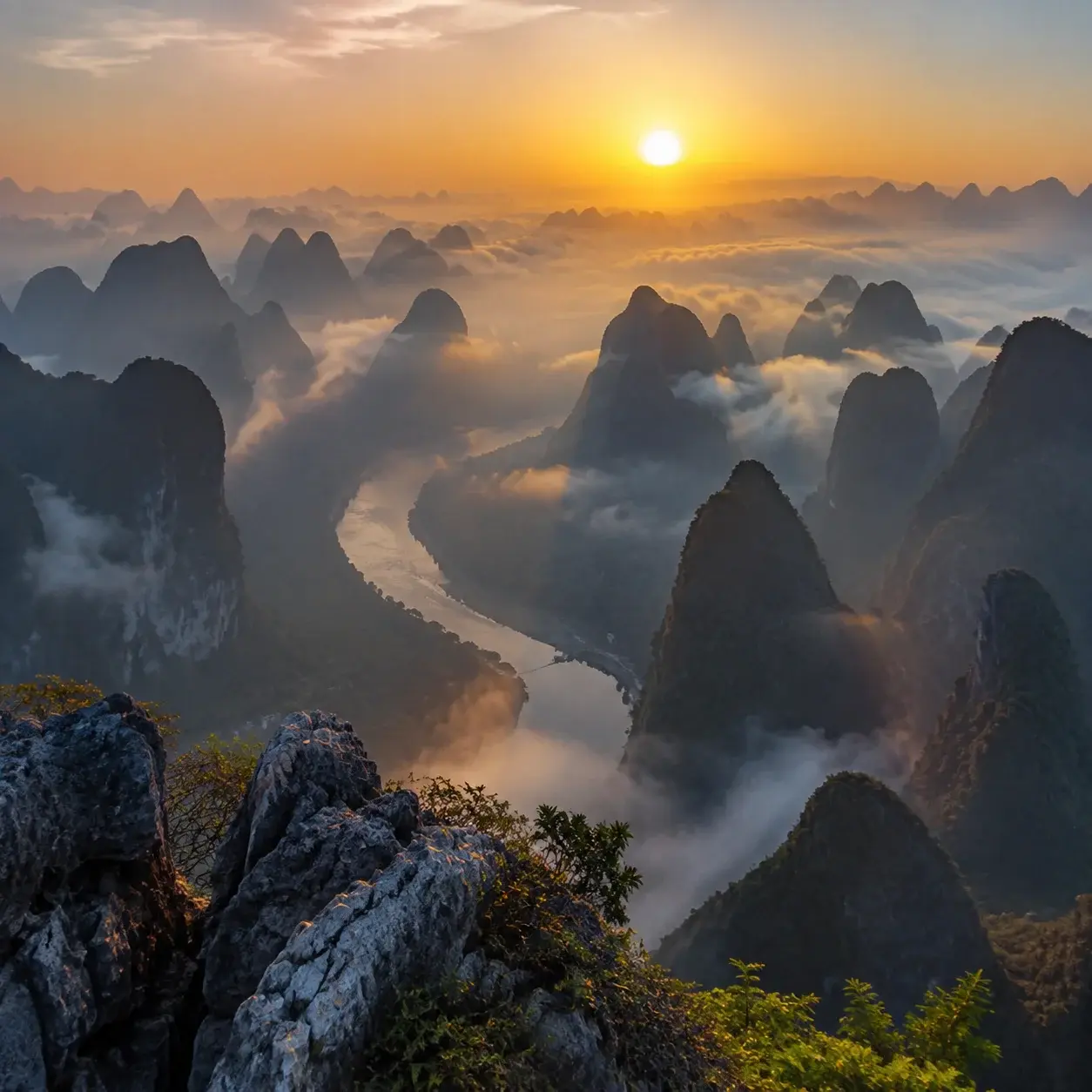
Three tiers, not a ranked list. The distinction that matters is not "best to worst" but "unmissable, depends on you, and don't bother."
Do these.
- The Li River — by full cruise, by the short Xingping run, or by raft. This is the reason the region is famous. Which format suits you is covered in our Li River cruise guide.
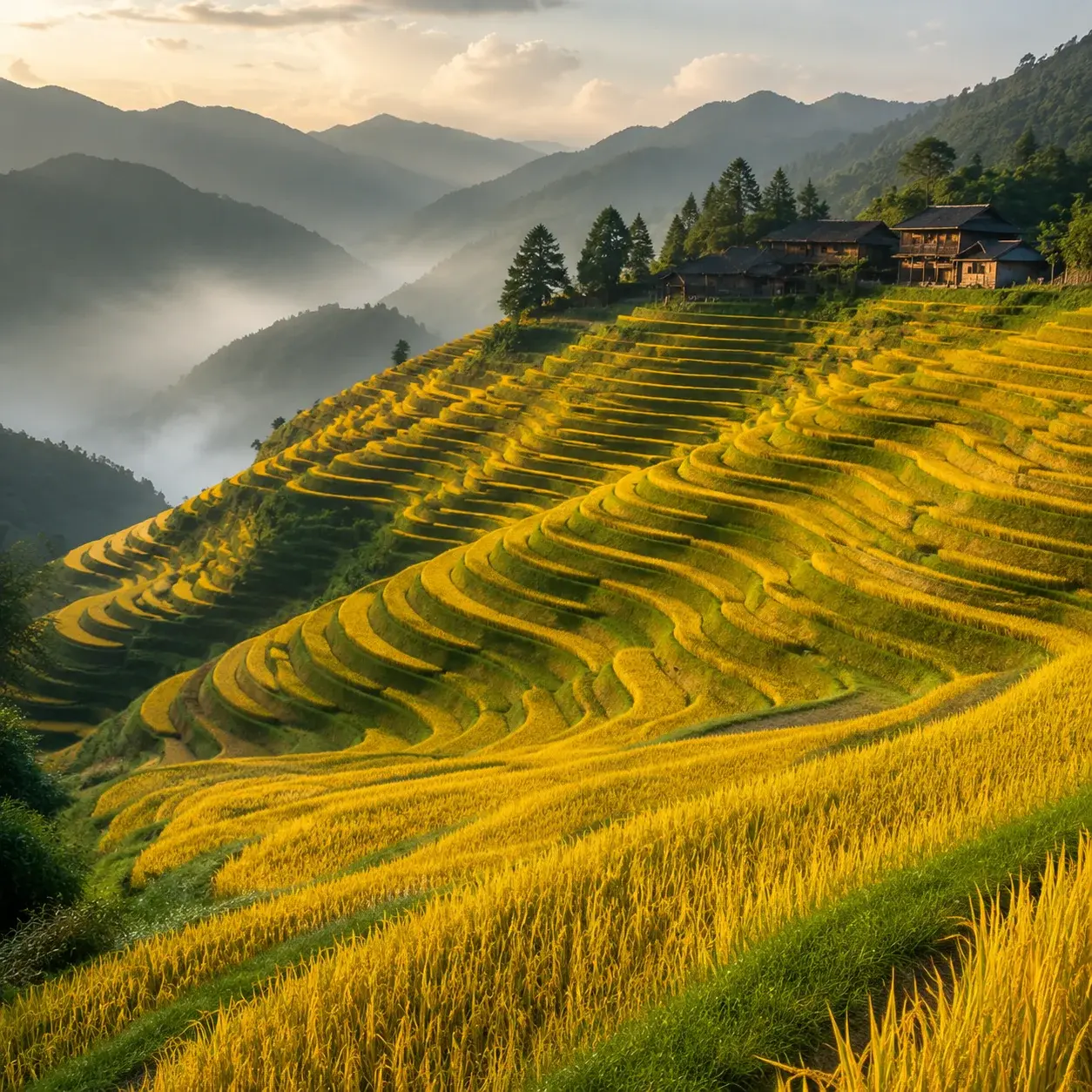
- The Longji rice terraces — in the right month, and given a full day. Our Longji rice terraces guide covers which village to choose.
- Xingping and the 20-yuan viewpoint — the best stretch of river, and free from the bank.
- Sunrise at Xianggong Hill — a short, steep climb above a bend in the river, and the single best morning view in the region.
Depends on you.
- Impression Liu Sanjie — a large outdoor performance staged on the river itself, with the karst peaks as the set. Interest has more than doubled year on year. It is spectacle rather than culture; enjoyable if you like scale, skippable if you do not.
- Yulong River bamboo rafting — quiet, poled, genuinely lovely, and family-friendly with one caveat: rafts take two people and children under 1 metre are not permitted, while passengers over 70 are excluded on both rivers.
- Reed Flute Cave — a large, heavily illuminated limestone cave. Impressive on a first cave visit; missable if you have seen others.
- Moon Hill and West Street in Yangshuo — a good short hike and a busy commercial strip respectively.
Skip these.
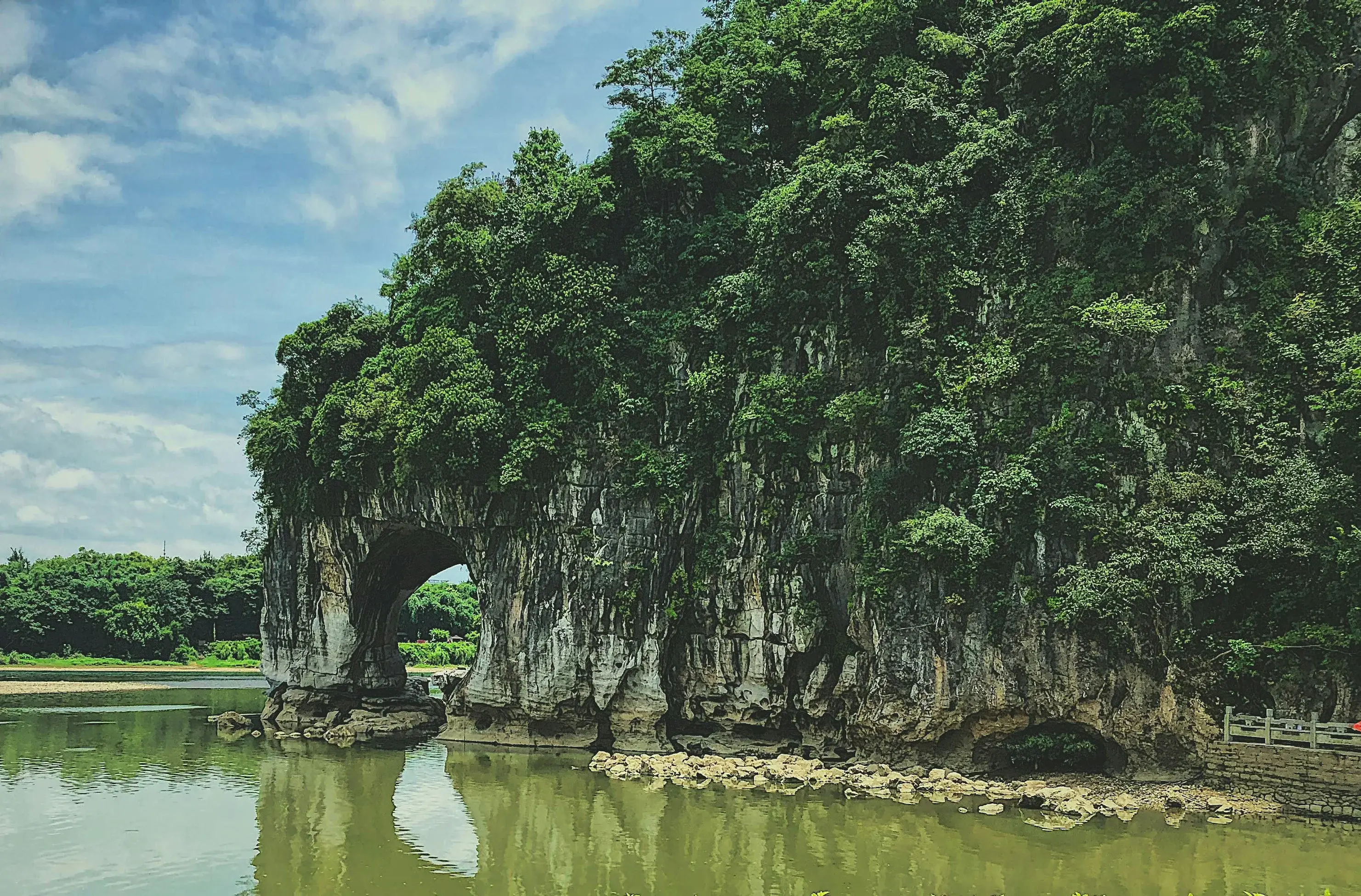
- Elephant Trunk Hill. The ticket buys a closer look at a rock formation clearly visible from the riverbank for free. This is Guilin's most searched paid sight and its poorest value, and a search volume is not a reason to recommend something.
- Seven Star Park. A large city park with a zoo attached; pleasant enough, but not what you flew here for.
- Two Rivers and Four Lakes by day. Attractive at night when the pagodas and bridges are lit, unremarkable in daylight.
How do you get to Guilin — and to Yangshuo after?
By air into Guilin Liangjiang International Airport, or by high-speed rail. Getting to Yangshuo afterwards is where two specific traps wait, and each costs about half a day.
Trap one: Yangshuo's railway station is not in Yangshuo. The high-speed station named "Yangshuo" sits in the hills near Xingping town — China Highlights (2026) places it about 6 km east of Xingping and states plainly that it is not in Yangshuo town, while China Airline Travel (2026) gives 8 km from Xingping and about 36 km northeast of Yangshuo. The two sources differ on the short distance and agree on the important one. Arriving there expecting to walk into Yangshuo means a further 30 to 40 minutes by road. Shuttles run from the station to the Fengming tourist centre for around ¥20 and to Xingping bus station for around ¥5, with taxis between Xingping and the station in the ¥50-80 range.
Trap two: Guilin has three railway stations. Trains towards Yangshuo depart from Guilin, Guilin North and Guilin West, and they are in different parts of the city. Travel China Guide (2026) notes that Guilin West is poorly served by public transport, with only bus routes 22, 303 and K307. Read which station is printed on your ticket before booking a car. The ride itself is short — about 30 minutes, with second-class seats around ¥26-40.
Approximate journey times into Guilin: Hong Kong and Guangzhou are the most common rail approaches, with Shanghai and Beijing usually flown. The airport sits outside the city, so allow for the transfer when planning a same-day connection.
Between Guilin and Yangshuo you have three options: the high-speed train (fastest, with the station caveat above), a direct coach (slower, but it delivers you into Yangshuo town itself), and the Li River cruise (a sightseeing trip that happens to move you, taking most of a day).
What should you eat?
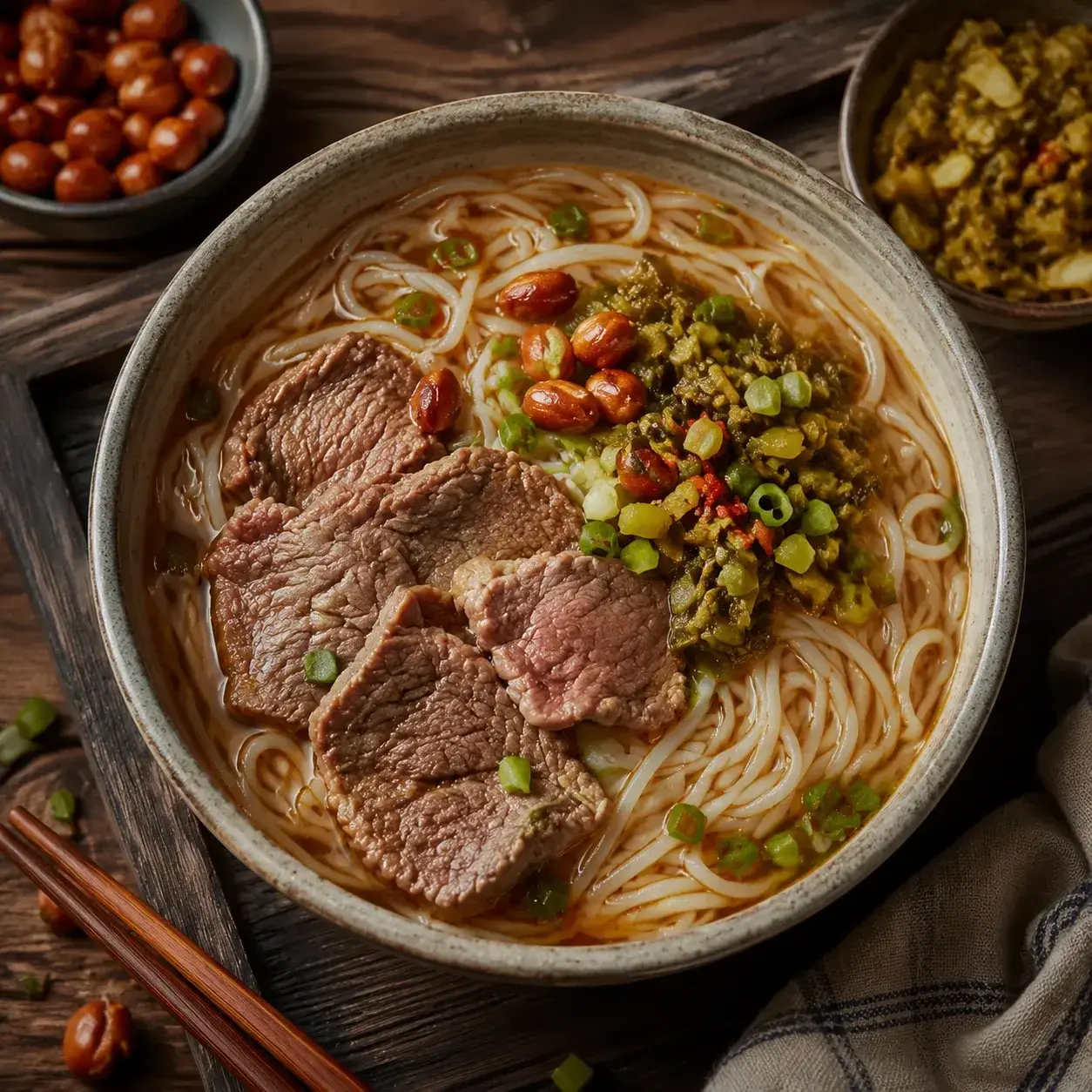
Guilin rice noodles, first and repeatedly. They are the regional staple, eaten at breakfast, sold everywhere, and cost a few yuan a bowl.
Beyond that, look for beer fish in Yangshuo — river fish braised with beer, peppers and tomato, and the dish the town is known for. Local cooking here sits between Cantonese and Hunanese: less sweet than the former, less relentlessly hot than the latter, with a strong use of pickles and river fish.
Our Guilin rice noodles guide covers what to order and how the regional variations differ.
Travelling with kids or older parents?
The limiting factors here are steps and commitment, not distance. Most sights involve stone stairs without railings, and the two headline experiences — the cruise and the terraces — are both hard to abandon halfway.
- The Li River cruise runs 3.5 to 5 hours with no stops. Treat it as an uninterrupted block and check it honestly against toddlers who nap, anyone needing frequent breaks, and older parents who cannot sit for long stretches. The 4-star boat's lower passenger count and padded seating make a real difference.
- Bamboo rafts have hard eligibility rules. On the Yulong River a raft takes two people and children under 1 metre are not permitted; on the Li River a raft takes four, with children under 1.2 m or under 7 excluded. Passengers over 70 are not permitted on either. These are enforced at the landing, so check before you build a day around it.
- The terraces are stairs. Ping'an is the gentler of the two main areas, and the cable car at Jinkeng removes the steepest climb.
- Wheelchair access is poor across the region, and the cruise in particular is not suitable — there are steps on the boarding walkway and a gap between vessel and platform.
Our China family itinerary and China with kids guides cover pacing across a longer trip.
Frequently asked questions
How far is Guilin airport from the city? Guilin Liangjiang International Airport sits outside the city and the transfer takes a meaningful part of an hour by road. Allow for it when planning arrival-day activities or a same-day onward connection rather than treating the landing time as your start time.
Can you visit the Longji terraces as a day trip from Guilin? Yes, and for most travellers a full day trip is the right choice. It is two to three hours each way, so an early start matters. Only photographers chasing sunrise really need the overnight on the mountain.
Is Guilin still worth visiting if it rains? Largely yes. Mist between the karst peaks is one of the region's better looks, and boats keep sailing in rain — high water, not rain itself, causes suspensions. What rain does spoil is the terraces, where stone steps turn slippery and long views close in.
Should you book a guided tour or travel independently? Independent travel works well in Yangshuo, where distances are short. Guides and drivers earn their cost on terrace days and on early-morning viewpoints, where the transfers are long and the timing decides whether the trip works.
Which is better, Guilin or Yangshuo? They answer different questions. Guilin has the transport links, the hospitals and the airport; Yangshuo has the landscape at your doorstep. For three nights or more, base in Yangshuo and keep one Guilin night for the connection.
How many days do you need in Guilin? Three days covers the river and Yangshuo comfortably. Five lets you add the Longji terraces without rushing. Two is workable if you skip the full cruise in favour of the shorter Xingping run.
The verdict
Guilin's scenery is not in Guilin. Fly or take the train in, get out to the river valley quickly, and give the terraces a proper day rather than a squeezed morning. Come in September or October if the calendar allows, stay in Yangshuo once you are past two nights, and be selective about which tickets you buy — the best views in this region, including the most famous one, cost nothing.
Ready to plan the details? Our Li River cruise guide covers boat classes, piers and the days it does not sail, and our Longji rice terraces guide covers which village to choose and when the fields are worth the drive. For a private, family-paced version of this route, see our China tours.