



 18 days China, End to End Beijing → Xi'an → Chuanzhusi → Jiuzhaigou → Chengdu → Zhangjiajie → Guilin → Yangshuo → Shenzhen From $6,360 View route
  3 days 4-Day Tour of Siguniang Mountain, Biepa Gou, and Dagu Glacier Chengdu → Lixian → Heishui County From $1,599 View route
  5 days Above the Pillars, Then Below Zhangjiajie From $1,430 View route
  3 days After the Last Booth Guangzhou From $840 View route
  13 days All the Way West Xi'an → Dunhuang → Turpan → Kashgar → Shanghai From $3,500 View route
 The Hanfu–Hanbok Controversy, Explained
Introduction
The hanfu hanbok controversy is a recurring online China–Korea dispute over the origins, labeling, and representation of traditional dress. It tends to flare up whenever a costume in a game, a magazine spread, an Olympic ceremony, or an online shop listing is seen as misnamed, misrepresented, or folded into a broader political claim. What looks, at first glance, like a simple question of fashion history quickly turns into something far more charged: national identity, historical memory, and the speed of social media outrage.
This article takes a neutral, factual approach. Instead of arguing for one side, it explains what triggered the debate, what historians and museum-based scholarship generally say, and why the question is more complicated than “who copied whom.” You will find a quick comparison table, a dated timeline, historical context, and a practical FAQ designed for readers who have encountered the issue through K-drama, C-drama, TikTok clips, X posts, or comment-section arguments and want a clearer picture.
What Is the Hanfu–Hanbok Controversy? (TL;DR)
In short, the hanfu–hanbok controversy is not one single incident. It is a series of online flare-ups about whether certain garments, images, or media depictions are being labeled accurately—or politically claimed too broadly.
The debate usually intensifies when a game, fashion editorial, Olympic segment, or e-commerce listing uses a term that one side sees as historically wrong. A costume described as “Chinese traditional clothing” may be criticized by Korean users if it resembles hanbok; a garment presented as uniquely Korean may draw pushback from Chinese users if they believe it reflects older dress forms linked to Chinese dynastic clothing.
The most important bottom line is this: today’s hanbok and hanfu are distinct traditions, clearly recognizable in modern form. At the same time, they exist within a long regional history of exchange in East Asia, where styles, textiles, silhouettes, and court aesthetics influenced one another over centuries. If you're weighing the options, mamianqun history goes through them in detail.
Quick Comparison: Hanfu vs Hanbok
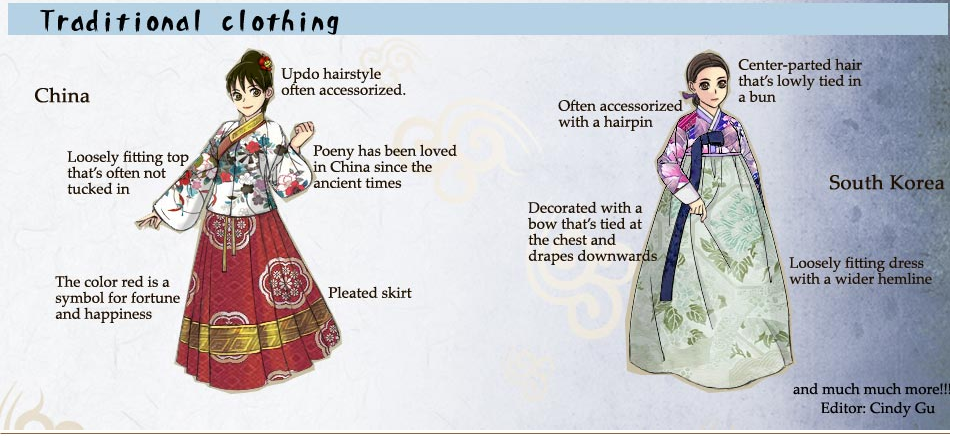
Before getting into the controversy, it helps to separate what people are actually looking at. Much of the confusion online comes from mixing up visible design differences with historical influence.
| Category | Hanfu | Hanbok |
|---|---|---|
| Origin culture | Han Chinese dress traditions | Korean dress traditions |
| Common women’s garment forms | Ruqun, aoqun, beizi-based outfits, many cross-collar robe and skirt combinations | Jeogori + chima is the most widely recognized women’s hanbok form |
| Key components | Tops, robes, skirts, layered outerwear; broad category covering many historical styles | Short jacket (jeogori), full skirt (chima), ties/ribbons, later highly distinctive formal silhouettes |
| Collar structure | Often cross-collar, right-over-left closures in many classic forms | Distinctive front closure and shaped collar on jeogori |
| Top length | Varies significantly by era and style | Women’s jeogori in later Joseon and modern hanbok is often noticeably shorter/cropped |
| Silhouette | Wide historical variety: flowing robes, long tops, layered skirts, different sleeve cuts | Fuller skirt volume, compact upper body, elegant curved lines, recognizable bow-tie details |
| Eras most cited in debate | Pre-Qing and Ming-era Han Chinese dress, especially in modern hanfu revival discourse | Joseon-era dress, especially later women’s hanbok forms |
| Modern identity | Revival movement reconstructing or reimagining historical Han Chinese clothing | Living national dress tradition closely associated with Korean holidays, ceremonies, and representation |
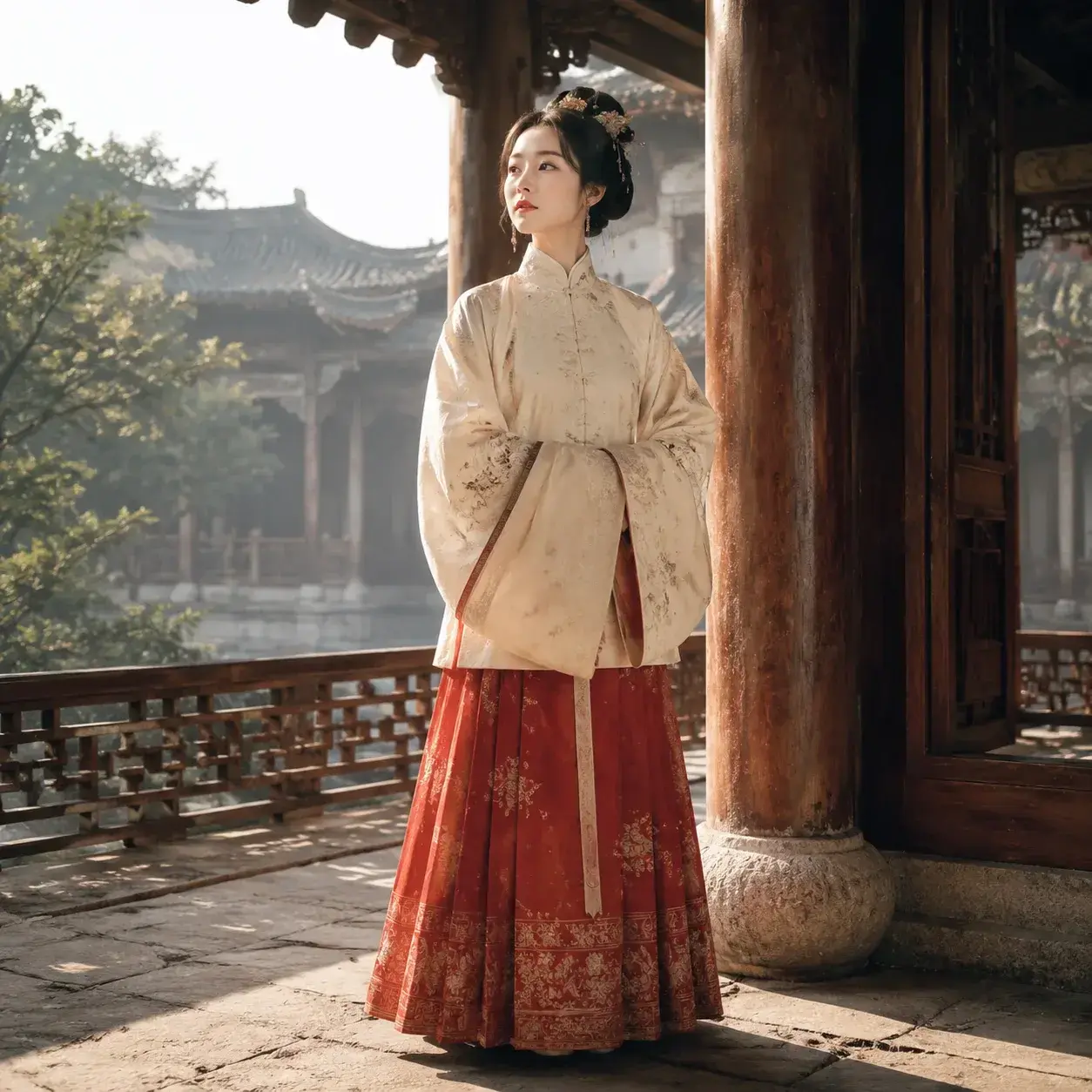
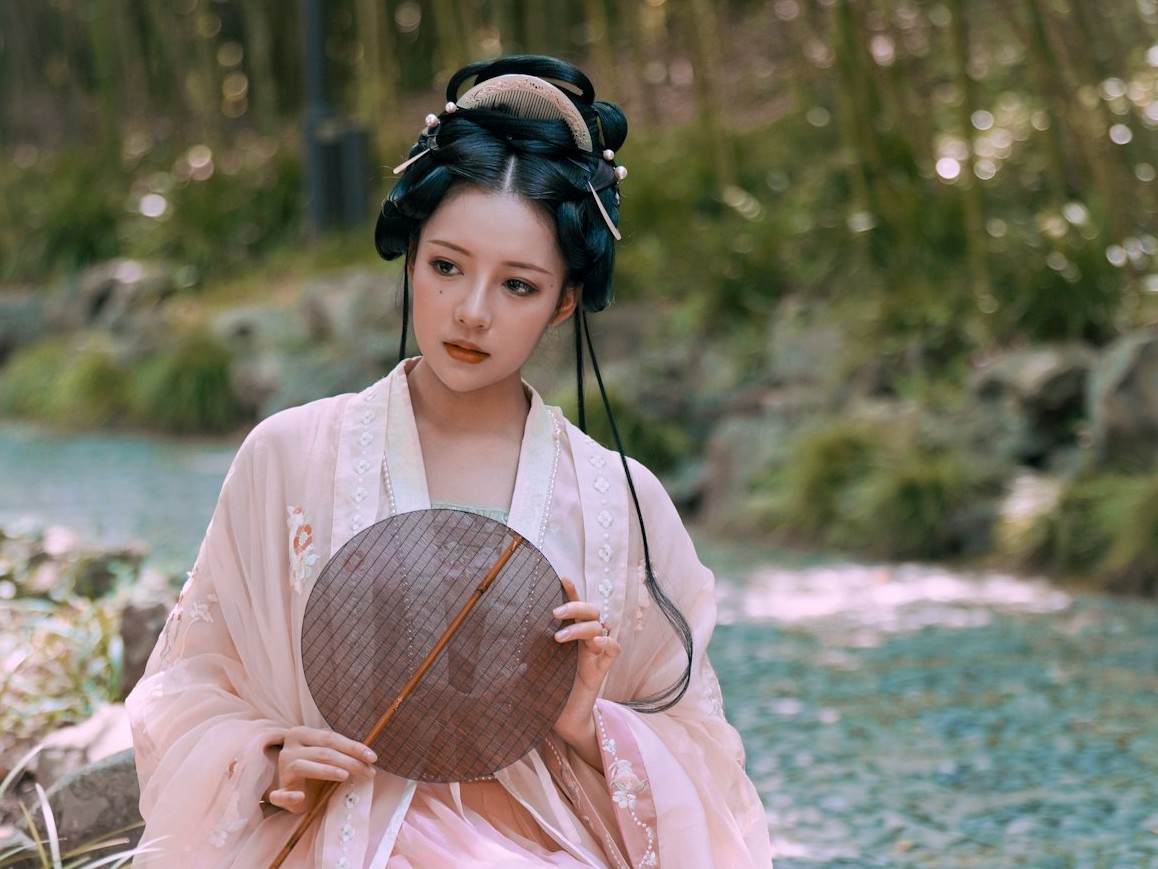
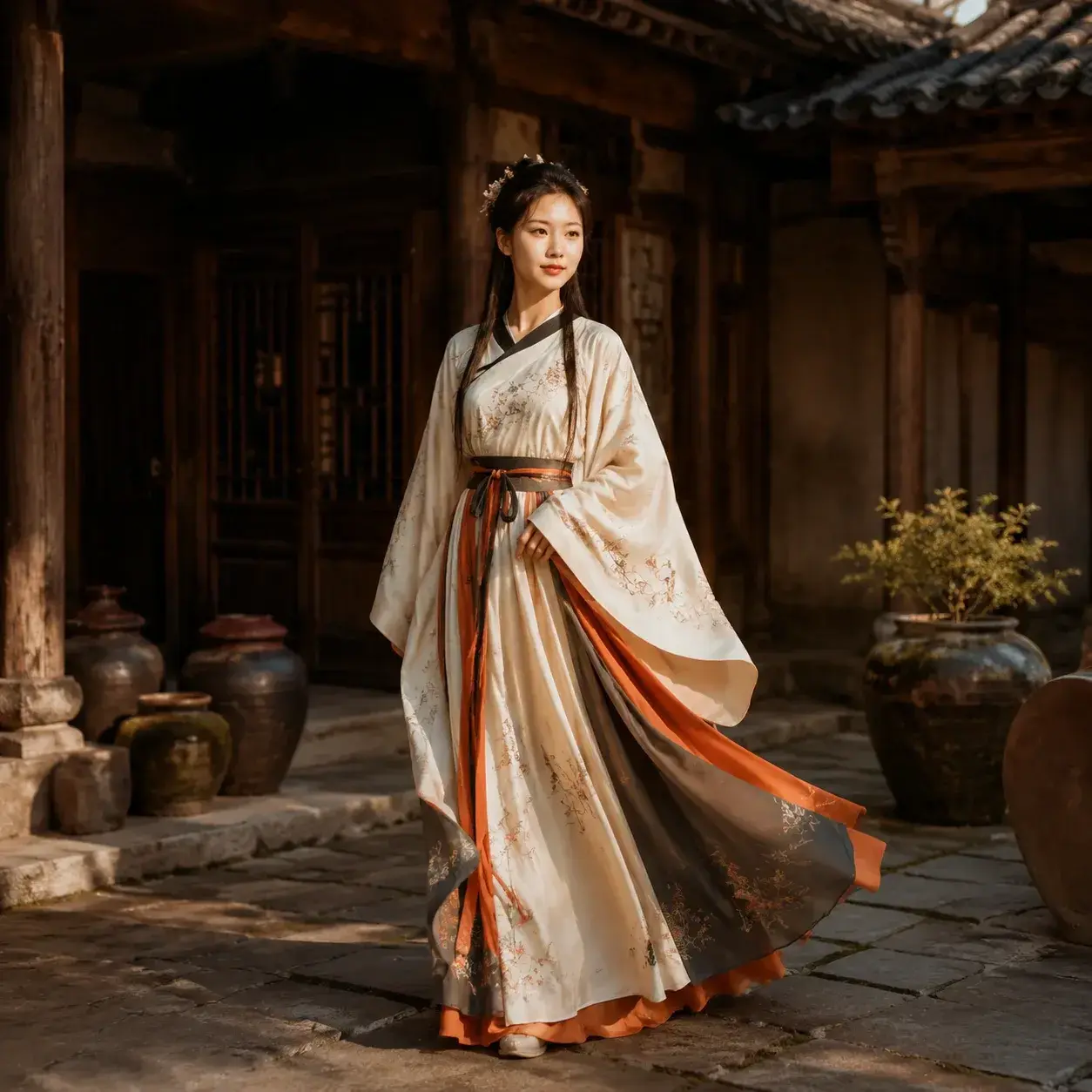
In broad terms, women’s hanfu is often described through forms such as ruqun or aoqun, while women’s hanbok is commonly recognized as jeogori + chima. Even to an untrained eye, modern hanbok usually stands out through its cropped jeogori, fuller skirt line, and bow-tie details, while hanfu functions as a wider umbrella for multiple historical Han Chinese garment systems, many of them featuring cross-collar tops and robes.
That distinction matters. In the China–Korea clothing dispute, people often jump from “these garments share historical influence” to “they are the same thing,” or from “they are visually different today” to “there was no historical exchange at all.” Both jumps are misleading. More on that in beizi hanfu.
Timeline of the Hanfu–Hanbok Dispute
The controversy makes more sense when viewed as a chain of separate incidents rather than one grand historical argument. Social media did not invent the underlying sensitivities, but it did compress them into a highly reactive cycle.
Oct–Nov 2020 — Shining Nikki
One of the most cited flashpoints came from Shining Nikki, a Chinese dress-up game with a Korean server. The game introduced hanbok-themed items, and the response quickly escalated beyond ordinary fandom criticism. Korean players objected to what they viewed as framing issues around the costume, while nationalist commenters in China argued that Korean criticism reflected an attempt to detach Korean dress history from wider East Asian influences.
The dispute spiraled fast. Statements, screenshots, and reactions spread across platforms, and the company ultimately shut down the Korean server after publicly aligning itself with a position more acceptable to Chinese nationalist opinion. For many observers, this was the moment the issue stopped being a niche costume-history disagreement and became a visible cross-border culture-war topic.
April 2021 — Call Me Emperor
Another gaming controversy followed with Call Me Emperor, a title set in a Chinese imperial environment. Backlash erupted over a hanbok-style costume that many Korean users saw as inappropriate, insensitive, or misleading in a Chinese historical setting.
This incident reinforced a pattern: the most intense flare-ups often happen not in academic spaces, but in commercial media, where costume design, marketing language, and audience assumptions collide. Even when the actual garment is stylized or fictionalized, labels matter. Once users feel that a costume is being presented as evidence for a larger historical claim, the reaction tends to move from criticism into symbolic national defense.
Feb 2022 — Beijing Winter Olympics
The Beijing Winter Olympics opening ceremony renewed the controversy for a much wider global audience. During a segment featuring representatives in ethnic-style dress, one participant appeared wearing hanbok. Critics in South Korea argued that this visual choice risked suggesting hanbok belonged within a Chinese ethnic framework rather than being recognized as a core Korean cultural tradition.
Chinese commentators and officials, by contrast, often framed the moment differently: as part of China’s presentation of the diversity of ethnic communities within its borders, including Korean Chinese communities. That distinction—between representing an ethnic minority population within China and making a broader claim about Korean national culture—was not always communicated clearly online, where short clips and emotionally framed captions spread much faster than nuanced explanation.
2022 — Vogue feature and professor protest
Another wave of debate followed a Vogue-related labeling dispute in 2022. The issue centered on whether a featured garment had been described in a historically accurate way. Korean public intellectual Seo Kyoung-duk, known for intervening in international representation disputes, criticized what he saw as mislabeling or cultural distortion. Chinese commentators responded with rebuttals, arguing either that the styling had been misunderstood or that the criticism itself oversimplified the historical relationship between regional dress traditions.
This episode illustrated an important feature of the controversy: often the fight is not only about fabric, cut, or silhouette, but about the authority to name a garment in public culture. Who gets to define what it is? A stylist? A magazine? A historian? A museum? A national audience? On social media, those questions are rarely settled calmly.
Recurring flare-ups — holidays, marketplaces, influencers, and repost cycles
Beyond headline incidents, the issue keeps resurfacing through holiday-season marketplace listings, influencer videos, social media selfies, reposted historical images, and political commentary. Chuseok content, Lunar New Year campaigns, tourism promotions, or wedding-style photo shoots can all trigger arguments if users believe a costume has been mislabeled.
Online marketplaces are especially prone to controversy because sellers often use broad, search-friendly keywords rather than precise historical terminology. An image may be tagged “Asian traditional dress,” “Chinese costume,” “Korean style hanfu,” or another hybrid phrase designed for clicks rather than accuracy. Those shortcuts can then circulate as “proof” of bad faith, even when the original source was sloppy marketing rather than a serious historical claim. hanfu sewing pattern has the detail we've skipped here.
The Shared History Behind the Debate
The historical background is real, but it is frequently flattened in online arguments.
Costume historians generally place both traditions within a long history of exchange across East Asia. Clothing styles traveled through diplomacy, trade, migration, intermarriage, religious networks, textile circulation, and court prestige systems. Ideas about sleeves, collars, skirt volume, fabric hierarchy, ceremonial dress, and status markers moved across borders over centuries. That was normal for the region, just as artistic and courtly influences circulated in many parts of the world.
A commonly cited scholarly point is that Joseon-era Korean dress shows influence from Ming-era Chinese clothing. This is not a fringe claim, and it appears in museum interpretation, dress-history writing, and comparative scholarship. But influence is not the same as identity. Saying that one tradition influenced another does not mean the two are interchangeable, nor does it erase the local development that gave Korean dress its own silhouette, social meanings, construction methods, and ceremonial life.
This is the part many viral posts skip. Historical dress does not move through time as a single fixed object. It changes through borrowing, adaptation, and localization. A court may adopt prestigious features from a neighboring power, then reshape them over generations according to local taste, class norms, climate, technology, and aesthetics. What begins as influence can, over time, become a clearly distinct tradition.
That is especially important in this debate. Shared roots do not cancel difference, and difference does not cancel historical connection. Both things can be true at once.
Readers should also be careful with single-origin arguments. National histories are often told in neat, emotionally satisfying lines, but clothing history is usually messier. Garments evolve across centuries; categories like “hanfu” are themselves broad and reconstructed in modern discourse; and what people now think of as timeless national costume is often the product of multiple historical phases, not one pure point of origin.
What Historians and Museums Generally Say
While scholars differ in emphasis and terminology, several points are widely consistent across museum displays, costume-history scholarship, and reputable educational sources:
1. Hanfu and hanbok are not the same garment tradition today. Their recognizable modern forms are distinct. 2. Historical influence between Chinese and Korean dress traditions is real. This is especially discussed in relation to court dress and the Joseon–Ming relationship. 3. Influence is not equivalent to ownership of another culture’s modern national dress. 4. Internet debates often overstate certainty. The strongest social media claims are usually more absolute than the underlying scholarship.
Museum collections tend to be more careful than online discourse. They often describe clothing through dynasty, court context, material culture, and specific construction details rather than broad nationalist slogans. That level of precision matters. A curator might discuss a garment’s cut, textile, period, and ceremonial use without turning it into a zero-sum contest over who “invented” an entire national wardrobe.
In other words, if you want to understand this issue, it helps to separate three different questions:
- What do these clothes look like today?
- What historical influences shaped them?
- How are modern national identities using them now?
Those are related questions, but they are not interchangeable.
Why “Who Copied Whom?” Is the Wrong Question
The most viral version of this controversy asks: Who copied whom? It is catchy, confrontational, and often historically shallow.
That framing is misleading for several reasons.
First, it assumes that cultural history moves in a single straight line from one owner to one borrower. In reality, regional dress traditions often form through layered exchange, not one-time copying.
Second, it confuses premodern cultural influence with modern political identity. A garment tradition can be shaped by outside influence centuries ago and still become a deeply rooted, independent national symbol.
Third, it encourages a winner-take-all mentality. But clothing history rarely works like a patent dispute. Shared forms, adapted elements, and parallel evolution are common across the world—from court dress to tailoring techniques to textile patterns.
A better question is: How did related but distinct traditions develop over time, and why are people so sensitive about them now? That question opens the door to actual history instead of online point-scoring.
Why the Debate Feels So Intense Online
The emotional force of this debate does not come from clothing alone. It comes from what clothing represents.
For many Koreans, hanbok is not just historical costume. It is tied to family ceremonies, holidays, school memory, tourism branding, national image, and cultural pride. For many Chinese participants in the debate, hanfu is tied to a modern revival movement, renewed interest in premodern Han Chinese aesthetics, and a broader effort to reclaim or celebrate historical dress traditions.
When these identities meet in algorithm-driven spaces, every image can become a symbolic battleground. A mislabeled outfit is no longer just a mislabeled outfit; it becomes evidence, insult, or resistance, depending on who is posting it and who is reacting.
This is also why casual international audiences get confused. A K-drama fan may see one viral post saying hanbok was copied from China, then another saying China is stealing Korean culture, and both posts may be presented with total certainty. Without historical context, the loudest claim often wins attention, not the most accurate one.
What’s Actually True? A Neutral Synthesis
Here is the clearest balanced summary:
Hanbok and hanfu are distinct clothing traditions today. Korean dress, especially in the Joseon period, was influenced at points by Chinese dynastic clothing, including Ming styles. But historical influence does not make modern hanbok the same thing as hanfu, nor does it erase Korea’s own long process of adaptation and development. The online controversy is real, but social media usually presents it in more absolute terms than historians do.
That synthesis will disappoint people looking for a simple victory statement, but it is closer to the historical record than the usual internet slogans.
FAQ
Is hanbok the same as hanfu?
No. They are not the same in their recognizable modern forms. Hanfu is a broad umbrella term for historical Han Chinese clothing traditions and modern revival styles based on them. Hanbok refers to Korean traditional dress, with highly recognizable Korean silhouettes and garment construction.
Did hanbok come from hanfu?
That depends on what exactly you mean by “come from.” Historians commonly note that Joseon-era Korean dress was influenced by Chinese clothing, especially Ming-era forms, but that does not mean modern hanbok is simply hanfu under another name. Over time, Korean dress developed its own distinctive structure, silhouette, and cultural role.
Why do people keep fighting about this online?
Because the issue combines history, nationalism, platform algorithms, visual misunderstanding, and identity politics. A single mislabeled image can trigger much larger arguments about ownership, recognition, and respect.
Was the Beijing Olympics incident a claim that hanbok is Chinese?
The controversy centered on interpretation. Chinese messaging often framed the hanbok appearance as part of representing ethnic minorities within China, including Korean Chinese communities. Many critics in South Korea saw the segment as blurring or appropriating a symbol strongly associated with Korean national culture. The disagreement was as much about public meaning as about costume itself.
What should I trust: social media threads or museum sources?
If you want reliability, start with museum collections, university press scholarship, academic costume history, and carefully sourced reporting. Social media can be useful for seeing how people feel, but it is usually poor at distinguishing between visual similarity, historical influence, and modern national identity.
Is “who copied whom” a useful way to understand the issue?
Usually not. It oversimplifies centuries of exchange and adaptation. A better approach is to ask how related regional dress traditions influenced one another and then evolved into separate, meaningful forms.
Final Thoughts
The hanfu–hanbok controversy is easiest to misunderstand when reduced to a slogan. In online debate, garments are often treated like flags, and every label becomes a loyalty test. But clothing history is rarely that tidy. Hanfu and hanbok can be historically connected without being historically identical. They can reflect shared regional exchange and still stand as distinct cultural traditions today.
If you keep that distinction in mind—between influence and identity, between scholarship and social media—you will be better equipped to read the next viral argument with a cooler head. If you have seen a new flare-up online, save the example, check the labeling carefully, and compare it against museum or academic sources before drawing conclusions. Thoughtful discussion is far more useful than repeating the loudest post in your feed. Related reading: hanfu chinese new year.