



Why leather, here
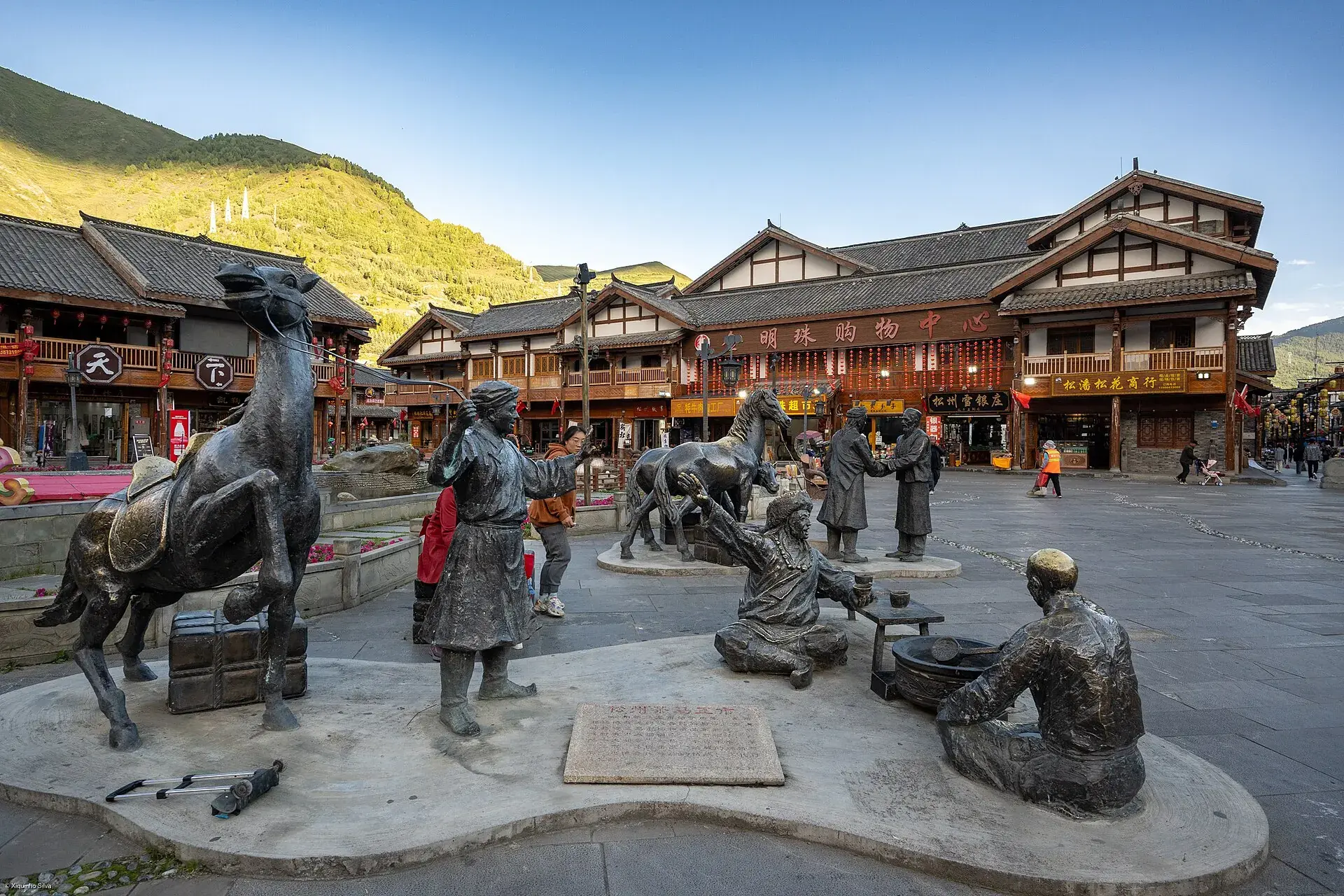
Songpan is a walled garrison town at the eastern edge of the Tibetan plateau, at the headwaters of the Min river. It sat on the tea-horse road. Everything that came through came on an animal, and everything on the animal was leather. So the craft here was never decorative. It was harness, satchel and belt — things that had to survive the road.

Two hours at the bench, and this is yours
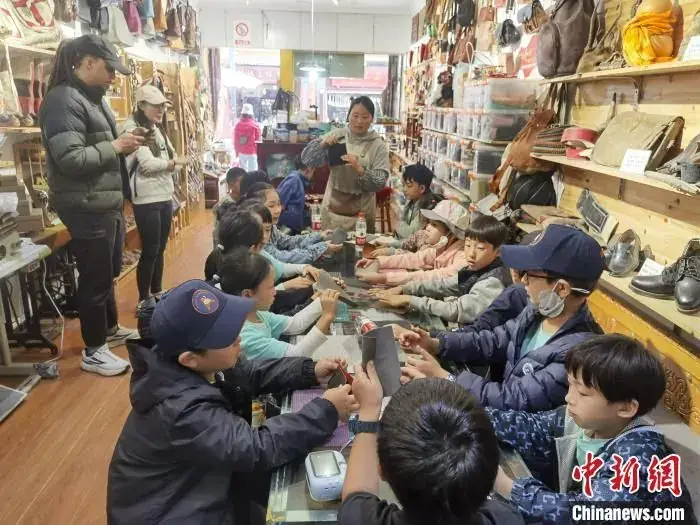
Two or three hours in the last leather workshop inside Songpan's Ming walls — there were once sixty. You choose the hide, cut it in one pass, stitch it with two needles, and put it in your pocket.
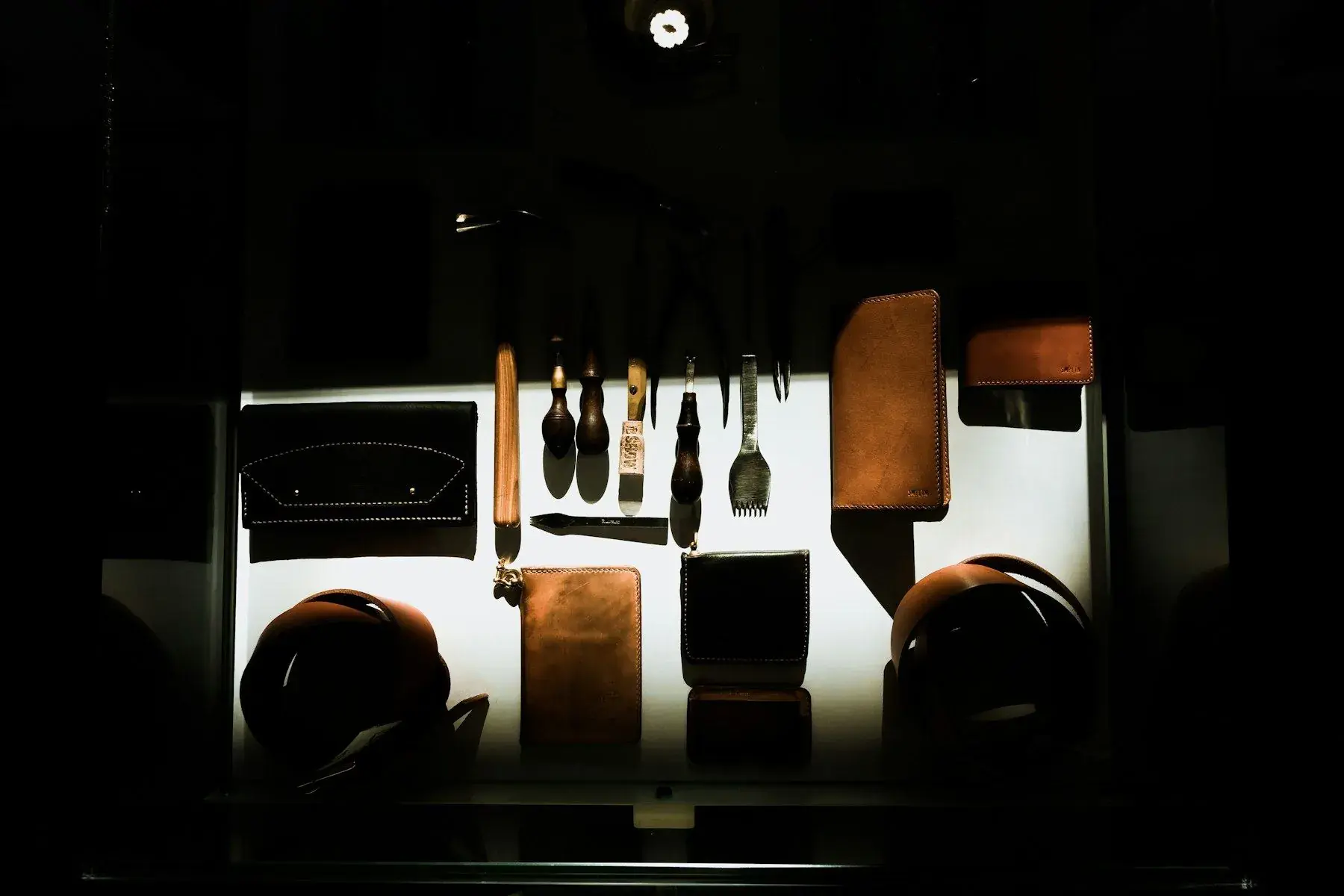
- A shop hung floor to ceiling with boots, satchels and belts, and a whole wall of tools
- Guzi hide — taken only from a mule's hindquarters, sixty-plus operations, no machine at any stage
- Pieces from the 1950s and 60s bought back from herding families, still in use when they were found
- A walled Ming garrison town at the headwaters of the Min river
- Several hides, until you can feel where one stretches and one won't
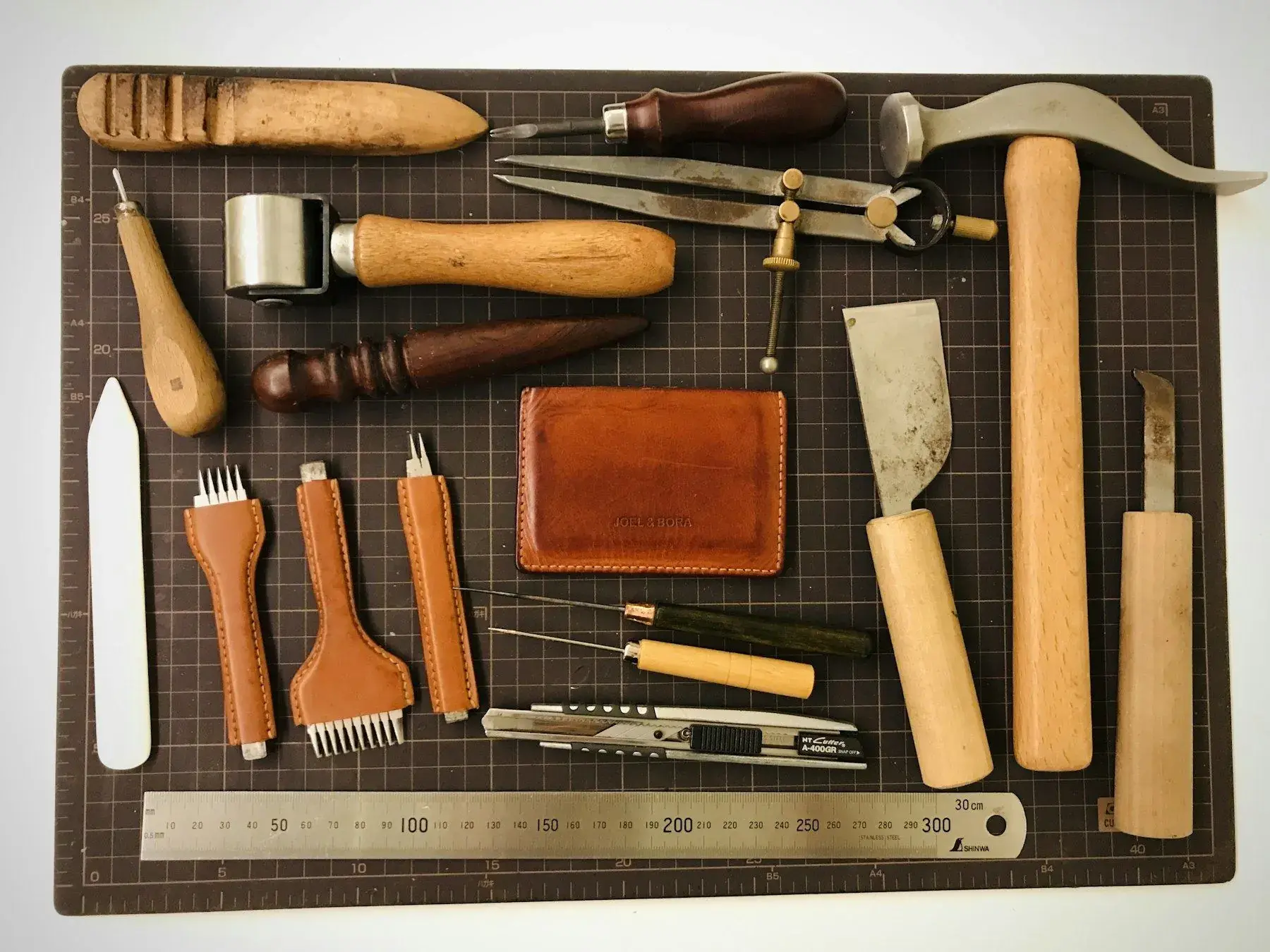
- A round knife heavy enough to make you concentrate
- An awl, two needles and waxed thread
- That the town once held more than sixty leather workshops and now holds one
- How the fifth-generation heir left a primary-school teaching job to come back to it
- The standard her grandfather's generation worked to: one thing should last you a lifetime
- The small piece you cut, stitched and finished — slightly imperfect, unmistakably yours
- The saddle stitch, which you can now do badly but correctly
- An understanding of why hand-sewn leather outlives machine-sewn
What is on the bench
Hide · knife · awl · stamp

How it unfolds
-
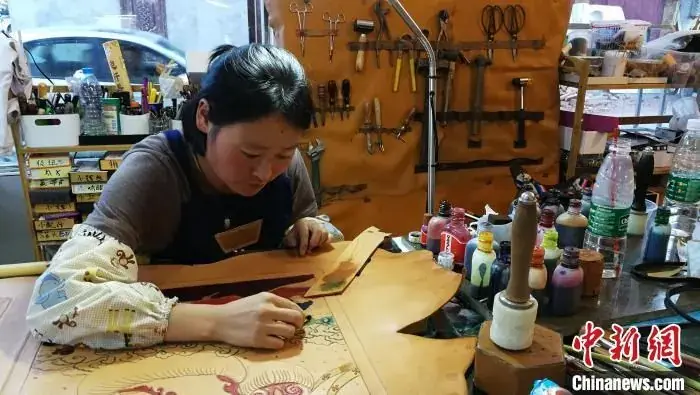
About a decade ago the fifth-generation heir to this workshop left a teaching job at a primary school in Hongyuan county and came back to keep the craft going — the first woman to hold it in over a hundred years. In 2014 she borrowed from relatives to rent this shop inside the old town. It is a working workshop and, quietly, a museum of Songpan leather: the old pieces on the shelves were bought back from herders, sixty and seventy years old and still in use when she found them.
-
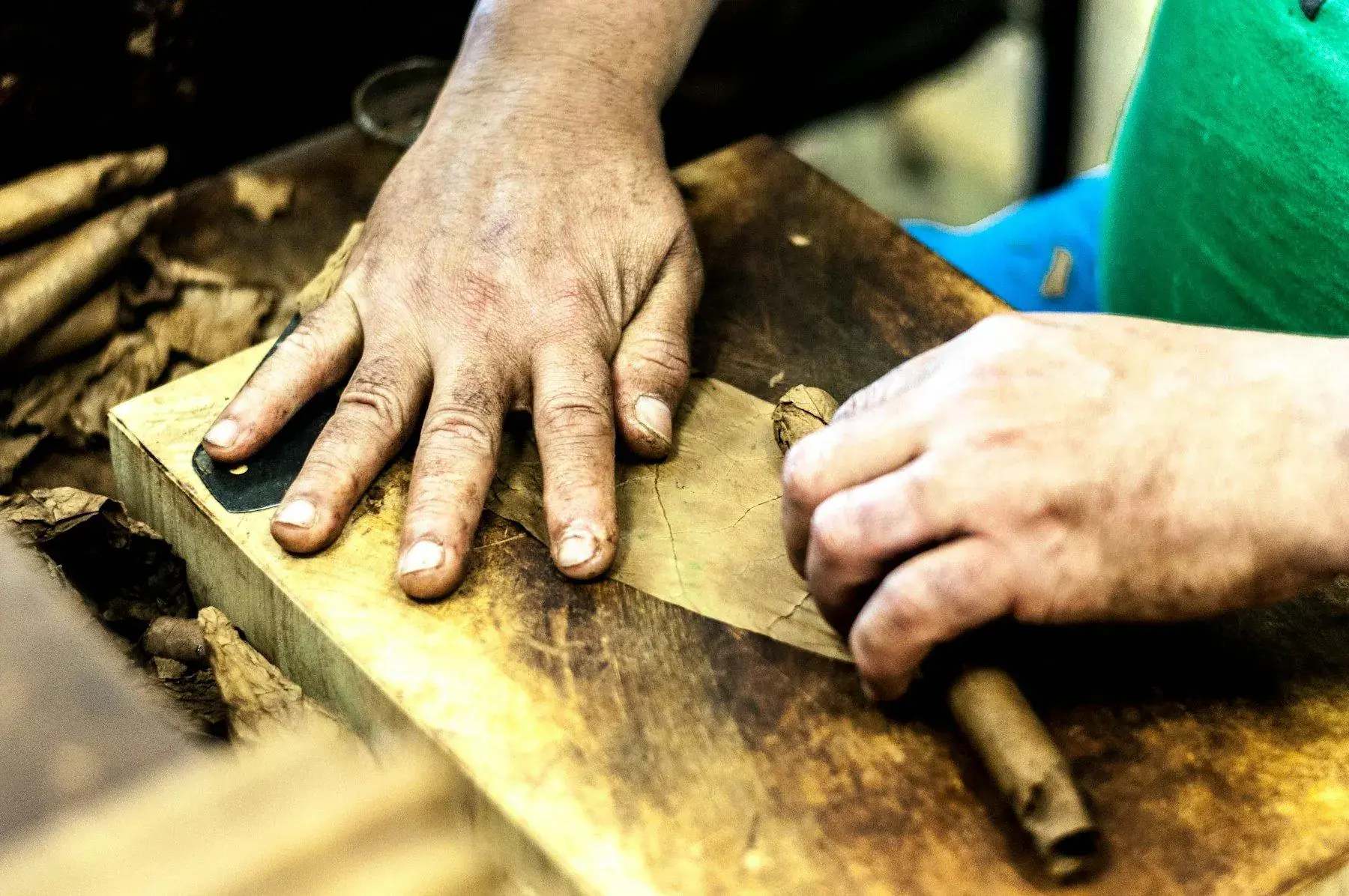
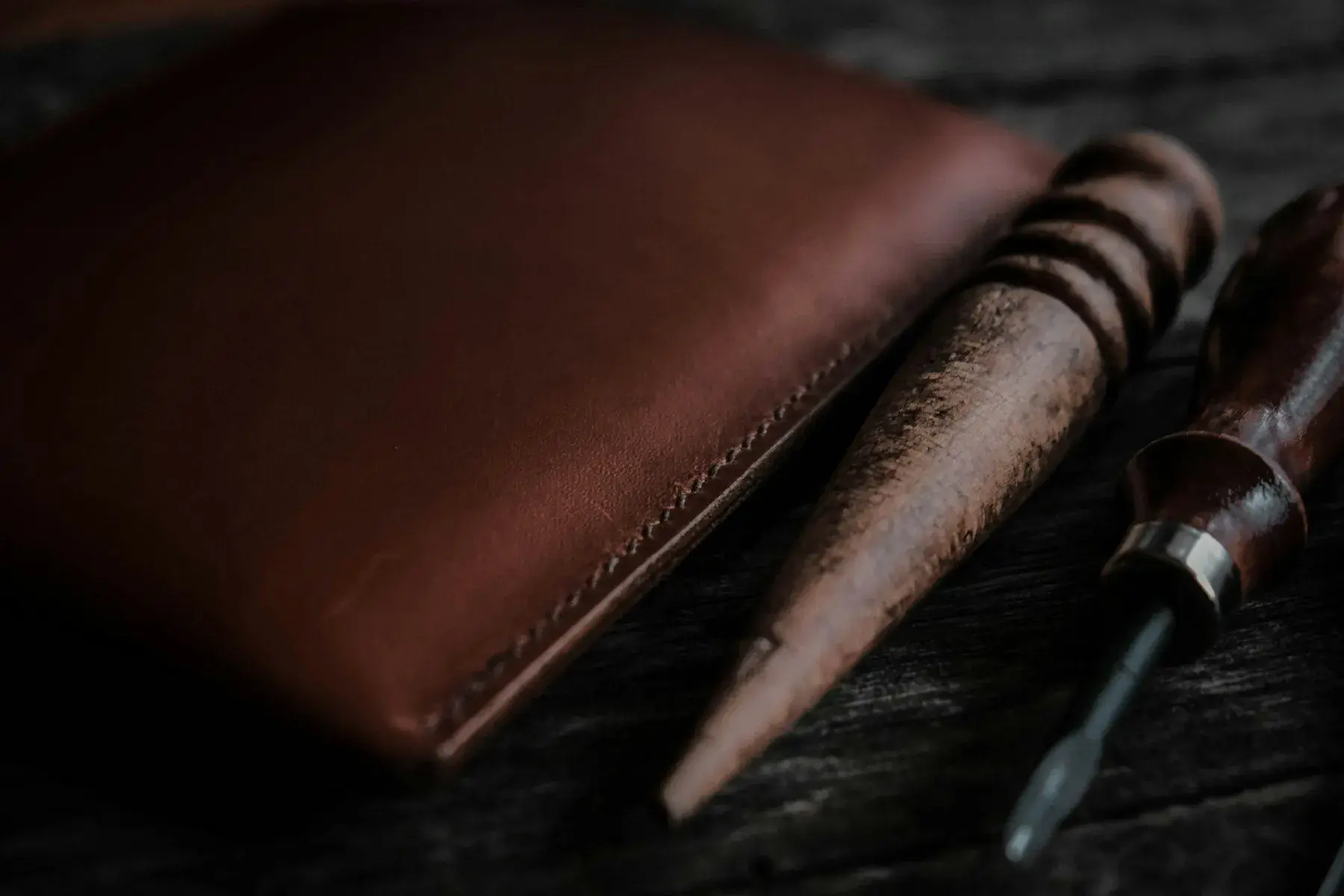
The prized material here is guzi hide, taken only from a small area on a mule's hindquarters and put through more than sixty operations — soaking, dehairing, degreasing, softening, smoking, colouring, working — with no machine involved at any stage. What comes out carries the animal's own grain, and no two pieces have ever matched.
-
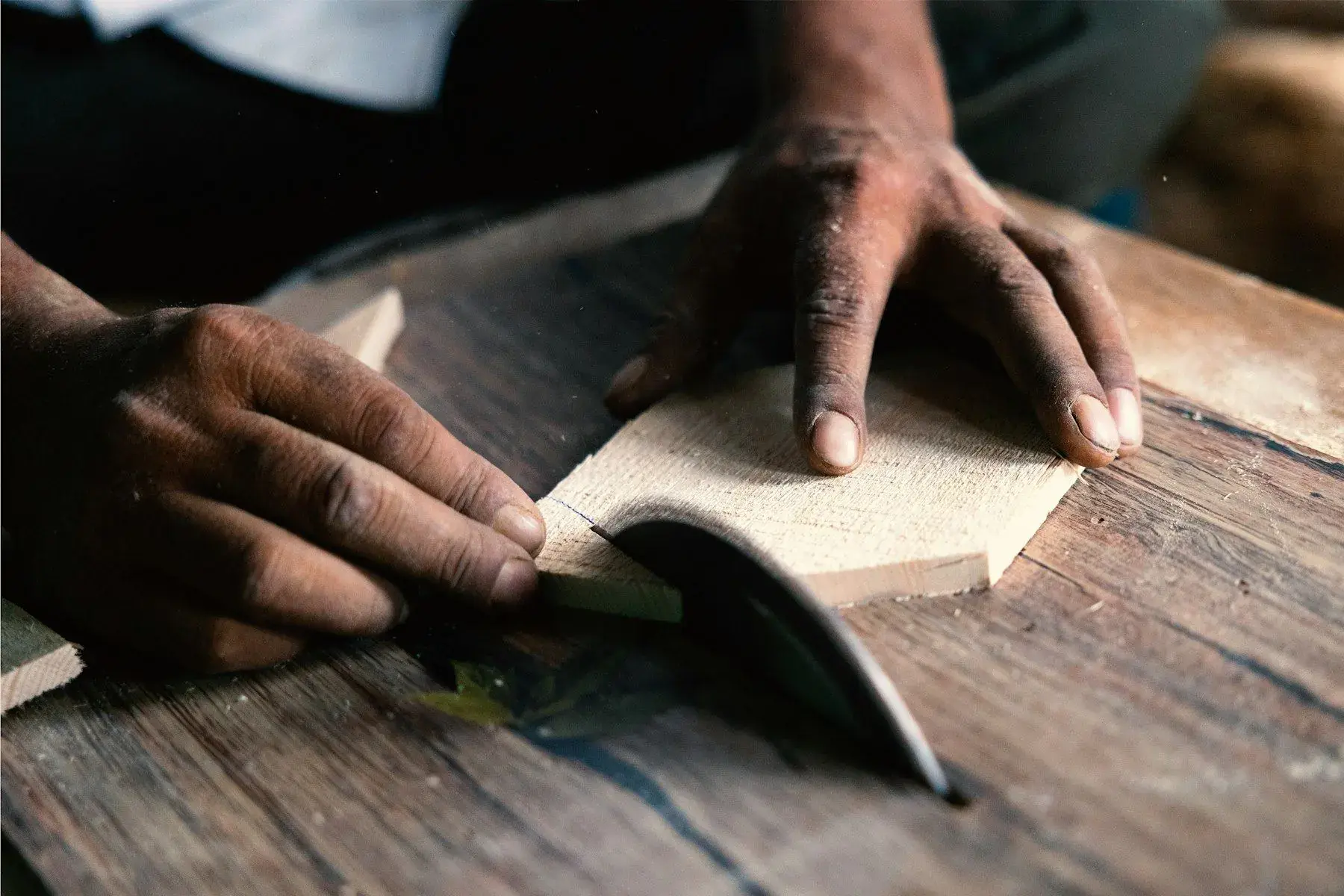
This leather is heavy, and cutting it is physical. The maker is blunt about what learning it cost: hands opened up again and again from forcing the shears, and a father whose palms were solid callus. You cut in one continuous pass against a steel edge, because a stop-start line shows forever. This is the moment the room goes quiet.
-
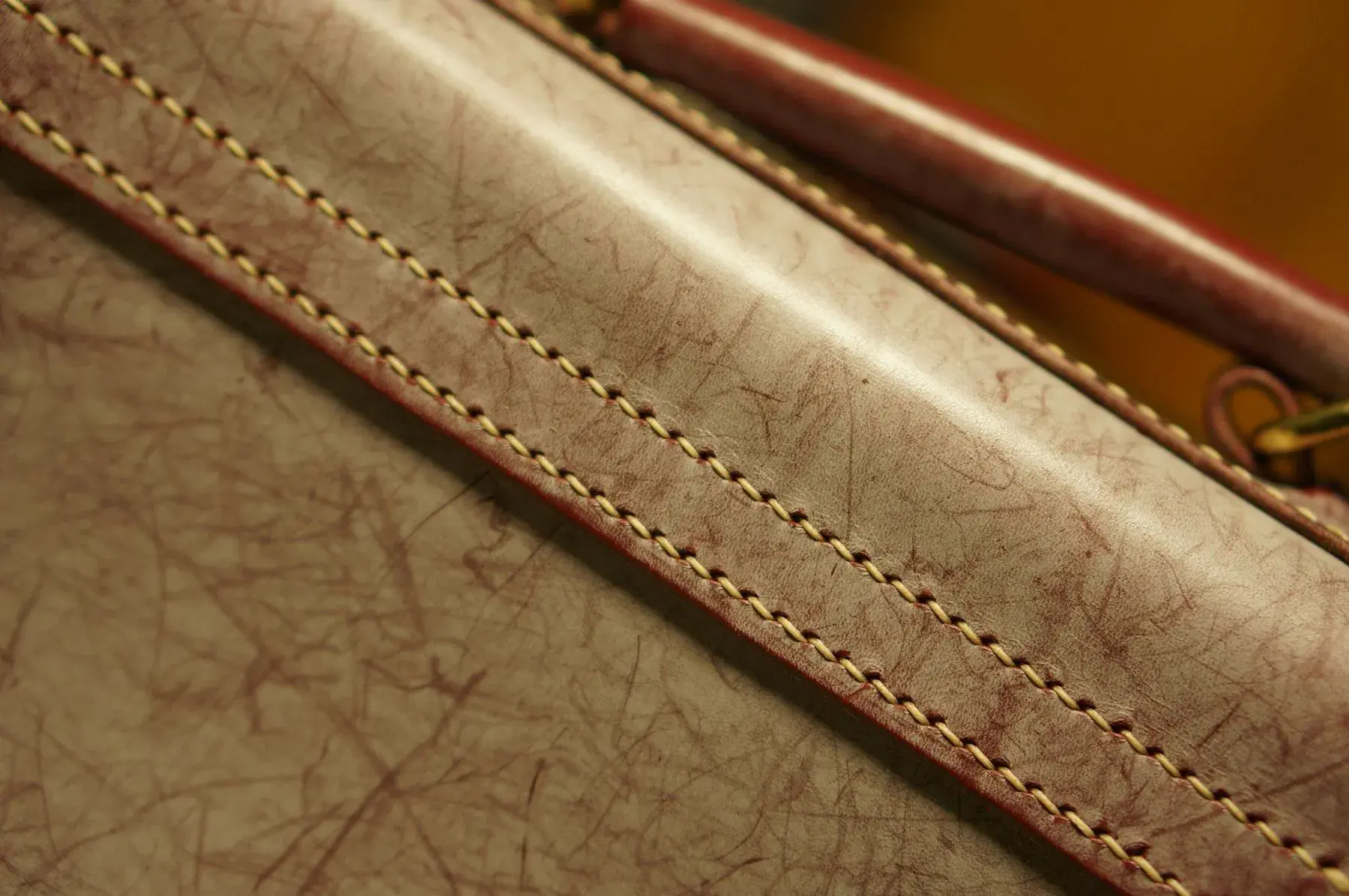
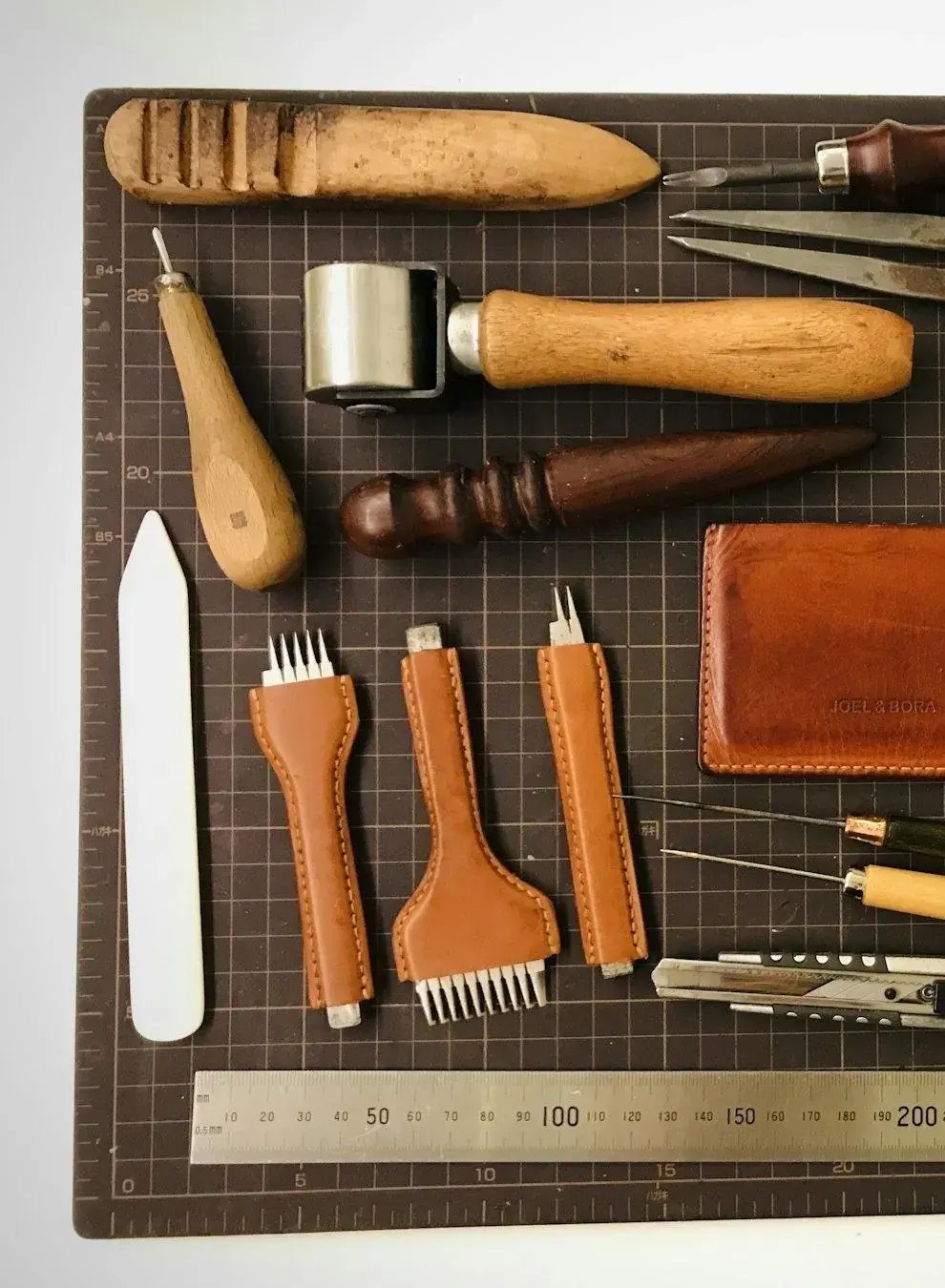
You pierce each hole with an awl, then pass two needles through it from opposite sides — the reason a hand-sewn seam outlives a machine-sewn one. It is slow and rhythmic, and about ten holes in your hands work it out without you.
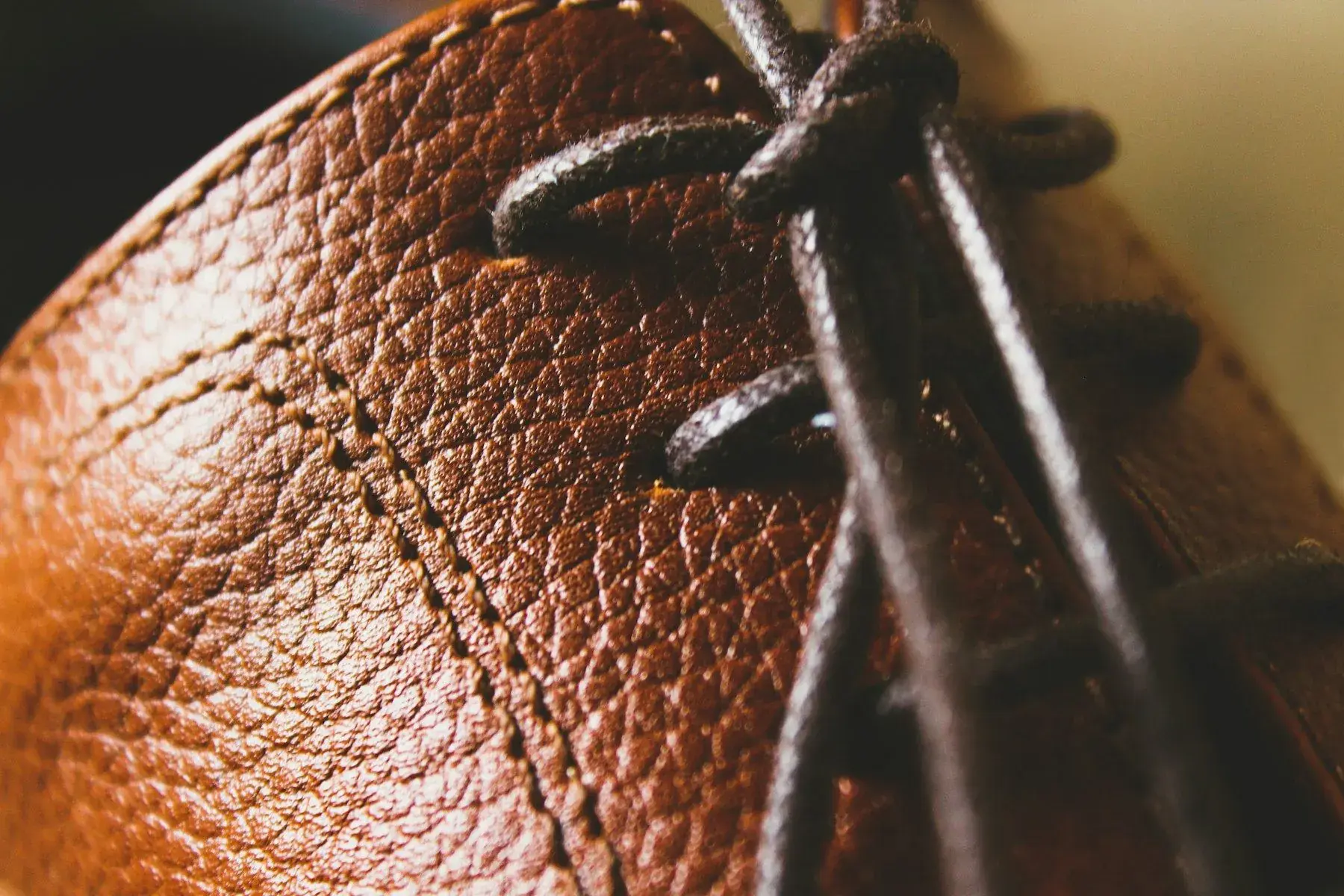
“The idea was that one thing should last you a lifetime.”
The standard this trade was held to
That is the maker on the pieces her grandfather's generation produced — the ones she has been buying back from herding families across the grassland counties, still in service after sixty or seventy years.
It is also the argument she is having with her own trade. Buyers now want leather goods that look considered and feel soft, and the toughest construction is rarely the most comfortable. She trained in modern leatherwork in Guangdong specifically to find the balance.
You are not going to make anything that lasts a lifetime in three hours. But you will do the two steps that cannot be undone — the cut and the finish — which is the difference between a piece you made and a piece you were handed.
Good to know
Book a bench
Two to three hours, on its own, inside the old town. Tell us a date.
Start planning- 2–3 hours
- The last workshop in the town
- Provincial heritage
- A piece you made