



 18 days China, End to End Beijing → Xi'an → Chuanzhusi → Jiuzhaigou → Chengdu → Zhangjiajie → Guilin → Yangshuo → Shenzhen From $6,360 View route
  3 days 4-Day Tour of Siguniang Mountain, Biepa Gou, and Dagu Glacier Chengdu → Lixian → Heishui County From $1,599 View route
  5 days Above the Pillars, Then Below Zhangjiajie From $1,430 View route
  3 days After the Last Booth Guangzhou From $840 View route
  13 days All the Way West Xi'an → Dunhuang → Turpan → Kashgar → Shanghai From $3,500 View route
 Shenyi: The One-Piece Wrap Robe of Hanfu
Introduction
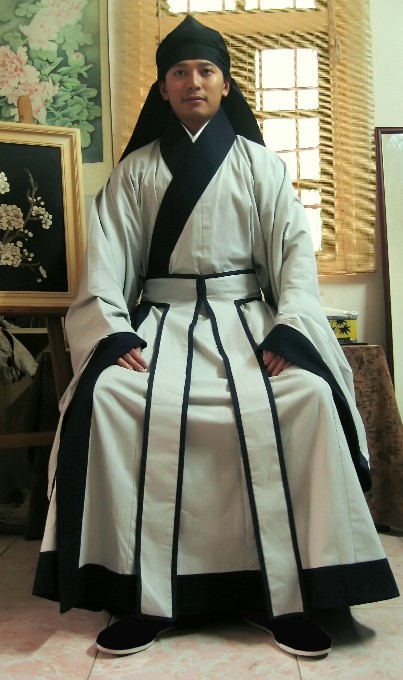
A shenyi (深衣) is a traditional Hanfu robe made by sewing the upper garment (yi) and lower skirt (chang) into one continuous wrap-style piece. In other words, it is not simply a long robe, but a garment defined by how it is constructed. In the world of shenyi hanfu, this form matters because it sits at the intersection of clothing history, Confucian ideals, and the visual language many people now associate with early Chinese dress.
If you have come across terms like quju, zhiju, or even “Han dynasty robe” and felt unsure what makes a shenyi distinct, you are not alone. This guide explains the structure of the shenyi, the famous 12-panel symbolism, the difference between quju vs zhiju, and how the shenyi differs from other Hanfu types.
Definition Box: What Is a Shenyi? A shenyi is a Hanfu garment in which the top and skirt are cut separately but sewn together into a single robe that wraps around the body. It usually features a crossed collar, right-over-left closure, and a belt or sash for fastening. The name is often translated as “deep robe” because the garment encloses the body in a continuous, wrapped form.
What Is a Shenyi? (深衣 Explained)
The word shenyi is usually understood as “deep robe” or “deep clothing.” The character shen suggests depth, enclosure, or a garment that wraps the body fully, while yi means clothing or robe. Together, the term points to a robe that is physically and visually enveloping.
What makes a shenyi important is that it refers to a specific construction principle, not just a general robe shape. A shenyi joins the upper garment and lower skirt into one continuous piece. That detail may sound simple, but it is what separates the shenyi from many other Hanfu categories built from separate layers or different cutting logic.
Visually, a shenyi typically has an overlapping front, a crossed collar, a long flowing body line, and a sash fastening rather than buttons. The garment wraps around the wearer, creating a clean and elegant silhouette that can look restrained or dramatic depending on the specific cut.
In modern Hanfu discussions, the word shenyi can refer to two slightly different things. First, it can mean the historical garment form described in classical texts and represented in early dress history. Second, it can refer to modern reconstructions inspired by those historical and ritual descriptions. That is why you may see some variation in styling online: not every modern “shenyi” reflects exactly the same period or interpretive approach.
How the Shenyi Is Constructed
At its core, the shenyi begins with two parts: the upper section (yi) and the lower section (chang). These are made separately and then stitched together at the waist, creating a robe that reads as a single garment.
The robe then wraps around the body and is usually secured with a belt, ribbon, or sash. Instead of relying on visible front buttons, it uses wrapping and tying to hold its shape, which gives the finished garment its smooth and continuous line.
A classic shenyi commonly uses the jiaoling youren collar style: a crossed collar with the right side closing over the left. This right-over-left closure is one of the most recognizable features in Hanfu and is a useful detail for beginners trying to identify historical-inspired garments.
The overall silhouette changes depending on whether the garment is quju or zhiju, but the defining trait remains the same: the top and lower section are joined into one robe.
The Classical “12 Panels” Symbolism
The shenyi is not only discussed as clothing. In classical Chinese thought, especially as reflected in the Book of Rites (Liji), it was also admired as a garment that expressed moral order. This is one reason the shenyi occupies such a respected place in conversations about traditional Chinese dress.
In these ritual and literary traditions, the garment was seen as more than something practical to wear. Its structure and proportions were tied to ideas about proper conduct, balance, restraint, and harmony. That symbolic reading helps explain why the shenyi is sometimes described as a Confucian robe, although that phrase should be used carefully: it refers to an idealized moral and ritual association, not to a single everyday uniform worn by all Confucian scholars across time.
One of the most repeated details is the idea of twelve panels. Traditionally, these panels are linked to the twelve months of the year, suggesting completeness, order, and alignment with the natural cycle. Rather than being random tailoring, the garment was imagined as echoing the structure of the world itself.
It is important to keep the scope clear. These symbolic readings come most directly from classical ritual interpretation, especially the ideal shenyi described in texts. They do not necessarily apply equally to every robe later labeled “shenyi” in historical practice or in modern reconstruction communities.
Feature-to-Meaning Map
The classical symbolism of the shenyi is often summarized through a set of visual features and moral meanings:
- Twelve panels → the twelve months, representing wholeness, order, and harmony with the yearly cycle.
- Rounded sleeves → the compass and benevolence, suggesting gentle conduct and cultivated character.
- Square collar → the carpenter’s square and righteousness, symbolizing correctness, principle, and moral steadiness.
- Straight back seam → uprightness and integrity, a visible reminder of straight moral conduct.
- Level hem → fairness, balance, and measured behavior, indicating emotional and ethical restraint.
Taken together, these details explain why the shenyi is so often discussed in both clothing history and philosophical writing. It was admired as a robe whose very cut could teach posture, order, and self-discipline.
Quju vs Zhiju Shenyi
Among the best-known forms of Han-era shenyi, two names appear constantly: quju (曲裾) and zhiju (直裾). For many beginners, these are the most confusing terms, because both refer to shenyi-style robes but with noticeably different silhouettes.
The simplest distinction is this: quju has a curved, wrapping hem that circles around the body, while zhiju falls in a more straight, vertical line. Once you know that, historical images and modern reconstructions become much easier to read.
This difference is not only visual. It also reflects changes in construction, practicality, and clothing systems over time. Understanding quju and zhiju helps explain why the shenyi developed the way it did.
Quju vs Zhiju Comparison Table
| Feature | Quju Shenyi | Zhiju Shenyi |
|---|---|---|
| Hem shape | Curved lower edge that wraps around the legs | Straighter lower line that falls more vertically |
| Overall silhouette | More winding, wrapped, and layered | Cleaner, longer, more direct vertical drape |
| Visual impression | Elegant, enveloping, slightly more elaborate | Simpler, calmer, more streamlined |
| How it closes | Extended wrapping around the lower body | Front overlap with less dramatic lower-body circling |
| Historical association | Commonly linked with earlier Han imagery | Became more common as robe construction evolved |
| Practical function | Helped cover the lower body more securely | Easier movement and simpler wear in a more developed clothing system |
| Why it developed | Useful when undergarment systems were less developed | Grew in relevance as trousers and layered undergarments became more standardized |
Why Quju Looked the Way It Did
The quju shenyi is especially recognizable for the way its lower hem curves and wraps around the body, sometimes creating a sweeping, coiling visual effect. This was not just decorative. In earlier periods, when the system of underlayers and lower-body garments was not yet as developed or standardized as in later eras, a more fully wrapping robe helped provide coverage and modesty.
That practical concern shaped the garment’s structure. The robe enclosed the body more completely, especially around the legs, which helps explain why quju often appears more dramatic and more tightly wrapped in reconstructions and tomb imagery.
Why Zhiju Became More Common
By contrast, the zhiju shenyi has a straighter hem and less of that circling wrap. As clothing construction and undergarment systems developed, there was less need for such extensive lower-body wrapping. A straighter robe became both practical and visually efficient.
That does not mean zhiju was “better,” only that it fit a changing clothing environment. For modern readers, the easiest way to think about it is this: quju solves coverage through wrapping, while zhiju reflects a later, simpler robe logic made possible by more developed garment layering underneath.
Historical Development of the Shenyi
The shenyi has deep roots in the history of Chinese dress, and its story stretches across multiple periods rather than belonging to a single dynasty alone.
Early Origins and Classical References
Textual discussions of the shenyi are often traced to early ritual literature, especially the Book of Rites (Liji), where the garment is described not only in structural terms but also in symbolic ones. In this context, the shenyi appears as an idealized robe associated with decorum, moral self-presentation, and social order.
This is part of why the shenyi is sometimes treated as foundational in Hanfu history. It embodies a way of thinking about dress in which cut, etiquette, and ethics are linked.
Han Dynasty Associations
Although its roots predate the Han dynasty, the shenyi is especially associated with Han dynasty clothing in the popular imagination. This is partly because Han imagery, excavated figures, and later discussions often foreground wrapped robe forms such as quju and zhiju.
For many enthusiasts, when they picture an early Chinese robe with a cross-collar and long wrapped line, they are picturing some version of a shenyi-related silhouette. That makes the garment central not only to scholarship, but also to reenactment, costume design, and modern Hanfu revival culture.
Later Influence and Reconstruction
Over time, robe forms diversified, and not every later garment followed the same logic as the classical shenyi. Still, the shenyi remained influential as an idea: a joined robe with strong literary prestige and ritual significance.
Modern Hanfu makers and wearers often reconstruct the shenyi based on a mix of classical texts, paintings, excavated artifacts, and later interpretive tradition. As a result, what you see sold or worn today may range from historically careful reproductions to looser, aesthetic adaptations inspired by the concept.
If you are sourcing a shenyi for travel, study, performance, or photography in China, it helps to ask whether a piece is based more on textual ritual ideals, Han dynasty visual references, or modern Hanfu styling. In our experience helping overseas visitors plan culture-focused experiences, this one question often saves a lot of confusion when choosing attire for museum visits, heritage shoots, or themed events.
Shenyi vs Other Hanfu Types
A common beginner mistake is to treat “shenyi” as a catch-all word for any long Hanfu robe. In reality, it is only one garment category within a much wider Hanfu system.
The clearest way to understand the shenyi is to compare it with other common forms like ruqun and pao.
Shenyi vs Ruqun vs Pao
| Garment Type | Basic Structure | Key Look | Main Difference from Shenyi |
|---|---|---|---|
| Shenyi | Upper garment and skirt cut separately, then sewn into one continuous robe | Wrapped, cross-collared, sash-tied one-piece silhouette | Defined by the joined construction of top and skirt |
| Ruqun | Separate top (ru) and skirt (qun) worn as two pieces | Distinct top-and-bottom outfit | Not a one-piece joined robe |
| Pao | Long robe category, often cut as a robe rather than as joined yi + chang logic | Continuous robe silhouette | May look similar in length, but does not necessarily follow shenyi construction principles |
Shenyi vs Ruqun
A ruqun consists of a separate upper garment and skirt worn together as two pieces. Even if the final appearance is elegant and coordinated, the garments remain separate. That is the key difference.
A shenyi, by contrast, joins those sections into one continuous robe. If you are trying to identify a garment, ask: is it a top and skirt worn together, or a robe made by combining those parts into one? That question usually resolves the confusion.
Shenyi vs Pao
The comparison with pao is a little trickier because both can appear as long robes. However, pao is a broader robe category, while shenyi refers to a more specific construction and tradition.
In practical terms, not every long cross-collared robe is a shenyi. Some robes may resemble one in silhouette but belong to a different garment lineage. This is why product listings and social media labels can be misleading if they focus only on appearance and not on cut.
Did Men and Women Both Wear Shenyi?
Yes. Historically, the shenyi was not limited to one gender. Both men and women could wear garments built on shenyi principles, although styling, proportions, fabric, and context could differ.
Modern reconstructions also reflect this range. Some designs emphasize a scholar-like or ritual appearance, while others present a softer or more flowing silhouette for women’s styling. The underlying construction, however, remains the main point of identification.
For visitors interested in trying Hanfu in China, this is useful to know: you do not need to think of shenyi as “only men’s” or “only women’s” wear. The more relevant question is whether you want a look that leans ritual, historical, cinematic, or beginner-friendly.
Is Shenyi the Oldest Hanfu?
Not exactly. It is better to think of the shenyi as one of the most important early robe forms in Chinese dress history, rather than “the oldest Hanfu” in any absolute sense.
Chinese clothing history is long, regional, and complex. Different garment forms coexisted, changed over time, and were understood differently across periods. The shenyi is especially prominent because classical texts discuss it in unusual detail and because later readers attached strong cultural meaning to it.
So while it is certainly ancient and foundational in discussion, calling it the single oldest Hanfu oversimplifies the history.
Why the Shenyi Still Fascinates Modern Hanfu Wearers
The shenyi remains compelling because it brings together so many things at once: elegant line, layered history, symbolic meaning, and a strong connection to classical Chinese thought. It is one of those garments that feels immediately striking even before you know the details—and then becomes even more interesting once you do.
For beginners, it offers a doorway into the vocabulary of Hanfu. For reenactors and cosplay buyers, it provides a recognizable historical silhouette. For students of dress history, it opens up bigger questions about how clothing can express ritual ideals, body politics, and technological change in construction.
And for travelers exploring Chinese culture more deeply, understanding garments like the shenyi makes museum collections, historical dramas, and heritage experiences much richer. When clients ask us what kind of Hanfu is worth learning first before a culture-themed trip, the shenyi is often high on the list because it connects form, history, and meaning so clearly.
FAQ
What does shenyi mean in Hanfu?
In Hanfu, shenyi refers to a robe in which the upper garment and lower skirt are cut separately and then sewn together into one continuous wrap-style piece. The term is often translated as “deep robe.”
What is the difference between quju and zhiju?
Quju has a curved hem that wraps around the body, while zhiju has a straighter, more vertical silhouette. The difference is both visual and historical, with quju reflecting stronger wrapping logic and zhiju reflecting a simpler robe line.
Is shenyi the same as a ruqun?
No. A ruqun is a two-piece outfit with a separate top and skirt, while a shenyi joins the upper and lower sections into one robe.
Did men and women both wear shenyi?
Yes. Historically, shenyi-style garments were worn by both men and women, although styling and context varied.
Why is the shenyi associated with Confucianism?
The association comes largely from classical ritual texts such as the Book of Rites, which interpret the garment’s structure in moral and symbolic terms. This connection applies most directly to the classical ideal of the shenyi, not automatically to every later robe called by the same name.
Final Thoughts
The shenyi is one of the clearest examples of how Hanfu is not just about surface beauty, but about construction, meaning, and history. Defined by the joining of yi and chang into one continuous robe, it stands apart from other robe forms while also opening a window into classical Chinese dress culture.
If you are comparing quju vs zhiju, trying to understand the famous 12-panel symbolism, or simply figuring out how a shenyi differs from a ruqun or pao, the key is to start with structure. Once that foundation is clear, the rest of the garment’s history becomes much easier to appreciate.
If you have encountered the shenyi in a museum, drama costume, or Hanfu fitting, save this guide for reference and compare what you see against the construction details above. The more examples you notice, the easier it becomes to recognize what makes a shenyi a shenyi.