




 18 days China, End to End Beijing → Xi'an → Chuanzhusi → Jiuzhaigou → Chengdu → Zhangjiajie → Guilin → Yangshuo → Shenzhen From $6,360 View route
  3 days 4-Day Tour of Siguniang Mountain, Biepa Gou, and Dagu Glacier Chengdu → Lixian → Heishui County From $1,599 View route
  5 days Above the Pillars, Then Below Zhangjiajie From $1,430 View route
  3 days After the Last Booth Guangzhou From $840 View route
  13 days All the Way West Xi'an → Dunhuang → Turpan → Kashgar → Shanghai From $3,500 View route
 How to Pay in China in 2026: Alipay, WeChat Pay & Mobile Payment Guide for Foreigners

I still remember the first morning I watched a traveler in Shanghai try to buy a warm jianbing from a street stall with cash. The vendor smiled politely, patted his apron for change, and then pointed to a printed QR code taped to the counter. Around us, everyone else was paying in seconds with their phones—one quick scan, one soft beep, done. That moment captures modern travel in China perfectly: from breakfast stalls and metro stations to museum gift shops and neighborhood restaurants, mobile payment is now part of daily life.
For visitors, this can feel intimidating at first. But once you understand how Alipay and WeChat Pay work, paying in China becomes surprisingly smooth. This guide explains the real-world basics of mobile payment in China, how to use Alipay in China as a foreigner, how to pay with WeChat, and what backup options to keep in your pocket if technology lets you down.
Why Mobile Payment Is Essential in China
In practical terms, mobile payment is the default form of China pay for millions of people every day. In major cities, it is normal to see customers pay for coffee, metro top-ups, groceries, attraction tickets, and even tiny street-food purchases without touching cash. China mobile payment is no longer just a convenient extra—it is built into the rhythm of daily life.
For travelers, this matters because mobile payment in China is often the fastest and easiest way to complete routine purchases. Instead of signing receipts or waiting for a cashier to process a foreign credit card, you usually just scan a QR code or show your own payment code. The whole process can take only a few seconds.
Cash is still legal and should be accepted, but the reality on the ground can be messier. Some small vendors may not have enough change. Some fast-moving businesses are simply set up around digital workflows. At busy snack counters, local buses, temporary market stalls, and smaller neighborhood shops, chinese mobile payment is often what the staff expects first.
That creates a challenge for overseas visitors. Setting up apps, linking cards, completing identity checks, and navigating occasional translation gaps can make china mobile pay feel more complicated than it should. The good news is that once the setup is done, using it day to day is usually straightforward.
What Foreign Travelers Should Know Before Setting Up Alipay or WeChat Pay
Before your trip, it helps to know one important thing: many foreign travelers can now use Alipay or WeChat Pay in China with an international bank card, but compatibility can still vary. A card that works perfectly in one app may fail in the other, and issuers sometimes block overseas digital wallet activity until you confirm the transaction.
To give yourself the best chance of success, prepare a few basics before arrival:
- Your passport
- An active mobile number that can receive SMS messages
- Stable internet access during setup
- At least one Visa, Mastercard, or Amex card that supports international transactions
- Ideally, a second backup card from another bank
Verification is also important. Some features may stay limited until you complete identity checks, usually with passport information. Transaction limits can differ depending on whether your account is partially set up or fully verified. If you plan to use mobile payments for hotels, train bookings, or larger restaurant bills, finishing verification early is worth the effort.
I usually recommend not relying on one method alone. Bring some RMB cash for small emergencies, and keep a physical bank card ready for hotels, upscale shops, airport counters, or any situation where your mobile payment does not go through smoothly. China is extremely digital, but smart travel still means having a backup plan.
If you are arranging a longer itinerary across several cities, this is one of those small details that can make your trip feel dramatically easier. Many travelers we help with route planning and arrival support tell us that sorting payment tools early gave them far more confidence once they were actually on the ground.
How to Use Alipay in China as a Foreigner
If you ask me which app most short-term visitors should try first, I usually say Alipay. It is one of China’s largest payment platforms, and for travelers it often feels like the most accessible place to start. Beyond simple payment, Alipay can connect you to taxis, food ordering, train tickets, hotel tools, and other practical travel services.
What Alipay Is
Alipay started as a payment platform under Ant Group, but today it functions more like a broad lifestyle and service ecosystem. In China, many people use it not only to pay in stores, but also to book rides, manage bills, and access mini-program services inside the app. For visitors, you do not need every advanced feature. You mainly need the ability to link a card, verify your identity, and pay confidently.
Step-by-Step Setup for Foreign Travelers
Here is the simplest path for how to use Alipay in China:
- Download the Alipay app from the App Store or Google Play before you travel if possible.
- Register with your phone number. Use a number that can receive verification codes reliably.
- Switch to the English interface if needed. This makes the onboarding process much easier.
- Link an international bank card. Visa, Mastercard, and Amex are commonly supported, though acceptance still depends on your bank.
- Complete passport-based identity verification. This step may unlock higher limits and smoother usage.
- Check your payment settings and confirm that your linked card is active for international digital transactions.
Some travelers also ask about prepaid or stored-value options. App policies change over time, so it is worth checking the latest in-app instructions, but for most visitors, directly linking an international card is now the most practical route.
How Payment Works in Real Life
Using Alipay in stores is easy once your account is working. There are usually two common payment flows:
- Merchant scans you: You open the app and display your payment code. The cashier scans your screen.
- You scan the merchant: You tap the scan function and scan the store’s QR code to enter the amount or confirm payment.
You will see both methods all over China. In convenience stores and chain restaurants, the cashier often scans your code. In smaller shops, self-service counters, museums, or simple food stalls, you may scan the merchant’s code instead.
Fees, Exchange Rates, and Limits
In most cases, exchange rates are handled automatically through your card network. Whether the final conversion is favorable depends more on your bank and card terms than on the shop itself. Some banks charge foreign transaction fees; others do not. It is worth checking this before your trip.
Limits can also matter. Accounts without full verification may face lower payment ceilings. Fully verified users typically enjoy higher limits, which is useful for bigger purchases such as hotel balances, attraction passes, or transport bookings. If your payment suddenly fails, a limit issue is one of the first things to check.
In day-to-day travel, Alipay tends to be the app many newcomers become comfortable with fastest. If you want one tool that can help you move from a noodle shop to a taxi to a ticket counter with minimal friction, it is a strong place to begin.
How to Pay with WeChat Pay in China as a Foreigner
WeChat Pay is the other giant in China’s digital payment world. If Alipay feels like a dedicated payment ecosystem, WeChat Pay feels woven into daily communication itself. Because it lives inside WeChat—the country’s all-in-one messaging, social, and service app—many locals use it constantly throughout the day.
What WeChat Pay Is
WeChat is much more than a chat app. It is where people message friends, share locations, join groups, follow official accounts, and access mini-programs for shopping, bookings, and services. WeChat Pay sits inside that environment, which makes it incredibly natural for local users. For travelers, this can be useful if you already rely on WeChat to communicate with guides, hotels, drivers, or new friends in China.
Step-by-Step Setup
If you want to pay with WeChat in China, here is the usual setup path:
- Download WeChat before arrival if possible.
- Create an account using your mobile number.
- Complete any security or account verification steps requested during signup.
- Go to the Wallet or payment section inside the app.
- Link an international bank card. Supported card types vary, so having more than one card helps.
- Complete identity verification if prompted, usually using passport information.
This is the part where many visitors feel WeChat Pay can be slightly less intuitive than Alipay. Menus may not always feel as clear, some features can appear differently by account region, and card linking success can be a bit hit or miss depending on the issuer.
How to Pay via WeChat
Once setup works, learning how to pay via WeChat is not difficult. The payment flow is very similar to Alipay:
- Open your payment code for the merchant to scan
- Scan the merchant’s QR code yourself
- Confirm the amount if needed
- Wait for the payment confirmation screen
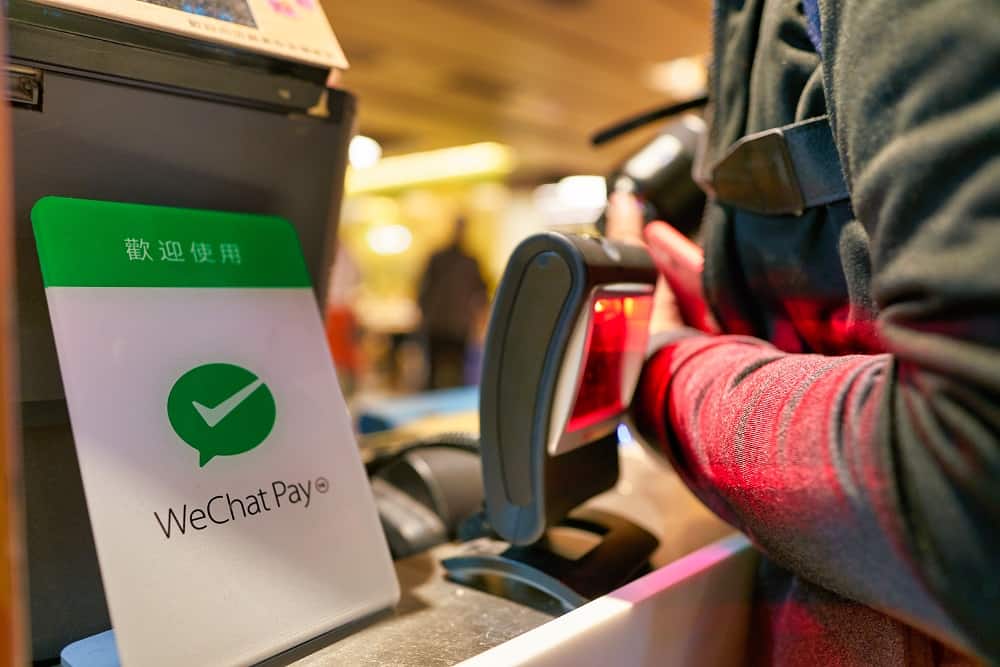
If you have ever wondered, how do you pay with WeChat in a real shop? The answer is usually simple: exactly the way locals do—by presenting or scanning a QR code. In chain cafes, supermarkets, convenience stores, and many restaurants, china WeChat payment works quickly and smoothly after setup.
WeChat Pay also includes social payment features such as transfers and digital red packets. Those are fun parts of the broader ecosystem, though they are less essential for most short-term travelers than basic in-store payments.
Realistic Expectations for Travelers
WeChat Pay China usage can be excellent once the app is ready, but not every foreign visitor finds the setup painless. Some people hit snags with account verification. Others find the English navigation incomplete. A few discover that one card links successfully while another is rejected without much explanation.
That does not mean you should avoid it. It just means expectations should be realistic. If you already use the WeChat Chinese app for communication, or if local contacts and service providers reach you there, WeChat Pay becomes much more useful. But if you are choosing your first and only payment app, many travelers still find Alipay easier to get running.
Alipay vs WeChat Pay: Which Is Better for Tourists?
This is one of the most common questions I hear from first-time visitors: WeChat Pay or Alipay—which should I use? The honest answer is that both are widely accepted, and both can work very well. The better choice depends on how you travel and how much patience you have for setup.
Ease of Setup
For most overseas visitors, Alipay often feels more foreigner-friendly. The onboarding is usually clearer, the English support is stronger, and international card integration tends to feel more consistent. WeChat Pay can absolutely work, but it may require more persistence.
Acceptance on the Ground
In major cities and tourist areas, both are broadly accepted. You can use them in restaurants, convenience stores, transport-related merchants, malls, cafes, attractions, and many neighborhood businesses. In practical terms, you will rarely choose a restaurant because it accepts Alipay but not WeChat Pay, or vice versa. Both are deeply embedded in daily commerce.
Language and Ecosystem Strengths
Alipay often feels better as a payment-first tool with useful travel services layered on top. WeChat Pay is strongest when you are already living inside WeChat for communication, social coordination, and mini-program access.
A Practical Recommendation
If possible, set up both. That gives you flexibility when one app has a card issue, a network hiccup, or a verification limit. But if you only want one app for a short trip, Alipay is usually the easier starting point for tourists.
Other Ways to Pay in China If Mobile Payment Fails
Even in a highly digital country, backup methods still matter. Cash remains useful for small purchases, rural stops, older transport counters, or moments when your phone battery dies at exactly the wrong time. I always suggest carrying a modest amount of RMB—enough for snacks, a taxi, or a station purchase.
Physical international bank cards can still work in large hotels, upscale malls, airport shops, and some major restaurants. Acceptance is better in large urban businesses than in tiny local ones. UnionPay cards are also common in China and may be useful depending on your home banking options.
Apple Pay and other contactless methods exist, but support is not universal and should not be your main plan.
If you are building a longer custom trip through multiple cities, having your arrival logistics, SIM setup, and payment backup sorted in advance can save a lot of stress. This is exactly the kind of small but meaningful detail a good travel agency can help you anticipate, especially if you are visiting China for the first time.
Common Payment Problems and Simple Fixes
When mobile payment fails in China, the cause is often something simple.
Problem: Payment declined Check whether your card has international transactions enabled, whether you hit a limit, or whether your bank flagged the payment.
Problem: The merchant cannot scan your code Increase your screen brightness, refresh the app, or switch to scanning the merchant’s QR code instead.
Problem: Card linking fails Try a different card. In my experience, success can vary significantly by bank even when both cards are Visa or Mastercard.
Problem: Verification will not complete Double-check that your passport details match exactly and that your internet connection is stable.
Problem: Nothing works at the counter Do not panic. Use cash or a physical card if possible and troubleshoot later over hotel Wi-Fi.
FAQ
Can foreigners use Alipay in China?
Yes. Many foreigners can now use Alipay in China by registering with a phone number, linking an eligible international card, and completing identity verification if required. App policies can change, so always check the latest setup steps before your trip.
Do I need a Chinese bank account for WeChat Pay?
Not necessarily. Many travelers can use WeChat Pay with an international card, though card compatibility and feature access may vary. A Chinese bank account can help in some cases, but it is no longer the only route for many visitors.
Is it safe to link my credit card to Alipay?
For most travelers, it is generally considered safe to use major official payment apps, especially when downloaded from legitimate app stores and protected with your phone’s security features. Still, use strong passwords, enable biometric login if available, and avoid public Wi-Fi when setting up sensitive payment details.
What if my mobile payment does not work?
First, check your internet connection, account verification status, and card settings. If the issue continues, switch to your backup payment method—cash or a physical card—and resolve the app problem later. Keeping more than one payment option is the smartest travel habit.
Which is better for tourists—Alipay or WeChat Pay?
For many short-term visitors, Alipay is the easier first choice because setup is often smoother and the English interface is friendlier. WeChat Pay is also useful, especially if you already use WeChat for communication. If possible, install both.
Final Thoughts
Paying in China can feel unfamiliar on day one, but by day three, many travelers are surprised by how natural it becomes. Once your apps are set up, buying dumplings at a market, topping up transit, entering attractions, and settling restaurant bills can all happen with one phone in your hand.
My advice is simple: prepare before you arrive, verify your account early, carry backup cash, and do not rely on just one card. If you do that, mobile payment in China stops being a stress point and becomes one of the easiest parts of the trip.
And once you are ready to pay like a local, the rest of China opens up much more smoothly. Save this guide for your trip, share it with anyone planning to visit, and if you are mapping out a broader journey, explore our China tour packages for a more seamless travel experience from arrival to departure.