




 18 days China, End to End Beijing → Xi'an → Chuanzhusi → Jiuzhaigou → Chengdu → Zhangjiajie → Guilin → Yangshuo → Shenzhen From $6,360 View route
  3 days 4-Day Tour of Siguniang Mountain, Biepa Gou, and Dagu Glacier Chengdu → Lixian → Heishui County From $1,599 View route
  5 days Above the Pillars, Then Below Zhangjiajie From $1,430 View route
  3 days After the Last Booth Guangzhou From $840 View route
  13 days All the Way West Xi'an → Dunhuang → Turpan → Kashgar → Shanghai From $3,500 View route
 Ming Dynasty Hanfu: Mamianqun, Aoqun & Pipa Sleeves
Introduction: Why Ming Hanfu Stands Out
Ming dynasty hanfu refers to the Han Chinese clothing system associated with the Ming dynasty, which lasted from 1368 to 1644. When people talk about Ming dynasty clothing, they are usually referring to a highly recognizable world of structured jackets, elegant skirts, round-collar robes, formal headwear, and refined textile details that still shape modern hanfu design today. For many history lovers, the Ming period matters because it is often seen as the last fully Han-ruled dynasty before the Qing, and its dress culture is closely connected to a revival of Han clothing traditions after the Yuan dynasty.
What makes Ming hanfu especially fascinating is that it is both beautiful and surprisingly readable once you know the key pieces. In this guide, I’ll walk through the most recognizable Ming garments, explain how women’s and men’s styles differ, and show you how to identify Ming dynasty hanfu at a glance. You’ll also find a scannable garment table, beginner-friendly definitions, and practical visual cues that are useful whether you are visiting a museum, comparing hanfu styles online, planning a China-themed photo shoot, or simply trying to understand what you are looking at.
What Is Ming Dynasty Hanfu?
Ming dynasty hanfu belongs to the clothing system of the Ming dynasty, from 1368 to 1644, a period when dress was shaped by inherited Han traditions, court regulations, social hierarchy, and changing aesthetic preferences. It is not a single outfit. Rather, it is a broad category that includes robes, jackets, skirts, outerwear, sleeves, hats, and layering conventions worn differently depending on gender, class, occupation, and occasion.
A useful way to understand Ming hanfu is through the idea of a Han revival after the Yuan dynasty. The Yuan was founded by Mongol rulers, and when the Ming replaced it, dress culture also reflected a renewed emphasis on Han-centered forms. In practical terms, that meant the continued use and systematization of garments such as structured jackets and skirts for women, as well as round-collar robes for men. This does not mean every Ming garment was wholly new or that all clothing looked the same across three centuries. It means the Ming court and society placed special value on recognizable Han dress forms and formalized them through regulation and custom.
A few key facts help frame the topic:
- Time period: 1368–1644
- Historical position: The last Han-ruled dynasty before the Qing
- Style impression: Structured, layered, refined, and often more tailored than earlier flowing silhouettes
- Core visual markers: Mamianqun skirts, ao jackets, round-collar robes, pipa sleeves, standing collars in later periods, and formal headwear
- Important scope note: This guide focuses on mainstream historical Ming styles most often discussed in modern hanfu circles, not every regional, theatrical, or late-period variation
That scope matters. Clothing changed over the long life of the Ming dynasty, and surviving garments, paintings, tomb finds, and museum reconstructions do not always represent every social group equally. Still, the styles covered below are the ones most readers are most likely to encounter in museums, costume studies, and contemporary hanfu communities. We cover this properly in hanfu chinese new year.
Ming Garments at a Glance: Key Terms You Should Know
Before diving into women’s and men’s clothing separately, it helps to get the core terms straight. Some of these words describe complete outfits, while others refer to single garments, sleeve shapes, or headwear.
| Garment | Chinese | Typically Worn By | What It Is |
|---|---|---|---|
| Mamianqun | 马面裙 | Women | A pleated skirt with flat front and back panels, with pleats concentrated at the sides |
| Aoqun | 袄裙 | Women | A jacket-and-skirt ensemble, usually an ao jacket worn with a qun skirt |
| Ao | 袄 | Women, sometimes men in different forms | A structured jacket or upper garment, often lined or more substantial than lighter tops |
| Qun | 裙 | Women | A skirt; in Ming contexts, often paired with an ao jacket |
| Bijia | 比甲 | Women | A sleeveless vest or over-garment used as a layer over the main outfit |
| Beizi | 褙子 | Women | An open-front outer garment that adds coverage, warmth, or formality |
| Yuanlingpao | 圆领袍 | Men | A round-collar robe, often associated with formal, scholarly, or official dress |
| Futou | 幞头 | Men | A traditional style of headwear; in broader costume discussions, often linked with formal male attire |
| Wushamao | 乌纱帽 | Men, especially officials | The black gauze official hat, famous for its wing-like side extensions |
| Pipa sleeves | 琵琶袖 | Common in women’s garments, sometimes referenced more broadly | Sleeves fuller at the upper arm and narrower at the cuff, shaped somewhat like a pipa lute |
If you only remember a few terms, start with these: mamianqun, aoqun, yuanlingpao, and pipa sleeves. Those four alone will help you decode a large share of the Ming-style clothing you see in exhibitions, historical dramas, reconstructions, and hanfu shops.
Women’s Ming Dynasty Hanfu
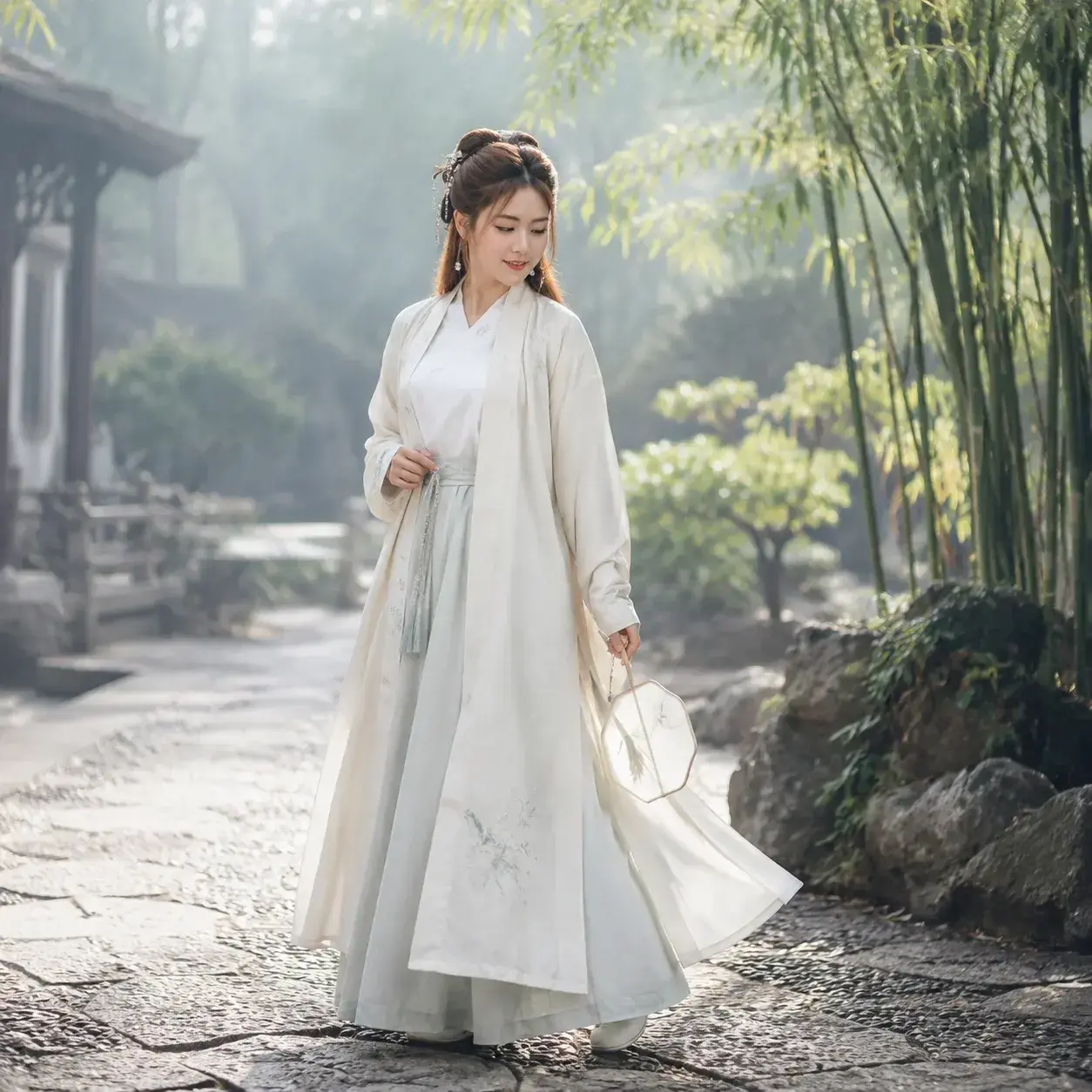
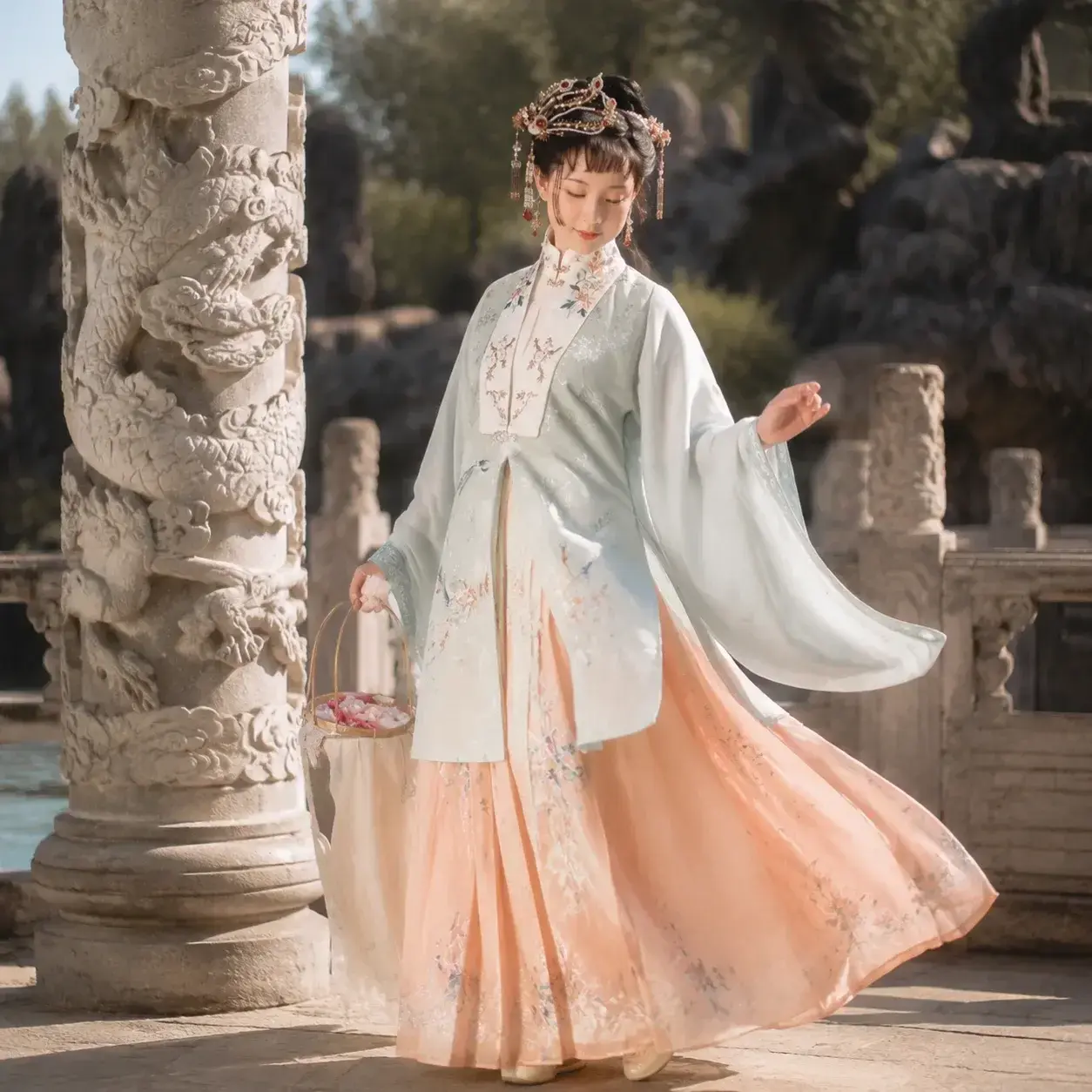
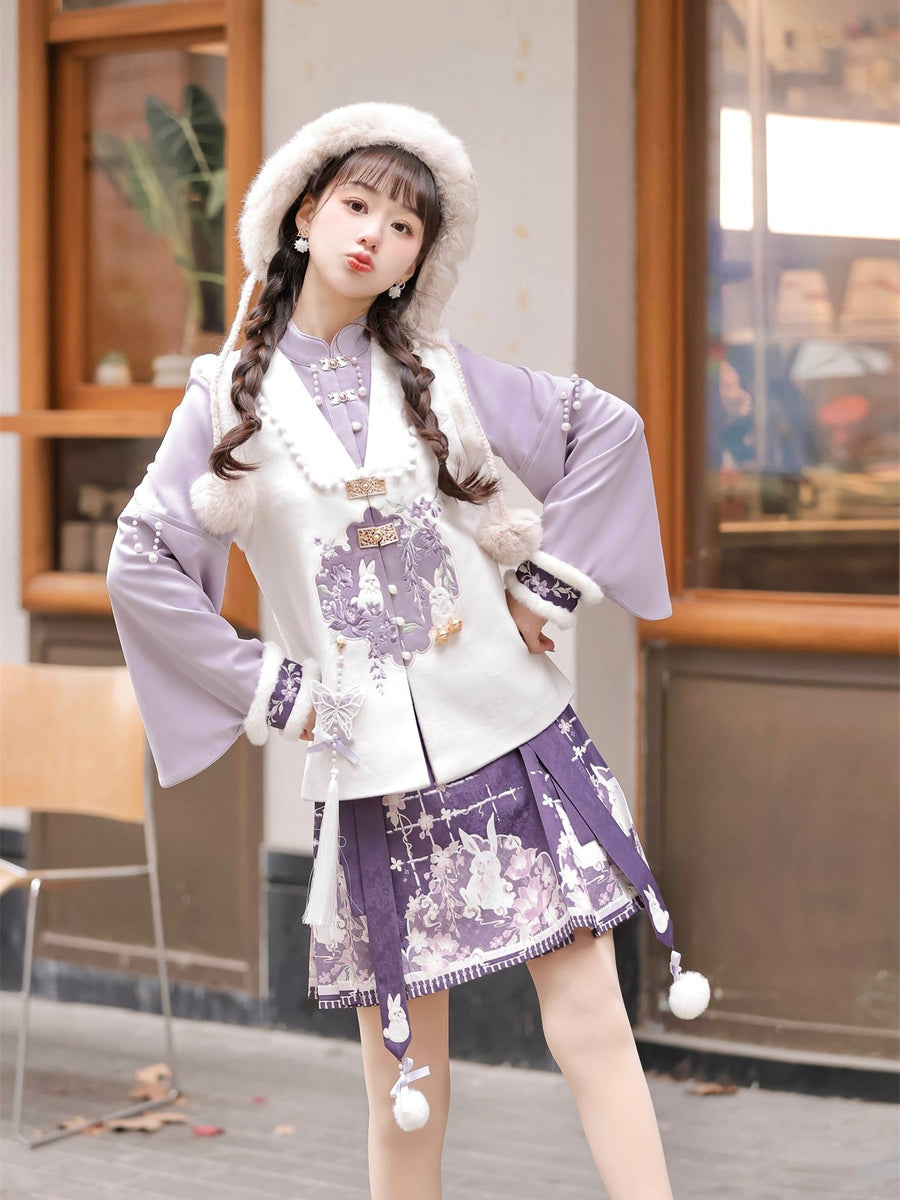
When most people picture women’s Ming dynasty hanfu, they are often thinking of aoqun. This is one of the best-known women’s ensembles from the period: an ao jacket worn over a qun skirt. The beauty of aoqun lies in its clarity. The top and bottom are visually distinct, which gives the silhouette structure and makes decorative details easier to appreciate.
The ao was usually more fitted or semi-structured than the loose, drifting shapes many modern viewers associate with “ancient Chinese clothing” in general. Depending on the period and context, the jacket could appear modest and practical or richly formal, with careful edging, woven patterns, and embroidered trim. In later Ming examples, you may also see standing collars, which immediately give the outfit a more upright, tailored appearance.
The skirt in this ensemble is often the famous mamianqun, or horse-face skirt. Despite the striking English nickname, the most important thing to understand is its construction. A mamianqun has:
- Flat front and back sections, often called the “faces”
- Pleats concentrated at the sides, rather than running evenly all the way around - A silhouette that looks crisp and architectural when standing still - A beautiful shifting rhythm when the wearer walks, because the side pleats open and move while the flat panels remain visually stable
This is one reason Ming women’s clothing can feel so distinctive. Compared with softer, more continuously flowing silhouettes, the mamianqun creates a strong sense of order and shape. In museum settings, it is often one of the fastest ways to identify a Ming-inspired female ensemble.
Layering also played a major role. Two pieces worth knowing are the bijia and the beizi.
The bijia is a sleeveless vest-like garment worn over the main clothing layers. It adds visual depth and can also change the balance of the outfit by framing the torso vertically. In practical terms, it offered extra warmth and modesty while preserving the visibility of the skirt beneath.
The beizi is an open outer garment, often used to add coverage, elegance, or a degree of formality. Because it opens down the front, it does not completely hide the layers underneath, allowing the wearer to display coordinated fabrics and embroidered details. In real life, this kind of layered logic matters more than many quick guides admit: Ming dress was not just about isolated garments, but about how those garments worked together.
A few women’s style cues are especially useful when you are trying to identify Ming dynasty hanfu:
- Structured jackets rather than very loose tops
- Skirt-and-jacket pairing, especially ao with qun
- Mamianqun pleat placement with flat front and back sections
- Standing collars in later Ming styles
- Embroidered hems, borders, and layered textiles
- A richer, more tailored look than many earlier dynasty silhouettes
If you are browsing modern hanfu collections, these details can help you separate a genuine Ming-inspired design from a generic “ancient Chinese” costume label. There's a fuller guide to this in hanfu skirt.
Men’s Ming Dynasty Hanfu
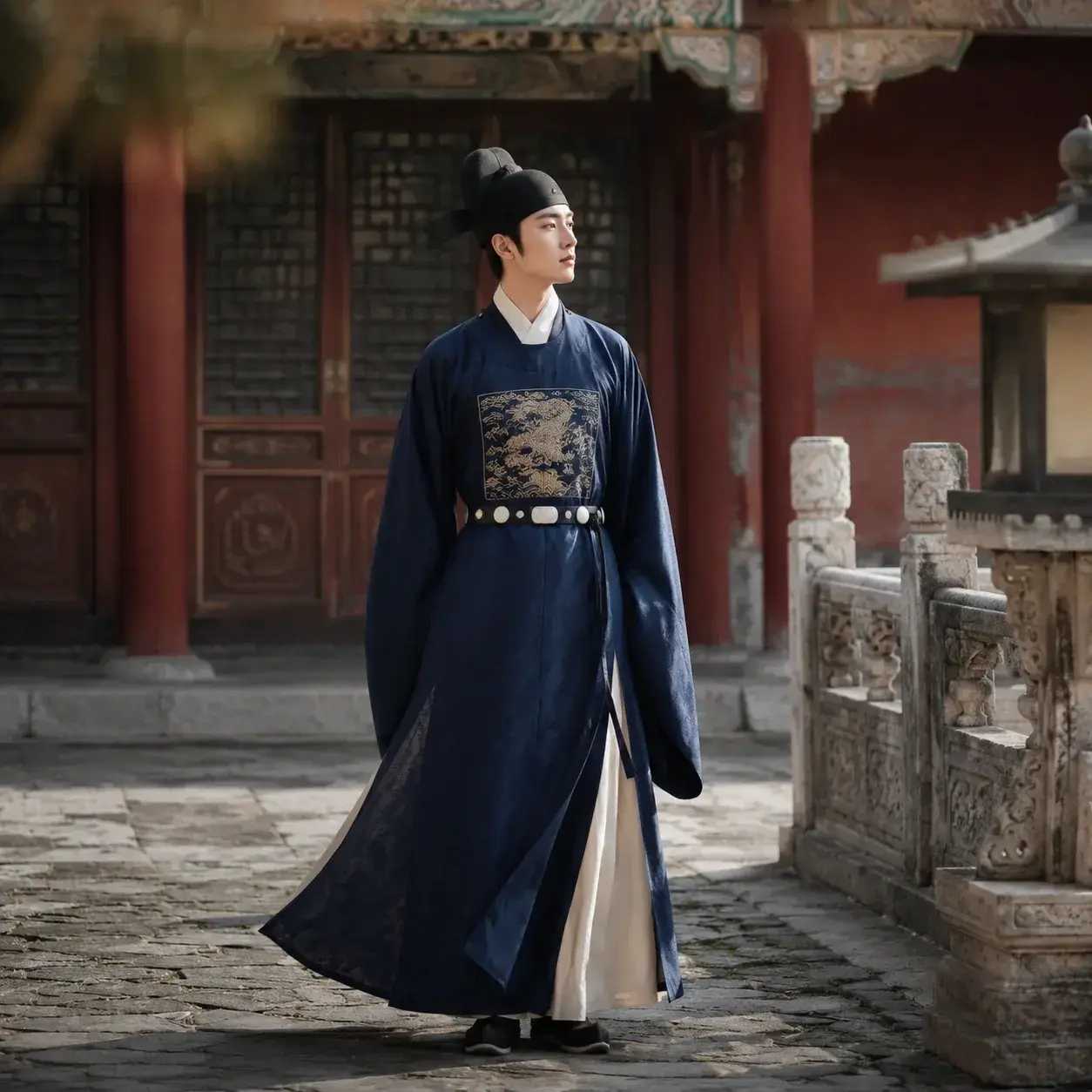
For men, one of the signature garments of Ming dynasty hanfu is the yuanlingpao, a round-collar robe typically closed to the right. It is one of the most recognizable garments associated with scholars, officials, and formal male dress in the period. The overall impression is one of order and structure: a clear collar line, regulated silhouette, and a robe form that reads as dignified rather than dramatically flowing.
The yuanlingpao is especially important because it shows how Ming men’s clothing combined continuity with formal regulation. While robes existed in earlier periods too, Ming examples are often discussed in connection with codified dress practices, rank display, and a more structured visual profile. When looking at paintings or reconstructions, notice the clean round neckline and the measured fall of the robe rather than exaggerated drape.
One Ming-specific construction detail that lighter guides often skip is ànbǎi, sometimes described as hidden side panels or even “side ears” in more informal explanations. This feature is useful because it can help distinguish certain Ming robe constructions from more simplified modern reproductions. You may not always spot it instantly in photographs, but in surviving garments and detailed studies, these side elements are part of the robe’s structural logic and silhouette. For enthusiasts trying to tell whether a costume is merely “historical-looking” or specifically Ming-inspired, this is a valuable clue.
Headwear is another major marker. Two terms come up often: futou and wushamao.
The wushamao, the famous black gauze official hat with wing-like extensions, is especially iconic. It is strongly associated with officials and has become one of the most immediately recognizable symbols of Chinese bureaucratic dress in popular visual culture. When paired with a round-collar robe, it creates a classic Ming official image.
The term futou has a longer and more complex historical life, but in the context of general costume discussions it often appears as part of the male formalwear vocabulary. At the same time, not every man in the Ming period was dressed in grand official clothing. Daily life also included simpler caps, softer headwear, and ordinary hair arrangements depending on status and circumstance.
To distinguish men’s Ming clothing from many earlier, more fluid silhouettes, look for these features:
- Round collars, especially on robes
- A more structured, regulated appearance
- Layered formalwear rather than purely draped forms
- Official hats and clearly coded dress conventions
- Construction details like hidden side panels in certain robes
This is one reason Ming menswear feels so visually strong even to beginners. It tends to communicate rank, role, and occasion through shape and finish. If you're weighing the options, ming dynasty hanfu men goes through them in detail.
Pipa Sleeves, Fabrics, and Embroidery Details
One term that appears often in Ming clothing discussions but is rarely explained well is pipa sleeves. These sleeves are fuller through the upper arm and taper toward a narrower cuff, creating a profile that has been compared to the body of a pipa, a traditional Chinese lute. Once you know what to look for, the shape is easy to recognize: generous above, controlled below.
Why did this matter? Because the sleeve shape balanced elegance with practicality. A wide, soft upper section created visual grace and presence, while the narrower cuff made movement easier during everyday activity. In other words, pipa sleeves were not just decorative. They helped clothing function. This practical elegance is one of the quiet strengths of Ming design.
Fabric and surface detail were equally important. Ming garments could be made in a range of textiles depending on status, wealth, season, and occasion, including:
- Silk for refined and formal garments
- Gauze or lighter weaves for visual lightness and seasonal comfort
- Patterned brocades for wealthier wearers or ceremonial contexts
- Lined and padded fabrics for colder weather and more substantial jackets
Embroidery added another layer of meaning. Even when modern replicas simplify decoration, historical clothing often used motifs that were not random. Common symbolic designs could include:
- Qilin: often associated with auspiciousness, dignity, and high cultural symbolism
- Peony: linked with beauty, prosperity, and richness
- Orchid: associated with refinement and cultivated taste
- Rank badges or insignia: especially important in official dress, where decoration could indicate social or bureaucratic position
For museum visitors, this is an excellent place to slow down. If the silhouette tells you what the garment is, the embroidery often tells you how it was meant to be read. The motifs, placement, and quality of execution can suggest formality, aspiration, and social identity.
How Ming Hanfu Differs From Tang, Song, and Yuan Styles
Many readers know the word hanfu but struggle to tell dynasties apart. The easiest way to understand Ming dynasty hanfu is to compare it with the periods that came before it.
Compared with Tang dynasty clothing
Tang-style clothing is often imagined as expansive, flowing, and visually open, especially in women’s fashion. High-waisted skirts, airy layers, and broad drape are common shorthand features in popular culture. By contrast, Ming dress usually feels more structured and grounded. Jackets are more defined, collars more controlled, and the silhouette often more architectural than floating.
Compared with Song dynasty clothing
Song clothing can appear more understated, slender, and restrained, with an elegant simplicity. Ming styles share some refinement with Song dress, but they often show greater structural definition and richer layering, especially in women’s jackets and skirts. The Ming mamianqun, for example, produces a very different visual rhythm from the gentler line of many earlier skirts.
Compared with Yuan dynasty clothing
This comparison matters historically. Because the Ming followed the Mongol-ruled Yuan dynasty, Ming dress is frequently discussed in relation to a return to Han-centered forms. In broad terms, Ming clothing is often described as re-emphasizing garments such as round-collar robes, jacket-and-skirt systems, and more formalized Han dress conventions. This does not erase complexity or outside influence, but it explains why the Ming occupies such a central place in modern hanfu revival conversations.
If you want a simple memory aid, try this:
- Tang: flowing and expansive
- Song: refined and restrained
- Yuan: historically transitional in the lead-up to Ming restoration
- Ming: structured, layered, and highly identifiable through jackets, robes, and pleated skirt engineering
How to Identify Ming Dynasty Hanfu at a Glance
If you only have a few seconds to identify a garment in a museum, historical drama, or online shop, this checklist will help.
Look for women’s recognition cues
- A jacket-and-skirt combination, especially an aoqun - A mamianqun with flat front and back sections and pleats concentrated at the sides - Tailored or semi-structured upper garments - Standing collars in later Ming-inspired looks - Layering with bijia or beizi - Rich borders, hem decoration, and visible textile coordination
Look for men’s recognition cues
- A yuanlingpao or other round-collar robe - A robe that appears regulated and structured, not simply loose and generic - Formal hat shapes such as wushamao - Construction hints like hidden side panels in some robes - A visual impression of hierarchy and dress code
Watch for overall silhouette logic
Ming clothing often looks cleanly organized. The layers make sense. The garment lines feel deliberate. Women’s skirts show engineered pleat placement rather than random fullness, and men’s formalwear often signals role and rank through shape before you even notice decoration.
This is also where modern shoppers can benefit from expert guidance. When travelers or costume enthusiasts ask us how to choose hanfu in China without getting overwhelmed by vague labels, the biggest challenge is usually not color or size, but historical accuracy versus fantasy styling. A knowledgeable local guide, stylist, or specialized agency partner can help interpret museum references, recommend reputable hanfu experiences, and point out whether a “Ming” outfit actually uses recognizable Ming features. More on that in beizi hanfu.
Where Travelers and Hanfu Enthusiasts Commonly Encounter Ming Styles
Today, most people encounter Ming dynasty hanfu in one of four places:
1. Museums and historic exhibitions
This is the best place to appreciate cut, weave, and construction. If you visit museums in China with textile, costume, or decorative arts collections, Ming garments or reconstructions may appear in exhibitions focused on court life, daily life, or material culture. The best strategy is to look beyond the label and study the silhouette: the skirt structure, the collar, the layering, and the embroidery placement.
2. Hanfu photo studios and cultural experiences
Many cities in China now offer hanfu rental and photo experiences. Ming styles are popular because they photograph beautifully: the mamianqun moves with dramatic grace, and the layered jackets create a polished profile. If you are booking this kind of experience as an overseas traveler, it helps to ask whether the studio can explain the historical basis of the outfit rather than simply offering “ancient costume.” Agencies familiar with cultural travel can often help screen for better-quality experiences.
3. Historical dramas and online media
For many beginners, this is the first point of contact. Dramas can spark interest, but they also mix historical research with visual storytelling. Use them as inspiration, not as your only source. If a garment catches your eye, compare it with museum collections, academic costume references, or specialist hanfu explanations.
4. Modern hanfu brands and online shops
This is where confusion is most common. Product listings may use “Ming style” loosely, and some outfits blend multiple dynastic cues for beauty rather than strict accuracy. If your goal is historical resemblance, look for clear references to mamianqun construction, aoqun layering, round collars, pipa sleeves, and other specific Ming markers.
Practical Tips for Seeing Ming Hanfu More Clearly
If you are new to the topic, here are a few practical ways to train your eye:
1. Start with silhouette before decoration. Ask: is this a jacket-and-skirt system or a robe-based outfit? 2. Identify the collar. Round collars are especially important in men’s formal Ming clothing. 3. Check the skirt structure. The mamianqun’s flat front and back with side pleats are one of the clearest clues. 4. Notice sleeve shape. Pipa sleeves are not just wide sleeves; they narrow toward the cuff. 5. Look for layering logic. Pieces like bijia and beizi should make sense as part of a complete ensemble. 6. Use museum examples as your baseline. This helps you judge how far modern adaptations depart from historical forms.
If you are planning a cultural trip in China and want to include hanfu in a meaningful way, it can be worth combining a museum visit with a reputable dressing or photography experience. Done well, this turns costume from a pretty prop into a richer way of understanding Chinese history and aesthetics. Hanfu rental China has the detail we've skipped here.
Conclusion: Why Ming Hanfu Remains So Recognizable
Ming dynasty hanfu remains one of the most recognizable branches of Han Chinese dress because it combines historical significance with strong visual logic. As the clothing system associated with the Ming dynasty of 1368 to 1644, it is often remembered for its connection to a revival of Han dress traditions after the Yuan period. But its lasting appeal is not only historical. It is also practical and visual: the crisp engineering of the mamianqun, the clarity of the aoqun, the authority of the yuanlingpao, and the graceful usefulness of pipa sleeves.
If you remember one idea, let it be this: Ming hanfu is defined by structure. Women’s styles often center on jacket-and-skirt layering with the iconic horse-face skirt. Men’s styles often emphasize round-collar robes, formal hats, and regulated silhouettes. Add embroidery, symbolic motifs, and thoughtful layering, and you have a dress tradition that still feels strikingly modern in its elegance.
If you are exploring China’s clothing heritage for travel, study, or hanfu shopping, save this guide as a quick reference and compare what you see against the recognition cues above. And if you have seen a memorable Ming-style outfit in a museum, old town photo studio, or cultural site, it is always worth looking a little closer—the details are where the story begins. There's a fuller guide to this in aoqun hanfu.