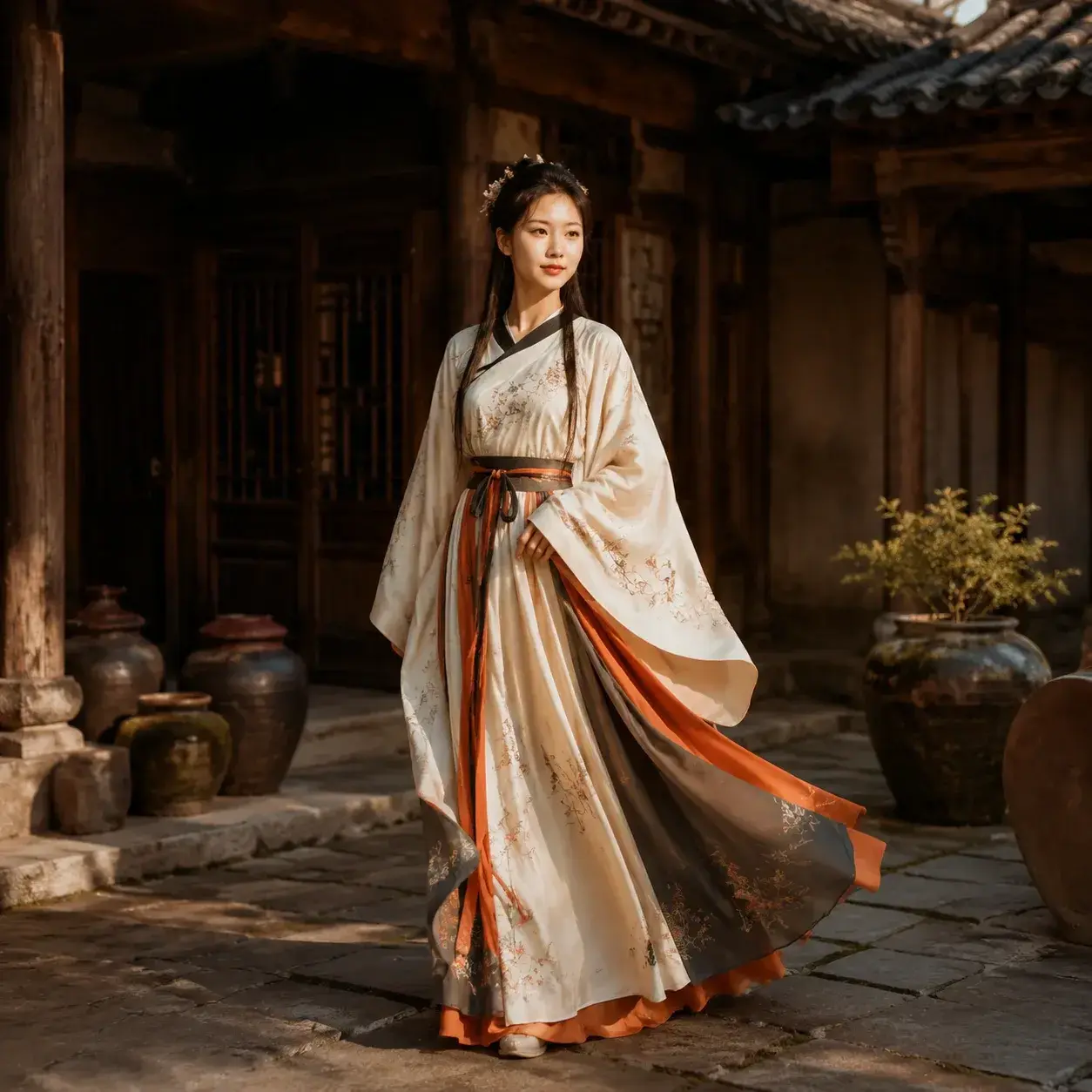





 18 days China, End to End Beijing → Xi'an → Chuanzhusi → Jiuzhaigou → Chengdu → Zhangjiajie → Guilin → Yangshuo → Shenzhen From $6,360 View route
  3 days 4-Day Tour of Siguniang Mountain, Biepa Gou, and Dagu Glacier Chengdu → Lixian → Heishui County From $1,599 View route
  5 days Above the Pillars, Then Below Zhangjiajie From $1,430 View route
  3 days After the Last Booth Guangzhou From $840 View route
  13 days All the Way West Xi'an → Dunhuang → Turpan → Kashgar → Shanghai From $3,500 View route
 Mamianqun: The Horse-Face Skirt Explained

A mamianqun is a traditional Chinese wrap skirt, often called a horse-face skirt, recognized by its smooth flat front and back panels and pleated sides. Many first discover it while searching for a hanfu skirt, but a mamianqun is not just any pleated skirt in hanfu styling. It has a specific structure, a long history, and a very practical logic behind how it moves and fits. If you are curious before buying one, this guide explains what a mamianqun is, how it is constructed, where it comes from, and how to choose and wear one with confidence.
What Is a Mamianqun (Horse-Face Skirt)?
In plain English, a mamianqun is a traditional Chinese skirt made as a wrap, with overlapping panels, two visible flat sections at the front and back, pleated fabric at the sides, and a waistband that ties around the body. It creates a silhouette that looks structured from the front but opens naturally into movement when you walk.
For many buyers, this detail matters more than it seems. Plenty of skirts are marketed broadly as hanfu skirts, but not all of them follow the construction of a true mamianqun. If you want the real look and feel, understanding the structure helps you spot the difference.
### Construction Definition Box Four panels or skirt doors: The skirt is built from overlapping sections rather than one continuous tube. Two flat “horse-face” sections: These smooth front and back panels are the most visible parts when worn. Pleated sides: The pleats sit at the sides, allowing easier movement and creating volume without interrupting the flat panels. Waistband ties: The skirt wraps around the waist and is secured with ties rather than a fixed zipper closure.
The name “horse face” does not mean the skirt was designed to resemble an actual horse. The term is generally understood through analogy to the flat, projecting form of mamian in Chinese architecture, often translated through fortress bastions or defensive structures. For today’s shopper, the key takeaway is simple: if the front is fully pleated all the way across with no flat panel, it is probably not a classic mamianqun.
How the Mamianqun Is Constructed
The most important thing to notice in a mamianqun is the panel layout. The flat front and back sections are visually dominant and often treated as the decorative focus of the garment. On more formal pieces, these areas may feature embroidered flowers, woven motifs, auspicious symbols, metallic threadwork, or richly patterned borders near the hem. On simpler daily versions, the panels may be plain but still clearly defined.
The pleat mechanics are what really set the skirt apart. In an ordinary pleated skirt, pleats often run all the way around the body in one continuous rhythm. A mamianqun works differently. Its pleats are concentrated at the sides, spreading outward from the central flat panels. This means the eye reads the skirt as orderly and architectural from the front, while the sides open with movement and give the wearer room to walk comfortably.
That construction also helps explain why the skirt feels both elegant and functional. The overlapping doors create the wrap structure. The waistband is usually one continuous band with ties that fasten securely around the waist. When worn correctly, the front and back flat panels align cleanly, while the side pleats provide motion and ease. Historically, this balance made the mamianqun suitable not only for formal dressing but also for active daily life.
For buyers, this is one of the easiest authenticity clues. A real mamianqun should not look like a random gathered skirt with decorative trim added later. Its beauty comes from engineering: flat where it should be flat, pleated where it should move.
A Short History: From Early Origins to Ming and Qing
The story of the mamianqun is best told carefully, because related skirt forms developed over time rather than appearing all at once. Scholars and historical dress enthusiasts often point to earlier wrapped and pleated structures in the Liao and Song periods, where practical clothing solutions for movement, travel, and mobility likely influenced how skirts were cut and worn. These early forms help us understand the roots of the style, even if they do not always match the later classic version exactly.
The Ming dynasty (1368–1644) is the period most strongly associated with the classic mamianqun shape recognized today. During this era, the skirt matured into a more refined and visually codified form. Rich silk, satin, and brocade fabrics became common in higher-status garments. Decorative borders, woven patterns, and elegant color contrasts gave the skirt a dignified presence. In portraits and surviving garments, the flat panels and side pleats create a controlled silhouette that feels at once graceful and authoritative.
In the Qing dynasty (1644–1911), the mamianqun continued to evolve. Pleats could become denser, decorative bands more elaborate, and visual proportions somewhat different from earlier examples. Some constructions also show variation in how the overlapping sections were arranged. For modern buyers, this matters because not every historically inspired mamianqun on the market is referencing the same period. One version may echo a cleaner Ming balance, while another may lean into Qing richness and heavier ornament.
Quick Timeline
| Period | What to Know |
|---|---|
| Liao and Song | Related wrapped and pleated skirt forms likely laid groundwork for later development. |
| Ming dynasty | The classic mamianqun form became especially prominent, with clear panel structure and refined decorative use. |
| Qing dynasty | The skirt continued to evolve with denser pleats, richer borders, and shifts in visual proportion. |
| Modern revival | Reinterpreted through hanfu culture, photography, festivals, and contemporary fashion styling. |
If you are shopping today, it helps to ask which era a design is inspired by. That one question often explains differences in decoration, pleat density, and overall silhouette.
Why the Mamianqun Is Back in Style
The mamianqun has returned to public view through the broader revival of hanfu and the rise of guochao, or trend-driven interest in Chinese cultural aesthetics. What was once mostly seen in historical drama, museum references, or niche enthusiast circles is now visible at festivals, heritage events, photo shoots, weddings, cultural performances, and even on city streets in modernized outfits.
Part of the appeal is that the skirt is surprisingly adaptable. Some wearers pair it with traditional tops for a fully period-inspired look. Others style it with fitted jackets, light knitwear, crisp shirts, or simple blouses to make it feel more wearable in daily life. The result can look romantic, architectural, and polished without feeling costume-like.
The 2022 Dior controversy also brought international attention to the mamianqun. In a brief and neutral summary, the discussion centered on visual similarities between a Dior skirt design and the traditional Chinese horse-face skirt, prompting wider public conversation about cultural attribution and fashion history. It is an important reference point, but it does not need to dominate a buyer’s guide like this one. If you want deeper context, it is worth reading a dedicated article focused specifically on that debate.
What matters here is that the revival is not driven by one viral moment alone. The mamianqun has come back because it offers something rare: historical depth, distinctive construction, and a shape that still feels striking in modern wardrobes.
How to Choose a Mamianqun Before You Buy
Buying your first mamianqun can be exciting, but it also helps to slow down and check the fundamentals. A beautiful product photo does not always guarantee historically accurate construction or a flattering fit.
Authenticity Checklist
Before buying, look for these signs:
- Visible flat front and back panels rather than pleats running all the way around
- Pleated side sections that create movement without breaking the central visual structure
- A wrap waistband with ties rather than a simple elastic tube-skirt design
- Clean alignment when worn, so the flat sections sit neatly at front and back
- Intentional overlap in the skirt doors or panels, not a stitched imitation of a wrap style
If a skirt is sold as a horse-face skirt but lacks these core features, it may still be pretty, but it is likely not a true mamianqun in structure.
Fit and Sizing Basics
Sizing is where many first-time buyers get confused. Because a mamianqun wraps rather than fastening like a Western skirt, the waist measurement needs enough room for overlap. Check the listed waist range carefully and make sure the skirt can close comfortably without pulling the panels out of alignment.
Length matters too. For a balanced silhouette, many wearers choose a skirt that falls near the ankle. Too short, and the proportions can look abrupt. Too long, and the hem may drag or hide the elegant panel structure. If you plan to wear platform shoes, boots, or traditional-style footwear, factor that into your final length choice.
If you are ordering from abroad and are unsure about sizing, this is exactly where a knowledgeable travel or cultural service team can help. We have seen travelers struggle with vague size charts, unfamiliar garment terminology, and photos that do not show the true cut. A good specialist can help translate measurements into real fit expectations, especially if you are buying for a cultural trip, photo session, or festival in China.
Fabric by Occasion
The right fabric changes the entire experience of wearing the skirt.
- Lightweight cotton or cotton blends are easier for daily wear, warm weather, and first-time buyers who want comfort.
- Silk, jacquard, or brocade feel more formal and photograph beautifully, making them better for celebrations, styled portraits, or ceremonial occasions.
- Blended fabrics can be practical if you want the look of traditional materials with easier care and lower cost.
A heavily brocaded skirt may look stunning online, but if you want to walk through a market, museum, or heritage site all day, a lighter fabric may be the smarter choice.
Watch for Common Buying Traps
Some listings rely on attractive styling but provide very little structural information. Be cautious if:
- The product photos never show the skirt laid flat - The front appears fully pleated instead of showing a smooth panel - The waistband and ties are hidden - The description uses “hanfu skirt” only, without explaining the specific style - The size chart gives only generic S, M, L labels with no waist or length details
When in doubt, ask for flat-lay photos or a short wearing video. A trustworthy seller should be able to show how the panels align and how the skirt wraps.
How to Wear a Mamianqun Well
Wearing a mamianqun well is less about copying a perfect historical image and more about understanding proportion, balance, and occasion.
For a more traditional look, pair the skirt with a hanfu top that sits cleanly at the waist and does not add bulky folds over the panel area. This helps preserve the visual clarity that makes the skirt distinctive. If the skirt has ornate borders or embroidery, let those details remain the focus.
For a modern interpretation, a fitted cardigan, a simple blouse, or a neat cropped jacket can work surprisingly well. The contrast between the skirt’s historical structure and a softer contemporary top often makes the outfit feel accessible rather than theatrical. Neutral tops also allow richly colored skirts to stand out.
Footwear should support the mood of the outfit without fighting the hemline. For daily wear, simple flats or low boots can work. For more formal styling, embroidered shoes or elegant low heels may suit the look better. Accessories should be chosen with the same restraint. A small hair ornament, a subtle bag, or understated jewelry usually works better than competing statement pieces.
Most importantly, make sure the flat front and back panels stay visible. If the waistband sits crooked or the overlap shifts too far to one side, the silhouette loses its logic. A few extra minutes adjusting the wrap can make a huge difference in how polished the final look appears.
Final Thoughts
The mamianqun is more than a beautiful hanfu skirt trend. It is a highly specific garment with a recognizable structure, a deep historical lineage, and a design that still feels fresh today. Once you understand its flat panels, side pleats, wrap closure, and dynasty roots, it becomes much easier to choose one wisely and wear it with confidence.
If you are planning a trip to China and want to explore hanfu shopping, cultural styling, or photo experiences in a way that feels informed rather than overwhelming, getting local guidance can save time and avoid expensive mistakes. And if you already own a mamianqun, the next step is simple: wear it, learn from it, and notice how much history is built into every fold.
If this guide helped you, save it for future reference or share it with someone else who has been searching for the right horse-face skirt. The more clearly we talk about garments like the mamianqun, the easier it becomes to appreciate both their beauty and their cultural context.