




 18 days China, End to End Beijing → Xi'an → Chuanzhusi → Jiuzhaigou → Chengdu → Zhangjiajie → Guilin → Yangshuo → Shenzhen From $6,360 View route
  3 days 4-Day Tour of Siguniang Mountain, Biepa Gou, and Dagu Glacier Chengdu → Lixian → Heishui County From $1,599 View route
  5 days Above the Pillars, Then Below Zhangjiajie From $1,430 View route
  3 days After the Last Booth Guangzhou From $840 View route
  13 days All the Way West Xi'an → Dunhuang → Turpan → Kashgar → Shanghai From $3,500 View route
 Mamianqun History and the Dior Controversy Explained
Introduction
The story of the mamianqun history is much bigger than a single skirt trend. The mamianqun, often translated as the horse-face skirt, is a traditional Chinese pleated wrap skirt with roots that can be traced back to earlier dress systems in the Song and Liao periods, then more fully developed and standardized during the Ming and Qing dynasties. For many people today, it is one of the most recognizable garments associated with hanfu revival, but its importance goes beyond aesthetics. It is also a garment with a long record of technical design, cultural continuity, and historical memory.
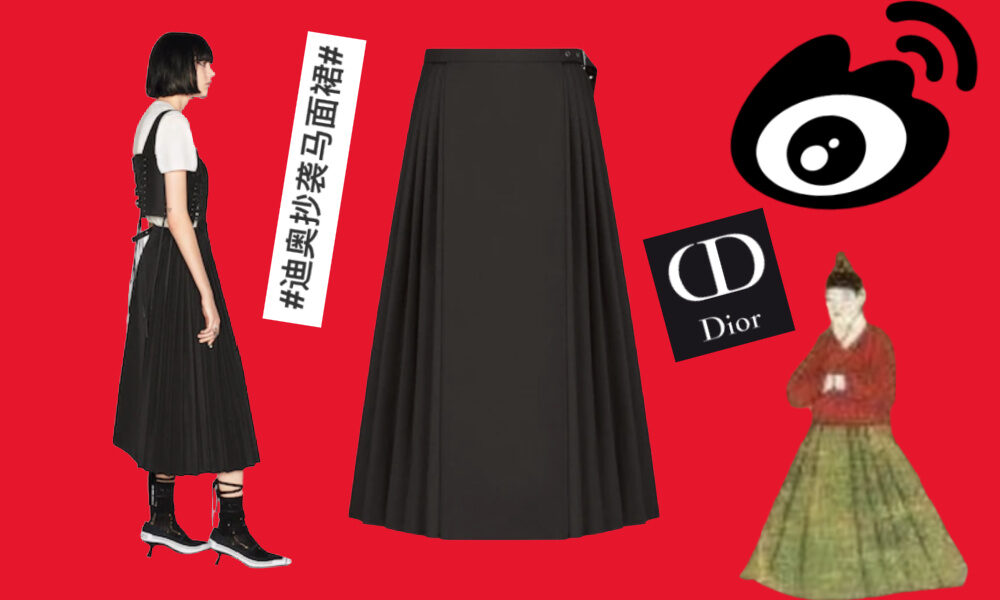
In 2022, the mamianqun suddenly entered mainstream international discussion for a very different reason. A skirt sold by Dior and described in product language as an "iconic Dior silhouette" was widely compared by Chinese netizens, hanfu enthusiasts, and some commentators to the traditional mamianqun. The comparison quickly grew into a larger debate about cultural appropriation, attribution, fashion borrowing, and whether luxury brands have a responsibility to acknowledge non-Western design histories when presenting similar garments.
This article aims to do both jobs that readers usually have to piece together from different sources. First, it explains what a mamianqun actually is, how it evolved across the Song, Ming, and Qing periods, and what makes its construction distinctive. Second, it offers a balanced explanation of the 2022 Dior controversy: why people protested, what exactly was being compared, and why the dispute was not just about a vague resemblance but about structure, naming, and cultural credit.
Whether you are new to hanfu, curious about the Dior incident, or looking for a more historically grounded explanation, the goal here is simple: clear facts, useful context, and a careful distinction between what is historically documented, what is debated, and why this garment still matters today.
What Is a Mamianqun (Horse-Face Skirt)?
A mamianqun is a traditional Chinese wrap skirt made from fabric panels attached to a waistband. Its most recognizable feature is its structure: it typically has two flat outer sections, one visible at the front and one at the back, with densely pleated sections concentrated along the sides. When the skirt is wrapped and tied around the waist, the panels overlap in a way that creates a clean, flat visual plane at the center while leaving room for movement through the pleated sides.
In practical terms, that means the skirt is both structured and flexible. It does not hang like a simple tube skirt, and it is not just any pleated skirt. The overlapping arrangement creates a tailored silhouette, while the side pleats allow the wearer to walk, sit, and move comfortably. This combination of order and mobility is one reason the mamianqun endured across centuries.
Although earlier related forms existed before the Ming dynasty, the mamianqun became especially prominent as one of the most recognizable lower garments in Ming-dynasty hanfu. In modern discussions, people often use it as a shorthand for historical Chinese skirt design, but that can flatten a much richer story. The mamianqun is not a single unchanging garment from one moment in time. It is a category of skirt structure that evolved across periods, materials, and social settings.
Mamianqun at a Glance - Type: Traditional Chinese wrap skirt - Core structure: Overlapping panels attached to a waistband - Key visual features: Two flat "faces" at front and back, pleated side sections - Openings: Side openings created by the wrap construction - Historical origin: Chinese garment tradition, with roots before the Ming and strong development in the Ming and Qing periods - Why it matters: Its specific construction became central to the 2022 Dior comparison
For newcomers, this definition is important because much of the online debate has blurred together three different things: the broad look of a long skirt, the specific structure of a mamianqun, and the modern politics of cultural attribution. Understanding the garment itself is the first step. There's a fuller guide to this in hanfu skirt.
Where the “Horse-Face” Name Comes From
One of the most confusing parts of the topic is the name. The term "horse-face skirt" makes many first-time readers assume the garment has something to do with horses, horse imagery, or animal symbolism. In fact, the common explanation is architectural, not zoological.
In historical Chinese architectural vocabulary, mǎ miàn can refer to a projecting bastion-like structure on a city wall. These extensions created a protruding, rectangular form that stood out from the wall line. The mamianqun’s flat front and back sections were understood by later commentators and dress historians to resemble these projecting planes, which is why the term became associated with the skirt.
This matters because the name points directly to the garment’s structured construction. The flat sections are not accidental decoration. They are fundamental to how the skirt is built and recognized. Once you understand the architectural analogy, the term becomes much more intuitive: the skirt is named for its shape and form, not for any image of a horse.
Online, this etymology is often reduced to a sentence or mistranslated so loosely that the original reference disappears. That simplification can leave newcomers with the wrong mental picture from the start.
Why the name matters Understanding the “horse-face” name helps readers see the mamianqun as a highly structured historical garment with a specific construction logic, not just a decorative traditional skirt with a poetic title.
Mamianqun History: From Song and Liao Origins to Qing Popularity
The history of the mamianqun is best understood as a process of development and continuity, not a single moment of invention. Scholars and clothing historians generally trace its mature form to later historical periods, while also noting earlier skirt and wrap structures in the Song and Liao eras that likely contributed to its evolution.
Song and Liao Origins
During the Song period, Chinese dress systems included a range of skirts, robes, wraps, and layered garments with increasingly refined tailoring. Surviving visual materials, tomb murals, paintings, and costume studies suggest that wrapped and panel-based skirt forms were already part of the broader clothing vocabulary. The Liao period, shaped by both regional diversity and interaction among different cultural traditions, also offers evidence of skirt structures that used wrapping, paneling, and volume in ways relevant to later development.
It would be misleading to claim that the fully standardized mamianqun suddenly appeared in the Song or Liao exactly as later generations knew it. A more accurate explanation is that earlier wrap-skirt traditions and panel-based construction techniques formed the foundation for what would become the recognizable mamianqun silhouette. This is why serious historical writing tends to use language like “origins,” “precursors,” or “early forms” rather than a simplistic invention date.
Ming Dynasty Standardization
The Ming dynasty is the period most strongly associated with the mamianqun as a clearly identifiable garment. By this time, the skirt had matured into a more standardized form: overlapping panels, pronounced pleats, stable front and back flat sections, and a silhouette that balanced elegance with practicality.
This structure made sense in everyday wear as well as more formal contexts. The side pleats provided flexibility and ease of motion, while the flat outer sections gave the garment visual order. Depending on class, occasion, and textile availability, mamianqun could range from relatively plain to richly decorated. Some examples featured brocade, woven patterns, embroidered borders, or auspicious motifs. Others relied more on cut and drape than surface embellishment.
The Ming period is also central because it is the era most often referenced in today’s hanfu revival movement. Many modern reproductions and historical reconstructions draw heavily from Ming visual sources, making the Ming-style mamianqun particularly visible online and in contemporary cultural discussions.
Qing Dynasty Continuation and Adaptation
The mamianqun did not simply vanish with the end of the Ming dynasty. In the Qing dynasty, it continued to be worn and adapted, especially in women’s dress. Over time, fabrics, decoration styles, hem treatments, and wearing contexts shifted, reflecting broader social and aesthetic changes.
Qing examples often show how traditional garments can survive through adaptation rather than strict preservation. The skirt remained recognizable, but details varied according to region, era, social status, and fashion preference. Some later versions became especially ornate, with heavier textiles, elaborate trim, and decorative borders that reflected changing tastes and material culture.
This long continuity is one reason the mamianqun carries such strong cultural resonance today. It is not remembered as an obscure museum fragment. It belongs to a living historical memory shaped by artworks, surviving garments, family archives, reenactment, scholarship, and a modern revival movement.
The most useful way to think about mamianqun history is therefore not as a straight line from “invented in year X” to “revived on social media,” but as a layered story of evolution: early precursors, Ming standardization, Qing adaptation, and modern rediscovery.
How a Traditional Mamianqun Is Constructed
To understand why the mamianqun became the center of a global fashion controversy, construction matters just as much as history. The 2022 Dior debate was not only about whether one skirt looked vaguely similar to another. It focused on whether Dior’s design reproduced the recognizable structural logic of the traditional mamianqun.
A traditional mamianqun is typically built from several key elements:
- Overlapping panels: The skirt wraps around the body rather than being a simple pull-on shape.
- Two flat faces: The front and back present relatively flat rectangular sections when worn.
- Pleated side sections: Dense pleats are concentrated at the sides, creating movement and expansion.
- Waistband ties or fastening structure: The skirt is secured through a waistband system that supports the wrap.
- Side openings: Because of the panel arrangement, the skirt allows ease of movement and an airy, flexible fit.
These details are what make a mamianqun identifiable. If you remove too many of them, you may still have a pleated or panelled skirt, but not necessarily a mamianqun in the historically meaningful sense.
Construction also varied. Historical examples differ in pleat density, fabric weight, length, decorative borders, and embroidery. Some were made with substantial, luxurious textiles that held shape beautifully; others were lighter and more practical. Courtly and elite examples often emphasized craftsmanship and surface decoration, while less formal garments could be more restrained.
A useful way to distinguish a mamianqun from a generic pleated skirt is to focus on the relationship between the flat central planes and the pleated sides. That balance is one of its visual signatures.
Traditional Mamianqun: Key Construction Features
| Feature | Traditional Mamianqun |
|---|---|
| Overall type | Wrap skirt |
| Core structure | Overlapping panels attached to a waistband |
| Front and back | Flat visible sections or “faces” |
| Sides | Dense pleats concentrated at the sides |
| Openings | Side openings created by wrap construction |
| Movement | Designed for both structure and mobility |
| Historical identity | Distinctive Chinese skirt form with documented historical development |
This construction table becomes especially important in the next part of the discussion, because it helps explain why so many people felt the Dior comparison was not random.
The 2022 Dior Incident: Why It Became Global News
In 2022, discussion around the mamianqun moved from niche hanfu circles into international fashion news. The trigger was a black mid-length skirt sold by Dior and presented in product language as part of an "iconic Dior silhouette." For many observers, especially in China, the problem was not merely that the skirt resembled a historical Chinese garment. It was that the brand’s framing appeared to present the design as part of Dior’s own signature language without acknowledging its strong similarity to a long-established Chinese form.
As images circulated online, users began comparing the Dior skirt to the traditional mamianqun. The similarities cited by critics included the panel-based wrap logic, the flat apron-like sections, and the pleated side treatment. Chinese social media users, hanfu enthusiasts, and some scholars or cultural commentators argued that this was not a generic pleated luxury skirt but a design with clear parallels to a specific traditional Chinese garment.
The issue then escalated because fashion is never only about clothing. It is also about authorship, prestige, global power, and who gets credited when a historical design appears in a modern luxury setting. For critics, the central concern was not “no one can ever be inspired by historical Chinese clothing.” It was attribution. If a major global fashion house uses a design strongly associated with a traditional Chinese garment, should it say so openly? If it does not, does that become cultural erasure?
This is the point where the discussion broadened from fashion comparison into the language of cultural appropriation.
A Dated Timeline of the Dior Mamianqun Controversy
One reason this controversy remains confusing is that many explainers mention it without a clear chronology. A dated timeline helps show how quickly the issue developed.
Early to Mid-2022: Product Attention Builds
In 2022, Dior offered a skirt that was described in brand materials as an "iconic Dior silhouette." As product photos spread online, Chinese users began pointing out similarities between the garment and the traditional mamianqun. Comparisons circulated especially widely on social media platforms where hanfu enthusiasts were already used to discussing historical construction details.
July 2022: Online Criticism Intensifies
By July 2022, the issue had become a major online controversy. Users posted side-by-side visual comparisons and argued that the Dior skirt closely resembled the structure of the mamianqun while lacking acknowledgment of Chinese inspiration or origin. This period marked the shift from scattered discussion to a collective public accusation.
Late July 2022: Major Media and Commentary React
As the controversy grew, larger media outlets began covering it. Chinese commentators and state-affiliated commentary channels criticized the brand’s framing. Reports and responses highlighted the argument that presenting the skirt as Dior’s own signature design was especially sensitive because the mamianqun has a documented place in Chinese dress history.
People’s Daily commentary and related public discussion helped amplify the issue beyond fashion circles, framing it as part of a wider problem of cultural attribution in international branding.
Late July to August 2022: Product Removal and Ongoing Debate
As criticism spread, observers noted that the skirt was no longer visible in some Dior online contexts, which many interpreted as a de-escalation move. At the same time, debate continued across international media, with some outlets emphasizing cultural appropriation concerns and others framing the issue more cautiously as a dispute over inspiration, resemblance, and historical ownership.
August 2022: Paris Protest Draws Global Attention
The issue reached another peak when protesters gathered outside a Dior store in Paris. Images and video of demonstrators holding signs and speaking out about the mamianqun comparison gave the controversy a physical, international dimension. It was no longer only an online disagreement; it had become a public statement about recognition, representation, and respect.
This sequence matters because it shows the controversy was not invented overnight. It moved through recognizable stages: product discovery, online comparison, media amplification, public commentary, and street protest. If you're weighing the options, hanfu hanbok controversy goes through them in detail.
Dior Skirt vs Traditional Mamianqun: Why People Compared Them
At the heart of the controversy was a practical question: Why did so many people see the Dior skirt as resembling a mamianqun? The answer lies in construction, not just mood or styling.
Critics argued that the Dior skirt echoed several features associated with the traditional Chinese horse-face skirt:
- A wrap-like or panelled structure rather than a simple symmetrical pleated skirt - Flat outer areas that visually resembled the mamianqun’s front and back faces - Pleating concentrated in a way that recalled side-volume construction - A silhouette that looked unusually close to a historically specific garment rather than a generic modern pleated design
To be clear, not every expert or observer used identical language, and not every skirt with pleats and flat sections automatically becomes a mamianqun. But this is exactly why detailed comparison is necessary.
Comparison Table: Dior Skirt vs Traditional Mamianqun
| Element | Traditional Mamianqun | 2022 Dior Skirt as Critically Compared |
|---|---|---|
| Historical origin | Traditional Chinese garment with roots before the Ming and strong Ming/Qing development | Modern luxury fashion product |
| Basic structure | Wrap skirt with overlapping panels | Viewed by critics as closely echoing a wrap/panel logic |
| Front/back appearance | Two flat visible “faces” | Seen as having flat sections that resembled this effect |
| Pleating | Dense pleats concentrated at the sides | Pleated construction drew comparisons to side-volume arrangement |
| Openings | Side openings from wrap construction | Comparisons focused on similar structural impression rather than exact historical tailoring |
| Cultural framing | Long-established Chinese dress form | Marketed as an “iconic Dior silhouette,” which became the core point of criticism |
This table also explains why the controversy did not hinge on whether the Dior skirt was an exact museum replica. Most critics were not claiming it copied every historical detail perfectly. Their argument was that it borrowed enough of the mamianqun’s identifiable structure to warrant explicit acknowledgment.
Was It Cultural Appropriation, Appreciation, or Something in Between?
This is the most sensitive part of the discussion, and it deserves nuance.
On one side, many critics called the Dior case cultural appropriation. Their reasoning was straightforward: a global luxury brand appeared to use a design strongly associated with a traditional Chinese garment while presenting it as part of its own house identity. In this view, the problem was not cross-cultural inspiration itself but borrowing without attribution, especially when the borrowing came from a culture that has often been under-credited in global fashion narratives.
On the other side, some observers argued that fashion has always involved exchange, reinterpretation, and adaptation. They suggested that similarities in cut or structure do not automatically prove intentional copying, and that garments across cultures can converge in form. From this perspective, the issue may be less about theft in a legal sense and more about whether a brand handled historical influence responsibly.
That distinction matters. The honest answer to the frequently searched question “Did Dior steal the mamianqun?” is that this is not a simple legal yes-or-no matter in the public record. The stronger and more defensible claim is this: many people believed Dior used a design recognizably close to the mamianqun without proper acknowledgment, and that perceived erasure is what sparked protest.
For many Chinese commentators and hanfu enthusiasts, the demand was not “never touch traditional Chinese clothing.” It was: if inspiration comes from a specific historical tradition, name it accurately and give credit. That is why the argument is often better summarized as “attribution, not erasure” rather than a blanket rejection of cultural exchange.
Why the Mamianqun Debate Resonated So Strongly
The intensity of the reaction makes more sense when seen in a broader context. Over the past decade, hanfu revival has grown into a major cultural movement, especially among younger Chinese people exploring dress history, identity, craftsmanship, and visual heritage. In that context, the mamianqun is not just an old skirt. It is a visible symbol of reconnecting with historical clothing traditions that were long marginalized or simplified in mainstream global fashion discourse.
So when a luxury house appeared to present a similar design as its own signature silhouette, many people saw more than a product listing. They saw a familiar pattern: non-Western design enters elite fashion spaces but loses its original name, source, and cultural framing along the way.
The mamianqun debate also resonated because it sits at the intersection of several modern concerns:
- Who gets recognized as the creator of culturally significant forms? - How should brands cite inspiration from living or historically meaningful traditions? - Is visibility enough, or does visibility without attribution deepen imbalance? - Can appreciation exist without clear acknowledgment?
These questions extend far beyond one skirt or one brand. They speak to wider debates about museum labels, fashion education, design archives, and the global circulation of aesthetics.
How to Read the Controversy Carefully
Because this topic remains emotionally charged, it helps to approach it with a few practical principles.
First, separate historical fact from social-media simplification. The mamianqun has a documented Chinese history and distinctive construction, but like many historical garments, it also developed over time rather than appearing all at once in one fixed form.
Second, separate legal ownership from cultural attribution. A public debate about appropriation is not always the same as a court-tested claim of intellectual-property theft. In this case, much of the public anger centered on recognition and framing rather than a narrow legal argument.
Third, pay attention to specificity. The stronger critiques were not based on “it’s a skirt, therefore it must be Chinese.” They were based on detailed comparisons of panel structure, flat faces, pleated sides, and the way the silhouette was presented.
Finally, remember the scope of the debate. Not every modern designer who uses pleats, wrap forms, or panel construction is copying the mamianqun. But when multiple historically distinctive elements appear together, and a brand claims the result as an “iconic” house silhouette without visible acknowledgment of likely inspiration, public scrutiny becomes understandable.
Why This Matters for Travelers and Cultural Learners
For overseas travelers interested in China, the mamianqun debate is a useful reminder that clothing can open a much deeper door into history and cultural meaning. A skirt that might look decorative at first glance turns out to connect architecture, textile craft, dynastic change, women’s dress history, museum collections, and contemporary debates about representation.
If you are planning a trip to China and want to understand more than surface-level landmarks, traditional dress is one of the richest entry points. In cities with strong museum resources, historic districts, or hanfu photography culture, you may encounter exhibitions, replica garments, or local conversations that make these histories feel tangible.
This is where a knowledgeable travel agency can quietly make a real difference. Instead of only arranging sightseeing, the right team can help travelers add meaningful cultural stops to an itinerary: textile museums, historic costume exhibitions, heritage neighborhoods, or curated experiences that explain the difference between a modern costume-inspired rental and a historically grounded garment tradition. For first-time visitors, that context often turns a pretty photo opportunity into a much more memorable cultural experience.
Frequently Asked Questions
Is the mamianqun Chinese or French?
The mamianqun is a traditional Chinese garment. It has documented roots in Chinese dress history, with early precursors before the Ming and strong development during the Ming and Qing dynasties.
Why did people protest the Dior skirt?
People protested because they believed Dior’s skirt closely resembled the traditional mamianqun while being presented as an “iconic Dior silhouette” without acknowledging its Chinese historical context. For many critics, the issue was cultural attribution rather than simple resemblance.
What makes a mamianqun different from a normal pleated skirt?
A mamianqun is not defined by pleats alone. Its recognizable features include overlapping wrap panels, two flat front-and-back sections, pleated side areas, and a specific structural logic that creates both shape and movement.
Was the Dior skirt an exact copy of a historical mamianqun?
Public critics generally did not argue that it was an exact historical replica. The main claim was that it reproduced enough of the mamianqun’s distinctive structure to warrant acknowledgment of the traditional Chinese source.
Does “horse-face” refer to an actual horse motif?
No. The name is commonly explained through an architectural reference. Mǎ miàn refers to projecting bastion-like structures on city walls, and the skirt’s flat sections are said to resemble those forms.
Did the mamianqun disappear after the Ming dynasty?
No. Although the Ming period is especially important in discussions of the garment, the mamianqun continued into the Qing dynasty, where it adapted in fabric, decoration, and social use.
Conclusion
The mamianqun is more than a beautiful historical garment and more than a viral fashion controversy. Its history stretches across centuries of Chinese clothing development, from early wrap-skirt precursors in the Song and Liao periods to clearer standardization in the Ming and continued adaptation in the Qing. Its structure—flat faces, pleated sides, overlapping panels, and practical movement—is what gives it both its elegance and its unmistakable identity.
The 2022 Dior incident brought that identity into global view, but it also exposed a larger tension in fashion culture: admiration without attribution can feel a lot like erasure. Whether readers ultimately describe the case as appropriation, insufficient acknowledgment, or mishandled inspiration, the core issue remains the same. Historical garments deserve to be understood on their own terms, with their names, histories, and cultural contexts intact.
If this topic sparked your curiosity, it is worth going beyond the headline. Save this guide, compare the construction details for yourself, and if you have seen mamianqun in museums, hanfu communities, or while traveling in China, share your observations. The most meaningful conversations often begin when a single garment leads us into a much larger story.