




 18 days China, End to End Beijing → Xi'an → Chuanzhusi → Jiuzhaigou → Chengdu → Zhangjiajie → Guilin → Yangshuo → Shenzhen From $6,360 View route
  3 days 4-Day Tour of Siguniang Mountain, Biepa Gou, and Dagu Glacier Chengdu → Lixian → Heishui County From $1,599 View route
  5 days Above the Pillars, Then Below Zhangjiajie From $1,430 View route
  3 days After the Last Booth Guangzhou From $840 View route
  13 days All the Way West Xi'an → Dunhuang → Turpan → Kashgar → Shanghai From $3,500 View route
 Hanfu vs Xianfu: Historically Accurate or Fantasy?
Introduction: The Short Answer to Hanfu vs Xianfu
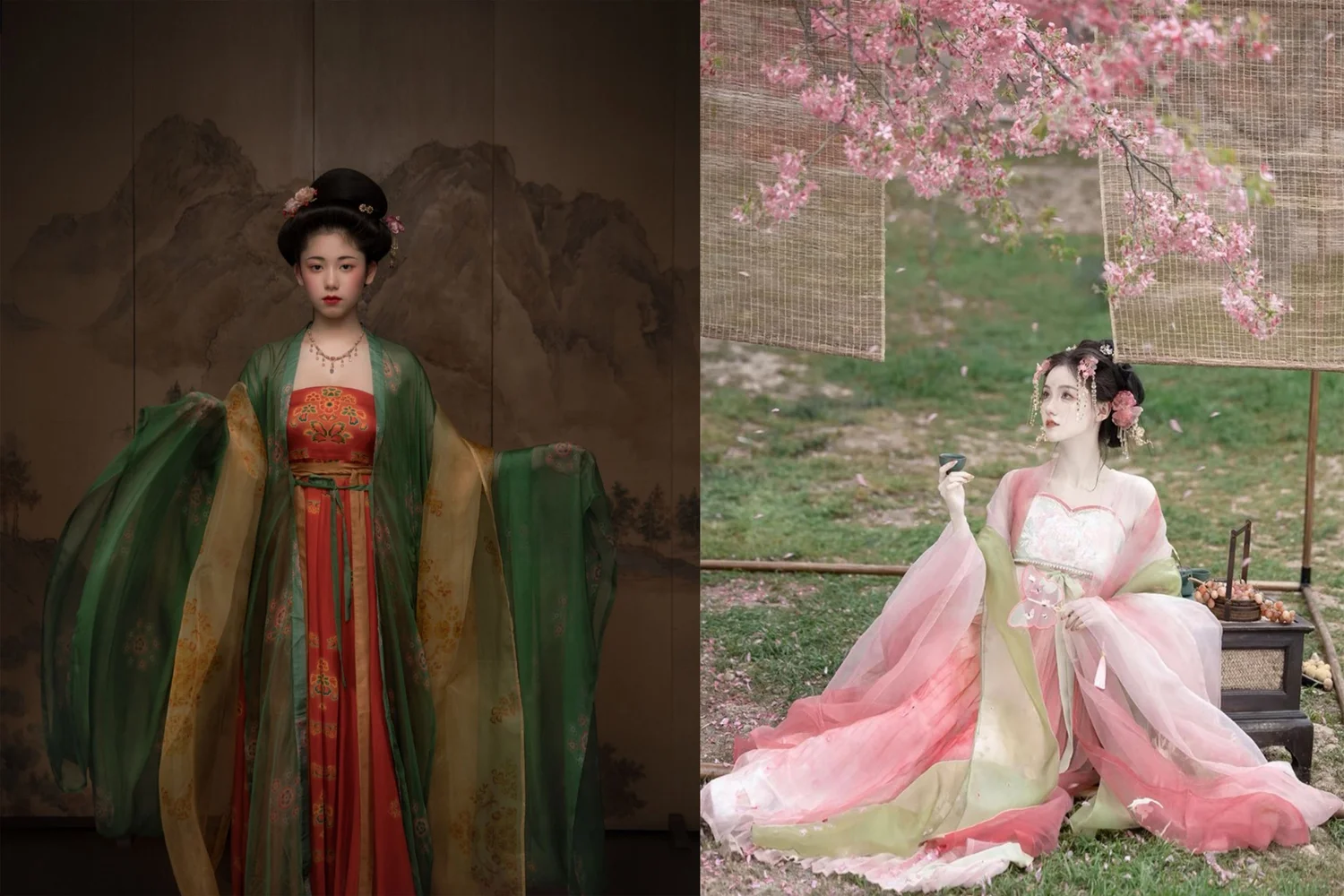
Hanfu vs xianfu is a question many intermediate enthusiasts run into once they move beyond beginner-level interest. The short answer is simple: hanfu refers to historically reconstructed Han Chinese clothing based on relics, paintings, and textual evidence, while xianfu refers to fantasy "immortal-style" dress shaped by modern aesthetics, xianxia media, and costume design rather than archaeology.
That distinction matters because the two styles often overlap visually at first glance. Flowing sleeves, layered robes, and soft color palettes can make them seem related, especially in online shops and studio wardrobes that use labels loosely. In this guide, I’ll give a clear verdict on whether xianfu counts as "real hanfu," a side-by-side comparison table you can scan quickly, and practical advice on when each style makes the most sense.
If you already know the basic terms but want a cleaner line between cultural dress, community terminology, and fantasy styling, this is the breakdown you’re looking for.
Hanfu vs Xianfu at a Glance
Here is the clearest way to understand the difference:
| Category | Hanfu | Xianfu |
|---|---|---|
| Definition | Han Chinese clothing reconstructed from historical evidence | Fantasy "immortal-style" clothing inspired by Chinese aesthetics |
| Goal | To reflect historically grounded dress from specific periods | To create an ethereal, dramatic, otherworldly visual effect |
| Historical Basis | Based on excavated garments, paintings, murals, figurines, and written records | No direct archaeological basis; often inspired by drama, game, and studio costume design |
| Fabrics | Historically plausible silks, ramie, hemp, cotton, brocade, gauze depending on period | Often chiffon, organza, glitter mesh, synthetic layered fabrics, and highly stylized trims |
| Silhouette | Dynasty-specific shapes and proportion systems | Exaggerated drape, extra-long sleeves, trailing skirts, and fantasy layering |
| Construction Details | Cross-collar right-over-left closures, tied fastenings, historically grounded cutting logic | May imitate historical collars but often uses zippers, snaps, hidden modern structure, or decorative shortcuts |
| Common Use Cases | Cultural events, historical interpretation, formal gatherings, educational content, hanfu community wear | Photoshoots, fantasy styling, cosplay, xianxia-inspired events, studio portraits |
| Counts as Authentic Hanfu? | Yes, when the cut and styling are historically supported | Generally no, even if it borrows hanfu elements |
In one sentence: hanfu aims to reconstruct historical clothing; xianfu aims to create an ethereal fantasy look.
And for readers who want the direct verdict early: xianfu may borrow hanfu elements, but it is generally not considered historically accurate hanfu. That is not an insult to xianfu. It simply describes a difference in purpose.
What Is Hanfu?
Hanfu is best understood as Han Chinese clothing reconstructed from historical sources. Those sources include excavated garments, tomb murals, scroll paintings, ceramic figurines, stone reliefs, and written dress records that describe how clothing was cut, layered, fastened, and worn. When people talk about historically accurate hanfu, they usually mean clothing that follows this evidence as closely as possible.
Some of the markers readers look for include cross-collar right-over-left closures, tied fastenings rather than obvious modern closures, dynasty-specific cuts, proportion rules, and historically grounded layering systems. The details matter. Sleeve width, waistband height, skirt panel construction, and even how the collar sits against the chest can all signal whether a garment is grounded in a real historical model or simply borrowing a vaguely ancient look.
It also helps to remember that hanfu is not one single outfit. A Tang-style ensemble can feel open, high-waisted, and visually bold. A Song-style look may appear more restrained and slender. A Ming-style set often looks more structured and formal. Wei-Jin-inspired clothing tends to evoke looser lines and elegant movement. These can all be hanfu if the pattern logic and styling are historically supported.
For travelers or first-time buyers, the hardest part is often terminology. Online stores may use "hanfu" very broadly, and not every beautiful robe sold under that label is actually historical. This is where reputable hanfu specialists, museum-informed stylists, or tour-connected cultural dressing services can be useful. A good service can explain whether you are choosing a reconstruction, a modified modern set, or something purely fantasy-led before you book a fitting or photoshoot.
What Is Xianfu (仙服)?
Xianfu literally points toward fantasy "fairy" or "immortal" style clothing. Its purpose is not historical reconstruction but atmosphere: elegance, softness, motion, and visual drama. It is made to feel dreamy.
The design cues are usually easy to recognize once you know what to look for. Common features include gauzy chiffon, extra-long trailing sleeves, translucent layers, sparkle details, asymmetric styling, exaggerated drape, and soft pastel or all-white palettes. Some sets look as if they were designed to catch wind beautifully on a mountain overlook or glow under studio lights. The effect can be striking, romantic, and very photogenic.
Xianfu is heavily influenced by xianxia dramas, game art, studio costume wardrobes, and social-media photoshoot aesthetics. In other words, it belongs more to the world of visual storytelling than to the world of historical reconstruction. That is why a xianfu set may look intensely "Chinese-style" while still having no firm basis in any one dynasty’s clothing system.
You may also see the term shenxianfu, which is closely related. In practice, many shoppers use xianfu and shenxianfu loosely and interchangeably. This is why product labels alone are not enough to judge accuracy. A listing can say "Tang-style fairy hanfu" and still turn out to be mostly fantasy costume with a few historical-looking details. To judge properly, you have to look beyond the marketing words and examine the cut, fabric, closures, and silhouette.
Where Xianxia and TV-Drama Costumes Fit
This is where much of the confusion comes from: the iconic "immortal" costumes seen in dramas and games usually belong on the fantasy costume or xianfu end of the spectrum, not the historically accurate hanfu end.
Costume departments are not museum reconstruction teams. Their job is to create character, mood, hierarchy, and visual impact on camera. That often means mixing motifs from different periods, simplifying closures for fast costume changes, exaggerating sleeve volume, adding layers that move dramatically in slow motion, and choosing colors or trims that read beautifully on screen rather than match archaeological evidence.
So yes, an outfit can look unmistakably Chinese in style and still not be hanfu in the strict historical sense. It may be historical-inspired costume. It may be modified hanfu. It may be full fantasy styling. Those are different categories, and the distinction becomes important if accuracy matters to you.
If you are booking a photoshoot, renting clothing, or planning a cultural experience in China, ask directly whether the wardrobe is historical hanfu, modified hanfu, or fantasy/xianxia styling. I have seen many travelers assume they were reserving authentic hanfu only to discover a studio rack full of glittering white robes with enormous trailing sleeves and hidden zippers. There is nothing wrong with choosing that look if you love it. The key is knowing what you are getting.
The Historical Accuracy Debate in the Hanfu Community
Within the hanfu community, the accuracy debate usually falls into two broad camps, though real opinions are often more nuanced.
On one side are reconstructionists or purists, who prioritize archaeological and visual evidence. For them, the most important question is whether a garment can be supported by surviving material, period artwork, or reliable written records. They tend to care deeply about pattern logic, closures, textile plausibility, and whether a look belongs to a coherent time period.
On the other side are reformists or modified-style supporters, who accept adaptations influenced by historical dress but adjusted for modern wear, comfort, lifestyle, or aesthetics. They may be open to practical changes, blended styling, or contemporary pieces that preserve some historical flavor without claiming strict accuracy.
The friction between these groups is usually less about whether xianfu is beautiful and more about labeling. A fantasy outfit becomes controversial when it is marketed as historically accurate hanfu. That is where people start correcting one another.
A useful and non-gatekeeping way to think about it is this: - Historical hanfu = reconstruction-focused and evidence-based - Modified hanfu = inspired by historical dress but adapted for modern use - Xianfu = fantasy clothing influenced by Chinese costume aesthetics
These categories can overlap visually, but they are not identical. Understanding the difference lets you join conversations more confidently without dismissing anyone’s taste.
How to Tell Hanfu and Xianfu Apart When Shopping
If you are trying to identify a garment quickly, focus on concrete signals rather than poetic product names.
1. Check the silhouette
Ask whether the overall shape looks tied to a known historical style. Does it resemble a recognizable Tang, Song, Ming, or Wei-Jin silhouette with believable proportions? Or does it rely on dramatic trains, floating outer layers, and ultra-elongated sleeves designed mainly for visual effect?
2. Look at the collar and closures
Historically grounded hanfu often uses cross-collar right-over-left construction, tied fastenings, and layering logic that makes structural sense. Xianfu may imitate these at a glance, but on closer inspection you may find hidden zippers, simplified necklines, decorative panels that do not actually close correctly, or hybrid construction made for speed and convenience.
3. Examine the fabric
Fabric is one of the easiest tells. Historically informed hanfu uses materials that at least feel plausible for the period being referenced, even when modern production methods are involved. Xianfu frequently leans into chiffon, organza, iridescent synthetics, glitter overlays, and sheer fabrics that produce a floating, celestial effect but do not point to a specific historical wardrobe.
4. Watch for dynasty mixing
A single outfit that combines multiple periods freely can be a clue that you are looking at fantasy or heavy modification. Historical dress systems changed over time. If the sleeves suggest one era, the waistband another, and the outer robe another still, the result may be visually appealing but not reconstruction-based.
5. Read product claims carefully
Terms like "ancient style," "fairy hanfu," or "xianxia costume" are not proof of authenticity. Sellers often use broad labels for search visibility. If accuracy matters, look for references to specific dynasties, museum examples, excavated garments, or pattern research.
If you are buying in China or planning a styling session as part of a trip, this is where a knowledgeable agency or local cultural coordinator can save time. A good provider can help you sort studio fantasy wardrobes from actual hanfu rental houses, especially in tourist-heavy cities where marketing language is designed to sound glamorous first and precise second.
When to Wear Hanfu vs Xianfu
Both styles have a place. The right choice depends on your goal.
Choose hanfu if you want:
- A historically grounded cultural experience - A museum visit, heritage site session, or educational photoshoot - Clothing that fits hanfu community standards more closely - Dynasty-specific styling and more accurate accessories - A deeper connection to historical dress rather than fantasy imagery
Hanfu is often the better choice if you care about learning, cultural interpretation, or participating in events where historical coherence matters. It can also produce stunning photos, but its beauty comes from proportion, structure, and period logic rather than sheer theatricality.
Choose xianfu if you want:
- A dreamy, cinematic, immortal-inspired look - A fantasy photoshoot or cosplay-adjacent styling session - Dramatic sleeves, soft layers, and highly photogenic movement - More freedom to prioritize mood over accuracy - A xianxia or game-inspired visual identity
Xianfu shines in studio portraits, scenic outdoor shoots, themed content creation, and occasions where you want to look like you stepped out of a legend rather than a history reference.
For many travelers, the choice becomes practical. If you are visiting a historical garden in Suzhou, an old town in Hangzhou, or a heritage district in Xi’an, a historical hanfu styling session often feels especially meaningful. If you are booking a dramatic mountain, temple, or fantasy-themed shoot, xianfu may suit the atmosphere better. The best providers will tell you honestly which wardrobe category they offer instead of forcing everything under the word hanfu.
Is Xianfu Real Hanfu?
Here is the direct verdict:
Usually no.
Xianfu may use hanfu-inspired elements such as cross-collars, layered robes, wide sleeves, or traditional-looking sashes, but it is generally not considered real hanfu in the historically accurate sense because it does not derive from archaeological reconstruction or dynasty-specific dress logic.
A more precise statement would be: xianfu is Chinese fantasy dress, not historical hanfu.
That does not make it lesser as clothing or art. It simply means it belongs to a different category. You can admire xianfu for its beauty, wear it for photos, and still acknowledge that it is not the same thing as reconstructed historical dress.
FAQ: Hanfu vs Xianfu
Is xianfu part of hanfu?
Not usually in the strict historical sense. Xianfu may borrow visual elements from hanfu, but it is generally categorized as fantasy clothing rather than evidence-based historical dress.
Can xianfu be inspired by real dynasties?
Yes. Some xianfu designs borrow sleeves, collars, or silhouettes from Tang, Song, or other periods. But inspiration is not the same as reconstruction. Once the design prioritizes fantasy aesthetics over historical logic, it moves out of strict hanfu territory.
Are xianxia drama costumes considered hanfu?
Usually no. Most xianxia costumes sit closer to fantasy or theatrical costume design. They may look Chinese-style, but they are commonly mixed-period, stylized, and optimized for the screen.
Is modified hanfu the same as xianfu?
No. Modified hanfu usually starts from historical dress and adapts it for modern wear, while xianfu is primarily fantasy-led. Some garments blur the line, but the design goal is different.
How can I avoid renting the wrong style for a photoshoot?
Ask the provider to specify whether the wardrobe is historical hanfu, modified hanfu, or fantasy/xianxia costume. Request sample photos of the exact clothing options, and check details like fabric, closures, and silhouette before booking. More on that in Hanfu rental China.
Final Thoughts
The cleanest answer to hanfu vs xianfu is that hanfu is about historical reconstruction, while xianfu is about fantasy atmosphere. Both can be beautiful. Both can be meaningful in different ways. The confusion begins only when the labels are treated as interchangeable.
If you are shopping, renting, or planning a China photoshoot, knowing this distinction will help you choose with confidence. Save this guide if you want a quick reference later, and if you have worn either style, share what mattered most to you: historical accuracy, visual impact, or a bit of both.