





 18 days China, End to End Beijing → Xi'an → Chuanzhusi → Jiuzhaigou → Chengdu → Zhangjiajie → Guilin → Yangshuo → Shenzhen From $6,360 View route
  3 days 4-Day Tour of Siguniang Mountain, Biepa Gou, and Dagu Glacier Chengdu → Lixian → Heishui County From $1,599 View route
  5 days Above the Pillars, Then Below Zhangjiajie From $1,430 View route
  3 days After the Last Booth Guangzhou From $840 View route
  13 days All the Way West Xi'an → Dunhuang → Turpan → Kashgar → Shanghai From $3,500 View route
 Essential Chinese Apps 2026: Must-Download Apps for Traveling in China
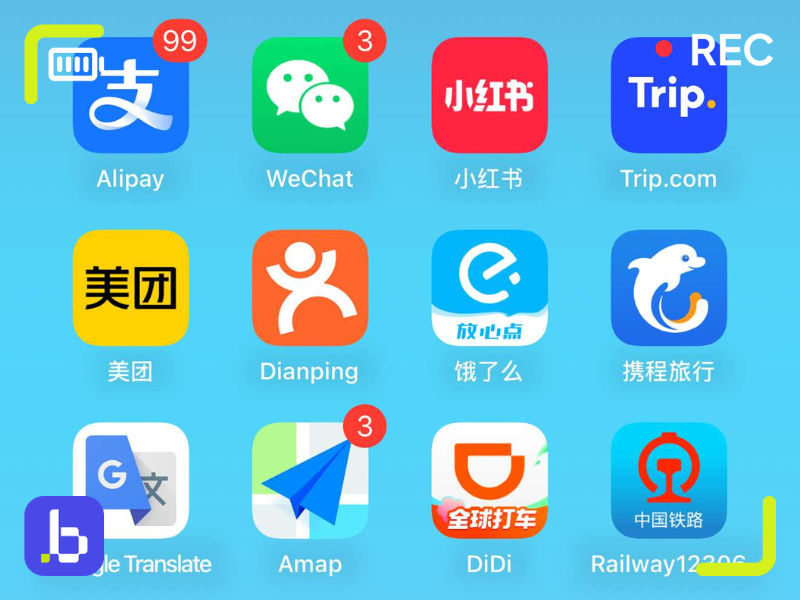
Traveling in China feels exciting right from the moment you land—but for many first-time visitors, there is also a brief moment of confusion. You open your phone to check Google Maps, book an Uber, or message someone on WhatsApp, and suddenly realize that the digital tools you normally depend on are not the ones people around you are using.
I have seen this happen again and again with overseas travelers: the trip itself is well planned, but the app setup is not. In China, the most useful tools are local platforms built for the country’s transport systems, payment networks, QR codes, and everyday digital habits. The good news is that once you install the right Chinese apps, daily travel becomes dramatically easier. Ordering a car, finding a subway exit, paying for lunch, translating a menu, or contacting a guide can all happen in a few taps.
This guide covers the essential apps for China travel in 2026, explains what each one is good for, and shows you which apps to download before departure so you can arrive prepared instead of scrambling at the airport.
Why You Need Chinese Apps for Travel in China
The most useful app in China is often not an international platform at all, but a local app designed specifically for Chinese digital infrastructure. That matters more than many travelers expect. In major cities and smaller destinations alike, transport, dining, ticketing, and payment systems are deeply connected to local platforms.
Some familiar international services may still work in limited ways, but they are often less reliable, less accurate, or simply less relevant on the ground. A map app may show a location without the correct entrance. A restaurant review platform may have almost no local content. A messaging tool may be technically available, but not what your hotel host, guide, or driver checks every day.
The practical benefit of using the right China apps is simple: less stress. You can navigate train stations more confidently, call rides without language friction, find restaurants locals actually recommend, and handle daily purchases in a society where cashless payment is now the norm.
That said, app usefulness depends on your trip. A traveler spending three days in Shanghai with a private guide may need a lighter setup than someone traveling independently across Beijing, Xi’an, Chengdu, Guilin, and Yunnan. Your destination, language ability, and level of travel support all affect which apps matter most.
Before You Go: Download These Apps First
If you do only one piece of app preparation before your China trip, make it this: install your essentials before boarding your flight. Do not assume you will sort everything out after arrival. Airport Wi-Fi may be inconvenient, SMS verification can take time, and app store access may not be as smooth as you expect when you are tired and jet-lagged.
At a minimum, I recommend downloading your map app, translation app, payment apps, ride-hailing app, and communication tools in advance. If you expect to access services restricted in mainland China, prepare that as well before departure. A VPN is something many travelers set up ahead of time rather than trying to solve later. If that applies to your trip, see our  Best VPN for China guide.
It also helps to complete account setup before you leave home. Add a bank card where supported, switch the interface to English if available, download offline Chinese language packs, and make sure your login method works with your current mobile number or email.
Here is a simple pre-departure checklist:
- A phone with enough storage and battery health for daily travel use
- International roaming, local SIM, or eSIM ready to activate
- Backup authentication method in case SMS codes fail
- Screenshots of your hotel name, address, and nearest metro station in Chinese
- Passport details available if an app requires identity verification
- Offline translation packs and key destination pins saved in advance
A little preparation here saves a surprising amount of time once you are in China.
The Chinese Super Apps You Should Understand First
Before diving into a long list of downloads, it helps to understand one of the most important ideas in China’s digital life: the super app.
A China super app is not just a single-purpose tool. It is a platform that combines multiple functions—messaging, payments, bookings, mini programs, service directories, and local utility features—inside one ecosystem. Instead of using separate apps for everything, many people in China manage large parts of daily life through just a few core platforms.
For travelers, the two most important names to understand are WeChat and Alipay. These are not niche products or optional extras. They are central to how everyday transactions and communication happen across the country.
WeChat is especially important for communication and lightweight service access. People use it to message, share locations, scan QR codes, follow official accounts, join temporary travel groups, and access mini programs without downloading standalone apps.
Alipay is equally important on the payment side and has become increasingly traveler-friendly. Beyond payments, it also offers transport tools, merchant services, and practical features that can help visitors navigate daily purchases more smoothly.
If you are feeling overwhelmed by the number of China apps available, start here. Learning just these two apps well will solve a large part of your daily travel logistics.
WeChat: The Everything App for Communication, Payments, and Daily Travel
If you have ever asked, “What is WeChat, and why does everyone mention it before a China trip?” the short answer is this: WeChat is the most important everyday communication app in China, but it is also much more than a messaging app.
Known as Weixin in Chinese, WeChat sits at the center of modern daily life. It is used by over a billion people each month and functions as a combined messenger, digital wallet, contact hub, social feed, and service portal. For visitors, it often becomes the app that makes the rest of the trip feel connected.
The features that matter most for travelers include:
- Chat and voice messaging: Many local contacts prefer WeChat over email or SMS.
- QR code sharing: Adding a hotel host, guide, driver, or local friend is often done by scanning a code.
- WeChat Pay: In places where your setup is supported, this can be one of the easiest ways to pay.
- Mini programs: These are lightweight in-app tools for services like attraction booking, queue management, and local utilities.
- Official accounts: Businesses, museums, attractions, and transport providers often post updates here.
- Location sharing: Very useful when meeting someone in a busy station, mall, or tourist area.
In real travel situations, WeChat becomes incredibly practical. A guide may send your meeting point through WeChat. A driver may confirm your pickup with a voice message. A small guesthouse may ask you to message them instead of calling. A local restaurant may display a QR code for menu browsing, ordering, or payment. Even group tours often create temporary WeChat groups to share reminders, photos, and timing updates.
For setup, the good news is that WeChat offers an English interface, so international visitors can use the app without navigating everything in Chinese. Payment features for overseas users have improved over the years, though eligibility can still depend on your card type, nationality, and current policy updates. It is smart to treat WeChat as essential for communication first, and then consider payments a valuable bonus if your account setup allows it.
If you want to understand digital payment in more detail, our Mobile Payment Guide explains how travelers can use WeChat Pay and Alipay in China. WeChat is deeper than it looks: its mini programs replace five separate apps and are how you book most attractions.
15 Must-Have Chinese Apps for Traveling in China
You do not need to download every popular app in China just because it exists. The smarter approach is to choose apps by travel function. Below are the top Chinese apps and China-friendly tools that make the biggest difference for most visitors.
Getting Around
1. Didi (滴滴) Think of Didi as China’s answer to Uber, but built for local transport habits. It is the easiest way for many travelers to book a car, especially in large cities where taxi communication can otherwise be awkward. Pickup points, destination input, and in-app fare estimates make it far less stressful than flagging a cab on the street.
2. Baidu Maps (百度地图) If you are asking what map app to use in China, Baidu Maps is one of the strongest answers. It is deeply localized, detailed, and often better aligned with Chinese addresses and points of interest than international map platforms. The downside is that parts of the interface can feel challenging if you do not read Chinese.
3. Amap / Gaode Maps (高德地图) Many travelers and local residents prefer Amap for navigation, walking directions, and real-time transport information. In some cities, it feels especially strong for practical urban movement. If you are comfortable testing two map apps, having both Baidu Maps and Amap gives you useful backup.
4. MetroMan For visitors using public transport, MetroMan is refreshingly simple. It provides subway maps and route planning for major Chinese cities, making it ideal for travelers who want a clear, low-friction way to understand metro systems without diving into a more complex local app.
Payments and Money
5. Alipay (支付宝) Alipay is one of the most important apps for travelers in China. It supports cashless payments, QR code scanning, and a growing range of visitor-friendly functions. In many day-to-day situations—convenience stores, restaurants, attractions, vending machines, and taxis—Alipay can be the app that keeps everything moving smoothly. For a deeper setup guide, see our Mobile Payment Guide.
6. WeChat Pay If your WeChat account supports payment setup with your card, WeChat Pay is incredibly convenient because it lives inside an app you are likely already using for communication. In real life, many merchants accept both Alipay and WeChat Pay, so having access to either one is useful; having both is even better.
Translation and Language Support
7. Pleco Pleco remains one of the best Chinese-English dictionary apps available. It is fast, reliable, and genuinely useful when you need to look up menu items, transport vocabulary, ingredients, or place names. Even travelers who use AI tools often keep Pleco as a dependable backup.
8. Google Translate Google Translate can still be very helpful if you download offline Chinese packs before travel. Text translation, basic phrase support, and camera features can save time, especially in museums, menus, or stations. Just prepare it in advance rather than relying on setup after arrival.
9. Microsoft Translator Microsoft Translator is especially handy for image translation and quick conversation support. Some travelers find it more stable for practical photo-based translation tasks, such as reading signs, ingredient labels, or instructions posted at hotel laundries and station counters.
Food and Dining
10. Meituan (美团) Meituan combines food discovery, local deals, and delivery-style convenience in one platform. For travelers, it is useful not only for dining but also for understanding what is popular nearby. In some destinations, locals use it for everything from coffee orders to attraction discounts.
11. Dianping (大众点评) Dianping is often described as China’s version of Yelp, but that comparison only goes so far. It is one of the most influential restaurant and lifestyle review platforms in the country, packed with local ratings, photos, and recommendations. If you want to know where local people actually eat, Dianping is often more revealing than international review sites.
Travel Booking
12. Trip.com Trip.com is one of the most useful apps for international travelers because it bridges Chinese travel infrastructure with a more foreigner-friendly interface. It is excellent for booking hotels, flights, attraction tickets, and especially train tickets. For many overseas visitors, this is the most convenient all-purpose booking app for China.
13. 12306 This is China’s official railway ticketing platform. It gives direct access to the train system, which is one of the best ways to travel between major cities. The interface can be more demanding than Trip.com, but experienced travelers sometimes use it for direct booking and schedule checking.
Communication
14. WeChat Even if you already installed it for messaging, it still belongs on this must-have list because almost every part of travel can flow through it. It is how you stay in touch with guides, hotels, local contacts, and sometimes even customer service teams. In China, not having WeChat can feel like traveling without a phone number.
Discovery and Entertainment
15. Xiaohongshu (小红书 / RED) Xiaohongshu is one of the best apps for visual travel inspiration in China. Think neighborhood cafés, scenic viewpoints, museum tips, photogenic corners, and trend-driven recommendations. It is especially useful if you want to discover what younger local travelers are actually saving and sharing.
16. Douyin (抖音) Yes, this guide promised 15 must-have apps, and strictly speaking, most travelers can treat Douyin as optional. But if you enjoy discovering places through short video, it can be surprisingly useful for understanding current local buzz—night markets, seasonal events, scenic walks, and hidden food streets. If your travel style is spontaneous and curiosity-driven, it earns its place.
Quick Comparison: Global Services vs China Alternatives
| Google Service | China Alternative |
|---|---|
| Google Maps | Baidu Maps / Amap (Gaode) |
| Uber | Didi |
| Yelp | Dianping |
| Google Pay | Alipay |
| YouTube | Bilibili / Douyin |
The key lesson is not that every global tool becomes useless in China. It is that the local alternative is often better suited to real travel conditions on the ground.
How to Download Chinese Apps
For many travelers, downloading Chinese apps is easier than expected—but there are a few details worth knowing.
On iPhone, many major Chinese apps are available in international App Stores, including WeChat, Alipay, Didi, Trip.com, and often Amap. In some cases, certain versions or features may differ by region. You may hear advice about switching to the China App Store with a Chinese Apple ID, but for most travelers, that is not the first step to try. Start with your normal App Store and only explore region-switching if a specific app is unavailable.
On Android, you can often find major apps through the Google Play Store before travel, though availability varies by region. If an app is missing, some travelers use Chinese Android app stores such as Tencent MyApp or download APKs from official websites. If you take that route, only use trusted official sources.
In practical terms, most essential China travel apps are available internationally if you prepare early. The bigger challenge is usually account setup, payment linking, and interface familiarity—not the download itself.
FAQ: Chinese Apps for Travel in China
1. Can I use Google Maps in China?
You may be able to open it in some situations, but it is often less useful than local map apps for real navigation in China. For accurate local directions, entrances, and transport information, Baidu Maps or Amap are usually better choices.
2. Do I need a Chinese phone number to use these apps?
Not always. Many apps allow registration with international numbers, and some traveler-friendly platforms are designed specifically with overseas users in mind. However, certain features, payment functions, or verification steps may work more smoothly with a Chinese number.
3. Is WeChat available in English?
Yes. WeChat has an English interface, which makes it one of the easiest Chinese apps for international visitors to start using. Some mini programs and official accounts may still contain Chinese-heavy content, but the main app navigation is manageable in English.
4. Can I use Uber in China?
Uber is not the main ride-hailing option in China. Didi is the dominant platform and the one most travelers should rely on for booking cars.
5. How do I download Chinese apps on iPhone?
Start with your regular App Store, where many essential Chinese apps are already available. Download them before your trip, complete setup in advance, and only consider changing App Store regions if a specific app you need cannot be found.
Final Thoughts: Download These Apps Before You Go
The right apps will not just make your China trip more convenient—they will change how confidently you move through the country. With WeChat for communication, Alipay for payments, Didi for transport, strong map tools, and a few smart language and booking apps, you can handle the practical side of travel with far less friction.
If you are planning your itinerary now, save this guide, share it with your travel companions, and compare your download list before departure. And if you would rather spend less time worrying about train tickets, airport transfers, local communication, or day-to-day logistics, explore our China tour packages. We are always happy to help travelers build a smoother, more comfortable trip in China—without taking the adventure out of it.