




 18 days China, End to End Beijing → Xi'an → Chuanzhusi → Jiuzhaigou → Chengdu → Zhangjiajie → Guilin → Yangshuo → Shenzhen From $6,360 View route
  3 days 4-Day Tour of Siguniang Mountain, Biepa Gou, and Dagu Glacier Chengdu → Lixian → Heishui County From $1,599 View route
  5 days Above the Pillars, Then Below Zhangjiajie From $1,430 View route
  3 days After the Last Booth Guangzhou From $840 View route
  13 days All the Way West Xi'an → Dunhuang → Turpan → Kashgar → Shanghai From $3,500 View route
 Beijing Hutongs Guide 2026: Best Hutong Areas, Tours & What to See

You do not really understand Beijing until you step into its hutongs.
Beyond the grand imperial landmarks and wide modern avenues, the city reveals its most human side in these narrow lanes, where gray brick walls, red-painted gates, old trees, parked bicycles, and everyday conversations still shape the rhythm of local life. A Beijing hutong is not just a sightseeing stop. It is a living neighborhood, a piece of urban memory, and for many travelers, the place where Beijing feels most personal.
If you are planning to explore hutongs Beijing style rather than just checking off famous monuments, this guide will help you do it well. Below, I will explain what hutongs are, which areas are worth visiting, how to explore them, what to eat, what details to notice, and how to experience hutong China Beijing culture respectfully.
What Are Beijing Hutongs?
A hutong is a narrow lane or alley, traditionally lined with siheyuan, the classic courtyard homes that once defined residential life in old Beijing. These lanes are one of the clearest expressions of the city’s historic urban identity. While modern Beijing is full of ring roads, subway lines, and glass towers, the hutongs preserve an older pattern of neighborhood life built around family compounds, shared walls, and close-knit community interaction.
Many of Beijing’s hutongs began taking shape during the Yuan dynasty (1271-1368), when Beijing developed as an imperial capital under Mongol rule. In the Ming and Qing dynasties, the city expanded further, and the hutong network grew with it. Over time, these lanes became the framework of daily life for generations of residents.
If you have ever wondered what is hutong Beijing history really about, the answer is both architectural and social. A hutong is not only a lane; it is part of a complete residential system. Behind the street-facing walls stood family courtyards, often arranged with strong ideas about privacy, hierarchy, and seasonal comfort.
The word hutong is often linked to a Mongolian term associated with a well or water source, though the exact etymology can vary depending on the source. That uncertainty does not change the fact that the term has become inseparable from Beijing itself.
At one point, Beijing is said to have had more than 6,000 hutongs. Today, only a fraction remain. Redevelopment, population pressure, preservation campaigns, and changing lifestyles have all reshaped the old city. That is exactly why visiting them matters: each surviving lane offers a rare window into a Beijing that still breathes beneath the modern capital.
Best Hutong Areas to Visit in Beijing
Not all hutongs offer the same experience. Some are lively and commercial, some feel polished and creative, and others still carry a quieter residential atmosphere. If you are wondering where to start with hutongs Beijing, these are the most worthwhile areas.
Nanluoguxiang
If it is your first visit, Nanluoguxiang is the easiest introduction to the world of the Beijing hutong. It is the most famous hutong area in the city, and yes, it is commercialized, but it is also lively, accessible, and full of energy. The central lane is lined with snack shops, boutique stores, cafés, dessert counters, souvenir spots, and side alleys that tempt you to explore further.
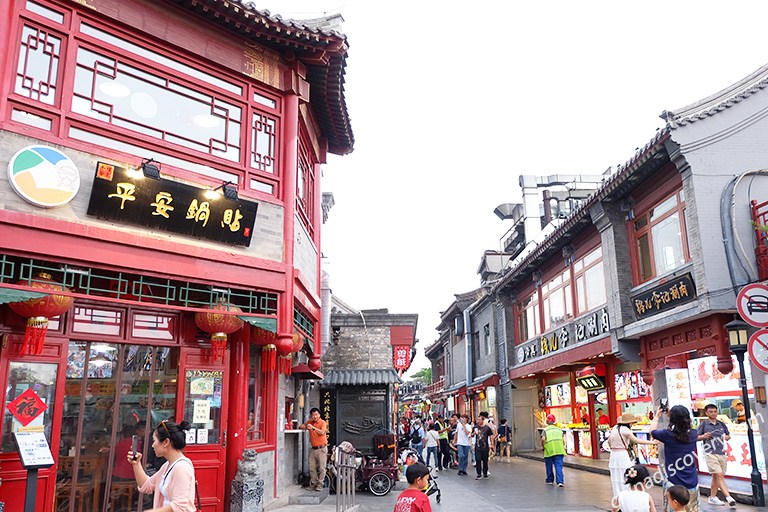
The biggest advantage of Nanluoguxiang is convenience. It is easy to reach, easy to walk, and easy to combine with nearby sights. The downside is the crowd. By late morning and afternoon, it can become packed. If you want better photos, a calmer mood, and a more enjoyable walk, come early in the morning when shop shutters are just opening and the side lanes are still quiet.
The real charm is often not on the main strip itself but in the branching alleys. Walk a little deeper, and the pace changes. You may suddenly find a quieter corner with potted plants, laundry lines, old doorways, and the subtle feeling of neighborhood life continuing behind the tourist flow.
Shichahai and Houhai
For atmosphere, Shichahai and Houhai are among the most rewarding hutong areas in Beijing. Here, narrow lanes open toward scenic lakes, waterside paths, willow trees, and a lively mix of historic residential streets and nightlife. This area works especially well for travelers who want a more leisurely experience.
Come in the late afternoon and stay into the evening. As the light softens, the lake edges become ideal for strolling, and the surrounding hutongs feel especially photogenic. After dark, the district shifts again: bars begin to fill, live music drifts out through open doors, and the whole area becomes one of the city’s most relaxed night-walking zones.
In winter, the area has a different charm. When conditions allow, parts of the lakes become associated with seasonal skating culture, giving the neighborhood an unmistakably local cold-weather mood.
Wudaoying Hutong and Yandaixie Street
These two compact stops make a good pairing because they offer very different flavors.
Wudaoying Hutong is often described as a quieter, more refined alternative to Nanluoguxiang. It has independent cafés, small design shops, stylish restaurants, and a more relaxed crowd. The street still attracts visitors, but it generally feels less hectic. If you enjoy slow coffee breaks, thoughtful storefront design, and a more understated hutong walk, Wudaoying is a strong choice.
Yandaixie Street, near Houhai, is much shorter but worth adding if you are already exploring the lake area. Its name is often translated as “Skewed Tobacco Pouch Street,” and it has a compact, historic feel. Today you will find small shops, souvenirs, antiques, and traditional-style storefronts. It is not a place where you spend half a day, but it fits naturally into a wider Shichahai stroll.
Dashilar, Liulichang, and Baitasi
Travelers who want a less predictable route should look beyond the most photographed lanes.
Dashilar, near Qianmen, gives you a more layered view of old commercial Beijing. This area is known for long-established brands and heritage businesses. You can still find classic names associated with cloth shoes, silk, tea, snacks, and traditional retail culture. The neighborhood feels more historical than polished, and that is part of its appeal.
Liulichang is a good stop for travelers interested in traditional Chinese culture, calligraphy, antiques, and old scholarly arts. Shops here often focus on brushes, ink, paper, seals, scrolls, and decorative objects. Even if you are not buying anything, the area has a distinctly cultural atmosphere that feels different from the café-centered hutong districts.
Baitasi offers a more contemporary version of hutong exploration. Around the White Dagoba Temple area, old alleys now mix with creative studios, modern cafés, thoughtful renovations, and design-led spaces. It is one of the best places to see how old Beijing architecture and modern city life can coexist without completely losing character.
How to Explore the Hutongs: Best Tour Options
The best way to explore Beijing’s hutongs depends on how much context, comfort, and flexibility you want.
Walking Tours
For most travelers, walking is still the best option. It lets you notice architectural details, pause for snacks, slip into side alleys, and adjust your pace depending on what catches your eye. Two practical routes are Nanluoguxiang -> Drum Tower -> Houhai and Dashilar -> Qianmen. Both combine atmosphere with easy navigation and worthwhile stops.
A good walking tour usually lasts two to three hours, though you can easily stretch it longer if you stop for food, photos, or coffee.
Rickshaw Tours
A hutong tour by rickshaw remains one of the most classic experiences, especially in the Shichahai area. These rides usually last 30 to 60 minutes and are often chosen by visitors who want a more relaxed overview without too much walking. The experience can be enjoyable, but quality varies. Some drivers offer only basic transport, while others share simple local stories or limited English commentary.
For that reason, booking through a reputable provider, hotel, or trusted travel agency is a safer choice than choosing randomly on the street.
Bicycle Tours
Beijing’s flatter central districts can work very well for cycling, and a bicycle lets you cover more ground than walking while still staying close to the street-level experience. Shared bike apps are widely used in the city, and some rental shops also offer more traditional setups for visitors.
Cycling in the hutong zones can be rewarding, but you do need to stay aware of traffic, pedestrians, and local street habits. Go slowly, especially in narrow alleys.
Guided Cultural Experiences
If you want more than just a scenic walk, consider a guided cultural experience: a food walk, a courtyard visit, or a neighborhood storytelling tour. These can help you understand not only what you are seeing, but why it matters. For overseas travelers, this is often where a reliable agency becomes genuinely useful. English-friendly local guides, smoothly planned routes, and well-chosen stops can turn a casual wander into a much richer experience without feeling overly packaged.
What to See and Experience Inside the Hutongs
One of the biggest mistakes visitors make is walking too fast.
The hutongs reward attention to small details. Look closely at carved gateposts, worn stone thresholds, metal door knockers, red paper couplets, handwritten notices, old mailboxes, hanging birdcages, and bicycles leaning against faded walls. These details give the alleys personality. They are part of what makes a hutong feel lived-in rather than staged.
If you can spot a traditional siheyuan entrance, pause for a moment. These courtyard homes shaped family life in old Beijing in very practical ways. Rooms were arranged around a central open space, balancing privacy, hierarchy, and shared domestic life. The courtyard system was not just an architectural style; it organized relationships, movement, and seasonal comfort.
You may also notice slices of everyday culture: retirees playing chess or cards, neighbors chatting in folding chairs, early market activity, deliveries rolling through narrow lanes, or someone airing bedding in the sun. These are often the most memorable moments, but they should be observed with care. Remember that hutongs are residential environments, not performance spaces. Speak softly, avoid pointing cameras directly into private homes, and do not block doorways.
What makes hutongs special is not only their age or appearance. It is the feeling of walking through a historical environment that still functions as part of a real city. In the best hutongs, history is not behind glass. It is woven into ordinary life.
What to Eat in Beijing Hutongs
Food is one of the easiest ways to deepen your hutong experience.
In or near many hutong neighborhoods, you can try classic Beijing flavors such as zhajiangmian (wheat noodles with savory soybean paste), tanghulu (candied fruit on skewers), baodu (quick-cooked tripe, popular with adventurous eaters), and douzhi, the famously fermented mung bean drink that even many locals describe as an acquired taste.
Among places often mentioned by visitors, Yaoji Chaogan is a classic stop for old Beijing comfort food, especially if you are curious about traditional liver stew and hearty local breakfast culture. Wenyu Cheese Shop is frequently recommended for its Beijing-style milk desserts, which feel lighter and more nostalgic than flashy modern sweets.
A hutong walk also works well with spontaneous eating. Buy a snack, step into a small noodle shop, or pause at a café tucked behind a simple storefront. In neighborhoods like Wudaoying and Baitasi, the food scene often mixes old Beijing staples with more contemporary dining styles, which can make the experience feel especially balanced.
Hutong Photography Tips
If photography matters to you, go early.
Morning is usually the best time to photograph the hutongs because the light is softer, the lanes are quieter, and daily life is just beginning. This is when you are more likely to capture bicycles in slanting sunlight, residents opening their doors, or a near-empty alley that would be crowded later in the day.
Instead of only shooting wide alley views, pay attention to smaller subjects: weathered doorframes, stone lions, house numbers, birdcages, shop signs, red lanterns, chess games, and the contrast between old brick walls and new urban touches. Respect matters here too. Avoid intrusive close-ups of residents unless you have clear permission.
The Future of Hutongs
The future of Beijing’s hutongs remains a delicate balance between demolition and preservation, commerce and authenticity. Some lanes have been restored with care. Others have become highly commercial. Still others continue to struggle with maintenance, development pressure, or changing residential needs.
For travelers, this means two things. First, the hutongs are not frozen in time. Second, visiting thoughtfully matters. The best approach is to appreciate them as evolving neighborhoods rather than demanding a romantic version of the past. Preservation is most meaningful when the city remains livable for the people who still call these lanes home.
FAQ
What is the most famous hutong in Beijing?
The most famous hutong area in Beijing is Nanluoguxiang. It is the best-known and most visited, especially for first-time travelers, thanks to its central location, lively atmosphere, and easy access to nearby side alleys.
Are Beijing hutongs free to visit?
Yes, most hutongs are free to visit because they are public lanes and residential neighborhoods rather than ticketed attractions. Some specific museums, courtyards, or organized experiences inside hutong areas may charge an entrance or tour fee.
How long does a hutong tour take?
That depends on the format. A rickshaw ride often lasts 30 to 60 minutes, while a walking tour is usually 2 to 3 hours. If you add food stops, cafés, or several neighborhoods, you can easily spend half a day exploring.
Can you still live in a Beijing hutong?
Yes, many people still live in Beijing hutongs, although living conditions vary a lot by area. Some lanes remain deeply residential, while others have seen renovation, commercialization, or conversion into cafés, guesthouses, and creative spaces.
Final Thoughts
If you only see Beijing through palaces, temples, and monumental landmarks, you will understand its grandeur. If you walk its hutongs, you will understand its texture.
That is where the city becomes intimate: in the scrape of a bicycle wheel against stone, in the shade of a courtyard tree, in a doorway painted years ago and touched up many times since. Whether you choose the energy of Nanluoguxiang, the lakeside mood of Houhai, or the quieter corners of Baitasi and Dashilar, the hutongs offer one of the most memorable ways to connect with Beijing.
If you are planning a trip and want a deeper cultural experience, it is worth choosing routes and guides carefully. A well-designed hutong day can combine history, food, architecture, and local insight without feeling rushed. Save this guide for your Beijing planning, and if you have a favorite hutong discovery of your own, share it with fellow travelers.