




 18 days China, End to End Beijing → Xi'an → Chuanzhusi → Jiuzhaigou → Chengdu → Zhangjiajie → Guilin → Yangshuo → Shenzhen From $6,360 View route
  3 days 4-Day Tour of Siguniang Mountain, Biepa Gou, and Dagu Glacier Chengdu → Lixian → Heishui County From $1,599 View route
  5 days Above the Pillars, Then Below Zhangjiajie From $1,430 View route
  3 days After the Last Booth Guangzhou From $840 View route
  13 days All the Way West Xi'an → Dunhuang → Turpan → Kashgar → Shanghai From $3,500 View route
 Aoqun Hanfu: The Ming-Style Jacket and Skirt Explained

Introduction: What Is Aoqun Hanfu?
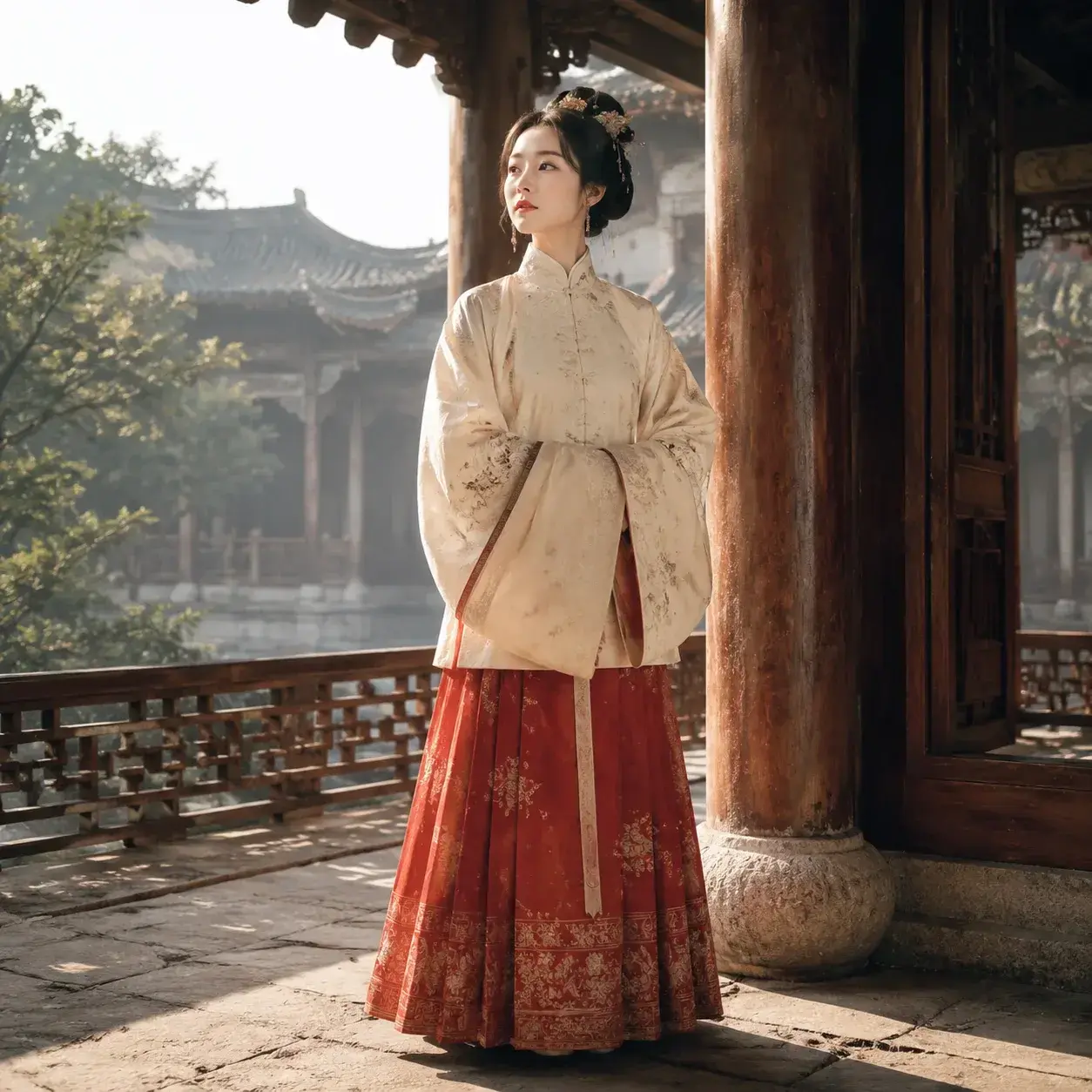
Aoqun hanfu is a two-piece outfit made of an ao—a lined jacket—and a qun, or skirt. It is most strongly associated with Ming-dynasty Hanfu dress, and it remains one of the easiest historical outfit types to recognize once you know what to look for. The simplest rule is this: in aoqun, the jacket covers the skirt waistband; in ruqun, the top is usually tucked in or ends at or above the waistband.
That difference matters because many modern Hanfu photos, shop listings, and social posts show similar silhouettes without explaining the construction clearly. If you have ever looked at a skirt-and-top set and wondered whether it was aoqun or ruqun, you are not alone. This guide breaks down what the term means, where it comes from, how to identify it quickly, the main ao jacket variants, the skirts commonly paired with it, and why aoqun still dominates so much of today’s Hanfu revival.
What Does “Aoqun” Mean? Breaking Down Ao + Qun
The name aoqun is refreshingly literal. It describes the outfit by its two main parts:
| Term | Meaning |
|---|---|
| Ao | A lined or padded jacket/top |
| Qun | A skirt |
Put together, aoqun means a jacket-and-skirt ensemble built around an ao jacket worn over a skirt.
This is important because aoqun is a specific garment form, not a broad label like “hanfu.” “Hanfu” can refer to many categories of historical Han Chinese dress, but aoqun points to a particular clothing logic: a more substantial upper garment, worn untucked, layered over the waistband of the skirt.
That upper layer creates a silhouette that feels more covered and structured than lighter blouse-and-skirt combinations. The ao is not just any random top. It is part of the outfit’s identity. Once you understand that the name itself tells you how the pieces work together, many of the confusing overlaps in beginner Hanfu terminology start to clear up.
Ming-Dynasty Origins and Historical Context of Aoqun
Jacket-and-skirt combinations existed before the Ming dynasty, but the aoqun silhouette most modern Hanfu enthusiasts mean today is especially tied to Ming dress, particularly from the mid-to-late Ming period. When people in contemporary Hanfu circles talk about aoqun, they are usually referring to a family of Ming-style outfits built around a lined jacket worn over a skirt.
In historical use, this kind of ensemble was practical as well as elegant. Because the ao was lined and more substantial than a light, tucked upper garment, it was especially suitable for cooler weather, transitional seasons, and settings where a more composed appearance was desired. It could function as women’s everyday respectable dress, seasonal wear, or semi-formal attire depending on the materials, embroidery, skirt type, and accessories.
Our understanding of aoqun comes from several kinds of evidence: Ming tomb finds, portrait paintings, textile fragments, surviving garments, and museum collections. These sources help scholars and makers reconstruct details such as collar type, sleeve cut, jacket length, fastening methods, and skirt structure. At the same time, it is worth keeping the scope realistic. Surviving examples vary by time period, region, social status, and reconstruction approach. So in modern usage, “aoqun” often refers not to one rigid uniform, but to a related group of Ming-style jacket-and-skirt outfits that share the same core construction logic. ming dynasty hanfu men has the detail we've skipped here. For the full breakdown, see ming dynasty hanfu.
Aoqun vs Ruqun: The Fastest Way to Tell Them Apart
If you remember only one rule, make it this:
If the top covers the skirt waistband, it is usually aoqun. If the top is tucked in or sits at/above the waistband, it is usually ruqun.
That single visual test solves most beginner confusion.
Here is a quick side-by-side comparison:
| Feature | Aoqun | Ruqun |
|---|---|---|
| Top length | Longer jacket that extends over the waistband | Shorter top or blouse-like upper garment |
| How it is worn | Untucked, layered over the skirt | Usually tucked into the skirt or ending at/above waistband |
| Weight/structure | More substantial, often lined | Often lighter and softer in appearance |
| Overall silhouette | Structured, layered, jacket-based | Airier, lighter, blouse-and-skirt oriented |
| Strongest association | Commonly associated with Ming-style forms | Commonly associated with earlier and broader ruqun traditions |
Visually, aoqun tends to feel more composed and architectural. The upper body has a clean outer layer, and the skirt begins beneath it rather than dominating the look from the waist upward. By contrast, ruqun often reads as softer and more flowing, with the top integrated more directly into the waistline.
That said, readers should be careful with modern labels. Online stores sometimes use terms loosely, and photography can hide the waistband entirely. Accessories, camera angle, and styling tricks can also blur the difference. The safest approach is to identify the outfit by construction and wearing method, not by whatever title a product page happens to use.
Types of Ao Jacket in Aoqun
One reason aoqun is such a rich category is that the ao jacket itself comes in multiple variants. Even when the overall formula stays the same—jacket over skirt—the collar and length can change the entire mood of the outfit.
Collar Types
The most commonly discussed collar types include:
- Cross-collar (jiaoling youren): the front crosses right over left, creating the diagonal neckline that many people instinctively associate with traditional Han clothing. This version can feel elegant, balanced, and historically grounded.
- Standing collar (liling): this creates a close, upright neckline with a neat, contained look. In modern recreations, it often feels especially refined and distinctly Ming in flavor.
- Round collar variants: these offer a softer neckline shape and can shift the impression toward a more formal or courtly visual language depending on styling and trim.
Each collar changes how the face, neck, and upper torso are framed. A cross-collar ao can look graceful and classic. A standing-collar ao often appears crisp and disciplined. A round-collar version may read as gentler or more polished depending on the cut.
Jacket Length: Short Ao vs Long Ao
Ao jackets also vary in length.
- A short ao usually creates a compact, practical silhouette. It still covers the waistband, but it leaves more of the skirt visible and gives the outfit a lighter visual rhythm. - A long ao or da ao extends farther down, increasing the sense of formality and vertical flow. The longer line can make the outfit look more dignified, mature, or stately.
This length difference matters more than many beginners expect. A shorter jacket lets the skirt speak louder. A longer jacket shifts more visual weight upward and can make the ensemble feel calmer, fuller, and more ceremonial.
How Collar and Length Affect the Overall Impression
Together, collar and length shape the personality of the outfit. A short cross-collar ao can feel practical and lively. A standing-collar long ao may look restrained and elegant. A round-collar variation paired with a carefully chosen skirt can feel more court-influenced or dressy.
When trying to identify aoqun in photos, it helps to look at these details separately: first check whether the jacket covers the waistband, then examine the collar, then notice the length. That sequence makes the category much easier to parse.
Common Skirt Pairings in Aoqun
The qun in aoqun is not just a background piece. It plays a major role in the outfit’s silhouette and historical feel. In modern Hanfu discussion, one of the most common pairings is the mamianqun, often called the horse-face skirt.
The mamianqun is especially recognizable for its structured construction, with decorated outer panels and pleated sections arranged to create movement and volume. When paired with an ao jacket, it produces one of the most iconic Ming-style looks in today’s Hanfu revival: the jacket provides coverage and shape above, while the skirt adds rhythm, width, and visual richness below.
Other skirt styles also appear in reconstructions, but the pairing logic stays consistent. The skirt sits beneath the outer jacket, and the outfit is read as a layered whole rather than as a tucked blouse with a separate lower garment. This is why the aoqun silhouette often feels so grounded and balanced.
For beginners, this pairing also offers a practical clue. If you see a Ming-style ensemble with a jacket worn over a skirt—especially one styled with the visual presence of a mamianqun—you are very likely looking at some form of aoqun. hanfu skirt has the detail we've skipped here.
Why Aoqun Is So Popular in the Modern Hanfu Revival
Aoqun remains one of the most popular Hanfu forms today for a simple reason: it is visually distinctive, historically resonant, and relatively approachable to wear.
First, it photographs beautifully. The layered jacket creates clean lines around the shoulders and torso, while the skirt adds movement and decorative impact. This makes aoqun especially popular for portraits, festivals, museum visits, historical parks, and formal Hanfu gatherings.
Second, it offers a strong connection to Ming-style aesthetics, which are widely loved in the modern revival scene. Many wearers appreciate its balance between structure and elegance. It can look refined without feeling excessively theatrical.
Third, it is versatile. Depending on the fabric, color palette, embroidery, and jacket type, aoqun can lean understated, scholarly, festive, graceful, or richly ceremonial. That flexibility helps explain why it appears so often in both beginner wardrobes and more serious historical-inspired collections.
There is also a practical reason for its popularity among international travelers and new Hanfu wearers: aoqun can be easier to understand once someone explains the construction. If you are planning to try Hanfu in China and want a style that feels classic but not overly complicated, many studios and travel-focused costume experiences naturally recommend Ming-style jacket-and-skirt sets for exactly that reason. A knowledgeable agency or Hanfu fitting service can help match the jacket length, collar type, and skirt style to your comfort level, the season, and the type of photos or cultural experience you want. There's a fuller guide to this in hanfu chinese new year.
How to Identify Aoqun Correctly When Shopping or Looking at Photos
Because modern labels can be inconsistent, it helps to follow a simple checklist.
1. Check the Waistband
This is still the fastest test. Can you see that the jacket is worn over the skirt waistband? If yes, you are probably looking at aoqun.
2. Look at the Top as a Jacket, Not Just a “Top”
Ask whether the upper garment behaves like an outer layer. Does it look lined, structured, or substantial? Does it sit over the skirt rather than merging into the waist? If so, that supports an aoqun identification.
3. Examine the Collar
A cross-collar, standing collar, or round-collar jacket can all fit within aoqun discussions. The collar type does not define aoqun by itself, but it helps confirm that you are looking at a jacket variant rather than a different upper garment form.
4. Notice the Overall Silhouette
Aoqun usually looks layered and composed rather than soft and tucked. The upper body reads as finished before the skirt begins.
5. Do Not Rely on Shop Names Alone
Some products are labeled for search convenience rather than accuracy. If a listing says “ruqun” but the top clearly covers the waistband, the construction matters more than the title.
If you are visiting China and hoping to rent or buy Hanfu in person, bringing reference photos and asking staff specifically about the waistband and jacket type can save time. Good rental studios and specialist shops are often happy to explain the difference when asked clearly.
Final Thoughts: A Simple Way to Remember Aoqun
At its core, aoqun hanfu is a Ming-style jacket-and-skirt outfit built from an ao worn over a qun. That is the definition that matters most. If you want the easiest memory aid, keep this image in mind: aoqun covers, ruqun tucks.
From there, the details become much easier to enjoy. You can start noticing collar styles, jacket lengths, skirt pairings, and how modern recreations interpret historical evidence from paintings, tomb finds, and museum-held garments. And once you learn to spot the covered waistband, a lot of online Hanfu confusion suddenly disappears.
If you have been sorting out overlapping Hanfu names, aoqun is one of the most useful categories to learn first. It gives you a practical framework, a strong historical anchor in the Ming dynasty, and a clearer eye for one of the most beloved silhouettes in the Hanfu revival today.
If you have seen different aoqun styles in museums, shops, or while traveling in China, it is worth saving examples and comparing collar, length, and skirt structure side by side. That kind of visual study is often the fastest way to turn a confusing term into a garment form you can recognize immediately.