





 18 giorni Cina, da capo a fondo Pechino → Xi'an → Chuanzhusi → Jiuzhaigou → Chengdu → Zhangjiajie → Guilin → Yangshuo → Shenzhen Da $6,360 Vedi itinerario
  14 giorni A cosa serve ogni città Pechino → Xi'an → Chengdu → Shanghai → Shenzhen → Canton Da $5,030 Vedi itinerario
  19 giorni A valle del futuro Shenzhen → Guilin → Yangshuo → Chengdu → Chongqing → Yichang → Shanghai Da $5,360 Vedi itinerario
  5 giorni A valle, poi in salita Guilin → Yangshuo Da $1,600 Vedi itinerario
  8 giorni Acqua tranquilla, città veloce Shanghai → Yangshuo → Shenzhen Da $2,350 Vedi itinerario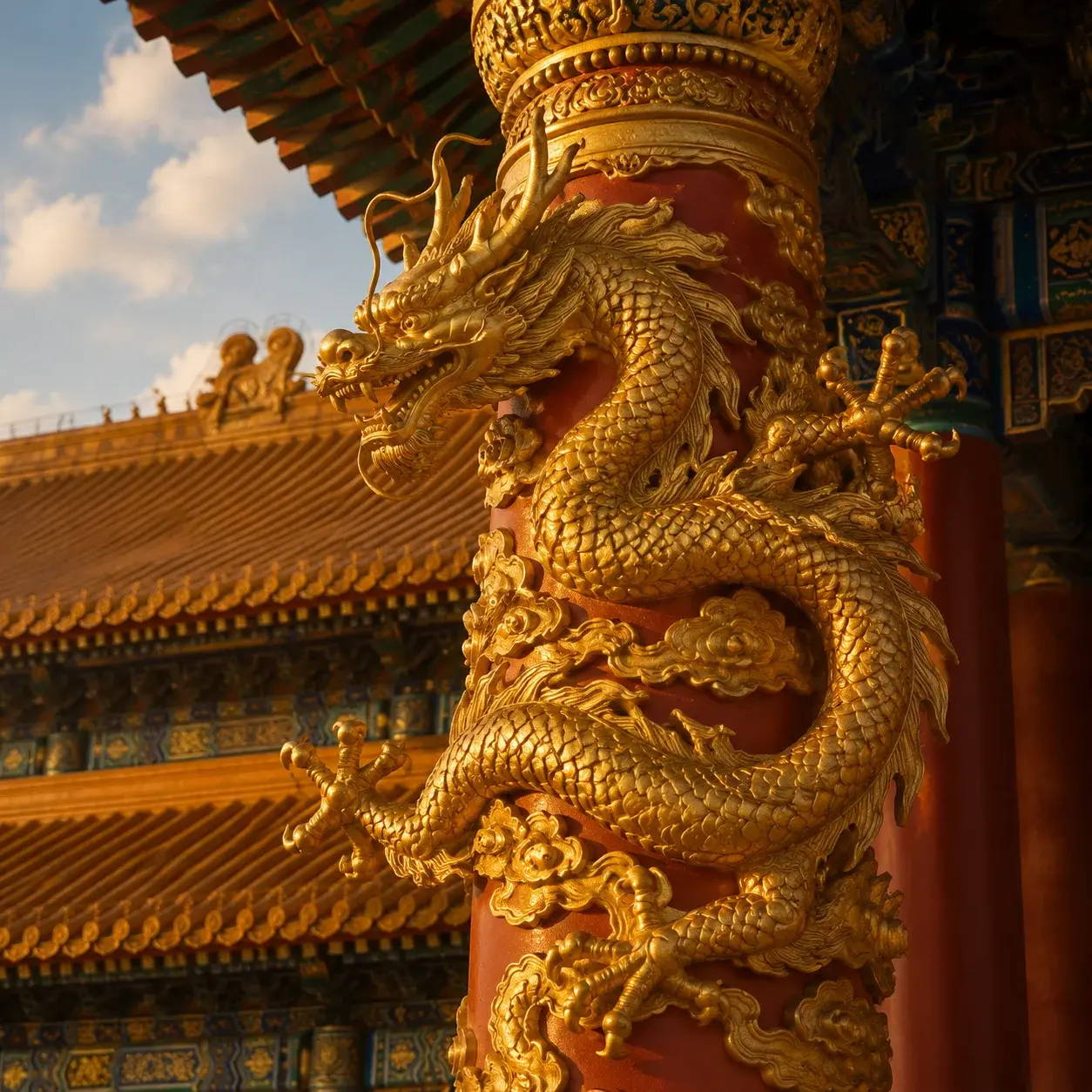
Cosa Significa Veramente il Drago Cinese — e Dove Puoi Vedrlo in Cina?
Il drago cinese (龙, lóng) è un essere benevolo, signore delle acque, portatore di pioggia, potere imperiale e buona fortuna — non un mostro alfiere del fuoco della leggenda europea. È l'emblem degli imperatori, l'immagine etnica di un popolo che si definisce "figli del drago", e l'unica creatura mitologica dello zodiaco cinese. È auspicioso, non malefico.
Questa sola riformulazione è dove si fermano la maggior parte delle spiegazioni. Questa guida va un passo oltre: dopo il significato — il simbolismo, i colori, i nove figli e la differenza dal drago occidentale — ti dice dove in Cina puoi davvero stare davanti a un drago, dallo schermo imperiale a cinque artigli nella Città Proibita al muro più antico del principe con quattro artigli a Datong. Siamo una compagnia di viaggi in Cina, non un dipartimento di mitologia né un venditore di souvenir; citiamo fatti culturali a fonti e date specifiche, e il nostro contributo è lo strato del viaggiatore che nessun enciclopedia si prende cura del. Il sinonimo che potresti aver cercato — "dragone asiatico" — si riferisce alla stessa creatrice signora d'acqua nella più ampia tradizione dell'Est Asia; questa pagina è su quello cinese.
Punti Chiave
- Il drago cinese simboleggia il potere imperiale, il controllo sull'acqua e sulla pioggia, la buona fortuna e la saggezza — una forza benevola, non un mostro da sconfiggere.
- È l'opposto del drago occidentale: senza ali, serpentine, legato all'acqua e venerato — dove il drago europeo è alato, respiratore di fuoco e temuto.
- I colori cambiano il significato: giallo/oro è imperiale, rosso è fortuna, blu-verde è natura e rinnovamento.
- Contare le arta: sotto la legge Ming, cinque arta erano riservate all'imperatore; la nobiltà ne usava quattro. I dragi della Città Proibita ne hanno cinque; quelli di Datong ne hanno quattro.
- Dove vederli: i tre Grandi Mura dei Nove Draghi (Città Proibita e Parco Beihai a Pechino; Datong in Shanxi), guardiani sui tetti-tempio e le regate del Drago vivo.
- I nove "figli" del drago sono una guida sul campo in disfrazione — una volta conosciuti, si possono leggere i tetti, campane e ponti di qualsiasi antica città cinese.
Cosa Simboleggia il Drago Cinese?
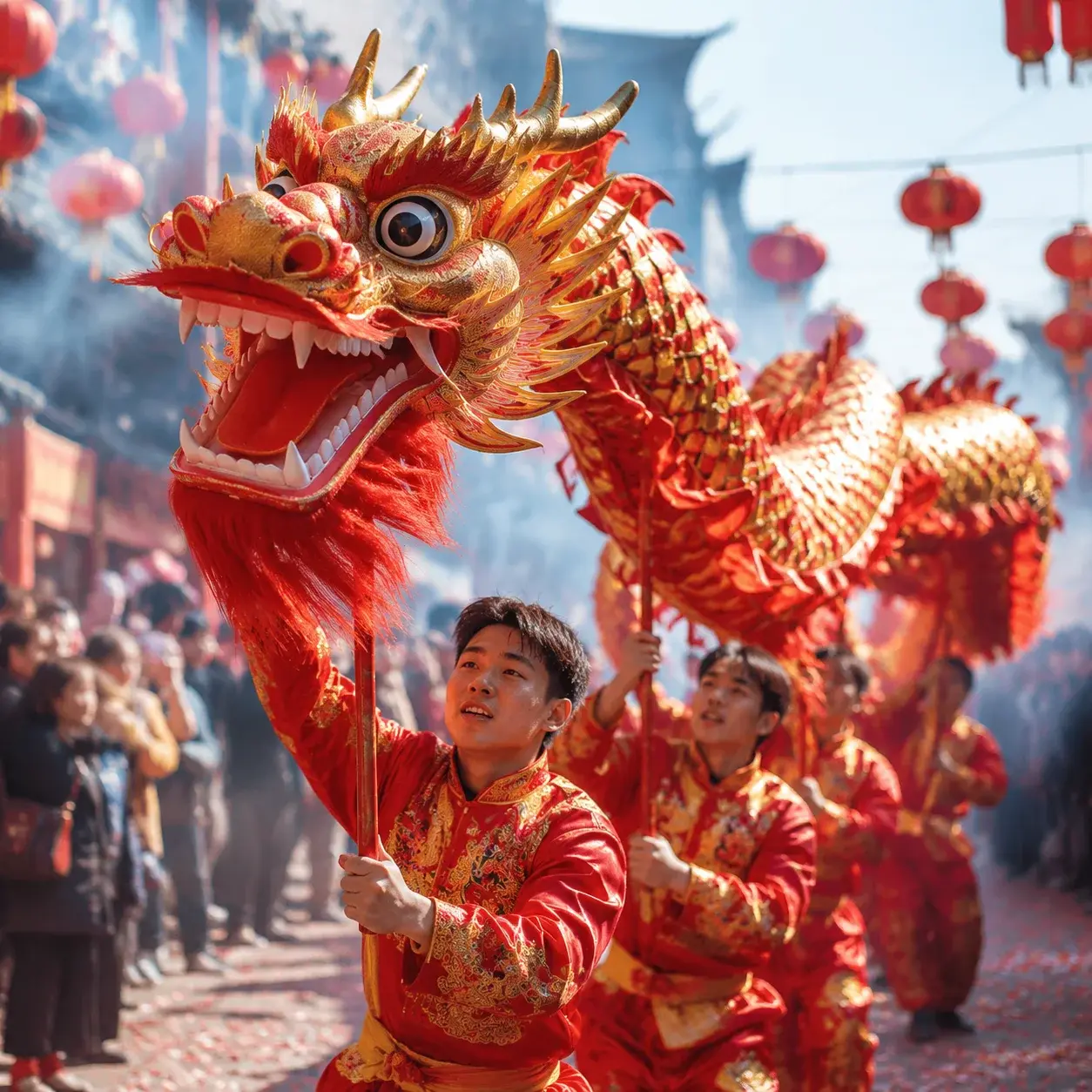
Il drago cinese simboleggia il potere imperiale, il controllo sull'acqua e sulla pioggia, la buona fortuna e la saggezza — una forza benevola e auspicious piuttosto che una cattiva. Mentre la tradizione europea ha fatto del drago un villano, la cultura cinese lo ha reso una divinità e un emblema del sovrano.
Il filo conduttore che unisce tutto questo è l'acqua. Nella tradizione popolare i quattro Re dei Draghi (Longwang) governano i mari Est, Ovest, Sud e Nord e comandano pioggia, fiumi e inondazioni (chinahighlights, consultato il 2026-07-04). È per questo che una civiltà agricola dipendente dalla pioggia reveriva il drago: era la potenza che decideva se le colture vivevano o morivano. Dall'acqua deriva tutto il resto che il drago rappresenta — abbondanza, prosperità e il mandato dell'imperatore, poiché il sovrano che poteva intercedere presso il portatore di pioggia deteneva l'autorità suprema.
Il drago è anche un'identità. I cinesi si definiscono lóng de chuánrén — "discendenti del drago" — e la creatura è l'unica animale mitico tra i dodici segni dello zodiaco, motivo per cui essere nati nell'anno del drago conferisce uno status particolare (vedi la nostra  guida allo zodiaco cinese). Perciò il "simbolismo del drago cinese" è davvero quattro idee intrecciate insieme: potenza, acqua, fortuna e appartenenza.
Drago cinese vs drago occidentale: qual è la differenza?
Il drago cinese è una creatura benevola, senza ali, padrona dell'acqua, venerata come divina; il drago occidentale è un mostro alato, che soffoca fuoco, accumula tesori, da uccidere. Hanno lo stesso nome e quasi nient'altro — ed è proprio questo che rende errato applicare la narrazione occidentale al drago cinese.
I fatti qui sotto seguono la cornice di echineselearning / topchinatravel (consultato il 2026-07-04):
| Dimensione | Drago cinese (龙) | Drago occidentale |
|---|---|---|
| Origine | Totem dell'acqua/pioggia di una cultura agricola millenaria; ibrido di nove animali (corni, testa di cammello, scaglie di carpa artigli d'aquila...) | Archetipo di mostro della mitologia europea e del Vicino Oriente; il male che l'eroe deve sconfiggere |
| Corpo | Serpente, senza ali, lungo e avvolgente | Corpo da lucertola massiccio con ali da pipistrello, quattro zampe |
| Volo | Volmagica attraverso nuvole e nebbia — senza ali | Volando con ali di pelle |
| Elemento | Acqua — fiumi, mari, pioggia | Fuoco — soffia fiamme |
| Temperamento | Benevolo, saggio, fortunato | Aggressivo, avido, temuto |
| Ruolo culturale | Simbolo dell'imperatore, divinità della pioggia, simbolo di buona fortuna | Mostro da domare o conquistare |
| Casa | Laghi, mari, nuvole di pioggia, cieli nebbiosi | Caverne, tane di montagna, tesori |
Se togli una riga, prendi questa: il drago cinese domina la pioggia, non il fuoco. La più comune lettura errata occidentale — "un drago è una bestia che soffia fuoco e custodisce un tesoro uccisa da un cavaliere" — mappa il mito sbagliato sulla creatura sbagliata. Una semplificazione più accurata: il drago occidentale è un mostro alipide e avido; il drago cinese è più simile a un dio dei fiumi che cavalca le nuvole.
Cosa Significano i Colori del Drago Cinese?
I colori cambiano il significato: giallo e oro sono imperiali, rosso è fortuna e celebrazione, e blu-verde rappresenta natura e rinnovamento. La stessa forma del drago trasmette un messaggio diverso a seconda di come è dipinto, ed è importante quando ti trovi davanti a uno smaltato e cerchi di leggerlo.
I significati qui sotto seguono chinahighlights e studycli (consultati il 2026-07-04); nota che alcune sfumature hanno più associazioni e le interpretazioni variano a seconda della fonte:
| Colore | Significato |
|---|---|
| Giallo / Oro | Nobiltà imperiale, l'imperatore, prosperità, centro — il rango più alto |
| Rosso | Fortuna, gioia, prosperità, celebrazione |
| Blu / Verde | Natura, primavera, salute, tranquillità, Est |
| Nero | Nord, acqua, mistero, vendetta o tempesta |
| Bianco | Lutto, purezza, Occidente, e talvolta morte |
Il legame imperiale spiega perché la Città Protrusa brilla di giallo: il giallo-oro era il colore dell'imperatore, quindi i draghi smaltati e le tegole del suo palazzo ne sono dominati. I draghi rossi appartengono a festival e matrimoni, per cui la danza del drago è un tripudio di rosso. Il codice dei colori non è decorazione — è un secondo strato di意義 sovrapposto al drago stesso.
I tipi di drago cinese (e i nove figli)
La tradizione cinese riconosce diverse ampie tipologie di draghi — i Re dei Draghi dei quattro mari, dragi celesti o spirituali che guardano il cielo, dragi avvolti intorno a pilastri e dragi con corni — oltre i famosi "figli del drago", ognuno una creatura distinta con il proprio compito. I quattro Re dei Draghi sono l'interruttore principale: governano i mari e la pioggia, ecco perché il drago simboleggia acqua e abbondanza fin dall'inizio.
I figli del drago sono la parte che i viaggiatori dovrebbero davvero conoscere, poiché fungono da guida all'architettura cinese antica. L'idea è che il drago ebbe nove prole, nessuno dei quali un drago completo, ciascuno attratto da un oggetto diverso — così gli artigiani posizionavano ogni figlio in base alla sua natura. L'elenco varia a seconda della fonte, e diverse liste scambiano alcuni nomi; la versione principale qui sotto segue visitbeijing / chinese-mythology.com / chinahighlights (accesso 2026-07-04):
| Figlio | Natura | Dove lo puoi trovare |
|---|---|---|
| Bixi (赑屃) | Corpo di tartaruga, ama portare pesi | Sotto i memoriali in pietra — la "tartaruga" che regge la stele |
| Chiwen (螭吻) | Ama guardare lontano; allontana il fuoco | Ai due estremi del tetto di un tempio o palazzo (il più facile da riconoscere) |
| Pulao (蒲牢) | Rugge quando viene colpito | Il manico o l'anello in alto su grandi campane di bronzo |
| Bi'an (狴犴) | Simile a una tigre, ama la giustizia | Porte delle prigioni e aule dei tribunali |
| Suanni (狻猊) | Simile a un leone, ama il fumo e la quiete | Incensatori e troni buddisti |
| Yazi (睚眦) | Feroce, ama le battaglie | Impugnature di spade e accessori d'arma |
| Taotie / Jiaotu / Gongfu (e altri) | Greed / guarding doors / loving water | Motivi di caldaie e vasi, piastre dei battenti, pilastri di ponti |
Impara solo uno — Chiwen sul tetto — e unlocks un superpotere: dalla Città Proibita a un villaggio sacro, puoi indicare la bestia "inghiottendo" ogni estremità della trave principale del tetto e sapere che è il figlio del drago posto lì per proteggere l'edificio dal fuoco. Impara Bixi, e la "tartaruga" di pietra sotto ogni vecchio monumento smette di essere una tartaruga. È così che una lista di mitologia diventa una competenza di viaggio.
Perché alcuni draghi hanno cinque artigli e altri quattro?
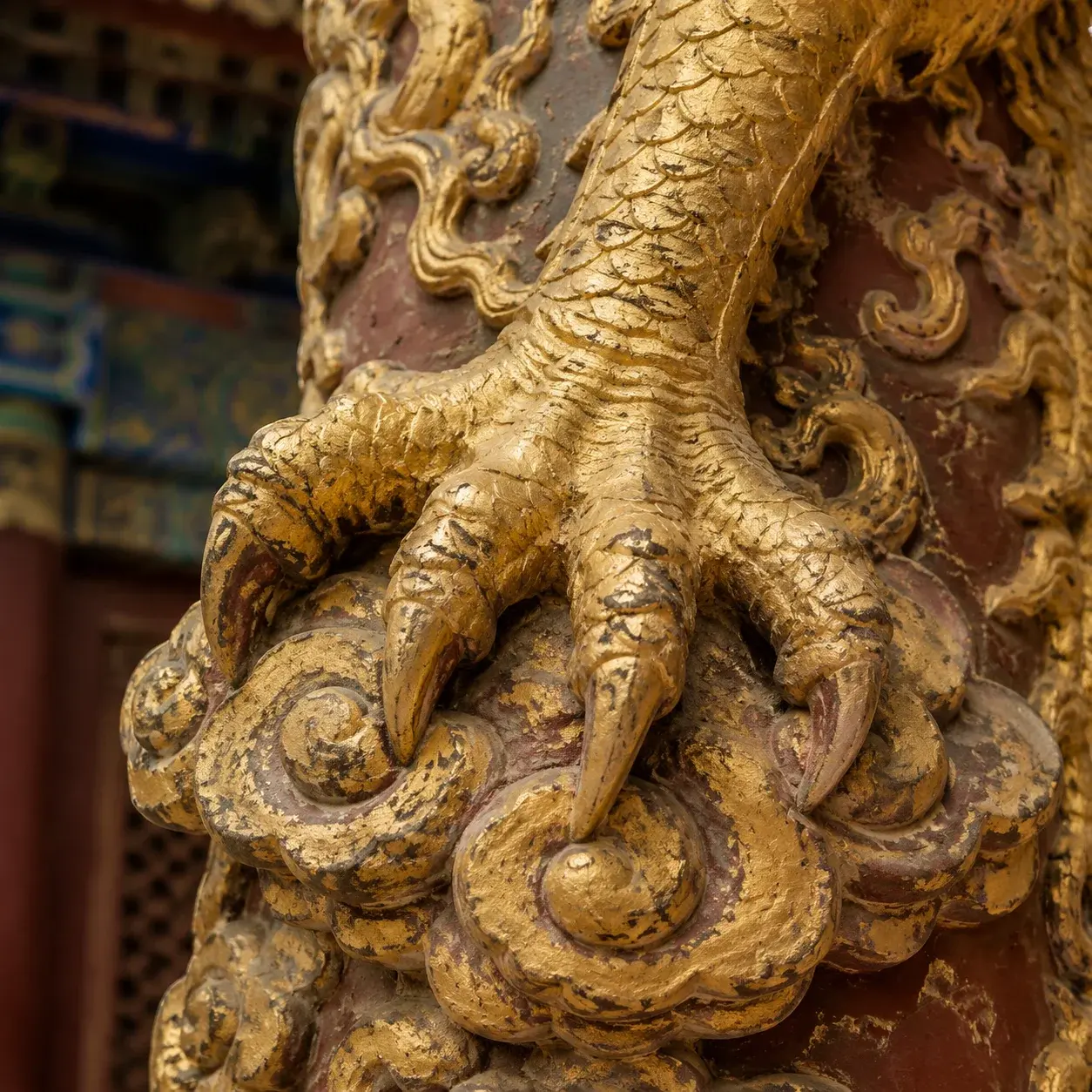
Secondo la legge della dinastia Ming, il drago a cinque artigli era riservato all'imperatore — il Figlio del Cielo — mentre nobiltà e principi erano permessi solo quattro artigli; l'uso di un drago a cinque artigli al di fuori del circolo imperiale era tradimento. Questo è il fatto più utile per riconoscere un drago in persona, e quasi nessuna guida lo menziona.
L'imperatore Hongwu decretò il drago a cinque artigli e due corni come simbolo imperiale, e l'uso improprio del motivo a cinque artigli poteva essere punito come tradimento (scalar.usc.edu "Five-Clawed Dragon"; en.wikipedia.org "Dragon robe" / "Mangfu", consultato il 2026-07-04). Nobiltà e alti funzionari ricevettero il drago ma dovetto scendere a quattro artigli; il drago a quattro artigli era chiamato mang (蟒) per distinguere dal longpao a cinque artigli dell'imperatore.
Quindi il payoff sul sito è semplice: conta gli artigli. I draghi della Schermo dei Nove Draghi della Città Proibita ne hanno cinque — perché appartenevano all'imperatore. I draghi del muro di Datong ne hanno quattro — perché appartenevano a un principe, e l'imperatore gli ordinò di ridurre il conteggio. Il numero degli artigli non era una scelta artistica; era rango inciso nella pietra. Questo solleva ovvia domanda: dove andare per contarli?
Dove si possono davvero vedere draghi in Cina?
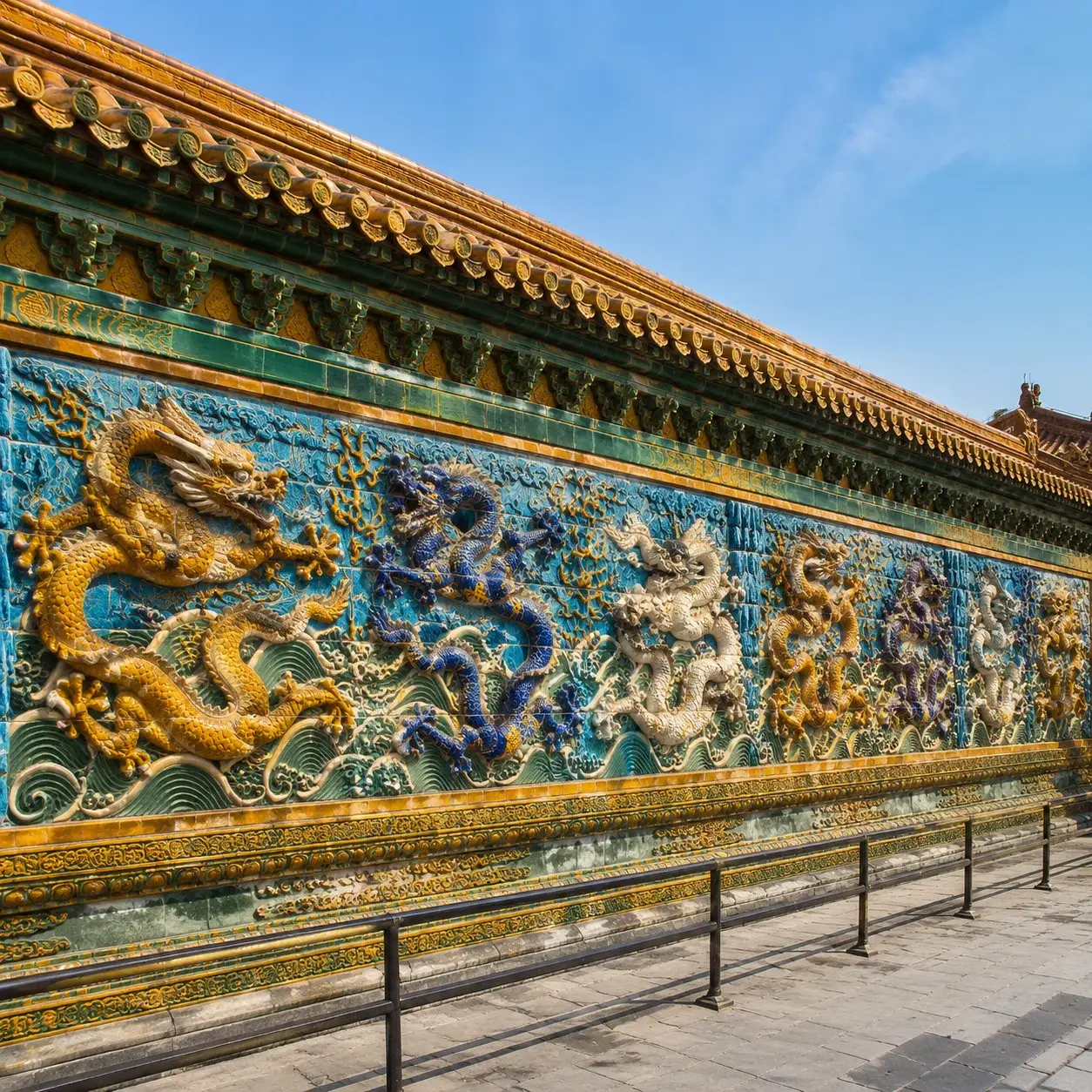
I migliori luoghi per stare davanti a un drago sono le tre Grandi Mura dei Nove Draghi — la Città Proibita e il Parco Beihai a Pechino, e quella più antica e grande a Datong, Shanxi — insieme ai guardiani sui tetti dei templi in tutta Cina e alle live regate del Drago d'Acqua in estate. Questa è la parte che gli enciclopedie saltano: il significato ha un indirizzo fisico.
Una Muraglia dei Nove Draghi (jiulongbi) è uno schermo in piastrelle smaltate con nove draghi, e tre sono famosi. Quella di Pechino è comoda da visitare in una giornata; quella di Datong è motivo di un viaggio a parte. Per chiarire i fatti: lo schermo della Città Proibita è lungo 29,4 m e alto 3,5 m, realizzato con circa 270 pezzi smaltati, commissionato dall'imperatore Qianlong intorno al 1771–1773 (travelchinaguide / beijingtrip, consultato il 2026-07-04). La muraglia di Datong fu costruita nel 1392 per Zhu Gui, il tredicesimo fondatore della dinastia Ming — lunga 45,5 m, alta 8 m, composta da circa 426 pezzi smaltati — la più antica e delle tre, risale a circa 300 anni fa ed è approssimativamente il doppio delle dimensioni delle muraglie di Pechino (chinaxiantour / tripchinaguide, consultato il 2026-07-04).
| Dove | Città / Regione | Cosa si vede | Artigli |
|---|---|---|---|
| Schermo dei Nove Draghi, Città Proibita | Pechino | Nove dragli vetrati, ~29,4 m di lunghezza, costruito ~1771–1773 | Cinque (imperiale) |
| Muro dei Nove Draghi, Parco Beihai | Pechino | Schermo autonomo con draghi su entrambi i lati | Cinque (imperiale) |
| Muro dei Nove Draghi, Datong | Shanxi | Il più antico e grande della Cina, costruito nel 1392 per un principe Ming | Quattro (di un principe) |
| Templi e tetti dei palazzi | Tutto il paese | I guardiani "Chiwen" sul bordo del tetto "inghiottono" la trave contro il fuoco | — |
| Regate del Festival delle Barca Drago | Duanwu, soprattutto nel sud della Cina | Barche da regata con prua a drago — il drago in movimento | — |
La regola del viaggiatore che unisce tutta la tabella: guarda prima gli artigli. I due muri di Pechino sono a cinque artigli e imperiali; quello di Datong è a quattro artigli e principesco, perché un principe non poteva mostrare i cinque dell'imperatore. Se hai solo un giorno a Pechino, lo schermo della Città Proibita (cinque artigli) insieme al muro doppio lato del Parco Beihai è una facile abbinatura — Beihai è un parco, quindi funziona bene per le famiglie, e "contare gli artigli" crea una caccia al tesoro pronta per i bambini. Il muro che vale una deviazione dedicata è quello di Datong: più vecchio, più grande e a quattro artigli, è quello che dimostra fisicamente la regola di rango.
Inserirlo in un itinerario: le mura di Pechino sono all'interno di una giornata classica alla Città Prohibita, facilmente raggiungibile una volta arrivati nella capitale (vedi come arrivare a Pechino); Datong si abbina naturalmente alla città murata di Pingyao in Shanxi, la destinazione principale più vicina nella stessa provincia. Per i draghi che si muovono piuttosto che stazionari, vorresti un festival — la danza del drago durante il Capodanno cinese e le regate del drago di Duanwu sono le due finestre dell'anno in cui il draggio prende vita. Orari di apertura, bigliettatura e le date annuali della regata del drago cambiano, considera quindi la timing della regata estiva come indicativa e conferma le date lunari dell'anno corrente prima di costruire un itinerario su di esse.
Domande frequenti
Cosa simboleggia il drago cinese? Il drago cinese simboleggia il potere imperiale, il controllo sull'acqua e sulla pioggia, la buona fortuna e la saggezza. È una creature benevola e auspicious — l'emblemma dell'imperatore e portatore di prosperità — piuttosto che un mostro malvagio, e i quattro Re del drago lo collegano a fiumi, mari e pioggia.
Qual è la differenza tra un drago cinese e un drago occidentale? Il drago cinese è senza ali, serpentine, legato all'acqua e alla pioggia, ed è riverito come una figura benevola e imperiale. Il drago occidentale è una creatura alata che soffoca fuoco, custodisce tesori ed è temuta e uccisa. Stesso nome, significato opposto: pioggia versus fuoco, divinità versus mostro. Cosa significano i colori di un drago cinese? I colori aggiungono un ulteriore livello di significato. giallo e oro segnalano l'imperatore e la nobiltà imperiale; rosso significa fortuna e celebrazione; blu e verde rappresentano natura, primavera e salute; nero indica il nord, l'acqua e la tempesta; bianco può significare lutto o ovest. Le interpretazioni variano secondo le fonti. Cos'è un "drago asiatico" e è la stessa cosa? "Drago asiatico" è un termine generico per il drago senza ali, padrone dell'acqua e benevolo della tradizione dell'Asia orientale, in contrapposizione al drago occidentale che soffoca fuoco. Il drago cinese (龙, lóng) è la sua forma più influente; i draghi giapponese, coreano e vietnamita sono parenti stretti con variazioni locali. Perché il drago cinese ha cinque artigli? Secondo la legge della dinastia Ming, il drago a cinque artigli era riservato all'imperatore, e usarlo al di fuori della famiglia imperiale era considerato tradimento. Nobili e principi erano limitati a quattro artigli. È per questo che i draghi della Città Prohibita ne hanno cinque mentre quelli di Datong, costruiti per un principe, ne hanno quattro.
Quali sono i nove figli del drago? I nove figli sono la prole del drago, ognuno una creatura distinta attratta da un oggetto specifico — Bixi porta tavolette di pietra, Chiwen protegge i tetti dal fuoco, Pulao si trova sopra campane di bronzo, e così via. L'elenco esatto varia in base alla fonte, e gli artigiani posizionavano ogni figlio in modo che la sua natura si adattasse.
Dove posso vedere draghi in Cina? Le tre Grandiose Mura dei Nove Draghi — la Città Prohibita e il Parco Beihai a Pechino, e Datong in Shanxi — sono i luoghi principali, insieme ai guardiani Chiwen sui templi ovunque e alle corse di barche a drago in estate. Contate le unghie: quelle di Pechino hanno cinque dita, quelle di Datong ne hanno quattro.
Il drago è un presagio buono o cattivo in Cina? Decisamente positivo. Il drago cinese è auspicioso — simbolo di potere, protezione, pioggia e prosperità, e segno di prestigio per chi nasce nell'Anno del Drago. La lettura di "mostro pericoloso" proviene dal drago occidentale e non si applica qui.
Portiamo il drago sulla terraferma Il drago cinese non è il mostro occidentale. È benevolo, governa l'acqua invece del fuoco, e per duemila anni ha rappresentato l'imperatore, la buona fortuna e l'identità di un intero popolo. Leggetelo per il suo colore (giallo per l'imperatore, rosso per la fortuna), leggetelo per le sue unghie (cinque per il Figlio del Cielo, quattro per un principe), e leggete i tetti e le campane intorno ad esso attraverso i nove figli — e un muro decorativo diventa un documento che potete davvero decifrare.
Il meglio di tutto è che il significato ha un indirizzo. Puoi stare davanti ai dragi imperiali a cinque artigli della Città Proibita, fare il viaggio a Datong per contare i quattro artigli del muro di un principe e programmare una visita per cogliere una regata delle barche drago — il drago cinese nella sua forma più vivace. Se desideri che questi fili vengano intrecciati in un itinerario privato e adatto alle famiglie in Cina — i dragi imperiali di Pechino, il muro a quattro artigli dello Shanxi e un festival in cui il drago si muove — è proprio questo il tipo di viaggio che LyrikTrip organizza.