




 18 days China, End to End Beijing → Xi'an → Chuanzhusi → Jiuzhaigou → Chengdu → Zhangjiajie → Guilin → Yangshuo → Shenzhen From $6,360 View route
  3 days 4-Day Tour of Siguniang Mountain, Biepa Gou, and Dagu Glacier Chengdu → Lixian → Heishui County From $1,599 View route
  5 days Above the Pillars, Then Below Zhangjiajie From $1,430 View route
  3 days After the Last Booth Guangzhou From $840 View route
  13 days All the Way West Xi'an → Dunhuang → Turpan → Kashgar → Shanghai From $3,500 View route
Chinese New Year 2026: Is It a Good Idea to Visit China During the Holiday?
It depends on what you want. Chinese New Year 2026 falls on February 17 — the start of the Year of the Fire Horse — and it is the most emotionally alive, tradition-rich time to see China. But it also overlaps the world's largest human migration, with sold-out trains, higher prices, and many small shops closed for the first few days. Come for the culture if you book far ahead and stay flexible; avoid it if you want everything open and easy sightseeing.
This is not a "what is Chinese New Year" explainer, and it is not a tour ad. LyrikTrip is a travel company that plans inbound-China trips; we don't sell you a package on this page. We answer the one question the encyclopedias skip: should you actually be in China during the holiday, and if so, how do you do it well? Below you'll find an honest go/no-go framework, a day-by-day table of what's open and closed, a survival plan for chunyun (the Spring Festival travel rush), and a routed list of where to actually see the celebrations.
Hold one trade-off in your head as you read: the run-up to Chinese New Year is the busiest, most locked-down window for travel in China, but the festival itself — temple fairs, lanterns, red decorations — is exactly what stays open. Get the timing and the booking right, and the crush becomes background noise. Get them wrong, and chunyun defines your whole trip.
Key Takeaways
- Chinese New Year 2026 is Tuesday, February 17 — the Year of the Fire Horse, a fire-plus-horse pairing that recurs only once every 60 years (last in 1966).
- The public holiday runs February 15–23 (nine days) — reportedly the longest Spring Festival holiday in PRC history — with the full festival spanning 15 days to the Lantern Festival around March 3.
- It's polarizing, not simply "good" or "bad." Culture-seekers who plan ahead love it; efficiency-first first-timers who want every restaurant open should avoid it.
- "Everything closes" is a myth. Major sights, temple fairs, malls, chain restaurants, hotels, and transport stay open — it's small family restaurants and local shops that shut, mostly for the first three days.
- Chunyun is the real challenge, not danger. Roughly Feb 2–Mar 13, hundreds of millions travel home. For a foreign visitor it means one thing: book everything early, and on peak days fly instead of taking the train.
- The best places to experience it are big-city temple fairs, the Harbin Ice and Snow Festival (which overlaps the holiday), and the quieter old towns of Yunnan and central China.
- All dates below are verified as of 2026-07-04; prices, closures, and ticketing rules are indicative — confirm them before you rely on them.
—
When Is Chinese New Year 2026 — and How Long Does It Last?
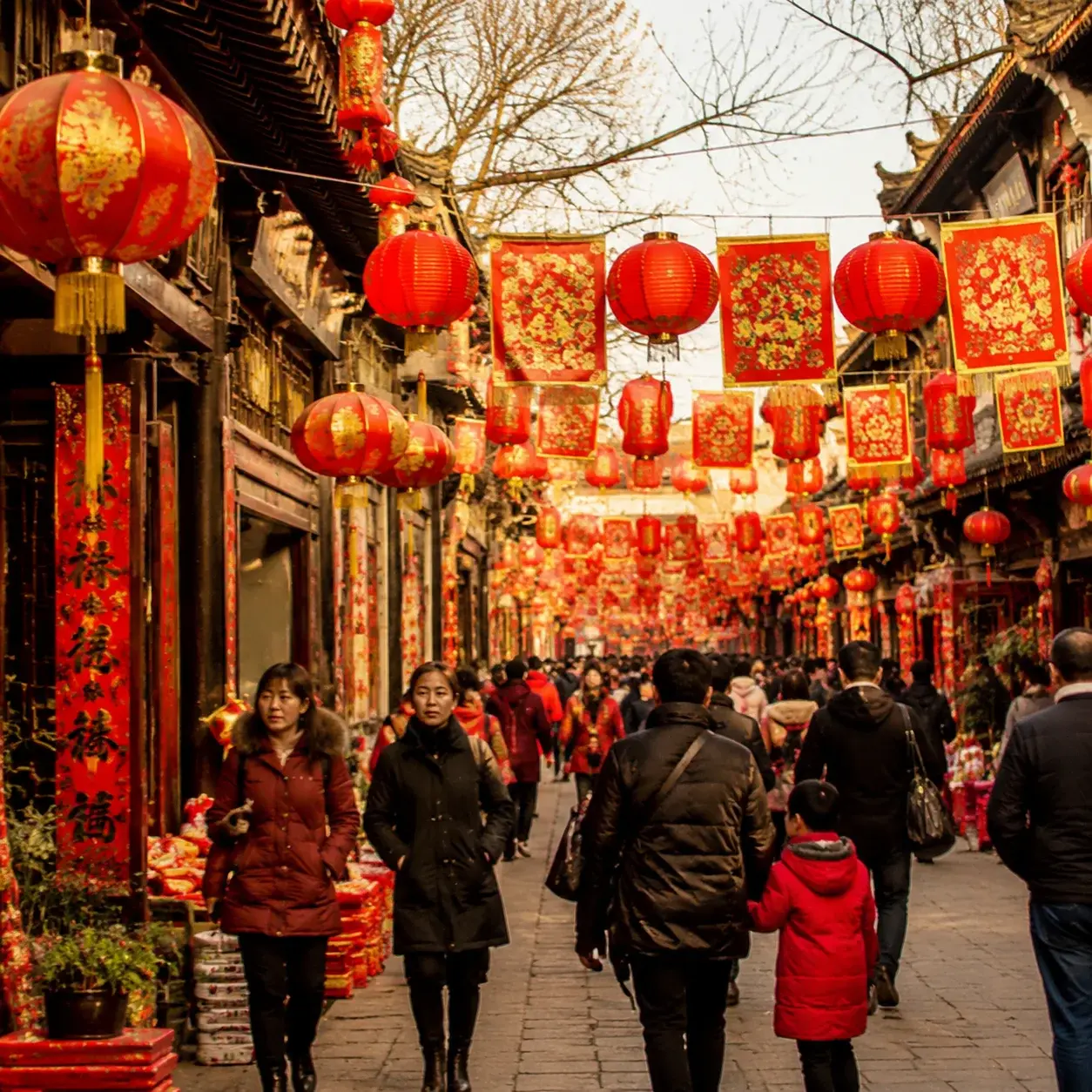
Chinese New Year 2026 falls on Tuesday, February 17, 2026 — the start of the Year of the Fire Horse. The official public holiday runs February 15–23 (nine days), and the full Spring Festival spans 15 days, closing with the Lantern Festival around March 3.
The Fire Horse pairing is worth knowing because it recurs only once every 60 years — the last Fire Horse year was 1966 (National Geographic, "The Year of the Fire Horse is back—for the first time in 60 years," accessed 2026-07-04; Smithsonian Institution, "2026: Year of the Horse," accessed 2026-07-04). The nine-day public holiday window was set by China's State Council in its 2026 holiday schedule, released November 4, 2025, and is reported to be the longest Spring Festival holiday in PRC history (China Briefing, "China 2026 Public Holiday Schedule," accessed 2026-07-04).
Here is the traveler's timeline for 2026:
| Milestone | Date (2026) | What it means for you |
|---|---|---|
| Chunyun (travel rush) begins | ~Feb 2 | Trains and popular flights start selling out; book now |
| Public holiday begins | Feb 15 | Government and most business shut down for nine days |
| New Year's Eve (团圆饭, reunion dinner) | Feb 16 | Family reunion dinner; small shops start closing; fireworks |
| New Year's Day (正日) | Feb 17 | Temple fairs open, first crowd peak — Year of the Fire Horse |
| "Break Five" (破五) | Feb 21 | Small shops begin reopening; street life returns |
| Public holiday ends | Feb 23 | Return-travel rush; tickets tighten again |
| Lantern Festival (元宵节) | ~Mar 3 | Lantern displays peak; the festival officially closes |
| Chunyun ends | ~Mar 13 | Travel demand normalizes |
Two things trip up first-time visitors. First, the chunyun travel period (about Feb 2 to Mar 13) is far longer than the nine-day holiday — the transport crunch starts weeks before New Year's Day and lingers after. Second, the festival is a 15-day arc, not a single day: the fireworks-and-reunion energy of New Year's Eve is very different from the lantern displays two weeks later. If you want the traditions without the deepest closures, the back half of the festival (from "Break Five" to the Lantern Festival) is the sweet spot. For the zodiac and cultural background — what the Year of the Fire Horse means, greetings, and customs — see our companion  Chinese zodiac guide.
Is It a Good Idea to Visit China During Chinese New Year? (Honest Pros and Cons)
It depends entirely on what you want from the trip. Chinese New Year is the single best window all year to see living Chinese tradition — temple fairs, lantern displays, fireworks, red decorations everywhere. But it's also the world's largest human migration, with sold-out trains, pricier hotels and flights, and many small businesses closed for the first few days. Come if you're chasing culture, can book weeks ahead, and will stay flexible; avoid it if you want everything open and effortless sightseeing.
The honest truth is that Chinese New Year isn't "good" or "bad" for travelers — it's polarizing. It amplifies whatever you came for. If you want culture and imagery, this can be the best China trip of your life. If you want efficiency and certainty, it can be the most frustrating nine days of the year. The mistake competitors make is giving everyone the same answer — the naysayers say "don't come," the tour sellers say "come, book our package." The real answer is: it depends on you.
The pros:
- Once-a-year atmosphere — temple fairs, lantern displays, dragon and lion dances, fireworks culture, and red decorations you simply can't see any other time.
- Some crowded tourist cities actually empty out as locals travel home to the countryside, so a few big-city sights feel calmer than usual.
- Unforgettable for culturally curious travelers and photographers — the festival is the most photogenic week in China.
The cons:
- Chunyun: sold-out rail and pricier flights around the peak days.
- Higher hotel prices in popular cities and near attractions.
- Many small, family-run restaurants and local shops close for roughly the first three days (see the open-vs-closed table below).
- Mega-crowds at big attractions and transport hubs — one travel blog calls the busiest hubs "borderline dangerous" (its words, not ours; treat as one traveler's view).
Rather than a vague pros-and-cons list, decide by what you actually want most:
| What you want most from China | Should you come during CNY? | Why |
|---|---|---|
| A once-in-a-lifetime cultural immersion (temple fairs, lanterns, fireworks) | Yes — come | This is the only window to see a "living" Spring Festival; the festive stuff is exactly what's open |
| A relaxed, deep trip away from crowds | Depends on where — avoid big-city hotspots; go to quiet alternatives (old towns, Yunnan) | Some big-city sights and hubs get overwhelming |
| Total spontaneity, change plans on a whim | No — avoid | Trains, popular flights, and hotels lock up during chunyun |
| Every small restaurant open, city fully functioning | No — avoid | New Year's Eve to Day 2 is a deep shutdown for small shops |
| Winter scenery plus festival, in one trip | Yes — go to Harbin | The Harbin Ice and Snow Festival overlaps the whole holiday |
| A magical family trip with kids | Yes, with conditions | Lanterns and lion dances are magic for children — if you pre-book and skip the rail crush |
| Fast, efficient business-style sightseeing | No — avoid | The nine-day holiday is the least efficient window all year |
The bottom line: come during Chinese New Year if you're a culture-seeker who can book ahead, will fly rather than train on peak days, and will base in one or two places. Avoid it if it's a fast first-timer trip that needs every restaurant open, or you can't book far in advance. The next two sections handle exactly those two worries — what's open, and how to beat chunyun.
What's Open and What's Closed During Chinese New Year?
Major attractions, temple fairs, malls, chain restaurants, hotels, and transport stay open throughout Chinese New Year. What closes is small, family-run restaurants and local shops — mostly for the first three days (New Year's Eve to Day 2), reopening by around "Break Five" (Day 5). In other words, the festive things are exactly what's open; it's daily-life services that pause.
This is the single most practical question, and it's answered almost nowhere in usable form. Here is the day-by-day pattern (closure timing is a general pattern, not a guarantee — it varies by city and year, so confirm locally for 2026):
| Phase | Dates (2026) | Mostly OPEN | Often CLOSED |
|---|---|---|---|
| Run-up (chunyun peak) | early–mid Feb | Everything — but transport is jammed and tickets scarce | — |
| New Year's Eve → Day 2 (deep shutdown) | Feb 16–18 | Big ticketed sights, temple fairs, malls, hotel restaurants, chains (KFC/McDonald's), metro and transport | Small family restaurants, many local shops (often 3+ days) |
| Day 3 → Day 5 (reopening) | Feb 19–21 | Most of the above; street life returning | Some small shops still shut |
| Day 6 → Lantern Festival | Feb 22 – ~Mar 3 | Near-normal; lantern displays at their peak | Few closures |
Two practical read-outs from that table:
- If you need to eat out on New Year's Eve to Day 2, book a hotel restaurant or head to a mall food court — don't count on the little noodle shop around the corner, which may well be closed for three days.
- If you came for the festival itself, you're in luck: temple fairs, lantern displays, lion dances, and red-lantern streets are precisely the part that is open.
The biggest misconception foreign visitors carry is that the whole country shuts down. It doesn't. Spring Festival is a functional shutdown with the festivities wide open: the metro runs, the Forbidden City is open, the temple fair is packed — the only thing closed is the mom-and-pop shop downstairs. So don't skip Chinese New Year because "everything's closed." What you actually need to manage is the first three days' dining logistics and the crowds at transport hubs, not a dead city.
What Is Chunyun — and How Do You Survive It?
Chunyun is the roughly 40-day Spring Festival travel rush — about February 2 to March 13 in 2026 — the largest annual human migration on Earth, when hundreds of millions of people travel home. For a foreign visitor it means one thing: book everything early, and on the peak days, fly instead of taking the train.
Chunyun is real, but the risk it poses to a foreign traveler is not danger — it's "can't book, can't move." You won't be in physical peril; you'll simply discover on New Year's morning that there isn't a single high-speed train ticket left to the city you wanted, and that changing plans on the fly is impossible. The fix is a single principle: lock down your uncertainty in advance. Here is the survival plan no encyclopedia assembles for foreigners:
| # | Step | When / how far ahead | Why |
|---|---|---|---|
| 1 | Fly, don't train, on peak days | Decide when you plan the trip | Air travel is far less disrupted by chunyun than rail; swap peak-day train legs for flights → see our which-airport-into-China guide |
| 2 | Book the moment tickets drop | Train tickets release ~15 days ahead | Popular routes can sell out in minutes — sometimes seconds (one guide's claim; verify against the official 12306 system) |
| 3 | Know the foreign-passport quirk | Before you travel | Some outlets reportedly can't issue tickets to foreign passports; book online or via an agency with your passport → keep your China arrival card and passport details handy |
| 4 | Lock hotels 1+ month out | ≥1 month ahead | Holiday prices rise and popular cities fill; book rooms with free cancellation |
| 5 | Base, don't hop | At the planning stage | Every intercity move is another ticket scramble and crowd exposure — pick one or two cities |
| 6 | Arrive 1.5–2h early; carry your passport | Every travel day | Hubs are jammed and security lines long; your passport is required to buy, collect, and board |
To put the scale in perspective: China's Ministry of Transport projected a record 9.4 billion cross-regional trips over the 2026 Spring Festival travel period, of which railways carry on the order of 540 million and civil aviation around 95 million (CGTN, "China's 2026 Spring Festival travel rush," accessed 2026-07-04). That gap is the whole reason step 1 works — rail is the main battlefield, so flying sidesteps the worst of it. If you handle the booking discipline above, chunyun becomes background noise. If you don't, it defines your trip.
Where Can You Actually Experience Chinese New Year in China?
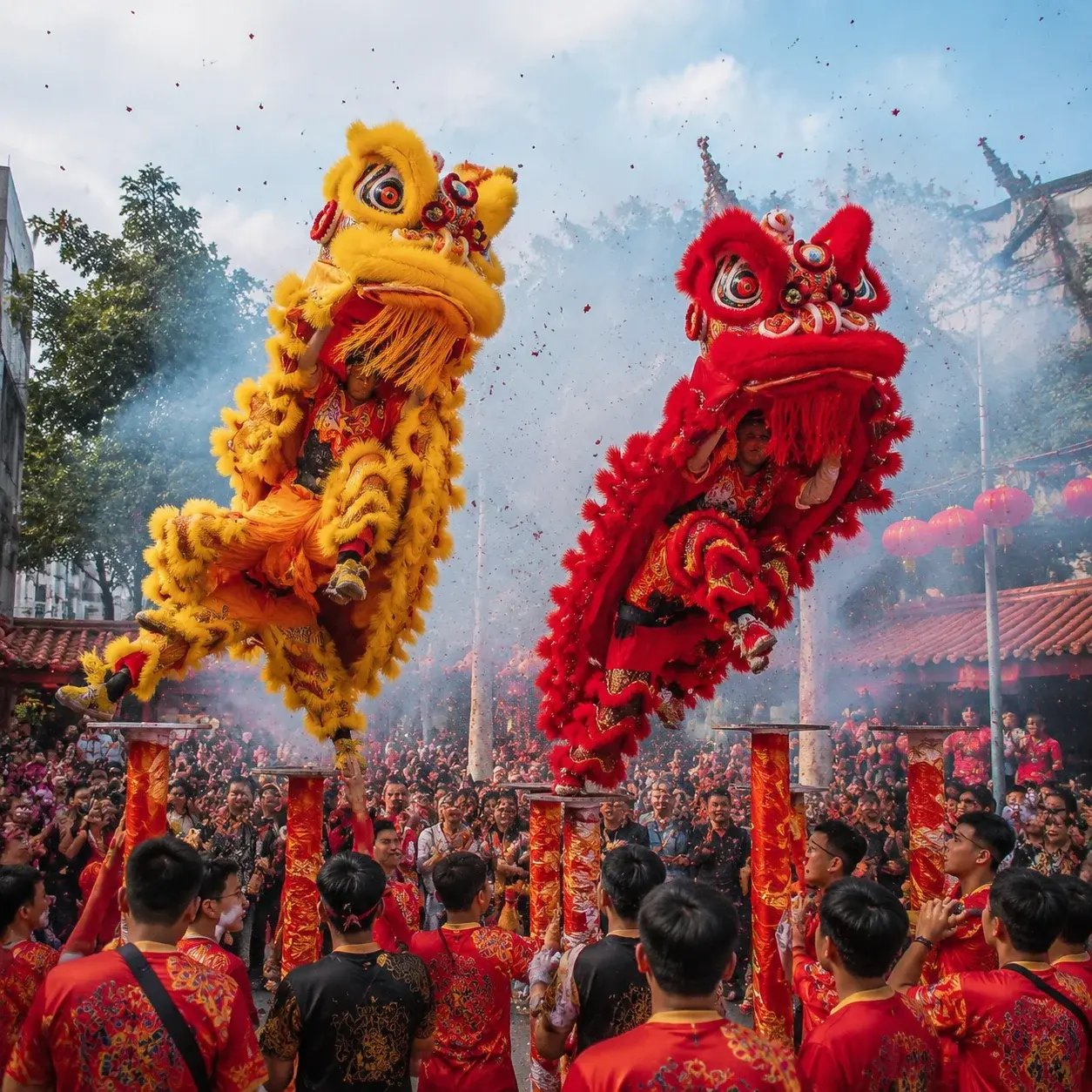
The best places to experience Chinese New Year as a traveler are the big-city temple fairs and lantern displays (Beijing, Shanghai, Xi'an), the Harbin Ice and Snow Festival — which runs right through the holiday — and the quieter old towns of Yunnan and central China for the atmosphere without the mega-crowds.
Where you go should depend on one thing: how well you tolerate crowds. Here is the routed shortlist, each pick handing off to a fuller destination guide:
| Where to see it | What you'll see | Best for | Go deeper |
|---|---|---|---|
| Big-city temple fairs & lanterns (Beijing, Shanghai, Xi'an) | The classic festive scenes; exactly what's open and worth timing around | First-timers who want the iconic imagery and can handle crowds | City destination pages |
| Harbin (Northeast winter) | Ice sculptures lit up at night plus New Year energy — the only winter-plus-festival overlap | Winter lovers, photographers, "see it all at once" travelers | Harbin travel guide — the strongest tie-in; the ice festival overlaps the holiday |
| Yunnan's old towns (Lijiang, Dali) | Mild weather, ethnic-minority New Year customs, old-town lantern atmosphere with far fewer crowds | Travelers who want calm and depth over spectacle | Yunnan travel guide |
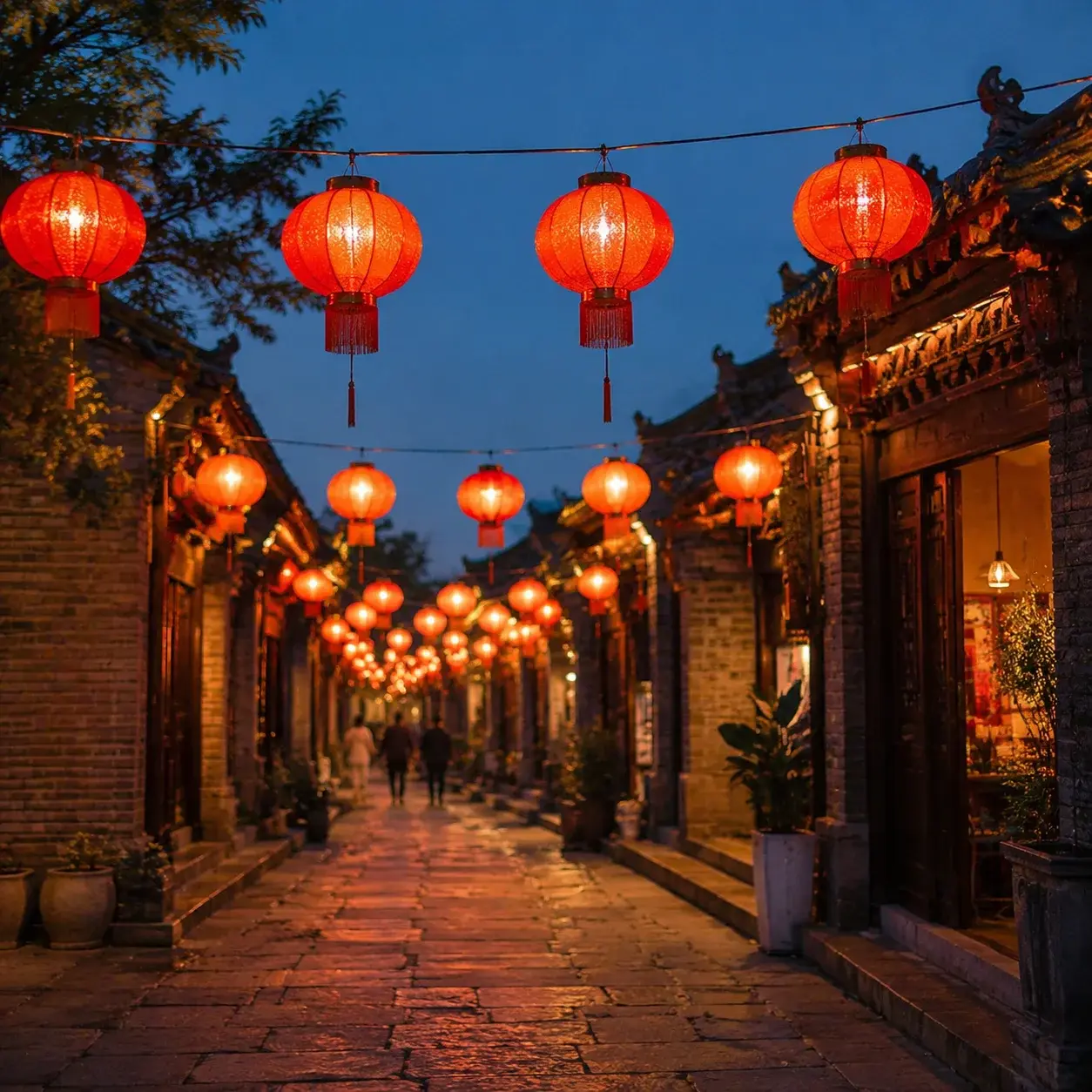
| Ancient towns (Pingyao, Fenghuang) | Ancient streets hung with red lanterns — arguably more photogenic than a big-city fair, with a fraction of the crowd | Photographers, atmosphere-seekers | Ancient towns of China guide |
| Hong Kong | Parade and Victoria Harbour fireworks (as commonly reported; confirm the 2026 schedule) | Travelers who want a big-city celebration | Hong Kong destination pages |
The honest steer: the "right" place depends on your crowd tolerance. Want the iconic big-scene and can take the crush? Big-city temple fairs. Want the year's atmosphere but calmly? The old towns and Yunnan are the insider pick — Pingyao and Fenghuang draped in red lanterns are more photogenic than a packed Beijing fair, with a fraction of the people. Want winter scenery and festival in one shot? Harbin is the only overlap, and its ice festival runs straight through the holiday.
Is Chinese New Year a Good Time to Visit China With Kids?
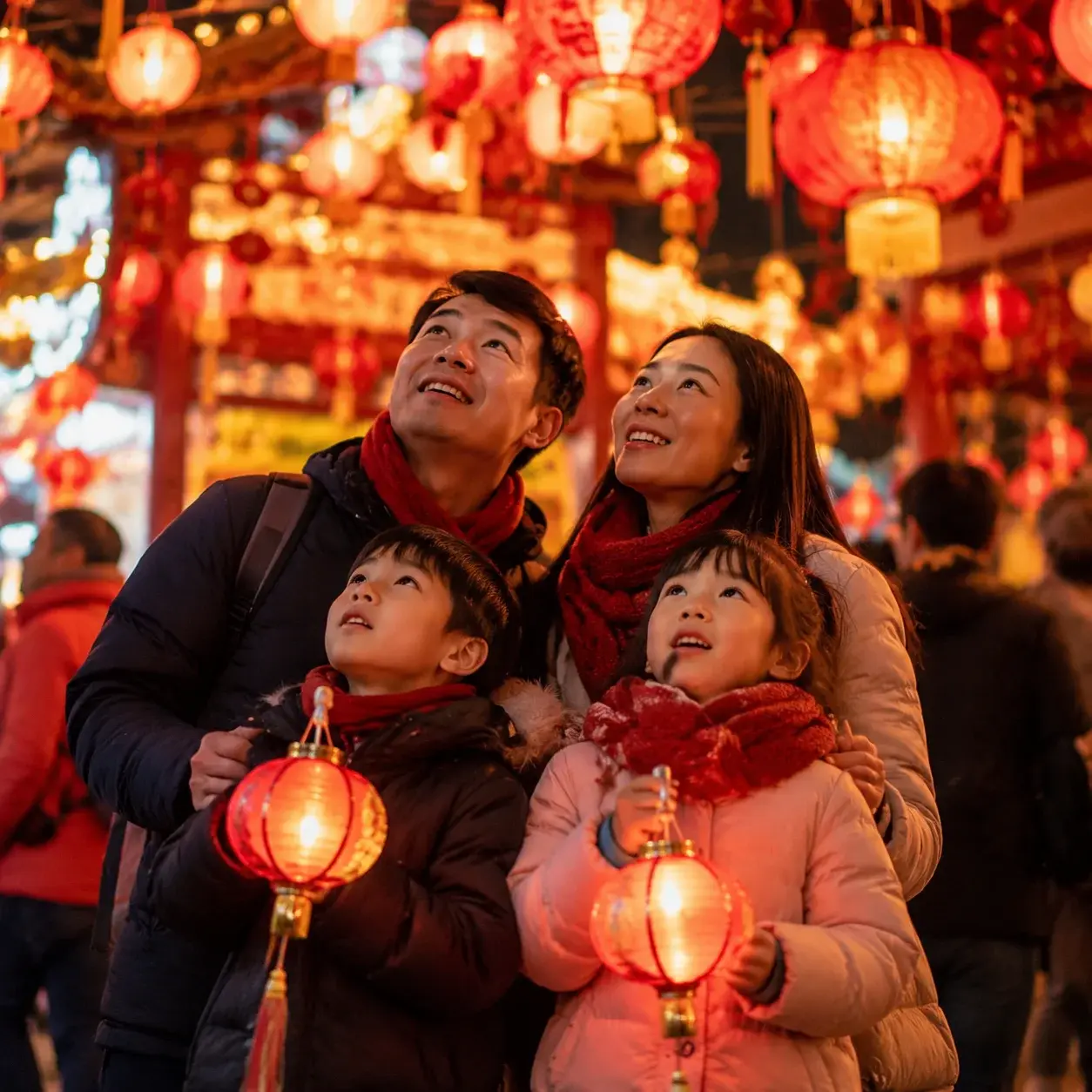
Yes — it can be genuinely magical for children, thanks to lanterns, dragon and lion dances, temple-fair snacks and games, and red envelopes (hongbao). But only if you sidestep the two hard parts: pre-book everything, and avoid the rail crush by flying and basing in one place rather than hauling kids through packed stations.
Chinese New Year hands children exactly the sensory, celebratory version of China you'd hope for — color, noise, sweets, performances. The catch is logistics, and with kids the logistics matter more. Two rules make or break a family trip during the holiday. First, pre-book relentlessly: hotels a month out, peak-day transport as flights, and any ticketed attraction in advance. Second, don't drag kids through the chunyun rail crush — fly on peak days and base in a single city so you're not repacking every two days.
On the ground, be realistic that temple fairs get shoulder-to-shoulder and aren't stroller-friendly at peak times. For the busiest days (New Year's Eve to Day 2), lean toward the calmer picks — an old town or a Harbin ice trip — over the most crowded metropolitan hubs. Save the big-city temple fair for a weekday later in the festival when the first crowd wave has thinned.
Frequently Asked Questions
When is Chinese New Year 2026? Chinese New Year 2026 falls on Tuesday, February 17, 2026 — the start of the Year of the Fire Horse. The official public holiday runs February 15–23 (nine days), and the festival spans 15 days to the Lantern Festival around March 3.
Is it a good idea to visit China during Chinese New Year? It depends on what you want. It's the best time all year for living tradition — temple fairs, lanterns, fireworks — but the worst for spontaneity, with sold-out trains and some closures. Come if you book ahead and chase culture; avoid it if you want everything open and effortless.
What is open and what is closed during Chinese New Year? Major attractions, temple fairs, malls, chain restaurants, hotels, and transport stay open. Small family-run restaurants and local shops close, mostly for the first three days (New Year's Eve to Day 2), reopening by around Day 5. The festive things are exactly what stays open.
What is chunyun, and how do I get around during it? Chunyun is the ~40-day Spring Festival travel rush (about Feb 2–Mar 13 in 2026), the world's largest human migration. Get around it by flying instead of taking the train on peak days, booking tickets the moment they release (~15 days ahead), and basing in one or two cities.
Where can I see Chinese New Year celebrations in China? The top options are big-city temple fairs and lanterns (Beijing, Shanghai, Xi'an), the Harbin Ice and Snow Festival (which overlaps the holiday), and the quieter old towns of Yunnan and central China (Lijiang, Dali, Pingyao, Fenghuang) for atmosphere without the mega-crowds.
What are the main Chinese New Year traditions I'll see as a visitor? Expect red decorations and lanterns everywhere, reunion dinners on New Year's Eve, fireworks, temple fairs, dragon and lion dances, and red envelopes (hongbao) of gift money. For the zodiac and customs in depth, see our Chinese zodiac guide.
Is Chinese New Year a good time to visit China with kids? Yes, with planning. Lanterns, lion dances, temple-fair treats, and red envelopes delight children — provided you pre-book everything and skip the rail crush by flying and staying in one base city. Choose calmer spots (old towns, a Harbin ice trip) over the most crowded hubs on Days 1–2.
Conclusion: Should You Go?
Three decisions settle it. First, the dates: Chinese New Year 2026 is February 17, the Year of the Fire Horse, with a nine-day public holiday from February 15–23 and the festival closing at the Lantern Festival around March 3. Second, the verdict: this is the best time to come if you're a culture-seeker who plans ahead, and the worst if you're an efficiency-first first-timer who needs every restaurant open and every plan changeable. Third, the how: fly rather than train on peak days, book hotels a month out, base in one or two cities, and remember that the festive stuff stays open even when the corner noodle shop doesn't.
If that sounds like your kind of trip — the atmosphere without the chunyun stress: flights over the crush, the right base city, temple fairs and a Harbin ice trip sequenced so it works even with kids — that's exactly what LyrikTrip plans end to end. And if February doesn't fit, our sibling guide to the Mid-Autumn Festival covers China's other great traditional holiday. Either way, plan the where and the how you arrive early — during Chinese New Year 2026, the travelers who book ahead are the ones who get the magic instead of the migration.