



 18 giorni Cina, da capo a fondo Pechino → Xi'an → Chuanzhusi → Jiuzhaigou → Chengdu → Zhangjiajie → Guilin → Yangshuo → Shenzhen Da $6,360 Vedi itinerario
  14 giorni A cosa serve ogni città Pechino → Xi'an → Chengdu → Shanghai → Shenzhen → Canton Da $5,030 Vedi itinerario
  19 giorni A valle del futuro Shenzhen → Guilin → Yangshuo → Chengdu → Chongqing → Yichang → Shanghai Da $5,360 Vedi itinerario
  5 giorni A valle, poi in salita Guilin → Yangshuo Da $1,600 Vedi itinerario
  8 giorni Acqua tranquilla, città veloce Shanghai → Yangshuo → Shenzhen Da $2,350 Vedi itinerario
Seta cinese: come acquistare seta autentica in China senza essere truffati?
Per acquistare seta cinese autentica, fai shopping a Suzhou o Hangzhou, insisti per un'etichetta che reciti "100% seta di baco da seta (100% 桑蚕丝)", esegui rapidamente un test di combustione e tocco su un campione, e confronta il peso momme con ciò che stai acquistando. La vera seta profuma di capelli bruciati e si riscalda al contatto con la pelle; le frodi fondono e rimangono fredde.
Questa è l'intera guida in un paragrafo. Il resto di questa spiegazione ti indica come eseguirla senza pagare troppo. Una nota onesta su chi siamo: LyrikTrip organizza viaggi privati inbound in Cina. Non vendiamo seta e non prendiamo alcuna commissione da alcun negozio menzionato qui. Questo significa che possiamo dirti chiaramente dove si trova la buona seta, dove sono le trappole turistiche e quale prezzo sia realmente equo — parti che un proprietario di negozio non rivelerebbe mai.
Punti salienti
- La seta reale è proteina, non plastica. Ha un odore di capelli bruciati quando viene testata, si riscalda immediatamente al tatto e ha una lucentezza morbida e sfumata — mai un riflesso piatto della plastica.
- «Baco» è la fibra; «momme» è il peso. Acquista 12–16 momme per sciarpe, 19–25 momme per biancheria da letto. Sono due segnali di qualità separati — ne hai bisogno entrambi.
- Suzhou e Hangzhou sono le sole due città che contano. Entrambe hanno un museo nazionale della setta con un negozio affidabile annesso.
- La Silk Street e il Pearl Market di Beijing sono pieni di falsi. Lo sono anche la maggior parte dei banchi degli hotel e degli aeroporti e i showroom «factory» ad alta pressione.
- Prezzo per peso × tipo × autenticità. Una sciarpa di seta reale costa circa ¥150–400; anything under ~¥50 è quasi sicuramente poliestere.
- Portarla a casa è facile. La seta è leggera e si piega piatta, ma conserva la ricevuta e dichiara onestamente in dogania.
Perché la seta cinese vale la pena di essere comprata?
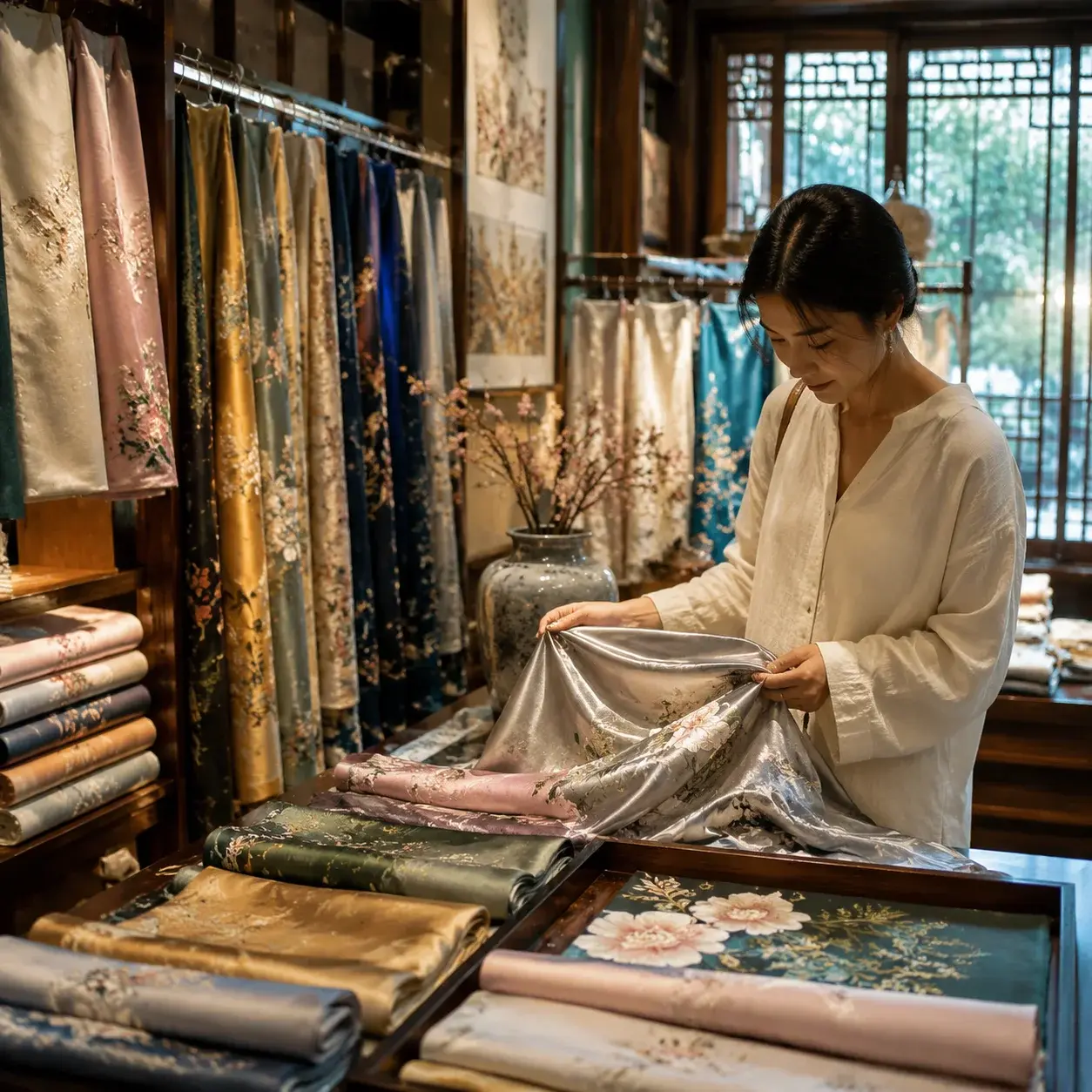
La seta cinese vale la pena di essere comprata perché China l'ha inventata, continua a tessere la migliore seta di baco del mondo e la vende vicino alla fonte a una frazione dei prezzi dei boutique esteri. Se acquistata bene, una sciarpa di Suzhou è un oggetto di eredità, non un souvenir da bancarella.
La seta è stata tessuta intorno al Taihu in Cina da quasi 5.000 anni. Già durante le dinastie Tang (618–907) e Song (960–1279), Suzhou era già la capitale della seta dell'impero, fornendo la corte imperiale durante le dinastie Ming e Qing. Questa tradizione si riflette ancora nei tessuti e ricami che puoi acquistare oggi — un'artigianato con una storia commerciale ininterrotta di 1.000 anni.
Lo standard premium è la seta di gelso, prodotta da bachi alimentati esclusivamente con foglie di gelso. I suoi filamenti sono più lunghi, fini e uniformi rispetto alla seta selvatica (tussah), motivo per cui risulta più liscia e durevole. Quando le persone parlano della "miglior seta del mondo", intendono la seta di gelso — e ne produce la stragrande maggioranza. Per te come acquirente, la dicitura "100% seta di gelso / 100% 桑蚕丝" sull'etichetta distingue un acquisto genuino da un misto.
È utile conoscere le forme principali che troverai sugli scaffali, poiché prezzo e uso dipendono dalla tessitura:
- Seta semplice (habotai / charmeuse): tessuto liscio e leggero usato per sciarpe, fodere e biancheria da letto. È la scelta quotidiana.
- Broccato (织锦): seta più pesante con motivi integrati nella tessitura — il materiale classico per sacchetti, coprini cuscini e abbigliamento formale. I broccati di Suzhou e Nanjing sono i più famosi.
- Ricamo di Suzhou (苏绣): seta ricamata a mano con motivi figurativi, una delle quattro grandi tradizioni del ricamo cinese. È un'arte, valutata in base al lavoro, ed è il motivo per cui i collezionisti seri si recano specificamente a Suzhou.
Sapere cosa si desidera davvero impedisce al venditore di indirizzarti verso il prodotto con il margine più alto del giorno.
Come distinguere la seta cinese autentica da una falsa?
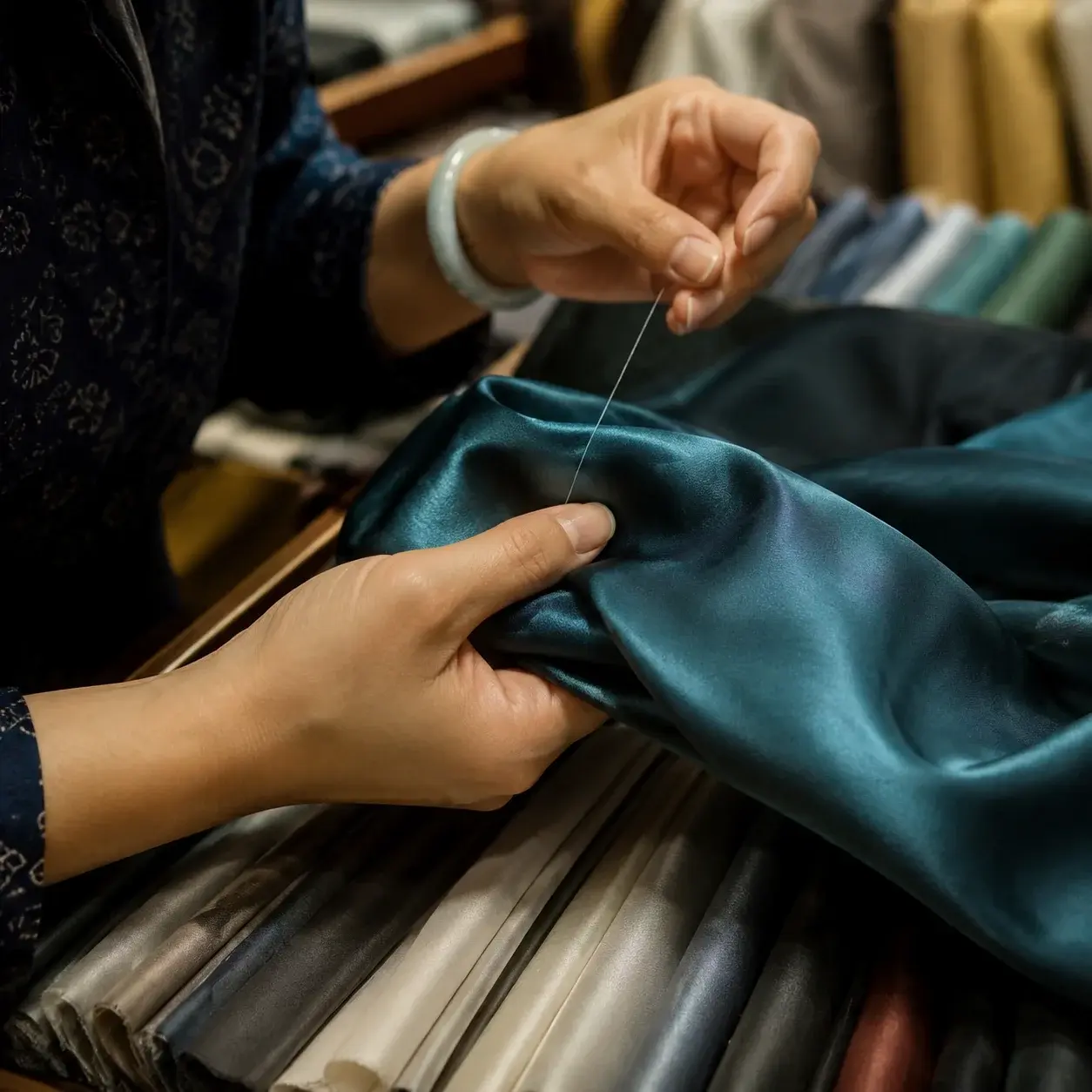
Esegui tre test veloci al banco: brucia un filo libero (la seta vera profuma di capelli bruciati e si riduce in cenere; la falsa si trasforma in una pallina dura e profuma di chimici), strofina il tessuto (la seta vera si riscalda al tatto e produce un leggero "cricchio" simile a un suono di seta), e inclinala alla luce (la seta vera cambia sfumatura di lucentezza; la falsa ha un riflesso bianco piatto).
Chiedi al negozio un piccolo campione o un filo libero: un venditore serio te lo darà senza esitazione. Poi confrontalo con questa scheda di valutazione.
Seta vera vs. Seta falsa: La scheda di valutazione al banco
| Test | Seta di baco vera (bombyx mori) | Falsa (poliestere / viscosa) |—|—|—| | Brucia un filo | Odore di piume/capelli bruciati; brucia lentamente, si spegne da solo; lascia cenere nera friabile che si riduce in polvere | Odore di plastica/chemicals; fonde e cola;留下一颗坚硬的闪亮珠子 | | Tocca / temperatura | Si riscalda quasi istantaneamente al calore del corpo; asciutta, non scivolosa | Rimane fredda come il metallo o scivola ed è "troppo liscia" | | Il "cricchio della seta" | Attritando due strati si sente un leggero squeak/crunch | Silenzioso o con un crepitio plastico | | Lucentezza alla luce | Lucentezza perlacea che cambia colore se la si inclina | Bianco uniforme e opaco da ogni angolazione | | Senso del prezzo | Coerente con peso e dimensioni (vedi tabella prezzi) | Sospiziosamente economico per "seta" — il maggior indizio | | Etichetta | 100% 桑蚕丝 (100% seta di baco); spesso certificazione di qualità della seta di Suzhou | "Simile alla seta", "satin", "miscela di seta", o senza contenuto di fibra indicato |
Il test del bruciore funziona perché la seta è una fibra proteica — chimicamente più vicina ai tuoi capelli che alla plastica — quindi si comporta come i capelli in fiamma. Questo fatto singolo è la tua difesa più affidabile. (Test di identificazione della seta secondo riferimenti del settore; ultimo aggiornamento 2026-07.)
Un avvertenza: fai il test del bruciore solo su un filo o campione di scarto, mai sul pezzo finito, e solo con il permesso del venditore.
Cos'è il Momme e quale peso scegliere?
Il momme (姆米, scritto "mm") è la scala di peso per la seta — un momme equivale a circa 4.34 grammi per metro quadrato. Un momme più alto indica una seta più densa, pesante e durable. Acquista 12–16 momme per sciarpe, 16–19 per abbigliamento e 19–25 per biancheria da letto. È un segnale di qualità completamente separato dal "baco del gelso". Pensala così: il baco del gelso ti dice che la fibra è buona; il momme ti dice quanto di quella fibra è nel tessuto. Un venditore può tessere seta di bassa qualità con un momme alto, o seta di alta qualità con un momme basso — quindi leggi i due insieme e diffida di un venditore che non riesce a dirti il momme. (Valori del momme secondo guide dell'industria della seta; verificati l'ultima volta nel 2026-07.)
Guida al peso momme per prodotto
| Prodotto | Momme tipico | Perché questo intervallo | Sensazione |
|---|---|---|---|
| Sciarpa leggera / fazzoletto da tasca | 12–16 mm | Si drappeggia e si annoda bene; trasparente a semi-trasparente | Aereo, fluido |
Camicia, blouse, lining di qipao | 16–19 mm | Corpo sufficiente a mantenere la forma senza rigidità | Morbido, strutturato | | Federa | 19–22 mm | Amica della pelle e resistente ai lavaggi | Liscia, fresca | | Copriletti / coperta | 22–25 mm | Il punto perfetto per la durata della biancheria da letto | Sostanzioso, morbido | | Tende pesanti / tappezzeria | 25–30+ mm | Massima densità e resistenza | Denso, pesante |
Per un primo souvenir, una sciarpa in seta di moro da 14–16 momme è l'acquisto ideale: leggera da trasportare, durevole e inequivocabilmente reale al tatto.
Dove acquistare seta cinese autentica in Cina?
Acquista a Suzhou o Hangzhou — le due storiche capitali della seta — iniziando dal negozio del museo nazionale di ciascuna città, dove l'autenticità è praticamente garantita. Espanditi alle case di seta affermate e alle vie all'angolari locali, evitando tutto ciò che viene venduto vicino a punti fotografici turistici principali. Di seguito una mappa focalizzata su entrambe le città.
Dove acquistare seta a Suzhou
Suzhou è la culla della seta cinese e la città migliore per ricami e abbigliamento finito. Buovi punti di partenza:
- Negozio del Museo della Seta di Suzhou — un negozio certificato dal museo collegato all'Istituto che documenta la seta locale fin dal ~2000 a.C. Ideale per un primo acquisto garantito autentico e per affinare il tuo occhio e la mano prima di acquistare altrove.
- Case di seta affermate (es. la tradizione secolare di Qian Tai Xiang) — marchi storici con certificazione di qualità e graduazione costante dei momme. Ideali per sciarpe, cravatte e biancheria di cui fidarti.
- Boutiques di Pingjiang Road / Shiquan Street — le strade pedonali del centro storico ospitano piccoli negozi di seta e ricamo. La qualità varia, quindi confronta i criteri qui.
- Fabbrica di Seta n. 1 di Suzhou (con cautela) — il tour showroom è educativo, ma i prezzi del showroom includono un markup. Impara lì; considera l'acquisto altrove.
Dove acquistare seta a Hangzhou
Hangzhou è la moderna capitale della seta e ideale per tessuti a metro e biancheria da letto. Buovi punti di partenza:
- Negozio del Museo Nazionale della Seta cinese — il museo, vicino al Lago Ovest, è stato aperto il 26 febbraio 1992 ed è il più grande museo al mondo sulla seta, con una galleria completa che va dalla sericoltura alla tessitura. Il suo negozio è il luogo più affidabile per acquistare seta in Cina. (Fonte: Museo Nazionale della Seta cinese, Wikipedia; verificato l'ultima volta nel luglio 2026.)
- Città della Seta di Hangzhou (中国丝绸城) — un grande mercato coperto di seta lungo e intorno a Xinhua Road. Enorme selezione e prezzi più bassi, ma l'autenticità è irregolare — contratta e verifica.
- Negozi lungo Xinhia / Tiyuchang Road — strade rivolte ai locali e sarti piuttosto che ai tour bus, il che significa solitamente prezzi iniziali più equi.
Dove NON comprare seta
Evita questi luoghi, dove si concentrano i falsi e gli aumenti di prezzo:
- Silk Street di Pechino (Xiushui) e il Mercato delle Perle — pieni di "seta" sintetica venduta a prezzi turistici con tecniche di vendita aggressive.
- Negozi di souvenir degli hotel, chioschi aeroportuali e terminal di crociere — prezzi comici, poco autenticità.
- Showroom "fabbrica" ad alta pressione che ti fanno passare in fretta dai telai in una sala di vendita — il tour è reale, ma anche il markup è reale.
Quali sono i prezzi RMB equi per la seta in Cina?
**Prezzo della seta in base al peso (momme) × tipo × autenticità — non esiste un numero "giusto". Come indicativo di riferimento, una vera sciarpa in seta mulberry costa circa ¥150–400, i pigiami in seta ¥500–1.000 e la biancheria di qualità da alcune centinaia a qualche migliaio di RMB. Considerate le cifre di seguito come intervalli indicativi per seta mulberry genuina al 100%, non prezzi fissi.
I mercati e showroom spesso partono da prezzi elevati; i negozi museali e le case affermate tendono a fissare prezzi equi e fissi. Dove ci si aspetta il contrattacco (come nel China Silk City), la prima offerta può essere il doppio di un prezzo equo.
Prezzi equi indicativi (Seta mulberry genuina, 2026)
| Articolo | Prezzo tipico richiesto | Intervallo equo indicativo | Note |
|---|---|---|---|
| Sciarpa in seta (14–16 mm) | ¥400–1.000 | ¥150–400 | Sotto ~¥50 = quasi sicuramente falso |
| Fazzoletto da taschino / cravatta | ¥200–500 | ¥100–300 | Controlla l'etichetta, non il motivo |
| Pigiami in seta (16–19 mm) | ¥900–2.000 | ¥500–1.000 | Il peso determina il prezzo |
| Tessuto in seta al metro | variabile | ¥80–250 / metro | Momme più alto = costo maggiore al metro |
| Federa (19–22 mm) | ¥300–700 | ¥150–400 | Acquista in coppie; controlla entrambe |
| Piumone / trapuntato in seta | ¥2.000+ | da数百 a qualche migliaio | Contano sia il peso dell'imbottitura che il momme |
| Opera ricamata | molto variabile | dipende dalle ore di lavoro manuale | Prezzo basato sulla lavorazione, non sulla fibra |
Questi sono intervalli indicativi in RMB osservati a Suzhou e Hangzhou, non garanzie di prezzo; i prezzi variano in base al peso, alla qualità e al luogo di acquisto.
Consigli pratici: porta sempre un po' di contanti, anche se la maggior parte degli esercizi accetta pagamenti mobile (Alipay/WeChat Pay); negozia cortesemente e solo dove è previsto; ricorda che il "seta" più barato in qualsiasi mercato è il segno sicuro del poliestere.
Quale seta fa il regalo o souvenir migliore?
Il miglior regalo in seta è una sciarpa leggera in seta mulberry o un fazzoletto da taschino: è autentica, si piega in uno strato sottile, resiste in una valigia e porta con sé un'eredità evidente. Per gesti più importanti, considera un ricamo artistico, una pijama in seta o una borsa in broccato. Accosta il pezzo alla persona.
- Per la maggior delle persone: una sciarpa da 14–16 momme — universalmente utile, facile da portare, difficile da sbagliare.
- Per una casa: una coppia di federe o un pezzo di broccato — lussuoso e distintamente cinese.
- Per un collezionista o amante dell'arte: un pezzo ricamato a mano di Suzhou — prezzo calcolato in base alle ore di lavoro genuinamente unico al mondo.
- Per gli uomini: una cravatta in seta o un fazzoletto da taschino in un tessuto classico.
Una sciarpa in seta si inserisce perfettamente in un acquisto più ampio — consulta la nostra guida ai [migliori souvenir dalla Cina](#) per sapere come si accompagna a tè, porcellana e a un [qipao](#). Se preferisci qualcosa da indossare piuttosto che da esporre, la nostra [guida all'acquisto di qipao](#) copre la seta su misura nelle stesse due città.
Come trasportare e spedire la seta a casa attraverso la dogana?
La seta è uno dei souvenir più facili da portare a casa: è leggera, si ripiega facilmente ed è raramente soggetta a restrizioni. Piegala in carta velina o nella confezione del negozio per evitare pieghe, mantienila asciutta, porta i pezzi piccoli nel bagaglio a mano e conserva lo scontrino. Per ordini più grandi, la maggior parte dei negozi affidabili può spedire all'estero. Dichiarare onestamente — le tolleranze per i tessuti d'uso personale variano da paese a paese.
- Imballaggio: la seta resiste alle pieghe ma teme l'umidità e le pieghe ardue. Arrotolala o stendila su carta velina; evitala da un sacchetto umido per l'igiene personale. Sciarpe e vestiti sono adatte al bagaglio a mano.
- Spedizione: i marchi di seta affermati e i negozi dei musei possono spedire biancheria e tessuti voluminosi a casa; richiedi un numero di tracciamento e uno scontrino dettagliato che specifichi "seta bachi al 100%".
- Dogana: la maggior parte dei paesi consente ai viaggiatori di introdurre tessuti d'uso personale in esenzione doganale fino a un certo limite di valore, ma i limiti variano da paese a paese (Stati Uniti, Regno Unito, Unione Europea, Australia fissano i propri limiti) e possono cambiare — controlla il sito della dogana del tuo paese prima del volo, conserva gli scontrini e dichiara onestamente. La seta non è un materiale soggetto a restrizioni, quindi l'unica questione è il valore, non l'oggetto stesso.
Alcuni piccoli accorgimenti ti eviteranno problemi in seguito: scatta una foto dell'etichetta e della ricevuta sul telefono nel momento dell'acquisto, chiedi al negozio di scrivere "100% seta di baco" sulla ricevuta in inglese se possibile, e mantieni la biancheria o il tessuto grezzo nella confezione sigillata originale fino a casa, così non ci sarà alcun dubbio su ciò che è. Se stai inviando un ordine grande, assicuralo — il rapporto valore/peso della seta rende conveniente il piccolo premio extra.
Questa è la parte che quasi ogni altra guida salta — ed è per cui un acquisto di seta in China è meno problematico di quanto molti viaggiatori immaginino.
Domande frequenti
Che cos'è la seta cinese autentica? La seta cinese autentica è un tessuto tessuto con filati di seta al 100%, preferibilmente seta di baco (100% 桑蚕丝) prodotta da baco alimentati con foglie di gelso. Resiste al test del bruciore (profumo di capelli bruciati, si riduce in cenere) e si riscalda al tatto, a differenza della "seta" sintetica che fonde e rimane fredda.
Qual è la miglior seta cinese da acquistare? La scelta migliore in assoluto è la seta di baco al 100% con un peso in momme adeguato all'uso: 12–16 momme per sciarpe, 19–25 momme per biancheria da letto. Suzhou è eccellente per ricami e capi finiti; Hangzhou è la migliore per tessuti al metro e biancheria da letto.
La seta cinese è un buon regalo o souvenir? Sì. Una vera sciarpa di seta di baco è un regalo ideale: autentica, leggera, impackabile, ricca di storia, con prezzi vicino alla fonte molto inferiori a quelli dei negozi occidentali. I pezzi ricamati e i pigiami in seta fanno regali più grandi e memorabili per la persona giusta.
Posso acquistare seta cinese fatta a mano in Cina? Sì. Suzhou è rinomata per la seta ricamata a mano, il cui prezzo è calcolato in base alle ore di lavoro manuale piuttosto che alla fibra. Acquista attraverso i negozi dei musei o delle case di seta affermate e chiedi direttamente se il ricamo è fatto a mano o a macchina prima di pagare un premium per il prodotto fatto a mano.
Cosa simboleggia la seta in Cina? La seta simboleggia status, raffinatezza e prosperità nella cultura cinese. Per millenni è stata riservata alla nobiltà e alla corte imperiale, scambiata lungo la Via della Seta e utilizzata nei migliori abiti cerimoniali — ed è proprio questo il motivo per cui un pezzo di seta cinese genuino ha un valore duraturo come regalo.
Posso ordinare seta cinese su misura? Sì. I sarti a Suzhou e Hangzhou possono realizzare abiti su misura — un qipao, una camicia o una giacca foderata — nella seta che scegli in base al momme e al colore, spesso in pochi giorni. Conferma il contenuto della fibra e i tempi di produzione prima di ordinare, e considera la consegna o la spedizione nel tuo calendario.
Conclusione
Acquistare una vera seta cinese si riduce a quattro passaggi: fare shopping a Suzhou o Hangzhou, insistere per un etichetta di seta di baco al 100% (100% 桑蚕丝), eseguire il test del bruciore e del tocco, e abbinare il peso in momme a ciò che stai acquistando. Se lo farai, pagherai un prezzo equo in RMB per un pezzo genuino — e portarselo a casa sarà la parte più facile.
Vuoi che i negozi siano pre-selezionati e il sarto organizzato prima del tuo arrivo? LyrikTrip organizza viaggi privati in Cina con guida, che includono shopping di seta a Suzhou e Hangzhou in un più ampio itinerario di souvenir — [inizia a pianificare il viaggio con noi](#).
Pianificando cosa portare a casa? Consulta la nostra guida completa aimigliori cinesi.