




 18 giorni Cina, da capo a fondo Pechino → Xi'an → Chuanzhusi → Jiuzhaigou → Chengdu → Zhangjiajie → Guilin → Yangshuo → Shenzhen Da $6,360 Vedi itinerario
  14 giorni A cosa serve ogni città Pechino → Xi'an → Chengdu → Shanghai → Shenzhen → Canton Da $5,030 Vedi itinerario
  19 giorni A valle del futuro Shenzhen → Guilin → Yangshuo → Chengdu → Chongqing → Yichang → Shanghai Da $5,360 Vedi itinerario
  5 giorni A valle, poi in salita Guilin → Yangshuo Da $1,600 Vedi itinerario
  8 giorni Acqua tranquilla, città veloce Shanghai → Yangshuo → Shenzhen Da $2,350 Vedi itinerario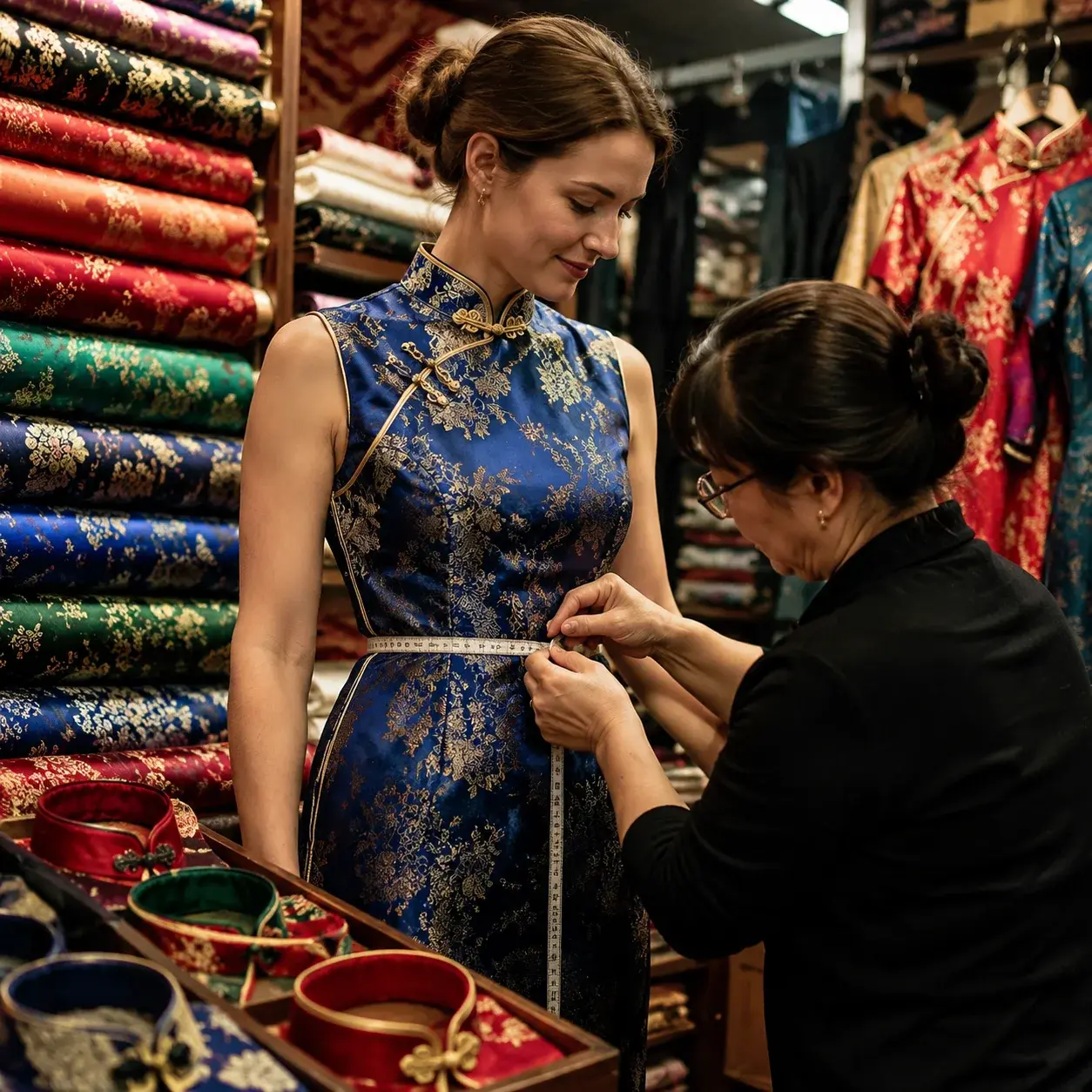
Dove acquistare un qipao autentico in Cina? Una guida per il viaggiatore
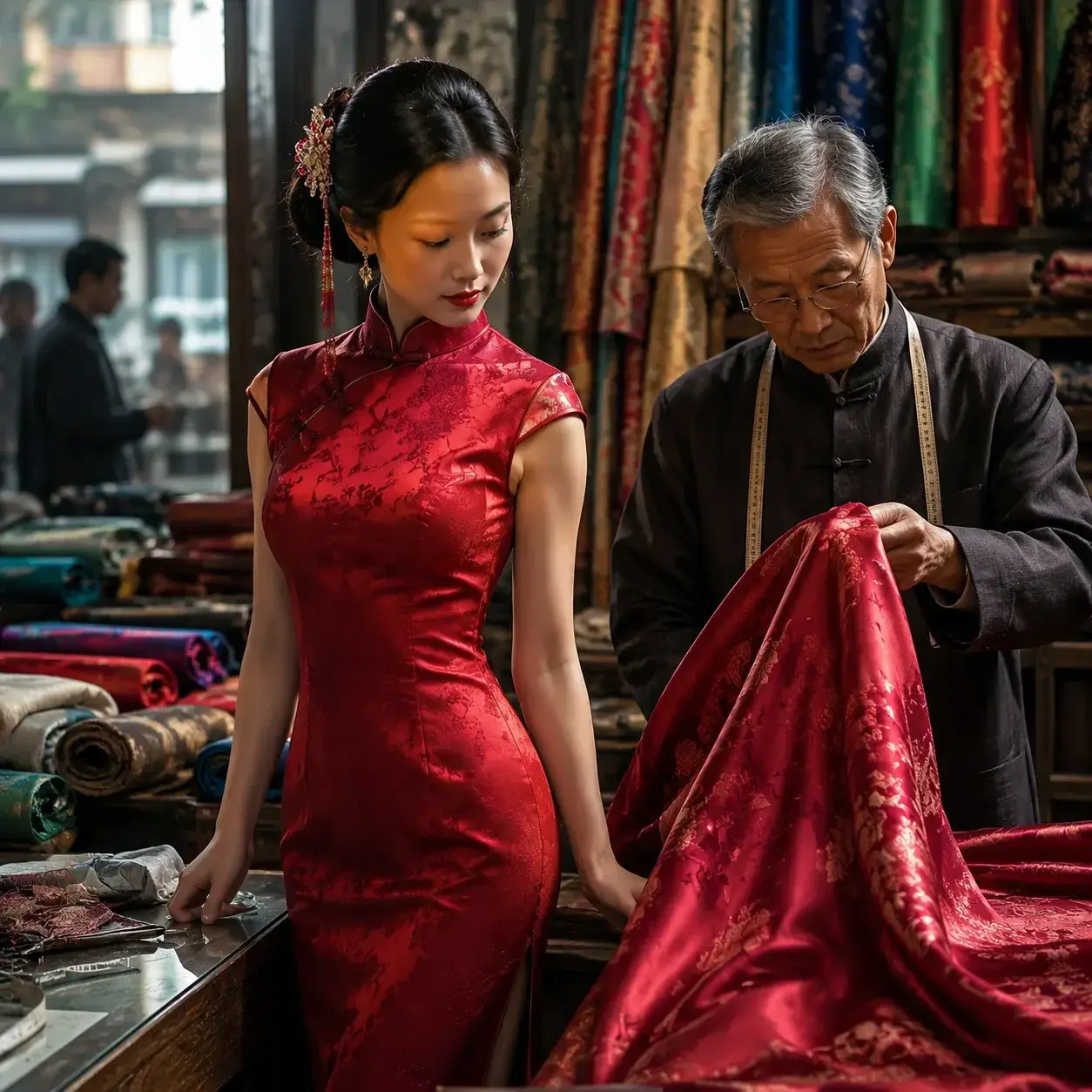
Il qipao è meglio ordinare su misura in un mercato tessile cinese — il South Bund Fabric Market di Shanghai è la scelta ideale: un qipao in miscela di seta costa circa ¥800–3.000 e richiede 3–7 giorni. Le versioni pronte per turisti iniziano a partire da ¥150 ma non si adattano bene; i pezzi autentici in seta mulberry su misura raggiungono i ¥3.000–20.000 e oltre. Per un visitatore straniero, la risposta onesta è che il vestito che davvero apprezzerai proviene da un sarto, non da un banco di souvenir.
Questa guida è rivolta ai viaggiatori — spesso famiglie in un viaggio di due settimane in Cina — che vogliono portare a casa un vero qipao (旗袍), non un souvenir in poliestere che rimane nell'armadio. Siamo un operatore privato di viaggi inbound su misura, non un negozio di abbigliamento, quindi non abbiamo stock da vendere. Di seguito troverete dove acquistare, quanto dovrebbe costare in RMB, come distinguere la seta genuina dai falsi, quale taglio si adatta al vostro corpo e come far arrivare il vestito senza pieghe e attraverso la dogana. Il mercato dei qipao premia chi arriva conoscendo il vocabolario; alla fine di questa pagina lo saprete.
Punti salienti
- La vestibilità conta più del colore. Un qipao è l'arte della vestibilità: il tuo tipo di corpo, non la tinta, decide se ti sta bene. I pezzi pronti falliscono la maggior delle persone in vita e in vita; la su misura è l'unica strada affidabile per una vestibilità perfetta.
- Il punto di valore ideale è la su misura con tessuto dal mercato: circa ¥800–3.000 incluso il tessuto, 3–7 giorni a Shanghai. Evita il poliestere da turista a ¥150.
- La seta mulberry genuina ha dei segni: un peso di 18–19 momme, orli arrotolati a mano,手感 calda-non-scivolosa, e un etichetta di Certificazione della Qualità della Seta di Suzhou.
- Compra dove sono i sarti: Shanghai (Changle & Maoming Road, South Bund Fabric Market), Suzhou (la capitale della seta) e mercati di Pechino.
- Pianifica in base al tuo itinerario: fatti misurare il primo o secondo giorno del viaggio in modo che il qipao sia finito prima di partire.
- Scegli un rosso vero con base blu per un effetto quasi universale — o, per le foto, prova un trascurato smeraldo o zaffiro.
Cos'è un Qipao? (Qipao vs. Cheongsam, Significato e Simbolismo)
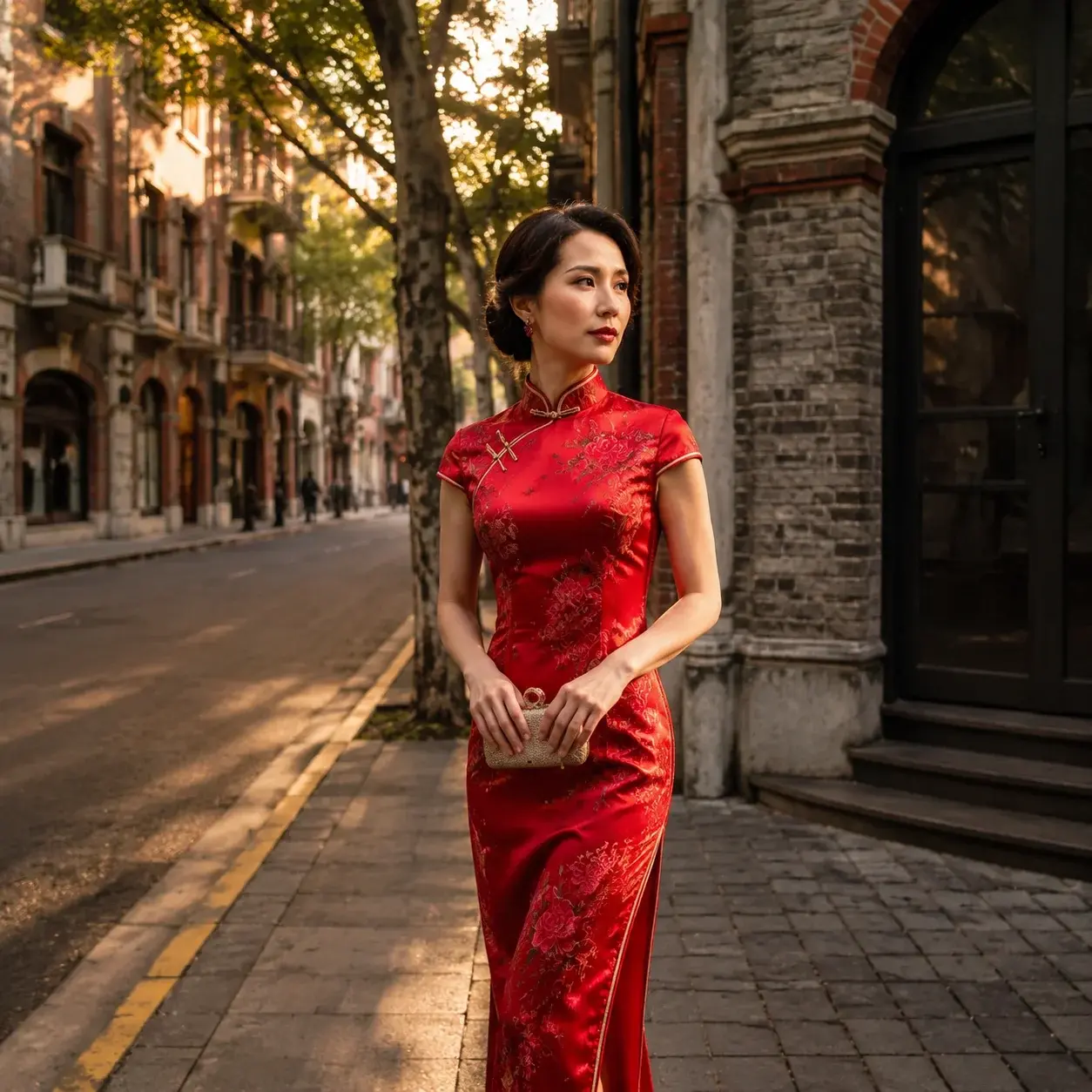
Un qipao è un vestito cinese alto-collo e aderente — la parola mandarina per lo stesso indumento che i cantonesi chiamano cheongsam. Le due parole indicano un solo vestito; "qipao" (旗袍) è semplicemente il termine mandarino, "cheongsam" quello cantonese.
Definizione: Il qipao (旗袍, letteralmente "abbandono") risale al *qi", le "persone della bandiera", o Manchù — i cui abiti evolutisi attraverso gli anni '20-'30 a Shanghai si sono trasformati nella silhouette aderente con spacco laterale riconosciuta oggi. Le sue caratteristiche distintive sono il colletto mandarinino alto, la chiusura frontale diagonale con nodi a mano (盘扣), e un taglio aderente al corpo.
Il significato del qipao va oltre la forma: i motivi esprimono desideri: un dragone e un fenice insieme segnalano armonia coniugale, un peonia rappresenta prosperità e onore, e il rosso significa fortuna e celebrazione — ecco perché i qipao rossi dominano matrimoni e Capodanno cinese. Comprendere il simbolismo è importante se si acquista un qipao come regalo, perché alcuni colori hanno il significato opposto (vedi la sezione sui colori qui sotto).
Quali sono i diversi stili di qipao (tradizionale vs. moderno)?
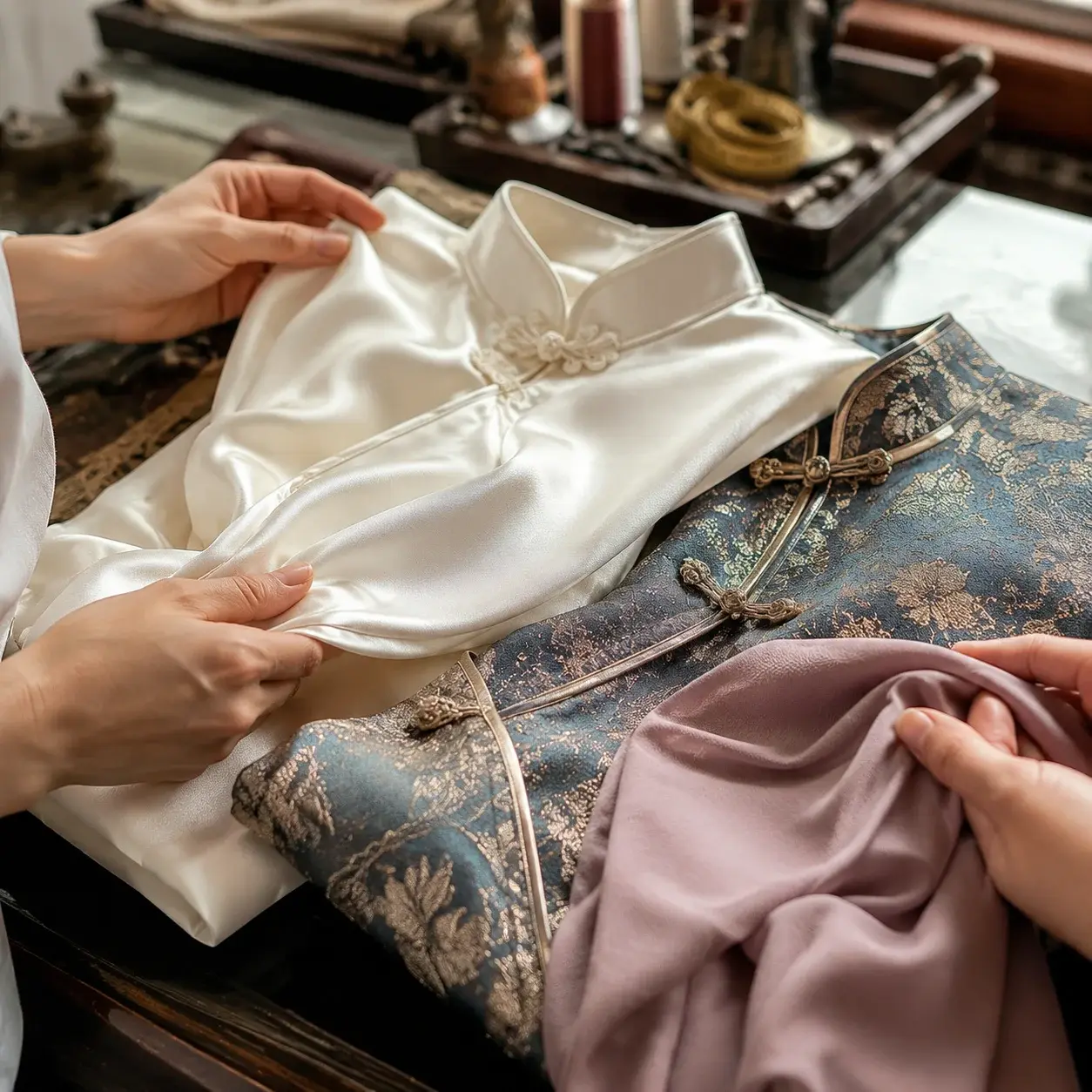
Ci sono due famiglie principali: il classico qipao tagliato a Shanghai — lungo a terra, strutturato, formale — e il moderno qipao "migliorato", più corto e realizzato in tessuti elasticizzati per l'uso quotidiano. Dipende da cosa indossi: per un evento occasionale o qualcosa che riporterai.]
| Stile | Silhouette | Occasione ideale | Fascia di prezzo indicativa |
|---|---|---|---|
| Classico alla Shanghese | Lungo, a bias, in seta aderente; alta fessura | Matrimoni, cene formali, sessioni fotografiche | ¥800–20.000+ (seta su misura) |
| Moderno / "migliorato" (改良) | Più corto, in misto elasticizzato, vestibilità più comoda | Uso quotidiano, pendolarismo, viaggio | ¥300–2.000 |
| Wedding gua / ricamo pesante | Giacca e gonna a due pezzi con draghi e fenici (cantonesi) | Cerimonia del tè della sposa | ¥5.000–50.000+, o in affitto |
Un errore comune tra i viaggiatori: la gua con draghi e fenici (龙凤褂), il doppio pezzo rosso e oro indossato dalle spose cantonesi, è un abbigliamento formale separato, non un qipao. Se una sposa ne desidera uno, prevederla separatamente o affittarla.
Anatomia di un qipao: come scegliere ogni elemento
Prima di acquistare, impara le sette parti che ti verranno chieste — colletto, bottoni a fiocco, manica, lunghezza, fessura, tessuto e costruzione — perché un sarto ti guiderà attraverso ciascuna di esse. Questo è il vocabolario su cui si basa il Trova il fit qui sotto.
| Elemento | Opzioni | Chi si adatta / come scegliere |
|---|---|---|
| Altezza del colletto | Alta (classica) / media / bassa o senza colletto (moderna) | Collo lungo → il colletto alto appare maestoso; viso rotondo, collo corto o doppio mento → il colletto medio/basso appare più leggero |
| Frog buttons (盘扣) | Nodi a barra dritta / nodi floreali (farfalla, crisantemo) | I nodi floreali sono più eleganti; numero e posizione aumentano la formalità |
| Manica | Senza maniche / a cappuccio / corta / tre quarti / lunga | Braccia confidenti → senza maniche; coprire le braccia superiori → la manica a ¾ è la più snellente e versatile; inverno/formale → lunga |
| Lunghezza | Corta / al ginocchio / tè / a terra | Uso quotidiano → corta; formale o matrimonio → a terra; statura bassa → tè con alta fessura |
| Altezza della fessura | Bassa (8–15cm) / media / alta | Conservativa → bassa; allunga le gambe → alta (le donne basse ne traggono il maggior vantaggio); considera il comfort quando sei seduto |
| Tessuto | Seta satinata / seta ricamata / jacquard / cotone-lino / velluto / mista elasticizzato | Il satin cade bene e appare formale ma è inflessibile; il ricamato è strutturato e nasconde imperfezioni del corpo; cotone-lino traspira per l'uso quotidiano; il velluto è lusso invernale; la miscela elasticizzata è la più facile da indossare a casa |
| Costruzione | Su misura / con elasticità migliorata / pronta | Vuoi l'esperienza vera del qipao → su misura; uso quotidiano confortevole → con elasticità migliorata; pronta dove busto e vita sbagliano più spesso |
Il parere onesto dell'editor: una manica di ¾ è la scelta più snellente e versatile per le braccia; il qipao "migliorato" in misto elasticizzato è l'opzione più indossabile per tutti i giorni; e un raso di seta al bias-cut è il più bello ma richiede una vestibilità quasi perfetta — ed è proprio per questo che deve essere su misura.
Quali Qipao si Addicono alla Tua Figura? (Trova il Qipao Giusto per Te)
È il taglio, non il colore, a determinare se un qipao funziona — quindi abbina prima il taglio alla tua figura. Trova la tua figura qui sotto e leggi attraverso per il profilo, il tessuto, il colletto, la manica, lo spacco e la lunghezza che la valorizzano, oltre a una cosa da evitare. Questa è la nostra matrice esclusiva Trova il Qipao Giusto, costruita per rispondere a «Quale qipao si addice a me?» in modo nessun concorrente focalizzato sulla storia può farlo.
| Tipo di corpo | Silhouette | Tessuto | Collo | Manica | Spacco | Lunghezza | Cosa evitare |
|---|---|---|---|---|---|---|---|
| A clessidra (busto/vita/fianchi in proporzione, vita definita) | Classic bias-cut aderente (il corpo originale del qipao) | Seta satinata (cade bene, mette in risalto la forma) | Standard mandarin | Qualsiasi | Medio-alta | Qualsiasi | Non nascondere la vita sotto una fascia larga — è uno spreco del tuo punto forte |
| Dritta / atletica (vita poco definita) | Cuciture princess o piega in vita + bordi a contrasto per creare vita | Brocché (struttura) | Standard mandarin | Corta / ¾ | Alta (aggiunge interesse visivo | Ginocchio-tè | Un satin aderente semplice mette in evidenza "nessuna vita"; aggiungi un motivo al busto e ai fianchi |
| A pera (fianchi più larghi del busto) | A-line che sfiora i fianchi, attira l'occhio verso l'alto | Brocché per il top, skirt di colore solido | Collo ricamato ornamentale (attira l'occhio verso l'alto) | ¾ (copre le braccia, bilancia) | Medio | Ginocchio-tè | Evita grandi motivi o satin luminoso sui fianchi; un orlo scuro contiene il volume |
| Mela (vita/pancia più piena) | A-line in vita alta che si apre sotto il busto | Jacquard rigido (non si attacca alla pancia) | Mandarin (allunga la linea degli occhi) | ¾ | Medio | Tè/media-lunga | Un satin aderente con motivo orizzontale in vita è un disastro |
| Busto abbondante | Fodera, tessuto rigido con pieghe su misura | Brocché/jacquard (non riflettente) | Mandarin leggermente più basso o aperto (interrompe la linea del busto) | Corta / ¾ | Media | Qualsiasi | La seta satinata riflettente ingrandisce i volumi; i modelli prefabbricati si aprono sempre — su misura è obbligatorio |
| Piccola (<160cm) | Motivo piccolo/m medio o solido per allungare | Seta leggera | Standard mandarin | ¾ | Alta + scarpe col tacco (allunga le gambe) | Corta/lunghezza tè | Un abbito lungo "inghiotte"; i motivi su grande scala riducono la figura |
| Alta | Lungo in terra risplende; può sopportare colori audaci | Seta satinata / brocché pesante | Qualsiasi | Qualsiasi | Lunga (bilancia l'altezza | Terra | Troppo corto appare sproporzionato |
| Formosa / plus | A-line + base scura + una linea verticale di ricamo | Tessuto rigido e strutturato | Mandarin | ¾ | Media | Tè/media-lunga | Tessuti leggeri aderenti e motivi orizzontali su tutta la superficie — su misura è il miglior valore |
Il parere onesto dell'editore (per lettrici snelle): una lunghezza tè + uno spacco alto + maniche ¾ + un piccolo motivo sembra più alta di un abbito lungo a terra — un qipao lungo in realtà nasconde una figura minuta.
Se indossate una taglia plus, non scoraggiatevi se gli scaffali pre-confezionati si fermano prima: un taglio a A su base scura con un solo ricamo verticale è veramente elegante, e poiché un sarto taglia su misura le vostre misure esatte, la su misura è sia la soluzione che si adatta meglio che quella con il miglior rapporto qualità-prezzo.
Quali sono i migliori colori di qipao per il vostro tono di pelle?
Prima individuate il sottotono, poi scegliete i colori che lo valorizzino — e, se il qipao è un regalo, controllate anche il significato culturale del colore. Due rapide sezioni qui sotto: una palette di toni di pelle, poi una tabella dei simboli cinesi dei colori.
Test rapido per individuare il sottotone: guardate le vene sul polso interno. Blu o viola = sottotono freddo; verde = caldo; non si distingue = neutro. Gli accessori in argento sono più valorizzanti = freddo; quelli in oro sono più valorizzanti = caldo. (Questo è il metodo standard di analisi del colore.)
| Tonalità della pelle / sottotono | Colori qipao più abbinanti | Approcciare con cautela | Si adatta a |
|---|---|---|---|
| Bianco freddo (sottotono rosa) | Smeraldo, blu base rosso vero, ametista, vino, nero e bianco, rosa/blu ghiacciato | Arancione, giallo caldo, marrone terracotta | Molti acquirenti occidentali + alcuni asiatici con pelle fredda |
| Giallo caldo (sottotono oro, la maggior parte degli asiatici) | Rosso vero, corallo, pesca, rosa caldo, verde foresta/peacock, zafferano, avorio, navy caldo, terracotta | Tinte ghiacciate, neon, bianco puro (ingiallisce la pelle — usare avorio) | La maggior parte degli acquirenti asiatici e di origine cinese |
| Olive | Smeraldo, blu pavone, bordeaux, prugna, crema | Verde-giallo, pastelli chiari | Pelle asiatica sudorientale / mediterranea |
| Marrone scuro / profondo | Alta saturazione, alto contrasto: bianco brillante, oro, cobalto, smeraldo, rosso vivo, arancione, rosso rosa, viola reale | Marroni opuri vicini alla tonalità della pelle | I toni di pelle scura si vedono meglio in colori vivaci |
Ora sovrapposta il significato tradizionale dei colori cinesi — lettura essenziale prima di acquistare un qipao come regalo:
| Colore | Significato | Migliore per | Nota |
|---|---|---|---|
| Rossa | Gioia, fortuna, matrimonio | Matrimoni, anno dello zodiaco, anziani | Scegli un rosso bluastro — sta bene a quasi tutti; il rosso arancione è più selettivo |
| Oro | Ricchezza | Abbinato al rosso per l'abbigliamento nuziale | L'oro da solo può apparire volgare; usalo come accento |
| Rosa | Romance, giovinezza | Donne più giovani, appuntamenti | — |
| Blu / ciano | Calma, intellettuale | Uso quotidiano, stile intellettuale | — |
| Verde (giada) | Armonia, vitalità | Riunioni di tè, eventi raffinati | Il verde giallo è delicato; il verde bosco o verde pavone è la scelta sicura |
| Nera | Moderna, sofisticata | Serate, look urbani | Tradizionalmente associata al lutto — non regalarla a un anziano |
| Bianca | Semplice/moderna, ma tradizionalmente colore del lutto | Pezzi di design contemporaneo | Non scegliere mai il bianco come colore principale per un regalo celebrativo |
Parola onesta dell'editore: il rosso vero è la scelta sicura di livello totemico, ma se vuoi uno scatto fotografico di viaggio in Cina che si distingua, pelli chiare con smeraldo o zaffiro è una scelta trascurata e più elevata rispetto al rosso totale che tutti gli altri indossano.
Qipao in seta: come riconoscere la vera seta?
La seta di baco autentica è calda al tatto, lucente in modo delicato而非耀眼,重量在18–19 momme (mm)等级,并带有苏州丝绸质量认证标签——聚酯纤维则触感滑凉、在光线下刺眼且无认证。 对“丝质旗袍”的兴起正是这一细节至关重要的原因:它最有可能将纪念品与失望区分开来。
请在店内使用以下清单:
- 触摸感受。 真丝温暖贴合手掌,发出柔和干燥的“沙沙”声;无论持握多久,聚酯纤维始终冰凉顺滑。
- 观察光泽。 丝绸呈现柔和、随角度变化的光泽;合成材料则发出生硬均匀的反光。
- 确认momme等级。 优质旗袍面料约为18–19mm——垂坠感足而不轻薄。可主动询问;正规店铺会如实告知。
- 检查缝边。 精细丝绸 garment 采用手工卷边,边缘为天然染色处理——而非毛边、胶合或锁边工艺。
- 阅读标签。 查找服装或布匹上的苏州丝绸质量认证(苏州丝绸质量认证)标记。正宗桑蚕丝生产者会注明momme等级与纤维成分。
- 燃烧测试(最后手段,需获许可)。 剪取一缕真丝燃烧后呈脆灰状,散发烧焦头发味;聚酯熔化成硬珠并散发化学气味。仅在布料处提出此请求,切勿用于成衣。
Nota: "Sensazione di seta", "seta ghiaccio" e "simile alla seta" sono tutti marketing in poliestere. La parola che vuoi sull'etichetta è un vero contenuto di fibra — 100% seta di baco (桑蚕丝) — con un valore momme, non un aggettivo.
Come Riconoscere un Qipao Falsificato o di Bassa Qualità?
Osserva tre cose al momento dell'acquisto: il tessuto (seta vs. poliestere), i bottoni a fiocco (annodati a mano vs. stampati a macchina) e le cuciture interne e l'indossatura. I pezzi del mercato turistico tagliano gli angoli su tutti e tre gli aspetti. Usa questa tabella per decidere in meno di un minuto.
| Dettaglio | Reale / di qualità | Falso / di bassa qualità |
|---|---|---|
| Tessuto | Seta di baco calda, opaca lucida; ~18–19 momme | Fredda, scivolosa, lucida di poliestere; etichette "sensazione di seta" |
| Bottoni a fiocco (盘扣) | Annodati a mano, leggermente irregolari, cuciti saldamente | Stampati a macchina, identici, incollati o cuciti in modo allentato |
| Cuciture e lisciatura | Cuciture rifinite, una lisciatura adeguata, anche i dardi | Cuciture grezze o raggrinzite, nessuna lisciatura, fessura storta |
| Vestibilità al petto/vita | Tagliato in base alle tue misure; nessun distacco | Distacco dal busto in prêt-à-porter; "taglia unica" stretta |
| Dove si vende | Sarto noto, banco di mercato della stoffa con rotoli, casa ereditaria | Stand turistico in zona panoramica, stand "città della seta", prezzi aggressivi |
Due bandiere rosse vale la propria linea: uno stand che non vuole quotare il contenuto di fibra o il momme, e un qipao "di seta" priced under ¥200 — la vera seta costa più di questo.
Dove Puoi Acquistare un Qipao in Cina? (Città per Città)
Acquista dove si concentrano sarti e seta: Shanghai per le strade dei sarti e i mercati del tessuto, Suzhou per la seta stessa e Pechino per lo shopping nei mercati. Ogni città ha una forza diversa per una famiglia in viaggio.
Shanghai — le strade dei sarti
Shanghai è la patria spirituale del qipao ed è il luogo più facile per ottenerne uno su misura rapidamente. Changle Road e Maoming Road (South) sono affollate di ateliers di qipao e sarti, dai budget ai marchi storici. Per un su misura con tessuto — il punto dolce del valore — vai al South Bund Fabric Market (南外滩轻纺面料市场) al numero 399 di Lujiabang Road, dove decine di bancarelle vendono seta al metro e la cuciono in pochi giorni. Ideale per: un su veloce, economico e per scegliere il tuo tessuto.
Suzhou — la capitale della seta
A un'ora da Shanghai, Suzhou è il centro cinese della seta da secoli. Esplora Shiquan Street e i negozi intorno a Guanqian Street, visita case storiche come Qian Tai Xiang (乾泰祥, fondato nel 1863) e osserva il Museo della Seta di Suzhou per affinare l'occhio prima di acquistare. Il lavoro di Suzhou è più fine, lento e costoso. Ideale per: seta e ricami di alta qualità, se il tempo lo permette.
Pechino e altrove
I mercati della seta di Pechino (come il centro all'ingrosso di Muxiyuan) e i mercati rivolti ai turisti offrono sia qipao pronti che su misura. Ti aspettano trattative e applica il elenco per individuare i falsi — i banchi frequentati dai turisti hanno più poliestere. Ideale per: combinare lo shopping del qipao con un itinerario a Pechino.
Qipao su misura: quanto tempo ci vuole e quanto costa?
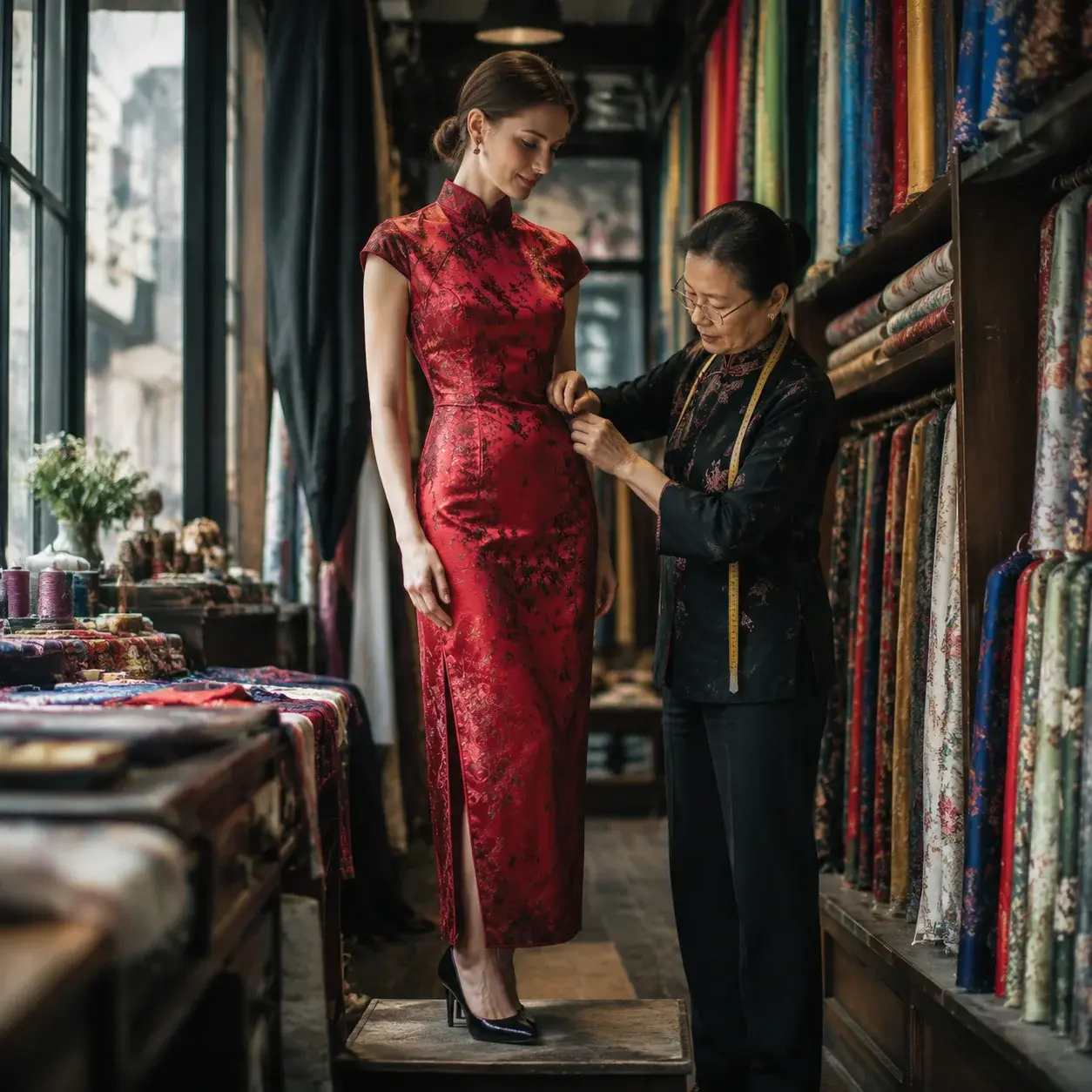
Un qipago su misura richiede almeno una prova e, nel South Bund di Shanghai, impiega solitamente 3–7 giorni (è comune un servizio espresso in 24–48 ore); Suzhou, Pechino e soprattutto Hong Kong sono più lente e costose. La personalizzazione è l'unica strada affidabile per ottenere un qipao che si adatta perfettamente — e poiché il sarto sceglie il tessuto insieme a te, è il modo più sicuro per garantire seta vera.
| Città | Tempo di produzione indicativo | Costo relativo | Note |
|---|---|---|---|
| Shanghai — South Bund | ~3–7 giorni; servizio espresso 24–48h comune | $ (miglior rapporto qualità-prezzo) | Più lungo in alta stagione; scegli il tessuto in loco |
| Suzhou | Più lunga di Shanghai | $$ | Più lenta, fine, seta e ricamo di alta qualità |
| Pechino | Variabile in base al mercato | $–$$ | Prezzo conveniente; verifica la composizione del tessuto |
| Hong Kong | La più lunga | $$$ (più costoso) | Sarti rinomati, prezzi premium |
Prima della prima prova, conosci le 12 misure che prende il sarto di qipao — portale come lista di controllo:
- Altezza
- Peso
- Petto (più pieno)
- Sotto petto
- Vita (naturale)
- Fianchi (più pieni)
- Larghezza spalle
- Lunghezza schiena (dal collo alla vita)
- Lunghezza manica
- Circonferenza braccio superiore
- Circonferenza collo
- Lunghezza finale desiderata del capo
Consiglio onesto dell'editor / consiglio pratico: fatti misurare il giorno 1–2 del tuo viaggio in Cina in modo che il capo sia pronto prima di partire. Lasciarlo per metà viaggio significherebbe perdere il ritiro — l'errore più comune dei viaggiatori.
Guida ai prezzi del qipao: quanto dovresti pagare in RMB?
Ti aspettano circa ¥150–500 per il poliestere delle zone turistiche (saltalo), ¥500–2.000 per i misti seta pronti di fascia media, ¥800–3.000 per i su misura del mercato dei tessuti (il punto dolce del valore), e ¥3.000–20.000+ per i seta su misura di alta gamma. Questi sono intervalli indicativi di mercato; i prezzi del mercato turistico variano e la contrattazione è normale nei mercati dei tessuti.
| Livello | Intervallo RMB (indicativo) | Canale | Verdetto dell'editor |
|---|---|---|---|
| Poliestere pronto zona turistica | ¥150–500 | Stand "città della seta" e luoghi panoramici | No — aderente, fessure storte, difficile da fotografare bene |
| Misti seta pronti fascia media | ¥500–2.000 | Brand, centri commerciali | Va bene in un pinch |
| Su misura mercato tessuti (incluso tessuto) | ¥800–3.000 | South Bund Shanghai, Muxiyuan Pechino | Il punto dolce del valore — 3–7 giorni |
| Su misura seta alta gamma | ¥3.000–20.000+ | Case storiche Shanghai, ateliers ricamo Suzhou | Un ricordo unico nella vita |
| Guoa da matrimonio / ricamo pesante | ¥5.000–50.000+, o noleggio | Negozi specializzati in matrimoni | Noleggia se lo indossi solo un giorno |
Onesto parere dell'editor: non aspettarti magia da un qipao turistico da ¥150 — il poliestere si attizza in modo goffo e le fessure sono storte. Per un ricordo, il punto dolce è un misto seta su misura al South Bund.
Come trasportare o spedire un qipao a casa? (Dogana e imballaggio)
Porta in mano un qipao di seta steso o delicatamente arrotolato in tissue all'interno del bagaglio a mano, conserva la ricevuta e il certificato in seta, e dichiaralo se il tuo paese lo richiede — la maggior parte dei vestiti per uso personale è esente da dazi nell'ambito delle allowances per viaggiatori, ma le regole variano. La seta si piega facilmente, quindi il metodo di imballaggio è importante quanto le procedure doganali.
- Imballala in piano. Stesa il qipao in piano, piega lungo i giunti esistenti con tissue privo di acido tra gli strati per evitare pieghe rigide; oppure arrollala delicatamente. Evita compressioni strette.
- Portala in mano se possibile. La seta resiste meglio nel bagaglio a mano rispetto al bagaglio in stiva; una borsa per abiti è ideale per un pezzo a terra.
- Conserva la documentazione. Conserva la ricevuta e qualsiasi certificato di qualità della seta — utili per la valutazione doganale e la prova dell'autenticità.
- Dichiaralo quando richiesto. I vestiti per uso personale sono solitamente esenti da dazi nell'ambito delle allowances per viaggiatori, ma i limiti variano da paese a paese; se sei vicino al tuo limite o hai dubbi, dichiaralo. Controlla l'autorità doganale del tuo paese prima di volare.
- Usa il vapore, non il ferro. A casa, appendi e vaporeggia a bassa temperatura; un ferro caldo può bruciare la seta.
Come indossare un Qipao? (Occasioni e stile)
Abbina il qipao all'occasione — seta lunga per matrimoni e cene formali, lunghezza tè per riunioni, qipao moderno corto per l'uso quotidiano — e mantieni gli accessori minimi così che sia il vestito a fare da protagonista. Da visitatrice, indossarla con attenzione è benvenuta; trattala come l'elegante abbigliamento formale che è.
Guida rapida per occasioni:
- Matrimoni / cerimonia del tè: abiti lunghi in broccato rosso e oro o ricami (o il gua drago-fenice separato per le sposi cantonesi).
- Capodanno Lunare: rosso o colori festivi e auspicious.
- Cene formali: setosa in toni preziosi, lunga o da tè.
- Giornaliero / viaggio: qipao corto misto elasticizzato con piccolo motivo.
Abbinali a tacchi semplici, un'acconciatura alta o onde morbide e gioielli sobri — giada o perla danno l'autentico. Lascia che il colletto e i bottoni a farfalla facciano la differenza.
Il nostro consiglio onesto (Scelte dell'editor)
Dal team di approvvigionamento di LyrikTrip, che frequenta questi mercati con i clienti. Ecco cosa faremmo davvero:
- Salta il qipao turistico da ¥150. Per un ricordo, il punto dolce è un misto di seta su misura dal mercato dei tessuti al South Bund.
- Scegli un rosso vero con base blu invece del rosso-arancio per un effetto lusingante quasi universale — e per le foto, prova l'infravalutato smeraldo o zaffiro.
- Piccola taglia? Scegli lunghezza da tè + fessura alta + manica ¾ + piccolo motivo. Un abito lungo ti inghiottirà.
- Non comprare un abito lungo a terra a meno che tu non abbia una occasione formale — non lo riporterai a casa.
- Il qipao più indossabile è il taglio elasticizzato migliorato; il più bello è la seta bias-cut — ed è proprio per questo che il bellissimo deve essere su misura.
- Fatti misurare il primo giorno. Tutto il resto dipende dalla finitura prima del tuo volo.
Domande frequenti
Che cosa significa qipao? Qipao (旗袍) significa letteralmente "abbandono", riferendosi ai Manchu "popolo delle bandiere" da cui si è evolto. Raffinato a Shanghai negli anni '20 e '30, descrive ora il vestito cinese aderente con colletto alto e chiusura diagonale sul davanti. "Cheongsam" è il nome cantonese per lo stesso indumento.
Dove posso comprare un qipao vicino a me mentre sono in viaggio in Cina? Dirigiti in una zona di sarti o di mercato del tessuto. A Shanghai, Changle e Maoming Road o il South Bund Fabric Market (399 Lujiabang Road); a Suzhou, Shiquan Street e case della seta ereditate; a Pechino, i mercati della seta. La personalizzazione del mercato dei tessuti offre il miglior rapporto qualità-prezzo.
Si può comprare un qipoo plus-size o personalizzato in Cina? Sì. Poiché la maggior parte dei qipao è su misura, un sarto taglia in base alle tue misure esatte — la strada migliore per le figure plus-size e con seno pieno, raramente adatte ai magazzini. Aspettati circa ¥800–3,000 per la personalizzazione del mercato dei tessuti, completata in circa 3–7 giorni a Shanghai.
È più economico comprare un qipao in Cina rispetto online? Solitamente sì per qualità equivalente — eviti i markup sull'importazione, scegli il tessuto di persona e ottieni una vestibilità su misura. La personalizzazione del mercato dei tessuti costa circa ¥800–3,000 inclusi i tessuti. Le liste online possono sembrare più economiche ma sono spesso in poliestere con taglie generiche e senza prova.
Quanto tempo ci vuole per realizzare un qipao su misura? A South Bund di Shanghai, solitamente 3–7 giorni, con servizio espresso da 24–48 ore comunemente disponibile. I sarti di Suzhou, Pechino e Hong Kong richiedono tempi più lunghi. Pianifica almeno una prova e fatti misurare il primo o il secondo giorno del viaggio in modo che sia pronto prima della partenza.
Scegliere seta o un misto elasticizzato? Per un ricordo o un abbigliamento formale, scegli la seta bachi (18–19 momme) — cade splendidamente e appare autentica. Per un pezzo che rirai spesso nella vita quotidiana, un qipao "migliorato" moderno in misto elasticizzato è molto più comodo e perdonante. Molti turisti ne acquistano uno di ciascun tipo.
Conclusione
Un qipao autentico è una delle esperienze più gratificanti che puoi portare a casa dalla Cina — ma solo se lo acquisti come fanno i locali: su misura per il tuo corpo, presso un sarto del mercato dei tessuti o una storica seteria, in vera seta bachi che hai imparato a riconoscere. Prima definisci il tuo tipo di corpo e il tono sottostante, stima un budget di ¥800–3.000 per il punto dolce del mercato dei tessuti, fatti misurare il primo giorno e imballalo piatto per il volo. Se lo farai, tornerai a casa con un qipao che indosserai davvero, non con un souvenir che rimane piegato.
Cercando qualcosa in più da portare a casa? Consulta la nostra guida sui  migliori souvenir da acquistare in Cina, informati su come identificare la seta cinese autentica e nota che "qipao" e "cheongsam" indicano lo stesso vestito — sono i termini mandarino e cantonese per il capo qui descritto.
LyrikTrip organizza viaggi personalizzati inbound in Cina. Non vendiamo qipao, ma saremo lieti di indicarti il sarto giusto e accompagnarti nel mercato dei tessuti. Pianifica il tuo viaggio in Cina con noi.