




 18 giorni Cina, da capo a fondo Pechino → Xi'an → Chuanzhusi → Jiuzhaigou → Chengdu → Zhangjiajie → Guilin → Yangshuo → Shenzhen Da $6,360 Vedi itinerario
  14 giorni A cosa serve ogni città Pechino → Xi'an → Chengdu → Shanghai → Shenzhen → Canton Da $5,030 Vedi itinerario
  19 giorni A valle del futuro Shenzhen → Guilin → Yangshuo → Chengdu → Chongqing → Yichang → Shanghai Da $5,360 Vedi itinerario
  5 giorni A valle, poi in salita Guilin → Yangshuo Da $1,600 Vedi itinerario
  8 giorni Acqua tranquilla, città veloce Shanghai → Yangshuo → Shenzhen Da $2,350 Vedi itinerario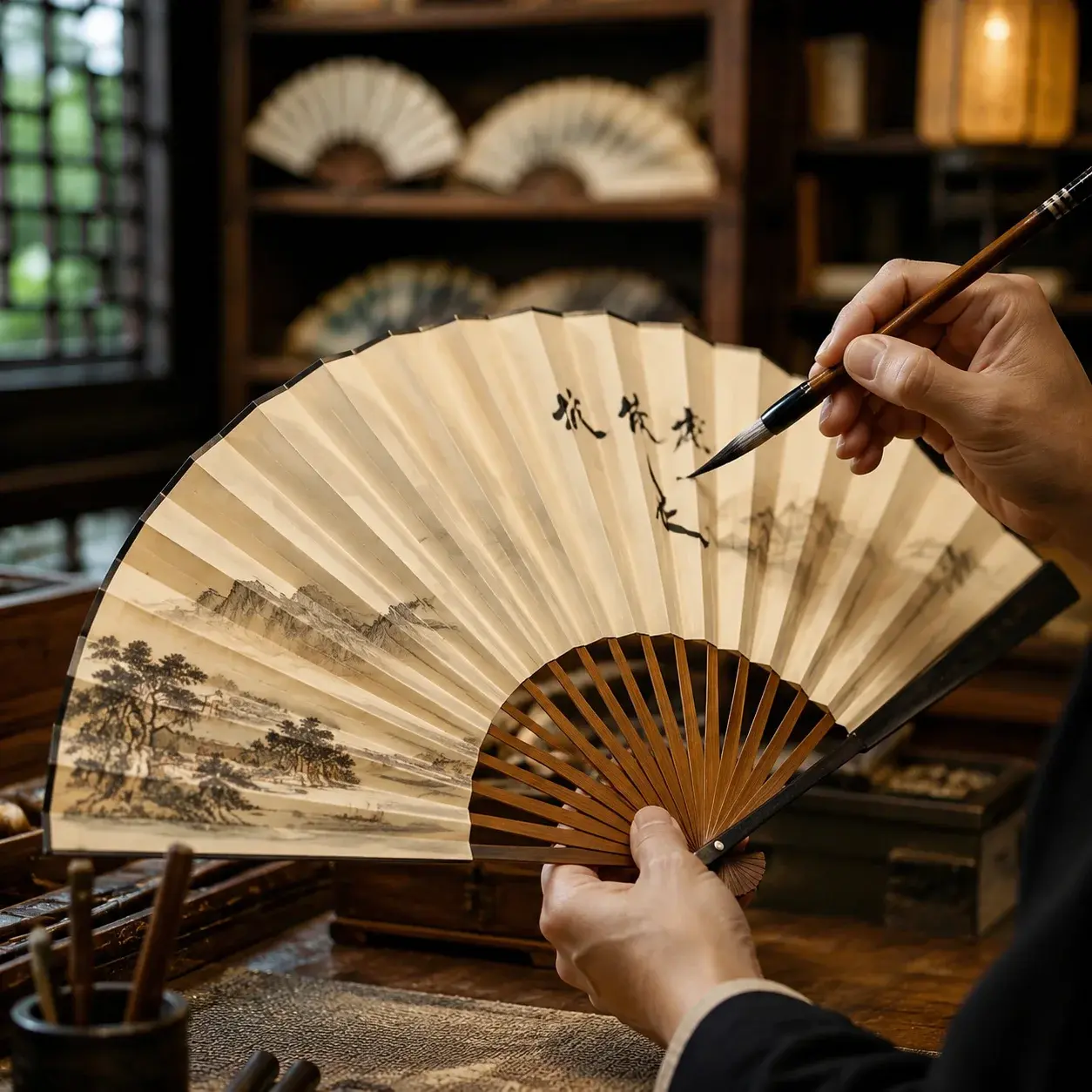
Ventaglio cinese pieghevole: come scegliere un autentico ventaglio di seta e dove comprarne uno in Cina
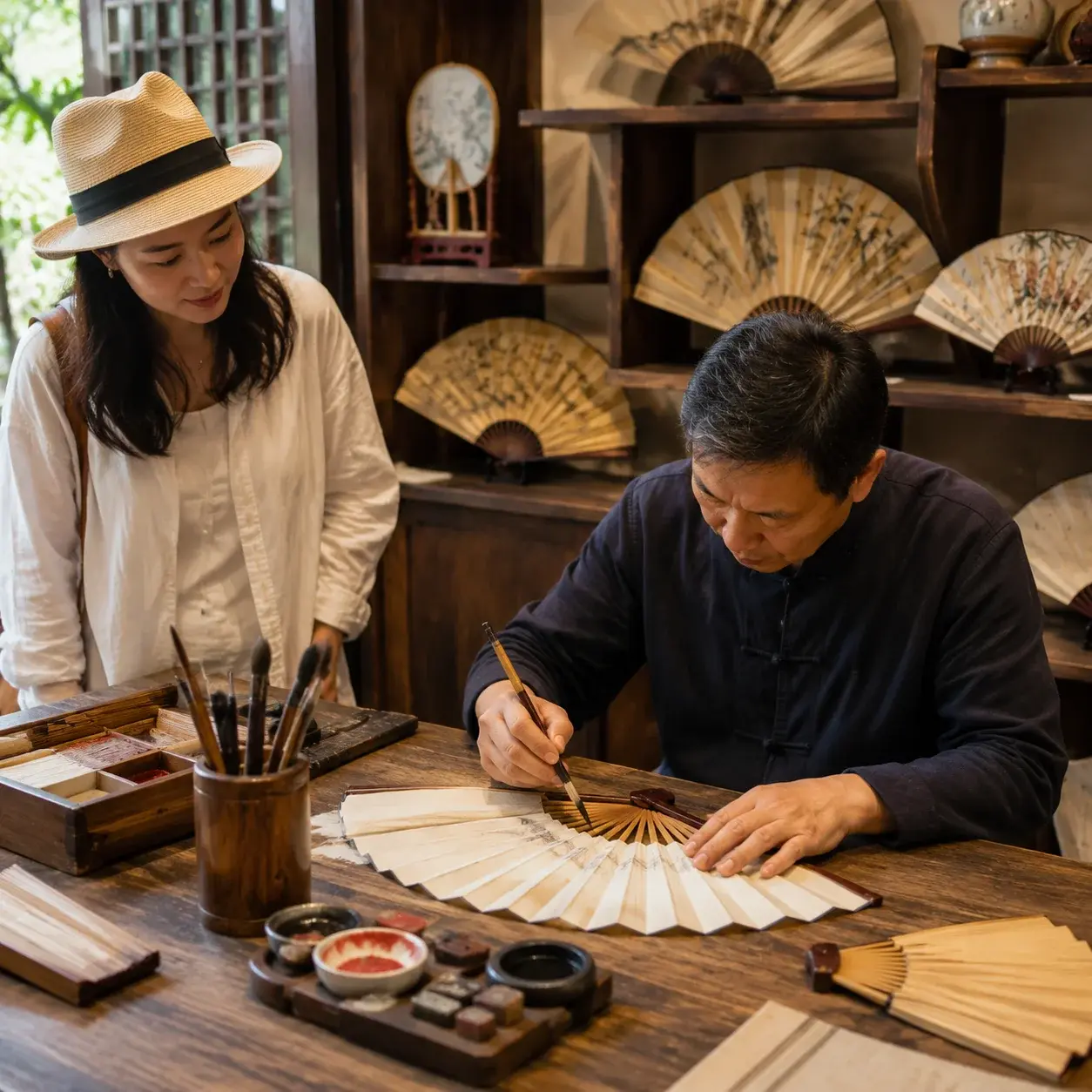
Un ventaglio cinese pieghevole (zhe shan, 折扇) è il souvenir raro che si piega piatto nella tua valigia ma porta con sé 600 anni di cultura dei poeti e studiosi. In breve: per quasi ogni viaggiatore, compra un ventaglio pieghevole — non un rigido ventaglio rotondo — e paga solo per una foglia di seta o carta dipinta a mano su stecche in bambù o sandalo, idealmente scritta sul posto. Questa è una guida sul campo per il viaggiatore, non un negozio.
Abbiamo scritto questo perché le pagine che compaiono per "ventaglio cinese pieghevole" si fermano alla storia o cercano di venderne uno. Quasi nessuno ti racconta com'è realmente entrare in un negozio di ventagli di Hangzhou, distinguere la seta dalla lucidatura spray e ottenere il proprio poema dipinto sulla foglia mentre aspetti. Siamo un'azienda di viaggi in Cina, non un rivenditore di ventagli — quindi possiamo essere onesti con te. Alla fine sarai in grado di abbinare un ventaglio al modo in cui lo userai, eseguire un controllo pratico dell'autenticità, conoscere i prezzi RMB giusti in base al materiale e alla lavorazione, commissionare una dedica personalizzata e riportare a casa il ventaglio intatto.
Nota di onestà prima di tutto: le conoscenze qui — la logica del selettore di ventole, i test sul campo, i significati dei motivi, la storia — sono solide. I prezzi specifici in RMB, i laboratori denominati e i tempi di lavorazione sono intervalli indicativi per orientarti, non quotazioni fisse. Considera le cifre come "circa", conferma sul posto e ispeziona prima di spendere.
Punti salienti
- Acquista il ventaglio pieghevole, non quello rotondo. Un ventaglio pieghevole (zhe shan) si piega in modo piatto, è comodo da trasportare e può essere inciso; un ventaglio rigido rotondo (tuanshan) è un oggetto da esposizione e fotografia, ingombrante e facilmente danneggiabile.
- Il prezzo è determinato da materiale × artigianato × produttore. I ventagli turistici stampati (~¥20–80) non hanno valore regalo o da collezione; i ventagli in seta dipinti a mano su buone ossine (~¥200–600+) sono l'ideale per i regali; quelli in sandalo e di artisti famosi raggiungono prezzi molto più elevati.
- La pittura a mano originale è migliore della stampa, ed è possibile distinguerele. La seta genuina mostra la pressione del pennello, lo sbavatura dell'inchiostro, una firma e un sigillo (钤印); la stampa economica è piatta, simmetrica e vuota sul retro.
- L'incisione sul posto è il miglior upgrade dal rapporto qualità-prezzo. Un poema, un nome o una data scritti a pennello sulla lamina trasformano un buon ventaglio in un regalo unico — qualcosa che un ventaglio da banco stampato potrà mai diventare.
- Hangzhou (Wangxingji) e Suzhou sono i centri del patrimonio per i ventagli in seta, carta nera e sandalo. Evita i negozi aeroportuali e i banci "9,9 RMB".
- Il significato del motivo prevale sull'aspetto estetico quando il ventaglio è un regalo — scegli in base al simbolismo (Quattro Gentili, loto, drago e fenice) per il destinatario.
Cos'è un ventaglio cinese pieghevole (Zhe Shan, 折扇)?
Un ventaglio cinese pieghevole è un ventilatore collapsabile costruito con stecche in bambù o legno duro e una lamina in carta o seta che si piega a soffietto in un unico bastone sottile. A differenza del vecchio ventaglio rotondo (tuanshan, 团扇) — un ovale rigido di seta su un manico fisso — il ventaglio pieghevole si chiude piatto, ed è proprio per questo che è diventato il compagno quotidiano dei letterati e la scelta del viaggiatore oggi.
La forma pieghevole, secondo la maggior parte delle fonti, è un relativamente newcomer in Cina. Si ritiene ampiamente che sia arrivata attraverso Giappone e Corea — una versione comune racconta che i monaci giapponesi presentassero i ventagli pieghevoli come tributo nella Dinastia Song Settentrionale, intorno al 988 d.C. — prima di diffondersi nella Dinastia Song Meridionale e fiorire durante la dinastia Ming, quando la corte l'adoptò e divenne un accessorio indispensabile per studiosi e gentiluomini. I ventagli erano scambiati con calligrafia e pittura come simboli di amicizia, e l'atto stesso di piegarsi venne a simboleggiare la sapienza riservata e rilasciata a piacere. (La storia della "trasmissione dal Giappone" è il racconto principale ma è narrata diversamente across le fonti, quindi trattarla come ampiamente creduta piuttosto che stabilita.)
Pieghevole vs Rotondo: Quale Dovresti davvero Comprare?
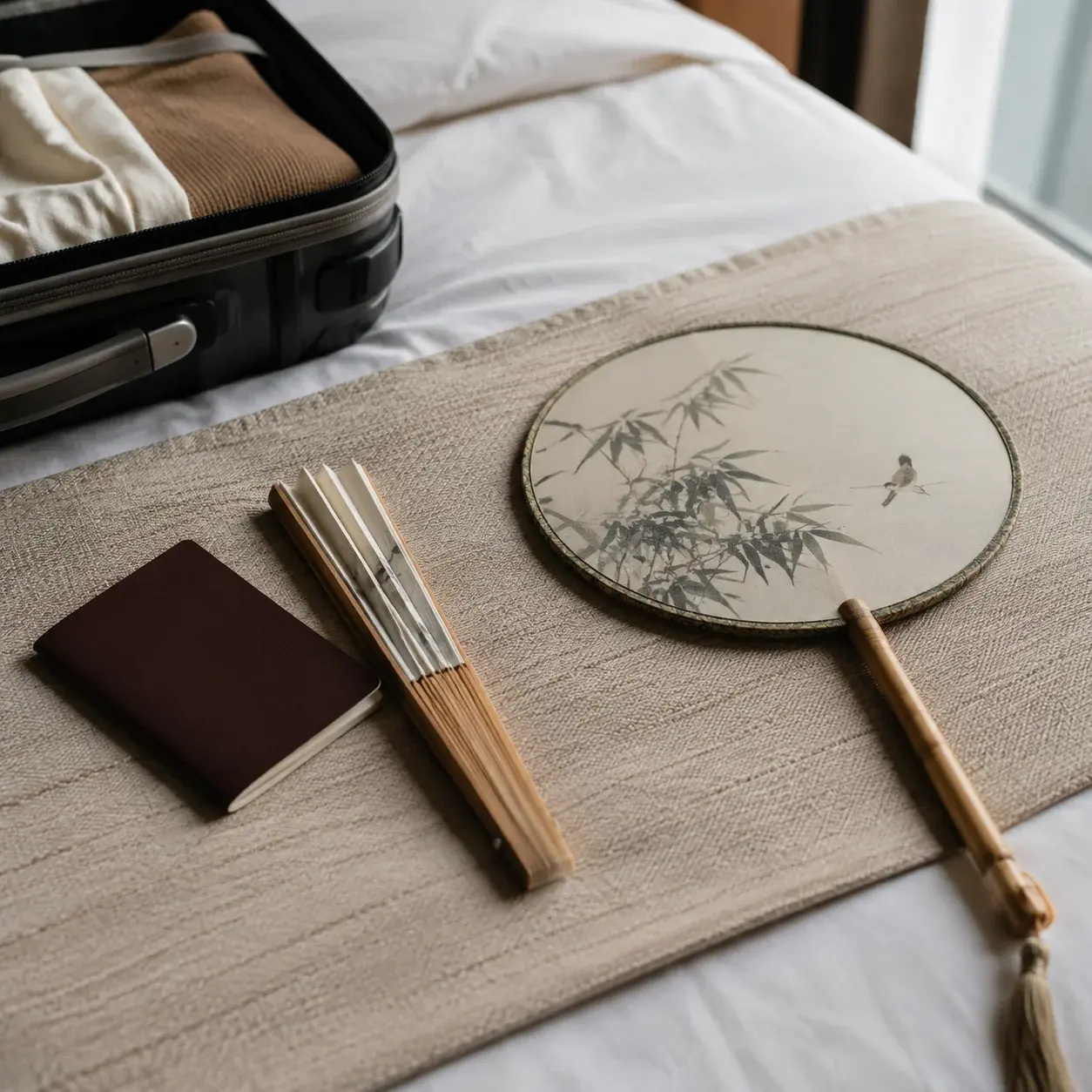
Per circa nove viaggiatori su dieci che vogliono "portare a casa un ventaglio cinese", la risposta è il ventaglio pieghevole. Si imballa piatto, funziona come un vero ventaglio a mano, appare come un kit da studioso classico e, soprattutto, può essere inciso. Il ventaglio rotondo è bello ma è un oggetto da esposizione e da foto, non da viaggio.
| Forma | Come appare | Miglior per | Onesto avviso |
|---|---|---|---|
| Ventaglio pieghevole (zhe shan, 折扇) | Si riduce a un bastone, si apre a una foglia | Imballaggio piatto a casa, uso quotidiano, aspetto accademico, regali incisi | Questo è il termine principale e lo standard letterario di 600 anni — la scelta predefinita |
| Ventaglio rotondo (tuanshan, 团扇) | Foglio rotondo/ovale rigido su man fisso | Decorazione da parete, foto in hanfu, elegante accessorio, pura esposizione | Difficile portare a casa — rigido, ingombrante, facilmente schiacciato; per una foto, affittalo invece di portarlo |
💬 Onesto parere dell'editore: chi chiede "un ventaglio cinese" vuole in realtà il ventaglio pieghevole. Il tuanshan rotondo è un oggetto da esposizione e da foto — magnifico su una parete, scomodo in una valigia. Questa guida si basa sul ventaglio pieghevole e considera il ventaglio rotondo come nota a piè di pagina.
Quale ventaglio pieghevole cinese comprare? Il Selettore di Ventagli
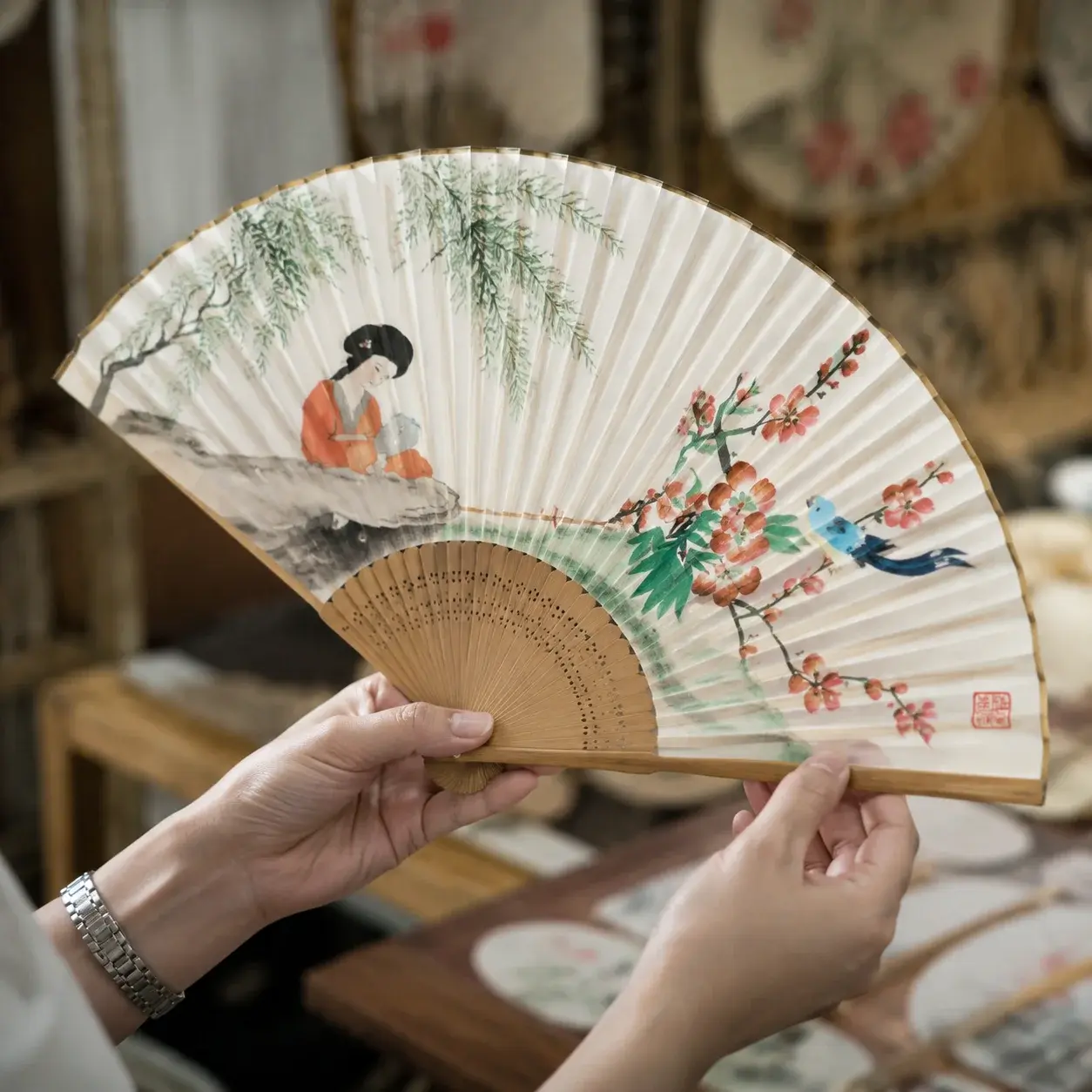
Non scegliere il ventaglio in base a quale sia il più bello — scegli in base al suo scopo. Il nostro Selettore di Ventagli è uno strumento decisionale a quattro strati: prima fissa il caso d'uso, poi la forma, il telaio (le stecche), le foglie e infine l'arte della decorazione. Nessun concorrente trasforma materia e artigianato in un sistema decisionale; questo è il framework da catturare prima di partire.
Strato 1 — Forma
Piehevole (zhe shan) vs rotondo (tuanshan), deciso sopra. Per un ventaglio che porterai, possederai o iscriverai: piehevole. Per un ventaglio che resta appeso al muro: rotondo o un piehevole gigante. Il resto del selettore presuppone che tu abbia scelto il piehevole.
Strato 2 — Telaio (stecche e listelli)
Le stecche sono la parte strutturale che determina gran parte del prezzo e l'intero aspetto del ventaglio.
| Materiale della lamina | Sensazione e aspetto | Per chi è adatto | Indicatore di prezzo |
|---|---|---|---|
| Bamboo (竹) | Leggero, elastico, caldo al tatto; va dal semplice yuzhu al pregiato xiangfei macchiato | Utenti pratici quotidiani, acquirenti principianti, budget più ristretti | Da entry a medio; bamboo rari o di nome possono salire |
| Sandalwood (檀香 tanxiang) | Pesante, auto-profumato, spesso intagliato a lavoro aperto | Collezionisti, acquirenti di regali, chiunque voglia "un ricordo che profuma" | Medio-alto; la fragranza è il premium |
| Legno duro (红木/乌木/黑檀 rosewood, ebony) | Denso, scuro, pesante, prestigioso | Collezionisti, aspetto maschile, regali di alto status | Medio-alto |
| Osso / avorio antico | Pallido, stagionato, aura da collezionista | Solo collezione di antichi | Alto — e l'avorio è una linea rossa per l'esportazione (vedi sezione imballaggio); non acquistare mai avorio moderno e incontralo solo in autentiche antichità |
Livello 3 + 4 — Foglia e artigianato, mappato al tuo caso d'uso
Questa è la tabella del rendimento: dì cosa serve il ventaglio e restituisce la combinazione esatta da acquistare.
| Il tuo caso d'uso | Combo raccomandata (forma · telaio · foglio · artigianato) | Perché | 💬 Evita |
|---|---|---|---|
| Collezionista | Pieghevole · named bamboo/hardwood ribs · real silk or Xuan paper leaf · hand-painted + artist's signature + seal | Both value and meaning ride on the unique hand; the signature and seal (钤印) are the point | Printed leaves and unsigned "master" fans — not collectible |
| Uso quotidiano | Pieghevole · bamboo ribs · Xuan paper or cotton leaf · printed or simple brushwork is fine | You want light, tough, and low-stakes for constant opening | Don't buy hand-painted silk to fan yourself every day — you'll fret over it and soil it |
| Decorazione per pareti | Round (tuanshan) or oversized folding · any frame · real silk leaf · full-composition painting | You're buying the whole open face; size and color carry the wall | Small folding fans look weak on a wall — go big and full-composition |
| Regalo | Pieghevole · sandalwood (scented) or hardwood ribs · real silk leaf · hand-painted + on-the-spot inscription | The folding fan is the traditional token of friendship and refinement; the inscription makes it unique | A printed tourist fan reads cheap as a gift — at minimum step up to hand-paint plus an inscription |
Tipi di ventagli cinesi pieghevoli: seta vs carta vs sandalo vs bambù
Il tipo che scegli è davvero una combinazione di materiale per le foglie e delle costole, e ognuno ha un uso naturale ottimale. La seta tiene meglio l'arte dipinta a mano ed è la più preziosa per i regali; la carta accoglie splendidamente la calligrafia a inchiostro; il sandalo profuma il suo profumo; le costole in bambù e legno duro strutturano e determinano gran parte del prezzo.
- Ventagli pieghevoli in seta (tradizione di Hangzhou). La seta reale accetta pigmenti dipinti a mano con profondità sottile e una lucentezza morbida, ed è per questo che è la scelta classica per un ventaglio dipinto come regalo. Hangzhou, accanto al Lago Ovest, è il centro storico dei ventagli in seta.
- Ventagli pieghevoli in carta (Xuan / carta di riso). Il classico ventaglio nero di Hangzhou è l'icona qui; una foglia di carta Xuan assorbe l'inchiostro ed è il terreno naturale per calligrafie e paesaggi a inchiostro.
- Ventagli in sandalo (tanxiang). Una variante di lusso del ventaglio pieghevole, principalmente prodotta a Suzhou, pregiata soprattutto per il suo profumo caldo e duraturo — un ricordo profumato tanto quanto un ventaglio.
- Costole in bambù e legno duro. Non un tipo di "foglia", ma una scelta strutturale: bambù per i ventagli leggeri quotidiani, rosewood o ebano per peso, oscurità e prestigio.
| Tipo | Aspetto | Miglior per | Impatto del prezzo |
|---|---|---|---|
| Foglio di seta | Lucentezza morbida, tiene il colore dipinto | Ventagli regalo dipinti a mano, collezionismo | Medio-alto |
| Foglio di carta Xuan | Opaco, adatto all'inchiostro; versione classica in carta nera | Calligrafia, paesaggi a inchiostro, uso quotidiano | Da base a medio |
| Legno di sandalo | Coste intagliate a rete profumata | Ricordi profumati, regali per donne, collezionisti | Medio-alto |
| Coste in bambù / legno duro | Lisce o venate; leggere (bambù) o scure e dense (legno duro) | Struttura per qualsiasi foglio; determina durata e costo | Base (bambù) a alto (legno fine) |
Simbolismo dei ventagli pieghevoli cinesi: La mappa dei motivi |
Quando un ventaglio è un dono, il significato del motivo dipinto o scritto conta più della sua bellezza. Il ventaglio stesso rifina l'erudizione e, storicamente, l'amicizia — veniva scambiato con pittura e calligrafia come simbolo tra gli intellettisti. Oltre a ciò, il motivo specifico trasmette un messaggio, quindi sceglietelo in base al destinatario.
| Motivo | Significato | A chi regalarlo | 💬 Promemoria |
|---|---|---|---|
| Prugna, orchidea, bambù, crisantemo (Quattro Gentiluomini) | Integrità, resilienza, virtù dello studioso | Anziani, insegnanti, amici colti | La scelta "colta" più sicura |
| Bambù | Integrità, crescita costante ("un giunto dopo l'altro") | Chi sta salendo nella carriera, uomini | — |
| Loto | Purezza, incorruttibilità | Chi lavora nel pubblico servizio o per segnalare integrità | — |
| Peonia | Ricchezza, prosperità | Anziani, compleanni, aperture aziendali | Il peonio rosso formale è più adatto; i recipienti più giovani potrebbero preferire qualcosa di più sottile |
| Dragone / fenice | Nobiltà; felicità coniugale (dragone-fenice) | Neosposi, coppie | Se si regala a una persona, notare: dragone = sposo, fenice = sposa |
| Paesaggio (shanshui) | Ampia mente, refined solitude | Neutral, universale; leader e anziani | Il soggetto letterario più classico |
| Calligrafia / frase auspicious | Dipende dalle parole | Quasi chiunque | Un nome translitterato o una linea scelta è il più personale (vedi sotto) |
💬 Onesto parere dell'editore: per un regalo, il significato del motivo prevale sulla sua bellezza — e una scritta personalizzata batte sempre una scena generica stampata.
Come riconoscere un autentico ventaglio in seta da una stampa economica?
Nessun colpo d'occhio è una prova, ma una breve scheda che puoi compilare al banco separa la seta dipinta a mano dal poliestere stampato e dal "sandalwood" spruzzato. Punteggio su 10: 7 o superiore, acquista con fiducia; 4–6, negozia duramente o aspetta; sotto 4, vai via. I test qui sotto sono pratici e richiedono solo pochi secondi.
Test della foglia di seta e della pittura a mano
| Test | Setta reale + pittura a mano (punti aggiuntivi) | Poliestere stampato economico (punti sottratti) | Punti |
|---|---|---|---|
| Tratto del pennello | Pressione e rilascio, tonalità inchiostro graduata, leggera asimmetria, lieve sbavatura dove l'inchiostro incontra la seta | Punti uniformi o blocchi di colore piatto, simmetria a specchio, adesivo | 0–3 |
| Lucentezza | Lucentezza setosa, contenuta, che cambia con l'angolo | Plastico, abbagliante lucentezza del poliestere | 0–2 |
| Sensazione al tatto / peso | Ha corpo e peso, tessitura fine e densa | Debole, scivoloso, sensazione di tessuto per ombrelli | 0–2 |
| Retro della foglia | L'inchiostro dipinto a mano si mostra in qualche misura | Immagine sul fronte, retro bianco vuoto (stampato) | 0–2 |
| Firma e sigillo | Firma scritta a mano più un sigillo rosso (钤印) | Nessuna firma, o una "firma" stampata | 0–1 |
Legittimo sandalwood vs profumo spruzzato
Profuma il legno delle costole stesse, non una nota di profumo nell'aria. Il vero sandalo è caldo, dolcemente lattiero e duraturo; strofini una costola fino a renderla calda e il vero aroma diventa più ricco e mellifero. La rivendicazione di Wangxingji è che il vero profumo di "sandallo dura quanto il ventaglio." Gli spruzzati diventano più acidi o svaniscono quando li sfiori e scompaiono in pochi giorni.
💬 Bandiera rossa: un odore aspro e profumato, accompagnato da un prezzo sospettamente basso, indica un falso sandalo spruzzato — non comprarlo come legno reale.
Test della costella e dello scatto
Verifica se le costole sono in bambù massello o legno duro contro un laminato incollato guardando la venatura finale: il materiale reale scorre ininterrotto, il laminato mostra una giunzione incollata. Un buon ventaglio si apre con uno scatto netto, rimane piatto senza ondulazioni sulla lamina e si chiude allineato. Un'azione lenta, deformata o appiccicosa indica una costruzione scadente.
Come far dipingere o incidere un ventaglio sul posto?
Entra in un vero laboratorio, scegli una foglia bianca o riservata, decidi il contenuto in anticipo, fai le domande giuste e controlla prima che si chiuda. Questo flusso di lavoro personalizzato sul posto è l'upgrade dal valore più alto e dal costo più basso disponibile — trasforma un bel ventaglio in un ricordo unico che un ventaglio da banco stampato non potrà mai essere. Segui i passaggi.
Passo 1 — Foglio bianco o aggiunta a un ventaglio già finito. Per massimizzare la flessibilità, acquista un foglio bianco e lascia che l'artista dipinga o scriva da zero. Altrimenti, aggiungi calligrafia allo spazio riservato (l'area dell'iscrizione) di un ventaglio già dipinto.
Passo 2 — Decidi il contenuto prima di andare. Fissa il testo — una frase fortunata, una poesia, il nome del destinatario (in cinese o traslitterato), una data. Scegli il motivo in base al significato usando la Mappa dei Motivi qui sopra. Scegli uno stile e una calligrafia: corsivo fluido rispetto a quello regolare, fine gongbi versus xieyi con pennello libero.
Passo 3 — Cosa chiedere nel negozio.
- "Puoi dipingere o scrivere qui sul posto, e quando posso ritirarlo?" (tempo di consegna)
- "La base è dipinta a mano o stampata?" — conferma che stai acquistando un lavoro vero a mano.
- "Puoi firmare e aggiungere un sigillo (钤印)?" — il sigillo è sia il tocco finale che prova che si tratta di un lavoro vero a mano.
- "Inchiostro o pigmenti usi — la seta assorbe i colori diversamente dalla carta Xuan."
- Il prezzo aggiuntivo per un'iscrizione rispetto a un intero dipinto (fanno una grande differenza).
Passo 4 — Prima del ritiro. Lascia che l'inchiostro o i pigmenti si asciughino completamente prima di chiudere il ventaglio — chiudere un foglio umido lo macchia. Verifica che firma, sigillo e data corrispondano a ciò che hai chiesto, e se possibile, guarda applicare il sigillo.
💬 Onesto parere dell'editore: l'iscrizione sul posto è il miglior upgrade in termini di valore in tutta la categoria. Un ventaglio stampato da un chiosco turistico non può essere reso significativo in questo modo — la magia esiste solo nei lavori veri a mano.
Nota del piano: programma la tua visita ai negozi di ventagli per i primi giorni in Cina, così avrai un margine per la pittura, l'asciugatura e il ritiro. I prezzi di turnaround e iscrizione sono indicativi e devono essere confermati presso l'atelier.
Dove puoi acquistare un autentico ventaglio pieghevole cinese in Cina?
Acquista da una casa di ventagli ereditaria o da un vero atelier a Hangzhou o Suzhou — non da un negozio aeroportuale, da un chiosco turistico o dal "muro di ventagli identici" di un mercato di seta. Queste sono le regioni che i viaggiatori chiedono di più; conferma i dettagli locali prima di partire.
| Città | Dove cercare (indicativo — verifica sul posto) | È noto per |
|---|---|---|
| Hangzhou | Wangxingji (王星记) | Fondata intorno al 1875 da Wang Xingzhai; famosa soprattutto per i ventagli in carta nera e in sandalo; considerata insieme alla seta e al tè Longjing come uno dei "tre tesori locali" di Hangzhou, con una vasta gamma di forme di ventagli e motivi di foglie. La capitale della seta accanto al Lago Ovest. |
| Suzhou | Atelier di ventagli di Suzhou (pieghevoli, in sandalo e rotondi) | Gli atelier fiorirono durante la dinastia Ming e fornivano tributi durante la dinastia Qing; la principale casa dei ventagli in sandalo — più fini, più lenti e più costosi. |
| Pechino | Negozi di artigianato ereditario e negozi museali (specifiche sedi richiedono verifica locale) | Linee di artigianato e regalo di stile capitale; comodo se non ti dirigi verso le città di ventagli del Jiangnan. |
Cosa evitare: bancarelle di souvenir generici, negozi aeroportuali e il "muro da 9.9 RMB" del mercato della seta con ventolini identici in poliestere stampato. Sono foglie stampate su steli incollati — sembrano regali economici e non valgono nulla per la collezione.
💬 Parola d'ordine dell'editore: se vuoi un ricordo, entra in una vera casa del patrimonio o in un laboratorio artigianale. Il ventolino delle bancarelle non ha magia per regalare, collezionare o persino decorare. LyrikTrip può organizzare visite ai laboratori e presentazioni di artigiani su itinerari privati.
Quanto costa un ventaglio cinese? Guida ai prezzi in RMB
Il prezzo è stabilito da materiale × lavorazione × artigiano, quindi valuta ogni ventaglio attraverso questa lente piuttosto che aspettarti un prezzo fisso per i ventagli. Di sotto una scala indicativa in RMB per materiale e lavorazione — più dettagliata dei semplici intervalli dei concorrenti. Tutte le figure sono indicative e vanno verificate sul posto.
| Livello | Intervallo indicativo RMB | Tipologia | Dove | 💬 Opinione dell'editore |
|---|---|---|---|---|
| Ventaglio turistico stampato | ¥20–80 | Foglio in poliestere o carta, immagine stampata, costole in bambù incollate | Banchi turistici, negozi aeroportuali | Non regalarlo né collezionarlo — utile solo come ventaglio d'emergenza |
| Ventaglio quotidiano in bambù | ¥50–200 | Costole in bambù, foglio in carta Xuan o cotone, stampa o pennellatura semplice | Linea quotidiana delle case del patrimonio, negozi di artigianato | Il punto dolce per l'uso quotidiano — resistente e a basso rischio |
| Seta/media gamma / dipinto a mano | ¥200–600+ | Foglio in seta vera, dipinto a mano, costole in bambù o legno duro | Case del patrimonio, laboratori di Hangzhou/Suzhou | Il punto dolce per i regali — il miglior valore con iscrizione in loco |
| Ventaglio in sandalo | ¥300–1,500+ | Costole in vero sandalo, intagli a giorno, profumo duraturo | Linee in sandalo del patrimonio | Un "ricordo profumato" — popolare tra donne e come regalo |
| D'artista / da collezione | ¥1.000–diverse migliaia+ | Bambù o legno duro firmato, pittura a mano dell'artista, firma e sigillo | Linee high-end dei laboratori, gallerie | Un pezzo per tutta la vita — verificare firma e sigillo |
| Antico ventaglio | Varia; richiede valutazione | Costole e fogli antichi, possibly avorio | Antiquari, aste | Potrebbe contenere avorio = rischio di esportazione — valutare e controllare dogana |
Ciò che determina il prezzo: pittura a mano versus stampa, materiale delle costole, nome del laboratorio, firma e sigillo dell'artista.
💬 Parola onesta dell'editore: il rapporto qualità-prezzo peggiore è il ventaglio stampato "sufficientemente carino" al centro. Scegli per te stesso un ventaglio in bambù grezzo, oppure un ventaglio in seta dipinto a mano con una dedica come regalo — salta la via di mezzo.
Come imballare e portare a casa un ventaglio pieghevole?
Chiuso, avvolgilo, mettilo in una custodia e posizionalo piatto — il ventaglio pieghevole è uno dei souvenir più facili da riportare a casa intatto. Chiuso, è sottile, leggero e resistente alla compressione, proprio il vantaggio del viaggio rispetto a un ventaglio rotondo rigido.
- Chiudi completamente il ventaglio.
- Avvolgilo in carta morbida o un panno.
- Inseriscilo in una custodia rigida per ventagli o in un tubo rigido.
- Posizionalo piatto nella tua valigia, senza pressione o piegatura sulla lamella.
Per una lamella in seta o dipinta a mano, evita pressione, umidità e attrito, e assicurati che il pigmento sia completamente asciutto prima di chiuderlo. Il profumo di sandalo si trasferisce ai vestiti vicini — alcuni viaggiatori amano questa cosa, altri no — quindi mettilo in un sacchetto separato. Se hai acquistato un ventaglio rotondo, è rigido, ingombrante e facilmente schiaccialo: portalo a mano invece di metterlo in stiva, o ripensaci a favore di un ventaglio pieghevole.
⚠️ Nota doganale: l'avorio e certi materiali antichi sono soggetti a restrizioni all'esportazione — evitali e conserva le ricevute per i pezzi di maggior valore. Conferma le attuali regole doganali con fonti ufficiali prima del tuo viaggio.
Come esporre un ventaglio pieghevole come decorazione da parete?
Per una parete, acquista un ventilatore grande e a composizione completa — un ventilatore rotondo aperto (tuanshan) o un ventilatore pieghevole oversize in seta — perché devi mostrare l'intera faccia aperta. I piccoli ventilatori piega appesi alla parete sembrano deboli. Apri il ventilatore e montalo in una cornice espositiva, su un supporto per ventilatori, o con ganci adesivi; posizionalo all'altezza degli occhi (circa 1,5 m / 60 in), illuminalo e raggruppanene più esemplari per un impatto visivo.
💬 Il parere onesto dell'editore: decorazione e facilità di viaggio si muovono in direzioni opposte — i ventilatori rotondi che danno meglio su parete sono quelli più difficili da portare a casa. Decidi quale obiettivo ha la priorità prima di acquistare.
Il nostro consiglio onesto: collezionista vs quotidiano vs decorativo vs regalo
Decidi che tipo di acquirente sei prima di decidere quanto spendere — questa singola domanda previene la maggior parte dei rimpianti.
| Tipo di acquirente | Necessità principale | Strategia consigliata | 💬 Evita |
|---|---|---|---|
| Collezionista | Unicità e valore | Ribs in bambù/materiale nobile + seta dipinta a mano o carta Xuan + firma e sigillo; vai direttamente alla fascia medio-alta | Sprecare denaro su ventagli "maestri" stampati o unsigned nei turistici |
| Uso quotidiano | Resistenza e basso rischio | Ribs in bambù + foglio di carta/cotone, stampato o semplice; ~¥50–200 è sufficiente | Acquistare seta dipinta per ventilarti ogni giorno |
| Decorazione | Riempire un muro | Grande ventaglio aperto, rotondo o grande piega in seta; appendere all'altezza degli occhi | Appendere un piccolo ventaggio pieghevole e aspettarsi che riempia il muro |
| Regalo | Significato e raffinatezza | Pieghetta + sandalo/materiale nobile + pittura a mano + iscrizione sul posto; scegli il motivo per il destinatario (Mappa dei Motivi) | Consegnare un ventaglio da banco stampato — sembra economico |
💬 La trappola da evitare in una riga: il ventaglio in poliestere stampato a ¥20 non ha magia — economico come regalo, senza valore come collezione, troppo piccolo come decorazione. Acquista bambù base per te stesso, o seta dipinta a mano con iscrizione per qualcun altro.
Domande frequenti
Cosa simboleggia un ventaglio cinese pieghevole? Il ventaglio simboleggia raffinatezza intellettuale e amicizia — veniva storicamente scambiato con pittura e calligrafia come simbolo tra gli eruditi, e il fatto che si pieghi suggerisce una sapienza riservata. Il motivo dipinto aggiunge significato: i Quattro Gentiluomini per l'integrità, il loto per la purezza, il drago e la fenice per i matrimoni.
Dove posso acquistare un autentico ventaglio cinese in Cina? Acquistalo presso una casa di ventagli del patrimonio o un laboratorio genuino, soprattutto a Hangzhou (Wangxingji è il nome storico) e Suzhou, i centri tradizionali per ventagli in seta, carta nera e sandalo. Evita i negozi aeroportuali, i bancarelle turistiche e i muri del mercato della seta con ventagli identici in poliestere stampato.
Come posso riconoscere se un ventaglio cinese è fatto a mano? Controlla: la seta dipinta a mano mostra pressione del pennello, inchiostro gradiente, lieve sbavatura, inchiostro che filtra dal retro e una firma autografa con sigillo rosso. I ventagli stampati sono piatti, simmetrici, vuoti sul retro e senza firma. Le costole rigide e lo scatto netto confermano una costruzione reale.
Un ventaglio cinese è un regalo o un souvenir valido? Sì — è compatto, ricco di cultura, si piega piatto per i viaggi, e un'iscrizione sul posto lo rende veramente unico. Per regalare, sali da un ventaglio stampato a uno in seta dipinta a mano su buone costole, scegliendo il motivo in base al significato per il destinatario, non solo all'aspetto.
Posso ottenere un ventaglio cinese pieghevole su misura? Sì. In un laboratorio reale puoi commissionare una foglia in bianco o aggiungere calligrafia allo spazio riservato di un ventaglio finito — una poesia, un nome o una data, firmata e sigillata. Decidi il tuo contenuto e lo stile prima di andare, conferma che la base sia dipinta a mano e lascia tempo per l'asciugatura e la raccolta.
I ventagli cinesi antichi vale la pena acquistarli? Possono esserlo, ma solo con una perizia esperto — condizione, produttore e autenticità contano tutti, e il valore varia notevolmente. La cautela maggiore è l'esportazione: i ventagli antichi possono contenere avorio o essere soggetti a restrizioni sui beni culturali, quindi verifica il materiale e le attuali dogane prima di acquistare per portare a casa.
—
Collegamenti interni
- Per un contesto più ampio, consulta la nostra guida ai
 migliori souvenir dalla Cina.
 - Ti piace la seta stessa? Leggi la nostra guida all'acquisto di seta cinese autentica e del qipao di seta.
- Pianificando la città per l'acquisto dei ventagli? Vedi le nostre cose da fare a Hangzhou e seta di Suzhou.
- I framework sopra derivano dalla [nostra metodologia di selezione e autenticità dei ventagli](./chinese-folding-fan-deep-dive), la nostra fonte di prima parte.
Vuoi una guida che ti porti in un vero laboratorio di artigiani? LyrikTrip organizza