




Great Wall of China Tour From Beijing: Which Section Should You Visit? (2026)
Most people searching for a great wall of china tour from Beijing have not actually decided which wall they are going to. There are seven realistic sections, and the right one is decided by five things: your time budget, whether you have a car, physical ability, crowd tolerance, and why you came.
This page settles two questions and deliberately stops there: which of the seven sections near Beijing fits you, and how you actually get to it from the city. It also answers two things the rest of this search result will not — when you do not need a tour at all, and what happens at the moment you try to buy a ticket with a foreign passport.
At LyrikTrip we arrange private, English-speaking transport around Beijing rather than selling Great Wall tours, which is why this page is willing to tell you when the honest answer is "take the train and go on your own." The tool below is The LyrikTrip Great Wall Section Selector: seven sections as rows, and as columns the five inputs that actually change the answer. You locate yourself in it, not a section.
One standing warning before any of it. Every travel time, route and ticket rule on this page is indicative — it comes from a named published source, carries the date we checked it, and has not been re-measured by us on the ground. Where no source gives a figure, the cell is left visibly empty. We would rather show you a blank than a confident wrong number, and nothing on this page has been filled in to make a table look finished.
Key Takeaways
- There is no "best" Great Wall section. The six loudest guides on this topic disagree with each other because they are answering different readers. The Selector is a function from your constraints to a section you can realistically get onto — not a ranking.
- Mutianyu for most first-timers, especially with kids or grandparents, because of the cable car. Badaling if you have no car, no tour and no Chinese phone number, because it is the only section with a genuine low-cost public rail-and-bus route. Jinshanling if you came to hike or photograph an empty wall. Simatai with Gubei Water Town if you want the Wall lit at night.
- "I can't book it online" and "I can't get in" are not the same sentence in China. For Badaling in particular, the online channel and the walk-up channel behave differently — and since July 2024 the official position is that the online channel is open to foreign passports, inside WeChat. The explanation, including a correction to what this page previously said, is below.
- If you are going to Badaling, you probably do not need a tour. If you are going anywhere else and do not read Chinese, what you need is transport — not necessarily a guide.
- Timing has three clocks, in strict order: year, then week, then hour. Getting the year wrong cannot be rescued by getting up early. Full 2026 holiday dates below.
- Jiankou is unrestored. It is on this page as a safety rule, not as an invitation, and we publish the disqualification list without the route.
Which Great Wall Section Is Right for You? The LyrikTrip Great Wall Section Selector (All 7 Compared)
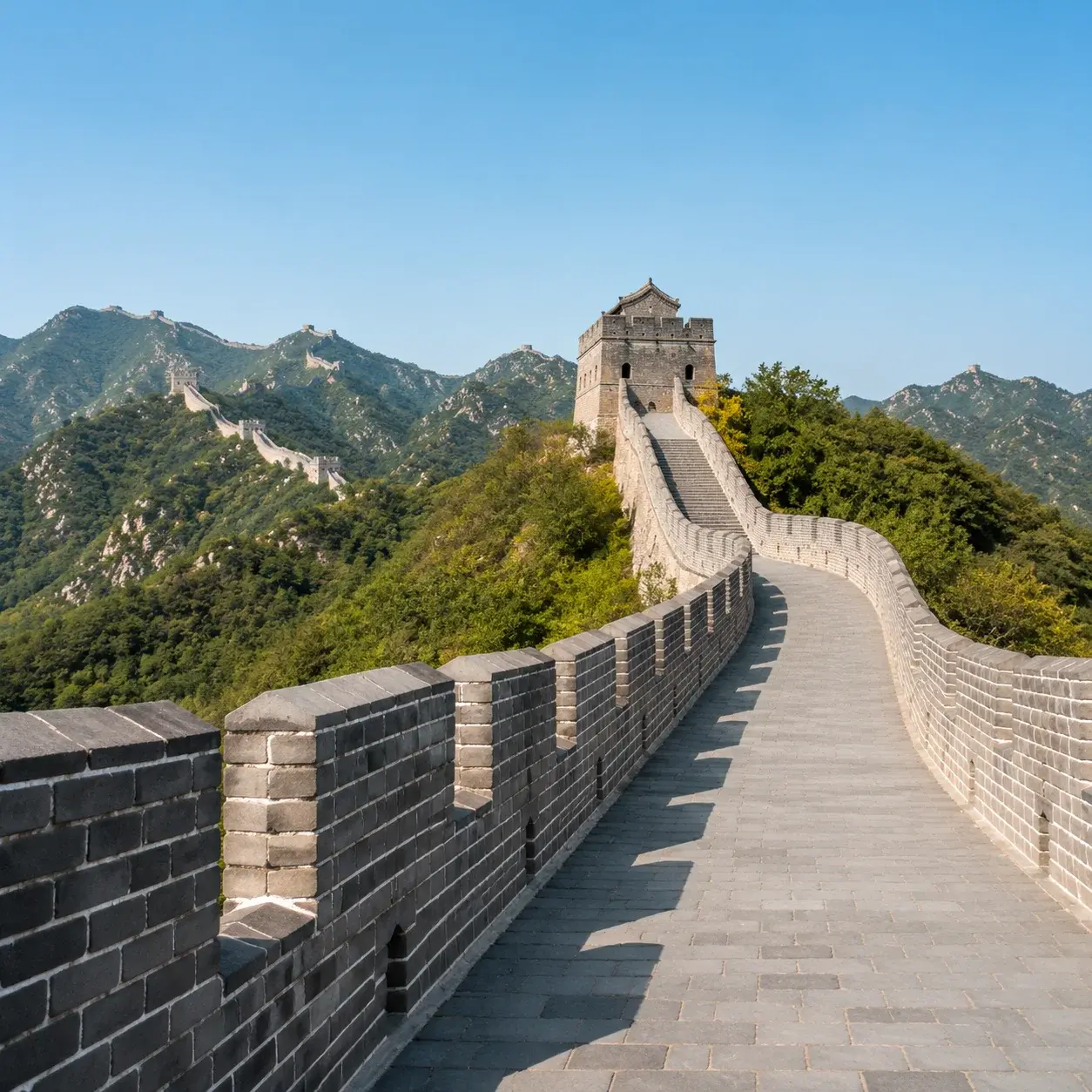
Run yourself through the Selector and the answer is usually one of four. If this is your one shot at the Wall and anyone in your group is over 65 or under 8 — Mutianyu, for the cable car. If you have no car, no tour and no Chinese phone number — Badaling, the only section with a genuine low-cost public rail-and-bus route, and you accept the crowds as the price. If you came to hike or to photograph an empty wall — Jinshanling, and you budget a full day. If you want the Wall lit at night and a second day out of the trip — Simatai with Gubei Water Town. Everything else on this page is the fine print on those four sentences.
What makes this different from a listicle is the axis. The rows are sections; the columns are the five inputs that actually change the answer — time budget, transport independence (no car, no Chinese mobile number), physical ability (the cable car is this axis's on/off switch), crowd tolerance, and why you came. A listicle asks you to read seven descriptions and do the matching yourself. The Selector does the matching.
| Section | Time from Beijing (indicative) | Transport independence (no car / no China number) | Crowd level | Difficulty and cable car | Who it suits |
|---|---|---|---|---|---|
| Badaling | Approx. 70 km and roughly 1.25 hours by car; also reachable by S2 suburban rail plus bus 877 or 919. Indicative, from chinahighlights and travelchinaguide, last verified 2026-08 | Highest of the seven — the only section with a real low-cost public route (intrepidtravel and rachelmeetschina, 2026-08) | Highest — the default coach-tour stop | Restored, easiest underfoot; cable car available | Travellers without a car who want a public-transport route; short visits |
| Mutianyu | Roughly 1.5 hours; private car or tour advised, public transport possible but multi-leg (thechinaguide, 2026-08). Intrepidtravel separately describes a drive of about 120 minutes. Both indicative | Medium — public transport is multi-leg, so most people end up in a car | Busy, but far below Badaling | Restored; cable car to Watchtower 15, described by intrepidtravel as suiting children and elderly. A cable car does not mean no stairs — the step count above it is unmeasured and we do not state one | First-timers, families with young children, travellers with seniors |
| Jinshanling | Roughly 2 hours by car or bus, one way (thehelpfulpanda, 2026-08). Indicative | Low — a car is essentially required | Very low. The published evidence for this is a first-person photograph by the travel blog thehelpfulpanda showing an empty wall; that is their proof, credited to them, not our own observation | Partly restored trending to wild; genuine hiking. Cable car status: no reliable source, left blank | Hikers and photographers |
| Simatai | No sourced figure. We are not guessing one | Low — a car is required | Moderate, and ticketed/timed. Night is a different experience entirely | Steep in parts. Cable car status: no reliable source | Night-lit Wall plus the Gubei Water Town pairing (rachelmeetschina, 2026-08); second-time visitors |
| Jiankou | No sourced figure. Described as day-trippable by thechinaguide (2026-08) | Lowest — a car, plus somebody who knows the route | Very low | Unrestored, steep and dangerous; no cable car (thechinaguide, last verified 2026-08). See the safety rule below | Experienced, equipped hikers only — read the disqualification list before anything else |
| Huanghuacheng | No sourced figure | Low — a car is required | Low | Moderate; lakeside stretches. Cable car status: no reliable source | Travellers who want the lakeside "water" Wall without a long hike |
| Gubeikou | No sourced figure | Lowest — a car is required | Very low | Wild, unrestored stretches; no cable car | Repeat visitors and wild-Wall seekers (listed among the Beijing-accessible sections by thechinaguide) |
Badaling. Pick it for exactly one reason: it is the section you can reach independently and cheaply, and the ticket regime does not fight you at the gate. Rule it out if crowds ruin a day for you — this is the busiest stretch of Wall in China and the default stop for coach tours. When you have decided, the execution detail lives on our how to actually do Badaling — the train, the gates and walk-up tickets page.
Mutianyu. Pick it because it is the gentlest restored section with a cable car, which is what makes a multi-generation group possible at all. Rule it out if you have no car and no budget for one, because the public route is a multi-leg relay that eats the morning. The ticket tiers, chairlift and toboggan questions belong on how to actually do Mutianyu — tickets, cable car and toboggan.
Jinshanling. Pick it for the emptiness and the ridgeline — this is the section that made "jinshanling great wall" a genuinely large search in its own right. Rule it out if you only have half a day, because roughly two hours each way (indicative, thehelpfulpanda) plus a real hike does not compress.
Simatai. Pick it for the night-lit Wall and the Gubei Water Town evening attached to it. Rule it out if your schedule is tight: of the seven, "simatai great wall" has the most complex ticketing regime and we have not verified how it treats a foreign passport, so we will not send a time-pressured traveller into it on trust.
Jiankou. There is no "pick it" line here. "Jiankou great wall" is a rising search and an unrestored mountain ridge at the same time. Read the rule further down before you read anything else about it.
Huanghuacheng. Pick it if you want the version of the Wall that meets water — the lakeside stretches are what "huanghuacheng great wall" is actually searched for — without committing to a wild-wall hike. Rule it out if you have no car.
Gubeikou. Pick it if you have already done a restored section and want a quiet, unrestored one without Jiankou's exposure. Rule it out on a first visit; "gubeikou great wall" is a repeat-visitor search for a reason.
One editorial position we will defend rather than soften: "Which section is best?" is the wrong question, and it is why six well-known guides give six contradicting answers. Badaling is where locals go, and Badaling is a tourist trap — both statements are true, of different readers. The Selector does not rank sections. It maps your constraints to the section you can actually walk onto.
Which Section Fits Your Group? Four Personas Through The LyrikTrip Great Wall Section Selector
Four traveller profiles cover the overwhelming majority of Great Wall day trips from Beijing, and in each one a single input dimension overrides the other four. Naming which dimension won is what makes this the Selector's output rather than a second opinion.
| If you are… | Go to | Which input dimension decided it | Deal-breaker to know |
|---|---|---|---|
| First-time visitor, one shot at the Wall, with seniors or young children | Mutianyu | #3 physical ability — the cable car overrides everything else | A cable car does not mean no stairs. There are steps above it and we have not counted them, so we do not quote a number |
| No guide, no Chinese, no car, no China mobile number | Badaling | #2 transport independence — the only section with a real public route | It is the busiest Wall in China. It is also the only section where the route and the ticket regime line up, which is why the advice holds |
| Hiker or photographer chasing an empty wall | Jinshanling — then Jiankou only if genuinely experienced | #4 crowd tolerance combined with #5 motive | Roughly 2 hours each way (indicative), a car is required, and half a day is impossible. The "empty" evidence is borrowed from thehelpfulpanda and credited to them |
| Second visit, or you want an evening out of the trip | Simatai plus Gubei Water Town | #5 motive | The most complex ticketing of the seven, and we have not verified it. Do not put this on a tight schedule until it is checked |
Walked as a decision tree, in order:
1. Is anyone in the group over 65, under 8, or unable to manage sustained steps? If yes, the answer is Mutianyu and you can stop reading the other rows. The cable car is the deciding factor, not the scenery. 2. If not — do you have a car, a driver, or a tour already booked? If no, and you also have no Chinese mobile number, the answer is Badaling. It is the only section where independence is genuinely available. 3. If you do have transport — did you come to hike or to photograph? If yes, the answer is Jinshanling and you commit a full day to it. 4. If none of the above — do you want an evening rather than a morning? If yes, Simatai with Gubei Water Town, on the caveats above. If no, you are back at row 1 or 2.
Mutianyu vs Badaling: Which One Should You Actually Pick?
Mutianyu for almost everyone — quieter, greener, gentler on kids and grandparents. Badaling wins on exactly one axis: you can reach it on a low-cost public train from Beijing, which is decisive if you have no car, no tour and no Chinese phone number. That is the whole comparison in two sentences.
The reason this is the highest-intent question in the topic is that it is not a contest of quality. It is input dimension #3 (physical ability, i.e. the cable car) colliding with input dimension #2 (transport independence). Whichever of those two constraints is harder for you is the one that decides.
| Axis | Mutianyu | Badaling |
|---|---|---|
| Crowds | Busy but manageable; far below Badaling | The busiest stretch of Wall in China; the default coach-tour stop |
| Getting there | About 1.5 hours; private car or tour advised, public transport possible but multi-leg (thechinaguide, 2026-08, indicative). Intrepidtravel describes roughly a 120-minute drive | About 70 km and roughly 1.25 hours by car; S2 suburban rail plus bus 877 or 919 (chinahighlights and travelchinaguide, 2026-08, indicative). Rachelmeetschina notes a low-cost public train reaches it |
| Terrain and stairs | Restored, well-maintained; steps above the cable-car exit, quantity unmeasured | Restored and the easiest underfoot of the seven |
| Cable car | Yes — to Watchtower 15; described by intrepidtravel as suiting children and elderly | Yes |
| How it feels standing on it | Forested ridgeline, more space per person | Wide, restored, and shared with a lot of people; intrepidtravel notes locals go here too |
Pick Badaling if: you have no car and no intention of hiring one; you have no Chinese mobile number and want the section whose walk-up channel is officially described as open; or you only have a half-day and want the shortest, most-supported logistics chain.
Both sections have their execution detail deliberately kept off this page: which Mutianyu ticket combination to buy is on how to actually do Mutianyu — tickets, cable car and toboggan, and the north-versus-south gate question plus the rail procedure are on how to actually do Badaling — the train, the gates and walk-up tickets.
How Do You Get to the Great Wall From Beijing?
There are three realistic routes: public rail and bus (Badaling only, and the cheapest), a private car or driver (any section, most flexible), or a joined group tour (usually Badaling, and often with shopping stops attached). Which one you can use is largely decided by which section the Selector gave you, not the other way round.
| Route type | Which sections it reaches | Rough journey time (indicative) | What it costs you | Best for |
|---|---|---|---|---|
| Public rail and bus | Badaling, realistically only | S2 suburban rail plus bus 877 or 919; roughly 1.25 hours by road for comparison (chinahighlights and travelchinaguide, 2026-08) | Flexibility on arrival time and comfort; queueing is part of the deal | Independent travellers with no car and no China mobile number |
| Private car or driver | All seven | Mutianyu roughly 1.5 hours; Jinshanling roughly 2 hours; other four sections have no sourced time and we do not invent one | Money, not time | Jinshanling, Simatai, Huanghuacheng, Gubeikou, Jiankou — and any group with seniors or children |
| Joined group tour | Usually Badaling; some operators run Mutianyu | Fixed by the operator's schedule, not yours | Minutes on the Wall, if shopping stops are attached | Travellers outsourcing all uncertainty on a very short trip |
By public transport — realistically, that means Badaling
Badaling is the section this works for. Published guidance from chinahighlights and travelchinaguide (last verified 2026-08) describes the S2 suburban rail line plus bus 877 or 919 as the standard route, and rachelmeetschina independently describes reaching Badaling on a low-cost public train. We describe the route; we do not describe the operational detail, because service frequencies, queue lengths, whether cash is accepted or a QR code is required, and how much worse all of it is at the weekend are things we have not measured. Those are exactly the things worth measuring, and we would rather say so than fill them in. The step-by-step is on the Badaling guide.
By private car or driver — the only comfortable way to reach the wild sections
For Jinshanling, Jiankou, Huanghuacheng and Gubeikou there is no useful public route. The important distinction, and the one operators have no reason to draw for you: for those four, what you need is a car, not necessarily a guide. There is no complex entry procedure that a guide is uniquely able to perform on your behalf. A car with a driver usually beats a full group product on both cost and time, and it will not be routed through a shop.
On a group tour — and the Ming Tombs shopping-stop trap
The Ming Tombs are very commonly sold as a same-day package with Badaling, and the cheap versions of that combination are jade-shop and tea-shop tours. Three things are wrong with it, in this order.
First, the combo steals time, not money. The discount is repaid in shopping stops, and the scarcest resource on a Great Wall day is the number of minutes you actually spend standing on the Wall. A cheaper ticket that halves your wall time is not cheaper.
Second, the two sites physically fight each other. The Ming Tombs is a walk through a tomb complex; Badaling is a climb. Done on one day, most people endure the second one rather than enjoy it.
Third, it targets the least-defended reader — first visit to China, no Chinese, sorting tour products by price. That is precisely the reader who cannot tell from the listing that three hours of the day are pre-sold.
The honest flip side: the Ming Tombs themselves are not a trap. They are a legitimate site. The trap is one specific product shape — same-day, cheap, with shopping stops attached. Book the Ming Tombs as their own day, or choose a product that puts "no shopping stops" in writing. What we cannot yet tell you is the exact composition of those cheap combos: how many stops, how long each one runs, and how many minutes are left on the Wall. That requires buying one and timing it, and until we have, we will not pretend to a number.
While you are shaping the rest of the trip, planning the rest of your days in Beijing covers what fits around a Wall day.
Do You Need a Tour, a Guide, or Neither?
If you are going to Badaling, you do not need a tour. If you are going anywhere else and do not read Chinese, you need transport — not necessarily a guide. A guide earns its money on the wild sections, and with children or grandparents in the group. That is the rule; here is the reasoning behind each branch, because a verdict without reasoning is just another opinion in a search result full of them.
| Your situation | Verdict | Why |
|---|---|---|
| Badaling, and crowds do not ruin your day | No tour needed | It is the one section with a genuine low-cost public route, and the Beijing municipal government's visitor guidance describes walk-up purchase as available. Neither the route nor the ticket regime blocks you, so a tour is buying convenience, not access |
| No China mobile number, very short trip, seniors in the group | A tour is the correct spend | Three constraints stack: the online booking channel may refuse you, your schedule has no room for a failed attempt, and a multi-leg transfer with a wrong turn is hard on older travellers. You are outsourcing uncertainty, not buying knowledge |
| Jinshanling, Huanghuacheng, Gubeikou or Jiankou | You need transport, not necessarily a guide | No usable public route, but also no complicated entry procedure requiring an intermediary. A car and driver usually beats a full group product and will not be routed through a shop |
| Cheap one-day combo, especially one including the Ming Tombs | Usually a waste | See the section above: the discount is repaid in shopping stops, out of your wall time |
This section is uncomfortable on purpose. The instinct is to soften "you do not need a tour" into "a tour can make things easier" — and we are not going to, because the one case where we do say book the tour (row two) is only credible if the refusal elsewhere is real.
What Happens When You Try to Buy a Ticket? Tickets, Passports and the Booking-Regime Column
Choosing a section is the easy half. The half nobody publishes is what happens at the booking screen with a foreign passport and a foreign phone number — and the answer is genuinely different per section. Below is the booking-regime column: four questions asked of all seven sections, with the cells we have not verified left visibly empty.
| Section | Can you walk up and buy? | Does the online channel demand a mainland mobile number? | Is there an official English channel? | Fallback when it fails |
|---|---|---|---|---|
| Badaling | Yes — the Beijing municipal government's official visitor page states no reservation is required and tickets can be bought on site (verified 2026-08). The ticket office takes cash, mobile payment and foreign cards at POS terminals, and there are bilingual one-stop service counters for purchase, exchange and ticket checking (Beijing's municipal foreign affairs office, 19 July 2024) | No, on the current official account — Beijing's municipal foreign affairs office stated on 19 July 2024 that foreign visitors can buy with a passport or permanent-resident ID card via the "Throughout the Great Wall" (长城内外) platform on WeChat, account changchengnw. This corrects what we previously published here. WeChat itself is less of a barrier than reported: its own help centre documents that an international number able to receive SMS verification codes can be used to register, with a passport as identity verification (reviewed 2026-08-13). What stays unresolved is the 长城内外 mini-programme's own document and payment fields for a foreign passport holder | Partly. The purchase channel is officially open to passports but sits inside a Chinese app; whether a completable English-language flow exists is unchecked | The on-site window, which the official guidance supports — and once bought, the ticket check accepts a passport, permanent-resident ID, paper ticket or QR code |
| Mutianyu | Not verified | Not verified | Not verified. An official English booking site is widely referred to in the trade, but we did not capture a citable address for it, so we print no URL and name no site | Not verified |
| Jinshanling | Not verified | Not verified | Not verified | Not verified |
| Simatai | Not verified. Reported as ticketed/timed entry; venues of that type frequently do not sell same-day tickets on site, but this has not been confirmed for Simatai | Not verified | Not verified | Not verified — and note that a sold-out timed slot has no fallback at all |
| Jiankou | Not verified. For an unrestored section the prior question is access status itself: whether it is open, whether tickets exist, whether it is patrolled | Not applicable / not verified | Not verified | This is a safety question before it is a ticketing question — see the rule below |
| Huanghuacheng | Not verified | Not verified | Not verified | Not verified |
| Gubeikou | Not verified | Not verified | Not verified | Not verified |
The blanks in that table are the asset, not the flaw. Competing pages do not have empty cells here because they do not have the column at all. A visible "not verified" is a stronger signal than a confident wrong answer, and nobody gets to fill one in to make the table look complete.
Where the Badaling gate actually sits — and a correction to what we said
This is the single passage on this page most likely to unblock you, so it is worth reading slowly. The Beijing municipal government's official visitor page (verified 2026-08) states that Badaling requires no reservation and that tickets can be purchased on site. Older, well-documented accounts of China's attraction-booking systems — recorded in the same 2026-08 research pass and consistent with the mechanism described in hiddenchinatravel's 2026 guide — report that the online reservation channel is gated behind a mainland Chinese mobile number, and that is what this page used to publish. A newer and more authoritative source moves the gate. Beijing's municipal foreign affairs office, in an article contributed by the Yanqing foreign affairs office and dated 19 July 2024, states that foreign visitors can buy Badaling tickets with a passport or a permanent-resident ID card through the "Throughout the Great Wall" (长城内外) platform on WeChat, account ID changchengnw.
They are still two different channels, but the gate is not where the older accounts put it. Foreigners are not shut out of Badaling's online booking. The online entrance simply lives inside WeChat, and since July 2024 it has been explicitly open to passports. The municipal source says nothing about WeChat registration, but WeChat's own help centre does: it documents that an international mobile number able to receive SMS verification codes can be used, and that a passport can serve as identity verification (reviewed 13 August 2026). What remains unverified by us is the 长城内外 mini-programme one step further in — whether its document fields accept a foreign passport and whether its checkout takes a payment method a foreign visitor holds — and we are not going to decide that from a desk. The shape of the advice survives — a foreign traveller can be blocked from an app and still walk up and buy a ticket — but "the online channel is closed to foreigners" is out of date and we are retiring it here. The mistake other pages make is treating "no reservation needed" and "you cannot book online" as a contradiction, and then publishing whichever one they found first. Ours was reading a 2024 correction a year late.
The one-line version, and the sentence worth carrying into the rest of your China trip: in China, "I can't book it" and "I can't get in" are not the same sentence. Foreign travellers see an online system reject them and conclude the day is lost. Often you have only been blocked from one channel, not from the gate. Work out which category the attraction belongs to before you panic. (Last verified 2026-08 — check again before you travel.)
And there is a third obstacle, before either channel — reported at a Beijing museum, not at the Wall. Everything above assumes the booking page loads. A traveller documenting Beijing bookings in a post dated 29 June 2026 (Xiaohongshu, read 2026-08-13) could not get the Military Museum's booking system to open at all: a Canadian network failed, and a computer failed. What worked was a domestic Chinese SIM using mobile data rather than WiFi — and even then the system repeatedly held them in a queue message, so they had to retry at another time of day. Their tested recipe was: domestic SIM, mobile data, keep refreshing, try a different time. Two limits on that, stated rather than glossed. It was the Military Museum. It was not any Great Wall section, and we are not moving a failure onto venues where nobody observed it. But it independently matches a separate traveller at the Forbidden City (12 August 2026), who advised mobile data rather than WiFi because on WiFi the ticket-quantity selector may not render at all. Two unrelated travellers, two different venues, the same advice — that is a pattern worth trying if a Chinese booking page will not load for you, and no more than that.
A pattern worth checking: the counter is where the card works
Three data points now point the same way, and they are no longer all in one city. At the Forbidden City in Beijing, we photographed a "WE ACCEPT" board at the ticket window carrying Visa and Mastercard, in August 2026. At Badaling, Beijing's municipal foreign affairs office stated on 19 July 2024 that the ticket office accepts cash, mobile payment and foreign cards at POS terminals, with a growing number of merchants inside the scenic area installing POS terminals that take foreign cards as well. And at the Chengdu panda base, a Sichuan provincial notice of April 2024 states that the on-site remainder window — open only while tickets are left — sells using cash and domestic or foreign bank cards only. One of the three is our own photograph; the other two are official statements.
Pairing it with a palace day? Our Forbidden City map and walking route has the twelve-stop walk and the seven-day booking window.
The pattern they suggest: the physical counter is repeatedly the place where a foreign card works, while the app routes are where people stall. That is the inverse of the assumption most travellers arrive with, and it is worth two minutes at a window before concluding that somewhere cannot take your money.
Read the size of that claim carefully, because we are not going to inflate it. Three attractions, two cities, and two of the three sourced to a government body or an official notice. That is a pattern worth checking, not a national rule. We have not checked Mutianyu, and we have not checked anything in Xi'an or Shanghai — so do not travel on the assumption that a counter elsewhere behaves the same way. Carry cash regardless, and note what the evidence actually is: one photograph of a sign and two published official statements read on 13 August 2026, not a card we have put through a terminal at any of the three.
One clause of corroboration from the opposite direction, because otherwise this reads as a cheerful hack. A traveller posting on 15 July 2026 (Xiaohongshu, read 2026-08-13) complains that at Chinese museums and science centres foreign passport holders are directed to buy at the counter while mainland ID holders can only book online, and reports being told that foreign visitors count as a "special category". Their tone is frustration, not gratitude — they experienced it as second-class treatment. That is one traveller's account and not a statement of policy, but it fits the same structure seen from the other side: the counter works for foreigners partly because the system routes them there, and not everyone experiences that routing as a favour.
The mechanisms behind all of this — attributed honestly
The following are documented rulings and reported practices for the Forbidden City and the Summer Palace, not for the Great Wall. They describe one national system as it has been officially explained at other Beijing attractions. Whether each applies at any Wall section is unverified, and we are not going to imply otherwise.
- Check what a site will accept as payment before you invest time in registering. Travellers are told to worry about the mainland phone number, and at the Forbidden City the phone number is not the blocker. A China Daily government-channel question-and-answer published in August 2025 states that registration on the official site takes an email address and a passport number, with no phone number required — while the accepted payment methods are Alipay, WeChat Pay or a Chinese bank card, with international cards not on the list. The wall is at the checkout, not the sign-up form. That is verified for the Forbidden City only; the reading rule it yields is safe to apply anywhere, including at a Wall section.
- Real-name ticketing is the root of the whole chain. Tickets are tied to the passport used to book, and the name on the order must match the passport exactly, including the order of given names. Sources: trip.com's travel guidance and mychina.guide, last verified 2026-08.
- The passport itself is often the entry token. At the Forbidden City, mychina.guide reports that staff scan the passport against the order at the Meridian Gate, with no QR code needed. Whether Wall sections admit on a passport scan is unverified.
- A staff-assisted booking window is the standard official fallback. In a 2025 response, the Beijing 12345 public service hotline advised that at the Summer Palace a foreign visitor can buy through "staff-assisted reservation" at a park service window using a passport or foreign permanent residence permit (Summer Palace hotline +86 10 62881144, English service 08:30–17:00). For the Forbidden City, the same hotline advised booking on the official site's English version with a passport and using the manual verification lane at the Meridian Gate on the day, carrying the original document used to book (English service line 400-950-1925, 08:00–20:00). Recorded 2026-08.
- Ticket-release windows differ per attraction and never transfer between them. The Forbidden City releases tickets seven days ahead at 20:00 Beijing time with a daily cap of roughly 40,000, no same-day sales and one ticket per passport per day; the National Museum releases seven days ahead at 17:00. A widely circulated figure of roughly 15 days for Mutianyu comes from a May 2026 video walkthrough, not an official source, and we label it as such rather than repeating it as a rule.
- Foreign-document rejection is usually policy, not a bug. Passport numbers are structured differently from mainland ID numbers; some platforms added a passport option and many did not. Hiddenchinatravel's 2026 guide describes this as deliberate — crowd control, visitor tracking and anti-scalping — which is worth knowing, because it means retrying will not help.
- Do not accept a blanket "just use an OTA." Trip.com and Klook accept foreign phone numbers, foreign cards and English interfaces, but they cannot book every attraction, and the Forbidden City's own guidance warns that it has no third-party ticket sellers. The official side does not even agree with itself on this: the same China Daily government-channel question-and-answer of August 2025 recommends Trip.com and Klook to English speakers, precisely because they take international cards. Our reading is that an OTA is booking assistance rather than a guaranteed ticket — do not pay a large premium, and treat any seller guaranteeing a sold-out date as that fraud warning in action. Per attraction, not per platform, and never a blanket rule in either direction.
- As of 2026-08, sources indicate that international Visa and Mastercard can now be linked directly to Alipay and WeChat Pay, and that Beijing has launched a one-stop "GO BEIJING" platform offering 16 languages and 39 functions including attraction reservations (chinaguide101, chinasurvivalkit and gobeijingtravel, 2026). We report these as reported, not as tested. Read that hedge alongside the government-published payment list above rather than as the same claim: the August 2025 Q&A does not include international cards among the methods the Forbidden City's own site accepts. A card you have managed to link into a Chinese wallet and a checkout that takes a foreign card are two different things.
- No-shows have a cost. Accumulated no-shows are reported to trigger a 30-day booking ban at stricter venues (chinaguide101, unverified). If you book, go — or cancel at least 24 hours ahead.
Deliberately absent from this page: no ticket price and no opening hour for any section. Not one number. Those belong on the section guides, where they can be checked against a single gate rather than averaged across seven. The real-name system itself is explained end to end, with the passport procedure, in booking the Forbidden City with a passport — that page carries the photographed ticket-window evidence and the full route finder for getting in without a mainland payment method.
When Should You Go? The Three Clocks — Year, Then Week, Then Hour
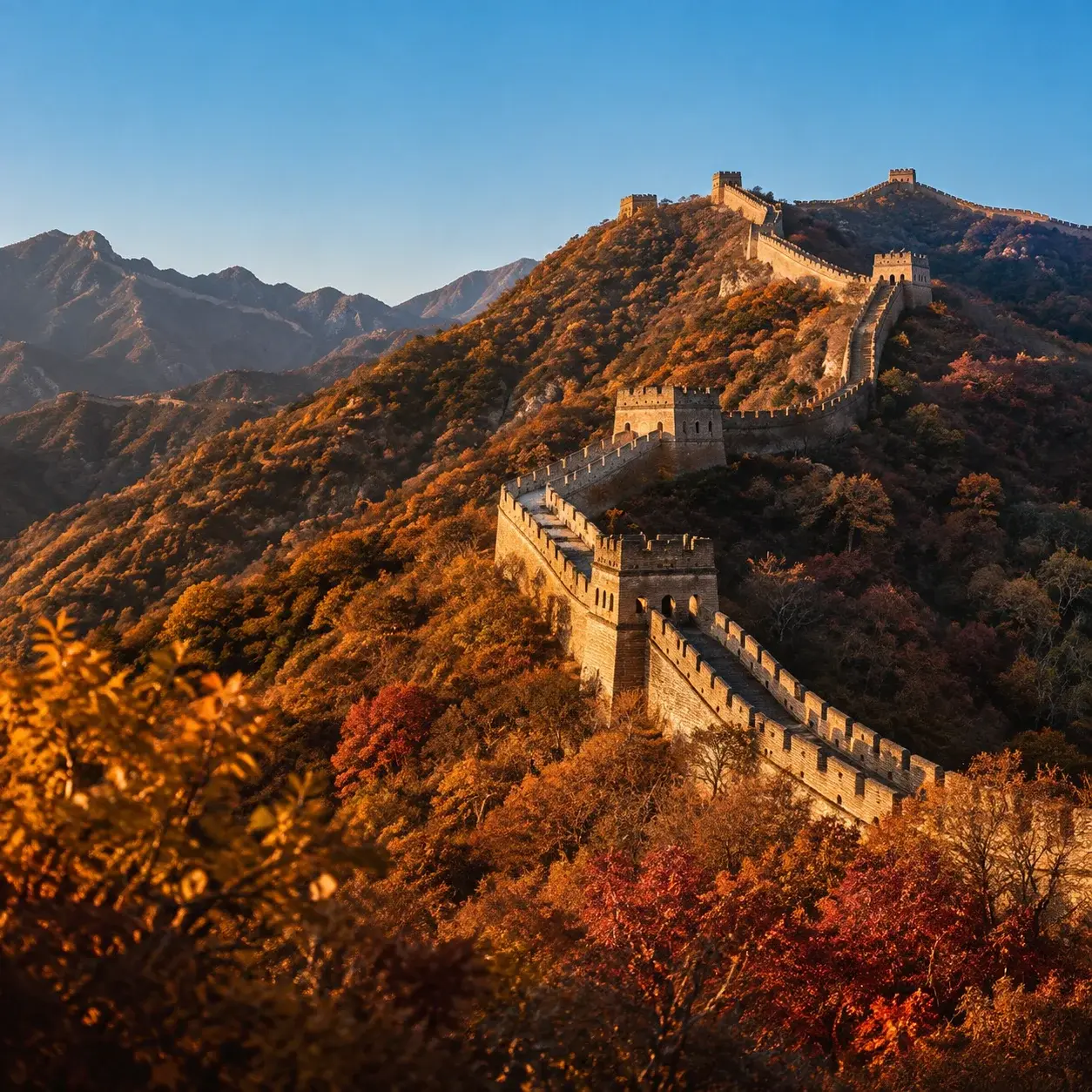
Set three clocks, in this order: the year clock decides whether you can usefully come this week at all, the week clock decides which day, and the hour clock decides what time. Get the year wrong and no amount of getting up early rescues it. Get the week wrong and getting up early takes you to a closed gate. "Go early" is not a framework; it is the answer everyone else gives.
| Clock | Decides | Cost of getting it wrong | Can it be rescued? |
|---|---|---|---|
| One · Year | Whether this week is usable at all | National holiday crowds; Badaling is named first among the worst-hit sites | No — arriving early does not help |
| Two · Week | Which day of that week | Landing on a closure day or a partial-closure day | Yes, if you know in advance |
| Three · Hour | What time that day | Colliding with the 10:00–14:00 peak | Most actionable — but only pays off once the first two are set |
Clock one — the year
These are the 2026 dates. Chinese public holidays follow the lunar calendar and move every year — verify the dates for your own travel year before you plan around them.
| Holiday | 2026 dates | Intensity | What to do about the Wall |
|---|---|---|---|
| Spring Festival | 15–23 February 2026 | Highest | Avoid entirely unless you have come specifically for the New Year atmosphere |
| Qingming | 4–6 April 2026 | Manageable | Part of the spring golden window, where domestic travel and the international low season overlap; flower-viewing sites are the crowded ones |
| Labour Day | 1–5 May 2026 | High | Reported to exceed 100 million domestic trips; Golden Week in character, slightly lower in intensity |
| Mid-Autumn | 25–27 September 2026 | Medium-high | Parks and waterfront sites are worst in the evening |
| National Day Golden Week | 1–7 October 2026 | Highest | Nationwide saturation and price spikes |
| School summer holiday | 1 July – 31 August 2026 | Sustained high | Family and student travel accounts for roughly a fifth of the annual total; early June and late August ease noticeably |
Sources: holiday dates from trip.com's 2026 calendar; summer holiday dates from beevago, which attributes them to national education authorities; visitor-volume figures from chinadiscovery. All indicative, last verified 2026-08.
Here is the point most guides avoid: timed-entry booking helps, but it does not solve Golden Week — it relocates the queue from the turnstile to the ticket-release page. That analysis comes from dionfest (2026-08), and in its list of the worst-affected sites, Badaling Great Wall is named first, ahead of West Lake in Hangzhou and the Terracotta Army in Xi'an. So "I am going to Badaling during Golden Week but I booked ahead" is not a plan.
And this is not a "don't come" section. Plenty of people can only travel in those weeks. If that is you: switch to the two lowest-crowd rows of the Selector (Jinshanling and Gubeikou), avoid 10:00–14:00 completely, and be at the release page the instant tickets drop rather than an hour later.
Clock two — the week
In China, picking a quiet-looking day often means picking a closure day. This is the counter-intuitive one, and it catches foreign visitors specifically, because Western museum conventions do not map onto Chinese ones. The Palace Museum closes on Mondays except public holidays. The Summer Palace is subtler and worse: parts of it close on Mondays — Suzhou Street, the Garden of Virtue and Harmony, the Tower of Buddhist Incense — while the park itself stays open, so a Monday combined ticket buys roughly half of what you paid for (hittheroadket, last verified 2026-08). Weekends stack domestic crowds on top of everything else, which leaves Tuesday to Thursday as the real trough at most attractions.
What this means for the Great Wall specifically: we do not know. Whether any section has a Monday closure, or a scheduled cable-car maintenance day, is something no source we checked states. The mechanism is real and worth being aware of; its application to the Wall is unverified, and we stop there rather than reasoning our way to an answer.
Clock three — the hour
The only hour-of-day rule we can responsibly apply to the Wall is the general one: during national holidays, avoid 10:00–14:00 (notesfromchina, 2026-08). The precise windows that exist in this research — the panda base before 10:00, Pit 1 of the Terracotta Army before 09:30, the Temple of Heaven before the morning exercisers disperse, the Bund at golden and blue hour — belong to those attractions and may not be transplanted onto the Great Wall. They were measured somewhere else.
There is a specific reason "go early" underperforms at the Wall in particular: the crowd there is not organic arrival, it is coach dispatch scheduling. What determines whether a section is full at 09:40 is when the tour fleet leaves central Beijing and when it converges at the gate — not when individuals wake up. Measuring the real empty window per section, by day of week and hour and season, is the single most valuable thing nobody in this search result has done, and it is not something we will estimate from a desk.
Should You Hike the Wild Wall — Jinshanling, Jiankou and Gubeikou?
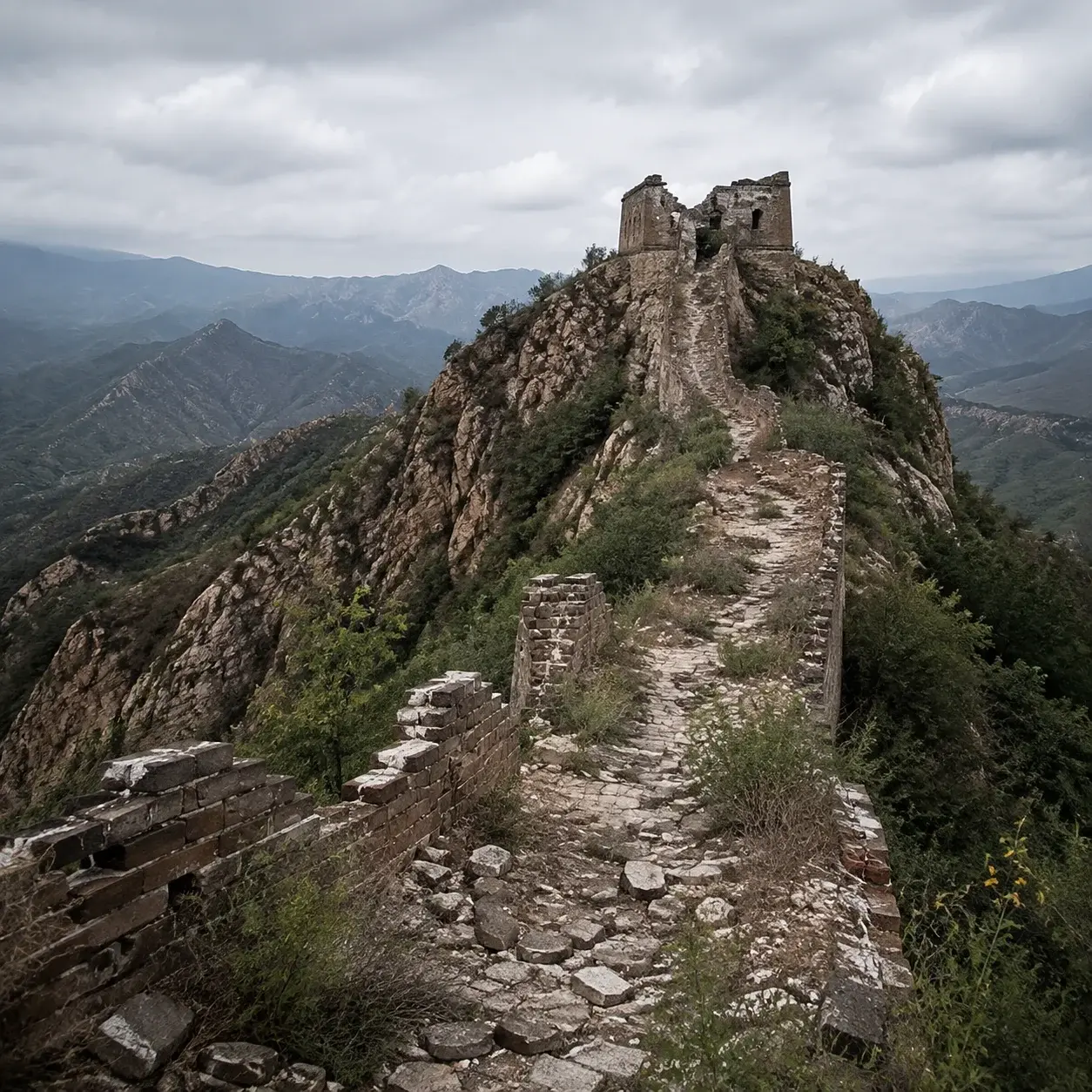
Jinshanling is the wild-wall section most people actually want: real hiking, real emptiness, and partly restored footing. Gubeikou is quieter and rougher. Jiankou is unrestored and is a different category of decision altogether. Treat this section as three answers, not one.
Jinshanling is the controlled version of "wild." It runs from restored stretches into genuinely rough ones, it takes roughly two hours each way from Beijing (indicative, thehelpfulpanda, 2026-08), and it needs a car and a full day. Its reputation for emptiness rests on a first-person photograph published by the travel blog thehelpfulpanda showing a completely empty wall — their evidence, credited to them. We have not photographed it ourselves and we are not going to describe their experience as our observation.
Gubeikou is for people who have already stood on a restored section and want quiet unrestored wall without Jiankou's exposure. Thechinaguide lists it among the Beijing-accessible sections; beyond that, we have no sourced travel time and do not invent one.
Simatai sits at the edge of this group and belongs to it only partly — it is a steeper section with a night-lighting experience and the Gubei Water Town pairing (rachelmeetschina), which makes it an evening decision rather than a hiking one.
The Jiankou rule
This is a safety matter, not a preference, and it is written as a disqualification list on purpose.
Do not go to Jiankou if any of the following is true of your group: it is your first visit to the Great Wall · anyone is a child · anyone has limited mobility, a heart condition, or a fear of exposed heights · nobody in the group has hiked unrestored terrain before · you have no one with you who knows the route · the weather is wet, icy, or about to turn · you would be arriving late enough that you could still be on the wall at dusk.
Jiankou is unrestored. There is no cable car, no restored footing and no handrail (thechinaguide, last verified 2026-08). A restored section forgives a mistake. An unrestored one does not.
If you have read that list and still want it, what we offer is a downgrade path, not a route: do Jinshanling first. It is the transitional form — partly restored, trending wild — and it lets you find out under controlled conditions what "wild" actually means underfoot. Someone who finishes Jinshanling and finds it too tame is a candidate for Jiankou. Jiankou is not a self-guided destination; it needs someone with you who knows the way.
We are under-writing Jiankou deliberately. Demand for it is rising fast and the rest of this search result is racing to add wild-wall content; we are going the other way and publishing the rule while withholding the route. Its current access status — which stretches are closed, whether there are patrols and penalties, where people usually go up — is unverified, and until it is, no trailhead name and no route description appears on this page. If an article ever gets someone hurt, it will be the one with detailed directions and a light touch on risk.
What Else Do Travellers Ask About the Great Wall From Beijing?
Which Great Wall section is the least crowded? Jinshanling and Gubeikou are the two lowest-crowd rows in the Selector, and Jinshanling has published photographic evidence behind it (thehelpfulpanda, credited). But emptiness is set by the three clocks more than by the name: the wrong week beats the right section every time.
Can you visit the Great Wall without a tour? Yes. If you are going to Badaling, you do not need a tour — there is a public rail-and-bus route and walk-up ticket purchase is officially described as available. If you are going anywhere else and do not read Chinese, what you need is transport, not necessarily a guide.
Do I need a Chinese phone number to book Great Wall tickets? At Badaling, the current official account says no: Beijing's municipal foreign affairs office stated on 19 July 2024 that a passport or permanent-resident ID card buys a ticket on the 长城内外 WeChat platform. WeChat registration is not the barrier it is usually reported to be: WeChat's own help centre documents that an international number able to receive SMS verification codes can be used, with a passport as identity verification (reviewed 2026-08-13). What is unresolved is the 长城内外 mini-programme itself — its document and payment fields for a foreign passport holder — and we have not tested it. For the walk-up channel at Badaling, no phone number is involved at all. For the other six sections we have not verified either channel and will not guess on your behalf.
Can I just turn up and buy a ticket on the day? At Badaling, the Beijing municipal government's visitor page (verified 2026-08) says no reservation is required and tickets are sold on site. For the other six sections this is unverified. Timed-entry venues in general often do not sell same-day tickets at the gate.
What time does the Great Wall open and close? Opening hours differ by section, by season and sometimes by facility — the cable car and the wall itself can close at different times. This page publishes no hours for any section on purpose; check the individual section guide and the operator's current notice before you travel.
How much does it cost to visit the Great Wall? It varies by section, and one section can have five different prices because entry, shuttle, cable car, chairlift, toboggan and combination tickets are separate products. We publish no figure here rather than an averaged one. The section guides carry pricing once verified.
Is Jiankou Great Wall safe? Jiankou is unrestored: no cable car, no restored footing, no handrail (thechinaguide, 2026-08). Do not go on a first visit, with children, with limited mobility or heart conditions, without unrestored-terrain experience, without someone who knows the route, or in poor weather.
How do I get to the Great Wall of China from Beijing? Three routes: S2 suburban rail plus bus 877 or 919 to Badaling (indicative, chinahighlights and travelchinaguide, 2026-08); a private car or driver, which is the only practical option for the five quieter sections; or a joined group tour, usually to Badaling and often with shopping stops attached.
Can I do the Great Wall as a day trip from Beijing? Yes, for every section. Badaling and Mutianyu are comfortable half-day-to-full-day trips at roughly 1.25 and 1.5 hours each way (indicative). Jinshanling needs a committed full day at roughly two hours each way. Jiankou is day-trippable per thechinaguide but is an experience-gated decision.
So Which Section Should You Book?
Four outcomes, one of which is yours. Seniors or young children in the group, one shot at it — Mutianyu, for the cable car. No car, no tour, no Chinese phone number — Badaling, and accept the crowds. Here to hike or to photograph an empty wall — Jinshanling, with a full day committed. Here for the Wall at night with an evening attached — Simatai and Gubei Water Town.
Three things to carry with you regardless of which row you landed on. The cheap same-day Ming Tombs combination costs you wall time, not money. The booking wall is a channel problem, not a gate problem — being refused online does not mean being refused entry. And Jiankou's rule is a disqualification list, not a difficulty rating.
Once the Selector has given you a section, the rest is logistics: we arrange private, English-speaking transport around Beijing and can build a day around whichever section came out, with no shopping stops and no obligation to take a guide you do not need. If you want the ground-level detail first, go to how to actually do Mutianyu — tickets, cable car and toboggan or how to actually do Badaling — the train, the gates and walk-up tickets, and fit the rest of the trip together with planning the rest of your days in Beijing.
Everything dated on this page was last verified 2026-08. Prices, hours, schedules and booking rules in China change without much notice — check the current position before you travel.