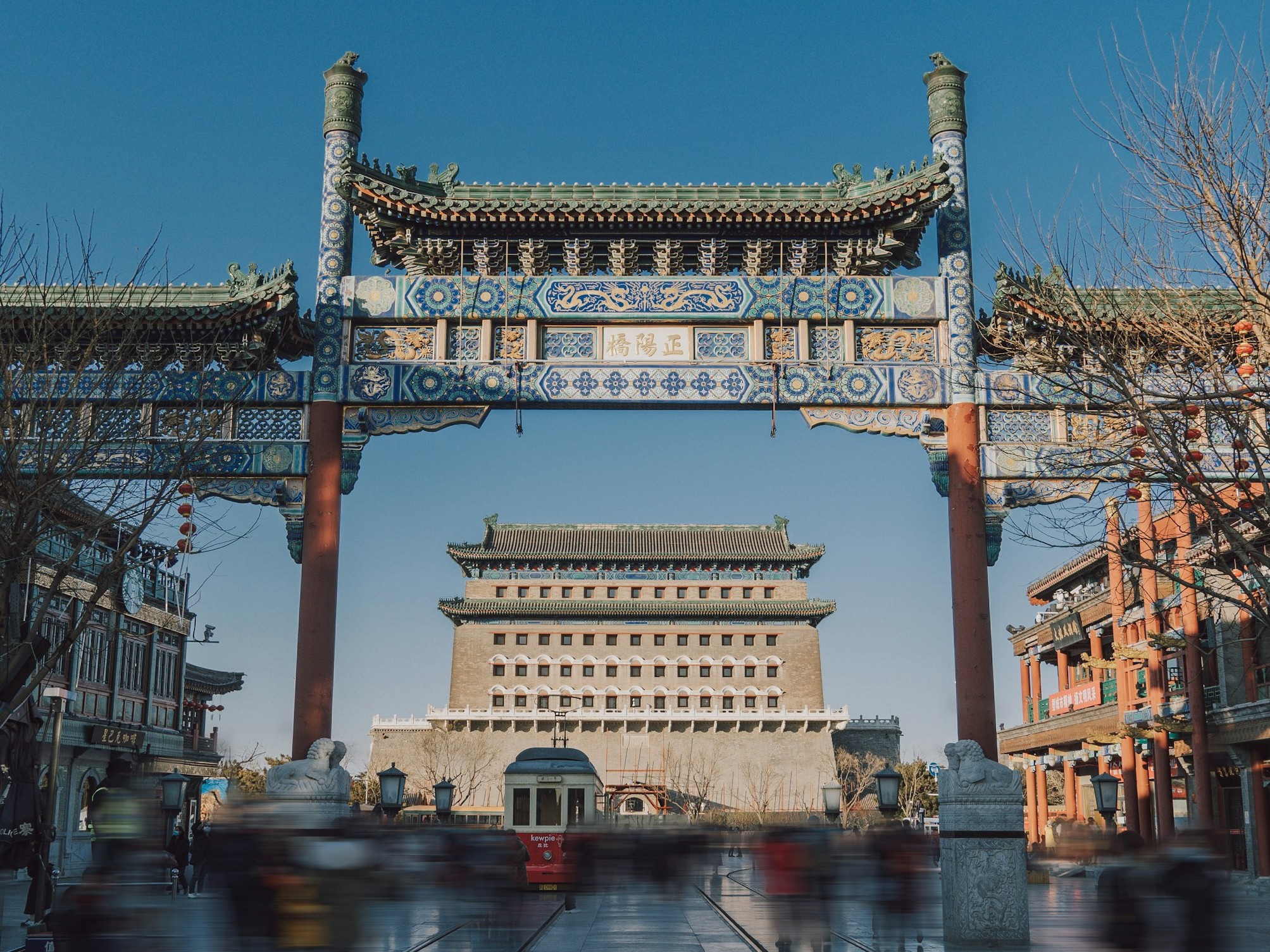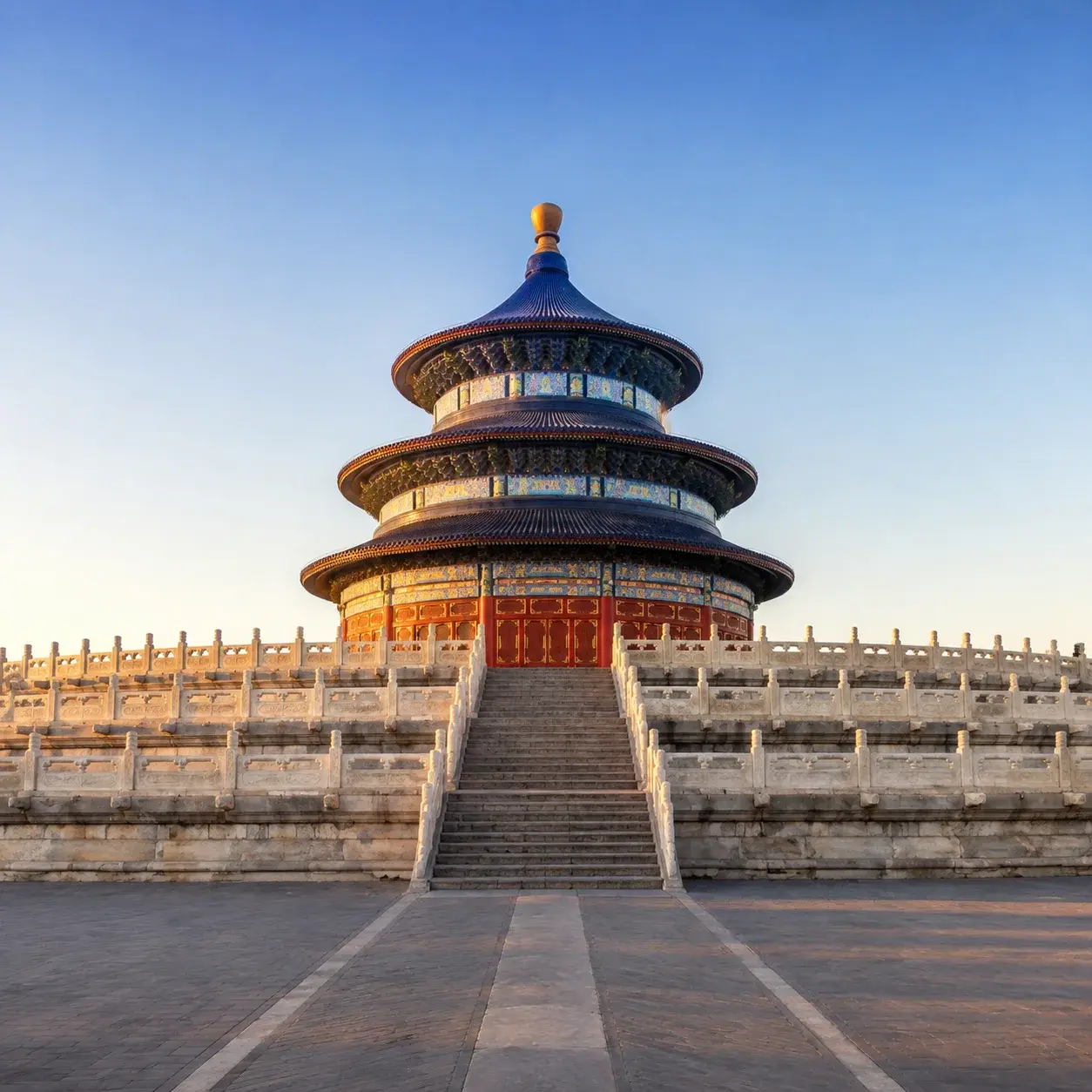





Forbidden City Tickets: How Do You Book the Palace Museum in Beijing (2026)?
Book Forbidden City tickets on the official Palace Museum site, `bookingticket.dpm.org.cn`, seven days ahead at 20:00 Beijing time, using the passport you will carry on the day. There are no same-day online sales and no legitimate third-party sellers. In China, booking ahead is not a time-saving tip — it is a condition of entry.
That last sentence is the whole page. Most guides file "book in advance" next to "arrive early to beat the crowds", as though the two were the same kind of advice. For someone travelling on a foreign passport they are not. Nationwide real-name ticketing means the ticket is your passport; the daily visitor cap is reported at around 40,000; there are no same-day online sales; and the booking window opens exactly seven days out at 20:00. Stack those four rules together and "we'll sort it out when we get there" stops being an option. Treat the reservation as a second piece of paperwork after the visa.
At LyrikTrip we plan inbound China trips for travellers arriving on foreign passports, and the Palace Museum is the single most common place an otherwise careful Beijing plan falls apart — not at the gate, but a week earlier, at a booking form that quietly refuses a passport number. This page is written to prevent that: which booking route will actually work for you, what to do when it fails, and what to walk once you are inside.
Everything below carries a source name and a `Last verified: 2026-08` stamp. Prices, opening hours, quotas and release rules in China change without notice — confirm on the official site before you travel.
Key Takeaways
- The Forbidden City and the Palace Museum are the same place. The official name is the Palace Museum (故宫博物院), and that is the name the booking system, the signage and the hotline all use.
- The official English-language site is the route to try first. As of 2026-08 it is the only online channel reported to work without a mainland Chinese phone number, and that answer has municipal-government backing (Beijing 12345 hotline, 2025-06).
- The real gate is a Chinese phone number, not language or money. The WeChat mini-program route commonly blocks foreign visitors at registration. That is policy, not a bug you can retry your way past.
- Tickets release seven days ahead at 20:00 Beijing time, indicatively CNY 60 in peak season and CNY 40 off-peak, one ticket per passport per day, with no same-day online sales (sources: mychina.guide, chinadiscovery, thechinaguide, 2026-08).
- One entrance, two exits, and a time slot you can miss. The museum's own visitor regulations (故宫博物院参观须知, published on `dpm.org.cn`, read 2026-08-13) state that the Meridian Gate (午门) is the only entrance, that you leave by the Gate of Divine Prowess (神武门) or the East Prosperity Gate (东华门), and that each day is split into a morning and an afternoon session: a morning ticket must be checked in by 12:00, and an afternoon ticket cannot be checked in before 11:00.
- If you cannot go, cancel before midnight the night before. Cancelling by 24:00 the day before carries no penalty; cancelling later — or simply not turning up — records one no-show, and three no-shows within 180 days trigger a 60-day booking ban. Same official regulations, read 2026-08-13.
- The release is forty-five minutes long, not a moment. Stock trickles back roughly every five minutes until about 20:30, and is effectively gone by 20:45. When the confirm button says sold out, do not refresh — keep pressing confirm. That one habit is what gets people in. We tested this over several evenings in peak season, August 2026. A traveller reports a longer tail than ours — a large batch at 20:50 (Xiaohongshu, 12 August 2026) — so whichever holds on your night, do not leave at 20:30 and do not leave the booking flow at all.
- Sold out is not the same as locked out — but get there early and do not build a peak-season trip on it. We watched the Meridian Gate service window sell same-day tickets to walk-ups holding a passport, under a sign saying it does not. It is a queue for leftover stock, so early arrival is the whole game. The seasonal limit — that in high season there is usually nothing left at any hour — is reported to us rather than something we tested. See the recovery ladder below.
- Three hours on the central axis covers everything famous, and the best photograph of the roofs is taken from Jingshan Park, outside the north gate.
What Is the Palace Museum, and Is It the Same Place as the Forbidden City?
Yes — they are one site with two names. "Forbidden City" is the historical name for the imperial palace complex; Palace Museum Beijing is the institution that runs it today, and it is the name printed on your booking, on the gates, and on the official domain. If you search only for the Forbidden City you will miss half the practical information written about the place, because the booking system, the hotline and the signage all say Palace Museum.
Once you have your ticket, our Forbidden City map and walking route numbers the twelve stops along the central axis and marks where to rest.
The complex sits at the exact centre of Beijing, on the north side of Tiananmen Square. It was built in the early fifteenth century under the Ming dynasty and served as the imperial court for roughly five centuries, through the Ming and Qing, until the last emperor left in the 1920s. Published figures commonly cite around 72 hectares of walled ground and some 980 surviving buildings, which makes it, by most counts, the largest surviving palace complex in the world. It became a public museum in 1925 and is one of Beijing's UNESCO World Heritage sites.
What matters for planning is the shape rather than the statistics. The palace is a single long rectangle laid out on a north-south line, surrounded by a wall and a moat, with one visitor entrance at the south and its exits at the north and east. The visit is one-way, and the museum's own visitor regulations say so in as many words: the Meridian Gate (午门) is the only entrance, and visitors leave by the Gate of Divine Prowess (神武门) at the north or the East Prosperity Gate (东华门) on the eastern flank (Palace Museum visitor regulations, read 2026-08-13). You enter in the south, walk north through the ceremonial outer court and the residential inner court, and leave at the top — or, if the East Prosperity Gate suits your onward plans better, out to the east. You cannot re-enter on the same ticket, and you cannot walk back to where you started without leaving the complex and going round the outside. That single fact governs every decision on this page: where you eat, where you leave your luggage, which gate your taxi meets you at, and whether Jingshan Park is a detour or the natural next stop.
Two practical consequences follow. First, plan the exit before you start — the north gate is roughly a kilometre from the south gate and the walk out is not optional. Second, anything you want to see that sits off the central axis, such as the Treasure Gallery or the Clock Museum, has to be woven into the northward walk, not saved for the end.
How Do You Actually Book Forbidden City Tickets? The LyrikTrip China Ticket Route Finder
Book at the official Palace Museum site `bookingticket.dpm.org.cn`, which has an English version and accepts a passport — the Beijing 12345 government hotline confirmed in June 2025 that foreign visitors can use it and then enter through the manual ticket-checking channel at the Meridian Gate (午门). Tickets release seven days ahead at 20:00 Beijing time, there are no same-day online sales, and there is no legitimate third-party seller.
Every other guide describes one booking channel as though it were the way in. That is not the reader's question. The reader's question is: which of these will work for me, given what I actually have in my hand — a mainland phone number or not, a foreign card that pays or not, days left before the release window, in China already or still at home. The Route Finder below is keyed to those inputs rather than to the attraction.
The real gate is the mainland Chinese phone number. Not language, not the passport, not money. Competitors write the problem as a language barrier, so readers install an app, stall at the registration screen, and assume they did something wrong. They didn't — that route was never designed for them.
Which route should you try first?
``` START — Does this attraction have an English-language official booking site?
├─ YES (the Forbidden City does: bookingticket.dpm.org.cn) │ └─ How many days until your visit? │ ├─ 7 or more days → Route A: official English site (default; the only │ │ online route that does not need a Chinese phone number) │ │ └─ foreign card declined? → Route B: Alipay │ │ → still failing? → Route D: on-site window │ ├─ exactly 7 days → be logged in for tonight's 20:00 Beijing-time release │ └─ fewer than 7 days → already sold out online → go to the │ Sold-Out Recovery Ladder below │ └─ NO (most other attractions: Summer Palace, Temple of Heaven, Zhongshan Park) └─ Do you have a mainland Chinese phone number? ← the real gate ├─ YES → Route B (Alipay) or Route C (WeChat) — widest coverage └─ NO → can your Alipay/WeChat actually complete payment on a foreign card? ├─ YES → Route B first; if the form silently refuses your │ passport number, stop and go to Route D └─ NO → already in China? → Route D: on-site staff-assisted window still at home? → Route E: OTA, attraction by attraction (CLOSED for the Forbidden City — officially no third-party sales) ```
The five booking routes compared
| Booking route | Works without a mainland Chinese phone number? | Works with a foreign card? | English interface? | What to do when it fails |
|---|---|---|---|---|
| A. Official site — `bookingticket.dpm.org.cn` (default) | Yes. You create the account with an email address and your passport number — no phone number involved. Beijing's 12345 hotline (2025-06) and a China Daily government Q&A (August 2025) both say so | ⚠️ Only through a Chinese payment app. The published methods are Alipay, WeChat Pay or a Chinese bank card; an international card is not among them. We paid here successfully with WeChat Pay in August 2026 and have not tested a foreign card. The wall is at payment, not registration | Yes — an English version exists | Enter via the manual ticket-checking channel at the Meridian Gate (午门) with the original passport you booked with. English service line 400-950-1925, 08:00–20:00 |
| B. Alipay mini-program | Partly — wider coverage than WeChat, but the same registration reality | Reported to be improving; see the 2026 note below | No — usually Chinese, with browser translation | Set document type to "Passport / 护照". If the field will not accept your number, stop and use the on-site window |
| C. WeChat mini-program (search 故宫 → 购票约展) | No. This route requires WeChat registration and a bound bank card, and a mainland number is the common blocker. The official site does not require one | Card binding is the usual failure point | No — largely Chinese | Fall back to the official site, or to the on-site window. Note the awkwardness: this is the channel the museum's own visitor regulations name as its official booking route (the "故宫博物院" mini-programme, read 2026-08-13), which is precisely why so many foreign visitors start here and stall |
| D. On-site window at the Meridian Gate | Yes — passport in hand, no app, no phone number | Yes, and this is the single most useful thing we found. The counter displays a "WE ACCEPT" board carrying Visa and Mastercard alongside UnionPay, WeChat Pay and Alipay, and it takes cash. We photographed it in August 2026 | Partly — counter staff, limited English | This is the fallback, and the only route where a foreign card is openly advertised. See the recovery ladder below |
| E. Third-party / OTA (Trip.com, Klook) | Yes — they accept foreign numbers and cards | Yes, and a China Daily government Q&A (August 2025) explicitly recommends them to English-speaking visitors precisely because they take international cards | Yes | ⚠️ Two official-side sources disagree here, and we are not going to pretend otherwise. The museum says it has no third-party sales channel and warns of fraud (relayed by chinadiscovery, 2026-08); the China Daily Q&A names Trip.com and Klook as a route for English users. We can now put the museum's half of that in its own words rather than a relayed one: its published visitor regulations, read 2026-08-13, state that it has authorised no third-party ticket agents at all, and direct visitors to the official "故宫博物院" mini-programme. That makes the disagreement first-party on both sides and sharper, not softer — one government-backed answer sends English speakers to the OTAs, the museum's own rules send everyone to a mini-programme most foreign visitors cannot register for. Our reading: treat an OTA as a booking-assistance service rather than a guaranteed ticket, never pay a large premium, and if a site guarantees a sold-out date, that is the fraud warning in action |
Three read-outs from that table:
- Try the official English site first — but know where it will stop you. Registration is the easy part: an email address and a passport number, no phone number, and that answer carries both municipal-government and China Daily backing rather than blog hearsay. The wall is at payment. The published methods are Alipay, WeChat Pay or a Chinese bank card — we completed a booking here with WeChat Pay in August 2026, and we have not tested a foreign card. So a traveller holding only an overseas Visa can create the account, choose the date, and then find there is no way to pay. Get a Chinese payment app working before you leave home and this route works; arrive without one and you are choosing between an OTA and the counter.
- The official website is the foreigner's channel, not merely one option among several. Chinese residents buy first-party tickets through the WeChat mini-program instead — that part is our own experience, described in the release section below. The museum's own regulations now put a document split in writing, even though they do not phrase it as a channel split: mainland Chinese visitors may book only with a mainland ID card, while everyone else books with a Hong Kong or Macau travel permit, a Taiwan travel permit, a HK/Macau/Taiwan residence permit, a foreigner's permanent-residence ID, or a passport, one ticket per document per visiting day (read 2026-08-13). Two people in your group holding different kinds of document are, officially, two different booking cases. If your group mixes foreign passports and Chinese residents, you are not all booking from the same screen — do not assume one person can book for everyone.
- The only place a foreign card is openly advertised is the physical window. We photographed a "WE ACCEPT" board there carrying Visa and Mastercard. That is a strange inversion of what travellers expect — the app-based routes are the ones that reject you, and the old-fashioned counter is the one set up for foreigners.
- If a form rejects your passport number with no error message at all, that is the known foreign-document failure. Passport numbers are structured differently from Chinese ID numbers; some platforms added a passport option and many did not. Sources including hiddenchinatravel (2026) describe this as deliberate policy — crowd control, visitor tracking and anti-scalping — not a bug you can fix by retrying. Change route instead of repeating the attempt.
- If every online route fails, you are not locked out. Read the recovery ladder in the next section.
What exactly did the government say?
This is the single most useful fact on the page, and it is buried in a municipal FAQ almost nobody finds. According to the Beijing 12345 citizen service hotline, published in English on `english.beijing.gov.cn` in June 2025: foreign visitors can switch the official Palace Museum booking site to its English version and complete a booking using a passport; on the day, they should bring the original document used to book and enter through the manual ticket-checking channel at the Meridian Gate. The same answer gives an English service line for the museum: 400-950-1925, open 08:00–20:00. `Last verified: 2026-08.`
The same government document answers the companion question for a different site, and it is worth knowing because it establishes an institution rather than a rumour: when a foreign phone number causes a booking to fail at the payment step, the remedy is the on-site staff-assisted booking window, where staff complete the reservation using a passport or foreign permanent-resident ID. The hotline gave that answer for the Summer Palace, along with its English service number, +86 (10) 62881144, 08:30–17:00. That is why Route D above can be written as a fallback that genuinely exists: it is an officially described procedure, not one traveller's luck. Whether the Palace Museum operates an identical counter is something we have flagged for field verification and have not confirmed.
What do the museum's own regulations say?
The Palace Museum publishes its own visitor regulations (故宫博物院参观须知) on `dpm.org.cn`, and as of our reading on 2026-08-13 they are the most authoritative source anywhere on this page — they outrank every travel guide cited here, including the ones we have leaned on for prices and quotas. Several of their rules change how you plan, and we have not found any of them written out in English elsewhere.
1. There are morning and afternoon sessions, and they have hard edges. Each day is split in two. A morning ticket must be checked in by 12:00; an afternoon ticket cannot be checked in before 11:00. Book the morning and turn up at 12:30 and you do not have a late ticket, you have no ticket; book the afternoon and turn up at 10:30 and you wait outside. Treat the slot like a flight departure rather than an opening time, and build the rest of the day around it.
2. Which document you may book with is set by where you are from. Mainland Chinese visitors may book only with a mainland ID card. Everyone else books with a Hong Kong or Macau travel permit, a Taiwan travel permit, a HK/Macau/Taiwan residence permit, a foreigner's permanent-residence ID, or a passport — and it is one ticket per document per visiting day. That is the official footing for the passport route, and it is worth having in writing when a booking form appears to reject you for no stated reason.
3. Once sold, the ticket is locked. It is bound to the holder of the document and cannot be changed — not the ticket type, not the date, not the time slot, not the person. If you mistype a passport number there is no amendment path at all: you cancel and rebook, which drops you back into the release queue for a date that may already be gone. Type carefully, and check the entry before you pay.
4. Everybody books, including the people who pay nothing. Concession holders and accompanying carers each need their own reservation, and annual-pass holders must register at least one day ahead. There is no walk-in category hiding in the concession list.
5. Face recognition assists the identity check, and the regulations state that the face data is used only for real-time comparison and is not stored. Expect a camera at the gate; it is part of the normal check, not a sign that something is wrong with your booking.
6. Entry can be refused to visitors who are intoxicated, dressed inappropriately, or who lack legal capacity and arrive unaccompanied.
The same document is also where the museum states, first-party and without qualification, that it has authorised no third-party ticket agents and that visitors should book through its official "故宫博物院" mini-programme — see the OTA row of the table above, where that now sits directly against the China Daily answer rather than beside it. And for anyone who needs one, an invoice can be issued in the mini-programme or in person at the Visitor Service Centre ticket service window, with the original document used to book.
One honest qualification. This is a published document we read on 2026-08-13, not something we tested at the gate that day, and Chinese attraction regulations are amended without announcement. It is the best source we have and it beats the travel guides — but still confirm on the official site before you travel.
How strict are Chinese reservation systems, really?
Stricter than almost every first-time visitor expects — and the calibration matters, because it changes how early you act. Use the National Museum of China's own published rules (`en.chnmuseum.cn`) as a teaching example of the genre, not as Forbidden City rules:
| Rule | National Museum of China (as published) |
|---|---|
| Booking window | 7 days ahead |
| Release time | 17:00 — note: not the Palace Museum's 20:00 |
| Per-account frequency | One booking per account per week |
| Per order | Maximum 5 people |
| Per document | Maximum 4 bookings per month |
Never mix those numbers into the Palace Museum's own rules; copying the wrong release hour costs you an entire evening. The only transferable lesson is the register: this is a rationing system, not a shopping cart.
We previously relayed a vaguer second-hand account of the no-show penalty here. The Palace Museum publishes its own, and it is far more precise than anything a travel guide had. Cancel by 24:00 on the day before your visit and there is no penalty. Cancel any later — including on the day itself — and it counts as one no-show, with at most one recorded per person per day. Three no-shows within 180 days trigger a 60-day ban on booking Palace Museum tickets and exhibitions, running from the day after the third. Refunds go back by the original payment route within five working days, and a ticket you have actually used is never refundable. (Palace Museum visitor regulations, read 2026-08-13.) The advice does not change, but the deadline is now exact rather than approximate: if you cannot go, cancel before midnight the night before.
What changed in 2026, and how much of it can you rely on?
As of August 2026, sources indicate two developments that would materially loosen everything above — and both are reported rather than verified, so treat them as possibilities to test, not as plans. First, chinaguide101 and chinasurvivalkit report that international Visa and Mastercard credit cards can now be bound directly to Alipay and WeChat Pay, which would remove the payment half of the problem on Routes B and C. Second, gobeijingtravel reports that Beijing has launched a one-stop platform called "GO BEIJING", said to support 16 languages and to integrate attraction reservations among dozens of city services. If either is universally true by the time you travel, the table above gets easier, not harder. Neither has been confirmed by us, both are `待实地核实 / Last verified: 2026-08`, and neither should be the reason you skip the official site.
How Do You Actually Win the 20:00 Release?
Pre-load every traveller's passport into your account before the release, then at 20:00 Beijing time open the date picker and hover over your date — and when the confirm button tells you it just sold out, do not refresh. Wait for the popup to clear and keep pressing confirm. Stock trickles back roughly every five minutes, and refreshing throws away everything you typed. This is the difference between getting in and spending a week failing.
Everything in this section comes from a member of the LyrikTrip team booking this for real over several consecutive evenings in peak season, August 2026. It is a tested method rather than a summary of other people's advice, and peak season is the hardest case — off-season should be easier, not harder.
First, a structural fact almost nobody states
The official website is the international traveller's channel. Chinese residents buy first-party tickets through the WeChat mini-program instead. We learned this the hard way: a Chinese-resident travelling companion could not secure tickets through the mini-program at all, which is what forced us into several consecutive evenings of retrying on the website.
The practical consequence is worth being blunt about. If you are travelling as a mixed group of foreign passport holders and Chinese residents, you are not all buying from the same screen, and you should not assume one person can book for everybody.
The shape of the release
| What happens | When (Beijing time) |
|---|---|
| Tickets go on sale for the date seven days ahead | 20:00, sharp |
| Fresh stock trickles back in | roughly every 5 minutes — the interval is not precise |
| Most tickets gone | by about 20:30 |
| Effectively certain sell-out | by about 20:45 |
Observed in peak season, August 2026. Treat the five-minute interval as a rhythm, not a timetable.
That table is the reason the method below exists. The window is not a moment, it is about forty-five minutes of repeated small releases — and the people who get tickets are the ones still trying at 20:25.
Another traveller times it differently — and the disagreement is the useful part
The table above is what we saw across several consecutive evenings in peak season. A traveller posting on Xiaohongshu on 12 August 2026 (read 2026-08-13) describes the same release and does not match it, so both accounts belong on this page rather than one of them quietly winning.
Their reading is that the system does not sell down in a straight line — it cycles. They describe it moving between "sold out", "please wait" and "available", with the "please wait" states clustering around the :08, :18, :28, :38 and :48 marks and availability coming back around the round marks. And their tail runs much longer than ours: they paid for five tickets at 20:41, caught a final one at 20:50, and say 20:50 was when the largest batch of the night appeared — over 2,000 tickets — on their explanation because everyone else crowds the top of the hour and has given up by then.
We are not going to adjudicate that. Ours is a multi-evening peak-season observation that the tail is thin by about 20:45; theirs is one dated evening in the same month that found the opposite at 20:50. Both are traveller reports of a system that visibly fluctuates, which is exactly why neither should be read as a timetable. The action that survives either version is the same: do not leave at 20:30, and do not leave the booking flow at all. That is the same rule our own failures produced — do not refresh, keep pressing confirm — and their headline advice is its sibling: do not give up and exit the flow, because once you drop out of it you may not get back in. Two people reaching the same rule from different evenings and different failures is the strongest thing this page can offer on the point.
One concrete tip from the same account, and it costs nothing to follow: use mobile data rather than WiFi. They report that on WiFi the ticket-quantity selector may not even render — a way to lose the window without ever seeing an error message.
And a third obstacle, which comes before either registration or payment — but which was reported at a different venue. This page's framing so far is that registering is the easy part and paying is the wall. A traveller documenting Beijing bookings in a post dated 29 June 2026 (Xiaohongshu, read 2026-08-13) hit something earlier than both: for the Military Museum's booking system they could not get the page to open at all — a Canadian network failed, and a computer failed — and what worked was a domestic Chinese SIM with mobile data rather than WiFi. Even then the system repeatedly held them in a queue message and they had to come back and retry at another time. Their tested recipe: domestic SIM, mobile data, keep refreshing, try a different time of day. Two disciplines apply to that, and we would rather state them than quietly borrow the story. It happened at the Military Museum, not at the Forbidden City — we have no report of the Palace Museum's own site failing to load, and we are not transferring a failure to a venue where nobody observed it. But it lands on exactly the same instruction as the 12 August traveller above, from a different person on a different booking system: mobile data, not WiFi. Two unrelated travellers, two venues, one piece of advice — that is a pattern worth trying at 20:00, and it is honest to call it that and nothing stronger.
Before the release day
1. Create your account early, well before the evening you intend to book. 2. In Personal Centre (个人中心), add the passport details of every person you are booking for, including yourself. Do this in advance. During the window you will not have time to type passport numbers, and the seconds you lose typing are the seconds someone else spends confirming.
On the night
1. Be on the site a few minutes before 20:00. 2. At about 20:00, refresh. 3. Click the black "choose date" (指定日期) button to open the date picker, and hover over your date: - Nothing appears on hover → you are too early. Refresh and try again. - "Sold out" (已售罄) → you missed that drop. Refresh often and keep going; more stock appears every few minutes. - Shows as available → click it and move on. 4. Choose your tickets, then fill in the holder details. If you pre-loaded them, you can click a saved name instead of typing. - ⚠️ Match the document to the ticket type. If you are booking a senior ticket, the senior traveller's details go in the senior ticket field. A mismatch here is refused at the gate, not at checkout. 5. Click through to "confirm and place order" (确认并下单).
The one trick that actually matters
When you press confirm, it will very probably tell you the tickets have just sold out. Do not refresh the page. Refreshing sends you back to the date picker and destroys every detail you just entered.
Instead: let the popup close, and press confirm again. And again. You are not doing anything clever — you are simply holding a fully prepared order at the front of the queue so that the instant stock reappears, your click lands on it. Keep pressing and you will eventually catch a release with your order already complete. After that there is only payment.
On that last step: we completed payment on the official website with WeChat Pay, August 2026. That matters more than it sounds. The site's published payment methods are Alipay, WeChat Pay or a Chinese bank card, and we have not tested an international card here — so the preparation that actually unlocks this route is not the account, it is having a working Chinese payment app before you need it. Sort that out at home. Arriving with a passport, an email address and only an overseas Visa is how people reach the last screen and stop.
This is the whole method. Everything else is preparation for being able to press one button repeatedly without losing your place.
What If Forbidden City Tickets Are Sold Out? The Sold-Out Recovery Ladder
The single most useful thing on this page is a contradiction we watched happen. The notice board on the ticket-service window says the museum does not sell same-day tickets and tells you to book online in advance — we photographed it. Standing under that board, we watched the window sell same-day tickets. Both are true. The posted rule is the museum's policy; the counter is where the exception lives, and it lives there only while stock remains. On a quiet weekday that makes this a fallback worth an hour of your morning. During Golden Week, the summer holiday or a public-holiday weekend, expect nothing to be left.
The ladder below descends from the best position you can be in to the worst. Each rung states how strong its evidence is, because on this particular question the evidence strength is the useful information.
1. Seven or more days out. You are ahead of the release window. Create your account now, pre-fill passport details, and be ready for the release: 20:00 Beijing time, seven days ahead, official English site. Multi-source agreement (mychina.guide, thechinaguide, 2026-08). 2. Exactly seven days out, tonight at 20:00. Log in about ten minutes early with the booking page already open and every passport pre-loaded. The name must match the passport exactly, including the order of given names. Read the section above before you do this — the release is not one moment but roughly forty-five minutes of small drops, and the single thing that decides whether you get a ticket is not refreshing when the confirm button says sold out. Release rule confirmed by multiple sources; the drop rhythm and the not-refreshing method are ours, tested over several evenings in peak season, August 2026. 3. The official site is sold out but you have not tried the other routes. Go back to the Route Finder: Alipay, then WeChat if you have a mainland number, and OTAs only at attractions that permit resale — which the Forbidden City does not. Route existence confirmed; live availability unknown. 4. Everything is sold out and you hold a foreign passport — so get there early. This is a queue for whatever stock is left, which means the earlier you are in the line the better your odds; arriving mid-morning to try your luck is how people miss out. Bring the original passport, join the queue at the service window, and ask for a ticket for today. We watched this window issue same-day tickets in August 2026 — standing directly beneath a notice board that says the museum does not sell same-day tickets. Both of those are things we saw ourselves. The posted rule and the practice at the counter do not match, and the practice is the one that gets people in — while stock lasts. 5. You are there and cannot find the window. It is the comprehensive service window (综合服务窗口 / "Service Center") on the east side of the Meridian Gate (午门) — not the main visitor entrance. Route: Metro Line 1 to Tiananmen East or Tiananmen West, exit B, walk north across Tiananmen Square for about ten minutes to the Meridian Gate, then turn right (east) and look for the Service Center sign. Bring the original passport and queue; staff check live remaining stock, register the passport and issue the ticket. Cash and mobile payment are both accepted — this is one of the few places in the ticketing chain where cash still works. There is no paper ticket: you go straight to the entrance gates and scan in. Window location, the accepted payment methods and the no-paper-ticket mechanic were confirmed on site by a member of the LyrikTrip team in August 2026, with photographs. The stock and peak-season limits below are not ours — they come from Chinese-language visitor guidance and traveller reports. 6. You were refused because of your document, not because of stock. This is a different problem with a different fix: ask for the staff-assisted booking window — the institution the 12345 hotline describes — and call the English line 400-950-1925 (08:00–20:00) to ask before you travel across the city. The institution is officially attested; whether the Palace Museum runs the same counter is unverified. 7. Today is lost. Do not burn the day standing at a gate. Jingshan Park, immediately north of the museum's exit, gives you the roofscape from above and is the reason most people recognise the Forbidden City at all — then rebook at 20:00 tonight for the day seven days out. Editorial judgement.
A second, independent account says the counter sells — and that one is from a foreign passport holder. A traveller posting on Xiaohongshu on 7 July 2026 (read 2026-08-13) describes turning up at the Forbidden City with no reservation at all, walking to the ticket window on a Canadian passport — a companion was carrying a Chinese passport renewed abroad — and being sold tickets quickly, with no advance booking required. They attach their own caveat and we keep it rather than trim it: that was their experience on their day, and policy and the stock actually left on the day are what govern. This is their account, not ours, and we are deliberately not folding it into our own observation. It is worth more standing apart: a different person, a month before we were there, on a foreign passport, at the same window.
"Sold out" and "the system rejected my document" are two different problems. Sold out sends you to rungs 4 and 5. Document rejection — which frequently produces no error message at all — sends you to rung 6, the staff-assisted window. It is often the same counter, but the reason you state changes what the staff can do, and knowing which problem you have saves about an hour of queueing for the wrong thing.
On honesty, because this section is the reason people share this page. `待实地核实 / Last verified: 2026-08.` Here is exactly what we know and how. We checked on site in August 2026 and photographed it: the window exists, it is where we say it is, it takes cash as well as WeChat and Alipay, it issues no paper ticket, and the notice board on it says the museum does not sell same-day tickets. We also watched it sell same-day tickets. All of that is first-hand. One part of it has since firmed up from the museum's side: its own published visitor regulations, read 2026-08-13, name ticket service windows and list working hours for them — a Visitor Service Centre window, plus separate windows for the Clock Gallery and the Treasure Gallery. That is official confirmation that the counter we photographed is a constituted facility of the museum rather than an informal desk someone set up. It settles nothing about same-day stock, and it is not meant to: the very same document still says there are no same-day ticket sales. So the contradiction stands exactly as we described it — an officially established counter, an official rule saying it will not sell you a ticket today, and our own eyes watching it do so. What we cannot tell you from one visit is how it behaves on your date: whether stock remains is the whole question, and for the seasonal pattern we are relying on Chinese-language visitor guidance and traveller reports, which agree that in high season there is usually nothing left. So treat it as a real route that genuinely works and genuinely runs out. Two practical consequences: be early, because you are queueing for leftover stock rather than claiming a reservation, and still book ahead if you possibly can — this is a way to rescue a day, not a way to plan one. Treat it as a fallback worth trying, not a plan to rely on — and note the sharpest limit on it: the window sells same-day tickets only while stock remains, and in high season there is usually none left, which is exactly when you are most likely to need it. Book ahead if you possibly can.
And if you plan to ring ahead to check — expect a no. We used to tell readers to confirm on the day via the English service line (400-950-1925, 08:00–20:00) before committing a morning to crossing the city, and that advice needs correcting rather than repeating. The museum's published rule is that there are no same-day ticket sales, and a traveller posting on Xiaohongshu on 5 August 2026 (read 2026-08-13) reports putting exactly this question to the museum's official telephone line — can a foreigner buy a same-day ticket on site — and being told no. So a call will very probably hand you the official position, and the official position is the policy, not a live report on what is left at the counter this morning. Ring the line for the things it can genuinely answer: opening hours, closures, whether the museum is open at all on your date. It will not tell you whether the window will sell to you today, because that question is answered by the posted rule, and the posted rule is the thing we watched the counter contradict. If you want the reassurance of a call, make it — just know which answer is coming, and that a "no" on the phone and a ticket in the hand at the window have both happened.
However you get your ticket, remember the entry mechanic: there is no QR code. Staff scan the passport at the Meridian Gate and match it to the booking, which is why the original document — not a photo, not a photocopy, not a second passport you also hold — has to be the one in your hand.
What Does a Forbidden City Ticket Actually Include, and How Much Is It?
Base entry is CNY 60 in peak season (1 April to 31 October) and CNY 40 off-peak, covering the entire central axis, plus CNY 10 each for the Treasure Gallery and the Clock Museum. We photographed the museum's own price-and-concessions board at the ticket window in August 2026, so these are the posted figures rather than numbers copied from travel guides — but a board can be repainted, so confirm before you travel.
Before the numbers, a reading rule that applies across China. A Chinese attraction "ticket" is usually a bundle: base entry, plus shuttle bus, plus cable car, plus toboggan, plus inner-garden or gallery combinations. So when five websites quote five different prices for the same place — 40, 45, 60, 180, 200 — none of them is necessarily wrong. They are quoting five different bundles. Ask what a tier includes before you look at the number. The Palace Museum's bundle is simpler than the Great Wall's, but it is still a bundle.
| Tier | What it includes | Indicative price (source and date) | Who should buy it |
|---|---|---|---|
| Base entry | The full central axis: Meridian Gate, the three great halls, the inner court, the Imperial Garden, out through the north gate | CNY 60 peak (1 Apr–31 Oct) / CNY 40 off-peak — posted price board, photographed 2026-08 | Almost everyone. Every famous view is on this line |
| Plus Treasure Gallery | Separately ticketed gallery in the north-east quarter | CNY 10 extra — posted price board, photographed 2026-08 | Readers who came for objects: jade, gold, imperial regalia |
| Plus Clock Museum | Separately ticketed gallery of imperial mechanical clocks | CNY 10 extra — posted price board, photographed 2026-08 | Return visitors with half a day to spend |
| Student ticket | Same base entry | CNY 20, the same in both seasons — posted price board, photographed 2026-08 | Anyone 18 or over studying at undergraduate level or below. You must show a student card at the gate |
| Senior ticket (60+) | Same base entry | Half price: CNY 30 peak / CNY 20 off-peak — posted price board, photographed 2026-08 | Show the original ID document, not a copy or a photo |
The add-ons cost around ten yuan each, so the question is not whether they are expensive. The question is whether you still have two hours. If you have one day in Beijing: base ticket, central axis, out the north gate, up Jingshan. Save the galleries for a second visit.
The rules that come attached to the ticket matter more than the price:
| Item | Indicative value | Source |
|---|---|---|
| Ticket release | 7 days ahead, 20:00 Beijing time | mychina.guide, thechinaguide |
| Daily visitor cap | Approx. 40,000 | chinadiscovery |
| Same-day online sales | None. A China Daily government Q&A (Aug 2025) goes further: "No on-site ticket sales — all tickets must be purchased online." ⚠️ We watched the on-site window sell same-day tickets in August 2026. Both statements are recorded here on purpose | chinadiscovery; China Daily govt Q&A, 2025-08; our own observation, 2026-08 |
| Per document | One ticket per document per visiting day | Palace Museum visitor regulations, read 2026-08-13 (previously relayed via chinadiscovery) |
| Session slots | Morning ticket: check in by 12:00. Afternoon ticket: no check-in before 11:00 | Palace Museum visitor regulations, read 2026-08-13 |
| Entrance and exits | Enter at the Meridian Gate only; exit at the Gate of Divine Prowess (神武门) or the East Prosperity Gate (东华门) | Palace Museum visitor regulations, read 2026-08-13 |
| Changes to a booked ticket | None. Ticket type, date, time slot and holder are all fixed once sold; cancel and rebook instead | Palace Museum visitor regulations, read 2026-08-13 |
| No-show penalty | Cancel by 24:00 the day before = no penalty. Later, or on the day = one no-show; three within 180 days = a 60-day booking ban. Refunds in 5 working days | Palace Museum visitor regulations, read 2026-08-13 |
| Third-party agents | None authorised at all — the museum directs visitors to its official "故宫博物院" mini-programme | Palace Museum visitor regulations, read 2026-08-13 |
| Closed | Mondays — except public holidays, when it opens | mychina.guide |
| Official booking domain | `bookingticket.dpm.org.cn` — no legitimate third-party sellers | mychina.guide, chinadiscovery |
The rows credited to travel guides are indicative figures published on 2026-08-12; the rows credited to the Palace Museum's own visitor regulations were read on 2026-08-13 and outrank them wherever the two disagree. Neither is a substitute for checking the official site in the week you travel.
Two rules on the posted board that matter most to families, and that we have not seen stated in English anywhere else. We photographed both in August 2026.
First, free admission for under-18s does not mean your child. The board grants it to Chinese citizens under 18 — including Hong Kong, Macau and Taiwan residents, and foreign nationals holding Chinese permanent residence — and it still requires a reservation. A foreign child visiting on a tourist visa is not in that category, and the student ticket below it starts at 18. Read the concession list as written and budget a full adult ticket for a foreign child unless staff tell you otherwise at the window. A traveller has now confirmed that from inside the booking form, which is a stronger kind of evidence than our reading of a board. A parent booking Beijing attractions for a child on a foreign passport, in a post dated 29 June 2026 (Xiaohongshu, read 2026-08-13), reports that the Forbidden City booking page offered no option for a foreign minor at all, so they simply bought the child an adult ticket — the free-minor concession being tied to Chinese citizenship. The price board stays the primary statement here; their account is the corroboration, and it corroborates in the most useful way, by showing that the form itself has no such field to tick. The museum's own visitor regulations (read 2026-08-13) generalise the reservation point: everyone books, including the people who pay nothing — concession holders and accompanying carers each need their own reservation, and annual-pass holders must register at least a day ahead.
Second, there is a supervision ratio. Visitors under 14 must be accompanied by an adult, and one adult may bring at most three under-14s. A family of two adults and five young children cannot walk in as one group. This is the kind of rule nobody discovers until they are at the gate.
One more thing worth saying even though it closes a door for us: there is no legitimate reseller for this attraction. The museum states plainly that it has no third-party sales channel and warns about fraud. If a site offers you a guaranteed Forbidden City ticket for a sold-out date, that is the warning, not the solution.
When Is the Palace Museum Open, and Is It Really Closed on Mondays?
Yes, the Palace Museum closes on Mondays — except on public holidays, when it opens. That exception is the part every competitor flattens, and it is exactly how foreign visitors lock themselves out of a day they could have used. (Source: mychina.guide, 2026-08, `待实地核实`.)
Opening hours shift with the season, in the same peak/off-peak pattern as the ticket price, with the last entry well before closing time and ticket checking stopping earlier than the gates do. We are deliberately not printing a clock time here that we have not verified against the museum's own page — check the official site for the exact hours on your date, because the seasonal switch falls in the same window as the price change.
The Monday rule deserves a warning of its own, because in China the instinct that serves you in Europe works against you. "Pick the quiet day" is frequently how a foreign visitor picks the closed day. Two failure modes, running in opposite directions:
| Site | What really happens on Monday | The cost of getting it wrong |
|---|---|---|
| Palace Museum / Forbidden City | Closed on Mondays, except public holidays, when it opens | Treating "closed Mondays" as absolute quietly wastes a holiday Monday you could have visited |
| Summer Palace | Parts close on Mondays — Suzhou Street, the Garden of Virtue and Harmony, the Tower of Buddhist Incense — while the park itself stays open | A through-ticket bought for a Monday buys you noticeably less than you paid for |
(Sources: mychina.guide; hittheroadket. `待实地核实 / Last verified: 2026-08`.) Tuesday to Thursday is the genuine trough. Monday is a trap, not a gap.
Above the day-of-week question sits a simple priority order that decides crowding far more than your alarm clock does: year beats week beats day. Get the year wrong — arriving during Spring Festival, reported for 2026 as 15–23 February, or National Day golden week, 1–7 October 2026 — and no amount of early rising will fix it; the cap fills, the release sells out in the evening, and the axis is shoulder to shoulder. Get the week wrong and you arrive at a closed gate. Only after both of those does "come at opening time rather than midday" matter. Chinese public holiday dates follow the lunar calendar and are announced annually, so verify them for your own travel year rather than trusting a date printed here.
Forbidden City Map and Route: What Should You Walk in 3 Hours (or a Full Day)?
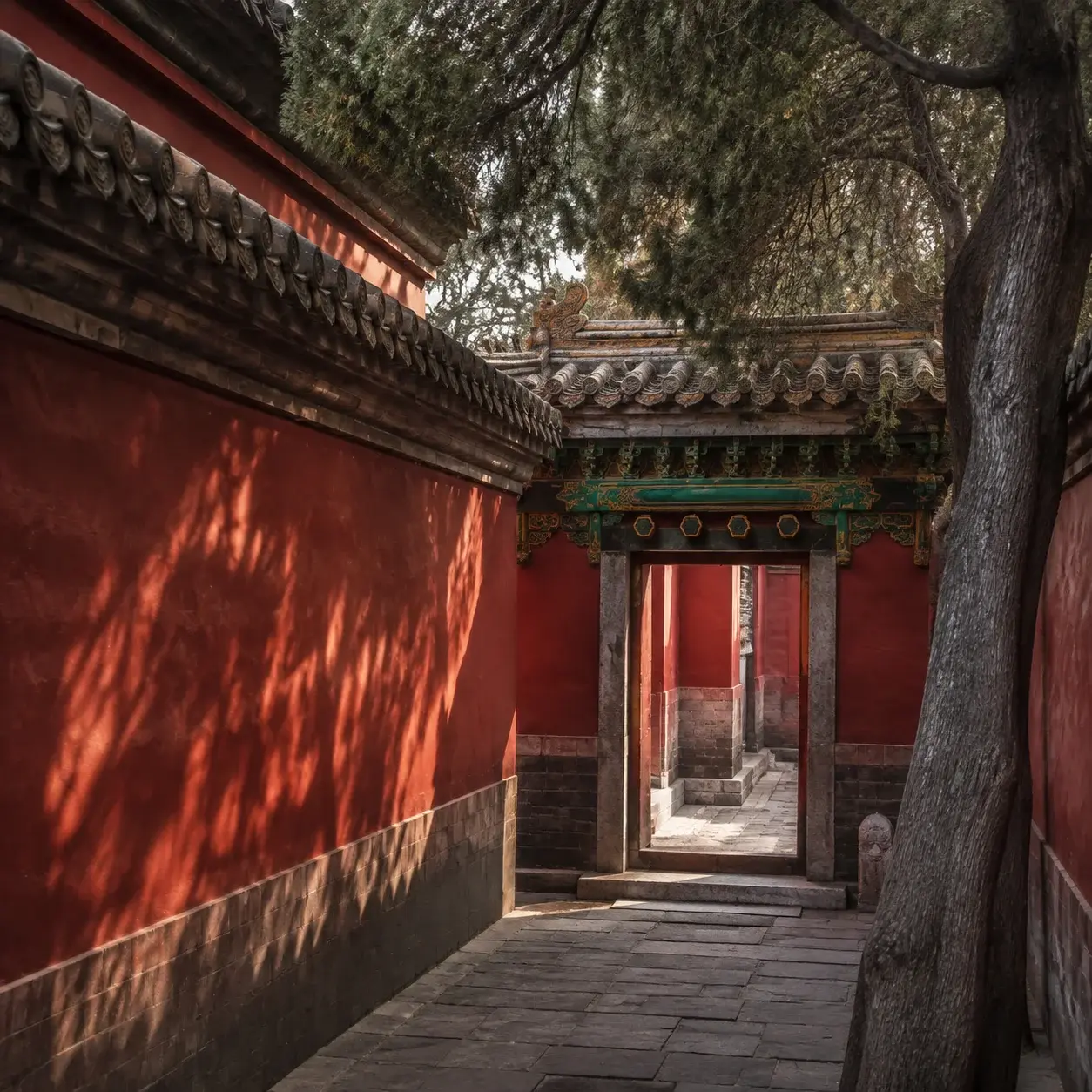
Most visitors need about three hours and should walk the central axis straight through — Meridian Gate, the three great halls, the inner court, the Imperial Garden, out the north gate. Give it a full day only if you are adding the Treasure Gallery, the Clock Museum and the side palaces.
Searching for a Forbidden City map usually produces a floor plan, which answers the wrong question. What you actually need is a route and a time budget, because the complex is one long walk in one direction and the only real decision is how much you detour off the line.
| Route | Time budget | What you walk | Best for | Skip or add |
|---|---|---|---|---|
| Central axis (default) | About 3 hours | Meridian Gate (午门) → Gate of Supreme Harmony → the three great halls → inner court → Imperial Garden → north gate | First-timers; anyone with one day in Beijing | Skip the side galleries — you still see everything famous |
| Central axis, slow | About 2 hours | The same line, fewer stops, with bench and shade breaks | Children and older travellers — it is flat and straight, but it is long | Enter at the Meridian Gate, exit north, and do not double back |
| Axis plus galleries | About 5 hours to a full day | Central axis plus the Treasure Gallery and Clock Museum, plus eastern and western palaces | Repeat visitors and history readers | Extra tickets approx. CNY 10 each (mychina.guide, `待实地核实`) |
| Photographer's route | About 4 hours, ending late afternoon | Axis early, side courtyards for light, then exit north and climb Jingshan for the overhead shot | Photographers | Time the Jingshan climb for the last hour of daylight |
All four durations are editorial estimates built from source guidance and our own itinerary planning, not measured walking times: `待实地核实 / Last verified: 2026-08`. They assume you stop to look, do not queue for a specific hall, and are not moving through a golden-week crowd.
Two structural facts do the real work here, and the museum's own visitor regulations state both (read 2026-08-13). The entrance is the Meridian Gate, at the south end, and nothing else is a visitor entrance. The flow is one-way, south to north, and you cannot re-enter; the regulations name two exits, the Gate of Divine Prowess (神武门) at the north and the East Prosperity Gate (东华门) on the east, so the east gate is the one to choose if your next stop is Wangfujing rather than Jingshan. Add the third fact from the same document — a morning ticket has to be checked in by 12:00 and an afternoon ticket not before 11:00 — and the route above becomes a timed plan rather than a loose one. So decide before you go in whether the galleries are part of today, because there is no coming back for them, and arrange to be picked up at the gate you will actually leave by rather than where you were dropped off.
If you are building the rest of the day around this, the two natural pairings are south and north-west. To the south, about 5 km away, is the Temple of Heaven, and why the ticket you buy changes what you see — the classic same-day or next-morning partner, and a place where the through-ticket question genuinely changes your visit. To the north-west sits the Summer Palace — which gate you enter decides your visit, which shares the same enter-one-gate-exit-another logic and needs its own half-day. The other half of Beijing's must-do pair, the Great Wall section you should actually visit, needs a full day of its own and a different booking calculation entirely.
What Will You Actually See Along the Central Axis?
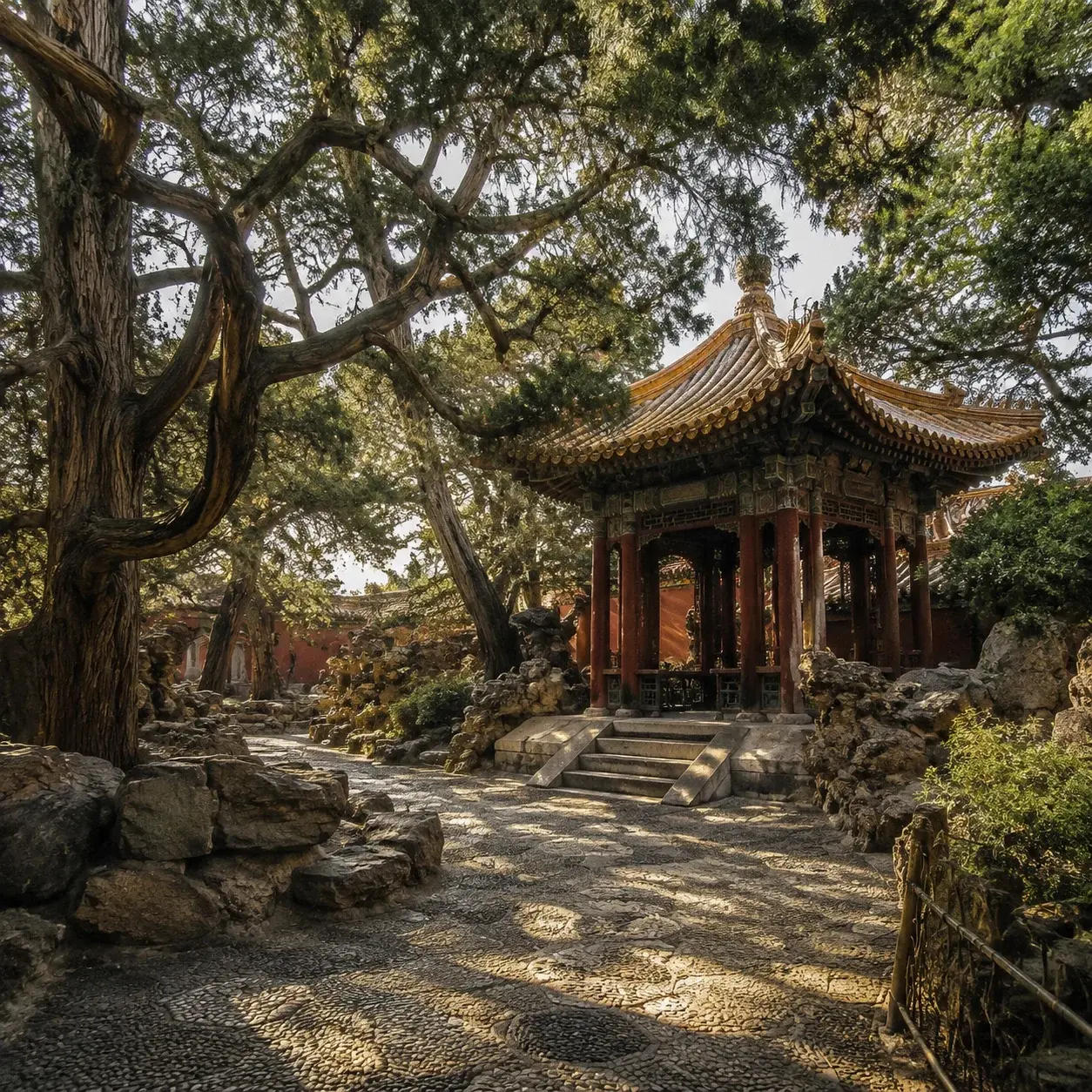
In order: a fortified gate, three ceremonial halls on a raised marble terrace, a smaller cluster of residential palaces, and a garden — with the scale dropping steadily as you walk north from the public empire to the private household. Understanding that gradient is what turns a long walk past yellow roofs into a legible building.
You enter under the Meridian Gate (午门), a U-shaped fortress of a gate where emperors reviewed troops and announced the calendar. Through it lies a wide paved courtyard crossed by five marble bridges over the curving Golden Water River, and beyond that the Gate of Supreme Harmony.
The outer court behind it is the famous part. The Hall of Supreme Harmony (太和殿) is the largest wooden hall in China and the ceremonial peak of the whole complex — coronations, New Year, imperial birthdays. It stands on a three-tiered marble terrace with the Hall of Central Harmony and the Hall of Preserving Harmony behind it on the same platform, which means one climb gets you all three. Everything about this section is designed to make a person feel small: the courtyard is bare on purpose, and there is no shade in it at all. In July and August that matters more than the architecture.
North of the terrace the buildings shrink and the spaces tighten. This is the inner court, where the imperial family actually lived: the Palace of Heavenly Purity, the Hall of Union, and the Palace of Earthly Tranquility on the axis, with dense residential courtyards on either side. The rooms here are furnished and viewed through doorways rather than entered, and the crowd behaves differently — slower, more clustered, bottlenecked at each threshold.
At the top is the Imperial Garden, a compact, deliberately irregular space of ancient cypresses, rockeries and pavilions, and the first shade of the entire walk. It is small, everybody arrives at it tired, and it is the busiest square metre on the axis. Then the Gate of Divine Prowess (神武门) puts you out on the north side, facing Jingshan.
The two ticketed galleries sit off the line. The Treasure Gallery, in the north-eastern quarter around the Palace of Tranquil Longevity, holds jade, gold and imperial regalia and includes the Nine-Dragon Screen; it is the one add-on worth the detour if you like objects more than buildings. The Clock Museum displays the elaborate European and Chinese mechanical clocks the Qing court collected, and it is the better choice if you have seen the axis before. Both are separately ticketed, at roughly CNY 10 each on 2026-08 figures.
Where Is the Best View of the Forbidden City? It's From Outside It

The photograph you have seen of the Forbidden City — the whole sea of golden roofs from above — is not taken inside it. It is taken from Jingshan Park, the hill directly north of the exit gate, a few minutes' walk away.
This is the single most useful thing to know about your afternoon, and it is advice a ticket-seller cannot give you, because it sends you out of the attraction. Inside the walls you are always at ground level, looking at one courtyard at a time; the roofs only resolve into the image in your head when you get above them. Jingshan is the artificial hill built from the earth excavated for the palace moat, directly on the same north-south axis, and the pavilion at its summit looks straight back down the length of everything you have just walked.
Because the museum's route is one-way and ends at the north gate, Jingshan is not a detour at all — it is the next fifteen minutes of your day. Cross the road from the Gate of Divine Prowess and the park entrance is right there.
Two practical notes. The climb is short but it is stairs, in flights, with landings — worth planning for if you are travelling with young children or older parents who have just walked a kilometre of stone courtyard. And the light is the whole point: come in the last hour or two of daylight, when the sun is behind you and the roofs turn from dull ochre to gold. Midday flattens the view completely.
We have no official figure for Jingshan's opening hours or for whether it needs its own separate reservation, and we would rather say so than guess — check before you go, and assume it may need its own booking like most Beijing parks. On price there is now at least a traveller's number to plan around: a traveller posting on Xiaohongshu, in a post edited 27 May 2026 (read 2026-08-13), gives Jingshan admission as CNY 2 normally and CNY 10 during the peony festival, half price for children, and free for visitors aged 60 and over. Treat that as one traveller's figure rather than a price list. It is small enough that the real cost of the detour is your legs rather than your budget. The same traveller also notes that at the Forbidden City itself over-60s are not free but pay the half-price CNY 30 — which matches the price board we photographed in August 2026, a small sign that they were reading the boards carefully. `待实地核实 / Last verified: 2026-08.`
How Do You Get In, and What Happens at the Gate?
Take metro Line 1 to Tiananmen East, walk north through the Tiananmen security checks, and continue to the Meridian Gate, where staff scan the passport you booked with — there is no QR code and no printed ticket. Allow a good half hour between leaving the metro and standing inside the palace.
The approach itself involves security, not just walking. The Tiananmen Square area operates its own screening, and reports indicate that identity documents are checked to enter the square and the surrounding zone, so your passport is out of your bag long before you reach the museum. Carry it in a pocket you can reach, not in a suitcase, and expect bag scanning at more than one point.
The Tiananmen area runs one-way, south to north, and this is the piece nobody writes in English — it is why visitors end up walking a long loop around a zone they cannot cut back through. The museum's own visitor regulations set out the two cases (read 2026-08-13). If you are visiting only the Forbidden City, you do not have to enter the square at all: you can reach the Meridian Gate along the east or west Tongzi River roads (筒子河), which is usually faster and always less queued. If you have booked both Tiananmen Square and the museum, you go through the square's own security checkpoints — and because the flow only runs south to north, the square has to come first and the palace second. Decide which of those two you are doing before you leave the hotel, because you cannot switch halfway.
At the Meridian Gate itself, look for the manual ticket-checking channel — the lane the 12345 hotline answer names for foreign visitors. Staff read the passport, match it against the booking, and let you through. The two things that break this are the ones you can control in advance:
1. The document must be the original one used to book. Not a photo of it, not a photocopy, not a different passport you also hold. 2. The name on the booking must match the passport exactly, including the order of given names and any middle names. Systems that check names character by character do not forgive a reversed given name. 3. You have to be inside your session's window. The museum's own regulations put hard edges on the two daily sessions: a morning ticket must be checked in by 12:00, an afternoon ticket cannot be checked in before 11:00. The gate can turn you away for being late as readily as for holding the wrong document.
Two more things to expect at the check rather than to worry about, both from the same regulations. Face recognition assists the identity check, and the museum states that the face data is used only for real-time comparison and is not stored — so there will be a camera, and it is routine. And the museum reserves the right to refuse entry to anyone intoxicated, dressed inappropriately, or lacking legal capacity and arriving unaccompanied.
There are no lockers for large luggage inside a one-way route, so leave suitcases at your hotel or the station. Bring water and, between roughly May and September, a hat: the great courtyards are stone, unshaded, and hotter than the street. Wear shoes for a couple of kilometres on uneven stone.
Once you exit at the north gate you are on Jingshan Front Street, across from the park. Taxis and ride-hailing pick-ups work better from here than from the palace's south side, which sits inside the Tiananmen controlled zone — another reason to plan the exit before the entrance.
Walking out hungry? See where to eat after the Forbidden City and what the snacks actually are.
Frequently Asked Questions
Do I need my passport to enter the Forbidden City? Yes. The passport is the ticket. Staff scan it at the Meridian Gate and match it to your booking, so there is no QR code to show. The booking name and passport number must match exactly, including the order of given names, and it must be the original document.
Is the Forbidden City closed on Mondays? Yes — except on public holidays, when it opens instead. Do not treat "closed Mondays" as an absolute rule and build your itinerary around it, because a holiday Monday is a day you could have used. Check the specific date against the official site before planning around it.
How far in advance do Forbidden City tickets go on sale? Seven days ahead, at 20:00 Beijing time, according to multiple published guides as of 2026-08. Popular dates go quickly. There are no same-day online sales at all, so the seven-day release is the real deadline for planning, not a suggestion.
Can I book Forbidden City tickets without WeChat or a Chinese phone number? Yes. Use the official English-language site with your passport; the Beijing 12345 government hotline confirmed this route in June 2025. The WeChat mini-program is the channel that commonly blocks foreign numbers at registration, which is why it should not be your first attempt.
What if Forbidden City tickets are sold out online? Foreign passport holders can buy same-day in person at the service window on the east side of the Meridian Gate, with the original passport. We watched it happen in August 2026 and photographed the window — standing under a notice board that says the museum does not sell same-day tickets. Both are true. A traveller on a Canadian passport reports the same thing from 7 July 2026, with no reservation at all. It works while stock remains, and in high season there is usually none. Get there early, and book ahead anyway. Do not expect a phone call to confirm it first: a traveller reports asking the museum's official line in August 2026 and being told a foreigner cannot buy same-day on site — that is the official rule talking, not today's stock.
How much are Forbidden City tickets? Indicatively CNY 60 in peak season (1 April to 31 October) and CNY 40 off-peak, plus around CNY 10 each for the Treasure Gallery and the Clock Museum. Those are figures published by travel guides on 2026-08-12, not an official price list — verify on the official site.
Can two people book on one passport? No. It is one ticket per passport per day, so each traveller books on their own document and each must bring the original on the day. This includes children with their own passports. Plan for it when the family is booking from a single phone.
Is there a time limit on when I can enter? Yes, and it is the rule most likely to catch a foreign visitor out. Each day is split into a morning and an afternoon session: a morning ticket must be checked in by 12:00, and an afternoon ticket cannot be checked in before 11:00. That comes from the Palace Museum's own visitor regulations, read 2026-08-13. Plan the rest of the day around the slot rather than the other way round.
What happens if I book and then don't turn up? Cancelling by 24:00 on the day before your visit carries no penalty. Cancelling later, or simply not appearing, records one no-show, and three no-shows within 180 days trigger a 60-day ban on booking Palace Museum tickets and exhibitions. Refunds return by the original payment method within five working days, and a used ticket is never refundable. Cancel before midnight the night before if your plans change. (Palace Museum visitor regulations, read 2026-08-13.)
Can I change my Forbidden City booking? No. The museum's own regulations state that a ticket is bound to the document holder once sold and cannot be changed — not the ticket type, the date, the time slot, or the person. If you mistyped a passport number, your only route is to cancel and rebook, which puts you back into the seven-day release queue. Check every field before you pay.
How long should I spend in the Forbidden City? About three hours for the central axis, which covers everything famous. Allow five hours to a full day if you are adding the Treasure Gallery, the Clock Museum and the side palaces. The route is one-way, so decide before you enter.
Is there a daily limit on visitors? Yes — the daily cap is reported at approximately 40,000 visitors (via chinadiscovery, 2026-08). Combined with the seven-day release and the absence of same-day online sales, that cap is what turns advance booking from a convenience into a precondition for getting in at all.
How strict are Chinese museum reservations generally? Stricter than most visitors expect. Real-name booking, per-document monthly caps and weekly per-account limits are normal — the National Museum of China publishes both, and releases its tickets at 17:00 rather than 20:00. Book like it is paperwork, not shopping.
Is a Forbidden City tour worth booking? Usually not necessary. The site is one straight, well-signed walk and an audio guide covers the halls perfectly well. Hire a guide for depth and context, not for navigation — and never as a way to obtain a ticket, since there are no third-party sales.
What should I do if I only have one day in Beijing? Book the base ticket for the central axis, walk it in about three hours, exit at the north gate, and climb Jingshan Park for the overhead view in the late afternoon. That combination gives you the two images people actually come for.
The Short Version
Booking is the visit. Get the reservation right and the Forbidden City is a straightforward three-hour walk in a straight line; get it wrong and you are standing outside the largest palace complex in the world with a valid visa and no way in. So: use the official English site at `bookingticket.dpm.org.cn`, be logged in seven days ahead at 20:00 Beijing time, book on the exact passport you will carry, and enter through the manual ticket-checking channel at the Meridian Gate — which is the only entrance, and which has to be done by 12:00 on a morning ticket. If it sells out, the on-site passport route is worth trying — but do not expect the English line, 400-950-1925, to endorse it: the official answer is that there are no same-day sales, and a traveller reports being told precisely that on the phone in August 2026. Use the line for hours and closures, and get to the window early for the rest.
And when you walk out of the north gate, cross the road and climb Jingshan. The view of the roofs from the hill is the one you came for, and it is free of the booking system entirely.
Every price, hour, quota and rule on this page carries a source name and a `Last verified: 2026-08` stamp because all of them change — confirm on the official site before you travel. If you would rather not manage seven-day release windows, passport-matched bookings and gate logistics across a whole itinerary, we can arrange the bookings and the day-by-day routing for you, including the Great Wall section you should actually visit and how to plan the rest of your days in Beijing.