


What it is called
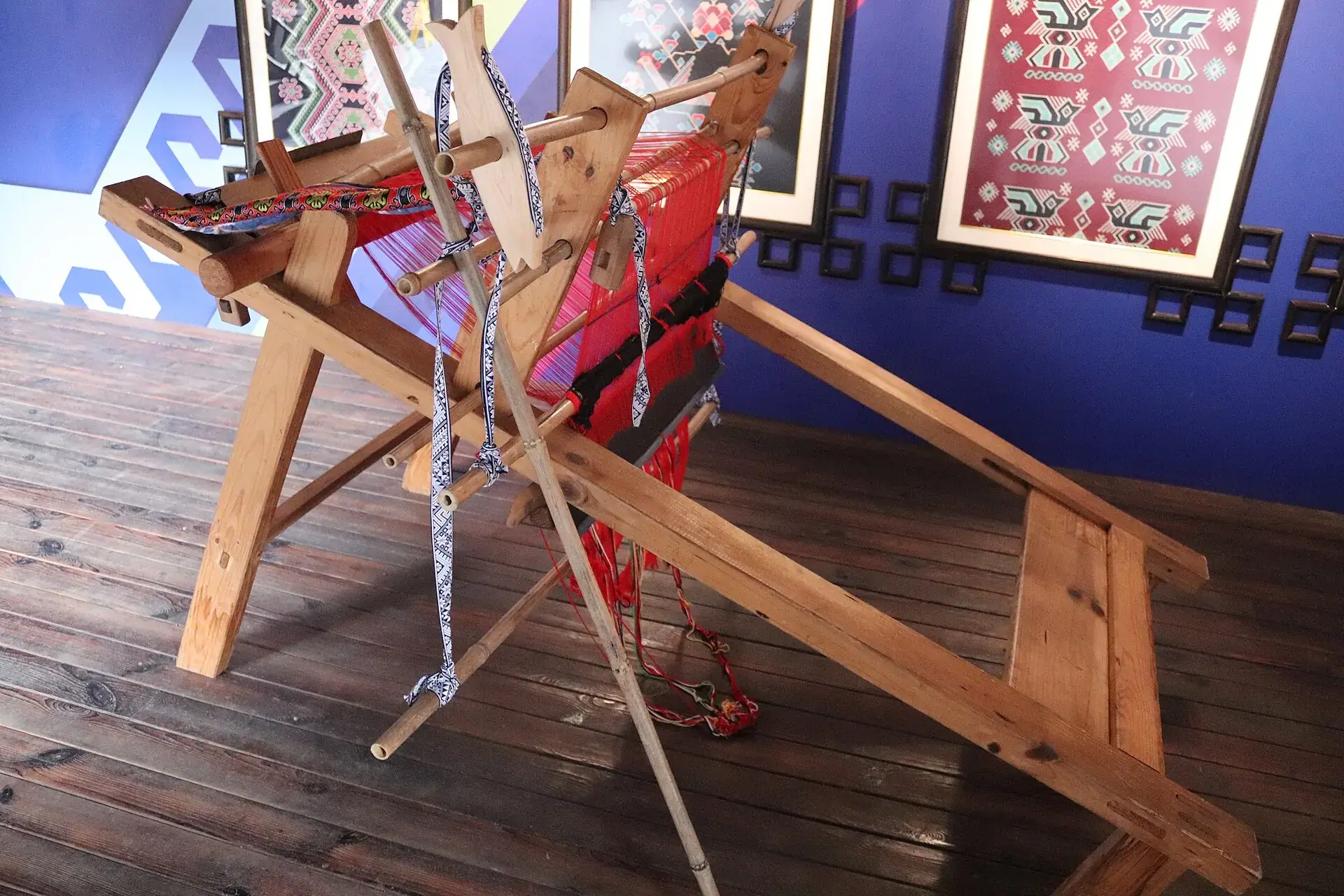
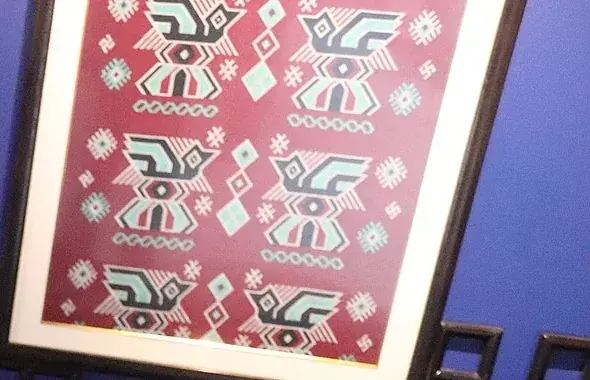
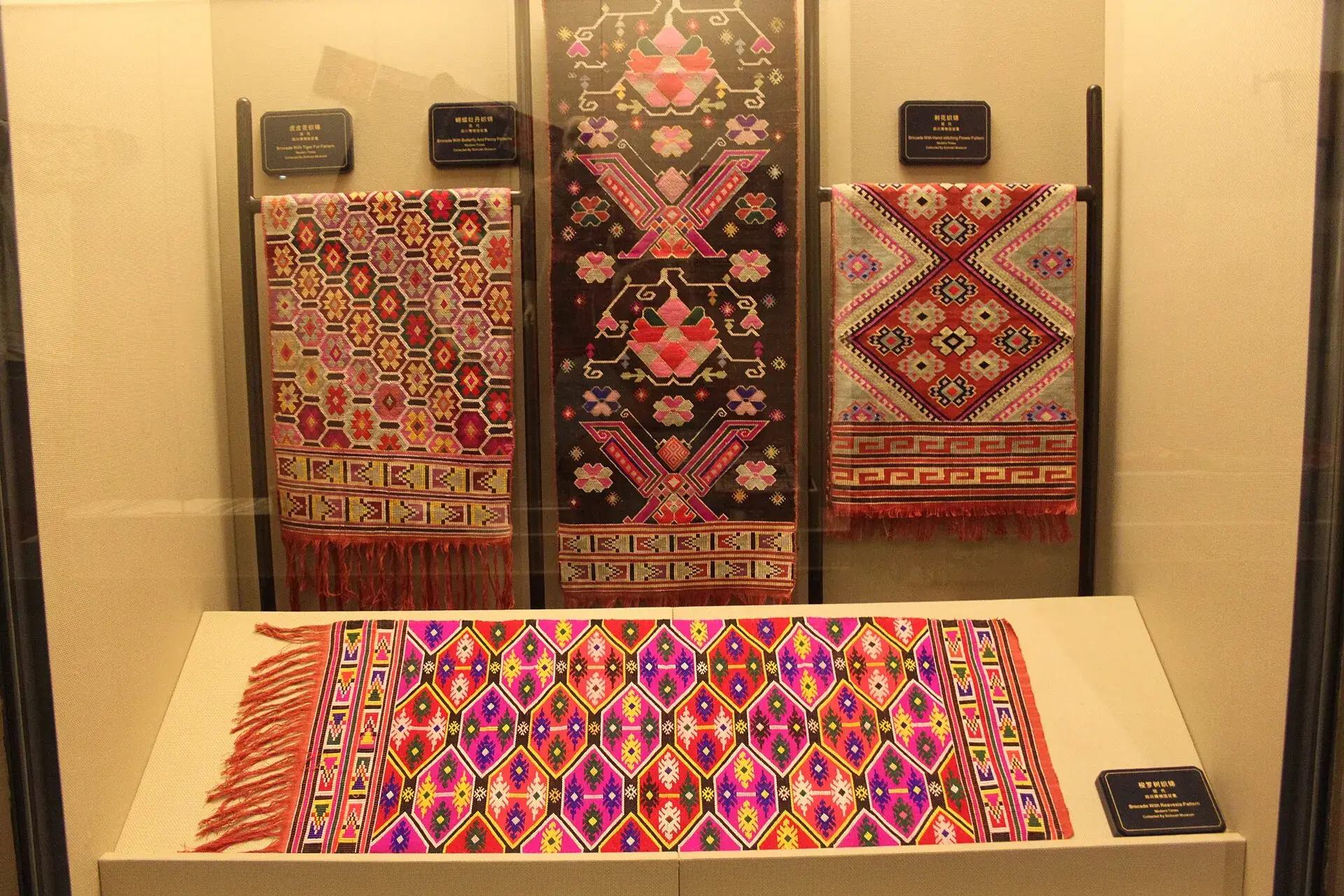
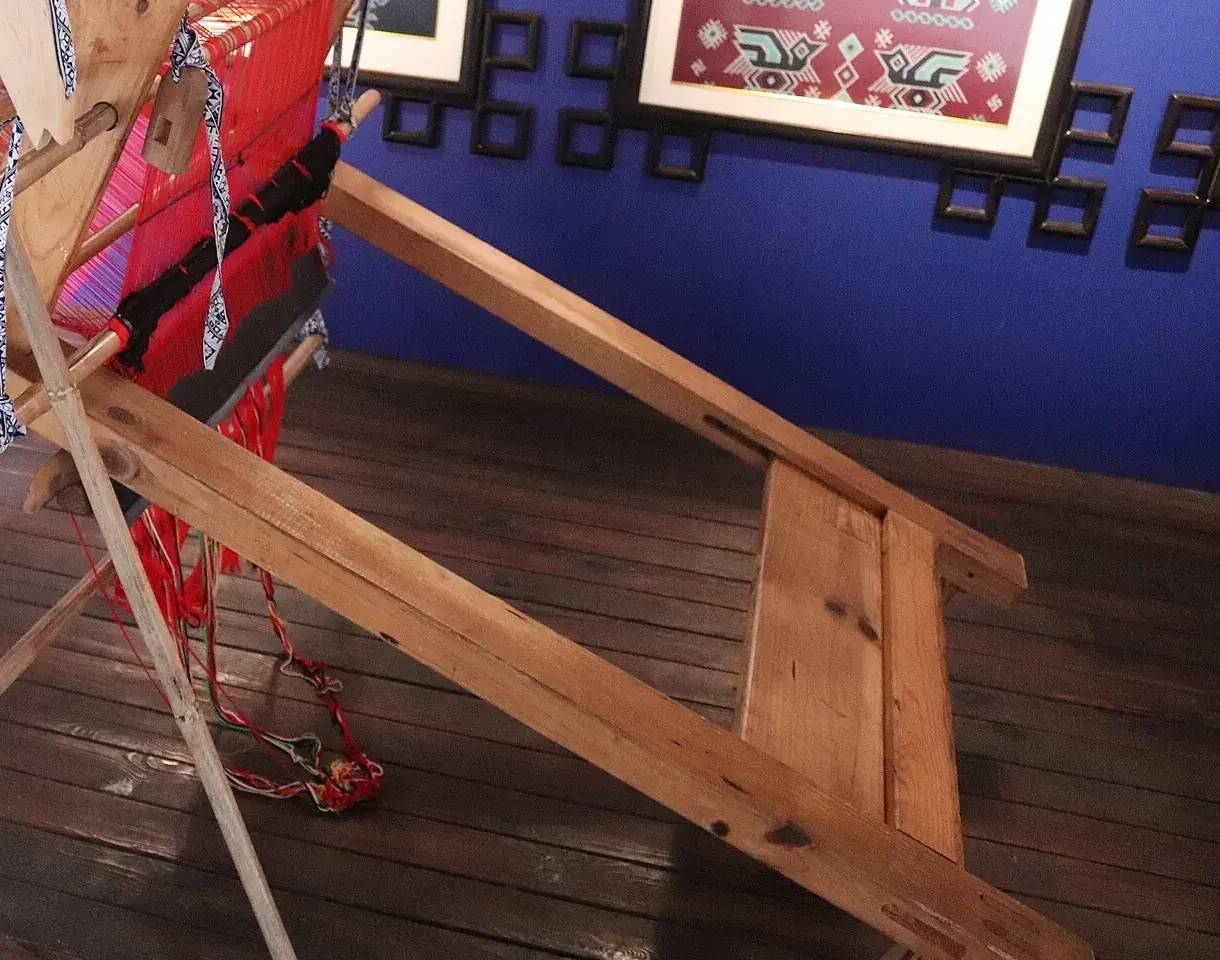
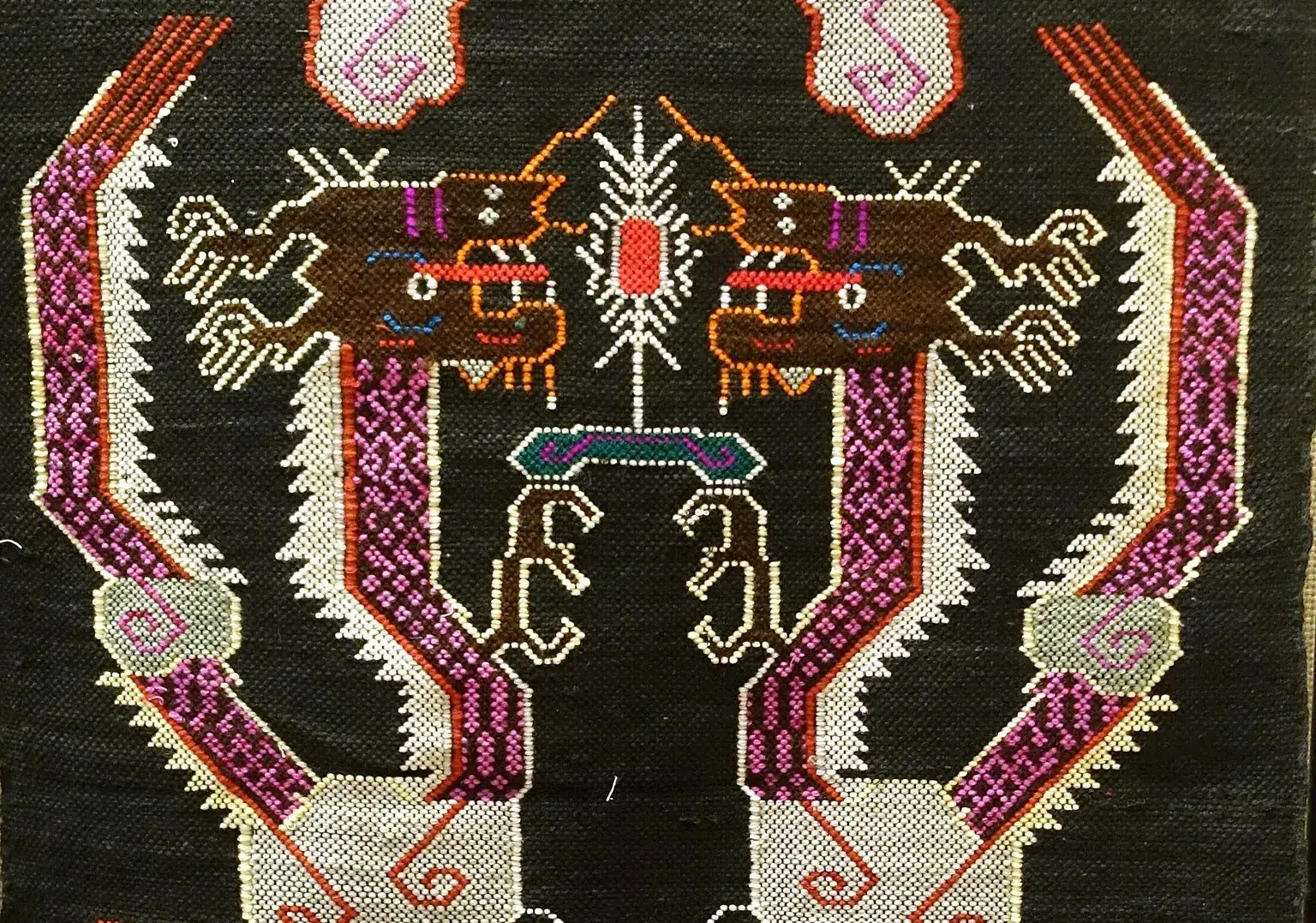
In Tujia it is xilankapu — literally, the flowered bedspread woven with all kinds of beautiful patterns. People here call it the flower of the Tujia, and describe it as their culture compressed into a single object. It was on China's very first national heritage list. And it is made on a wooden back-strap loom, by a person leaning away from it to keep the tension. Nothing else holds it.
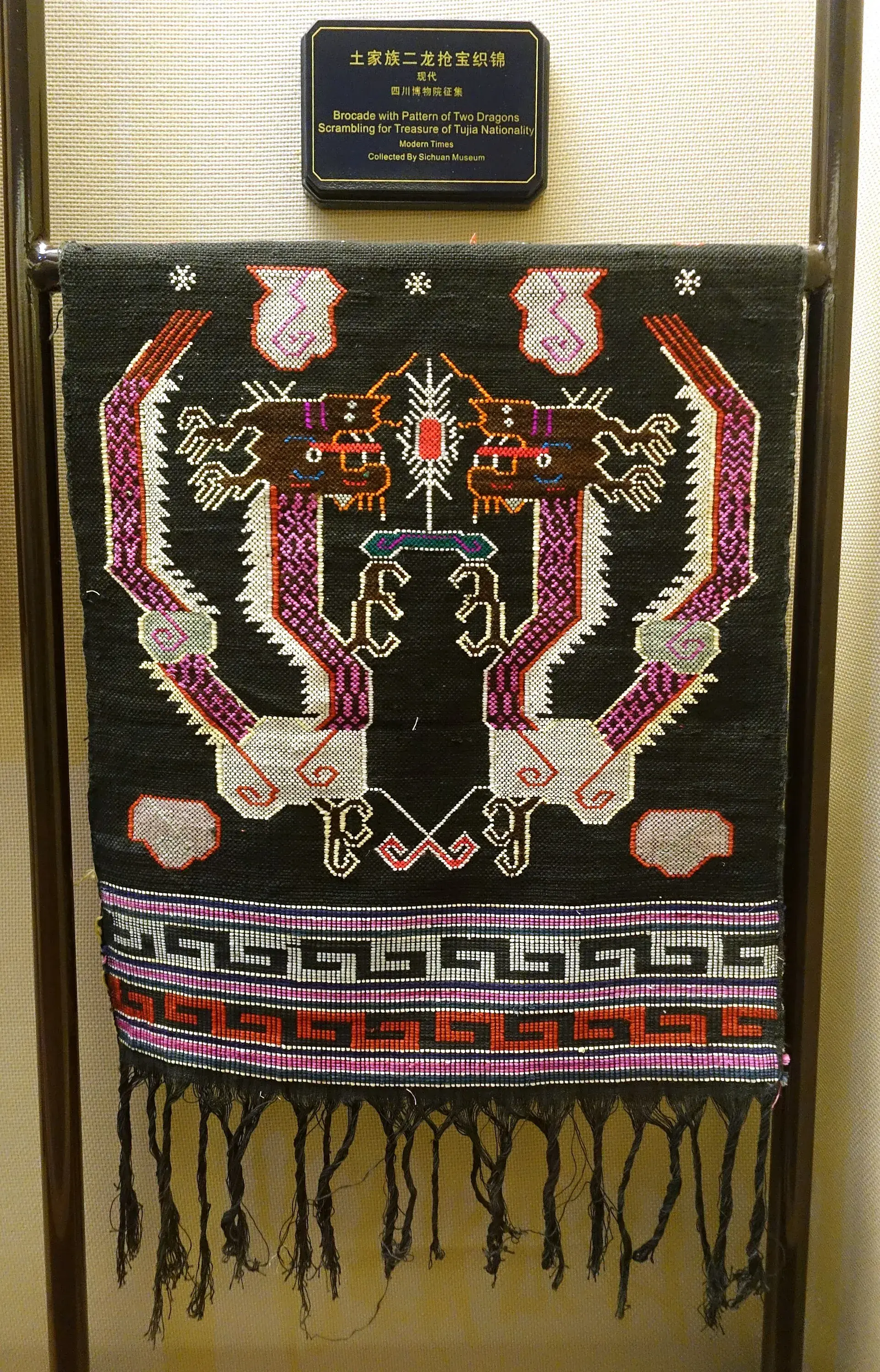
Two hours at the loom, and what comes off it
Two hours at a wooden back-strap loom: eight hundred warp threads, a bamboo pick, a pattern held entirely in the weaver's head — and then she gets up and lets you try.
- A wooden back-strap loom worked by hand — no motor, tension held by the weaver's spine
- A pattern appearing row by row with nothing drawn anywhere
- An entrance piece eight metres wide and thirteen high, woven from 150,000 metres of red thread
- 7,955,280 colour blocks in one panel upstairs — 190 weavers, one year, now in a national museum
- Eight hundred warp threads under real tension, resisting you
- The bamboo pick that lifts a different count of threads on every single pass
- Finished brocade — and you'll feel why a metre takes over a month
- What xilankapu literally means: the flowered bedspread woven with every kind of beautiful pattern
- A fifth-generation inheritor teaching the loom hand to hand
- Why one wrong row means the whole row comes out
- The rows you wove, cut off the loom for you
- The physical memory of the warp going slack when you pull wrong
- A reason to never again call a woven textile 'just fabric'
What the loom holds
Timber · thread · bamboo pick · pattern
How it unfolds
-
This is the largest Tujia brocade production base in the country and the first dedicated exhibition hall and teaching workshop for the craft. The building runs as a sequence — an entrance piece, a gallery, a working floor you walk through, and a shop — and the entrance piece is a flower eight metres wide and thirteen high, woven from a hundred and fifty thousand metres of red thread.
-
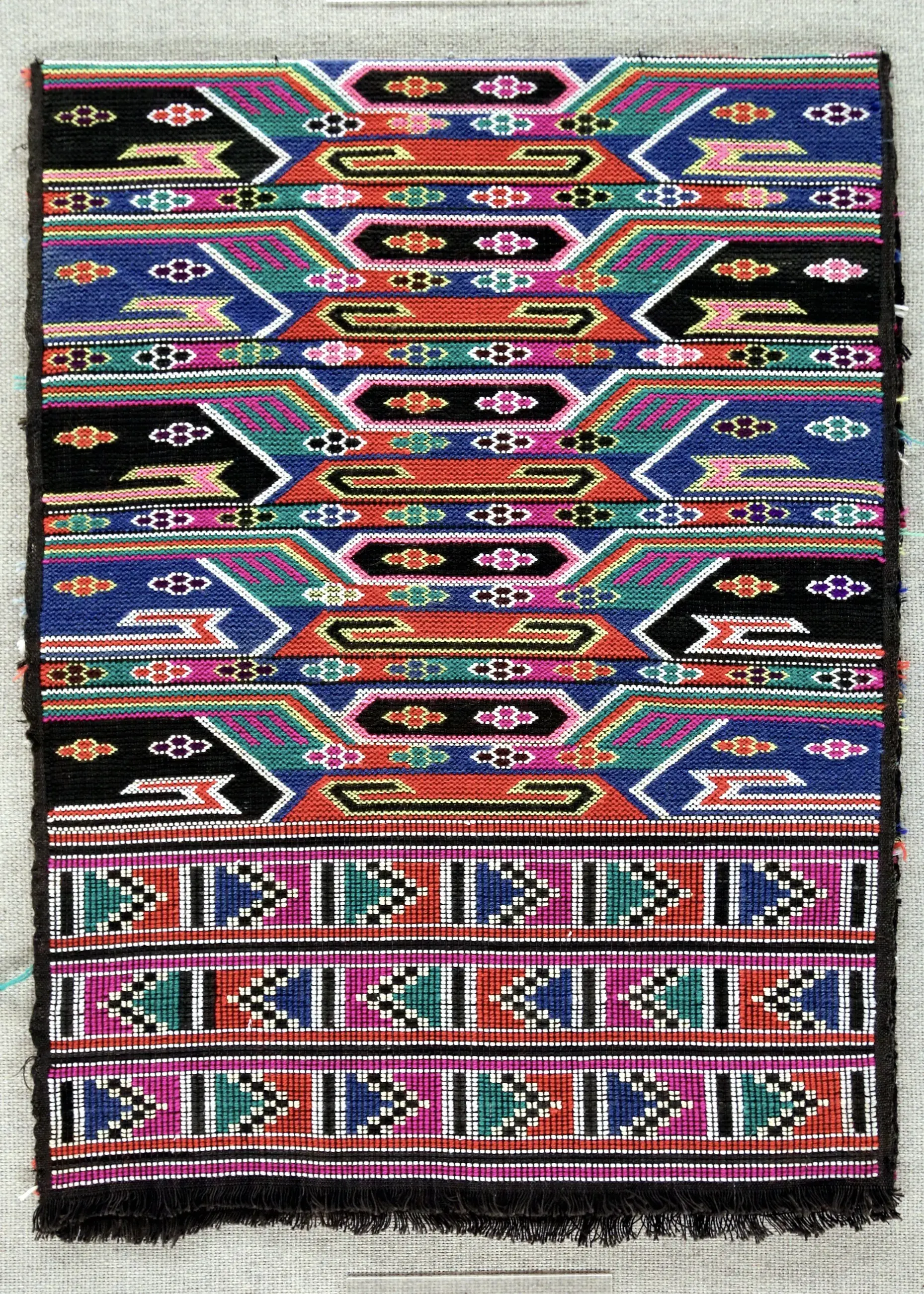
The weaver works with the pattern facing away from her, picking the coloured weft through with a bamboo tool — and the number of warp threads she crosses is different on every single pass. There is nothing to copy from. A metre-long panel of a standard motif takes over a month.
-
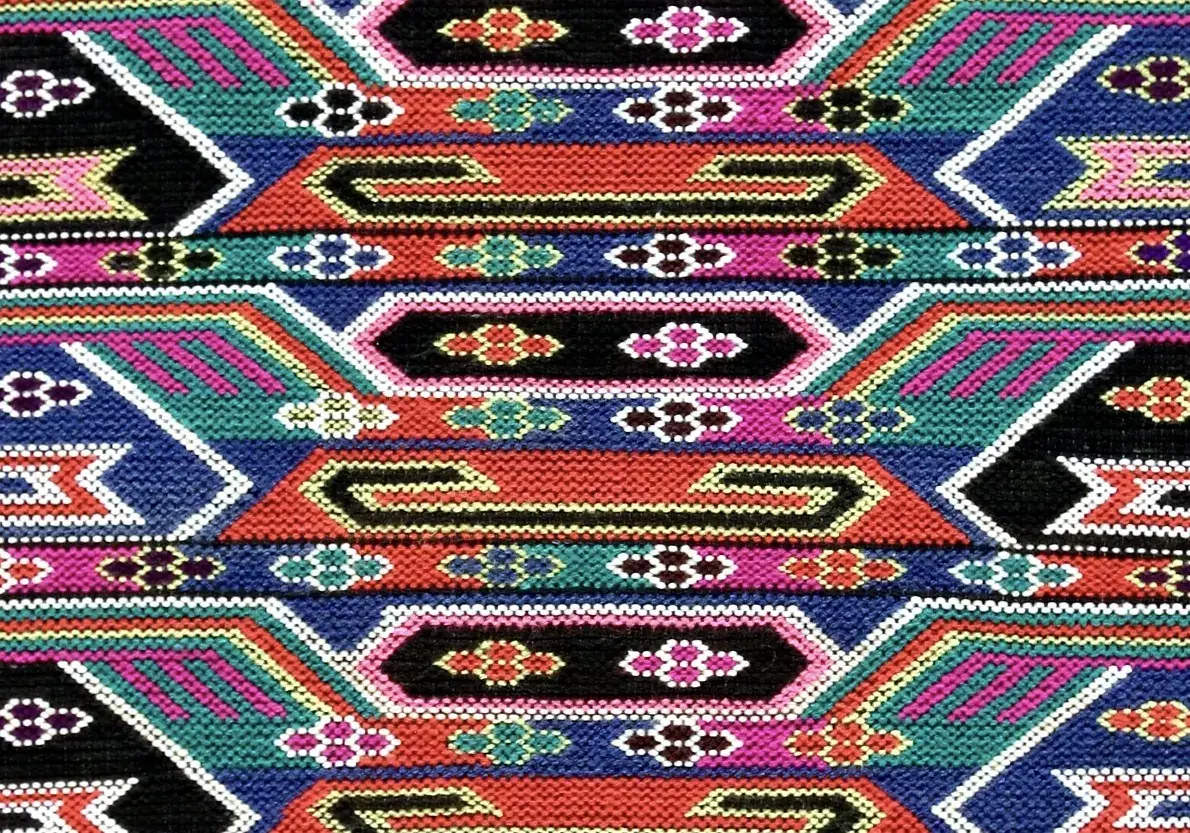
In the gallery upstairs hangs a panel six point four metres long. A hundred and ninety weavers worked on it for a year and picked 7,955,280 individual colour blocks. It is now permanently held by the National Museum of Ethnology. Standing in front of it after you have tried four rows yourself is a specific and slightly humbling experience.
-
A fifth-generation inheritor of the craft teaches the loom hand to hand — how to hold it, how to open the shed, what order things happen in. The strap goes round your back and you find out how much of this is in the body. The first pass is clumsy and the third is noticeably less so.
It goes from something you looked at to something your hands remember
Watching is not the same
You can watch weaving for twenty minutes and leave with a video. The moment you take the seat, the loom stops being a display.
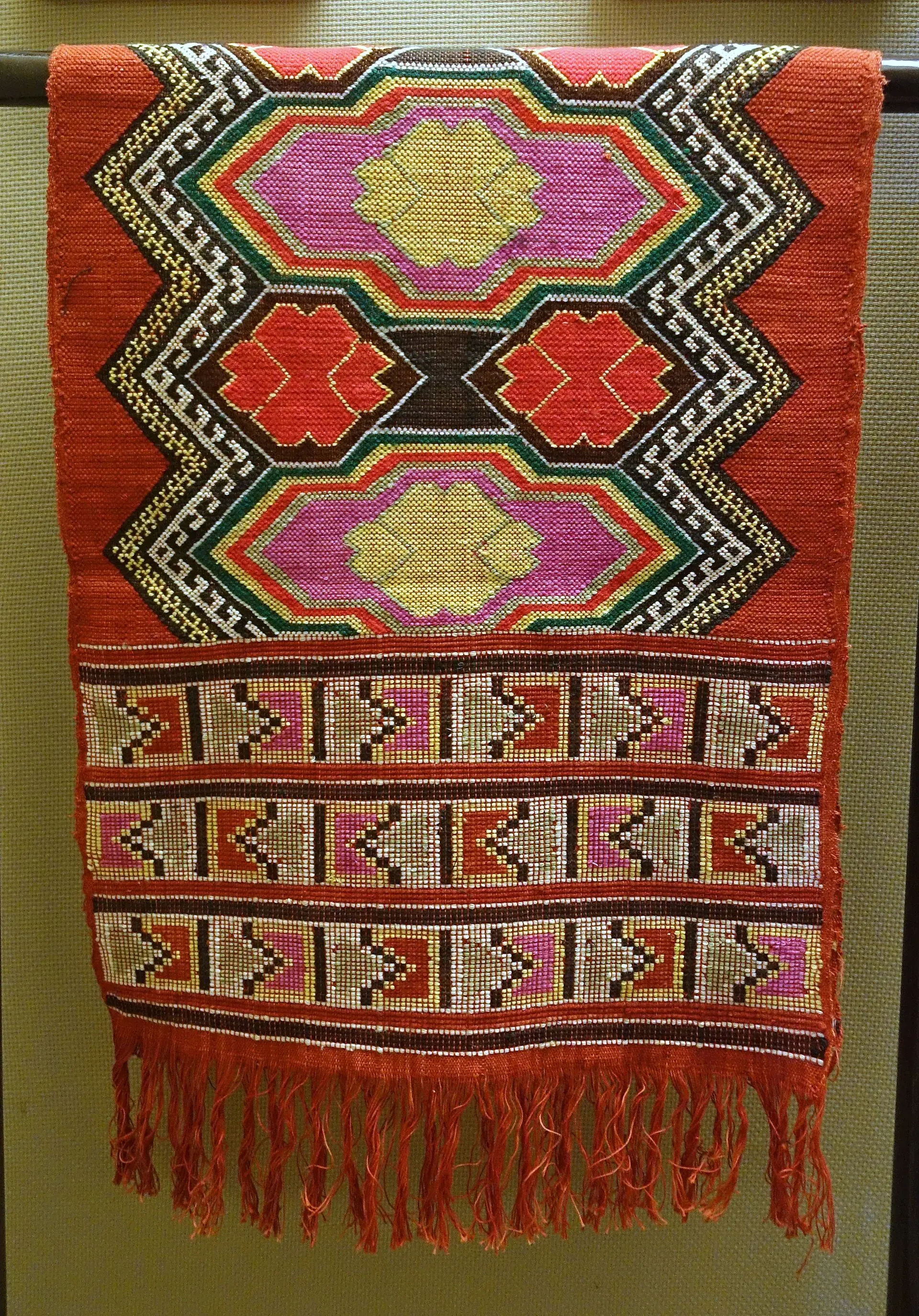
You feel the warp resist. You feel it go slack when you pull wrong. You discover that the even, unremarkable cloth on the wall behind you represents a physical discipline you could not sustain for an hour.
Most of the weavers here are women who stayed in the villages when others left for work in the cities. The centre trains them, films them, and streams them working — a strange sentence to write about a technique with no written pattern, and also why it is still here.
Good to know
Book the loom
Two hours, on its own. Tell us a date and how many of you there are.
Start planning- About 2 hours
- China's largest brocade centre
- National heritage, first list
- The rows you wove