



 18 giorni Cina, da capo a fondo Pechino → Xi'an → Chuanzhusi → Jiuzhaigou → Chengdu → Zhangjiajie → Guilin → Yangshuo → Shenzhen Da $6,360 Vedi itinerario
  14 giorni A cosa serve ogni città Pechino → Xi'an → Chengdu → Shanghai → Shenzhen → Canton Da $5,030 Vedi itinerario
  19 giorni A valle del futuro Shenzhen → Guilin → Yangshuo → Chengdu → Chongqing → Yichang → Shanghai Da $5,360 Vedi itinerario
  5 giorni A valle, poi in salita Guilin → Yangshuo Da $1,600 Vedi itinerario
  8 giorni Acqua tranquilla, città veloce Shanghai → Yangshuo → Shenzhen Da $2,350 Vedi itinerario
Quanti giorni servono a Emei Shan — e come si sale davvero? (Guida 2026)
Per la maggior parte dei viaggiatori, Emei Shan richiede due notti: una a metà salita per coggere l'alba al Golden Summit, e il secondo giorno per percorrere la valle delle scimmie. Un giorno porta solo in cima, senza altro tempo, e si sente frettoloso; tre giorni sono per gli escursionisti che vogliono percorrere l'intero cammino dei pellegrini. Questo è tutto il problema della pianificazione in una frase — tutto il resto qui sotto ne è il dettaglio.
Emei Shan (Monte Emei) è una delle quattro sacre montagne buddiste della Cina, la più occidentale e alta, che si alza dalla pianura del Sichuan a ovest di Chengdu fino al Golden Summit a circa 3.077 m. È bella e genuinamente sacra — ma è anche un puzzle logistico: autobus ecologici, due funicolari, mille scimmie che rubano cibo, nebbie impreviste in cima e un vicino UNESCO (il Gigante di Leshan) che tempta tutti a crammare troppo poco tempo.
Una nota di onestà fin da subito. Per il percorso Emei + Leshan + Chengdu, che organizziamo regolarmente per famiglie e viaggiatori anziani, non c'è motivo di esagerare con il monte — e ogni ragione di essere chiari quando un giorno è troppo poco, quando la funivia è preferibile all'escursione e quando le scimmie rappresentano un rischio reale piuttosto che una foto. I prezzi, gli orari e le altitudini indicati qui sono o fatti verificati e autorevoli (con data) o figure indicative da confermare sul campo — lo segnaliamo in tutto il testo.
- Due giorni sono la risposta per la maggior delle persone. Dormi in quota (Leidongping o la vetta) la prima notte, così l'alba al Golden Summit è una breve passeggiata, non un'arrampicata all'alba; percorri la valle tranquilla delle scimmie il secondo giorno.
- Non puoi salire in auto. L'autobus ecologico/sightseeing da Baoguo a Leidongping (~2.430 m) è l'unica salita sulla montagna; da lì serve una camminata di ~30 minuti e una funivia di ~10 minuti per il Golden Summit (o un'arrampicata di ~2 ore).
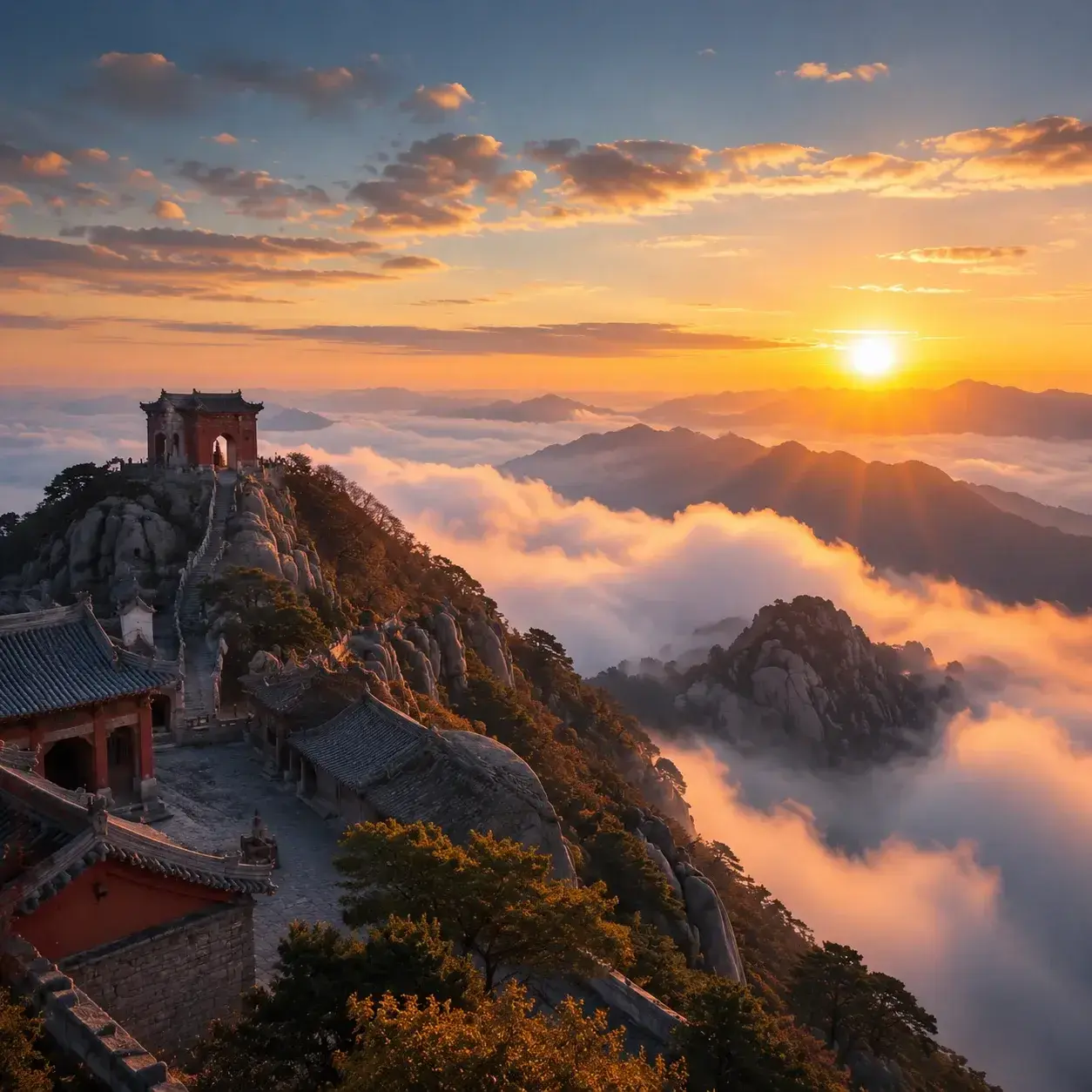
- Il Golden Summit (Jinding) si trova a circa 3.077–3.079 m ed è coronato da una statua dorata di Samantabhadra di 48 m. Al mattino sereno puoi goderti il sorgere del sole, un mare di nuvole e, raramente, la "Luce del Buddha" — ma la vetta è spesso coperta di nebbia, considera la vista come una lotteria, non una garanzia.
- Le scimmie sono gestibili, ma non amichevoli. I macachi tibetani di Emei sono audaci e organizzati nel rubbo cibo. Chiudi ogni borsa, nascondi cibo e sacchetti di plastica, non sorridere né fissare, e lascia andare se una tira la borsa. Mordono — e la zona ha un rischio di rabbia — quindi morso o graffio significa lavarsi e consultare un medico.
- Leshan + Emei è un circuito di due giorni, non una fretta di un giorno. I due siti UNESCO sono solo a ~35–45 km di distanza, ma non puoi vedere il Gigante Buddha e raggiungere lo stesso giorno il Golden Summit. Prima Leshan, poi Emei.
- Va bene per famiglie e nonni via autobus e funivia — il vero pericolo sono le scimmie, non l'altitudine — ma ogni prezzo e tariffa della funivia qui sotto sono indicativi e vanno confermati all'area turistica prima di affidarti ad essi.
—
Quanti giorni servono a Emei Shan? (Confronto tra 1, 2 o 3 giorni)
Un giorno (autobus + funivia) raggiunge la Golden Summit ma nient'altro ed è frettoloso; due giorni — la Golden Summit all'alba più la valle delle scimmie — è il punto dolce per la maggior parte dei viaggiatori e delle famiglie; tre giorni sono per gli escursionisti che vogliono salire il cammino dei pellegrini. La meccanica del percorso è la stessa per tutti: l'autobus ecologico vi porta da Baoguo, in basso, a Leidongping (~2.430 m), poi c'è una camminata di ~30 minuti fino alla funivia e un breve tragitto fino a Jinding. Ciò che cambia con ogni giorno aggiuntivo è quanto della montagna — oltre la vetta — vedrete davvero.
| Piano | Cosa vedi | Come ti sposti | Miglior per | Pernottamento |
|---|---|---|---|---|
| 1 giorno | Solo Golden Summit (frettolosa); perdi la zona delle scimmie | Autobus ecologico a Leidongping → camminata di ~30 min → funivia → vetta → ritorno per lo stesso percorso | Visitatori con poco tempo; abbinamento approssimativo con Leshan | No (o dormire nel paese di base) |
| 2 giorni | Golden Summit all'alpa più la valle delle scimmie — l'immagine completa | Dormi a Leidongping/Notte 1 in vetta; funivia per l'alba; cammina al Qingyin Pavilion → Zona Ecologica delle Scimmie il giorno 2 | La maggior parte dei viaggiatori e delle famiglie — il punto dolce | Sì — in montagna |
| 3 giorni | Salita completa dei pellegrini, templi, ~50 km di scalini di pietra | Escursione a Qingin/Wannian → Golden Summit in due giorni, funivia opzionale | Escursionisti in forma e cercatori di pellegrinaggio | Sì — monastero o sentiero |
Leggi in base al tipo di viaggiatore. Viaggiatori per un giorno dovrebbero essere onesti: un giorno compra la vetta e molte ore su autobus e funivie — va bene se la vetta è l'unica cosa che vuoi. Chi passa una notte ottiene il miglior valore: dormire in alto trasforma "scommettere su un'alba" in "alzarsi dal letto per il sorgere del sole", e il secondo giorno, la piana valle con le scimmie, è dove la montagna prende vita. Escursionisti che vogliono davvero salire la scala sacra hanno bisogno di tre giorni — eppure, la maggior parte sale in funivia e scende a piedi, risparmiando le ginocchia. Le famiglie dovrebbero pianificare due giorni sul percorso autobus-funivia e considerare la zona delle scimmie, non la montagna, come la cosa per cui prepararsi.
I tempi e i prezzi in ogni qui sono indicativi e contrassegnati verifica localmente (2026) — i prezzi delle aree sceniche cinesi cambiano e nessuno di questi è un dato ufficiale di LyrikTrip. L'altitudine e la struttura del percorso, tuttavia, sono autorevoli: circa 200.000 visitatori all'anno raggiungono Jinding proprio in questo modo — minibus a metà strada, poi funivia alla piattaforma della vetta (Centro UNESCO del Patrimonio Mondiale, Area Scenica di Mount Emei, verificato 2026-07-04).
Cos'è la Vetta d'Oro (Jin Ding) — Altitudine, Cosa Vedrai e il Clima?
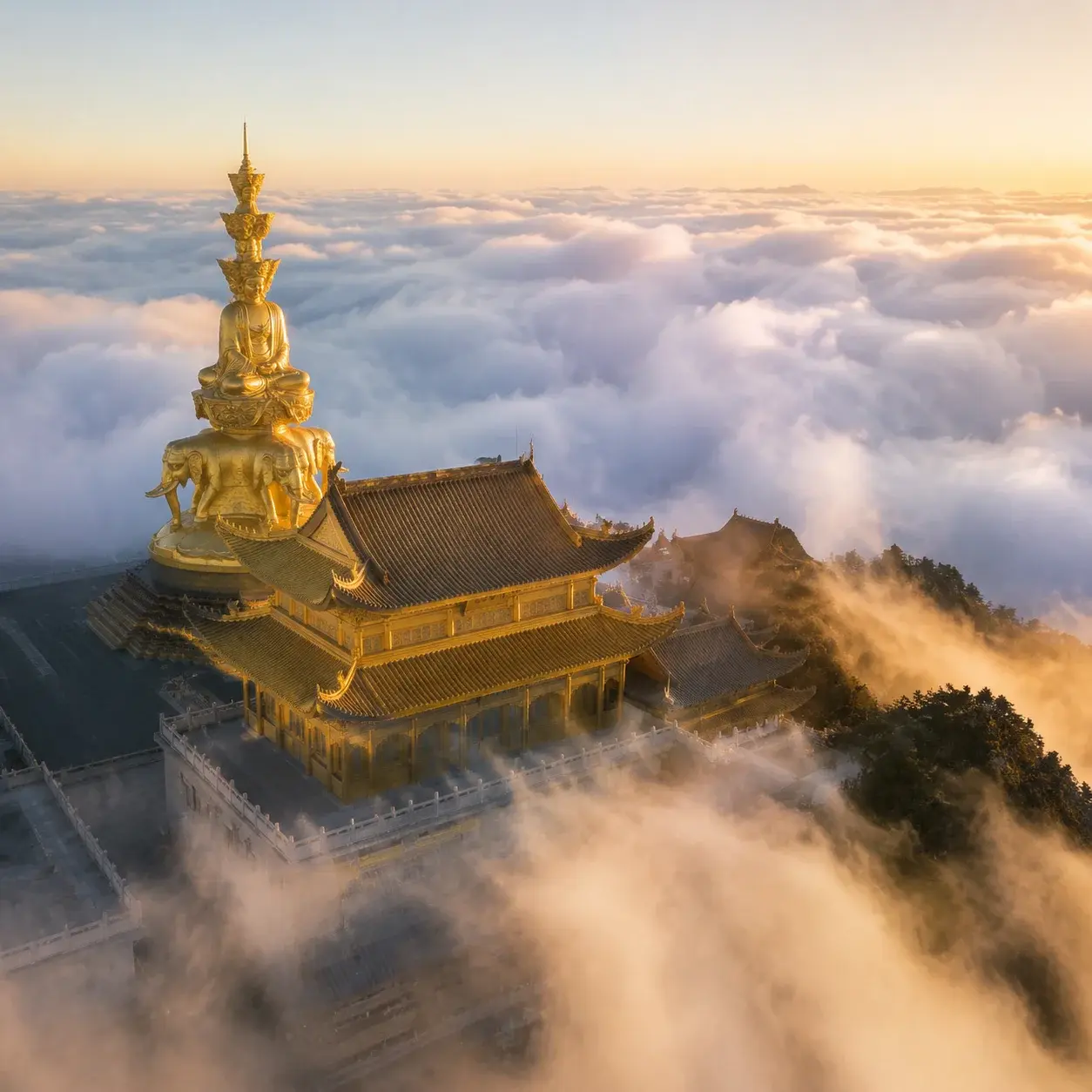
La cima dorata (Jinding) si trova a circa 3.077–3.079 m ed è coronata da una statua dorata di Samantabhadra alta 48 m; al mattino chiaro offre le "tre meraviglie" — alba, mare di nuvole e, occasionalmente, la Luce del Buddha — con vedute sulla pianura di Chengdu verso lontane vette nevose. Il problema: la cima è spesso avvolta dalla nebbia, quindi sali per l'alba e accetta che potresti vedere solo bianco. Questo è il punto più fotografato e iper-promesso della montagna, quindi vale la pena impostare aspettative oneste.
Due fatti importanti da chiarire. Primo, "la cima" è ambigua: Jinding, la piattaforma visitata da tutti, si trova a circa 3.077–3.079 m, ma il vero punto più alto del massiccio è Wanfoding a circa 3.099 m — la maggior parte dei visitatori che parlano di "Cima dorata" intendono Jinding (Wikipedia: Mont Emei, verificato 2026-07-04). Secondo, il tempo cambia in pochi minuti: i viaggiatori segnalano regolarmente nebbia, sole e pioggia nello stesso orario in cima. Non c'è modo di garantire il mare di nuvole; la mossa sicura è dormire in montagna e concederti una finestra all'alba, più un mattino extra se il tuo programma lo consente.
Raggiungere la piattaforma è fisso: l'ecobus sale a Leidongping (~2.430 m), poi c'è una camminata di ~30 minuti fino alla stazione della funicolare di Jieyin Hall e un viaggio di ~10 minuti a Jinding (o circa due ore di salita se preferisci camminare). Le tariffe della funicolare sono indicate nella tabella di alloggio e logistica qui sotto e sono solo indicative. Un leggero avviso sull'altitudine: 3.077 m è abbastanza alto da far sentire un po' il fiato corto ad alcune persone — cammina lentamente, idratati e porta uno strato caldo, perché la cima è fredda e ventosa anche quando Sichuan sotto è torrido. Questo è un consiglio generale di viaggio, non un consiglio medico.
Le scimmie di Emei Shan sono pericolose? (La guida alla sopravvivenza)
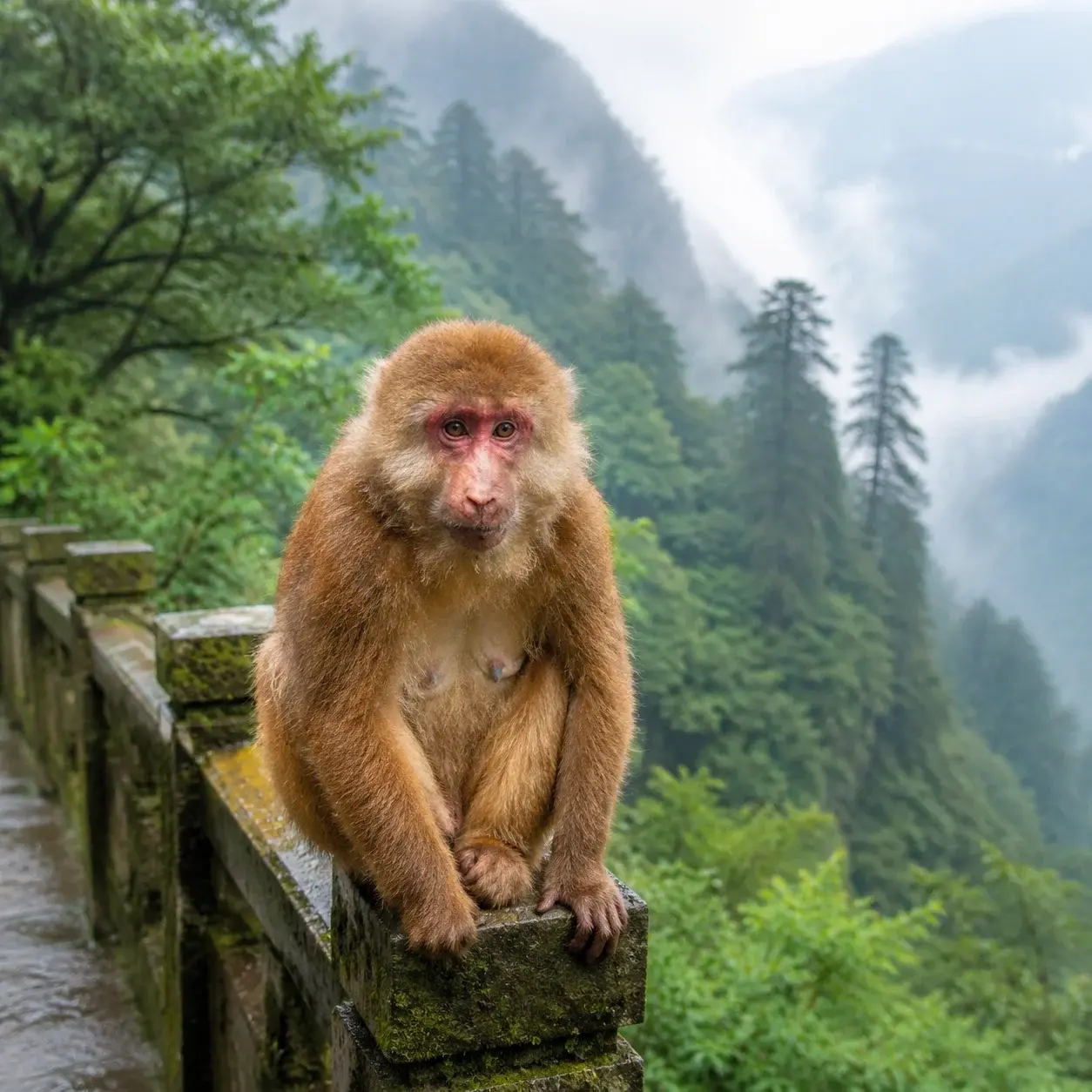
I macachi tibetani di Emei non cercano di farti del male, ma sono ladri audaci e organizzati — circa mille vivono tra circa 800 e 2.400 m, più densi nella Zona Scimmia Ecologica vicino al Padiglione Qingyin, e apriranno un borse o ti ruberanno il cibo dalla mano. Gestiscile e diventano un punto saliente; ignora le regole e perderai gli snack o ti grafferanno. I morsi sono rari — ben meno dell'1% dei visitatori — ma i graffi per rubare cibo sono più comuni, e il comportamento è legato al cibo, non all'aggressività. Gli animali sono semplicemente stati condizionati da decenni di alimentazione turistica.
Il protocollo qui sotto trasforma la zona delle scimmie da pericolo in l'ora migliore sulla montagna.
| Fai | Non fare |
|---|---|
| Zip ogni borsa; nascondi tutti i cibi e sacchetti di plastica all'interno (una scimmia considera una borsa appesa come uno spuntino) | Portare il cibo a mano, o mangiare davanti ad esse |
| Acquista solo l'alimentazione ufficiale (indicativamente ~¥5/pacco, verifica) se alimenti, e solo in zone sorvegliate dal personale | Schernire, accerchiare o allungarsi per toccarle |
| Rimani calmo e continua a camminare; se una tira la borsa, lasciala andare — la borsa è sostituibile, un morso no | Sorridere o mostrare i denti (per una scimmia è una minaccia) o fissarla intensamente |
| Indossa maniche lunghe; tieni i bambini piccoli a mano con il cibo completamente nascosto | Gridare, voltare e correre (invita a inseguire), o lottare per riprendere qualcosa che una scimmia ha preso |
Se una scimmia morde o graffia, prendilo sul serio. Questa zona è a rischio di rabbia: lava la ferita con sapone sotto acqua corrente per almeno 15 minuti, applica un antisettico e cerca immediatamente assistenza medica per valutare il trattamento post-esposizione alla rabbia e verificare che la tua vaccinazione tetanica sia aggiornata; i morsi delle scimmie comportano inoltre un raro rischio di virus B (Guida CDC/medicina del viaggio riassunta tramite PMC, verificata il 2026-07-04). Nota di rischio, non consiglio medico: un'assicurazione di viaggio che includa l'evacuazione medica è una precauzione sensibile. Se una scimmia prende qualcosa di prezioso, non opporre resistenza; offri uno scambio (acqua, frutta) o cerca un membro dello staff. Le famiglie con bambini piccoli sono l'unica categoria che deve riflettere attentamente qui: i bambini sono bassi, spesso portano snack e si spaventano facilmente — esattamente i tre fattori scatenanti — quindi la scheda di valutazione è una preimpostazione, non un suggerimento.
Puoi fare insieme il Gigante Buddha di Leshan ed Emei Shan? (Logistica combinata)
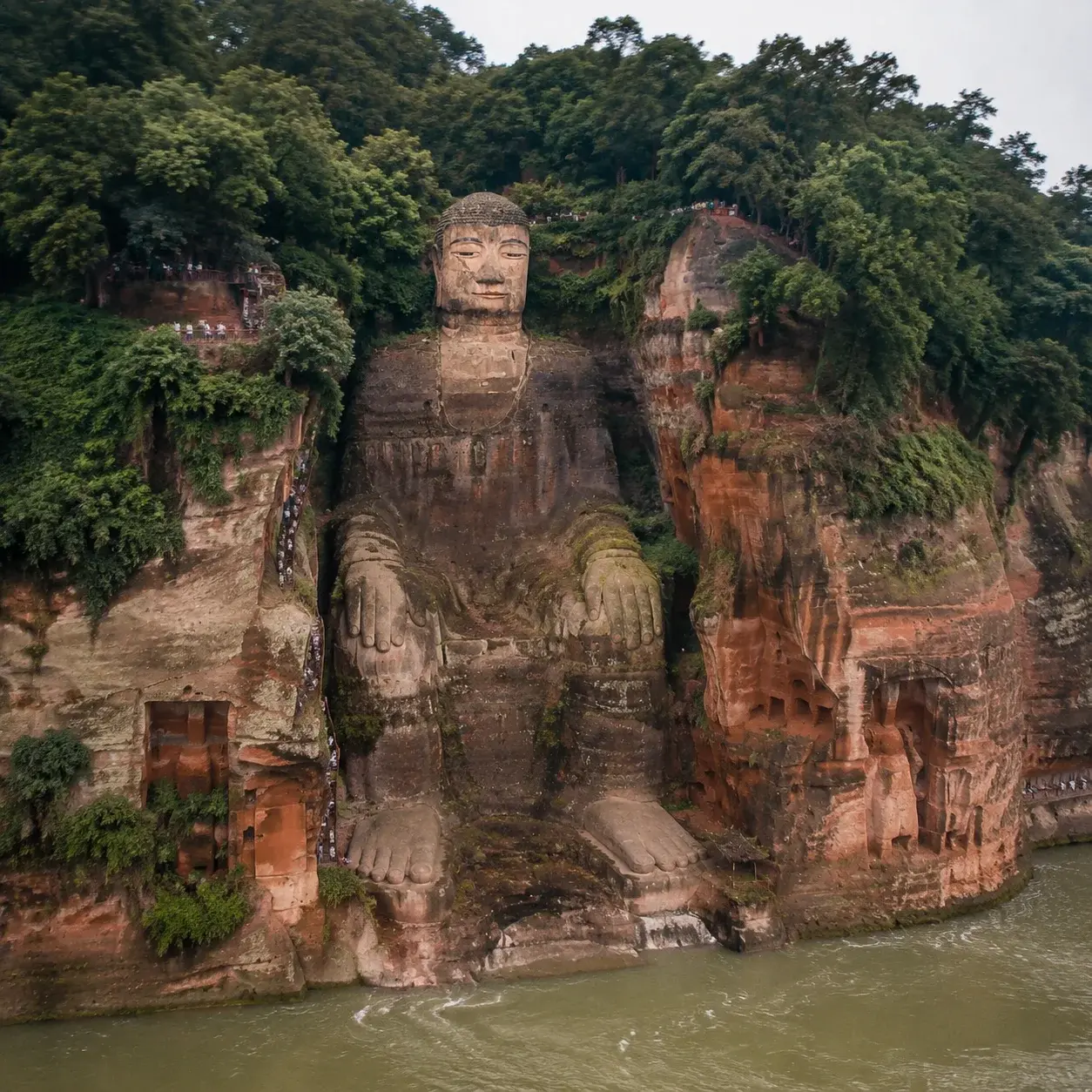
Realisticamente, no — non in un giorno. Puoi vedere il Gigante di Buddha di Leshan al mattino, ma non puoi raggiungere contemporaneamente la Sommita d'Oro, che richiede l'eco-bus, la funivia e una finestra all'alba. Poiché i due siti UNESCO si trovano a soli 35–45 km di distanza, la mossa giusta è un itinerario di due giorni da Chengdu — prima Leshan, poi Emei. I due sono formalmente un unico sito Patrimonio Mondiale — "Area Scenic di Monte Emei, inclusa l'Area Scenic del Gigante di Buddha di Leshan", iscritto nel 1996 — e il Buddha stesso è una scultura su roccia alta 71 m del VIII secolo, la più al mondo, che sorveglia la confluenza di un fiume (Centro UNESCO per il Patrimonio Mondiale, verificato 2026-07-04).
| Domanda | Verdetto in prima istanza / Note di struttura | |
|---|---|---|
| Posso fare Leshan + la Sommità d'Oro in un giorno? | No. Vedrai il Buddha ma non raggiungerai la sommità — serve autobus, funivia e una finestra all'alba. | Se vuoi entrambi, pianifica un itinerario di due giorni |
| Come funziona l'itinerario classico di due giorni? | Giorno 1: treno ad alta velocità Chengdu → Leshan (~1 ora, indicativo ¥54–95, verifica), vedi il Buddha alto 71m per le scale della scogliera (indicativo ¥80) o in barca sul fiume (indicativo ¥70), poi taxi ~40 min (~45 km) a Emei per dormire. Giorno 2: autobus ecologico e funivia per l'alba alla Sommità d'Oro, poi discesa per Wannian o la zona delle scimmie. | L'ordine conta: prima Leshan, poi Emei, così la sommità ha la finestra meteorologica del mattino |
| Ho solo un giorno e devo scegliere? | Scegli Leshan — è una mezza giornata controllabile. Lascia Emei per una visita completa, o vedi solo la zona delle scimmie a metà montagna. | La Sommità d'Oro è un gioco di alba e meteo; non inserirla alla fine di un giorno |
Le scale sulla scogliera ti danno una vista ravvicinata, ai piedi del Buddha, ma ci sono code lunghe; la barca sul fiume mostra l'intero Buddha ma da lontano. In entrambi i casi, i prezzi sopra sono indicativi e vanno confermati all'arrivo. Considera la coppia come due stati d'animo di un unico biglietto del patrimonio — una montagna che scalzi e un Buddha che ammiri in mezza mattina — e l'ordine due giorni, Buddha-montagna, è l'unica versione che non ti fa correre su entrambi.
Come si arriva a Emei Shan da Chengdu?
Il modo più semplice è il treno ad alta velocità: da Chengdu East o Chengdu South a Emeishan Station in circa 1–1.5 ore, seconda classe intorno a ¥65 (indicativo, verificare). Da Emeishan Station è un breve taxi o navetta per Baoguo Temple alla base della montagna, e da qui l'eco-bus interno al parco prende il posto. I treni corrono frequentemente durante il giorno e possono essere prenotati sulla piattaforma 12306 fino a una settimana prima; in auto il viaggio dura circa 3.5 ore.
Due cose fanno inciampare le persone. Primo, non si può salire in auto sulla montagna — le auto private si fermano alla base, e l'eco/sightseeing bus (indicativamente incluso nel biglietto d'ingresso, verificare) è il modo obbligatorio per raggiungere Leidongping. Secondo, pianifica il collegamento alla base: da Emeishan Station una breve navetta o taxi (indicativamente ~¥5 per la navetta, verificare) raggiunge Baoguo, dove si trovano il sentiero, l'autostazione e la maggior parte degli hotel del centro città. Se stai volando in Cina prima di tutto questo, risolvi prima il tragitto aeroporto-Chengdu — consulta la nostra guida  come arrivare dal tuo aeroporto di arrivo per i meccanici del giorno dell'arrivo — poi è semplicemente Chengdu → Emeishan per ferrovia.
Dove dormire su Emei Shan (Cima, Monastero o Base?)
Dormi in alto — a Leidongping o in cima — per cogliere l'alba senza dover alzarsi all'alba; dormi in un monastero per l'esperienza; dormi alla base (Baoguo) se fai solo un giretto di un giorno. Dove metti la testa è il fattore decisivo per se l'alba sulla Golden Summit sia facile o esaustiva, motivo per cui la consideriamo una decisione di pianificazione, non un ripensamento. Ogni tariffa qui sotto è indicativa (acquisita da concorrenti) e contrassegnata verifica localmente.
| Dove | Atmosfera | Indicativa ¥/notte (verifica) | Miglior per |
|---|---|---|---|
| Golden Summit Hotel | Finestre sul mare delle nuvole, freddo, costoso | ¥800–1,500 | Cacciatori di alba che vogliono zero spostamenti al mattino |
| Albergo nel tempio/monastero (es. Hongchunping) | Dormitori base, canto all'alba | ¥50–160 | L'esperienza e i viaggiatori con budget limitato |
| Zen inn di mezza montagna (Wannian / Qingyin) | Tè, tranquillo, accesso con funivia | ¥260–350 | Escursionisti di due giorni |
| Base di Baoguo / hotel termali | Comfort, accesso facile, caldo | ¥150–350 | Viaggiatori di un giorno e famiglie |
La regola generale: più dormi in alto, più corta e calda sarà la tua alba, ma più fredda e costosa sarà la stanza. Un soggiorno in un monastero è la scelta esperienziale — letti spartani, un pesce di legno alle 5 e una montagna che si sveglia intorno a te — mentre gli hotel termali della base-town sono la scelta comoda per le famiglie che non inseguono l'alba. Prenota in anticipo durante l'autunno picco e durante le vacanze cinesi, quando le camere in cima si esauriscono per prime.
Emei Shan è adatto a famiglie e viaggiatori anziani?
Sì, con delle condizioni — il percorso in autobus e a funivia rende accessibile la sommità sacra senza le brutale scale, e la vera cosa da gestire sono le scimmie, non la montagna. Nessun concorrente dà un parere netto qui, ecco il nostro, diviso per chi viaggia.
Con bambini: sì. Prendete l'eco-bus per Leidongping e la funivia (saltate completamente le scale di pietra), poi fate il tranquillo percorso Qingyin Pavilion → Zona Scimmie — sentieri in piano, adatte a tutte le età. Il rischio reale sono i macachi: tenete i piccoli per mano, nascondete cibo e sacchetti di plastica, e non lasciate che i bambini li alimentino o si avvicinino (vedi scheda sopra). Un morso o graffio è raro, ma in un area endemica della rabbia non è da sottovalutare.
Viaggiatori anziani e multigenerazionali: sì, stesso percorso autobus-funivia — la Sommita d'Oro è raggiungibile con quasi nessuna salita. Fate attenzione all'altitudine moderata (~3.077 m): camminate lentamente, idratevi e preparatevi al freddo e al vento in cima, anche in estate. Per le gambe stanche, Leidongping offre reportedly un esoscheletro da escursionismo (indicativo, verificate sul posto): una novità, ma un segno di come la montagna si adatti a chi preferisce evitare le scale. Se volete il ritmo, l'alba in cima e la gestione delle scimmie per un gruppo misto, è proprio il genere di viaggio che pianifica LyrikTrip.
Quando è il momento migliore per visitare Emei Shan?
L'autunno — soprattutto ottobre e novembre — è il periodo più affidabile: tempo stabile, maggiori probabilità di una cima serena e fogliame rosso vivo. La primavera porta la fioritura di rododendri e alberi delle colombe; l'estate è una fresca fuga verde dal calore delle pianure del Sichuan, ma più piovosa con più nuvole in alto; l'inverno porta neve, ghiaccio brinato e la migliore occasione per vedere la Luce del Buddha, ma richiede abbigliamento caldo e attenzione sui sentieri ghiacciati.
Qualunque sia la stagione, le nebbie in vetta sono imprevedibili, quindi la stagione cambia solo le probabilità di un'alba serena — ma non garantisce mai una. La pratica che vale tutto l'anno: salire per il sorgere del sole, dormire in quota la notte prima e tenere a disposizione un mattino nel programma se il tempo peggiora. Evita la prima settimana di ottobre (festa nazionale cinese) se puoi — allora la montagna e le sue funivie sono al massimo dell'affluenza.
Come si inserisce Emei in un viaggio a Chengdu (e i panda)?
La maggior parte dei turisti inserisce Emei e Leshan in un itinerario di due giorni da Chengdu, poi留下一 giornata a Chengdu per i giganti panda e i vecchi teatri del centro storico. Emei raramente è una destinazione autonoma — è la parte montuosa di un escursione più ampia nel Sichuan, e la forma più pulita dura circa quattro giorni.
Un itinerario semplice: Giorno 1, arrivo a Chengdu e visita alla base dei giant panda e al centro storico; Giorno 2, treno ad alta velocità per Leshan per il Gigante di Buddha, poi trasferimento a Emei town; Giorno 3, la Golden Summit all'alba e la zona delle scimmie; Giorno 4, ritorno a Chengdu. Può essere compresso in tre giorni se si è veloci o esteso a cinque con una giornata di trekking lenta su Emei. Per un confronto tra questa montagna e le altre grandi cinesi — Huangshan, Tai Shan, Zhangjiajie — consulta la nostra Guida alle montagne cinesi, e per costruire un itinerario più ampio attorno a essa, la nostra pianificazione di Chengdu e Sichuan e i dettagli sul Gigante di Buddha di Leshan.
Domande frequenti
Quanti giorni servono a Emei Shan? Due giorni sono adatti alla maggior parte dei viaggiatori: pernottare a metà del percorso la prima notte, raggiungere la Golden Summit all'alba e percorrere la valle della zona delle scimmie il secondo giorno. Un giorno basta solo per la cima e si sente affrettato; tre giorni sono per gli escursionisti che vogliono percorrere l'intera scalinata di ~50 km del pellegrinaggio.
Le scimmie di Emei Shan sono pericolose e come gestirle? Sono audaci ladri di cibo piuttosto che aggressori — i morsi sono rari ma graffi accadono. Riponi in sacchetti sigillati cibo e sacchetti di plastica, non sorridere, fissare o correre, e lascia andare se ti afferra la borsa. Se sei morso, lava per 15 minuti e consulta un medico (rischio rabbia).
Cosa è la Golden Summit e qual è la sua altezza? La Golden Summit (Jinding) è la cima visitabile di Emei, situata a circa 3.077–3.079 m, con in cima una statua dorata di Samantabhadra alta 48 m. Il punto più alto del massiccio è Wanfoding, a circa 3.099 m. Al mattino sereno si può osservare il sorgere del sole, un mare di nuvole e, raramente, la Luce del Buddha.
Posso visitare il Gigante di Buddha di Leshan e Emei Shan in un giorno? Realisticamente no. Puoi vedere il Buddha alto 71 m al mattino, ma non puoi raggiungere contemporaneamente la Golden Summit, che richiede l'eco-bus, la funivia e un orario all'alba. I due siti UNESCO sono distanti ~35–45 km — pianifica un itinerario di due giorni, iniziando da Leshan.
Come arrivo a Emei Shan da Chengdu? Prenota il treno ad alta velocità da Chengdu East o Chengdu South alla stazione di Emeishan (circa 1–1.5 ore, indicativo ~¥65 in seconda classe, verifica), poi un breve shuttle o taxi per Baoguo, a valle. Da qui, l'eco-bus obbligatorio sale fino a Leidongping — non si può salire in auto.
Quanto costano il biglietto d'ingresso e le funivie? Solo indicativo, da confermare sul posto (2026): ingresso da ¥110–160 a seconda della stagione, la funivia della Golden Summit circa ¥65 andata / ¥120 andata e ritorno, e quella di Wannian circa ¥65 / ¥110. L'eco-bus è incluso nel biglietto d'ingresso. Considera tutti questi valori approssimativi finché non verificati.
Posso fare l'escursione sull'E Mei Shan invece di prendere la funivia? Sì — la sacra scalinata copre circa 50 km e richiede circa due giorni per essere percorsa interamente, dormendo nei templi lungo il percorso. La maggior delle persone sceglie un compromesso: salire in funivia alla cima per l'alba, poi scendere a piedi. L'escursiva completa è faticosa per le ginocchia e si adatta meglio a walkers in forma e impegnati.
L'E Mei Shan è adatto ai bambini e ai viaggiatori anziani? Sì, tramite il percorso con autobus e funivia, che salta le scalini e rende la cima raggiungabile a quasi tutte le età. Il tranquillo cammino nella valle Qingyin-Zona delle scimmie va bene a tutti. Le avvertenze principali sono le scimmie (tenere i bambini vicini e nascondere il cibo) e l'altitudine lieve e il freddo in cima.
Quando è il momento migliore per visitare l'E Mei Shan? Autunno (ottobre–novembre) è il più affidabile, con tempo più stabile, maggiori probabilità di cielo sereno in cima e colori autunnali. La primavera porta fiori, l'estate è fresca ma umida e più nuvolosa in cima, mentre l'inverno offre neve e le migliori probabilità della Luce del Buddha, ma richiede abbigliamento caldo e attenzione sul ghiaccio.
Il consiglio finale
Pianificare l'E Mei Shan si riduce a tre decisioni: quanti giorni (due per la maggior parte, così si dorme in alto e si prende l'alba), come muoversi (l'autobus ecologico e la funivia superano le scalini se l'escursione non è l'obiettivo), e se abbinarlo a Leshan (sì — come un giro di due giorni, prima il Buddha, poi la montagna). Se si scelgono queste giuste, il resto si sistemerà da solo.
Per famiglie e viaggiatori anziani, la tranquillità è semplice: il percorso in funicolare rende raggiungibile questa sacra cima di 3.077 m, e le scimmie famose sono gestibili una volta che la scheda è diventata naturale. Se preferisci che l'intero circuito del Sichuan sia pianificato dall'inizio alla fine — il ritmo giusto, il momento dell'alba sulla cima, una giornata con scimmie nella valle, il Buddha gigante di Leshan e i panda di Chengdu inseriti — è questo il tipo di viaggio che organizza LyrikTrip, così Emei Shan sembra un pellegrinaggio piuttosto che un esame logistico.