




 18 giorni Cina, da capo a fondo Pechino → Xi'an → Chuanzhusi → Jiuzhaigou → Chengdu → Zhangjiajie → Guilin → Yangshuo → Shenzhen Da $6,360 Vedi itinerario
  14 giorni A cosa serve ogni città Pechino → Xi'an → Chengdu → Shanghai → Shenzhen → Canton Da $5,030 Vedi itinerario
  19 giorni A valle del futuro Shenzhen → Guilin → Yangshuo → Chengdu → Chongqing → Yichang → Shanghai Da $5,360 Vedi itinerario
  5 giorni A valle, poi in salita Guilin → Yangshuo Da $1,600 Vedi itinerario
  8 giorni Acqua tranquilla, città veloce Shanghai → Yangshuo → Shenzhen Da $2,350 Vedi itinerario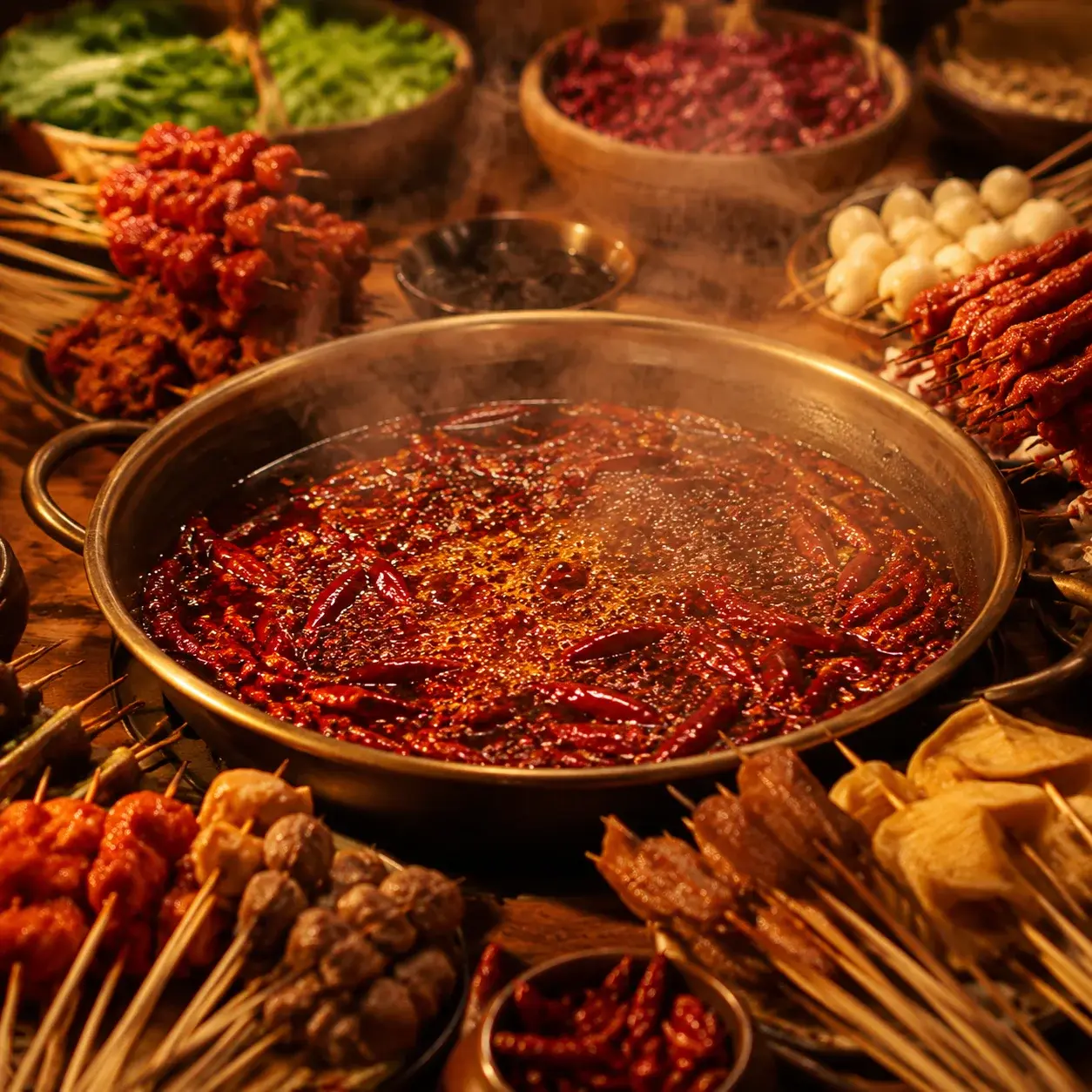
Che cos'è la street food di Chengdu — e come mangiarla senza scottarsi?
Chengdu è diventata la città di street-food più chiacchierata in Cina — e per un motivo valido: è una Città della Gastronomia UNESCO, la prima città in Asia ad ottenere questo titolo. La street food di Chengdu significa málà — spiedini nummanti e piccanti, malatang e dan dan noodles — ma non devi bruciarti il palato per mangiare bene.
L'interesse per la street food di Chengdu è cresciuto più velocemente rispetto a quasi qualsiasi altra destinazione culinaria in Cina, e le persone che arrivano ora pongono sempre le stesse tre domande: che cos'è questo piatto, dove provarlo e quanto è piccante davvero? Questa guida risponde a tutte e tre.
La nostra posizione è semplice — osare mangiare, mangiare bene. Non siamo un sito di ricette e non ti stiamo vendendo un menu fisso. Siamo qui per aiutarti a prendere decisioni su cosa ordinare, dove assaggiare, come abbassare il livello di calore e approssimativamente quanto budget prevedere. Avventura con una rete di sicurezza.
Punti salienti
- Chengdu è una Città UNESCO della Gastronomia (2010) e la capitale cinese della street-food: il sapore caratteristico è málà (麻辣): intorpidente e piccante, non solo "piccante."
- Puoi mangiare a tuo agio anche se odi il peperoncino. Una grande parte del menù ha zero calore — usa la nostra scala di tolleranza al piccante per trovare i gradini sicuri.
- Impara tre frasi prima di atterrare: wēi là (微辣, lieve), bù yào là (不要辣, niente peperoncino), bù yào huājiāo (不要花椒, niente pepe Sichuan).
- Turistico-lucido vs locale-autentico è una scelta reale: Jinli / Kuanzhai Alley per comfort e famiglie; Fuqin Night Market per cibo economico, autentico e avventuroso.
- I prezzi crescono con l'appetito: chuan chuan si paga per stecchino, malatang per peso. I pagamenti mobili sono ovunque — porta un po' di contante.
- I prezzi sotto sono intervalli tipici da strada del 2026 (verificati sul campo luglio 2026) e variano in base al banco e all'area turistica/locale. Il Fuqin Night Market è stato aggiornato all'inizio del 2026 ed è aperto dalle 17:00 alle 23:30.
Perché Chengdu è una capitale di street-food?
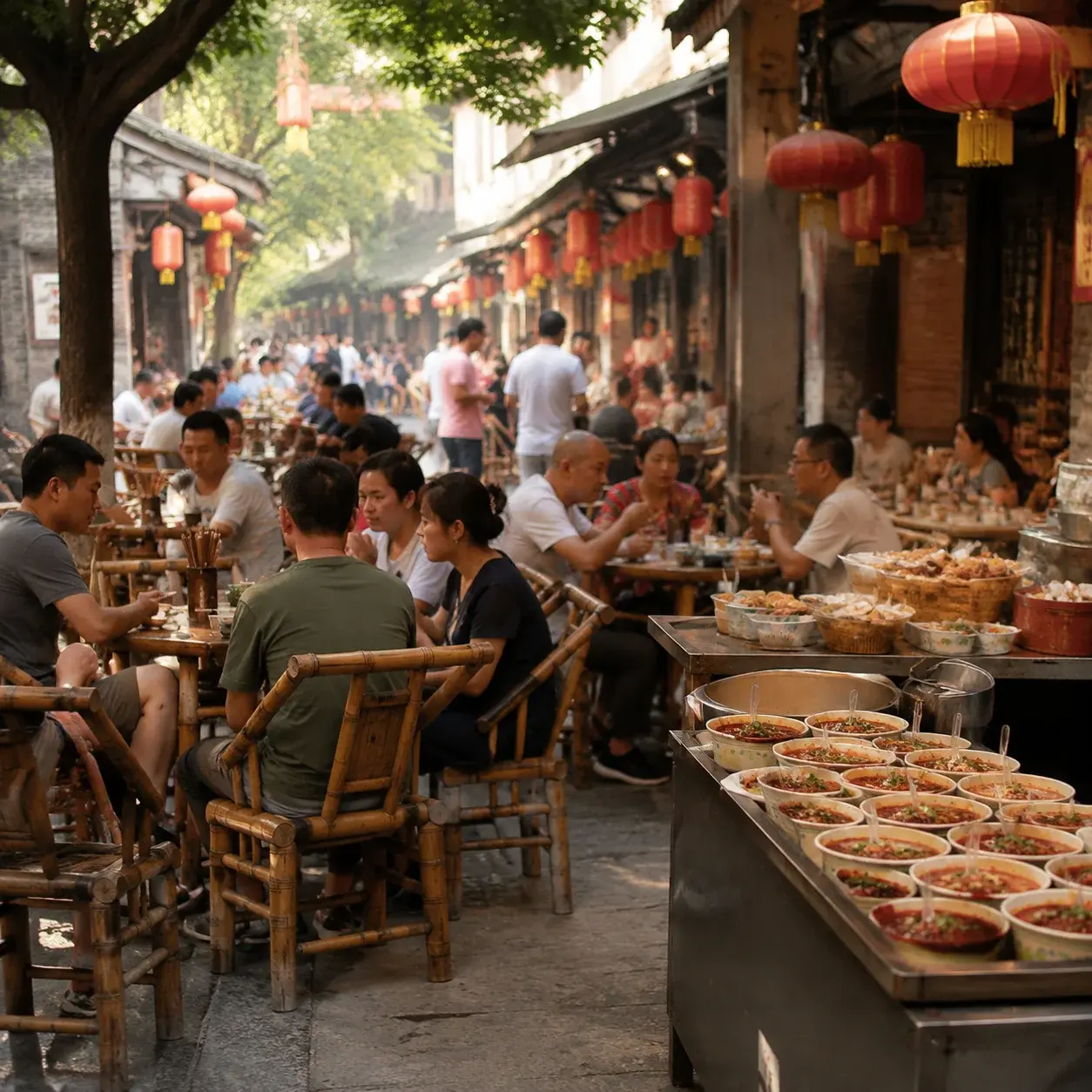
Perché è ufficialmente una — Chengdu è stata nominata Città UNESCO della Gastronomia nel 2010, la prima città in Asia (e la prima in Cina) a ricevere questo riconoscimento. È una capitale culinaria riconosciuta dall'UNESCO, non uno slogan dell'ufficio turistico (Fonti: WildChina; UNESCO Creative Cities Network. Ultimo aggiornamento: 2026-07).
Ciò che rende il cibo di Chengdu inconfondibile è un singolo concetto di sapore: málà (麻辣). La maggior parte delle guide lo traduce come "piccante", ma questo lo sottovaluta, perché málà è davvero due sensazioni separate sovrapposte:
- má (麻) = intorpidimento. Un formicolio elettrico sulle labbra e la lingua che proviene da huājiāo (花椒), pepe di Sichuan — il composto responsabile è l'hydroxy-alpha-sanshool, e non è affatto calore.
- là (辣) = caldo. Il bruciore del peperoncino che già conosci.
Quindi puoi amare i peperoncini eppure essere colto di sorpresa dall'intorpidire. Comprendere che málà ha due manopole — il bruciore e il formicolio — è la cosa più utile che un principiante possa sapere, perché puoi abbassarle singolarmente. Chengdu è anche la città natale dei giant-panda cinesi e una città di teorie, il che ti dice qualcosa del suo ritmo: mangiare qui è lento, sociale e assaggiato per tutta la sera.
Quanto è piccante davvero? Una scala di tolleranza al piccante
No, non tutto intorpidisce la bocca, e sì, puoi mangiare comodamente se non sopporti affatto i peperoncini. La domanda reale del lettore non è "È piccante?", ma "Starò bene io?" Qui è l'intero canone street-food mappato in base al calore, così chi mangia poco piccante, i bambini e i curiosi dei peperoncini sanno esattamente quali gradini sono sicuri e come scendere quando un piatto è troppo."
| Livello | Come si sente | Piatti in questo livello | Come abbassare il livello |
|---|---|---|---|
| ① Senza chili — adatto ai bambini | Dolce o neutro. Zero calore, zero formicolio. | Tre cannoni di riso (mochi), ghiaccio di ghiaccio (gelatina + sciroppo di zucchero di canna), palline di zucchero e olio, guokui salato/non salato | Niente da fare — ordina liberamente |
| ② Leggero — chiedi solo meno | Più aromatizzato che piccante; olio rosso profumato, non punzecchiante. | Zhong dumplings (olio rosso agrodolce), molte dan dan noodles, Long Chao Shou (chiedi brodo chiaro) | Dì 微辣 wēi là (leggero) o 少辣 shǎo là (meno chili) |
| ③ Proprio mala | Brucia e fa intorpidire — la vera sensazione di Chengdu. | Chuan chuan, malatang, mao cai, liangfen/liang mian in olio rosso | Dì 不要辣 bù yào là (senza chili) e, soprattutto, 不要花椒 bù yào huājiāo (senza pepe nero) per eliminare l'intorpidimento |
| ④ Calore da locale | Ordinato come lo fanno i locali — non aspettarti pietà. | Testa di coniglio (mala), spiedini speziati, qualsiasi etichettato come medio/piccante | Non è davvero abbassabile — questo livello è la sfida. Scegli il livello ① o ③ se sei incerto |
Le tre frasi da fare uno screenshot prima di arrivare: 微辣 wēi là (leggero) · 不要辣 bù yào là (senza chili) · 不要花椒 bù yào huājiāo (senza pepe intorpidente). Le classifiche del calore qui sono esperenziali e perenni — puoi fidarti di esse; solo il livello base di un singolo stallone va verificato di persona.
Quali sono i cibi di strada di Chengdu da provare assolutamente?
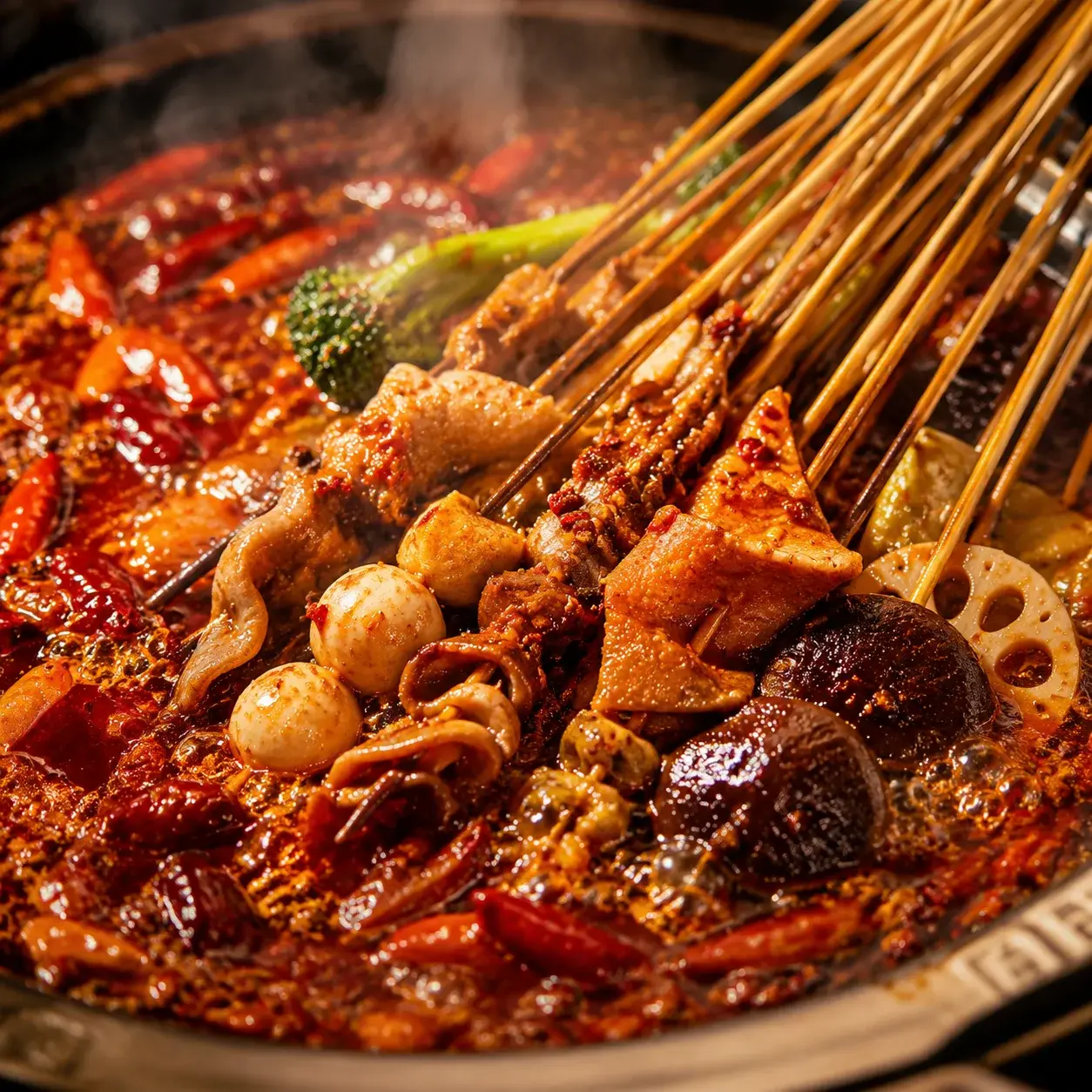
Inizia con i chuan chuan, i dan dan noodles e un dolce come il bing fen — poi espanditi da lì. Qui è il catalogo completo decifrato per un principiante: ogni piatto, come si mangia fisicamente, il suo livello di calore, un prezzo indicativo e come ordinarlo come un locale. Trattiamo ogni piatto come un'esperienza sul posto — mangialo qui, ordinalo così — non come una ricetta.
| Piatto (EN / Cinese) | Cos'è | Come si mangia | Piccante | RMB tipico (2026) | Ordinallo come un locale |
|---|---|---|---|---|---|
| Chuan chuan 串串 | Hotpot su stecchi — bastoncini scelti cucinati nel brodo piccante | Prendi i bastoncini, cuoci/immergi, paga per bastoncino | ③ Piccante | ~0.5–2 / bastoncino (carne premium 3–5) | Conta i bastoncini; chiedi brodo leggermente piccante |
| Malatang 麻辣烫 | Cestino auto-selezionato cucinato nel brodo piccante | Riempì un cestinino, consegnalo, paga in base al peso | ③ Piccante | ~20–45 / ciotola (~15–25 ogni 500g) | Chiedi "Non troppo piccante" per mitigarlo |
| Dan dan noodles 担担面 | Noodles con sesamo, chili e verdure conservate | Mescola vigorosamente prima di mangiare | ② Leggermente piccante | ~10–18 | Chiedi leggermente piccante se sei cauto |
| Guokui 锅魁 | Torta ripiena di carne frita o grigliata | Mangia a mano, calda | ①–② | ~5–15 (carne 8–15, dolce/verdura 5–8) | Chiedi ripieno salato (non piccante) |
| Tang you guo zi 糖油果子 | Frittelle di impasto su stecco in zucchero caramellato (storia di 1.000+ anni) | Dallo stecco — dolci e appiccicosi | ① Nessuno | ~5–10 | Compra uno stecco, mangialo caldo |
| Bing fen 冰粉 | Gelatina ghiacciata con sciroppo di zucchero nero + condimenti | Con il cucchiaio, fredda | ① Nessuno | ~8–20 (più con condimenti) | Chiedi zucchero nero extra o noci |
| Liangfen / liang mian 凉粉/凉面 | Gelatina di fagioli freddi / noodles freddi in olio rosso | Mescola e mangia freddo | ②–③ | ~8–15 | Conferma prima il livello di piccantezza del condimento |
| Zhong dumplings 钟水饺 | Ravioli in salsa agrodolce e olio rosso | Mangia con la salsa | ② Leggermente piccante | ~12–25 | Conditi ma non piccante — una scelta sicura |
| Long Chao Shou 龙抄手 | Wonton setosi, un'icona di Chengdu dagli anni '40 | Brodo o olio rosso | ①–② | ~15–25 | Ordina brodo chiaro per un sapore delicato |
| Mao cai 冒菜 | "Hotpot personale in una ciotola" — immerso, non cucinato | Mangia come una ciotola zuppa | ③ Piccante | ~20–35 | Chiedi di abbassare il livello di piccantezza |
| Rabbit head 兔头 | Specialità piccante di Chengdu famosa | A mano — stacca la carne | ④ Estremo | ~10–18 / testa | La sfida — non abbassare il livello |
| San da pao 三大炮 "cannoncini" di mochi di riso glutinoso schiacciati su un tamburo | Guarda lo schiacciatore del tamburo, mangia con polvere di soia | ① Nessuno | ~10–15 | Guardalo preparare — è uno spettacolo |
Se devi provare solo una cosa, che sia chuan chuan — a self-service, a bastoncino, sociale e controlli il calore in base a ciò che immergi e per quanto tempo. È proprio Chengdu. Il dormiente sottovalutato è bing fen: tutti inseguono i capisaldi alla mala e dimenticano il gelato di ghiaccio, ma è economico, rinfrescante, universalmente sicuro e il reset perfetto del palato tra i piatti piccanti. E il piatto simbolo — quello che ti permette di dire "ho mangiato a Chengdu" — è la testa di coniglio. Estremamente intensa, interattiva e non per gli schizzinosi. Identità dei piatti, modalità di consumo e gradazione del piccante sono sempre attuali; i valori in RMB sono intervalli tipici del 2026 verificati sul campo e, poiché la maggior parte degli articoli è a bastoncino o a peso, il conto cresce con la fame.
Dove mangiare — nei luoghi turistici o nei mercati locali?
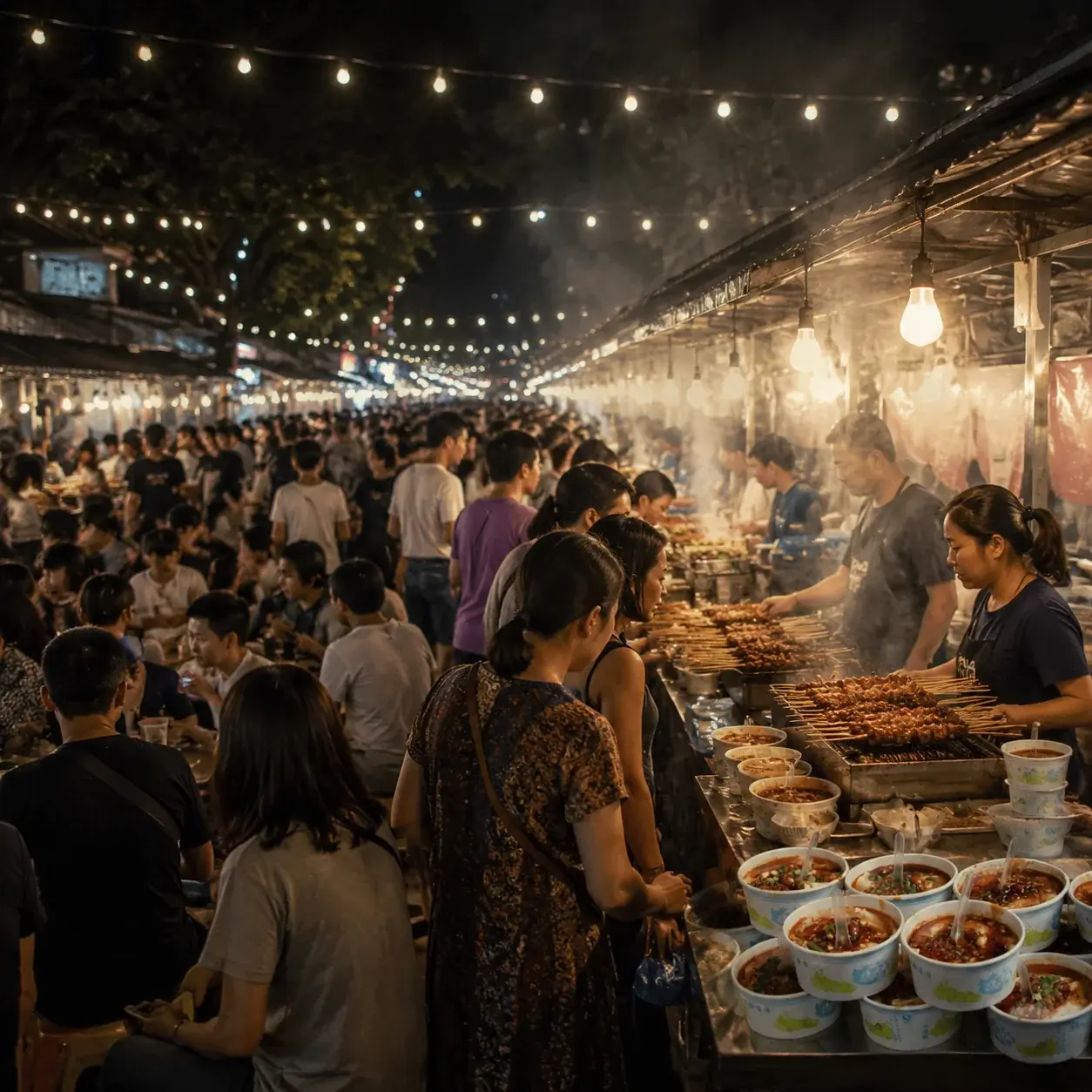
Dipende dalla tua voglia di avventura e dalla tua tolleranza logistica — ecco il compromesso onesto che nessuno espone così chiaramente. Le strade degli snack turistici ti offrono comodità e comfort a un prezzo più alto; il mercato notturno locale ti offre autenticità e prezzi bassi in cambio di più sforzo. Nessuno è "migliore": sono strumenti diversi per viaggiatori diversi.
| Spot (EN / Cinese) | Atmosfera | Prezzo | Autenticità | Ideale per | Avvertenza |
|---|---|---|---|---|---|
| Jinli Street 锦里 | Strade curate, fotografiche e adatte ai palati occidentali | 💰💰 Più costoso (prezzi turistici) | Moderato — piatti reali, ma ammorbiditi | Principianti, famiglie, amanti del cibo poco piccante, "introduzione sicura" | Affollato; centrale e facilmente accessibile. Strada all'aperto, dal giorno alla sera tarda |
| Kuanzhai Alley 宽窄巷子 | Strade restaurated; combo sightseeing + snack | 💰💰 Più costoso | Moderato — zona di snack turistici | Unire una passeggiata con lo spuntino; Long Chao Shou vicino (10–15 min a piedi) | Molto turistico; centrale. Strade all'aperto, dal giorno alla sera tarda |
| Fuqin Night Market 抚琴夜市 | Mercato serale locale senza fronzoli per mala-skewer / BBQ | 💰 Economico | Alto — questo è il livello locale | Avventurosi cercatori dell'esperienza reale, budget limitato | Funziona dalle 17:00 alle 23:30 (alcuni stand più tardi). Aggiornato all'inizio del 2026 in un distretto food-and-culture, con i trasferti dei stand dalla strada in un lotto designato per ridurre il rumore — arriva presto per l'esperienza completa
La decisione in una riga: Jinli e Kuanzhai Alley ti offrono comodità, comfort, facilità per gli inglesi e una rete di sicurezza — ideali per le famiglie e i palati cauti, se accetti i prezzi da turista. Fuqin Night Market ti offre autenticità, cibo economico e un'atmosfera locale genuina — se riesci a gestire un contesto residenziale e rispetti il coprifuoco. Un appunto: Fuqin è stata ristrutturata all'inizio del 2026 e i suoi banci sono stati spostati dalla strada in un lotto designato per ridurre rumore e fumi, quindi l'elenco esatto dei banci può variare. Solitamente è aperto dalle 17:00 alle 23:30 — arriva prima per gustare tutto l'offerta.
Una passeggiata a piedi per i snack di Chengdu
Scegli un quartiere e assaggia in sequenza — non inseguire un piatto iconico in tutta la città. La logica di un buon itinerario è semplice: inizia con piatti salati per sazietà, poi passa al piccante, ripulisci il palato e termina dolce e fresco. Ancora questo itinerario di mezza giornata alla sera nell'area Kuanzhai–Jinli, condividi ogni piatto e vai con calma.
| Fermo | Piatto | Perché qui | Note |
|---|---|---|---|
| 1. Riscaldamento (salato) | Guokui | Un pane denso e saziante riscalma lo stomaco prima del chili | Scegli un banco affollato, salato ma non piccante |
| 2. Primo piatto di noodles | Dan dan noodles | Specialità di Chengdu; il livello di piccantezza regolabile ti accompagna delicatamente | Se sei cauto, ordina "poco piccante" |
| 3. Cuore della mala | Chuan chuan o malatang | Picco di calore nel mezzo del giro, quando il palato è pronto | Scegli tu i bastoncini; paga per bastoncino o per peso; scegli un banco con alto turnover |
| 4. Reset del palato | Liangfen / liangmian | Gelatina fredda di fagioli di soa ripulisce la bocca dopo la mala | Conferma il livello di piccantezza della salsa |
| 5. Teatro + dolce | San da pao | Mochi a forma di "palla di cannone" che suona come un tambolo — divertente da guardare, zero calore | Ottimo con i bambini |
| 6. Conclusione fresca | Bing fen | Gelatina ghiacciata sciolta in sciroppo di zucchero bruno — il classico finale fresco | Essenziale d'estate |
| 7. Finale coraggioso (opzionale) | Testa di coniglio @ Fuqin | Sostituisci una serata a Fuqin alla sfida | Migliore la sera — Fuqin è aperto fino alle 23:30 circa |
Fenestra ideale: tardo pomeriggio fino alla sera. Preparati a pagare per bastoncino e per peso al punto 3, quindi porta monete piccole o un'app di pagamento mobile. La sequenza è il nostro quadro editoriale e funziona ovunque nel quartiere; i singoli banchi e gli indirizzi sono quelli che confermi sul posto.
Si può mangiare a Chengdu se non si ama il piccante, si è vegetariani o si hanno bambini?
Sì a tutti e tre — con un piano strategico. Chengdu, con il piccante ridotto, è ancora una città di dolci, testurale e teatrale, e chi preferisce i piatti leggeri può avere una giornata davvero fantastica.
Per chi ha paura del piccante, attieni ai livelli ① e ②: dumplings allo zucchero e olio, bing fen, san da pao, guokui salato e Long Chao Shou in brodo chiaro (清汤). Se un piatto può essere meno piccante, usa 不要辣 (senza peperoncino) e 不要花椒 (senza pepe Sichuan). Viaggiando con bambini? Fai dei dolci al livello ① il tuo punto di riferimento e trasforma il san da pao in uno spettacolo — lo schiacciato del tamburo è divertimento tanto quanto dessert.
I vegetariani devono prestare attenzione: i brodi e le salse all'olio rosso contengono spesso carne o strutto, anche se la copertura visibile sembra vegetale; quindi, scegliere verdure da soli in uno stand di chuan chuan o malatang non garantisce un brodo vegetariano. Le scelte più sicure sono bing fen, tang you guo zi, san da pao e liangfen semplice (controlla la salsa). Impara la domanda 有素的吗? yǒu sù de ma? — "avete opzioni vegetariane?" La tecnica di ordinamento è sempre valida: le opzioni vegetariane di uno stand specifico vanno sempre verificate.
Quanto costa e come si paga?
Pianifica circa 30–150 RMB a persona per una serata di street food — ma la mossa intelligente è capire il meccanismo di定价, perché la street food di Chengdu non ha un menu fisso; i due elementi mala sono venduti per unità, quindi il conto cresce in base alla tua fame.
- Chuan chuan 串串 = pagamento per stuzzichino. Ogni stuzzichino ha un prezzo fisso e si paga in base al numero di stuzzichini vuoti accumulati. Chi mangia poco spende meno.
- Malatang 麻辣烫 = pagamento in base al peso. Riempisci un cestino, lo pesano crudo, poi lo cuoci — più verdure e carne significano più peso e quindi un prezzo più alto.
- Snack da mercato seriale = a pezzo, in piccole denominazioni.
| Livello | Aspetto tipico | RMB tipico (2026) |
|---|---|---|
| Chi mangia poco | Alcuni stuzzichini + un dolce (bing fen o san da pao) | ~30–50 a persona |
| Escursione standard | Una ciotola di malatang + guokui + alcuni dolci in un quartiere | ~50–90 a persona |
| Piena serata + Fuqin | Più turni di stuzzichini, mao cai, testa di coniglio, snack da mercato | ~90–150 a persona |
Pagamento: i pagamenti mobile (WeChat Pay e Alipay) sono accettati ovunque, anche nei piccoli banci. Dal 2026, i visitatori stranieri possono collegare direttamente una Visa o Mastercard — non serve un conto bancario cinese — quindi l’impostazione è molto più semplice di una volta. Tuttavia, porta un po’ di contanti per i venditori più piccoli. I meccanismi a stuzzichino e a peso fanno sì che il conto cresca con la fame; le cifre in RMB sopra sono i tipici intervalli del 2026.
Domande frequenti
Il cibo di strada di Chengdu è troppo piccante? Non tutto. Il suo carattere, la málà (麻辣), è sia intorpidente che piccante e gran parte del canone è davvero ardente — ma una grande parte degli snack classici (dumplings allo zucchero e olio, bing fen, san da pao, guokui salato) non ha affatto calore. Usa una scala di piccantezza e la frase wēi là (lievemente piccante) e starai a posto.
Si può mangiare non piccante a Chengdu? Sì, comodamente. Costruisci la tua giornata sul gradino senza chili: tre cannoni, bing fen ghiacciato, dumplings allo zucchero e olio, guokui salato e zuppa chiara (清汤) Long Chao Shou. Per i piatti che possono essere attenuati, dì bú yào là (senza chili) e bú yào huājiāo (senza pepe nero). Chengdu senza calore è ancora una fantastica città culinaria.
Qual è la zona migliore per il cibo di strada a Chengdu? Per una prima visita, Jinli Street o Kuanzhai Alley — curate, centrali, adatte alle famiglie e facili da navigare, sebbene con prezzi da turista. Per un'esperienza più economica e autentica, Fuqin Night Market offre skewer mala e barbecue genuini; dopo un aggiornamento nel 2026 è aperto dalle 17:00 alle 23:30, quindi arriva prima per assaporare tutto lo spettro.
C'è cibo vegetariano di strada a Chengdu? Sì, ma scegli con attenzione. I brodi e le salse all'olio rosso contengono spesso carne o strutto anche quando la guarnizione sembra vegetale, quindi scegliere le verdure da soli non garantisce un piatto vegano. Scelte sicure sono bing fen, tang you guo zi, san da pao e liangfen semplice. Chiedi yǒu sù de ma? (有素的吗?) — "avete opzioni vegetariane?"
Quanto costa il cibo di strada di Chengdu? Circa 30–150 RMB a persona per la serata, a seconda dell'appetito. Chuan chuan si paga per spiedino e malatang a peso, quindi il totale dipende da quanto mangi. Questi sono i tipici intervalli del 2026 e variano da stalli. I pagamenti mobile funzionano quasi ovunque — i visitatori stranieri possono ora collegare direttamente Visa o Mastercard — ma tieni un po' di contanti per i piccoli stalli.
Vale la pena un tour gastronomico a Chengdu? Sì, soprattutto se vuoi scoprire i luoghi locali come il Fuqin Night Market, gestiti senza dover risolvere problemi di lingua, piccantezza e logistica. Un buon tour guidato trasforma una prima serata ansiosa in una sicura e si occupa degli ordini. Se preferisci l'autonomia, questa guida ti dà la struttura per farlo da solo.
Conclusione
Chengdu si guadagna la reputazione di capitale della street food cinese — una Città UNESCO della Gastronomia dove málà è un'emozione a due parti e il canno va da spiedimenti intorpidenti a dolci e rinfrescanti bing fen. Il trucco è mangiare con convinzione ma tenendo una rete di sicurezza: conosci la scala del piccante, porta le tue tre frasi, scegli il quartiere che si adatta al tuo appetito e assaggia in sequenza. Osala, mangia bene.
Se preferisci che qualcuno si occupi dei luoghi locali — il vero stile Fuqin, senza indovinelli su lingua e logistica — un'esperienza culinaria personalizzata a Chengdu fa proprio questo.
Continua a esplorare: il nostro articolo sulla  cena di strada in Cina, la guida ai cibi dei mercati notturni, se vale la pena un tour guidato del cibo e, se stai anche andando a nord, il cibo di strada di Xi'an.