




 18 days China, End to End Beijing → Xi'an → Chuanzhusi → Jiuzhaigou → Chengdu → Zhangjiajie → Guilin → Yangshuo → Shenzhen From $6,360 View route
  3 days 4-Day Tour of Siguniang Mountain, Biepa Gou, and Dagu Glacier Chengdu → Lixian → Heishui County From $1,599 View route
  5 days Above the Pillars, Then Below Zhangjiajie From $1,430 View route
  3 days After the Last Booth Guangzhou From $840 View route
  13 days All the Way West Xi'an → Dunhuang → Turpan → Kashgar → Shanghai From $3,500 View route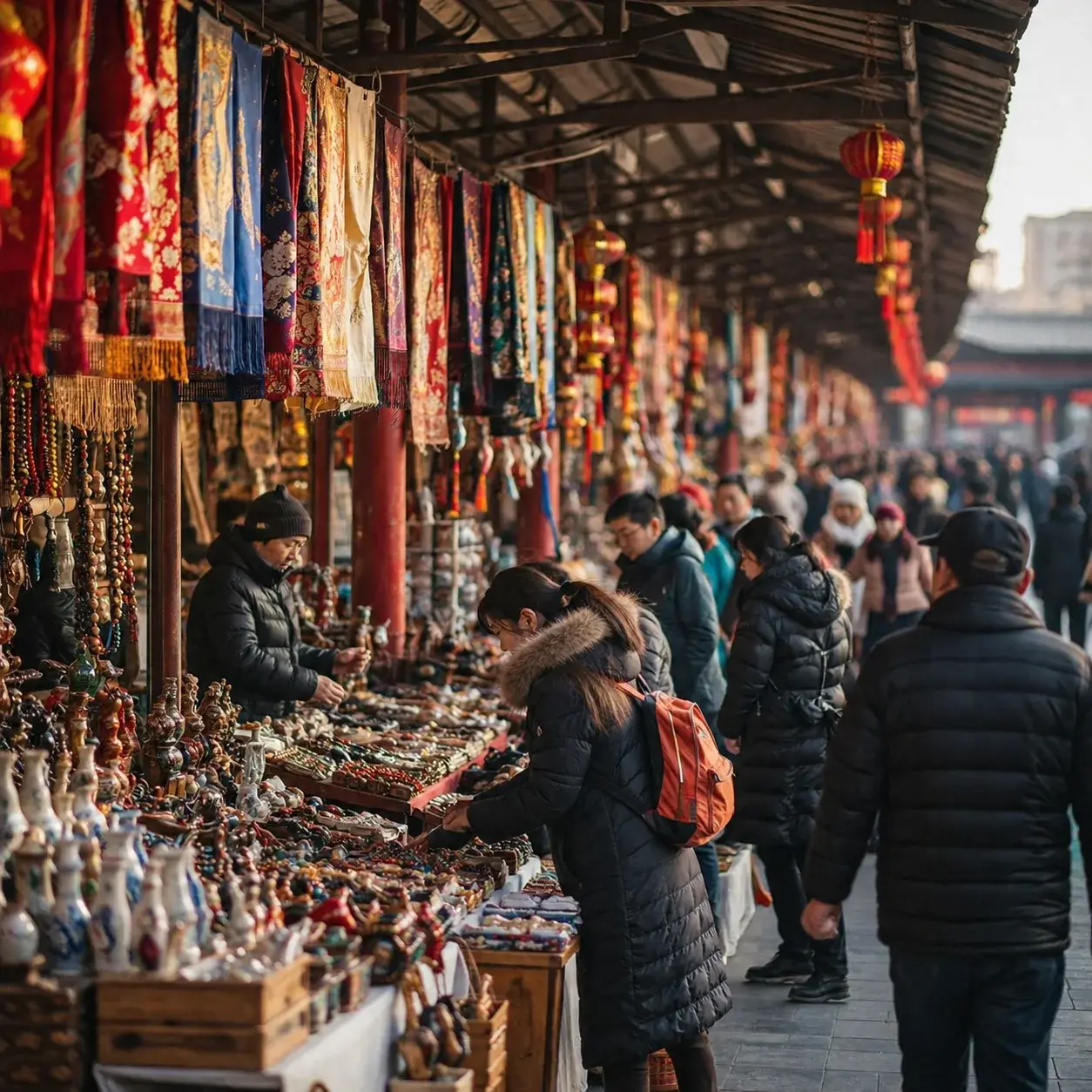
Beijing Markets & Shopping: Which Market Do You Go To for What, and How Do You Avoid Getting Ripped Off?
Start from what you want to buy, not from a list of places. For pearls go to Hongqiao, silk and tailoring to the Silk Market, antiques to Panjiayuan, heritage brands to Qianmen, and one-stop gifts to Wangfujing. Among Beijing markets, real luxury belongs in a mall, not a stall — and the biggest risk is fakes and the "tourist tax," not the shopping itself.
Most guides to Beijing markets hand you a flat list of ten places and leave you to figure out which one is actually for you. This is the opposite: a decision guide for shopping in Beijing. We are a private-travel company for inbound China trips, not a market or a seller — so we can tell you plainly which venue serves your goal, where haggling is expected and where it is rude, and how not to carry home a fake or break China's antique-export law.
By the end you will know four things: the right market for what you want, whether your trip points to a market or a mall, how bargaining actually works, and the three buyer-protection rules that hold across every market in the city.
Key Takeaways (TL;DR)
- Shop by intent, not by fame. Decide what you want to buy first; the market follows. Pearls → Hongqiao, silk/tailoring → Silk Market, antiques/art → Panjiayuan, heritage brands → Qianmen, one-stop → Wangfujing, hutong design → Nanluoguxiang, street food → night markets.
- Markets and malls are different trips. Markets (Silk, Pearl, Panjiayuan) mean bargaining, souvenirs and replicas. Malls (SKP, China World/Guomao, Taikoo Li) mean fixed prices, genuine luxury and tax refunds. Don't cross the streams.
- Buy category-genuine, never fake logos. Real silk, real tea, real pearls and real crafts are the safe buys. A "designer" bag in a market is a replica and can be seized at your home customs.
- Bargaining is theater, not war. At tourist markets the first ask can be several times fair value; counter low, stay friendly, and be ready to walk away — the "final price" often follows you to the door.
- Genuine antiques are export-restricted. China's revised Law on the Protection of Cultural Relics (in force since 1 March 2025) restricts exporting genuine relics, which need official appraisal to leave the country legally. The exact age cutoff is disputed across sources (commonly cited as pre-1949), so verify with China Customs before you buy or leave — and most Panjiayuan "antiques" are reproductions anyway.
- Every price, hours and bargaining ratio below is indicative — confirm on the ground before you go.
Which Beijing Market for What You Want to Buy (The Router)
Pick what you want to buy, and this table sends you to the right market and the deep guide for it. This is the fastest way to plan shopping in Beijing: no competitor list starts from your purchase intent, but that is the only variable that matters. The first decision in Beijing markets is not "which market is most famous" — it is "what do you actually want to take home?"
| You want to buy | Go to this market | Why it, and the honest caveat | Read next |
|---|---|---|---|
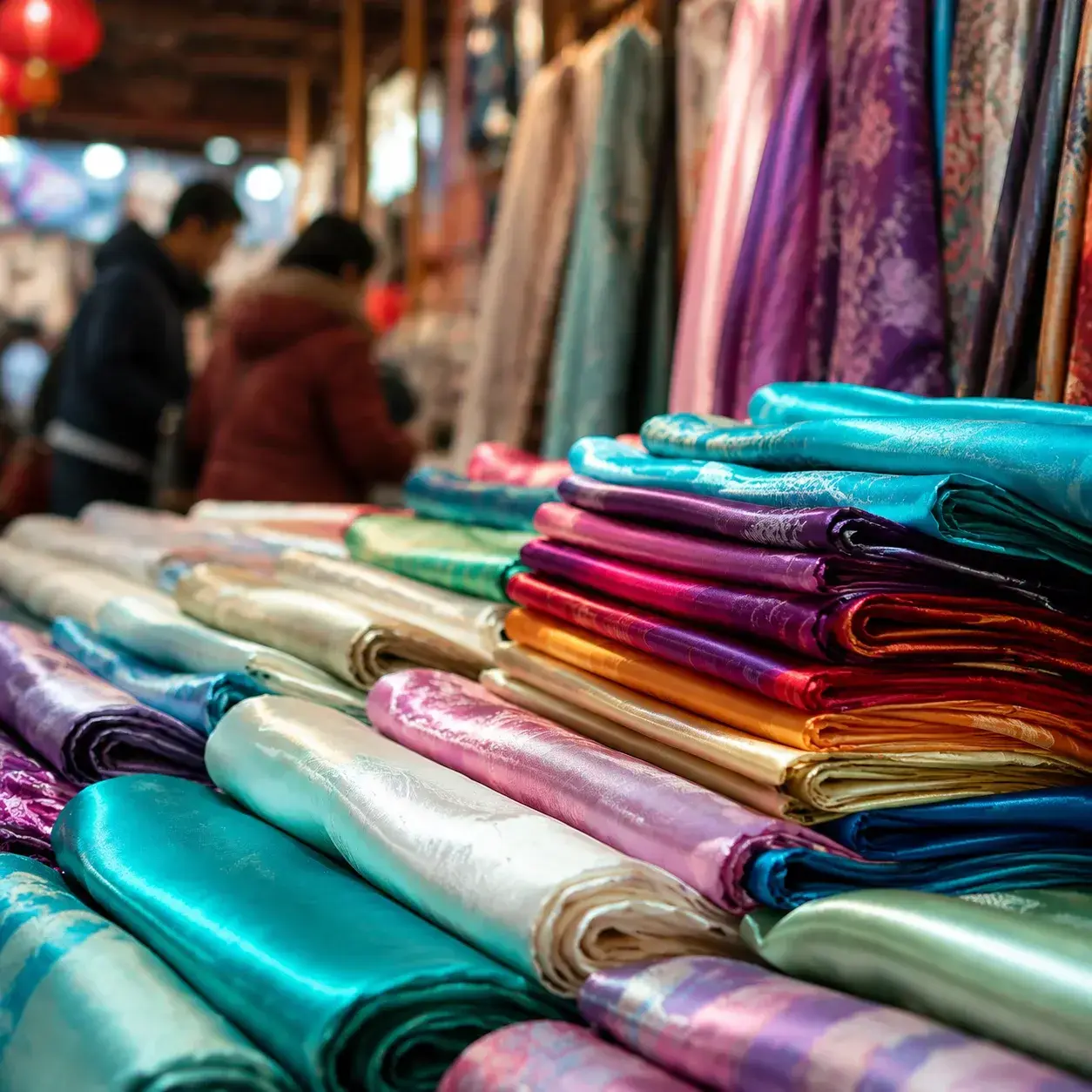
| Silk, tailored qipao/suits, (knockoff) fashion | Silk Market (Xiushui) | Made-to-measure tailoring and silk by the metre; also Beijing's most famous replica hub — buy real silk, not fake logos, and expect the hardest haggling |  Silk Market guide Silk Market guide |
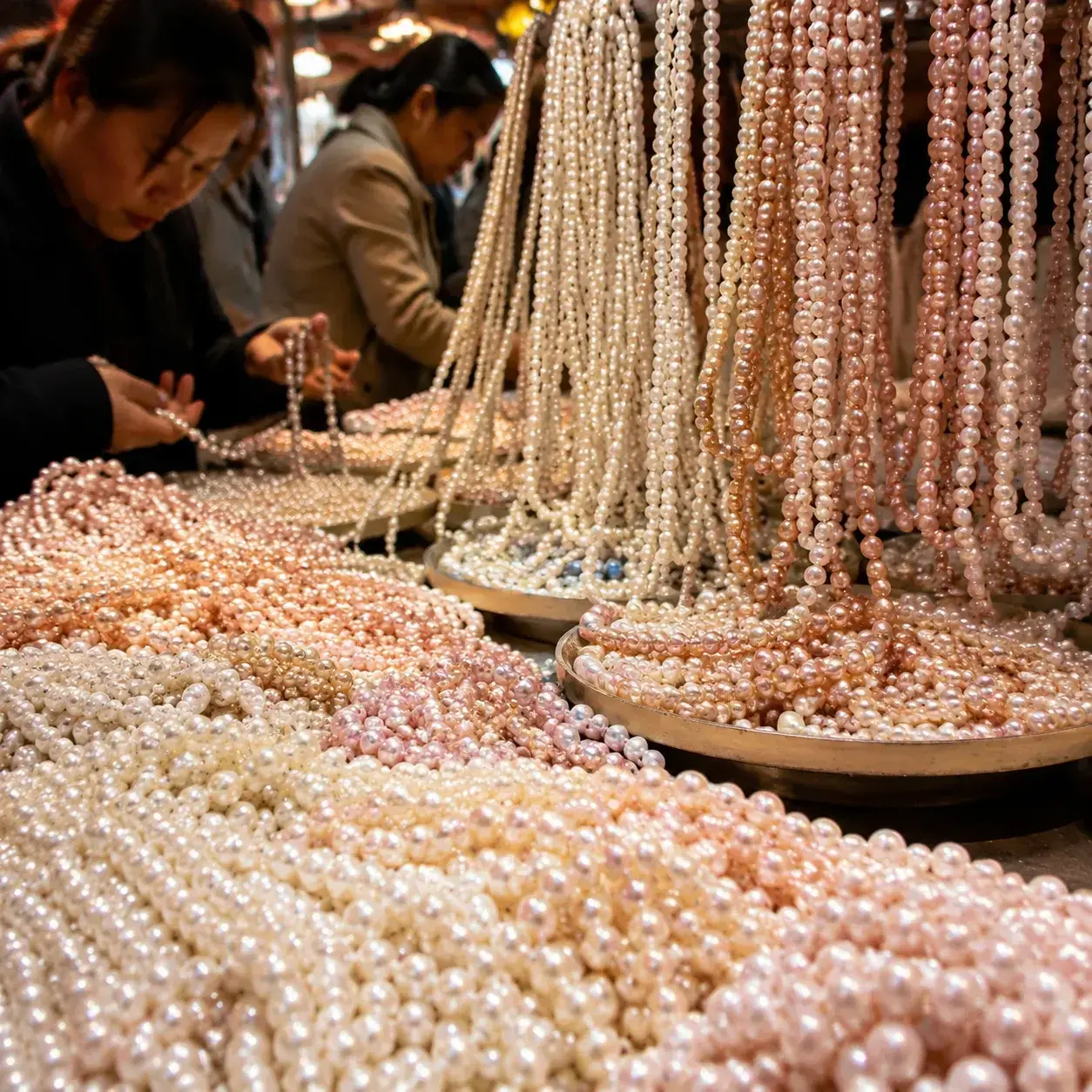
| Pearls & jade | Hongqiao Pearl Market | Certificated freshwater/seawater pearls and jade floors; value comes from bead quality and lustre — demand a real certificate on high-value pieces | Pearl Market guide |
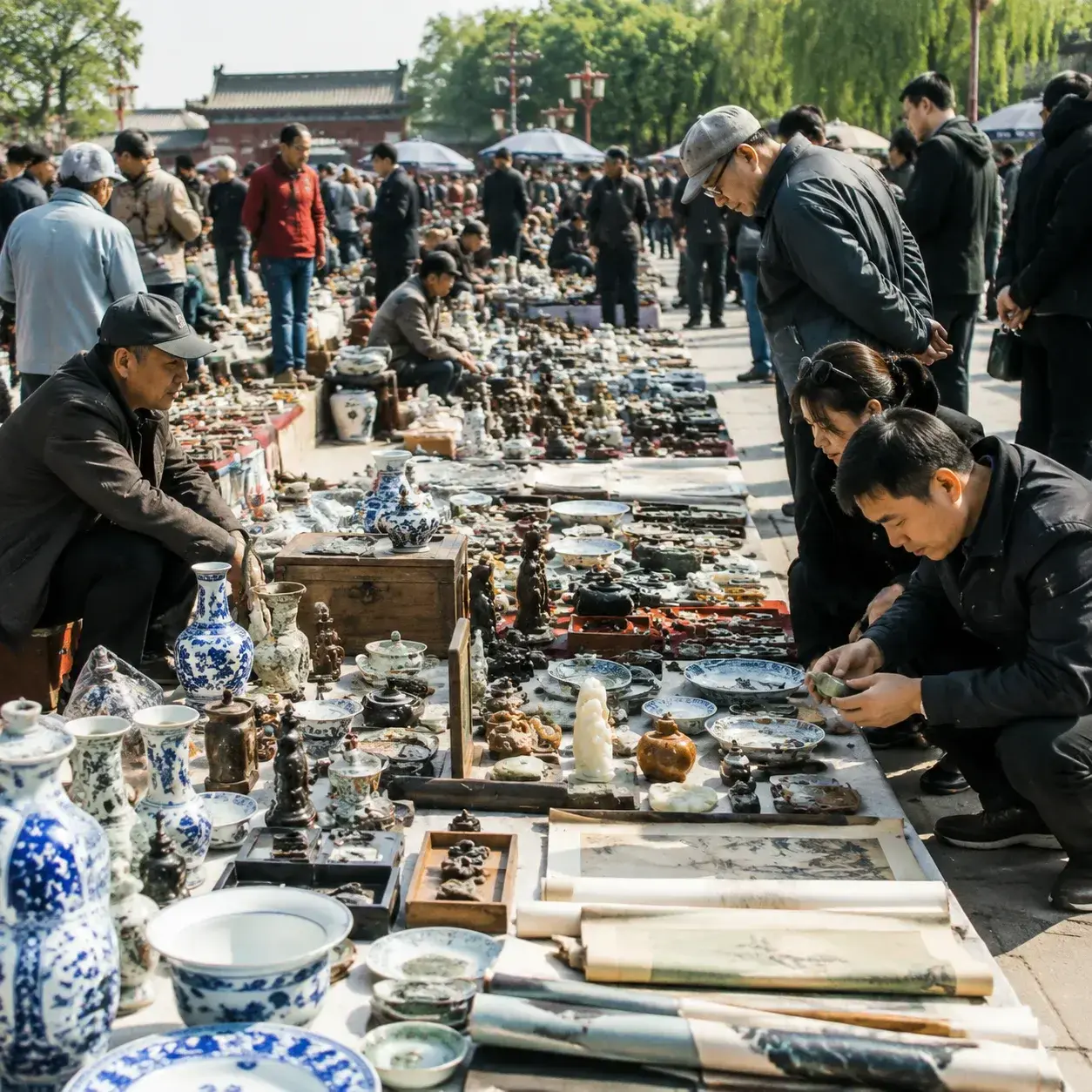
| Antiques, art, calligraphy, Mao-era curios | Panjiayuan (+ Liulichang) | Asia's largest antique and flea market; most "antiques" are reproductions (legal, priced as crafts) — genuine relics are export-restricted (see below) | Panjiayuan guide |
| Heritage brands & 老字号 (time-honored shops) | Qianmen / Dashilan | Century-old shops for tea, medicine, shoes and pastries — fixed price, no bargaining | Qianmen Street guide |
| One-stop flagship street + snacks | Wangfujing | Department stores, brand flagships and a snack street on one pedestrian road — best for the time-poor and families | Wangfujing guide |
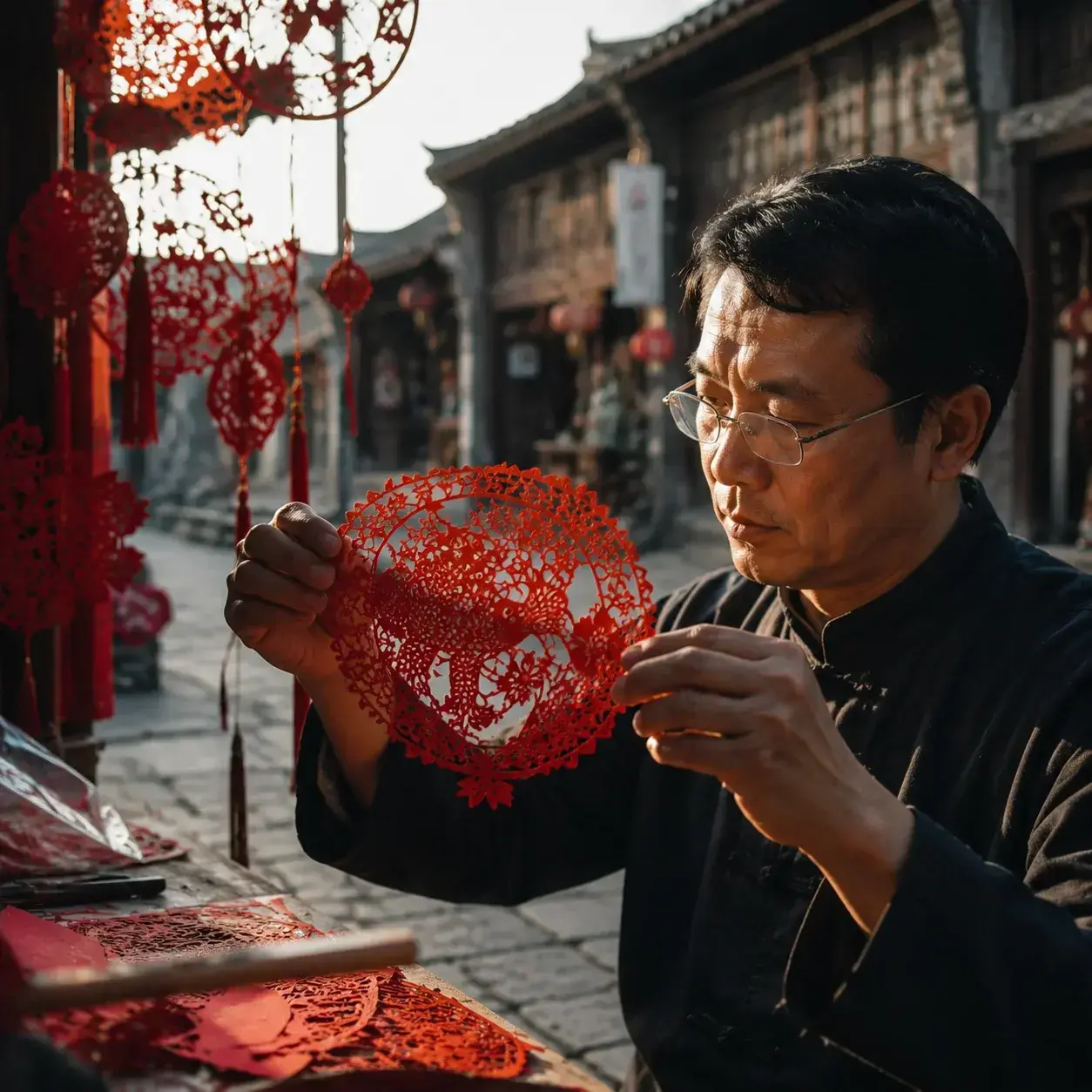
| Hutong crafts & independent design | Nanluoguxiang | Handmade goods, boutiques and cafés in a hutong setting — come for atmosphere, not bargains | Nanluoguxiang guide |
| Street food & night-market atmosphere | Night markets & food streets | Local eats and evening market buzz — a food experience, not a shopping run | Beijing street food guide |
| Tea (wholesale & tasting) | Maliandao Tea Street | Beijing's wholesale tea district — see the specialty section below | Chinese tea guide |
| Electronics | Zhongguancun | Former electronics hub — for genuine gear a mall or official store beats a market (see below) | — |
Four answer-first reads from the router, if you only remember one line:
- Want a single Beijing thing to take home? Choose the category first: pearls → Hongqiao, silk/qipao → Silk Market, heritage tea/pastries → Qianmen, art and curios → Panjiayuan.
- Want genuine luxury? Don't go to a market at all — go to a mall (SKP, Guomao, Taikoo Li). A market "brand" is a replica.
- Only half a day, want it all in one place? Wangfujing — department stores, flagships and a snack street on one street.
- Want atmosphere and indie design? Nanluoguxiang, in the hutongs — not a place to hunt for cheap.
Markets vs Malls in Beijing: Which One Is Your Trip?
Markets are for bargaining, souvenirs and replicas; malls are for fixed-price, genuine luxury and tax refunds. "Beijing shopping mall" is a genuinely different search and a genuinely different trip, so decide the fork honestly rather than blending the two. If you want to negotiate for a Beijing souvenir, you want a market. If you want a guaranteed-authentic branded item with a tax-refund counter, you want a mall.
| What matters | Bargaining markets (Silk, Pearl, Panjiayuan, Qianmen) | Modern malls (SKP, China World/Guomao, Oriental Plaza, Taikoo Li) |
|---|---|---|
| Bargaining | Expected (老字号 shops excepted) | Fixed price, no haggling |
| Authenticity | Category-genuine (silk, tea, pearls) is reliable; "brands" are mostly replicas | Genuine luxury guaranteed |
| Price | Cheap if you can haggle, a trap if you can't | Fixed, transparent, not cheap |
| Vibe | Lively, chaotic, a game of wits | Air-conditioned, orderly, low-stress |
| Tax refund | None | Departure tax-refund counters |
| Best for | Bargain-hunters, souvenir-seekers, people with time | Luxury buyers, the time-poor, families |
Mall names and areas below are indicative — verify current locations and tax-refund desks before you go. SKP Beijing (Dawanglu/Huamao area) is widely regarded as China's top luxury department store; China World Mall / Guomao sits in the CBD; Oriental Plaza connects to the south end of Wangfujing; and Taikoo Li Sanlitun is an open-air international-brand district.
Which one, by buyer type
- Bargain-hunter → market: silk, pearls, antiques and gifts, priced down by haggling.
- Luxury buyer → mall: SKP or Guomao for genuine goods, tax refund and no negotiation stress.
- Time-poor → mall or Wangfujing one-stop: pay a fixed price and move on.
- Family → mall or Wangfujing: air-conditioning, food, easy navigation and no half-day of haggling with kids in tow.
When to choose a market: souvenirs, gifts, the experience itself, real bargains, and category-genuine goods you can inspect.
When to choose a mall: genuine brand-name luxury, a tax refund, air-conditioning, guaranteed authenticity and zero negotiation.
Our honest take: if you want a real designer bag, go to a mall — a "designer" bag in a market is a replica and may be seized at your home customs. If you want a Beijing thing to take home, go to a market. Don't cross the streams. We can say this because we don't earn a cut from either.
Best Markets in Beijing by Category (At a Glance)
If you already know your category, this table names the best market for it and what to watch for. It is the router condensed to a scannable reference for where to shop in Beijing by product type.
| Category | Best market | Bargain here? | Watch out for |
|---|---|---|---|
| Silk & tailoring | Silk Market (Xiushui) | Yes, hard | Fake logos; confirm real silk |
| Pearls & jade | Hongqiao Pearl Market | Yes | Get a certificate on high-value pieces |
| Antiques & art | Panjiayuan | Softly | Most pieces are reproductions; export law on genuine relics |
| Heritage brands (老字号) | Qianmen / Dashilan | No — fixed price | Nothing; prices are marked |
| One-stop + snacks | Wangfujing | Mostly no | Snack-street prices skew tourist |
| Hutong design | Nanluoguxiang | Rarely | Come for vibe, not value |
| Tea | Maliandao Tea Street | Sometimes | Wholesale district — don't over-buy at stall one |
| Luxury / genuine brands | SKP · Guomao · Taikoo Li (malls) | No | Nothing — that's the point |
How Bargaining Works in Beijing Markets (Opening-Bid 101)
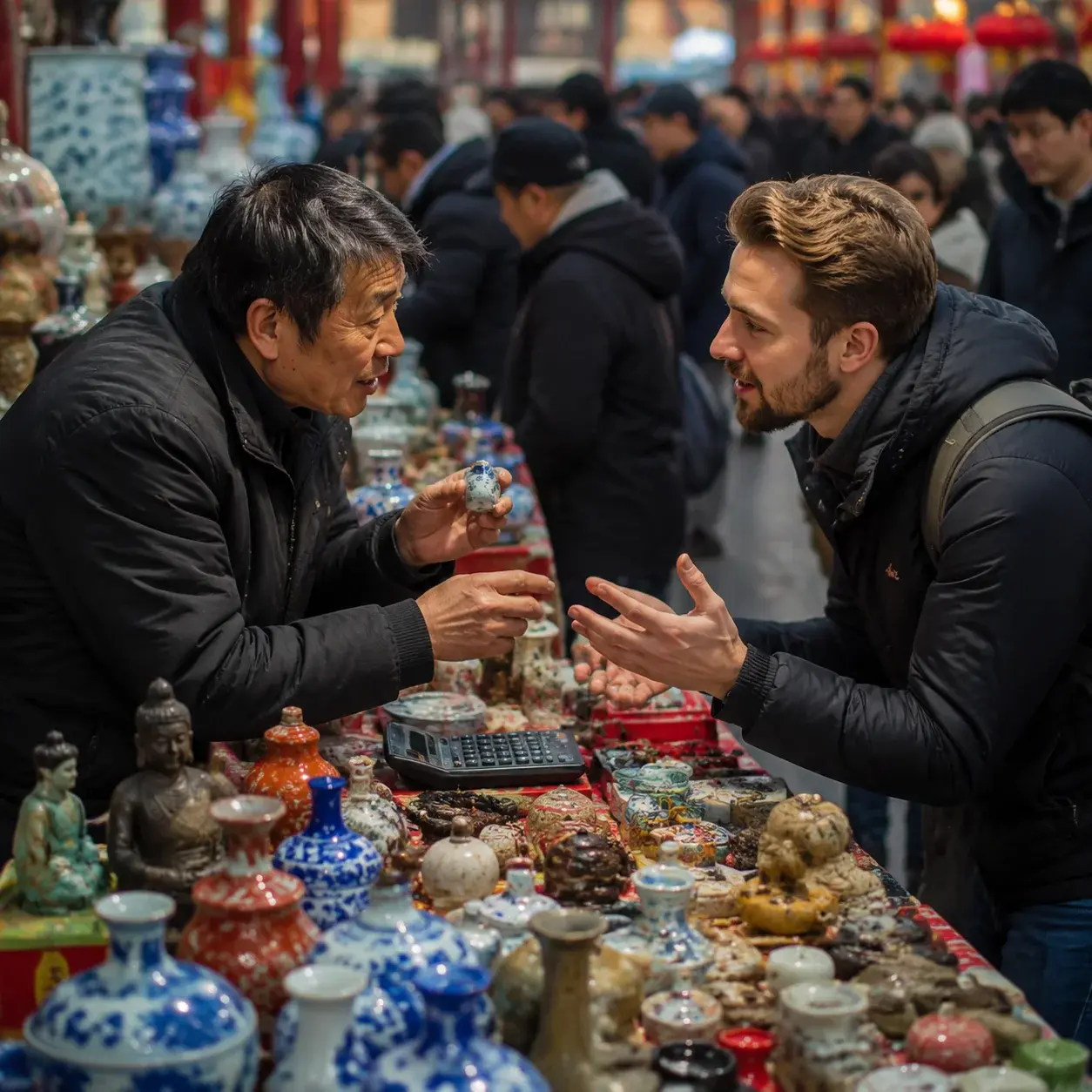
At tourist markets, haggle hard; at 老字号 shops, malls, supermarkets and food stalls, don't haggle at all. Bargaining is the single skill that decides whether shopping in Beijing is cheap or a rip-off, and most guides only tell you to "bargain hard" without the mechanic. Here is where it applies and how the opening bid actually works.
| Venue | Bargain? | Opening-bid mechanic (indicative — verify on the ground) |
|---|---|---|
| Silk Market / Hongqiao (tourist markets) | Hard | First ask can run 5–10× fair value; counter at ~15–25% of it, settle around ~30–50% |
| Panjiayuan / antique stalls | Softly | Less room than tourist markets; depends on the piece and your eye |
| 老字号 shops, malls, supermarkets, food stalls | No | Fixed price — bargaining is impolite |
These ratios are indicative only — treat them as a starting mental model and confirm real opening-versus-settle prices at the stall.
The four moves
- Anchor low. Open your counter at roughly 15–25% of the first ask (indicative).
- Stay friendly. A smile gets a better price than a scowl; the vendor's "you're insulting me" reaction is part of the script.
- Walk away — your strongest lever. The "final price" often follows you to the door.
- Pay smart. WeChat Pay or Alipay, or small-denomination cash; use a calculator or type numbers on your phone to communicate.
When NOT to bargain
Heritage 老字号 shops, all malls, supermarkets, marked-price shops and food stalls are fixed price. Trying to haggle there reads as rude, not savvy.
Our honest take: bargaining is theater, not war. Nobody is really offended, and nobody is really "losing money at that price." Enjoy the game, don't get emotional, and know your walk-away number before you open your mouth.
Buyer Protection: Fakes, Fair Price, and Customs
Three rules protect you in every Beijing market: assume brands are fake and buy category-genuine, anchor your price before you buy, and know that genuine antiques can't legally leave China without a permit. This is the trust layer no market-list gives you, and it matters most for the exact travelers who fear getting burned. Read it before you spend on anything valuable.
| Rule | What it looks like | How to defend yourself |
|---|---|---|
| 1. Fakes | Market "brands" are replicas by default | Buy category-genuine — real silk, tea, pearls, crafts — never fake logos. Carrying counterfeits home risks customs seizure and legal trouble. See the Silk Market guide on telling real silk |
| 2. Fair price | The "tourist tax": higher opening quotes for foreigners | Anchor before you buy, cross-check 2–3 stalls, and demand a real certificate on jade and pearls. See the Pearl Market guide on certificates |
| 3. Customs & export law | Genuine relics are export-controlled; only reproductions leave freely | Know the law below, keep receipts, declare high-value buys, and check your home country's duty-free allowance. See the Panjiayuan guide on the appraisal stamp |
Can you take antiques out of China?
Mostly no, if they're genuinely old. China's Law on the Protection of Cultural Relics — revised in 2024 and in force since 1 March 2025 — restricts the export of genuine cultural relics, which cannot legally leave the country without official appraisal. Where sources disagree is the exact age cutoff: many travel pages say pre-1949, others cite the "100 years / pre-1911" or even pre-1795 figures. Because the threshold and enforcement are contested and change, verify the current cutoff with China Customs or a licensed cultural-relics export appraisal station before you buy or leave.
Legally exportable relics carry an official red wax seal (火漆印 / 鉴定) applied by a Cultural Relics Appraisal body — usually on the side, base or back of the object. Crucially, that seal certifies legal export, not authenticity (sources: antique-chinese-furniture.com, gotheborg.com; verified 2026-07-08 — verify before you buy). In practice, most "antiques" at Panjiayuan are reproductions: legal to export and priced as crafts, so buy them as souvenirs, not as a rare-find investment. The exact appraisal procedure, fees, where to get it done, and your home country's duty-free allowance are all details to confirm with current customs rules before you leave.
Our honest take: the safest souvenirs are the things China is genuinely great at and no one bothers faking at your price point — tea, silk scarves, cloisonné, and pearls with a certificate. The riskiest buys are "antiques" and "designer" anything. Buy one real thing well and you win; chase three fakes and you lose.
What to Buy in Beijing: The Souvenir Shortlist
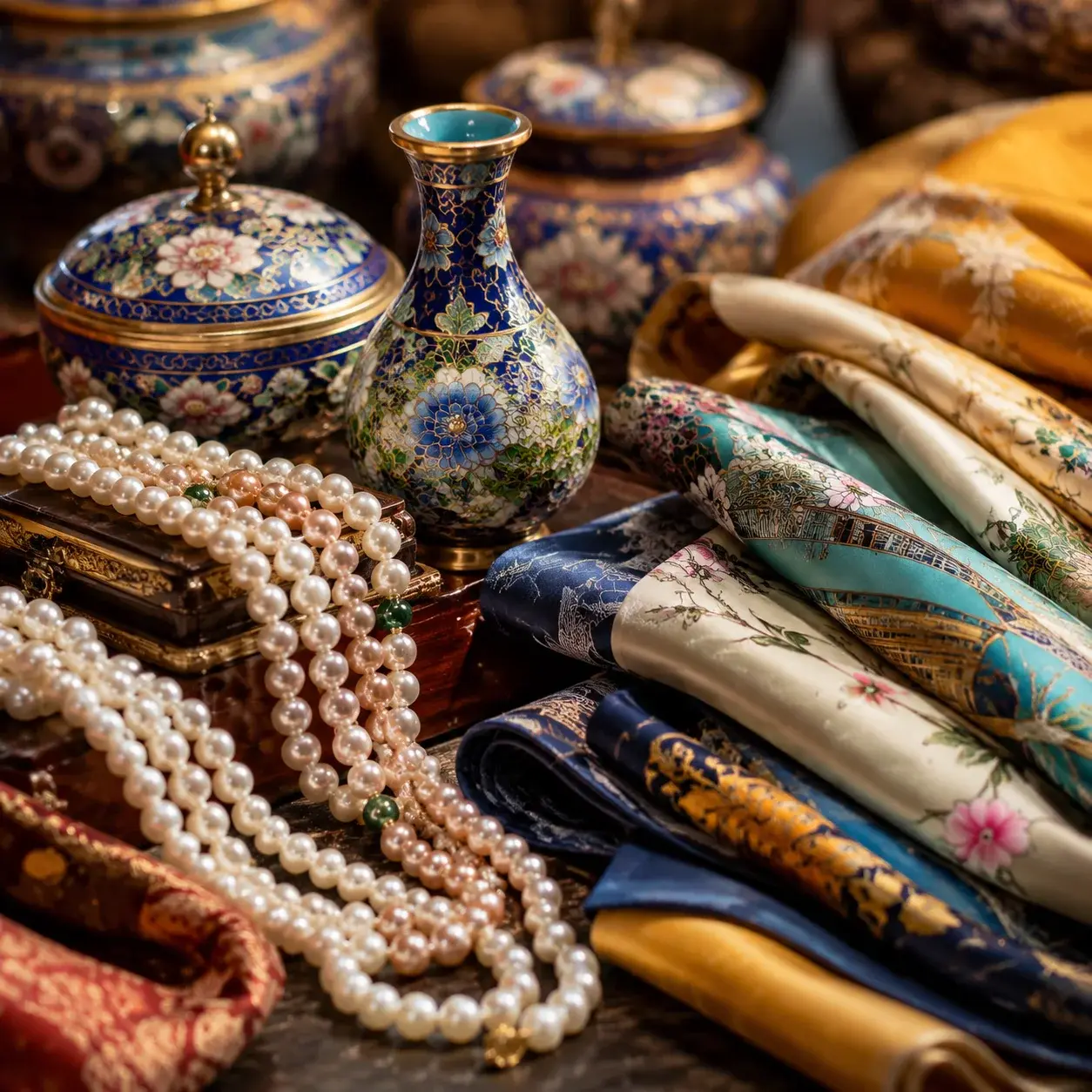
The best things to buy in Beijing are the category-genuine crafts the city is known for — each mapped here to the market that sells it best. This is the answer to "what should I buy in Beijing?" without the guesswork, and every row routes you to the deeper guide.
| Item | Why it's a Beijing buy | Best market | Read next |
|---|---|---|---|
| Freshwater pearls | Certificated, hand-pickable for lustre; Hongqiao is the established hub | Hongqiao Pearl Market | Pearl Market guide |
| Silk & a tailored qipao | Made-to-measure plus silk by the metre, most concentrated at Xiushui | Silk Market | Silk Market guide + Chinese silk guide |
| Chinese tea & teaware | Taste before you buy at a 老字号 tea house or the wholesale street | Maliandao / Qianmen | Chinese tea guide |
| Cloisonné (景泰蓝) | A signature Beijing enamel craft with deep local roots | Wangfujing / Panjiayuan | — |
| Jade | Value-driven and needs a trained eye; buy where you can compare | Pearl Market jade floors / Panjiayuan | Chinese porcelain guide |
| Antique-style art, calligraphy, curios | Panjiayuan is Asia's largest such market; reproductions are legal to export | Panjiayuan | Panjiayuan guide |
| 老字号 heritage snacks & brands | Century-old, marked-price shops with real provenance | Qianmen / Dashilan | Qianmen Street guide |
For souvenirs that aren't specific to Beijing, browse our broader best souvenirs from China pillar.
Specialty Markets Most Guides Skip: Tea & Electronics
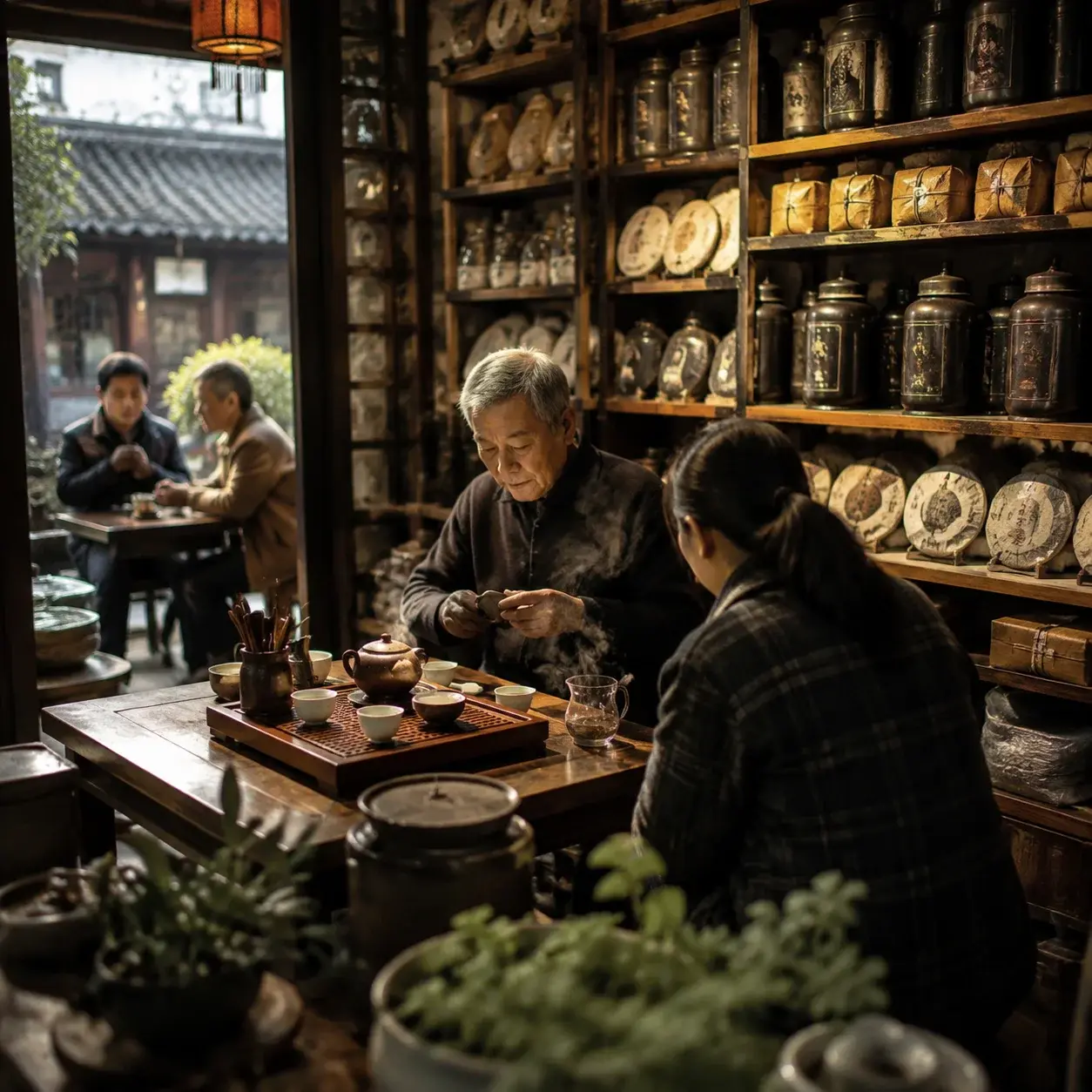
Two markets the standard "top 10" lists ignore are worth knowing: Maliandao for tea and Zhongguancun for electronics. Naming these is pure information gain — and in both cases the honest advice is not what you'd expect.
Maliandao Tea Street (马连道)
Beijing's wholesale tea district: hundreds of tea houses and a sample-before-you-buy culture, plus teaware. As a foreign buyer, taste widely and don't buy out the first stall — a wholesale district rewards patience, and single-item shoppers often do just as well at a good retail 老字号. Read our Chinese tea guide before you go.
Electronics — Zhongguancun
Once billed as "China's Silicon Valley," Zhongguancun's old electronics bazaars (the former Hailong market) have largely been redeveloped into offices and malls. Set expectations honestly: for genuine gear, an official store or mall beats a market. You can find phones and accessories in the surviving Zhongguancun malls, but watch for grey-market stock and warranty gaps — this is not the place to buy a genuine flagship device.
A note on wholesale
Wholesale markets like Maliandao exist for volume. If you're a single-item traveler, a retail market or shop is usually less hassle and not much more expensive. For electronics specifically, Shenzhen rather than Beijing is the serious destination — Huaqiangbei is the market that matters.
Frequently Asked Questions
What's the difference between markets and malls in Beijing? Markets (Silk, Pearl, Panjiayuan) mean bargaining, souvenirs, crafts and replicas — cheap if you haggle. Malls (SKP, Guomao, Taikoo Li) mean fixed prices, guaranteed genuine luxury, tax-refund counters and no negotiation. Choose a market for a Beijing souvenir, a mall for a real branded item.
Is shopping in Beijing cheap? It depends where. At markets it can be very cheap if you bargain well — but a trap if you don't, because opening quotes carry a "tourist tax." At malls, prices are fixed and firmly not cheap. Bargaining skill, not luck, decides your result.
Where can I buy tea in Beijing? Maliandao Tea Street is the wholesale hub — hundreds of tea houses with taste-first culture. For fewer, curated buys, a 老字号 tea house around Qianmen works well. Sample before committing and don't over-buy at the first stall. See our Chinese tea guide.
Where is the electronics market in Beijing? Zhongguancun, historically "China's Silicon Valley," though the old Hailong bazaar is now mostly redeveloped. Surviving malls sell phones and accessories, but for a genuine flagship with warranty, an official store beats a market. Watch for grey-market stock.
What should I buy in Beijing? The safe, category-genuine buys: freshwater pearls with a certificate, real silk or a tailored qipao, Chinese tea, cloisonné, and 老字号 heritage snacks. Avoid "designer" goods (replicas) and "antiques" (mostly reproductions, and genuine ones are export-restricted).
Can I take antiques out of China? Usually not, if genuinely old. China's Law on the Protection of Cultural Relics (revised 2024, effective 1 March 2025) restricts exporting genuine relics, which need official appraisal to leave legally and carry a red wax export seal. The exact age cutoff is disputed across sources (commonly pre-1949), so confirm with China Customs or a licensed appraisal station before you leave. Most Panjiayuan pieces are reproductions, which are legal to export as crafts.
The Bottom Line: Shop Beijing by Intent, Not by List
Shopping in Beijing gets easy the moment you stop asking "which market is famous?" and start asking "what do I want to buy?" Let the answer route you — pearls to Hongqiao, silk to the Silk Market, antiques to Panjiayuan, heritage brands to Qianmen, one-stop to Wangfujing — and let the buyer-protection rules keep you honest: buy category-genuine, anchor your price, and leave the "antiques" and "designer" bags to travelers who like risk. Real luxury? That's a mall trip, not a market one.
Treat every price, opening-bid ratio and opening-hours note here as indicative and confirm on the ground, and use each spoke guide above for the market you've chosen. When you'd rather have a local specialist take you straight to vetted stalls and honest dealers — and translate the haggling — that's exactly what a private-customized Beijing trip is for.