





 18 jours La Chine, d'un bout à l'autre Pékin → Xi'an → Chuanzhusi → Jiuzhaigou → Chengdu → Zhangjiajie → Guilin → Yangshuo → Shenzhen À partir de $6,360 Voir le circuit
  18 jours Air raréfié, puis niveau de la mer Pékin → Xi'an → Chengdu → Lhassa → Tchong-King → Yichang → Shanghaï À partir de $4,900 Voir le circuit
  3 jours Après le dernier stand Canton À partir de $840 Voir le circuit
  5 jours Au-dessus des piliers, puis en dessous Zhangjiajie À partir de $1,430 Voir le circuit
 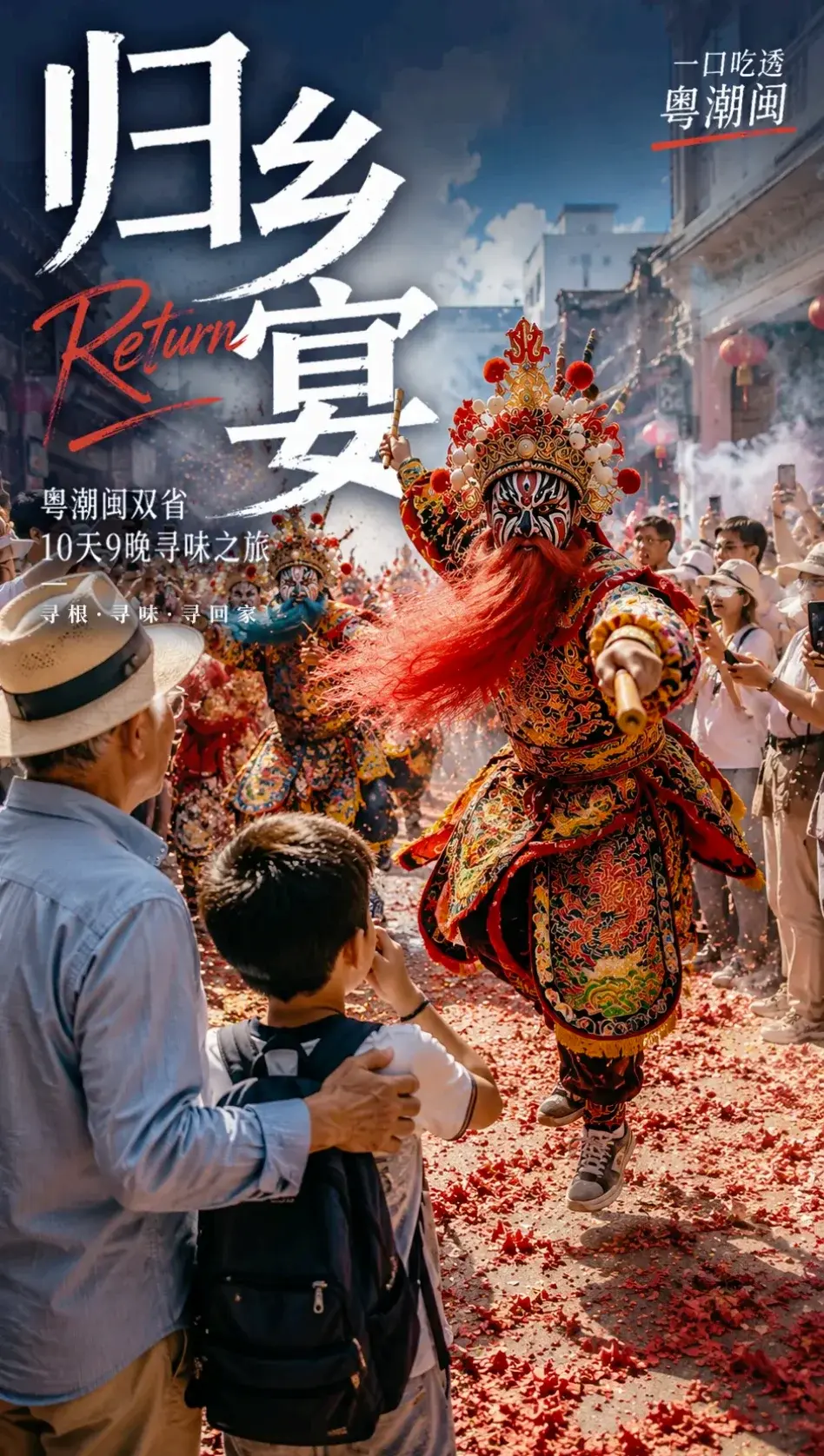 10 jours Banquet de retour au pays Canton → Shantou → Jieyang → Chaozhou → Quanzhou → Zhangzhou → Xiamen À partir de $4,000 Voir le circuit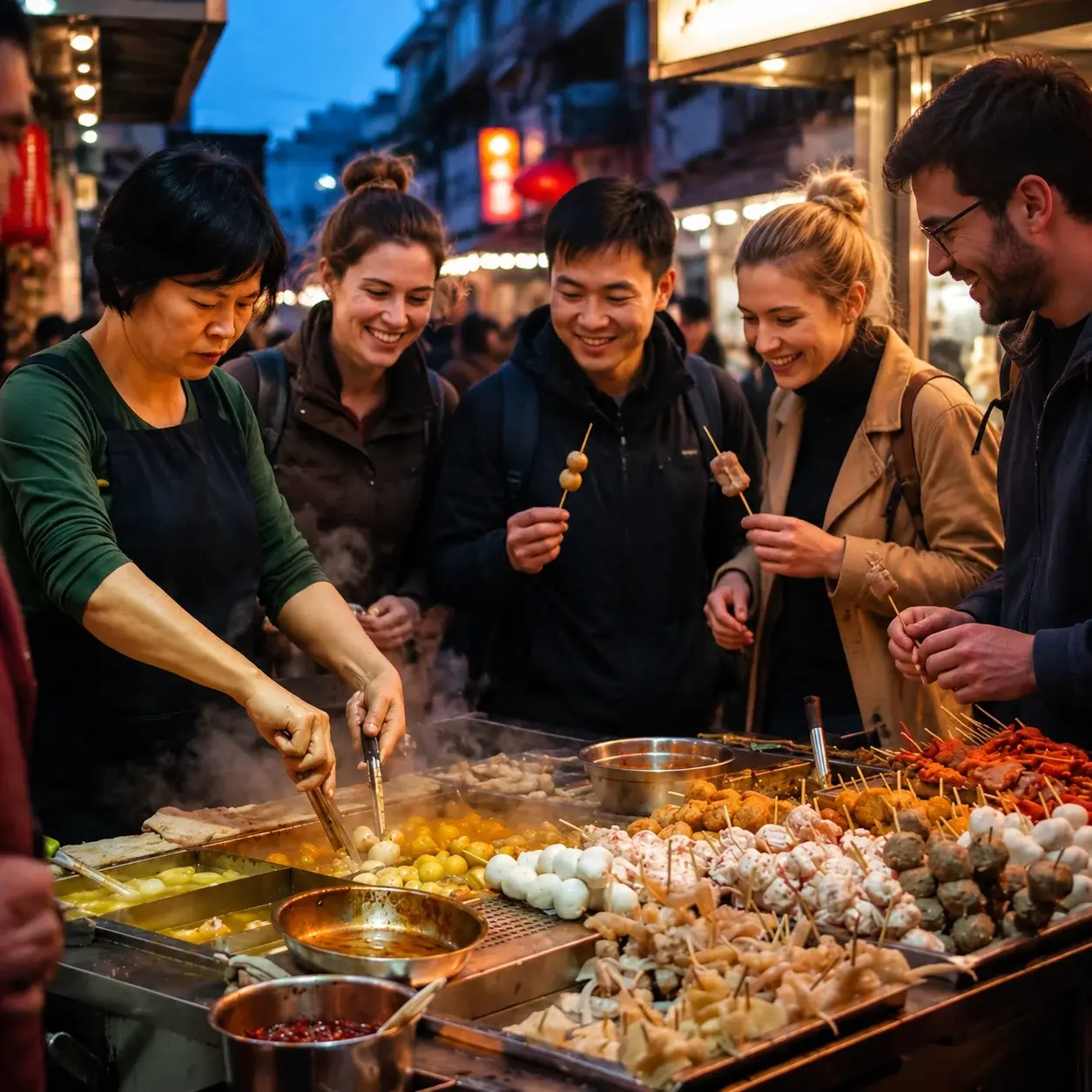
Une visite culinaire en Chine est-elle valeureuse — et comment choisir la bonne ?
Une visite culinaire en Chine vaut le détour non pas parce que manger en Chine est cher — c'est célèbre pour être bon marché — mais parce qu'un bon tour vous offre ce que l'argent seul ne peut acheter : accès à des restaurants cachés et difficiles à trouver, un guide local pour gérer la langue et les commandes, un contexte culturel réel, et zéro stress de planification. C'est le véritable compromis.
Si vous avez cherché "china food tour", vous avez probablement vu la tension dans les avis déjà : les voyageurs vantent le fait qu'un guide "nous a emmenés dans des endroits que nous n'aurions jamais trouvés", puis notent qu'un tour coûte bien plus que la nourriture de rue elle-même. Les deux choses sont vraies. Ce guide existe pour vous aider à décider clairement — si une visite culinaire convient à votre voyage, si vous devriez réserver un tour en groupe ou un tour privé-personnalisé, ce qu'un bon tour inclut vraiment, et quelles villes en valent le plus notre effort.
Notre position est simple : osez manger, mangez bien. Nous ne sommes pas ici pour une vente agressive. Nous sommes ici pour vous aider à faire un bon achat — y compris en vous disant quand vous pouvez tout simplement sauter le tour.
Points clés à retenir
- Vous payez l'accès et le savoir, pas la nourriture. Les repas d'une tournée culinaire sont peu coûteux ; la valeur réside dans le guide qui sait quelle cuisine de ruelle vaut le détour et peut commander pour vous en chinois.
- Une tournée culinaire en vaut vraiment la peine si c'est votre première fois en Chine, si vous ne parlez pas chinois, si vous cherchez des endroits secrets locaux, si vous manquez de temps ou si vous avez des besoins alimentaires. Il est plus facile de sauter cette option si vous êtes un voyageur solo confiant et aventurier avec beaucoup de temps.
- Le choix entre groupe et privé est la vraie décision. Les tournées en groupe sont moins chères et sociales ; les tournées privées sur mesure coûtent plus cher mais s'adaptent à votre rythme, à vos enfants, à vos allergies et à votre liste d'incontournables.
- Les prix varient beaucoup selon l'opérateur, la ville et le format — considérez chaque chiffre ici comme une approximation, pas comme un devis. Les demi-journées en groupe ont un prix fixe modéré ; les tournées privées sont facturées par groupe.
- Certaines villes sont des trésors de tournée culinaire. Xi'an, Chengdu, Pékin et Changhai récompensent chacune une visite guidée pour des raisons différentes : profondeur, maîtrise de l'épicé, contexte historique ou simple variété.
- Les meilleures tournées culinaires prennent en compte les besoins alimentaires — halal, végétarien, allergies, adapté aux enfants — mais seulement si vous en informez l'opérateur à l'avance. Les tournées privées gèrent cela le mieux.
Une tournée culinaire en Chine vaut-elle le coup ?
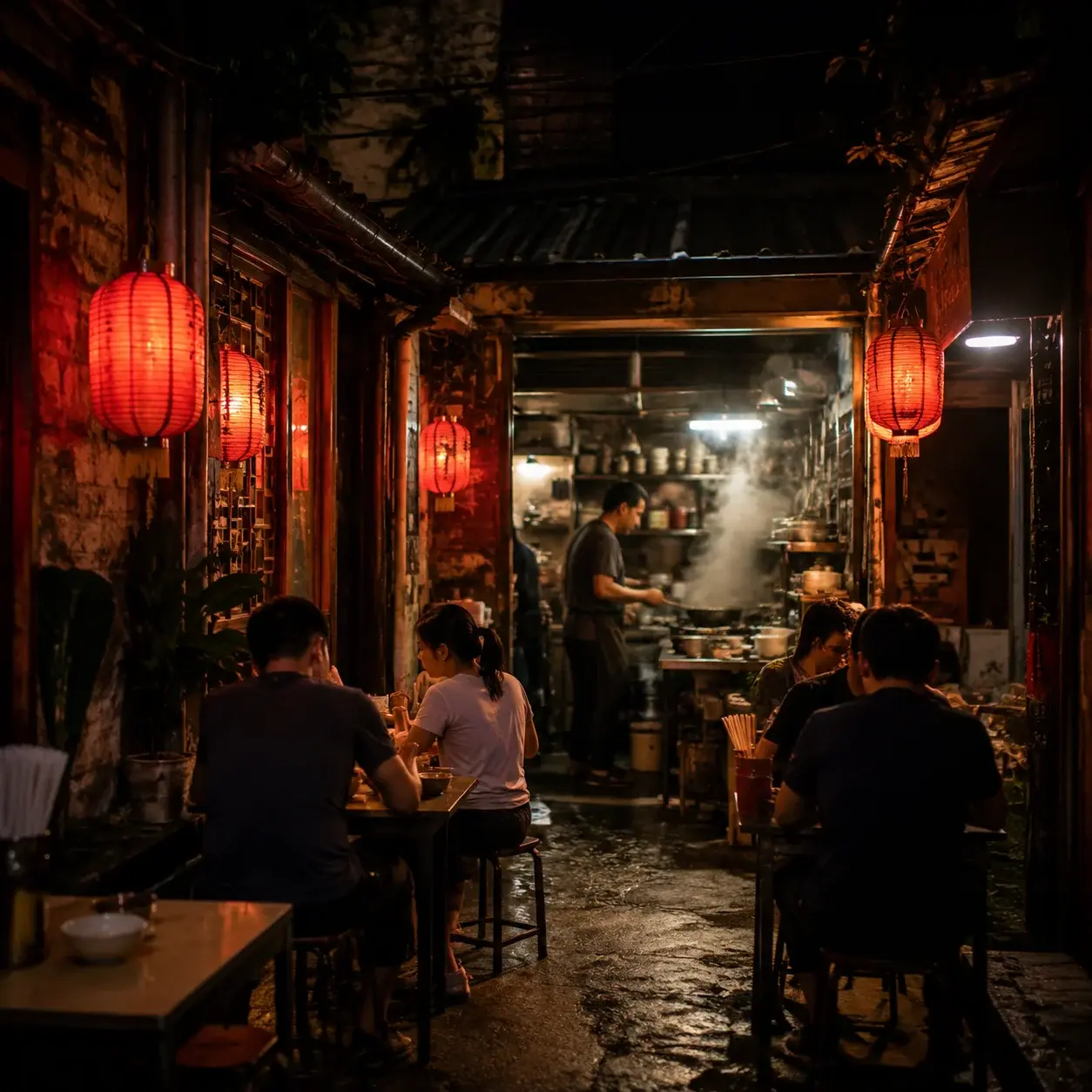
Oui — pour la plupart des voyageurs首次 et pressés, mais pour une raison précise : la valeur réside dans l'accès, l'aide linguistique et les connaissances locales, pas dans l'économie sur la nourriture. Manger en Chine est peu coûteux. Un bol de nouilles ou un poignet de brochettes coûte quelques dizaines de yuans, et vous pourriez grignoter un marché nocturne pour le prix d'un café chez vous. Une visite gastronomique ne se rembourse donc jamais sur le coût de la nourriture. Ce qu'elle rembourse, c'est tout ce qui entoure la nourriture : un guide qui sait quelle porte sans enseigne cache les meilleurs raviolis, qui peut lire un menu uniquement en chinois, qui explique ce que vous mangez et pourquoi cela compte, et qui élimine les risques et les recherches de votre soirée.
La meilleure façon de décider est d'être honnête sur votre propre voyage. Voici le cadre que nous utiliserions :
| Une visite gastronomique vaut la peine si… | Vous pouvez tranquillement vous passer si… |
|---|---|
| Visitez la Chine pour la première fois et ne savez pas par où commencer | A déjà voyagé en Chine et sait où trouver une bonne cuisine locale |
| Ne parlent ni ne lisent le chinois et s’inquiètent des menus et des commandes | Parlent assez de chinois (ou n’ont peur ni des applications de traduction ni du geste) |
| Cherchent des coins cachés et authentiques, pas des restaurants touristiques | S’amusent à faire leurs recherches, à faire la queue et à repérer les endroits eux-mêmes |
| Ont des journées limitées et ne peuvent se permettre un repas gâché | Ont beaucoup de temps et considèrent un mauvais repas comme partie de l’aventure |
| Ont des besoins alimentaires spécifiques (halal, végétarien, allergies) à gérer prudemment | Mangent tout et apprécient l’imprévisibilité |
| Voyagent en famille, avec des enfants ou des parents âgés qui nécessitent une logistique plus fluve | Sont un voyageur seul ou un couple qui prospère sur l’impulsivité |
| Cherchent un contexte — histoire, culture, comment un plat doit être dégusté | Veulent surtout manger et n’ont pas besoin d’histoire |
Si vous cochez plus souvent la colonne de gauche que celle de droite, une visite gastronomique vaudra probablement chaque yuan. Si vous êtes fermement dans la colonne de droite — un mangeur confiant et aventurier, avec du temps à perdre — économisez l’argent et explorez la cuisine par vous-même ; vous vous en sortirez bien. Il n’y a pas de honte à aucune réponse, et un guide honnête dirait la même chose.
Combien coûte une visite gastronomique en Chine ?
Cela varie considérablement selon l'opérateur, la ville et le format, alors traitez tout chiffre comme une fourchette approximative plutôt qu'une citation — mais la vérité fiable est que le coût du tour dépasse toujours celui de la nourriture qu'il contient. Un groupe typique de marche ou de tuk-tuk dure quelques heures (souvent entre trois et trois heures et demie) avec plusieurs dégustations incluses, tarifé à un montant fixe modeste par personne. Les tours privés et sur mesure sont facturés par groupe plutôt que par personne, donc le prix dépend de la taille du groupe, du nombre d'escales, des transports, du guide et du caractère personnalisé de l'Itinéraire. Les voyages culinaires multi-jours ou multi-villes dépassent largement les tours d'une seule soirée.
Voici comment envisager les niveaux, tous comme des fourchettes approximatives qui varient selon l'opérateur — confirmez le prix exact et les inclusions avant de réserver :
Choisissez votre circuit gastronomique en Chine : circuit en groupe ou circuit privé sur mesure ?
| Formule | Ce qui est généralement inclus | Tarification |
|---|---|---|
| Circuit gastronomique en groupe (demi-journée / soirée) | Petit groupe à partager, parcours fixe de ~5 à 8 dégustations, guide, ~3 à 3,5 heures | Prix fixe par personne ; l'option guidée la plus économique |
| Circuit gastronomique privé (demi-journée / soirée) | Exclusivement pour votre groupe, parcours flexible, rythme et choix personnalisés | Devis par groupe ; prix plus élevé par personne, mais diminue avec la taille du groupe |
| Journée culinaire privée sur mesure | Itinéraire complet sur mesure, transports, accès approfondi, adaptation aux régimes alimentaires | Devis par groupe ; prix premium, reflétant le niveau de personnalisation |
| Voyage culinaire multi-villes | Plusieurs villes, plusieurs jours, chefs/cuisiniers du domicile, hébergement souvent inclus | Prix forfaitaire haut de gamme ; le sommet de la catégorie |
La vérité vaut d'être répétée : vous n'achetez pas des calories, vous achetez une sélection. La nourriture de ces circuits pourrait être reproduite pour une fraction du prix si vous saviez exactement où aller, si vous parliez la langue et si vous aviez le temps de le trouver. Le rôle du circuit est de vous le offrir gratuitement — ce qui, pour de nombreux voyageurs, est exactement ce qu'un bon voyage doit être.
Réservez un groupe de voyage si vous voulez le prix le plus bas et profitez de rencontrer d'autres voyageurs ; réservez un voyage privé et personnalisé si vous voulez que l'itinéraire, le rythme et la prise en charge alimentaire soient adaptés à vous — surtout avec de la famille ou des besoins spécifiques. Les deux sont légitimes, et un bon groupe de voyage est vraiment une excellente valeur. Ce n'est pas que les groupes sont mauvais ; c'est une question d'adaptation. Voici la comparaison honnête.
| Facteur | Groupe de voyage culinaire | Voyage privé et personnalisé |
|---|---|---|
| Prix | Plus bas — taux fixe par personne | Plus élevé par personne, estimé par groupe (meilleure valeur dans un grand groupe) |
| Rythme | Itinéraire et horaire fixés ; vous suivez le groupe | Le vôtre — restez là où vous aimez, sautez ce que vous n'aimez pas |
| Personnalisation | Itinéraire unique pour tout le monde | Adapté à vos goûts, incontournables et appétit |
| Prise en charge alimentaire | Possible si arrangé à l'avance, dans un menu fixe | La plus forte — halal, végétarien, allergies intégrées dans l'itinéraire |
| Adaptation aux enfants / famille | Possible, mais adapté à un groupe mixt d'étrangers | Idéal — horaires, arrêts et plats adaptés aux enfants et aux grands-parents |
| Ambiance sociale | Vous rencontrez d'autres voyageurs — un plus pour beaucoup | Juste votre groupe et le guide — intime, privé |
| Accès | Coins cachés locaux, choisis pour un groupe général | Coins cachés locaux, choisis pour vous |
Un groupe bien organisé — tel que le font les opérateurs spécialisés bien connus, visitant des cuisines d'arrière-rues et des stands familiaux — est l'une des expériences guidées les plus rentables en voyage, et si vous êtes un couple flexible ou un voyageur seul, cela pourrait tout ce dont vous avez besoin. Le cas pour un voyage privé et personnalisé devient évident dès que votre voyage présente des contraintes : une allergie alimentaire, une exigence halal ou végétarienne, de jeunes enfants qui se fatiguent avant 20h, des parents âgés nécessitant un rythme plus doux, ou une courte fenêtre où chaque compte doit compter. C'est là que LyrikTrip met l'accent sur — des expériences culinaires privées, personnalisées et familiales, où l'itinéraire s'adapte à votre table, et non l'inverse. Choisissez le groupe pour la valeur et la convivialité ; choisissez le privé-personnalisé pour le contrôle, le confort et l'adéquation.
Qu'est-ce qu'un bon tour culinaire en Chine inclut ?
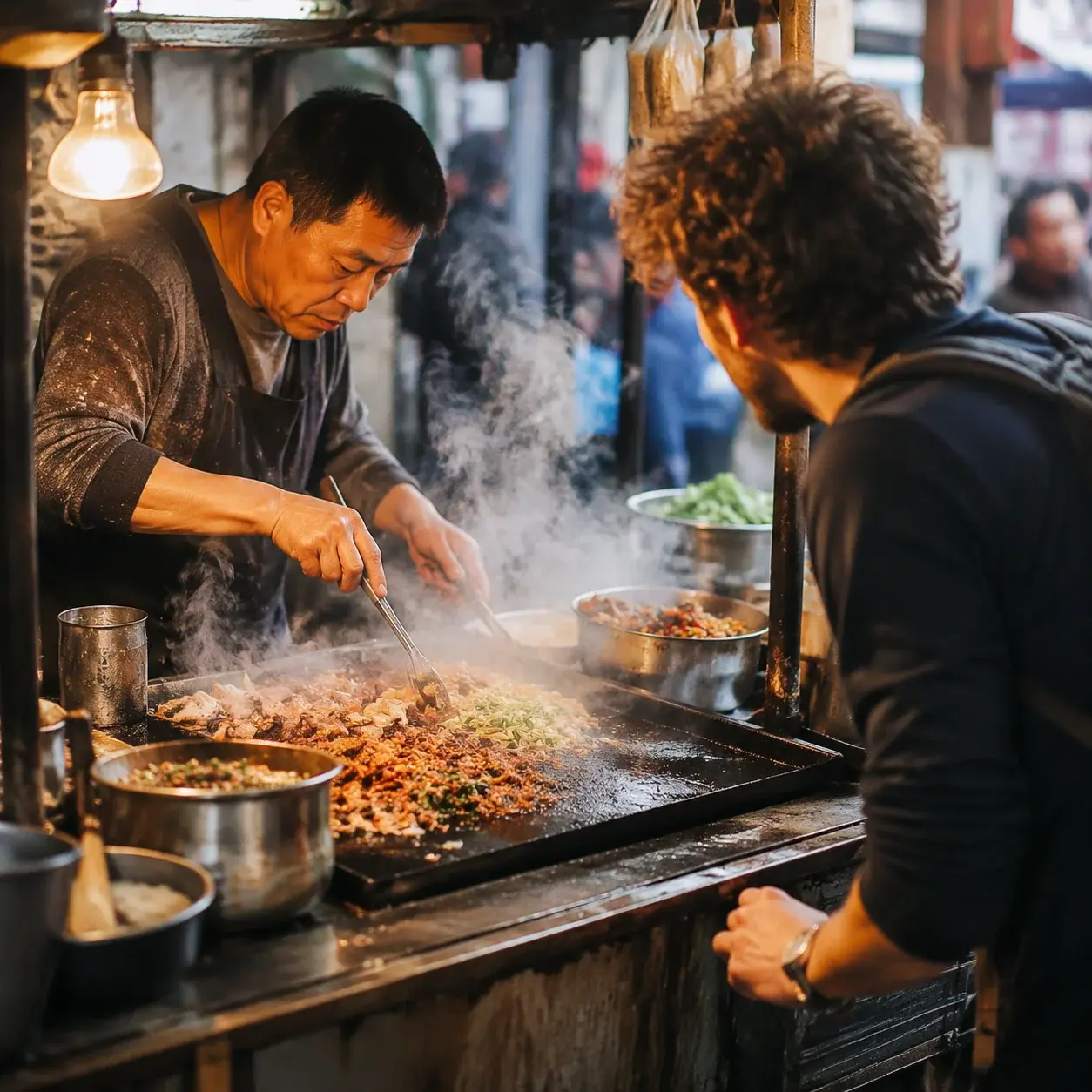
Un bon tour culinaire inclut un guide local compétent, un itinéraire soigneusement sélectionné avec plusieurs arrêts hors des sentiers battus, un contexte réel sur ce que vous mangez, une accommodation honnête pour les régimes alimentaires, et suffisamment de nourriture pour constituer un repas. Tous les tours ne sont pas égaux, et le prix seul ne vous dira pas lequel est lequel. Utilisez ceci comme liste de vérification lorsque vous comparez les opérateurs.
| À rechercher | Pourquoi c'est important | Un drapeau rouge |
|---|---|---|
| Un guide local authentique | L'essentiel — quelqu'un qui connaît le quartier et gère la langue | Un guide qui ne récite qu'un script et ne peut pas répondre à « pourquoi cet endroit ? » |
| ~5–8 dégustations, hors des sentiers battés | Une variété suffisante pour un repas, dans des endroits que vous ne trouveriez pas facilement seul | Un itinéraire de restaurants évidents, orientés vers les touristes, que vous auriez trouvés vous-même |
| Contexte culturel et historique | Transforme l'alimentation en compréhension — l'histoire derrière le plat | Une simple alimentation sans explication |
| Accueil alimentaire authentique | Sécurité et inclusion pour les besoins halal, végétariens et allergiques | « Nous ne pouvons vraiment pas changer l'itinéraire » lorsque vous demandez à l'avance |
| Petit groupe ou privé | L'accueil et l'attention diminuent à mesure que le groupe se réduit | Une foule de taille bus qui ne peut pas entrer dans une cuisine d'arrière-rue |
| Inclusions claires dès le départ | Vous savez ce qui est nourriture, ce qui est transport, ce qui est le guide | Des prix flous avec des ajouts surprenants |
| Positionnement transparent et honnête | Un guide qui vous dira qu'un plat est controversé, pas seulement qu'il est médiatisé | Tout est « le meilleur en Chine » |
Le meilleur signal est un accès que vous ne pourriez pas reproduire tout seul — la porte non marquée, l'étallage sans inscription en anglais, la cuisine de la grand-mère qui n'apparaît jamais sur une carte. Si une visite vous mène simplement aux restaurants que vous auriez trouvés sur une application d'avis, vous payez un guide dont vous n'avez pas besoin. Si c'est en ouvrant des portes que vous n'auriez jamais su existantes, alors c'est une dépense justifiée.
Quelles villes chinoises sont idéales pour une tournée culinaire ?
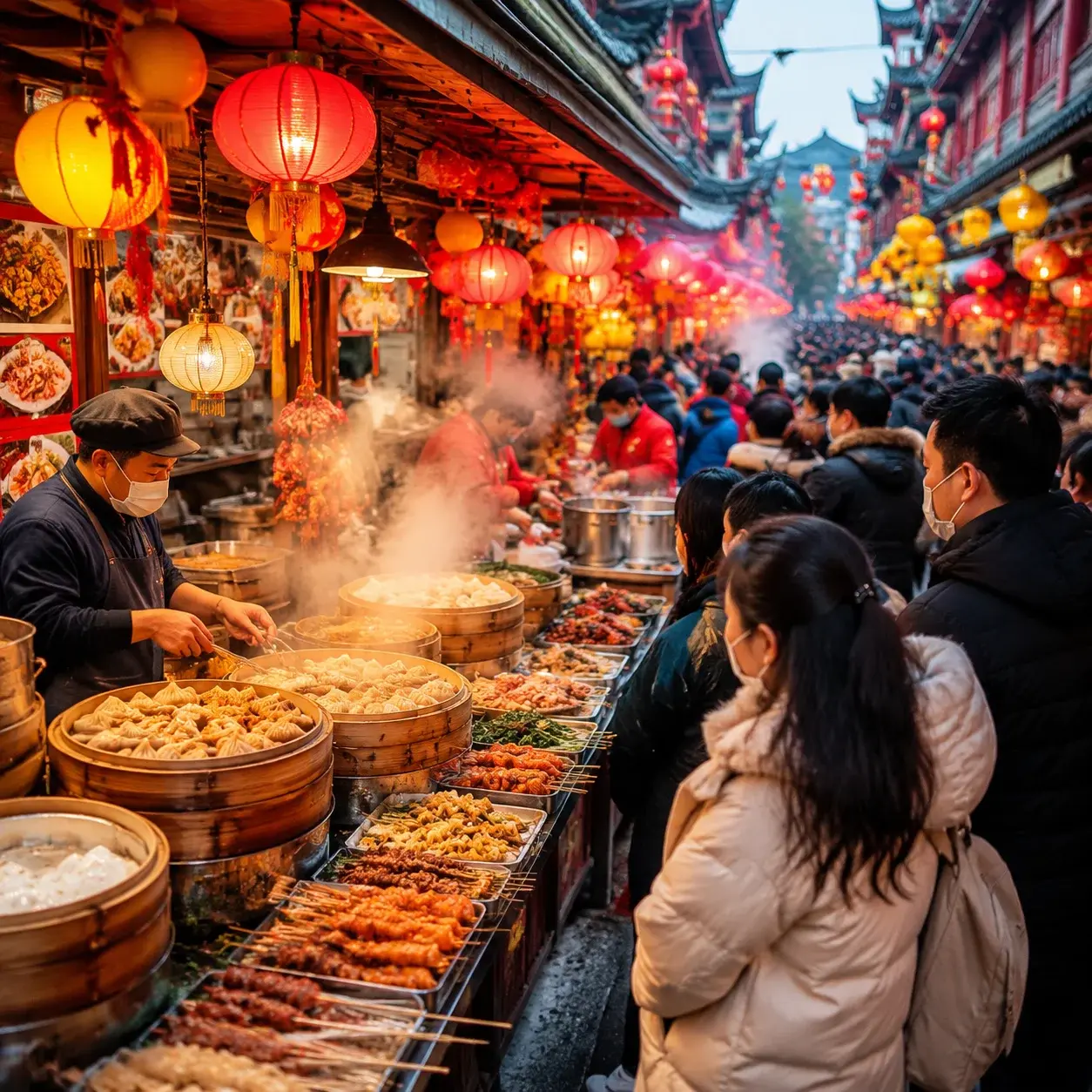
Xi'an, Chengdu, Pékin et Shanghai figurent en tête de liste — chacune pour une raison différente, et chacune récompense un guide capable de naviguer dans ses défis spécifiques. La Chine est un continent de saveurs, donc la « meilleure ville pour la nourriture » dépend de ce que vous recherchez. Une tournée de nourriture apporte le plus de valeur là où la densité culinaire est élevée, où la barrière linguistique est réelle et où les meilleurs endroits sont vraiment cachés. C'est là qu'une visite guidée trouve tout son intérêt, avec un guide approfondi pour chaque ville.
| Ville | Pourquoi c'est génial pour un tour culinaire | Ce qu'un guide révèle | Approfondir |
|---|---|---|---|
| Xi'an | Cuisine de la Route de la Sile et le quartier musulman halal — dense, emblématique et en labyrinthe | Naviguer dans les ruelles de Hui Min Jie et les meilleurs roujiamo, pao mo et brochettes |  Guide alimentaire de Xi'an Guide alimentaire de Xi'an |
| Chengdu | La capitale de l'épice du Sichuan — passionnant mais intimidant pour les sensibles à la chaleur | Lire les niveaux d'épice, trouver le vrai mala, gérer la chaleur | Street food de Chengdu |
| Pékin | Classiques impériaux plus street food profonde des hutong et marchés nocturnes | Canard laqué fait à la perfection, plus les collations locales que les touristes manquent | Street food de Pékin |
| Shanghai | Raffiné, cosmopolite, obsédé par les boules — subtil plutôt qu'évident | Xiaolongbao vs shengjianbaos, petits-déjeuners de marché humides, ruelles cachées | Alimentaire de Shanghai |
Au-delà des quatre grandes villes, un guidage gastronomique brille également dans les villes où une spécialité définit le voyage : les nouilles de riz de Guilin, la cuisine épicée et fumée du Hunan, ou la raffinée cuisine du lac ouest de Hangzhou. Si une option alimentaire spécifique est votre priorité, la nourriture halal en Chine (/guides/halal-food-china) est plus facile à naviguer avec un guide qui connaît le paysage 清真 (qingzhen). Et si vous préférez goûter sans vous engager dans un tour, un marché nocturne est une manière sans engagement, auto-guidée pour grignoter — aucune réservation requise.
Les tours alimentaires en Chine sont-ils adaptés aux familles et aux régimes spécifiques ?
Oui — un bien conçu tour alimentaire est souvent meilleur pour les familles et les besoins alimentaires que de s'y lancer sans préparation, car le guide absorbe la langue, la logistique et l'anxiété « peut-on manger ça ? ». Pour les familles, la victoire est une soirée plus fluide : un guide qui rythme les arrêts selon l'attention et l'énergie des enfants, choisit des plats que les enfants mangeront vraiment, et gère les commandes pour que les parents puissent se détendre. Pour les besoins alimentaires, la victoire est la sécurité et la confiance — mais seulement si vous le signalez à l'avance. Un guide peut orienter un mangeur halal vers les cuisines 清真, trouver des plats végétariens (plus difficile qu'il n'y paraît dans une cuisine où les bouillons de viande cachent partout), et communiquer clairement une allergie en chinois, ce qui est beaucoup plus sûr qu'une application de traduction dans un stand bruyant et fréquenté.
Les formats de groupe peuvent accommoder des régimes alimentaires si cela est arrangé à l'avance, mais ils fonctionnent selon un itinéraire fixe, ce qui limite leur flexibilité. Les tours privés et sur mesure sont le meilleur choix pour les familles et les besoins spécifiques, car tout l'itinéraire est conçu autour de votre table — horaires, arrêts, plats et hébergements pensés dès le départ plutôt qu'ajustés par la suite. C'est précisément là qu'un repas privé et adapté à la famille justifie son prix plus élevé : non pas pour le luxe, mais pour éliminer les deux sources de stress majeures pour les familles lorsqu'ils mangent à l'étranger : la communication et le contrôle.
Questions fréquentes
Un tour culinaire en Chine vaut-il le détour ? Pour la plupart des voyageurs首次 ou aux contraintes de temps, oui — mais pas pour des raisons de prix. Manger en Chine est peu coûteux, donc un tour ne se rembourse jamais uniquement sur les dépenses alimentaires. Vous payez un guide local, des restaurants cachés que vous n'auriez pas trouvés seuls, un contexte culturel et zéro stress de planification. Les mangeurs confiants et aventuriers avec du temps peuvent se passer de cette option.
Combien coûte un tour culinaire en Chine ? Cela varie considérablement selon l'opérateur, la ville et le format, alors considérez chaque chiffre comme une approximation. Les demi-journées en groupe ont un prix fixe modéré par personne ; les tours privés et sur mesure sont facturés par groupe, donc le coût dépend de la taille du groupe et des inclusions. Les voyages culinaires de plusieurs jours dépassent largement le prix d'une seule soirée. Confirmez toujours les inclusions avant de réserver.
Visite culinaire privée ou en groupe en Chine — laquelle est meilleure ? Aucune n'est simplement meilleure ; c'est une question d'adéquation. Les visites en groupe coûtent moins cher et sont sociales, avec un itinéraire fixe. Les visites sur mesure privées coûtent plus chères mais s'adaptent à votre rythme, vos goûts, vos besoins alimentaires et la logistique familiale. Choisissez le groupe pour la valeur et rencontrer des gens ; choisissez la privative pour le contrôle, le confort et des exigences spécifiques.
Quelle ville chinoise est idéale pour une visite culinaire ? Xi'an, Chengdu, Pékin et Shanghai se distinguent chacune pour une raison différente — le dédale du quartier musulman de Xi'an, l'épice sichuanaise de Chengdu, l'étendue impériale et hutong de Pékin, et la subtilité des dumplings de Shanghai. Un guide apporte le plus là où la nourriture est dense, la barrière linguistique est réelle et les meilleurs endroits sont vraiment cachés.
Les visites culinaires sont-elles bonnes pour les familles et les enfants ? Souvent mieux que d'y aller seul. Un bon guide adapte le rythme des arrêts selon l'énergie des enfants, choisit des plats adaptés aux enfants et gère les commandes pour que les parents puissent se détendre. Les visites sur mesure privées conviennent le mieux aux familles, ajustant le timing et les arrêts pour les enfants et les grands-parents. Indiquez les âges et préférences lors de la réservation pour que l'itinéraire convienne à tout le monde.
Une visite gastronomique en Chine peut-elle accommoder les régimes halal ou végétaires ? Oui, si vous le signalez à l'opérateur à l'avance. Un guide peut orienter les personnes suivant un régime vers des cuisines qingzhen (清真), trouver des plats végétariens — plus complexe qu'il n'y paraît lorsque des bouillons de viande se cachent dans de nombreux plats — et communiquer clairement les allergies en chinois. Les sur-mesures privées répondent le mieux aux besoins alimentaires, car l'itinéraire est conçu autour d'eux.
Conclusion
Une visite gastronomique en Chine n'est pas chère — c'est la chose la moins chère sur l'addition. C'est l'accès à des restaurants que vous ne trouveriez jamais, un guide qui dissout la barrière linguistique, le contexte qui transforme un repas en compréhension, et une soirée sans recherche ni risque. Décidez honnêtement : si vous êtes un premier voyageur, à court de temps, en famille ou avec un régime spécial, une visite vaut probablement chaque yuan ; si vous êtes un mangeur d'aventure sans crainte et avec du temps, vous ferez parfaitement seul. Et si vous réservez, le choix entre groupe et privé est le seul qui compte : groupe pour la valeur et la compagnie, privé pour le contrôle et l'adaptation. Osez manger, mangez bien.
Si vous préférez que les meilleures tables de Chine soient naviguées pour vous — les cuisines cachées, sans les devinettes linguistiques et logistiques — une expérience gastronomique privée, sur mesure et adaptée aux familles est conçue exactement pour cela.
Continuez à explorer : commencez par notre article sur la scène de la rue en Chine, puis plongez dans les grandes villes culinaires — Xi'an, Chengdu, Pékin, Shanghai, Hunan, les nouilles de riz de Guilin et Hangzhou. Pour des rues spécifiques, consultez la nourriture halal en Chine et le fonctionnement des nourriture de marché de nuit.