



 18 days China, End to End Beijing → Xi'an → Chuanzhusi → Jiuzhaigou → Chengdu → Zhangjiajie → Guilin → Yangshuo → Shenzhen From $6,360 View route
  3 days 4-Day Tour of Siguniang Mountain, Biepa Gou, and Dagu Glacier Chengdu → Lixian → Heishui County From $1,599 View route
  5 days Above the Pillars, Then Below Zhangjiajie From $1,430 View route
  3 days After the Last Booth Guangzhou From $840 View route
  13 days All the Way West Xi'an → Dunhuang → Turpan → Kashgar → Shanghai From $3,500 View route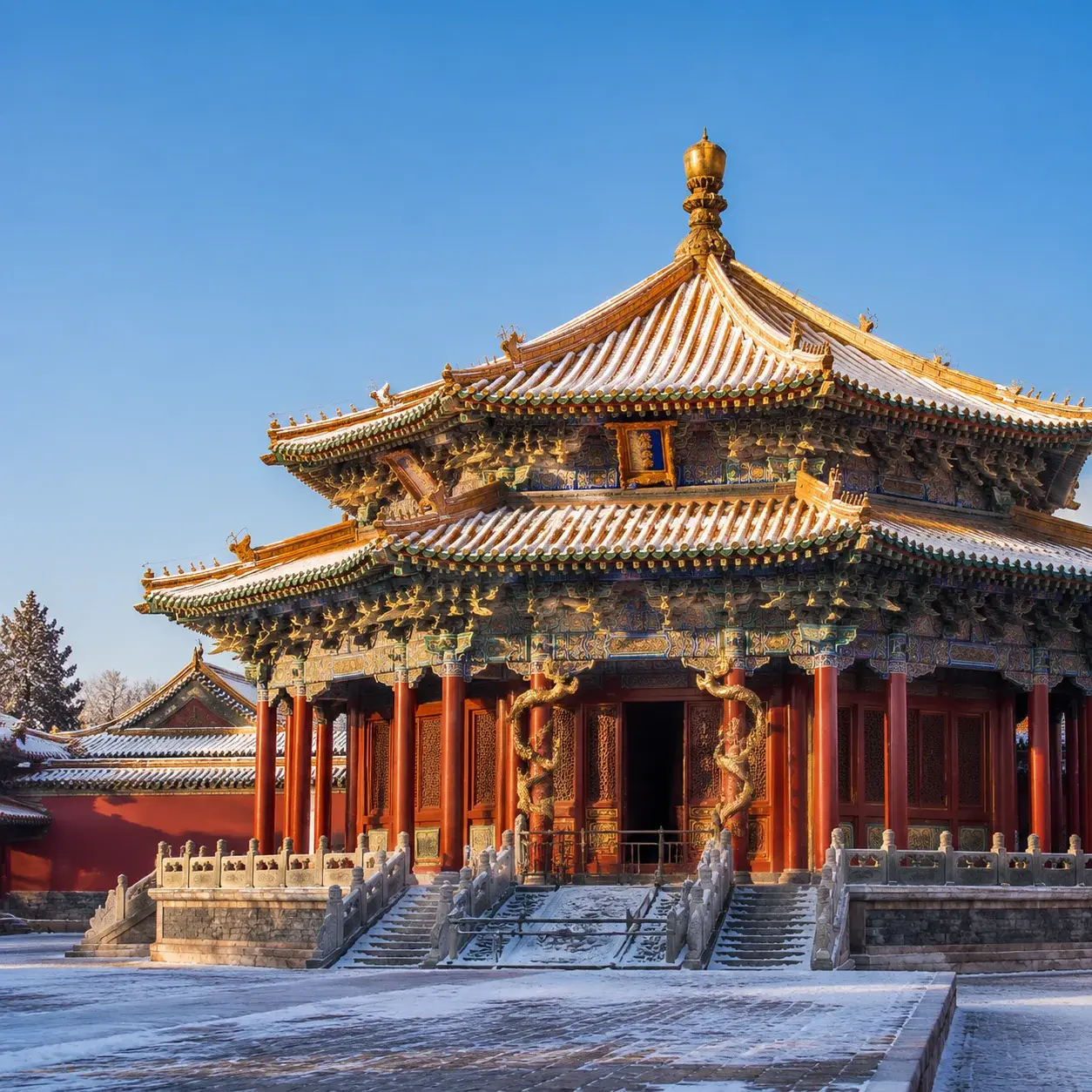
Is Shenyang, China Worth Visiting? A Trusted Guide to Mukden Palace and the Gateway to the Northeast (2026)
Yes — Shenyang, China is worth visiting, but as a focused 1–2 day stop rather than a standalone destination. The city earns its place for one big reason: Mukden Palace, the birthplace of the Qing dynasty and China's only imperial palace outside Beijing, plus its UNESCO-listed imperial tombs. It fits best as a stop on the Beijing → Shenyang → Harbin winter-trip corridor, not a trip you build around it.
Shenyang, China is the capital of Liaoning province and the old capital of the Qing dynasty — the city where China's last imperial dynasty was born, before it ever reached Beijing. This page is a trusted destination guide, not an OTA listing and not a seller. LyrikTrip is a travel company that plans trips; we don't push a package here, we answer the real question a Northeast-trip planner is actually asking: is Shenyang worth a dedicated visit, or is it best slotted in for a day or two between Beijing and Harbin?
One orienting fact to hold onto: Shenyang sits directly on the Beijing–Harbin high-speed rail corridor, roughly 700 km northeast of Beijing (indicative — verify locally). That single geographic fact shapes the honest verdict below, which is where you should start.
Key Takeaways
- Worth a focused 1–2 days, not a standalone trip. The reason to stop is Mukden Palace + the two UNESCO imperial tombs — history, not scenery.
- Best as a stop on the Beijing → Shenyang → Harbin corridor. The high-speed line runs through Shenyang, so stopping is routing, not a detour.
- Mukden Palace is the Qing dynasty's origin story — the "prequel" to Beijing's Forbidden City, with Manchu-Mongol-Han architecture (the octagonal Dazheng Hall) that Beijing doesn't have.
- One full day covers the essentials; two days lets you slow down for the tombs and a museum.
- Skip or shorten it if you have under ~8 days total in China, or you're chasing scenery over history.
- Honest downsides: it's an industrial city, winters are bitterly cold, and English is limited.
- All prices, hours, rail times, and temperatures below are indicative and dated 2026-07-04 — verify locally before you rely on them.
—
Is Shenyang Worth Visiting? (Honest Verdict)
Yes — but as a focused 1–2 day stop, not a standalone destination. Shenyang earns a visit for one big reason: Mukden Palace, the birthplace of the Qing dynasty and China's only imperial palace outside Beijing, plus its UNESCO imperial tombs. It fits best as a stop on the Beijing → Shenyang → Harbin winter-trip corridor. This is the answer every other guide dodges — they either cheerlead ("absolutely worth it!") or list attractions without telling you how the city fits your trip.
Visit if: you love history and the Qing origin story; you're already routing toward Harbin and the Northeast; or you want a real Dongbei (Northeast) city with far fewer foreign tourists than Beijing or Xi'an.
Shorten or skip if: you have under about eight days total in China, or you're travelling for scenery over history — Shenyang's strengths are cultural and historical, not natural.
The honest downsides, stated plainly: Shenyang is an industrial provincial capital, its winters are bitterly cold and dry, and English signage and service are limited. None of that disqualifies it — it just means you should treat it as a smart, low-cost stop on the way to  a Harbin winter trip, not a place you build a week around. Here is how we'd frame the decision by traveller type.
| Your situation | How to handle Shenyang | Why |
|---|---|---|
| Qing/Manchu-history lover, 8+ days in China | A focused 1.5–2 days (palace + both tombs + Zhang's Mansion) | Mukden Palace is where the Qing dynasty began; you'll see a Manchu-Mongol-Han palace Beijing doesn't have |
| Already heading to the Harbin Ice Festival / a Northeast winter trip (our core reader) | A 1-day stop on the Beijing → Shenyang → Harbin corridor | The high-speed line runs through Shenyang — stopping is routing, not a detour; one day covers the palace plus a Korean-district meal |
| Not a history person, mainly want scenery/snow | Shorten to a half-day layover, or skip | Shenyang is industrial and history-heavy; save your days for Harbin or Changbai Mountain |
| Under 8 days in China total, tight on time | Skip, or do a rail-transfer stopover (left-luggage + a 2–3 h palace visit) | When time is scarce, Shenyang's marginal value is below Beijing's or Harbin's headline sights |
| Adding Dandong (North Korea border) or Changbai Mountain | Use Shenyang as your Dongbei gateway hub — 1 day, then branch out | Shenyang is the rail gateway to the Northeast; trains to Dandong, Changbai Mountain and Benxi fan out from here |
What Is Mukden Palace — and How Does It Compare to Beijing's Forbidden City?
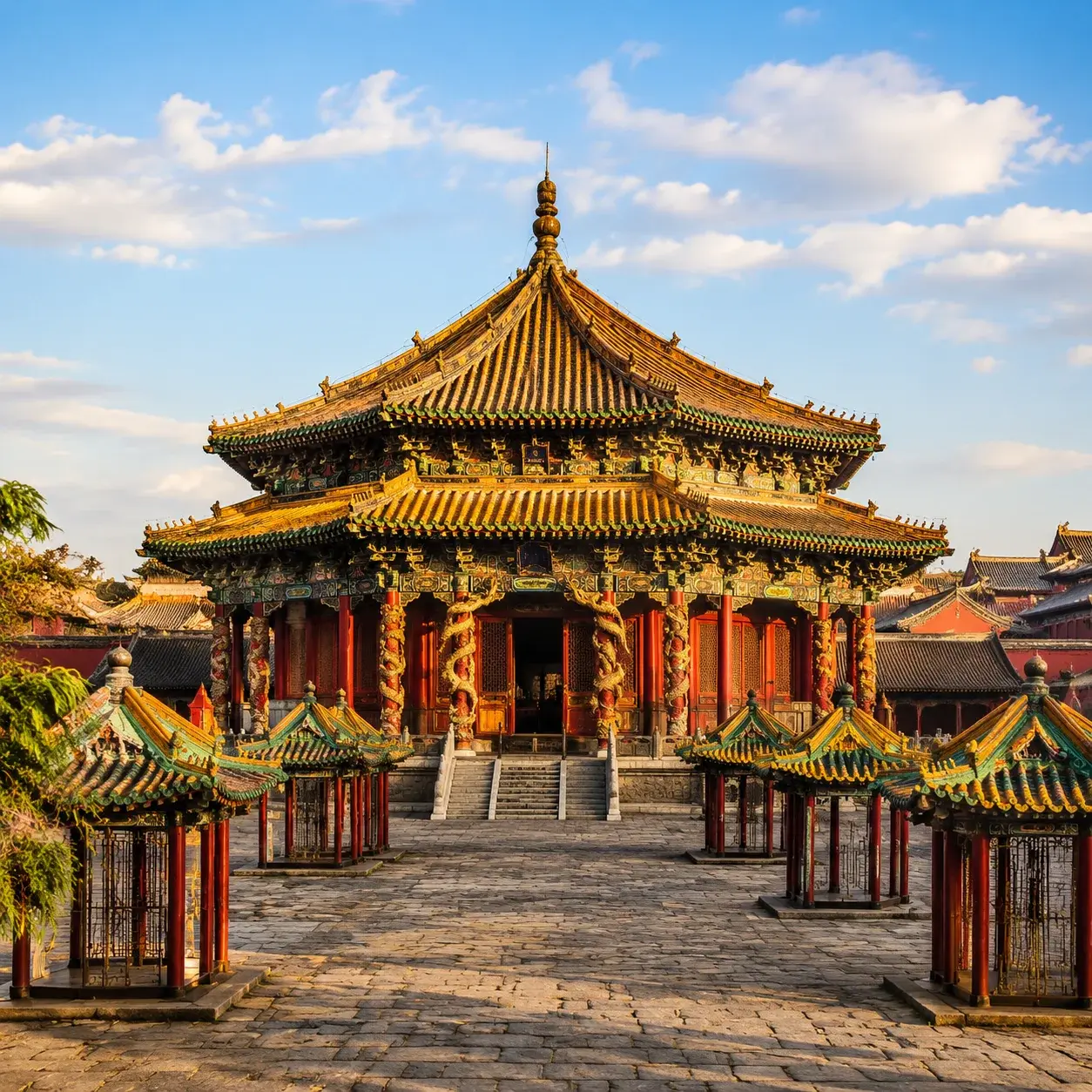
Mukden Palace (also called the Shenyang Imperial Palace) is where the Qing dynasty began. Nurhaci and his son Hong Taiji built and ruled from it starting in 1625; the first Qing emperors lived here before the Manchus captured Beijing in 1644 and moved into the Forbidden City. So Shenyang's palace is the prequel to the Forbidden City — not a copy of it. It is the only other complete imperial palace surviving in China, and its blended Manchu, Mongol and Han design — the octagonal Dazheng Hall and the Ten Princes' Pavilions arrayed before it — is something Beijing's palace simply doesn't have.
That reframing matters, because most guides sell Mukden Palace as a smaller version of Beijing's ("one-twelfth the size"). The size is real; the meaning is bigger. This is the seat from which a frontier people ran a fledgling state before it became an empire, and the architecture still shows that in-between moment — half military camp, half imperial court. The palace, together with Beijing's Forbidden City, is inscribed on the UNESCO World Heritage List as "Imperial Palaces of the Ming and Qing Dynasties in Beijing and Shenyang" (List No. 439); the Shenyang palace was added in 2004 as an extension of the original 1987 Beijing inscription, and UNESCO records it as 114 buildings constructed between 1625–26 and 1783 (UNESCO World Heritage Centre, List 439, verified 2026-07-04).
| Mukden Palace (Shenyang) | Forbidden City (Beijing) | |
|---|---|---|
| Role | Where the Qing dynasty began (from 1625) | Where the Qing dynasty ruled China (from 1644) |
| Size | ~60,000 m², ~114 buildings — often called "one-twelfth of the Forbidden City" (indicative) | ~720,000 m² |
| Style | Manchu + Mongol + Han blend (octagonal Dazheng Hall, Ten Princes' Pavilions) | Han-Chinese imperial, axial and symmetrical |
| Crowds | Far fewer foreign visitors; atmospheric in snow | Very heavy year-round |
| UNESCO | Added 2004 as an extension of the Beijing inscription | Inscribed 1987 |
| Who it's for | Qing/Manchu-history buffs; anyone already on the Northeast corridor | Essentially everyone who visits Beijing |
Honest take: don't come expecting a "second Forbidden City" — on scale you'll be underwhelmed. Come expecting the origin story, and the eight-sided Dazheng Hall and the pavilions of the ten princes become genuinely striking. If you can only see one and you're in Beijing, see the Forbidden City. If you're already on the Northeast corridor and curious how the Qing began, Mukden Palace is the answer nobody else gives you.
For the Beijing counterpart, our Forbidden City map and walking route covers the twelve-stop route and the booking rules.
Top Things to Do in Shenyang
Shenyang's must-sees cluster tightly around Qing history and Northeast (Dongbei) culture — you can cover the essentials in one to two days. This is a shortlist ranked by why you'd bother, not an exhaustive catalogue.
- Mukden Palace / Shenyang Imperial Palace — the reason you're here; budget two to three hours (note it typically closes on Mondays — verify before you plan a day around it).
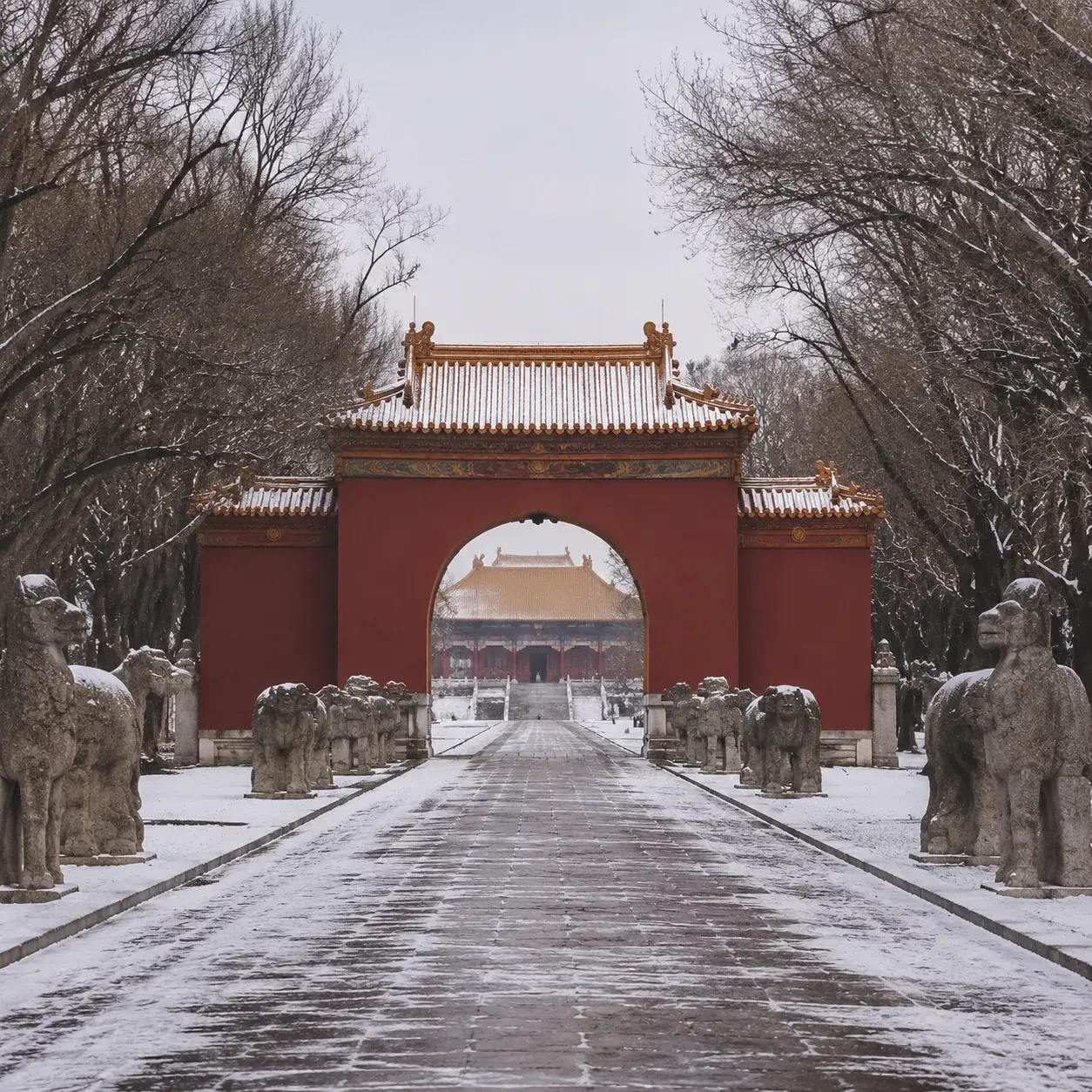
- Zhaoling Tomb (in Beiling Park) and Fuling Tomb (Dongling) — the two UNESCO-listed Qing imperial tombs inside Shenyang, set in large, walkable parks. Zhaoling holds Hong Taiji; Fuling holds Nurhaci. Both belong to the "Imperial Tombs of the Ming and Qing Dynasties" World Heritage listing, with the Liaoning tombs added in 2004 (UNESCO World Heritage Centre, verified 2026-07-04).
- Marshal Zhang's Mansion (Zhang Shi Shuai Fu) — the warlord-era residence of Zhang Zuolin and Zhang Xueliang; a completely different, early-20th-century layer of Shenyang.
- 9.18 Historical Museum — marking the 1931 Mukden Incident, where the Japanese invasion of Northeast China — and, many argue, WWII in Asia — began.
- Xita (Koreatown) — one of the largest Korean districts outside Korea, and the best place in the city for a Korean-Chinese meal.
- Zhongjie pedestrian street — a historic shopping street near the palace, good for an evening stroll and Dongbei street food.
In winter, add snow and ice — the palace courtyards and tomb approaches under snow are genuinely atmospheric, and the city gets its own smaller-scale ice displays. The two imperial tombs are what push Shenyang from "one palace" to "a real half-day of World Heritage," and they're exactly what competitor city guides tend to leave out.
How Many Days in Shenyang? (A 1–2 Day Itinerary)
One full day covers Shenyang's essentials; two days is comfortable and lets you slow down for the tombs and a museum. Most travellers pair Shenyang with Harbin, so build the day (or two) to end with an easy onward train north.
| Itinerary | Notes (times/prices indicative — verify locally) | |
|---|---|---|
| Day 1 (Qing core) | Morning: Mukden Palace (~2–3 h) → Lunch: Xita Koreatown or Zhongjie → Afternoon: Marshal Zhang's Mansion → Evening: Zhongjie / Xita food street | A single day covers the palace core plus a Korean-district meal; if you're tight, do just the morning palace and catch an afternoon train |
| Optional Day 2 (tombs + modern history) | Morning: Zhaoling Tomb + Beiling Park → Afternoon: 9.18 Historical Museum or the Liaoning Provincial Museum | Zhaoling/Beiling is the most accessible of the UNESCO tombs; the 9.18 Museum adds the "where WWII in Asia began" layer |
If you only have half a day — say you're changing trains — leave your bags at the station, spend two to three hours at Mukden Palace, grab a Korean-Chinese lunch in Xita, and continue north. That alone puts "China's only other imperial palace" in your pocket. Most travellers, though, pair this with Harbin — here's how to chain them.
How to Get to Shenyang — and On to Harbin
Most foreign visitors reach Shenyang by high-speed rail on the Beijing–Harbin corridor, arriving from Beijing in roughly 2.5–4 hours (indicative — verify locally). You can also fly into Shenyang Taoxian International Airport (SHE), which has regional flights from Seoul, Tokyo, Osaka and Hong Kong and connects to the city by Metro Line 2. Because the high-speed line runs through Shenyang on its way to Harbin, stopping here is routing, not a detour — which is exactly why it works as a corridor stop rather than a separate trip.
Getting in. If you're flying into China first, sort your entry paperwork before you go — see LyrikTrip's guides on flying into China and getting from the airport into the city and the China arrival card. China's visa-free transit may apply to a routing that passes through Shenyang (competitor-sourced terms cite a 10-day, 54-country policy since late 2024 — but transit-visa rules change often, so confirm the current official terms before you travel).
On to Harbin. High-speed trains run Shenyang → Harbin in roughly 1.5–2.5 hours (indicative — verify locally), departing from Shenyang or Shenyang North stations. This is the leg that makes the whole Beijing → Shenyang → Harbin winter trip work: you break the long ride north with a day of Qing history, then continue to the Harbin Ice Festival without backtracking.
| Leg | Mode | Time (indicative — verify) | Notes |
|---|---|---|---|
| Beijing → Shenyang | Beijing–Harbin HSR corridor | ~2.5–4 h | The corridor runs through Shenyang, so stopping is on the way, not off it |
| Shenyang → Harbin | Beijing–Harbin HSR corridor | ~1.5–2.5 h | Departs Shenyang / Shenyang North; the key leg that ties the winter corridor together |
| Shenyang → Dandong (China–NK border) | Shenyang–Dandong HSR | Verify | Branch point for a China–North Korea border day trip |
| Shenyang → Changbai Mountain | Rail / long-distance coach, seasonal | Verify (longer) | Summer volcano-lake hikes, winter skiing; Shenyang as Dongbei gateway |
Is Shenyang Good for Families and in Winter?
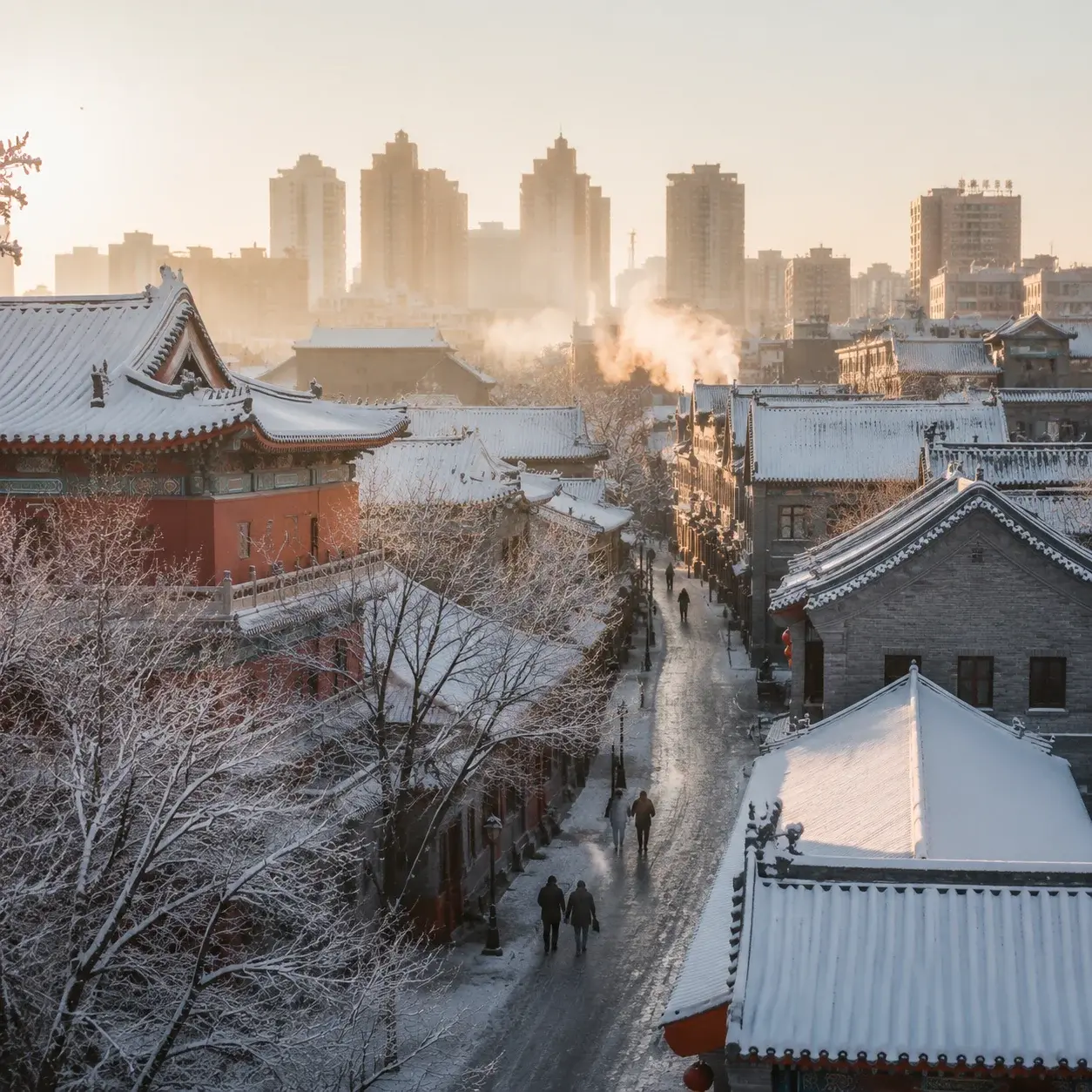
For families, Shenyang works best as a one-day add-on within a Harbin trip rather than a long stay — it's history-heavy, so it suits kids who like palaces and museums. For winter travellers, the palace and tombs are worth it in either season, but expect genuine, bitter cold if you come in the Ice Festival months.
With kids. Be honest with yourself about your children's ages. The palace courtyards, the open space of Beiling Park, winter snow play, and (if you have the extra time) the city's aviation museum all help; young children, though, will hit their limit on a long history-heavy day. The judgement line: Shenyang is a bonus day inside a Harbin trip, not a destination you stretch to two or three days with toddlers. Save the headline excitement for Harbin's ice and snow.
Winter vs summer. Most LyrikTrip readers arrive in winter, because the Harbin Ice Festival is the anchor of the trip. Winters in Shenyang are bitterly cold and dry, often well below freezing (verify current conditions before you pack) — but the palace under snow and a tomb approach with no one else on it deliver a stillness the summer crowds never will. April to October is the milder, standard "best time," better for slowly walking the tomb parks and Zhongjie. Either way, one to two days is the right length; don't change the day count for the season, just change what you wear.
Frequently Asked Questions
Is Shenyang worth visiting? Yes, as a focused 1–2 day stop rather than a standalone destination. The draw is Mukden Palace — the Qing dynasty's birthplace and China's only imperial palace outside Beijing — plus two UNESCO imperial tombs. It fits best on the Beijing → Shenyang → Harbin winter corridor. Skip it if you have under about eight days in China.
What is Mukden Palace (the Shenyang Imperial Palace)? Mukden Palace is the imperial palace where the Qing dynasty began, built from 1625 by Nurhaci and Hong Taiji. The Qing ruled from here before capturing Beijing in 1644. It's China's only complete imperial palace outside Beijing and, with the Forbidden City, is a UNESCO World Heritage Site (List 439).
How is Shenyang's palace different from Beijing's Forbidden City? Shenyang's palace is the earlier "prequel" — where the Qing dynasty started, versus Beijing, where it ruled China. It's about one-twelfth the size but has unique Manchu-Mongol-Han architecture, like the octagonal Dazheng Hall and the Ten Princes' Pavilions, that Beijing's Han-style palace doesn't have.
How many days do you need in Shenyang? One full day covers the essentials — Mukden Palace, a Korean-district lunch, and Marshal Zhang's Mansion. A second day lets you add the Zhaoling and Fuling imperial tombs plus the 9.18 Historical Museum. Most travellers do Shenyang as a one-day stop on the way to Harbin.
What are the top things to do in Shenyang? Mukden Palace (the Shenyang Imperial Palace), the Zhaoling and Fuling UNESCO imperial tombs, Marshal Zhang's Mansion, the 9.18 Historical Museum, Xita Koreatown for food, and Zhongjie pedestrian street. The core is Qing history plus Northeast (Dongbei) culture, and it fits comfortably into one or two days.
How do I get from Shenyang to Harbin? High-speed trains run Shenyang → Harbin in roughly 1.5–2.5 hours (verify locally), leaving from Shenyang or Shenyang North stations. Shenyang sits on the Beijing–Harbin corridor, so this leg is what makes a Beijing → Shenyang → Harbin winter trip flow without backtracking.
How much are Mukden Palace tickets and what are the hours? Competitor sources put admission around ¥50–60 with free entry for small children, and the palace typically closes on Mondays with seasonal hours (roughly 08:30–17:30 in summer, shorter in winter). Treat all of this as indicative for 2026-07 and confirm official current prices and hours before you go.
Is Shenyang good for a winter trip or with kids? Winter works — the palace and tombs are atmospheric in snow and far less crowded, though the cold is genuinely bitter, so dress for well below freezing. For families, it suits kids who like palaces and museums; treat it as a one-day add-on within a Harbin trip rather than a multi-day stay with young children.
Planning Your Shenyang Trip: The Bottom Line
Shenyang, China is worth a focused one to two days — for the Qing origin story at Mukden Palace and its two UNESCO imperial tombs — and it's at its smartest as a stop on the Beijing → Shenyang → Harbin winter corridor rather than a trip you build around it. Don't come for a "second Forbidden City"; come for the prequel, the octagonal Dazheng Hall, and a real Dongbei city with a fraction of the crowds. Winter travellers get snow-quiet World Heritage; families get a solid bonus day, best kept short and paired with Harbin's ice.
If you'd rather have a private, English-speaking Northeast itinerary — Beijing → Shenyang → Harbin sequenced, the palace and imperial tombs guided in English, and the trains, timing and left-luggage handled — that's what LyrikTrip does. Either way, you now have the framework to decide whether to stop in Shenyang, China, and exactly how to make the day count.