



 18 days China, End to End Beijing → Xi'an → Chuanzhusi → Jiuzhaigou → Chengdu → Zhangjiajie → Guilin → Yangshuo → Shenzhen From $6,360 View route
  3 days 4-Day Tour of Siguniang Mountain, Biepa Gou, and Dagu Glacier Chengdu → Lixian → Heishui County From $1,599 View route
  5 days Above the Pillars, Then Below Zhangjiajie From $1,430 View route
  3 days After the Last Booth Guangzhou From $840 View route
  13 days All the Way West Xi'an → Dunhuang → Turpan → Kashgar → Shanghai From $3,500 View route
Where Do You Buy Diapers and Care for a Baby in China?
You can buy disposable diapers almost anywhere in urban China — supermarkets, pharmacies, mall baby sections, and on-demand delivery apps all stock them — but sizes are labelled by the baby's weight in kilograms, not by S/M/L, so check the kg range before you buy. Formula, wipes, and basic baby supplies are equally easy to find, and baby-care rooms (母婴室) are standard in airports, train stations, malls, and many metro stations.
This is a practical, independent guide to the logistics of babies and toddlers in China: buying the consumables, decoding the sizing, finding somewhere to change and feed, and knowing what local norms to expect. It is written to set realistic expectations, not to sell a trip. Anything involving a price, a brand, or your child's health should be confirmed on the ground or with your own pediatrician — those details change and vary by person.
Key Takeaways
- Diapers are widely sold. 纸尿裤 (disposable diapers) are stocked in supermarkets, pharmacies, mall baby sections, and via delivery apps in any Chinese city.
- Sizing runs by weight in kg. Chinese packs are sorted by the baby's kilogram range, not a direct S/M/L match — read the kg band on the pack.
- Bring your own formula brand. Formula is available, but specific brands and formulations vary, so travel with what your baby already tolerates.
- Baby-care rooms are common. 母婴室 exist in most airports, high-speed rail stations, malls, and many newer metro stations.
- Public toileting of toddlers happens. Split-crotch pants (开裆裤) culture means you may see young children relieved in public; set expectations for your family.
- Breastfeeding in public is tolerated but modest. Openly nursing is less common than in some Western countries; a 母婴室 or a cover is the usual approach.
Can You Buy Diapers in China?
<!– img: unsplash / Nathália Rosa / query=chinese supermarket aisle shopping –>
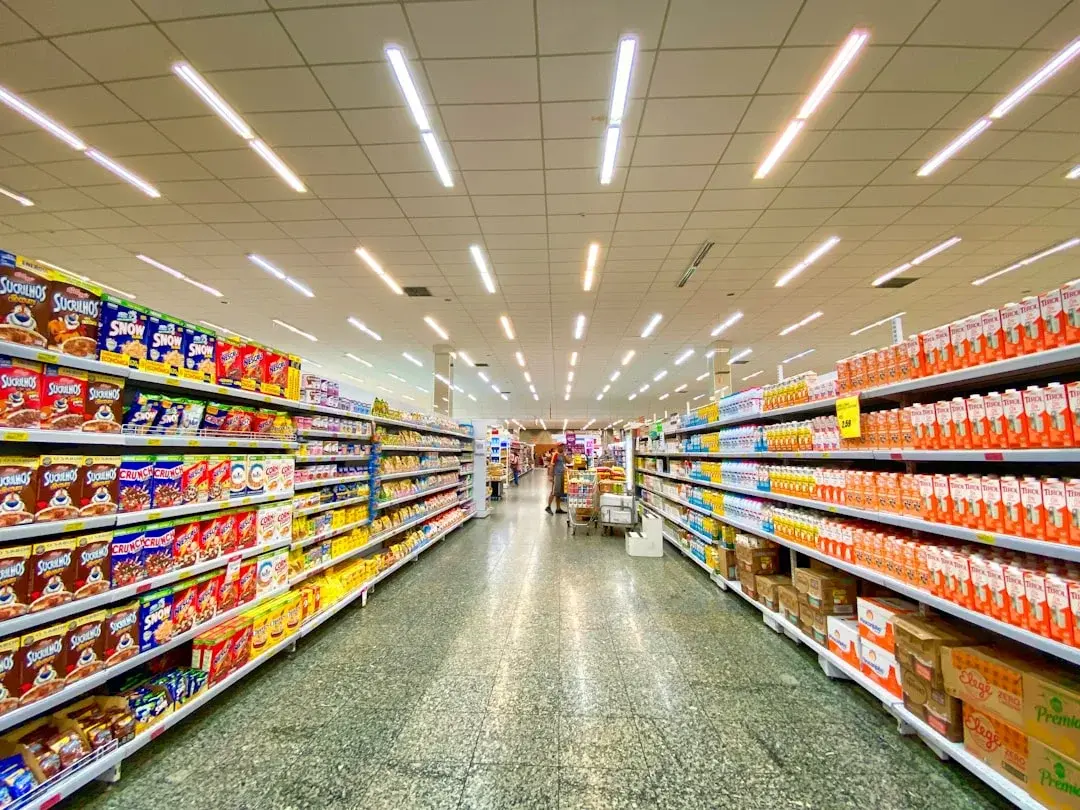
Yes — disposable diapers are a mainstream, everyday product in urban China and are not hard to find. The written word on packaging is 纸尿裤 (zhǐ niào kù), meaning disposable diaper; the general word for diaper or nappy is 尿布 (niào bù). Both international and local brands are sold, alongside Japanese brands that are popular in the Chinese market.
Practically, you have four ways to buy, and each suits a different moment of a trip. Large supermarkets carry the widest range and clearest pricing; pharmacies and convenience stores are useful for a small emergency pack; and delivery apps are the fastest route when you are jet-lagged in a hotel at night. Prices are broadly comparable to Western markets, though this varies by brand and city, so check current prices at the shelf.
Where to Buy What: Diapers, Wipes, Formula, and Baby Meds
This table maps the main baby consumables to where they are easiest to buy. Treat brand availability and prices as approximate and confirm locally.
| What you need | Supermarket (大超市) | Pharmacy (药店) | Delivery app | Airport / station shop | Note |
|---|---|---|---|---|---|
| Disposable diapers (纸尿裤) | Best range and sizes | Limited stock | Fast to hotel | Small packs only | Sized by kg weight band, not S/M/L — read the pack |
| Wet wipes (湿巾) | Widely stocked | Usually stocked | Easy add-on | Usually stocked | Fragrance-free options exist but aren't universal — check the label |
| Infant formula (奶粉) | Sealed baby aisle | Some carry it | Available | Rarely | Bring your own brand; local brands and formulations differ |
| Baby toiletries (baby wash, cream) | Baby section | Common | Easy | Rare | Pack a travel size to bridge the first day |
| Basic child medicine / fever reducer | Rare | Primary source | Some apps | Rare | Dosing and formulations differ — ask a pharmacist or doctor, and don't self-guess the medicine |
On delivery apps: on-demand grocery and pharmacy delivery is deeply embedded in Chinese daily life, and diapers or wipes can typically reach a hotel within about an hour of ordering. This usually requires a Chinese-language interface and a local mobile-payment setup, so it is most useful once you are already set up for apps and payments in China (see the transport-and-logistics guide linked below).
The One Thing That Trips Parents Up: kg Sizing
Chinese diaper packs are organised by the baby's weight in kilograms, so a size that reads like a familiar letter may not map to what you expect. Instead of relying on an S/M/L label, look for the kilogram range printed on the pack and match it to your child's current weight. Because 1 kg is about 2.2 lb, it helps to know your baby's weight in kilograms before you shop.
The band names below are the common Chinese size codes you will see on packaging. The kilogram ranges attached to each code are approximate and differ between brands and get revised, so always read the specific pack (indicative, 2026).
| Pack code | Meaning | Indicative weight band | Rough lb equivalent |
|---|---|---|---|
| NB | Newborn | up to ~5 kg | up to ~11 lb |
| S | Small | ~4–8 kg | ~9–18 lb |
| M | Medium | ~6–11 kg | ~13–24 lb |
| L | Large | ~9–14 kg | ~20–31 lb |
| XL | Extra large | ~12–17 kg | ~26–37 lb |
| XXL / XXXL | Toddler / pull-up | ~15 kg and up | ~33 lb and up |
Two practical habits save trouble: know your baby's weight in kg, and buy a small pack first to test fit before committing to a bulk box. Pull-up style pants (拉拉裤) are common for older babies and toddlers and are sized the same way.
Where Do You Change and Feed a Baby in China?
<!– img: unsplash / Hanson Lu / query=family travel airport toddler –>
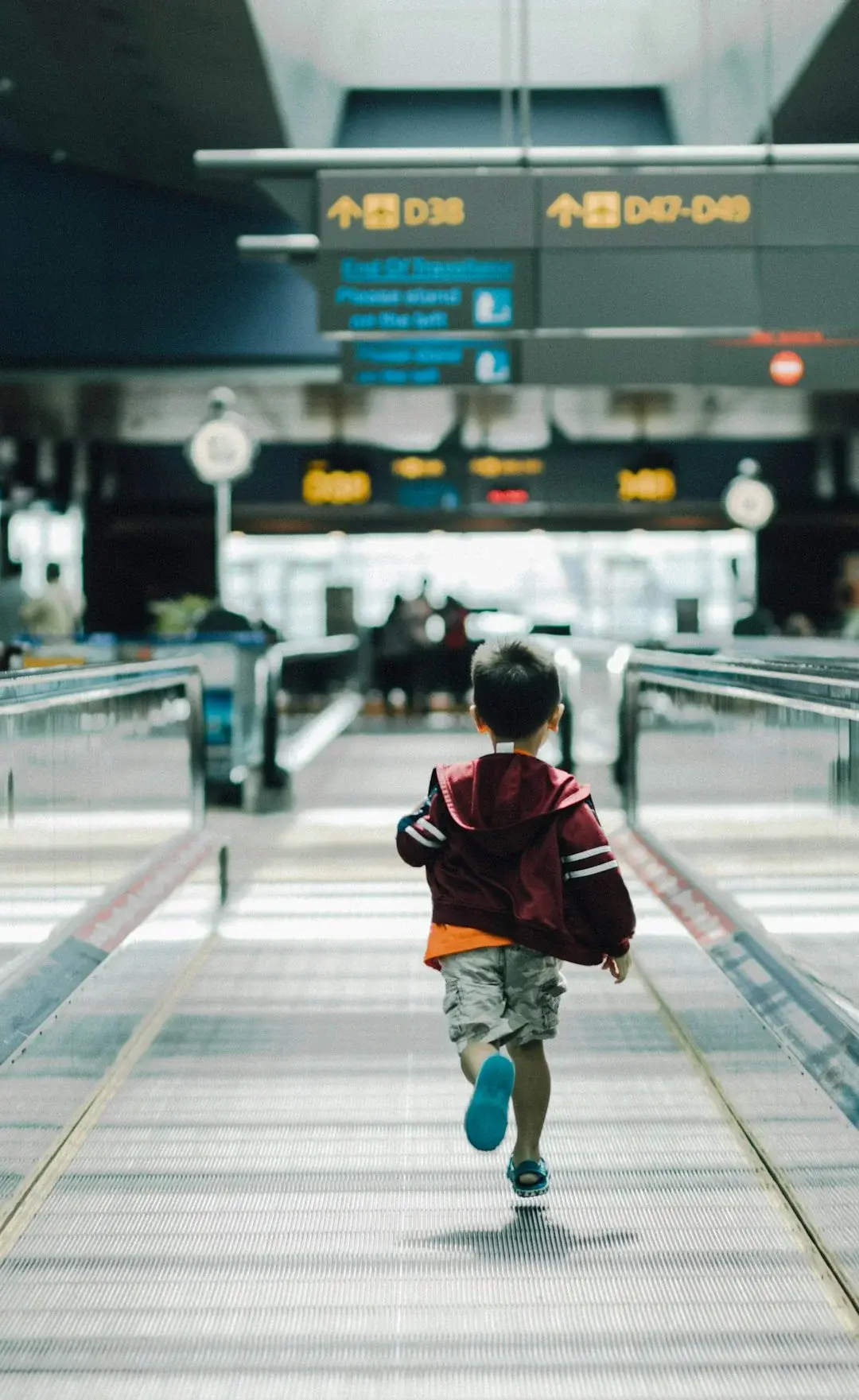
Dedicated baby-care rooms — 母婴室 (mǔ yīng shì) — are standard in airports, high-speed rail stations, and shopping malls, and increasingly in newer metro stations. These rooms typically include a changing surface and a seat for feeding, and some add a sink or a place to warm milk. Coverage is strongest in large, modern venues and thinner in older buildings, small restaurants, and rural areas, so it helps to plan changes around the big transit and retail hubs.
Where to Find Baby-Changing and Feeding Rooms
Availability by venue type. Signage to look for: 母婴室 (baby-care room) or a parent-and-baby pictogram.
| Venue type | Baby-care room (母婴室) | What to expect | Reliability |
|---|---|---|---|
| Airports | Usually yes | Changing table, seating, sink; well signposted | High |
| High-speed rail stations | Usually yes | Family/nursing room near waiting areas — ask staff if unsigned | High |
| On high-speed trains | Accessible toilet | Fold-down changing surface, often in a middle carriage | Medium–High |
| Shopping malls | Common | Clean, dedicated rooms; a fallback for feeding | High |
| Metro stations | Newer ones | Present in newer/large interchange stations, not all | Medium |
| Major attractions (AAAAA-rated) | Often | Accessible toilets with changing facilities | Medium–High |
| Restaurants | Rarely | Changing tables are not standard — carry a portable mat | Low |
| Older buildings / rural areas | Seldom | Improvise; a compact changing mat is worth packing | Low |
The takeaway: a portable changing mat covers the gaps, and structuring longer outings around a mall, airport, or big station gives you a reliable, clean place to reset.
What About Split-Crotch Pants and Public Toileting?
You may see toddlers in split-crotch pants (开裆裤, kāi dāng kù) — trousers open at the crotch — and young children being toileted in public, and this is a normal cultural practice rather than a lapse. Traditionally, split-crotch pants let a toddler squat to relieve themselves directly, and caregivers may hold a child over a bin, a gutter, or a patch of ground, sometimes with a whistling cue. It is less common in big cities than it once was, as disposable diapers have become the urban norm, but it has not disappeared.
For visiting parents this is mostly a matter of expectation-setting: it can be surprising the first time, and it is simply a different convention. It does not affect your own choices — using diapers throughout is completely ordinary and unremarkable in cities.
Is Breastfeeding in Public Accepted in China?
Breastfeeding in public is generally tolerated and rarely draws comment, but openly nursing without a cover is less common than in some Western countries, and the everyday norm leans modest. Many mothers use a 母婴室 when one is available, or a nursing cover when in the open. Reports from traveling parents describe feeding as needed — including in restaurants — without feeling watched, alongside a general sense that discretion is the local default.
A reasonable approach is to use baby-care rooms where they exist (they are common in exactly the transit and mall settings where you would need one), and to carry a light cover for other moments. Attitudes toward babies are broadly warm and helpful, and families with small children are generally looked out for.
A note on feeding decisions: this guide covers logistics, not medical advice. Whether and how you breastfeed or formula-feed, and any change to your baby's feeding while traveling, is a decision for you and your pediatrician. Formula is available in China, but brands and formulations differ, so bring what your baby already tolerates rather than planning to switch on arrival.
Useful Chinese Words for Baby Care
These characters help you read packaging, search a map app, or ask a shop assistant.
| Chinese | Pinyin | Meaning |
|---|---|---|
| 纸尿裤 | zhǐ niào kù | disposable diaper (on packaging) |
| 尿布 | niào bù | diaper / nappy (general) |
| 拉拉裤 | lā lā kù | pull-up pants |
| 湿巾 | shī jīn | wet wipes |
| 奶粉 | nǎi fěn | infant formula (milk powder) |
| 母婴室 | mǔ yīng shì | baby-care / mother-and-baby room |
| 换尿布 | huàn niào bù | to change a diaper |
Frequently Asked Questions
Can you buy diapers in China?
Yes. Disposable diapers (纸尿裤) are widely sold in supermarkets, pharmacies, mall baby sections, and via delivery apps in every Chinese city. Both international and local brands are stocked, and prices are broadly comparable to Western markets, though this varies and should be confirmed locally.
How does diaper sizing work in China?
Sizes are organised by the baby's weight in kilograms rather than a direct S/M/L match. Packs show a kg range and codes like S, M, L, XL — read the kilogram band and match it to your baby's weight. Buy a small pack first to test the fit before committing to a bulk box.
Should I bring formula from home?
Formula is available in China, but specific brands and formulations differ, so it is safer to travel with the brand your baby already tolerates rather than switching on arrival. Any change to feeding should be discussed with your pediatrician. Bring enough to cover your trip plus a buffer.
Where can I change or feed my baby in China?
Baby-care rooms (母婴室) are standard in airports, high-speed rail stations, and malls, and appear in many newer metro stations, typically with a changing surface and a seat for feeding. Restaurants and older buildings rarely have them, so carry a portable changing mat as a fallback.
Is breastfeeding in public acceptable in China?
It is generally tolerated and rarely draws attention, but the everyday norm leans modest and open nursing is less common than in some Western countries. Using a baby-care room where available, or a light nursing cover elsewhere, fits local expectations. Attitudes toward babies are warm and accommodating.
Planning the Rest of Your Trip
Buying diapers and finding a place to change or feed your baby are the everyday logistics of family travel in China, and in cities they are genuinely straightforward: stock is easy to find, sizing just needs a kg check, and baby-care rooms cluster exactly where you pass through them. Keep a small local supply, a portable mat, and your own formula brand, and confirm any price, product, or health detail on the ground.
For the wider picture, start with the  China with kids guide, then read the getting around China with kids guide for how trains, flights, and city transit work with a baby or toddler in tow.