




Chengdu Travel Guide 2026: 20 Best Things to Do, See & Eat in China's Panda City
If you’re visiting China for the first time and don’t want an itinerary that feels too rushed, Chengdu is usually one of the first cities I think of. For many international travelers, `Chengdu China` has a very special appeal: you can see giant pandas, eat authentic Sichuan food, sit in a traditional teahouse for an unhurried afternoon, and use the city as a gateway to deeper travel in western China. Before I first went, I assumed Chengdu was simply “the panda city” with a strong food reputation. But after actually spending time there, I realized it is much more than that. It is one of the most relaxed major cities in China, and for overseas visitors, it is also a surprisingly practical place to begin.
The first time I helped a group of foreign friends arrive in Chengdu, the biggest concerns were not whether there were enough attractions, but much more practical questions. Do we really need to get up early for the panda base? If we don’t speak Chinese, will it be hard to take taxis or order food? How spicy is Sichuan hotpot really, and how do we avoid destroying ourselves on the first meal? Is it better to stay near Chunxi Road, Taikoo Li, or Kuanzhai Alley? In my experience, these small logistical questions matter much more than a generic “top 10 sights” list, because they shape whether your trip feels smooth or stressful.
Our  Chengdu Panda Base route map covers which gate to use, the twelve-stop walk and when to arrive to see the pandas awake.
This `Chengdu travel guide` is designed to solve exactly those real travel problems. If you have only 2 to 5 days in the city, what should you prioritize, what should you eat, where should you stay, and how should you organize your route without wasting time? I’ll walk you through the most worthwhile attractions, local experiences, food ideas, transport options, hotel areas, day trips, and practical tips in the clearest way I can. If you’re planning a wider western China trip, I hope this guide helps you avoid a lot of the common mistakes first-time visitors make.
Why Visit Chengdu?
Chengdu is the capital of Sichuan Province, often searched as `Chengdu Sichuan`, and it has a very different rhythm from China’s better-known first-tier cities. If Beijing feels political and historical, and Shanghai feels modern and fast-paced, then `Chinese Chengdu` feels grounded, lived-in, and comfortable. It is a city where daily life is part of the attraction.
I usually explain Chengdu’s appeal through four main strengths.
The first is obviously pandas. For many international travelers, the Chengdu Research Base of Giant Panda Breeding is the main reason to come. I once accompanied a Spanish couple who thought, “We’ll see the pandas for an hour or two, and that will be enough.” But once they were actually there—watching younger pandas wrestle, older pandas sit lazily with bamboo, and crowds suddenly fall quiet as everyone focused on the same adorable scene—they ended up staying nearly the entire morning. Seeing pandas in person feels completely different from seeing them in videos.
The second reason is the food, and not only hotpot. Many first-time visitors think Chengdu cuisine is simply about extreme spiciness, but that is not really accurate. Sichuan food is built on layers of flavor: numbing, spicy, savory, fragrant, sweet, fermented, and aromatic notes all balanced together. Dishes like kung pao chicken, sweet water noodles, Zhong dumplings, mapo tofu, and twice-cooked pork are not just “hot”; they are deeply structured. Travelers who come expecting only chili often leave surprised by how nuanced the food actually is.
The third reason is Chengdu’s teahouse and park culture. One of the most memorable things you can do here is sit down in People’s Park with a covered bowl of tea, watch locals chat, play mahjong, get ear-cleaning treatments, stroll slowly, and simply enjoy the atmosphere. Many overseas visitors arrive thinking they will remember the pandas most, but after they leave, it is often that slow afternoon in a teahouse that stays with them.
The fourth reason is that Chengdu works extremely well as a base for western China. Whether you want to continue on to Leshan, Mount Emei, Jiuzhaigou, Qingcheng Mountain, or more remote areas of Sichuan, Chengdu is one of the easiest places to organize transportation, rest after long flights, and adapt to Chinese apps, payment systems, and transport routines before moving on.
If you are visiting China for the first time, traveling with children, planning a food-focused trip, or looking for a major city that does not feel overwhelmingly intense, Chengdu is usually a very good choice.
Best Time to Visit Chengdu
Chengdu has a humid climate. Summers can feel muggy, and winters are not brutally cold by northern China standards, but they can feel damp and chilly. In terms of overall travel comfort, I usually recommend visiting between March and June, or between September and November. These periods tend to offer the best balance of weather, city-walking comfort, and easier day-trip planning.
Spring is especially good for first-time visitors. Temperatures are pleasant, parks and streets feel lively, and pandas tend to be more active in the cooler morning hours. I visited in April once and found the conditions nearly ideal: a light jacket was enough in the morning, and by midday it was comfortable to walk between Kuanzhai Alley, People’s Park, and nearby streets without feeling exhausted. For travelers who are still adjusting to China, this kind of weather makes a real difference.
Summer is visually lush, and the city is very green, but the humidity can be tiring, especially for travelers who are not used to it. I once helped a family travel around central Chengdu in July, and by the end of the day the main complaint was not sunburn but heaviness from the heat and moisture. If you visit in summer, I strongly suggest putting outdoor sites like the panda base, temple areas, and parks in the morning, while saving museums, indoor dining, Sichuan opera, and shopping districts for the afternoon or evening.
Autumn is probably my personal favorite season. The weather is more stable, photos usually come out better, and it is a great time to combine Chengdu city sightseeing with nearby destinations like Leshan, Mount Qingcheng, or Dujiangyan. Many travelers who want a 4- to 6-day western China introduction choose autumn for exactly this reason.
Winter can also work well if you prefer fewer crowds and don’t mind cool weather. Hotels may feel less pressured during off-peak periods, and hotpot becomes even more satisfying. But do not underestimate Chengdu winter dampness. It is not the dry cold of northern China. Bring proper outerwear and comfortable shoes that can handle cold, wet conditions.
One important note: China’s major holiday periods—including Chinese New Year, May Day, National Day, and busy summer weekends—can get significantly more crowded. If you must travel during these times, book hotels, attraction tickets, and transfers as early as possible. This matters especially for the panda base. If you want to see more active pandas, morning access is worth the effort. Arriving around 8:00 or shortly after can mean seeing pandas eating, climbing, or moving around. Arriving close to noon often means seeing far more sleeping than playing.
Top Attractions in Chengdu
1. Chengdu Research Base of Giant Panda Breeding
If someone asks me what they absolutely should not miss on a first trip to Chengdu, this is usually the first place I mention. It remains one of the most iconic `top things to see in Chengdu`, and although some travelers worry it might feel too touristy, the experience is genuinely worthwhile if you plan it properly.
The ideal arrival window is between 8:00 and 9:00 in the morning. That is when pandas are generally more active, temperatures are cooler, and photography conditions are better. A commonly referenced ticket price is around RMB 58, though travelers should always check the latest official information. You can reach the base by taxi, metro plus shuttle connection, or private car. For first-time visitors who do not want to deal with route changes, queues, and timing uncertainty, a pre-arranged half-day visit is often the easiest option.
I strongly recommend treating this as a half-day activity rather than trying to squeeze it into a tight schedule. The site is larger than many people expect. I once worked with an American family who planned to “finish the pandas in two hours” and then head straight into the city for lunch. In reality, by the time they entered, walked between the popular enclosures, paused for photos, let the children rest, and explored the museum area, it was already close to noon. In the end, they were glad they had not over-packed the day.
For families, older travelers, or anyone landing in China for the first time, this is one of those attractions where having help with timing and transport can make the morning much easier. In some cases, travel agencies can assist with route planning, ticket coordination, and private transfers, especially if travelers want to combine the panda base with city highlights in one smooth day.
2. Jinli Ancient Street
Jinli almost always appears on lists of `attractions in Chengdu`. It is a classic-style pedestrian street filled with snacks, lantern-lit lanes, souvenir shops, and an atmosphere designed to give first-time visitors a quick taste of local visual culture. During the day, it works well for light browsing and snack-hopping. In the evening, it becomes much more photogenic.
To be honest, Jinli is highly commercialized. But I still think it is worth visiting if you approach it with the right expectations. Do not treat it as an untouched historical quarter. Treat it as an easy, concentrated way to experience a stylized version of Chengdu street culture in a manageable format. Entry is free, and most travelers only need 1 to 2 hours here.
I usually suggest visiting Jinli in the late afternoon or early evening, ideally after Wuhou Shrine. One traveler from Canada I once advised originally wanted to go at lunchtime, but after shifting the visit to dusk, she later told me it felt like a completely different place: the lanterns came on, the alleys looked better in photos, and the whole walk felt more atmospheric. If you like trying local snacks, this is a good place to sample a few things in small portions, but for a serious dinner I would still recommend going elsewhere.
3. Wuhou Shrine
Wuhou Shrine is often paired with Jinli, and that combination works very well. Even if you are not deeply interested in the Three Kingdoms period, the site offers a good introduction to how history, memory, and regional culture overlap in Chengdu.
The first time I brought overseas visitors here, some of them expected it to be “just another old building complex.” But once they understood that this place is associated with Zhuge Liang and the broader world of loyalty, strategy, and historical storytelling in China, the site became far more interesting. This is one of those places where a bit of explanation makes a huge difference.
If you enjoy history, architecture, or cultural context, I would give Wuhou Shrine at least 1.5 hours. If you want a more meaningful visit, even a short explanation from a guide helps. For travelers who want Chengdu to be more than just pandas and food, this is an important stop.
4. People’s Park
People’s Park is one of the clearest windows into Chengdu’s slow-paced city life. If you want to understand `what to see in Chengdu` beyond monuments and attractions, come here. Locals gather to drink tea, play cards, practice calligraphy, walk slowly, chat under the trees, and enjoy the kind of unhurried public life that many big cities have lost.
What I recommend most is very simple: sit down in a teahouse and do not rush. Order a bowl of covered tea, watch what is happening around you, and give yourself permission to stay longer than you planned. An Australian traveler I once met assumed tea in the park would be a quick ten-minute novelty. Instead, he ended up sitting there for more than an hour, watching families, older residents, and groups of friends come and go, and later told me it was one of the most memorable moments of his entire China trip.
People’s Park is also a place where visitors sometimes try ear-cleaning services or wander through the famous matchmaking corner. Just make sure you understand the price and what is included before starting any optional service. For travelers who are nervous about language barriers, a local guide or pre-trip explanation can help avoid awkward misunderstandings.
5. Kuanzhai Alley
Kuanzhai Alley is one of Chengdu’s more debated attractions. Some travelers think it is too commercial, while others find it one of the easiest places to enjoy the city without much planning. My view is practical: if you have limited time, want somewhere walkable, photogenic, and easy for food and cafés, it is worth a visit.
The area is made up of restored lanes lined with teahouses, restaurants, courtyards, boutiques, and visitor-friendly snack spots. It is not where I would send someone looking for the most local version of Chengdu, but it does work well as a soft landing for first-time visitors. I’ve seen this especially with travelers arriving after long international flights. One couple from Germany stayed nearby on their first night because they wanted a place where they could walk around without having to decode the whole city immediately. That turned out to be a smart choice.
Visit in the morning if you want calmer photos, or in the evening if you prefer a livelier atmosphere. If you only have a short stay in Chengdu, Kuanzhai Alley is a convenient place to combine sightseeing, snacks, souvenir shopping, and a relaxed meal.
6. Chunxi Road and Taikoo Li
Not every Chengdu highlight is historical. Chunxi Road and Taikoo Li show the city’s modern side, and for many international travelers, this area ends up being one of the most practical places to spend time. There are malls, restaurants, cafés, transport links, and easy access to many hotels.
I often recommend this area for travelers who want convenience. If you need a comfortable first base in China—especially one with plenty of dining options and easy DiDi pick-up points—this is one of the safest choices. It is also where many visitors take photos with the famous panda climbing sculpture on IFS.
A British traveler I once helped plan for had only 48 hours in Chengdu and stayed near Taikoo Li. That choice allowed him to walk to meals, shop for small necessities, quickly reach central attractions, and avoid losing time on long cross-city transfers. In a short itinerary, that kind of efficiency matters more than people expect.
7. Sichuan Opera and Face-Changing Show
If you want an evening activity that feels distinctly local and is still easy for non-Chinese speakers to enjoy, a Sichuan opera performance is an excellent choice. The face-changing act is the most famous part, but there is often more in the program: folk music, shadow-play elements, acrobatics, hand-shadow segments, or comic stage interaction.
I usually recommend this especially for travelers who want a cultural experience without needing too much background knowledge. You do not need to understand every word to enjoy the performance. Children often love it, and adults usually leave more impressed than they expected.
Some travelers arrange tickets independently, while others prefer having transport and seat selection handled in advance. That is often helpful during peak seasons or when travelers want the evening to run smoothly after a long sightseeing day.
What to Eat in Chengdu
Food is one of the main reasons people come to Chengdu, but I think the smartest approach is not to try to eat “everything famous” as quickly as possible. Instead, build a few meals around different flavors and formats.
Hotpot
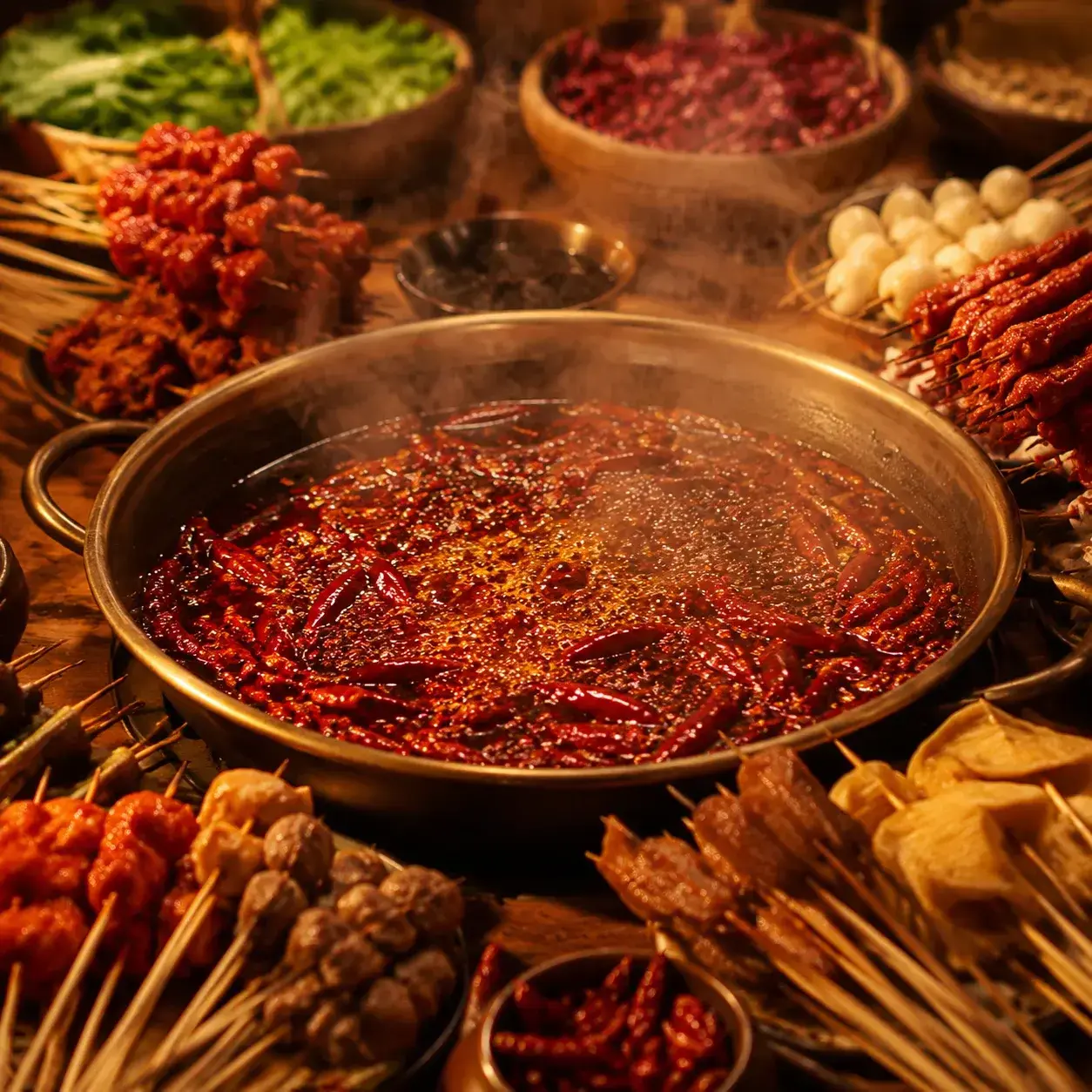
Yes, you should try Sichuan hotpot. But if you are not used to very spicy food, do not feel pressured to order the fiercest broth available. Many restaurants offer divided pots, which let you combine a spicy side with a milder broth. This is what I usually recommend to first-time visitors.
I remember one group of Southeast Asian travelers who thought they had a strong spice tolerance and ordered an aggressively spicy full pot on the first night. The meal was fun for about twenty minutes and regrettable for the next twelve hours. Since then, I always tell people: your Chengdu trip is not a chili endurance contest. Start balanced.
Mapo Tofu, Twice-Cooked Pork, and Small Dishes
Beyond hotpot, look for local staples such as mapo tofu, twice-cooked pork, dry-fried green beans, kung pao chicken, and cold dishes with chili oil or Sichuan pepper. These are often better introductions to Chengdu flavor than jumping straight into the most intense options.
Street Snacks and Casual Foods
Try dan dan noodles, Zhong dumplings, rabbit head if you are adventurous, sweet water noodles, guokui, and local-style skewers. Jinli and Kuanzhai Alley are easy places to sample snacks, but for more satisfying meals, I often suggest going to neighborhood restaurants with strong local traffic.
One solo traveler from France once told me she had her best meal in Chengdu at a very ordinary-looking restaurant near her hotel, where the menu had no English at all and she simply pointed at what another table was eating. The lesson is simple: polished presentation does not always equal the best flavor.
Teahouse Snacks and Dessert
Do not overlook desserts and tea accompaniments. Ice jelly, brown sugar rice cakes, and sweet drinks can be especially welcome after heavier meals. If you spend an afternoon in a teahouse, order a few small snacks and enjoy the slower rhythm.
Where to Stay in Chengdu
Choosing the right area can save you a lot of time.
Chunxi Road / Taikoo Li
This is usually my top recommendation for first-time visitors. It is central, convenient, full of dining choices, and relatively easy to navigate. If you are staying 2 to 4 nights and want efficiency, this area is hard to beat.
Kuanzhai Alley Area
This works well for travelers who want a slightly more atmospheric stay with easier access to classic-style streets and teahouse culture. It can feel more charming, though sometimes slightly less efficient than Chunxi Road depending on your exact hotel.
Near South Railway Station / Financial District
This can be useful for business travelers or repeat visitors, but it is not usually my first pick for leisure-focused first-timers.
In general, when helping overseas travelers, I usually suggest balancing three things: metro convenience, dining access, and realistic travel time to the panda base and railway stations. A hotel that looks beautiful online but adds 30 to 40 extra minutes of transport each day can quietly reduce the quality of your trip.
How to Get Around Chengdu
Chengdu is relatively manageable compared with some larger Chinese cities, but first-time visitors still benefit from knowing the basics.
Metro
The metro is affordable, clean, and useful for many routes. It is a good option if you are comfortable using map apps and do not mind some walking.
Taxi and Ride-Hailing
For many international travelers, taxis or ride-hailing are the easiest option, especially when moving between hotel, panda base, restaurants, and evening shows. If you are using DiDi, having your destination saved in Chinese is extremely helpful.
I once helped a family who kept showing English attraction names to drivers and getting confused responses. After we saved the hotel and attraction names in Chinese on their phones, their transport experience became much smoother immediately.
Private Transfer or Day Car
If you are traveling with children, older relatives, multiple suitcases, or a very short schedule, private transfers can be worth the extra cost. This is especially true for airport pick-up, panda-base mornings, or combining multiple sites in one day. In these cases, some travel agencies can help arrange English-friendly support and more efficient routing.
Suggested Chengdu Itineraries
2 Days in Chengdu
Day 1: Panda Base in the morning, lunch break, People’s Park in the afternoon, hotpot in the evening
Day 2: Wuhou Shrine, Jinli Ancient Street, Kuanzhai Alley, Sichuan opera show
This is the basic first-time visitor route, and it works well if your priority is seeing the essentials without overcomplicating the trip.
3 Days in Chengdu
Add Chunxi Road / Taikoo Li, a better food-focused evening, and more relaxed time in a teahouse or café.
4 to 5 Days in Chengdu
Use one or two days for side trips such as Leshan Giant Buddha, Dujiangyan, or Mount Qingcheng.
A couple from Singapore once followed a 4-day version of this structure with one relaxed city day at the end instead of cramming every moment. Later they said that final slow day became one of the best parts of the trip because it gave them time to revisit a favorite restaurant, shop calmly, and enjoy Chengdu rather than just ticking it off.
Best Day Trips from Chengdu
Leshan Giant Buddha
One of the most popular day trips from Chengdu. It pairs well with travelers interested in history, religion, and iconic photography.
Dujiangyan
A great choice if you want engineering history, mountain scenery, and a destination that feels more open than the city center.
Mount Qingcheng
Ideal for travelers interested in Taoist culture, greener landscapes, and a slower pace.
Sanxingdui Museum
Excellent for visitors who want something historically fascinating and less predictable than standard city sightseeing.
For travelers trying to combine Chengdu with nearby sites in a short timeframe, good sequencing matters a lot. This is where route planning support can genuinely help—not because the destinations are impossible to reach independently, but because smart timing often saves several hours.
Practical Tips for First-Time Visitors
Payments
China is increasingly cash-light, so make sure you prepare your payment options in advance. International cards are accepted in some places, but not everywhere.
Language
English is not consistently spoken, especially in local restaurants and by some drivers. Having hotel names, attraction names, and key requests saved in Chinese can help enormously.
Food Strategy
Do not schedule your spiciest meal before a long train or driving day. This sounds funny, but it is genuinely practical advice.
Panda Timing
Go early. Almost every traveler who ignores this later wishes they had not.
Pace
Do not over-schedule Chengdu. This city rewards travelers who leave room for tea, snacks, wandering, and unplanned discoveries.
Final Thoughts
Chengdu is one of those cities that tends to exceed expectations, especially for first-time visitors to China. People often come for the pandas, but stay impressed by the food, the atmosphere, and the city’s ability to feel both culturally rich and emotionally easy. It is a place where major attractions and ordinary daily life sit very close together.
If you are planning your first Chengdu trip, my honest advice is to focus less on doing everything and more on doing the right things well: get to the panda base early, leave time for a real teahouse afternoon, eat beyond just hotpot, and choose a hotel area that makes your days easier rather than more “interesting.”
And if you are trying to connect Chengdu with a wider Sichuan or China itinerary, having help with route design, transport coordination, or day-trip planning can sometimes save a surprising amount of time and confusion. If needed, you can always ask for a practical checklist or a sample itinerary before booking anything. A good Chengdu trip usually does not need to be complicated—but it does benefit from good planning.
FAQ
How many days do you need in Chengdu?
Most travelers can see Chengdu’s highlights in 2 to 5 days. That gives you enough time for pandas, food, historic areas, teahouses, and a relaxed pace.
What is Chengdu best known for?
Chengdu is best known for giant pandas, authentic Sichuan cuisine, laid-back teahouse culture, and its role as a gateway to western China.
Where should first-time visitors stay in Chengdu?
Popular areas for first-time visitors include Chunxi Road, Taikoo Li, and Kuanzhai Alley. They offer convenient access to transport, food, and major city attractions.
Is Chengdu a good first stop in China?
Yes, Chengdu is a great first stop for international travelers because it combines major sights, excellent food, a slower pace, and practical city travel.