




 18 jours La Chine, d'un bout à l'autre Pékin → Xi'an → Chuanzhusi → Jiuzhaigou → Chengdu → Zhangjiajie → Guilin → Yangshuo → Shenzhen À partir de $6,360 Voir le circuit
  18 jours Air raréfié, puis niveau de la mer Pékin → Xi'an → Chengdu → Lhassa → Tchong-King → Yichang → Shanghaï À partir de $4,900 Voir le circuit
  3 jours Après le dernier stand Canton À partir de $840 Voir le circuit
  5 jours Au-dessus des piliers, puis en dessous Zhangjiajie À partir de $1,430 Voir le circuit
  10 jours Banquet de retour au pays Canton → Shantou → Jieyang → Chaozhou → Quanzhou → Zhangzhou → Xiamen À partir de $4,000 Voir le circuit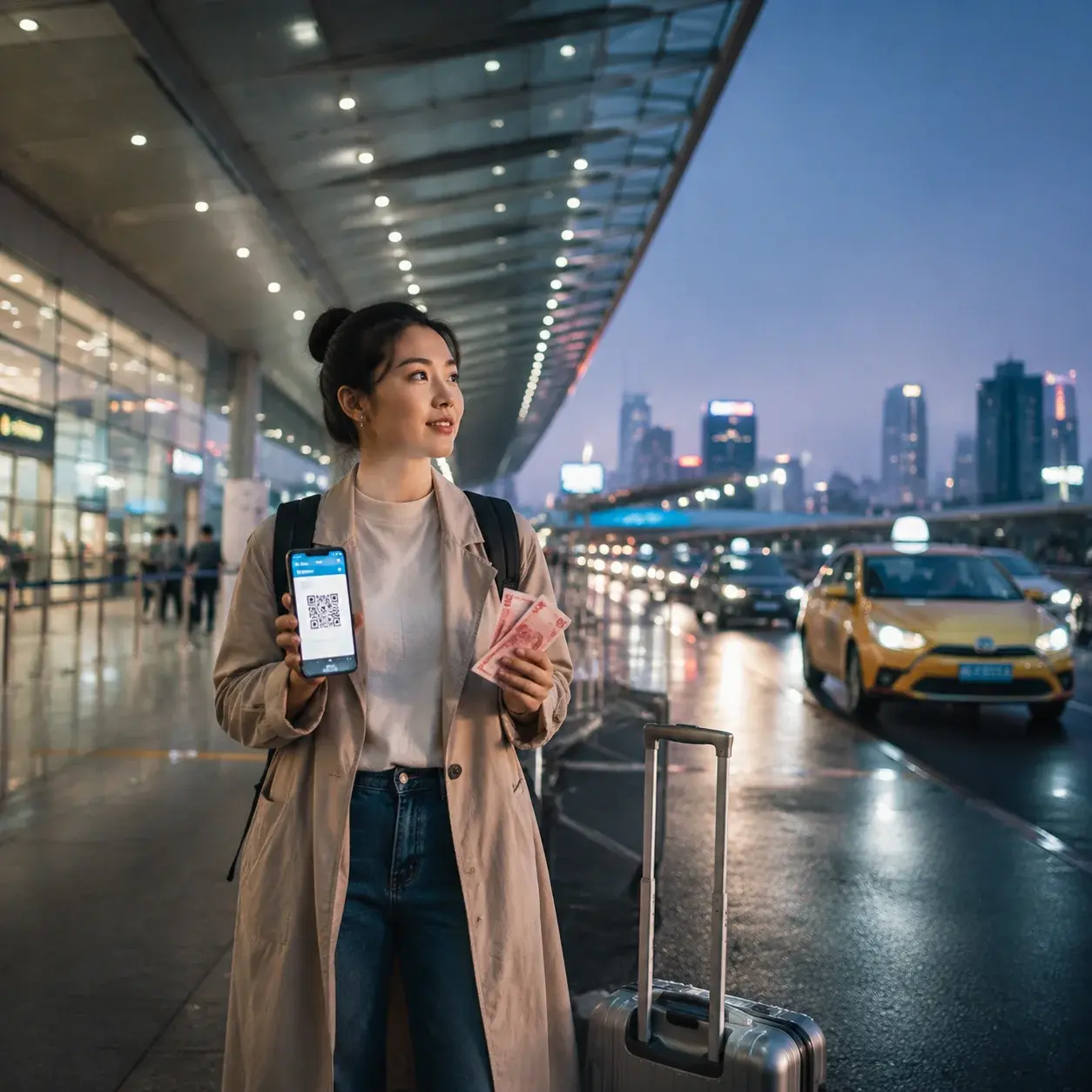
Argent en Chine : Espèces, distributeurs et paiements mobiles pour les touristes à leur arrivée
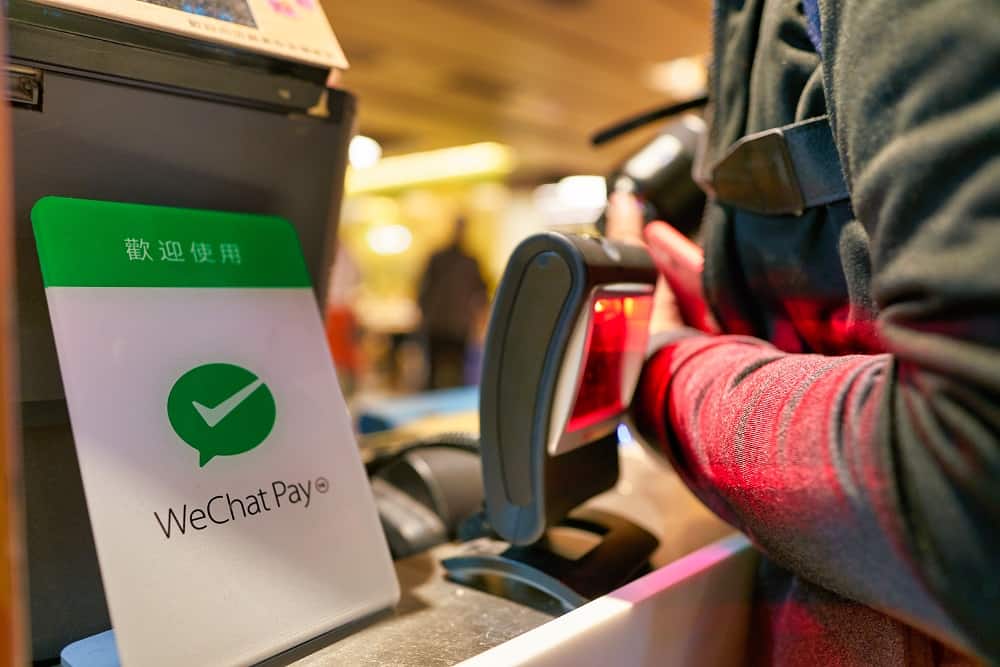
Vous avez besoin de très peu d'espèces en Chine — les paiements mobiles gèrent presque tout. À votre arrivée, convertissez juste 500–1 000 ¥ à l'aéroport pour les taxis et les petits commerçants, retirez le reste dans un distributeur bancaire, et payez tout le reste avec une carte Visa ou Mastercard étrangère liée à Alipay ou WeChat Pay (configurée avant votre vol).) Ce guide vous explique comment, honnêtement.
La Chine est la plus grande économie sans argent liquide au monde, et c'est justement ce qui fait trébucher les premiers visiteurs. Les vieux conseils — « apportez beaucoup de dollars américains et changez-les à l'aéroport » — sont maintenant parmi les pires choses que vous puissiez faire. Mais le nouveau conseil (« utilisez simplement Alipay ») cache un piège réel de configuration qui peut vous laisser bloqué à l'aéroport incapable d'enregistrer l'application que tout le monde vous a conseillé d'installer. Les deux problèmes se résolvent en environ quinze minutes de préparation. Voici la version honnête.
Une petite remarque au préalable : LyrikTrip est un concepteur de voyages privés pour les familles, pas une banque, un changeur ou une société de paiement. Nous ne vous vendons aucun des services ci-dessous, ce qui nous permet de vous dire clairement lesquels valent la peine et lesquels vous pouvez ignorer. Les mécanismes présentés ici sont valables à la date indiquée ci-dessus ; les taux, frais et limites de l'application peuvent changer, alors considérez chaque nombre comme indicatif et confirmez les règles de l'application directement avec Alipay ou WeChat avant votre voyage.
Points clés à retenir
- Vous aurez besoin de très peu d'espèces. Alipay et WeChat Pay couvrent la grande majorité des paiements dans les villes chinoises. Gardez une petite réserve pour les vendeurs de rue, les vieux taxis et les zones rurales — pas un gros paquet.
- Mettez en place le paiement mobile avant votre arrivée — c'est la seule chose qui peut mal tourner. L'enregistrement nécessite un code SMS, et une eSIM data-only ne peut pas recevoir de SMS. Installez et vérifiez Alipay/WeChat sur votre numéro d'origine tant que vous êtes encore chez vous.
- Vous pouvez lier directement une carte Visa ou Mastercard étrangère. Depuis 2023, vous n'avez plus besoin d'une banque chinoise ni de l'ancien « Tour Pass ». Vérifiez votre passeport, puis ajoutez la carte.
- Pour l'espèce, les guichets automatiques valent mieux que les bureaux de change. Les comptoirs de change de l'aéroport proposent certains des meilleurs taux que vous verriez. Ne changez que votre première journée ; retirez le reste via une banque de Chine, ICBC ou CCB.
- Faites attention à la ligne des ¥200. Sur les cartes étrangères, Alipay et WeChat ne facturent aucun frais pour les transactions inférieures ou égales à ¥200, et environ 3 % au-dessus (vérifiez les règles actuelles).
- Gardez votre SIM d'origine joignable. Les codes de vérification des banques et des applications arrivent toujours par SMS sur votre numéro d'origine.
—
Quelle méthode de paiement les touristes devraient-ils vraiment utiliser en Chine ?
Utilisez les paiements mobiles (Alipay ou WeChat Pay) comme méthode de paiement principale, gardez une petite somme en espèces pour les imprévus et considérez une carte physique comme une option de secours que de nombreux endroits n'acceptent pas. Le tableau ci-dessous vous donne un aperçu complet du paysage : où chaque méthode est fonctionnelle, combien de préparation elle nécessite, son coût et à qui elle s'adresse. Tout ce qui suit est détaillé.
| Méthode | Où c'est accepté | Effort de configuration | Frais typiques (indicatifs, 2026) | Meilleur pour |
|---|---|---|---|---|
| Espèces (RMB) | Particulièrement incl. vendeurs de rue, étals ruraux, vieux taxis | Aucun — mais vous devez l'obtenir | Taux médiocre aux comptoirs aéroportuaires ; meilleur via DAB | Tampon de premier jour et là où les applications échouent |
| DAB bancaire (carte étrangère) | Bank of China / ICBC / CCB et la plupart des DAB bancaires | Faible — juste votre carte + PIN | Frais de transaction étrangère de la banque d'origine + frais de retrait ; ~¥2,500–3,000 par plafond de retrait | Recharger espèces à un taux équitable une fois en ville |
| Comptoir de change aéroportuaire | Salles d'arrivée, certains hôtels | Aucun | Taux le plus souvent plusieurs % en dessous de celui des banques | Urgences uniquement ; changer le minimum |
| Alipay (carte étrangère liée) | Presque partout en villes ; transports, magasins, restaurants, stands QR | Moyen — vérification passeport + liaison carte (faire avant le voyage) | Aucun frais ≤¥200 ; ~3% au-dessus de ¥200 | Votre portefeuille quotidien principal |
| WeChat Pay (carte étrangère liée) | Presque partout en villes ; aussi messagerie + mini-programmes | Moyen — vérification passeport + liaison carte (faire avant le voyage) | Aucun frais ≤¥200 ; ~3% au-dessus de ¥200 | Un deuxième portefeuille / social + paiement dans une app |
| Carte physique étrangère (Visa/MC) | Hôtels internationaux, grands magasins, certains aéroports – irrégulier ailleurs | Aucun | Frais de transaction étrangère de la banque d'origine | Hôtels et gros achats uniquement ; ne pas compter sur cela |
Ce que la plupart des guides cachent : dans une ville chinoise, vous pouvez passer des jours sans toucher d'espèces, mais vous ne pouvez pas compter sur le paiement par carte physique Visa dans un restaurant de nouilles, à une porte de métro ou à un étal de marché. Le paiement mobile n'est pas ici une commodité — c'est le mode par défaut, et les espèces sont le recours là où ce mode ne fonctionne pas.
Ai-je vraiment besoin d'argent en Chine ?
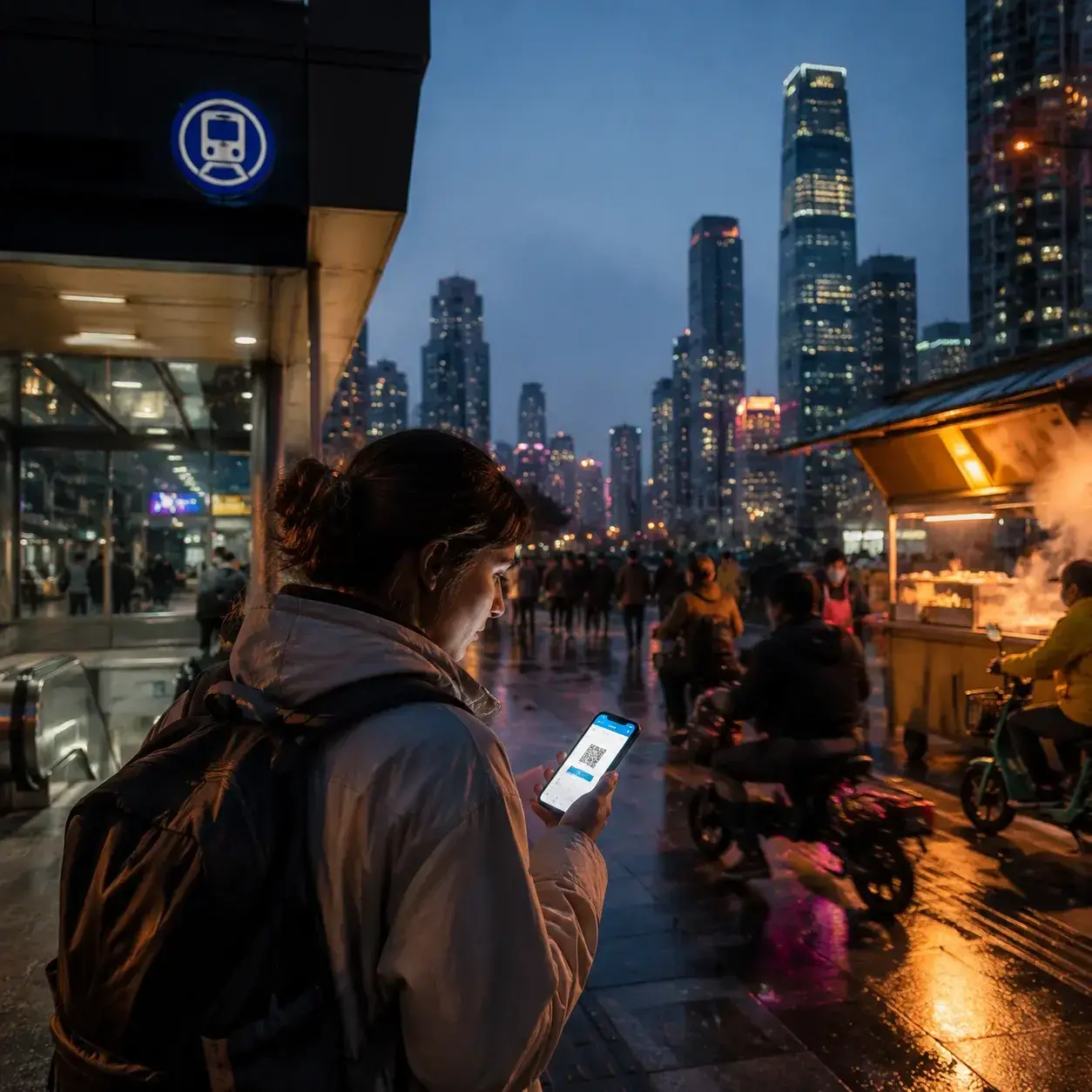
Un peu — beaucoup moins que vous ne le pensez, mais pas zéro. Alipay et WeChat Pay dominent les dépenses quotidiennes dans les villes chinoises, et en pratique, vous paierez par téléphone pour les repas, les taxis, les trajets en métro, les supérettes et la plupart des magasins. Les espèces servent pour les cas limites : petits vendeurs de rue, certains anciens chauffeurs de taxi, les boîtes de donation dans les temples, les pourboires, les marchés ruraux, ou quand votre téléphone est à plat ou que l'application plante.
Une somme raisonnable pour deux personnes est d'environ 500 à 1 000 yuans au départ, complétée via un distributeur si vous restez plus longtemps ou si vous vous rendez dans une zone moins urbaine. En transporter davantage est un léger souci de sécurité, et si vous l'échangez à l'aéroport, cela devient coûteux. Le pire scénario à éviter est l'inverse : arriver avec uniquement une carte étrangère physique et aucun moyen de paiement mobile, puis découvrir que la file de taxis et le métro exigent tous deux un code QR. C'est pourquoi la configuration ci-dessous est plus importante que les espèces.
Distributeur ou bureau de change — où obtenir des RMB à l'arrivée ?
Préférez un distributeur bancaire plutôt qu'un bureau de change à l'aéroport. Les comptoirs aéroportuaires sont pratiques et ouverts dès votre arrivée, mais ils proposent souvent les taux les plus médiocres — rapportés plusieurs pourcents en dessous du taux interbancaire, et pire que ce qu'offre un distributeur bancaire (guides financiers de l'industrie, vérifiés le 2026-07-03). Leur modèle économique repose sur votre fatigue due au décalage horaire.
La stratégie pratique, reprise par tous les guides sur l'argent de voyage, est en deux étapes :
- À l'aéroport, ne changez que ce dont vous avez besoin pour le premier jour ou deux — taxi, train aéroport, eau, recharge SIM. Pensez à 500–1 000 ¥, pas à l'intégralité de votre budget. S'il y a un distributeur dans le hall d'arrivée, il propose généralement un meilleur taux que le bureau de change juste à côté.
- En ville, retirez le reste via un distributeur d'une grande banque. La Banque de Chine, l'ICBC et la Bank of China Construction sont les plus fiables pour les cartes Visa et Mastercard étrangères, bien que toutes les machines n'acceptent pas les cartes étrangères : recherchez donc celles affichant les logos Visa/Plus ou Mastercard/Cirrus.
Deux avertissements de frais. Premièrement, votre banque d'origine facture généralement des frais de transaction étrangère plus un retrait fixe, et la machine chinoise peut ajouter les siens — il est donc préférable de faire moins, mais des retraits plus importants, plutôt que de nombreux petits retraits. Deuxièmement, les limites de retrait sont généralement d'environ ¥2 500–3 000 par transaction (à vérifier avec votre banque spécifique et votre carte), ce qui influence votre planification. Si l'écran d'un ATM vous propose de facturer en monnaie d'origine (« conversion de monnaie dynamique »), refusez-le et choisissez d'être facturé en RMB — le taux de conversion de la machine est pire que celui de votre banque.
Comment puis-je configurer Alipay ou WeChat Pay en tant qu'étranger ?
Installez l'application, vérifiez votre identité avec votre passeport, et reliez une Visa ou Mastercard étrangère — et faites tout cela avant votre vol, car l'enregistrement nécessite un code SMS qu'un eSIM à données uniquement ne peut pas recevoir. Ce seul détail d'ordre est ce qui laisse les gens bloqués à l'aéroport, il vaut donc mieux le faire chez soi sur votre propre numéro de téléphone.
Voici ce qui a changé et pourquoi c'est maintenant vraiment viable pour les touristes (toutes ces informations sont valables au 2026-07-03 ; confirmez avec les applications avant votre voyage) :
- Alipay : L'ancien mini-programme prépayé "Tour Pass" — celui avec un dépôt et un plafond de dépense limité — a été abandonné. Depuis la fin de 2023, les étrangers s'inscrivent avec leur passeport et lient directement une carte internationale (Visa, Mastercard et autres). Les limites rapportées pour les utilisateurs vérifiés atteignent environ 5 000 USD par transaction et 50 000 USD par an (source Alipay/guide de voyage, vérifié le 03-07-2026). Une option prépayée héritée appelée "TourCard" existe encore comme solution de secours si votre banque d'origine bloque l'utilisation directe de la carte, mais elle comporte des frais de rechargement, ce qui rend généralement le lien direct moins cher.
- WeChat Pay : Depuis juillet 2023, les visiteurs étrangers lient Visa, Mastercard (et JCB limité) après vérification du passeport — aucun compte bancaire chinois n'est nécessaire. Les plafonds rapportés sont d'environ 6 500 ¥ par transaction, 50 000 ¥ par mois et 60 000–65 000 ¥ par an selon le niveau de vérification (source WeChat/guide de voyage, vérifié le 03-07-2026). Une promotion pour nouveaux utilisateurs offrant une période sans frais sur les petits achats quotidiens a été signalée pour 2026 — considérez-la comme un avantage supplémentaire, pas comme une garantie, et vérifiez dans l'application.
La règle des frais est identique sur les deux plateformes, et elle est simple : sur une carte étrangère liée, les transactions de 200 ¥ ou moins ne comportent aucun frais, tandis que tout montant supérieur à 200 ¥ est taxed à environ 3 % sur le montant total (et non seulement sur la partie excédant 200 ¥), selon les rapports actuels vérifiés le 03-07-2026. C'est pourquoi les locaux et les voyageurs expérimentés gardent leurs paiements quotidiens en dessous de 200 ¥ autant que possible, et réservent les gros achats à une carte d'hôtel.
Le piège des eSIM, expliqué
La plupart des eSIM de voyage ne sont que des données — elles vous donnent accès à Internet, mais pas de numéro de téléphone, donc elles ne peuvent pas recevoir le code de vérification par SMS que ces applications envoient lors de l'inscription. Les super-apps chinois (Alipay, WeChat, DiDi, l'application ferroviaire 12306) continuent de vérifier par SMS. La solution propre est d'installer et de pleinement vérifier Alipay et WeChat sur votre numéro de téléphone domestique tant que vous êtes encore chez vous, puis de voyager avec une eSIM uniquement pour les données et de garder votre SIM active (ou joignable) pour tout code. Alipay accepte les numéros de téléphone internationaux depuis 2023, donc vous n'avez pas besoin d'un numéro +86 pour commencer. Pour la partie données — quelle eSIM, si vous avez vraiment besoin d'un numéro, et comment le pare-feu affecte vos applications — consultez notre  guide sur les eSIM et cartes SIM en Chine.
Aéroport ou ville — Où obtiens-je le meilleur taux ?
La ville gagne presque toujours. Les comptoirs de change de l'aéroport facturent aux arrivants captifs et fatigués ; les guichets automatiques des banques en ville, et pour le paiement mobile, le taux de change de votre propre émetteur de carte sont constamment meilleurs. Le classement, du meilleur au pire, est généralement : le taux de votre banque via une carte liée sur Alipay/WeChat ≈ un retrait en espèces dans une banque en ville > un guichet automatique dans le hall d'arrivée > le comptoir de change de l'aéroport.
Voici la raison principale de privilégier les paiements mobiles : lorsque une carte étrangère est liée à Alipay ou WeChat, la conversion de devises s'effectue au taux de votre banque, proche du taux interbancaire — donc, à l'exception des frais au seuil de ¥200, vous ne payez pas de surtaxe touristique sur le change. En revanche, l'argent que vous changez à un bureau de change intègre cette surtaxe dans le taux avant même d'avoir dépensé un centime. Gardez le comptoir de l'aéroport pour une seule fonction : une petite réserve en cas d'urgence si aucun ATM nearby n'accepte votre carte.
Un rapide processus d'arrivée fonctionnant dans la plupart des aéroports majeurs : passez par l'immigration (remplissez votre carte d'arrivée à l'avance pour accélérer cette étape), vérifiez que votre Alipay/WeChat déjà installé fonctionne sur le Wi-Fi de l'aéroport ou votre eSIM, retirez une petite somme d'argent à un ATM dans les arrivées, puis dirigez-vous vers votre transport. Pour un guide terminal par terminal de l'un des points d'entrée les plus fréquentés, consultez notre guide de l'aéroport de Shanghai Pudong.
Que faire si ma carte est refusée ?
Cela arrive, et ce n'est généralement pas la faute de l'application. Certaines banques domiciliaires considèrent le premier paiement en Chine comme suspect, alors prévenez votre banque de vos dates de voyage avant votre départ. Les étals de rue, les marchés aux poissons et certains anciens taxis peuvent rejeter les cartes étrangères même si les chaînes les acceptent — c'est là que votre réserve de cash intervient. Et si un paiement par simple contact dépasse ¥200 et que vous préférez éviter la commission d'environ 3 %, demandez si la facture peut être divisée en paiements inférieurs à ¥200, ou réglée autrement. Avoir à la fois Alipay et WeChat configurés vous donne une deuxième option si l'une des deux refuse.
Questions fréquentes
Puis-je utiliser Alipay ou WeChat Pay en Chine en tant que touriste étranger ? Oui. Depuis 2023, les deux permettent aux visiteurs étrangers de s'identifier avec un passeport et de lier une carte Visa ou Mastercard internationale — aucun compte bancaire chinois n'est nécessaire. Configurez et vérifiez l'application sur votre numéro de téléphone avant de partir, car l'inscription nécessite un code SMS (vérifiez les règles actuelles, 2026-07-03).
Ai-je besoin d'espèces en Chine, ou le paiement mobile suffit-il ? Paiement mobile couvre la majorité des dépenses en ville, donc vous avez très peu besoin d'espèces. Gardez une petite réserve — environ ¥500–1 000 au départ — pour les vendeurs de rue, les vieux taxis, les pourboires et les zones rurales où les paiements par QR ou les cartes étrangères ne sont pas acceptés.
Est-il préférable d'utiliser un distributeur automatique de billets (DAB) ou un bureau de change pour le RMB ? Un DAB, généralement. Les bureaux de change des aéroports proposent souvent les plus mauvais taux du coin. Ne changez qu'une petite somme pour le premier jour si vous devez le faire à l'aéroport, puis retirez de l'argent via un DAB de la Bank of China, de l'ICBC ou de la CCB en ville pour un taux plus intéressant (vérifié le 2026-07-03).
Pourquoi mon eSIM de voyage ne reçoit-elle pas le code de vérification Alipay ? La plupart des eSIM de voyage sont uniquement données — internet sans numéro de téléphone — elles ne peuvent donc pas recevoir de SMS. Alipay et WeChat envoient les codes d'inscription par SMS. Inscrivez-vous sur votre numéro d'origine avant votre vol, puis utilisez l'eSIM uniquement pour les données pendant votre séjour à l'étranger.
Quels frais Alipay et WeChat Pay appliquent-elles aux cartes étrangères ? Au 2026-07-03, les transactions de 200 ¥ ou moins sont sans frais, tandis que les montants supérieurs à 200 ¥ sont soumis à environ 3 % sur le montant total. Les frais de transaction internationale de votre banque d'origine peuvent également s'appliquer. Les frais pouvant évoluer, veuillez confirmer dans l'application avant de vous y fier.
Ma carte physique Visa ou Mastercard fonctionnera-t-elle en Chine ? Parfois — dans les hôtels internationaux, les grands magasins et certains aéroports — mais l'acceptation est irrégulière et vous ne pouvez pas compter dessus pour vos dépenses quotidiennes. Traitez une carte physique comme une solution de secours pour les gros achats et les hôtels, en utilisant les paiements mobiles comme méthode quotidienne.
Organiser ses finances avant l'atterrissage
Deux décisions couvrent presque tout. Premièrement, mettez en place le paiement mobile chez vous : installez Alipay et WeChat, vérifiez-les chacun avec votre passeport sur votre numéro de téléphone à domicile, et reliez une carte Visa ou Mastercard étrangère — pour que le code par SMS et le piège eSIM sans contact ne vous touchent jamais. Deuxièmement, préparez l'argent intelligemment : ne changez qu'un petit montant pour le premier jour, idéalement à un distributeur automatique plutôt qu'à un guichet de change, et rechargez-vous dans la ville auprès d'une grande banque. Faites ces deux choses et l'argent en Chine devient un problème non résolu — paiement mobile pour presque tout, un peu d'espèces pour les cas marginaux, et votre carte étrangère en réserve.
Si vous préférez ne penser à aucun de ces détails, c'est exactement ce genre de friction que LyrikTrip élimine pour les familles dont nous organisons les voyages — logistique à l'arrivée, connectivité et paiements réglés avant votre atterrissage, avec quelqu'un sur place si une carte est refusée à 23h. Nous ne vous vendons pas les applications ni les SIMs ; nous nous assurons simplement qu'ils fonctionnent avant qu'ils soient nécessaires. Dites-nous votre itinéraire et vos dates, et nous gérerons l'arrivée pour que votre première heure en Chine soit passée à quitter l'aéroport, et non à résoudre un code QR.