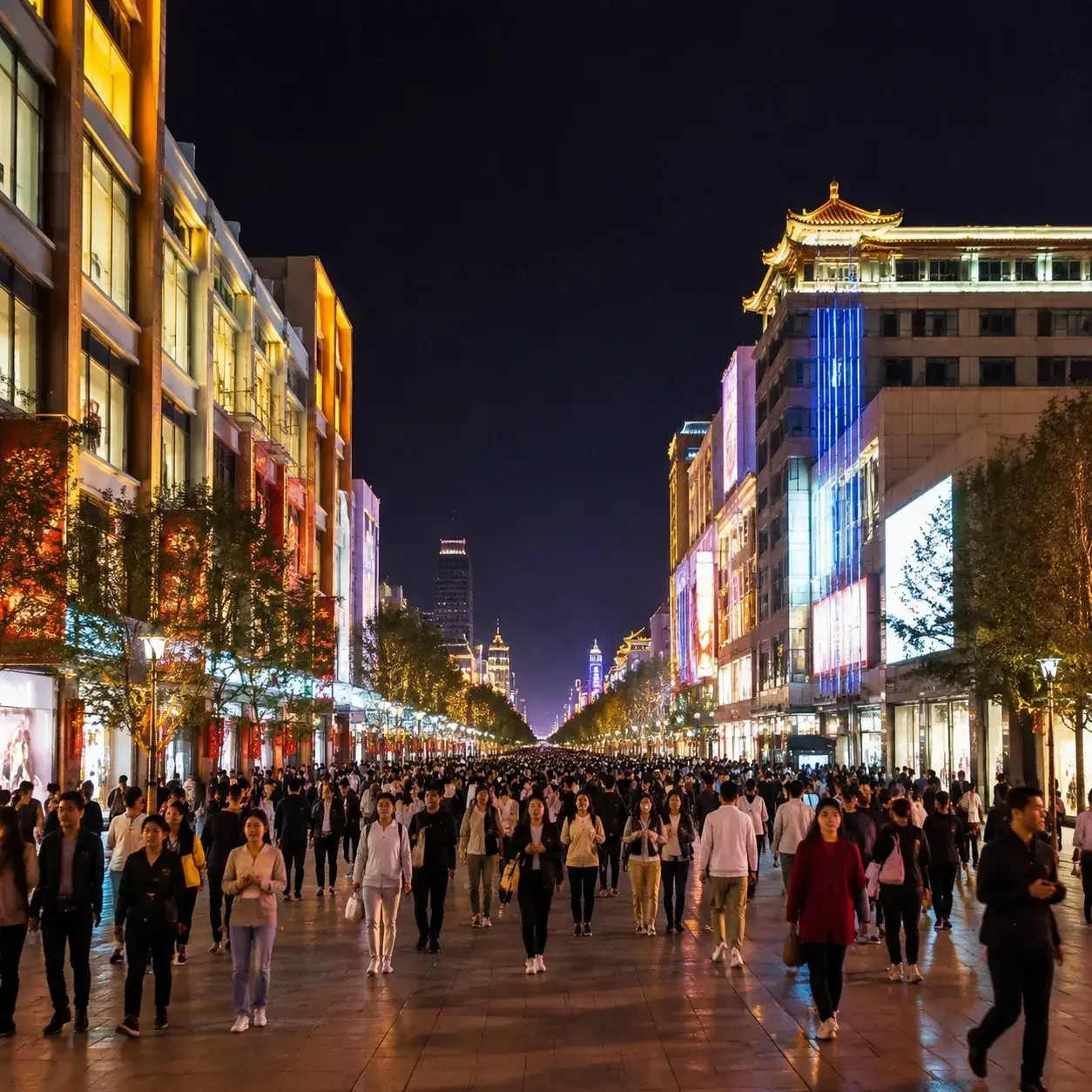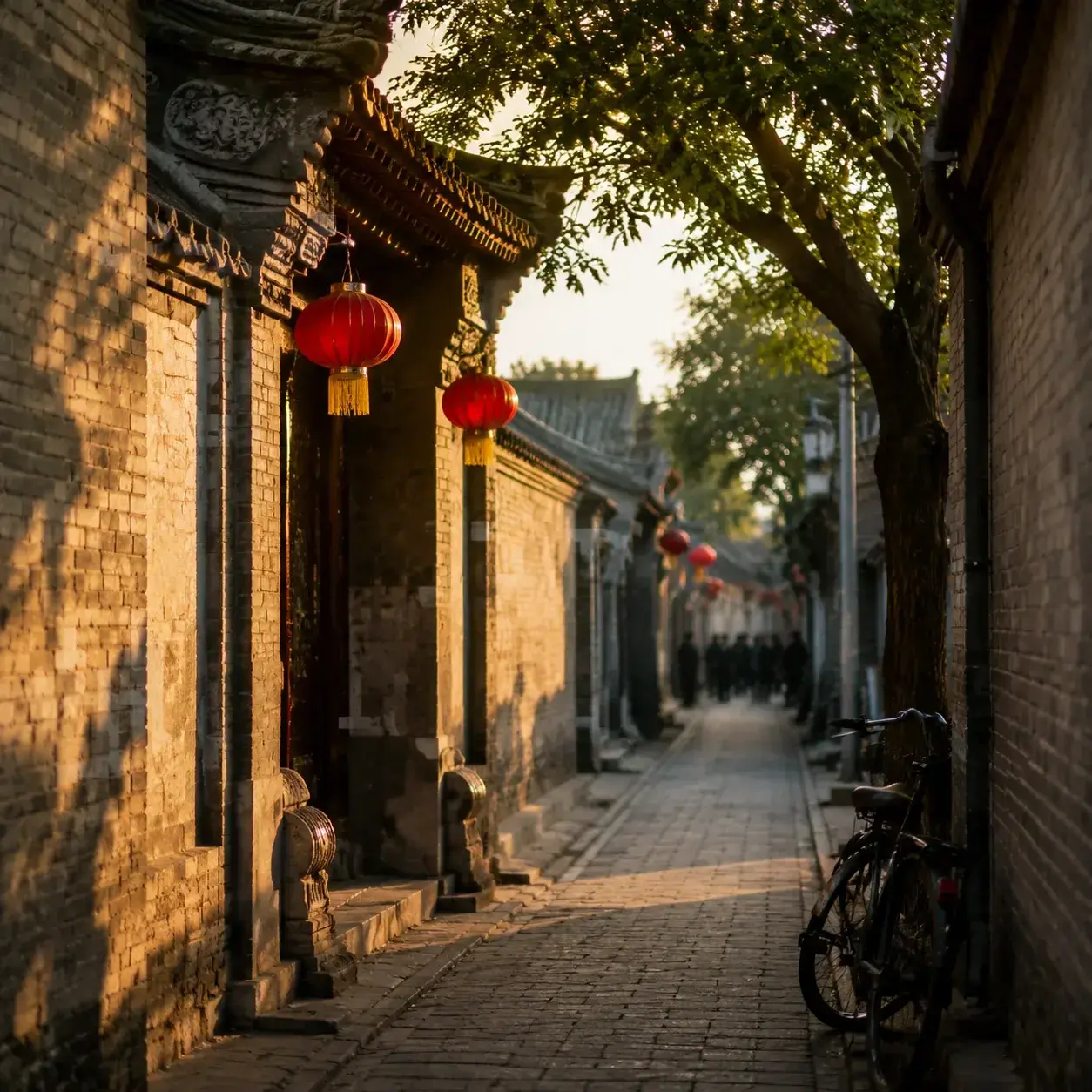





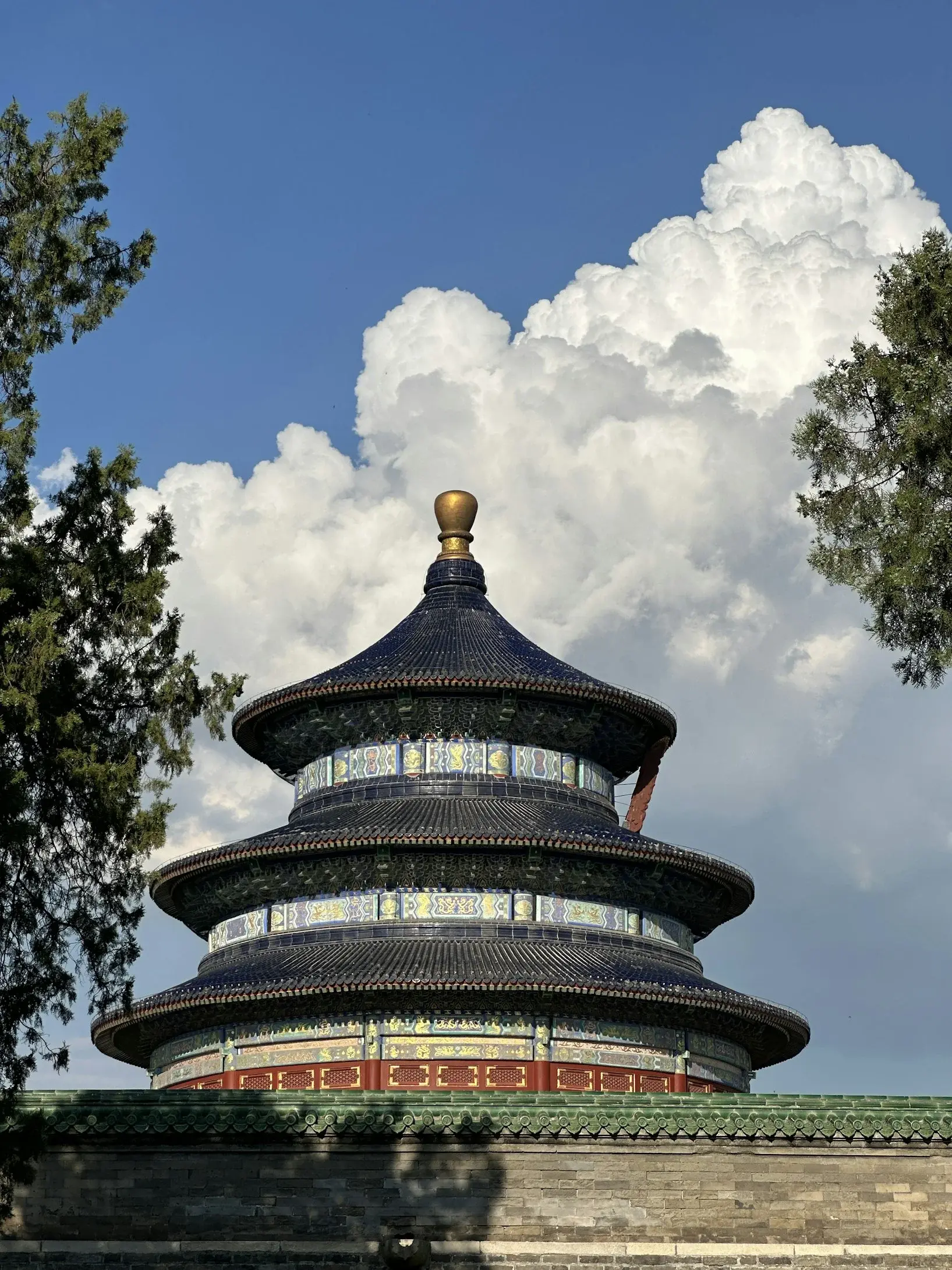
 5 días Pekín, en una línea Pekín Desde $1,750 Ver ruta
 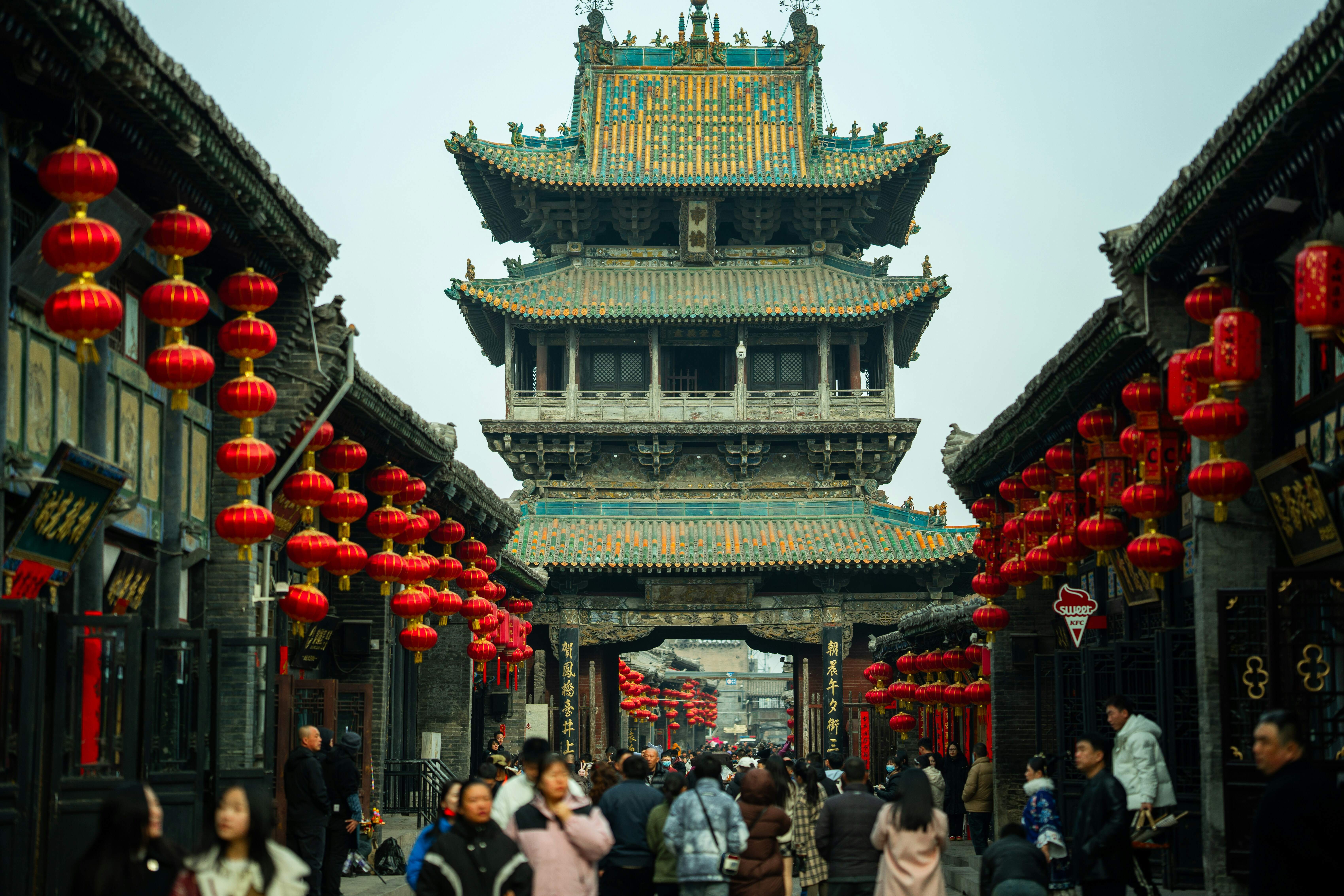 12 días China, a tu medida Pekín → Taiyuan → Pingyao → Xi'an → Shanghái Desde $3,990 Ver ruta
  7 días El Imperio, leído al revés Pekín → Xi'an Desde $2,220 Ver ruta
Calle Qianmen en Pekín: Qué vale la pena comprar y dónde realmente encontrarlo
**La calle Qianmen vale la visita si sabes adónde ir: el verdadero premio son las sedes de las marcas centenarias (老字号) y los callejones de Dashilan, no los puestos de souvenirs en la principal zona peatonal. Reserva 1–2 horas para pasear, media jornada para comer y comprar adecuadamente.
En LyrikTrip, Qianmen aparece en la mayoría de los itinerarios de primera visita a Pekín que planeamos, y la recomendación que siempre hacemos es pasar de largo la zona principal y adentrarse en los callejones de Dashilan.**
Qianmen (前门) es la antigua calle comercial más visitada de Pekín, y aparece en casi todos los itinerarios de primera visita porque está a solo 10 minutos caminando al sur de la Plaza Tiananmen. La mitad es teatro turístico — cadenas de tiendas, imanes de nevera, un tranvía fotogénico. La otra mitad es genuinamente especial: un conjunto de talleres de época imperial y un mercado de 500 años a una vuelta hacia el oeste. Esta guía, escrita por un equipo de viajes inbound-China y no por una tienda, se trata de distinguir ambos lados.
No te estamos vendiendo nada en esta calle. Lo que sigue es qué vale la pena comprar, qué viejas marcas visitar y cómo evitar el arrastre turístico para llegar a los callejones donde está la verdadera compra.
Resumen clave
- Conclusión: Qianmen vale la pena si te diriges a las marcas históricas y a los callejones de Dashilan; las tiendas de souvenirs de la calle principal se pueden saltar.
- La regla: Calle principal = comer y tomar fotos. Calles laterales (Dashilan, oeste) = comprar. Xianyukou (este) = comer.
- Qué comprar: Zapatos de tela en Neiliansheng, seda en Ruifuxiang, té de jazmín en Zhang Yiyuan/Wuyutai, encurtidos en Liubiju, pasteles en Daoxiangcun.
- 老字号 significa "marca con tradición", una designación oficial para tiendas con larga historia y artesanía preservada — eso es lo que hace que la visita valga la pena.
- El tranvía es una foto, no transporte. Mejor camina por la calle.
- Tiempo estimado: 1–2 horas para pasear y tomar fotos; media jornada para visitar las marcas históricas y comer.
¿Vale la pena visitar Qianmen Street? Una opinión sincera
Sí — si sabes dónde ir. Las marcas históricas y los callejones de Dashilan realmente valen tu tiempo; las cadenas comerciales y las tiendas de souvenirs de la avenida peatonal no. El error más común de los primeros visitantes es caminar por la calle principal, comprar un imán de refrigerador y salir — sin girar hacia el oeste a Dashilan, donde están las tiendas reales.
Imagina Qianmen como dos calles que comparten un nombre. La avenida peatonal de 845 metros que se extiende hacia el sur desde la puerta de Zhengyangmen es amplia, brillante y está flanqueada por cadenas, puestos de bocadillos y el nostálgico tranvía "Dangdang". Es un lugar preciso para fotografiarse, aunque en parte sea un teatro turístico. El valor —lo que lo diferencia de una calle genérica de compras en Pekín— radica en la concentración de marcas emblemáticas de renombre y en el encantador mercado de hutong de Dashilan, a solo un giro al oeste.
Gestiona tu tiempo con honestidad:
- 1–2 horas si solo quieres pasear, fotografiar el tranvía y los arcos paifang, y tomar un bocadillo.
- Media jornada si quieres visitar las marcas emblemáticas de más de un siglo, comer en un restaurante tradicional y perderse por los callejones de Dashilan.
Evita: los puestos de souvenirs de producción masiva, la idea de usar el tranvía como medio de transporte y convertir los puestos de la calle principal en tu comida principal. Disfruta: las marcas emblemáticas reconocidas y los callejones secundarios.
Qué comprar en la calle Qianmen: Guía de las marcas emblemáticas (老字号)
Qué comprar en la calle Qianmen se reduce a un puñado de marcas emblemáticas de renombre (老字号), cada una conocida por una artesanía específica: zapatos de tela, seda, té de jazmín, encurtidos, pasteles o medicina tradicional. Estas casas centenarias —no los puestos de souvenirs— son la razón para venir.
Primero, el término. 老字号 (lǎo zì hào) significa "marca con tradición". El título "Marca Tradicional de China" es una designación oficial del Ministerio de Comercio de China, otorgada a empresas con larga historia, artesanía o servicio tradicional distintivo transmitido de generación en generación y operación continua hasta la actualidad. El portal oficial de turismo de Beijing mantiene un registro dedicado de Marcas Tradicionales, y la zona de Qianmen–Dashilan es una de las concentraciones más densas de estas tiendas en la ciudad — la mayoría se remontan a la dinastía Qing, y muchas aún conservan mostradores de madera, vitrinas y servicio de estilo antiguo, por lo que caminar por allí es como entrar en un museo vivo. (Source: visitbeijing.com.cn — Registro de Marcas Tradicionales; Advantour — Calle Qianmen. Última verificación: 2026-07.)
Aquí está la matriz de qué comprar y dónde — qué filial, qué vende, por qué es la auténtica y qué debería llevarse realmente un comprador extranjero. Los años de fundación y especialidades se basan en las fuentes anteriores; todos los precios, direcciones exactas y ubicaciones por tienda son rangos indicativos — verifique en el sitio antes de comprar.
| Marca | Fundada | Famosa por | Por qué es la auténtica | Qué comprar + RMB indicativo (verificar en el sitio) | Ubicación |
|---|---|---|---|---|---|
| Neiliansheng 内联升 | 1853 | Zapatos de tela hechos a mano | Una vez hizo botas para la corte imperial; sus zapatos con "suela de mil capas" (千层底) cosidos a mano son el estándar para los calzado de tela de Pekín | Un par de zapatos de tela tradicionales con suela de mil capas (hombres/mujeres) — ligeros, fáciles de llevar, instantáneamente reconocibles. ~¥200–600+ (los hechos a mano cuestan más) | Dashilan / calle principal (verificar) |
| Ruifuxiang 瑞蚨祥 | 1893 | Seda y qipao | La casa de seda más famosa de Pekín antigua — compra tela por metro o encarga un qipao a medida | Un pañuelo de seda puro o tela por metro; un qipado a medida requiere tiempo de entrega (no mismo día). Pañuelo ~¥150–500+ (según calidad de seda) | Dashilan (verificar) |
| Liubiju 六必居 | Dinastía Ming (~1530, a verificar) | Encurtidos y salsas | Una de las casas de encurtidos más antiguas de Pekín; sus encurritos y salsa de frijoles dulces son una pieza comestible de la ciudad vieja | Tarros sellados y aptos para viaje de verduras conservadas o salsa de frijoles dulces (la que comes con pato asado). ~¥30–120/caja | Calle principal / Dashilan (verificar) |
| Tongrentang 同仁堂 | 1669 | Medicina tradicional china | Suministró la farmacia imperial Qing; el nombre mismo es abreviatura de "medicina china auténtica" | Explorar la sala de hierbas es la experiencia; pequeños regales como sachets perfumados. ⚠️ Evita remedios de origen animal/planta — restringidos por aduanas (ver FAQ) | Calle principal / Dashilan (verificar) |
| Zhang Yiyuan 张一元 | 1900 | Té de jazmín | El nombre signature del té de jazmín de Pekín; la cara del hábito del té de jazmín de Pekín antigua | Té de jazmín a granel según calidad, vendido por peso, fácil de preparar en casa. ~¥50–300+/ración (según calidad) | Calle principal / Dashilan (verificar) |
| Wuyutai 吴裕泰 | 1887 | Té + helado viral de jazmín | Otra casa de té de jazmín de patrimonio de Pekín; recientemente un punto de check-in por su helado de sabor a té | Té al granel para llevar a casa, más un helado de jazmín o matcha en el lugar (~¥10–20/cono) | Calle principal (verificar) |
| Daoxiangcun 稻香村 | Qing tardía (casa de Pekín, a verificar) | Pasteles de Pekín · 京八件 | Casa de pasteles de patrimonio de Pekín. Señal de autenticidad: la marca de Pekín suele marcarse con "三禾" en la fachada y empaques — existen muchas tiendas "Daoxiangcun" con el mismo nombre, así que verifica la marca oficial | Una caja de regalo de pasteles 京八件 o una selección pesada fresca. ~¥40–150/caja | Calle principal (verificar) |
| Shengxifu 盛锡福 / Majuyuan 马聚源 | 1911 / Qing (verificar) | Sombreros (y zapatos) | Nombrado en el dicho de Pekín antigua "cabeza en Majuyuan, pies en Neiliansheng, cuerpo en las ocho casas de seda" — el estándar para headwear tradicional | Un sombrero de fieltro o piel de invierno tradicional — práctico y con carácter. Precio a verificar | Ubicación a verificar (algunos en Dashilan / Wangfujing) |
La regla de una línea: compra la artesanía, evita los puestos de souvenirs. La calle principal está llena de tiendas con una genérica bandera "Lao Zi Hao", pero las que valen la pena visitar son las filiales mencionadas arriba — los zapatos de Neiliansheng, la seda de Ruifuxiang, el té de jazmín en Zhang Yiyuan y Wuyutai, y los regalos comestibles en Liubiju y Daoxiangcun. La gran cantidad de puestos de imitación del patrimonio — baratijas de cloisonné, máscaras de ópera, figuritas de "Tu Er Ye" (兔儿爷) al por mayor — son caras y se venden por toda Pekín; no pagues un premium de Qianmen por ellas.
Nota sobre Daoxiangcun: hay una larga disputa de marcas comerciales entre panaderías con el mismo nombre. La marca de Pekín se distingue comúnmente por el sello "三禾", pero este tipo de detalle puede cambiar — considéralo como "busca la tienda oficial y el empaque, y no compres pasteles sueltos en puestos no oficiales que usen ese nombre." Verifica el sello actual en el lugar.
Para más información sobre de dónde proviene realmente la seda de la ciudad, consulta nuestra guía  comprar seda en Pekín, un siguiente paso natural desde el counter de Ruifuxiang.
Dashilan (大栅栏): Los Callejones Históricos que Valen Más que la Calle Principal
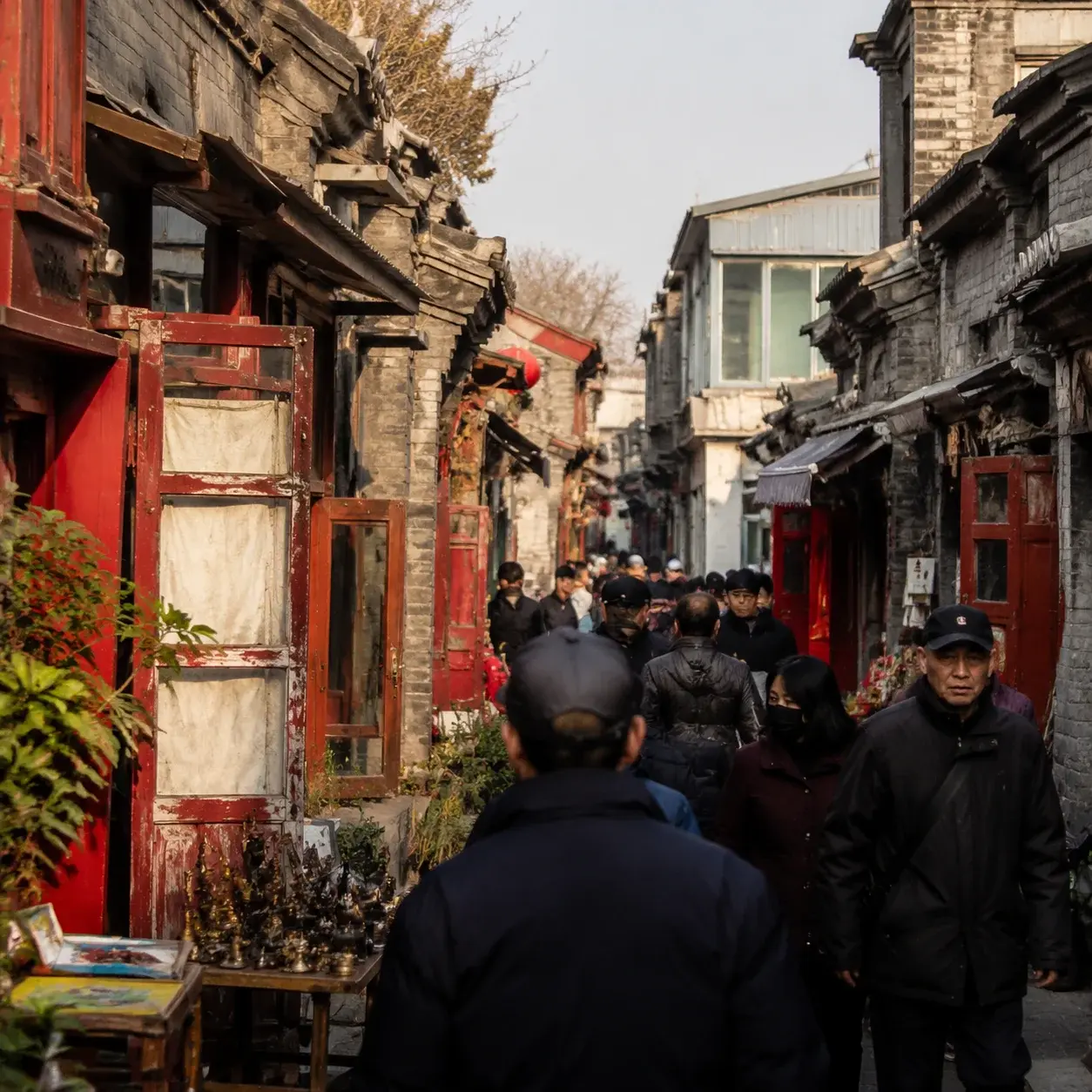
La regla más útil en Qianmen: la calle principal es para comer y tomar fotos; los callejones laterales son para comprar. Gira hacia el oeste desde la calle principal hacia Dashilan y llegarás al mercado de hutong de 500 años de antigüedad donde realmente se encuentran las verdaderas tiendas insignia y la textura de la vieja Pekín.
Dashilan (大栅栏 — también romanizada como Dazhalan o, en habla pekinense, Dàshílàn'r) es un distrito de mercados que lleva más de cinco siglos funcionando al oeste de la avenida principal de Qianmen. Es más estrecha, concurrida y menos higienizada que la amplia calle peatonal — y justo por eso conserva esa sensación de "calle comercial de la vieja Pekín" que la avenida principal ha perdido en gran medida. (Fuente: Trip.com Moments — guías de Dashilar. Verificado por última vez: 2026-07.)
Ruta a pie por Dashilan (puerta norte → oeste → volver al este). Los giros exactos en los callejones y los minutos de caminata son indicativos — verifica sobre el terreno.
- Inicio: Zhengyangmen (正阳门 / la puerta frontal). Desde la Plaza Tiananmen, camine unos 10 minutos hacia el sur hasta la entrada norte de la calle principal.
- Calle principal Qianmen (前门大街). La columna vertebral peatonal de norte a sur. Haga aquí: fotografie el tranvía "Dangdang" y los arcos paifang, coma un bocadillo, explore Daoxiangcun y Wuyutai. No se detenga a comprar — este es el tramo para comer y tomar fotos, no para comprar.
- Gire hacia el oeste → Calle Dashilan (大栅栏商业街). La columna comercial histórica, y aquí se encuentran las tiendas insignia — Ruifuxiang (seda), Neiliansheng (zapatos de tela) y Tongrentang (medicina) están todas en Dashilan, y Ruifuxiang y Neiliansheng son de acceso libre (la dirección exacta y horario de cada tienda varifique en el lugar). Este tramo de 200–300 metros es la zona central "comprar artesanías".
- Continúe → Yangmeizhu Xie Jie (杨梅竹斜街). Un lane restaurado diagonal con librerías independientes, estudios de diseño y café — el contrapunto moderno-tradicional. Tranquilo, fotogénico, ideal para descansar. Venga aquí (no en la calle principal) si quiere un café en hutong o un objeto de diseño.
- Un poco más al oeste (adyacente, estrictamente no Qianmen) → Liulichang (琉璃厂). La calle de antigüedades, pinceles de caligrafía, tinta y rollos — para suministros de arte chino y regalos eruditos. Marcada como distrito adyacente; váyala si tiene tiempo extra de 10–15 minutos.
- Regrese al este de la calle principal → Xianyukou (鲜鱼口). La calle concentrada de comida antigua de Pekín (vea la sección de comida), la contraparte alimentaria del comercio occidental.
Aquí está la orientación de un vistazo:
| Dirección | Qué es | Para qué sirve | Nota honesta |
|---|---|---|---|
| Calle principal (eje N–S) | Avenida peatonal de 845m | Comer + fotografiar + tranvía | Fotogénica, pero no compres recuerdos caros aquí |
| Oeste: Dashilan + Yangmeizhu Xie Jie + Liulichang | Antiguo distrito de mercados en hutong | El núcleo de compras — tiendas insignia, calles creativas, materiales artísticos | La zona que vale tu tiempo |
| Este: Xianyukou | Calle gastronómica | Comida tradicional de Pekín concentrada | Más fiable que los puestos de la calle principal |
Si solo tienes una hora, pasa 40 minutos en Dashilan, no en la avenida principal. Si estás en el extremo norte de la calle, la instrucción es simple: comprar es al oeste, comer al este, y la calle principal es para caminar y fotografiar el tranvía.
¿Qué tipo de visitante eres? Tu ruta y elecciones en Qianmen
La forma más rápida de llegar a Qianmen es orientarte según lo que buscas. El error clásico es que tres tipos diferentes de visitantes recorren la misma calle principal: el comprador de recuerdos que paga de más en un puesto, el amante de la comida que prueba snacks mediocres del carrito, o el fotógrafo que nunca se aleja del tranvía. Sepáralos, y Qianmen pasa de ser una casilla de una hora a valer media jornada completa.
| Eres un… | Ruta sugerida (ordenada por tiempo) | Qué comprar / comer | No hagas esto | En una línea |
|---|---|---|---|---|
| Cazador de recuerdos | Cruza la calle principal → Dashilan (seda Ruifuxiang → zapatos Neiliansheng → té Zhang Yiyuan/Wuyutai) → Daoxiangcun/Liubiju para regalos comestibles | Bufanda de seda, zapatos de tela de mil capas, té de jazmín suelto, encurtidos sellados o una caja de Jingbajian | No pagues un premium por cloisonné o vendedores de máscaras en la calle principal | Compra la artesanía, no los productos del vendedor |
| Primero la comida | Bocadillos de la calle principal → al este → Calle de la comida Xianyukou → Pato asado Quanjude / bao Duyichu en la calle principal | Zhajiangmian, chao gan, granos de hawthorn helados, helado Wuyutai; almuera en un restaurante de marca antigua | No hagas de los carritos de la calle principal tu comida principal — son carritos y de calidad variable | Restaurantes nombrados + Xianyukou superan a los carritos |
| Historia y fotos | Sur de Tiananmen → puerta Zhengyangmen/campanario → calle principal para + fotos de tranvía y paifang → Dashilan → Yangmeizhu Xie Jie → suministros de arte Liulichang | Fotos de viejas puertas y mostradores de madera de tiendas; pinceles, tinta y rollos como regalo de erudito | No uses el tranvía como transporte — es un accesorio | Viejos talleres + la calle diagonal + la calle de pinceles |
Comida de Qianmen Street: Qué Comer
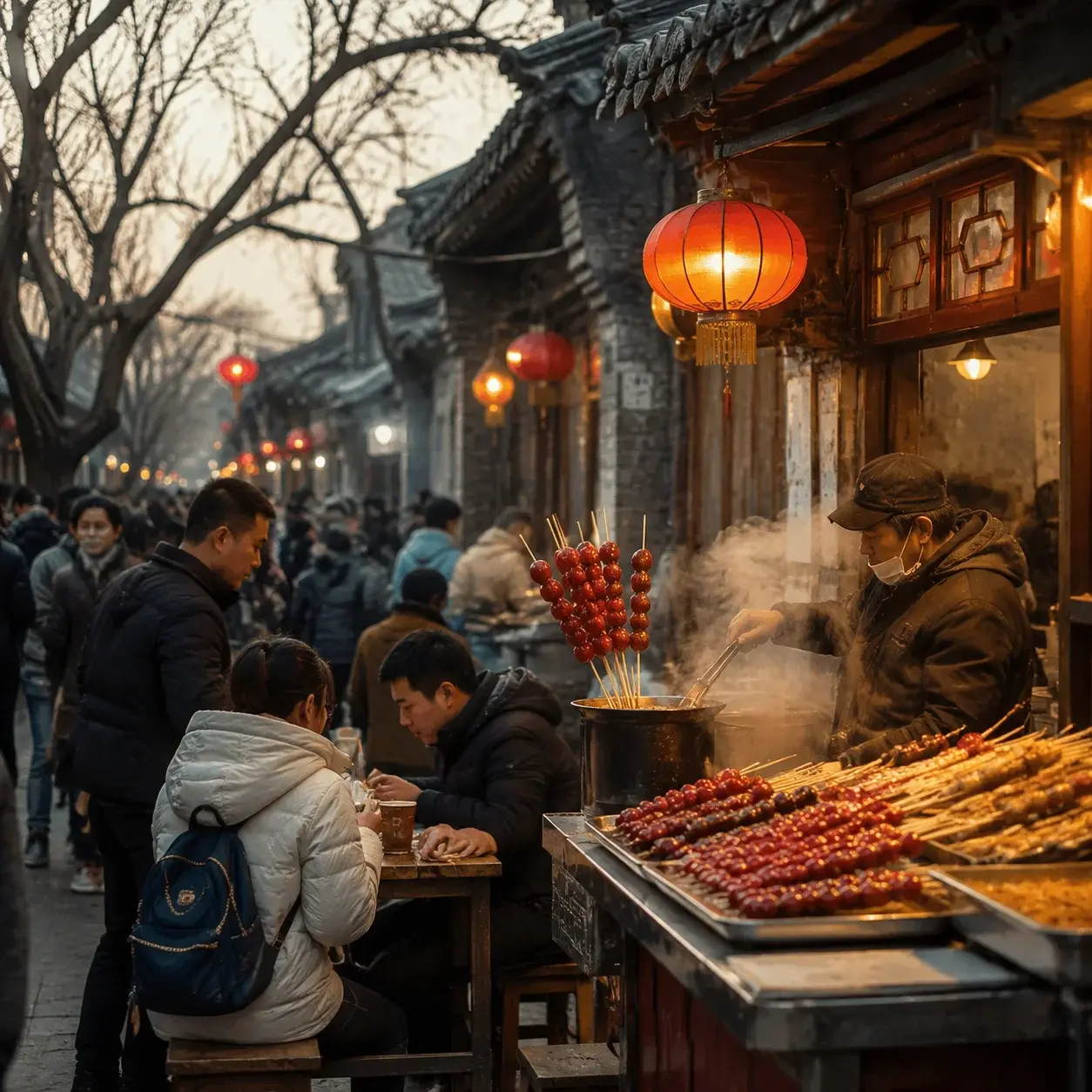
La mejor forma de disfrutar la comida callejera de Qianmen es como ir de compras: las marcas emblemáticas y el callejón de Xianyukou son apuestas seguras, mientras que los carritos de la avenida principal son fotogénicos pero irregulares.
- Pato asado a la pekinesa en Quanjude (全聚德). Esta famosa casa de patos con patrimonio tiene una sucursal en la avenida principal; el pato se corta en la mesa y se come en panqueques finos con salsa de frijol dulce, cebollín y pepino. Es una comida completa, no un bocadillo — la opción segura para tu gran comida en Qianmen.
- Bocados antiguos de Pekín. Zhajiangmian (炸酱面, fideos con salsa de soja fermentada), chao gan (炒肝, un guiso de hígado e intestinos) con panecillos en lugares que abren temprano, manzana azucarada (糖葫芦, 冰糖葫芦 palitos), y el helado de jazmín viral de Wuyutai. Si tienes curiosidad por el douzhi (豆汁, bebida de frijol mungo fermentado), prueba un sorbo pequeño antes de comprometerte con una taza completa — es un gusto adquirido.
- Callejón de Xianyukou (鲜鱼口). La calle concentrada justo al este de la avenida principal, más densa y con más atmósfera que los carritos de la avenida principal. Algunos puestos son populares entre turistas virales, no necesariamente buenos, así que fíjate en cuáles forman cola los locales.
- Duyichu (都一处). La marca tradicional de shaomai (dumplings al vapor) — otra opción de patrimonio con servicio completo cerca de la avenida principal.
La advertencia honesta: los carritos de bocadillos de la calle principal están tarifados para turistas y son inconsistentes. Tómense fotos, prueben ligeramente, pero déjenle a los restaurantes tradicionales (Quanjude, Duyichu) y al callejón Xianyukou que les sirvan la comida real. Para un mapa más amplio de las calles de bocadillos de la ciudad, vea nuestra guía Comida callejera y calles de bocadillos de Pekín.
Tranvía Qianmen y cómo llegar desde Tiananmen
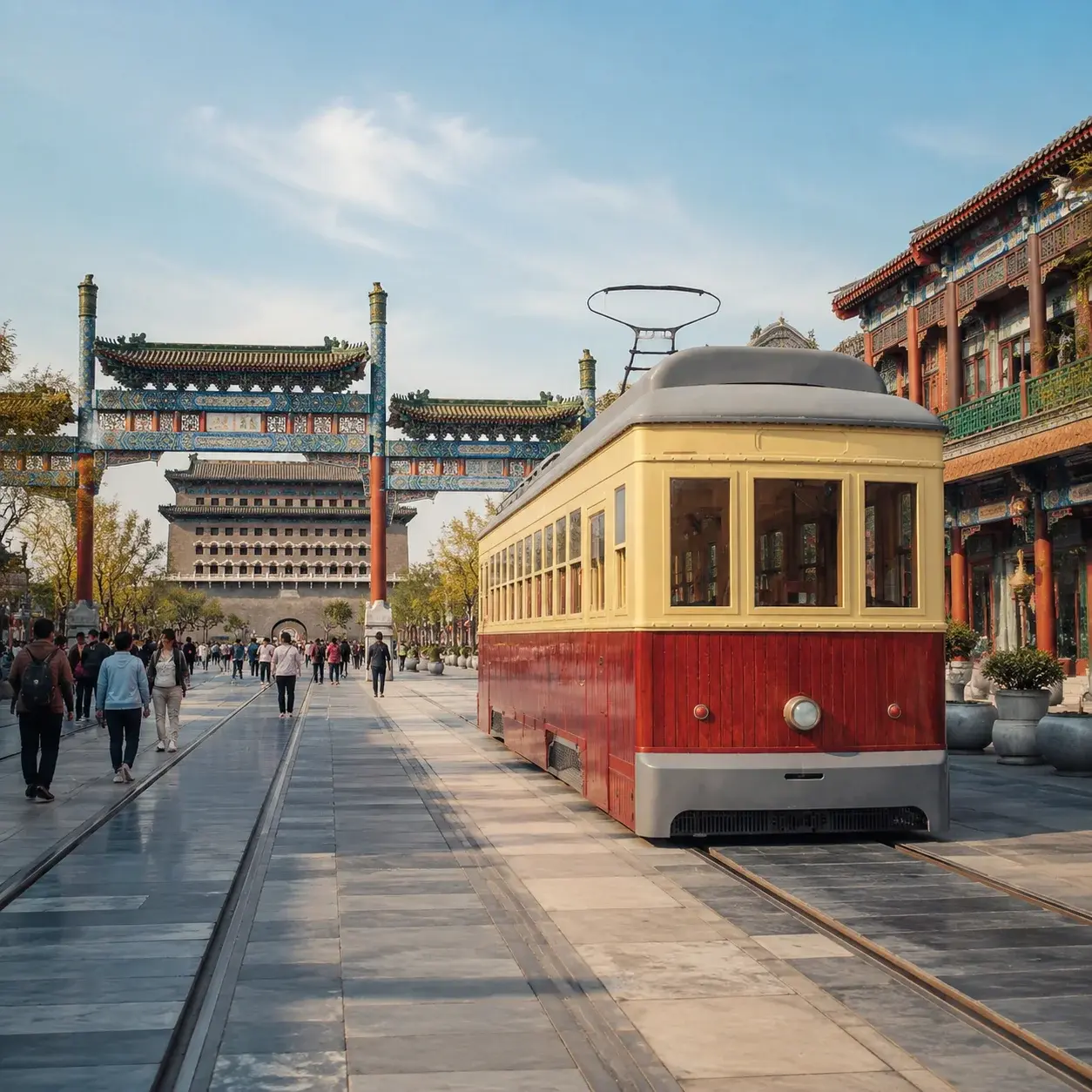
Llegar a Qianmen desde Tiananmen es un paseo recto de 10 minutos hacia el sur, o una parada de metro; el nostálgico tranvía "Dangdang" que recorre la calle es una foto, no transporte.
Desde la Plaza de Tiananmen. Camine hacia el sur por la puerta Zhengyangmen (前门 / la puerta frontal) — aproximadamente un paseo de 10 minutos en línea recta hasta el extremo norte de la calle principal, y la forma más sencilla de llegar sin transbordar. Alternativamente, tome el Metro de Pekín Línea 2 o Línea 8 hasta la estación Qianmen, a pocos minutos a pie de la calle. (Las letras de salida son indicativas — confirme la salida exacta en el sitio.)
El tranvía "Dangdang" (铛铛). El trolebús de estilo retro recorre la calle peatonal principal de un extremo a otro. La tarifa es aproximadamente ¥20–50 y funciona aproximadamente de las 9:00 AM–9:00 PM (las tarifas y horarios son rangos indicativos — verifique en el lugar; no los considere fijos). Honradamente, es un viaje corto por una sola calle para tomar fotos, no transporte real — a menos que quiera específicamente la foto, cubrirá el mismo camino más rápido a pie.
Pago. Las tiendas de patrimonio generalmente aceptan tarjetas y pago móvil, pero los bocadillos de calle y pequeños puestos suelen aceptar solo Alipay o WeChat Pay — configure uno de estos antes de aterrizar para que un snack del carrito no sea un problema.
Horarios de apertura de Qianmen Street y mejor momento para visitar
La calle peatonal Qianmen está abierta 24/7, mientras que la mayoría de las tiendas funcionan aproximadamente de 9:00–10:00 AM a 9:00–10:00 PM; el mejor momento para visitar es desde la tarde hasta la noche temprana.
| Qué | Horario típico (verifique en el lugar) | Nota |
|---|---|---|
| Calle peatonal | Generalmente abierta 24 horas | Hermosa al amanecer (tranquila, fácil tomar fotos) o con faroles de noche |
| La mayoría de las tiendas | Abiertas ~9:00–10:00 AM, cerradas ~9:00–10:00 PM | Las tiendas de patrimonio pueden estar concurridas solo por la tarde |
| Algunos lugares de desayuno | Desde ~6:00 AM | Para desayunos tradicionales de Pekín como chao gan |
Los horarios de las tiendas individuales varifique — confirme la tienda específica que le interese (Neiliansheng, Ruifuxiang, Zhang Yiyuan) en el lugar en lugar de asumir un horario uniforme.
Momento ideal: la calle peatonal está abierta todo el año, pero se recomienda 18:00–21:00, cuando se encienden las farolas — ese intervalo permite combinar compras diurnas con la vista de las fachadas iluminadas por la noche en una sola visita. Evita fines de semana y días festivos si es posible — la zona suele estar muy concurrida.
Preguntas frecuentes
¿Qué comprar en Qianmen Street? Compra en las tiendas de las marcas históricas, no en los puestos de souvenirs: zapatos de tela hechos a mano en Neiliansheng, seda en Ruifuxiang, té suelto de jazmín en Zhang Yiyuan o Wuyutai, envasados en Liubiju, y una caja de pasteles de Pekín en Daoxiangcun (busca la marca oficial "三禾").
¿Qué comida es famosa en Qianmen Street? Pato asado al horno en la sucursal patrimonial Quanjude, shaomai en Duyichu y bocadillos tradicionales de Pekín: zhajiangmian, chao gan, granos de hawthorn glaseado y helado de jazmín de Wuyutai. El callejón alimenticio Xianyukou, justo al este de la calle principal, es más confiable que los carritos de snacks de la avenida central.
¿Qué es Dashilan en Pekín? Dashilan (大栅栏, también romanizado como Dazhalan) es un mercado de hutong de 500 años de antigüedad que se extiende hacia oeste desde la calle principal de Qianmen. Es más estrecho y con más ambiente que la avenida central, y es donde se ubican la mayoría de las marcas centenarias y la auténtica atmósfera tradicional de Pekín.
¿Vale la pena visitar Qianmen Street? Sí, si te atraen las banderas del patrimonio y los callejones de Dashilan en lugar de los puestos de souvenirs. Presupuesta 1–2 horas para un paseo y fotos, o medio día para comprar en las laozihao y comer bien. La sola zona peatonal es teatro turístico prescindible.
¿Cuáles son los horarios de apertura de Qianmen Street? La calle peatonal misma está generalmente abierta 24 horas, así que tanto la madrugada como la noche con faroles son buenas. La mayoría de las tiendas abren alrededor de las 9:00–10:00 AM y cierran entre las 9:00–10:00 PM, con algunos lugares de desayuno desde las 6:00 AM. Verifica las banderas individuales in situ.
¿Cómo llegar a Qianmen Street desde Tiananmen? Caminar unos 10 minutos al sur por la puerta de Zhengyangmen — la opción más sencilla, sin transbordos. O tomar el metro de Pekín Línea 2 o Línea 8 hasta la estación Qianmen, a pocos minutos a pie. Confirma la salida exacta in situ.
¿Puedo llevar té chino, encurtidos o pasteles a casa desde Qianmen? Generalmente sí para té sellado y alimentos en vacío, pero debes declararlos, y las reglas varían por país. Los rellenos de carne o huevo y cualquier medicina de Tongrentang de origen animal o vegetal pueden estar restringidos o prohibidos. Verifica con la aduana de tu destino antes de comprar para llevar.
Conclusión
Qianmen Street es mitad patrimonio de vieja Pekín y mitad teatro turístico — y la diferencia entre una hora desperdiciada y una media jornada memorable es saber cuál es cuál. Evita las tiendas de recuerdos de la calle principal, gira hacia el oeste en Dashilan para ver las marcas centenarias, come al este en Xianyukou o en un restaurante con herencia, y considera el tranvía como una foto, no como un viaje. Compra los productos artesanales: los zapatos Neiliansheng, la seda Ruifuxiang, el té de jazmín, los regalos comestibles sellados — y te llevarás algo digno de llevar a casa.
Los precios, horarios y ubicaciones exactas de las tiendas cambian, así que verifica los detalles en el lugar o con las costumbres de tu destino antes de comprometerte. Qianmen se integra con nuestra guía de mercados y compras de Pekín, y si prefieres que alguien te lleve directamente a los correctos 老字号 y por los callejones de Dashilan, esa es exactamente la clase de tarde en torno a la cual está construida un viaje privado y personalizado a Pekín. De cualquier forma, ve por los callejones, no por la avenida principal.