




 18 días China, de principio a fin Pekín → Xi'an → Chuanzhusi → Jiuzhaigou → Chengdu → Zhangjiajie → Guilin → Yangshuo → Shenzhen Desde $6,360 Ver ruta
  8 días Agua pausada, ciudad veloz Shanghái → Yangshuo → Shenzhen Desde $2,350 Ver ruta
  19 días Aguas abajo del Futuro Shenzhen → Guilin → Yangshuo → Chengdu → Chongqing → Yichang → Shanghái Desde $5,360 Ver ruta
  18 días Aire enrarecido, luego nivel del mar Pekín → Xi'an → Chengdu → Lhasa → Chongqing → Yichang → Shanghái Desde $4,900 Ver ruta
  12 días Aún en uso Pekín → Xi'an → Chengdu → Shanghái Desde $4,310 Ver ruta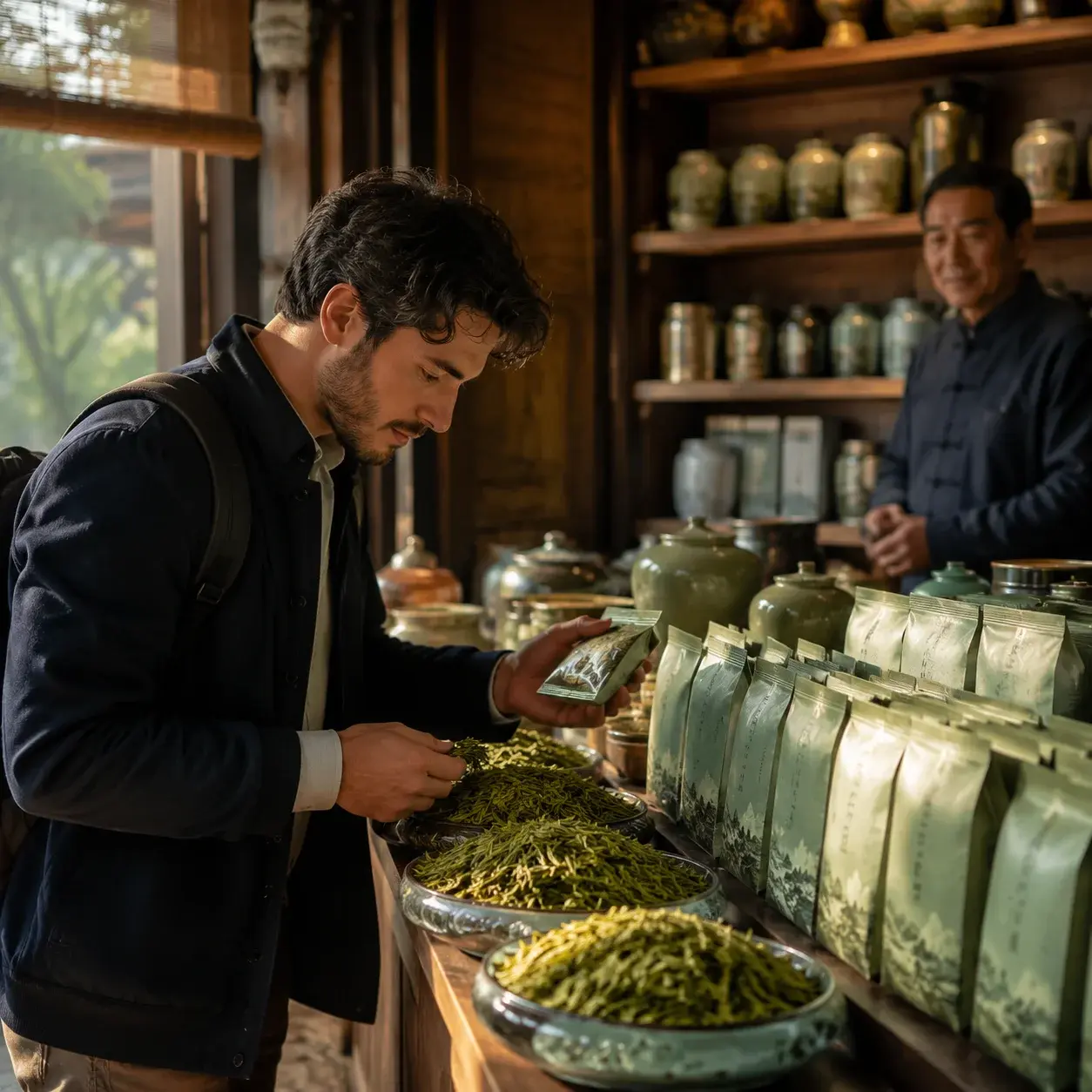
¿Qué té chino deberías comprar en China, y dónde? Una guía para viajeros
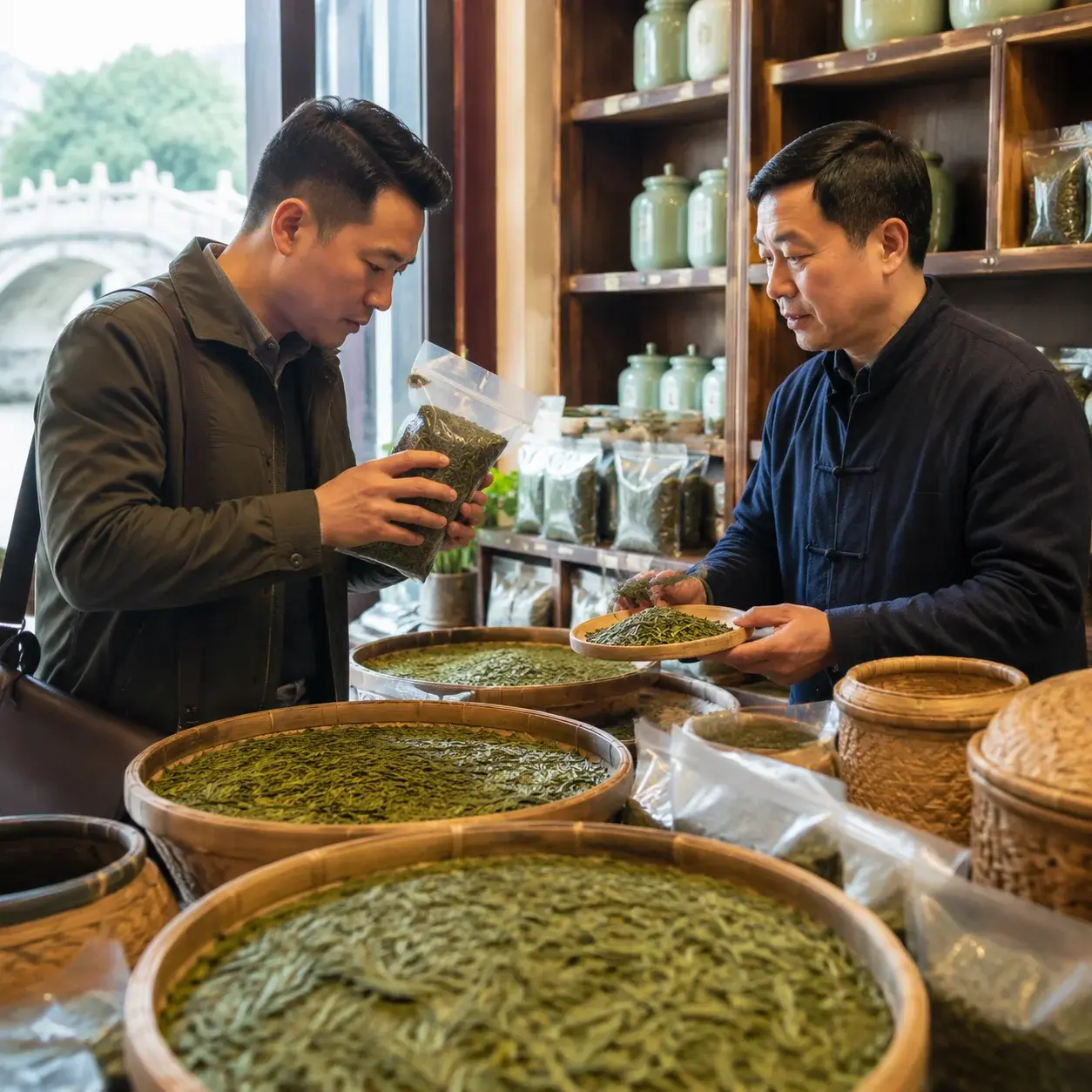
El mejor té chino que puedes comprar en China es un té de hoja suelta sellada de una sola origen comprado cerca de su origen — Longjing en Hangzhou, Tieguanyin en Anxi, Pu-erh en Yunnan — vendido por 50g o 100g para que puedas comparar. Elige el té según tu gusto y tolerancia a la cafeína, no según una etiqueta "premium", y compra siempre hojas puras para poder llevártelo a casa.
Hemos escrito esto porque los guías que encontramos eran explicaciones puras de "seis tipos de té" que nunca te dicen dónde comprar, artículos de un solo mercado sobre una ciudad de té, o advertencias de estafa que te dejan asustado ante cada casa de té. Somos una empresa de viajes a China, no una tienda de té — así que podemos ser honestos contigo. Al final sabrás qué té chino se adapta a ti, en qué ciudad comprarlo, cuál es un precio justo en RMB, cómo detectar la estafa famosa de las casas de té y cómo llevar tu té aduanas en tu país.
Una nota de honestidad antes de empezar: la información aquí es actual y verificada — los tipos de té, parámetros de infusión, el mapa región-té, los rangos de precios en RMB y las reglas aduaneras por país fueron todos verificados contra fuentes oficiales y de campo a mediados de 2026. Los precios en un mercado chino aún son negociables y vale la pena compararlos en varias tiendas, pero los rangos que siguen son números reales, no suposiciones.
Principales puntos clave
- China tiene seis tipos de té (verde, amarillo, blanco, oolong, negro/rojo, oscuro/Pu-erh) además de té aromatizado como el jazmín; se diferencian por oxidación, no por calidad.
- Compra en la fuente cuando tu itinerario lo permita — la marca de indicación geográfica más un empaquetado fresco y rastreable importan mucho más que etiquetas como "árbol madre" o "árbol antiguo".
- El precio se establece por tipo × región de producción × grado. Un "Longjing del Oeste Lake" a ~¥350/100g es muy probablemente una imitación; el té de origen auténtico se sitúa en un rango medio predecible.
- La estafa de la sala de té es un extraño que te lleva a un lugar no elegido, sin precio y cerrado — no una tienda que ofrezca infusión gratis. Una tienda que te prepara varios tés gratis es un buen signo.
- La temperatura del agua es la regla decisiva: los verdes y amarillos necesitan agua enfriada (75–85°C); el oolong y los tés oscuros necesitan hervor completo (95–100°C).
- Compra té de hoja entera y decláralo siempre en aduanas. Las reglas varían por país (EE.UU./Reino Unido/EU/Australia abajo), y la tabla por país ha sido verificada contra la orientación oficial de cada autoridad (última verificación 2026-07).
¿Cuáles son los principales tipos de té chino (y cuál es para ti?)
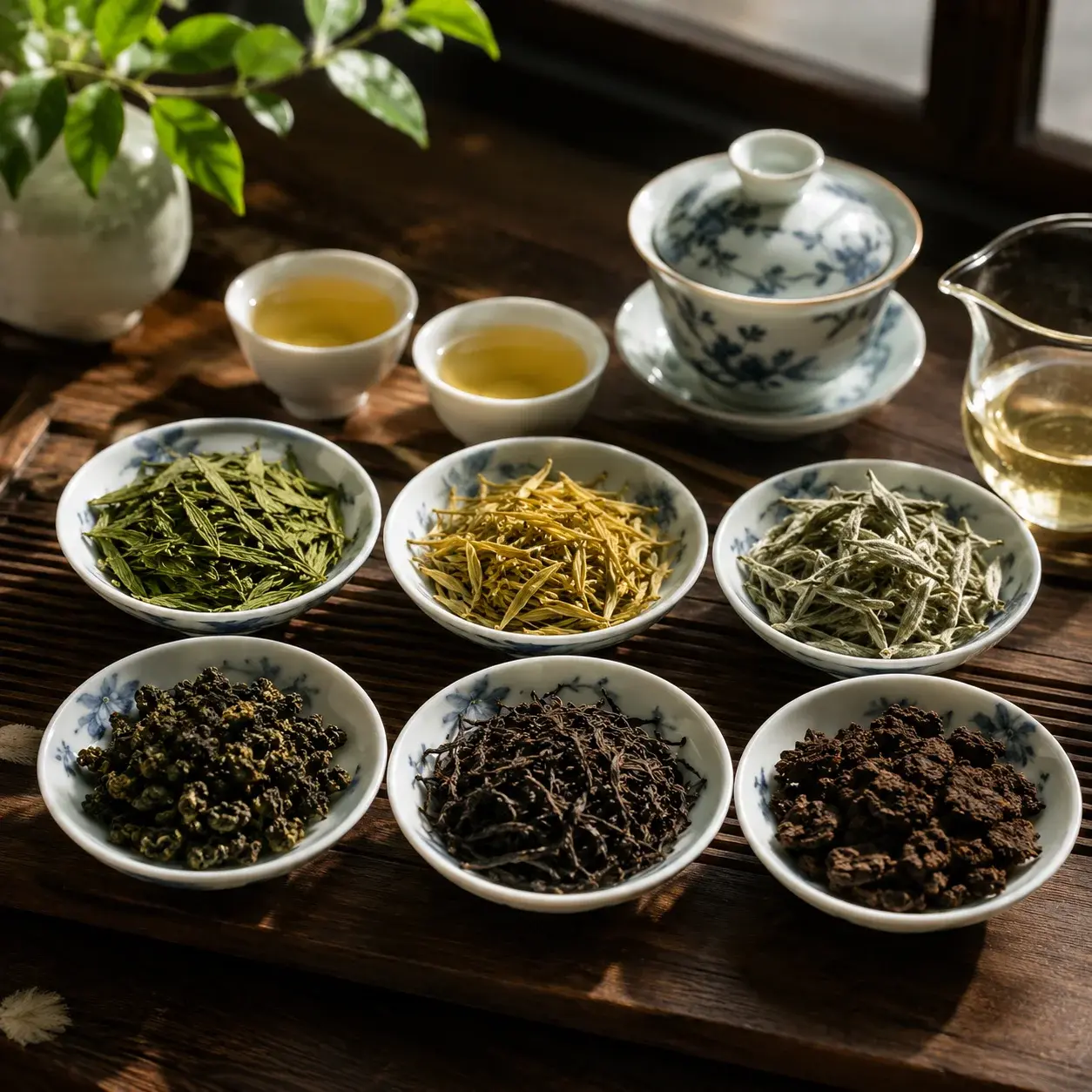
El té chino se clasifica en seis tipos según el grado de oxidación de la hoja, no por precio o región: verde (no oxidado), amarillo (ligeramente oxidado, "amarillado sellado"), blanco (ligeramente oxidado, marchito), oolong (parcialmente oxidado, aproximadamente del 10 al 80%), negro/rojo (completamente oxidado) y oscuro/Pu-erh (postfermentado). El té con fragancia como el jazmín y otros pertenecen a una categoría de "reprocesado" — usualmente una base de té verde perfumada con flores frescas — y no constituyen un séptimo tipo. Este modelo de oxidación es el marco de referencia autorizado para entender cualquier té chino que te ofrezcan.
| Tipo | Oxidación | Sabor | Ejemplo famoso | Ideal para |
|---|---|---|---|---|
| Verde (绿茶) | Ninguno | Fresco, "frijol", castaño, con hierba | Longjing, Biluochun | El clásico cotidiano; principiantes que prefieren lo ligero |
| Amarillo (黄茶) | Ligera (amarillado sellado) | Similar al té verde pero más suave | Junshan Yinzhen | Compradores curiosos; el tipo más raro |
| Blanco (白茶) | Ligera (con marchitamiento) | Dulce, aterciopelado; envejece a notas medicinales o de fecha | Baihao Yinzhen, Shou Mei | Bebes sensibles a la cafeína; mayores; para regalar |
| Oolong (乌龙/青茶) | Parcial (~10–80%) | Orquídea, fruta, mineralidad "roca" | Tieguanyin, Da Hong Pao | Personas que buscan aroma y complejidad |
| Tinto / rojo (红茶) | Completo | Malteado, caramelo, final dulce rico | Keemun, Dianhong | Bebedores de café; tolerantes a leche y azúcar |
| Negro / Pu-erh (黑茶) | Post-fermentado | Maduro: suave, envejecido; crudo: amargo a dulce | Yunnan Pu-erh, Liubao | Coleccionistas que "envejecen como vino"; bebedores diarios |
Té verde — el clásico cotidiano
El té verde es la cara cotidiana del té chino y la categoría que más preguntan los viajeros. Las estrellas son Longjing (Dragon Well) de Hangzhou — hojas planas tostadas con un dulzor a castaña y frijol — y Biluochun de Suzhou, enrolladas y peludas. También es el más delicado y menos estable en el estante: compra la cosecha del año actual, mantenlo sellado y fresco, y bébelo dentro de meses, no años. El té verde es el tipo que más se arruina en casa, casi siempre por un error: agua hirviendo (ver preparación, abajo).
Oolong, té blanco y negro
Oolong se sitúa entre el verde y el negro en oxidación y recompensa una paciencia con una preparación estilo gongfu: Tieguanyin (Anxi) va desde fresco a orozado hasta tostado, los tés de roca de Wuyi como Da Hong Pao tienen un carácter mineral "hueso de roca", y Fenghuang Dancong aporta aromas a miel floral. Té blanco es mínimamente procesado y suave — Baihao Yinzhen (Aguja Plateada) es peludo y delicado, mientras que el Shou Mei envejece con notas a dátil y medicinales y puede hervirse — convirtiéndolo en la opción de baja irritación para los mayores. Té negro (llamado "té rojo" en China por su color) es el punto de encuentro para los bebedores de café: Keemun es uno de los grandes tés negros aromáticos del mundo y Dianhong es dorado y con puntas doradas, ambos felices de prepararse calientes y fuertes.
Pu-erh, amarillo y aromatizado
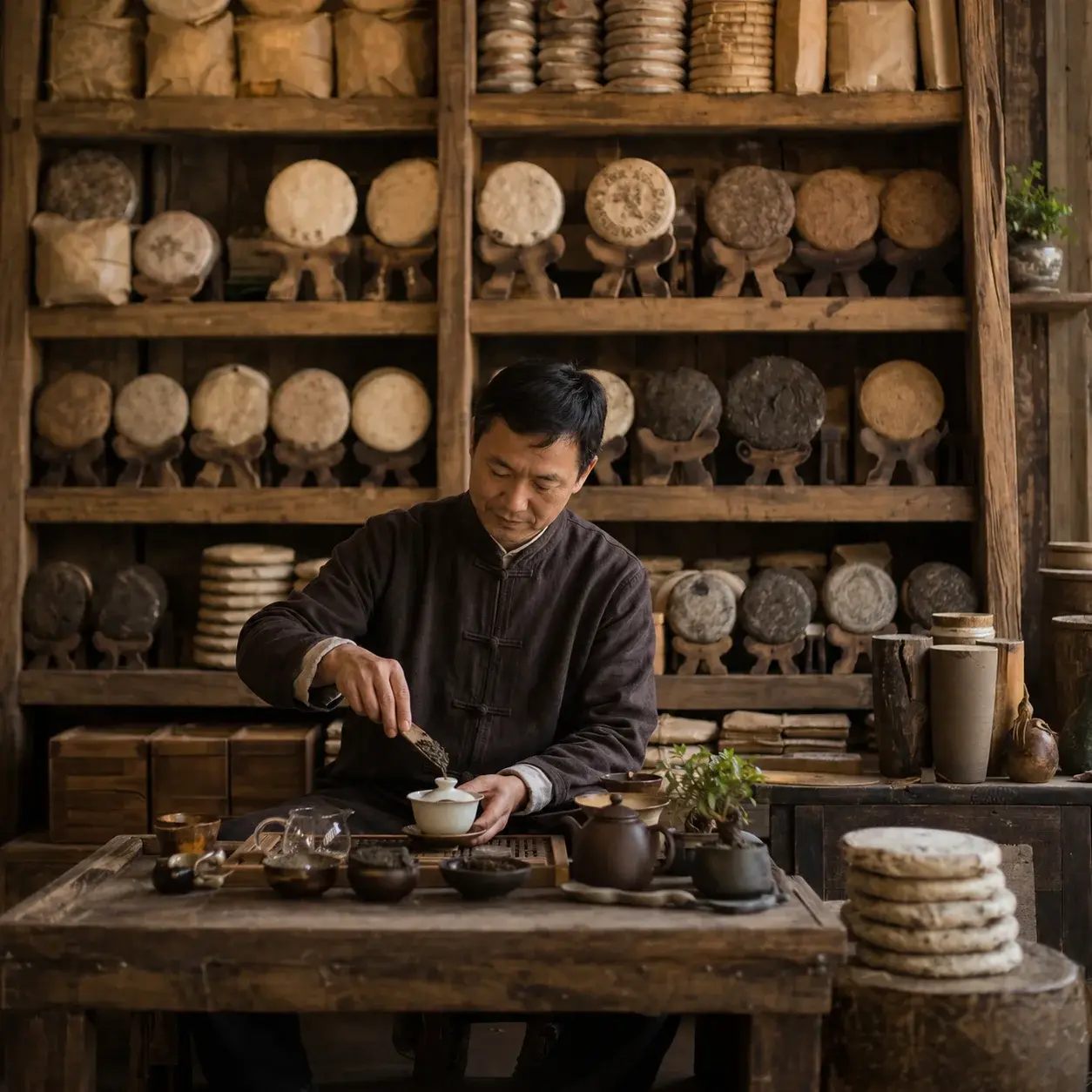
El té oscuro es post-fermentado, y el Pu-erh de Yunnan es su máximo representante, en dos formas: el maduro (shou) es suave y amigable para principiantes, mientras que el verde (sheng) es más brillante, más amargo y áspero en el estómago vacío. prensado en pasteles, un buen Pu-erh mejora con los años — comienza con uno maduro de una gran fábrica. El té amarillo es el más raro de los seis (Junshan Yinzhen el clásico); su pequeña producción lo hace el más falsificado, así que compra directamente en la fuente. El té de jazmín, perfumado en Fuzhou, es la puerta de entrada más amigable de todas — su aroma floral lo convierte en el regalo más confiable para alguien nuevo en el té chino.
Encuentra tu té chino — por gusto, tolerancia a la cafina y para quién
El té chino adecuado no es el más caro — es el que se adapta a tu paladar y a tu tolerancia a la cafina. Pregúntate tres cosas: (1) ¿Bebes café o prefieres bebidas ligeras? (2) ¿Eres sensible a la cafina o al estómago vacío? (3) ¿Esto es para consumo diario, un regalo o solo para probar? Luego lee a través.
| Tu perfil | Tipo recomendado | Tés de ejemplo | Palabras clave de sabor | Relación de cafeína |
|---|---|---|---|---|
| Bebedor de café, busca cuerpo y fuerza | Té negro/rojo, o oolong fuertemente tostado | Dianhong, Keemun, Da Hong Pao | Malta, caramelo, final dulce profundo | Medio–alto |
| Busca aroma y complejidad, dispuesto a preparar lentamente | Oolong | Tieguanyin, Da Hong Pao, Fenghuang Dancong | Orquídea, fruta, mineral rocoso | Medio (tostado ligero bajo, tostado oscuro alto) |
| Fresco y herbáceo, bebedor diario | Té verde | Longjing, Biluochun, Huangshan Maofeng | Frijol, castaña, fresco | Medio (brotes tiernos pre-Qingming más altos) |
| Insomnio / sensible / para ancianos o niños | Té blanco (especialmente envejecido) o Pu-erh maduro | Baihao Yinzhen, Shou Mei, blanco envejecido | Dulce, aterciopelado, suave | Inferior (relativamente suave)* |
| Curioso — quiere el té más raro | Té amarillo | Junshan Yinzhen, Mengding Huangya | Similar al té verde pero más suave | Medio |
| Quiere "envejecer como vino", coleccionable | Oscuro/Pu-erh | Pu-erh maduro o crudo, Liubao | Maduro: suave; crudo: amargo a dulce | Maduro medio; crudo más alto y agudo |
| Solo quiere el favorito del público | Aromatizado / jazmín | Té de jazmín, oolong de osmanthus | Rica floral, accesible | Depende de la base (generalmente medio) |
💬 Opinión honesta del editor: Los bebedores de café deberían evitar los tés verdes ligeros — se percibirán como "aguados". Comience con Dianhong o un Da Hong Pao/Rougui fuertemente tostado, preparado caliente y fuerte; es lo más cercano a la intensidad que conoce. Si es sensible a la cafeína o compra para ancianos o niños, opte por té blanco añejo o Pu-erh maduro — suave y apto para cocción prolongada — y evite los tiernos brotes pre-Qingming y el Pu-erh crudo. No existe una regla estricta "tipo de té → cafeína". Las promedios medidos cruzan en realidad la etiqueta del tipo — un conjunto de datos pone el té verde elaborado en primer lugar con aproximadamente 297 mg/L, luego blanco ~198, negro ~184, y oolong el más bajo con ~156 mg/L — porque la cafeína depende más de la delicadez de las hojas (los brotes tiernos tienen más), el cultivar, la cosecha y cómo lo prepara que del nombre de seis tipos. Trate la columna de cafeína como una zona de aterrizaje relativa para la intensidad de sabor que desee, no como una clasificación de cafeína. Reducir la cafeína es práctico: agua fría, infusiones cortas y descartar un rápido "enjuague" inicial reducen tu ingesta.
¿Dónde están las mejores regiones y ciudades para comprar té en China?
El mejor lugar para comprar un té chino específico está en o cerca de su región productora — si su itinerario pasa por la ciudad de origen, compre su té signature allí. Comprar en origen le marca de indicación geográfica, frescura de temporada actual y empaque trazable, justo lo que lo protege de imitaciones. Use este mapa regional como herramienta de compra, no como nota de turismo.
| Té famoso (inglés) | Tipo | Origen principal (ciudad/región) | Punto de contacto del viaje | Autenticidad / nota a evitar |
|---|---|---|---|---|
| Longjing / Dragon Well | Verde | Hangzhou, Lago Oeste (Shifeng, Meijiawu, aldea Longjing) | Día Hangzhou + Lago Oeste | "Lago Oeste Longjing" es una GI protegida; las etiquetas "pre-Qingming / Shifeng" son las más falsificadas — verificar la certificación de origen |
| Biluochun | Verde | Suzhou, Colinas Dongting Este/Oeste | Jardines de Suzhou | El Biluochun real es peludo con rizos de "cobre-alambre"; los brotes de fuera de zona se hacen pasar por él |
| Huangshan Maofeng / Taiping Houkui | Verde | Huangshan, Anhui | Sendero Huangshan | Taiping Houkui es el té verde de hoja grande y fotogénico |
| Tieguanyin | Oolong | Anxi, Fujian | Xiamen + sur de Fujian | Tostado claro y oscuro difieren mucho; el origen Anxi es el más auténtico |
| Da Hong Pao / té de roca (yancha) | Oolong | Wuyishan, Fujian | Wuyishan | "Madre-tree Da Hong Pao" es un truco de trofeo; comprar Da Hong Pao / Shuixian / Rougui comercial |
| Fenghuang Dancong | Oolong | Chaozhou, Guangdong | Viaje gastronómico Chaoshan | Aromas floral-miel; cuna del té gongfu |
| Baihao Yinzhen / Aguja Plateada | Blanco | Fuding / Zhenghe, Fujian | Fujian oriental | Fuding es mainstream; verificar el año del pastel para té blanco envejecido |
| Keemun / Qimen | Negro/rojo | Qimen, Anhui | Alrededores de Huangshan | Uno de los tres grandes tés aromáticos negros del mundo |
| Dianhong | Negro/rojo | Yunnan (zona Fengqing) | Yunnan | Puntas doradas, robusto — amable para los bebedores de café |
| Lapsang Souchong / Zhengshan Xiaozhong | Negro/rojo | Tongmu, Wuyishan, Fujian | Wuyishan | El té negro original; preguntar ahumado o sin ahumar |
| Pu-erh | Oscuro | Yunnan (Xishuangbanna / Pu'er / Lincang) | Yunnan | Montaña, crudo/curado y año importan; empezar con curado de gran fábrica |
| Liubao | Oscuro | Wuzhou, Guangxi | Guangxi | Té oscuro asequino más allá del Pu-erh |
| Junshan Yinzhen | Amarillo | Yueyang, Isla Junshan, Hunan | Lago Dongtang | Producción pequeña, fácilmente falsificada — verificar origen |
| Té de jazmín | Perfumado | Fuzhou, Fujian | Fuzhou | Entrada más amable; más rondas de perfumado = más aroma |
### Mercados de té en grandes ciudades
Si no estás pasando por una región productora, los mercados de té de las grandes ciudades lo tienen todo en un solo lugar. La calle del té Maliandao de Pekín es una zona de todo tipo de té, pero las tiendas que dan a la carretera son las más caras y turísticas, así que adéntrate y compara tres tiendas. La ciudad del té Tianshan de Shanghái es más amigable para los viajeros individuales (ten cuidado con las tiendas de "ceremonia del té" cerca de los lugares turísticos — consulta la sección de estafas). Fangcún de Cantón (el mercado del té del sur) se proclama como el mayor centro de comercio de té del mundo, ideal para Pu-erh, pero con un ambiente muy al por mayor — quédate en las tiendas que indiquen precio por gramo. En Kunming, los mercados de té Xiongda y Kangle son tus paradas para Pu-erh de Yunnan; toma con reservas las historias de "árbol antiguo / viejo".
💬 Opinión honesta del editor: Ignora las etiquetas trofeo como "árbol madre", "árbol antiguo" y "material puro de una sola finca" — eso es学费 para turistas. En la fuente, una marca de indicación geográfica más un embalaje trazable de la temporada actual es suficiente.
¿Cómo probar y comprar té como un local?
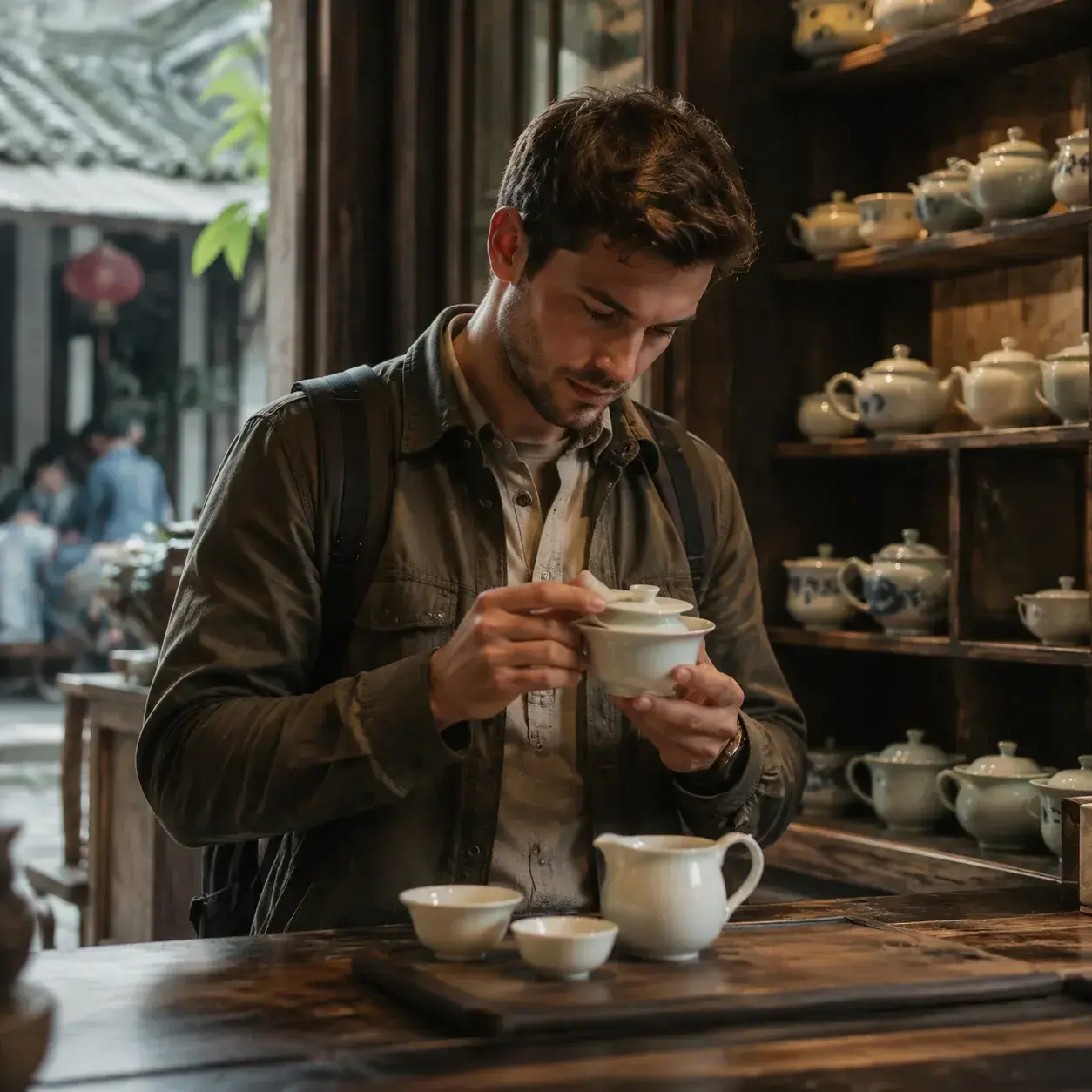
Prueba antes de comprar — en una verdadera tienda de té china, el preparador te prepara varios tés gratis en un gaiwan (taza con tapa), y puedes probar y comparar antes de comprometerte. Este ritual de degustación es una cortesía normal, no una trampa de ventas, y es tu mejor control de calidad. Así es como funciona.
- Pide que te degusten dos o tres candidatos. Una buena tienda los preparará encantada lado a lado en un gaiwan o una pequeña tetera. Compara el aroma, la claridad y cómo se mantiene el sabor a lo largo de varias infusiones.
- Huele primero, luego mira. Huele la tapa caliente y las hojas mojadas. Luego mira las hojas secas: hojas enteras e intactas señalan calidad; muchas partículas rotas y fragmentos indican un grado inferior.
- Haz las preguntas que importan. ¿De dónde es? ¿Qué estación/año? ¿Cuál es el precio por 50g o 100g? Una tienda segura responde a las tres sin vacilar.
- Prefiere suelta. El té a granel permite inspeccionar la hoja entera y generalmente indica mayor calidad que el té «caja para turistas» empaquetado, que suele ser el polvo de más bajo grado.
- Considera «no degustar» como una bandera roja. Una tienda que no te permite probar antes de comprar está diciéndote algo — y esto lleva directamente a la sección de estafas abajo.
¿Cómo preparas lo que compraste? Temperatura del agua, hoja y tiempo por tipo
La regla decisiva para preparar el té chino es la temperatura del agua: los verdes y amarillos necesitan agua enfriada (75–85°C) o se queman y amargan; los oolong y los té oscuros necesitan hervor (95–100°C) para liberar su aroma. Si aciertas con eso, la mayoría de las quejas de «no me gusta el té chino» desaparecen. Cada tipo a continuación indica una dosis gongfu (tetera pequeña/gaiwan, muchas infusiones) y una dosis occidental (taza/tetera, una o dos infusiones).
| Tipo | Temperatura del agua | Dosis de hojas (gongfu / occidental) | Tiempo de primera infusión | Reinfusiones | Consejo clave |
|---|---|---|---|---|---|
| Verde (绿茶) | 75–85°C (nunca hirviendo — quema las hojas) | 3–4g / 100ml; 2–3g / 250ml | Gongfu 15–30s; occidental 2–3 min | 2–3 | No cubrir herméticamente; observar cómo se despliegan los tiernos brotes |
| Amarillo (黄茶) | 80–85°C | 3–4g / 100ml | 30–45s | 2–3 | Usar una tetera de vidrio para ver el color amarillo; no sobrecocinar |
| Blanco (白茶) | Aguja Plateada 85–90°C; Shou Mei / envejecido 95–100°C (el envejecido puede hervirse suavemente) | 5g / 100ml; 3g / 250ml | Gongfu 20–40s; occidental 3–5 min | 5–7 (más si está envejecido; puede hervirse suavemente) | Más viejo = más reinfusiones; hervir con cáscara de mandarina seca o jujube rojo es la forma local |
| Oolong (乌龙) | 95–100°C (el hervor despierta el aroma) | 5–7g / 100ml (llenar el gaiwan ~⅓) | Gongfu 20–40s, sumar unos segundos cada vez | 6–8+ (mejor té rocoso) | Un breve “enjuague” en la primera infusión, vertido fuera, despierta la hoja |
| Té negro / rojo (红茶) | 90–95°C | 3–4g / 100ml; 2–3g / 250ml | Gongfu 10–20s; occidental 3–4 min | 4–6 | Verter rápido — las infusiones largas amargan; combina bien con leche y azúcar |
| Té oscuro / Pu-erh (黑茶) | 95–100°C (hirviendo) | 5–8g / 100ml | Enjuagar 1–2 veces rápidamente y desechar, luego 10–20s | 8–10+ (puede hervirse suavemente las últimas infusiones) | Separar los pasteles comprimidos con una aguja de té; usar poca cantidad al principio con Pu-erh crudo |
| Aromatizado / jazmín (花茶) | 85–90°C (siguiendo la base verde) | 3g / 100ml | 1–3 min | 2–3 | Agua muy caliente dispersa el aroma floral; preparar tibio para conservarlo |
Para lectores occidentales: 85°C ≈ 185°F, 95°C ≈ 203°F, 100°C ≈ 212°F (ebullición). ¿Sin hervidor con control de temperatura? Hierve y deja la tapa destapada durante 1–2 minutos — así baja a aproximadamente 85°C, perfecto para té verde.
💬 Opinión honesta del editor: La mayoría de las quejas de "No me gusta el té chino" se deben a té verde quemado: el agua hirviendo sobre tiernas yemas las vuelve amargas. Si recuerdas solo una cosa, deja enfriar el hervidor para el té verde. Para oolong y Pu-erh, un breve enjuague y descarte de la primera infusión activa la hoja y reduce un poco la cafeína.
¿Cuál es un precio justo en RMB para el té chino?
El precio justo del té chino depende de tres factores superpuestos — tipo × región de producción × calidad — por lo que el mismo nombre de té puede variar desde unas decenas de yuanes hasta decenas de miles. El mayor premium (y el mayor fraude) proviene de la región de producción: un origen con indicación geográfica protegida tiene valor real y es muy imitado. Aquí explicamos por qué la diferencia es tan amplia, luego los rangos de precios por tipo.
- Tipo establece la lógica de precios. Los greens se precian según frescura y tiernura ("nuevos, tiernos, pre-Qingming"); los tés blancos y oscuros se precian según antigüedad y añada.
- Región / autenticidad es el mayor premium. "West Lake Longjing (西湖龙井)" es una indicación geográfica protegida — solo el té de la zona de 168 km² del Lago Oeste puede llevar ese nombre, y todo lo demás puede llamarse legalmente solo "té Longjing" o "Zhejiang Longjing", por lo que la misma hoja cae en una banda de precio muy diferente. El premium del té de roca Wuyi es su "carácter de zona central"; la famosa madre-tree Da Hong Pao es un trofeo — 20g se vendieron por ¥208,000 en una subasta de 2005 (¥10,400 por gramo, más caro que el oro), y las seis madres supervivientes ahora están protegidas y ya no se cosechan, así que compra Da Hong Pao/Shuixian/Rougui comercial. Para el Yunnan Pu-erh, las seis montañas antiguas de té y el material puro de árbol viejo llevan el top premium, y el Pu-erh crudo bien almacenado sube de precio con la edad; el Pu-erh maduro y el crudo joven cuestan mucho menos.
- Calidad / recolección se apila encima. Longjing se clasifica desde Superior (特级) hasta grado 5 (seis niveles); los brotes pre-Qingming son los más escasos y caros; el blanco y el Pu-erh saltan por año de añada.
Escala de precios en RMB (esto muestra la relación tipo-región-calidad; los precios de mercado son negociables, así que trata estos como bandas justas hacia las que negociar):
| Tipo (ejemplo) | Grado cotidiano (origen no central, de menor calidad) | Grado de autenticidad (origen GI) | Grado premium / envejecido (montañas famosas, antes del Qingming, coleccionable) |
|---|---|---|---|
| Verde · Longjing | «Estilo Longjing» ¥50–200 / 100g | Longjing del Lago Oeste (GI) ¥500–2,000+ / 100g; una etiqueta «Lago Oeste» por menos de ~¥350/100g es probablemente falsa | Antes del Qingming, núcleo Shifeng ¥1,500–5,000+ / 100g; los «18 árboles imperiales» se venden por gramo, más caros que el oro (una estratagema — no compres) |
| Oolong · té roca / Tieguanyin | Da Hong Pao comercial/mezclado, Tieguanyin ordinario ¥50–300 / 100g | Núcleo Shuixian/Rougui, Tieguanyin de origen Anxi ¥300–1,000 / 100g | Viejos arbustos de montañas famosas, Dancong de acantilado ¥1,000–5,000+ / 100g; madre-tree Da Hong Pao es un trofeo (2005: 20g = ¥208,000, es decir ¥10,400/g — no compres) |
| Oscuro · Pu-erh (por pastel de 357g) | Pu-erh maduro de gran fábrica, pastel diario ¥50–300 / pastel | Raw Pu-erh genuino de las seis montañas ¥300–1,000 / pastel | Materia pura de árbol viejo de montaña famosa / raw envejecido ¥3,000–20,000+ / pastel |
| Blanco · Aguja de Fuding | Nuevo Shou Mei / suelto ¥50–300 / 100g | Aguja de origen Fuding/Zhenghe ¥300–800 / 100g | Blanco envejecido ¥800–3,000+ / 100g, según la añada del pastel; falsificar el año es común (confía en el empaque trazable) |
Recuerda que los precios del mercado son negociables — un precio cotizado en un mercado raramente es el mínimo — y la "caja de turista" de té preempaquetada cerca de los lugares de interés tiene el markup más alto para la calidad más baja.
💬 Opinión honesta del editor: Lo que realmente deberían pagar los viajeros es el grado de origen auténtico — una marca de indicación geológica más embalaje con fecha o de la temporada actual, rastreable. Puedes notar la diferencia, y no estás pagando la "tutela de material puro de árbol viejo / madre árbol". "Más caro es mejor" es la trampa; "origen correcto, adecuado para tu paladar" es el valor.
¿Qué es el estafa de la Casa de Té China y cómo evitarla?
La estafa de la Casa de Té China ocurre cuando un amable hablante de inglés te invita a una "ceremonia tradicional de té", te lleva a un lugar que no elegiste sin precios visibles, sirve varios tés y luego presenta una factura inflacionada y te presiona para pagar al instante. Suele ocurrir cerca de la Ciudad Prohibida y Wangfujing en Pekín, la Torre del Tambor de Xi'an, y el Jardín Yu y el Bund en Shanghái. La clave es: la estafa es el lugar no elegido, sin precios y cerrado — no la degustación gratuita.
El guion típico, paso a paso:
- El acercamiento. Cerca de un lugar turístico importante, un «estudiante» o «turista compañero» inicia una conversación amigable en inglés y dice que va a una ceremonia del té — ven conmigo.
- La desviación. Te llevan a una pequeña casa de té o a una habitación privada que no elegiste, sin menú ni precios publicados.
- La infusión. Un «maestro de té» prepara varios tés para que pruebes; el ambiente es cálido y social.
- La cuenta. Al final, aparece una factura inflada — comúnmente ¥500–¥2,000+ por persona (documentado en la Ciudad Prohibida de Pekín, la Torre del Tambor de Xián y el Jardín Yu de Shanghái) — presentada como «tarifa de degustación más cargo por asiento». El truco es que el té se vende por gramo a ¥1–1.5 por gramo, por lo que una sola taza cuesta ¥100–500 y varias personas comparten una misma taza, pero se les cobra como si hubieran bebido todo, a veces con presión para comprar también caras tazas de té.
- La presión. Con gente alrededor, una barrera lingüística y alguien cerca de la puerta, te presionan para pagar en efectivo o con tarjeta de inmediato.
Tarjeta de señales de alerta (cualquier 2+ = sal ahora):
| # | Señal de alerta |
|---|---|
| 1 | Un extraño inició la invitación — tú no elegiste el lugar |
| 2 | Sin lista de precios visible; preguntar el precio responde «pago después de beber» |
| 3 | Te llevan a una sala privada cerrada en lugar de asientos abiertos |
| 4 | Degustación «gratuita» sin revelar que en realidad es pagable |
| 5 | Pago después de beber sin precios detallados por escrito |
| 6 | Te apresuran a pagar en efectivo/tarjeta al instante, sin tiempo para pensar |
Este es un ejemplo de cómo se ve una tienda legítima, por contraste: entras desde la calle o el mercado; te ofrecen probar varias tazas de té sin comprometerse; muestran claramente el precio por 50g/100g; venden cantidades pequeñas; y puedes irte sin comprar.
💬 Opinión honesta del editor (la parte contraintuitiva): Una tienda que te ofrezca preparar varias tazas de té gratis no es una señal de estafa; es el sello de una tienda legítima. La estafa es cuando un desconocido te lleva a un lugar no elegido, sin precios y cerrado. Separa esas dos ideas y dejarás de temer cada casa de té de calidad.
Otros trucos para evitar: el té "caja para turistas" empaquetado suele ser el polvo de peor calidad; un "Pu-erh envejecido 20 años" a un precio sospechosamente bajo casi certainly no lo es; y las etiquetas de "árbol madre" son un pago por aprendizaje, no valor real.
Si has sido estafado: guarda el recibo y el comprobante de tarjeta. En China, llama al número nacional de atención al consumidor 12315 o presenta una denuncia en línea en 12315.cn; también puedes presentar una queja turística ante la autoridad local de cultura y turismo, y llamar al 110 si te presionan en el momento. Los titulares de tarjetas de EE.UU. pueden disputar el cargo bajo la Ley de Factoring de Crédito Justo — presenta la disputa con tu emisor después del estado de cuenta, y tu responsabilidad por un cargo genuinamente no autorizado está limitada a $50.
¿Qué té chino es el mejor regalo?
El mejor regalo de té chino es un té suelto de origen único, sellado en una lata, adaptado al destinatario — y, idealmente, acompañado de un pequeño conjunto de gongfu para elevarlo al instante. Nunca regales té suelto sin empaquetar: es un problema aduanero y de almacenamiento. Ajusta el té a la persona:
- Para los mayores: té blanco añejo o Pu-erh maduro — suave, y el simbolismo de "envejece como el vino" se percibe como un regalo considerado y respetuoso.
- Para un amigo que nunca ha probado té chino: té de jazmín o un ligero Tieguanyin — aroma que gusta a todos, bajo umbral para disfrutar.
- Para un amante del té: té de roca Wuyi Da Hong Pao o Longjing pre-Qingming — la elección del conocedor.
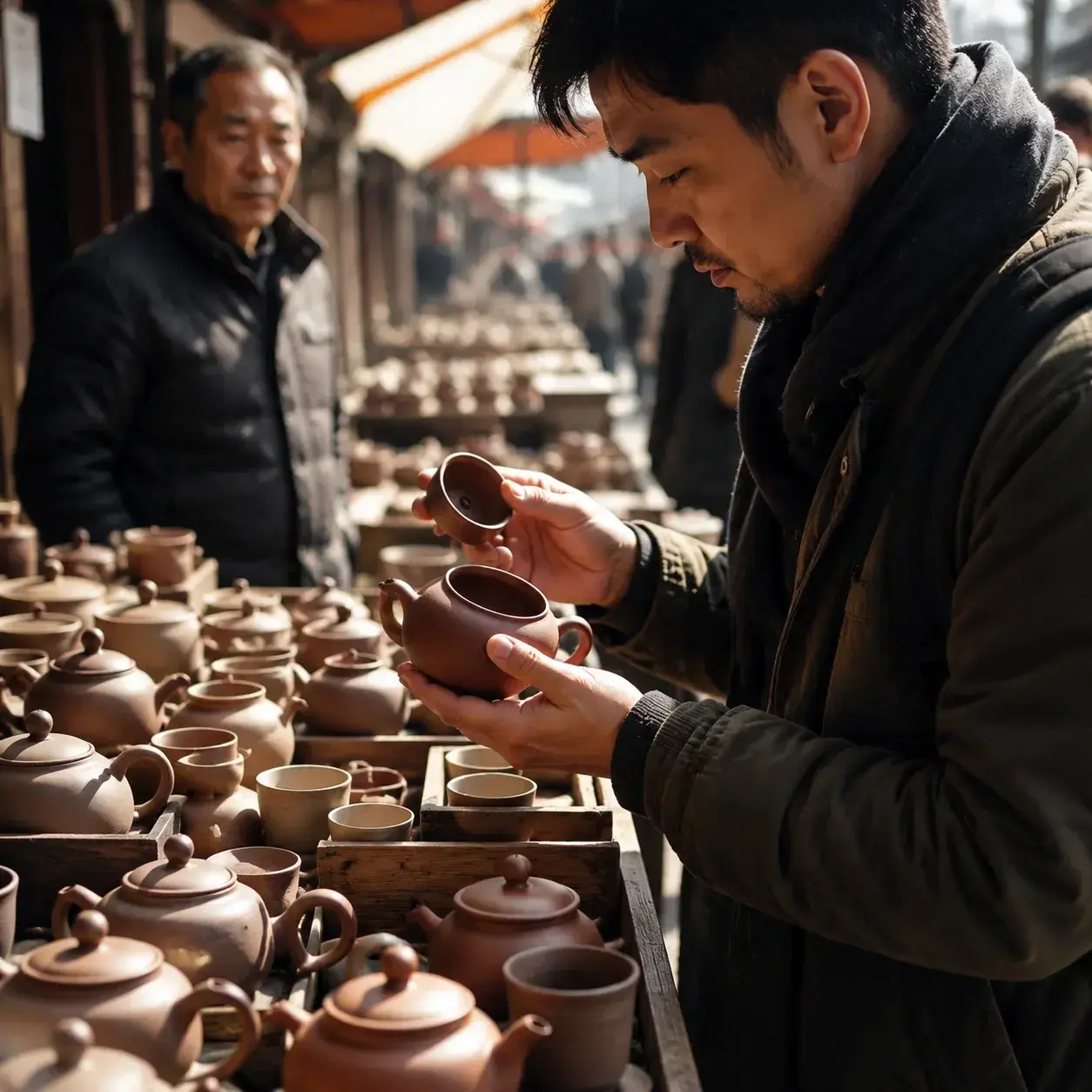
Un té de origen con historia, en empaque sellado, viaja bien y se regala bien. Acompañarlo con un pequeño  conjunto de té chino — o, para el oolong y el Pu-erh, con una tetera Yixing— convierte una bolsa de hojas en un regalo adecuado.
¿Cómo llevar el té a casa? Reglas de aduanas y agricultura por país
El té de hoja puro (Camellia sinensis — verde, blanco, amarillo, oolong, negro o oscuro/Pu-erh) es admisible en los EE. UU., el Reino Unido, la UE y Australia para uso personal, pero debe declararse como producto agrícola, y los detalles varían según el destino. Las mezclas con semillas brotantes, hoja o cáscara de cítricos, semillas de especias enteras, raíces o cortezas desconocidas, o fruta seca están restringidas — así que compre té de hoja simple para estar a salvo. La tabla a continuación se ha extraído de las orientaciones oficiales de cada autoridad. Última verificación: 2026-07.
| Destino | ¿Hoja pura admisible? | ¿Declarar? | Cantidad / libre de derechos | Restricción clave | Fuente oficial |
|---|---|---|---|---|---|
| Estados Unidos 🇺🇸 | Sí — negro/verde/oolong/blanco/oscuro, sueltos o en bolsitas | Sí — declare productos agrícolas en el formulario CBP 6059B (marque "Sí" en la pregunta 11). Declarar es gratis y el té puro se libera; la multa por no declarar es de unos $300 más el decomiso | Cantidad razonable para uso personal; valor total inferior a la exención personal de $800 (19 USC §321) | Las mezclas con semillas brotantes, hojas/cáscaras cítricas o fruta fresca están prohibidas — compre té puro | USDA APHIS "Café, Tés, Miel, Nueces y Especias"; guía de viajes de CBP |
| Reino Unido 🇬🇧 | Sí — té vegetal puro es un alimento de origen animal, ilimitado para uso personal | Dentro de su asignación personal, sin declaración por ítem; superada la asignación, declarar y posiblemente pagar arancel de importación | Cantidad razonable para uso personal; el IVA del té es 0% — el punto es "uso personal / regalo" | La carne y lácteos de países UE/EEA han sido prohibidos desde el 12 de abril de 2025, así que evite mezclas con leche; mantenga el embalado original | UK Gov "Traer alimentos a Gran Bretaña" (gov.uk) |
| UE 🇪🇺 | Sí — 100% té vegetal es apto para uso personal | Cantidades personales en equipaje de mano no necesitan declaración formal; comercial/volumen requiere número EORI + declaración de importación + IVA | Principio de "uso personal"; no hay límite de gramo a nivel UE | El té comercial de origen chino enfrenta inspección mejorada de residuos portuaria (RASFF); pequeñas cantidades personales no lo desencadenan | Comisión Europea / Your Europe "Llevar productos animales, alimentos o plantas contigo" |
| Australia 🇦🇺 | Sí — té negro/verde/blanco/oolong puro empaquetado comercialmente está permitido | Sí — declare TODOS los productos alimenticios y vegetales. En Australia, no declarar es en sí mismo una infracción: la multa base es $728, sube a $2,184 por artículos de alto riesgo no declarados y hasta $7,280 por ocultar bienes permitidos condicionalmente, y puede llevar a la cancelación de la visa | Cantidad razonable para uso personal (alrededor de ≤10kg es la escala personal práctica, sin límite estricto) | Debe estar sellado de fábrica, limpio, libre de plagas y etiquetado en inglés. Las mezclas con semillas enteras/corteza/rizoma/hongo/fruta seca son de alto riesgo; el té casero o suelto abierto suele ser detenido | Australian DAFF / BICON "Té para consumo humano"; Fuerza Fronteriza Australiana "¿Puede traerlo?" |
Tres reglas universales que funcionan en cualquier lugar:
- Mantén el embalaje original sellado y los recibos — demuestran que es té procesado, muestran el país de origen y te facilitan el paso por la inspección.
- Compra té puro en hojas, evita las mezclas — mientras no haya semillas, fruta fresca o raíces desconocidas, el té puro pasa casi en todas partes.
- Declaralo siempre — declarar té puro es esencialmente gratuito y rápido; ser caught sin declarar implica una multa más el decomiso, y en Australia incluso puede afectar tu visa.
💬 Opinión honesta del editor: La única medida que te protege en cualquier lugar es declararlo — declarar té puro sellado es rápido y gratuito,而被 caught sin declarar implica una multa más el decomiso, y en Australia incluso puede costarte la visa. Todo lo anterior proviene de las autoridades aduaneras oficiales y fue verificado por última vez en julio de 2026.
Preguntas frecuentes
¿Cuál es el mejor té chino para llevar a casa? Compra té puro suelto de origen único y empaquetado sellado — Longjing, Tieguanyin, Dianhong, té blanco añejo o Pu-erh maduro viajan bien. Las hojas puras (sin semillas, fruta ni especias) pasan por la aduana con mayor facilidad. Mantén el embalaje original y el recibo, y decláralo al llegar.
¿Dónde puedo comprar té chino auténtico en China? Compra cerca de la fuente cuando puedas: Longjing en Hangzhou, Tieguanyin en Anxi, Pu-erh en Yunnan. De lo contrario, usa los grandes mercados de té de las ciudades — el Maliandao de Pekín, el Tianshan Tea City de Shanghái, el Fangcún de Cantón — y quédate con tiendas que indiquen un precio por gramo claro.
¿Es mejor el té suelto chino que las bolsitas? Generalmente sí. El té suelto permite inspeccionar hojas enteras e intactas — una señal clave de calidad — y reinfundirlas varias veces. El polvo «dust», a menudo lo que hay en bolsitas baratas y cajas para turistas, es de menor calidad. Compra té suelto y, como regalo, elige latas selladas.
¿Puedo encontrar té hecho a mano o personalizado? Sí. En regiones de origen y mercados confiables puedes encontrar té elaborado en pequeñas cantidades a mano y tiendas que mezclarán o empaquetarán bajo pedido. Pregunta sobre la temporada y el origen, prueba antes de compra y pide un precio por gramo para comparar calidad justamente.
¿Tengo que declarar el té en aduanas? En la mayoría de los países, sí — el té es un producto agrícola. EE.UU. requiere declararlo en el formulario CBP 6059B; Australia exige declarar todos los productos alimenticios y vegetales, y no declarar constituye una infracción con multas que comienzan en $728 USD. Declarar té puro es gratis y se procesa rápidamente; no declarar puede acarrear multas y decomisos.
¿Cuánto debería costar un buen té chino? Depende del tipo, la región de producción y la calidad. Los tés con indicación geográfica auténtica se sitúan en una banda predecible: el Longjing del Oeste del Lago cuesta alrededor de ¥500–2,000+/100g, el Tieguanyin de Anxi aproximadamente ¥300–1,000/100g, y la Aguja de Fuding alrededor de ¥300–800/100g — mientras que las calidades "cotidianas" cuestan mucho menos y los tés coleccionables mucho más. Un "Longjing del Oeste del Lago" por menos de ¥350/100g es muy probablemente una imitación.
Conclusión
Comprar té chino en China es fácil una vez que conoces los trucos: elige un tipo que se adapte a tu gusto y tolerancia a la cafeína, compra cerca de su origen cuando lo permita tu itinerario, insiste en probarlo y en el precio por gramo, mantén el embalaje sellado para el viaje de vuelta y declara siempre hojas puras en aduanas. Si lo haces, evitarás los recargos de las tiendas para turistas, te librarás del estafa de las casas de té y llevarás a casa un té que realmente amarás.
Para una visión más amplia, consulta nuestra guía sobre los mejores recuerdos de China. Para convertir tu té en un regalo adecuado, lee nuestra guía de juegos de té chino, y para los amantes del oolong y el Pu-erh, nuestra guía de teteras Yixing. Los marcos anteriores provienen de [nuestra investigación de campo y metodología de compra de té chino](./chinese-tea-deep-dive.md), nuestra fuente de primera mano.
¿Buscas un guía que te lleve a la fuente? LyrikTrip diseña