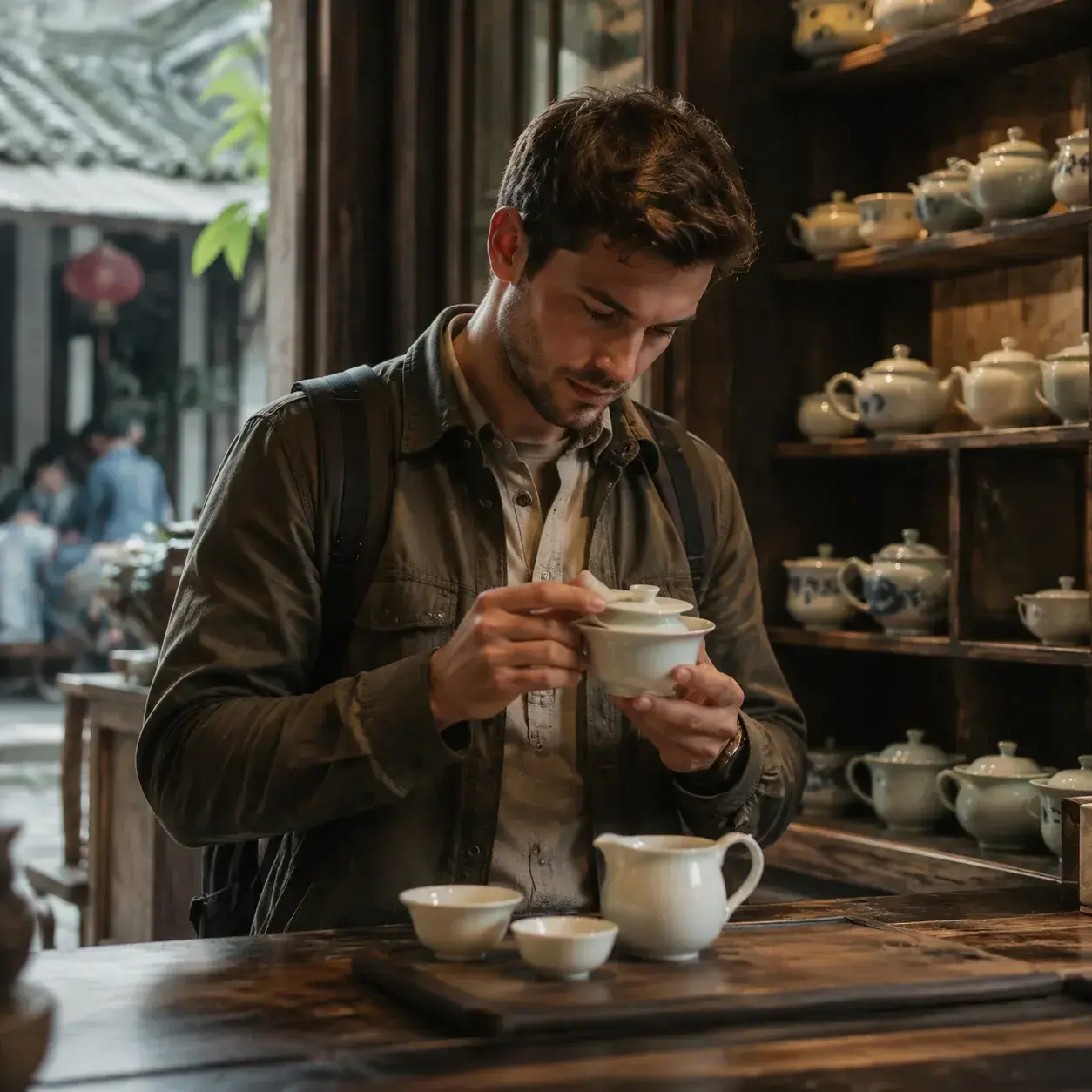





 18 días China, de principio a fin Pekín → Xi'an → Chuanzhusi → Jiuzhaigou → Chengdu → Zhangjiajie → Guilin → Yangshuo → Shenzhen Desde $6,360 Ver ruta
  8 días Agua pausada, ciudad veloz Shanghái → Yangshuo → Shenzhen Desde $2,350 Ver ruta
  19 días Aguas abajo del Futuro Shenzhen → Guilin → Yangshuo → Chengdu → Chongqing → Yichang → Shanghái Desde $5,360 Ver ruta
  18 días Aire enrarecido, luego nivel del mar Pekín → Xi'an → Chengdu → Lhasa → Chongqing → Yichang → Shanghái Desde $4,900 Ver ruta
  12 días Aún en uso Pekín → Xi'an → Chengdu → Shanghái Desde $4,310 Ver ruta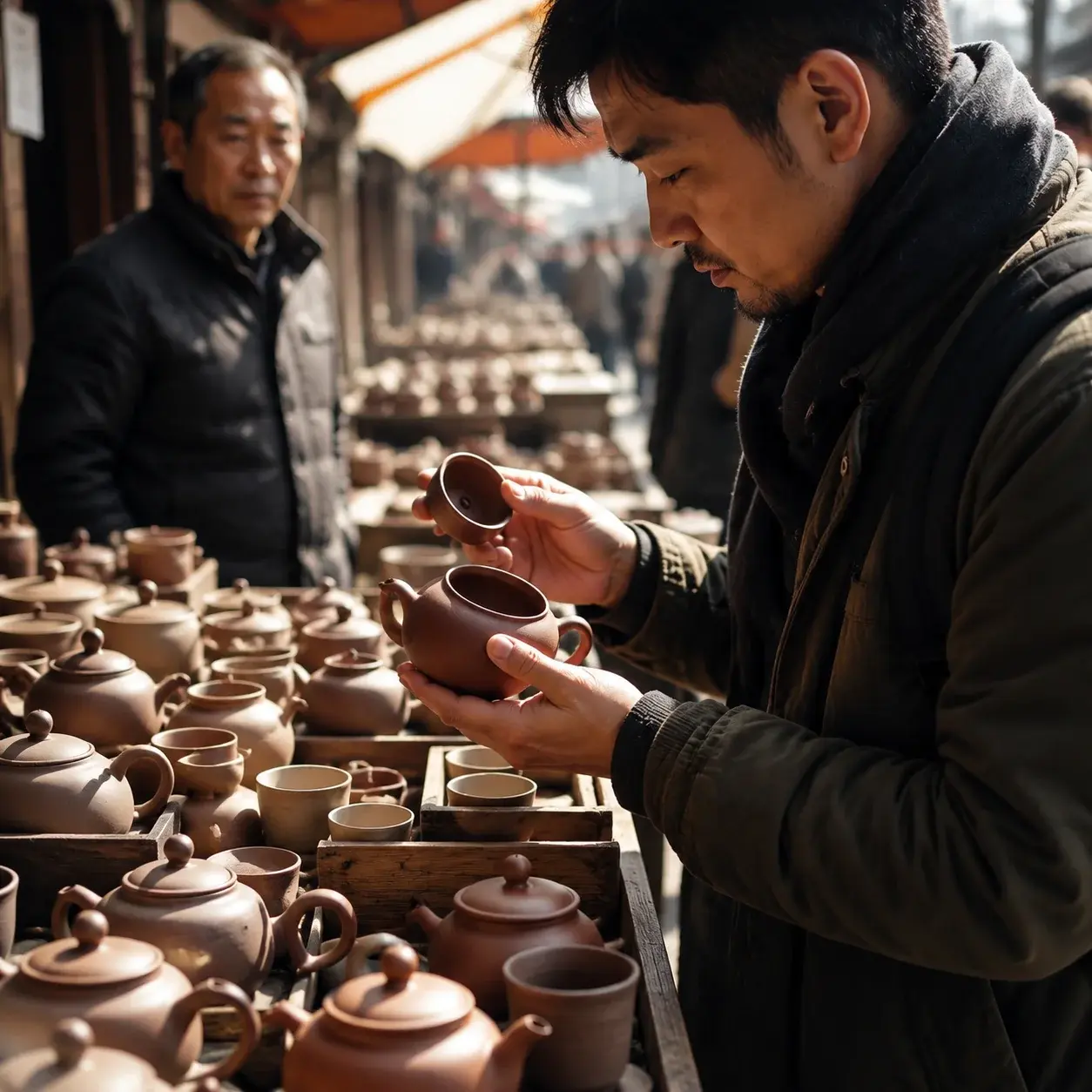
Tetera Yixing: ¿Cómo comprar una auténtica tetera Zisha en China?
Una tetera Yixing es uno de los tés más gratificantes que se pueden llevar como souvenir de China, y también de los más falsificados. La versión breve: una tetera Zisha genuina, hecha a mano con arcilla natural, tiene un precio base real; por lo tanto, una "auténtica" barata es la principal bandera roja. Realiza una evaluación rápida de cinco minutos antes de pagar, y compra directamente en Dingshu si puedes. Esta es una guía de campo para viajeros, no una tienda.
Escribimos esto porque todas las guías que encontramos sobre "cómo identificar una tetera Yixing falsa" fueron publicadas por alguien que vende teteras. Ninguna te dice cómo se siente realmente un puesto en el mercado de Dingshu, te da rangos reales de RMB, o admite cuando un precio barato es en sí mismo una estafa. Vendemos viajes a China, no cerámica — así que podemos ser honestos. Al final podrás emparejar el arcilla correcta con el té que tomas, evaluar la autenticidad de la tetera en el puesto, conocer precios justos según el tipo de arcilla, artesanía y fabricante, sazonarla correctamente y comprar con seguridad dentro de China.
Primero, una nota de honestidad: el conocimiento atemporal aquí — la física del arcilla al té, las pruebas de campo, el protocolo de sazonamiento, los hechos de herencia — es sólido. Los precios específicos en RMB y las áreas de mercado nombradas son rangos indicativos para orientarte, no cotizaciones fijas. Considera las cifras como "espera aproximadamente", confirma sobre el terreno y exige papeleo antes de gastar mucho.
Resumen clave
- Un "zisha" barato es una contradicción, no un negocio. La restricción en la extracción de mineral más el trabajo manual establecen un costo real; un té de "arcilla cruda, hecho a mano por un maestro" entre ¥80 y 150很可能是注浆成型或化学染色。
- Ajusta la arcilla al té que realmente bebes: Zhu Ni para oolongs de alto aroma, Zi Ni para pu-erh y té negro (y como opción versátil), Duan Ni para té verde, blanco y pu-erh crudo.
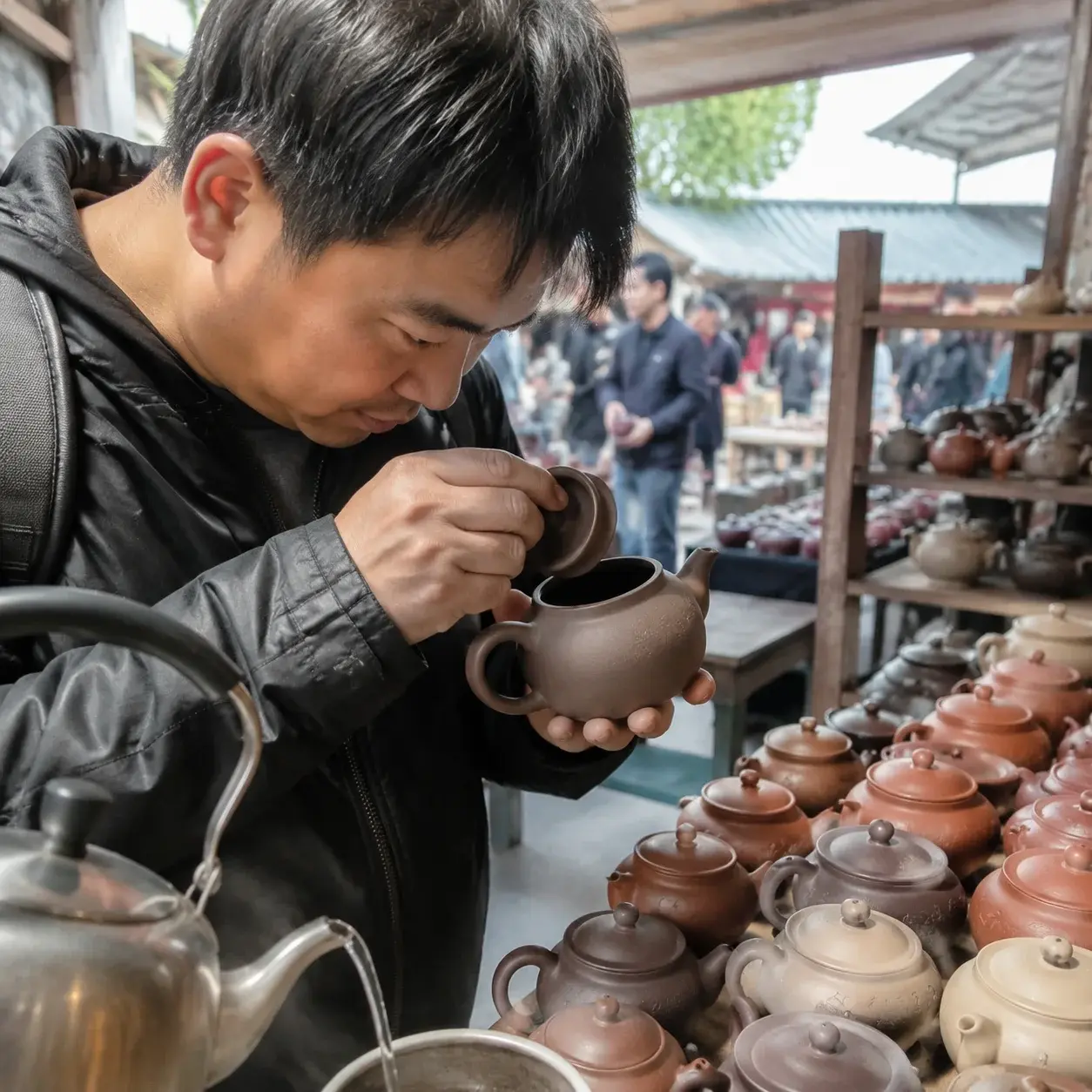
- Evalúa antes de pagar. Absorción de agua, sonido al golpear, olor, ajuste de tapa y brillo — cinco pruebas en cinco minutos. Un olor químico o de pintura con agua caliente significa dejarlo al instante.
- El precio se establece por arcilla × método de fabricación × rango del artesano. Los saltos de orden de magnitud vienen de moldeado vs. hecho a mano y del título del artesano, no del nombre de la arcilla.
- Compra en la fuente. El pueblo de Dingshu en Yixing supera a los puestos turísticos en el Jardín de Yu de Shanghai o Tianzifang siempre. ¿Sin tiempo? Compra con certificado en un mercado de té adecuado, nunca apuestes en un puesto de lugar turístico.
- Principiantes: Un Zi Ni Shipiao de 150–200 ml es la olla todo-en-uno para empezar. Evita antigüedades — la falsificación es rampant y pueden violar controles de exportación de bienes culturales.
¿Qué es una tetera Yixing, y qué significa realmente Zisha (Arcilla Púrpura)?
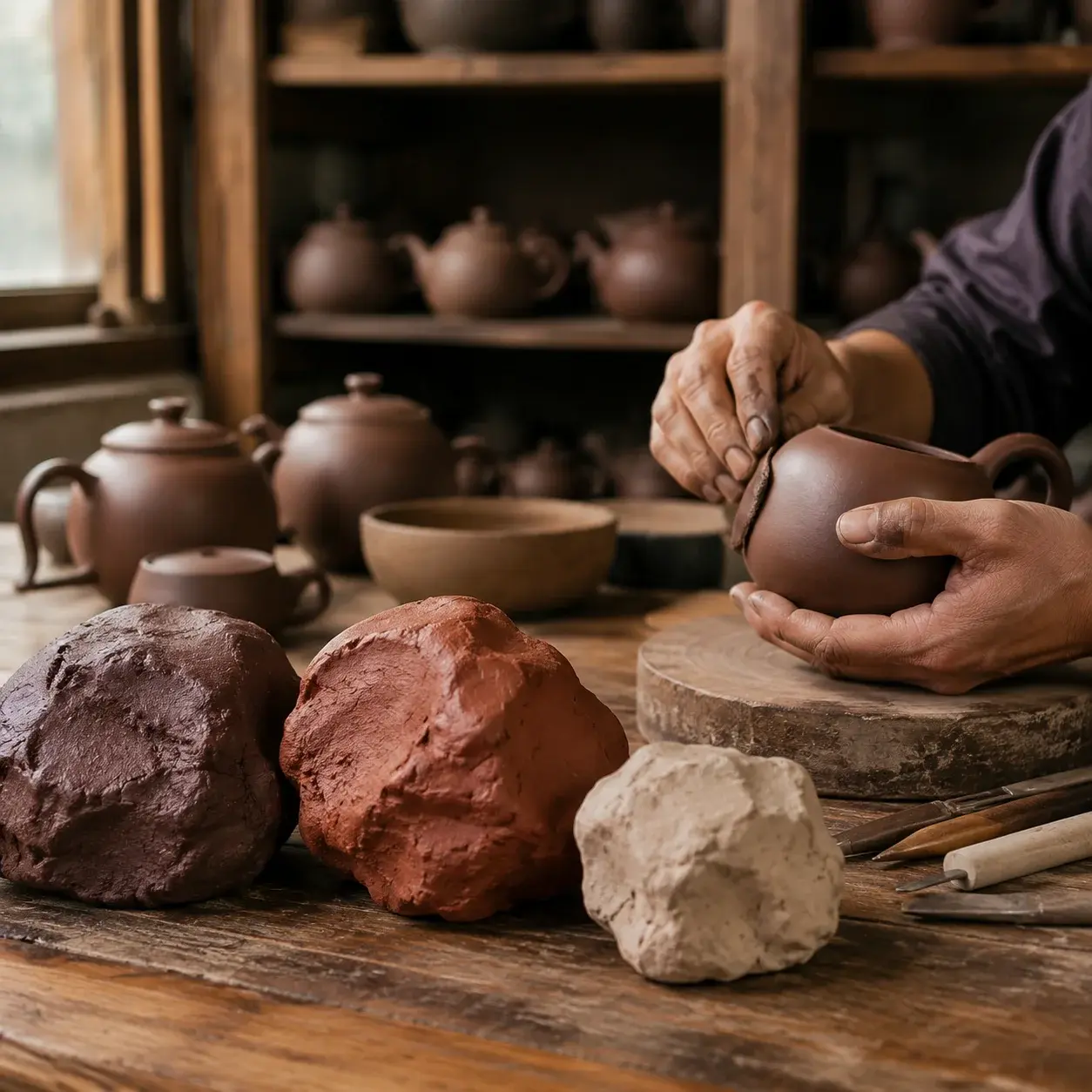
Una tetera de Yixing es una tetera sin esmalte hecha de zisha (紫砂, "arena púrpura") — una arcilla rara rica en hierro y cuarzo que solo se encuentra alrededor de Yixing en Jiangsu, China. Cocida a aproximadamente 1.200°C, mantiene una estructura "de doble poro" dura como piedra y altamente porosa, por lo que se dice que el zisha "respira", absorbe aromas y mejora el té con el uso durante años.
Esta porosidad es todo el punto. Una tetera de cerámica esmaltada está sellada e inerte; una tetera de zisha cruda tiene poros microscópicos abiertos que suavizan la aspereza, mantienen el calor uniformemente y lentamente desarrollan un patina. Este es un material que cuidas, no solo un recipiente que enjuagas.
Tres hechos hereditarios explican por qué la autenticidad — y el precio — importan aquí:
- Solo proviene de Yixing. La mina central se encuentra en el Monte Huanglong (黄龙山) del municipio de Dingshu, explotada desde la dinastía Song-Yuan, por lo que Yixing es conocida como el lugar de nacimiento del zisha. La arcilla de otros lugares no puede replicarla auténticamente. (Fuente: sitio web oficial de Wuxi; verificar + fecha antes de publicar.)
- Es patrimonio protegido. La "técnica de alfarería de Yixing Zisha" fue incluida en la primera lista de Patrimonio Cultural Inmaterial Nacional de China en 2006; la artesanía se perfeccionó durante la dinastía Ming y tiene más de 600 años de antigüedad. (Fuente: entrada ICH de Wuxi.gov.cn; verificar + fecha.)
- La mina es intencionalmente escasa. Alrededor de 2005, Yixing estableció límites a la extracción del mineral del Monte Huanglong para evitar su agotamiento. La restricción de materia prima combinada con el trabajo completamente hecho a mano es exactamente por lo que una olla genuina tiene un precio base. (Múltiples fuentes; verificar + fecha.)
💬 Opinión honesta del editor: los hechos sobre el patrimonio no son triviales. El límite de extracción de 2005 más el costo laboral hecho a mano son precisamente las razones por las que una olla de ¥100 "maestro, arcilla rara antigua" es una señal de alerta. Las cosas escasas no se venden baratas a un turista que no habla el idioma. Mantenga esta regla — rinde frutos en cada sección inferior.
¿Qué arcilla de Yixing debe comprar? La matriz arcilla-té
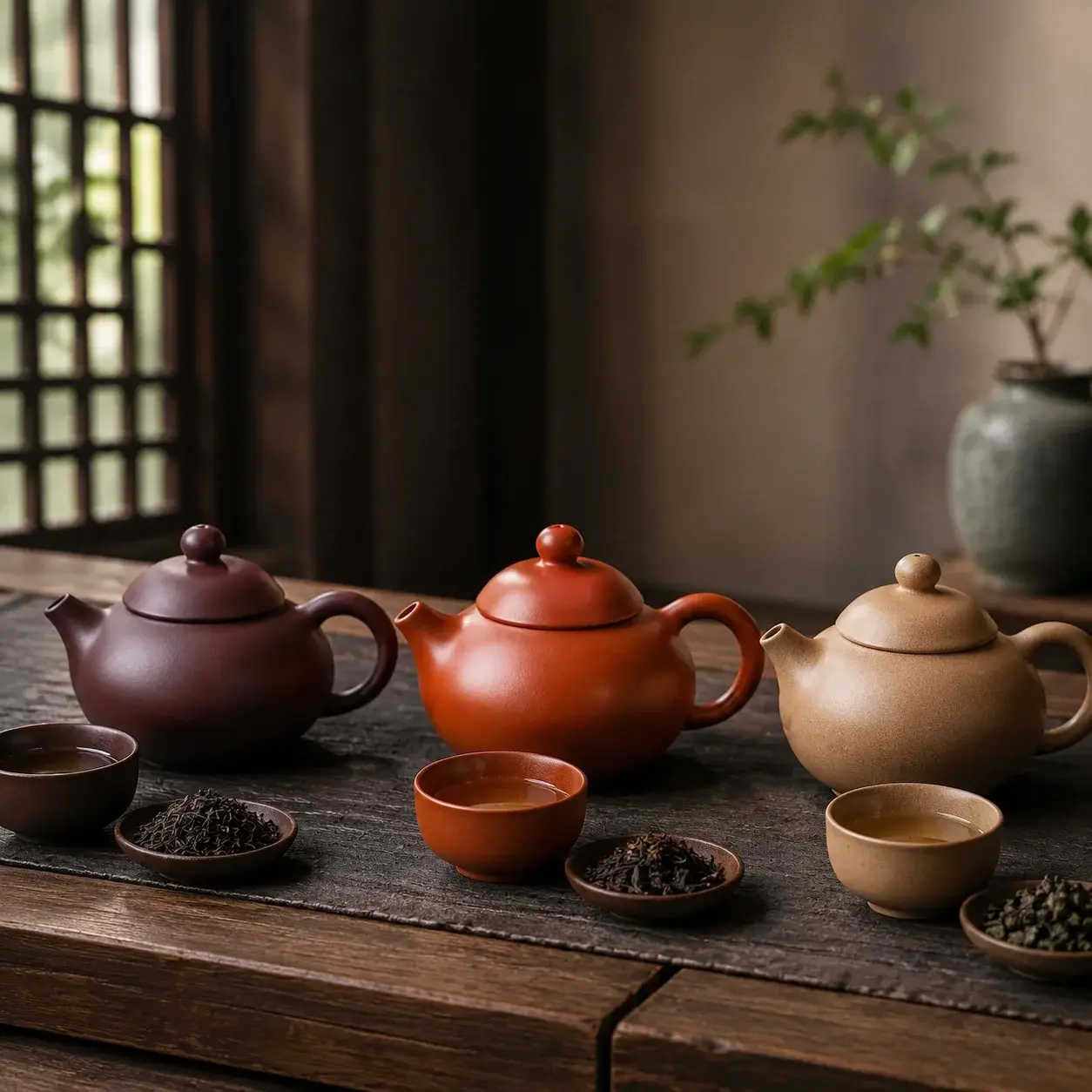
Compra la arcilla que se adapte al té que realmente bebes. La lógica es sencilla: cuanto más porosa es la arcilla, más "redondea" y suaviza el té; cuanto más densa es, más resalta y preserva los aromas delicados. La porosidad sigue el orden: Duan Ni > Zi Ni > Zhu Ni.
Las guías de la competencia te ofrecen una lista plana de nombres de arcilla. Eso es inútil en el mostrador. Aquí tienes la misma información convertida en una decisión de compra — las tres arcillas principales (junto con sus primas Hong Ni y Lü Ni), evaluadas por lo que hacen a tu té.
| Arcilla | Color | Porosidad / transpirabilidad | Retención de calor | Efecto en el té | Ideal para | Evitar para | ¿Por qué (física?) |
|---|---|---|---|---|---|---|---|
| Zhu Ni 朱泥 (incl. familia Hong Ni) | naranja a rojo oscuro; alta contracción suele dar una piel fina con "arrugas" | Mínima (densa, poros pequeños) | Alta, calienta rápido | Resalta la aromática; casi porcelánico, no "absorbe" el aroma | Tés de alto aroma: Tieguanyin, Phoenix Dan Cong, té de roca Wuyi (Da Hong Pao), té de alta montaña taiwanés, Dong Ding | Pu-erh maduro, té oscuro (el aroma se queda atrapado demasiado, se percibe fino) | Los poros pequeños absorben poco aroma; el calor intenso expulsa los compuestos aromáticos — como la porcelánica, no deja escapar el aroma delicado |
| Zi Ni 紫泥 | púrpura-marrón; el clásico todo-enuno | Media | Media-alta, estable | Suaviza y redondea; el más perdonador | Pu-erh maduro, té oscuro, oolong asado fuerte, té negro (Keemun, Dianhong); la arcilla ideal para principiantes | — (poco exigente, por eso es la arcilla "diaria") | Los poros medianos absorben un poco de aspereza sin eliminar el aroma, suavizando la intensidad de los tés cuerpo completo |
| Duan Ni 段泥 (Duan Benshan / Tuan Ni) | beige, verde-grisáceo, pálido | Máxima (arenosa, más transpirable) | Media-baja | Suaviza la astringencia, elimina notas secundarias; permite que el té "respire" | Pu-erh crudo (sheng), verde, blanco, amarillo de aroma ligero | Té de líquido oscuro (pu-erh maduro, negro — el cuerpo claro se mancha y se ve sucio con el tiempo) | La mayor porosidad = mayor "respiración", domando la astringencia verde del sheng/verde; pero el cuerpo claro absorbe el líquido oscuro y se mancha |
Cómo usar esta tabla en una línea:
- Bebe principalmente té oolong de alto aroma o té de roca → Zhu Ni (concentra el aroma).
- Bebe principalmente pu-erh maduro, té oscuro o té negro → Zi Ni (suave y perdonador).
- Bebe principalmente pu-erh crudo, té verde o té blanco → Duan Ni (transpirable, pero cuidado con las manchas).
- Comprar solo una olla para todo → Zi Ni. No lo pienses demasiado.
💬 Opinión honesta del editor: ignora la guerra de foros de años sobre "¿Puede Duan Ni preparar té verde?" La respuesta honesta: sí, pero su cuerpo claro se mancha con el té oscuro con el tiempo, así que usa Duan Ni para té verde, blanco y pu-erh crudo. ¿Quieres una olla para dominarlas todas? Zi Ni, sin debate.
¿Cómo distinguir una verdadera Yixing de una falsa? La tabla de puntuación de 5 pruebas
Puedes filtrar una olla en unos cinco minutos en el puesto con cinco pruebas — absorción de agua, sonido al golpear, olor, ajuste de la tapa y brillo — más una verificación de las "imperfecciones naturales" que debería mostrar una olla realmente cocida. Lleva una botella de agua. Puntuación sobre 10: 7 o más, compra; 4–6, regatea o duda; 3 o menos, váyete.
Este es el núcleo de confianza de la guía. Estas pruebas descartan obvias falsificaciones fundidas y teñidas con químicos; no certifican el título del fabricante. Da mayor peso a la prueba de agua — es la decisiva.
| # | Prueba | Cómo hacerlo | Zisha real (puntuación) | Falso / sospechoso (deducción) | Peso |
|---|
| 1 | Absorción de agua / "agua colgante" | Vierte agua caliente sobre la pieza, observa la película | El agua se absorbe rápidamente, no forma gotas, se vuelve mate en segundos ("bebiendo") | El agua forma gotas y se desliza, mantiene el brillo = vidriada o colada densa | 0–3 (el más importante) | 2 | Sonido | Levanta la tapa, golpéala suavemente contra la pieza o el borde | Bajo, de loza, ligeramente sordo "ke—" | Brillante, metálico o vítreo "ding" = cocida demasiado o colada/vitrificada | 0–2 | | 3 | Olor | Vierte agua caliente y huele | Tierra limpia / mineral, sin notas extrañas | Químico, pintura, plástico o perfume fuerte = arcilla teñida con químicos (salir inmediatamente) | 0–2 | | 4 | Ajuste de la tapa | Coloca y gira la tapa; cierra el orificio de aire y vierte | Tapas hechas a mano se asientan suavemente y "giran bien"; al cubrir el orificio de aire, el vertido se corta limpiamente | Se tambalea y deja escapar aire; aún gotea con el oricio cubrado = trabajo descuidado (no necesariamente falso, pero no vale el precio de la arcilla cruda) | 0–2 | | 5 | Brillo e "imperfecciones" | Mira la superficie a la luz del día | Mate, contenido, grano arenoso; imperfecciones genuinas visibles (abajo) | Brillante, como espejo, brillo plástico, color uniforme = encerado o pulido químicamente | 0–1 |
Las cuatro "imperfecciones buenas" que una verdadera tetera de arcilla debe mostrar — verlas da confianza; una tetera perfecta es sospechosa:
- Manchas blancas de mica — reflejos minerales naturales en la arcilla.
- Manchas negras de hierro (tierong 铁熔) — puntos minerales ricos en hierro que se convierten en manchas oscuras durante la cocción.
- Huecos de arena saltarina (tiaosha 跳砂) — tiny cráteres donde los granos de arena salieron durante la cocción.
- Bultos tipo baozi (包子鼓) — pequeños bultos elevados donde los granos se hincharon bajo el calor.
Estas son las huellas dactilares de una arcilla natural cocida a alta temperatura. Una superficie perfecta como un espejo, sin defectos, uniforme como plástico es casi siempre arcilla química, colada por deslizamiento o terminada por pulverización.
💬 Opinión honesta del editor: Un olor químico, de pintura o plástico en agua caliente significa dejarla inmediatamente: las teteras teñidas con químicos pueden liberar tinte con el uso repetido de agua caliente, lo cual es un riesgo para la salud, no solo una falsificación. Y "demasiado perfecto" es una bandera roja en sí mismo: un brillo de espejo y un color perfectamente uniforme indican colada por deslizamiento o arcilla química, no arcilla natural. Por eso también es imposible que una barata tetera de zisha genuina exista — una tetera vendida a ¥80–150 como "arcilla natural hecha a mano" o bien es una imitación moldeada o arcilla teñida.
¿Cuánto debería costar una verdadera tetera de Yixing? (Guía de precios en RMB)
El precio de una auténtica tetera Yixing se fija por tres cosas que puedes juzgar en el puesto: tipo de arcilla × método de fabricación (molde vs. hecho a mano) × rango del artesano. La arcilla solo influye modestamente en el precio; los saltos de orden de magnitud provienen del trabajo manual y del título del artesano. Regla básica: una tetera "de mineral crudo, totalmente hecha a mano" por menos de ¥200 casi nunca es lo que afirma.
Una fuente autorizada desglosa el precio del zisha en cinco variables — edad, arcilla, artista, estilo y método de producción (Wikipedia, "Yixing clay teapot"; verificar + fecha). Para un principiante en un mercado, reducimos eso a los tres ejes que realmente puedes evaluar:
- Arcilla: Zhu Ni, Zi Ni y Duan Ni difieren en escasez, pero la arcilla sola solo suele variar el precio entre decenas y cientos de yuanes. No es lo que crea las grandes diferencias.
- Método de fabricación: colado por desliza / molde (机制 / 灌浆) → medio hecho a mano (借模, 5–10 teteras al día) → totalmente hecho a mano (全手工, modelado con paleta de madera, a menudo una tetera al día). El método determina las horas de trabajo, y las horas de trabajo determinan el costo. Este es el eje principal del precio.
- Rango del artesano: entre las teteras totalmente hechas a mano, una de un artesano con título cuesta un orden de magnitud más que la de un taller anónimo — y los artesanos con título suelen tener primero acceso a la mejor arcilla, fusionando arcilla y artesanía en un solo precio.
Así: precio ≈ arcilla × (molde ‹ semi-manual ‹ totalmente manual) × rango del artesano. La tabla a continuación se ordena por método × artesano; el arcillo se distribuye dentro de cada nivel. Todas las cifras son rangos indicativos, pendientes de verificación en campo (fecha de colección: por verificar).
| Nivel (método × artesano) | RMB indicativo (por verificar) | Dónde | Opinión del editor |
|---|---|---|---|
| Colado por deslizar / molde, vendido como "zisha" | ¥50–200 | Tianzifang / Jardín Yu / puestos turísticos | No comprar — moldeado o teñido químicamente; "arcilla cruda hecha a mano barata" es una contradicción |
| Iniciación · semi-manual, arcilla cruda | ¥300–800 | Dingshu / mercados de té auténticos | Asistido con molde, pero con arcilla real; punto dulce para principiantes que buscan uso diario |
| Medio · totalmente manual / artesano | ¥800–3,000 | Talleres de Dingshu, con sello | Sin molde, con sello del artesano — mejor relación calidad-precio, pieza que se usa diariamente y puede heredarse |
| Alto · totalmente manual + maestro titulado | ¥3,000–20,000+ | Talleres / subastas / casas antiguas | Mismo trabajo manual, pero el título del artesano lo convierte en objeto de coleccionismo; exigir certificado de título y marca anti-falsificación |
| Antigüedad (edad acumulada) | ¥miles – cientos de miles+ | Subastas / dealers especializados | La quinta variable, la edad, al máximo; evitar por principiantes; falsificaciones profundas, y posibles controles de exportación de reliquias |
💬 Opinión honesta del editor: lee la tabla por filas, no por columnas. Cambiar arcilla dentro de una fila altera el precio ligeramente; saltar entre filas (molde → medio hecho a mano → totalmente hecho a mano → maestro titulado) es donde ocurren los saltos de orden de magnitud. Cuando un vendedor explica un precio sospechosamente alto o bajo con "arcilla antigua / mineral raro", está usando la variable barata para ocultar las dos caras caras. La bandera roja no es un precio alto, sino uno barato. Aquí lo barato no es lo opuesto a un estafa; lo barato es la señal de estafa.
¿Qué forma y tamaño de tetera Yixing deberías comprar? El selector
Tamaño según cuántas personas beban; forma según el carácter del té. Las formas bajas y cerradas concentran el aroma (excelentes para oolong de alto aroma); las formas más altas y abiertas permiten que las hojas respiren (mejor para té verde y pu-erh crudo). Para una primera tetera, una de 150–200 ml se adapta a la mayoría de las personas.
Nuestros competidores no responden "qué tamaño, qué forma." Aquí tienes ambas decisiones en tablas.
Elige capacidad según el número de bebedores:
| Bebedores | Capacidad recomendada | Nota |
|---|---|---|
| 1 (solo) | 80–130 ml | Pequeña estilo Gongfu, vierte rápido, no se estofa |
| 2–3 | 150–220 ml | El rango más universal de uso diario |
| 4–6 | 250–400 ml | Para recibir invitados |
| 6+ | 400 ml+ | Poco común; las teteras grandes son más difíciles de preparar bien |
Elige forma según el carácter del té:
| Forma | Tipo de té ideal | Por qué | |
|---|---|---|---|
| Xishi / Dragon-egg (西施 / 龙蛋) | cuerpo corto, redondo, boca cerrada | oolong de alto aroma, té roca (con Zhu Ni) | el cuerpo cerrado concentra el aroma, retiene la fragancia |
| Shipiao (石瓢) | parte superior estrecha, base ancha, estable | pu-erh, té oscuro (con Zi Ni) | amplio volumen, calor estable — el clásico todo-en-uno |
| Duoqiu / Fanggu (掇球 / 仿古) | esfera completa y redonda | pu-erh, té negro | la forma esférica favorece la convection; los téos corporulosos se benefician |
| Jinglan / Hanwa (井栏 / 汉瓦) | cuerpo más alto y recto | pu-erh crudo, té verde (con Duan Ni) | el cuerpo alto permite que las hojas se abran y respiren, reduciendo la astringencia |
💬 Opinión honesta del editor: una maceta para dominar todas es un Shipiao de Zi Ni de 150–200 ml — capacidad media, forma universal, arcilla generosa. Compra esa primero, luego añade macetas especializadas según la matriz de arcilla una vez que sepas qué bebas día a día.
¿Cómo sazonar y cuidar una tetera Yixing?
Sazona una nueva pot de zisha haciéndola suavemente en agua limpia — nunca hirviendo fuerte, nunca con detergente. Luego úsala usando una maceta por solo tipo de té, enjuagando con té caliente después de cada sesión y secándola al aire. La patina debe aparecer naturalmente con el tiempo, no con pulido diario.
Escrito para alguien que acaba de comprar una maceta en el extranjero o está a punto de hacerlo. El núcleo contraintuitivo: es un suave hervor, no un hervor fuerte; nunca jabón; una maceta, un té.
Etapa 1 — Sazonado inicial (abrir la olla):
- Enjuague por dentro y por fuera solo con agua limpia — nunca detergente ni jabón de platos, que los poros absorben permanentemente.
- Comience en frío, caliente lentamente. Coloque la olla (con la tapa separada, reposando sobre un paño para evitar golpes) en una olla con agua fría, caliéntela gradualmente, luego baja a un hervor suave durante 20–30 minutos — sin ebullición violenta. Esto calma el "fuego" del horno.
- (Opcional) Únelo a tu té. Añade un puñado del mismo té al que planeas dedicar esta olla y haz que hierva juntos 10–15 minutos, para que la olla "aprenda" su té desde el primer sorbo.
- Seca al aire en un lugar fresco. Sin sol directo, ni cambios bruscos de temperatura.
Etapa 2 — Cuidado diario de la olla:
- Una olla, un té. El Zisha "recuerda" el sabor; mezclar tés contamina y arruina la olla. Esta regla es inquebrantable.
- Después de preparar el té, vierte té caliente sobre la olla mientras aún está tibia, luego limpia con un paño de algodón en una sola dirección — con el tiempo esto crea el suave brillo de patina "baojiang".
- Nunca uses detergente ni estropajo. Solo agua y té.
- Vacía y seca al aire con la tapa abierta para prevenir moho y olores extraños.
- No pulles diariamente para un "brillo instantáneo" — una patina naturalmente desarrollada es la verdadera; un brillo forzado parece falso.
💬 Opinión honesta del editor: salte los rituales de "apertura en cuatro pasos" de tofu y caña de azúcar que aparecen en los foros. Para una olla de mineral crudo, una simple cocción con agua basta; excesos solo añaden riesgo. Y no busque un brillo rápido con un paño de pulido — es el pátina gradual lo que distingue una olla real de una falsa "brillante desde el nacimiento".
¿Dónde comprar una tetera Yixing auténtica en China?
Compra en la fuente — Dingshu Town, en Yixing — donde yace el mineral Huanglong y los precios superan a los grandes puestos turísticos de las ciudades. ¿Sin tiempo? Compre en un mercado de té certificado y revise la ficha antes de pagar. Evite los puestos de souvenirs en lugares turísticos de Shanghái y Pekín, donde el "zisha" suele ser moldeado o teñido.
Esta es la ventaja del turista inbound — ningún competidor nombra un lugar real. Puestos y tiendas específicos se marcan como requiriendo verificación de campo.
En la fuente — Dingshu Town, Yixing
Dingshu (丁蜀镇), al sureste de Yixing, es la "capital de la cerámica", y la Montaña Huanglong — origen del zisha — está justo aquí. Comprar en la fuente es el único movimiento claramente correcto: más barato y más auténtico que las tiendas turísticas de Shanghái o Pekín. Recorra los talleres y tiendas alrededor del Museo de Cerámica Yixing de China y el distrito del mercado de zisha (puestos/talleres específicos requieren verificación de campo). Pida ver la prueba de mineral crudo, el sello del artesano (marca del artista) y cualquier certificado de título; pregunte por la arcilla, si es totalmente o parcialmente hecha a mano, y la capacidad — luego aplique la ficha de cinco pruebas en el mismo lugar.
### En Shanghái y Pekín — trampas vs. legítimo
| Ciudad | 🚫 Zonas para turistas (cuidado con tiendas guiadas, stock teñido) | ✅ Relativamente legítimo |
|---|---|---|
| Shanghái | Tianzifang, Jardín del Dragón puestos de turista (la mayoría de "zisha" es moldeada o química) | Ciudades de té establecidas / mostradores reputados con certificados y sellos del fabricante |
| Pekín | Tiendas de recuerdos en entradas de lugares turísticos | Calle Maliandao — comerciantes profesionales de té |
💬 Opinión honesta del editor: Un guía o conductor que ofrezca "pasar por el taller de un maestro de camino" es una traza de comisión — macetas teñidas con químicos vendidas como mineral crudo. ¿Tiempo? Ve a la fuente en Dingshu. ¿No tienes tiempo? Compra con certificado en Maliandao o en una ciudad de té adecuada — nunca arriesgues en un puesto del Jardín del Dragón.
Comprar en línea vs. en persona, y certificados
Comprar en persona permite realizar pruebas de campo,oler el agua caliente e inspeccionar las imperfecciones — verificación que simplemente no puedes hacer a distancia. Lo que compres, por una maceta de gama media o superior, pide el sello del fabricante, un certificado de título y una marca anti-falsificación, y guárdalos con la maceta como prueba de autenticidad y valor.
¿Cómo llevar un té de Yixing a casa de forma segura?
Empaca con cuidado una olla de zisha sin esmalte — es frágil y se astilla fácilmente. Envuelve la tapa por separado (el pomo es el punto más débil), acolcha el cuerpo, rellena el hueco y llévala contigo, nunca facturada. Las ollas modernas suelen pasar sin problemas por aduanas; las antiguas pueden estar sujetas a los controles de exportación de reliquias chinas, así que los principiantes deberían comprar solo ollas nuevas.
- Empaquetado: el zisha es sin esmalte, frágil y propenso a golpes. Envuelve la tapa por separado en burbuja (el pomo es lo más frágil), acolcha bien el cuerpo y rellena el hueco interior para que las paredes no choquen. Llévala contigo — no la factures.
- Guarda el certificado y el sello junto con la olla como prueba de autenticidad y valor.
- Aduanas: una olla moderna nueva suele viajar sin problemas; declara su valor según las reglas de tu país de origen (los umbrales de EE.UU./Reino Unido/Australia/EU varían — confirma los umbrales por país antes de viajar).
- ⚠️ Ollas antiguas: pueden estar sujetas a los controles de exportación de reliquias chinas y requerir documentación. Los principiantes deberían comprar solo ollas modernas nuevas para evitar el riesgo por completo.
💬 Opinión honesta del editor: no romantices una olla "antigua". Las antiguas son una doble trampa — falsificación rampantemente extendida más posibles restricciones de exportación de reliquias. Una olla moderna certificada que tú mismo has creado es un souvenir mejor y más seguro para llevar en avión.
Nuestro consejo honesto: ¿Cuánto debería gastar realmente un principiante?
Antes de decidir cuánto gastar, decide qué tipo de comprador eres — evita la mayoría de los arrepentimientos.
- Cuánto gastar: no busques un maestro de inmediato. El punto ideal es una olla de arcilla cruda semimanufacturada de ¥300–800, o una ¥800–1,500 totalmente hecha a mano para uso diario. Empieza con una Zi Ni Shipiao de 150–200 ml para practicar el curado y el envejecimiento, luego añade especialistas según la matriz una vez que conozcas tu paladar. (Indicativo; verifica sobre el terreno.)
- Una "zisha" genuina barata es la línea roja. El arcilla restringida más el trabajo manual establecen un suelo de costo. Una olla de ¥50–150 anunciada como "arcilla cruda totalmente hecha a mano" es casi con seguridad falsa. Lo barato no es lo opuesto al fraude — es su señal.
- Advertencia de olla teñida químicamente. Color uniforme, brillo intenso y olor a químicos o pintura en agua caliente marcan una olla teñida de fábrica. Estas no solo no envejecen — la preparación repetida con agua caliente puede liberar tintes, un riesgo real para la salud. ¿Huele raro? Déjalo.
- Bebedor diario vs. coleccionista:
- Bebedor diario: confirma que la arcilla se adapta a tu té, que el ajuste es hermético y que el precio es justo. No necesitas un maestro titulado — una patina que tú mismo has creado supera una firma.
- Coleccionista: exige el certificado de título, el sello del artesano y la marca antifalsificación; ten extrema precaución con antigüedades (falsificación y controles de exportación); prefiere talleres Dingshu confiables o subastas reconocidas.
- Desconfía de las tiendas guiadas por guías. Basadas en comisiones, son el peor lugar para vender ollas teñidas como arcilla cruda. Compra en Dingshu > mercados de té especializados / Maliandao > puestos en lugares turísticos.
Preguntas frecuentes
¿Es una tetera de Yixing un buen regalo o souvenir? Sí — una auténtica tetera de zisha tiene un verdadero peso cultural como artesanía hereditaria, y es un regalo funcional que un amante del té usará durante años. Compra una tetera moderna certificada en el rango de ¥300–1,500, empareja la arcilla con el té del destinatario y evita las antigüedas frágiles para viajar.
¿Qué significa o simboliza una tetera de Yixing? Una tetera de Yixing simboliza la refinada tradición china del té y la idea de un vaso que mejora con el uso diario dedicado. Hecha de la rara arcilla zisha de Yixing y nombrada Patrimonio Cultural Inmaterial Nacional en 2006, representa paciencia, artesanía y el vínculo entre un bebedor y un té dedicado.
¿Cómo elijo una tetera de Yixing si soy principiante? Empieza con el té que bebes: la arcilla Zi Ni se adapta a casi todo, una capacidad de 150–200 ml se adapta a la mayoría de personas, y la forma Shipiao es el todo-en-uno universal. Usa la tarjeta de puntuación de cinco pruebas antes de pagar, y espera gastar ¥300–1,500 por una tetera real y utilizable.
¿Puedo obtener una tetera de Yixing personalizada o hecha a medida? Sí. Los talleres de Dingshu hacen teteras personalizadas, y muchas graban un nombre, poema o sello en la arcilla antes de la cocción. El trabajo personalizado y tallado a mano cuesta más y requiere tiempo, así que encarga temprano en tu viaje y confirma la arcilla, el sello del artesano y el certificado antes de pagar.
¿Por qué una Yixing barata es una bandera roja? Debido a que el mineral genuino está restringido a la minería y el trabajo completamente hecho a mano es lento, una verdadera maceta de zisha tiene un precio mínimo. Una maceta de ¥50–150 anunciada como "mineral genuino, maestro hecho a mano" casi siempre significa arcillo fundido o tinte químico. Aquí, un precio inusualmente bajo es la señal de estafa, no una ganga.
¿Qué arcilla Yixing es mejor para el té pu-erh? Zi Ni (arcilla morada) es la opción más segura para el pu-erh maduro, té oscuro y té negro — su porosidad media suaviza y redondea el licor. Evite el Duan Ni claro para los tés oscuros, ya que su cuerpo ligero absorbe el licor oscuro y se mancha con el tiempo. Zhu Ni es adecuado para oolongs de alto aroma.
Conclusión
Comprar bien una Yixing se reduce a dos herramientas y una regla. Use la matilla arcilla-té para comprar el té que realmente bebe, ejecute la tarjeta de cinco pruebas antes de pagar, y recuerde la regla que protege su billetera: una "zisha genuina" barata es una bandera roja, no una ganga. Compre en la fuente en Dingshu si puede, insista en un certificado para cualquier cosa de nivel medio o superior, y eleve su pacientemente — una té, sin jabón, un patina natural.
Enlaces internos
- Para un contexto más amplio, consulte nuestra guía sobre
 los mejores recuerdos para llevar de China.
 - ¿No está seguro de qué hojas combinar con su tetera? Lea nuestra guía sobre los tipos de té chino que vale la pena comprar.
- ¿Construyendo una configuración completa de infusión? Consulte cómo elegir un juego de té chino.
- ¿Enfrentando otra compra de alto riesgo de falsificación? Consulte nuestra auténtica guía de porcelana china.
- Los marcos anteriores provienen de [nuestra matriz de arcilla Yixing a té y tabla de autenticidad](./yixing-teapot-deep-dive.md), nuestra fuente de metodología de primera mano.
¿Quiere un guía que lo lleve a la fuente? LyrikTrip diseña