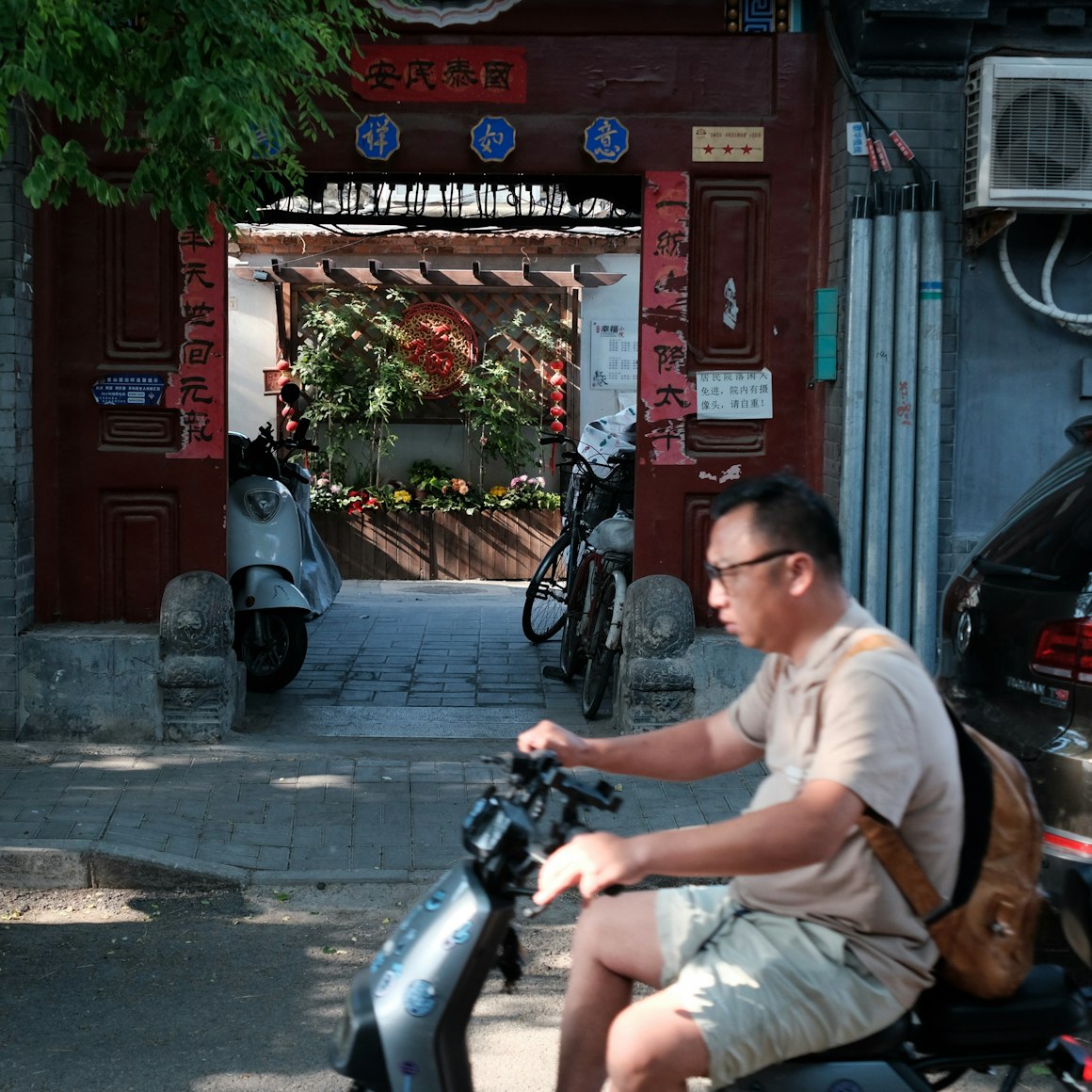





 18 días China, de principio a fin Pekín → Xi'an → Chuanzhusi → Jiuzhaigou → Chengdu → Zhangjiajie → Guilin → Yangshuo → Shenzhen Desde $6,360 Ver ruta
  8 días Agua pausada, ciudad veloz Shanghái → Yangshuo → Shenzhen Desde $2,350 Ver ruta
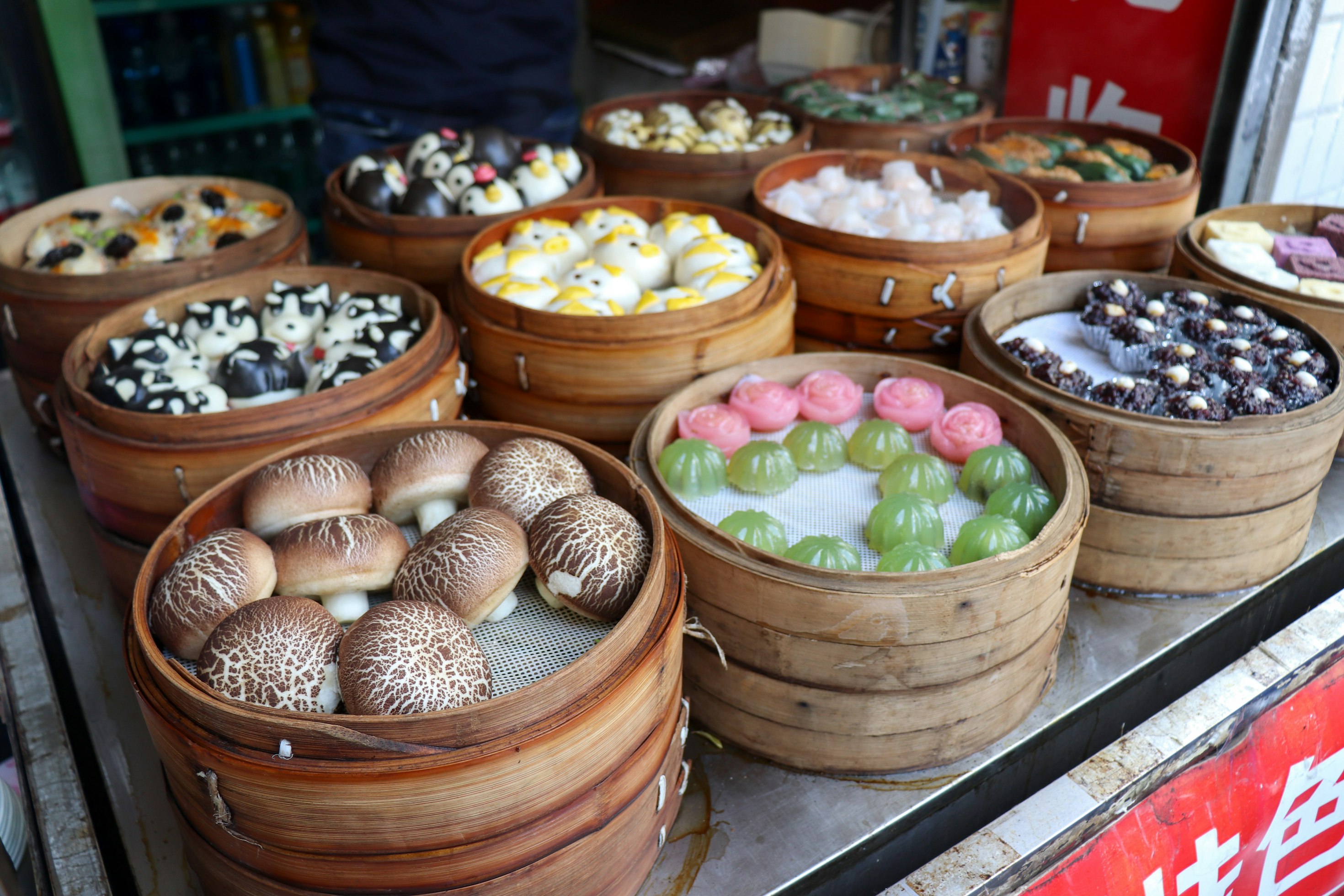
  19 días Aguas abajo del Futuro Shenzhen → Guilin → Yangshuo → Chengdu → Chongqing → Yichang → Shanghái Desde $5,360 Ver ruta
  18 días Aire enrarecido, luego nivel del mar Pekín → Xi'an → Chengdu → Lhasa → Chongqing → Yichang → Shanghái Desde $4,900 Ver ruta
 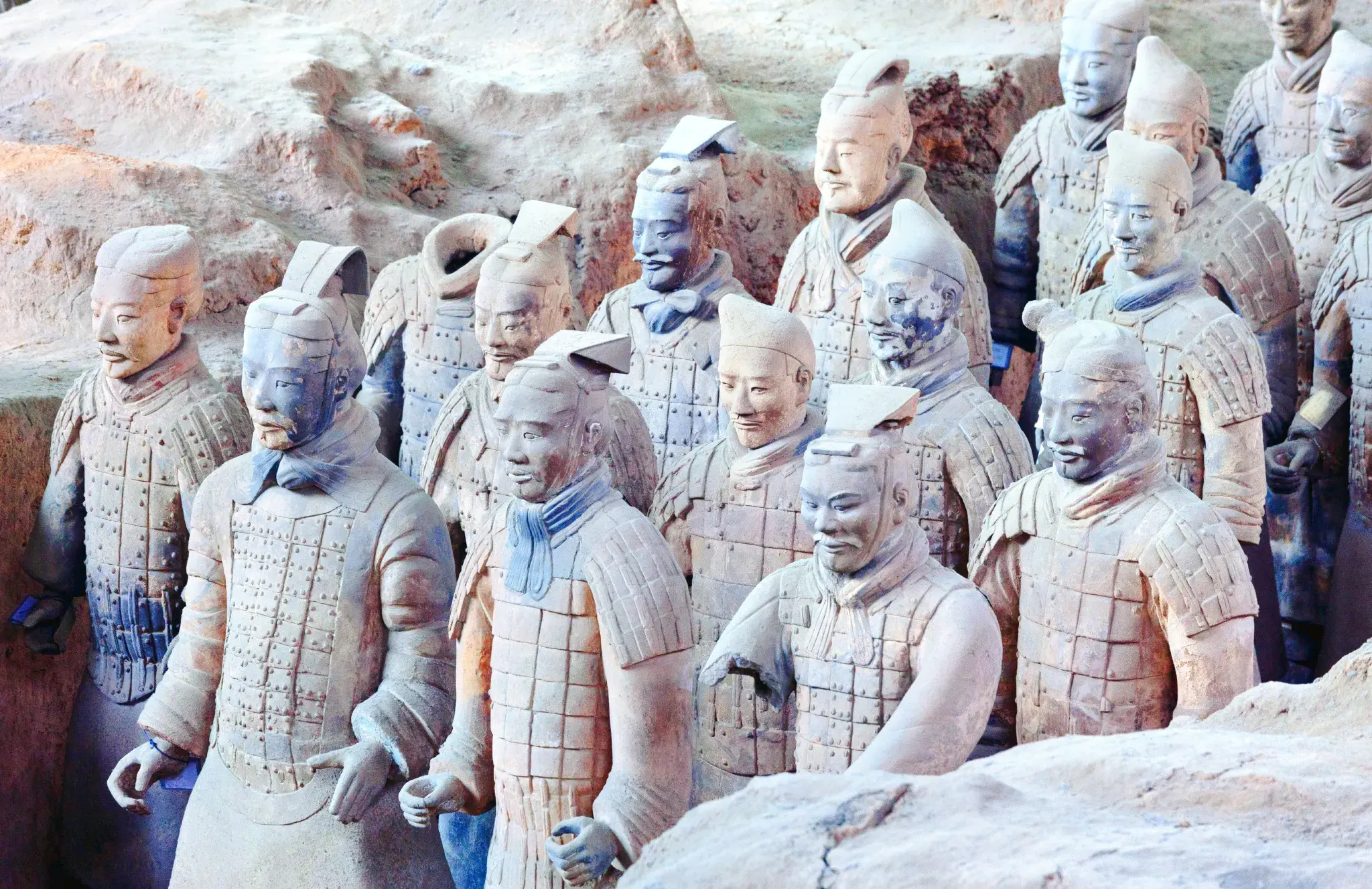 12 días Aún en uso Pekín → Xi'an → Chengdu → Shanghái Desde $4,310 Ver ruta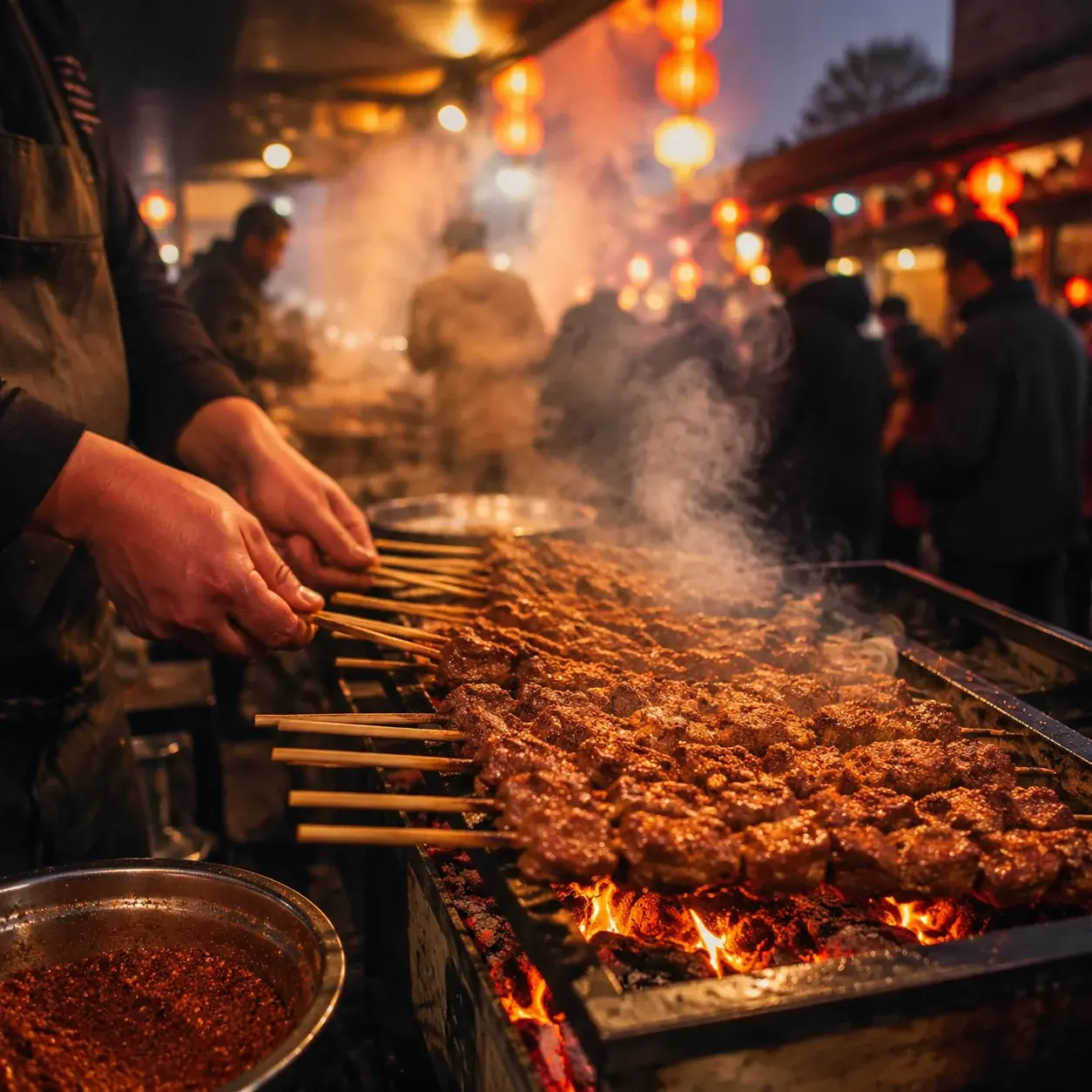
Comida callejera de Pekín: ¿Qué comer y adónde van realmente los locales?
Empieza con jianbing, brochetas de cordero y tanghulu; luego, arriésgate con baodu, luzhu y douzhi. Para la comida verdadera, evita Wangfujing Snack Street — el mejor mercado de comida callejera para locales en Pekín es Ghost Street (Guijie) a medianoche, no la tira de escorpiones al skewer hacia la que se guían a los turistas.
Somos una empresa de viajes a China, no un vendedor de puestos — no te vendemos un puesto, te decimos cuáles valen tu apetito. Esta guía de comida callejera de Pekín está escrita para un primer visitante que coma con palillos (o con las manos) por primera vez en el país, y quiere resolver tres cosas antes de salir: qué comer, qué mercado es auténtico versus una trampa, y cómo pedir sin saber ni una palabra de mandarín.
Resumen (TL;DR)
- La calle de bocadillos Wangfujing es un lugar para fotos, no para comer. Los escorpiones fritos y las estrellas de mar son un accesorio turístico que los lugareños nunca han probado. Ve por el espectáculo; come tu cena en otro lugar.
- El verdadero mercado nocturno de Beijing es la Calle Fantasma (Guijie 簋街) — una calle nocturna de ~1.5 km donde los beijingeses comen cangrejos picantes y hot pot después de medianoche.
- Empieza suave, avanza lentamente: jianbing, brochetas de cordero, tanghulu (100% éxito) → baodu y luzhu (vísceras, auténtico) → douzhi (fermentado, un gusto adquirido — pide una taza pequeña).
- Necesitas casi nada de chino: señala, di "zhège" (esto), cuenta con los dedos la cantidad, luego escanea para pagar.
- Los pagos móviles reinan la calle — incluso un carrito de jianbing quiere un código QR de WeChat/Alipay. Configura una tarjeta internacional antes de volar y lleva algo de efectivo como respaldo.
- La higiene es simple: un puesto lleno de lugareños, cocinando caliente frente a ti, supera a uno tranquilo que se ve "limpio". Bebe agua embotellada; acclímata el primer día.
Todos los precios, nombres de puestos, horarios y pasos de pago a continuación son indicativos — verifica antes de ir (ver la nota debajo de cada uno). Nombres de platos, ingredientes y cultura alimentaria son hechos atemporales, citados cuando sea relevante.
¿Es Wangfujing Snack Street una trampa para turistas — o dónde comen realmente los locales?
Respuesta corta: sí, en gran medida. La calle de "antojitos" más famosa de Pekín es la que los locales evitan. La regla general: cuanto más haya carteles en inglés y escorpos/estrellas de mar en palitos en un lugar, más está hecho para turistas; cuanto más sucio sea el puesto y más gente con mandarín espere frente a un menú sin inglés, más genuino es.
Wangfujing no es un engaño — la comida es comestible, está en el centro y las fotos son divertidas. Pero esos escopos, estrellas de mar y ciempiés fritos son una curiosidad que los pekineses realmente nunca han comido, vendidos a precios inflados en una calle renovada y ahora tranquila. Si quieres comer lo que comen los locales, está a una parada de metro.
Para hacer el intercambio visible en lugar de solo sentirlo, aquí tiene nuestra Tarjeta de Puntuación: Trampa vs Local. Cada zona se puntúa del 1 al 5 en cuatro ejes; cuanto mejor, salvo en Gimmick, donde cuanto mejor es menor.
| Área | Honradez de precios | Densidad local | Autenticidad de la comida | Truco (más bajo es mejor) | Veredicto |
|---|---|---|---|---|---|
| Calle de bocadillos Wangfujing | 2 | 1 | 2 | 5 (escorpión/estrellas de mar en los puestos de fotos) | 🔴 OMITIR — ir a ver, no a comer |
| Calle Fantasma / Guijie 簋街 | 4 | 5 | 5 | 2 | 🟢 IR — la verdadera calle nocturna: camarones picantes + fondue |
| Niujie (Barrio Musulmán) 牛街 | 5 | 5 | 5 | 1 | 🟢 IR — barrio hui halal, casi sin toque turístico |
| Calle de bocadillos Huguosi 护国寺 | 4 | 4 | 5 | 1 | 🟢 IR — muestra de bocadillos de Pekín antiguo en una fila |
| Qianmen 前门 | 3 | 2 | 3 | 3 | 🟡 ACEPTABLE — seguro, conveniente, apto para el día, no la respuesta local |
| Nanluoguxiang 南锣鼓巷 | 2 | 2 | 2 | 4 (bocadillos de influencers) | 🟡 ACEPTABLE — un encantador hutong para pasear; más moderno que auténtico |
La frase clave para un primer visitant: Wangfujing para las fotos, no para la cena; cena en Guijie, bocadillos de Pekín antiguo en Huguosi, halal en Niujie. Para la imagen completa de compras y bocadillos de esa calle, vea nuestra  guía de la calle de compras y bocadillos de Wangfujing.
¿Qué Comer en Pekín? El Decodificador de Comida Callejera
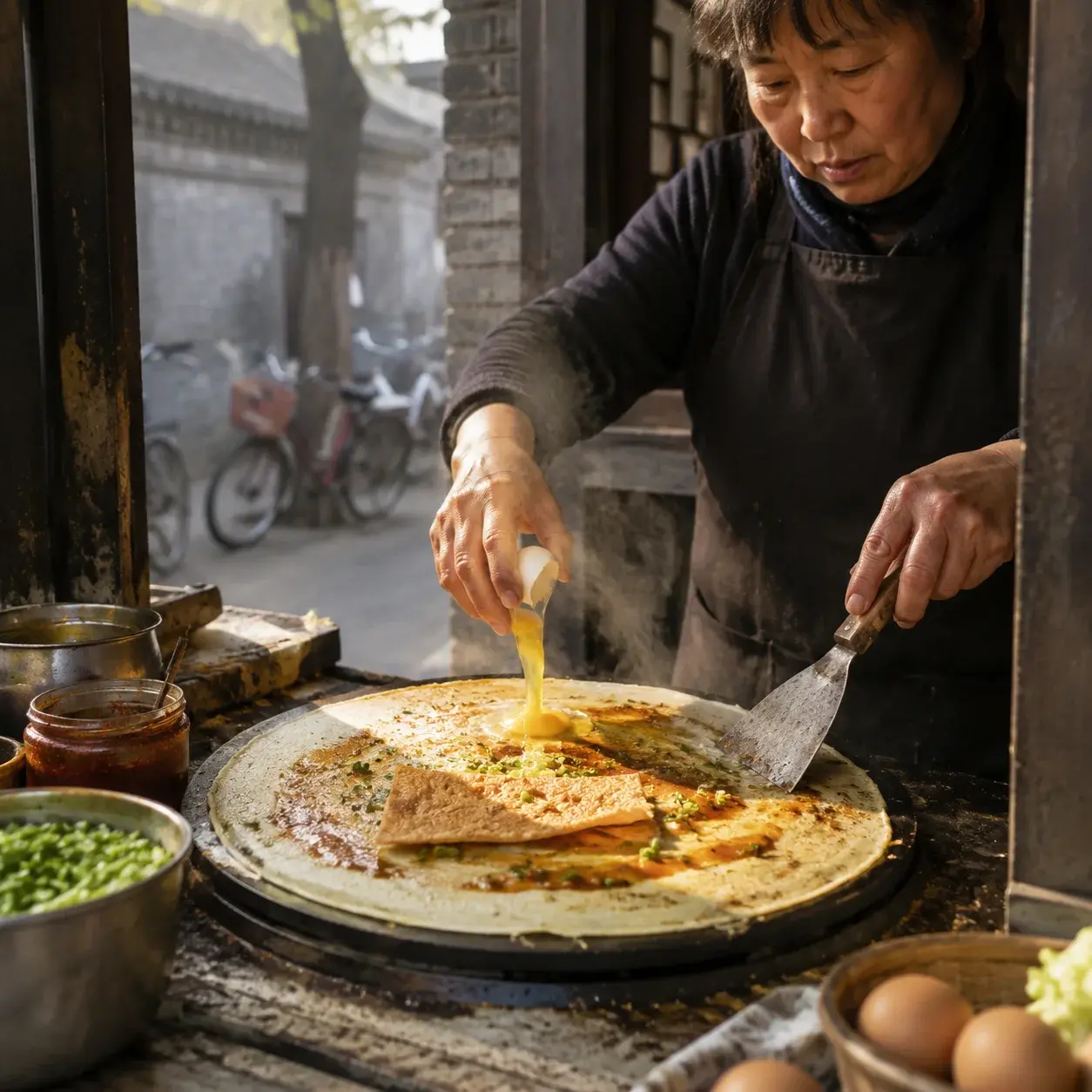
Empieza con los éxitos fáciles — jianbing (crepe salado), chuan'r (brochetas de cordero con comino) y tanghulu (hawthorn en caramelo) — luego decide qué tan aventurero te sientes. La comida callejera de Pekín va desde lo que gusta a la multitud hasta lo realmente desafiante, así que lo inteligente es leer el nivel de aventura antes de comprometerte.
Aquí está nuestro Descodificador de Comida Callejera Imperdible: cada plato acompañado de pinyin (con tonos), caracteres chinos, qué es realmente, una clasificación de aventura, un precio indicativo, dónde está la buena versión y cómo pedirlo sin mandarín. Clave de aventura: 🟢 suave (cualquiera, incluidos niños) · 🟡 moderado (sabor más atrevido, fácil de disfrutar) · 🔴 desafiante (vísceras o fermentado — un gusto adquirido; prueba primero una pequeña porción).
| Plato | Pinyin | Hanzi | Qué es | Aventura | ~RMB (indicativo) | Dónde auténtico | Pedir sin chino |
|---|---|---|---|---|---|---|---|
| Jianbing guozi | jiānbing guǒzi | 煎饼果子 | Crepa salada de sartén con huevo, crujiente, cebolla y salsa | 🟢 | ¥8–15 | Ventanas de desayuno en los Hutong | Señalar + "bú yào là" (sin chile) para niños |
| Chuan'r (brochetas de cordero) | chuànr | 串儿 | Cordero asado a la parrilla con comino, firma del mercado nocturno | 🟡 | ¥3–10 cada uno | Guijie, parrillas de mercados nocturnos | Contar con los dedos + "yángròu" |
| Tanghulu | tánghúlu | 糖葫芦 | Brocheta de hawthorn azucarada, dulce-agria, clásica fotogénica para niños | 🟢 | ¥5–15 | Qianmen, Nanluoguxiang, calles escénicas | Señalar + levantar un dedo |
| Zhajiangmian | zhájiàngmiàn | 炸酱面 | Fideos con salsa de pasta de soja fermentada y cerdo; mezclar antes de comer | 🟢 | Verificar localmente | Talleres de fideos antiguos de Pekín | Señalar en un menú con imágenes |
| Douzhi (+ jiaoquan) | dòuzhī (+ jiāoquān) | 豆汁 / 焦圈 | Brema agria de frijol mung fermentado con anillo de fritura | 🔴 Gusto adquirido | Muy barato, verificar | Huguosi, Niujie, viejas tiendas | Pedir "yì wǎn" — una taza pequeña |
| Baodu | bàodǔ | 爆肚 | Ternera/cordero salteado rápido, tripa, mojada en salsa de sésamo | 🔴 (vísceras) | Verificar localmente | Huguosi, Niujie, tiendas de tripas | Señalar; saber que son vísceras |
| Luzhu huoshao | lǔzhǔ huǒshāo | 卤煮火烧 | Vísceras de cerdo (intestino/pulmón) + pan plano estofado en caldo viejo | 🔴 (vísceras, rico) | Verificar localmente | Talleres antiguos de luzhu de Pekín | Señalar; pedir sabiendo que son vísceras |
| Aiwowo / lvdagun | àiwōwo / lǘdǎgǔn | 艾窝窝 / 驴打滚 | Dulces de arroz glutinoso (uno relleno, otro enrollado en harina de soja) | 🟢 | Verificar localmente | Huguosi, Niujie, mostradores de dulces | Señalar en el vitrina |
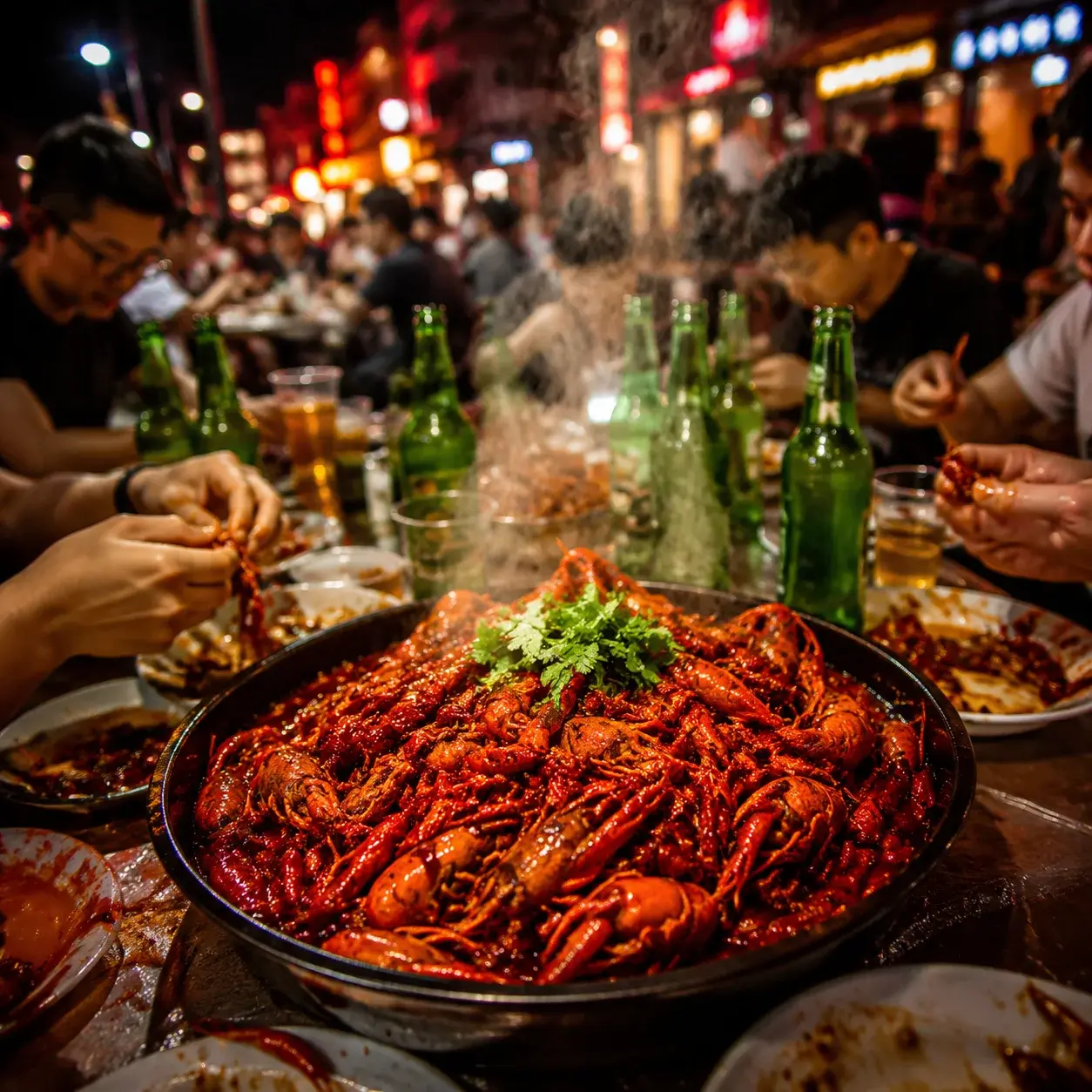
| Cangrejo picante | málà xiǎolóngxiā | 麻辣小龙虾 | Cangrejo de wok con chile, alma de verano de Guijie, pelar a mano | 🟡 (picante, manos a la obra) | ¥80–150/plato | Guijie (primera opción) | Señalar en el menú + "yì fèn" (una ración) |
| Pato Pekín (envoltura casual) | Běijīng kǎoyā | 北京烤鸭 | Envoltura de pato de calle/comida rápida vs. versión de banquete sentada | 🟢 | Verificar localmente | Mostradores de envolturas de pato | Señalar en un menú con imágenes |
*Los rangos de precios y los nombres de los puestos son indicativos — considérelos como una referencia aproximada para detectar posibles sobreprecios, no como una cotización, y verifique los precios actuales antes de ir.
Algunas notas que merecen su propia línea:*
- Jianbing es un clásico del norte con raíces que se remontan aproximadamente a dos mil años; la versión de Beijing suele usar masa de mijo y frijol mung, cocinada a pedido. Es el desayuno más fácil para que un extranjero se enamore. (Source: Cathay Pacific — The Best Street Food Dishes in Beijing, 2025-03; Trip.com — What to Eat in Beijing.)
- Douzhi, honestamente, es uno de los platos que a la mayoría de los extranjeros no les gustará. Es una bebida fermentada de frijol mung — agria y fuerte — que los viejos habitantes de Beijing consideran un ritual matutino. Trátalo como una insignia de "¿me atrevo a probar lo local?": pide una taza pequeña, emparejala con el anillo dulce de jiaoquan, y no compres un tazón grande solo para tirarlo. (Es frijol mung, no soya. Source: mybeijingchina — Food in Beijing, cruzado.)
- Luzhu y baodu son ambos desechos (intestino/pulgar de cerdo y tripa, respectivamente), ricos y profundamente auténticos — un registro de comida local clasifica al luzhu como "estilo auténtico de Pekín, quizás no para todos", datando de la dinastía Qing. Si no comes desechos, saltarlos no es un fracaso. (Source: 24 Hours Eating in Beijing — Only Local Eats.)
- Cangrejo picante es la razón para ir a Guijie a medianoche en verano — toda el descascarilla camarones sobre cerveza. Es estacional, alcanzando su punto máximo en los meses cálidos.
- Tanghulu, aiwowo y lvdagun son todos 🟢 dulces suaves — aptos para niños, fotogénicos, sin riesgo. Las apuestas seguras para la familia.
La ruta de lo superficial a lo profundo para un primerizo: comienza con jianbing, tanghulu y brochetas de cordero (seguro éxito), luego pasa a baodu y luzhu (desvíscera pero auténtica), y solo entonces intenta douzhi. Y salte las escorpiones y estrellas fritas de Wangfujing por completo — eso es un accesorio fotográfico, no comida, y caro e incómodo.
¿Cuáles de los mercados nocturnos y calles gastronómicas de Pekín realmente valen la pena?
Clasificados por lo genuina que es la comida: Ghost Street (Guijie) primero, luego Niujie y Huguosi para bocadillos locales, con Qianmen y Nanluoguxiang como agradables paseos diurnos — y Wangfujing puro espectáculo. Aquí cada uno, con una visión rápida de "mejor para" y horas que debe confirmar antes de salir.
Ghost Street / Guijie (簋街) — el mercado héroe
Una zona nocturna de aproximadamente 1.5 km llena de restaurantes de cangrejos picantes y fondas de hot pot, a la que se accede mediante Línea 5 del Metro hasta Beixinqiao (北新桥), Salida C. Aquí es donde realmente comen los beijingueses, y su punto culminante es tarde: la mayoría de los restaurantes permanecen abiertos hasta las 3 de la madrugada, algunos 24 horas (los locales suelen llegar después de medianoche, una vez que se han ido los turistas). Los platos destacados son cangrejos picantes, cangrejo, rana toro y pescado asado al estilo Wanzhou, y el gasto promedio ronda unos ¥50–100 por persona (Fuentes: travelchinaguide; Trip.com, 2026). Ideal para: una cena nocturna auténtica y animada. Los precios por plato en los puestos son indicativos — confirme sobre el terreno.
Calle de Bocadillos de Wangfujing — para ver
Céntrica, conveniente, renovada y ahora extrañamente tranquila, con puestos de fotos de escorpiones/estrellas de mar a precios elevados. Ideal para: el espectáculo y una foto. Nuestro juicio honesto: tome su foto aquí, cenar en Guijie. Si aún se venden escorpiones y a qué precio es indicativo — verifique antes de ir.
Niujie (Barrio Musulmán, 牛街) — halal y local
Un barrio musulmán Hui con cordero, buey, sésame y pasteles, y muy poca decoración turística. Está a unos 10 minutos a pie de Guang'anmennei (广安门内) en la línea 7 del metro, salida B, y es mejor entre las 2 y las 5 pm (Fuente: Trip.com, 2026). El ancla del barrio es el hot pot de vieja Pekín Jubaoyuan 聚宝源 (esperar cola larga), junto con tripas y omaso con salsa de sésame y arroz glutinoso Baiji. Ideal para: familias halal y cualquier persona que busque una comida local genuina durante el día. Las direcciones de los puestos individuales, horarios exactos y certificación halal son indicativas — verifique antes de ir. (Detalle de puestos nombrados también según China Highlights — Top Beijing Food Streets & Night Markets, 2025-11).
Calle de bocadillos Huguosi (护国寺) — el sampler de vieja Pekín
Una fila compacta en el área de Shichahai/Xicheng que funciona como un muestreo completo de bocadillos clásicos de Pekín: douzhi, jiaoquan, baodu y dulces de arroz glutinoso. Ideal para: probar el canon tradicional en una caminata. Las tiendas específicas y precios de los sets indicativos son indicativos — verifique antes de ir. (Fuente: mybeijingchina — Food in Beijing.)\n
Qianmen & Nanluoguxiang — diurnos, familiares
Ambos son paseos por hutong agradables para turistas, seguros y fáciles, mejores desde el día hasta la primera noche. Ideales para un paseo relajado con niños en lugar de una comida profundamente local. Vea nuestra guía de comida y marcas tradicionales de Qianmen y guía de bocadillos de hutong y tiendas creativas de Nanluoguxiang.
Mercado Nocturno de Donghuamen — una nota sincera
El una vez famoso mercado nocturno de escorpiones a la parrilla ha declinado o cerrado en su forma original (el interés de búsqueda ha bajado drásticamente año tras año). No planifiques tu noche en torno a él; para un verdadero mercado nocturno, ve a Guijie; para espectáculo, Wangfujing.
Para saber dónde se ubican estas calles gastronómicas dentro del panorama más amplio de compras y mercados de Pekín, consulta nuestra Guía de mercados y compras de Pekín.
¿Cuándo ir? El reloj de horarios de los mercados nocturnos de Pekín
La hora es la diferencia clave entre una experiencia trampa y una local — ve a Guijie por la noche y visita las calles de bocadillos durante el día. Los locales llegan a Ghost Street después de que se vayan los turistas, mientras que las filas de bocadillos tradicionales de Pekín siguen un ritmo de desayuno a almuerzo. Aquí está el reloj (todas las horas son indicativas — verifica antes de ir):
| Mercado | Cuándo es mejor | Pico | Nota |
|---|---|---|---|
| Guijie (Calle de los Fantasmas) | De noche hasta ~3 am (algunos 24h) | Medianoche | Línea 5, salida C de Beixinqiao; para la escena real, llega después de medianoche; la temporada de cangrejos es verano |
| Calle de Bocadillos Wangfujing | ~6–11 pm | Temprano en la noche | Solo para fotos y espectáculo; ven y sal temprano |
| Niujie (Barrio Musulmán) | 2–5 pm punto dulce | Tarde | Línea 7, salida B de Guang'anmennei; comida halal de día en el barrio, no un mercado nocturno |
| Calle de Bocadillos Huguosi | Durante el día | Mañana-mediodía | Ideal para un tazón de douzhi y jiaoquan de desayuno |
| Qianmen / Nanluoguxiang | Durante el día hasta la tarde | Tarde-anochecido | La opción familiar para caminar y comer bocadillos de día |
No sigas una guía antigua al desvanecido mercado de escorpienes de Donghuemen; para un mercado nocturno, Guijie; para el espectáculo, Wangfujing.
¿Cómo ordenar comida callejera sin hablar chino?
Realmente no necesitas mandarín: señala, di "zhège" (esto), cuenta con los dedos la cantidad y paga con escaneo — luego sigue una regla simple de higiene, el puesto concurrido es mejor que el tranquilo. Aquí está el protocolo completo para principiantes, dividido en ordenar, pagar y mantenerse saludable.
Ordenar en tres pasos (no se requiere chino)
- Señala y di "este." Señala lo que quieras — el plato terminado en la sartén o en la mesa de alguien — y di "zhège" (aproximadamente jè-guh, "este"). Alrededor del noventa por ciento de los pedidos en la calle se hacen con esto más un dedo.
- Muestra la cantidad. Levanta los dedos y di "yí ge / liǎng ge" (uno / dos). Para los espetos, simplemente cuenta con los dedos cuántos quieras.
- Pregunta el precio y paga. Di "duōshao qián?" (¿cuánto cuesta?) — el vendedor dirá un número, tocará una calculadora o mostrará la pantalla del teléfono — luego escanea para pagar. Si no puedes captar el número, pídeles que lo escriban en un teléfono o calculadora.
Alternativa: La función de foto o conversación de una traducción de aplicación maneja menús y carteles, y los puestos con menú pictórico ("túpiàn càidān") son los más sencillos — solo señala la imagen.
Lista rápida de frases:
| Quieres decir | Di | Caracteres chinos |
|---|---|---|
| Este / me llevo este | zhège | 这个 |
| ¿Cuánto cuesta? | duōshao qián | 多少钱 |
| Sin chili (para niños / no picantes) | bú yào là | 不要辣 |
| Uno / dos | yí ge / liǎng ge | 一个 / 两个 |
| Menú pictórico | túpiàn càidān | 图片菜单 |
| Gracias | xièxie | 谢谢 |
Pagando: la realidad del pago móvil
En las calles de Pekín, incluso un carrito de jianbing acepta principalmente pagos por código QR de WeChat o Alipay; el efectivo aún funciona, pero es cada vez más raro, y las tarjetas extranjeras no funcionan en los puestos. Ambas aplicaciones han abierto la vinculación de tarjetas internacionales a visitantes extranjeros en los últimos años, así que vincule su tarjeta antes de volar y lleve un poco de efectivo pequeño (¥10/¥20) como respaldo para los raros puestos que solo aceptan efectivo.
Los pasos actuales de vinculación, límites por transacción y diarios, requisitos de nombre real y reglas de montos pequeños cambian rápidamente y son indicativos — verifique el proceso actual antes de ir. Consejo práctico: no lo deje hasta que aterrice. Instale la app, vincule la tarjeta y pruebe un pago pequeño en casa, en un teléfono que pueda recibir SMS — tener problemas con la vinculación de la tarjeta la primera noche arruinará la comida.
Higiene: la regla del "puesto concurrido = puesto seguro"
La idea central: un puesto con cola de locales, que gira mesas rápido y cocina bajo pedido, supera a uno tranquilo con apariencia "limpia", porque una alta rotación significa ingredientes frescos y nada guardado toda la noche. Lea las señales:
| Señal | Bueno — comer aquí | Cambiar puestos |
|---|---|---|
| Flujo / rotación | Colas de locales, comida volando | Vacíos, ingredientes quietos |
| Hecho a pedido vs. prehecho | Asado/wok frente a ti, humeante | Montones de comida prehecha, recalentada |
| Frescura de ingredientes | Crudos ordenados, fríos o cubiertos | Carne cruda al sol a temperatura ambiente |
| Agua / hielo | Bebe agua embotellada, no bebidas con hielo sueltas | — |
| Ritmo (día uno) | Come primero la comida caliente y cocida; deja que tu estómago se adapte | No ataques lo crudo/frío o vísceras al llegar |
Una palabra sin alarmismo: La calle de Pekín es en general segura — no dejes que el cliché de "no se puede comer callejero en China" te asuste. Las reglas reales son simples: sigue la cola local, come caliente y hecho a pedido, bebe agua embotellada y ve con cuidado con las vísceras y platos fríos el primer día. Si lo haces, tu riesgo es menor que en una zona turística de muchos países.
¿Qué pasa con comer callejero en Pekín con niños y familia?
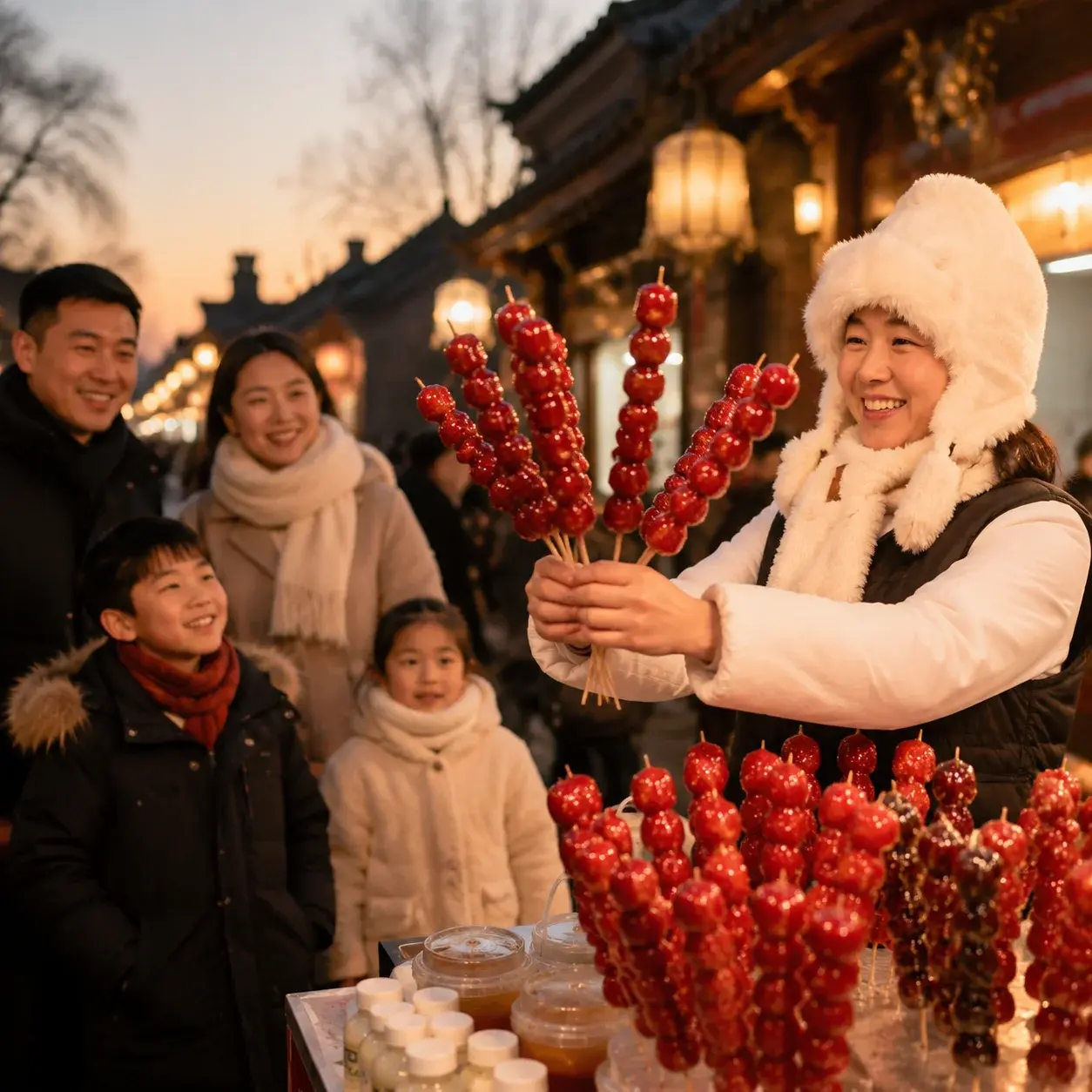
Para familias, haz un paseo temprano por los snacks del hutong y una primera comida sentada — evita la multitud medianoche y el desafío del escorpión. Nanluoguxiang o Qianmen al atardecer mejoran a Guijie a la 1 am con niños cansados. Quédate en la 🟢 ruta suave: tanghulu, jianbing sin picante (di "bú yào là"), baozi simples y los dulces aiwowo/lvdagun.
Si los adultos quieren la experiencia de Guijie, tomen asiento temprano en la noche (8–9 pm), antes de que se acumulen las multitudes de madrugada, en lugar de medianoche. Las familias halal deben dirigirse directamente a Niujie, donde el cordero, la carne de res y el hot pot son la opción predilecta del barrio. Y al pedir, si las alergias y la logística nocturna se sienten complicadas con los niños, un viaje familiar privado y personalizado a Pekín con un guía que se encargue del mandarín y del ritmo es exactamente donde desaparece el estrés.
Para alergias y necesidades dietéticas, tengan a mano esto: sin chile "bú yào là," cacahuete "huāshēng," sésamo "zhīma," marisco "hǎixiān / bèilèi," soja "dàdòu," cerdo "zhūròu."
Preguntas frecuentes
¿Qué comer en Pekín? Empiecen con jianbing (crepe salado), chuan'r (brochetas de cordero con comino) y tanghulu (caramelo de hawthorn) —todos son aciertos fáciles. Luego, si se atreven, prueben baodu (tripea), luzhu (vísceras de cerdo) y finalmente douzhi, una bebida fermentada de frijol mung que es un verdadero gusto adquirido.
¿Es Wangfujing Snack Street una trampa para turistas? En gran medida, sí. Está renovada, tranquila, y sus brochetas de escorpión y estrella son accesorios fotográficos que los locales nunca comen, a precios inflados. No es un fraude y está en el centro —pero para comida real, tomen el metro hasta Ghost Street (Guijie) y coman donde lo hagan los beijineses.
¿Cuál es la mejor comida callejera en Pekín? Para un primer visitante, el jianbing y los espetillos de cordero con comino son los más destacados, con camarones picantes en Guijie como el punto culminante del verano. Lo "mejor" se trata menos de un plato que de dónde lo comes: un local bullicioso siempre gana a uno famoso para turistas.
¿Qué comer en la Calle Fantasma (Guijie)? Los camarones picantes (málà xiǎolóngxiā) son el icono, mejores en verano y que se comen con las manos junto a cerveza, acompañados de cangrejos, ranas, pescado asado de Wanzhou, fondue china y espetillos de cordera grillada. Llega tarde —la calle alcanza su apogeo alrededor de medianoche, con la mayoría de los restaurantes abiertos hasta las 3 am (algunos 24 horas). Toma el Metro Línea 5 hasta Beixinqiao, salida C.
¿Es segura la comida callejera en Pekín? En general, sí. Elige puestos concurridos por locales, que cocinen caliente y bajo pedido; bebe agua embotellada en lugar de bebidas heladas sueltas; y acclimatate tu estómago el primer día antes de probar vísceras o platos fríos. Sigue la cola local y estarás bien.
¿A qué hora abren los mercados nocturnos de Pekín? Varía por mercado. Guijie cierra tarde —la mayoría de los restaurantes están abiertos hasta las 3 am, algunos 24 horas (Línea 5, salida C de Beixinqiao). Wangfujing es aproximadamente de 6–11 pm, mientras que Niujie (mejor de 2–5 pm) y Huguosi son comidas diurnas más que verdaderos mercados nocturnos. Confirma los horarios de cada puesto antes de ir.
La Verdad Honesta
La comida callejera de Beijing premia al viajero que come donde comen los locales, no donde se detienen los autobuses de turismo. Salte las escorpiones de Wangfujing (una foto, no una comida), pida douzhi en una taza pequeña (un desafío fermentado, no una bebida agradable) y convierta Ghost Street en su verdadero mercado nocturno. Maneje la higiene siguiendo la cola local, comiéndolo caliente, bebiendo agua embotellada y siendo suave el primer día. Si recuerda una frase, que sea el mantra de cinco verbos: señalar, decir zhège, pagar por teléfono, seguir la cola local, comerlo caliente. Haga eso, y comerá Beijing como los Beijingers: de forma segura, barata y bien. Cuando prefiera que alguien gestione los pedidos, las alergias y la logística nocturna para su familia, exactamente para eso sirve un guía de LyrikTrip.