



Private Routes
丝绸之路精华之旅:从西安到喀什10日游 10d $4,160 丝绸之路精华之旅:从西安到喀什10日游 2026年7月 Read Article 深度北京 — 长城与故宫,轻松游 4d $970 深度北京 — 长城与故宫,轻松游 2026年7月 Read Article 真实中国:12日小团探险之旅 12d $3,120 真实中国:12日小团探险之旅 2026年7月 Read Article 经典中国与云南:从北京到香格里拉和上海的18天之旅 18d $5,840 经典中国与云南:从北京到香格里拉和上海的18天之旅 2026年7月 Read Article 免签中国之旅:13天,从北京到香港 13d $3,640 免签中国之旅:13天,从北京到香港 2026年7月 Read Article
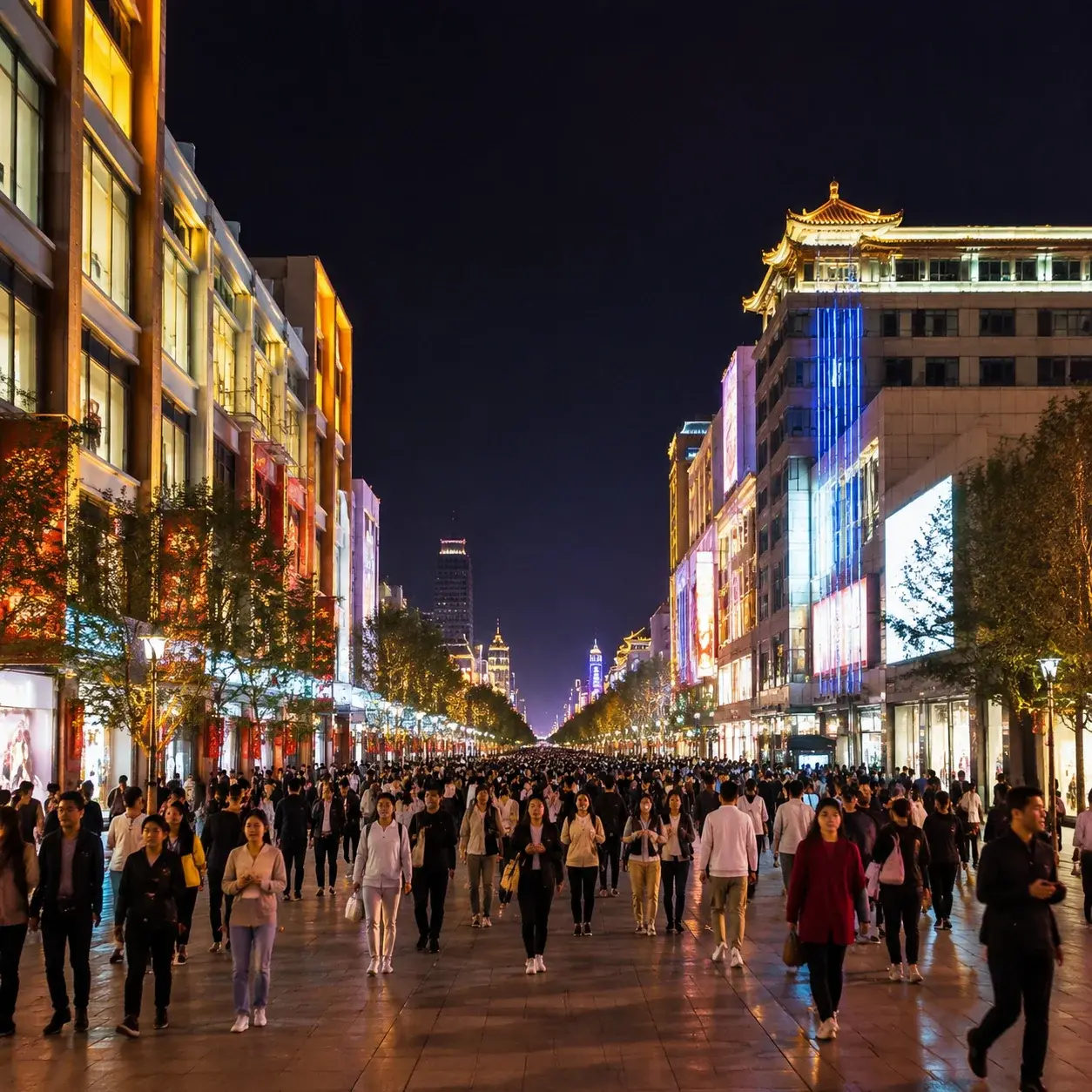
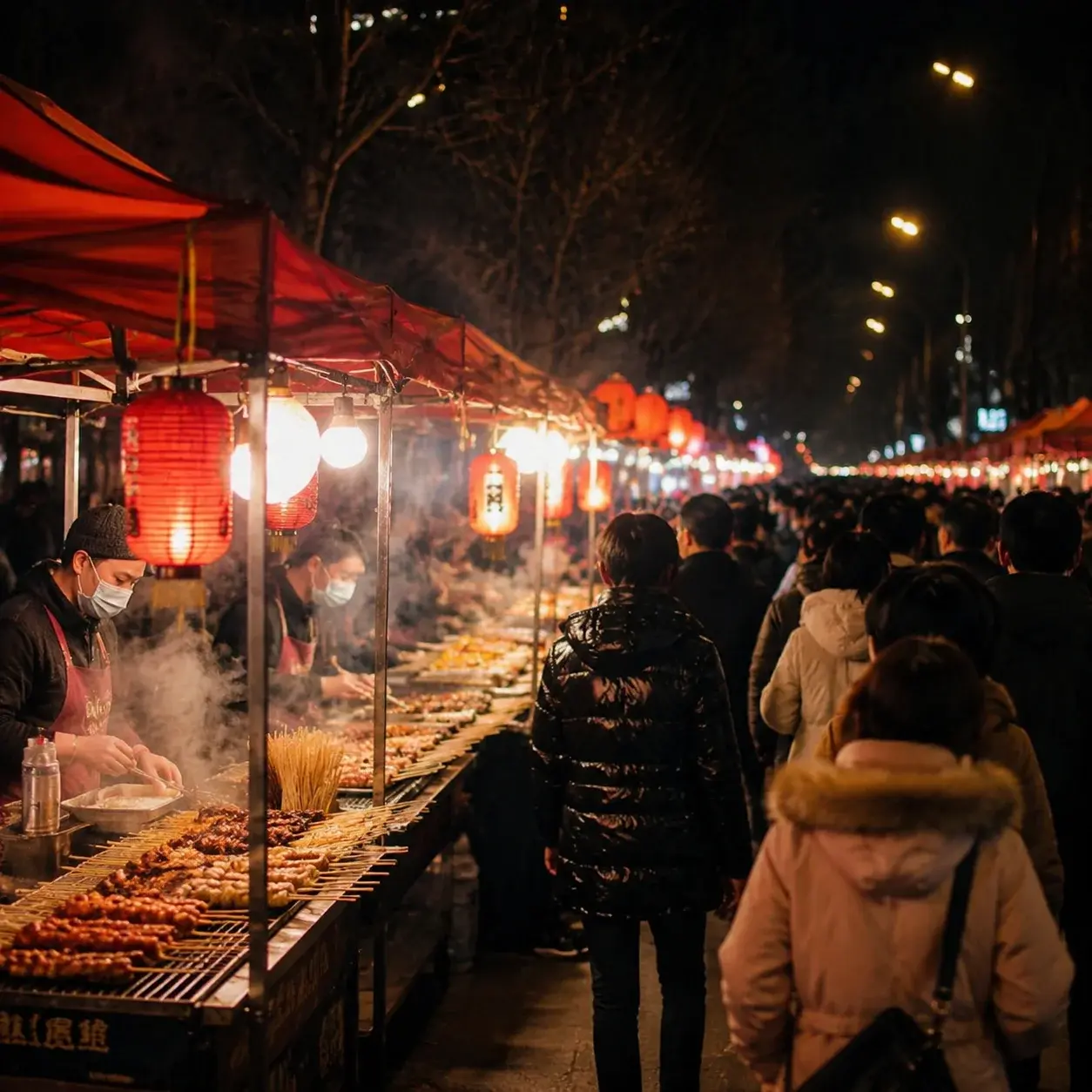
Wangfujing pedestrian shopping street glowing with neon and crowds on a Beijing evening

Is Wangfujing Worth Visiting? An Honest Guide to Beijing's Wangfujing Street and Snack Street

Wangfujing is worth about 1–2 hours if you're already near the Forbidden City — for the street atmosphere, a couple of genuine old-brand shops, and the bookstore. It is not a destination shopping trip for foreign travelers, and the Snack Street is for photos, not dinner. That's the honest verdict, up front.

We're an inbound-China travel company, not a shop trying to send you down the street. So this Wangfujing guide does what the OTA "ultimate guides" won't: it tells you plainly which parts are worth your limited Beijing time, which famous snack the locals only gawk at, and where to eat instead. You'll get four things — a worth-it-or-skip scorecard for every stop, an honest Snack Street verdict, an "eat here, not there" food router, and a route tailored to how you travel.

Key Takeaways (TL;DR)

- Give Wangfujing 1–2 hours, not a half-day. Its real value is location — a ~10-minute walk from the Forbidden City — so treat it as the tail end of your Forbidden City day. - Skip the malls. Oriental Plaza, APM, and the department stores are the same global chains you have at home, with no tax-free bargain. - The genuine draws are the pedestrian street's evening atmosphere, a few real old-brand shops (Ruifuxiang silk, Wuyutai tea, Neiliansheng cloth shoes), the Wangfujing Bookstore, and — for art lovers — the National Art Museum of China. - Wangfujing Snack Street is a tourist trap. The scorpion, seahorse, and starfish skewers are an Instagram gimmick locals don't eat; prices are marked up and weighed snacks invite a "per-gram" scale trick. - Eat elsewhere: Qianmen Street (and Xianyukou) for safe beginner street food, Guijie / Ghost Street for real late-night local food. - Ignore stale guides that still send you to the Donghuamen Night Market — it closed in 2016.

What Is Wangfujing Street? Beijing's Famous Shopping Street, Explained

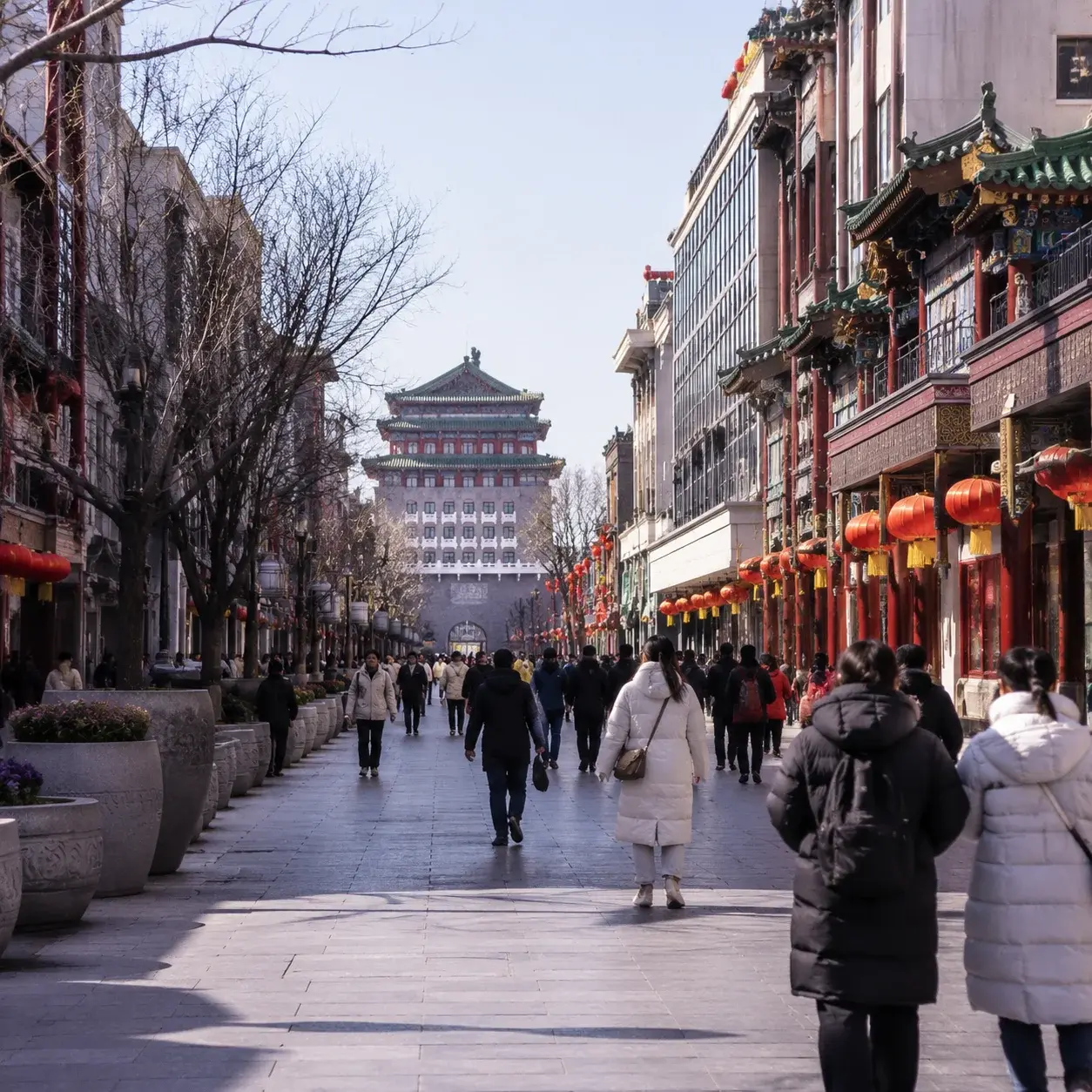
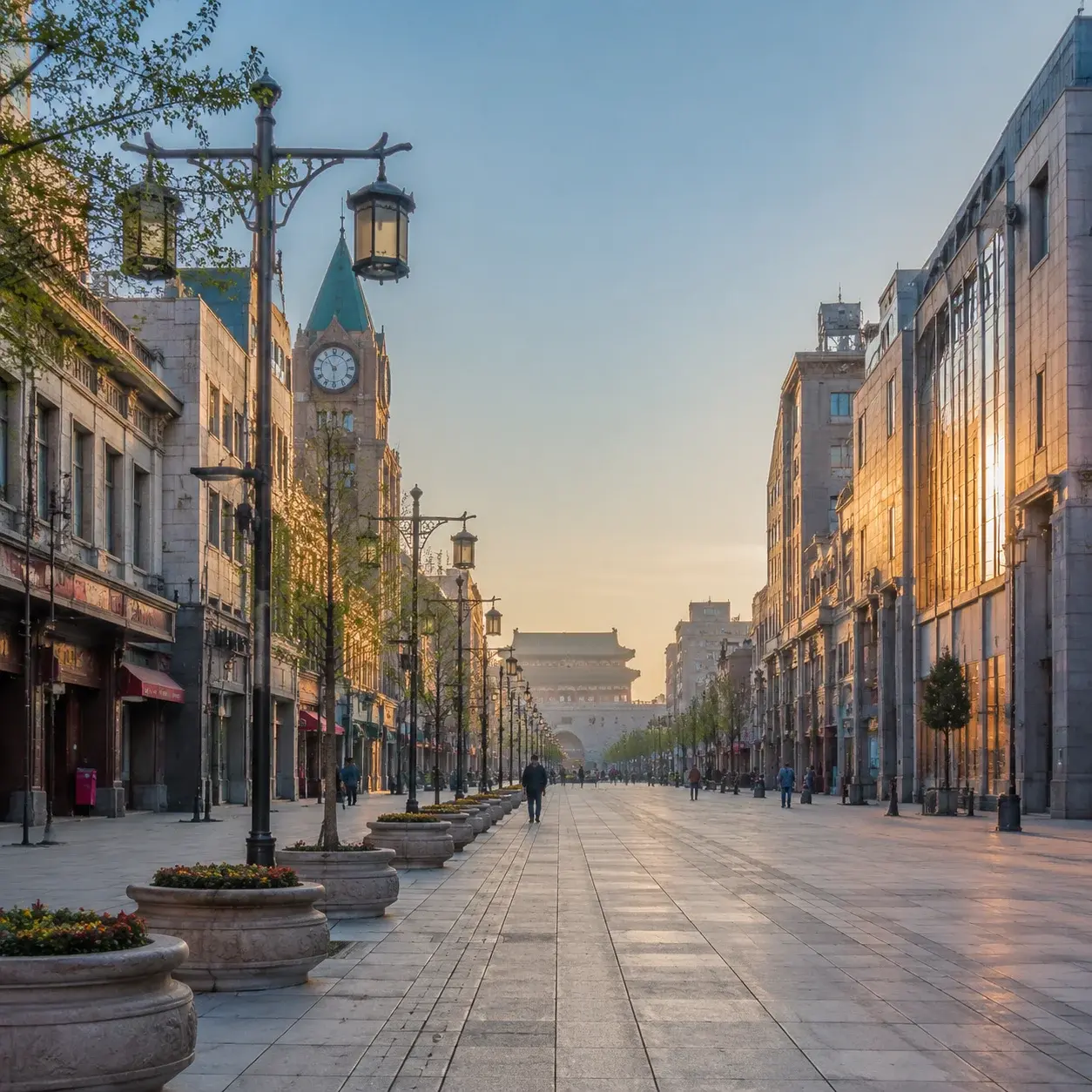
The broad car-free Wangfujing street lined with historic and modern shopfronts by day

Wangfujing Street is Beijing's best-known pedestrian shopping street — a roughly 700-year-old commercial strip that is really two things at once: a modern mall corridor and a historic run of old-Beijing brand shops, with a separate Snack Street alley off to the side. That double identity is what trips up almost every first-time visitor.

Here's the frame no glossy guide gives you. On one hand, Wangfujing is a corridor of big malls and department stores selling the same international labels you can buy anywhere. On the other, it's a historic street with genuine Chinese heritage shops — silk, tea, cloth shoes, calligraphy — plus the landmarks you'll walk past: the National Art Museum of China (中国美术馆) and St. Joseph's Church (王府井天主堂 / 东堂). Foreign travelers almost always want the second Wangfujing, not the first.

The reason it lands on every Beijing itinerary is pure geography: the main pedestrian drag sits about a 10-minute walk from the Forbidden City and Tiananmen, which is exactly why the two pair naturally into one day (National Art Museum of China; St. Joseph's Church; location facts — LyrikTrip field notes, Last verified: 2026-07, verify before you go).

Wangfujing in 30 seconds: a pedestrian-only heritage-and-shopping street next to the Forbidden City — worth a short, atmospheric detour for a few real old brands, not a dedicated shopping day.

Is Wangfujing Worth Visiting? The Worth-It-or-Skip Scorecard

Yes — but only for 1–2 hours, and only because you're already next door to the Forbidden City. The trick is that Wangfujing isn't one place; it's several places of very different value stacked together. So instead of calling the whole street "wonderful," we score each stop on four things — how crowded it is, how likely you are to get gouged, how authentic it is, and how foreigner-friendly it is — and give each a verdict and a time budget.

The three verdicts: 🟢 GO (walk in, spend time), 🟡 PHOTO-ONLY (glance, photograph, don't linger or spend), 🔴 SKIP unless (skip it barring a specific reason).

StopCrowdGouging riskAuthenticityForeigner-friendlyVerdict & timeWhy
The pedestrian street itselfHigh (worse on weekends/holidays)Low (free to walk)MediumHigh (easy, signed)🟢 GO · 30–45 minA 700-year-old street next to the Forbidden City; the evening lights and buzz are the real draw
Old-brand shops (Ruifuxiang, Wuyutai, Neiliansheng)MediumLow (fixed, marked prices)HighMedium🟢 GO · 20–40 minReal Beijing brands — silk, tea, cloth shoes; giftable, story-rich, no haggling
Wangfujing BookstoreLow–MediumNoneMediumHigh (foreign-language floors)🟢 GO for some · 20–30 minForeign-language books, stationery/souvenirs, an air-conditioned break
National Art Museum of ChinaLowNone (booking/free entry possible)HighMedium (labels mainly in Chinese)🟢 GO for art lovers · 60–90 minA national gallery within walking distance; worth it if you love art (tickets/booking indicative — verify before you go)
St. Joseph's Church (East Church)Medium (plaza is a photo spot)NoneHighHigh🟡 PHOTO-ONLY · ~10 minThe forecourt is Wangfujing's most photogenic corner; entry optional (access/mass times indicative — verify locally)
Malls (Oriental Plaza on Line 1, Beijing APM on Line 8, Wangfujing Central, Wangfujing Dept Store — China's first, opened 1955)HighLow (legit fixed prices)LowHigh🔴 SKIP unless you need a specific chain, a rainy-day refuge, or a restroom · 0–20 minSame LV/Uniqlo you have at home; not tax-free and no price advantage
Wangfujing Snack StreetVery highHigh (per-gram tricks, skewer markups)Low (tourist zone, not where locals eat)Medium (pictures readable, prices not)🟡 PHOTO-ONLY, don't eat the gimmicks · 15–20 minThe neon-and-smoke spectacle is worth one look; it's a place to photograph, not to eat (see below)
Nearby: DonghuamenLow🔴 Don't chase the old night marketThe famous Donghuamen Night Market closed in 2016; half the old guides still send you there

Editor's note: the correct use of Wangfujing is "a 1–2 hour add-on to your Forbidden City day, not a dedicated half-day." Zero minutes in the malls. You came to Beijing for the Forbidden City and the hutongs, not for a chain-store street that looks like every other one on earth.

Times above are typical, not fixed — how long each stop deserves depends on your interests, and museum, church, and mall specifics are indicative and worth a quick check before you go.

Malls vs the Street: Where You Should Actually Spend Your Time

Spend your Wangfujing time on the historic street and one or two old-brand shops; spend zero minutes in the malls. The single decision no OTA guide makes for you is malls-versus-street — and for a foreign traveler it's almost always the street.

The modern malls — Oriental Plaza (on Line 1), Beijing APM (on Line 8, Jinyu Hutong Exit B), the luxury Wangfujing Central, and the Wangfujing Department Store (China's first department store, opened 1955) — are global chains and luxury flagships (per gobeijingtravel). Honestly, they rarely justify a visitor's time: the brands are the ones you have at home, prices aren't tax-free bargains, and you'd be burning Beijing hours on shopping you could do anywhere.

The historic street and old-brand shops are the actual reason to come. This is where you find Ruifuxiang (silk), Wuyutai (tea), Neiliansheng (cloth shoes), plus calligraphy scrolls and hand-painted fans — genuine, giftable, and full of story. Prices here are fixed and marked, not haggled like a market.

Personalized routing — pick your traveler type:

You are a…How to walk itHow longDon'tEditor's one-liner
First-time sightseerFinish the Forbidden City → walk into the main street for atmosphere → photograph St. Joseph's plaza → pick one old-brand shop (Ruifuxiang / Neiliansheng) → end with a Snack Street photo1–1.5 h, tacked onto your Forbidden City dayEnter the malls; eat a real meal on the Snack Street; block a half-day for itTreat it as the Forbidden City's atmospheric encore, not the main course
ShopperTarget-driven: old-brand souvenirs → heritage shops; global brands / rain shelter → Oriental Plaza; foreign books / stationery → Wangfujing Bookstore1–2 h, depending on your goalExpect duty-free or below-airport prices; try to haggle (shops are fixed-price)Want a "taste of China"? Old brands. Want chains? Save the time
FoodiePhotograph the Snack Street only → walk out to Qianmen / Xianyukou to snack safely, or taxi to Guijie at nightHalf a day (incl. a Guijie dinner)Eat a full meal on the Snack Street; fall for the "per-gram" pitchThe flavor you want isn't on the Snack Street — it's around it (see the router below)

Our honest take: if you have one hour, spend zero minutes in the malls — walk the street, hit one or two old-brand shops, and move on to the Forbidden City.

Is Wangfujing Snack Street Worth It? An Honest Verdict

Glowing red-canopied food stalls and drifting smoke on Wangfujing Snack Street at night

Wangfujing Snack Street is firm tourist territory — go once for the neon-and-smoke spectacle, not for the food. The scorpion, seahorse, starfish, and fried-grasshopper skewers are an Instagram gimmick locals only gawk at; don't expect to find many Beijing residents eating here, and per-gram scale tricks routinely overcharge foreigners (afar.com, insightguides.com; Last verified: 2026-07, verify locally). We keep covering it because everyone searches it — but the honest answer to "is it worth it" is: as a 15-minute photo walk, yes; as a meal, no.

What's actually a gimmick

The "weird skewers" — scorpion, seahorse, starfish, fried grasshopper, fried tripe — exist for photos, not flavor. A scorpion-on-a-stick is a rite-of-passage snapshot, not Beijing cuisine. If you want the picture, pay once and treat it as a photo fee — don't treat it as dinner, and don't let it be marked up as some rare delicacy.

What's genuinely OK

Walk past the creepy display tables and look for where actual people are eating. Reports describe roughly 250–500 stalls, including a second-floor Halal/Muslim food section, so not everything is a gimmick (afar.com; Last verified: 2026-07, indicative — verify locally). The rule that protects you: confirm the price before you take the skewer, and pay small, cash-visible amounts.

Fair-price reality check

Prices here run above what the same snack costs off the street, but exact numbers move, so treat the ranges below as indicative and verify before you go.

ItemTypical tourist / marked-up rangeFair mental price🚩 Red flag / pitch
Scorpion skewerClearly inflated (verify current figure)Pay once as a "photo fee"Price quoted only after it's in your hand — confirm price first
Lamb / regular meat skewerA tier above off-street vendorsCompare to Qianmen or a street-side stallVague "one bunch" pricing that's actually charged per stick
Weighed snacks (fruit cups, roasted nuts)The "per-gram" trap — low unit price, shocking totalAsk "how much per portion?" before buying⚠️ Watch the per-gram scale trick — the classic gouge
Fresh juice / yogurt drinksTourist-zone markup (verify)Compare to a convenience store off-streetNone major

Reported scam — verify locally: In tourist-dense areas around Wangfujing and the Forbidden City, travelers have long reported an "art-student" tea-ceremony / gallery scam — a friendly "student" invites you to a "free art show" or a "traditional tea ceremony," then produces an outrageous bill at the end. The simple defense: politely decline strangers who invite you to see art or drink tea, and don't sit down or step into a private room. We present this as a reported pattern, not a certainty — verify the current situation locally.

On stale guides: the once-famous Donghuamen Night Market closed in 2016. Ignore any guide still sending you there for skewers (see sources; Last verified: 2026-07).

Better Beijing Food Nearby: The "Eat Here, Not There" Router

The best food move near Wangfujing is to walk out of the Snack Street. Photograph the spectacle, then eat where Beijingers actually eat. Here's how to route yourself by craving.

Your craving❌ On the Snack Street✅ Where to eat insteadWhy
New to street food; want to try things safelyPer-gram gouging, skewer markups, language trapsQianmen Street (and Xianyukou 鲜鱼口 next door)Safest for beginners: clean, huge selection, slightly higher but transparent prices; Xianyukou hides more authentic snacks
Real late-night local foodSnack Street closes early and isn't local flavor anywayGuijie / Ghost Street (簋街)Open until roughly 4 a.m. — Beijing's real late-night food street, famous for mala crayfish (麻辣小龙虾)
Just want the "I ate a scorpion in China" photo✅ This one thing the Snack Street genuinely deliversTake the photo here, then leaveThe scorpion skewer is a prop — pay once for the picture, don't make it a meal

Sources for the eat-instead routing: trip.com "Top Streets for Street Eating" (Last verified: 2026-07, verify current hours locally).

Three-street one-liner map:

- Wangfujing Snack Street = spectacle and photos, not a meal — 15 minutes. - Qianmen Street (+ Xianyukou) = the safest way to actually snack — clean, generous portions, transparent prices. - Guijie / Ghost Street = where locals eat late — open into the small hours, the crayfish capital.

Our honest take: the Snack Street is worth 15 minutes of your eyes, not one meal in your stomach. Want safe? Walk to Qianmen or Xianyukou. Want the real thing? Taxi to Guijie and order a tray of mala crayfish — that's the taste of the city.

What to Buy in Wangfujing: Genuine Souvenirs vs Skip-It

Buy from the genuine old-brand shops; skip the mass-produced street "jade" and marked-up trinkets. Wangfujing's shopping value is narrow but real — a few heritage stores worth a stop, and a lot you can safely ignore.

✅ Genuine buys❌ Skip
Silk from Ruifuxiang — a heritage silk nameMass-produced "jade" trinkets sold on the street
Tea from Wuyutai — a classic Beijing tea houseMarked-up souvenir tat and generic magnets
Cloth shoes from Neiliansheng — traditional handmade footwear"Antique" curios of unverifiable provenance
Calligraphy scrolls / hand-painted fans — giftable, story-richAnything a stranger pressures you to buy after a "tea ceremony"
Foreign-language books & stationery from the Wangfujing BookstoreChain-store goods you can buy at home

Shops here are fixed-price — don't try to haggle the way you would at a market. If you're planning serious souvenir shopping or want to know how to avoid fakes, our silk and buyer-protection reads go deeper; see the Silk Market Beijing guide and the Beijing markets and shopping guide.

How to Get to Wangfujing (and When to Go)

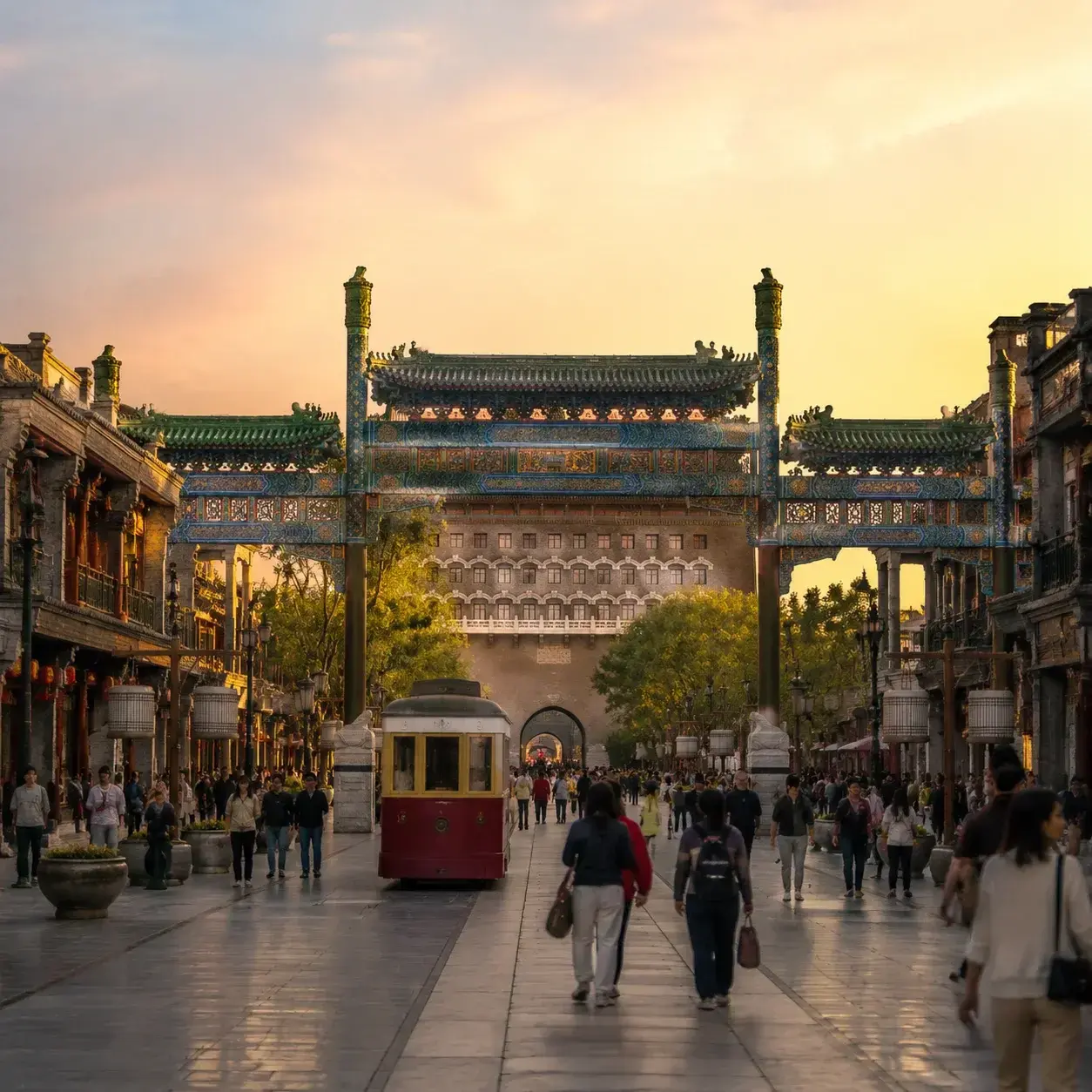
The Wangfujing pedestrian street entrance in soft, uncrowded morning light

Take Metro Line 1 to Wangfujing Station (Exit A) and you'll surface right at the pedestrian street; or simply walk about 10 minutes from the Forbidden City / Tiananmen. That walkability is the whole reason to pair Wangfujing with the Forbidden City in a single day.

- By metro: Line 1 to Wangfujing Station, Exit A brings you out right at the pedestrian street; Line 8 also serves the area (per travelchinaguide / gobeijingtravel). - On foot: roughly a 10-minute walk from the Forbidden City / Tiananmen, which is why they belong on the same day. - Layout: the main drag is pedestrian-only, so there's no traffic to dodge. - Best time to go: a weekday morning is best for photos and space; the evening lights are the signature look but bring the biggest crowds — avoid weekend and public-holiday crush. - Hours: the street is open all day; Snack Street, malls, the museum, and the church keep their own schedules (all indicative — verify current hours before you go).

Frequently Asked Questions

Is Wangfujing Snack Street worth it?

Worth a 15-minute photo walk for the neon-and-smoke spectacle, not a meal. The scorpion and starfish skewers are a gimmick locals don't eat, and prices are marked up. Photograph it, then walk out to Qianmen or Guijie to actually eat.

What should I buy in Wangfujing?

Stick to genuine old-brand shops: silk from Ruifuxiang, tea from Wuyutai, cloth shoes from Neiliansheng, plus calligraphy scrolls and foreign-language books from the Wangfujing Bookstore. Skip the street "jade" and marked-up trinkets. Shops are fixed-price, so no haggling.

What food is Wangfujing known for?

By reputation, the shock-value Snack Street skewers — scorpion, seahorse, starfish — but those are for photos, not flavor. For real Beijing food, head to nearby Qianmen Street and Xianyukou, or Guijie / Ghost Street for late-night mala crayfish.

Is Wangfujing good for shopping?

For global chains and malls, no — they're the same brands you have at home with no tax-free bargain. For a few genuine Chinese heritage shops and giftable souvenirs, yes. Give the malls zero minutes and the old-brand street 20–40 minutes.

How do I get to Wangfujing?

Metro Line 1 to Wangfujing Station puts you at the pedestrian street, or walk about 10 minutes from the Forbidden City / Tiananmen. The main street is pedestrian-only. Go on a weekday morning for photos; expect crowds in the evening and on weekends.

How long should I spend at Wangfujing?

About 1–2 hours, tacked onto your Forbidden City day — not a dedicated half-day. Walk the street, visit one or two old-brand shops and maybe the bookstore, photograph the Snack Street, and skip the malls entirely.

The Honest Bottom Line

Wangfujing is worth a short, atmospheric detour — 1–2 hours on the way out of the Forbidden City for the evening street life, a couple of genuine old-brand shops, and the bookstore. It is not a shopping destination, the malls are a waste of your Beijing time, and the Snack Street is a photo op, not a meal. Get your scorpion snapshot if you must, then walk out to Qianmen, Xianyukou, or Guijie for food that locals actually eat. Do that, and you get the good of Wangfujing without spending a half-day — or getting gouged — on the parts that aren't worth it.

Treat this as your starting read, and check current prices, hours, and access on the ground before you go. If you'd rather have a local who already knows which stalls to skip and which shops are the real thing, that's exactly what we do — see our Beijing street food guide and the Qianmen Street guide to plan the food half of your day, or talk to us about a private-customized Beijing trip that routes you straight to what's worth your time.