



Private Routes
丝绸之路精华之旅:从西安到喀什10日游 10d $4,160 丝绸之路精华之旅:从西安到喀什10日游 2026年7月 Read Article 深度北京 — 长城与故宫,轻松游 4d $970 深度北京 — 长城与故宫,轻松游 2026年7月 Read Article 真实中国:12日小团探险之旅 12d $3,120 真实中国:12日小团探险之旅 2026年7月 Read Article 经典中国与云南:从北京到香格里拉和上海的18天之旅 18d $5,840 经典中国与云南:从北京到香格里拉和上海的18天之旅 2026年7月 Read Article 免签中国之旅:13天,从北京到香港 13d $3,640 免签中国之旅:13天,从北京到香港 2026年7月 Read Article
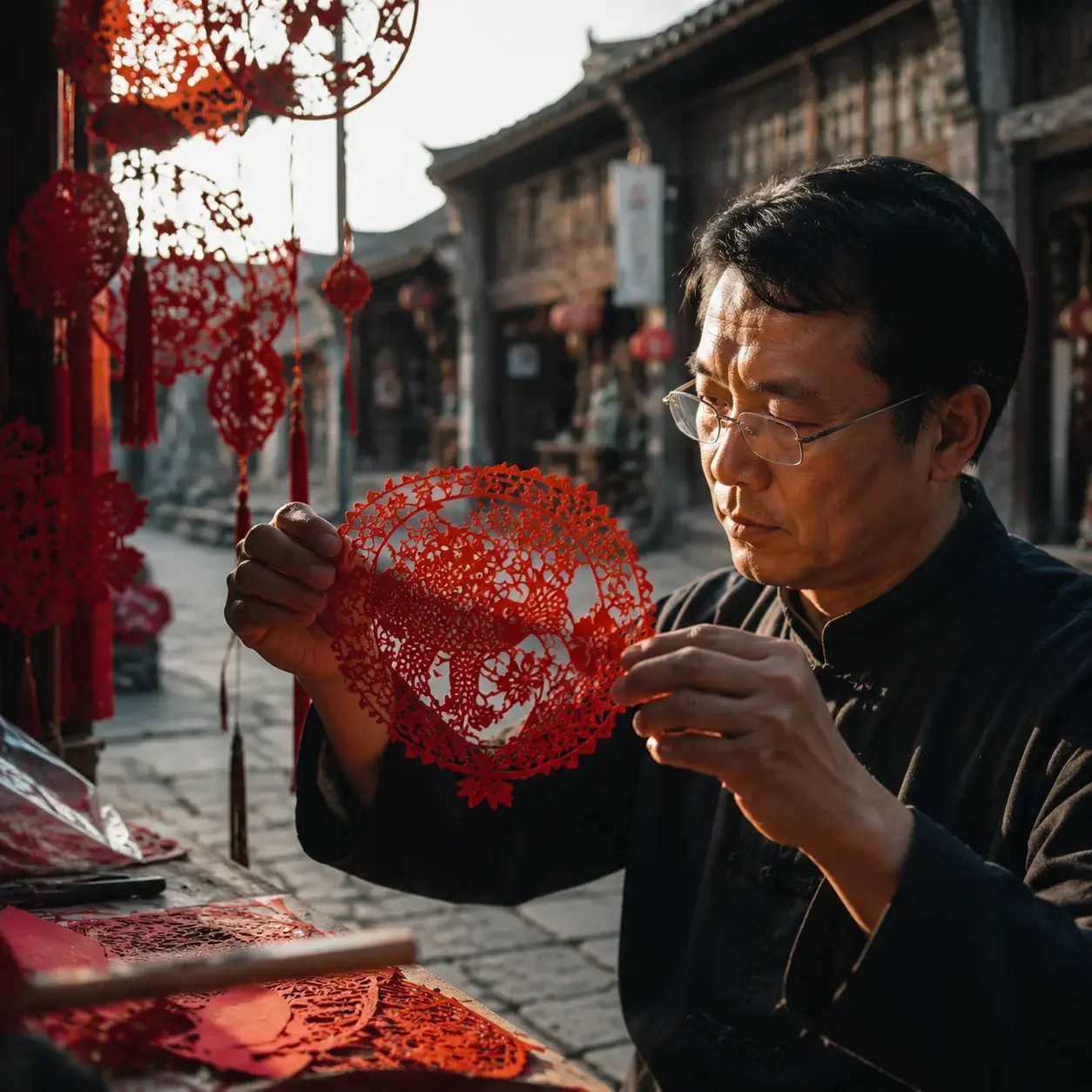
An artisan in a historic Chinese market holding a delicate handmade red paper-cut design.

What Is Chinese Paper Cutting, and How Do You Buy an Authentic Piece in China?

Chinese paper cutting (jianzhi, 剪纸) is a UNESCO-listed folk art of scissor- or knife-cut symbolic designs — and the lightest, flattest, most meaningful souvenir you can carry out of China. Buy handmade (not laser-cut) from named artisan stalls in Pingyao, Xi'an, or Beijing; expect ¥20–300 for good hand-cut work; match the motif to who's receiving it.

We're a China travel company, not a paper-cutting shop, so this guide has no product to sell you — just an honest playbook for buying well. Of all the things you can bring home, a hand-cut piece of red paper wins on every practical axis: it costs a few dollars done right, weighs nothing, packs perfectly flat, won't break in a suitcase, and carries a blessing you can explain to whoever receives it. The catch is that touristy lanes are flooded with machine-stamped fakes. This page shows you how to tell the difference.

Key Takeaways

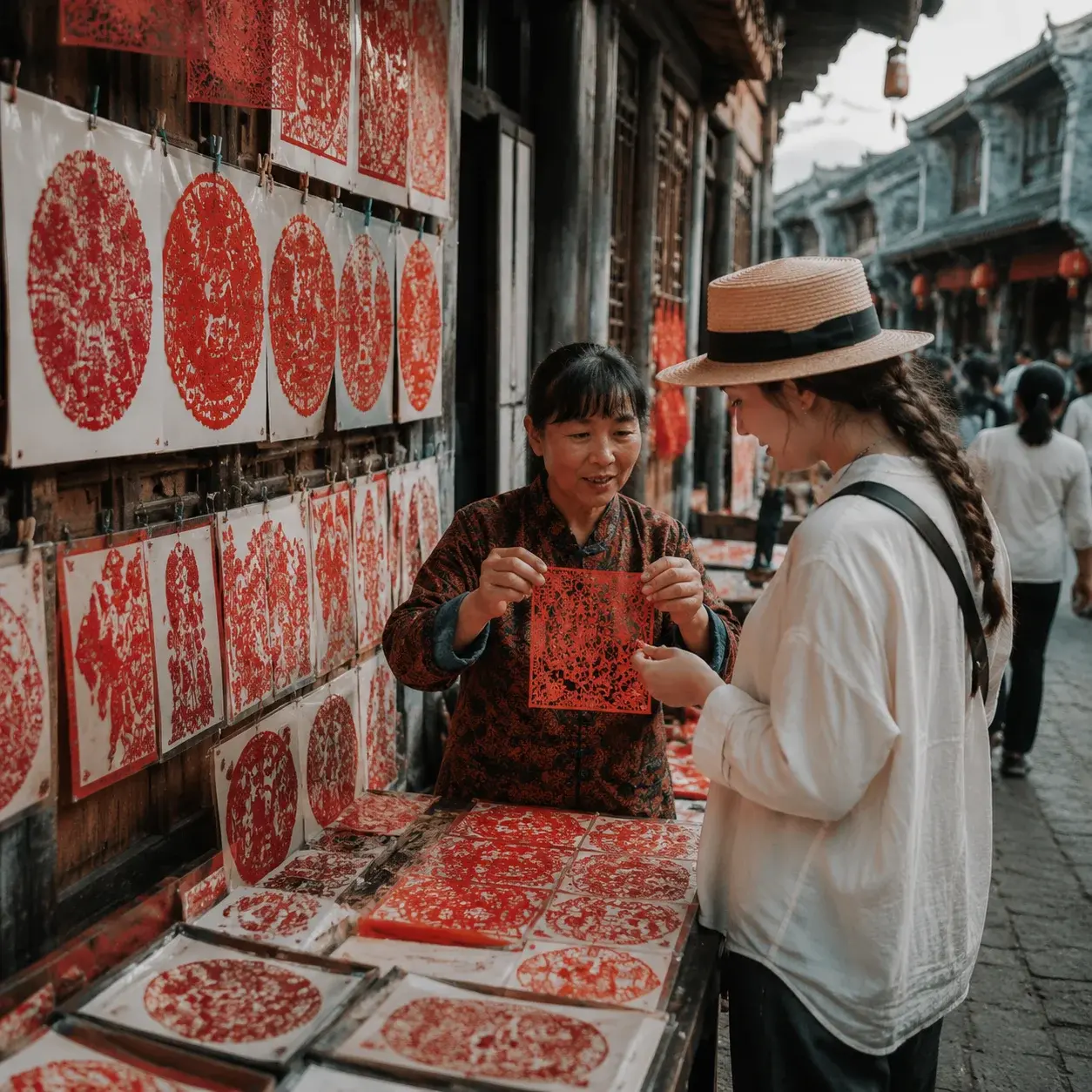
A traveler looking at handmade red paper cuttings at an artisan stall in a historic Chinese old town market

- What it is: Jianzhi is a 1,500-year-old Chinese folk art, inscribed on the UNESCO Representative List of Intangible Cultural Heritage in 2009. - Buy handmade, not laser-cut: Hand-cut edges are subtly irregular; identical, flawless intricacy at a suspiciously low price signals a machine. - Match motif to recipient: 福 fu for a new home, 囍 double happiness for weddings, 寿 shou for an elder's birthday, the zodiac animal for a birth year. - Fair prices: ¥5–20 for machine window-cut sets, ¥20–80 for small handmade pieces, ¥80–300 for intricate or signed work, ¥200–800+ framed. - Where: Pingyao's old town, Shaanxi folk villages, and Beijing's Panjiayuan beat airport kiosks — buy from artisans, not generic gift racks. - Carrying it home: Lay it flat between book pages or in a rigid folder; never fold; it's carry-on safe and a non-issue at customs.

What Is Chinese Paper Cutting (Jianzhi)?

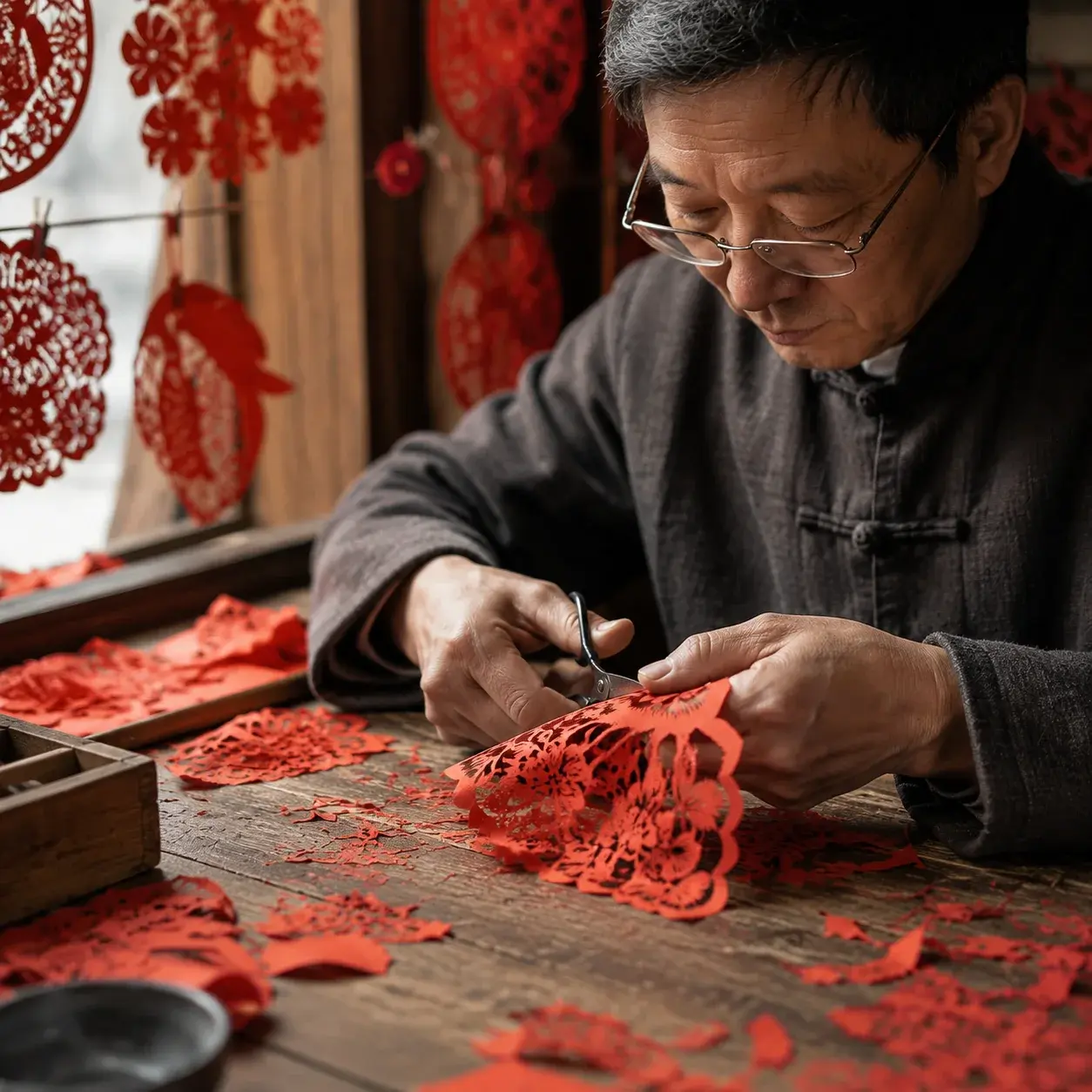
An artisan in China hand-cutting an intricate red paper jianzhi design at a traditional craft table

Chinese paper cutting, or jianzhi (剪纸, literally "cut paper"), is the folk art of cutting intricate symbolic designs into a single sheet of paper — usually red — with scissors or a fine knife. It dates back roughly 1,500 years to the Tang dynasty era, when it decorated windows and religious rituals, and was inscribed on the UNESCO Representative List of the Intangible Cultural Heritage of Humanity in 2009 (UNESCO).

UNESCO describes it as "a popular art integral to everyday lives," traditionally passed "from mother to daughter over a long period of time, beginning in childhood," and most alive in rural communities. That lineage matters to a buyer: the genuine article is still made by hand, mostly by women in the folk-art heartlands of Shaanxi, Hebei, and the southern craft towns.

Note the vocabulary. The broader phrase "paper cutting art" covers silhouette and craft traditions worldwide, but the Chinese tradition of paper cutting art is the only one on the UNESCO list. When a traveler says paper cutting in a China context, they mean jianzhi — red paper, auspicious symbols, and the pasted-on-glass window flowers (窗花, chuanghua) you'll see everywhere around Lunar New Year. For a visitor, three things make it the ideal souvenir: it's genuinely portable, it's affordable, and every motif means something you can put into words.

What Do the Motifs Mean, and Which One Should You Gift?

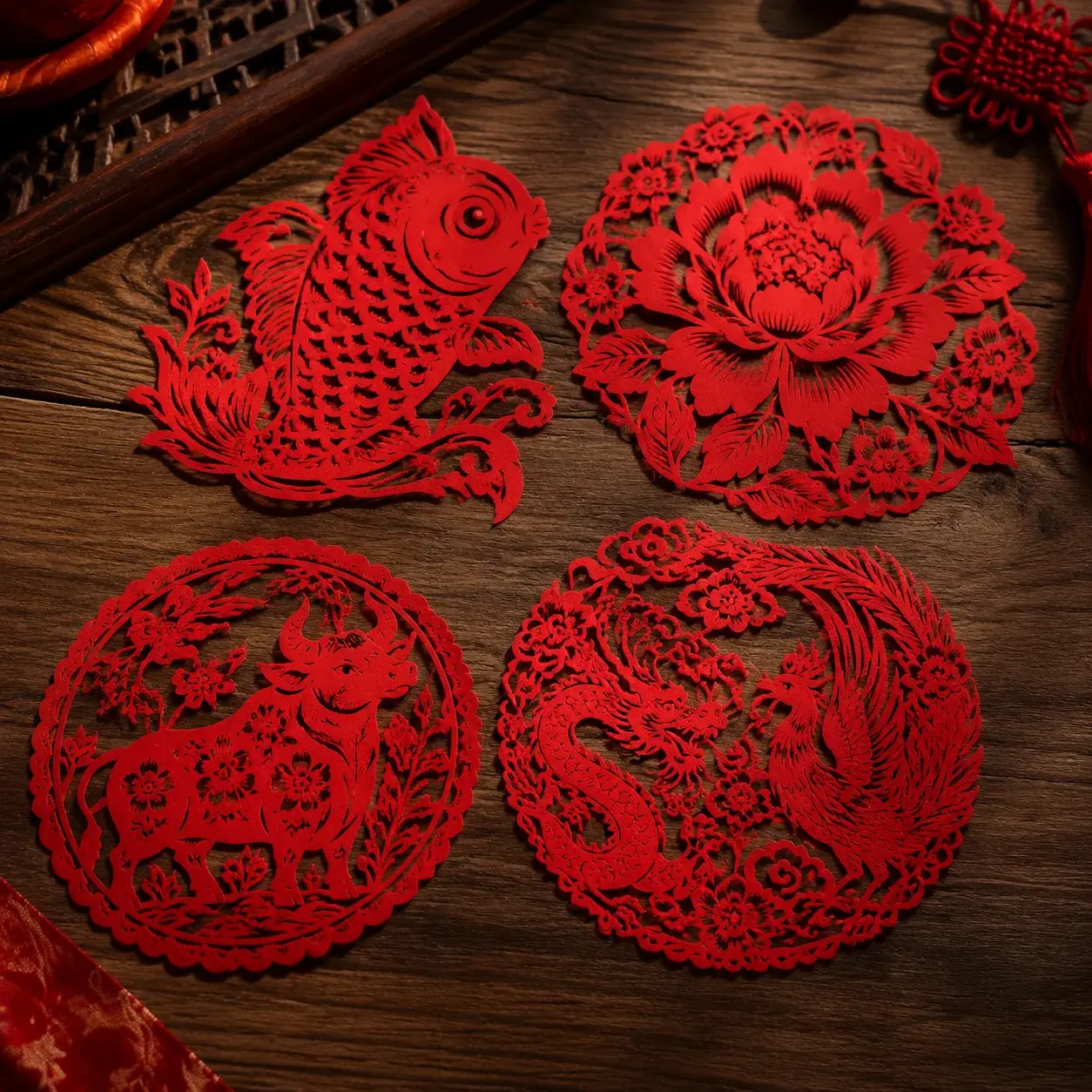
A selection of handmade red Chinese paper cuttings showing symbolic motifs like fish, flowers, and zodiac animals

Every traditional design is a blessing, so the right gift is the one whose meaning fits the occasion. Chinese paper cutting isn't decorative wallpaper — a character or animal is chosen deliberately to wish someone fortune, marriage, long life, or a good birth year. Learn a handful of symbols and you can buy with intention instead of guessing.

Characters and Blessings

The written characters are the clearest, safest gifts because the meaning is unambiguous. 福 (fú) means fortune and happiness — the classic housewarming or New Year piece, often pasted upside-down as a pun on "fortune arrives." 囍 (shuāngxǐ, double happiness) is two joy characters joined; it belongs to weddings and engagements and to nothing else. 寿 (shòu) means longevity and is the traditional gift for an elder's milestone birthday.

Animals and the Zodiac

The twelve zodiac animals make a thoughtful, personal gift: buy the animal of the recipient's birth year (or the current year for a keepsake). The dragon and phoenix together symbolize marital harmony and imperial power — another wedding favorite. A fish (鱼, yú) is a pun on (余), meaning surplus, so it wishes abundance year after year; bats (蝠, fú) pun on fortune despite Western squeamishness.

Flowers and Plants

Botanical motifs carry gentler wishes. The peony stands for wealth and honor, the lotus for purity and, via wordplay, harmony, and the plum blossom for resilience — it flowers in winter cold. These read well as art pieces for someone whose occasion you don't know.

MotifMeaningBest gift for
福 FuFortune, happinessNew home, New Year, general goodwill
囍 Double HappinessMarital joyWeddings, engagements
寿 ShouLongevityAn elder's milestone birthday
Zodiac animalBirth-year luckA specific person (their animal year)
Dragon & PhoenixMarriage harmony, powerNewlyweds
Fish (鱼)Surplus, abundanceBusiness openings, New Year
PeonyWealth, honorHousewarming, a decorative gift
LotusPurity, harmonyA calm, all-purpose art piece

How Do Northern and Southern Styles Differ?

The quickest tell is boldness versus lace: northern paper cutting is rugged and graphic, southern paper cutting is fine and delicate. Knowing which is which helps you judge quality and pick the look you want, and it signals to a seller that you know what you're looking at.

Northern Style (Shaanxi, Ansai, Yuxian)

Northern jianzhi — best represented by Shaanxi, especially the Ansai tradition, plus Yuxian in Hebei — is bold, vigorous, and full of exaggerated shapes, with distinctive "saw-tooth" serrated cuts and vivid rural subjects: livestock, folk tales, tigers, and harvest scenes. It's traditionally scissor-cut, which suits flowing, dynamic lines, and it reads strongly from across a room. This is the folk heartland; Shaanxi work was documented by the Smithsonian Folklife Festival and remains the reference point for the art form.

Southern Style (Yangzhou, Fujian, Guangdong)

Southern paper cutting — from Yangzhou, Foshan in Guangdong, and Zhangpu in Fujian — is hair-thin and lace-like, prizing intricate, multi-layered detail and refined scenes of birds and flowers. It's typically knife-cut, letting an artisan carve many stacked layers at once with extraordinary precision. If a piece looks like fine lacework and holds up to close inspection, you're looking at southern craft.

Tell them apart at a stall: bold, chunky lines with saw-tooth edges and folk subjects = northern; delicate, dense, lace-like filigree = southern. Neither is "better" — northern has more graphic punch, southern more finesse.

Framed Art, Window Cuts, or Loose Sets — Which Should You Buy?

Match the format to the job: window cuts to decorate, framed pieces to give as a display gift, loose sets to hand out many small gifts. All three are legitimate; the difference is price and purpose, not authenticity.

Window cuts (窗花) are the traditional form — single red cuttings meant to be pasted on glass. They're the cheapest, most authentic festival object and pack flattest, but they're delicate and not display-ready on their own. Framed or scroll-mounted pieces are the gallery option: mounted on backing paper or silk, ready to hang, more expensive, and the natural choice for a substantial single gift. Loose sets in a folder — a dozen small motifs bundled together — are the smart buy if you need many little gifts for colleagues or friends back home.

A practical middle path: buy loose window cuts on the trip for lightness and value, then frame the best one at home with an acid-free mount. You get the authentic object and a display-worthy result without carrying glass across the world.

Where Can You Buy Authentic Chinese Paper Cutting in China?

Buy from named artisan stalls and folk-art museums, not generic airport or hotel kiosks, and favor towns where the craft is actually made. The best places let you watch someone cut, which is both the authenticity check and half the fun.

Pingyao, Shanxi

The walled ancient town of Pingyao is arguably the friendliest place to buy well: old-street workshops sell hand-cut work and many artisans demonstrate live, so you can watch a piece take shape before you pay. Prices are fair by tourist-town standards, and the range runs from cheap window cuts to framed art. Pair it with the rest of a Pingyao itinerary and the souvenir comes with a memory.

Xi'an and the Shaanxi Folk Villages

Shaanxi is the heartland of bold northern jianzhi, and around Xi'an — extending north toward Yan'an and Ansai — you'll find folk artists working in the vigorous, saw-tooth style the region is famous for. This is where to buy if you want the "real northern" look with genuine provenance; village folk-art centers and museum shops beat city tourist stalls.

Beijing

In Beijing, try the Panjiayuan antiques and crafts market, the hutong shops around Nanluoguxiang, and stalls near Houhai. The selection is broad and you can find real handmade work — but the touristy lanes also carry the most machine-cut product, so apply the authentication test below and don't assume a red price tag means handmade.

Yangzhou, Suzhou, and the South

For delicate southern lacework, head to Yangzhou and Suzhou, where museum craft shops and dedicated studios sell the fine knife-cut style. Expect higher prices for the intricacy, and buy from studios tied to named artisans rather than generic Old Street gift racks.

Wherever you are, the rule holds: an artisan stall or folk-art museum will beat an airport or hotel-lobby kiosk on both price and authenticity.

How Do You Spot Handmade vs. Laser-Cut Paper Cutting?

Handmade pieces have subtle irregularities and cost more; laser- or machine-cut pieces are flawlessly identical and suspiciously cheap for their intricacy. This is the single most useful skill for buying well, and you can run the whole check in a minute at the stall.

1. Look for irregularity. Genuine hand-cut edges have tiny, natural variations. If two "handmade" pieces are perfectly, mechanically identical, they were stamped or lasered. 2. Check the back. Knife-cut work often shows faint burrs or a slightly rougher reverse; laser-cut edges can look faintly scorched or glassy-smooth and uniform. 3. Weigh intricacy against price. Astonishingly fine detail at a rock-bottom price is the classic laser tell — real intricate hand-cutting is slow and priced accordingly. 4. Ask to watch — or to see them cut. Sellers of real work are usually happy to demonstrate or point to the artisan. Reluctance is a signal. 5. Look for signatures and certificates. Signed artist pieces and folk-art association certificates aren't foolproof, but they raise confidence, especially in the ¥100+ tiers.

The one-line rule: too cheap and too perfect at the same time means machine-made. Handmade work is either modest and slightly imperfect, or intricate and priced for the labor — rarely both flawless and cheap.

How Much Should Chinese Paper Cutting Cost? (2026 RMB)

Fair prices run from a few yuan for machine window-cut sets to several hundred for intricate or framed handmade work. The ranges below are indicative 2026 estimates for buying in-country; they vary by city, complexity, and whether the piece is hand- or machine-cut. Treat "too cheap and too perfect" as a red flag, not a bargain.

TierTypical RMBWhat you're getting
Machine / window-cut sets¥5–20Festival street sets, mass-printed, fine for cheap decoration
Small handmade pieces¥20–80Single hand-cut motifs, modest size — the sweet spot for gifts
Intricate or signed handmade¥80–300Detailed hand-cut work, often signed or certified
Framed / scroll-mounted art¥200–800+Display-ready gallery pieces, mounted on backing or silk

A few etiquette notes: mild bargaining is normal in markets and antique fairs, less so in fixed-price museum shops. Mobile pay (WeChat/Alipay) is near-universal, but carry some cash for village artisans. And remember the price logic from the authentication section — paying a fair ¥60 for a real hand-cut motif is a better souvenir than ¥10 for a laser copy.

How Do You Carry Paper Cutting Home Without Damaging It?

Keep it flat and it travels flawlessly — that's the whole advantage of this souvenir. Paper cutting is light, thin, and unbreakable, so it beats ceramics, tea sets, and silk on packing hassle. The only real enemy is a crease.

Lay pieces flat between the pages of a book or magazine, or slide them into a rigid folder or document sleeve so they can't bend. For anything you want to keep long-term, use an acid-free sleeve to prevent yellowing. Never fold a paper cutting — a crease can crack the thin cut lines permanently — and roll only large scroll pieces, and only loosely. Because it's flat and unbreakable, it rides safely in your carry-on, no special handling needed.

Customs is a non-issue for personal-use folk art like this; there's nothing to declare in normal quantities, and you should simply answer honestly if asked. That combination — cheap, weightless, flat, unbreakable, and customs-free — is exactly why a paper cutting is the most travel-friendly souvenir in China.

Where Can You Watch Artisans and Try It Yourself?

Watch live cutting in Pingyao, at Shaanxi folk studios, or in museum workshops — and consider a short hands-on class, which turns a cheap souvenir into a story. Seeing a piece cut by hand is both the best authenticity check and the moment the object stops being a trinket.

Pingyao's old-town workshops often demonstrate on the spot; Shaanxi and Yan'an folk artists work in the bold northern style; and craft museums in the southern cities run studio demonstrations of knife-cut lacework. Many places offer short beginner sessions (roughly ¥100–200) where you'll fold and cut your own simple motif under an artisan's eye. It's a natural anchor for a day in a [Pingyao itinerary](#) or an [Xi'an travel guide](#) — and the piece you cut yourself becomes the souvenir you'll actually keep.

Frequently Asked Questions

Where can I buy Chinese paper cutting in China? Buy from artisan stalls and folk-art museums in Pingyao's old town, the Shaanxi folk villages around Xi'an and Yan'an, Beijing's Panjiayuan market, and southern craft studios in Yangzhou or Suzhou. Avoid airport and hotel kiosks, which are pricier and often machine-cut.

How do I know if a paper cutting is authentic and handmade? Look for subtle edge irregularities, faint knife burrs on the back, and detail that matches the price. Perfectly identical, intricate pieces sold cheaply are laser- or machine-cut. Ask the seller to demonstrate, and favor signed or certified work above ¥100.

What's the best Chinese paper cutting to buy as a gift? Match the motif to the occasion: 福 (fu) for a new home, 囍 (double happiness) for a wedding, 寿 (shou) for an elder's birthday, or the recipient's zodiac animal for a personal touch. A small handmade piece at ¥20–80 gifts beautifully.

What does Chinese paper cutting symbolize? Each design is an auspicious blessing. Characters wish fortune (福), marital joy (囍), or long life (寿); animals like fish and bats pun on surplus and fortune; the zodiac marks birth years; and flowers such as peony and lotus signify wealth and purity.

Can I get a custom Chinese paper cutting? Yes — many artisans will cut a name, a specific zodiac animal, or a chosen character to order, especially in workshop settings in Pingyao and Shaanxi. Allow extra time and expect to pay more than for a ready-made piece, in line with the handmade tiers above.

Is it worth buying antique paper cuttings? Because paper is fragile and mass tourist copies are common, genuinely old pieces are rare and hard to verify. For most travelers a fine new handmade piece from a named artisan is a better, safer buy than an "antique" of uncertain age. Buy antiques only from reputable dealers.

Conclusion

The move is simple: learn one or two motifs, buy handmade in Pingyao, Xi'an, or a Beijing folk stall, pay a fair RMB price, and carry it home flat. Done that way, a piece of Chinese paper cutting is the cheapest, lightest, most meaningful souvenir in the country — a blessing you can explain, folded into a book for the flight home. For more, see our [Best Souvenirs from China](#) guide and sibling spokes on [Chinese silk](#) and [Chinese tea sets](#). When you're ready to see the artisans yourself, LyrikTrip designs [private custom China tours](#) that build these moments in.

Planning what else to bring home? See our complete guide to the best souvenirs from China.